






Fatima Habib Al-Sayegh: Leading with Resilience, Empowering Through Technology
Some stories of leadership are not written in boardrooms, but within a power that comes from sacrifice, resilience, and unwavering faith. Fatima Habib Al-Sayegh‘s journey with 20 years’ experience and becoming the Head of IT Governance, Compliance, and Service Management in the Energy Sector is one distinguished less by privilege and more by perseverance in the face of life’s most difficult challenges. She grew up as the eldest of five children in a home where, despite their lack of formal education, her parents instilled in her qualities of trust, courage, and drive. When her ambition of studying medicine was cut short due to financial constraints, she took an unorthodox leap into the then-emerging world of information technology, a decision that would alter both her profession and her identity. Her climb from a teenage developer writing code to a strategic leader driving digital transformation has powered not only by technical prowess, but also by resilience built through personal grief. From losing her father early in her career to the crushing sadness of losing her mother and sister in the same year, she turned tragedy into strength. Today, she is a leader who exemplifying empathy and empowerment, demonstrating that true technology leadership is found not only in the creation of systems, but also in the improvement of people’s lives. The Foundation: Dreams Built on Parental Sacrifice Al-Sayegh’s journey begins with parents who possess immense wisdom despite lacking formal education themselves. They invested everything in their five children; Fatima, Mohammed, Sakina ,Ali, , and Kholoud, dreaming of seeing them reach heights they couldn’t reach. When financial realities made a medical career impossible for their eldest daughter, they supported her leap of faith into the emerging field of Information Technology in the 1990s. This decision required courage from everyone involved. In their culture, sending a daughter into a mixed professional environment raised eyebrows and invited questions. Yet her parents trusted her completely, and that trust became the bedrock of everything she would later build. The first earthquake struck in 2002 when her father passed away. As the eldest child, Al-Sayegh watched responsibility settle heavily on her mother’s shoulder on her own. She joined the energy sector in Information Technology, working at the very company where her father was serving as a Safety Officer. Each promotion she earned carried double meaning: personal achievement and family necessity. She climbed from Graduate Trainee to senior roles, knowing that her success meant security for her siblings. The Breaking Point That Became a Turning Point Then came 2015, the year that redefined everything. Losing her mother and sister within such a short time didn’t just shake Al-Sayegh’s foundation; it obliterated it. The grief consumed her so completely that hospitalization became necessary. In those dark months, survival itself seemed questionable. But somewhere in those depths, she found a choice. Looking at her remaining brothers and sister, she saw their need. She realized that her parents’ greatest legacy wasn’t any specific career dream, it was the resilience they had instilled in her very bones. She chose to fight. She chose to honor her mother and father by building the life they had envisioned for the family. With faith as her anchor, she discovered strength she didn’t know she had and became the pillar. She oversaw the completion of their family home. She guided her brothers through to marriage and helped them build their own lives. She transformed personal devastation into a foundation for collective future. That same resilience propelled her professional growth. Supported by her sister’s courage, she earned her Master’s Degree from HEC Paris in 2017. In 2025, she continued advancing through Qatar Leadership Center’s Executive Leaders Program. The woman who is leading Information Technology today isn’t just a technocrat managing systems, she’s a leader who knows that true strength births itself from adversity, that empathy forges itself in loss, and that any position’s ultimate purpose centers on empowering those around you. Technology Meets Humanity: A Career Built on Empowerment Al-Sayegh’s professional journey didn’t begin with grand strategy sessions. It started at the code level, programming, developing small applications, getting her hands dirty with the actual mechanics of how technology works. This technical foundation proved critical, giving her intimate understanding of technology’s true nature. But she quickly noticed a disconnect. These powerful tools weren’t aligning with broader business goals. This observation sparked the core idea behind her entire career: technology’s true value unlocks only when strategically governed and seamlessly aligned with business heart and this only becomes possible with an empowered, capable team. This vision guided her evolution from developer to leader. She moved from building applications to managing medium and large-scale projects: enterprise-wide ERP systems, cloud solutions, AI implementations, digital transformation initiatives, and data analytics platforms. Yet her most significant achievement in these roles wasn’t the technology itself, it was the teams she built and nurtured. She operates on a fundamental belief: a leader’s success measures itself by the strength and independence of their team. She focused on creating environments of trust, kindness, and support, where team members felt safe to innovate and take ownership. Her goal never involved creating followers, she wanted to foster future leaders who could operate confidently and autonomously. “I don’t just want to lead projects; I want to foster future leaders,” she explains. This philosophy of empathetic leadership has become her compass, ensuring that while teams deliver complex projects, they also grow together as professionals. The Pandemic Test: Crisis as Catalyst When COVID-19 struck, the energy industry faced an immediate, existential question: how do you keep critical infrastructure running when your workforce needs to shift remotely almost overnight? Rather than merely surviving, Al-Sayegh saw this as a critical moment to demonstrate agility and convert global crisis into accelerated digital transformation. She led her team in executing clear strategy: ensuring immediate operational continuity while building long-term resilience. Within three weeks, they enabled 80% of employees to work remotely, providing laptops, VPN access, and implementing robust e-signature solutions to eliminate paperwork delays. But here’s where

How Empathetic Technology Leadership Drives Innovation?
The Future of Tech Management With the high-speed digital era today, technology continues to disrupt sectors, redefine economies, and influence almost all aspects of human life. But behind the tide of automation, accounting, and artificial intelligence is something that technology cannot accomplish by compassion itself. Empathic technology leadership has come to transform how organizations innovate, co-create, and make a difference. That is where human know-how meets tech innovation, which brings innovation to the masses. Learning Empathetic Technology Leadership Empathetic technology leadership is less about leading process and systems and more about leading people—it’s people leadership. It’s the art and science of leading with empathy, emotional intelligence, and tiger passion for using technology to make human life better. Whereas old-school leaders are going to be focused on results in purely numerical terms, empathetic leaders are going to start questioning themselves with questions such as, “Who are we doing this for?” and “How is it going to make their life better?” Such leadership balances the tuning of technology and the sensitivity of human feeling. It respects the manner in which innovation is as much a matter of purpose and meaning as of scale or productivity. Hearing for motivations, suffering, and feeling among employees and end-users alike, empathetic technology leaders build solutions that endure and which instill trust in their companies. The Human Core of Innovation At its most basic, innovation is intentful solutioning. Beyond an empathetic root, innovation grows greater than data points and code. Empathy-based leadership places attention on pain points and user expectations never revealed by technology. For instance, in product design, empathy provides age and cultural disability access and accessibility. When working, empathy enables leaders to grasp emotional dynamics, and staff appreciate them and are receptive to proposing new ideas. Once they are appreciated and comprehended, they will be willing to experiment with new ideas, risk, and also provide their best ideas. Such emotional affinity is the one that forms the foundation of people-centered and sustainable innovation. Creating Empathic Cultures Within Technology Firms The influence of empathic leadership well extends beyond the dyad—it permeates entire organizational cultures. If empathy becomes part of an organization’s DNA, it redesigns the very nature of decision-making, collaboration, and technology innovation. Empathy begins with open-listening leaders who are genuinely interested in the people and speak candidly. This is the basis of building psychological safety, where people are able to freely contribute their ideas without the prospect of being rejected or failing. Empathy requires thought diversity, for empathy itself is accommodation facilitation and respect for the views of the other individual. Through taking the time to get to know the individual struggle and experience of their teams, leaders are given access to creativity developed from divergent experience. In addition, empathy keeps technology’s progress in the interest of the people. Empathy compels leaders not to innovate so that they will be able to garner money but for the welfare of society—developing technologies that can benefit real problems, bridge equity gaps, and enhance people’s living conditions. Empathy as the Key to Successful Digital Transformation Digital disruption changes. It is usually linked with process reengineering, implementation of new technology, and asking employees to implement new systems. The process is indeterminate and eliciting resistance. Empathic technology leadership is needed in change management in this regard. These futurist managers, empathetically so, form their vision, hear the employees’ fear, and guide them. They do not avoid the prospect of job elimination through automation or re-skilling but welcome it and challenge the workers to get ahead. Not only is this transition readily achieved, but it also provides confidence and morale to the firm. Empathy also renders technological innovation ethical. In the face of heightened artificial intelligence, data collection, and machine learning, managers must investigate the moral implications of their decisions. Empathic managers employ “Should we?” and never “Can we?”making technology privacy-aware, equitable, and human-dignity-oriented. The Real-World Impact of Empathetic Leadership Empathy leadership is already reaping its rewards in some of the highest-performing organizations in the world. At Microsoft, for instance, Satya Nadella shifted the culture from competition to growth mindset and empathy culture. Not only did this shift in culture make the workplace more positive, but also unlocked unprecedented innovation in artificial intelligence and cloud computing. By putting empathy at the forefront, leaders create loyalty, imagination, and purpose among employees. Employees are motivated by a human and higher purpose. Customers are too and increasingly want to do business with humane, transparent, and empathetic firms. Empathy doesn’t kill innovation—bombs it by merging human need with technology potential. Creating Empathetic Tech Leaders Empathy is a skill that can be acquired and learned through awareness and conscious behavior. It starts with active listening—not merely to the words that are uttered, but to how someone feels. It is being open to other people’s ways of thinking and ready to change one’s own leadership style to fit other people’s requirements. Organizations can develop empathic technology leadership through open communication, mentoring, and technical know-how combined with emotional intelligence. When the leaders begin to see beyond the figures and hear the stories behind them, then they start leading from the mind and the heart. This marriage of technical skill and emotional intelligence upon which the leaders of tomorrow will be founded—the one who brings the people to the technology and unleashes its potential. Conclusion: Leading with Heart in a Digital World The future shall not be with the technologically most literate but those who shall be capable of conquering intellect with empathy. Empathic technology leadership is what will unleash innovation as a design for people and not processes. It is the age of intelligent machines and insight, empathy is the only thing that remains distinctly human—it is what unites us, motivates us, and transforms us. Empathy is what inspires technology creators not to build more powerful systems, but a nicer, a more affluent, and a more creative world in which humankind and progress can be in harmony. Read Also: Digital Transformation in the Energy Sector

Digital Transformation in the Energy Sector
A Roadmap for Sustainable Growth The global energy sector is undergoing one of history’s largest overhauls. Spurred by climate drivers, evolving consumer behaviors, and twin-over technology revolutions, energy producers are going digital to re-design the production, operation, and consumption of energy. What was a traditional asset-based organization a while back is turning into a gleaming, data-fueled platform with drivers as equally concerned with efficiency, sustainability, and innovation. The Energy Mandate for Digital Transformation Traditionally, the energy industry has been built on human-driven processes, old infrastructure, and black-boxed data. Increasing global energy needs and carbon-emission pressure render this picture outdated. The shift to renewable sources, distributed energy resources, and smart grids calls for real-time visibility, forecasting analytics, and end-to-end orchestration, all enabled by digital transformation. From major oil companies to renewable energy firms, businesses today welcome the reality that digitalization is no longer an option but a requirement. The focus is on higher performance, reduced operating cost, and sustainability without compromising on reliability in the supply of energy. pillars of digital transformation for the energy industry Data Analytics and Artificial Intelligence Data powers digital transformation. IoT sensors, meters, and devices now generate vast amounts of data across the energy value chain from exploration to consumption. With data analytics and AI capabilities as the drivers, businesses are able to re-imagine raw data into insights. Artificial intelligence predictive maintenance identifies anomalies in turbines, pipelines, or the grid in a timely manner to avoid failure and preserve time and resources. In the same way, energy traders make use of data analytics for demand, best price, and running the grid at a reasonable cost. Internet of Things (IoT) and Smart Infrastructure IoT is revolutionizing how energy systems function. Smart grids, filled with sensors that provide real-time data, allow two-way communication between the customer and the utility. Besides grid optimization, it also involves customers in smart decision-making about how they use energy. IoT is integral to operation of solar panel, windmill, and renewable power energy storage. IoT can be used to monitor remotely performance metrics, forecast power generation, and dynamically optimize operations. Digitalization allows balancing clean energy even more on the grid and improving sustainability performance. Cloud Computing and Edge Technology Cloud computing provides responsiveness and scalability the energy sector needs to become digital. Running processes and data in the cloud provides enterprises with the latest analytics, simulation, and real-time collaboration. Edge computing is helping to make this happen by analyzing data at or nearer to the source location — i.e., at a distant drill site or off-shore facility — and reducing latency and facilitating real-time decision-making. Cloud and edge solutions combined provide the digital underpinning for smart, safe, and connected energy operations. Cybersecurity: Secure the Digital Future With digitalization on its way, cybersecurity is given priority. Energy infrastructure is included in the national critical infrastructure, and any interference with it will be catastrophic. Large-scale digitalization goes hand in hand with new threats — from networked devices to computer control systems — and calls for high-strength cybersecurity. Companies are strategically invested in threat detection through AI, zero-trust architecture, and blockchain-encrypted data protection in securing operations. Digital transformation supported by an active cybersecurity core enhances resiliency to changing and escalating cyber threats. Digitalization is both technologically and people-led revolution. Energy companies are positioning their people in a way that they lead a digital-first approach. Data scientists, technicians, and engineers work differently by utilizing digital technology to lead operational excellence and safety. Virtual and augmented reality are increasingly used in offsite training and maintenance to reduce exposure to risk and improve learning. The digitalization of the workforce guarantees flexibility and preparedness among the workers should there be a change in the energy regime. Sustainability and Decarbonization Through Digitalization The biggest single advantage of digital transformation to the energy sector is that it can make the industry more sustainable. Digital technology holds the potential to support carbon footprint monitoring, optimization of renewable energy integration, and reducing energy wastage for energy firms. Predictive analytics through artificial intelligence allow utilities to anticipate energy demand so that the demand is managed and the use of fossil fuels minimized in an effective way. Peer-to-peer energy trading on blockchain-based trading platforms also allows energy trading between peers with complete transparency and allowing the utilization of renewable resources at a localized level. Not only does digital transformation make the productivity of business better, but it also facilitates the world to transition towards cleaner and greener energy infrastructures. Challenge to Implementation of Digital Transformation While precious, digitalization of the energy industry has its drawbacks. It is beset by the weaknesses of existing infrastructure, regulatory hurdles, and high implementation rates that can dampen take-up. Intermeshing of information between innovative systems, and tight-tight cybersecurity models, need higher investment and creativity. In addition, digital transformation requires a cultural transformation — of experimenting, collaborating, and adapting. Leadership commitment, successful strategy, and building long-term value through short-term results rest on success with transformation. The Road Ahead: A Smarter, More Sustainable Energy Future The energy revolution in the digital age has only just begun. With blockchain, quantum computing, and AI tech still developing, they will be at the forefront of efficiency and innovation. Prosumerism or self-consumption and production of energy through prosumer production will keep on decentralizing energy systems and engendering increased democratization and resilience. Digital transformation is enabling this next generation of smart energy — where decisions are informed by data, strategy informed by sustainability, and the pace set by innovation. Early movers are not just on a playing field but are fast becoming the best bet to spearhead a smarter, cleaner energy future. Conclusion: The Power of Digital Transformation The digital era is making the impossible possible in the energy sector. It’s bridging the physical and digital worlds, making companies smarter, cleaner, and more efficient. From predictive analytics to intelligent grids, from security to cloud technologies — digital transformation is the catalyst that’s propelling the energy sector towards a cleaner, more sustainable future. Read Also: The Convergence of Cloud,

Dr. Carmen Bell-Ross: How Parents Can Thrive During Senior Year With The College Smarter Method
Every senior year feels like a finish line. Students race to submit applications, collect recommendation letters, and wait for decisions that will shape the years ahead. However, while the spotlight shines on them, something quieter and just as profound happens in the background: parents are graduating, too. “Parents need a ‘graduation plan’ too,” Dr. Carmen explains. “And when they don’t adjust their role, it’s often the parent, not the student, who struggles most with the transition. For Dr. Carmen Bell-Ross, founder of SP Grace and creator of The College Smarter™ Method, this truth has guided her work with hundreds of families. She’s seen what happens when parents continue operating as fixers long after their children are ready for independence. She’s also seen the transformation that occurs when parents step into the next chapter of their own role, which is less about micromanaging and more about trusting the foundation they’ve built. This shift can feel like a profound change. There’s both pride and uncertainty in watching a child grow up, coupled with the challenge of redefining what it means to be a “good parent” in a way that respects the child’s independence while still providing appropriate support. From Logistics to Leadership For most of their child’s lives, parents run the logistics. They schedule practices, check homework, and send reminders about deadlines. However, by senior year, that approach begins to break down. Students who are preparing to live on their own need something different. They need parents who can guide without controlling and support without overshadowing. “As parents, it’s so easy for us to be hyper-focused on making sure our kids are ready for what’s next that we neglect the fact that this is a really big deal for us too,” Dr. Carmen says. “We’re so used to sacrificing ourselves emotionally for their best interests that we sometimes don’t even realize we’re doing it. But as they adjust, we have to adjust too. We have to go from being ‘mom the program director’ to ‘mom the program assistant.’ When we’re directing, we expect them to follow our lead. When we’re assisting, we’re supporting them, as requested. That’s a very big difference for a parent.” Planning for college applications and admissions is an ideal time to fully embrace a shift in the parent-student dynamic. The most successful applications are those that are directed by the student, not the parent. The College Smarter™ Method creates a safe space for that transition. Parents begin to trade constant monitoring for intentional conversations. They practice letting go in ways that build confidence instead of resistance. Students, in turn, begin to own their choices, and parents discover relief knowing they don’t have to pull every string. According to a study, more than 60% of students find the admissions process difficult. The College Smarter™ Method works to reduce that difficulty for both. A Method Born From Both Sides of the Table Part of what makes The College Smarter™ Method unique is Dr. Carmen’s ability to bridge two perspectives. On one side, she has advised leaders in Fortune 100 companies, helping them navigate challenges from entry-level to the executive suite. On the other, she has guided students and families through the intensely personal process of college admissions. Dr. Carmen’s daughter, Ciera, was the inspiration for The College Smarter™ Method. Together, they built a path that reflected her passions and goals, not just her grades. That strategy led to her admission to Harvard and other highly selective schools. Today, she is a neuroscience major, and her life on campus reflects the same clarity that guided her applications. Ciera volunteers at a center for children with Down syndrome and was chosen by her peers to serve as captain of Harvard’s competitive dance team. She is studying stress in adolescent mice, with research soon to be published in a peer-reviewed journal. Each piece of her story ties back to the foundation she built with The College Smarter™ Method. It wasn’t about chasing every opportunity. It was about aligning her interests and actions so that they formed a narrative she owned and understood. Admissions officers noticed. They commented on the authenticity of her story, and it has continued to shape her success in college. Dr. Carmen emphasizes that this is what makes The College Smarter™ Method unique. “It’s so important to recognize the work we’ve already put into our kids,” she says. “We’ve invested in their activities, mentoring, tutoring, and life experiences. They are already impressive. But at selective schools, impressive is the baseline. What makes them unforgettable is helping them connect the dots so the world can see just how special they are.” The Parent’s Graduation Plan Students aren’t the only ones preparing for the next stage of life. Parents are too. Senior year means transitioning from a daily presence to a supportive guide. It means learning how to trust the foundation already built and how to let children take the driver’s seat. The College Smarter™ Method recognizes this emotional layer. Parents who go through the method are invited to reframe their role. Instead of pushing deadlines, they are coached on how to create intentional conversations. Instead of hovering over every detail, they learn how to set boundaries that respect their child’s growing independence. Ciera’s story offers proof of concept. She didn’t just get into Harvard. She entered with confidence and a sense of ownership. For Dr. Carmen, that is the goal for every family. “Parents have already invested so much,” she explains. “For families that are looking to elevate the way their kid is seen by the world, and the way they see themselves,we can help. That’s what we love to do.” To extend this support, families are invited to schedule a complimentary College Smarter™ Advance Mapping Session at CollegeSmarter.com. In these sessions, parents receive personalized insights and strategies for launching their children into the next stage of life. As Dr. Carmen says, “I love welcoming new College Smarter families because it makes my heart happy to watch these already incredible
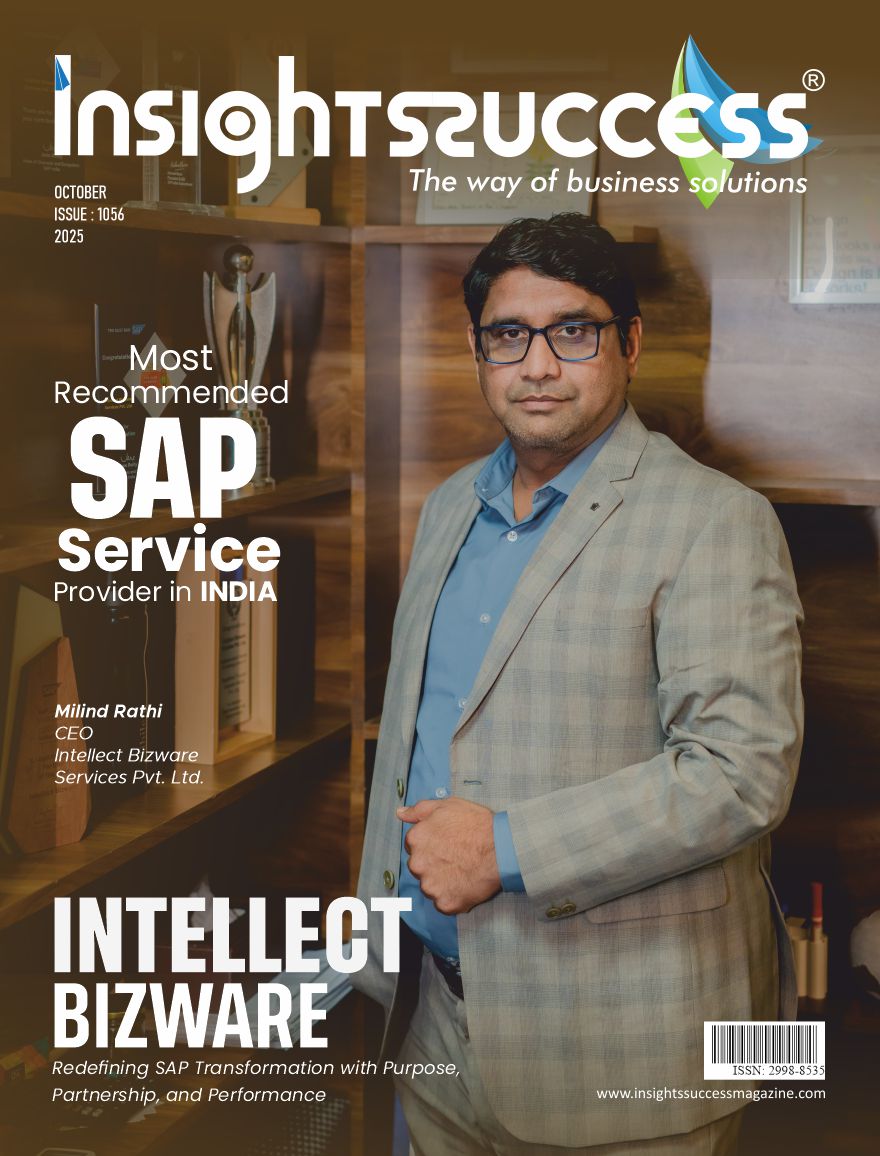
Most Recommended SAP Service Provider in India
Most Recommended SAP Service Provider in India

Most Visionary CEOs Driving IT and AI Innovation to Follow
Most Visionary CEOs Driving IT and AI Innovation to Follow This edition highlights executives who excel in leading organizational change, pioneering AI-driven strategies, and building teams capable of solving complex, global challenges. These CEOs combine technical expertise with bold leadership, ensuring their companies remain at the forefront of innovation while delivering sustainable growth. Quick highlights Quick reads

The Convergence of Cloud, Data, and AI
Digital Transformation 2.0 Digital transformation surpassed process digitization and tech deployment independently in its initial stages. Digital Transformation 2.0 is currently being defined by the convergence of cloud, analytics, and AI. Not merely copying operational effectiveness, the convergence of the three is, by definition, copying business models, customer interactions, and competitive advantage across industries. The Evolution to Digital Transformation 2.0 The initial phase of digital transformation was entirely mobility, automation, and direct digitization of processes. These efforts infused efficiency, albeit still in silos and not so highly integrated at the firm functions. Digital Transformation 2.0 is an end-to-end integrated solution in which cloud, data, and AI converge to deliver smart, agile, and scalable businesses. Cloud computing offers the platform to process and store data dynamically and scale it. AI works on such data to realize predictive intelligence, automate strategic decisions, and generate value in real time. Combined, they form an environment where organizations can accomplish at speed, agility, and accuracy what was not possible with conventional systems. Harnessing the Power of Data Data is the Digital Transformation 2.0’s blood. Businesses are richer with ginormous streams of unstructured and structured data streaming in from business processes within, customer behavior, IoT sensors, and external market trends. Capture is not a problem but extraction. AI-powered analytics brings the loop closed between raw data and usable insight so business companies can forecast trends, personalize offers, optimize supply chains, and look around corners and predict risks in advance. With cloud infrastructure built-in, the insight is immediately available anywhere and everywhere, and empowers globally distributed teams to make informed decisions at record speed. Cloud as the Enabler Cloud computing isn’t just a data warehouse but the power of scale, flexibility, and collaboration. Cloud platforms are today depended upon by organizations for hosting AI models, mash-up of various sources of data, and providing real-time insights on on-premises boundaries. Cloud flexibility allows companies to react to evolving needs, try new AI-driven applications, and expand to new geographies with no worry. Global collaboration is facilitated by the cloud, where data-driven insights are translated into action efficiently and within timeframes. AI Driving Intelligent Decision-Making Artificial intelligence is at the forefront of this revolution, taking cloud-based data and making it prescriptive, predictive, and actionable insight. Trends are established, outcomes foreseen, and optimal practices recommended by machine learning algorithms by function—operations and finance to sales and marketing. In customer experience, AI drives hyper-personalized experiences, connecting with needs and desires in the moment. In supply chains, it predicts disruptions, optimizes routes, and lowers operating costs. The adaptive and learning capacity of AI enables decisions to continually get better and better over time, creating a cycle of intelligence that drives long-term growth and innovation. Combining Culture and Strategy Technology alone is not Digital Transformation 2.0. It needs to be tied to data-driven culture, continuous learning, and cross-functional collaboration. CEOs need to link digital initiatives to strategic goals so that investments in cloud, data, and AI deliver tangible business results. Second, aside from the above, ethical issues pertaining to AI and data management are of most importance. Organisations need to be transparent, fair, and secretive while gaining the trust of employees’, customers’, and regulators’ and making the best use of such technologies. The Competitive Advantage of Convergence The intersection of cloud, data, and AI offers enormous competitive power. Whoever is able to bring these ingredients together gets to go faster, make better, faster decisions, and innovate at scale. They are also best positioned to feel the change in the marketplace, bring new products and services to market, and drive customer joy—while driving operational efficiency to an extreme. As varied as healthcare and finance to retail and manufacturing, so are they in the midst of going through this convergence. Those who are embracing the convergence are not merely making themselves leaner—business models are being rewritten, new revenue streams are being created, and work’s future is being defined. Challenges and Strategic Considerations While Digital Transformation 2.0 promises much, no company is perfect. Data silos, legacy systems, talent deficits, and cyber attacks are hanging over the decision to adopt. What is required is a strategic approach: solid data governance, cloud-first development, AI model certification, and upskilling the workforce. They will need to tread the middle line between ambition and realism, so that they are building projects which create tangible value while building a test-and-iterate culture. Conclusion Digital Transformation 2.0 is neither evolution nor revolution but revolution driven by convergence. Riding on the synergistic advantages of the power of cloud computing, analytics, and artificial intelligence, organizations can be clever, nimble, and quick and thereby endowed with the ability to drive long-term growth in a complexity- and competition-inducing ecosystem. They are the ones who excel in this new world with the intersection of technological adoption, strategic vision, cultural alignment, and moral stewardship. They thereby unlock digital potential to business-transcending results, enabling industry futures and setting an example of innovation in the AI economy. Read Also: Building Smarter, Faster, and More Resilient Systems

Building Smarter, Faster, and More Resilient Systems
The AI-Driven Enterprise With this emerging, high-speed business era of the present times, artificial intelligence (AI) has emerged as a force driver that is revolutionizing the manner in which businesses compete, innovate, and conduct business. Companies across all industries are not only adopting AI as technology but are also reconstituting themselves as AI-driven companies, injecting intelligence into all the dimensions of a company to create more discerning, faster, and more sensitive systems. Redefining Business Intelligence The AI company begins with the inherent change of decision-making. Man’s instinct and experience are the pillars of ancient business wisdom, and it is psychologically predisposed towards reactive approaches. AI is capable of predictive and prescriptive analytics, which facilitate companies to forecast trends, automate, and make decisions based on information in real-time. By putting AI into core processes, businesses are able to achieve a degree of sensitivity and responsiveness that had previously been out of reach. From predicting demand in the marketplace to feeling the beat of machine failure, AI converts data into real-time insight so that executives can gain a step ahead rather than a step behind. Boosting Operational Velocity and Efficiency Operational velocity is arguably the most concrete benefit of AI systems. Repetitive tasks executed by machines in an automated process, process optimization by intelligent solutions, and instant analysis enable organizations to do things much quicker with no drop in quality. At factory, AI solutions monitor production lines, identify irregularities, and rebalance in real time to guarantee quality and minimize downtime. In supply chain planning, AI detects disruption, routes efficiently, and controls inventory with accuracy. Through customer support, AI chatbots and virtual assistants converse in real time as they learn how to improve experience. The result is an enterprise performing at the same speed as the moment market conquest. Constructing Resilience With AI Resilience is the biggest differentiation in today’s uncertain business landscape. AI allows organizations to construct resilience by making possible quick threat identification, agile response, and continuous learning from past experience. For example, AI-powered risk management software monitors increasing financial, operating, and cyber risk in real-time. When something’s wrong, AI can notify, simulate, and recommend countermeasures—so leaders can respond fast and make an impact. This ability not only allows organizations to weather disruption but learn and prosper in trouble. Driving Innovation and Competitive Advantage AI is not merely a driver of productivity; it is an innovation driver. With big-data analysis, pattern recognition, and insight creation, AI is driving product, service, and business-model innovation. Those which implement AI into R&D can accelerate ideation cycles, optimize design workflows, and predict customer demand with unheralded accuracy. In marketing, AI facilitates hyper-personalized interaction, reaching individuals at the time and location where and when and it’s most relevant, fueling brand adoration and top-line expansion. Those which are able to deliver to successfully integrate AI create a permanent competitive edge by acting on insight before others. It doesn’t merely call for going AI-first as a business successfully—it calls for culture change. Leaders must build a culture of experimentation, learning, and collaboration. Teams must learn to be data literate, AI fluent, and co-work with smart machines instead of seeing them as substitutes. Second, ethics precede. As autonomous systems pervade all areas of life, organizations must guarantee fairness, transparency, and responsibility in decision-making. Developing an ethical culture of AI practices gains the confidence of employees, customers, and stakeholders and prevents discriminatory or black box algorithms. Getting AI Across Functions Together The ultimate showstopper of AI capability is when it infuses the whole enterprise. In finance, AI will manage cash flows on autopilot and catch fraud. In HR, AI can procure automatically, forecast worker turnover, and tailor learning programs. In operations, AI can run logistics on autopilot, power supply chain transparency, and cut waste. Silo-busting and infusing intelligence across functions makes companies integrated, responsive, and much better placed to respond to shifting market conditions. Challenges to the AI Transformation Process It is not easy to move an AI business. Bad data, infrastructural constraints, and legacy architecture can hold it back. Talent gaps, cultural resistance, and ethics make things even tougher. Successful companies avoid these bottlenecks in advance. They invest in strong data governance, cloud or edge scalability, AI abilities, and cross-functional alignment. Avoiding these bottlenecks in advance enables companies to utilize the promise of AI and lower risk. Conclusion AI is no longer tomorrow’s visions—it is available today for forward-looking organizations. By embedding intelligence into operations, learning culture, and ethics, organizations can drive AI to drive performance, innovation, and developing resilience to historic levels. In an age of intelligence, velocity, and nimbleness to succeed, AI is no longer a technology—AI is an upender. Anyone who understands that disruption won’t simply solve yesterday’s challenges, but create tomorrow’s possibility, creating businesses that are clever, fast, and nimble in the midst of disruption. Read Also: The Three Pillars of Entrepreneurial Success

Technology Leadership Aligned to Business Value
Jeff Roberts, Founder & CEO, Innovation Vista Jeff Roberts founded Innovation Vista to close a gap he saw repeatedly: midsize organizations needing strategic, vendor‑independent technology leadership without the cost of a full‑time C‑suite hire. His premise is straightforward—connect IT decisions directly to revenue, profit, and enterprise value—and deliver that connection through fractional and interim CIO/CTO leadership, advisory services, and hands‑on execution when needed. Origin & Model Early in his career, Jeff observed that many companies didn’t need “more IT”; they needed business impact-focused IT—a strategic roadmap, clear governance, and measurable outcomes. Innovation Vista was built to provide exactly that: Independent, vendor‑agnostic advice Fractional/Interim CIO & CTO services for mid‑market organizations Strategy, assessment, and roadmapping tied to business outcomes Targeted execution across data & analytics, AI enablement, cloud, applications, and cybersecurity when it advances the strategy As the firm grew, Jeff structured the organization to serve both mid‑market clients—the core mission—and larger enterprises through a dedicated team, ensuring scale without compromising focus or independence. Leadership Approach Jeff’s leadership evolved from hands‑on problem solving to collaborative, outcomes‑oriented management. He empowers senior leaders, sets clear objectives, and reinforces a culture that prioritizes transparency, practicality, and measurable impact over trends. Where Innovation Vista Creates the Most Value Mid‑market focus. Midsize organizations often lack access to seasoned, independent technology leadership. With fractional C‑level expertise and an execution‑ready network, Innovation Vista helps these companies move faster than larger competitors—innovating pragmatically and investing where returns are clear. Turning IT from Cost Center to Value Driver A consistent milestone in client engagements is the mindset shift from “IT spend” to technology investment with defined ROI. By aligning initiatives to growth, margin, and valuation, Innovation Vista positions technology as a competitive advantage rather than a fixed expense. Practical AI & Data Jeff views AI as a practical lever, not an end in itself. For mid‑market companies, AI and modern analytics can democratize capabilities once reserved for large enterprises. Innovation Vista emphasizes use cases with clear payback, data readiness, responsible governance, and change management so AI augments processes and people rather than becoming a distraction. The Sequencing That Works Successful transformations follow a disciplined sequence: Stabilize – Ensure reliability, security, and supportability. Optimize – Streamline processes, reduce waste, and improve user experience. Monetize – Directly link technology to revenue growth, margin expansion, and valuation. Skipping steps erodes returns; sequencing protects ROI. Curiosity, Filtered by Pragmatism The firm stays current on emerging technologies, but adopts only what fits the client’s maturity and business case. Novelty never outweighs feasibility, total cost of ownership, and measurable value. Building Credibility One Outcome at a Time In a market full of broad promises, Innovation Vista has earned trust by being specific and accountable: clear charters, defined success criteria, and visible results. The differentiators remain independence, mid‑market expertise, and a business‑first orientation. Values Jeff’s decisions are guided by integrity, curiosity, and a commitment to impact. Success is measured by client outcomes, not by the volume of technology deployed. Guidance for Aspiring Technology Leaders Don’t get lost in the toolset. Start with the business problem, define financial and operational outcomes, and ensure every technology choice is traceable to value. Communicate clearly, build trust, and lead with both business acumen and technical depth. Read Also: Most Visionary CEOs Driving IT and AI Innovation to Follow

Most Visionary Faith-Tech Entrepreneurs to Follow
Most Visionary Faith-Tech Entrepreneurs to Follow This edition highlights leaders who are redefining how faith and technology coexist. From creating immersive digital experiences to enabling community-driven impact, these entrepreneurs leverage technology to foster meaningful connections, drive inclusivity, and amplify their mission-driven work. Quick highlights Quick reads