






Strategies that Separate the Industry’s Boldest Innovators
Legal Leadership in Motion The legal industry is undergoing a change that is totally different from its past changes. Law used to be marked by the legal principles, being able to foresee the outcome, and the existence of fixed structures. But now it requires agility, innovation, and future-oriented leadership. Besides, the regulation is changing, the clients’ expectations are changing, and the legal digital disruption is changing the way legal services are delivered. Under these circumstances, the most courageous legal leaders do not follow the tradition but rather reinvent it constantly. Legal leadership in action entails not giving up the basic principles; instead, it entails coming up with new ways of using those principles to serve a rapidly evolving world. Those leaders who succeed are the ones that have a mixture of strategic insight and technological fluency, human understanding and analytical rigor, as well as courage and clarity. Vision Beyond Casework The most creative legal leaders do not only focus on the immediate matter at hand. They recognize that legal strategy is not only a matter of resolving disputes or interpreting regulation—it is about influencing the future. To begin with, these leaders examine the impact of their policies across the globe, the adoption of the latest technologies, the use of data, environment, social issues, and governance, as well as risk management. They foresee the problems of their clients in the future, and they create solutions now. The lawyers use their vision to give them an edge over their competitors. They are not reactors—they are predictors. Embracing Technology as a Legal Accelerator One of the common characteristics of bold legal innovators is the understanding that technology is not a tool that is used at the margins of the business but is at the core of legal transformation. Cutting-edge technology is allowing legal teams to deliver their work faster and with high quality and in-depth strategy. The technology can be in the form of research powered by AI, smart contracts powered by blockchain technology, automated e-discovery , and digital compliance applications. Lawyers who adopt legal tech enable their team members to perform more tasks within a shorter period of time hence creating more value. It is possible for them to eliminate the inefficient use of time and resources, promote document security and strengthen the decision-making process by making use of data. Innovation takes place when expert legal knowledge is coupled with technological capabilities. Championing Diversity to Strengthen Perspective Innovation succeeds in an environment that respects and supports having different points of view. The most daring legal leaders are taking active steps to create diversity in their team members not only for the purpose of compliance with the regulations but also as a strategic imperative. They understand that a larger number of voices lead to more rigorous analysis, more creative solution, and better representation. Diversity thus becomes the engine of innovation, problem solving, and culture maintenance. Legal leadership in action is still a major force bringing inclusion to the forefront. Leading Through Change with Confidence Change is the biggest challenge that leadership can face, and the legal world of today is full of such challenges. Regulatory frameworks are not stable as they keep changing, court systems are modernizing, digital privacy laws are becoming stricter, and global compliance is becoming more difficult. Courageous leaders manage change in this fashion: they are confident and calm. New systems are not resisted by them but, instead, they come up with strategies of making them work. They do it by training teams, upgrading internal frameworks and preparing customers for what is coming next. Change, therefore, becomes a competitive advantage if that’s the way leaders treat it, i.e., by embracing instead of avoiding it. Creating Trust-Based Leadership Innovators, who are the boldest, create leadership cultures that are based on trust and collaboration rather than hierarchical structures. They practice what they preach by being transparent, humble, and communicating. They share credit, invite criticism, and set the example of honesty. Such a leadership style results in teams that are willing to take the lead, share ideas and come up with new solutions collectively. The outcome is a culture where not only is creativity welcomed but also is rewarded. Legal Leadership in Motion Today, legal leadership is not characterized by seniority or title but rather by movement. Leaders keep their positions by being aware, adaptable, and brave. They question standards, make intelligent experiments, and create the alignment of legal strategy with business vision. The most daring legal innovators are acting now instead of waiting for change. They are the ones who shape it. They are creating legal ecosystems that will be more efficient, intelligent, and relevant to the future world. Legal leadership in motion is characterized by decisiveness, insight, and transformation and it is heralding the next era of the legal profession. Read Also : How Smart Tech is Reshaping Legal Strategy and Client Experience

How Smart Tech is Reshaping Legal Strategy and Client Experience
AI in Chambers Artificial intelligence is not a futuristic concept that is vaguely related to the legal world anymore. It is, in fact, the main factor in which law is practiced, delivered, and experienced. AI is changing the legal domain in very different ways and, consequently, revealing how it can be a significant facilitator of legal strategy and client experience innovation. Future chambers are not converted into mountains of leather-bound books, paper trails, and tiresome manual research. On the contrary, future chambers get a smart tech layer that intensifies insight, accuracy, and quickness. AI usage in the chambers is not an announcement that lawyers are to be replaced; on the contrary, it is a statement that their position is to be elevated. Besides, it gives legal laborers a chance to be liberated from routine tasks and, thus, be filled with complex reasoning, advocacy, creativity, and strategic thinking. The companies that deploy AI are turning into the leaders of the new norms of responsiveness, transparency, and quality of service- not in years but at present. Smarter Research, Stronger Strategy Legal research has been burdened by time consumption, high cost, and human errors. Nevertheless, AI completely revolutionizes this procedure. AI-powered with natural language processing and machine learning technologies can do a very deep search of legal documents such as cases, laws, and legal precedents in a few seconds. Speed here is not only a time-saving device but also it transforms a legal team into a strategic one. By employing research tools that are AI-based, lawyers receive the insight into judges’ tendencies, argumentative patterns, and verdicts, and therefore, they are able to solidify their arguments on the basis of reliable data rather than just making an educated guess. Legal strategy becomes more precise, anticipatory, and persuasive. Predictive Insights for Case Outcomes AI is gradually being put to use to predict the results of the case through the utilization of the past data and judicial patterns. Besides, it is only making attorney preparation better, and, thus, it is giving a new quality to the client decision-making process. In fact, this is what is making legal teams able to achieve via predictive analytics: evaluate litigation risk consider settlement options strengthen arguments manage resources wisely Clients get to know the possible outcome before making the decision on the next step. Such insight turns trust into wisdom and, thus, gives clients the power to make better choices. Automation That Enhances Client Value An AI-powered automated system is slowly but surely taking over a series of repetitive legal tasks such as contract examination, document filing, compliance checking, and due diligence. Tasks that were once assigned hundreds of human hours can now be accomplished in a few minutes and with better precision. This, in turn, allows lawyers to practice their profession in the way of giving advisory works, which are the core of the lawyer-client relationship, thus, trust is built, negotiation, strategic planning, innovation, and storytelling in the courtroom. Automation is not a move to phase lawyers out of the picture but rather one that allows them to give their clients more value. Reinventing Client Experience with Personalization The modern legal client is an individual who demands clarity, speed, and openness. The use of AI tools enables the chambers to offer tailor-made communication, automated notifications, and interaction service portals for their clients so that they can keep themselves informed in real time. By means of AI, CRM systems become more conscious of client preferences, past issues, and styles of communication and, thus, they can improve service delivery. Clients experience being an important part of the process, receiving respect and support, instead of being left at the mercy of complicated legal language and the invisibility of the process. The personalized client experience is becoming a competitive advantage. Drafting With Precision and Consistency AI-powered drafting instruments are not limited only to the capacity to create documents but also to the ability to check and upgrade them by indicating the absent parts, conflicting statements, and the area that may be the risk of the future. No matter if it’s contracts, briefs, agreements, or notices, an AI-driven system will always accomplish accuracy, standardization, and compliance with the prevailing legal norms. In addition to upgrading the documents’ quality, this also contributes to the restriction of human errors- thus, enhancing the credibility of the document issuing entity and at the same time, reducing the possibility of disputes. Drafting becomes faster, cleaner, and easily manageable over different topics. When AI is introduced in the chambers, data security and ethical governance are the major issues that need to be addressed. Elite legal innovators are creating reliable resources with encrypted services, access controls, digital audit trails, and AI ethics standards. A New Era in Legal Service AI is not to be seen as a scary disruption that is coming to the industry but rather as a change that is to be accepted. It supports legal thinking, allows more work to be done, and changes the way clients view law. The chambers that make the decision to employ smart tech now will be the ones setting the bar for legal excellence in the future. AI is changing the way legal strategy is done, revolutionizing client experience, and leading to a future where law will be more accessible, agile, transparent, and intelligent than ever before. Read Also : The CHROs Steering Business Strategy, Culture & Transformation
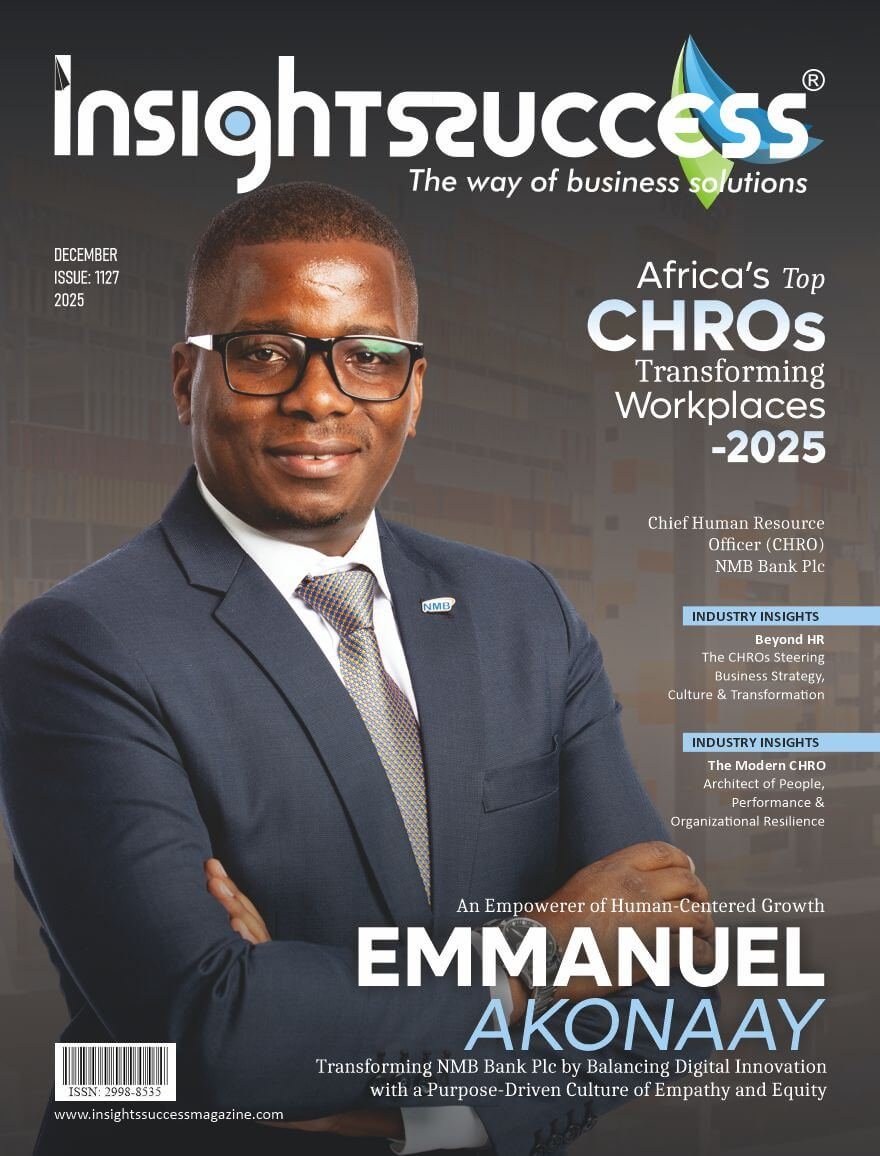
Africa’s Top CHROs Transforming Workplaces-2025
Africa’s Top CHROs Transforming Workplaces-2025 Across the African continent, a new wave of people-centric leadership is reshaping the future of work. This edition honors the exceptional Chief Human Resources Officers who are redefining organizational culture, championing employee well-being, and steering companies toward agile, inclusive, and future-ready people strategies. Quick highlights Quick reads

An Empowerer of Human-Centered Growth – Emmanuel Akonaay: Transforming NMB Bank Plc by Balancing Digital Innovation with a Purpose-Driven Culture of Empathy and Equity
In the dynamic arena of African finance, where technological speed must be balanced by human capital, the leaders who truly define organizational success are the architects of culture. They are the ones who recognize that the most critical asset is not the balance sheet, but the talent strategy. Standing at the forefront of this movement, and deservedly recognized as one of Africa’s Top CHROs Transforming Workplaces-2025, is Emmanuel Akonaay. A Journey of Gaining Multifaceted Experience Akonaay’s career journey has been shaped by diverse experiences across multiple sectors, including telecommunications, mining, FMCG, professional services, and banking. It is marked by strategic depth and diverse experience, spanning 15 years across consulting giants like Ernst & Young and vital sectors including manufacturing and mining, before arriving in banking. This varied background armed him with a holistic understanding of people management, from boardroom strategy to shop-floor realities. He began his career as a contact centre agent in a Telco Company, which laid the foundation for how customers should be handled and treated. He then joined the Motor Industry in the HR profession before joining the mining industry, where he built a strong foundation in HR practices. He later joined the Banking sector as Rewards Manager at Barclays Bank (now known as Absa Bank). In this role, he gained experience in compensation and benefits and got a deeper understanding of how rewards drive performance. After that, Akonaay moved into the manufacturing industry before joining Ernst & Young, where he learnt and gained exposure to HR consulting and best practices across different organisations. He joined NMB Bank Plc in 2014 in more senior HR roles. His arrival at NMB Bank was marked by immediate strategic impact; he initially joined as the Head of HR Shared Services. Later, he stepped up to lead the HR function before being appointed Chief Human Resources Officer (CHRO) in 2020. In this pivotal role, he is responsible for driving the execution of the entire people agenda, ensuring it aligns perfectly with the bank’s overarching vision. These experiences gave him a broader view of HR practices and equipped him to lead NMB’s people and culture agenda, focusing on building a strong and future-ready workforce. However, Mr. Akonaay is more than a strategist; he is a Tech Enthusiast excited by the future of work. He has personally led foundational innovations around talent management, proactively laying the groundwork for the modern workplace and workforce across the bank. Holding an MBA and a Bachelor of Arts Degree from the University of Dar es Salaam, and certified as both an HR practitioner and a Director by the Institute of Directors Tanzania, he embodies the perfect fusion of academic rigor and forward-thinking operational leadership. Here is how Akonaay is building a robust, future-ready culture where human potential is the engine of financial transformation. The Custodian of Culture: From Support to Strategy A powerful career evolution forged Akonaay’s vision for Human Resources. Initially viewing HR mainly as a support function, his perspective matured to see it as a key driver of organizational culture, strategic alignment, and business growth. His inspiration has always been twofold: the opportunity to make a meaningful difference in people’s lives while simultaneously enabling organizations to reach their strategic goals. This leadership philosophy reached a pivotal moment at NMB Bank Plc with the launch of the bank’s comprehensive culture transformation program. As the custodian of the People and Culture function, Akonaay is responsible for reviewing the current workplace and shaping a future culture aligned with the bank’s ambitious medium-term strategy. This 3-year program acted as a defining moment. It provided a comprehensive understanding of issues and practical interventions to address them, along with clear KPIs and metrics. This experience fundamentally changed his perspective, cementing his commitment to data-driven decisions in HR. Akonaay has cultivated a team focused on enabling an environment where people can thrive. He believes his role is ultimately about: “Creating environments where both people and organisations thrive.” He is defining the next generation of African CHROs by placing purpose and culture at the center of business success. Investing in People: The Engine of Performance Akonaay’s strategic leadership is centered on the conviction that investing in human capital is the most potent driver of business performance. Under the bank’s medium-term plan, he led a dramatic scale-up of investment in people, raising the share of staff costs to total costs from 45% in 2019 to 57% by June 2025. This investment, following a comprehensive review of benefit plans, signaled a foundational commitment to employee well-being. Central to this transformation was the culture transformation program, which embedded core behaviors focused on collaboration and excellence. To enhance dialogue and engagement, Akonaay introduced platforms like SIKIKA forums for queries, the NMB Balance program focused on diversity, and the “Ask CEO” initiative, ensuring communication flowed freely between all levels. Furthermore, the Group modernized performance management through cascading objectives and automated review processes, boosting efficiency and transparency. The quantifiable results of these initiatives are staggering: attrition plummeted from 5% in 2019 to 3%, internal promotions soared from 47% to 91%, and critically, revenue per employee nearly doubled to TZS 441 million as of June 2025. “I can confidently say that these initiatives have yielded tangible positive outcomes.” Excellence and Equity: The Award-Winning Culture Akonaay’s success in balancing high performance with employee well-being is achieved through a simple philosophy: “operational efficiency and employees’ well-being go hand in hand.” He champions clear structures and automated processes to reduce complexity, allowing staff to focus on results. Simultaneously, policies promoting open-door practices, flexible working, and wellness initiatives ensure the culture is supportive and inclusive. “Combining efficient systems with a supportive culture creates an environment where people can perform at their best while feeling valued and engaged.” This commitment to human capital excellence has garnered significant external recognition. NMB Bank was named Employer of the Year 2022 and earned four awards at the 2023 Employer of the Year Awards. The bank also became the first local Tanzanian financial institution to achieve the prestigious
The CHROs Steering Business Strategy, Culture & Transformation
Beyond HR The Chief Human Resources Officer role has experienced one of the most radical changes in the time of modern executive leadership. Previously, it was mainly perceived as the role that supports the implementation of policies, ensures compliance, and handles employee-related processes, nowadays CHROs have gained significant power and are instrumental in steering business direction, culture, and organizational change. They are the first ones to make decisions that determine a company’s competitive advantage, innovation capability, and long-term survival. In a world where talent differentiates, culture is the most valuable asset, and change is the only constant, the CHROs have stepped out of the shadows and become most influential figures at the strategy table, thereby, directly impacting business success. From HR Leader to Strategic Architect The CHRO of the future is a strategist of business. They are the ones who guide companies through market changes, talent shortages, digital transformation, and raise of workforce expectations. Their choices have a ripple effect on the entire business, thus, they affect revenue growth as well as operational efficiency. When they merge the people strategy with the business objectives, CHROs become the enablers of a company to grow, renew, and adjust to changes. They are the source of information for the corporate strategy from which they bring updates about workforce trends, and behavioral changes, pinpointing the capability gaps and the most requisite skills of the future. Currently, CHRO has the power to decide not only what goals the business should reach, but also the way to get there. Shaping Culture as a Competitive Advantage Culture has turned into the main factor for the overall organizational performance and one of CHROs major roles has become designing it. Through their influence on values, behaviors, and experiences, they shape the participants’ way of collaborate, innovate, and lead. CHROs become the architects of cultures that can attract brilliant talents and are characterized by psychological safety and sense of belonging. They establish such environments where people are not only empowered and supported but also they get inspired to give their best. Where employees selecting workplaces based on meaning, purpose, and wellbeing, the cultural strategy developed by CHROs plays a vital role in ensuring their success continues. Leading Transformation in a Digital Age Organizational transformation of any kind (digital, structural, or cultural) goes beyond changing technology or processes. It requires people to have different ways of thinking, learning, and working. For this very reason, CHROs are the ones at the center of transformation initiatives. They oversee change adoption, capability building, leadership readiness, and attitude changes. They establish learning ecosystems, reskilling initiatives, and agile workforce models that make organizations capable of rapid and efficient evolution. Transformation without people is doomed. CHROs make sure that it is inclusive, respondents, and empowers them. Championing Employee Experience and Wellbeing Today’s workforce wants more than just jobs; they demand trust, flexibility, growth, and wellbeing. CHROs are the ones who create the structures that make it possible to meet these demands. CHROs through implementing hybrid work models, mental health programs, career pathways, and employee recognition schemes, shape the entire employee journey. This experience focus leads to engagement, retention, and performance strengthening. When employees flourish, then companies thrive. The CHRO is the one who makes sure that flourishing is part of the system. Building Future-Ready Leadership Developing leadership skills is not an option anymore—it is a strategic necessity. CHROs plant the seeds of leaders’ growth who have the skills to handle uncertainty, welcome innovation, and lead with their emotions. They architect leadership pipelines, succession plans, coaching initiatives, and learning platforms that prepare executives of every level for facing tomorrow’s challenges. Leading great companies is the work of great leaders. CHROs make sure those leaders are prepared. Enabling Diversity, Equity & Inclusion as a Business Driver Instead of a compliance requirement, DEI has turned into a business plan. CHROs promote inclusive practices that become major sources of creativity, innovation, and better decision-making. These should be the mechanisms where every single person feels valued and is given the opportunity to contribute fully. This openness not only strengthens company culture but also affects brand reputation, talent attraction, and market performance. The CHROs are the ones who lead the company to mirror the diversity of the world where it serves and grab the benefits coming from it. The CHRO as the Heartbeat of the Organization Besides any function or title, the CHRO remains the caretaker of the organization’s most priceless asset: its people. They are fully aware of the workforce’s aspirations, difficulties, and potential, and transform this awareness into strategies that bring business success. They have the power everywhere within the enterprise to implement their ideas—not only in culture, innovation, leadership, operations, and transformation but also beyond those realms. Beyond HR—Into the Future Today’s CHRO is far from just managing human resources. They are the ones who put into question the companies’ way of thinking, working, growing, and leading. They do it by shaping strategy, building culture, and steering transformation with their insight, empathy, and vision. The organizations that are most successful today are those where CHROs have not only the opportunity to be heard but also take the lead in the discussion. Read Also : Architect of People, Performance & Organizational Resilience

Architect of People, Performance & Organizational Resilience
The Modern CHRO The Chief Human Resources Officer role has extended its influence from beyond the traditional territories of the function. Today, a CHRO does not only maintain organizational policies or monitor changes in the HR operations but also initiates the people strategy, manages company culture, and encourages the organizational capacity to withstand the time of unpredictability and steep change. As tasks become more complicated and the desires of workers are always changing, the present-day CHRO is the one without whom the organization cannot be successful. Not only do they structure the way companies can attract and nurture talent, but how they can deal with upheaval, keep up with good performance, and create an atmosphere that is conducive to human flourishing. You can find CHROs being very actively involved in boardroom discussions, digital transformation projects, and culture dialogues where their strategic input is always most welcome and cannot be disregarded. Designing Workforce Strategies Aligned with the Future of Work Nowadays, the workforce expects from their jobs to have flexible hours, find some purpose in their work, get continuous development and have real connections. To meet these demands CHROs design comprehensive people strategies which help to unlock human potential in line with business goals. They foresee the future need for skills, spot shortfalls in grades and create a structure which allows workers to develop, get used to and even be leaders. This thorough approach makes sure that employees are not last in the list of priorities – instead, they become the main drivers of performance and innovation. CHROs achieve this by matching talent with vision as they lead companies through the unstable markets with clarity and confidence. CHROs as Culture Engineers of the Highest Level Among other things, culture has become a key factor which differentiates top-performing organizations in the battle for success. The CHRO is the pivotal figure in this process of both creating and deepening culture – being the promoter of the values, designing experience and building up the attitudes that result in high standards of performance. The present-day CHROs establish cultures that rest on the principles of inclusion, trust, collaboration, and accountability. They guarantee psychological safety, open up idea-sharing channels and establish mechanisms where being recognized and receiving feedback for continuous improvement is supported through a virtuous cycle. Good culture, unfortunately, is not something that occurs by chance but is carefully constructed with an eye on goals, and the CHRO is at the helm of operations. Transformation as a Business Partner Strategy Sense More often than not, transformation today is still associated with technology, but it certainly is not the only one—it is primarily about humans. Changes in technology, automation, hybrid work, and customer expectations call for new ways of thinking and working. CHROs help organizations get ready for such changes by engaging people, revising processes, and coordinating leadership. They see to it that workers are sufficiently skilled and supported to face changes while at the same time promoting agility, innovation mindset, and adaptive leadership. Despite the absence of CHROs’ contributions, transformation attempts are not successful due to people not being ready, not because there is a lack of technology. Making the Organization More Resilient These days, resilience has become one of the most important leadership concerns. Regardless of the source, be it economic uncertainty or workforce disruptions, the ability not only to endure but also to adapt is what is required for success in the long run. CHROs make the organization resilient by building it with strong teams, coming up with workforce strategies responsive to volatility and spreading the concept of wellbeing everywhere in the company. Among other things, they establish crisis management, succession planning, employee support, and change management frameworks thus securing that the organization will be able to survive through hardships and at the same time, remain rooted in its mission. Resilience is not only a business operation capability but also comes from a strong culture which, in turn, has been shaped by the CHRO’s influence. One of the major Distinctions of Modern Leadership: Employee Experience & Wellbeing Employee experience is one of the milestones of modern leadership. The CHRO makes sure that each and every touchpoint—getting onboard, career growth, recognition, interaction with leadership, and environment at work—creates an engaged workforce and is thus contributing to its success. Well-being has ceased to be a mere benefit and is now regarded as a strategic initiative. CHROs come up with plans which not only support mental but also emotional and physical health of employees as they know that performance and how employees feel at work are inseparable. Good employee experience leads to the company keeping its staff, becoming more creative, and being able to sustain success over time. Making DEI Into a Strategic Mandate Firstly, diversity, equity, and inclusion are not only compliance requirements, but business imperatives which affect innovation, brand reputation, and employee engagement. CHROs lead DEI strategy with transparency and accountably, thus making sure it is deeply rooted in behavior of leadership, talent practices, and values of the organization. By creating inclusive workplaces, they remove all barriers to the potential of the diverse viewpoints and at the same time, they evolve into an organization capable of handling complex issues easier and faster. Read Also : Legacy Branding in the Digital Age
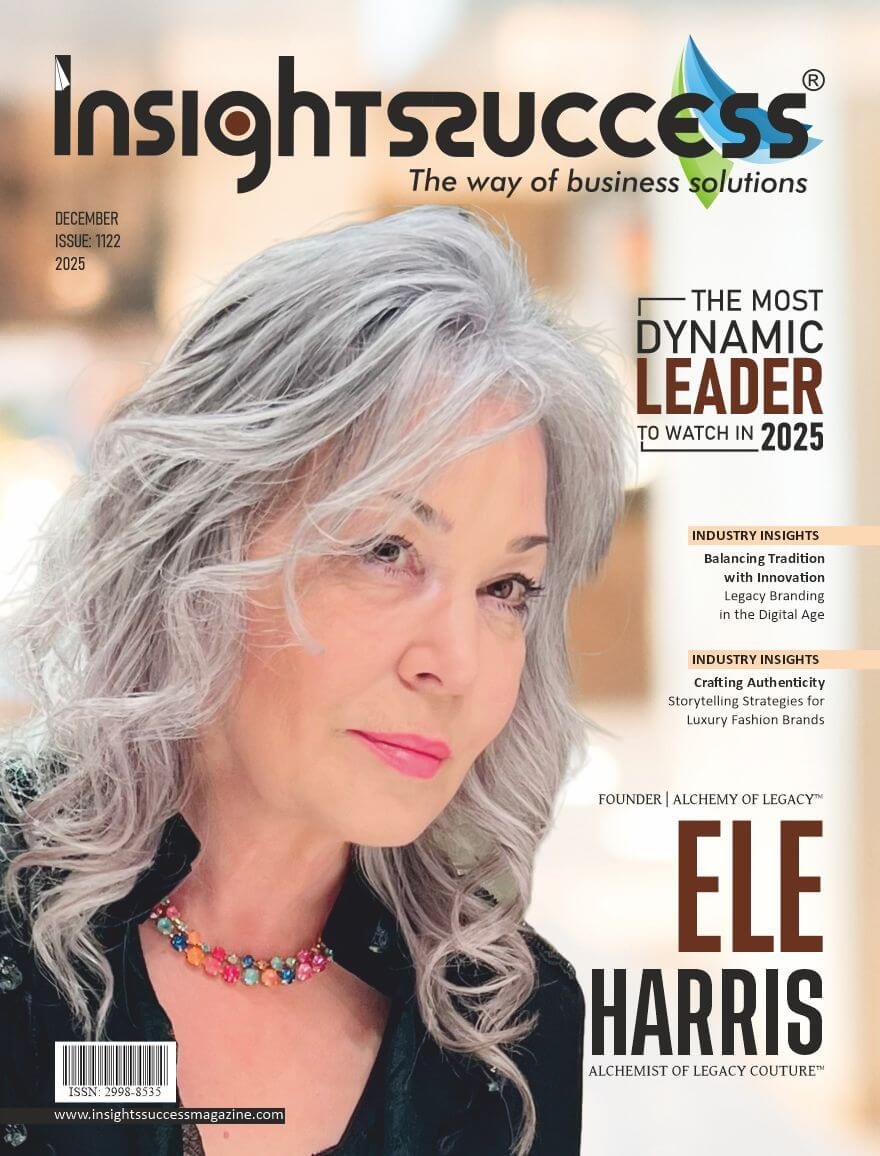
The Most Dynamic Leader To Watch In 2025
The Most Dynamic Leader To Watch In 2025 This edition highlights Ele Harris as a visionary force shaping the future of leadership. Celebrated for her innovative strategies and impactful decision-making, Harris exemplifies resilience, influence, and excellence. Explore her journey, leadership insights, and transformative impact, marking her as one of the most dynamic leaders to watch in 2025. Quick highlights Quick reads

Ele Harris: Alchemist of Legacy Couture™
There are those who follow scripts, and then, there are those who rewrite them – not in protest, but in poise. They are the seers of potentiality who realize that the greatest work of ‘art of life’ is not on one canvas, but in the whole gallery of the human condition. They seize the leadership of mere success and shape it into the gold of lasting legacy. Ele Harris is one such game-changing leader. Her life totals more to a career than to a symphony – movements, from the hard severity of finance to the fluid beauty of design, from the logic of law to the imagery of heritage. She has lived in spaces not commonly connected to each other: the boardroom and the salon, the balance sheet and the rite of beauty, the portfolio and the soul. Now, Ele is the mind behind Alchemy of Legacy™, a philosophy that redefines what we think we know about success and wealth. She doesn’t take people to the top of their ladders; Ele reminds them that they have wings. She doesn’t build empires, but ignites the ones that already exist within every individual – hidden, waiting, whispering to be noticed and set free. The Inheritance of Light As a child, Ele carried a particular kind of curiosity. She was fascinated by what lived between words, drawn to the invisible architecture that held relationships together. Born into a family where strength wore no armour and grace required no announcement, she learned early that the most powerful forces are often the quietest. Her formal education took her through law, finance, and economics. She built a successful financial consultancy, qualifying as a member of the Million Dollar Round Table – a distinction reserved for the top one to two percent of global financial professionals. Her analytical mind excelled in structuring domains, seeing systems where others saw confusion. Yet even as she mastered these disciplines, something remained restless. Her soul followed a more expansive route, one that couldn’t be contained by spreadsheets or satisfied by strategies alone. When Success Feels Hollow Success arrived on schedule. The consultancy flourished. Recognition followed. Yet somewhere in the midst of this achievement, a question emerged: Is this all there is? Ele began to notice patterns in her clients, highly successful individuals who had everything the world said they should want, yet something essential remained elusive: they had accumulated wealth, built empires, but not legacies. Driven by these questions, she pursued studies in psychosynthesis and psychology, wanting to understand not just the mechanics of wealth but the psychology of worth. She began to view money as energy, a tool that could either serve the soul or silence it. She studied languages, fascinated by how words shape reality. She trained in interior design, recognizing that external spaces reflect internal states. She began to see connections everywhere – between the way people arrange their homes and structure their lives, between the stories they tell themselves and the legacies they create. Building the Ecosystem The world wanted to categorize her. Are you a financial consultant or a designer? A strategist or a creative? The questions came with an implicit demand: choose! By now, Ele was beginning to understand something crucial: the most powerful work happens at the intersections. She wasn’t scattered; she was synthesizing. Her multidisciplinary passion wasn’t a weakness but a gift to honour. Her renaissance nature needed an ecosystem, and that realisation became a guiding light. With the same methodical care she once applied to financial portfolios, she began building a constellation of brands, frameworks and offerings – all orbiting the same central truth. What began as a financial consultancy transformed into a curatorial force, offering not just strategy but soul craft. She was helping people architect meaning, guiding them to articulate who they truly are and express it through legacy, leadership, and creative expression. This evolution crystallized into the Alchemy of Legacy™, an overarching framework, where affluence is intertwined with essence, and achievement with authenticity. This framework operates through four distinct quadrants: MERCURIAL awakens intuitive intelligence beyond rational thought. Destiny Rich reimagines wealth as a medium of meaning. ICONEEQ explores identity architecture and the luxury stories of the self. ETERNYTAS addresses legacy preservation, ensuring that what matters most endures beyond a single lifetime. Ele works and journeys with convictions that challenge conventional wisdom: that we are not here merely to succeed but to become – that our greatest achievement is the signature we leave behind – that each person holds a story that deserves to be witnessed, refined, and remembered. The Living Laboratory The principles Ele teaches are lived realities, tested daily in her own life. Balance, for her, is not about creating walls between work and life but recognizing the sacred dance between them. She embraces cyclical living by understanding that there are seasons for visibility and seasons for gestation, times for expansion and moments requiring stillness. She lives by what she calls the New Map of LIFE, guiding individuals across four pathways: Leadership, Identity, Fulfilment, and Eternal Legacy. When she feels imbalanced, Ele returns to her Daily Destiny Dials™, a personal recalibration tool connecting her to what matters most through journaling, ritual, reflection, and beauty. Managing multiple brands requires constant discernment through what she calls Sacred Sequencing™. She tunes into which aspects of her ecosystem are asking to lead and which need to hold space. Perhaps her most profound learning edge has been receivership – the ability to allow help, accept support, and embrace rest. Alchemy in Action When COVID-19 brought the world to a standstill, Ele chose to see invitation rather than disruption. At the time, she owned STORY, a fashion and lifestyle boutique, a salon of ideas, a gathering place for souls seeking beauty and meaning. As the world slowed down, Ele sped up her internal work. She reconnected with her earlier professions, recognizing that her greatest value lay in bringing beauty and intellect into conversation. During these months, she developed new products, embraced digital innovation, and

Legacy Branding in the Digital Age
Balancing Tradition with Innovation In today’s rapid-paced digital space, too many businesses aim to chase down trends, virality, and scale as fast as possible. Of course, that stuff matters, but in the process, it’s pretty easy to forget one thing: legacy branding. On the contrary to quick marketing tricks, legacy branding envisions a brand with staying power that will build real human connections across generations, linking a company’s beginnings to its future. What is Legacy Branding? It’s not just a nice logo or catchphrase; it’s more about the main beliefs, goals, and story of a company behind everything it does. When companies get legacy branding right, they create a brand that respects its history, stays current, and feels real. But it is not about mere consumption; it is about believing in stories, experiences, and brands you know you can always count on. A brand with clear heritage speaks volumes: You can trust us. It’s a kind of marketing that nowadays is sorely missing. Why does Legacy Branding Matter Now? Some people think that with continuous engagement on social media, online shopping, and non-stop communication, old-style branding no longer applies. Actually, just the opposite is true: the internet is a big help to legacy branding because now brands can connect with more but still stay true to what they believe in. Legacy branding in today’s digital world enables businesses to: Build Trust: A brand that opens up about its past and values always catches attention. Trust is something that grows over a period of time. Create real: Brands can share their stories, their important moments, and behind-the-scenes stuff online-that creates feelings. And people remember more how a brand makes them feel rather than what it sells. Evolve and Stay Relevant: A business that just chases trends will not last. It lets a brand change while staying real. How to Build a Legacy Brand Today? Building one now means mixing the old with the new. Here’s what businesses can do: Share Your Story Every brand should have a story in terms of its origin, purpose, or overcoming something. Honesty might just be the trick that will make people find your brand relatable. Instagram, LinkedIn, and YouTube give a company an avenue to make this interesting, fresh, and not some kind of history lesson. Keep Your Branding Consistent It grows with consistency. Consistency in appearance and feel engenders trust. Clear, consistent branding makes a brand dependable and trustworthy when the trends on social media change. Put Customers First It is dependent on good experiences. Online tools let firms get customer feedback-changing without losing who they are. Happy and heard customers make a brand’s emotional stronger. Change, Yet Remain True It respects the past, but it’s open to change. The best brands are in a continuous state of evolution, yet they never betray their core values. One great example is Apple. Their style has remained consistent-recognizable-while their tech just keeps on getting better. Online platforms demonstrate these changes with a continuing Apple feel. Challenges in Legacy Branding Online Notwithstanding some positive aspects of the Internet, there are also problems. All the noise of the Internet, with short attention spans and the need for constant content, drives brands off focus. The desire to go viral may override main values and confuse customers. For brands, this means messaging must be more deliberate: considering how every action taken on-line aligns with long-term goals. It’s a marathon, not a sprint. The Future of Legacy Branding It will only be appreciated with time as more and more people seek transparent and genuine brands. From AI to virtual reality, new technologies will enhance storytelling capabilities. However, these technologies should enhance a brand’s legacy, not be the focus over it. Only those brands that can combine it with the digital world will see the best results in keeping loyal customers and gaining new ones. Conclusion Success is accomplished in such a balanced way into the future. To put it in a nutshell, in a world of continuous change and noise online, it serves as a guide to what is real, reliable, and of value. That would mean creating a brand that respects its past, does well in the present, and prepares for whatever the future will bring. The companies which do the work on it aren’t just getting attention; they build relationships, shift culture, and leave marks that remain. Online platforms make it reach further, yet the main constituents stay the same: emotions, consistency, and authenticity. For businesses that apply them, a digital age is not a threat but rather quite an opportunity for development. Read Also : Legacy Branding in the Digital Age

Storytelling Strategies for Luxury Fashion Brands
Crafting Authenticity Luxury fashion brands tell stories through combining style with status and what people aspire to. Today, people want stories that move them and remain with them, not just excellent products. Luxury brands are gravitating towards allowing people to express who they are, and so labels should create stories that strike a chord. This calls for an invitation into a world of heritage, enhancement, and aspirations rather than mere show and tell of items. The Power of the Past: Making stories that Last The majority of luxury fashion brands have a history, sometimes a long one. What a brand can do best is highlight this past as something crucial to who they are, rather than just being something old. When labels actually share how they began, what they care about, and how their style morphed over time, people feel part of something timeless. Such consistency gives the label the aura that they are not going anywhere anytime soon. A label tells stories by weaving its past into them, items become special, and people feel fortunate they become a part of such a story that has been going on for years, turning buying into joining something lasting. This is a feeling that will keep the customers coming even after the first excitement is gone. Making things as a story: Showing how it’s done Every high-end product has some sort of method to its production-usually an outdated method that’s near impossible to reproduce. Fashion luxury brands benefit by giving some of this away. People relate more to stories of how things are made, such as factory stories, drawings of designers, or even people who sew each piece. Whenever people can see the work, the skill, and the heart that goes into something, it is no longer just physical; rather, it is art. A story like this makes them value it more and evoke emotions. Making up stories reminds every one of the worth of hard effort, talent, and real work in a world of fast fashion. Modern identity and purpose: Linking stories to values Luxury fashion today relates to what people believe in and how they view themselves; it’s not just about showing off. Many luxury fashion brands incorporate values, inclusivity for all, and concern for the world into their narratives. It is due to these stories that they are able to strike a chord with shoppers who want more than just a name when they purchase. Stories of morals appear to be true. When a label uses methods to help the world, consumers want to like labels that are in agreement with them. It is saying what one believes in that matches a person’s personal hopes with who they are, thus making help for a label into strong support. The Role of Feeling: Making Stories Memorable Stories work because of feeling. There are worlds created by luxury fashion labels, drawing people in through movies or designer’s notes. Luxury stories stick by focusing on feeling. A dress means feeling sure of yourself, a bag for standing on your own, or a smell for a memory. These are the feelings that create a strong friendship. Stories such as these are much more than an item may cost, can get deeply personal, and change the way a person sees themselves. Being There: Allowing Shoppers to Join the Story Now, stories also get a chance to participate, not only pictures and words. The opportunities that people get through experiencing the story are provided by the luxury fashion brands. Be it some weird digital fashion film, a creative party, or a pop-up shop on the history of the label- whatever it is, these opportunities make people closer to the label. Those are events that combine what people want and what is real. Customers join in, they don’t just watch. They feel stronger, and they remember more when they join the label’s world. Right now, live stories are very strong. Digital Storytelling Merging Old and New Even old luxury fashion companies know they need to accept now to stay in the game. Social media, VR, and online fashion shows have changed the way stories are told. Labels can use digital stories to reach more people while remaining special through carefully chosen content. Good digital stories do not make old stories forgotten; they make them better. Labels that combine their past with the styles of today create stories that are great and complete. Short-format films, collaborations with influencers, behind-the-scenes clips, and online experiences provide fresh ways to tell a story without losing any of the fancy feelings of luxury. Conclusion Storytelling, summarized, in the world of luxury is not just of sales; it is what the label is. The most striking narratives behind luxury fashion brands merge old and new, how things are made and the feeling, what’s special and what’s real. Told with heart, these stories change items into signs and shoppers into fans. As luxury evolves, storytelling remain one of the top priorities. With fantastic, personal stories, labels create desire, devotees, and what they will become known for. Read Also : Why Adaptability has Become the Ultimate Power Skill