






Blackstone to Invest Up to $600 Million in Neysa to Boost India’s AI Compute Capacity
Prime Highlights Blackstone has agreed to invest up to $600 million for a majority stake in Neysa, with the total deal value potentially reaching $1.2 billion, including planned debt financing. The investment aims to rapidly expand India’s domestic AI computing infrastructure as demand for GPU capacity accelerates. Key Facts Neysa currently operates around 1,200 GPUs and plans to scale beyond 20,000 GPUs, while India’s total deployed GPU count of under 60,000 is projected to grow nearly 30 times to over two million. Founded in 2023, the Mumbai-based startup employs 110 people and plans to more than triple revenue next year, supported by new funding for GPU clusters, networking, storage, and software development. Background Blackstone has agreed to invest up to $600 million in Mumbai-based AI infrastructure startup Neysa, as India steps up efforts to build its own artificial intelligence computing capacity. The deal gives Blackstone a majority stake in the company and could total $1.2 billion, including planned debt financing. Neysa also plans to raise another $600 million in debt to sharply expand its GPU-based infrastructure. The startup now runs about 1,200 GPUs and plans to grow to more than 20,000 as demand for AI computing increases. The investment comes at a time when global demand for AI chips and data center capacity continues to outpace supply. New AI-focused cloud providers, often called neo-clouds, are stepping in to offer faster and more customized services than traditional hyperscalers. Neysa provides GPU-first infrastructure to enterprises, government agencies, and AI developers that require local data storage and low-latency services. CEO Sharad Sanghi said customers in sectors such as financial services and healthcare prefer domestic compute solutions with faster support. According to Blackstone executive Ganesh Mani, India currently has fewer than 60,000 GPUs deployed. The firm expects that number to grow nearly 30 times to more than two million in the coming years, driven by enterprise and government demand. The new capital will fund large GPU clusters, networking, and storage systems, along with software development. Founded in 2023, Neysa employs 110 people and plans to more than triple revenue next year while exploring global expansion. Read Also: Meta Expands Nvidia Partnership, Plans to Use Millions of AI Chips in Major Data Center Push

Meta Expands Nvidia Partnership, Plans to Use Millions of AI Chips in Major Data Center Push
Prime Highlights Mark Zuckerberg said the expanded Nvidia partnership will help Meta deliver “personal superintelligence” to users worldwide. The agreement marks the first large-scale deployment of Nvidia’s Grace CPUs as standalone chips, alongside next-generation GPUs and Vera Rubin rack-scale systems. Key Facts Meta has committed to spending up to $135 billion on AI infrastructure in 2026and plans to invest $600 billion in the United States by 2028 to expand its data center network. The deal includes Nvidia’s Spectrum-X networking switches, security tools for WhatsApp AI features, and future deployment of Vera CPU systems beginning in 2027. Background Meta has expanded its partnership with Nvidia in a major deal that will see the social media company deploy millions of artificial intelligence chips in its data centers. The agreement includes Nvidia’s new standalone Grace central processing units, next-generation GPUs, and Vera Rubin rack-scale systems. Meta CEO Mark Zuckerberg said the partnership supports the company’s goal of delivering “personal superintelligence” to users worldwide. While both companies did not disclose financial details, industry analysts estimate the deal runs into tens of billions of dollars. The agreement marks the first large-scale deployment of Nvidia’s Grace CPUs as standalone chips rather than paired with GPUs inside servers. Meta also plans to introduce Nvidia’s upcoming Vera CPU systems starting in 2027. The deal covers Nvidia’s Spectrum-X networking switches, which connect GPUs inside AI facilities, and security tools to strengthen AI features on WhatsApp. Meta has committed to spending up to $135 billion on AI infrastructure in 2026. The company also plans to invest $600 billion in the United States by 2028 to expand its data center network. It currently plans 30 data centers worldwide, including major projects in Ohio and Louisiana. Despite the deeper Nvidia partnership, Meta continues to develop its own silicon and uses chips from AMD. Reports last year suggested the company was also exploring Google’s tensor processing units for future use. Following the announcement, Meta and Nvidia shares rose in extended trading, while AMD stock declined about 4%, reflecting market reaction to the expanded alliance. Read Also: Blackstone to Invest Up to $600 Million in Neysa to Boost India’s AI Compute Capacity

Most Impactful and Visionary Personality to Look For in 2026
Most Impactful and Visionary Personality to Look For in 2026 Marisha Kashyap exemplifies evidence-driven compassion, integrating rigorous research with human insight to deliver impactful, real-world solutions. Her work bridges data and lived experiences, advancing child and family wellbeing through innovative, empathetic interventions. Quick highlights Quick reads
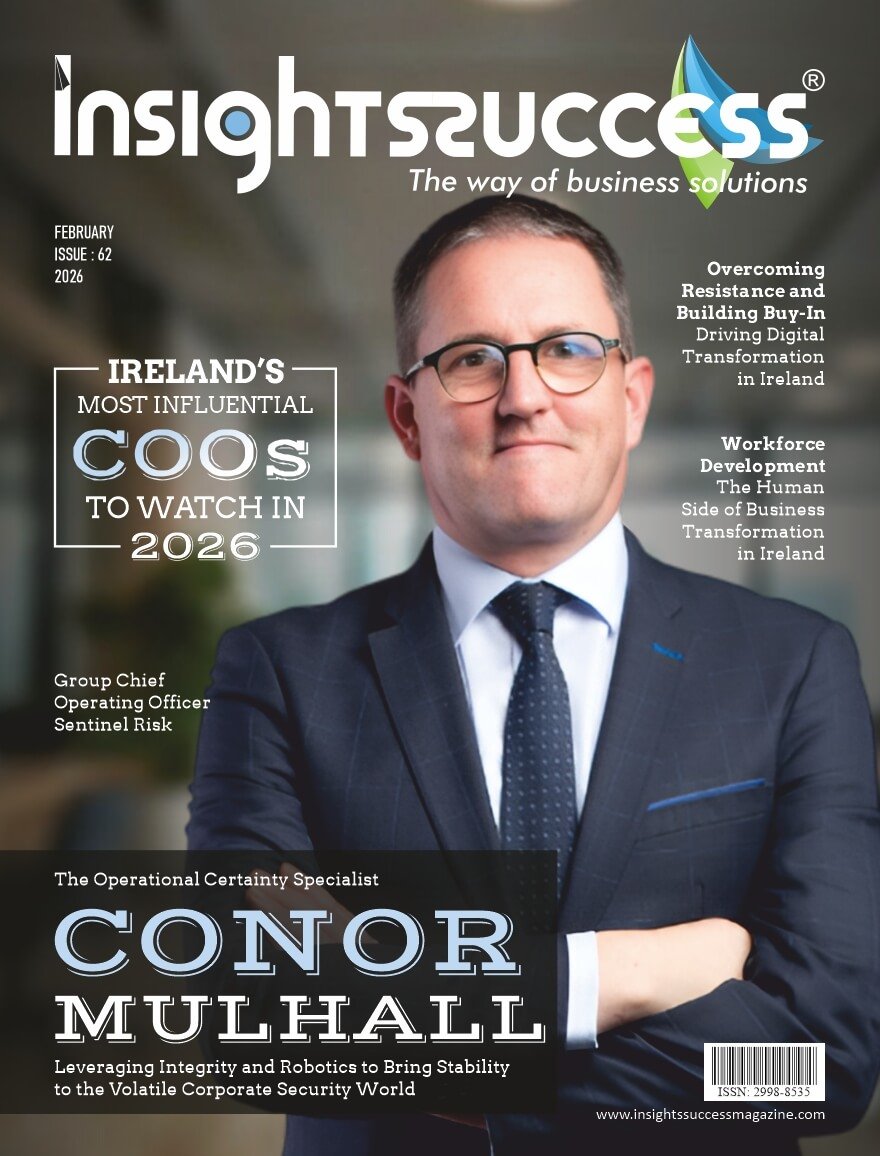
Ireland’s Most Influential COOs to Watch in 2026, February 2026
10 Best Logistics Companies to Watch in 2022 June2022 Lorem ipsum dolor sit amet, consectetur adipiscing elit. Ut elit tellus, luctus nec ullamcorper mattis, pulvinar dapibus leo. Lorem ipsum dolor sit amet, consectetur adipiscing elit. Ut elit tellus, luctus nec ullamcorper mattis, pulvinar dapibus leo. Ireland’s Most Influential COOs to Watch in 2026 This edition highlights visionary operational leaders redefining execution, scalability, and strategic growth across industries. This edition celebrates dynamic Chief Operating Officers who drive transformation, foster innovation, and strengthen organizational resilience—setting new benchmarks for leadership excellence while shaping Ireland’s evolving business landscape in a rapidly changing global economy. Quick highlights Quick reads

The Human Side of Business Transformation in Ireland
Workforce Development The economic story of Ireland shows its development through three numerical indicators, which include GDP growth, foreign direct investment, and international corporate presence. The impressive statistics that organizations present to the public hide their actual human stories. People drive all transformations that take place from rural family businesses to multinational companies situated in Dublin’s docklands area. Irish companies have increased their business transformation efforts during the last few years because they want to achieve their digital transformation and sustainability objectives and because regulations have changed and workforce needs have changed. Organizations achieve success through their strategic systems but they need to develop their capacity for empathy and resilience and leadership skills. Understanding the Emotional Core of Business Transformation in Ireland People find it difficult to adapt to any form of alteration. The process of transformation brings about uncertainty for organizations that implement new technological systems, reorganize their departments, and adopt hybrid working arrangements. Employees may experience anxiety about their employment stability and the upcoming demands for new abilities, and the alterations to organizational culture that will occur in the workplace. Organizations should begin their transformation process by recognizing all existing problems instead of rejecting them. Employees can express their opinions through town hall meetings and open forums and one-to-one conversations. The human-centered approach creates shared ownership of the future path while minimizing resistance to change. Leadership and the Human Element in Business Transformation in Ireland The business atmosphere of Ireland possesses distinct characteristics that make it different from other countries. The country has a thriving native small and medium-sized enterprise industry, which coexists with international business operations. The process of change requires different leadership styles to succeed in both particular settings. Irish leaders who want to practice effective leadership should engage their teams through decision-making instead of using top-down methods. They develop their workforce through training programs, which also promote teamwork between different departments while establishing protected areas for testing new ideas. The development of new ideas grows when workers receive authority instead of being told what to do. Digital Innovation and People-Driven Business Transformation in Ireland The presence of technology in a workplace environment does not serve as a reliable method for achieving progress. Digital transformation success depends on the effectiveness of the support system which assists individuals during their transition process. The organization needs to implement three essential components: upskilling programs, mentorship initiatives, and platforms for ongoing learning. Ireland establishes itself as a leading educational and professional development hub that provides effective educational solutions for both organizations and individuals. The organizations that dedicate resources towards employee reskilling initiatives achieve two outcomes: they boost their operational performance, and they establish stronger employee connections. Employees who perceive that their employer supports their career development tend to adapt more effectively to organizational changes. Cultural Identity and Business Transformation in Ireland The fundamental element that unites organizations operates as an unseen force that maintains their social connections. The Irish business sector faces a challenge to maintain its cultural identity while pursuing necessary business transformation efforts. Irish workplaces create work environments that foster team collaboration through open dialogue and strong community bonds. Organizations should manage their operational processes because sudden changes in technology or organizational structure can disrupt their existing social bonds. Successful organizations maintain cultural continuity when they promote their fundamental organizational values. Organizations sustain employee morale through their practices of celebrating important achievements, conducting casual team meetings, and their focus on employee health programs. Trust development occurs through leaders who show empathy toward their team members and maintain an open-door policy during times of uncertainty. Sustainability and the Future of Business Transformation in Ireland The fundamental element that unites organizations operates as an unseen force that maintains their social connections. The Irish business sector faces a challenge to maintain its cultural identity while pursuing necessary business transformation efforts. Irish workplaces create work environments that foster team collaboration through open dialogue and strong community bonds. Organizations should manage their operational processes because sudden changes in technology or organizational structure can disrupt their existing social bonds. Successful organizations maintain cultural continuity when they promote their fundamental organizational values. Organizations sustain employee morale through their practices of celebrating important achievements, conducting casual team meetings, and their focus on employee health programs. Trust development occurs through leaders who show empathy toward their team members and maintain an open-door policy during times of uncertainty. The Human Future of Business Transformation in Ireland The development of Ireland as an international economic center requires discussions about its transformation to focus on human issues. Strategy, technology, and policy work as essential elements because they function as instruments. People serve as the primary forces that bring about organizational change. To achieve business transformation in Ireland, organizations need to listen to their leaders while granting authority to their employees and allowing their company culture to develop through transformation. The system operates successfully when advanced technology enables people to achieve their highest capabilities and the organization adopts environmental practices that reflect its core principles while developing collective ability to bounce back from challenges. Transformational change requires organizations to progress toward specific objectives. The organization needs to develop a work environment that fosters both innovative thinking and compassionate understanding. By putting human needs first in their transformation process, Irish businesses will gain the ability to control their future development while working together to build their future. Read Also : Driving Digital Transformation in Ireland

Driving Digital Transformation in Ireland
Overcoming Resistance and Building Buy-In The process of digital transformation in Ireland brings about a technological change that produces social transformations that impact all members of society, including businesses, communities, and individual people. The digital nation of Ireland establishes its resilience and future development through governmental support, active business ecosystems, and dedication to workforce training. The path toward our goals remains active. The process of transformation needs ongoing change, together with development for all people and methods that prioritize human needs. The digital transformation period in Ireland will succeed when the nation develops its ability to use new technologies through establishing a shared vision and developing the necessary courage and teamwork skills. The Growing Importance of Digital Transformation in Ireland The discussion about digital transformation in Ireland has gained increased traction through multiple factors, which include global competition, rapid technological progress, and the evolving needs of consumers and the requirement to establish operational resilience. The European headquarters of international technology companies in Ireland has created an environment that supports digital development. The establishment of major operations in the country by companies such as Google, Microsoft, Meta, and Apple has resulted in the development of a skilled workforce and a strong digital ecosystem. Organizations today need to develop their digital transformation strategy because it requires more than just implementing new technological solutions. The process requires organizations to reevaluate their current procedures while creating new customer interactions and establishing data-based decision-making processes which will be used throughout the organization. Government Initiatives that Support Digital Transformation in Ireland The primary driver behind digital transformation in Ireland comes from the active digital transformation policies which the government has implemented. The Irish government has declared that digital infrastructure and innovation represent the fundamental components required for national development. The National Digital Strategy which operates with Enterprise Ireland and IDA Ireland programs provides funding and advisory services together with global market access to businesses that require digital expansion assistance. The National Broadband Plan establishes digital access points in remote rural areas through its broadband infrastructure expansion project which enables these communities to access the digital economy. The public sector has achieved substantial progress in its digitization efforts. The government has developed online portals together with digital identity systems and e-health services to create better citizen interactions while increasing operational transparency. The digital tools used in these efforts achieve two outcomes because they enhance operational efficiency while creating public services that are accessible to all. How Businesses Are Leading Digital Transformation in Ireland Irish businesses are using various methods to achieve digital transformation through their current digital transformation efforts. Smart technologies together with Internet of Things systems enhance manufacturing operations through better production processes and improved maintenance prediction. Fintech innovation in finance creates new methods for customer interaction and helps businesses meet their legal obligations. Retailers use e-commerce platforms together with data analytics to create customized shopping experiences and manage their supply chains effectively. The worldwide disruptions created a need for organizations to implement remote work technologies together with digital collaboration tools which resulted in an immediate increase of this trend. What started as an essential requirement has transformed into a permanent strategic advantage. Companies now incorporate hybrid work patterns together with digital customer experiences and AI-based decision-making systems into their operational frameworks. Challenges Facing Digital Transformation in Ireland The digital transformation process has made excellent progress in Ireland, but it faces various obstacles that hinder its progress. The digital skills gap stands as one of the most critical challenges that requires urgent attention. Companies need advanced AI, cybersecurity, data science, and cloud engineering skills because technology evolves at a faster rate than their current capabilities. The risk from cybersecurity threats continues to grow because organizations need to protect their digital data, which they acquire during their operational processes. Organizations need to protect their digital information because they create extensive data through their business activities. To achieve resilience, organizations need to spend money on safe systems, employee training, and system management. The Human Side of Digital Transformation in Ireland Digital transformation focuses primarily on people as its central element. The success of digital transformation in Ireland depends on how effectively organizations empower their workforce to adapt and innovate. The workforce strategy of Ireland now prioritizes upskilling and lifelong learning as its primary focus. Professional development programs between universities and training institutes and corporate learning programs work together to provide professionals with skills that meet future requirements. The establishment of industry partnerships, together with flexible educational models, creates new pathways for people to pursue continuous learning opportunities. Organizations must develop innovative work environments while they maintain an equal focus on new ideas. Digital programs experience organic growth when employees receive support to test new ideas and rebuild current processes. Leadership needs to develop the environmental atmosphere through which people understand technological goals together with their emotional needs and their need for clear explanations. The Future of Digital Transformation in Ireland The future of digital transformation in Ireland shows positive progress according to current trends. The implementation of artificial intelligence and blockchain and advanced robotics together with green technology solutions will transform existing industry standards. Sustainability is expected to become a defining theme. Digital tools already optimize energy consumption and enable carbon footprint monitoring while supporting circular economy initiatives. Ireland will boost its climate action initiatives through digital innovation in both renewable energy and smart infrastructure development. The ongoing partnership among academia and government and industry will continue to hold critical importance. Ireland achieved success by combining its research capabilities with commercial applications and this partnership will drive future digital advancements. Conclusion The process of digital transformation in Ireland brings about a technological change which produces social transformations that impact all members of society including businesses and communities and individual people. The digital nation of Ireland establishes its resilience and future development through governmental support and active business ecosystems and dedication to workforce training. The path toward our goals remains active. The process of transformation needs ongoing change

The Operational Certainty Specialist – Conor Mulhall: Leveraging Integrity and Robotics to Bring Stability to the Volatile Corporate Security World
The times of the current era are becoming increasingly dangerous. Especially since the business world has become phygital, holistic, and robust, corporate security has become the paramount factor in every enterprising entity’s operational smoothness—particularly for organizations operating across regions, regulatory environments, and cultural contexts. It is where the role of a Group Chief Operating Officer, like Conor Mulhall, becomes most crucial and widely influential. Helming Sentinel Risk from January 2025, Conor Mulhall has completely boosted the company’s strength in providing cost-effective and professional corporate security solutions at both operational and strategic levels. With his own specialization in business re-engineering, re-focusing, and re-growth, Conor used his vast and multidisciplinary experience to put Sentinel Risk amongst the top corporate security providers in the world, supported by teams that bring local insight and varied professional backgrounds into every engagement. Conor Mulhall holds a Bachelor of Business, a First Class MBA, and is a Certified Six Sigma Black Belt. He says that at Sentinel Risk, his team’s global reach, combined with exceptionally delivered local-level services, distinguishes them in a fiercely competitive corporate security world. “We can assure you that irrespective of the size and scale of your local and global operations, we can design the most reliable solution for you.” The Foundation of Service: Business and Problem-Solving Conor ‘s passion for business and service was evident from a young age, starting with simple ventures and culminating in a striking example of entrepreneurial problem-solving during his school days. This inherent drive, coupled with a fundamental enjoyment of business, drew him to the security and risk management sector. He finds the service industry fascinating, noting that clients typically approach Sentinel Risk when they are “under pressure” or “in trouble,” not when celebrating happy moments. This reality aligns perfectly with his passion for problem-solving and his strong willingness to help people. Conor Mulhall sees the core of the security industry wrapped up in these two qualities: they are called upon when people truly need assistance, and his goal is always to provide that help effectively. Leadership Philosophy: Confidence, Outcome, and Empowerment As Group COO in a high-stakes, discrete industry, Conor Mulhall defines his leadership philosophy around three critical tenets. The most important goal is to give people confidence. Secondly, he stresses not over-promising but ensuring that if Sentinel Risk commits to a task, they do it, regardless of cost. The outcome is paramount: “Number one is to solve the problem. And if you solve the problem, everything else kind of falls into place.” His philosophy also relies heavily on empowering staff on the ground. Recognizing that front-line personnel often operate in very different environments and circumstances, teams are trained and trusted to make the right call in the moment. Conor ensures his staff knows they are backed up: even if a decision proves wrong, the company will solve the problem and learn from the mistake. Consistency Through Quality: Investing in People Sentinel Risk’s service portfolio is diverse—spanning risk assessment, security audits, executive protection, and crisis management—but Conor Mulhall ensures consistency through the quality of the people they employ. He explicitly states that while a top-quality employee may cost “a few pounds more” than standard labor, the investment is necessary and worthwhile. Ireland’s talent landscape has played a meaningful role in strengthening Sentinel Risk’s operational capability. Conor views immigration as a positive factor for the business, enabling the company to draw from a strong base of Irish professionals while also benefiting from experienced international talent now based in Ireland. This combination deepens internal leadership, brings a broader operational perspective into decision-making, and enhances the value delivered to clients operating across multiple jurisdictions and risk environments. The company looks after its team by offering flexibility to align with the modern, 24/7 service requirement, understanding that traditional 9-to-5 schedules no longer apply. To maintain excellence across services like risk management and technical surveillance countermeasures (TSCM), the focus is always on: employing the best talent, ensuring they are really well trained, and deploying them in the right situation. Once people with the right expertise, local understanding, and operational judgment are in the right positions, the firm achieves success “ninety-five, ninety-nine percent of the time.” Continuous Anticipation: Two Ears, One Mouth In an era defined by rapidly shifting geopolitical risks and pervasive cyber threats, Conor guides Sentinel Risk using a philosophy of continuous anticipation. He attributes this mindset to the company’s founder, who stressed the classic principle: “two ears, one mouth.” This translates into an active strategy of listening to the security landscape. Sentinel Risk is constantly present at major industry events and conferences, not solely to solicit business, but to understand what’s happening. Conor emphasizes that insights gathered from a wide range of conversations—across markets, disciplines, and regions—often provide a more accurate picture than formal reports. Furthermore, the company maintains a proactive stance with clients, regularly checking in on their security situation—a practice that allows Sentinel Risk to anticipate needs and offer essential updates, evolving client relationships into true strategic partnerships. Global Reach, Local Reliability: The Network Mandate Conor Mulhall recognizes that adapting to global change requires a deep understanding of local nuances. Sentinel Risk balances its global reach with a commitment to reliable local service by meticulously building and vetting its partner network. For key markets like Paris or London, Sentinel Risk maintains established partnerships, relying on local experts who are known and trusted to oversee their work. Conor Mulhall stresses that they will only deliver local service if they are absolutely confident in the local provider’s ability. He illustrates the necessity of this approach: it would be nonsensical to send personnel unfamiliar with the local context (e.g., sending staff from Dublin to Ulaanbaatar) to conduct essential travel risk assessments. The true value lies in combining global oversight with people who understand the local environment, context, and way business is done on the ground. The headline suggested danger, but the local partner clarified that the demonstration was four kilometers away from the client’s route, allowing the CEO to proceed

Enabling Breakthroughs: The Impact of Applied Research on Real-World Problems
Applied research functions as a fundamental bridge which connects theoretical knowledge with its application in real-world solutions. Applied research exists to solve actual problems through its research work while fundamental research expands knowledge without immediate usefulness. The ongoing technological changes, environmental issues and economic inequalities of today have established a higher value for applied research. The research allows industries, governments and communities to obtain knowledge which helps them make decisions, enhance their operational methods and create better living conditions. The healthcare sector, agricultural industry, engineering field and educational system all show the effects of applied research. The process converts scientific knowledge into practical solutions which leads to technological advancements and environmental conservation. Applied research acts as a driving force which enables progress through its work on developing affordable medical solutions, increasing agricultural productivity and creating sustainable infrastructure systems. Driving Innovation The research dedicated to practical application achieves its maximum value through two main outcomes which include creating innovative solutions for urgent societal problems. It demonstrates that theoretical findings lead to practical results which enable the development of technologies that solve essential problems related to energy sustainability and environmental protection. Applied research has advanced renewable energy technologies aimed at reducing dependence on fossil fuels and addressing the challenges of climate change. The development of digital technologies has transformed industrial sectors because it has improved their productivity, efficiency and overall operational performance. Partnerships provide a platform through which the organizations can pool their resources, expertise and their knowledge thus leading to development of solutions that can attain widespread success. Scholars with close connections to industry partners uncover real-life industry issues in which they formulate their research objectives. This collaborative strategy will ensure that the new developments would be both theoretically sound, practical and cost-friendly as it will encourage innovation, speed up the implementation process, make it more reliable, scalable and have a lasting contribution in various fields and societies. Solving Societal Challenges Findings from applied research in the health sector have helped in saving and improving the outcomes of the patients by creating vaccines, diagnostic tools, and treatment plans. It allows the parties concerned to be able to translate the scientific findings into workable solutions especially in situations of international health outbreaks, which require quick and decisive intervention. The specified potential highlights the significance of applied research as a proactive step to be taken to guarantee the safety of the population and improve healthcare infrastructure. Along with the healthcare sphere, applied research should be implemented when it comes to some of the most crucial concerns of poverty, learning, and environmental sustainability. It has enabled development of high yield, climatically resistant crops that will ensure food security in case of different weather conditions. Such insights are applied in the development of learning resources that enhance the knowledge acquisition among students in learning institutions regarding their interest and performance. It focuses on the practical applications of science to ensure that scientific advancement brings a practical and a meaningful value to the society, as well as enhance inclusive development, innovation, resilience, and long-term socio-economic stability in the diverse communities of the world. Economic and Industrial Growth The economic impact of the applied studies is great, as they lead to industrialization and competitiveness. Applied research assists companies to improve merchandise, processes and reduction of expenses. This in turn makes them more competent in the international markets. The field of applied research has made many contributions in other industrial sectors such as manufacturing, information technology, pharmaceuticals leading to the creation of new products and services which meet the dynamic needs of the consumers. Besides, applied research contributes to job and skill base creation. As new technologies and innovations are introduced, the demand of highly educated professionals to use and administer the innovations are on the rise. This creates employment and encourages the construction of knowledge-based economy. The governments also recognize the necessity to invest in applied research to improve economic growth, increase entrepreneurship, and increase national competitiveness, stimulate ecosystems of innovation, enhance industry-academia partnership and develop productivity, and promote long-term sustained economic growth in regions. Conclusion Applied research is an important connection between knowledge and practice. Its real-world applicability, innovation, and economic growth also indicate its importance in the contemporary society. Applied research guarantees the practical benefits of scientific discoveries to people and society as it is concerned with practical results. With the constant changes in the world, and the necessity to solve the issues that can emerge in an organized manner, applied research will remain an invaluable instrument of the rapidly evolving world, offering resilience, sustainability, inclusive growth, and long-term transformation of societies of all kinds across the world. Read Also : Pathbreaking Initiatives: Applied Researchers as Catalysts for Business Innovation and Growth

Pathbreaking Initiatives: Applied Researchers as Catalysts for Business Innovation and Growth
The role of Applied researchers is fundamental in applying scientific knowledge to practical solutions which energize business advancement and economic development. In contrast to theoretical research, the applied research is aimed at the solution of real-world problems, which allows the organizations to improve productivity, develop new products, and address the changing market needs. With a growing competitive and technologically intensive global economy, businesses are now depending on the applied researchers to fill the gap between the laboratory discoveries and commercial application. Not only does their work speed up the innovation cycles, but it also increases the capacity of an organization to adapt and scale in challenging environments. Applications research has now become imperative in the present business environment where the principle of disruption is unrelenting and the demands of clients are changing at a high rate. Bridging Market Needs The role of applied researchers is to transform scientific discoveries to market needs. They detect business requirements through the realization of technological opportunities and market challenges that makes them find new solutions that bring about real business gains. Their work starts with a complete assessment of industry problems which they use to develop and test solutions that will work in actual situations. This practical orientation makes sure that the research findings are not limited to the scholarly publications but they are converted into practical strategies and technologies. Besides this, applied researchers are important in ensuring that innovation is matched with customer needs and market trends. They undertake feasibility tests, prototype testing and pilot test to test ideas before full scale implementation. This organized methodology helps to decrease doubt and maximize chances of successful business development. Further, they make sure that innovations are relevant, scalable and can be used to achieve long term value by constantly interacting with the stakeholders such as the customers, engineers and business leaders. Driving Product Innovation The contribution of applied researchers to product innovation is one of the most important contributions by applied researchers. They use the principles of science and new technologies to develop new products that help in adding value to customers and diversify businesses within competitive markets. It involves the creation of intelligent technologies, new materials, and online solutions to meet new demands. Their experimenting, test, and refining capabilities make organizations introduce innovative products in the market easily. Further, they contribute to iterative innovation whereby products are constantly enhanced because of user feedback and performance records. In this manner, businesses are kept abreast with changing customer preferences and the technological changes. Organizations, through the alignment of the product development cycles with research, can obtain the shortest time to market at a relatively high quality and performance standards. Applied researchers are also important in enhancing operational efficiency by innovating processes. They examine the current workflow, find areas of inefficiency, and introduce performance improvement measures. Enabling Strategic Growth In addition to the short-term innovation, applied researchers play a role in strategic development of organizations. Their effort facilitates short term planning as they can detect trends, evaluate technological changes and determine the possible risks and opportunities. Such vision helps companies to anticipate the changes that take place in the industry and allow them to become pioneers in their markets. Through research management in strategic decision making, organizations can build strong pipelines of innovations that can be maintained in the long run. Also, they help organizations diversify their products and venture into new markets by detecting the emerging technology and market gap. This innovation strategy is useful in keeping businesses competitive in a fast-changing environment and makes them less reliant on traditional revenue streams. Moreover, applied researchers can create a partnership among three parties: the academia, industry, and government, which creates an ecosystem that leads to collective advancement. Collaboration with universities and research institutes offers the access to the latest knowledge and resources, whereas cooperation with the industry will make sure that the research will be consistent with the needs on the ground. Conclusion Business innovation and growth cannot be achieved without applied researchers being the driving force. The fact that they can convert scientific knowledge to practical solutions empowers organizations to solve real world problems, create value and keep up with competition. Applied researchers help businesses to survive in a highly dynamic environment by mitigating the gap between research and application, driving product innovation, as well as supporting strategic decision making. Since industries will keep changing, the importance of applied researchers will be even more crucial in generating the future of innovation and economic development. Companies that are more focused on applied research and the culture of experimentation and collaboration will be in a better position to dominate the global market. Read Also : The Human Side of Business Transformation in Ireland

Marisha Kashyap: Architecting Hope Through Evidence and Compassion Through Data
There are those who tally figures. Others count lives. Marisha Kashyap combines the two because she knows that transformation really occurs in the area between statistics and souls. She is a welcome paradox in a world that is becoming increasingly obsessed with metrics and algorithms: a researcher whose heart beats as fast as her analytical mind, a scientist who recognizes families in her data sets, and a professional who turns cold numbers into compassionate interventions. Her story isn’t just about academic credentials or professional milestones; it’s about the patient, persistent work of building bridges between what we know and what we do, between evidence and empathy, and between research laboratories and living rooms where children grow and families either flourish or fragment. She refuses to accept the false choice between intellectual rigor and human connection, demonstrating daily that the most powerful solutions emerge when compassion meets competence and when curiosity intersects with care. The Crucible of Character: Early Formation and Foundational Years Every transformative leader carry within them the imprint of their earliest influences. For Marisha, this foundation was laid in a modest household where the trinity of curiosity, creativity, and discipline wasn’t just preached but practiced. Her parents understood something profound: that raising a child who asks better questions matters more than raising one who provides easy answers. This wasn’t a permissive household that confused curiosity with chaos, nor a rigid environment that mistook discipline for dogma. Instead, it struck that delicate balance where wonder and structure coexisted, where imagination was encouraged but grounded, and where questions were welcomed, but answers were expected to be earned through genuine inquiry. Her early friendships reinforced these values, creating a social ecosystem that celebrated intellectual exploration. During her schooling years, a pattern emerged that would define her trajectory. Marisha gravitated toward subjects grappling with the messy complexities of human existence- history with its layers of cause and consequence, politics with its tensions between ideals and interests, economics with its attempt to quantify human choice, and social sciences with their brave efforts to map the unmappable terrain of human behavior. These weren’t disparate interests but different windows into one fundamental question: how do societies function, how do communities thrive or fail, and what mechanisms govern human wellbeing? This intellectual hunger led Marisha to Delhi University Lady Shri Ram College for Women, where she pursued economics with intensity born from passion rather than mere ambition. She graduated in 2018 with First Class Division honors, but the real achievement was the framework she was building for understanding how resources, incentives, and human decisions shape outcomes. Yet even as she excelled in economics, she recognized its limitations. Numbers could describe patterns but couldn’t fully capture human experiences. This realization drove her toward Columbia University Mailman School of Public Health, where she pursued a Master of Public Health in Population and Family Health. Marisha’s thesis earned the highest designation of High Pass in 2020, demonstrating her ability to combine theoretical sophistication with practical relevance. She was becoming something rare: a professional who could speak multiple languages- economics, public health, human development, and translate between them to create solutions that were both evidence-based and genuinely humane. The Awakening: When Theory Meets Reality, When Purpose Finds Voice There are moments that divide a life into before and after. For Marisha, this watershed arrived during her undergraduate years at an internship with Anubandh, a nonprofit organization in Noida, India. She came as an intern conducting a needs assessment, armed with survey instruments and sampling methodologies. What she encountered was a classroom without walls, where every observation carried the weight of real consequence. Walking through these communities, Marisha noticed patterns her training had prepared her to identify- young children with telltale signs of nutritional deficiency, mothers carrying burdens beyond physical labor, and widespread anemia that steals energy and quietly undermines human potential. These weren’t abstract statistics in a journal. These were children whose futures were being constrained before they could begin, mothers whose capacity to nurture was being sapped by a preventable condition. This was a crisis hiding in plain sight, normalized by its ubiquity. The transformation came not in recognizing the problem but in refusing to accept documentation as sufficient response. Marisha looked to Brazil, where communities had developed the Community Kitchen Model. She proposed adapting this approach to these Indian communities, creating a targeted intervention to address the anemia affecting both children and mothers. This wasn’t just problem-solving; it was the emergence of a philosophy that would guide her entire career. Research wasn’t an end in itself but a means to transformation. Data collection wasn’t about filling databases but illuminating pathways to change. Evidence wasn’t meant to sit in academic journals but to inform interventions that could improve lives. The experience of seeing how applied research could translate into tangible community benefit ignited something that has never dimmed- her passion for public health as a discipline that combines rigorous inquiry with compassionate action, that transforms understanding into intervention. The Professional Crucible: Evolution Through Challenge and Innovation The trajectory from that formative internship to her current standing as an emerging leader reads like a case study in resilience and adaptability. From her earliest roles, Marisha navigated the balance between achievement and setback, learning hard lessons about perseverance, the value of mentorship, and the sustaining power of collegial support. Then came 2020. Just as COVID-19 began reshaping the world, she was deeply engaged in a community-based health education program for unhoused children and families in Bronx, New York. This population, already among the most vulnerable, faced unprecedented challenges as the pandemic exposed and exacerbated existing inequalities. The challenges were formidable. Research funding contracted. In-person field opportunities vanished. Collaboration became complicated as teams scattered to remote locations. A lesser commitment might have simply paused. Marisha saw something different: an opportunity to innovate, to rethink fundamental assumptions about how research could be conducted. She began exploring virtual data collection methods that could maintain rigor while respecting safety constraints. She developed remote community