






How Global Ecommerce Platforms Simplify Cross Border Selling
Selling online is no longer limited by geography. Today, businesses of all sizes can reach customers across continents with just a few clicks. However, expanding into international markets comes with challenges that go far beyond setting up a website. Currency differences, shipping logistics, taxes, compliance rules, and customer expectations all add layers of complexity. This is where a global ecommerce platform plays a critical role. These platforms are designed to help businesses manage cross border selling more efficiently while maintaining a consistent customer experience. This article explores how global ecommerce platforms simplify international commerce and why they are becoming essential for modern online businesses. Understanding Cross Border Ecommerce Cross border ecommerce refers to selling products or services online to customers in other countries. While the opportunity is significant, the process can be complicated. Businesses must navigate customs requirements, international shipping costs, delivery timelines, and local regulations. Without the right systems in place, these challenges can slow growth and increase operational risk. Global ecommerce platforms aim to centralise and automate many of these processes. Centralised Management for Global Sales One of the key advantages of global ecommerce platforms is centralised control. Instead of managing separate systems for each market, businesses can oversee orders, inventory, and fulfilment from a single dashboard. This unified approach reduces confusion and allows teams to respond quickly to changes in demand. Centralisation also helps maintain consistency across regions, ensuring that pricing, branding, and service standards remain aligned. 1. Simplifying International Shipping Shipping is often the most complex part of cross border ecommerce. Different carriers, delivery times, and customs procedures can create delays and unexpected costs. Global ecommerce platforms typically integrate with multiple logistics providers, allowing businesses to compare shipping options and select the most efficient routes. Automated documentation and tracking also help ensure that shipments move smoothly through customs and reach customers on time. 2. Handling Currencies and Local Pricing Customers expect to shop in their local currency and understand the final cost before completing a purchase. Global ecommerce platforms support multi currency pricing and localisation, making it easier for businesses to display accurate prices across different regions. This transparency builds trust with international customers and reduces cart abandonment caused by surprise fees or unclear pricing. 3. Managing Taxes and Duties Taxation and import duties vary widely between countries. Calculating these manually can lead to errors and compliance issues. Many global ecommerce platforms include automated tax and duty calculations based on destination country rules. This helps businesses stay compliant while giving customers clarity about costs upfront. Clear tax handling also reduces the likelihood of delivery delays or rejected shipments. 4. Improving the International Customer Experience Customer expectations are high regardless of location. Global ecommerce platforms help businesses provide a consistent experience by supporting local language options, region specific delivery estimates, and flexible payment methods. They also enable better communication through automated notifications and order updates. These features help international customers feel confident and informed throughout their shopping journey. 5. Streamlining Returns Across Borders Returns can be especially challenging in cross border ecommerce due to shipping costs and logistics. A global ecommerce platform can simplify returns by offering structured workflows, local return options, and clear policies. Efficient returns management not only reduces operational costs but also strengthens customer trust, which is crucial when selling to overseas markets. 6. Gaining Insights From Global Data Operating across multiple regions generates valuable data. Global ecommerce platforms collect insights on sales performance, customer behaviour, shipping efficiency, and return rates across markets. Businesses can use this data to identify trends, optimise inventory placement, and refine market entry strategies. Data driven decision making becomes easier when all information is available in one system. 7. Supporting Scalable Growth As businesses grow, their operational needs evolve. Global ecommerce platforms are built to scale, allowing companies to add new markets, warehouses, or sales channels without rebuilding their entire infrastructure. This scalability supports long term growth and makes international expansion more manageable and less risky. Conclusion Cross border ecommerce offers significant growth potential, but it also introduces operational complexity that can overwhelm unprepared businesses. Global ecommerce platforms play a vital role in simplifying international selling by centralising operations, automating logistics, and improving customer experience. From shipping and taxes to returns and data insights, these platforms provide the tools needed to operate efficiently across borders. For businesses looking to expand globally, understanding how these platforms support cross border commerce is an important step toward sustainable and successful international growth. Read Also: Financial Strategies for Creative Entrepreneurs to Balance Passion & Profit

Lalit Mishra: Redefining HR Leadership
With over 25 years of distinguished experience in Human Resources across India and global markets, this accomplished HR leader brings deep expertise across the automotive and pharmaceutical sectors. Currently serving as HR Head – India at Musashi Auto Parts India Pvt. Ltd., he leads multi-location HR operations while also contributing as a key member of the global HR Steering Committee and expert panels, influencing enterprise-wide people strategies. Their career is defined by strategic clarity, operational excellence, and a strong ability to align human capital initiatives with business objectives. He has successfully led greenfield projects, supported corporate acquisitions, and implemented comprehensive HR frameworks that have enabled organizations to outperform industry benchmarks in culture, leadership effectiveness, and employee engagement. A certified Independent Director and Executive Coach, he is widely recognized for driving transformational changes in talent development, performance management, and organizational design. His work has earned multiple national and global awards for outstanding HR contributions to business success. Known for building and mentoring high-performing global HR teams, he collaborates closely with senior leadership to shape long-term organizational vision and growth agendas. Passionate about purpose-led leadership, he continues to champion people-centric strategies that create sustainable value, resilient cultures, and future-ready organizations.

Review of TrayiVāṇī – Eternal Verses on Peace, Silence & Discernment
In an era saturated with opinions, notifications, and reactive speech, TrayiVāṇī – Eternal Verses on Peace, Silence & Discernment arrives not as a loud proclamation, but as a composed, luminous pause. It is a book that does not demand attention; it earns it—by inviting the reader inward. Rooted in the timeless triad of Peace (Śānti), Silence (Mauna), and Discernment (Viveka), TrayiVāṇī offers a contemplative architecture for living wisely in a noisy world. At its core, TrayiVāṇī is structured around three original Sanskrit shlokas, each unfolding into layered reflections that move from inner stillness to ethical action. The journey is deliberate: from perceiving time correctly, to purifying thought and speech, to understanding how words shape destiny. The book’s philosophy is simple yet profound—that silence is not the absence of sound, but the presence of awareness; and that speech, when born of discernment, becomes a creative force rather than a karmic burden. This makes the text both a spiritual companion and a practical manual for everyday life. One of the book’s most compelling strengths is its universality. While firmly anchored in Sanātan philosophical thought, TrayiVāṇī speaks effortlessly across cultures, professions, and belief systems. Students encounter guidance for restraint in the digital age; professionals discover tools for mindful leadership and ethical communication; elders find resonance with reflective living. The book draws upon global wisdom traditions—without dogma—allowing readers of all faiths and none to find relevance. It is rare to encounter a work so deeply rooted yet so broadly accessible. Authored by Dr. Alok Kumar Bhargava, a scholar-engineer and dharmic thinker, the book carries the weight of lived insight. Dr. Bhargava’s background bridges precision and philosophy—engineering discipline meeting spiritual inquiry. His more than two decades of contemplation on silence, speech, and ethical action culminate here with quiet authority. Rather than preaching, he models a way of seeing—where thought becomes prayer, and speech becomes responsibility. This balance of intellectual clarity and spiritual humility is what gives TrayiVāṇī its rare credibility. Originally composed in Sanskrit, the book has been translated into Hindi, English, French, Russian, and Chinese, extending its reach to a truly global readership. The translations preserve the contemplative cadence of the original verses while making the insights accessible across linguistic boundaries. Available in premium coffee-table hardcover (A4), novel-size edition (A5), and digital formats, TrayiVāṇī is designed both as a reader’s companion and as a keepsake text—something to return to, mark, and reflect upon. Its visual presentation, including color pages and elegant typography, reinforces the sense that this is not a disposable book, but a lasting one. Beyond print, TrayiVāṇī has evolved into a living, multimedia philosophy. Through its digital presence—particularly on YouTube, Facebook, and Instagram under @trayivani—the book’s ideas are shared through readings, reflections, and short contemplative pieces. These platforms do not dilute the message; they extend it, bringing ancient wisdom into contemporary formats without losing depth. The result is a growing community of readers and listeners who engage with TrayiVāṇī not merely as content, but as a practice. Critically, the book has begun to receive mainstream recognition for its distinctive contribution. In 2025, leading media discussions—most notably coverage by Mid-Day—highlighted Dr. Bhargava among the most inspiring contemporary authors, acknowledging TrayiVāṇī as a work that addresses one of the defining crises of our time: the collapse of mindful communication. Such recognition underscores what readers already sense—that this is not just another spiritual book, but a timely intervention. What makes TrayiVāṇī especially relevant is its social dimension. It reframes speech as a civic and ethical act, suggesting that societies fracture not only through actions, but through careless words. In this sense, the book gestures toward a quiet social revolution—one where individuals learn to pause, reflect, and speak with intention. The vision is almost civilizational: a return to harmony not through ideology, but through inner discipline. Readers have described experiencing tangible shifts—calmer responses, deeper listening, and more purposeful dialogue—testament to the book’s practical impact. Ultimately, TrayiVāṇī succeeds because it does not try to impress. It rests—in silence, in clarity, in trust that truth does not need embellishment. It reminds us that before every meaningful word, there must be a moment of stillness; and before every right action, a clear seeing of time and consequence. For anyone seeking depth without dogma, wisdom without noise, and guidance that honors both ancient insight and modern life, TrayiVāṇī is not just recommended—it is needed. Disclaimer – This article is a work of original content created for public relations and informational purposes only. It may be published across multiple digital platforms with the full knowledge and consent of the author/publisher. All images, logos, and referenced names are the property of their respective owners and used here solely for illustrative or informational purposes. Unauthorized reproduction, distribution, or modification of this article without prior written permission from the original publisher is strictly prohibited. Any resemblance to other content is purely coincidental or used under fair use policy with proper attribution. Read Also: Founded by Dhawal Laheri, Tap Tap Go is Engineering the Next Layer of Global Digital Interaction
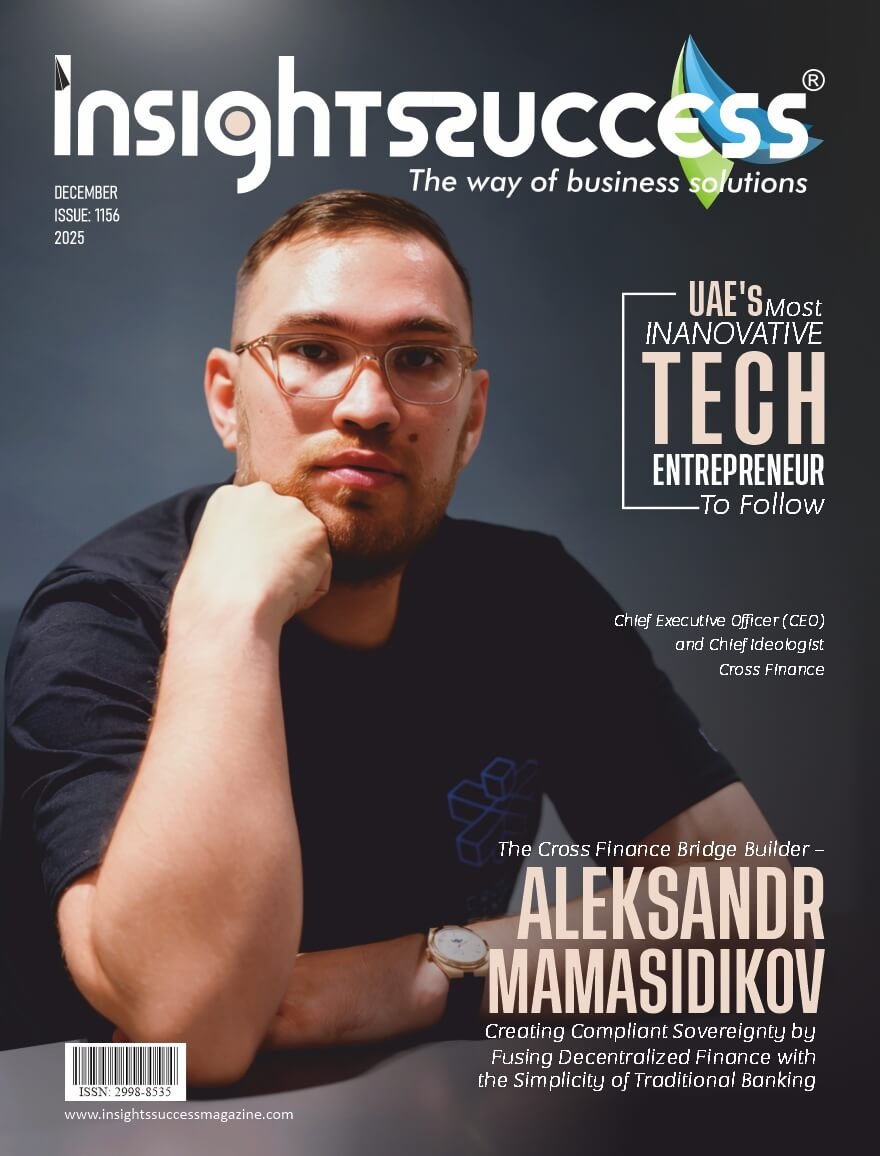
UAE’s Most Innovative Tech Entrepreneur To Follow
UAE’s Most Innovative Tech Entrepreneur To Follow A visionary force in the UAE’s technology ecosystem, 𝐀𝐥𝐞𝐱𝐚𝐧𝐝𝐞𝐫 𝐌𝐚𝐦𝐚𝐬𝐢𝐝𝐢𝐤𝐨𝐯 is redefining innovation through disruptive solutions, strategic leadership, and future-ready thinking, setting new benchmarks for digital transformation, scalability, and impact across regional and global markets. Quick highlights

The Cross Finance Bridge Builder – Aleksandr Mamasidikov: Creating Compliant Sovereignty by Fusing Decentralized Finance with the Simplicity of Traditional Banking
Most of the time, innovation does not come from inventing something new. Rather, in Aleksandr Mamasidikov‘s case, it came from looking at reality through a different lens. Widely recognized as the UAE’s most innovative tech entrepreneur, Mamasidikov’s strength lies in minute observations, fast thinking, and coming up with unique solutions that are highly pragmatic and easily implementable. His entrepreneurial journey spans innovation, resilience, and a strong vision for the future. Although today, the world knows him as the Chief Executive Officer (CEO) and Chief Ideologist at Cross Finance, the idea for CrossFi emerged right from his recognizing a major contradiction: billions remain unbanked, while crypto and decentralized finance (DeFi) are booming yet being complex and fragmented in themselves. Mamasidikov explains that traditional finance is slow and restrictive, while crypto remains too technical for mass adoption. A simple yet effective solution was the need of the hour. “We built CrossFi to bridge this gap – a seamless, non-custodial Web3 banking ecosystem combining the simplicity and regulatory trust of traditional banking with the freedom and transparency of decentralized finance,” he says, and further states, “Our mission is to empower users with full ownership of their assets, removing intermediaries and limits, while integrating real-world payment solutions such as SWIFT, IBAN, and Visa.” The Unified Experience: Seamless Fusion of Finance Mamasidikov defines the future of cross-finance as the seamless fusion of traditional finance (TradFi) and decentralized technology into a unified user experience. His vision is one where users no longer face a trade-off between control and convenience. This future means effortlessly enabling people to hold and control their assets on-chain, spend them worldwide with physical cards, and earn passive income through DeFi—all accessed via an intuitive interface as simple as any popular banking app. His inspiration stemmed from observing users trapped between two unsatisfactory extremes: TradFi offers convenience but sacrifices true security and control with endless compliance hurdles and account freezes. Conversely, pure crypto provides maximum security via self-custody but is too complex for mass adoption. “The future eliminates the false choice between security and yield, control and accessibility. This is exactly the product we’ve created at CrossFi – the next-generation tool is available now.” CrossFi’s solution is a dual-layer architecture—utilizing the Cosmos SDK for speed and scalability, and EVM for flexibility. This allows them to deliver the non-custodial ownership of crypto, backed by compliant rails like SWIFT, IBAN, and Visa/Mastercard. The Catalyst Region: Innovation and Regulatory Credibility As a leading tech entrepreneur, Mamasidikov emphasizes that the UAE is an exceptional region that fosters growth for both leaders and companies. He views Dubai as his second home, noting its enormous annual growth in the financial and crypto sectors. The sheer volume of crypto-related events held in Dubai makes it easier to secure the strongest partners than virtually anywhere else in the world. Crucially, the local laws are structured to support business development when it aligns with accepted norms. This unique environment acts as a powerful catalyst for CrossFi’s development, allowing it to innovate rapidly while maintaining the regulatory credibility that institutions demand. This strategic location enables the kind of sustainable, compliant fintech scaling that CrossFi requires, which is why its headquarters is firmly established in the UAE. The Sophisticated Simplicity: Hiding Complexity for the User Building CrossFi demanded navigating a minefield of technological and regulatory challenges, a task Mamasidikov and his team embraced. He readily acknowledges the difficulty: “It’s certainly not easy to build a fully non-custodial product while maintaining all regulatory requirements.” This tension between maximum crypto security (non-custodial) and TradFi compliance directly informed their product design. The philosophy is defined as Sophisticated Simplicity: the system is designed to be “incredibly simple for the user but highly sophisticated internally.” Their approach involves constant testing and strategic solution selection. The key is an architectural commitment to balancing user simplicity with backend complexity. “We hide all the technical sophistication from users while ensuring maximum security and compliance behind the scenes.” This robust architecture allows CrossFi to solve challenges with quality and speed, making the system simple on the surface and unyieldingly robust underneath. Pragmatic Idealism: Purpose Over Roadmap Mamasidikov’s leadership philosophy, especially crucial during rapid growth and high-stakes innovation, is defined as Pragmatic Idealism. While the core vision—financial freedom for billions—is unwavering, the execution demands ruthless flexibility. He sets this standard for his team: “We’re dogmatic about our purpose, not our roadmap.” This ensures they prioritize solutions that genuinely serve users, even if the infrastructure is mundane, over pursuing technologically “beautiful” but impractical features. Precision in execution is driven by OKRs (Objectives and Key Results), data-driven decisions, and mandatory post-mortems on failures, treating failure as invaluable data. Innovation, however, is not stifled. It thrives through structured exploration, including dedicating 20% time for experiments, hackathons, and “crazy ideas.” Psychological safety is paramount. Mamasidikov shields his teams from market chaos, publicly modeling vulnerability by admitting mistakes. “Leaders absorb uncertainty; teams get clarity.” This strategic balance transforms intense cycles into sustainable breakthroughs, compounding excellence and building a resilient organization. The Triple Edge: Sovereignty, Compliance, and Ecosystem Mamasidikov asserts that CrossFi’s notable global traction is rooted in three defining factors that differentiate it from other fintech and Web3 platforms. These factors create an unmatched trifecta of sovereignty, regulatory access, and independence: *Full Non-Custodial Ownership: Unlike competitors who offer semi-control or managed “secure vaults,” CrossFi enforces true self-custody. Users connect their wallets and retain complete sovereignty; CrossFi never touches their assets. This is the gold standard for institutions and privacy-conscious users. *Compliance Excellence with Full Non-Custody Intact: CrossFi is committed to regulatory rigor without sacrificing user control. The platform is PCI DSS 4.0 certified, AML audited by CityLinker, and actively pursuing key global licenses like MICA (Europe) and MSO (Hong Kong). This adherence to global standards unlocks crucial partnerships with Visa/Mastercard and banks, attracting institutional capital, while simultaneously preserving 100% user control over funds. *Complete Self-Sufficient Ecosystem: CrossFi avoids dependency on fragmented external partners. The system operates as a unified financial OS, built on its own Layer 1 CrossFi

China Takes the Lead in Humanoid Robot Production as Industry Gathers Pace
Prime Highlights China is moving ahead in the global humanoid robot race, with local companies preparing for large-scale production ahead of competitors in other countries. Strong government support and advanced manufacturing capabilities are helping China position humanoid robots as a key part of its future industrial growth. Key Facts Several Chinese firms plan to produce thousands of humanoid robots annually for use in factories, public services, and commercial spaces. As production scales up, some manufacturers expect robot prices to fall by up to 30% each year, though costs remain high for now. Background: China is emerging as an early leader in the global race to commercialize humanoid robots, positioning the technology at the heart of its long-term economic and technological strategy. While billionaire Elon Musk has repeatedly highlighted humanoid robots as central to Tesla’s future valuation, Chinese companies appear set to bring the first wave of mass-produced models to market. Humanoid robots are built to look and move like humans. They use advanced hardware, such as chips and sensors, to function. Supporters say these robots could change many industries, including factories, logistics, hotels, and even everyday work in homes. Beijing has made robotics a national priority, identifying “embodied artificial intelligence”, AI embedded in physical machines, as a key focus area in its upcoming 15th Five-Year Plan. Chinese policymakers see humanoid robots as a solution to mounting labor shortages caused by a declining birth rate and an aging population, while also strengthening the country’s position in global technological competition. Several Chinese firms are already ramping up production. Robotics company Unitree, which is preparing for an initial public offering, has introduced humanoid models aimed at commercial use. UBTech Robotics, which is listed in Hong Kong, plans to produce thousands of robots each year for use in factories and public places, including roles like tour guides. AgiBot has also reported the rollout of its 5,000th humanoid robot, while electric vehicle maker Xpeng recently unveiled its second-generation humanoid robot, with mass production expected to begin next year. Analysts say China’s manufacturing ecosystem provides a significant advantage. Chinese regulators have also warned that the fast-growing number of similar products could create an investment bubble. Even so, analysts believe China will lead early market adoption, while wider use in homes is expected after 2040. As competition grows worldwide, humanoid robots are becoming a key area in the next stage of industrial and technological development. Also Read : Precious Metals Soar as Gold, Silver, and Platinum Hit Record Highs Amid Rate-Cut Bets

Financial Strategies for Creative Entrepreneurs to Balance Passion & Profit
Let’s be real: you didn’t become a creative entrepreneur for the love of accounting. You’re here for the satisfaction of a finished piece. Whether you’re a filmmaker or a photographer, your true currency isn’t numbers. It’s the meaning, beauty, and value you create for the people who connect with your work. Still, passion alone can’t keep the lights on. Inconsistent income, surprise expenses, and tax deadlines have a way of creeping in and pulling you out of your creative flow. However, you don’t have to choose between doing what you love and building a profitable business. You can protect your creativity and your income with the right financial strategies. Below are a few financial strategies that can help you build a business that balances passion and profit. 1 Budget for Creativity, Not Just Survival Many creatives only plan for survival. They make sure rent and utilities are covered. Then they spend whatever is left. That is a trap. It keeps you stuck in a loop. You need to budget for your growth and inspiration. Budgeting is especially important if you’re from a country with high inflation. In Canada, for instance, the annual inflation rate is 2.2%. According to Statistics Canada, the primary driver was a surge in grocery prices, which climbed 4.7%, marking the fastest increase for food costs since late 2023. A great way to budget is to follow the 50/30/20 rule. Put 50% of your income toward “needs.” This covers your studio, home, and insurance. Then, put 20% toward your future. This is for your savings and paying off old debt. The last 30% is for “wants” and growth. For you, this means new art supplies or taking a workshop. Watch out for hidden subsidies or untracked personal contributions that can skew your financial reality. This often occurs when you provide free labor or use personal assets, like your vehicle, for business purposes without reimbursement. It makes your business look more profitable than it really is. To fix this, always pay yourself a fair wage and draw a hard line between your personal and business finances. Open a separate business checking account immediately. It makes tracking your profits so much easier. 2 Explore Low-Risk Investment Options Don’t let your money sit idle in your bank account. Invest it; it will generate returns over time. Since your job is high-risk, go for low-risk investment options. The easiest place to start is a high-yield savings account. Move your tax savings and emergency fund to a high-yield savings account because it pays much more interest than a regular account. If you live in a high-tax state like California or New York, look at treasury bills, or T-Bills. These are loans you give to the U.S. government. The interest you earn is usually free from state and local income taxes. You can also look into dividend-paying stocks, which provide steady income and some cushion against market swings. Right now, Canadian rail stocks present a compelling valuation opportunity. Canadian rail stocks (CNR) and CP Rail, the latter being the combination of Canadian Pacific (CP) and Kansas City Southern (KCS), are two giants dominating the landscape. In the CP vs CNR debate, the former is performing better. The stock is trading around CAD 102.09. Meanwhile, CNR is the underperformer. ValueTrend notes that the company is focusing on belt-tightening and better operating numbers. However, in a sluggish economy, investors often prefer this lean approach over risky expansion. 3 Plan for Taxes Early Many creatives wait until tax season to think about taxes, which often leads to panic, surprises, and financial strain. Don’t make that mistake. Plan for taxes ahead, so you can save more of what you earn. In the U.S., if you’re an independent contractor, you will likely file a Schedule C with your taxes, where you report your profit or loss. If you made more than $400, you have to pay self-employment tax. This is currently 15.3%. It covers your Social Security and Medicare. In countries like Canada, you have to pay as you go. These are called quarterly estimated taxes. If you expect to owe more than $1,000, you must pay by the 15th of April, June, September, and January. Don’t wait until the end of the year to pay quarterly estimated taxes. Save about 25% to 30% of every check you get. Put this in a separate account, so you can pay on time and avoid penalties. Don’t forget your deductions. You can write off your home office, software, and supplies. These deductions can significantly reduce your taxable income. Finding the Sweet Spot Between Passion & Profit You don’t have to compromise your creativity to balance passion and profit. You can support it if you gain financial clarity. Financial clarity gives you the freedom to say no to projects that don’t align, invest in your growth, and create without constant stress. That’s when creativity thrives. Follow these strategies, and you can create a business that honors both your artistic vision and your financial future. Remember, the goal isn’t perfection or overnight success but progress, balance, and sustainability. That way, you can keep doing the work you love for years to come. Read Also: How Online Education is Transforming Access to Learning Opportunities

Top Commercial Real Estate Companies Crafting the Future Landscape
Top Commercial Real Estate Companies Crafting the Future Landscape Commercial real estate is undergoing a fundamental transformation—driven by shifting work patterns, sustainability priorities, urban innovation, and evolving tenant expectations. At the forefront of this evolution are organizations that are not merely developing properties, but actively shaping the future of cities and business ecosystems.This edition recognizes the firms redefining how commercial spaces are designed, built, and experienced. Quick highlights Quick reads

The Empowerers of European Endurance – DL Invest Group: Engineering the Future of the Heartland with a Build-to-Hold Philosophy and Digital Convergence
Commercial real estate differentiates itself from the regular one. It is due to its longer-term investment and business strategies. As opposed to a shorter-term or one-time & short-sighted approach. DL Invest Group is the best example of this extraordinary vision. The dynamics with it are pragmatic. When it comes to commercial real estate, DL Invest Group, along with its leadership, empowered by the visionary Founder and Chief Executive Officer, Dominik Leszczyński, views every building not merely as a property or a shelter, but as a dynamic economic engine. Since the beginning, he ensured that the DL Invest Group was built on a clear and disciplined philosophy: long-term value creation through ownership, not speculation. “From the outset, our ambition was not merely to develop real estate, but to create resilient, high-quality infrastructure that enables tenants to grow, scale, and remain competitive over decades.” Dominik is spot on. While a residential real estate investment is a one-time business, a commercial asset is a decades-long commitment. Dominik believes that leaders in this space must look past the immediate horizon. Like anticipating shifts in urban density, technological requirements, and global economic cycles. “We always believed that we are not just selling square footage; we are nurturing ecosystems where businesses thrive, and communities build themselves,” he adds. That is how he and his team of DL Invest Group have deliberately positioned themselves as a long-term asset owner, combining development, design, construction, and asset management within one fully integrated platform. “This model allows us to deliver tailor-made solutions, maintain full quality control, and optimize costs across the entire lifecycle of an asset.” This strategy has delivered consistent, measurable results: assets under management have grown by more than 30% year-on-year, revenues by over 40% annually for 17 consecutive years, and their income-generating portfolio remains over 97% leased. Today, DL Invest Group operates with more than 250 in-house specialists — “A structure that differentiates us in the market and ensures execution excellence.” The Discipline of Diversification: Strategic Consistency At DL Invest Group, diversification is never a gamble; it is a calculated, multi-dimensional chess match. Dominik ensures that every addition to the portfolio—whether it be a logistics park, a retail center, or a cutting-edge data center—passes a rigorous test of long-term fundamentals. Diversification at DL Invest Group is deliberate, disciplined, and strategically aligned. “We focus on complementary segments with strong long-term fundamentals.” The group’s secret weapon is synergy. By integrating renewable energy into industrial parks or leveraging existing heavy infrastructure for new data centers, they create a “multiplier effect” where one asset enhances the value of another. This consistency is maintained by an internal team of 250+ specialists who oversee the entire lifecycle, ensuring that third-party interests never dilute the original visionary standards. The Four Forces: Architecting the 2030 Horizon Dominik looks at the next decade not with uncertainty, but with a blueprint for transformation. He identifies four structural forces that are already being woven into the DL Invest Group DNA: *The Digital Surge: AI and digitization are creating an insatiable hunger for Data Centers, moving them from the periphery to the core of infrastructure. *Energy Autonomy: The transition to zero-emission standards is no longer optional. Dominik is pushing for energy-autonomous buildings that generate and store their own power. *The New Hub of Europe: As supply chains reconfigure, Poland is emerging as the manufacturing and logistics “heart” of the EU. *Modular Flexibility: To be future-proof, buildings must be “chameleons”—able to adapt their function as technology and tenant needs evolve. From Shovel to Success: Integrated Excellence What sets the DL Invest Group saga apart is its refusal to outsource its destiny. While competitors rely on external contractors, Dominik has built a fully integrated platform. From initial design and construction to long-term asset management, every link in the chain is handled in-house. This “build & hold” philosophy has resulted in an income-generating portfolio that remains 97% leased, even in volatile markets. For Dominik, the metric of success is simple: if the tenant grows, the asset thrives. By providing tailor-made, scalable solutions, he isn’t just building walls; he is building the infrastructure of the future. The Triple Pillar: Decision-Making Under Pressure In a rare display of profound stewardship, Dominik has transformed DL Invest Group into a bastion of stability and a pioneer of community-centric infrastructure by refusing to surrender to the volatile whims of short-term market pressure. In an industry often swayed by the winds of speculation, he maintains a steady course through a decision-making framework built on three unshakable pillars. He does not guess the future; he engineers it. First, the group’s full vertical integration serves as its nervous system, providing real-time data and absolute control from the moment a shovel hits the dirt to the decades of operation that follow. Second, a relentless proximity to tenants allows the group to hear the whispers of market shifts before they become roars, enabling them to anticipate change rather than merely react to it. Finally, aligned institutional relationships provide the “patient capital” necessary to ignore the noise of the next quarter in favor of the next decade. “Above all, we apply strict capital discipline. Growth is never pursued for its own sake—every decision must reinforce our strategic direction.” Operational Responsibility: Designing for Decades At DL Invest Group, “responsible growth” is not a marketing buzzword; it is a rigorous operational mandate. Dominik has discarded the “build-to-sell” model that defines much of the industry, replacing it with a “build-to-hold” philosophy. By designing assets for decades rather than economic cycles, the group ensures that every structure remains high-performing and relevant. This long-term ownership creates a unique accountability; when you plan to own a building for thirty years, you build it differently—with better materials, smarter technology, and deeper care for the environment. The Building as Infrastructure: A Civic Legacy Dominik views his projects as more than just steel and glass; he sees them as vital urban infrastructure. Each investment is meticulously woven into the local community and urban fabric, intended to serve as an engine for

Navigating Market Cycles, Regulation, and Transformation
The New Era of Real Estate Leadership The real estate leaders are stepping into a new phase characterized by intricacies, unpredictability, and rapid change. The traditional methods founded on predictable cycles, value increase, and localized decision-making are slowly losing their ground against global economic changes, regulatory scrutiny, technology disruption, and consumer and tenant needs changing. Under these conditions, a successful leader is not the one who responds to change but the one who moves through it with foresight, discipline, and adaptability. The new era of leadership in real estate calls for strategic depth far more than merely transaction-driven. Leading Through Unpredictable Market Cycles Market cycles are still an inevitable part of real estate; nevertheless, their timing and intensity have become more uncertain. Interest rate fluctuations, capital market changes, and political factors are now the ones that surprisingly compress or extend cycles. Therefore, it is necessary for leaders to go under the reactive cycle management and into the scenario-based planning and portfolio resilience. Successful real estate leaders are those who change their strategies according to new demand, availability of capital, and price changes. They control their growth by being cautious at the same time, thereby ensuring liquidity and flexibility while putting up the assets where they will be able to perform in different cycle scenarios. Strategic Capital Allocation in a Constrained Environment Capital discipline has emerged as a critical leadership quality. The increase in the cost of financing and the restriction of credit have pushed the leaders to re-evaluate risk taking, the feasibility of projects, and return expectations. The attention has been moved from the expansion of capital to the strategic use of capital. The best leaders are those that give priority to properties with unbreakable demand sources, stability of cash flow over a long period, and the ability to adapt to different uses. The decisions on capital allocation are being influenced more and more by resilience and sustainability rather than just the size of the operation. Regulation as a Strategic Variable Regulation has already become a dynamic force influencing development, investment, and operations rather than a static background in real estate. Environmental standards, zoning reforms, tax policies, and compliance requirements are not only very different from one jurisdiction to another but also change very fast. The modern-day real estate leaders consider regulatory intelligence as one of the important aspects in their strategic planning process. They are in constant touch with the policymakers, are able to predict the regulatory changes, and take into account the compliance issues right from the initial stage of project design. They regard regulation as something that should be dealt with strategically rather than something that can only be managed defensively as a constraint. Transformation Through Technology and Data Digitization is changing the real estate sector in terms of their development, management and valuation. The use of data analytics, smart building systems, and digital platforms leads to more accurate forecasts, increased efficiency in operations, and better engagement with the tenants. Those leaders that accept the tech have the opportunity to see how the assets are performing and the market trends. By using data, insights will come that will make confident decisions in leasing, maintenance, and capital planning. In the past, technology has made real estate leadership dependent on intuitions but now it is moving toward intelligence. Sustainability as a Leadership Imperative Sustainability has shifted from the aspect of reputation to the core consideration for business. The environmental performance has become one of the main factors affecting asset value, financing conditions, tenant interest, and meeting regulations. The management has to combine sustainability targets with monetary and operational strategies. This also means, among others, investing in energy-saving technologies, using eco-friendly materials, and making buildings durable against climate change. The property sector leaders who adopt sustainability from the start will not only safeguard asset value in the long run but also remain important players in the market that is driven more and more by ESG criteria. Risk Management in a Connected Market Real estate risk is becoming more and more interconnected. Simultaneously, global asset performance might be impacted by supply chain interruptions, climate disasters, rule changes, and financial market instability. The decision-makers have to look at risk in a comprehensive manner over the entire portfolio and different locations. The proactive evaluation of risks plus the development of emergency plans are the two ways that resilience is reinforced and high returns are guaranteed in the long run. Collaboration Across Stakeholders The new era of real estate leadership prompts the need for a closer involvement of investors, regulators, communities, and partners. Developments and transformations that are complex call for an agreement among the various stakeholders. Trust and transparent communication by leaders elevate the results of the project and lessen the conflict. The alignment of interests turns the collaboration into a strategic advantage instead of an operational requirement. Read Also : Balancing Speed, Scale, and Sustainability