






The Economic Impact of Independent Engineering Design in Megaprojects
A Cost-Benefit Analysis of Technical Due Diligence The definition of megaprojects extends beyond their massive size because these projects involve intricate operations in their various domains of work, which include building infrastructure systems, developing energy facilities, transportation networks, and creating urban spaces. A single design error leads to multiple project problems, which include schedule delays, increased expenses, and the start of legal conflicts and permanent operational problems. The critical situation requires organizations to implement their engineering design programs as essential economic resources that serve as protective technical measures. Independent Engineering Design as a Catalyst for Cost Efficiency Every megaproject begins with design work as its central component. The design work establishes the methods needed for material acquisition and building construction and for creating operational systems. When design validation is not separated from execution pressures, there is a greater risk of oversight, bias, or misalignment with broader project objectives. The process of independent engineering design evaluation establishes an unbiased technical assessment that improves accuracy and feasibility results. The use of third-party specialists enables projects to find design errors and measurement mistakes at the earliest possible stage. The process of proactive examination decreases the chances of construction rework which represents one of the biggest financial obstacles that face large-scale construction projects. The independent review process helps to distribute project resources effectively by matching actual material, system, and technical requirements with project requirements instead of using assumptions. Reducing Financial Risk Through Independent Engineering Design The financial framework of micromega initiatives depends on public-private partnerships, international financing institutions, insurance companies, and institutional investment organizations. The stakeholders require proof that engineering principles have been established correctly and that all associated risks have been handled effectively. Through its independent engineering design work, the company establishes financial trust by providing verification of feasibility studies, conducting complete structural and systems design evaluations, and confirming that designs meet international safety and regulatory requirements. The system helps organizations discover operational weaknesses that their internal teams will miss while conducting their regular activities. The independent validation process creates a decrease in perceived risk, which subsequently affects the conditions of financing. Projects with credible third-party oversight often benefit from improved investor trust, more favorable lending terms, and potentially reduced insurance costs. The independent engineering design process serves as a financial protection mechanism that protects organizations from potential legal actions, system failures, and expensive legal conflicts. The financial security both governments and corporations achieve through independent analysis exceeds the cost they need to spend on it. Independent Engineering Design and Lifecycle Value Creation The economic success of a megaproject does not end at completion. The actual return on investment of the project requires assessment through its entire operational life, which includes maintenance activities and necessary system adjustments. The asset creates sustainable value through its operational efficiency, energy performance, and long-term asset durability. The project begins to apply lifecycle design principles because independent engineering design establishes these principles during its initial development phase. Independent experts conduct their assessment of the project through its entire lifecycle by evaluating three main factors, which include energy efficiency, maintenance accessibility, material durability, and capacity for future expansion. The broader perspective leads to greater asset value while decreasing operational costs throughout the asset’s lifespan. A transportation hub that construction teams built to support efficient maintenance operations will decrease both downtime and operational interruptions. Energy infrastructure that needs to achieve efficiency and resilience standards will enable organizations to save costs throughout its operational lifespan. Independent engineering design shifts organizational priorities from managing short-term budgets toward achieving economic benefits that will last throughout the project’s entire duration. Strengthening Governance and Transparency with Independent Engineering Design When government funding is being extended to megaprojects, they are subjected to harsh scrutiny by the general population and authorities. The duality of cost inflations and non-transparent operations is a problem that is threatening the population and bringing the stop to the process. The independent engineering design provides a framework with the governance systems in that the technique determines accountability as well as objective technical evaluation. The system assesses design work by clearing internal pressures that affect the project leading to improved assessment results using independent assessment strategies. Strong governance systems deliver considerable economic advantages. Public confidence influences funding continuity, political support, and overall project momentum. The implementation of independent engineering design within governance systems establishes ethical decision processes that reduce corruption risk, thus maintaining project financial stability. The Strategic Investment Case for Independent Engineering Design Initial costs of independent engineering design must be seen as a strategic investment in the sense that the costs would be borne in the long term rather than serving as an addition cost. The total project expenditure will need a very small amount to cater to the expenditure on independent supervision, yet the cost will affect billions during the entire process of capital allocation. Reduction in rework costs, as well as the reduction in legal and regulatory penalties, improved financing terms, longer lifespan of the assets, and increased efficiency in the operations, present a powerful investment payoff. Independent engineering design is an economic addition to the megaprojects through the creation of a solid foundation that ensures that the project is financially and technically aligned throughout the project lifecycle. The independent evaluation process ensures that organizations meet sustainability requirements while their ESG-focused capital distribution practices maintain complete environmental and social integration. The alignment between these two elements creates opportunities for organizations to obtain green financing and secure institutional investments which will result in increased economic benefits. Conclusion: Independent Engineering Design as an Economic Stabilizer The development paths of nations and their international competitiveness depend on the execution of megaprojects. The project needs dedicated execution through clear operational procedures to achieve its goals. The independent engineering design process establishes an engineering boundary that enables engineers to create precise designs while maintaining financial control of the project. The independent engineering design process creates extensive economic benefits through its risk reduction capacity, governance enhancement, lifecycle performance improvement, and transparency enhancement. The increasing complexity

A Framework for Custom Agricultural Machinery Innovation
From Concept to Field The agricultural sector has always required specialized solutions to meet its operational needs. Smallholder farms need to deal with their weather-related difficulties, while large agricultural businesses must manage their operations across their vast cultivated lands. The current agricultural sector demands specialized equipment because it has become an essential requirement for their operations. The future of agriculture requires both technological progress and specialized solutions that meet specific regional needs and match crops, available workers, and environmental sustainability objectives. The development of a functional, innovative framework guarantees that machinery achieves essential technological standards while delivering economic benefits and user-friendly functionality for farmers. Understanding the Need for Custom Agricultural Machinery Innovation This agricultural machinery development process starts with the principle behind it, which is utilized by the researchers in developing their agricultural solutions. Ready-made equipment offers good performance in various scenarios, but it cannot address the needs of a particular region since it is unable to establish contact with the local landscape, the soil composition, the weather patterns, and plant developmental cycles. The design of the rice farming machinery to be used in flood-prone areas should also not be the same as that required by the vineyard operators working in the hilly areas. The ability to customize allows precision, efficiency, and longevity in a manner that cannot always be attained with standardized models. Deep engagement, listening to farmers, the need-to-know bottlenecks in workflow, and performance gaps are therefore the first step towards any innovation framework. The field is the point of initiation of the innovation, and the laboratories are the secondary research centers. Designing a Collaborative Model for Custom Agricultural Machinery Innovation The period of your academic education has been continuing from January 2023 until the present time. The process of developing new solutions for specialized agricultural equipment needs engineers and agronomists, plus data scientists and farmers, because each group brings its unique expertise. Engineers create mechanical solutions that solve problems that agricultural equipment encounters, while agronomists establish design requirements that ensure machinery protects crop health and maintains soil health. The work of data scientists on smart sensor systems and predictive analysis enables them to achieve operational efficiency, while farmers conduct field assessments to test equipment functionality. The collaborative model helps reduce the likelihood that equipment will develop that functions well in theory but cannot operate correctly during actual field tests. User feedback on prototypes provides testing results, which enables faster design cycles because designers can create more efficient designs. Co-creation produces better innovation results because it brings together various stakeholders who share their unique ideas. Integrating Technology in Custom Agricultural Machinery Innovation Digital transformation is now the key driver of agricultural development. Technology supports the development of agricultural machinery: it consists of IoT sensors, AI-based analytical tools, and GPS-based precision measuring systems. Smart machinery can now check the soil moisture on the spot, regulate the application of fertilizers by nutrient mapping, improve the fuel use of the machine by smart routing, and even anticipate the need to perform maintenance before the machine breaks down. The technology systems must be designed in such a way that it is practical enough and easy to use by the farmers who will operate the system. Overloaded systems: The overloaded systems are the systems that are going beyond what they are designed to manage, hence leading to increased costs in maintenance, since the system cannot be managed by the operators. The objective is basic technologies accessible to the people without training, and which can be sustained by providers as their business expands. In cases where farmers operate specialized equipment with the inclusion of digital tools, the farmers obtain valuable information which makes them work more effectively without the need to acquire additional work. Sustainability as a Core Principle of Custom Agricultural Machinery Innovation Sustainability has become the main focus of agricultural preservation efforts. The development of agricultural machinery through a modern framework needs to combine environmental protection with productivity improvements. The design requirements for this equipment include two main objectives which require energy-efficient engines to decrease fuel usage and equipment design to maintain soil integrity during development and agricultural operations to achieve better water management results and sustainable farming methods. The combination of electric or hybrid-powered equipment with lightweight yet durable materials and modular components which extend product life cycles significantly increases environmental benefits. Sustainability plays a crucial role in maintaining economic stability for businesses. The use of efficient machinery in farming operations decreases operational expenses while enabling farmers to comply with growing environmental standards and changing customer demands for sustainable agricultural methods. Economic Viability in Custom Agricultural Machinery Innovation The agricultural industry demands that all new innovations must show their ability to create economic value because farmers face financial constraints, which force them to evaluate all potential investments. A strong framework for custom agricultural machinery innovation needs to perform a complete cost-benefit analysis throughout all development and deployment processes. The acquisition costs, which manufacturers and developers need to pay at the beginning, together with all future maintenance costs, projected productivity improvements, fuel and energy reductions, and component lifespan, need to be evaluated by them. Flexible financing models, together with leasing structures and service-based revenue approaches, will enable farmers to access funding options more effectively. The innovation process becomes economically sustainable when it develops customized solutions from experimental concepts into permanent business solutions that can grow in size. Building Scalability into Custom Agricultural Machinery Innovation Customization enables organizations to maintain their ability to scale operations. The successful innovation framework needs to combine customized solutions with a modular design that supports future system modifications. The base machine supports multiple functions through its interchangeable components, which operate in different crop seasons. The system provides users with multiple operational options through its adjustable attachments and adaptable software systems and configurable operating modes. This modular system is beneficial to the agricultural machinery industry in that it has allowed a manufacturer to enhance their products by making minor changes as opposed to undertaking the big changes of

OpenAI Teams Up with Top Consulting Firms to Boost Enterprise Growth
Prime Highlights OpenAI has signed multiyear deals with leading consulting firms like Accenture, BCG, Capgemini, and McKinsey to help businesses adopt its Frontier platform faster. The partnerships aim to connect systems and data within organizations, making it easier for companies to use tools that can work independently. Key Facts Enterprise clients currently make up around 40% of OpenAI’s revenue, with expectations for this share to rise significantly soon. Consulting firms will create dedicated teams trained on OpenAI tools and supported by its technical and research staff to accelerate deployment. Background: OpenAI has signed long-term deals with top consulting firms to grow its business with large companies. The company announced collaborations with Accenture, Boston Consulting Group, Capgemini, and McKinsey & Company to support the rollout of its newly launched enterprise platform, Frontier. The partnerships, described as “Frontier Alliances,” aim to help businesses define their AI strategies and deploy AI agents into real-world workflows more efficiently. OpenAI said the move will allow companies to integrate artificial intelligence across systems and improve operational performance. Company executives said demand for these solutions is growing faster than any single provider can handle. By working with consulting firms that already have strong relationships with enterprise clients, OpenAI expects to expand its technology more effectively. These firms will also create dedicated teams trained on OpenAI tools and supported by its technical and research staff. Accenture’s Chief Data Officer, Lan Guan, called the partnerships a key moment for the industry, highlighting the importance of collaboration between technology and consulting firms to deliver real business value. The move also supports OpenAI’s broader strategy to grow its enterprise business. Company leaders said enterprise clients currently make up about 40% of its revenue, with that share expected to rise in the near future. As competition with companies like Google and Anthropic increases, OpenAI is working on faster rollout and stronger partnerships to grow its business. These alliances help the company become a key player in how businesses use and expand advanced tools worldwide. Read Also: OpenAI Scales Infrastructure Plan to $600B by 2030, Eyes $730B Valuation in Mega Funding Round

What Balance Looks Like Within Metal Allocations
Balance in a metals portfolio is not achieved by dividing capital evenly. It comes from structuring exposure so that different metals respond to different economic conditions. Gold protects against monetary instability, silver moves with both investment and industrial demand, and platinum group metals react to manufacturing cycles and regulatory change. A balanced allocation is therefore defined by how these roles interact to reduce overall portfolio vulnerability. Assigning Clear Roles to Each Metal The starting point for balance is understanding function. Gold typically provides stability because of its inverse relationship with real yields and its role as a monetary reserve asset. Silver introduces a dual character, responding to both safe-haven flows and industrial expansion, particularly in electrification and solar manufacturing. Platinum, palladium, and rhodium are driven by supply constraints and emissions regulation, which makes their performance more cyclical and less tied to currency movements. Structuring a precious metal portfolio allocation around these distinct demand drivers allows investors to avoid overreliance on a single economic outcome while maintaining exposure to growth. Balancing Liquidity Across Holdings Liquidity determines how easily a portfolio can be adjusted during market stress. Gold and silver trade in deep global markets with consistent turnover and relatively tight spreads. This makes them suitable as the core of an allocation because they can be rebalanced without significant pricing impact. Platinum group metals, particularly rhodium, operate in thinner markets. Their price movements often occur in sharp phases rather than gradual trends, a pattern associated with liquidity premiums and constrained supply. Balance is achieved by holding these metals in proportions that enhance returns without limiting the ability to reposition the portfolio when conditions change. Spreading Exposure Across Economic Cycles Each metal performs differently across the macroeconomic cycle. Gold strengthens when confidence in financial assets weakens or when monetary policy becomes more accommodative. Silver tends to accelerate during periods of industrial recovery, when manufacturing demand rises alongside investor interest. Platinum and palladium are closely linked to vehicle production and emissions standards, while rhodium reacts strongly to regulatory tightening because of its role in catalytic systems. A balanced allocation spreads capital across these relationships so that performance is not dependent on a single phase of the global economy. This reduces the impact of cyclical correlation, where multiple assets decline for the same reason. Controlling Concentration Risk Balance also means limiting exposure to any one demand source. A portfolio heavily weighted towards automotive-linked metals becomes vulnerable to production slowdowns or technological substitution. Conversely, a structure composed only of monetary metals may underperform during periods of industrial growth. Diversifying across metals with different consumption patterns mitigates concentration risk and stabilises long-term performance. This approach ensures that supply disruptions, policy changes, or sector-specific downturns affect only part of the portfolio rather than its entirety. Rebalancing as Conditions Change Maintaining balance requires periodic adjustment. When one metal significantly outperforms and begins to dominate the allocation, the portfolio becomes more sensitive to a reversal in that asset. Rebalancing restores proportional exposure and locks in gains without relying on market timing. These adjustments are influenced by valuation shifts, changes in production costs, and long-term structural trends (such as decarbonisation and hydrogen development). Responding to these factors reflects an understanding of mean reversion, where extreme price movements are often followed by a return towards historical relationships. Integrating Scarcity Without Increasing Fragility Scarcity is an important source of long-term value, particularly in metals with geographically concentrated supply. Rhodium is the clearest example, with prices driven by limited production and sudden demand changes. Including scarce metals introduces significant upside potential, but balance requires that their weighting does not dictate overall performance. Platinum and palladium also benefit from constrained supply and technological relevance, especially in emissions control and emerging energy systems. When combined with the monetary stability of gold and the hybrid demand profile of silver, they add a forward-looking growth component without removing the defensive structure of the portfolio. Balance Is Seen in How the Allocation Performs Balance within metal allocations is ultimately measured by portfolio behaviour across changing conditions rather than fixed percentages. By distributing capital according to liquidity, demand drivers, and cyclical sensitivity, the structure becomes less dependent on any single economic outcome and more capable of absorbing volatility while maintaining long-term opportunity.

OpenAI Scales Infrastructure Plan to $600B by 2030, Eyes $730B Valuation in Mega Funding Round
Prime Highlights OpenAI plans to invest $600 billion in total compute infrastructure by 2030, scaling down from earlier projections of $1.4 trillion while aligning spending with projected revenue growth. The company is nearing a massive funding round exceeding $100 billion, with talks of a potential $30 billion investment from Nvidia that could value OpenAI at $730 billion pre-investment. Key Facts OpenAI generated $13.1 billion in revenue in 2025, surpassing its $10 billion target, while reporting an $8 billion cash burn, lower than the projected $9 billion. ChatGPT now serves more than 900 million weekly active users, up from 800 million in October, as competition intensifies with Google and Anthropic. Background OpenAI has informed investors that it plans to invest about $600 billion in computing infrastructure by 2030. This figure is lower than the $1.4 trillion commitment earlier mentioned by CEO Sam Altman. The updated plan sets a defined timeline and links infrastructure spending more closely with projected revenue growth. Sources familiar with the discussions said the company expects its revenue to cross $280 billion by the end of the decade. OpenAI believes its consumer products and enterprise services will each contribute nearly half of that total. By aligning its spending goals with income forecasts, the company aims to address concerns that its earlier expansion plans were too ambitious. Over the past few months, OpenAI has entered into several major infrastructure agreements with chip manufacturers and cloud providers to strengthen its AI systems. At the same time, it is wrapping up a funding round that could raise more than $100 billion. Roughly 90% of the funds are expected to come from strategic backers. Nvidia is in discussions to invest as much as $30 billion in the round, which could value OpenAI at about $730 billion before the new capital is added. Other key investors are reported to include SoftBank and Amazon. The company reported $13.1 billion in revenue for 2025, surpassing its earlier $10 billion target. It also reduced its cash burn to $8 billion, below the expected $9 billion. Founded in 2015 as a nonprofit research lab. It gained worldwide recognition when it launched ChatGPT in 2022. The chatbot now records over 900 million weekly active users, compared to 800 million in October. Last year, the company intensified efforts to improve its products amid stronger competition from Google and Anthropic. Its coding assistant, Codex, has surpassed 1.5 million weekly users and competes directly with Anthropic’s Claude Code. Read Also: Badge Raises $17M to Power the Future of Digital Wallets
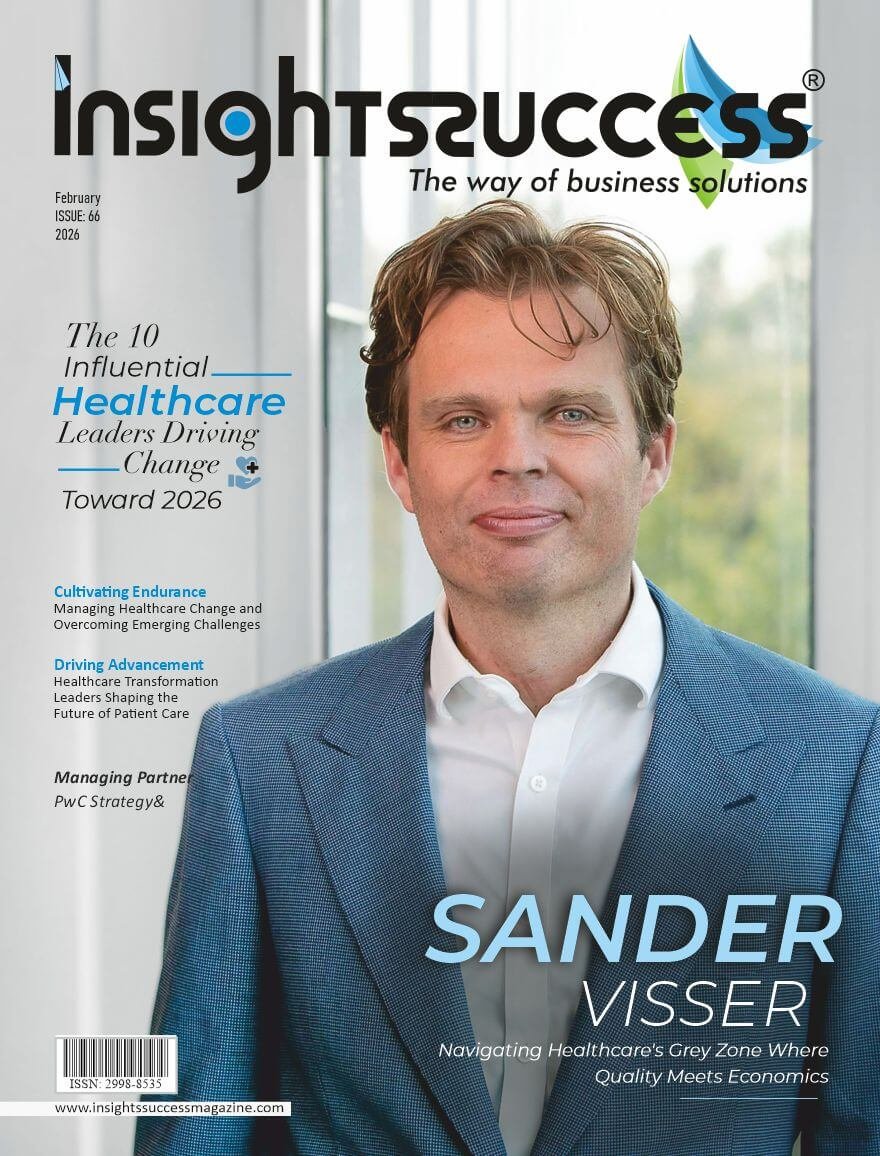
The 10 Influential Healthcare Leaders Driving Change Toward 2026
10 Best Logistics Companies to Watch in 2022 June2022 Lorem ipsum dolor sit amet, consectetur adipiscing elit. Ut elit tellus, luctus nec ullamcorper mattis, pulvinar dapibus leo. Lorem ipsum dolor sit amet, consectetur adipiscing elit. Ut elit tellus, luctus nec ullamcorper mattis, pulvinar dapibus leo. The 10 Influential Healthcare Leaders Driving Change Toward 2026 At PwC Strategy&, Sander Visser highlights how healthcare growth is often driven by incentives and organizational structures rather than patient needs. He advocates a quality-led, clinician-driven approach that reduces low-value interventions, demonstrating that less care can deliver better outcomes at lower cost. Quick highlights Quick reads

Cultivating Endurance: Managing Healthcare Change and Overcoming Emerging Challenges
Healthcare systems worldwide are undergoing a period of rapid transformation which result from technological innovations, demographic changes, growing patient expectations and rising financial pressures. The sector experiences transformation through digital health platforms and precision medicine which require organizations to develop both flexible and enduring operational frameworks. The establishment of Healthcare Change Management as a critical focus area results from policymakers, healthcare providers and industry stakeholders who want to deliver high-quality treatment while achieving financial viability. Organizations face multiple operational difficulties because they must establish new care delivery systems to meet government compliance obligations while handling existing employee shortages and requirement to implement advanced technological solutions. The speed of transformation has increased during recent years because worldwide health emergencies have demonstrated weaknesses in both healthcare systems and their ability to provide medical services. Government agencies and private organizations are establishing durable systems which will address both standard medical requirements and unexpected operational interruptions. Digital Transformation and Workforce Adaptation Digital technologies have become essential for transforming the healthcare industry. Patients now receive better treatment through telemedicine, electronic health records, artificial intelligence and wearable technology. The new technologies will help decrease expenses while they improve medical testing procedures and boost patient involvement. The implementation of these technologies faces major obstacles which include protecting data privacy, achieving system compatibility and establishing effective security measures. Healthcare organizations need to build both infrastructure and governance frameworks which will allow them to expand their digital operations while maintaining protection of confidential data. Healthcare organizations need to develop workforce training programs which will enable staff members to adapt their skills to upcoming changes in the industry. Medical professionals need to learn how to use new technology with different work processes for the benefit of patients. Staff members need ongoing education to learn how to use new technology. Organizations need to find solutions which will help them handle staff shortages while reducing employee stress and keeping workers from leaving. Organizations need to apply both technological advancements and human-centered methods to achieve their digital transformation goals which will result in better healthcare services and better patient results. Addressing System Resilience Health systems face their biggest challenge when they try to deliver high-quality medical services to all people. Healthcare innovations face limitations because socioeconomic gaps, geographic obstacles and digital literacy skills create barriers to their implementation. The development of operational systems will enable all people to access services through telehealth system expansion into remote regions and the development of user-friendly digital applications. All people need to benefit from technological progress which requires organizations to focus on inclusive practices in their healthcare change management process. Countries must establish healthcare systems which can withstand various global risks which include pandemics, climate change health impacts and the increasing incidence of chronic diseases. Resilience involves developing stronger supply chains, better data sharing systems and establishing partnerships between public agencies and private businesses. The solution needs both active prevention systems and methods to manage population health. Organizations can decrease future expenses while enhancing health outcomes by developing programs for preventive medicine, medical assessment and community-focused medical initiatives. Leadership and Policy Innovation Healthcare transformation needs effective leadership which works as its essential guiding force. Leaders need to operate their organizations through three essential functions which include trend forecasting, uncertainty management and organizational transformation together with their patient care activities. Its core components need to create an innovative work environment, promote cross sector partnerships, and unite various institutions through shared objectives. The process of establishing trust between parties and successfully executing new projects depends on two vital components which are open communication and decision making based on scientific evidence. Policy frameworks must also evolve to keep pace with rapid advancements in healthcare. Regulatory bodies need to find the right balance between promoting new ideas and protecting patients from harm. This process requires the creation of technology guidelines together with the establishment of standard data procedures and the advancement of care delivery systems based on patient value. Public private partnerships serve as essential drivers for both technological innovation and market expansion of effective solutions. Adaptive policies together with visionary leadership will serve as essential elements to drive progress in healthcare systems while creating new growth possibilities and better patient outcomes. Conclusion The ongoing transformation of healthcare systems presents significant opportunities and complex challenges that require a coordinated and forward-looking approach. The sector’s ongoing transformation through technological innovations, changing demographics and increasing public demand requires stakeholders to design systems which operate efficiently and provide access to all users and maintain operational strength. Organizations that adopt new ideas while keeping their main focus on patient needs will achieve better sustainable health solutions which produce excellent results in their fast-changing work environment. The success of healthcare transformation will depend on how well leaders, policymakers and healthcare providers create strategies which support public health objectives over extended time periods. Healthcare systems can meet new challenges while providing better results for all people by creating an innovative environment. Read Also : How Digital Transformation in Finance Is Reshaping Strategic Decision-Making?
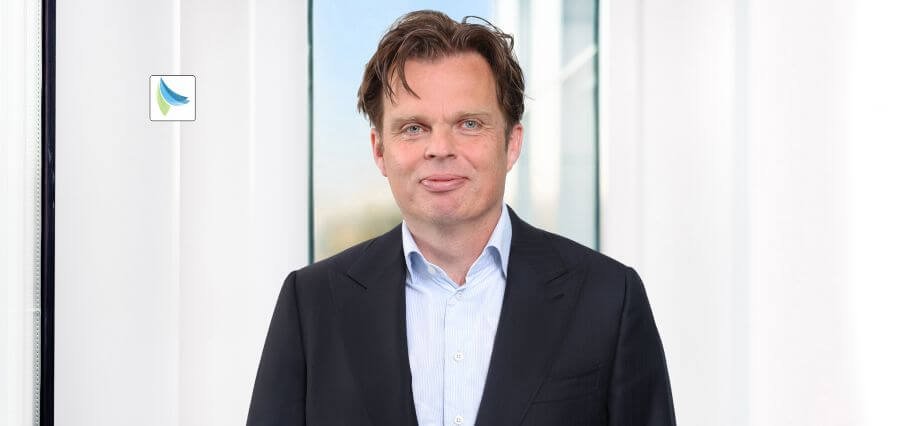
Sander Visser: Navigating Healthcare’s Grey Zone Where Quality Meets Economics
The healthcare sector defies the logic that governs most industries. Where growth elsewhere signals success, in healthcare it drives the demand for transformation. Growth is not only about patient needs. It is for a large part because organizational structures and incentives push it to grow, not necessarily in line with patient needs. This unpleasant reality has been the foundation of Sander Visser’s career as Managing Partner at PwC Strategy&, who has turned it into a road map for real change. The Genesis of a Different Vision Healthcare transformation has been Sander’s constant companion throughout his career. The calls for change have accumulated like sediment- warnings about rising costs consuming GDP, staff shortages threatening service delivery, digitization promising revolution, artificial intelligence offering salvation, and defense expenditures squeezing public budgets. Yet beneath this chorus of concern, Sander recognized that they were missing something fundamental. Without grasping the underlying forces driving healthcare cost growth, any transformation attempt risks shooting at shadows. His breakthrough moment arrived in 2012. Strategy& was still operating under its former identity as Booz & Company when Sander and his team published “Kwaliteit als Medicijn”- Quality as Medicine. The report didn’t offer incremental solutions or minor adjustments. It challenged the entire framework through which healthcare systems think about cost control. The thesis was deceptively simple: to curb healthcare costs and not merely chase incremental efficiency gains, we need to focus instead on healthcare volume. If one wants to reduce volume without harming patients, the solution is quality- specifically, clinician-led efforts that stop low-value interventions before they occur. Sander called this approach “Affordable Care,” channeling President Obama’s elegant phrase “saving lives and saving costs.” The counterintuitive heart of his argument remains powerful: less care often becomes the pathway to better care and lower costs. Dismantling Comfortable Myths Sander approaches healthcare economics like a detective examining a crime scene where everyone thinks they know the culprit, but nobody has checked the evidence. Take aging populations. People treat rising healthcare demand as an inevitable external force-populations age; aging populations need more care; and costs rise accordingly. The logic appears to be airtight. The data tells a different story. In the Netherlands, the pure demographic effect of aging, holding medical practice intensity constant, explains only around half a percentage point of yearly growth in total curative care spending. Aging matters, certainly, but it explains far less than what healthcare professionals intuitively believe. Yet this myth persists, maybe because it offers a convenient explanation that requires no uncomfortable introspection. Innovation presents the second comfortable culprit. Healthcare systems often criticize themselves for being slow to adopt change, yet they can move at a remarkable speed when clinical benefits are clear. Endovascular treatments illustrate this dynamic perfectly. These less invasive procedures benefit patients, but they also expand treatment options to older and sicker individuals who previously would not have been candidates. Innovation therefore doesn’t simply replace existing care. It creates new care by making more care possible. The innovation story contains truth, but again, only part of the truth. The Grey Zone Revolution Sander’s deeper insight cuts to healthcare’s core: there is no single, objectively “right” amount of healthcare. Medical practice contains a vast grey area stretching between clear underuse and clear overuse. This grey zone manifests in practice variation that spans countries, hospitals, and even physicians working in the same facility. The numbers reveal something startling. The spread in practice styles typically dwarfs the incremental, year-on year growth that dominates system-level debates. Practice variation is so pervasive that finding an area without it proves genuinely difficult. John Wennberg, who pioneered variation studies, famously identified hip fractures as one of the few exceptions, precisely because broken hips reflect “true” demand rather than discretionary care. This perspective fundamentally transforms cost control. It reveals a path to savings that doesn’t sacrifice patients and avoids politically explosive moves like banning innovation, raising co-payments, narrowing coverage, or rationing care for older people or those with chronic illness. The realistic lever lies in reducing overconsumption and low-value care- interventions that don’t improve outcomes or align with informed patient choice. Sander emphasizes a practical truth: while quality proves hard to define abstractly, professionals often easily recognize the opposite: low-value care in their daily work. This recognition becomes transformative when incentives shift. Systems that reward activity encourage providers to drift upward within the grey zone. Systems that protect and reward appropriate care transform that same grey zone into a wellspring of sustainable improvement. When Patients Choose Less Theory becomes reality in stories like Bernhoven Hospital. Sander’s team supported this Dutch facility in implementing shared decision-making- the systematic practice of informing patients about benefits, risks, and alternatives while genuinely inviting them to choose. This represents more than a procedural shift. It transforms the relationship from informed consent to informed choice. The impact materialized immediately. Surgery rates declined by 15 to 20 percent on average. This wasn’t rationing or denial. Fully informed patients simply chose less invasive options more frequently when they understood their choices. Patient experience improved. Outcome measures held steadily or improved. The quality went up while the volume went down. Then the existential question emerged. A 15 to 20 percent volume reduction might delight health economists, but for an individual hospital it threatens survival. Dutch hospitals operate as not-for-profit organizations with margins of just 2 to 3 percent. A sudden volume drop can destabilize the entire enterprise. Sander’s response extended beyond quality initiatives into economic architecture. His team supported payer-provider partnerships that guaranteed income stability, allowing hospitals to reduce volume without facing financial collapse. The approach changed the fundamental economic conditions so that doing the right thing became financially viable rather than suicidal. A national macro-economic government body later confirmed that 10 to 15 percent volume reductions across the entire bandwidth of provider care are achievable, opening up a tested and credible pathways to sustainable health care. The potential isn’t theoretical. Sander’s team has worked with dozens of providers and payers to capture these benefits, scaling the approach from individual contracts to

Middle East’s 10 Most Influential CFOs Driving Financial Excellence
10 Best Logistics Companies to Watch in 2022 June2022 Lorem ipsum dolor sit amet, consectetur adipiscing elit. Ut elit tellus, luctus nec ullamcorper mattis, pulvinar dapibus leo. Lorem ipsum dolor sit amet, consectetur adipiscing elit. Ut elit tellus, luctus nec ullamcorper mattis, pulvinar dapibus leo. Middle East’s 10 Most Influential CFOs Driving Financial Excellence This edition celebrates visionary financial leaders who are redefining strategy, governance, and sustainable growth across the region. This special edition highlights CFOs who combine fiscal discipline with innovation, digital transformation, and resilient leadership to shape the future of finance in an increasingly competitive and dynamic Middle Eastern economy. Quick highlights Quick reads

An Effective Financial Leader, Safouane Khcherif – Chief Financial Officer, Arabian Mills Company
Safouane Khcherif is widely regarded as one of the Middle East’s most influential financial leaders—not just for his technical expertise, but for how he connects finance to people, decisions, and long-term impact. Today, as Chief Financial Officer of Arabian Mills, he plays a central role in shaping the company’s strategy, governance, and growth as a publicly listed national champion. Safouane Khcherif’s leadership philosophy was shaped early in his career through a mix of audit, accounting, and hands-on experience in fast-growing organizations. These foundations taught him discipline, accuracy, and control—but also something just as important: finance only creates value when it helps people make better decisions. “Effective financial leadership is as much about people and judgment as it is about numbers,” he says. Building Finance That Serves the Business Working in growth environments such as Orascom Telecom and Bintel Ltd., Safouane Khcherif learned how to build finance functions from the ground up—implementing ERP systems, designing processes, and linking financial reporting directly to day-to-day operations. These experiences reinforced a simple principle: numbers must translate into action. Later, at General Electric, Safouane Khcherif managed large multi-country P&Ls, high-value contracts, and complex deals. Exposure to board-level decision-making, governance, and stakeholder management sharpened his ability to balance strategy, risk, and execution. Together, these roles prepared him to step into senior CFO positions where finance is not a back-office function, but a strategic partner. Joining Arabian Mills: A National Responsibility Safouane Khcherif joined Arabian Mills at a pivotal moment in the company’s journey. As one of Saudi Arabia’s most important food manufacturing companies, Arabian Mills plays a direct role in food security, employment, and economic resilience. His mandate was clear: build a finance function that supports growth, transparency, and long-term sustainability—while meeting the expectations of regulators, investors, and society. Finance at Arabian Mills works closely with CEO, operations, supply chain, and commercial teams to turn strategy into execution. Own P&L, Budgets, capital allocation, and performance metrics are designed around operational realities—not spreadsheets in isolation. “Every financial decision is evaluated not only for return, but for its impact on efficiency, competitiveness, and national priorities,” Safouane Khcherif explains. Taking Arabian Mills Public Leading Arabian Mills through its IPO was one of the most defining moments of Safouane Khcherif’s career. For him, taking a company public is not just a financial exercise—it’s a cultural transformation. The transition required redesigning finance and IT functions, strengthening internal controls, and embedding a mindset of transparency and accountability across the organization. Aligning the board, executives, employees, regulators, and investors demanded clear communication and disciplined execution. “The real challenge wasn’t the mechanics of the IPO—it was readiness, mindset, and alignment,” he reflects. The result was a successful listing that positioned Arabian Mills for long-term growth as a trusted public company. Finance as an Enabler of Operational Excellence At Arabian Mills, finance plays a hands-on role in driving operational performance. Through real-time reporting, improved costing, and ERP-enabled visibility, leadership can clearly see margins, costs, and performance across production sites. Finance supports smarter planning, more disciplined capital allocation, and faster decision-making—helping reduce waste, improve efficiency, and protect profitability. Rather than acting as a control function, finance works alongside operations to ensure that performance improvements are both measurable and sustainable. “Finance doesn’t just measure performance—it helps shape it,” Safouane Khcherif says. Digital Transformation with Purpose Digital tools have fundamentally changed how finance operates at Arabian Mills. Upgraded SAP systems, automation, and analytics provide instant visibility into costs, profitability, and working capital. This allows finance to move beyond reporting and into forecasting, scenario planning, and strategic insight. Technology also strengthens governance by embedding controls into daily processes, reducing risk while improving speed and accuracy. Most importantly, integrated systems create a shared language between finance, operations, and commercial teams—ensuring decisions are aligned across the business. Managing Volatility and Risk Operating in a commodity-driven industry means volatility is a constant reality. Safouane Khcherif approaches risk management with structure and foresight. Arabian Mills actively monitors global markets, applies appropriate hedging strategies, and maintains strong liquidity and working-capital discipline. Scenario planning helps leadership respond quickly to price swings, supply-chain disruptions, and market uncertainty. For Safouane Khcherif risk management goes beyond protecting margins—it’s about safeguarding food security and long-term resilience. Beyond the Numbers Safouane Khcherif’s role as CFO extends well beyond finance. He contributes to board-level strategy, assesses long-term risks, and ensures financial planning supports national priorities such as sustainability and local employment. By connecting financial insight to real business impact, he helps leadership make informed, balanced decisions—today and for the future. “The CFO’s role is to bridge short-term performance with long-term value,” he says. Ultimately, Safouane Khcherif views finance as a responsibility—not only to shareholders, but to the economy and society that Arabian Mills serves. Looking Ahead Looking ahead, Safouane Khcherif is clear on the financial priorities that will guide Arabian Mills over the next five years. The focus is on disciplined, value-driven investment—particularly in capacity expansion, operational efficiency, and technology—ensuring that growth is both scalable and sustainable. Strong cash flow and working-capital management will remain central, providing resilience in a capital-intensive, commodity-sensitive industry. At the same time, deeper use of data and analytics will enhance visibility, support faster decision-making, and strengthen financial control across the organization. Finally, governance and risk management will continue to underpin the company’s strategy, helping Arabian Mills navigate market volatility while maintaining transparency and stakeholder confidence. Read Also: Hernan Rizo- Engineering Stability in Uncertain Times