






Cybersecurity Considerations in Digital Health Strategies
As medicine becomes digital, digital health programs are being revealed as a pillar of advancement. Telemedicine and AI diagnostics are just two illustrations of how digital processes are transforming the provision, accessibility, and control of care. Yet this comes with the increased danger of cybersecurity. Its greatest risk factor for cyberattacks is perhaps the healthcare sector, and patient information is a hacker’s goldmine. In contrast to credit card information that can be easily altered after an intrusion has been achieved, personal health information is permanent and more sensitive. It is not only the legal responsibility to protect it, but also a moral obligation. The Inherent Risk in Going Digital Digital health initiatives, by their very nature, rely on the unencumbered exchange of information among patients, clinicians, and technology platforms. From a glucometer application on a mobile phone to a cloud-based storage mechanism for storing diagnostic histories, data are on the move. And with every connection—every point of entry—there is a weak link. Data privacy is one of them. More and more information is being gathered and passed on on a wide range of websites, and this makes it exponentially more probable that it will be accessed by mistake or fall into the hands of the wrong individuals. And although health data is guarded by statutes such as HIPAA in the United States and GDPR in Europe, this compliance is not necessarily equivalent to end-to-end protection. The framework is there in these kinds of regulations, but the construction of the architecture that will safeguard remains with organizations. A third factor that is of concern is third-party vendors. The majority of healthcare organizations outsource digital services—cloud hosting, software writing, medical devices—to other vendors. With each partnership, there is more risk. A security breach on the vendor’s end can become a disaster for the healthcare organization, so third-party risk assessment is not an option but a requirement for any strategy. The Human Factor and Legacy Technology Technology is not the only failure—human beings have a big part to play, too. Human error is the most prevalent cause of data breaches. Hurriedly typing on a phishing email, creating poor passwords, or incorrectly configuring security settings, well-intentioned employees may unknowingly leave the door open for attackers. This is especially concerning where there exists considerable stress, such as in hospitals, where the provision of patient care and not cybersecurity is the priority. In addition, most health organizations still operate on legacy systems that were not originally built for current cyber attacks. Connecting these with newer systems without necessary upgrades or security patches provides enormous weaknesses for the digital health infrastructure. Legacy systems usually do not have room for encryption or sophisticated access controls strong enough to seal out sensitive information. Embedding Security into Digital Health Strategies In order to prevent these problems, security must be baked in at the start of any digital program—not as an afterthought. Effective digital health programs are ones that adopt security as an integral part, built into each phase of design, development, and implementation. This starts with embracing a ‘security-by-design’ culture, where each digital platform or tool is developed with security measures in place from the ground up. Encryption, secure APIs, role-based access, and audit trails must be default, not extras. Further, ongoing risk assessments need to take place in order to catch vulnerabilities as they form throughout systems. This forward-thinking allows organizations to remain one step ahead of materializing threats, instead of scrambling to react to attacks after they occur. Staff training is just as vital. Cybersecurity awareness needs to be built into organizational culture. Staff-training programs, scenario simulation, and open-reporting processes go a long way towards minimizing human oversight. Cybersecurity is no longer an initiative of the IT department—it’s all our initiatives. Perhaps more important is a solid set of incident response plans. With best practices, incidents will occur. The question is how to respond quickly and effectively. A good plan with timely detection, containment, recovery, and communications can reduce damage and preserve patient trust. Navigating the Regulatory Landscape Digital health interventions work in the complicated environment of regulation, and half the tale is to follow standards. Governments and worldwide bodies are ramping up the speed to lay down and enforce cyber security standards in healthcare. But regulation has to play catch-up with technology advancement. Companies have to be as nimble, as well, as they adhere to global and local cybersecurity regulations. For example, a telemedicine platform utilized across the entire world might have to concur with numerous data privacy regulations at the same time. Effective governance and good stewardship are necessary to remain consistent with such changing legislation. Innovation and Security: A Delicate Balance No question digital health can change lives. But that possibility must be treated cautiously. It’s all too tempting for organizations to fall in love with new solutions and hurry to implement them. But innovation without safety is dangerous. Patients don’t just want convenience and quickness—they want their information treated with the same care as they are treated for their health. Building patient trust is in large part reliant on the means by which organizations secure digital experience. When digital health initiatives place cybersecurity and innovation atop their agenda, they are not only safeguarding their systems—they are raising the overall level of care. Final Thoughts The path to a digitally enabled healthcare system is one of promise, but also one of danger. Cybersecurity is not an expense of a one-time or compliance box-checking—it’s an ongoing commitment. To succeed on digital health projects, they need to be characterized by a security-first strategy that safeguards patient information, preserves privacy, and serves people rather than technology—opposite. In this fast-changing world, the companies that will survive are those that know this fundamental fact: without cybersecurity, there is no digital health. Read More: Transforming Global Healthcare Delivery Through Digital Innovation
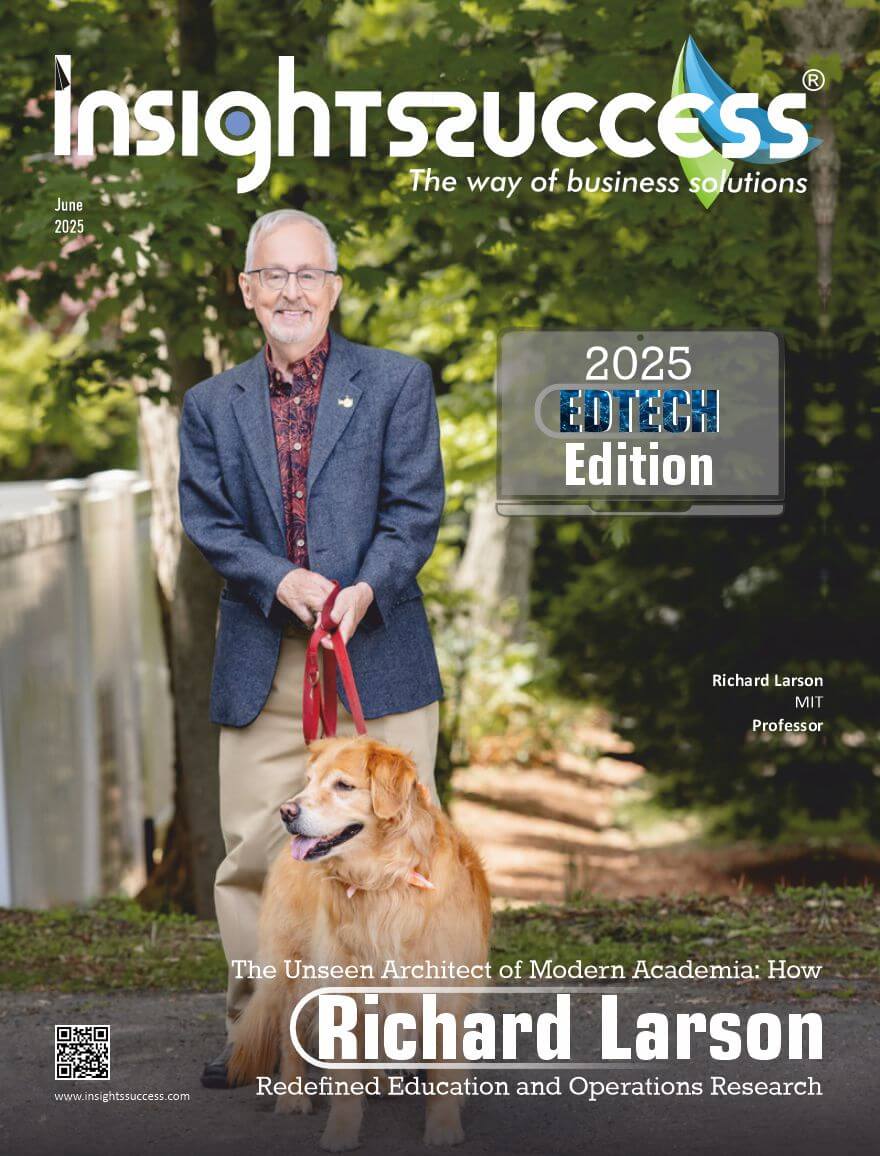
2025 EdTech Edition
2025 EdTech Edition Richard Larson, a pioneering force in education and operations research, redefined interdisciplinary learning and institutional innovation. Through five decades at MIT, he championed mentorship, global equity in STEM, and the integration of research with societal impact—leaving a lasting imprint on students, academia, and the future of education. Quick highlights Quick reads

The Unseen Architect of Modern Academia: How Richard Larson Redefined Education and Operations Research
In the vast expanse of academia, certain individuals stand out not merely for their scholarly excellence, but for the indelible impact they leave on institutions, students, and society. Richard Larson, known to many as the “unseen architect” of modern educational transformation and operations research, is one such figure. With over five decades of dedication to MIT and a global footprint in academic discourse, Larson represents a beacon of intellectual generosity and innovation. Larson’s journey, from humble beginnings in New York to his illustrious career at MIT, mirrors the transformative power of education he so ardently advocates. His belief in education as an unstealable asset, and his drive to bridge academic silos, reshaped not only how students learn but also how institutions teach. In a world that often prioritizes output over insight, Larson focused on nurturing critical thinkers, lifelong learners, and visionary citizens. This article traces the remarkable legacy of Professor Richard Larson, weaving through his life journey, groundbreaking contributions, enduring philosophies, and the countless lives he touched. As a mentor, researcher, and visionary, Larson did not just teach lessons—he redefined what it means to be an educator. A Life Rooted in Curiosity and Purpose Born in 1943 in Bayside, Queens, New York City, Richard Larson’s childhood was marked by transitions. His family moved to Pennsylvania and eventually settled in North Plainfield, New Jersey. Despite these relocations, a strong academic foundation was instilled early in his life. He graduated from Needham High School, Massachusetts, and went on to attend the Massachusetts Institute of Technology (MIT), where he earned his Bachelor’s, Master’s, and Ph.D. in Electrical Engineering. From the outset, Larson showed a proclivity for interdisciplinary thought. He enjoyed physics for its logical clarity, avoided chemistry due to its complexity, and found biology daunting due to the sheer volume of details. Yet, it was his discomfort with academic compartmentalization that would shape his future: Larson believed in bridging gaps, not building walls. Defying the Silos: An Interdisciplinary Vision Richard Larson often described his career trajectory as one that consistently transitioned across the bridge of academic disciplines. He resisted the idea of becoming a traditional physicist, wary that it might restrict his broader aspirations in teaching and research. His curiosity wasn’t limited to one domain. Instead, he envisioned a career that would crisscross the landscapes of engineering, social sciences, data systems, and public policy. He began his academic teaching career in Electrical Engineering but soon expanded into interdisciplinary departments such as MIT’s Institute for Data, Systems, and Society (IDSS). He taught in five different home departments at MIT—a testament to his diverse academic fluency and commitment to breaking intellectual silos. MIT and the Evolution of a Teaching Icon Professor Larson’s association with MIT is not just long-standing; it’s legendary. For over 55 years, he served as a faculty member, touching lives across various departments and initiatives. It all began at the age of 18, when a young Larson received an acceptance letter from MIT. Initially convinced it was a mistake, he only believed it after the university staff confirmed its legitimacy. This moment, which he jokingly refers to as the “Groucho Marx Syndrome,” became a defining one. It marked the beginning of a lifelong relationship with MIT, where he would mentor generations of students, build innovative educational models, and challenge conventional academic norms. The Power of Mentorship: Changing Lives One Student at a Time Among Larson’s most cherished memories is the story of a student who, disheartened by a poor grade, visited his office intending to drop out of class. Larson, instead of dismissing the student’s concerns, chose to engage in a heartfelt discussion. Through empathy, encouragement, and personalized mentorship, he helped the student stay the course. The same student later transformed into a top performer. These encounters were not anomalies. They reflected Larson’s enduring belief in the potential of every student. His mentorship style was never about hierarchy but about collaboration, commitment, and compassion. He saw education not just as instruction but as a deeply personal mission. Architect of the Invisible Profession: Operations Research Richard Larson has often called Operations Research (OR) the “world’s most important invisible profession.” He brought this discipline to life through practical, real-world applications—from pandemic modeling and urban service logistics to smart energy systems and disaster planning. As president of ORSA (1993-94) and later INFORMS (2005), Larson worked to raise the profile of OR and highlight its critical role in addressing societal challenges. His efforts extended beyond boardrooms and conferences; he embedded OR into educational curriculums, policy recommendations, and public discourse. Blossoming New Ideas: The MIT BLOSSOMS Initiative One of Professor Larson’s proudest ventures is the MIT BLOSSOMS (Blended Learning Open Source Science or Math Studies) Initiative. As its principal investigator, he sought to revolutionize STEM education globally. The initiative offered free, high-quality video lessons to high school students worldwide, emphasizing interactive learning and cross-cultural collaboration. BLOSSOMS not only extended MIT’s intellectual reach across borders but also democratized education for under-resourced communities. It showcased Larson’s unwavering commitment to educational equity and technological empowerment. Awards, Recognition, and Global Impact Larson’s scholarly contributions are monumental. His first book, Urban Police Patrol Analysis, won the prestigious Lanchester Prize. His research papers, including those on H1N1 vaccine distribution and the STEM workforce dilemma, received Best Paper of the Year awards and were widely cited in both academia and government circles. In 2015, he was awarded the Lawrence M. Klein Award by the U.S. Department of Labor and featured in the New York Times. These accolades are more than personal triumphs—they symbolize his ability to transform theory into impactful practice. Teaching as a Lifelong Experiment For Richard Larson, teaching was never static. It evolved with platforms, technologies, and student needs. However, one thing remained unchanged: the desire to engage. He found joy in teaching airline scheduling, queuing theory, and other OR topics in a manner that students found both relatable and exciting. He believed the best classrooms were those where questions flowed freely and curiosity was rewarded. His lectures were less about

From Proposal to Practice: Enhancing Learning Experiences through Technology
With the dynamic learning environment of today, technology is center stage in revolutionizing how students interact with content, teachers, and peers. From pre-school to lifelong learning experiences, using digital platforms and software for learning promises an unprecedented opportunity to reshape the nature of learning. With technology, there is potential to provide more interactive, immersive, and personalized learning experiences that cater to varying needs and interests of learners. The evolution of traditional classrooms into technologically enhanced learning spaces is not a trend but the natural evolution. The addition of smart devices, virtual learning spaces, virtual classrooms, and artificial intelligence aided teachers to overcome the challenges of the new globalized world. Not only are the devices making learning experience learning inclusive and accessible, but they also facilitate greater participation and stimulate students’ critical thinking. Additionally, increased technology use has compelled schools to reimagine pedagogy and implement more student-centered practice. Personalized Learning with Adaptive Technologies Most valuable of all that technology has provided to education is perhaps the capacity to personalize education to the student. Adaptive learning software uses algorithms and data analysis to figure out in real time how specific students are doing and to adjust content and pace to address each student’s own challenges and needs. This obviates one of the ancient traps of education, namely that of meeting students where they are at, rather than dumping a single-fits-all curriculum. In addition to the cognitive benefits, student-centered learning experience promotes increased motivation and student self-efficacy. Students with supportive feedback and tailored materials are more inclined to internalize and adopt the process of learning. Intelligent tutoring systems, computer games, and computer-adaptive tests enable students to learn at their own speed, practice challenging areas, and delve into areas of interest thoroughly. The technologies bridge knowledge gaps and enable continuous progress in learning. In addition, insights from data give teachers a capability of identifying learning trends and responding in due course such that none of their students is lagging behind. Collaborative and Immersive Learning Environments Technology supports communication and collaboration by allowing for interactive learning experience environments. Virtual classrooms and learning management systems (LMS) allow synchronous interaction between the teacher and students regardless of physical location. This connection supports team working, peer grading, and collaborative learning activities that mimic actual workplace collaboration, enhancing critical communication and teamworking abilities. It also offers an open classroom where introvert or shy students can contribute willingly using electronic media. Immersive media like virtual reality (VR), augmented reality (AR), and simulation software speed up learning from the book by offering experiential learning. VR, for instance, can take students to history or to other worlds with perspectives that cannot otherwise be accomplished. AR can place digital information over physical settings, making abstract things seem real. These technologies stimulate interest and enhance memorability, especially in subjects augmented by visual and kinesthetic learning styles, such as science, engineering, and engineering technology, and the arts. In addition, simulation software is also used for medical and aviation training, with secure environments for practicing valuable skills and decision-making. Closing Educational Disparities and Opening Access One of the most revolutionary aspects of educational technology is that it can bridge the knowledge gap and expand learning access to quality education. Online environments and materials have increased the learning proximity, advantageously affecting far communities and learners in far or war-torn areas. Open educational resources (OERs), massive open online courses (MOOCs), and language learning apps equalize the playing field for learning access, offering quality learning at a minimal or no cost. Furthermore, assistive technologies are new channels for students with disabilities. Screen readers, text-to-speech software, and speech recognition bring coursework to visually impaired, hearing-impaired, and motor-impaired students. Multilingual documents and live translation services consistently undermine linguistic barriers, offering parity to education across the world. These technologies make learning geography-independent, impairment-independent, and socio-economic-status-independent and help create a participative and empowered society. Governments and institutions must continue to invest in infrastructure, internet access, and computer skills training to bring all such upgrades to each and every student. Conclusion Technology is no longer backstage to learning but center stage in the delivery of effective, interactive, and inclusive learning. Digital technology is transforming conventional learning into an even more dynamic, inclusive, and effective process through personalization, collaboration, and greater access. With policymakers, teachers, technologists, innovators, and designers constantly updating and improving it, the future of learning becomes more adaptive and student-driven. In order to optimize the role of technology in learning, however, stakeholders must also be concerned about data privacy, digital equity, and teacher training. Technology integration is not just a question of machines being available, but sufficient professional development and instruction strategies to go along with it too. Through a culture of innovation and belonging, we can ensure that the advance of technology works to enhance—not diminish—the human imagination and creativity that support effective learning. Through this transformation, we can equip learners to thrive in a more digital and networked world. Read More: Cybersecurity Considerations in Digital Health Strategies

The Power Player of 2025: Who’s Leading the Future
The Power Player of 2025: Who’s Leading the Future This edition highlights the bold vision and transformative leadership of Giselle Santos. This edition celebrates pioneers reshaping industries, with Santos at the forefront—driving innovation, empowering communities, and redefining what it means to lead in a rapidly evolving global landscape. Quick highlights Quick reads

Giselle Santos: A Phenomenal Leader who Weaves the Future of Collaborative Innovation
The era of contemporary technology and business is changing at its core. Accelerated developments in cloud computing, 5G, quantum security, and AI are transforming how businesses exist, compete, and coexist. However, these transformations are not happening in a vacuum. The future is for ecosystems—dynamic webs of alliances, integrated platforms, and synchronized technologies that together create much greater value than any constituent part separately. With convergence as the hallmark of this age, the task of leaders is to envision these changes and construct collaborative systems that enable innovation, robustness, and long-term growth. Early Insights and the Genesis of a Visionary Amid this ever-evolving landscape emerged Giselle Santos, a groundbreaking business leader and strategic visionary whose methodology defies traditional norms. Giselle Santos stepped into the field of enterprise consulting in 2018, an era during which most concentrated on narrow deliverables and short-term outcomes. But from the very beginning, she separated herself through an ability to see beyond the horizon—a deep recognition that the world would be remade not by discrete pieces of technology but through the symphony of ecosystems in which collaborations produce compounded effect. Her stint at Nokia in 2019 was especially influential. Years before multi-cloud integration became the industry buzzword, Giselle Santos envisioned a platform with which to dissolve silos and bring together disparate technologies and stakeholders into a coherent whole. The vision espoused a future where cooperation—rather than competition—would release new wellsprings of value and possibility. It was such thinking that was uncommon and far in advance of the times, indicating her special ability at pattern recognition and strategic foresight. Foreseeing the Digital Speedup Giselle Santos’s visionary expertise reached far into the world of financial services, where she was working alongside leaders in international banking such as Santander. Well before the COVID-19 pandemic brought digital change forward in a hurry, she was imagining hyper-modular “Future Branch X” spaces that integrated cloud-native stacks, SD-WAN, private 5G, and zero-trust security frameworks. These ideas presaged seismic changes in the way banks interact with customers, protect information, and automate processes, highlighting her capacity to forecast and design future business realities as opposed to responding to them. Her solutions were end-to-end ecosystem designs, not individual technical solutions. She anticipated strategic collaborations between top firms—Ripple, Nokia, Google, Microsoft—that would merge into reinforcing partnerships. This ecosystem strategy was radical in its vision, but, notwithstanding its brilliance, it encountered strong headwinds in the corporate world. Navigating Corporate Inertia One of the tougher chapters in Giselle’s career was bucking the inertia that is built into big organizations. Mobilitie’s purchase, for example, saw the scrapping of projects that had been carefully crafted to revolutionize enterprise collaboration and connectivity. Seeing other companies, like FreedomFi and Dish, subsequently implement plans she had drafted years before was a bitter vindication of her vision—one marred by frustration at being unable to take action on those insights herself. Instead of being defeated by these constraints, this experience energized Giselle Santos to launch MiraElla Group in 2022—a agile consultancy designed to run the pace of technology. MiraElla was imagined as a setting where cutting-edge ideas can travel fast from beginning to realization, cutting through the conventional impediments that hamstring innovation. Its development principles mirror this priority: collaborative ecosystem design, forward-looking technical proficiency, prioritizing collaboration over rivalry, and an agile viewpoint sensitive to fast-moving change. The name MiraElla itself reflects this goal. Taken from words for “look” and “elegance,” it represents a dedication to seeing beyond the obvious opportunities and executing them with discernment and poise. This two-pronged approach to visionary vision and sharp execution is characteristic of Giselle Santos’s leadership style. A Mindset of Continuous Improvement At the heart of Giselle Santos’s style is a mental attitude of constant improvement and seeking opportunity. It is not an exercise limited to working at the office or in protocol halls; it is a habitual thinking that pervades all aspects of her life. From studying intricate market dynamics to mundane everyday problems, she always analyzes how systems can be made more efficient, how procedures can be improved, and how hidden opportunities can be leveraged. This ongoing preoccupation with betterment is beyond a quest for perfection or mastery; it is an inherent cognitive bias that compels her to critically evaluate circumstances and to plan tangible actions for improvement. This chronic curiosity and activist approach to improvement underpin not just her professional achievement but also her personal development. Constructing What Does Not Yet Exist Giselle’s entrepreneurial passion comes from a deep need to establish new paradigms, not merely refine current models. She is attracted to business ventures that break the rules of conventional thinking, upset deep-seated assumptions, and necessitate combining several technologies and stakeholders into integrated ecosystems. This is not about marketing discrete products or services but engineering interlinked frameworks where value compounds through cooperation. She is drawn to complicated, high-risk challenges—specifically those arising where emerging technologies collide with established systems and evolving marketplace forces. Her approach is not simply to foresee changes but to design daring, implementable solutions and to act quickly to exploit temporary opportunities before momentum sets in. Ecosystem Orchestration: The New Frontier Ecosystem orchestration is a more than a buzzword to Giselle Santos; it is the very nature of her competitive edge. While most technologists concentrate exclusively on product features or incremental advancements, she sees the larger context from a systems perspective. Her talent is in stitching together seemingly disparate players—frequently competitors—into collaborative partnerships that leverage mutual value. For instance, her efforts in engineering multi-vendor banking solutions united industry stalwarts such as Nokia, Google, and Microsoft, unified under one vision. Likewise, her visionary quantum-protected platforms don’t attempt to displace incumbent infrastructure but to extend it securely and seamlessly, allowing businesses to innovate without compromising security. This power to “turn rivals into partners” stems from a strong appreciation of technology and human drivers. This involves the establishment of trust, openness, and incentive alignment in traditionally siloed organizations—a modus operandi that distinguishes her in a business sector often characterized by fragmentation and proprietorial protection. The Power of

The Evolution of Cloud Computing Architecture in Modern Businesses
With the digitally networked world of today, businesses no longer question whether to go to the cloudy it’s how well they’re doing it. Cloud computing has undergone a transformation from technical nomenclature to business necessity around agility, scalability, and innovation. But it did not always exist. It has been an awesome journey—one that reflects the growing maturity of technology as well as businesses that are dependent on it. From On-Premises Origins to Cloud-First Realities Enterprise operations weren’t that long ago based on on-premises infrastructure. IT admins were responsible for managing racks of physical servers, cooling systems, hardware breakdowns, and monstrous capital outlays. That arrangement provided a feeling of control, but it didn’t come without significant operational costs as well as financial. The revolution began in the early 2000s, as providers like Amazon Web Services (AWS) offered computer resources via the internet. Overnight, companies no longer had to build data centers to run their applications. They were able to rent servers, storage space, and networking capability on a pay-per-consume basis. It was the beginning of cloud computing as we know it—offering unimaginable flexibility, cost-effectiveness, and speed. A Layered Transformation Approach With the creation of the cloud, several service models were developed to accommodate different business needs. Infrastructure as a Service (IaaS) came first, offering virtualized equipment over the internet. Businesses could run programs and store data without owning the equipment. Then came Platform as a Service (PaaS), which gave developers the means to create, test, and deploy applications in a managed environment—in effect, releasing them from worrying about servers. The final evolution was Software as a Service (SaaS), where users consumed applications like email, CRM, or project management software directly via their web browsers, without regard to installation or updates. These service models did not only automate IT operations, but redefined IT. Cloud computing began to empower businesses to concentrate on what matters most: value creation and delivery of results. Embracing the Complexity Head-On: Multi-Cloud and Hybrid Models As more and more companies moved to the cloud, they realized that no single vendor could meet all their needs. Some platforms were great for data analytics, others for AI, and others for regional compliance. This necessitated multi-cloud strategies, where businesses utilize an assortment of cloud services across multiple vendors to balance performance, cost, and availability. Concurrently, organizations with sensitive information or compliance issues weren’t able to move everything offsite. This gave rise to hybrid cloud models, where both public and private worlds exist side by side. Hybrid cloud models provide the convenience of cloud while retaining mission-critical information under control. The transition from “cloud-first” to “cloud-smart” has made organizations personalize their architecture with intent and accuracy. Microservices and Serverless: Agility Redefined Cloud-native software of the current day is quite different from those yesteryear monoliths. They are composed of microservices small, independently deployable services that communicate with one another through APIs. This kind of architecture allows organizations to develop and release features faster, scale each service according to demand, and bounce back quickly from failure. With these speeds, there is the concept of serverless computing. In this, developers don’t give a hoot about servers, but rather, they simply write code that executes in response to a particular event and the cloud provider takes care of the provisioning, scaling, and availability. For businesses, this means more accelerated innovation, reduced operational overhead, and less expense. These new designs are particularly valuable in today’s uncertain market situation, where having the option to react swiftly can turn out to be the determining factor of success versus failure for an organization. Security and Trust in the Cloud Era As increasingly more businesses rely on cloud computing, data security, privacy, and regulatory compliance matters have become more prominent. Thankfully, cloud providers have responded by integrating advanced security aspects into their environments—ranging from end-to-end encryption to identity and access management systems. Organizations are adopting best practices like zero-trust architecture and monitoring in real-time to ensure early identification of threats and fast response. In regulatory-driven sectors such as financial and healthcare, cloud vendors already provide compliance-enabled offerings that are custom-built to cater to the requirements of HIPAA, GDPR, and other data governance models. Trust is currency in the cloud—and there is no option but to maintain it. AI, Automation, and the Intelligent Cloud What’s the most exciting about cloud computing today is how it’s brought together with artificial intelligence (AI) and automation. Leading cloud providers are embedding machine learning models into their environments at a fundamental level, allowing businesses to predict customer behavior, automate processes, and find patterns in large data sets. Also, cloud automation now enables everything from automatic healing infrastructure to predictive maintenance, largely reducing human intervention. The intelligent cloud does not just empower companies, it learns, adapts, and becomes smarter with them. Sustainability: A Growing Priority As companies try to reduce their carbon footprint, they’re closely examining the impact their digital infrastructure has on the planet. Cloud providers are listening. Companies like Google, Microsoft, and Amazon have made bold sustainable goals, such as running entirely on renewable energy and being carbon neutral. Compared to traditional data centers, cloud computing is likely to have greater energy efficiency due to optimized sharing and most advanced infrastructure design. This makes cloud computing not just a shrewd business move, but a green one too. The Road Ahead The cloud computing journey has a long way to go. Edge computing—computing near where data is being created—is already transforming the way manufacturing and healthcare industries work. Quantum computing, while still in its infancy, will in the next decade re-engineer processing power like no other. One thing that is sure is that cloud computing will remain at the center of business change. It is no longer about cutting costs or modernizing IT. It’s about developing nimble, elastic, and smart systems that transform based on a changing world. The cloud is not just an IT solution to businesses today—it’s a differentiator.

Building a Comprehensive Cloud Adoption Strategy for Enterprise Digital Transformation
In the current lightning-fast digital environment, companies are constantly striving to innovate, grow, and change quickly to keep up with what the market needs. For companies that want to stay in the game, embracing cloud technologies is no longer an option but a requirement. But migrating to the cloud is not merely a technological shift, it’s a company-wide strategic shift. Central to this change is a solid cloud adoption strategy strategically positioning cloud technologies in support of business objectives, managing risks, and facilitating sustainable growth. Why a Strategy Matters? Cloud adoption has been misconceived in the past as a simple movement of applications and data from on-premises servers to a far-off data center. It is more than that, though. Without a sound cloud adoption plan, organizations risk becoming easy prey for runaway spending, compliance issues, and failed goals. A great plan is like a map, leading the decision-making process for infrastructure, capital expenditure, staff, and governance. Cloud computing-driven digital transformation makes new things possible—real-time analysis, world-scale growth, automation, and enhanced customer experiences. They are only realized in full, however, when businesses view cloud adoption as a process, rather than a destination. Building the Foundation: Readiness and Goal Assessment The initial step in creating a cloud adoption strategy is identifying why the cloud is central to the organizational purpose. Most firms are compelled out of necessity to cut IT expenses, some by necessity for higher agility, security, or scale. Having these drivers clarified serves to establish expectations and priorities. One of the key topics in this phase is determining the available infrastructure and internal capacity of the firm. Are the employees knowledgeable in the cloud? How much do the current applications rely on clouds? What are the data privacy regulations that need to be considered? These are the foundations of a customized strategic plan, not a template. Selecting the Appropriate Cloud Model After goals have been defined, the second most critical decision is to select the correct deployment model—public, private, or hybrid. Each has its advantages. Public clouds are cost-effective and scalable. Private clouds provide control and compliance to organizations that have stringent data governance needs. Hybrid models are adaptable, balancing control and innovation. The appropriate decision is based on workload needs, expense, and regulatory requirements. A successful cloud adoption strategy assumes the decision is not forever; cloud types may evolve as the organization expands and learns more. Security and Compliance Issues Trust is paramount in cloud transformation. Organizations deal with massive quantities of sensitive information, and a single breach can be disastrous—not only financially, but also reputationally. Security and compliance should be integrated into the cloud adoption plan from inception. This encompasses data access controls, encryption, industry-specific regulations such as GDPR or HIPAA compliance, and incident response planning. The intent is to provide a secure cloud environment without compromising performance or agility. Empowering People and Building Culture Cloud transformation is human and systems. An enlightened cloud adoption strategy takes into account how personnel are a part of the equation. Transformation may be painful, particularly where it impacts jobs and process labor. Organizations have to commit to reskilling employees, spending money on training programs, and developing a culture that opens up to innovation and cross-functional collaboration. In addition, embracing cloud-native approaches such as DevOps and agile development not only speeds up delivery but also enables cultural change—away from legacy IT to service-based, try-it-out culture. Cost Control and ROI Optimization The biggest myth might be that the cloud is cost-effective financially for you. It can be, but with governance and oversight. Without visibility into use and spend, businesses are typically left with surprise bills. A sound cloud adoption strategy entails economic management, like budgeting, resource labeling, and auto-scaling policies. It’s optimizing cloud economics—paying less for what you really use and continuous optimization. Cloud success is not the offspring of cost reduction but rather of smart spending. Cloud to Transformation Cloud adoption is the most critical force driving digital transformation. It enables businesses to accelerate, make informed decisions, and provide improved services. From AI-based insights to being able to reach out worldwide, cloud platforms provide the type of flexibility businesses need today. But this is only realized where there is harmonization between technology and the broader context. Cloud adoption strategy means cloud investments that are not random but are purposeful so that the business can innovate, grow, and evolve with confidence. Avoiding Common Pitfalls Most cloud journeys go off-track due to misaligned expectations, absence of executive sponsorship, or underestimating the intricacies of legacy systems. Some organizations never share the vision, and teams end up becoming disconnected and resistant. These traps are avoided by leadership, communication, and iterative use of feedback. A successful cloud adoption strategy isn’t a formula—you modify it with the organization’s needs and what is learned. Measuring Success How do you realize your strategy is succeeding? It is not merely a matter of uptime or lower-cost server expenses. Success needs to be quantified in business results terms—faster product delivery, enhanced customer satisfaction, quicker innovation cycles, and empowered teams. Open KPIs defined at the beginning enable tracking along and tracking back when needed. Conclusion Cloud adoption is no longer a choice for businesses that must guide the digital economy. Yet the cloud is not a magic wand it’s an incredibly powerful technology that must be used with intention. End-to-end cloud adoption strategy ensures every cloud project drives more business objectives, reduces risk, and empowers individuals. With well-planned strategy, effective leadership, and vision, businesses can leverage the cloud not only to revolutionize their technology but revolutionize their future. Read More: The Evolution of Cloud Computing Architecture in Modern Businesses

Iran Fires 27 Missiles at Israel in Retaliation for US Strikes on Nuclear Sites
Prime Highlights Iran launched at least 27 ballistic missiles toward Israel after the US bombed key Iranian nuclear sites. Multiple explosions rocked Israeli cities like Haifa and Jerusalem, injuring civilians and sparking widespread alerts. Key Facts (3 Lines): The missile strike came in two waves, targeting over 10 locations in Israel, including residential and strategic areas. At least 11 people were injured in cities like Haifa, Safed, and Jerusalem, with sirens blaring across the nation. The Israeli military confirmed that some missiles were intercepted, while others caused damage and panic on the ground. Key Background Tensions between Iran, Israel, and the United States have reached a boiling point in recent weeks. The immediate cause of this latest conflict surge was a major US military strike on Iranian nuclear facilities, specifically targeting Fordow, Natanz, and Esfahan—three highly fortified and critical components of Iran’s uranium enrichment program. These strikes were reportedly conducted with bunker-buster bombs and cruise missiles, significantly damaging Iran’s nuclear infrastructure. In retaliation, Iran launched a coordinated missile strike on Israel, marking its most direct and aggressive military action in recent years. The attack involved 27 ballistic missiles, launched in two waves, targeting cities across Israel. The Iranian leadership declared this as a direct response to what it described as “illegal aggression” by the US and its allies, and a warning against future attacks on its sovereignty. The missile strike caused widespread panic in Israeli cities. Sirens rang out across Haifa, Jerusalem, and several northern regions. Residential neighborhoods were hit, leading to multiple injuries, including among children. Emergency responders scrambled to rescue civilians from debris, and bomb shelters were activated across major cities. The Israeli Defense Forces (IDF) confirmed that several missiles were intercepted mid-air, minimizing the damage, but acknowledged that multiple missiles struck populated areas. In response, Israeli jets have remained on high alert, and the country’s Iron Dome and David’s Sling missile defense systems have been operating at full capacity. This escalation follows months of rising hostility. In April, Iran launched hundreds of drones and missiles after an Israeli airstrike killed senior Iranian military officials. While most of those projectiles were intercepted, it marked the beginning of a dangerous tit-for-tat pattern. The current episode is the most severe and direct exchange to date, raising fears of a broader regional conflict involving the US, Iran, and possibly other Middle Eastern states. As global powers call for restraint, the risk of miscalculation remains dangerously high. The international community, including the UN and European leaders, has urged all sides to de-escalate. However, both Iran and Israel appear committed to continuing their strategic responses. Read More: Coinbase & Circle Soar as Senate Passes Historic GENIUS Act for Stablecoins

Coinbase & Circle Soar as Senate Passes Historic GENIUS Act for Stablecoins
Prime Highlights: Coinbase shares jumped more than 16% following the Senate’s passage of a landmark bill that would regulate stablecoins. Circle shares climbed almost 34%, indicating increasing investor optimism about the future of USDC. Key Facts: The U.S. Senate voted overwhelmingly in favor of the GENIUS Act with bipartisan support, 68–30. The bill is now headed to the House, where it will likely be consolidated with the STABLE Act before being signed by a president. Key Background The U.S. Senate has formally passed the bipartisan “GENIUS Act,” another milestone for the crypto community and for the future of stablecoins. The bill mandates an explicit federal framework for dollar-backed stablecoin issuance and activity such as USDC. It mandates one-to-one asset backing, monthly reserve reports to the public, anti-money laundering (AML) compliance, and limits issuance to insured banks or qualified financial institutions. Passage of the bill results in a prompt market reaction. Coinbase, which assisted in the creation of the USDC stablecoin with Circle, rose 11–17%—its highest-performing S&P 500 stock of the day. Coinbase will gain a lot from the new stablecoin regulations, especially since it already earns a 50% commission on revenue from Circle’s USDC reserves. Coinbase has only rolled out “Coinbase Payments,” unifying USDC payments with platforms like Shopify—demonstrating its willingness to divert trade across crypto rails. At the same time, Circle’s public shares jumped more than 30%, closing at almost $190 from its $31 IPO of a few weeks ago. Such a rare ~544% valuation surge puts Circle on the center stage of the stablecoin revolution. CEO Jeremy Allaire reacted to the bill, which he called “historic” and an unqualified indication of the U.S. government’s dedication to blockchain-based financial infrastructure. But not everyone benefited. Legacy payments players like Mastercard and Visa dropped by nearly 5%, with investors believing stablecoins could upset legacy payment rails. PayPal and Corpay were also defensive in the markets because of speculations around a fintech reshuffle. The GENIUS Act is now going to the House and possibly towards reconciliation with the STABLE Act. The bill, according to experts, has the potential to bring a new era to regulated crypto finance, which would enable greater use of stablecoins in the mainstream financial system. Read More: Iran Fires 27 Missiles at Israel in Retaliation for US Strikes on Nuclear Sites