





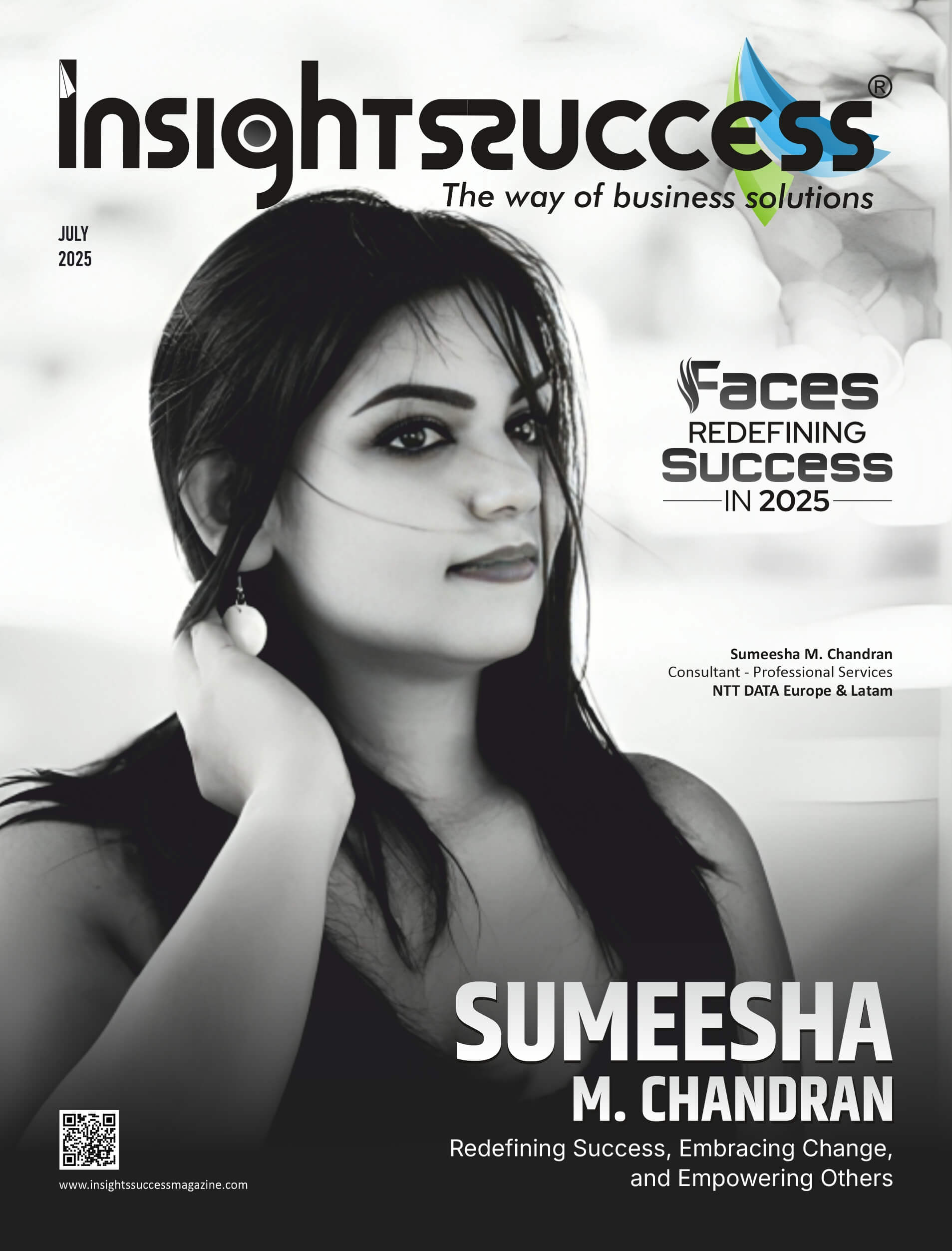
Faces Redefining Success in 2025
Faces Redefining Success in 2025 This edition celebrates trailblazers like Sumeesha M. Chandran who are reshaping the definition of success through purpose, resilience, and innovation. This edition honors individuals leading with impact, challenging norms, and inspiring the next generation with their transformative contributions across industries and communities. Quick highlights Quick reads

Sumeesha M. Chandran: Redefining Success, Embracing Change, and Empowering Others
In a universe of constant evolution and technological disruption, real leaders are not just those who grow but also motivate others to change as well. They are development visionaries, who infuse grit, compassion, and creativity into everything they do. That is the story of one such woman whose own journey from the vibrant dunes of Dubai to the boardrooms of multinationals is a testament to the strength of motive, willpower, and heart. Early Beginnings: Seeds of Resilience and Diversity Sumeesha M. Chandran’s tale begins in the city of Dubai, which oozes dynamism and ambition. A Malayali woman from India, she grew up under the coexistence of cosmopolitanism and tradition. Her childhood involved the practices of modesty, warmth, and questioning nature—practices that followed through with her and were fostered by the multicultural setting in which she was born. Sumeesha M. Chandran was curious about learning from a very young age—never for success, but for the abilities that it imparted to her to be in a position where she could impact people’s lives. She learned Information Technology, Business Administration, and Sociology, all of which introduced her to an entire new field of systems and human beings. But more importantly, she learned things from the intangible modes of living. Flourishing in gender roles, cultural values, and self-determination, Sumeesha was the queen of transforming agony into purpose and obstacles into steppingstones. The Genesis of a Purpose-Driven Career Sumeesha did not start her professional life in a boardroom but with a straightforward question: “Can this be better?” Whether it was making banking processes more efficient or designing coaching systems, she saw inefficiency as not a flaw but a chance to respond. Her technical background combined perfectly with her love for sociology to enable her to bridge the gaps between people and processes, and users and solutions. Her previous existence was fixated upon an unstoppable pursuit of purpose. Sumeesha began automating systems to leverage as much as to liberate human potential. Each role was a stage upon which to leave a positive impact—whether developing loan automation systems, managing agile teams, or implementing cloud solutions. She was never concerned about what she might accomplish; for her, it was about enabling others and building cultures in which collaboration and innovation would flourish. Reinvention and Resilience: The American Chapter Sumeesha M. Chandran began anew in 2019, moving to America with twin toddlers and a bag full of dreams. The ride was not easy whatsoever. Unemployment and motherhood beckoned. Cultural integration waited in the wings. She was like a rock. Instead of breaking under pressure, Sumeesha chose to reinvent herself. She dove headfirst into cloud engineering, honed her technical acumen, and began anew. Her corporate US venture was one of resilience and a tough commitment to ongoing learning. From explaining straightforward banking practices to overseeing legal enterprises and commercial loans, Sumeesha plunged into awe and inspired with empathy. Every failure was an opportunity to raise people up higher, and every failure an education in perseverance. The Philosophy of Alignment: Aligning Professional and Personal Roles Balance for Sumeesha M. Chandran is not so much about aligning but being aligned. In all these roles as leader, mother, wife, daughter, coach, she arrives with heart and intention. Her days oscillate between facilitating transformational work and tending family, between sitting still and meditating, and the raw chaos of the twins. She has weathered seasons of turmoil—surgery, loss, and seeking stability in a new country. And through it all, Sumeesha has employed braveness as shield and thankfulness as compass. She has learned how to walk the path of faith in relinquishment, how to be gentle with self, and how to weave nets of support where there were none. Her journaling and breathing are her anchors, where she is able to deconstruct and analyze, and transform chaos into clarity. A New Business Palate: Create Difference Rather than Clap Sumeesha M. Chandran has no interest in tasting glory and power but in tasting change and making a difference. Business is an artist’s palette for her where systems are built out of ideas, and empathy creates change. She is curious about thinking differently in processes, solving for good, and scaling for soul. She walks into boardrooms humble and fearless, with the expectation of hearing pain and writing responses that speak. Empathy is the driving force behind all that she does—serving clients like family, developing teams like gardens, and success that is measured in lives touched. All the businesses that she has worked with in America and the Middle East have sharpened her vision, and her sophistication and leadership became even more potent. The Passion That Drives Transformation At the heart of Sumeesha’s journey is the passion for transformation—the rebirth process of becoming. She is powered by rebirth energy, the serenity of starting over, and the strength of igniting trust in humans. Whether mentoring a new analyst or putting together a data pipeline, she approaches every assignment with purpose and resolve. Her own experience of loss, and stigma has earned her a leader who works from scars rather than the title. Sumeesha meditates to remember her own self and coaches to assist others in remembering theirs. Improvement, not perfection, is what she delights in, and love in action is her leadership. Navigating the Pandemic: A Test of Agility and Empathy The COVID-19 pandemic was a crucible, and it called for not just business models but also belief systems. For Sumeesha, it was the time of health emergency and accounting of emotions but also career reboot. When the imperative was digital dexterity, her agility in agile coaching, automation, and transformation was in demand. She conducted virtual transformation workshops, rebranded virtual collaboration templates, and fostered her team’s mental well-being. Out of anarchy, she constructed order; out of ambiguity, she constructed strategy. The pandemic accelerated her coaching acumen and reminded her that improved systems begin with better people. Strengths and Vulnerabilities: The Dual Engines of Growth Sumeesha M. Chandran is adaptable to change: she is intuitive, flexible, an attuned listener, and

AI-Powered Banking Transformation
The past decade has witnessed an unprecedented change in banking. At the center of this is a force not to be ignored—Artificial Intelligence (AI). As banks seek to stay with escalating customer expectations, counter emerging cyber-attacks, and compete with fierce market competition, AI-powered banking transformation is emerging as the stronghold of future-proofed financial services. This article explains how artificial intelligence is transforming conventional banking into something more efficient, customer-oriented, and even changing the very nature of banks. The Need for Transformation in Banking Banking has always been about not changing. But with digital disruption at the doorstep, customer behavior, and technological innovation, obstinacy is no longer in the cards. It ranges from mobile banking to open banking platforms, and now the industry is flat-out undergoing a transformation digitally. The banking revolution of today is not one of the new systems trumping old; it is one of transforming the banking model itself. AI is spearheading the effort to transform it through enabling in-the-moment processing of data, predictive analysis, automating processes, and hyper-personalization on a scale previously unimaginable. AI and Redesigning Customer Experience With the convenience era, consumers’ expectations are higher than they have ever been before. Consumers want service quicker, interfaces that are easier, and personalized financial advice. That is where AI comes in with a gigantic part in the equation. AI-powered chatbots, virtual assistants, and recommendation systems are assisting banks in delivering customized experiences 24/7. These programs learn from history, interpret it, and act on it with human sensitivity and accuracy. A virtual assistant, for instance, can remind a user to pay bills, suggest better savings plans, or alert him/her about suspicious activity—all in real time. Such implementation of AI is not only enhancing service levels; it’s at the forefront of bank transformation around the customer. Risk Management and Fraud Detection One of the biggest fields where AI is making a real difference is the prevention of fraud and the assessment of risk. Fraud detection has traditionally relied on rule-based systems, which were incomplete and not very adaptable. AI, by contrast, uses machine learning to identify patterns of suspicious activity, mark anomalies, and respond in real-time. Artificial intelligence software can be trained to process millions of transactions and toggle their detection feature in real-time. From loan default forecasting to credit card fraud detection, AI allows banks to employ anticipatory risk control. This improvement in security control is part of the new banking transformation process. Operational Efficiency Through Automation Behind each payment is a chain of back-end functions that take time, elbow grease, and accuracy. Artificial intelligence and robotic process automation (RPA) now automate those back-end functions—minimizing errors, speeding up turnaround time, and saving money. AI, for instance, can disburse loans automatically by evaluating creditworthiness in seconds, using data from various sources. It can also verify documents, conduct KYC checks, and onboard customers more effectively than human touchpoints. This operational flexibility is not simply a technological advantage—this is a cultural revolution in banking, and it’s one of the pillars of banking transformation efforts. Predictive Analytics for Strategic Decision-Making Predictive analytics is perhaps the most impactful AI application in the banking sector. Through predictive modeling of past trends, market motion, and client action, AI is able to offer useful insights to customers and institutions alike. Banks can now predict demand for financial products, anticipate changes in taste among customers, and tailor their promotional campaigns accordingly. Portfolio managers and wealth advisors also use AI-based insights to suggest investment plans according to the personal client’s risk tolerance and goals. Such data-driven decisions boost speed and competitiveness, and that’s why predictive analytics is a top weapon for the next banking revolution. The Human-AI Collaboration While AI is assuming a significant portion of the banking job, it does not replace human intuition. Rather, it enhances human judgment by unshackling mundane jobs and providing space for commentary. Such equilibrium liberates human labor to concentrate on more subtle, human-oriented professions like financial consulting and customer dealing. Banks adopting this cooperative approach are not only increasing productivity but building a more responsive and innovative culture of the organization—reflects of productive banking transformation. Ethical and Regulatory Challenges Since AI is so embedded in banking infrastructure, ethics, privacy, and regulation issues inevitably follow. Banks must implement explainable AI models with data protection rules like GDPR or their national equivalents. Bias in AI algorithms is also an issue. Proper use of AI usage that enhances fairness, explainability, and accountability must therefore become the central theme on the banking transformation agenda. What’s Next? The prospects for banking and AI integration are extremely bright. Ranging from quantum computing to model risk to decentralized finance (DeFi) integrations, the future will see innovation crossing even more frontiers. Visionary, customer-centric, and agile banks that drive their AI push will open up the next wave of banking revolution. Along the way, success will be gauged through technology adoption but by how deeply institutions embed AI into their vision, operations, and values. Conclusion AI is not a tool—it’s a revolution enabler. Banks have a choice: evolve or become obsolete. Banks that see AI as a strategic partner in creating seamless, secure, and personalized experiences are going to thrive in the digital economy. Finally, AI-driven banking transformation is not about modernization. It’s about creating a better, more inclusive, and future-oriented world for all. Read More: The Evolution of Digital Transformation Leadership

The Evolution of Digital Transformation Leadership
Across the last two decades, the phrase digital transformation has been a buzzword that has evolved to become a core building block of contemporary business strategy. The driving force behind this revolution is a strong force determining its success or failure: digital transformation leadership. This kind of leadership transcends embracing new tools and platforms; it involves total reimagining how companies operate, deliver for customers, and transform to address future disruption The evolution of digital transformation leadership is precisely the same as that of technology itself—beginning from tactical and functional to become very strategic and even cultural. Understanding this evolution provides an important pointer on how businesses can succeed in a world accelerating its digitization. From IT-Centric to Business-Driven It was in the early days that digital transformation still lay in the purview of the IT organization. Executives were still largely technologists who were responsible for deploying software systems, automating business processes, and keeping infrastructure running. Though useful, this was usually a siloed, reactive, and not aligned with overall business objectives. When businesses went online, technology decisions could no longer be divorced from business decisions. There were leaders needed who could understand both the language of commerce and code. This transition was the start of a new era of digital transformation leadership—a leadership that needed technical expertise, business sense, communication skills, and strategic thinking. Now, digital transformation leaders must promote organizational vision, align digital activity with corporate objectives, and convert technological innovation into tangible business value. The best among them see technology not only as a tool but also as an enabler of innovation, customer engagement, and competitive advantage. Taking a People-Centric Approach One of the more significant alterations in digital transformation leadership is that technology itself does not change companies—it’s human beings who do so. Employees need to get engaged, heard, and empowered if they are going to thrive. Leaders need to be champions of a culture shift that helps facilitate collaboration, creativity, and experimentation. This people-first type of leadership values listening, empathy, and transparency. Workers are not any longer receivers of change but are becoming copartners in the change process. Excellent digital transformation leaders do not dictate change from on high—they create communities of change. For example, when launching a new computer software, great leaders don’t just install it. They stage workshops, ask for input, and make the transition people-centered, responsive to what employees require. They build trust and ownership in the process, which foster leadership in transforming for the long term. Anticipating Change Rather Than Reacting to It But another characteristic that defines contemporary digital transformation leadership is proactiveness. Organizations in the past adopted new technologies reactively, as a response to crisis, competition, or a change in the marketplace. Today, the leaders need to anticipate change ahead of time. This requires having a feel for the emerging technologies like AI, machine learning, blockchain, and the Internet of Things—not just understanding them from a technical perspective, but thinking through their implications for business models, customer behavior, and industry structures. Visionary leaders are people who can feel opportunities before them being visible, allowing their organizations to leap ahead instead of playing catch-up. Instead of depending on inflexible five-year plans, contemporary firms that are leading digital transformation practice adaptive strategies. They accept uncertainty, move fast, and continually adapt based on on-the-fly feedback and data. This type of forward-thinking keeps companies agile in the midst of accelerated technological and social disruption. The Ethical and Inclusive Imperative With digital transformation accelerating, so too do difficult ethics. From algorithmic discrimination and data safety to disinformation and job automation, what digital leadership decides today has lasting effects. That is why leadership in digital transformation will also be responsible and inclusive. Leaders are increasingly being asked to consider not only what technology might be, but what it ought to be. They need to establish standards of responsible innovation, raise digital equity, and establish mechanisms to safeguard the rights of users and encourage diversity. Leading with integrity is creating a culture where transparency, fairness, and accountability become the norm. Whether it is having AI systems free from bias or ensuring digitally underserved communities are equipped with digital tools, ethical leadership is becoming a cornerstone for digital transformations. Looking Ahead: The Next Chapter The leadership of digital transformation in the future will require more flexibility, emotional intelligence, and interdisciplinary thinking. With companies moving into areas such as the metaverse, quantum computing, and autonomous systems, the problems will be more complex—and the type of leadership needed more advanced. But fundamentally, the role of digital transformation leadership will not change: to leverage technology to address real-world challenges, enable people, and create lasting, future-proofed organizations. Tomorrow’s leaders will not be evaluated according to their aptness at utilizing technology, but according to how much they can influence change—change that is human-oriented, inclusive, ethical, and value-based over the long term. Leadership in digital transformation is an echo of a wider transformation of leadership. It’s no longer dictating from the top but inspiring from the center out—leading teams through the unknown, creating a culture of learning, and envisioning what could be. As the digital age speeds up, one thing becomes more and more apparent: technology can spur change but leadership provides direction. The companies that will succeed are the ones that are guided by those who know digital technology, people, purpose, and progress. In the hands of visionary leaders, digital transformation is not a strategy—it’s a movement. Read More: AI-Powered Banking Transformation
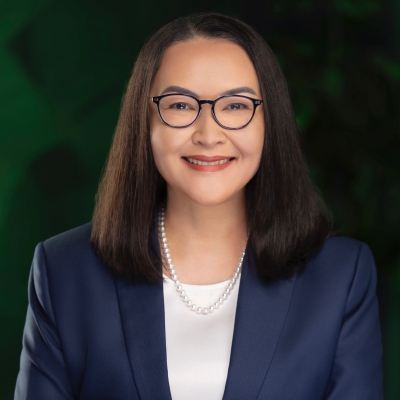
Dr. Panarat Rohleder: Cultivating Leadership Through Diversity, Equity & Global Service
Dr. Panarat Rohleder is a strategic advisor and leader in entrepreneur, academia, nonprofit, and consulting organizations. She has served, and continues to serve, as an advisory board council member, a board member and a committee member at various organizations. This includes a board member at the Fulbright Association, National Capital Area chapter, and a board member at Fulbright Thailand Interest Group for Fulbright Association. She also serves as Washington DC Oxford Business Alumni chapter leader and as an alumni ambassador of Pembroke College Oxford. She is a faculty inductee to Sigma Beta Delta, International Honor Society in Business, Management and Administration. She is a Fulbright Specialist with multi winning awards both in academia and professional careers. Dr. Panarat Rohleder received a postgraduate diploma in Organizational Leadership, University of Oxford, Said Business School. She completed a PhD in Organizational Leadership from The Chicago School of Professional Psychology, and she was inducted to the Bouchet Graduate Honor Society. She has an MBA in Organizational Development and an MS in Marketing from Johns Hopkins University, Carey Business School. She received an MEd in Educational Psychology from Khon Kaen University. Dr. Panarat Rohleder loves education and she also loves people as people are the most interesting thing in the world for her. She committed to continuing her pursuit of excellence, learning, and improving her performance via her contribution in serving and service regarding all roles toward her life goals in helping others. Her key leadership includes empowerment, service, fairness, diversity and inclusion. Read More: Miriam Schnyder: Shaping Soulful Narratives

Miriam Schnyder: Shaping Soulful Narratives
With vision, emotion and determination, Miriam Schnyder is rewriting the rules of artistic entrepreneurship. As the CEO of SCHNYDER Group Holding and the pioneering mind behind Art X on Glass, she is redefining how the world perceives art—not just as aesthetic adornment, but as a functional, emotional, and transformative presence in everyday life. In an era dominated by speed and efficiency, Schnyder’s work is a bold invitation to pause and feel. Her leadership is anything but traditional. Instead of following rigid corporate hierarchies, she cultivates a fluid and inclusive culture—one that merges artistic instinct with business acumen. Her role blurs the line between executive and artist, and her decisions are guided as much by empathy as by strategy. The origins of Art X on Glass are rooted in a single, daring idea: to turn glass into a canvas of emotion. What began as an experiment has evolved into a global venture, creating bespoke glass artworks that blend storytelling, symbolism, and striking visuals. Each piece isn’t just meant to be seen—it’s meant to be experienced. Founded in 2024, the company was born from a simple yet powerful belief: that art should not be confined to galleries or frames, but should live in the spaces we occupy every day. Whether in a home, office, or public venue, Schnyder’s vision is to make emotionally resonant art a functional part of the environment. What makes her medium—glass—so fascinating is also what makes it challenging. Unlike canvas, glass demands that the artist paints in reverse, working from the back to the front. “It’s like seeing life from another perspective,” Schnyder reflects. This inversion requires precision, but it also unlocks new dimensions of creativity. And because glass doesn’t absorb color, every stroke is a calculated risk—a process full of uncertainty, spontaneity, and discovery. “No one ever knows how the picture will look in the end,” she says. “That’s the beauty—it’s always a surprise, always unique.” This philosophy of embracing the unknown is central to her approach to leadership, art, and innovation. But Art X on Glass is more than just Miriam Schnyder’s personal journey—it’s a celebration of global collaboration. She has assembled a team of seven diverse artists whose cultural perspectives enrich every creation. Together, they form a vibrant tapestry of technique, tradition, and emotion. Eirini Stefanaki from Crete brings the energy of the Mediterranean to her Asian-inspired series, using modern acrylic spray techniques to bridge continents through visual language. Austrian artist Veronika Gisler, known as the “glass expert,” specializes in delicate floral motifs that reflect elegance and subtlety. From Slovakia—Schnyder’s home country—come Monika Prochazka, her father Miroslav, and brothers Miro and Marian Sidlik, whose works are characterized by bold glitter, vivid colors, and explosive emotion. “They bring a totally different wind,” Schnyder says, describing their raw, expressive approach that contrasts beautifully with the subtler works of their peers. This intentional diversity isn’t a marketing strategy—it’s a core belief. Schnyder sees art as a universal language, and through her company, she channels the emotional richness of various cultures into every piece. This global perspective shapes everything from client collaborations to the company’s long-term vision. Under her leadership, Art X on Glass is not a niche novelty or a fleeting passion project—it’s a movement. A movement that challenges traditional definitions of art, that builds emotional bridges across cultures, and that invites us all to see the world—and ourselves—through a more soulful lens. Miriam Schnyder is more than a CEO. She is a creative visionary, a cultural connector, and a storyteller of the soul. In her hands, glass becomes more than a surface—it becomes a mirror of emotion, a vessel of meaning, and a powerful reminder that beauty still has a place in the modern world. Read More: Dr. Panarat Rohleder: Cultivating Leadership Through Diversity, Equity & Global Service

2025’s Most Impactful Personality
2025’s Most Impactful Personality This edition celebrates Dr. Lakshmi Priya Gaggara, a visionary leader whose transformative work has inspired change across industries. Her dedication, innovation, and compassion exemplify the qualities of a true trailblazer, making her a beacon of impact in shaping a better, more inclusive future. Quick highlights Quick reads

Dr. Lakshmi Priya Gaggara: The Inclusion Champion and the Human Resource Revivalist
In today’s dynamic corporate world, the true mark of leadership is not just strategy, but the strength to defy odds, evolve with grace, and anchor purpose in every policy and process. The professional journey of Dr. Lakshmi Priya Gaggara reflects all this—and more. Her journey of is not only a career path but a story of personal achievement, strategic innovation, and unshakeable dedication to diverse, people-driven workplaces. Dr. Lakshmi dedicatedly serves her role of Human Resources Business Manager at Ecoren Energy, which is one of the leading clean-tech firms with a Hyderabad office. Her own tale is a compelling one of resilience, innovative problem-solving, and fervent commitment toward creating workplaces where individuals bring their whole stories to the workplace. Starting in village in Andhra Pradesh, humble beginnings have only seen her shatter conventions left and right, becoming a trailblazer who unites behavioural science, technology, and empathy to redefine human capital for India’s emerging renewable energy sector. Early Life and Formative Experiences Born in 1995 in a small paddy-farming village in Andhra Pradesh, Dr. Lakshmi Priya Gaggara grew up surrounded by tradition. She came from a farming family, where the gender roles were as old and deeply entrenched as the paddy terraces that rolled across the countryside. Genius academically—scoring an excellent 96% in Grade 10 and zonal topper in the entrance exams of IIT—her dreams were challenged by an early marriage at sixteen and motherhood at seventeen. This dramatic interlude, the product of prevailing social convention, kindled in her a gentle but smoldering resolve: to out-study and out-grow convention’s limitations. Persuaded to reclaim her aspirations, she pursued Bachelor of Business Administration (BBA) from Sikkim Manipal University while raising her baby boy. This synthesis of motherhood and studies became the foundation of her indomitable spirit. Early Professional Challenges and Joining the Corporate World Her circumstances compelled her to take care of household,she started working at 19 and stepped into Hyderabad’s job market at 21 with little savings but a collection of certificates. She faced rejections, most often due to her married and motherly status, not basis her ability. Unfazed, she earned a living from part-time entrepreneurial enterprises: cosmetics by day, tuitions in the evenings, and handing over resumes day after day. It was during a night shift in a Business Process Outsourcing (BPO) firm, her initial toe hold in business, that reality dawned. She switched to Human Resources (HR) here, starting out as a coordinator for walk-in interviews. Having passed an entry test in labour law, she landed a job in the renewable energy sector—a turning point that shaped her business identity. Academic Excellence and Continuous Learning Dr. Lakshmi Priya Gaggara has stayed committed to learning as the force that overcomes challenges. She completed MBA in Human Resources from Jawaharlal Nehru Technological University (JNTU), Kakinada (2019–2021), with a strict work-life balance. And further continued to Masters in Psychology from Counsel India with specialised counselling skills in 16 areas. To stay ahead of new HR practices and emerging technologies, she acquired the following certifications: HR Analytics from XLRI (April 2024) Diploma in Labour Laws (February 2024) ICC trainer certification for POSH (Prevention of Sexual Harassment) (January 2021) Design Thinking Certification from SHRM (January 2019) Diploma in Digital Marketing from Google (January 2017) She is pursuing a Ph.D. in Human Resource Management from ICFAI Business School, Hyderabad, adding further to her credentials and commitment to research-led HR innovation. Professional Journey and Contribution Early Roles and Learning Ground Dr. Lakshmi’s professional journey formally began at Intelenet Global Services (September 2017–June 2018) as an HR Coordinator, where she handled recruitment processes for over 100 positions, ensuring smooth onboarding and maintaining rigorous compliance. This foundational experience was crucial in honing her operational skills and understanding the nuances of talent acquisition. She subsequently moved to Fourth Partner Energy Pvt. Ltd. (June 2018–September 2021) as a Human Resources Generalist. Her problem-solving ability was utilized here, for optimizing HR activities and deployment of 12 engagement initiatives annually and resultant boosting employee satisfaction by 30%. Her leadership through the transition to an end-to-end integrated HRIS platform optimized reporting and planning, and she successfully onboarded 44 new hires within three months—enabling swift operational expansion. Leadership and Strategic Development From November 2021 to October 2023, Dr. Lakshmi Priya Gaggara worked as Manager of Human Resources at Vibrant Energy. Her years were defined by tangible achievement of organization effectiveness improvement by 20%, and attrition decline by 15%. She designed and executed HR policies that complemented business objectives and compliance requirements in perfect sync, and her approach to training programs led to a 25% increase in employee performance. All her contributions resulted in Great Place To Work certification to the organisation 03 consecutive years. As a freelance consultant (September 2023–April 2024), she was engaged by Stalwarts Servicios and Abilio IT Solutions, generating ₹25 lakhs revenue in three months through strategic clientele development and trained 120 professionals in industry ready skills . Current Position: Culture and People Strategy at Ecoren Energy Since April 2024, Dr. Lakshmi Priya Gaggara has been serving as the Human Resources Business Partner for Ecoren Energy, a clean tech company with over 300 employees that operates at high energy levels. Her role is the whole range of HR leadership from policy creation and digital marketing strategy to developing an inclusive culture and serving as an employee engagement champion. She initiated such initiatives as holistic HR policy enforcement of equality and transparency, which set organisational performance and morale enhancement underway. Through data-based HR analysis and intervention based on empathy, she established a culture in which capability and diversity trump background boxes. Her role in digital marketing too improved Ecoren’s brand image, which created sustained business growth. Her expertise in transforming organisations to Great Place To Work continued with a maiden certification to Ecoren as well in 2025. Visionary Entrepreneurship: The Consulting Venture After mobilizing eight years of all-round experience in IT, renewables, and ed-tech sectors, Dr. Lakshmi Priya Gaggara plans to launch her own consultancy in near future. Her focus will be

Essential Competencies for Effective HR Leadership in Modern Organizations
With the rapidly changing world of work today, HR leadership is now a leading force for organizational resilience, strategy, and culture. No longer confined to old-fashioned administrative tasks, HR leaders today are cultural architects, business influencers, and strategic partners. As organizational complexity grows through globalization, digitalization, and shifting employee expectations, effective HR leadership means possessing a special set of competencies. Let us then talk about the competencies that are truly great HR leaders in today’s organizations. Business Acumen and Strategic Thinking Strategic thinking is the foundation of today’s HR leadership. It is the ability HR leaders should have to understand the organizational goals, forces of the industry, and issues of operations to connect human capital activities to the business strategy. This requires deep business model acumen, industry drivers, and finance drivers. Strategic HR leaders are not in response mode to transform; they expect it. They apply workforce analytics, succession planning, and organizational design to drive performance and growth in advance. Their capacity to convert business needs into people strategies differentiates them. Emotional Intelligence and Empathy The modern workplace needs leaders who can relate on the human level. Emotional intelligence the ability to know, understand, and manage one’s own emotions and empathize with other people will have to become the foundation of HR leadership. This is particularly a valuable skill when handling conflict, diversity, or delicate employee matters. Emotional HR leaders establish trust, boost morale, and create inclusive cultures. They’re active listeners, open communicators, and empathetic leaders that are even more vital during the post-pandemic era. Change Management Capabilities Organizations today live with change all the time adapting to new technologies, adapting needs of the marketplace, and changing regulations. Effective HR leadership also entails being capable of leading and managing change with confidence. Change management is leading people through change, minimizing resistance, and maintaining productivity in times of uncertainty. Successful HR leaders at this skill develop adaptable organizations capable of thriving in the midst of disruption. They create clear communications plans, involve stakeholders, and make employees feel ready in the change process. Technological Acumen and Digital Proficiency As technology keeps shaping every other field of work, digital platforms and tools should be the domain of digital proficiency of HR leaders. From cloud-based HR systems to AI-based hiring and analytics, modern HR leadership cannot be kept insulated from technology. Digital fluency can help HR professionals make informed data-driven decisions, automate routine tasks, and enhance employee engagement. Besides this, care must be taken to be aware of future trends such as remote work technology, talent management platforms, and on board through digital channels so that a future-proof HR function can be established. Diversity, Equity, and Inclusion (DEI) Advocacy The modern-day workforce is more diverse than ever. Diversity, equity, and inclusion are not only ethical requirements, but they’re also business requirements. HR leadership success propels DEI efforts from compliance to creating truly inclusive cultures. This involves developing equitable hiring practices, offering equal opportunities for growth, and developing environments where everyone can contribute. HR leaders should be champions and advocates for underrepresented groups and policy reforms and visibility across the organization. Talent Development and Coaching Skills One of the most important areas of HR leadership is talent development. Organizations thrive when their talent is given freedom to grow within them. HR leaders must invest in ongoing learning, employee growth, and leadership pipelines. It includes identifying skill gaps, offering learning opportunities, mentoring future leaders, and establishing growth mindset culture. Coaching skills are particularly valuable as they enable HR leaders to help others navigate their life and career growth. Resilience and Adaptability The pace of change and the requirements of leadership require HR professionals to stay cool, grounded, and nimble. Strong HR leadership can cause weather storms, respond in a positive way to crises, and show equanimity in times of crisis. Resilience is not about personal toughness it’s about empowering teams to react and rebound. Whatever it is managing layoffs, weathering workforce transformation, or leading in crisis successful HR leaders always prioritize people-first solutions as the hub of their practice. Ethical Judgement and Integrity HR practitioners are generally entrusted with confidential information and decisions that can potentially affect people’s careers and lives. Exceptional HR leadership is built upon unwavering ethical standards of behavior and integrity to act in fairness, privacy, and responsibility. Upholding ethical standards brings confidence among the organization members and guarantees that company values are observed by all the HR practices. Integrity leaders establish truthful and respectful cultures. Communication and Influence Communication is among the HR leadership building block skills. From creating effective policies to having tough conversations, HR leaders must be open, persuasive, and empathetic communicators. And then there is the skill of influencing by indirect power HR leaders must influence senior management, collaborate across departments, and advocate for employee interests. Excellent communication builds alignment, reduces misunderstandings, and promotes transparency. Final Thoughts Effective HR leadership of today’s organization is many-sided. It’s business acumen and emotional intelligence, IT and human kindliness, and strategic thinking and compassion. With work increasingly dynamic in nature, so too the skill of those that lead it. The optimal HR leaders are the inquiring, learning-for-the-sake-of-it ones who have passion for the wellness and thriving of both the people and the company. Finally, HR leadership has nothing to do with people management it’s about empowering them. It’s about creating workplaces that help individuals thrive, contribute, and grow by design. Being the custodians of culture and change, HR leaders are the ones who can bring the best out of future-proofed organizations to life. Read More: Top 5 HR Interview Questions and How to Answer Them Confidently

Safety Starts with Data: Safee’s Driver KPIs Saves Lives
When managing fleets that transport hazardous goods, safety isn’t a goal. It’s a mandate. At Safee, we go beyond traditional tracking with an advanced Driver KPI system designed to deliver custom insights, smarter risk detection, and improved safety outcomes — all tailored to your operational reality. Why Driver KPIs Matter More Than Ever In high-risk environments, driver behavior can make or break a safety record. But outdated, one-size-fits-all performance reports fail to capture what truly matters. Safee changes that. We’ve developed a dynamic performance equation that evaluates every driver based on real-time Key Performance Indicators (KPIs). From speeding and harsh braking to distraction alerts and route deviations, our platform calculates a Driver Safety Score — customized for your needs. And while this system is especially critical for hazardous fleets, it delivers measurable value to all types of businesses. Safety and accountability are universal. Unmatched Customization with the Driver KPI Report With Safee’s Driver KPI Report, you don’t just monitor performance — you define it. Formula Builder: Create limitless scoring equations with different weightings and metrics — such as overspeed events, fatigue warnings, and video-based alerts — tailored to your operational context. Sub-scores & Correlated Metrics: By segment the drivers by multiple sub-scores (e.g., route compliance, vehicle handling, alert response) or combine them into a single master score, these insights support better decision-making and more personalized driver management. Color-Coded Thresholds: With the use of intuitive color-coded thresholds: Red, amber, and green the managers will quickly identify top performers, spot emerging risks, and take timely action. Video Service Integration: Go beyond GPS data by incorporating critical video-based violations — like fatigue alarms, prolonged driving, or distraction — into the scorecard. Field-Specific Metrics: Whether you operate in oil transport or chemical distribution, you can tailor the entire system to focus on the most relevant safety indicators. Safee also tracks violations like entering restricted areas or exceeding allowed driving time and getting delayed from ETA, which can affect a driver’s KPI and flag regulatory compliance issues. This level of customization and flexibility is unmatched in the market — and it’s designed to help you prevent incidents before they happen. Transparency, Privacy, and Driver Empowerment Through the Safee Driver App, drivers can view their scores, understand logged violations, and improve their performance in real time. This transparency encourages ownership and builds a culture of improvement. The app also helps drivers stay accountable to working hour regulations by highlighting violations related to excessive workload or driving time. This ensures drivers respect safe working limits and avoid fatigue — protecting both themselves and others on the road. At the same time, all driver KPI data remains private and secure — accessible only to authorized fleet administrators — ensuring full data protection and building trust. Real Safety Results, Not Just Reports Our clients in the hazardous transport sector are already seeing the results: 45% reduction in high-risk driving behaviors 30% fewer fatigue-related violations Improved driver retention through performance-based coaching The visual, real-time reporting helps managers take targeted action, from route reassignments to safety training. From Reactive to Proactive: The Future of Driver Safety What sets Safee apart is the shift from reactive to predictive fleet management. Our performance engine doesn’t just log violations — it anticipates risk, so you can intervene before accidents happen. In an industry where every second matters and every trip carries risk, Safee gives you full control with flexible, visual, and actionable KPI tracking.