






Neven Roginić: The Visionary Bridge Builder Redefining Global Business Collaboration
Few executives more aptly capture the essence of international cooperation; one such individual is Neven Roginić. In a time when business crosses national boundaries and teamwork is the measure of success. He is a bridge builder who is creating significant connections between individuals, sectors, and countries because to his extraordinary ability to combine vision and execution. He is changing the way that East and West interact in business, culture, and innovation as the Chairman of the UAE-Croatia Business Club. A unique combination of academic rigor and entrepreneurial understanding shapes his leadership. With two Master’s degrees in civil engineering and agriculture, he is striking a balance between his extensive technical expertise and his creative intuition. His businesses, Format 3D and L33T Digital Agency, have led the way in bridging the gap between architectural visualization and digital storytelling, assisting international corporations and real estate developers in realizing their ambitious projects. But what distinguishes him is his dedication to leadership with a purpose. He is a clear leader who is empowering his people while adhering to the principles of cooperation, trust, and long-term planning. The Croatian Business Council inside Dubai Chambers is becoming a key platform for bilateral expansion under his leadership; it is more than just a organization; it is a driver of success for all. Neven Roginić is promoting a leadership style based on contributions rather than titles in all of his endeavors. His narrative is about creating ecosystems rather than just enterprises. And in doing so, he is providing a convincing road map for leaders who want to make a lasting impression. The Foundation Years Born and raised in Croatia, Neven Roginić’s journey began in a household that valued education, curiosity, and the freedom to chase one’s passions. His academic path reflects this diverse thinking—holding dual Master’s Degrees in Civil Engineering and Agriculture, a combination that might seem unusual but speaks to his early fascination with both structural systems and sustainable development. “My journey has been anything but linear, but always deeply driven by a desire to build, connect, and create lasting value.” he reflects This foundation led him to the prestigious halls of MIT in Boston, where he became a PhD candidate in the Department of Civil and Environmental Engineering. Yet even as he pursued advanced academic credentials, his entrepreneurial spirit was already taking shape. The Digital Transformation The birth of L33T Digital Agency marked Neven Roginić’sentry into the world of digital storytelling. Founded on the belief that creativity, when combined with technology, can transform how people see and experience the world, the agency began as a full-service digital marketing platform helping brands craft their identity and build meaningful online presence. “We don’t just ‘show’ projects, we translate them into stories that people can emotionally connect with, long before construction even begins.” he explains, This philosophy proved prescient. As the agency grew, working with global clients across tech, hospitality, and lifestyle sectors, he noticed a critical gap in the market. High-value projects, particularly in real estate and architecture, needed more than traditional marketing they needed to be brought to life visually. Enter Format 3D, his second venture. This specialized studio focuses on architectural visualization, cinematic renderings, and virtual experiences, helping real estate developers, architects, and designers present their visions in ways that spark imagination and drive investment. The Middle East Connection The expansion into the UAE marked a pivotal moment in Roginić’s career. The region’s unique blend of innovation and ambition proved to be the perfect testing ground for his companies’ European creativity and global business strategy. “It’s a place where ambition meets execution and where our approach found strong resonance.” he notes. But he saw something deeper than just market opportunity. He recognized the potential for meaningful, long-term collaboration between the UAE and Croatia two regions with complementary strengths and shared values of innovation and growth. This vision led to the establishment of the UAE-Croatia Business Club, a non-profit initiative dedicated to fostering business, cultural, and investment ties between the two regions. What started as a networking platform is now evolving into something far more significant. Breaking New Ground In a historic development, Neven Roginić’s work has culminated in the establishment of the Croatian Business Council within Dubai Chambers the first official Croatian business body in the UAE. This milestone is representing more than symbolic recognition; it represents a structured platform for long-term trade and investment collaboration. The impact extends beyond paperwork and protocols. Currently, he is working in close collaboration with the UAE Ministry of Economy to organize a delegation of verified Emirati investors to Croatia. This initiative, led and supported by the Ministry itself, aims to present high-potential Croatian projects and deepen economic ties in a strategic, institutional manner. “We’re not just facilitating business deals. We’re creating frameworks for sustainable, long-term partnerships that benefit both regions.” he emphasizes. Navigating Crisis and Opportunity The COVID-19 pandemic might have derailed many businesses, but for Neven Roginić’s companies, it became a moment of acceleration rather than disruption. Both Format 3D and L33T Digital Agency were already built on digital-first principles, positioning them advantageously when the world suddenly shifted online. “While many traditional sectors struggled, digital marketing actually experienced significant rise. Brands that had relied on in-person interactions suddenly needed to rethink their entire strategy.” he recalls. Format 3D saw similar growth. With travel halted and real estate projects facing delays, the demand for high-quality 3D visualizations, virtual tours, and remote presentations skyrocketed. What was once considered “nice-to-have” became essential. The key strategy during this period was speed and adaptability. “We listened closely to what clients needed in real time, restructured internal workflows for full remote collaboration, and invested in tools that boosted productivity and creativity even from a distance.” he explains. The Recognition Factor Neven Roginić’s work hasn’t gone unnoticed. The American Design Award, an international recognition in his field, validated his companies’ commitment to excellence and innovative visual storytelling. But for him, the real validation comes from the trust and loyalty of his team and the meaningful

What Every Digital Innovation Leader Must Know About Emerging Technologies?
In a time of speed defined by data, disruption, and endless change, the digital innovation leader role has never been more vital. Charged with guiding organizations through cycles of technological disruption, digital innovation leaders are more than change managers; they’re visionaries who bridge gaps between the future’s promise and the constraints of the moment. As emerging technologies revolutionize industries, it is critical that digital innovation leaders are informed, responsive, and visionary. Here’s what all digital innovation leaders must know to succeed in today’s rapidly evolving world. Familiarity with the Emerging Technology Landscape The first move for any digital innovation leader is to get to know the technologies transforming industries. From artificial intelligence (AI), machine learning (ML), and blockchain to quantum computing, 5G, edge computing, and the metaverse, the innovation pace is merciless. These technologies are already deployed—they’re being rolled out across sectors such as healthcare, finance, manufacturing, logistics, and education. AI, for example, is revolutionizing customer service through chatbots and predictive analytics. Blockchain is revolutionizing supply chains with greater security and transparency. A digital innovation leader needs to figure out where each technology stands on its maturity curve and evaluate how it might impact their business. Aligning Tech with Business Strategy New technologies themselves do not instill transformation—strategic alignment does. A discerning digital innovation leader doesn’t chase trends but views technology adoption in order to achieve a certain business objective. This involves scanning for pain points or growth areas and how new tech can provide quantifiable value. For instance, implementing robotic process automation (RPA) on back-office processes can help save costs and enhance efficiency. But if customer experience is the core issue at hand, then spending on AI-based personalization platforms might pay greater dividends. The difference lies in being goal-focused, not tech-for-tech’s-sake. Building a Culture of Innovation Technology is only as good as the human beings who use it. Perhaps the most underappreciated work of an innovation leader in the age of the digital is creating an internal culture that welcomes change, experimentation, and learning. Creating innovation laboratories, rewarding innovative problem-solving, and cultivating cross-functional collaboration are key processes. Psychological safety, generated from not having the fear of speaking up with ideas or concerns, should also be fostered by the leader. That is where innovation occurs not due to top-down orders but due to bottom-level initiative and curiosity. Managing the Risks of Rapid Adoption With the speedy rate of innovation, there is great danger—data privacy issues, ethical dilemmas, cybersecurity attacks, and possibly job loss. A responsible digital innovation leader has to balance the advantages of new technologies against these risks. Consider AI, for example. Sure, it can make decisions, but it also creates the problem of algorithmic bias and openness. Blockchain is secure, but regulation is still in the works. Good governance systems, compliance with the law, and always balancing the ethical effects of technology decisions must be maintained by leaders. Building Future-Ready Teams No matter how sophisticated a technology is, it cannot reach its potential if there is no right talent powering it. Perhaps one of the most important tasks for a digital innovation leader is investing in ongoing learning and upskilling. Upskilling and reskilling programs must focus on technical skills such as data science, cybersecurity, and cloud computing as well as softer skills such as critical thinking, adaptability, and emotional intelligence. By building adaptable, diverse teams, leaders will build an organization that’s not just change-ready but built for change. Leverage Data as a Strategic Asset Data is the fuel that drives innovation in the digital economy. Data drives smarter, faster, and better-informed decisions from customer and operation performance, market trends, to predictive analytics. A data literate champion in the organization is what a digital innovation leader ought to be. It is about creating data governance standards, democratizing analytics tool accessibility, and threading data-driven thinking into all decisions. Data needs to be threaded into organizational DNA for true digital transformation to be achieved. Throwing Agility Over Perfection In a world wherein the only constant is change, perfection is a progress killer. The best digital innovation leaders understand that holding back for the “perfect” solution most of the time is tantamount to losing the opportunity. With rapid prototyping, adopting agile practices, and promoting iterative development, organizations can experiment, adapt, and learn in real time. This “fail fast, learn faster” philosophy guarantees that innovation is not stifled by bureaucracy or fear. Staying Ahead of the Curve To innovate ahead of the curve, one needs to remain a student of change. An effective digital innovation leader consistently tracks technology trends, interacts with thought leaders, contributes to industry forums, and utilizes networks to remain aware. Buying entry to research magazines, going to innovation summits, and working with academic or startup collaborators are all great ideas for remaining on the bleeding edge. Innovation is never a singular act but an ongoing process—and leaders need to be constantly learning in order to remain up-to-date. Final Thoughts: Leading With Vision and Empathy At its core, digital innovation isn’t simply about embracing new technology—it’s about fixing issues and enhancing lives. A digital innovation leader has to contain the thrill of innovative solutions with the seriousness of impactful responsibility. This involves hearing from stakeholders, honoring the pace of organizational transformation, and always keeping human at the center of digital transformation. Technology is the enabler; leadership is the separator. Amidst this ever-changing environment, being a digital innovation leader is as much of a challenge as it is a reward. Keeping current, strategic, and astute, these leaders are able to pave the way to the future—one innovative idea at a time. Read More: How the Business Ecosystem Architect Transforms Organizational Networks?

How the Business Ecosystem Architect Transforms Organizational Networks?
Today’s high speeds and hyper-connectivity don’t permit businesses to succeed in a vacuum anymore. They belong to a dynamic ecosystem of suppliers, partners, customers, regulators, even competitors. The world that is globalized demands another form of leadership—a visionary leader who can map, blueprint, and navigate such complex networks to innovation and sustainability. That is where the business ecosystem architect comes in, a visionary leader who is revolutionizing the way organizations operate, collaborate, and flourish. Envisioning the Business Ecosystem Architect’s Role A business ecosystem architect is not just a consultant or strategist. They are a system thinker—someone who understands that businesses exist within broader, breathing ecosystems. They have a role to design, govern, and optimize the interactions and relationships among various stakeholders within the ecosystem. Rather than focusing on internal efficiency, the business ecosystem architect looks out. They ask questions: How can our firm co-create value with others? How do we stay agile in a shifting environment? The answers lie in orchestrating a web in which mutual benefit, openness, and innovation form the groundwork. Mapping the Organizational Web: Beyond Traditional Hierarchies In the past, companies had static hierarchies and silos. While good as this model has been in calmer days, it is not holding up well to keeping pace with the velocity and multidimensionality of current markets. Enter the business ecosystem architect with a more malleable organization. They begin by mapping out the current ecosystem—players, determining interdependence, and delineating value flows. That might be technology partners, logistics firms, buyers, influencers, and maybe government agencies. It’s not so much who shows up as how they’re connected. Using this map, the architect understands where there are loopholes, threats, and synergy potential. Building a Culture of Collaboration and Trust Perhaps the most neglected but most basic function of an ecosystem architect is building a collaborative culture. Trust is currency within ecosystems. Co-branding, joint ventures, or sharing data will work as long as partners trust one another’s dependability and motivations. To do this, the architect promotes transparency, goal congruence, and clear mechanisms of governance. They provide communication avenues that are more than just email threads or bureaucratic meetings. Think about shared platforms, open dashboards, or colocated teams. These allow walls to be demolished and make collective ownership of outcome feasible. Driving Innovation Through Strategic Alliances No company in today’s age of digital disruption can innovate in a vacuum. Ecosystem innovation is the new norm. The business ecosystem architect in this scenario has a vital role to play by figuring out where exponential value can be created by forming strategic partnerships. For example, a health care business can partner with a wearable device company and a data analytics provider to offer preventive care solutions. While each of the partners contributes something unique, the ecosystem architect ensures that those puzzle pieces fit together in a way that serves the end-user. They also evaluate each partnership from a long-term view—exchanging short-term advantages for long-term innovation. Their ability to predict technological trends, regulatory shift, and market disruption allows them to guide the ecosystem in being ahead of the curve. Building Resilient and Adaptive Ecosystems The COVID-19 pandemic helped focus attention on the vulnerability of most supply chains and organizational networks. It was an eye-opener as far as requiring companies to be resilient and responsive. That is where the business ecosystem architect came in handy. By already possessing mapped dependencies and potential points of failure, they were able to allow organizations to switch on a dime—either with diversified suppliers, accelerating digital integration, or redesigning distribution models. More importantly, they embedded flexibility into the ecosystem’s DNA so that future shocks could be absorbed more easily. Greet Data as a Unifying Force Information is the lifeblood of modern ecosystems. Getting it is not sufficient, though. The business ecosystem ensures data is aligned, securely shared, and meaningfully interpreted among stakeholders. They create data governance, interoperability, and ethical deployment mechanisms. This results in better-informed decision-making, enhances innovation, and enhances customer experience. When data flows freely but responsibly, the entire ecosystem becomes smart and responds accordingly. Measuring Ecosystem Success: Exceeding Profit Margins The conventional concepts of performance metrics like revenue or market share are insufficient to quantify ecosystem health. The business ecosystem architect creates some new KPIs that encapsulate the richness of inter-organizational collaboration. These can be partnering satisfaction, rate of ecosystem innovation, time-to-market for co-developed products, or even social impact metrics. Shifts in perception lead organizations to value long-term ecosystem well-being at the cost of short-term gain. The Human Face of Ecosystem Architecture Fundamentally, being a business ecosystem architect is an extremely human occupation. It demands empathy, negotiating, persuading, and the ability to get loads of different people onto the same page with the same vision. They’re often the backroom heroes—leaping from boardroom to supplier warehouse to make visions become reality. They don’t just transform systems, they transform attitudes. They move leaders from a “me” to a “we” mentality, tapping into potential that is locked in collective progress. Conclusion: A Vital Role for the Future As the business world is interconnected, the demand for skilled business ecosystem architects will increasingly be crucial. Those organizations that spend money on this will be better equipped to deal with uncertainty, create value collaboratively, and lead responsibly in the 21st century. Lastly, the business ecosystem architect is not a title, it is a mission and frame of mind. One that recognizes that success is no longer a matter of individual performance, but an orchestra of combined efforts by an ever-evolving network of people. Read More: What Every Digital Innovation Leader Must Know About Emerging Technologies?
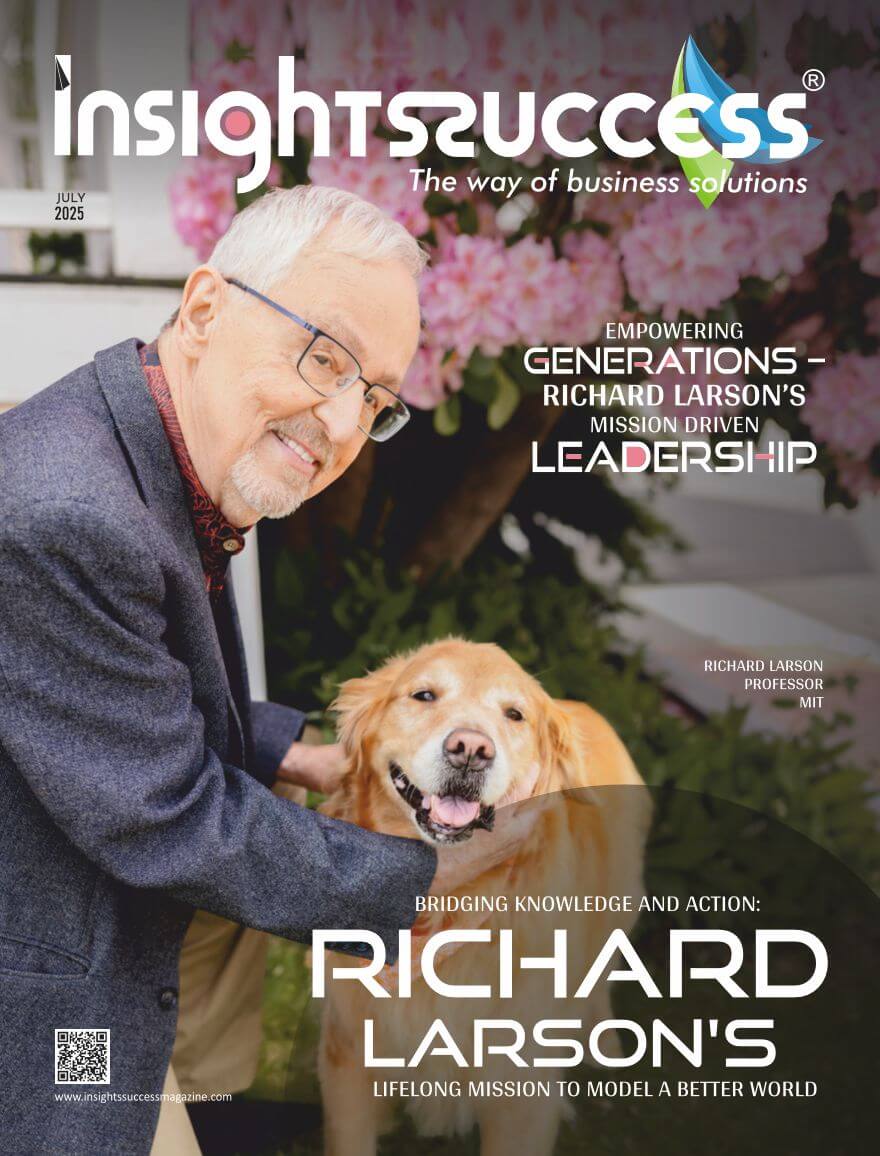
Empowering Generations – Richard Larson’s Mission Driven Leadership
Empowering Generations – Richard Larson’s Mission Driven Leadership Richard Larson has dedicated his career to transforming knowledge into action. Through pioneering research, educational innovation, and model-based thinking, he bridges theory with real-world solutions. His interdisciplinary work in operations research continues to shape systems, inspire learners, and empower problem-solvers to build a smarter, more equitable world. Quick highlights Quick reads

Bridging Knowledge and Action: Richard Larson’s Lifelong Mission to Model a Better World
In today’s world, data is abundant, yet meaningful application remains elusive. Richard Larson has long emphasized a crucial truth: knowledge is not just about accumulation; it’s about transformation. As digital resources grow and the speed of access accelerates, the educational focus often veers away from critical thinking and practical application. Larson believes that while modern students may be more informed than ever, they are often less equipped to navigate real-world challenges. He advocates for an education model that doesn’t just teach students what to think, but more importantly, how to think. Richard Larson’s career reflects a profound belief in bridging abstract academic theory with impactful, real-life results. He sees classrooms not as isolated learning zones, but as launching pads for problem-solvers. According to him, it is not enough to learn from books—students must engage with society, study its problems, and apply knowledge toward its betterment. From the earliest stages of his academic life, Larson made it his mission to convert theories into tools and learning into leadership. Whether through traffic models, emergency systems, or educational reform, Larson’s driving force remains unchanged: to shape a smarter, more efficient world by applying operations research principles in ways that tangibly improve human lives. This introduction to his work and philosophy sets the tone for a deeper exploration of a life dedicated to meaningful innovation. Discovering a Lifelong Passion Richard Larson’s journey into operations research began with a fascination for physics in high school. Unlike chemistry, which felt formulaic, or biology, which seemed overly memorization-driven, physics provided him with a clear, elegant way to understand the world. That same desire to grasp complex systems through a few fundamental principles led him to operations research—what he fondly calls “the physics of the world in which we operate.” To Larson, operations research isn’t confined to academic exercises; it is a discipline with the power to reshape real-world systems. Be it traffic patterns, emergency response, or urban logistics, Larson was drawn to the field for its practical potential. He appreciated that this form of applied mathematics allowed him to tackle real problems while retaining intellectual depth. His early passion for physics morphed into a lifelong pursuit of using mathematical models to improve how societies function. That analytical approach became his lens for viewing everything from pandemic responses to education systems, all with a focus on outcomes that matter. Building a Smarter World with Numbers Over a career spanning more than five decades, Richard Larson has authored six books and over 175 scientific articles. His research has addressed a wide array of topics, including emergency response systems, public health crises, queuing theory, workforce planning, smart-energy housing, and technology-enabled education. What binds these diverse areas is a common thread: solving complex, high-stakes problems using model-based thinking. His first major work, Urban Police Patrol Analysis (MIT Press, 1972), won the Lanchester Prize and set the tone for a career defined by both academic rigor and real-world utility. Another seminal publication, Urban Operations Research (1981), co-authored with Amedeo Odoni, remains a foundational text cited more than 1,000 times. Larson’s work on queuing theory, especially the Hypercube Queueing Model and the Queue Inference Engine, established him as a pioneer in data-driven research long before it became a mainstream methodology. His contributions have been cited internationally and continue to influence how cities, hospitals, and even countries manage flow and wait times. Leadership in Research and Service Beyond research, Richard Larson has also played pivotal roles in shaping the broader field of operations research. He served as president of ORSA in 1993–94 and later of INFORMS in 2005. As co-director of the MIT Operations Research Center for over 15 years, he mentored the next generation of systems thinkers and problem solvers. His public service contributions include advisory roles for the U.S. Institute of Medicine and the U.S. Postal Service, as well as consulting for the City of New York. A member of the National Academy of Engineering and a Founding Fellow of INFORMS, Larson’s accolades include the INFORMS President’s Award, the Kimball Medal, and the inaugural Daniel Berg Lifetime Achievement Medal. Pioneering a Better 911 System One of Larson’s most impactful projects was the overhaul of New York City’s 911 emergency response system. Before his intervention, each borough had separate emergency numbers, leading to dangerous inefficiencies. Although the introduction of a unified 911 system was a step forward, it soon revealed operational weaknesses. Richard Larson was invited to analyze the system and identify points of failure. By collaborating directly with police lieutenants and dispatchers, he optimized shift scheduling and resource allocation. His data-driven changes reduced response times and, by his estimate, likely saved countless lives. Importantly, Larson documented every phase of the project so that other cities could replicate these life-saving improvements. Advocating for Model-Based Thinking Central to Larson’s philosophy is the concept of model-based thinking. He defines it as a structured way to address complex problems by developing analytical models that mimic real-world dynamics. From traffic systems to educational reform, this approach allows decision-makers to visualize outcomes and make data-informed choices. Larson believes that operations research serves as the backbone for this kind of thinking, calling it the “physics of everyday life.” He has shared these ideas widely, including in his accessible guide, Model Thinking for Everyday Life: How to Make Smarter Decisions, aimed at empowering both professionals and the general public. Interdisciplinary Curiosity and Practical Applications Unlike many scholars who stay within narrow confines, Richard Larson has always embraced the interdisciplinary nature of operations research. His projects have spanned law enforcement, healthcare, logistics, and even pandemic planning. He seeks out problems where probabilistic modeling and applied analytics can illuminate hidden patterns and lead to better outcomes. Teaching has always been integral to his career. At MIT, he has taught numerous courses that merge analytical rigor with real-world application. His work with graduate students often results in award-winning papers that influence policy and practice alike. Boots on the Ground: A Methodology Despite the technological advancements of recent decades, Richard Larson remains a

Dynamic Leadership: Empowering Schools with Innovative Leadership Strategies
School administration in the contemporary age of education must transcend its ordinary administrative functions. It must adopt a leadership approach that encourages innovation, inclusivity, and resilience. Becoming emanating schools by culture of practice in innovation is not an option but a necessity to attain academic excellence, students’ well-being, and institutional stability. Effective school leaders are aware that education requires an integrated strategy to succeed that encourages teamwork, embraces change, and focuses on development for students and teachers. School leadership in the life of schools today is not just a matter of maintaining what exists. It involves creating vision, establishing trust, encouraging professional development, and addressing changing needs of varying school communities. Visionary leaders with the inclination to adopt new approaches are more likely to improve the ability of schools to respond to the demands of the 21st century, fix the system problems, and create circumstances in which every learner thrives. The following article outlines three essential strategies that drive school transformation through effective transformational leadership: establishing a clear and compelling vision, fostering a collaborative school culture, and leveraging technology strategically to enhance learning and organizational effectiveness. Visionary Leadership and Setting the Direction for Transformation Visionary leadership supports long-term school growth. Visionary leaders with a clear direction of vision are able to co-ordinate the work of staff, students, and the local community to a shared purpose. Such clear direction of vision is providing direction, purpose, and motivation for sustained development. A clear vision is a clear policy-making, decision-making, and instructional design principle of direction. This strengthens school communities to be more resilient even during periods of uncertainty or change. Visionary leaders also subscribe to equity, access, and innovation since they construct that vision. They actively engage in determining the individualized needs of their school community and adopting measures to solve them. They strategically plan and anticipate impending future education issues such as incorporation of new technology or revisions in curriculum standards. They also utilize data to inform decisions, using results of assessments, attendance, and behavior trends as forms of feedback rather than punishment to enhance learning opportunities. Developing an Empowering and Collaborative School Culture Developing collaborative school culture is essential to spark innovation and ongoing improvement. Where teachers, students, parents, and community members unite for common goals, the whole school gains with greater sense of responsibility and ownership. Innovative leaders build this culture by facilitating communication, inclusiveness, and shared leadership. They understand that involving all concerned guarantees improved decision making and program implementation. Developing professional learning communities (PLCs) is one of the key factors of a collaborative culture. Professional learning communities are groups of teachers who have continuous conversation, reflection practice, and problem-solving collaboratively. They learn from student learning data, exchange teaching practices, and work together to solve classroom issues. The collaborative environment provides professional development, eradicates isolation, and makes innovation thrive. Moreover, by giving teachers autonomy to lead in their role, the teachers themselves become agents of change who bring about a spirit of openness to continuous improvement. This spirit of empowerment must extend even to the students. All those schools that introduce student voice into school culture, curriculum design, and after-school activities find their students’ participation and engagement enhanced. Leveraging Technology to Facilitate Leadership and Instructional Improvement Technology is leading the way in developing innovative approaches to teaching and leadership. School leaders today are not only required to know about digital technology but also apply it effectively to help augment learning goals. Technology can further aid in augmenting communications, automating bureaucracies, improving data collection, and facilitating professional networking. Learning management systems, cloud-based initiatives, and digital dashboards allow school leaders to monitor progress, communicate expectations, and connect stakeholders with clarity and efficiency. In the classroom, technology can customize learning and engage students in new and meaningful ways. Technology facilitates more effective participation and improved student outcomes through virtual collaboration, gamified learning environments, or flipped classrooms. Technology also equips students with the right digital literacy that will be of great use in their future learning and professional lives. Technology, however, can only achieve its maximum potential by being complemented with constant support, training, and access on an equal basis. Administrators must invest in professional development training that equips the teachers with skills in digital tools. Administrators must also equip the students with the necessary tools, e.g., devices and internet connectivity, that allow them to participate actively in technology-mediated learning. Conclusion Equipping schools with new leadership practices is essential to preparing students for success in an increasingly high-tech, complex world. Three key areas where leaders can exert maximum impact are visionary planning, creating culture through collaboration, and thoughtful technology integration. These are not one-shot activities but rather part of system-level strategies that collectively create caring, compelling learning communities. As districts grapple with issues of equity, engagement, and performance, leaders are asked to bend, innovate, and lead with heart. Empowering others—students, teachers, and families—builds trust and maintains a shared pursuit of excellence. By innovating as a mindset, not as a momentary fad, school leaders create conditions for sustainable change. Their leadership is the cornerstone upon which extraordinary schools that are resilient, inclusive, and forward-thinking are constructed. Read More: How Visionary Hospitality Leadership Drives Revenue Growth?
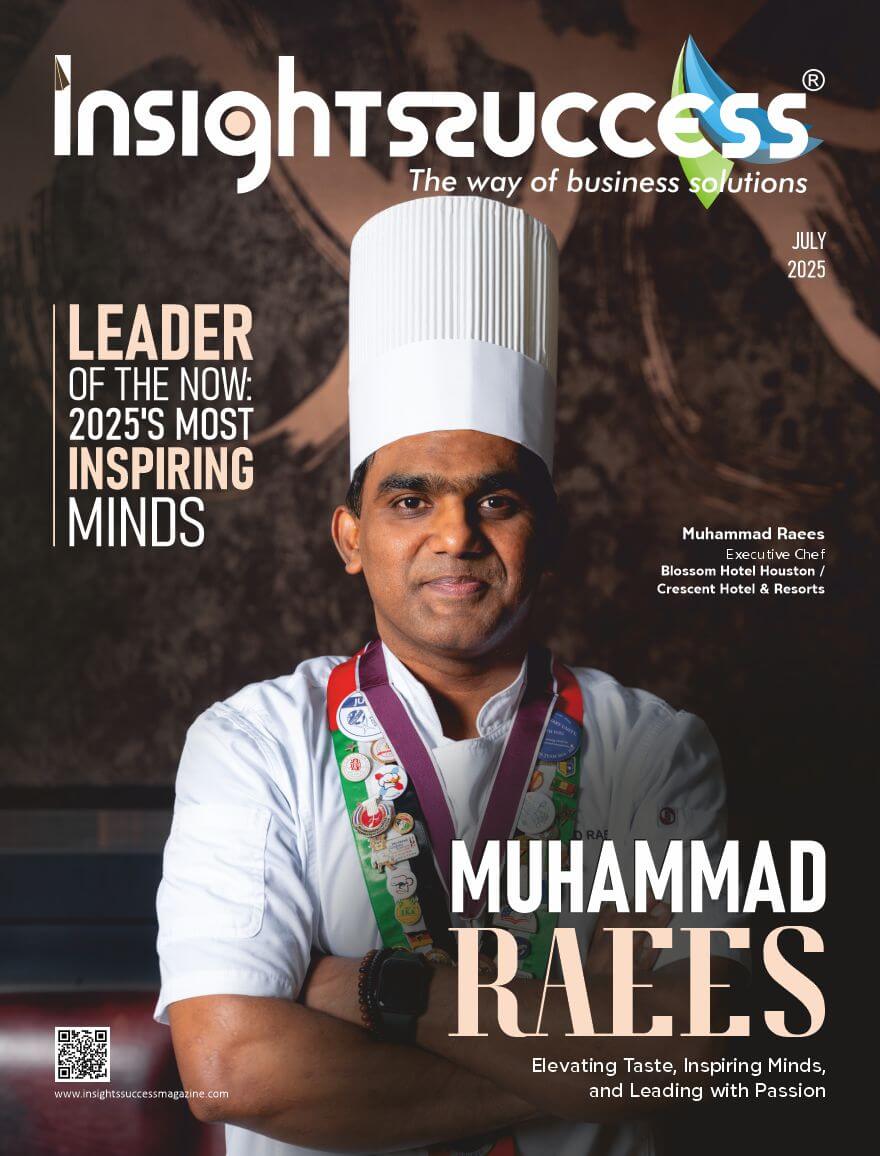
Leader of the Now: 2025’s Most Inspiring Minds
Leader of the Now: 2025’s Most Inspiring Minds This edition spotlights visionaries like Muhammad Raees who are redefining leadership through innovation, resilience, and impact. This edition honors those driving change in real-time shaping industries, inspiring communities, and leading with purpose in today’s dynamic world of opportunity and transformation. Quick highlights Quick reads

Muhammad Raees: Elevating Taste, Inspiring Minds, and Leading with Passion
This is the tale of Muhammad Raees, a culinary mastermind who rose from humble roots to global acclaim in the ultimate depiction of the power of talent and determination. Grown up and born in Karachi, Pakistan, he was a part of the comfortable but struggling fabric of a lower-middle-class existence. His formative years were part of the harsh realities of few opportunities and resources but only helped toughen him. It was family, however, that framed his ambition and ethics. The Raees family, being so involved in the food business and having a family-owned butcher shop with some catering on the side, instilled a natural food appreciation. But it was his mother’s urging—a woman whose wisdom and unwavering belief in the boy became the beacon of light which guided him through life—alone that set him really on his culinary path. For Muhammad Raees, education was a steppingstone. He received Bachelor of Commerce from the University of Karachi, his first commitment to academic as well as practical distinction. But joining the competitively selected two-year apprenticeship program in Avari Towers Karachi in 2001 marked the beginning of fulfillment of his calling. This first contact created a platform for a career, which would be marked by discipline, creativity, and continuous striving to excel. The Genesis of a Culinary Vision Raees’s professional life, also, started modestly enough. He started as a dishwasher, where he was taught to handle the ferocity and brusqueness of running kitchens. It is there, amidst clinking pots and the aroma of spices, that his passion found its way. Priced by his mother’s faith in him, Muhammad Raees was strong enough to believe beyond the material realm—a realm where food was not only for survival, but also a haven of innovation, creativity, and unity. His early years were marked by readiness to assume every task, no matter how minute. Every encounter, from doing dishes to work in the kitchen, was a further step in the progression toward gaining an entire picture of the food world. Raees’s journey wasn’t one of ambition, though; it was about doing something new, something from beyond habitual practice, something that utilized food as a means of bridging communities and cultures. Rising Through the Ranks: A Global Culinary Journey Muhammad Raees’s career is a fine example of sheer determination and will. Having completed his apprenticeship with flying colors, he was already employed at Carlton Hotel Karachi and was impressing everyone within no time through sheer hard work and dedication. In 2007, he was employed as Demi Chef de Partie in Grand Mercure Karachi Airport, a job that reflects growing experience and leadership qualities. Muhammad Raees followed this up with his colossal step to the United Arab Emirates in 2008 when he joined Grand Mercure Jebel Hafeet Al Ain. It is when he went roaming the world to see some of the peaks of some of the globe’s top hospitality chains. He was Junior Sous Chef at The St. Regis Saadiyat Island Abu Dhabi in 2012 and, two years later, Sous Chef at Ajman Saray, a Luxury Collection Resort. His rise continued to escalate with the position of Executive Chef, where he led sixty chefs in a luxurious Marriott hotel—a position tried and perfected by the ancient turmoil of the COVID-19 pandemic. The pandemic, all its worldwide destabilization and unpredictability, might have surprised even the toughest of old warhorses. It gave Raees a chance to start anew. Saying goodbye to his home country and moving to the US, welcomed by Noor Business LLC, he was employed as the company’s hospitality department manager and the firm’s guide through difficult times. Two years later, he became Executive Chef at Houston’s medical center Blossom Hotel, a property operated by Crescent Hotels & Resorts—a testament to his ongoing relevance and adaptability in global business. Professional Philosophy: Blending Excellence and Humanity Raees’s way of balancing work and life is that of intentionality and flexibility. He understands that balance is not a matter of rigid timetables but of exceedingly reflective priorities and a willingness to be flexible as situations arise. On the job, he focuses on action concerning organizational goals, but at home, he clings to people and self-care at the head of his agenda. Time management is the core of his system. Breaking down complex tasks into parts and allowing room for those unexpected hitches, Raees is master of his soul and captain of his fate without being weighed down by stress. Flexibility is also a necessity—adapting is something he allows, lets go, lives in the moment, and never afraid to take a helping hand from others when the helping hand is warranted. The Driving Passion: Growth, Purpose, and Impact One of the major drivers throughout Raees’s lifetime is an unparalleled drive to keep evolving and giving back. Spurred on by the need to keep growing day by day—not merely as a chef, but as a human being as well—mastering isn’t as much about cooking; it is about learning, self-growth, and pushing someone outside their comfort zones. Purpose, to Raees, is about creating a positive impact. From working on grooming future chefs to solving operations issues, to breakthrough projects, he takes comfort in believing that what he does is creating an impact beyond personal accomplishment. Innovation and teamwork are also fundamental to his philosophy—sharing ideas and joint striving for greatness are what he subscribes to. Overcoming Crisis in the Pandemic Era The COVID-19 pandemic had thrown a challenge to industry leaders, and Raees’s reaction had been one of adaptability and resourcefulness. The first shock waves—disturbances in the supply chain, shifting expectations on the part of the consumer, and the sudden switch to virtual platforms—had necessitated immediate adaptation. Muhammad Raees countered by getting procedures streamlined, reducing unnecessary costs, and leveraging technology to bring in maximum efficiency. He diversified suppliers to allow constraints to stay at an optimal level and used remote technologies to allow collaboration and communication. Instead of retreating from tribulation, Raees used the crisis as a chance to rethink workflows and value

How Visionary Hospitality Leadership Drives Revenue Growth?
In the ever-evolving hospitality industry, leadership is more about imagining the future. It’s more about adapting to the times and crafting experiences that amaze consumers while bringing profitability. Visionary hospitality leadership is at the center of this revolution. It’s the difference between profitable companies that are succeeding and companies that merely endure. Through direction for market directions, investment in innovation, and motivational teams, visionary leaders are establishing new revenue streams and building long-term success in an increasingly competitive business. Understanding Visionary Hospitality Leadership Essentially, visionary hospitality leadership is less about running the day-to-day. It’s a mind, an outlook, that looks over the horizon, creates innovation, breaks convention, and maintains guest experience at its heart in everything that it does. Visionary leaders can look beyond short-term results and shape the future of their businesses through informed risk-taking and strategic gambling. These executives possess the ideal mix of business acumen, emotional intelligence, and creativity. They are not reactive to change in the market; they are directing it. Whether embracing environmental sustainability, digital disruption, or guest-centric personalization, their forward-looking thinking inspires their companies toward customer experience and profitability leadership. Creating a Guest-Centric Vision Customer experience is hospitality’s new frontier. Visionary leaders know that world-class, reliable service is no longer merely a nice-to-have, but a requirement. But taking it that final step beyond that, they aim to craft experiences that are memorable and meaningful, creating loyalty and repeat business. From hyper-local boutique hotels to large chains using AI to personalize, new hospitality leadership guarantees that every innovation is guest-first in the guest needs and expectations mind. Prioritizing long-term value for relationships over short-term profit, these leaders create sustained revenue growth. Embracing Technology and Innovation Technology is transforming the hospitality industry at an unprecedented pace. From concierge by artificial intelligence to contactless check-in and data-based marketing campaigns, technology is the driver of competition. Innovative hospitality entrepreneurs are embracing technology well beyond its curve not to stay in sync with the times, but to redefine hospitality itself. They do not view technology as substituting for human interaction but rather enabling it. By leveraging the use of customer information to deliver more customized results or intelligent energy networks to reduce costs, they drive maximum guest satisfaction and business effectiveness. This strategic embracing of innovation is directly effective on optimized top-line performance. Empowering Teams to Deliver Excellence Perhaps the most significant trait of visionary hospitality leadership is its ability to energize and empower staff. Great leaders do not boss around; they mentor, led by example, and create cultures of ownership and accountability. Valued and engaged employees are likely to go the extra mile more often, leading to higher guest satisfaction and revenue. Training, development, and open communication are all signs of great leadership in hospitality. Visionary leaders are aware that their most asset is their human capital. By maintaining the well-being and professional growth of their people, they have a high-energy workforce that can provide world-class service, which equates to greater profitability. Adapting to Changes in the Market and Crises Whether there is a pandemic in the world, economic slowdown, or shift in tourist behavior, the hotel industry is prone to external shocks. Visionary leaders are expecting these. They are nimble and resilient and can change gears at the same time without losing their values. For example, in the pandemic of COVID-19, many hotels were forced to restructure their service models entirely. Strategic hospitality leadership enabled some brands to quickly create protection programs, change marketing campaigns, and find alternative profit streams—such as turning hotel rooms into offices or offering long-stay packages. Those that adjusted not only survived but most often flourished. Building Brand Identity and Loyalty Where the market is saturated, brand identity reigns. Leaders invest in storytelling, purpose, and values that make us care. They recognize today’s customer doesn’t just buy a service—they buy into a brand. Through the creation of a strong identity and relentlessly living up to the brand promise, these leaders foster loyalty. Repeating business and word of mouth are two of the most powerful drivers of revenue. Visionary leaders build their brand to create an emotional connection with guests, turning transactions into relationships. Data-Driven Decision Making Where intuition does enter in with leadership, the optimal decisions of the day will generally be analytics-backed. Perhaps visionary hospitality leadership is essentially marrying analytics with intuition. Data helps determine what works and where to course-correct it from tracking booking patterns to reading guest comments. Data leaders can price to max, market to max, and run to maximum margins. Moreover, data enables predictive modeling, enabling leaders to forecast demand, allocate accordingly, and reduce costs—while improving customer experience. Sustainability as a Growth Strategy Sustainability isn’t hip anymore; it’s a necessity. Consumers are drawn to eco-friendly brands. Progressive hospitality innovators know green is also good for the bottom line. By embracing green habits like reducing energy consumption, minimizing plastic usage, or purchasing locality, they cut costs and appeal to value-conscious travelers. Green projects also open doors to partnerships, government incentives, and positive publicity. All these put together add up to greater brand value and, as a result, revenue. Final Thoughts: Leading the Future The future of hospitality is visionary leadership. With every incoming generation of guests, only those who will innovate, adjust, and liberate their people will flourish. Visionary hospitality leadership is not a short-term trend—it’s a sound, fundamental path to long-term top-line growth in our evolving world. By placing people foremost—guests and associates—using technology, data, and values, visionaries are not merely guiding through change, they’re shaping it. And in so doing, they’re turning threats into opportunities and creating enduring value for their companies and their guests. Read More: Culinary Innovation as a Competitive Advantage in the Quick-Service Restaurant Sector

Culinary Innovation as a Competitive Advantage in the Quick-Service Restaurant Sector
In today’s QSR world, being ahead of the curve is not merely a question of speed and convenience anymore. The recent couple of years have been characterized by culinary innovation as a high differentiator, where brands gained new consumers, maintained existing ones, and differentiated themselves in a noisy market. With consumer palates transforming at a wildly speedy rate thanks to global food culture, wellness consciousness, and connectivity QSRs that innovate through culinary art are the ones most likely to thrive. Reinventing the Fast-Food Experience Those were the times when quick-food chains equated with oily burgers and sugared soda. Today’s consumers are more adventurous and better informed of what they eat. Consumers desire quality, variety, sustainability, and transparency—without compromising speed and affordability. This led the QSRs to re-strategize their menus, ingredients, and cooking techniques. Food innovation in this case is not merely developing a new flavor of fries; it’s about reinventing the whole dining experience. Plant-based protein, regionally flavored dishes, and even AI-developed dishes are just a few examples. Brands that are open to experimentation and innovation in their food creations are not only keeping up with the times but are also making dining experiences memorable. Meeting Evolving Consumer Expectations Younger customers, particularly Millennials and Gen Z, are at the forefront of robust, complex flavor and ethical eating. They will pioneer the way to experiment with menus that offer global fare, allergen-free options, and sustainability in sourcing. Hence, QSRs increasingly turn to culinary innovation to address these palates. For example, all the major fast-casual and QSR chains now offer menu items that contain international flavor—Indian wraps, Korean tacos, or Mediterranean bowls. These aren’t novelty items, they’re a sign that the brand understands its customers and is willing to evolve with the times. Second, transparency becomes center stage. Consumers want to know where their ingredients come from and what becomes of their food. Being open with clean-label ingredients and emphasizing freshness on menus are expressions of the innovation narrative. Pavilion: Using Technology to Spark Culinary Innovation Technology has become the prime driver of food innovation today. From customer demand analytics tracking to smart kitchen devices that instruct exact cooking, technology-driven insights are helping QSRs innovate and bring new-age menu items to the market faster than ever. Machine learning and AI, for instance, are employed to predict flavor trends and identify menu holes. By leveraging data in its raw form, food scientists and chefs can design foods that their intended market will most likely have a taste for and operate as lean as can be. Cloud kitchens and equipment modularization are also facilitating experimentation. Virtual brands allow a new recipe to be tested in a few markets initially, allowing QSRs to gauge interest before tackling full deployment. The Role of R&D and Culinary Talent Back of every successful food innovation is a diligent team of food and R&D personnel. High-end QSRs increasingly spend a great deal of capital on R&D, setting up innovative labs or test kitchens that serve as idea-generation and product-testing facilities. It’s where food scientists, chefs, and nutritionists get together to combine creativity with feasibility. The goal: to ensure that a new product concept a sushi burrito or a cauliflower crust pizza, for example, is not only tasty but also feasible to scale to many geographies and locations. To this end is the hiring of culinary professionals with varied backgrounds. An international culinary experience for the staff brings in authentic flavors and skills that make a brand stand out. The human touch makes innovation legitimate, not gimmickry. Culinary Innovation as Brand Identity For most QSRs, kitchen creativity is not just a tactic—it becomes a part of the brand’s DNA. Chains like Chipotle, Sweetgreen, or Shake Shack have established their reputation on always introducing something novel to the menu and staying faithful to their fundamental value system. Their customers return not just for the food, but for the excitement of discovery and pleasure. Healthy culture of innovation can also drive social media frenzy, seasonal items, and promotion campaigns. Limited time offers (LTIs), for example, produce the sense of urgency and curiosity and are bound to trigger viral responses and traffic. Well-executed, these products drive sales and brand equity. Challenges and Risks Even though food innovation is peppered with some benefits, it comes at a price. Not everything new works for customers and rolling out a new product to several hundred stores may be daunting. Then there’s the chance of alienating core customers if changes are too drastic or unusual to the brand. Innovation and continuity are most important. QSRs should make new products not only brand promise compliant but also easy to replicate, low cost, and aligned with supply chain capabilities. Ongoing dynamic testing of the menu and gathering customers’ opinions can help solve these problems. Looking Ahead: The Future of Fast Food As distinctions between fast food, fast casual, and casual dining remain fuzzy, culinary innovation will fuel even more differentiation. QSRs that innovate smartly—by combining cultural resonance, sustainability, healthiness, and taste—will possess greater potential to command market share and build lasting customer loyalty. In the coming years, we have a lot to look forward to in terms of even more focus on personalized menu choices, zero-waste kitchen spaces, and AI-influenced cooking design. With the wonderful tools or the trends, though, the underlying theme for innovation, at least, will forever remain in loving the evolving tastes and values of whom we get the chance to serve. Final Thoughts In a convenience age, innovation is the new monarch. Food creativity gives QSRs a competitive advantage that goes beyond novelty—It speaks to the consumer on an emotional level, affects brand timeliness, and assures sustained presence in an evolving marketplace. Those who innovate are not only filling bellies but charting the course of how the world eats. Read More: How Visionary Hospitality Leadership Drives Revenue Growth?