






Google DeepMind Unleashes Genie 3: A Major Leap Toward Human-Like AI
Prime Highlights Genie 3 generates real-time high-res 3D worlds from plain text instructions. It enables long-lived, physics-savvy virtual discovery for creators and AI agents. Key Facts Genie 3 offers support for 720p/24fps worlds with memory persistency and event control via prompts. The model is being released today in limited preview to guarantee responsible release. Key Background Google DeepMind has officially revealed “Genie 3“, a latest-generation AI model that can generate fully interactive 3D worlds from natural language description. That’s a titanic step forward in world modeling for AGI. Genie 3 is different from its predecessors in the sense that it can produce virtual spaces that last for minutes, allowing AI agents to explore, engage with, and learn about a simulated but coherent space. Visual persistence is also a key innovation of Genie 3: an agent retains even environmental information even after revisiting part of the world. This lingering information creates more naturalistic interaction, simulating how human subjects see and recall spatial information. The model can also support promptable world events, whereby users can dynamically manipulate scenes—e.g., adding objects, animals, or environmental events—to the command prompt. This interactive world building has applications in embodied AI agent learning. Genie 3 has been tested in DeepMind’s SIMA agent in a virtual warehouse. The AI was able to perform multi-step tasks such as navigation, manipulation, and object retrieval in the built world. This confirms the capability of the model to allow AI to know, plan, and accomplish tasks on its own—crucial characteristics needed to enable human-like AI ability. While promising, Genie 3 has limitations. Interactive scenes are brief, lasting only a few minutes, physics modeling is poor, and interaction among more than one agent is primitive. Considering these risks, DeepMind has adopted a limited release model that offers access to a restricted few researchers and creators alone for further testing and tining. Overall, Genie 3 is a breakthrough in the construction of AI—providing a technology as much for simulation or game-playing as for constructing AI systems capable of learning as a human through rich, dynamic, memory-based interaction with the environment. Read Also: Google Certification Courses That Shape Future-Ready Careers
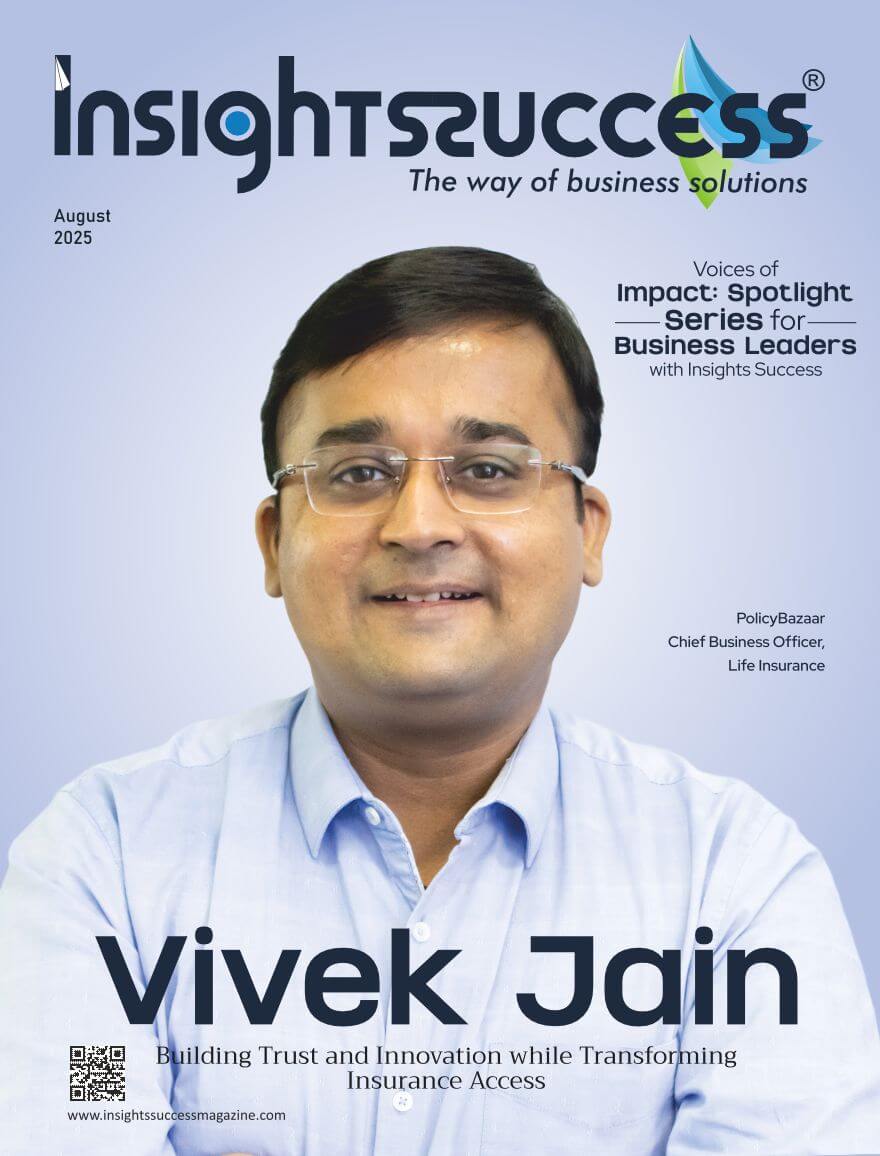
Voices of Impact: Spotlight Series for Business Leaders
Voices of Impact Spotlight Series for Business Leaders This edition highlights the transformative journey of a visionary leader redefining strategic excellence in today’s business landscape. This edition delves into Vivek Jain’s leadership philosophy, innovations, and influence, offering powerful insights for aspiring leaders and entrepreneurs striving to make meaningful impact. Quick highlights

Vivek Jain: Building Trust and Innovation while Transforming Insurance Access
The Indian life insurance sector is evolving at a rapid pace, being driven by the need for increased financial security, widespread digitalization, and the push for increased accessibility. As this shift has taken place, penetration in insurance remains low, creating a gigantic opportunity to grow. Policybazaar, which is one of the leading online insurance aggregators, is at the center of this revolution, simplifying insurance for millions and bringing it to underserved segments across the country. Vivek Jain is Policybazaar’s Chief Business Officer, Life Insurance. With deep experience in consulting, startups, and Policybazaar leadership, he provides insightful inputs on industry trends, technological disruption, and company vision. The following insightful interview profile offers a glance at his journey, perspective on the industry, and customer-focused approach of Policybazaar. Interviewer: Hello everyone, today we have Vivek Jain, the Chief Business Officer, Life Insurance, Policybazaar with us. Vivek, could you please brief about yourself, your past journey, and then we can start? Vivek: Hi! I graduated from IIM Calcutta in 2013 and started my career in consulting with Boston Consulting Group for about two and a half years, where I worked across industries in BFSI and retail, as well as consumer goods. It was a very diverse experience. Then, I briefly worked for a couple of years with an auto-tech startup and have been with Policybazaar for over seven years now. Interviewer: How did you encounter your current role at Policybazaar? Vivek: In the last seven years at Policybazaar, I have handled multiple roles. I started by setting up a part of the term insurance business way back in 2018. Term was always a big part of the Policybazaar portfolio, but we were trying to establish a new segment within it. In those first one and a half years, I was involved in both sales and the business and strategy side. Then, for the next five years, I led the savings business, and for the last four months, I have been the Chief Business Officer, leading the life insurance business, including both term and savings. Interviewer: What leadership principles guide you in steering the life insurance business at Policybazaar? Vivek: At Policybazaar, the customer is at the center of everything we do. Any innovation, whether on the product, business, or process side, is designed for the customer. Our guiding principle is to win the customer’s trust and do what is right for them, creating transparency and helping them choose the most suitable products and plans. Interviewer: How have you observed the Indian life insurance market transform over the past decade, especially with the advent of digital platforms? Vivek: Over the last ten years, we’ve come a long way in life insurance, but there’s still a long way to go as the penetration in India is still in the low single digits. However, people are starting to better understand the importance of term and life insurance. With new-age and online platforms like Policybazaar, we see a lot of traffic coming from not just metro cities but also Tier 2 and Tier 3 cities. There is growing awareness, but much work remains. Interviewer: Did you notice any change post-pandemic? Vivek: Post-pandemic, several things happened. People became more aware that they should have term and health insurance because life is very unpredictable. During COVID-19, even young people faced risks, and if they were the only breadwinner, their families suffered. Experiencing that phase made people realize the importance of these products, and we’ve since seen more people coming to our website to understand the plans. Interviewer: Did you introduce any changes to policy coverage due to COVID-19? Vivek: Regarding life insurance, any kind of death except suicide in the first year is covered in all life insurance policies, including death due to any pandemic like COVID-19. There was no significant change in terms and conditions because of the pandemic. Interviewer: What shifts have you noticed in customer behavior regarding life insurance purchases, and how has Policybazaar adapted? Vivek: We now get a lot of traffic from outside metros and Tier 1 cities. People are becoming more comfortable making payments online and are becoming digitally savvy. We’ve created streamlined digital journeys focused on customer experience. In the last three to four years, we’ve also built significant “feet on street” capacity. About 2,000 people are available across 70-80 major cities to meet customers, explain, and help them choose the right plans—this helps build trust and reach areas others might not. Interviewer: How is Policybazaar leveraging technological advancements to enhance customer experience in purchasing life insurance? Vivek: We have always provided a smooth, engaging digital journey, with deep integrations with our insurance partners that allow customers to research and compare policies online. In the past three to four years, we’ve developed AI and machine learning tools to identify risky customers at the application stage, including face and voice matching with documentation, which helps prevent fraud and impersonation at the source. This benefits both genuine customers and insurers. Interviewer: Can you share an example of how Policybazaar has gone above and beyond to assist a customer during the claim process? Vivek: We have a dedicated claims assistance program. For every life insurance policy issued, we send the nominee a claims card with a helpline number. Anyone needing help can call, and we will assist with the process. There have been many instances where nominees are not familiar with the process or are doubtful about claim payouts. In some cases, we send team members in person to help at the claimant’s home, especially if forms are complicated or the family is in emotional distress. Interviewer: What are the current trends in life insurance that you believe can shape its future? Vivek: Several trends are emerging. We now have special plans for NRIs, allowing them to buy term insurance with video medicals from abroad. We have also started a new segment for women, offering discount plans and features like critical illness cover and health management services. Another innovation is the smart exit feature, which
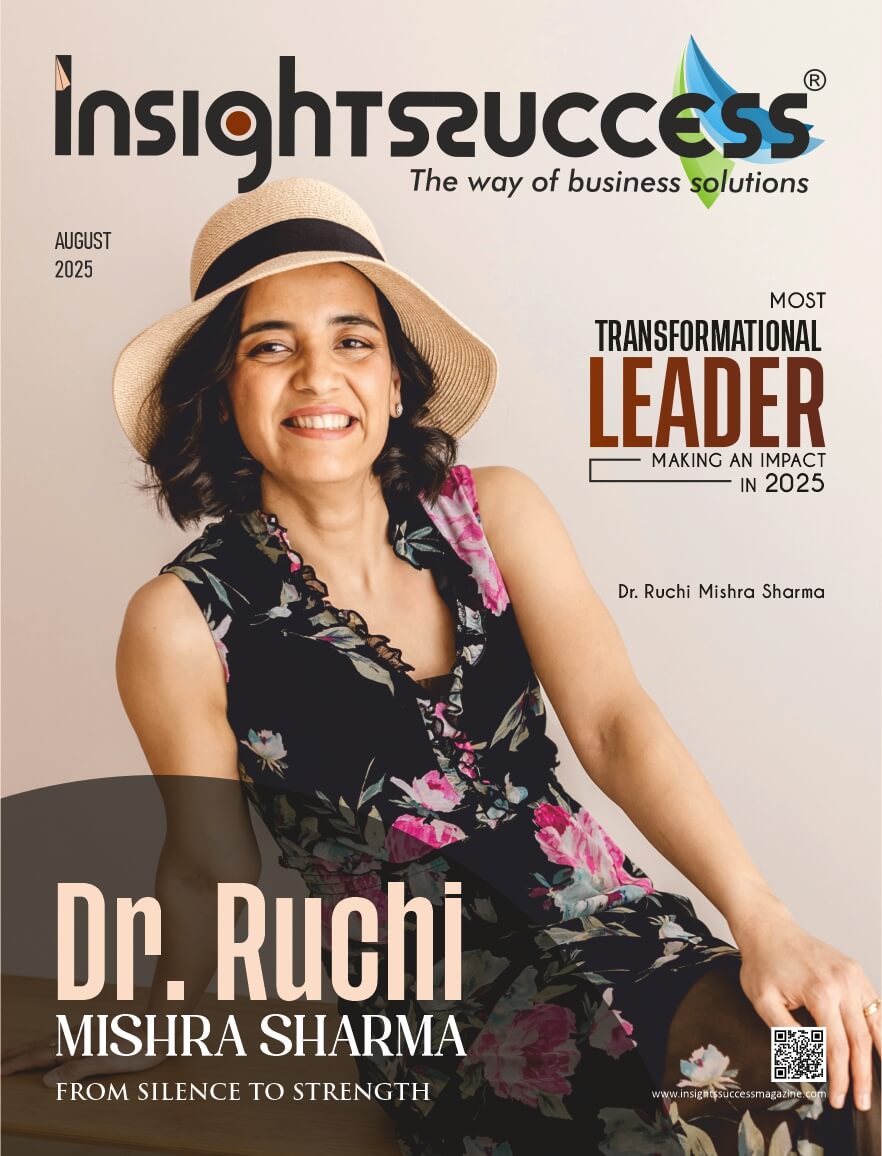
Most Transformational Leader Making An Impact In 2025
Most Transformational Leader Making An Impact In 2025 This edition celebrates Dr. Ruchi Mishra Sharma, a visionary reshaping healthcare through innovation, empathy, and leadership. Her transformative journey inspires change, empowers communities, and sets new benchmarks in excellence, making her a beacon of progress in a rapidly evolving global landscape. Quick highlights Quick reads

Dr. Ruchi Mishra Sharma: From Silence to Strength
Few people exhibit resilience and transformative leadership like Dr. Ruchi Mishra Sharma in a world where unseen hardships frequently overshadow obvious achievements. Behind honors, medical certifications, and international speaking engagements is a tale of exceptional bravery and unwavering resolve rather than one of ease. Her path, which was shaped by her own trauma and deep recovery, has developed into a mission that affects people’s lives on other continents. She is no stranger to reinvention, having had medical training in India and subsequently requalified in the UK. Her most striking metamorphosis, however, started in the private moments of introspection when old scars cried out for a voice, not in an operating room or examination room. She overcame the darkness of postpartum depression and childhood sexual trauma by refusing to remain silent. Rather, she transformed her suffering into meaning. She is leading today with a potent fusion of emotional intelligence and clinical understanding. As the creator of Freedom and Empowerment Hypnotherapy with Ruchi, she is helping women in overcoming trauma by using innovative techniques like coaching, heart healing, and Rapid Transformational Therapy (RTT). Her strategy, which is based on empathy, sincerity, and strong clarity, has completely changed the way that people think about leadership in healing environments. The tale of Dr. Sharma is one of legacy in motion rather than merely one of survival. Her leadership is serving as an example of what can happen when someone has the courage to stand up, not only for themselves but also for the innumerable others who are still trying to break free from quiet. The Weight of Silence Dr. Sharma’s journey began in an Indian household where academic achievement was paramount, where success was measured by degrees and societal standing. The studious girl who would become a medical doctor carried a secret that nearly destroyed her sexual abuse endured at the age of five, buried so deeply that she convinced herself it couldn’t affect her life. “I thought I had buried it so far deep inside that it could not affect my life. But the reality was that the shadows of it gripped me; I was living in a cage.” she reflects. The cage manifested in various forms throughout her life. Despite her academic success earning her MBBS in 2008 and MS in Ophthalmology in 2011 she struggled with self-worth and identity. When she moved to the UK in 2011, she had to rebuild her medical career from scratch, as her Indian qualifications weren’t recognized. The determined doctor cleared the challenging PLAB 1 and 2 exams in 2012, demonstrating the resilience that would later define her transformation. The Breaking Point The birth of her son in 2020 should have been a joyous milestone, but it became the catalyst for Dr. Sharma’s deepest crisis. Postpartum depression consumed her, and the accumulated weight of decades of suppressed trauma threatened to crush her spirit entirely. “I remember looking deep into my son’s eyes, with the heat of uncontrollable tears streaming down my cheeks, as I felt completely helpless. I had hit rock bottom. I struggled with low self-confidence, low self-esteem, and non-existent self-worth. I just did not feel enough.” she recalls. At this crossroads, she faced a choice that would define not only her future but the futures of countless women she would eventually help. She could remain trapped in the darkness, or she could begin the painful journey toward healing. The Healing Revolution Dr. Sharma’s path to recovery led her to Rapid Transformational Therapy (RTT) and coaching—modalities that would not only save her life but become her life’s work. She trained under Marisa Peer, became a certified level 2 Heart Healing Practitioner, and earned her certification as a Jay Shetty Certification School life and success coach. “I chose to train and be able to help other women as these transformed my life and helped me align to my deeper calling and purpose.” she explains. Her own healing became the foundation for what would become Freedom and Empowerment Hypnotherapy with Ruchi, launched in July 2022. The transformation was remarkable. The woman who once “would rather die than be on stage” began speaking at international conferences. She has delivered impactful talks on four different stages in Paris over the past two years, sharing her story and healing methods with global audiences. Building an Empire of Healing Dr. Sharma’s vision is both audacious and deeply personal: no girl or woman should have to suffer in silence, because there is a way out. Her mission is to reach, touch, and transform the lives of one million women a goal that may seem ambitious for someone who once grappled with fears of visibility. Her approach combines her medical background with cutting-edge therapeutic techniques. Working primarily with women who have experienced sexual trauma and childhood abuse, she helps them break free from decades of pain in sessions that clients describe as immediately transformative. “I feel light. I feel seen. I feel heard,” clients tell her after their first RTT session. These words capture the essence of Dr. Sharma’s work—helping women move from disconnection to wholeness, from silence to voice, from trauma to triumph. The Balancing Act Managing her dual roles as a medical doctor and transformational therapist while being a mother to her four-year-old son requires extraordinary skill. Dr. Sharma works at the NHS on Mondays and Tuesdays, dedicates mornings to her private clients, and reserves afternoons for her son. “My dreams, goals, vision and me being the best mum that I can are all parts of me. I would really want to reassure the women out there that you do not have to choose one over the other.” she emphasizes Her philosophy extends beyond time management to emotional regulation. She uses what she calls the “HELICOPTER” technique stepping back from immediate problems to gain a broader perspective. This approach, born from her own struggles with overwhelm, helps her maintain clarity during challenging times. Recognition and Impact Dr. Sharma’s work has garnered significant recognition. She has received the Hoinser Award for

The Role of Rapid Transformational Therapy in Trauma-Informed Care
In the ever-changing world of mental illness and emotional recovery, there is one reality that’s becoming increasingly apparent day by day: trauma happens more often than most would ever have dreamed, and its impact is immense. From childhood beginnings to adult atrocities, trauma has the tendency to lurk in the background, affecting the way individuals think, feel, and act. In order to fulfill this demand, therapists are shifting towards trauma-informed care—a humble, soft method that attempts to view individuals based on what they’ve lived, rather than the way they’re appearing. In this context of compassion and understanding, increasingly therapists are looking for new or alternative ways to traditional talk therapy. One such approach that is gaining increasing popularity is Rapid Transformational Therapy (RTT). Blending elements of hypnosis, cognitive behavioral therapy (CBT), neuro-linguistic programming (NLP), and psychotherapy, RTT offers a strong and in many instances speeded path toward transformation of the source of emotional suffering. Trauma-Informed Care: A Paradigm Shift Trauma-informed care is not a method—it’s a way of thinking. It shifts the question from “What’s wrong with you?” to “What happened to you?” This slight but significant adjustment starts to open doors to healing unencumbered by shame and blame. It recognizes that trauma can reorganize the nervous system, influence emotional regulation, and impact relationships in complicated ways. Practitioners adopting this approach are educated to create a culture of physical, emotional, and psychological safety. Clients are nourished by enabling, non-judgmental relationships that honor their experience and strengthen resilience. This is fertile ground for therapies that transcend the eradication of symptoms and aim to transform lives at their very foundation—such as Rapid Transformational Therapy. What is Rapid Transformational Therapy? Rapid Transformational Therapy, developed by Marisa Peer, is a therapy designed to uncover and repair the source of emotional suffering by accessing the subconscious. RTT is generally done in an abbreviated set of sessions, with many clients registering significant change after one or two. The RTT method focuses on induced hypnosis, through which the client accesses early experience or memory that is held accountable for causing restrictive belief or habit. The therapist helps the client to notice and transform such beliefs, substituting them with better empowering beliefs. An individualized audio recording is normally provided after the session in order to reaffirm the new beliefs over time. What sets RTT apart is the intensity and speed. Instead of years or months of symptom-oriented therapy, RTT goes to the source, cleans it up, and develops lasting change from the inside out. RTT’s Congruence with Trauma-Informed Principles Although RTT was not created as a trauma-specific modality, it happens to be highly congruent with trauma-informed principles. It offers a safe environment to start with. Throughout processing memories while undergoing RTT sessions, the client remains awake and in command even when he/she is hypnotized. It is smooth and gentle a process, and the client is never compelled to work on memories he/she cannot handle. That creates emotional safety, which forms the basis of trauma-informed practice. Second, RTT fosters empowerment. Many people who’ve experienced trauma carry internalized messages such as “I’m not enough,” “I don’t matter,” or “I’m unsafe.” RTT helps individuals locate where these beliefs came from—often childhood events or misunderstood moments—and gives them the tools to rewrite those messages with ones that affirm their strength, worth, and safety. Finally, RTT is about healing the cause and not just the symptom. To give an example, a patient with panic attacks will learn with RTT that a traumatic childhood experience of helplessness is the origin of the current anxiety. When that root is unearthed and re-examined, the panic will normally simply fade away on its own. Impact of Rapid Transformational Therapy in the Real World While individual experiences vary, RTT healing testimonies are increasing. Survivors of emotional, physical, or sexual abuse have witnessed finding once more a feeling of self-worth, enhanced relationships, and the erasure of deeply entrenched guilt or shame. Take Sarah’s case, for instance, who struggled with intimacy and emotional disconnectedness in her adult relationships. Cognitive understanding of these issues in conventional therapy was helpful, but she was stuck. During an RTT session, she recalled a repressed memory that her parents were divorcing when she was five years old. And from there, she made an unconscious decision that love is pain and loss. When she learned that, rewired the belief, and listened to her RTT recording, she felt “like a new person”—more open, more trusting, and more at peace. This kind of outcome, however improbable, demonstrates the enormous potential of Rapid Transformational Therapy if used appropriately and responsibly. Considerations and Responsible Use For all its strengths, RTT is no silver bullet. Nobody wants to be hypnotized, and not all trauma victims are keen on exploring the subconscious untrained or unsupervised. In a few cases, RTT will be only part of a comprehensive recovery program including conventional therapy, medication, or group therapy. It is also important that therapists using RTT in trauma-informed settings are trained in trauma-sensitive methods. Pressing a client too forcefully into regression work without proper facilitation can be more hurtful than helpful. Recovery must always occur at the speed of safety and trust. Adding RTT to Trauma-Informed Care As knowledge of trauma and mental health grows, practitioners and organizations are increasingly seeking out complete approaches that bring about deep, lasting change. Rapid Transformational Therapy fills the gap with an efficient, client-centered model for healing that honors the science of the mind and the client’s process. Used wisely, RTT will enrich trauma-informed care with a profounder level, taking clients from survival to actual change. It doesn’t replace conventional care—instead, it adds to it, providing another layer of depth to the healing process. Last Thoughts: A Potent Partner in Healing Trauma can form identities, control choices, and stifle the spark of even the bravest souls. Healing is always an option, nonetheless. With methods like Rapid Transformational Therapy becoming increasingly common alongside compassionate care paradigms, people are being provided with more than just survival—more than living through,

The Neuroscience Behind Trauma-Informed Healing
Trauma-informed care is a robust, evidence-based treatment respectful of the profound and enduring effect trauma has on the human brain. But even more fundamentally, it also leverages the brain’s ability to repair itself. This way of considering alters not only how we practice trauma it alters how we know ourselves and others along the road to recovery. Understanding the Brain When Under Trauma When the person is traumatized, the brain itself gets instantaneously changed in the body’s favor. The amygdala responsible for danger detection gets extremely sensitive. It begins reacting with a sense of desperation even to non-threatening stimuli. The prefrontal cortex, the brain area responsible for rational thinking and emotion management, gets shut down. On the other hand, the hippocampus required to build up memories can be destroyed—leading to dysfunctional processing or recollection of the traumatic incident. This disruption in brain functioning has the result of keeping the nervous system stuck in “survival mode.” The overwhelming majority of individuals are in a state of hyperarousal, emotional reactivity, or disconnection—states which are all neurological reactions, not character flaws. Trauma rewires the brain to the extent that an individual sees, senses, and thinks the world differently. Trauma-Informed Healing: A Shift in Mindset At the core of trauma-informed healing is a revolution so deep and so deep: rather than asking “What’s wrong with you?”, it asks “What happened to you?” It is sensitive to the fact that behavior, feeling, and habit are most commonly the result of having been hurt before, rather than weakness or failure. Neuroscience assists us here in affording this viewpoint. According to research, the brain can utilize neuroplasticity—the capacity to rebuild and reconnect synapses between brain cells according to new experiences. In healing from trauma, what this means is that moments of healing, cumulatively, can rewire the brain away from hypervigilance and fear toward one of safety, regulation, and connection. Why Safety Matters in Healing? It is okay to be unsafe for survivors of trauma—it’s healing to life. When the brain continues to say danger, even at an unconscious level, it can’t shift out of survival. Trauma-informed healing is about building safe, stable environments—a safe place at home, in therapy, or in the community. This sense of safety allows to calm the overaroused amygdala and revive the prefrontal cortex. During these situations, the individual begins learning that he/she is no longer in harm’s way. As this repeated exposure to safety continues to repeat itself, eventually this repeated experience can rewire the nervous system and brain to respond in improved, more balanced ways. The Power of Human Connection The second core aspect of trauma-informed healing is the use of relationships. Human brains are relationship-hardwired. Yet, for the traumatized—interpersonal traumatized particularly—relations are experienced to be unsafe or threatening. Science also teaches us that loving, supportive relationships are the foundation for what is called co-regulation. In other words, being with a person who is calm and regulated emotionally will make another person feel grounded and safe. Therapist, close friend, loving relative – these are the kinds of relationships on which healing can be founded. The more trust that is established, the further the brain begins to shift from defensiveness towards openness. It does not happen at any given moment but over time, and through repetition, new patterns of the brain are formed that enhance emotional resilience and relational safety. Healing Through the Body and Mind While classical talk therapy may be beneficial, trauma-informed healing knows that not only is trauma kept in the head, but in the body as well. Therefore, most of the healing practices are body-centered. Practices like breathwork, grounding, and slow movement can calm the nervous system and minimize symptoms of trauma. Besides, meditation and mindfulness have been said to engage areas of the brain responsible for feelings and concentration. Through repeated practice, these exercises decelerate amygdala activity and enhance the brain’s ability for inner wisdom and calmness. The other therapies, such as EMDR (Eye Movement Desensitization and Reprocessing) and the somatic therapies, address both the cognitive and body response to enable enhanced trauma processing. The therapies enhance the brain’s own natural recuperative potential—when administered in safe, trauma-sensitive climates. From Surviving to Thriving Trauma-informed healing is not forgetting what happened. It’s integrating it into the here and now in a way that no longer dominates the current moment. It provides people with tools to transition from merely surviving from day to day to truly thriving in life. What is most fascinating about this model is how it honors both science and humanity. It combines our understanding of the brain with such compassion, building a path that honors each person’s own journey and pace of healing. It reminds us that even though trauma may have changed the brain in some respects, healing experiences can rewire it in similarly intense ways. Conclusion: A Return to Wholeness The neurobiology of trauma-informed healing gives us hope—initially, hypothetically, but later and more concretely, in actual, lived transformation. The more we learn about the brain’s entanglement with trauma, the more effectively we can construct healing spaces to restore safety, connection, and control. Whether survivor, mental health professional, or walking along with a loved one on the healing journey, remember this: the brain is not broken—it’s resilient. And through compassion and determination, it can be guided toward peace, resilience, and connection. Read Also: The Role of Rapid Transformational Therapy in Trauma-Informed Care
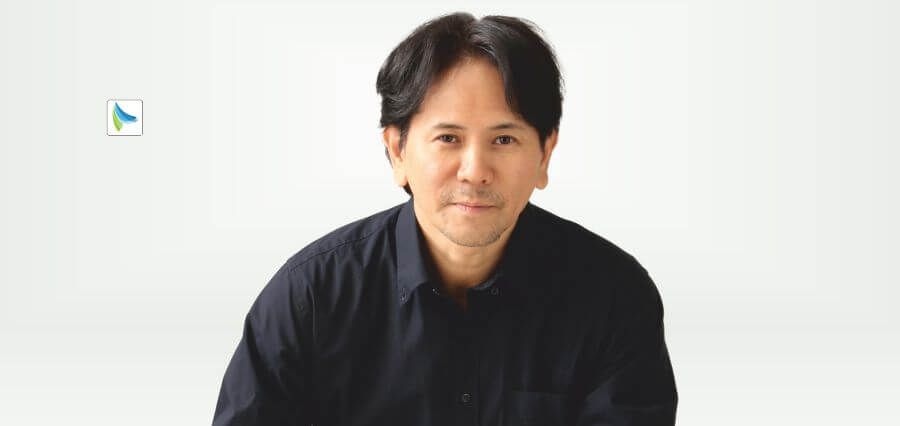
Jake Ohama: The Visionary Behind Japan’s Fashion Revolution and Global Animation Phenomenon
In a universe where uncertainty tends to give rise to hesitation, Jake Ohama has made it his guiding principle. His career path is far from conventional, from conceptualizing stadium-sized events upon graduation from university to changing Japan’s fashion scene with innovative ideas such as the Tokyo Girls Collection. As Founder and Animation Director of Rabbitwarren Animation Studios, he is now at the nexus of purpose, art, and innovation, leading a movement that is revolutionizing leadership and story as well. His style of leadership is founded on vision, resolve, and firm conviction in mass creativity. Rather than directing the outcome, he has faith in his teams by specifying their assignment in meticulous detail and then delegating to enable them to bring to the forefront their creativity. With its very first animation project winning the support of 30 million individuals globally within just two quick years, an unprecedented record for a group that was completely new to the game. Rabbitwarren’s meteoric rise has been fueled by this godly strategy. His passion for human connection lies at the root of every endeavor. He is converting every obstacle, both personal and professional, into creative energy, whether creating cultural symbols such as the Kobe Collection or leading the internationally targeted Unconditionable Project. His approach, powered by quantum physics and unwavering positivity, which is focusing on an active reality: that leadership is less about control, and more about flow, bravery, and vision. Japanese Jake Ohama goes on to produce not only tales, but a legacy of oneness, self-expression, and conscious transformation, proving that even the most unexpected projects can be truly fantastic in effect with the right attitude. From Campus Organizer to Fashion Pioneer Ohama’s talent for large-scale event management, first evident during his university fundraising efforts, quickly caught the attention of California’s prestigious Riviera Country Club. Hired straight after graduation, he found himself overseeing operations for events attracting up to 150,000 attendees, including the US Open. The scale and complexity of these events provided invaluable experience that would prove instrumental in his later ventures. “Running a business comes with inevitable setbacks and challenges. A true leader adapts the company’s direction, when necessary, inspires their team, and fosters a shared sense of purpose and growth.” he reflects, speaking from his current base in Singapore. This philosophy guided his transition from event management to entrepreneurship. Recognizing the emerging potential of mobile internet commerce, Ohama founded a company that would fundamentally change how fashion was consumed and experienced in Japan. His vision materialized in the creation of two groundbreaking fashion events: the Kobe Collection and the Tokyo Girls Collection (TGC). TGC became a cultural phenomenon, attracting between 30,000 and 60,000 attendees per event. More than just a fashion show, it revitalized Japan’s fashion industry and earned government backing, demonstrating Ohama’s ability to create enterprises that transcend commercial success to achieve broader cultural impact. The Mobile Commerce Revolutionary As a pioneer in mobile commerce, Ohama’s company achieved significant milestones through strategic partnerships with global brands including Louis Vuitton Japan and Coca-Cola Japan. These collaborations weren’t merely business transactions but represented a new paradigm in how luxury brands could engage with mobile-first consumers. The success of his fashion ventures has established Ohama as a visionary in understanding how technology can reshape traditional industries. Yet, he remains characteristically modest about these achievements, often stating that they are newcomers and do not consider themselves successful at all despite his company’s recognition with multiple awards, including the Nikkei Internet Award 2002 and the 6th Japan Online Shopping Awards. This humility perhaps stems from his philosophical approach to business and life. “In life, work and personal challenges don’t clash they’re two sides of the same coin. I’ve never focused on balancing them. Instead, I believe the environment and circumstances we grow up in naturally shape our passion for work and our life’s goals.” Ohama explains. A Quantum Perspective on Time and Purpose Ohama’s worldview draws heavily from quantum physics, particularly the concept that time is an illusion where past, present, and future exist simultaneously in the “eternal now.” This perspective profoundly influences both his business strategy and personal philosophy. He has even captured this concept in a song he wrote called “Now Here – Focus On Now,” which reflects his quantum view of time. “From a quantum mechanics perspective, time is an illusion. Everyone’s life has a natural ‘flow.’ Trusting and following that flow while steadily moving forward is crucial.” he says. This philosophy was tested during the 2011 Tohoku Earthquake, when Ohama’s company pivoted to support relief efforts while launching innovative global fashion projects like World Runway. The experience reinforced his belief in adaptation and resilience as core business principles. The Hiroshima Declaration and UNCONDITIONABLE PROJECT February 22, 2022, marked what Ohama believed would be a pivotal moment in Earth’s cycle. On that date, he traveled to Hiroshima to launch the “UNCONDITIONABLE PROJECT (UCDNBL),” an ambitious initiative rooted in a fresh artistic vision aimed at reminding humanity of its fundamental unity. The choice of Hiroshima as the launch location was deeply symbolic. Hiroshima, a city scarred by nuclear devastation, stands as a global symbol of peace, advocating for human unity and the futility of division, as Ohama has often emphasized. The timing proved prophetic just two days after the declaration, Russia’s invasion of Ukraine underscored the urgency of his message about human connection and peace. UCDNBL is founded on six core perspectives inspired by concepts from quantum physics: freedom, passion, time, consciousness, living in the present, and embracing abundance. The organization views life as a “painting of consciousness,” where individuals across the globe are empowered to freely shape their own perspectives, according to Ohama. The RABBITWARREN Phenomenon The pandemic forced a significant pivot in Ohama’s plans. Originally preparing to launch the WORLD RUNWAY project—a global fashion tournament—the impossibility of large-scale events during COVID-19 led to an unexpected opportunity. The team pivoted to developing an animation project that could be worked on remotely. What emerged was RABBITWARREN, the first phase of the UNCONDITIONABLE PROJECT

Digital Innovation Driving India’s Real Estate Market Transformation
India’s real estate industry, traditionally thought to be conservative and old-school, is undergoing a gargantuan shift. The prime mover of this transformation is technology, which is transforming the way property comes to be built, purchased, sold, and serviced. The article-based and manually intensive business is now coming to accept technology on its entire value chain, which is ushering more transparency, efficiency, and access for everyone concerned right from the developer to the buyer. The Birth of a Tech-First Culture India has witnessed a decade-long digital revolution in every sector. Real estate, which was a slow adopter initially, is catching up fast. Developers, brokers, investors, and customers are now eagerly embracing technology to make well-informed decisions, simplify processes, and engage users. One of the main spurs for such a wave has been growing digital literacy in India, along with growing internet penetration. Mobile-first solutions, virtual site visits, and online payment gateways have gone mainstream with enough push coming from evolving expectations of tech-native millennials and Gen Z shoppers. Virtual Site Visits and 3D Visualization Those were the good times when customers would drive miles within cities to simply visit houses under construction. Real estate groups now organize virtual tours, 3D walkthroughs, and drone videos of houses with the help of digital technologies. These are not only time and effort savers but enable customers to shortlist a few houses while sitting in their own homes. This has been a serious game-changer, particularly during and after COVID-19 when site visits were restricted. Buyers can imagine layout, interior fit-out, and lighting at various times of the day by way of more advanced simulation technology. Smart Property Portals and AI-Driven Search But then there is also the space of property discovery too where digital innovation has made a colossal difference. The internet-based property websites such as MagicBricks, 99acres, and Housing.com are now smart platforms making AI suggestions of property based on user interest, behavior, and location history. These portals are incorporating chatbots, predictive systems, and sentiment analysis tools to direct users more effectively. From looking for houses according to price, amenities, or even safety ratings of an area, technology is providing customized solutions to simplify home searching and make it quicker to achieve. Blockchain: Building Trust and Transparency The most pervasive issue in the real estate market in India has been, perhaps, that of no transparency and suspicion. Fake impersonation of property, title litigations, and lack of transparency during transactions have been the endemic issues in the marketplace. Digital technology is once again to the rescue in the shape of blockchain technology. Blockchain secure and indelibly makes property records, thus simplifying due diligence as well as limiting fraud. Blockchain makes governments, sellers, and buyers more trustworthy by establishing a distributed ledger of titles as well as transactions. Andhra Pradesh and Maharashtra have pilot implementations of land record digitization using blockchain already. PropTech Startups Leading the Revolution India’s expanding PropTech (property technology) industry is also driving this shift towards digital. Startups are leveraging AI, IoT, AR/VR, and Big Data in property with creative uses. For example, businesses such as Square Yards and NoBroker have revolutionized the broker model through machine learning to connect property owners directly with buyers and renters. Startups are also creating digital documentation platforms, online leasing agreements, and self-executing KYC, simplifying rental and ownership. Innovation has made these players bring innovation to the real estate space with a focus on real-world issues. Smart Homes and IoT Integration Homebuyers today are no longer content with roofs and walls but smart homes with self-sustaining capabilities. Internet of Things (IoT) devices coming into homes and offices is another force to be dealt with as much as digital innovation comes in terms of redefining India’s real estate future. From energy-efficient appliances to intelligent security and voice-activated assistants, smart homes are not just delivering convenience but also material value to houses. These constructors are creating a competitive advantage in the market. Data-Driven Urban Planning and Sustainability Technology is being used more for planning and sustainability in the city. Satellite imaging, Geographic Information System (GIS), and predictive modeling are all being used by city builders and city planners to determine the best place to locate projects, demographics analysis, and environmental analysis. Using data analytics, the developers can make better-informed zoning decisions, determine what infrastructure needs to be developed, and create transport connectivity. This not only creates better ROI but also encourages green building practices, as it should in India’s sustainability initiative. Challenges on the Road to Digitization As swift as speed, real estate adoption of technology is not a smooth ride. Tier-2 and tier-3 cities do not have robust digital infrastructure. The real estate players are also Change-resistant, resisting entrenched methods of working. Other issues that must remain a focus of attention with technology development include data protection, computer security, and compliance with the law. Ensuring digital solutions are available and easy to use across and between income and age groups is essential for them to be adopted. The Road Ahead In the coming years, property and technology will just become closer. The growing ascendance of Artificial Intelligence, blockchain, augmented reality, and data science will continue to reshape our interaction with property assets. Government programs such as Digital India, RERA, and smart city initiatives are also paving the way for a more organized and technology-based real estate sector. Digital innovation shall not be a luxury but a necessity as the business matures. Conclusion Digitalization is ancient history—it’s the future of Indian realty. With it making it more efficient, transparent, and customer-centric, it is reshaping the business bottom-up. Those who seek this change will succeed; others may find themselves falling behind in an increasingly changing market. With technology and reality converging, the Indian reality space will be smarter, swifter, and more accessible than ever. Read Also: The ROI of Tech-Enabled Construction

Ajinkya Sarvagod: Journey of Innovation, Excellence, and Empowerment in Construction
Leadership becomes the real key to success in the dynamic field of construction, where accuracy must be balanced with pressure and vision must be turned into tangible reality. Ajinkya Sarvagod, the Vice President of Engineering of Kohinoor Group Pune, is one of the few people who is successful in achieving this delicate balance. He is providing nearly two decades of diverse expertise in the residential, commercial, and infrastructure sectors, and is well known for his keen execution skills and people-first leadership approach. His path has been characterized by constant development, self-discipline, and a desire for greatness. It began with his profound admiration for his elder brother, a gold medalist and top railway official. Sarvagod combines innovative design thinking with systems-based execution methodologies, whether it is building massive infrastructure like the Delhi-Mumbai Expressway or creating opulent homes like those of cricket legend Virat Kohli. Using creativity and instantaneous decision-making to boost efficiency, he is a strong supporter of digital project management and the Kaizen technique. What really sets him apart is his conviction that teams should be empowered. He leads by fostering a sense of purpose, coaching experts, and bringing all stakeholders together around a common goal rather than by giving orders. As a thought leader and guest lecturer, he has an equal stake in developing the next generation of talent and improving industry standards. His dedication to business performance is beyond engineering, as seen by his position as an Independent Director with the Institute of Directors, which is demonstrating his profound knowledge of governance concepts that he learned from his father, a renowned criminal lawyer. Ajinkya Sarvagod is a wonderful example of leadership that is flexible, responsible, and prepared for the future. Building structures is only one aspect of his work; other goals include fostering trust, pushing the envelope, and leaving a legacy of operational excellence and visionary impact that the industry may emulate. The Foundation of Excellence Sarvagod’s journey began in the academic corridors of Government Polytechnic, Solapur, where he was honored as the Best Outgoing Student during his diploma in civil engineering. This early recognition was merely a glimpse of the excellence that would define his career. “My inspiration to pursue a career in construction came from my elder brother, Mr. Raj Sarvagod, a civil engineer, gold medalist, and Class I officer in Central Railways. From a young age, I looked up to him as my mentor and role model. That admiration laid the foundation for my lifelong passion for civil engineering.” he reflects. The influence of his brother proved instrumental in shaping not just his career choice but his approach to leadership and excellence. After completing his bachelor’s degree from WIT Solapur, where he served as President of the Civil Engineering Students Association of India, Sarvagod was recruited by K Raheja Corp through campus placement a milestone that marked the beginning of what would become a remarkable journey in the construction industry. Mastering Diversity: From Luxury Residences to Infrastructure Giants What sets Sarvagod apart in an industry often characterized by specialization is his remarkable ability to excel across diverse project categories. His portfolio reads like a comprehensive guide to modern construction, encompassing everything from luxury residential developments to massive infrastructure projects like the Delhi-Mumbai Expressway. “With over 19 years of experience, I’ve delivered projects across residential, commercial, and infrastructure domains. My leadership style evolves with each project’s unique requirements while maintaining a consistent focus on quality, innovation, and stakeholder satisfaction.” he explains This adaptability is perhaps best exemplified in his approach to different project types. Luxury residential projects, such as cricket icon Virat Kohli’s Alibaug residence, demand what Sarvagod calls “creative design thinking, personalization, and meticulous attention to detail.” In contrast, large-scale infrastructure projects require “systems thinking, Kaizen-based execution, and strong coordination with government authorities and turnkey contractors.” The ability to seamlessly transition between these vastly different requirements speaks to a deeper understanding of construction as both an art and a science. “I adapt by tailoring strategies across each project phase—from approvals and market research to cost planning, execution monitoring, and seamless handover—balancing precision with vision at every step,” he notes. The Innovation Imperative In an industry traditionally resistant to change, Sarvagod has emerged as a champion of innovation. His implementation of Kaizen methodology and sophisticated Management Information Systems (MIS) is revolutionizing project delivery across his organizations. This commitment to continuous learning and innovation is further evidenced by his current pursuit of IIT Delhi’s Executive Programme in Entrepreneurship Development 2025, demonstrating his dedication to staying at the forefront of industry evolution. “Kaizen and MIS systems have transformed our operational approach. Through Kaizen, we drive continuously improving inefficiencies, refining workflows, and encouraging innovation from all levels of the team.” he explains. This isn’t merely about adopting new technologies; it’s about fostering a culture of continuous improvement that permeates every aspect of project execution. The MIS platforms provide real-time tracking of progress, cost, and resources, enabling what Sarvagod describes as “early identification of bottlenecks and faster decision-making.” The results speak for themselves. This data-driven approach ensures accountability, agility, and consistent delivery of high-performance results, particularly crucial on complex or fast-track assignments that characterize much of today’s construction landscape. The Art of Client Excellence In a client-centric industry, Sarvagod’s approach to managing top-tier clients has become a benchmark for excellence. His philosophy centers on what he calls “end-to-end ownership of quality, time, and cost.” From concept to handover and extending into the facility management phase every interaction is governed by precise micro-level planning and Kaizen-level tracking. “Managing top clients starts with understanding their vision. We integrate value engineering, innovative design, and cost-effective construction methodologies to deliver an enhanced final product.” he emphasizes. This commitment to excellence has earned him recognition not just from industry peers but from clients who have experienced firsthand the difference that attention to detail can make. For Sarvagod, “Having a delighted customer on board” isn’t just a goal—it’s policy. Leadership Through Empowerment Perhaps nowhere is Sarvagod’s leadership philosophy more evident than in his approach to