





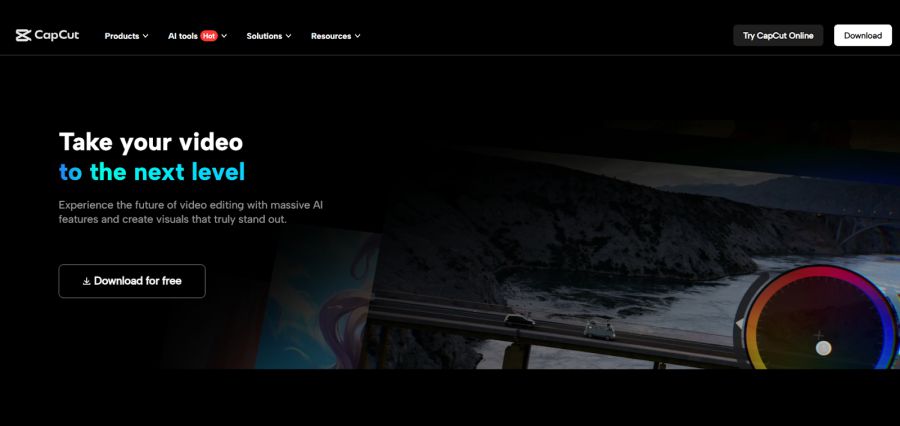
How to Turn Photos into Cinematic Videos with CapCut Desktop
Even beautiful photos can move their owners to make a cinematic transformation of such treasures into videos to save their memories, share them on social platforms, or use them in professional work. CapCut Desktop will allow you to revamp your dull photos to conceive magnificent motion tales with the integration of effects, cuts, sound, and movement. The video editing software is user-friendly even for the novice and has powerful tools that can compete with recording studios. In this tutorial, we will cover the key advantages of working with CapCut, choose the five easy steps to creating cinematic videos out of photos, and provide some additional guidance to make everything work out the way you want it to be. Why Choose CapCut for Cinematic Videos? CapCut is an all-in-one visual storytelling suite, rather than a simple standard editor. As compared to the apps that merely provide transitions or plain slideshows, CapCut enables you to insert professional-like zooms, motion blur, overlays, and sound design. Its drag-and-drop workflow makes the editing process easy to understand, but there is more depth to powerful creativity. Now you can use CapCut to provide your photos with the cinematic treatment they need, whether it be creating a family video montage, an Instagram reel, or even a smart presentation. Benefits of Using CapCut for Cinematic Photo Videos Streamlined workflow – You do not have to abandon one app to use another, as all transition, audio, and effects tools are integrated into it. Professional results – Render your videos to high resolution as well as with smooth transitions, just as they would appear using professional editing tools. Creative freedom – Use text overlays, action presets, and even the voice change tool to tell or perform your photo stories. Accessibility – its simple structure allows novices to start composing in a short amount of time, but more options can satisfy experienced writers. Thumbnail design – The online photo editing features are available to make your video eye-catching to your viewers on YouTube or TikTok. Introducing the Five Steps to Cinematic Video Creation Making a cinematic video with CapCut Desktop does not have to take hours on how to edit. Applying these five simple rules, you can make still-shot videos look and feel lively and evoking. Step 1: Import and Arrange Your Photos Download CapCut Desktop and press New Project. Drag your chosen photos into the timeline in order to wish. Rearrange them to portray the story you wish to convey-whether on a timeline or theme-wise. Step 2: Add Motion with Keyframes and Effects Add motion animations to still images. Select an image, then use keyframes to rotate, pan, or create a zoom-in/zoom-out effect. These minor movements make your photos dynamic storytelling objects. Step 3: Enhance Transitions Between Images Add transitions between photos to make a Cinematic work by using the Transitions tab of CapCut. This makes the video look more like a coherent one and not just a slideshow. Step 4: Add Music, Narration, or Voice Effects Open the Audio tab and add some background/ complementary music to the video. Should you need narration, you can record in the editor or use the CapCut voice changer tool to add funny or dramatic voices. The integration of audio with visuals is a major boost to cinematic experience. Step 5: Final Adjustments and Export Give your video steroids by adjusting brightness and contrast or applying LUT filters to get a movie effect. After you are pleased with the finished product, click export, select your resolution, possibly 1080p or 4K for the finest results, and save it. Additional Tips for Stunning Cinematic Videos Apply a color grading technique to make your images sound like film. If, as may be the case, the context requires it or an effect is required, add text or animated titles. Remember about pacing- the shorter the photos are, the more energy they produce, and the longer the more emotion. Keep a careful check on your video by previewing it several times to ensure the video and audio don’t conflict with each other. Why CapCut Stands Out? CapCut is a creative hub, not simple video editing software, where the first and foremost priority is always simplicity and ease of use, along with the professional-grade power in your hands. Even in smooth transitions between cinema to online photo editing capabilities, it makes your developed content shine on all platforms. CapCut is in the sweet spot of being easy to use and innovative, so creators can transform basic images into shareable stories. Conclusion Making static photos cinematic videos is not always complex. CapCut Desktop is the latest in a complete editing suite that makes editing simple yet powerful. Whether through the introduction of smooth transitions and cinematic effects or further exaggerating the visuals via filters, soundtrack, and overlays, the software can enable you to make a movie-like feel out of your photographs. Personal montages? Brand campaigns? Content on social media? CapCut will allow you to transform ordinary images into something extraordinary. Equipped with an AI Voice Generator, Text-to-Speech AI, and an online photo editor, it is more than a simple video editing software and can bring your creative vision to life by creating cinematic stories with its powerful technology within reach. Read Also: Hospitality Businesses Creating Guest Experiences That Run Smoothly

Hospitality Businesses Creating Guest Experiences That Run Smoothly
A guest walks into the lobby after a long day of travel. They’re greeted warmly, the room is already prepared to their preferences, and dinner reservations are confirmed without a hitch. To the guest, this looks simple. But behind the scenes, hotel staff have coordinated across departments, managed approvals, and tracked schedules to create the impression of effortlessness. This is the paradox of hospitality: the smoother the guest experience, the more complex the work happening in the background. When managers search for the best project management tools, they often find that hospitality requires more than simple task tracking. What they need is a system that connects front desk staff, housekeeping, catering, and management so every detail works in harmony. Lark provides that foundation, allowing hotels, resorts, and event venues to deliver memorable experiences without visible stress. Coordinating staff instantly with Lark Messenger In hospitality, requests don’t wait. A guest may need an early check-in, a meeting room may require last-minute setup, or a wedding party might request extra seating. If communication lags, service quality drops. Lark Messenger eliminates that risk by keeping staff connected in real time. Front desk staff can message housekeeping when a room turns over early, or loop in maintenance if a technical issue arises. Group chats can be set up by department, event, or guest profile. Threaded replies keep each request organized, while reactions allow staff to confirm tasks instantly. Imagine a corporate guest arriving hours before standard check-in. The front desk posts the update in Messenger. Housekeeping confirms when the room is ready, and catering arranges a welcome snack — all within minutes. The guest experiences seamless service, while staff enjoy the clarity of structured communication. Managing schedules and bookings with Lark Calendar Hospitality depends on schedules — from check-in times to banquet setups. A missed reservation or overlapping event creates friction that guests will notice immediately. Lark Calendar centralizes these timelines so nothing slips through the cracks. Managers can use shared calendars to post staff shifts, room turnovers, catering timelines, or event bookings. Tasks created directly in Lark will sync to Calendar and appear in it automatically, aligning the smallest details with major milestones. Permissions ensure sensitive entries, like VIP arrivals or executive meetings, are only visible to authorized staff. For instance, consider a beachfront resort hosting a destination wedding while also managing a corporate conference. With Calendar, catering sees both event schedules, housekeeping knows when to prepare rooms for large groups, and managers maintain oversight of the entire property’s flow. Instead of overlapping commitments, the day runs smoothly. Documenting service standards with Lark Docs Consistency defines hospitality. Guests expect the same standard of care across locations, departments, and shifts. Achieving that requires clear documentation that staff can trust. Lark Docs creates a single space for service manuals, SOPs, and training materials. A hotel group might store guest service guidelines in Docs. Trainers update them as policies evolve, managers annotate with practical notes, and compliance staff ensure standards align with regulations. Version history makes edits traceable, and permission settings control who can view or edit each file. Picture a new property opening under an established brand. With Docs, staff across the chain share updated training guides instantly. Every location delivers the same guest experience, reinforcing the brand promise. Streamlining operations with Lark Approval Hospitality involves constant approvals — guest discounts, vendor invoices, event changes, or procurement for supplies. Delays in approvals can directly impact guest satisfaction. Lark Approval digitizes these workflows, making them fast and accountable. Staff submit requests directly in Lark Approval, managers review them quickly, and outcomes are documented for records. This eliminates bottlenecks and ensures traceability. Here, Lark demonstrates its strength as business process management software. For example, a banquet manager might request additional decor for a wedding reception. The request moves through Approval, leadership authorizes the expense, and vendors receive confirmation in time for setup. Guests see a beautiful hall without realizing how close the approval came to the deadline. Coordinating guest services with Lark Base Behind every smooth guest experience lies a network of moving parts — room turnovers, catering orders, maintenance requests, and special guest preferences. When these details are spread across spreadsheets or messages, service can slip. Lark is a CRM app, and within it, Base gives hospitality teams the structure to coordinate operations without missing a beat. In Base, managers can build tables to track guest requests, schedule room preparation, or monitor event setups. Custom views allow front desk staff to see immediate priorities, while department heads track progress across the entire property. Automations keep workflows moving by triggering alerts when tasks are overdue or updating statuses once requests are resolved. For example, during a luxury wedding weekend, Base can map every detail — from floral deliveries to VIP room preferences — ensuring that catering, housekeeping, and guest services stay in sync. Guests see flawless service, while staff rely on Base to keep complex operations organized behind the scenes. Holding daily briefings with Lark Meetings Hospitality thrives on daily coordination. Every morning, teams gather to review arrivals, departures, special events, and staffing needs. But if these discussions aren’t documented, important details may be forgotten. Lark Meetings makes briefings actionable. During calls, notes are generated automatically. After the meeting, it will be stored in Docs as a textual summary. While recordings can be shared in Messenger. Staff who miss the meeting still see the updates, ensuring no one is left behind. Consider a hotel hosting a sports team. The morning briefing outlines dietary needs, room requirements, and event schedules. With Meetings, these details are documented and shared across departments. Housekeeping, catering, and management all act from the same playbook. Preserving brand standards with Lark Wiki Hospitality brands succeed when service feels consistent across properties. Lark Wiki provides the platform for preserving institutional knowledge — from guest service scripts to brand-wide standards. Departments can publish FAQs, onboarding guides, or training modules. New employees learn faster, and experienced staff have a reliable reference. Over time, Wiki becomes a

The Upskilling Edge: Coding for Career Growth
This is no longer the case in contemporary society, with the fast-growing labor market, as there is an increased need for the flexibility of keeping up and developing their abilities in an area of career development. The option to code is one of the highly demanded occupations that a worker in any industry can apply for. Since the automation of certain repetitive procedures to the creation of sophisticated applications, the knowledge of coding is no longer reserved for use by software engineers only, but acquiring the knowledge of code attains a new underlying requirement of professional success in the realm of the digital world. This blog will explain why coding is quite a significant upskilling choice you have to make, the professional growth it will bring, and the learning tracks that will help you get the competitive advantage. Introduction: Why a Coding Bootcamp Is the Modern Career Accelerator The IT industry, along with other industries, is experiencing the growth of the technological skills of employees required in all organizations. Employers prefer people with technical abilities in addition to expertise in a given area, such as coding, to solve problems, invent, and increase productivity. Coding bootcamp provides a purposeful, intensive, and rapid learning course that prepares learners to acquire new skills and quickly get into the market within the shortest time. Coding bootcamps do not emphasize academic theory and are instead based purely on industry-ready skills, unlike traditional degree programs. They tend to engage more in practical-oriented projects, real-life situations, and problem-solving assignments so that the individuals can put their learning to use instantly. A coding bootcamp can radically reduce the time/cost it takes to learn a language/technology stack and can pave the way to a new career as a software developer, data analyst, or even product manager, regardless of whether you are a recent graduate or a mid-career professional looking to change direction. Why Coding Matters for Career Growth 1. A Universal Skill Across Industries Although coding is crucial in technology terms, it finds its usage also in healthcare, financial, marketing, and manufacturing sectors, among others. For example: Coding helps marketing professionals generate automated campaigns and analytics more effectively. Forecasting models are constructed in Python or R by financial analysts. Coding is a technique that healthcare professionals can use to control patient information and manage tasks. 2. Bridging the Gap Between Ideas and Execution An employee with coding expertise can develop and test the innovative ideas to a working prototype that does not need the complete assistance of technical teams. This ability makes decision-making faster and helps to introduce an innovation culture. 3. Boosting Earning Potential When an employee has domain expert knowledge and technical knowledge the employee may attract high salaries. The level of codings can also become the distinguishing factor to lift you to the next level in leadership or a technical position. Key Benefits of Upskilling in Coding Career Flexibility -Coding enables you to move between industries and careers, and not have to begin again. More Job Security – You will be needed in a job market that is very fast-moving due to Technical skills. Problem-Solving Mindset- Coding will train you to reduce problems into logical, manageable chunks, and that is a useful skill in any profession. Worldwide Potential – Coding is a skill that is understood all over the globe, and this opens the gate to a worldwide work potential. Choosing the Right Path to Learn Coding 1. Self-Learning The free and paid online materials enable the learner to move at their own pace. On the one hand, this is a flexible option; however, in many cases, it is rather disciplined and requires motivation to maintain. 2. University Degree Programs The formal degree programs enable thorough theoretical knowledge but require a long and costly time as compared to other learning avenues that take a shorter time to achieve. 3. Intensive Bootcamps Bootcamps are balanced in terms of speed, practicality, and employability. They lay emphasis on the creation of skills that are appropriate in the market, hence suitable to career-oriented learners. How to Maximize Career Growth Through Coding Have Strong Discipline Goals- Be clear about whether you are focusing on career transition, promotion, or on improving skills. Create a Positive Portfolio – Post your work to sites such as GitHub so that they can showcase your abilities. Remain Current-Keep up with the changing technology; declare yourself a life long learner. Network & Proactively – Connect with peers/ mentors/ industry people to find out about opportunities. Real-World Impact of Coding Skills Growth – Many start-ups attribute their growth to staff that can both plan and implement via coding. Automation at Corporations Employees capable of writing code in big organizational structures may lead the projects concerning automation, and that is increasing efficiency and reducing expenses. Technical Advantage Entrepreneurial Advantage Coding decreases the time to create prototypes, which helps the founders attract investors and customers. Conclusion: Leveraging the Right Learning Platform Coding is no longer an outlier technical skill as it can also be thought of as a mainstream career booster in the contemporary workplace. Learning how to write code can unlock the horizons of opportunity for freshers, mid-career professionals, and entrepreneurs alike. Coding bootcamps, such as a coding bootcamp Pittsburgh, is a perfect combination of pace, relevance, and hands-on execution, serving the needs of learners moving into tech careers, or supplementing their current profession. Once you adopt coding as a part of your professional advancement planning, you not only become a person who can follow the changes taking place in the sphere of industry, but one that will produce the change. The digital economy values flexibility, and a good way to become flexible in it is by learning how to code because it is one of the best tools you ought to learn to succeed in the digital economy. Read Also: Shop the Best Office Tables in Manila – Perfect Blend of Style

The Evolution of Strategic Consulting in Banking
From Traditional Advisory to AI-Driven Insights The banking sector has historically been founded on vision, confidence, and accuracy. Banks used to heavily depend on expert consultants to handle intricate issues like compliance with regulatory matters, risk governance, customer maintenance, and market growth. In recent times, however, the needs of an interdependent economy, as well as innovative technology, have altered the role of consultants. Banking strategic consulting today has changed from the conventional advisory models to a highly data-dependent, AI-driven profession that enables institutions to take quicker and more informed decisions. Conventional Advisory: Banking’s Early Dependence on Human Acumen In its formative years, banking strategy consulting was the domain of personal contact and reasoned judgment. Consultants were close advisors and dear friends of top executives, poring over balance sheets, evaluating risk, and writing long reports. Their worth lay in decades of institutional knowledge and benchmarking best practice across institutions. During this time, the major emphasis was on compliance with regulations, efficiency in operations, and expansion planning. The consultants would guide the banks to new markets, streamline in-house operations, and achieve compliance with intricate regulations. This classic model placed human experience at the forefront of decision-making, with hardly any technology involvement. Globalization and the First Signs of Transformation With banking opening up local confines and onto the global stage, consulting’s horizon also widened. Banks started dealing with international competition, technology disruption, and better-educated customers. Consultants reformed their practice, integrating market intelligence and technology-driven analysis to remain relevant. Strategic consulting in banking slowly evolved from being so-called compliance work to guidance on digitalization, customer-driven models, and high-ticket mergers and acquisitions. This was a period when consulting companies also diversified their staff. They were followed by technology, analysis, and economics specialists, marking the slow merging of old advisory with new capabilities. Technology-assisted solutions may still have depended on human interpretation, but consulting started making incursions onto technology-based platforms. The AI Revolution: Data-Driven Consulting Comes into Its Own The new times envision a revolutionary shift. Artificial intelligence, machine learning, and predictive analytics are a part of contemporary consulting practices that cannot be separated. Banking strategic consulting is not gazing at the past in the present; it’s looking into the future and prescribing actionable strategies. AI has enabled consultants to predict the customers’ behavior with accuracy, enabling banks to create products and services tailored to them. AI has revolutionized risk management through detection of fraud patterns in real time and enhancing credit assessment accuracy. Operations have also gained as automation discourages human error and accelerates process, and AI-driven compliance solutions enable institutions to make real-time adjustments in line with constantly evolving rules. The consultant’s function has evolved from that of an analyst in hindsight to one of translating advanced observations from data, enabling banks to create plans that are scalable as well as future-proof. The Human Touch in a Technology-Driven World Despite the fast pace of AI adoption, the human touch of bank strategic consulting cannot be replaced. Machines can identify patterns and recommend outcomes, but human consultants provide judgment, emotional intelligence, and contextual awareness. For instance, in times of geopolitical conflict or economic pressures, experienced consultants are able to consider cultural, ethical, and emotional considerations that computers cannot. Trust is likewise the fundamental pillar of the consultant–bank relationship. Banks continue to appreciate consultants who can take AI-produced reports and formulate actionable strategies aligned with their long-term objectives. To a large extent, the future of consulting does not reside in substituting human expertise with AI but in using the two for equilibrium and decision-making synergies. Emerging Trends Shaping the Future Banking strategic consulting will further change in the future as a response to emerging drivers of the finance industry. ESG goals and sustainability are taking center stage in banking strategy, and there is growing pressure on consultants to integrate them into institutional infrastructure. Fintech collaborations and open banking are creating new possibilities, and customers need advice on how to create partner-centric and customer-centric ecosystems. Cyber security is also among the fields in which consulting has expanded significantly, as online payment exposes banks to increasing threats. As much as hyper-personalization of banking products—through the use of AI—is about being delicate in advising how to balance innovation and anonymity of clients, the dynamic global regulatory environment at the same time also means that consultants will be crucial in assisting banks to change at a fast pace without jeopardizing competitiveness. Conclusion The evolution of banking strategic consulting is finally one of resilience and adaptability. From its inception in human, relationship-based advisory, it has evolved as an evidence-driven, AI-facilitated practice with sharper analysis and foresight. It does not leave behind the human factor, though, as it must ensure that decisions are not just effective but ethical, feasible, and committed to the institution’s greater purpose. As banks are faced with the challenges of tomorrow—digital disruption to sustainability—strategic consulting will be the key catalyst, driving the industry to resilience, innovation, and sustained growth. Read More : Forging New Paths: The Rise of Women Lawyers in Canada

Driving Innovation in the Traditional Banking Sector
Open Banking Initiatives The traditional banking industry has served as the pillar of economic activity for decades across the globe. Banks across centuries have contributed to providing financial security and stability through the holding of deposits and business growth assistance. Now, the industry is at the crossroads. The tsunami of digital revolution, fueled by changing customer needs and frenzied technologies, is remodeling bankings mode. Institutions once demarcated by geography and personal interaction are being forced to balance demands for speed, convenience, and customization in an age when customers’ experiences are growing ever more digital. Embracing the Shift in Customer Expectations The modern-day customer has new parameters for banking experiences compared to the past. Competitive interest rates or widespread branch coverage are no longer sufficient. Individuals desire that services be available around the clock and anywhere, and tailored to meet specific needs. Mobile apps, digital wallets, and online banks have set a new standard of convenience, compelling the conventional banking industry to re-evaluate customer service. This change, though, does not make traditional banks obsolete. Instead, the trust, credibility, and regulation that traditional banks have built up over decades provide them with an advantage. The challenge is to use these built-up strengths in a new technology-driven era where customer engagement becomes progressively more technologically influenced. The Role of Technology in Reinventing Banking Technology is now at the forefront of change. Banks can read customers through artificial intelligence so that they can offer them individual financial guidance and easier fraud prevention. Blockchain technology enables safer and more open transactions and reduces the need for expensive intermediaries. Cloud computing, however, enables banks to move infrastructure, reduce expenditures, and enhance services much more easily. These are not futurespeak—the solutions that follow are not hypothetical, but many banks are beginning to adopt them. The stodgy banking industry can blend the strength of traditional institutions with the versatility of new technology to offer stable and innovative products. Collaboration Instead of Competition Its strongest change strategy has been fintech partnerships. Fintechs possess innovation for customers, speed, and creativity, while banks possess deep regulatory knowledge, long-standing relationships, and solidity. Each can enhance the other to create financial ecosystems that take advantage of the best of both. This culture of partnership has already been bearing some fruits in the form of instant transfer, in-app budgeting facilities, and electronic cashless transactions. These collaborations do go to prove that innovation does not always necessarily involve wheel reinvention, but gentle tweaking of what exists. Ensuring the Human Touch While the banks become digital, they need to take care that they do not shed that human touch. Bankers by temperament, they continue to be relationship and trust individuals. The voice assistants and the chatbots can deal with the low-level queries, but there are several customers who need to be assured by the warmth of human contact with an advisor when there is a complex issue involved. The conventional banking industry needs to balance automation with personalization. Neither should replace human touch but both leverage technology to enhance it. By introducing empathy into digital channels and surfing the wave of human contact, banks can deepen customer loyalty in a more digital world. Overcoming Transformation Phobias Innovation comes with its set of challenges. Legacy systems are still present with most banks, which are difficult to support with solutions today. Compliance with regulation also adds complexity in taking on new solutions. Cultural resistance in organisations also has the impact of slowing down digital take-up. In order to thrive in overcoming these challenges, the banks must create an agile culture. Empowering staff with the authority to adopt new tools, dismantling silos across functions, and undertaking change management training is needed. Innovation does not refer to new technology; it refers to changing mindsets to adopt and enable change. Innovation with Responsibility In the current era, innovation has to be coupled with responsibility. Consumers would want their banks to contribute towards solving universal problems like environmental destruction and social injustice. The conventional banking industry can make this desire a reality by providing finance to eco-friendly projects, providing eco-friendly investment opportunities, and showing ecologically friendly business practices. By coupling innovation with social responsibility, banks are able to establish sustainable value for consumers and society. The Road Ahead Hybrid models will define the future of the traditional mainstream banking industry through the use of the stability of the traditional institutions and the pace of the digital-born rivals. The future is not abandoning the past but a refinement of it. Banks that have their customers first in all that they do, use technology cautiously, and stay rooted in tradition will not just survive but thrive. Conclusion: Building the Future Together Banking innovation is not a tech revolution; it’s a strategic and a cultural one. Banking, fintech, regulators, and customers must all get together and design the future of financial services. With innovation with trust intact and human touch preserved, the industry can be the keystone of economic stability—better, more enlightened, and more inclusive than ever.”. Read More : How to Turn Photos into Cinematic Videos with CapCut Desktop

Akanksha S. Gulia: Leading with Empathy in a Digital Age
In a world where leadership is often measured by metrics and benchmarks, Akanksha S. Gulia represents a different paradigm—one where courage, compassion, and intentional action are highly valued. Her journey began in Indian military camps, where the disciplined pace of life taught her to adapt, listen, and embrace differences from an early age. Challenges that might have become obstacles instead became her initial lessons in compassion, flexibility, and building strong interpersonal relationships. These formative experiences ultimately shaped her into a mentor for the next generation of leaders and a respected voice in the corporate world. She is a story of twists and reinventions, continually transforming challenges into opportunities for growth, whether entering the field of architecture, reimagining design-driven innovation, navigating the uncertainty of a global pandemic, or contributing as part of Deloitte. Akanksha operationalizes her belief in leadership as service in her role as Senior Consultant 2 at Deloitte, fostering cultures where both individual and collective creativity can thrive. Her voice resonates with young people far beyond the corporate realm, inspiring them to lead with heart, courage, and curiosity. Rather than following well-trodden paths, Akanksha forges her own, measuring success by impact and integrity. The Foundation: A Journey Rooted in Service Akanksha’s story begins not in boardrooms or startup garages, but in the disciplined halls of military bases across India. Born into a family where three generations served in the Indian Defense forces, she absorbed the values of discipline and resilience as naturally as breathing. What truly sets her apart, however, is how she transformed these military virtues into a leadership philosophy grounded in empathy and human connection. “My story is not one of straight lines”, her voice carrying the quiet confidence of someone who has navigated uncertainty and emerged stronger. “It is a tapestry woven from movement, service, and the quiet strength of family.” she reflects. The cadence of her childhood was set by the rhythm of change: new cities, new schools, and new faces, each an invitation to listen, adapt, and embrace the unfamiliar. The constant relocations inherent in military life became her greatest teacher. Where others might have seen disruption, young Akanksha discovered opportunity. This early exposure to India’s vast cultural landscape taught her to read the unspoken language of empathy, to value the wisdom in her grandfather’s story as much as the curiosity in a classmate’s question. From the rush of cross-country running to the precision of piano (earning recognition from the Royal School of Music, London), from the discipline of achieving a blue belt in karate to representing her heritage through cultural dance for Foreign Naval delegations, Akanksha’s formative years were a masterclass in versatility. Her state rank of 11th in Science and Maths Olympiads in 2005 showcased her academic prowess, while her athletic achievements demonstrated the physical and mental fortitude that would later define her professional approach. The Pivot: From Architecture to Human-Centered Innovation Originally drawn to architecture, Akanksha discovered that her true calling lay not just in designing physical spaces, but in creating environments where human dignity and connection could flourish. “I realized that spaces could be vessels for dignity and connection,” she explains, describing the moment when her career trajectory took its first significant turn. Her undergraduate years in architecture revealed a profound truth: every line drawn and every space imagined carries the potential to foster connection, dignity, and belonging. This realization sparked a fundamental question that would become her professional compass: “What can I create that will uplift the lives of those around me?” This question propelled her beyond the traditional boundaries of architecture into the dynamic realm of design thinking and user experience, blending creative vision with strategic clarity. As her understanding deepened, she began to see creativity and strategy not as opposing forces, but as partners in driving purpose, a philosophy that would later distinguish her leadership style in the corporate world. Today, Akanksha leads with the conviction that every experience, every move, conversation, and challenge has prepared her to serve with empathy and purpose, one thoughtful action at a time. The Crucible: Pandemic Resilience and Professional Growth The COVID-19 pandemic presented Akanksha with perhaps her greatest professional challenge yet. Having just completed her master’s degree in the United States, she found herself at the threshold of her career just as the world seemed to pause overnight. Traditional pathways to growth were suddenly obscured, but rather than retreat, she chose to reimagine her approach entirely. “The pandemic taught me that survival is not about waiting out the storm, but embracing discomfort, nurturing relationships, and continuously reinventing oneself.” she reflects. Her strategy was elegantly simple yet powerfully effective: invest in growth, embrace uncertainty as a catalyst, and build genuine connections. She immersed herself in upskilling, taking on internships, remote projects, and certifications that kept her attuned to evolving industry trends. When she joined Deloitte in 2022, onboarding remotely presented another layer of complexity. Yet it was here that she discovered the transformative power of intentional connections in a digital age. One moment particularly stands out in her memory: during a virtual team meeting, her colleagues surprised her with a welcome note and stories about their own journeys, making her feel instantly at home despite physical distance. That simple gesture reminded her that empathy and connection transcend screens, and that authentic relationships can flourish even in a hybrid world. Recognition: Excellence in Banking and Capital Markets Akanksha’s commitment to human-centered leadership found its ultimate expression in her work at Deloitte, where she specializes in Banking and Capital Markets. Her approach blending creative vision with strategic rigor while consistently placing people at the heart of progress has yielded remarkable results. In January 2025, she was honored with the prestigious ‘Our Finest Hour’ Award for exceptional contributions in the Banking and Capital Markets industry. This recognition represents more than individual achievement; it reflects the collaborative impact she strives for on every project. “I remember walking into my first team meeting, surrounded by experts who spoke a different professional language. Instead of retreating,
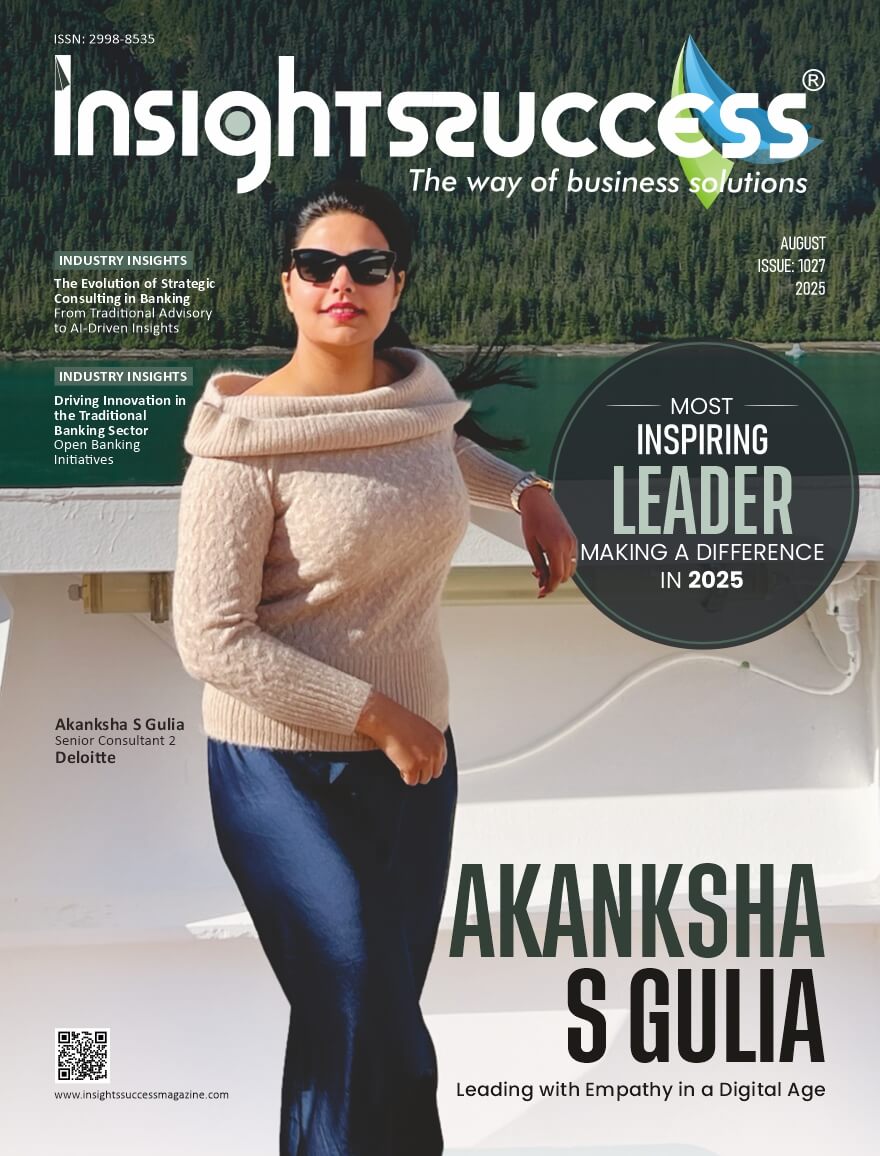
Most Inspiring Leader Making A Difference In 2025
Most Inspiring Leader Making A Difference In 2025 This edition celebrates visionary leadership, resilience, and impact. This edition highlights Akanksha’s remarkable journey of purpose-driven innovation, her unwavering commitment to empowering others, and her transformative influence in shaping industries and communities, making her a true inspiration for global leadership excellence. Quick highlights Quick reads
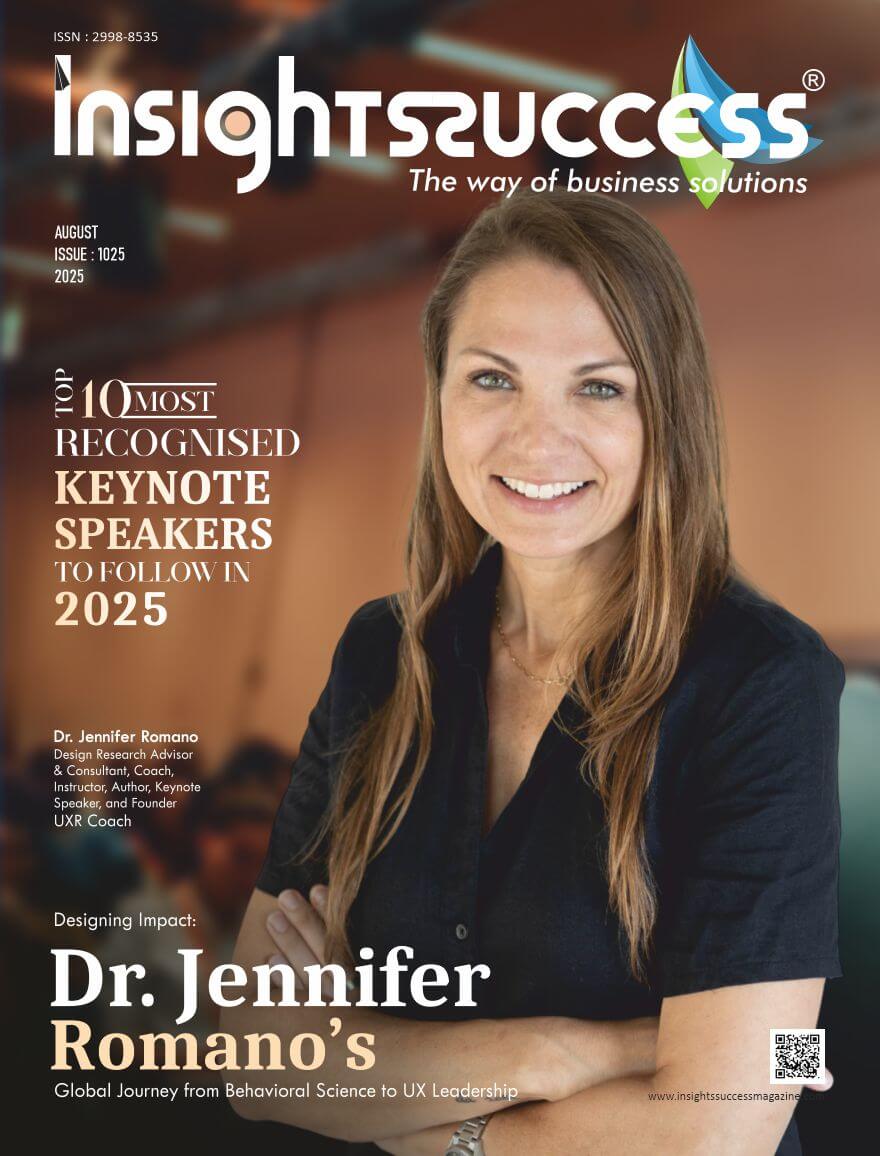
Top 10 Most Recognised KeyNote Speakers To Follow in 2025
Top 10 Most Recognised KeyNote Speakers To Follow in 2025 Explore the voices shaping conversations in 2025. This edition features the top 10 most recognised keynote speakers who are inspiring audiences worldwide with their insights, authenticity and powerful messages, leaders to watch, learn from and follow in the year ahead. Quick highlights Quick reads

Designing Impact: Dr. Jennifer Romano’s Global Journey from Behavioral Science to UX Leadership
The world is increasingly dominated by user personalization in design experiences. Nowadays, a single interaction has the power to build or break brand allegiance. Thus, it is essential to have a leadership direction that is not only intelligent but also deeply practical, thoroughly research-driven, and widely acknowledged within industry. It is here, in this multifaceted high-stakes context, that Dr. Jennifer Romano stands as an unrivaled expert. With over 15 years of distinguished experience, Dr. Romano’s background is built on a stellar foundation: a doctorate in Applied Experimental Psychology. Her grounding in this area of scholarship is the foundation upon which her knowledge of human behavior, perception, and cognition rests – the very foundation of intuitive and engaging user experiences. She not only knows what users do, but why they do it, allowing her to develop strategies that connect on a more profound, more effective basis. From Showroom Beginnings to Global Stages From the showrooms of her family’s design business, Dr. Romano has made her way through some of the biggest and best UX orgs in the world (e.g., Google, Facebook, Instagram), speaking, teaching, and being a keynote speaker at top UX conferences in the world (e.g., User Experience Professionals Association, World Usability Congress, Digitale Leute, Human Computer Interaction International). She has become the go-to expert in strategic UX research, leadership coaching, and keynote speaking that sparks transformation. Her cross-sector experience empowers leaders to think differently, act intentionally, and lead boldly. Just like her prolific career today, Dr. Romano’s journey began before she even knew it had started—at age five, reorganizing kitchen layouts in her parents’ showroom because the flow felt inefficient. “I wasn’t just playing; I was solving problems through design.” Growing up in a family business taught her the value of customer experience and operational efficiency, lessons that stuck with her through her Ph.D. in Experimental Psychology. It later shaped her career at the US Census Bureau, Facebook, Bridgewater, and Google. Her unique background fuses behavioral science, research precision, and real-world business acumen. Where Psychology Meets Business Strategy Dr. Romano teaches at UC Berkeley, Pratt Institute, and the University of Maryland and has published more than 30 articles, chapters, and books. Her impact is felt in an impressive spectrum of roles and industries. A prize-winning UX Research Leader, she has led projects for international titans Facebook, Instagram, and Google, directly influencing the online experience of billions. Her experience is not limited to corporate giants; she has had an equally considerable impact in academia, government (such as the US Census Bureau), financial institutions, and highly technical consulting positions, proving her versatility and the global applicability of her findings. As a manager, director, or individual contributor, strategist, or doer, her capacity to provide concrete outcomes has uniformly distinguished her. Aside from her leadership, Dr. Romano is an energetic driving force in the larger research and design world. Acting as an international Design Research Advisor and Consultant, she enables organizations to integrate user-centricity into their DNA. Shaping the Future, One Researcher at a Time Moreover, she, as a Coach and Instructor, is directly developing the next wave of UX professionals by imparting much of her extensive expertise through workshops, courses, and individual mentorship. Going beyond, as a celebrated Author of titles such as “Eye Tracking in User Experience Design“, “Modern Socio-Technical Perspectives on Privacy,” and “Usability Testing for Survey Research,” as well as a sought-after Keynote Speaker, she shares the latest research and best practices continuously, advancing the entire discipline. According to Dr. Romano, C-Suite leaders today need more than inspiration—they need clarity, actionable insight, and a trusted voice that understands how business, human behavior, and design intersect. That’s where she comes in. She founded UXR Coach to help people make their UX dreams a reality. With small, instructor-led workshops, courses, and retreats, as well as personalized one-on-one coaching, she offers individuals ways to gain renewed confidence and develop the skills necessary to grow as a UX Researcher. A Voice that Resonates: From Research Labs to Global Stages Dr. Romano is not just a speaker—she’s a strategist with a microphone, a researcher with a mission, and a mentor with real-world experience to back every insight she shares. Whether she’s standing before C-suite executives, Fortune 500 teams, or students in university lecture halls, Dr. Romano integrates her diverse roles—advisor, instructor, author, and keynote speaker—into one powerful force for transformation. “Executives don’t need theory—they need tested frameworks and proven insight,” she explains. “My coaching and consulting work gives me a front-row seat to real, current challenges. Everything I present has been road-tested in boardrooms, classrooms, startups, and global brands alike.” Her ability to bridge disciplines—psychology, business strategy, and design—enables her to offer more than motivation. She delivers actionable, data-driven value that redefines what leadership and UX strategy can look like in a complex digital era. Cutting Through the Noise: What Truly Matters At the heart of Dr. Romano’s speaking philosophy is a sharp belief in clarity, impact, and removing internal roadblocks. “Most people are unknowingly in their own way,” she asserts. “My role is to help leaders see that—whether the barrier is ego, flawed research practices, or decision fatigue—and guide them to more effective, intentional outcomes.” Her talks center on helping professionals and organizations unlock their true potential by embracing purposeful action and strategic clarity. She’s passionate about shifting mindsets, not just behaviors. From speaking on UX research innovation to coaching on leadership psychology, Dr. Romano’s engagements always empower audiences to act with greater awareness—and achieve with sharper intent. Leading with Intention, Speaking with Impact What distinguishes Dr. Romano in a sea of speakers is her deep field experience, combined with a powerful and human-centered delivery. Her insights aren’t theoretical—they’re built from lived experience, tested across sectors, and infused with genuine empathy. Whether it’s in Hawaii, New York, or across Europe, her voice continues to shape how organizations design, lead, and evolve. In every engagement, she brings not just credibility but transformation. “I don’t just inspire,” she says. “I deliver value-backed strategy that

The Rise of Motivational Keynote Speakers
Redefining Inspiration At one point, inspiration was something one came across accidentally, regardless of whether it was hidden in an old book, buried in the depths of a late-night chat, or it was a personal discovery. Inspiration nowadays is not accidental. It is curated, performed, and distributed, sometimes on a stage, in the light, with hundreds or thousands of eager listeners. This cultural change has led to the emergence of a new/ hybrid form of presence at the core of conferences, summits, and learning events, motivational keynote speakers. They no longer have to uplift or entertain. Rather, they provide templates of challenge navigation, re-purposing, and linking with something greater than the immediate moment. With increasing numbers of individuals in search of meaning in the fast-paced world, the keynote stage has become a strong instrument of personal and social change. The Evolution of Inspirational Platforms Previously, the mediation of inspiration was frequently based on static or scripted formats, such as books, articles, or recorded speeches. It is because the audience was taking in ideas at the pace they preferred and probably alone. These forms, although effective, lacked immediacy and emotional intensity. Along with the rise of live events, especially conferences, conventions, and special gatherings, there was a need to demand presentations that could energize the room and create connection and transformation in real-time. This is where inspirational keynote speakers have fertile ground. They do not simply offer words but experience. Their performance tends to fill the gaps between storytelling, emotional vulnerability, and active stage performance, making inspiration a shared, immersive experience instead of information passively received. Capturing the Human Element The emphasis on a true human connection is one of the characteristics of this new kind of speakers. In place of far off and high ideals, they are drawn to vulnerability and relatability. Introspective descriptions are cut back to the artifices, and experiences are recounted without posturing or exaggeration, and lessons are drawn not through great success but through struggle, doubt, or minor triumphs. Audiences respond to this shift. When we get inspired by one who appears to be one of us, the message falls differently, more tangibly. When a speaker projects a sense of difficulty overcome or acknowledges uncertainty, there is a truthfulness that closes distances between stage and seat. This anthropocentric approach reinvents inspiration as something within reach and not out there. Redefining the Format The creative approach to format is another reason behind the popularity of motivational keynote speakers. One-way monologues are being replaced by dynamic, multi-sensory designs. Visual storytelling, live interaction, and creative staging infuse presentations with texture. In certain cases, speakers may involve the audience or improvise on the spot based on observable room energy. This attentiveness keeps interest alive and creates an atmosphere of mutual discovery instead of lecturing. In addition, on-the-ground dynamics exist alongside narration techniques utilized in theater or podcasting. The new trend is to make every keynote an act of performance and exchange. A presenter can interlace metaphor, pause and think, ask the audience to talk, using collective prompts, and all without losing spontaneity or form. What emerges is a reverberating experience that outlives the event space. Meeting Diverse Needs The spread of motivational keynote speakers is also explained by the existence of a variety of needs in various sectors. Educational establishments need voices that will awaken youthful minds to uncertainty and possibility. Companies seek messages that can restart morale, reaffirm shared purpose, or stimulate innovation. Community meetings seek stories that celebrate compassion, resilience, or community service. The fact that motivation is not universal or fixed means that speakers adapt their core themes, such as perseverance, reinvention, and mindful ambition, to the event. The keynote style is adaptable and can be shaped to the requirements of the audience, whether they are entering a new phase of their life, or soon transition, or celebrating an event without violating the spirit. The Future of Inspiration In the future, the emergence of inspirational keynote speakers is an indicator of a deeper cultural transformation: inspiration is ceasing to be background music, but an active driver. As viewers seek stronger attachments, honesty-based stories will continue to take center stage, as will those that are based on mutual humanity. The most powerful keynote voices will not speak much but listen and allow participation, even as leadership is given. In this ever-evolving narrative of inspiration, the speaker is more than an orator—they serve as a catalyst, prompting audiences to reflect on what truly inspires them, envision the transformation they seek, and discover how to translate inspiration into meaningful action. Instead of only more speeches, more engagement, authenticity, and inspiration will become a reality in the future. Read also: The Traits Every Great Speaker Shares