





Nigerian entrepreneurs are the architects of the digital future says Lagos State Deputy Governor as GITEX NIGERIA champions national & regional startup ecosystems
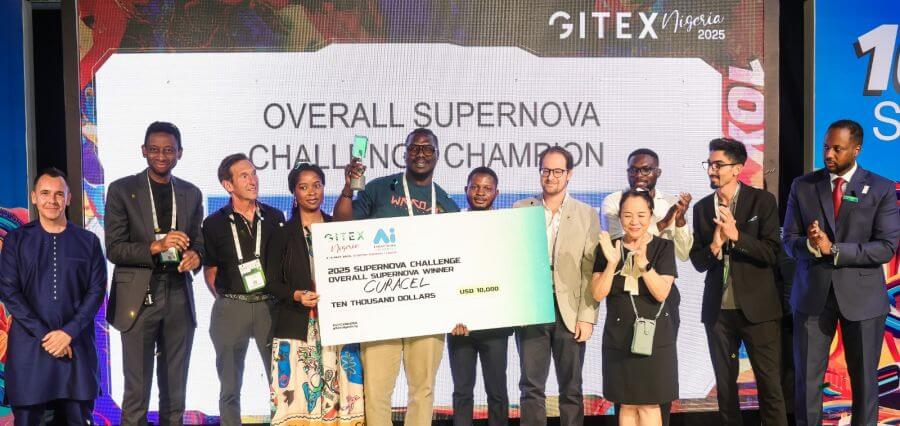
GITEX NIGERIA Startup Festival cast a unique global spotlight on the profound influence of emerging entrepreneurs across Nigeria & Africa Supernova Challenge finals also headlined the third & final day of GITEX NIGERIA 2025 – Curacel claimed $10,000 first prize Lagos, Nigeria – 08 September 2025: The inaugural GITEX NIGERIA concluded in a tremendous fashion this Thursday in Lagos, as West Africa’s largest tech, AI, and startup show cast a spotlight on the influence of emerging local and regional entrepreneurs. Held under the patronage of H.E. Bola Ahmed Tinubu GCFR, President of the Federal Republic of Nigeria, GITEX NIGERIA took place across Abuja and Lagos from 1-4 September. Supported by the Federal Ministry of Communications, Innovation and Digital Economy with the National Information Technology Development Agency (NITDA), the event was endorsed by Lagos State Government and organised by KAOUN International, global producer of GITEX events. Taking place in Nigeria’s commercial and innovation capital, the GITEX NIGERIA Startup Festival showcased the strength and depth of an ecosystem through which talent development pathways and digital infrastructure projects are accelerating Nigeria’s US$1 trillion economy ambition. Deputy Governor of Lagos State, H.E. Dr. Kadri Obafemi Hamzat, hailed its immediate impact at the national level, declaring: “GITEX NIGERIA sends an inspirational message to every Nigerian: that many positive things are transpiring across our country and opportunities are here. For every attendee at the GITEX NIGERIA Startup Festival, this has been immediately apparent. We see many young citizens and entrepreneurs, with enormous innovative minds, making a real difference – generating interest, raising capital, and overcoming challenges by bringing their ideas to life and delivering tangible impact. Such outcomes are crucial because they show that, as the world evolves, so too does Nigeria – as a nation of leaders, innovators, and architects of digital future we envisage.” Central to Nigeria – and Africa’s – digital sovereignty is upskilling and expanding grassroots talent and organisations. As the largest regional showcase of its kind and a convergence point for local and international stakeholders embracing digital transformation, the GITEX NIGERIA Startup Festival was perfectly timed to support this mandate. Over 650 startups from 27+ countries and 29 different industries participated with a shared vision of co-creating tech architecture across multiple sectors undergoing continent-wide digitisation. Its strategic programme included Nigeria’s most globally diverse investor programme, innovation hub showcases, and curated meetings between startups, investors, corporates, governments, industry leaders, and prospective partners. Speaking after the recent announcement of funding 75 new research projects for startups, researchers, corporates and Nigerian diaspora for digital innovation, the Hon. Bosun Tijani, Minister of Communications, Innovation and Digital Economy of the Federal Republic of Nigeria said: “The opportunity and responsibility lies with all of us to build a resilient, innovative, and globally connected ecosystem, one that ensures that Nigeria not only keeps pace with the digital future but also shapes it. To all enterprises, corporates, startups, academia, and partners, we offer a transparent and accelerated path to collaboration, investment, and cooperation with Nigeria. Let us accelerate the development of the digital economy not only for Nigeria, but for Africa and the world.” Supporting the multi-sector disruption ranging from education and agriculture through manufacturing and energy, startup participation was bolstered by hundreds of organisations brought by local engagement and international innovation hub partnerships. Within Nigeria, NITDA, Lagos State, FATE Foundation, Co-creation Hub Africa (CcHUB), and Orange Corners were among the partners, while internationally, the United Nations Development Programme (UNDP), American Business Council (ABC) contributed. Mr. Kashifu Inuwa Abdullahi, Director General/CEO, NITDA, said: “Across Africa and around the globe, future-oriented partnerships are the lifeblood of thriving startup ecosystems and digital economies. By uniting ambitious organisations from instrumental sectors in the emerging digital economy, we demonstrate how collaboration fuels innovation, accelerates transformation, and empowers Nigerians and Africans to shape their digital future.” Universally recognised as the world’s leading pitch competition for early-stage companies and emerging entrepreneurs, the Supernova Challenge made its regional debut at West Africa’s largest tech, AI, and startup show – culminating in action-packed Thursday final. Across two days in Nigeria’s innovation capital, the continent’s brightest and boldest disruptors joined Nigeria’s most visionary startups in competing for a US$22,000 total prize pool across six categories – showcasing game-changing solutions transforming agritech, cybersecurity, edtech, e-commerce, healthtech, telecom, and more. Following the semi-finals 24 hours prior, the remaining contestants battled it out for valuable cash prizes and unprecedented visibility as regional and international investors watched on. Abdul-Jabbar Momoh, VP, from Nigerian startup Curacel – revolutionising health insurance with AI-driven solutions – emerged as the most outstanding finalist among the expert judging panel, and was awarded the US$10,000 first prize for its AI-driven health insurance solution. Reflecting on the at GITEX NIGERIA, Momoh said: “Placing first at the GITEX NIGERIA Supernova Challenge gives us more visibility and fuel our expansion across Europe, Middle East and Africa, as well as North America. Most importantly we are going to keep on impacting lives in Africa and around the world by deploying solutions to move health insurance distribution.” The winners across each Supernova Challenge category were as follows: Overall Supernova Champion (US$10,000): Curacel AI category (US$2,000): Build Africa Digital Finance category (US$2,000): InCash Creative Economy & Martech (US$2,000): Hadiya Agritech & Energy (US$2,000): Acecore Mobility & Smart Cities (US$2,000): Kara Disruptor Award (US$2,000): HiPrep For more information, news and updates on GITEX NIGERIA, please visit gitexnigeria.ng. Social Media: Hashtag: #GITEXNIGERIA Twitter | Instagram | Facebook | LinkedIn Useful links: To access our digital press kit, click here Press office contact press@gitexnigeria.ng Disclaimer – This article is a work of original content created for public relations and informational purposes only. It may be published across multiple digital platforms with the full knowledge and consent of the author/publisher. All images, logos, and referenced names are the property of their respective owners and used here solely for illustrative or informational purposes. Unauthorized reproduction, distribution, or modification of this article without prior written permission from the original publisher is strictly prohibited. Any resemblance to other content is

Uber Eats and Pipe Partner to Offer Fast, AI-Powered Capital Access for Small Restaurants
Prime Highlight Uber Eats has teamed up with fintech company Pipe to provide small restaurants with quick, pre-approved funding options directly through the Uber Eats Manager app. The service eliminates traditional loan barriers like credit checks and guarantees, with 98% of applications approved and funds delivered within 24 hours. Key Facts Pipe uses AI to analyze six months of anonymous Uber Eats transaction data, tailoring capital offers to each restaurant’s revenue flow. Restaurants using the service reported an average 12% monthly business growth, showing its impact on small business expansion. Background Uber Eats has partnered with fintech company Pipe to enable small restaurants to access capital more easily. The new collaboration combines the technology of Pipe with the Uber Eats Manager application, where owners of restaurants could receive individually tailored and pre-approved funding options, depending on the revenue and cash flows. The main characteristic of this new system is simplicity. The process does not need credit checks, personal guarantees, and FICO scores, as was done with traditional loans. Instead, Pipe uses artificial intelligence to study six months of anonymous credit card transaction data from Uber Eats. Based on this data, restaurants are offered capital tailored to their business needs. Pipe CEO Luke Voiles said the service helps restaurants grow without the usual barriers. He added that 98% of applications get approved, and most funds reach businesses within 24 hours. Many restaurants using the service have reported a 12% growth in business each month. Karl Hebert, Uber’s vice president of global commerce and financial services, said the partnership helps restaurant owners succeed by offering easy access to capital. “Our goal is to provide a solution that works smoothly and helps small businesses expand,” he explained. Unlike traditional loans, Pipe’s capital adapts to a restaurant’s revenue. This implies that during low sales, owners of these restaurants are in a position to repay the funds more easily. This effort is in Uber Eats, a further attempt to help small businesses. In 2022, the company collaborated with Visa to award 1 million grants to restaurants struggling due to the pandemic and other crises. This additional capital access service is to further assist the restaurants to grow and flourish. Read Also: Google Expands AI-Powered Search ‘AI Mode’ to Five New Languages Worldwide

GITEX NIGERIA puts a global spotlight on West Africa as government and global tech leaders back Nigeria’s digital future
Exhibitors cite strong investor leads and international visibility as inaugural event brings in participants from 78 countries Lagos, Nigeria – 09 September 2025: The debut of GITEX NIGERIA brought a global spotlight to Nigeria’s digital economy, with international exhibitors and investors confirming strong engagement and immediate business opportunities. Held under the patronage of H.E. Bola Ahmed Tinubu GCFR, President of the Federal Republic of Nigeria, GITEX NIGERIA ran from 1-4 September across Abuja and Lagos. The event was supported by the Federal Ministry of Communications, Innovation and Digital Economy in collaboration with the National Information Technology Development Agency (NITDA), endorsed by the Lagos State Government, and organised by KAOUN International, global producer of GITEX events. The Hon. Olatunbosun Alake, Commissioner, Innovation, Science & Technology, Lagos State, said: “In three short days, GITEX NIGERIA has already had a meaningful impact on our nation, from startups seeking funds and exposure with global investors to international organisations discovering the vast growth opportunities within our digital economy. This annual event will continue to grow, have a long-term contribution to Nigerian digitalisation, and show the world the power of international collaboration.” International participants highlighted the quality of engagement with decision makers and the value of Nigeria as a market. Abdelaziz Saidu, Country Leader at Cisco Nigeria & Ghana, said: “GITEX NIGERIA has been amazing – the crowd has been overwhelming, not just in size but in the quality of people coming to our stand, including the Lagos State Governor and the Minister, who were impressed with our AI and cyber security showcases. From day one we’ve generated strong leads, some already converting into opportunities, and engaged with organisations like the African Union. The brand reputation of GITEX has pulled in the right crowd locally, regionally and internationally, making this inaugural edition truly impactful.” The event hosted dual platforms in Lagos – the GITEX NIGERIA Tech Expo & Future Economy Conference at the Eko Hotel Convention Centre and the GITEX NIGERIA Startup Festival at the Landmark Centre. Together, these platforms provided an international stage for Nigerian startups, investors, and corporates to connect, build partnerships, and explore the country’s digital growth potential. As West Africa’s largest tech and startup show, GITEX NIGERIA also featured the country’s most internationally diverse investor programme, facilitating meetings between startups, corporates, investors, and government stakeholders to advance cross-border collaboration. The event was supported by international tech companies and organisations, including AWS, the International Finance Corporation (IFC), IBM, Meta, United Nations Development Programme (UNDP), Kaspersky, Space42, Microsoft, and NVIDIA. For more information, news and updates on GITEX NIGERIA, please visit gitexnigeria.ng. Social Media: Hashtag: #GITEXNIGERIA Twitter | Instagram | Facebook | LinkedIn Useful links: To access our digital press kit click here Press office contact press@gitexnigeria.ng Disclaimer – This article is a work of original content created for public relations and informational purposes only. It may be published across multiple digital platforms with the full knowledge and consent of the author/publisher. All images, logos, and referenced names are the property of their respective owners and used here solely for illustrative or informational purposes. Unauthorized reproduction, distribution, or modification of this article without prior written permission from the original publisher is strictly prohibited. Any resemblance to other content is purely coincidental or used under fair use policy with proper attribution. Read More : Microsoft Invests $30 Billion in UK AI Sector to Boost Economy and Innovation
Most Transformational Leader Making An Impact In 2025
Most Transformational Leader Making An Impact In 2025 Honoring a visionary changemaker, this exclusive 2025 edition celebrates the Most Transformational Leader Making an Impact, one individual redefining leadership through innovation, purpose, and lasting global influence. Quick highlights Quick reads

What Makes a Prolific Author Sustain Creative Output
The Productivity Paradox Each author has their own pace—some work consistently through the years, while others work in spurts, with intervals between. Such a comparison creates a so-called productivity paradox. The paradox is fundamentally based on the question of how a prolific author can produce creative results continuously, without running out of inspiration or undermining their output. Is it talent, discipline, routine, or something intangible? To comprehend what contributes to sustainable productivity in writing, one must look beyond the surface level. It is not merely a matter of writing more; it is a matter of being creative, coherent, and relevant in the longer term. The Myth of Constant Inspiration Among the common misunderstandings regarding writing is that it is completely inspired. Although inspiration is a factor, it is not the only motivator of productivity. Indeed, several experienced writers refer to inspiration as ineffective. The reliance on a transient feeling of creativity may result in extended stagnation, during which minimal or no improvement takes place. To a prolific author, the process of writing is not waiting until one is in the right mood, but rather, it is about turning up. Inspiration is often substituted with routine and discipline, developing a sustainable pattern of production. The contradiction is that the habits that were assumed to be strict are, in fact, much more creative because they allow the mind to be more deeply concentrated. Embracing a Systems-Based Approach One of the most significant distinctions between occasional and enduring writers is the systems. Examples of systems are time-blocking writing time, outlining structures, or even bundling similar tasks together. These frameworks minimize decision fatigue and enable the expenditure of additional energy on the very writing process. This systems approach allows a prolific writer to perceive writing as a craft and art. Rather than seeing productivity as an adversary to creativity, it is a vessel of it. The paradox is resolved when one realizes that creativity can be developed instead of something passively accepted. Resilience in the Face of Creative Fatigue Every writer experiences creative fatigue. Maintaining high-level production over time is associated with identifying ways to overcome burnout, self-doubt, and low motivation. Resilience does not imply experiencing fatigue. Instead, it is an acceptance of natural ebbs and flows of creativity without letting it stop the progress entirely. This could involve changing projects, changing the writing conditions, or giving space to relax. Knowing when to plow and when to retreat is an acquired art that all prolific writers should learn. The Role of Purpose and Internal Drive A sense of purpose is another subtle but effective ingredient in long-term creative productivity. Authors who comprehend the purpose behind their writing, be it the need to express emotions, communicate, or transform, are likely to persist despite the lack of external rewards or the slow pace of such rewards. This motivation is a self-perpetuated cycle. The faster a writer can access their central motivations, the less challenging it becomes to generate ideas and sustain momentum. Consistency is driven by purpose, and identity is reinforced through consistency as a prolific writer. Furthermore, this purpose tends to shield against innovative comparison. With the abundance of content in the landscape, it’s quite simple to be frustrated with the work of other people. However, individuals who are grounded on their own are less affected by the noise around them. Creative Renewal and Long-Term Vision Whereas a sprint of intense effort could result in short term productivity, long term output necessitates a renewal. One similarity between enduring writers is the fact that they embrace learning and growth. They will read as much as they can, experiment with new genres, and get feedback not only to become better but to rekindle their passion. Long-term productivity is possible by viewing writing as a lifelong process, as opposed to a series of discrete projects. The long-term vision also allows a certain degree of trial and error, and therefore, it is easier to recover setbacks and inevitable stagnation. Through this, the prolific identity of an author does not occur overnight. It is nurtured by a combination of mindful habits, internal focus, and flexibility. The production of more, and the sense of less pressure, is sometimes the crowning of years of refinement and hardening, though it may seem a paradox at first sight. Final Thoughts The productivity paradox of writing is not about some unseen reservoir of inexhaustible creativity but about how inspiration and effort, process and purpose, spontaneity and structure interact. A prolific writer is not the one who has the most time, talent, or even ideas, but the one who has matched their habits, attitude, and motivations to routine creative expression. Creativity is not about writing more or more quickly, but writing mindfully, more intelligently, and purposefully. Once such alignment is established, productivity is no longer a paradox; it becomes a natural continuation of the writer’s life. Read More : Most Transformational Leader Making An Impact In 2025

Strategies for Effective Intergenerational Knowledge Transfer in Modern Organizations
Bridging the Gap In the modern, fast-changing business world, the need to maintain a continuous supply of intergenerational knowledge has become a more significant factor in organizational performance. With the growing diversity of age at the workplace, between the Baby Boomers and the Generation Z, the capacity to create intergenerational knowledge transfer has become a crucial element in maintaining organizational growth, innovation, and resilience. The diversity of the many generations in the workplace creates a possibly synergetic opportunity but poses challenges in the form of communication patterns, technology know-how, and conflicting expectations. They can only resolve such dynamics successfully by adopting a thoughtful manner that accommodates mutual respect, well-structured set-ups, and learning and collaborative culture. Understanding the Knowledge Gap Every generation has its own experiences, competencies, and visions. The elder employees usually have extensive institutional knowledge, mature problem-solving skills, and industry-specific skills that are not always available among young employees. Meanwhile, young generations are more flexible to technological change, quick-witted, and ready to adopt new approaches. The difficulty is how to make sure this knowledge is not isolated or lost when employees retire or change jobs. In the absence of an effective intergenerational knowledge transfer mechanism, organizations face a potential loss of decades of knowledge that would be hard or, perhaps, impossible to recreate. Building a Knowledge-Sharing Culture Organizational culture based on open communication and life-long learning is the start and core of any effective intergenerational knowledge transfer strategy. Organizations have to create a culture in which knowledge transfer is not perceived as a one-off event, but an ongoing and two-way practice. Formalizing this can be done through one of the methods which is the establishment of mentorship programs. However, the focus should be directed not on the conventional one-way mentorship models, but on the dynamics and reciprocal learning relationships. Traditional mentoring and reverse mentoring (younger employees mentoring older employees (e.g., in digital skills) help to create a value balance. Leveraging Technology to Bridge Generational Gaps Technology can become a barrier and a bridge regarding intergenerational transfer of knowledge. Not every older worker may feel confident in digital means, still, some of them may be willing to take up the upskilling chance. There is a need to introduce easy-to-use and accessible knowledge management systems that are cross-generational in design. The use of collaborative platforms enables the recording, communication, and access of information without any problems. Knowledge bases, video tutorials, internal forums, and digital storytelling tools are useful in capturing tacit knowledge that would otherwise remain undocumented. Training and support on the use of these systems enables employees of all ages to contribute meaningfully. Aligning Organizational Strategy with Knowledge Goals The process of intergenerational knowledge transfer within the organization is to be integrated into the overall strategic goals of the organization, which will ensure long-term sustainability. This includes treating knowledge as a strategic asset and integrating knowledge-sharing objectives into performance measures, leadership development, and succession planning. A proactive strategy involves identifying areas of high-risk knowledge that can be lost in case of retirements or due to turnover, and knowledge transfer is carried out before its loss. Knowledge audits, skill-gap evaluations, and periodic reviews of knowledge-sharing projects can keep the goals of the business aligned. The second area that organizations should look at is the establishment of formal knowledge retention policies, especially those positions that require subject matter expertise. These strategies may also be adopted to direct the process of transferring the experienced employees upon their departure out of the organization to maintain continuity and minimize disruption. Promoting Mutual Respect and Flexibility Finally, intergenerational knowledge transfer initiative depends significantly on the willingness of the older and younger employees to go through the process. This will entail the promotion of a work culture that is founded on respect, inclusiveness, and respecting divergent views. Awareness-raising exercises and inclusive leadership should help to eliminate the biases and assumptions that generational differences lead to. Organizations can achieve this by promoting flexibility of communication lifestyle, feedback, and work arrangements, and organizations will have less friction and build more recognized and trust-level relationships among team members. Conclusion Closing the generational gaps is no longer a marginal issue, but a strategic necessity. Through careful planning and excellent resolve to collaborative work, organizations can access the best of their multigenerational workforce. A proper intergenerational knowledge transfer is a way to not only retain useful information but also to develop innovation, strength, and purpose within the company. Companies equipped with structured knowledge-sharing systems, interpersonal collaboration, and alignment of strategy with long-term goals will be set to survive in the future, which is characterized by constant change and a wide range of talents. The generational difference does not have to be a weakness; with the proper approach, it turns out to be an effective source of power. Read More : Pradnya Bagade: Steering Strategy with Empathy, Purpose, and Precision

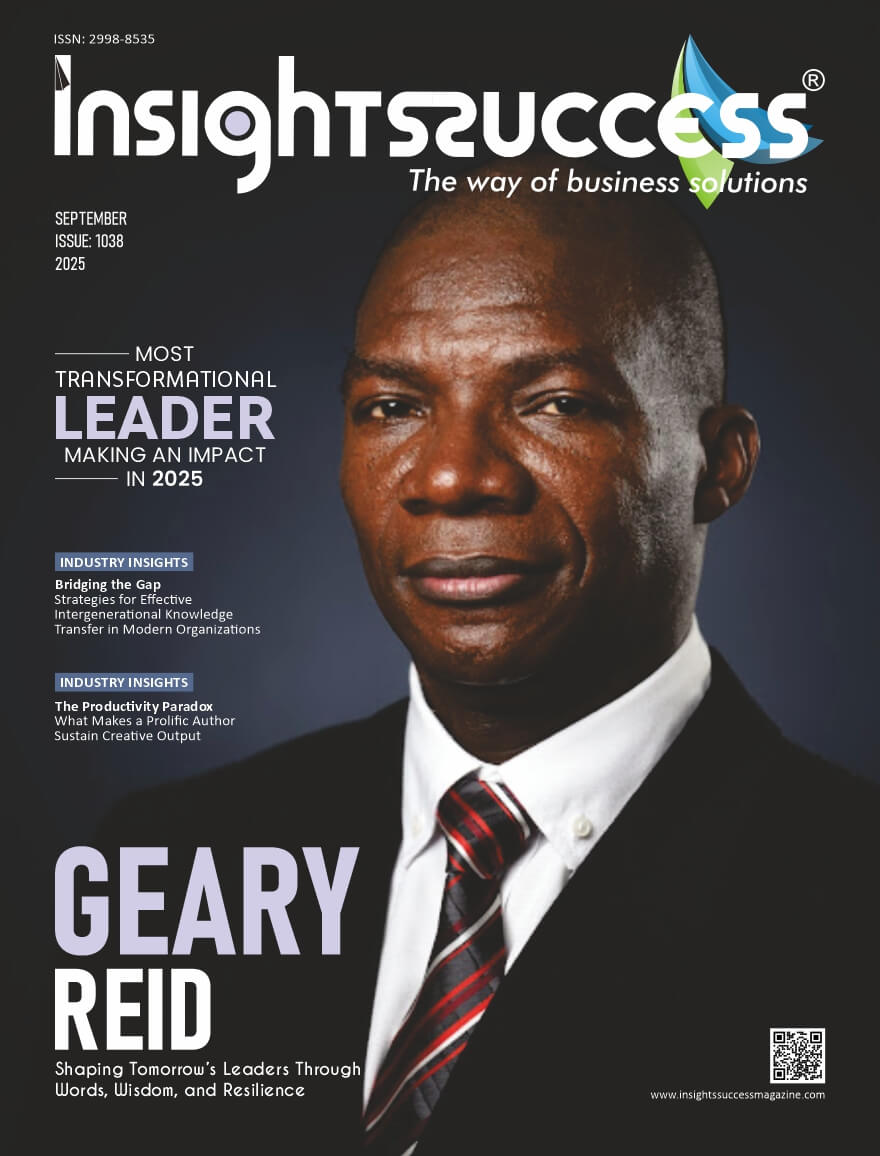
Geary Reid: Shaping Tomorrow’s Leaders Through Words, Wisdom, and Resilience
In an age where fleeting trends are ruling lasting principles, Geary Reid‘s path is one that resolves self-discipline, and purpose. As a member of eight-siblings, born to Guyanese parents in South America, his existence was earmarked early on by his parents’ instilling of integrity, diligence, and respect, values which seep into every layer of his existence. He has consistently been able to turn adversity into opportunity, whether academic achievement with fewer resources or a career of more than three decades working in numerous industries. His greatest legacy, however, is his fruitful writing life. He is an international role model for young people and upcoming leaders and has published 104 books in more than five years using no artificial intelligence. His writings, developed from experiential knowledge and enhanced with personal anecdotes, inspire and guide individuals who are confronted with religious, career, and personal challenges. Reid’s dream is motivating future generations to try more to learn, persist with determination, and leading by character, rather than honoring and global recognition. His narrative is as much about individual achievement as it is about service and commitment relentless in the use of words and example in shaping leaders of tomorrow. Roots of Resilience Born into a family of eight siblings, Geary Reid’s story begins in the heart of Guyana, South America, where his father, Amos Reid Sr., and mother, Sheila Knights-Reid, instilled values that would later become the cornerstone of his success philosophy. In a household where his father was the sole breadwinner, young Geary learned early lessons about hard work, honesty, and respect, principles that would guide him through decades of professional and personal triumphs. “My father taught all the siblings to work hard, be honest, and respect everyone.” he reflects, whose early years were marked not by privilege, but by the rich education that comes from witnessing dedication and integrity in action. These formative experiences in a large, close-knit family created the foundation for what would become a remarkable journey of service and achievement. Academic Excellence and Professional Formation Reid’s academic journey tells the story of consistent excellence and an insatiable appetite for knowledge. Despite facing early challenges, he graduated among the top six honors students in primary school, setting a pattern of academic achievement that would define his educational trajectory. At the secondary level, his commitment to excellence shone even brighter, consistently ranking among the top five students in his class. The pinnacle of his secondary education came when he was awarded the best grade in Principle of Accounts at the Caribbean Examination Council (CXC) level, an achievement that foreshadowed his future success in business and finance. But Reid’s educational journey was far from over. Driven by what he describes as a desire to “contribute his best to humanity” and operate at the highest level of professionalism, Geary Reid pursued an impressive array of qualifications. Today, he holds an MBA, is a Fellow of the Association of Chartered Certified Accountants (FCCA), a Master Project Manager (MPM), and a Fellow of the American Academy of Project Management (FAAPM), among other credentials. Balancing Success and Family On June 24, 2000, Geary Reid married Claudette Patricia Providence-Reid, a union that has produced two children: son John Isaiah Reid and daughter Ariel Sarah Reid. For Reid, family isn’t just a personal priority, it’s the bedrock that enables his professional success. “I prioritize the needs of my family and provide the necessary support, since I understand that fatherhood and the duties of a husband are continual, every minute of the day and every day of the week.” he explains, demonstrating how his approach to family mirrors his professional philosophy of complete dedication and service. His commitment to family extends beyond his immediate household. Geary Reid makes regular efforts to connect with his extended family, visiting his father, siblings, and father-in-law for quality time, hearty laughs, and the wisdom that comes from intergenerational relationships. This practice reflects his deep understanding that success is meaningless without the relationships that give life meaning. The Birth of Reid’s Learning Institute In 2020, during a year that challenged businesses worldwide, Geary Reid registered Reid’s Learning Institute and Business Consultancy in the Cooperative Republic of Guyana. Located at 199 Kuru-Kururu, Soesdyke Linden Highway, the organization emerged from Reid’s passion for “transferring knowledge and skills garnered over the years of research, studies and personal experience.” The institute’s mission statement speaks to Reid’s core philosophy: “To foster intergenerational growth in wisdom, knowledge and understanding, through thought-provoking, simple and real-life experiences.” This isn’t just corporate speaking, a reflection of Reid’s genuine commitment to making complex knowledge accessible to people from all walks of life. The business offers a comprehensive range of literary products and consultancy services, spanning Financial Management, Information System Management, Marketing Management, Strategic Management, Human Resources Management, and Leadership. Through books available in paperback, eBook, and audiobook formats, along with schooling, lecturing, and seminars, Geary Reid has created multiple touchpoints for knowledge transfer. Turning Crisis into Opportunity When COVID-19 struck in 2020, many businesses struggled to survive. Geary Reid saw opportunity where others saw obstacles. While lockdowns prevented him from visiting family and friends, attending church services, or maintaining his usual in-person professional connections, Reid channeled his energy into what would become his most productive literary period. “Since I love to be active, I tend to use his time, energy, and wisdom to engage in other meaningful things,” he recalls. Rather than lamenting the restrictions, Geary Reid used the time to have his manuscripts edited and proofread through online services. The result was extraordinary: he launched his first 34 books in April 2020. The momentum continued to build. He completed 100 books in just 62 months, spanning from 2017 to 2022. In one remarkable stretch, he wrote seven manuscripts in 28 days, and over 12 months, he produced 44 manuscripts, all without the assistance of artificial intelligence, relying instead on decades of accumulated wisdom and experience. A Portfolio of Excellence With over 30 years of progressive working experience across diverse industries including Retail,

Top Most Iconic Vice President to Watch in 2025
Top Most Iconic Vice President to Watch in 2025 The edition featuring Pradnya Bagade highlights visionary leadership, resilience, and innovation. This edition celebrates Pradnya’s transformative journey, her ability to inspire teams, and her strategic foresight that is shaping industries. She stands as a beacon of excellence, driving growth and impact across diverse domains. Quick highlights

Pradnya Bagade: Steering Strategy with Empathy, Purpose, and Precision
Few leaders can combine financial expertise and human-centered leadership as well as Pradnya Bagade, Vice President – Corporate Affairs at Electronic Payment and Services (P) Ltd., in the complex world of acquisitions, strategic expansion, and investor relations. Her leadership path was not formed overnight; rather, it was forged in the furnace of difficult decision-making, cross-functional cooperation, and a silent but unwavering dedication to inclusive development. Her strategy is based on influence, empathy, and strategic clarity rather than authority. As the Executive Assistant to the Chairman and Managing Director, she is gaining a foundation in Industrial Psychology and a front-row seat to high-stakes business maneuvering. She is learning early on how strategy must always be founded in people and how vision is becoming executive. Her involvement in significant business events, such as acquisitions and stock injections, demonstrating a unique capacity to match stakeholder interests with the long-term goals of the company. Her ability to maintain composure under pressure is what is making her unique. She is leading with composure, vision, and conviction whether she is negotiating a complicated M&A deal or fostering investor confidence. She is promoting innovation without sacrificing governance and cultivates an inclusive culture without sacrificing effectiveness. Her views on measured risk, open communication, and developing up-and-coming leaders are subtly changing the definition of resilient leadership in contemporary India. Pradnya Bagade is overseeing EPS’s next phase of impact-led growth, making sure that strategy is based on values, diversity is integrated into teams, and leadership is always a duty that is both visionary and human. Inclusive and Evolving Leadership Approach Pradnya Bagade describes her leadership style as inclusive and growth-oriented which is shaped by her academic background in Industrial Psychology and professional exposure to top-level decision-making. Her transition into the role of Executive Assistant to Mr. Mani Mamallan, Chairman and Managing Director at EPS, was instrumental in transforming her approach. The role allowed her to witness firsthand how strategic vision translates into daily execution, teaching her to bridge the long-term goals of the organization with on-the-ground action. “Over the years, my leadership style has matured into one that emphasizes collaboration across departments and functions.” she describes. She combines empathy with a clear focus on measurable outcomes, blending analytical decision-making with emotional intelligence. This balance has been crucial in the high-pressure world of mergers, acquisitions, and investor relations—areas where clarity, conviction, and trust are paramount. Strategic Decisions That Shaped the Journey Among the key milestones in her career were EPS’s major equity infusion in 2015 and the mergers and acquisitions executed in 2017. These events were not just crucial for the company’s growth, but also played a transformative role in Pradnya Bagade’s development as a strategic leader. Her involvement in identifying acquisition targets and aligning them with EPS’s long-term vision showcased her ability to balance ambition with pragmatism. Leading these deals required more than just financial expertise, it demanded the ability to align various stakeholders, from investors to internal teams. Pradnya Bagade successfully built investor confidence through transparent communication, well-crafted narratives, and consistent delivery of business outcomes. These strategic moments underlined her strength in managing risk while staying focused on the larger organizational vision. Leading Through Uncertainty and Complexity One of the most defining challenges Pradnya Bagade faced came during complex M&A negotiations under intense market uncertainty. In these high-stakes environments, she was required to manage legal, financial, and strategic dimensions simultaneously while addressing conflicting stakeholder expectations. Her calm demeanor, emotional intelligence, and clarity of purpose helped her steer the process toward successful closure. Instead of relying solely on formal processes, she built trust across departments, anchored every discussion in EPS’s mission, and ensured that all voices were heard. These experiences reaffirmed her belief in “calm leadership” a style that is combination of resilience, empathy, and a deep understanding of the business landscape to achieve alignment and drive impact. Enabling Calculated Risk-Taking and Innovation In investor and M&A space, risk is inevitable but at EPS, she has ensured it is always intentional and calculated. She fosters a culture that encourages data-backed decision-making, rigorous scenario planning, and bold execution. Under her leadership, cross-functional teams’ model multiple outcomes before committing to a strategy, making the decision-making process both inclusive and thorough. Engaging with external advisors legal, financial, or domain-specific further strengthens the strategy, allowing for validation of key assumptions. While the team is operating with full confidence in “Plan A,” Pradnya Bagade ensures that contingency plans are always in place. This approach allows EPS to be agile and responsive while maintaining a strong core vision. Driving Diversity and Inclusion with Intent Diversity and inclusion are not just corporate buzzwords for Pradnya Bagade they are core values that shape her team structures, project groups, and stakeholder engagements. With her roots in psychology and HR, she has always believed that diverse teams bring more nuanced judgment, especially during high-pressure decision-making. Though she may not oversee hiring end-to-end, Pradnya Bagade consciously builds project and deal teams that reflect diversity in gender, experience, and function. This diversity helps reduce group thoughts and encourages a range of perspectives to surface during strategic conversations. In her external collaborations, she also chooses to work with partners who uphold similar inclusive values, ensuring alignment not just internally but across the ecosystem. Strengthening Inter-Departmental Collaboration In her role, Pradnya Bagade regularly collaborates with teams across Finance, Legal, HR, Risk, Business, and Technology. Her philosophy is rooted in trust-building through deep listening and co-creation. Rather than working in isolation, she prefers a hands-on approach—walking over to the stakeholder, engaging in direct conversations, and collectively arriving at the best possible solution. This collaborative, solution-driven style has enabled her to lead high-impact strategic initiatives with full organizational backing. She believes that innovation and alignment are born in open dialogue not in silos. By understanding each department’s challenges and aligning them with EPS’s larger goals, Pradnya Bagade has become a trusted partner across the company. Developing Tomorrow’s Leaders, Today Pradnya’s belief in nurturing emerging leaders is reflected in her mentoring style, which emphasizes exposure, encouragement,
Legacy of Logic and Innovation: Honoring Dr. Queue – Richard C. Larson
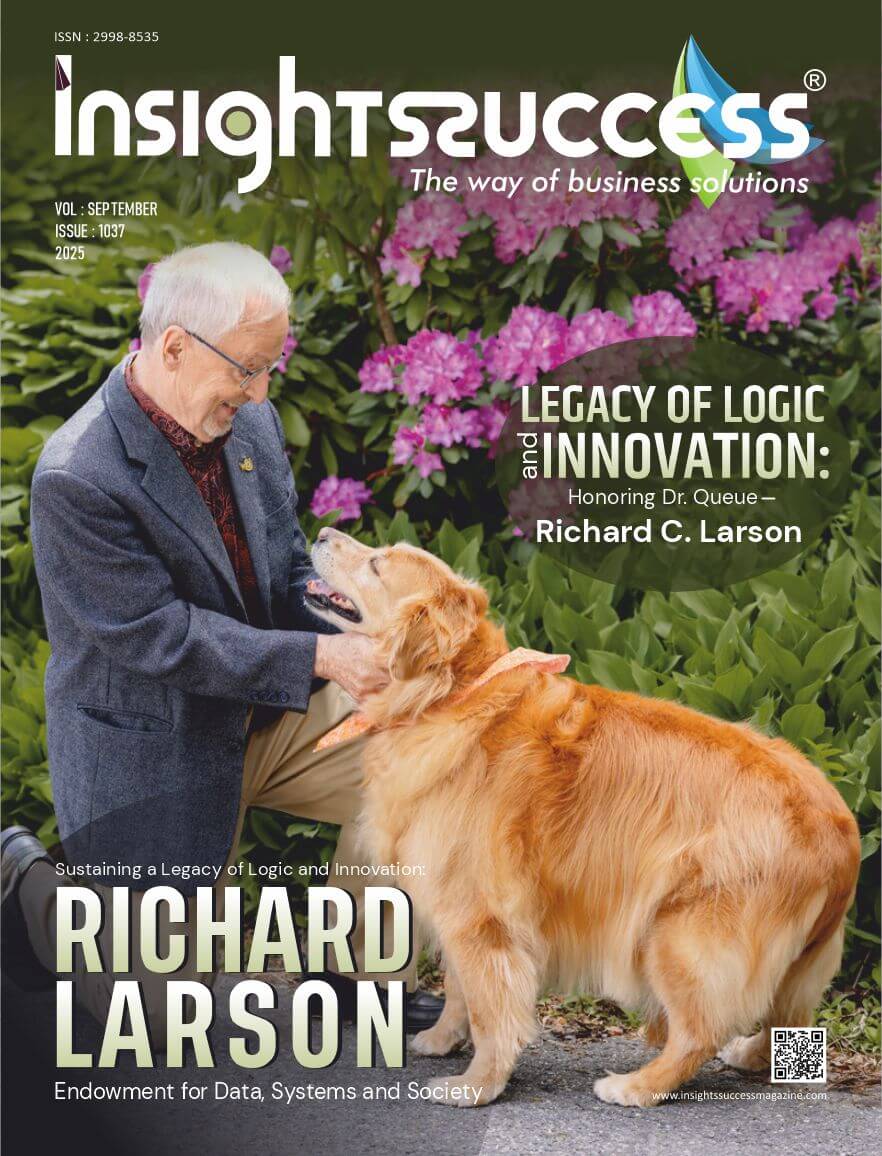
Legacy of Logic and Innovation Honoring Dr. Queue – Richard C. Larson