






What Comes After Hierarchy?
Leadership Disrupted Leadership these days is not static Hierarchy or standardized solutions. The pace of change—because of technology disruption, shifting markets, and shifting social norms—demands leaders who can respond, pivot, and re-target in real time. And that is where adaptive leadership emerges as the best model, which enables individuals and organizations to thrive in conditions of uncertainty. Adaptive leadership is not about power so much as it is about flexibility. It allows the leader to view challenges not as obstacles but as opportunities. In short, it is about managing complexity with clarity—aligning people, processes, and purpose in a way that constructs resilience and sustained growth. Understanding Adaptive Leadership Unlike the more mature models of leadership that hinted at stability and control, adaptive leadership acknowledges that disruption is inevitable. Instead of steering clear of it, adaptive leaders move forward with it, encouraging a learning-first, experimentation-driven, and resilient culture. They are not solutions-oriented. Instead, they challenge their teams to co-learn solutions alongside them, building ownership and accountability. That enables organizations to tackle technical complexity as well as adaptive complexity—issues that concern shifts in thinking, values, and culture. Main Traits of Adaptive Leaders Resilience in the Face of Pressure Resilient leaders remain unruffled in chaotic situations. They take obstacles as an opportunity for reflection and reshaping and not failure. Emotional Intelligence They manage individuals in a sincere manner, understanding that flexibility means trust, empathy, and open communication. Systems Thinking They understand how different components of an organization are interlinked, which makes them anticipate ripple effects and make decisions satisfying the short-term requirements versus the long-term goals. Agility and Flexibility Adaptive leaders pivot quickly when the time demands it, all without losing sight of the bigger picture. Empowerment and Collaboration They do not give orders but instead create spaces where teams experiment, learn, and assist each other in moving forward. Adaptive Leadership in Action Think about the way firms respond when they are in difficulty. When outside shocks—either economic crises, supply chain crashes, or technology revolutions—hit, traditional top-down leadership falters. Adaptive leadership works in those circumstances. Leaders who collaborate with their teams openly, seek numerous opinions, and co-design plans are better placed to adjust than leaders who attempt to impose stringent solutions. Through this participative approach, firms can stay aligned even when the way forward is unclear. Adaptive leadership is also central to digital transformation. The implementation of new technology can overwrite what already exists and require cultural as well as technical adaptation. Leaders who want to lead people into the unknown—are greater than force adoption—can make transition simpler and more effective in the long term. The Cultural Dimension Adaptation is not strategy, it’s culture. Adaptive organizations value curiosity, learning, and openness. They love varied input because they know that challenging problems require input from several disciplines and sources. Adaptive leaders create such a culture through example, with humility, transparency, and openness. They empower employees to share their voice, share their ideas, and experiment without fear of making mistakes. Through this, they create an environment that not only responds to change but also anticipates and drives it. Challenges of Adaptive Leadership Though effective, adaptive leadership is not effortless. Adaptive change takes a lot of time since it typically accumulates incrementally. It requires leaders to relinquish control, something that can be detrimental to leaders who have grown accustomed to directive leadership. It puts a heavy value on ongoing learning, so leaders must be prepared to be challenged themselves, too. It is difficult to overcome them. Leaders must balance giving clarity of purpose and a free hand, being responsible for someone but not restrictive of creativity. A Glance to the Future With complexity the new standard instead of the rule, adaptive leadership will be the signature of thriving businesses. Those who create adaptability, encourage collaboration, and lead on purpose will be more able to ride out disruptions and exploit opportunities. Future leaders are not the ones who run from uncertainty, but those who invite it with vision, courage, and compassion. Adaptive leadership is not an addiction—just a necessity for sustained growth in the face of uncertainty. Conclusion The future of work and of leadership lies in the hands of those who can simplify complexity. Adaptive leadership is a map for doing that very thing—transforming uncertainty into opportunity, disruption into innovation, and complexity into clarity. By fostering resilience, collaboration, and a culture of constant learning, adaptive leaders position their organizations not just to weather disruption, but to thrive because of it. In a world that needs constant reinvention, adaptability is no longer optional—it’s the ultimate test of leadership excellence. Read Also: Navigating Complexity with Clarity

Navigating Complexity with Clarity
Adaptive Leadership Organizational design has relied on hierarchy for decades: preassigned jobs, chains of command, and direct lines of authority. Those models produced order, predictability, and accountability but consistently cut off flexibility, choked innovation, and interposed distance between decision-makers and the most closely involved workers. Leadership is being transformed dramatically today. Globalization, digital revolution, shifting employee aspirations, and innovation culture are redefining leadership. The traditional pyramid is giving way to flatter, more networked, and purpose-driven models. The issue is not how to perpetuate hierarchy, but what comes after it. The Limits of Traditional Hierarchy Predictability was utilized to build hierarchical leadership. Decisions went downward, yet information flowed upward. Hierarchical models proved effective in industries where stability was greater than speed. In today’s world of continuous disruption, however, hierarchical systems might have difficulty reacting with the adaptability needed. Rigid hierarchies bring decision-making to a halt, develop silos, and stifle workers from adding value outside their narrowly defined job. Innovation is starved by layers of approval, and leaders become disconnected with the rapidly shifting realities on the ground. With change accelerating, the limitations of hierarchy become more pronounced. Organizations require models of leadership that value agility, inclusion, and collective responsibility. From Control to Collaboration The future of leadership is not about the dissolution of structure, though—it’s about restructuring. Rather than control and compliance, leadership today is all about empowerment and collaboration. Teams are more autonomous, with leaders as facilitators rather than gatekeepers. This is achieved by acknowledging that human beings are not assets but value creators. When staff are enabled to contribute ideas, to own, and to experiment, they will outperform managed teams. Collaboration unleashes mass intelligence, with choices in harmony with the view of many and know-how in the instant. Purpose as the New Compass Perhaps the most extreme transformation of post-hierarchical leadership is the place of purpose. Without direction from the top, purpose is what keeps organizations together. An open shared purpose allows teams to come into alignment without ongoing management. It makes things transparent during periods of uncertainty and informs people how what they do affects others. Leaders no longer require commitment based on position—instead, they acquire it by aligning people around a purpose that generates commitment. Trust as the New Currency With no hierarchy, trust is the currency of successful leadership. Leaders must build spaces where transparency, accountability, and authenticity are the norms. Trust is created when leaders are transparent, listen attentively, and act on their values. And also by equity—making sure attention, opportunity, and decision-making are distributed in balanced and inclusive ways. Trustworthy employees are more willing to experiment, question assumptions, and innovate. The Human Dimension As hierarchy wanes, leadership becomes people-focused. Empathy, emotional intelligence, and active listening aren’t nice-to-haves, but must-haves. Workers these days are not just starved for pay but also for well-being, balance, and meaning in work. Leaders able to integrate their passions together propel greater engagement and commitment. Disruption in leadership here is then more than structural; it’s cultural, people-oriented rather than process-oriented. Challenges in Moving Beyond Hierarchy It is hard for this shift from hierarchical to adaptive structures. Leaders will not give up control, and conventional structure-bound workers will dislike more freedom. There is sloppy decision-making, and groups break apart without firm leadership. The balance is everything. Shaping is still necessary—it just needs to be more malleable and pliable. Some boundaries need to be drawn, some direction provided, and some responsibility taken with an opening up to experiment and co-authorship. What Comes Next? Future leadership will no longer be hierarchical, but networked, systemic, and of shared purpose. Power will be less a function of role and more of experience, credibility, and the capacity to energize and inspire others. It will be a matter of how effectively leaders can orchestrate cooperation, optimize diversity, and navigate complexity. Disrupting leadership is not about giving up on order but about creating new forms of it—forms that are agile, plural, and drift. Leaders in the future will not be measured by what they control but by what they create space for. What takes the place of hierarchy is not anarchy but transparency—transparency established by shared purpose, trust, and common ownership. Upside-down leadership is redesigning leadership: less commanding from the top down and more facilitating advancement from below. As businesses and communities evolve and require more inclusiveness and adaptability, the most successful leaders will be those who go beyond hierarchy to adopt collaboration, compassion, and flexibility. The pyramid will not be there, but rather a more fluid, human-centered model of leadership based on purpose, not authority. Read Also: What Comes After Hierarchy?

Rick Inatome: Leading Through Transformation
The question is not whether to embrace AI or not to embrace AI. The question is not even how soon a company must adopt it. The real question is how they, as an organizational culture, can really adapt to it. To answer this most crucial question, we need a charismatic entrepreneurial mind bearer who has seen it all and solved tech problems all their professional life. Welcome, Rick Inatome. He has spent decades at the crossroads of disruption—from the personal computing revolution alongside Steve Jobs and Bill Gates to today’s AI transformation. But ask him about leadership, and he won’t start with strategy or technology. He’ll start with something more fundamental: the willingness to change yourself first. As Chairman of Léman Manhattan Preparatory School and Founder of Collegio Partners, Inatome helps institutions prepare for the AI era not by installing new tools, but by transforming the cultures that will use them. His philosophy is simple. Technology opens doors, but people with adaptive, values-driven cultures can walk through them more easily. Humility-Based Leadership Is Key Obviously, the first question that comes to mind when Inatome is in front of you is how he has led through multiple waves of disruption, including personal computing, the internet, and now AI. And how has his perspective on leadership evolved over that time? When we asked those questions, Inatome’s eyes wandered back in the past. The answer came instantly. “Learning from great leaders has taught me that humility-based leadership trumps everything else that drives productivity and progress. This is especially so as we become more dependent upon AI, because it lacks the human aspect of leadership. It is incapable grasping the nuance of emotion, and we must find ways to maintain human connectivity.” In tech, Inatome learned from others to see futures many couldn’t yet imagine. In business, he learned to make those visions real. “But education? That changed me and today, with AI, I see it as the primary means by which we can reverse some of the troubling impacts of modern technology upon younger generations. The one teacher to 30 students model of education today has not changed much since when I was in school. But educators increasingly must struggle with young minds that, in addition to the explosion of autism, dyslexia, and ADHD, have been wired by technology-fed dopamine loops. AI provides technology that can facilitate the individualized breakthroughs educators need in this challenging environment. Constantly Changing Currents And he is right, as AI is reshaping everything, everywhere, all at once, conventional boundaries get erased in the blink of an eye. Next, when asked what makes Collegio Partners different from traditional consultancies, Inatome says that many leading consulting firms are at risk of becoming obsolete in the era of AI. “We are in the uncharted waters of transformative times.” “And we start with a simple truth.” Technology without cultural transformation is a waste of opportunity. Inatome adds that before he and his team talk about implementing transformative new tools, they must focus on whether leaders are ready to transform themselves first. Because an institution’s readiness mirrors its leaders’ readiness. They also bring the resources to finance real change, not just workshops and reports, but the sustained work of shifting mindsets and processes. “Our goal isn’t to help organizations ‘use’ AI, but to help them redefine what success looks like in an AI world.” Being the Change Inatome often says that personal transformation comes before organizational transformation. In practice, he means by it that change is deeply personal before it’s organizational. Too many leaders treat transformation as something that happens ‘out there’ to ‘somebody else.’ “They forget that the real battleground is between our ears.” Inatome learned this important lesson from his father. “My father was born an American citizen, but during WWII, his family lost everything in the internment camps. At an age when bitterness would have been justified, he enlisted in the U.S. Army to prove his loyalty to the country that had wronged him. When we moved to Detroit and a real estate agent returned his check, tears in his eyes because neighbors wouldn’t let a Japanese family move in, he still chose dignity over resentment,” he shares. Becoming Human, AgAIn! In the AI era, the importance of conventional technical skills keeps shrinking. The most important trait to lead AI initiatives is human. What endures is the capacity to learn, unlearn, and relearn, and to model this habit for your teams. If a leader hasn’t embraced that discipline personally, their resistance will spread throughout the organization, claims Inatome. At Léman Manhattan, he champions the ‘favorite teacher model.’ Explaining it, Inatome recalls that on his first day of fifth grade, his teacher walked into class — a tall, distinctive man who wrote “Mr. Smigel” on the chalkboard. Then he turned around and said, “My real name is Smigelski, but my father changed it because he grew tired of enduring all the dumb Polack jokes.” His words struck Inatome like lightning. He reveals, “We were the only Japanese family in that school, and my father had changed the pronunciation of our name to sound less ‘Japanese. Mr. Smigel seemed to understand the shame of my story without me having to tell it. Throughout that year, he brought out something in me I couldn’t see in myself. He became my favorite teacher not because of what he taught from textbooks, but because he made me feel capable of more.” That’s what they honor at Léman, learning happens best through deep human connection, insists Inatome. Students remember the teacher who believes in them first, not the technology they use or the grades they can attain. AI has the power to reduce the teacher’s time on the mundane so they can devote time and attention to enhancing those relationships. He further explains, “We’re preparing students for a world where AI will be pervasive, but we’re going to lead by strengthening its tie to humanity.” Mindset Must Shift Moreover, Inatome shares the biggest mistake
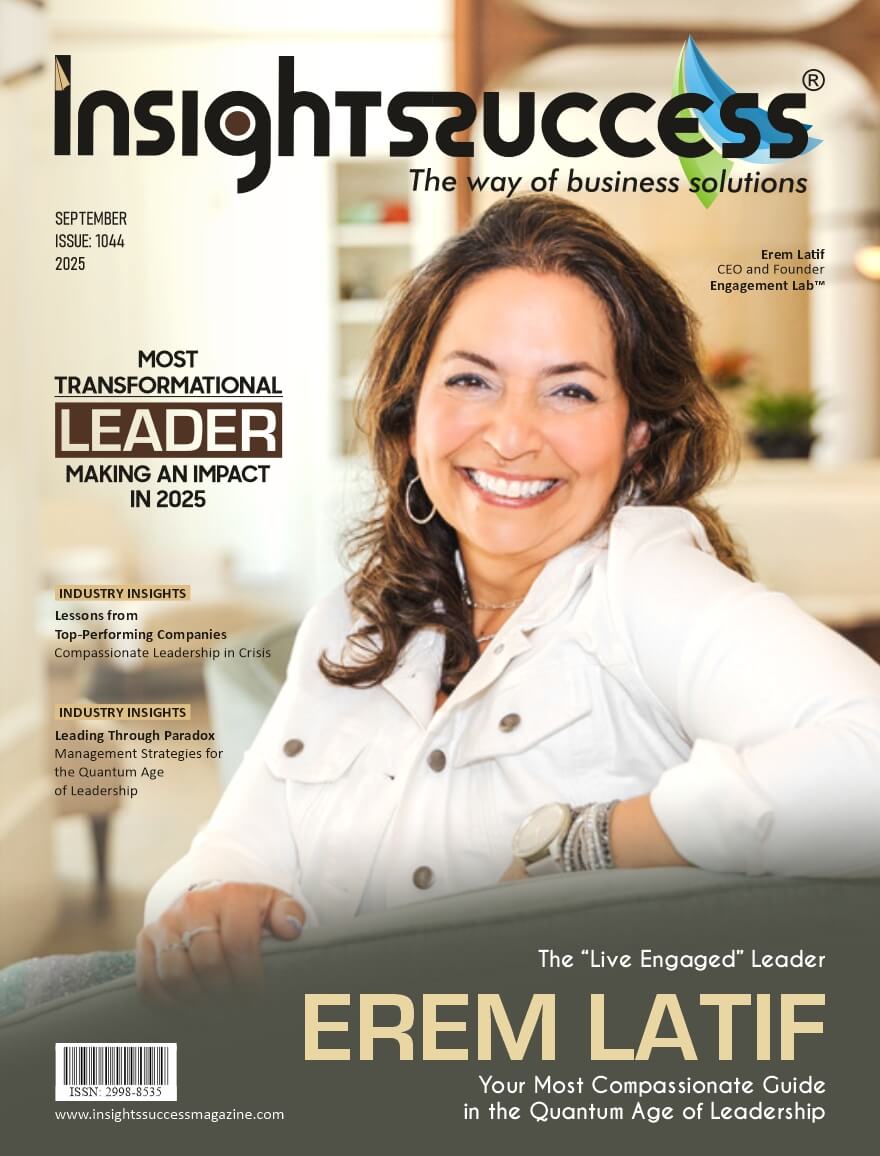
Most Transformational Leader Making An Impact In 2025
Most Transformational Leader Making An Impact In 2025 This edition highlights visionary leadership, innovation, and resilience. This edition celebrates Erem Latif’s groundbreaking contributions, inspiring journey, and unwavering commitment to driving meaningful change. It reflects how transformational leaders reshape industries, empower communities, and create sustainable growth while leaving a lasting global impact. Quick highlights Quick reads

The “Live Engaged” Leader – Erem Latif: Your Most Compassionate Guide in the Quantum Age of Leadership
The conventional age of traditional business leadership and meaning of success has passed. Today, “Your success isn’t just about what you achieve—it’s about how you live, lead, and expand along the way. The Quantum Age of leadership is here. The question is: will you step into it?” asks Erem Latif―Best-Selling Author, Keynote Speaker, Executive Coach, Business Innovation & Advisory Services Provider, Conscious Business Leader, Corporate Mindfulness Trainer, & Fractional Chief Engagement Officer―CEO and Founder of Engagement Lab™. Being named one of 2025’s Most Transformational Leaders is a true honor, she says, and adds that in parallel, her aligned measure of success is the impact she leaves on people and organizations. “Leadership, to me, is about living and leading with heart—bringing coherence, resonance, and purpose into every decision.” Her latest book, Live Engaged and the Engagement Lab™ protocols were born from this belief: that when leaders align science with soul, they not only achieve results but also create cultures of wellbeing, abundance, and joy. “My invitation is simple—live engaged, lead with love, and let your leadership be a force for transformation”, appeals Erem. Learning and Learning More Her academic foundation began at Emory University, followed by a Master’s in Neurophysiology at Georgetown University and an MBA from the Florida Institute of Technology. Yet she knew her path as a leader required more than traditional credentials—it required soul alignment. That led her to complete the Inner MBA program through New York University and Sounds True, as well as, most recently, a certification from the Feminine Frequency Business School™. While seemingly unconventional, these programs were transformative, revealing how energetics, frequency, and resonance shape success in both professional and personal life. Alongside her academic and professional training, Erem has been honored to co-author two best-selling business books—Leading with Compassion and Are We Friends or Coworkers?—and she is soon to be featured on the cover of Awakened magazine. “I also have my first solo book due out this Fall: Live Engaged!” For Erem, the most meaningful accomplishment is not a single award or title, but the realization that we are always manifesting—always creating and self-realizing. Her achievements, both traditional and non-traditional, reflect that truth. They are milestones on a larger journey: helping leaders and organizations move beyond old paradigms into a new model of success that is grounded in coherence, resonance, and impact. Overcoming Obstacles from the Beginning Erem’s own leadership persona developed from her life to date, a journey of overcoming one challenge after another. Her parents are first-generation immigrants with Arabic and Southeast Asian heritage. She grew up in a small town in Alabama, where her passion for reading, writing, and learning began at a very early age. She admits that it was, “Primarily because there was nothing else to do in our small town. (LOL)”. Unlike current millennial mindsets, Erem got married in her early twenties, seeking some degree of stability and order. She was blessed with two children and through her marriage and its eventual dissolution, she learned a great deal about life, the human experience, and personality types through early relationships and parenthood. Also early in her life, Erem’s mother suffered a serious brain aneurysm. Although her mother regained most of her functionality after nine months in a rehabilitation hospital, Erem was not prepared for the multiple strokes her mother would suffer in the years to come. This experience taught Erem to build and rely on her own internal guidance to overcome life’s challenges and her own limiting beliefs. Due to her mother’s early neurological event and her own passion for science, prioritizing health and wellness became a non-negotiable for Erem. In fact, she built her entire career on these principles. After obtaining her master’s degree in neurophysiology, she pursued a traditional career in the drug development space, where she honed her skills in go-to-market strategy, education, medication adherence, and patient engagement. Lifelong Commitments Erem’s business began as a natural evolution of two lifelong commitments: health and wellness as a personal non-negotiable and healthcare access as her professional mission. For over 20 years, she worked at the intersection of patient education, outcomes research, and population health, helping people not only gain access to care but also track and transform their results. What struck her was the realization that the most profound shifts in health and longevity didn’t come from healthcare access alone but from the unrecognized inner keys—mindset, self-concept, coherence, and resilience. This insight led her to integrate neuroscience, quantum mechanics, psycho-cybernetics, somatic therapy, and integrative health into what would become her life’s work. As a result of her work, she developed her patented systems based on her Helix of Health™ model. After years of refining and validating her Engagement Lab™ protocols, Erem launched her business to empower high-impact leaders. Today, she guides executives and organizations through quantum business strategy and executive coaching, helping them achieve growth that is both measurable and meaningful. By default, her work is also creating a community for these soul-aligned leaders. At its core, her business is about transformational leadership for the Quantum Age. For her, “Living (and Leading) Engaged” is more than a framework; it’s a leadership skill, a philosophy, and a lifestyle brand—anchored in longevity and luxury, alignment and authenticity, coherence and resonance. A Pledge to Personal Protocol Erem’s ability to balance the demands of her professional and personal life begins with her living by her own protocols. “Our Engagement Lab™ methods were born from the integration of neuroscience, behavioral health, and daily practices I’ve cultivated over the past 5 years; the foundation of these methods, which is my Helix of Health™ model”. Meditation and breathwork are non-negotiables (outside of her focus on diet and fitness)—they create space in the nervous system, which allows her to lead with coherence and resonance rather than reactivity. She pairs this with consistent movement—whether it’s Pilates, strength training, running, or walking—always approached with intention, because alignment with a clear goal transforms routine into renewal. She also builds in micro-pauses throughout the day— “My family will tell you about the alarms on my phone—where I

Compassionate Leadership in Crisis
Lessons from Top-Performing Companies Leadership is pushed to its limits during crisis. Strategy, determination, and decision-making take precedence over everything else, but what will finally determine if teams whether the storm or cave under pressure is compassionate leadership. Unlike rigid prescriptions for power, compassionate leadership combines strength and kindness, clarity and empathy, and direction and humanity. It is the manner that informs others that they are safe in which to express themselves, being respected, heard, and questioned even when confronted with absolute uncertainty. Learning Compassionate Leadership Compassionate leadership is not being overly soft and permissive. Compassionate leadership is the skill of leading with sensitivity and direction from organizational objectives. In crises, that is all about an emotional cost, careful listening, and solutions to satisfy both functional needs and human sensitivities. A caring leader understands that human beings are the biggest asset to ride out turbulence, and when made to feel valued, they are most likely to provide their best deliverance. Why Compassionate Leadership Matters in a Crisis? World pandemics, economic recessions, or organizational disorder cause fear, anxiety, and undue stress. Workers, in this regard, are afraid of their health, their pockets, or their employment. The mentality a leader learns becomes the anchor that holds the team steady. Compassionate leadership informs individuals that they are not alone. It stills fear by direct and empathetic conversation, establishes confidence by evidence to people that choices are being made in their best interests, and provides a glimmer of hope when hope is reduced. Above all, it creates a feeling of oneness and belongingness where people feel they can unite in single purpose. The Qualities of a Compassionate Leader There are certain traits that consistently crop up in leaders that define compassion in the face of uncertainty. They model compassion, they listen to what other people are experiencing. They are honest, even when having to bring bad news, because honesty builds trust. They are responsive, fine-tuning policies and expectations based on changing circumstances. And they make difficult decisions with careful consideration, balancing the interests of the organization with fairness and empathy. Above all, they are there and available, reassuring their teams with visibility and regular interaction instead of remoteness or silence. Compassion in Action The recent COVID-19 pandemic gave us many examples of empathetic leadership. Work patterns were modified by many organizations to safeguard employees, mental health services were offered, and well-being was given respect instead of short-term gains. In the medical world, managers who took the extra step to personally call frontline personnel and inquire about the availability of personal protection gears are living by action and word an act of compassion. Similarly, among the disaster-stricken population, leaders who oversaw relief operations and personally met with families set an example that compassion best functions when felt and not merely uttered. These small or great acts built trust and infused resilience alongside each other. Balancing Compassion with Accountability Compassionate leadership is not about avoiding tough conversations or compromising expectations. Far from it. True compassion is grasping challenges and simultaneously encouraging responsibility and growth. A leader who sees an employee struggle during a crisis will not look the other way but rather assist, guide, and provide tools in hopes of still having some margin for growth. The solution is to balance addressing human needs without letting organizational accountability slide. This equilibrium optimizes rather than maximizes the potential for performance in a team. Creating a Culture of Compassion While individual leaders may be hugely impactful, the most powerful thing about compassionate leadership is experienced when it becomes “baked into” organizational culture. That means consistently exhibiting compassionate behaviors so others will follow their example. That means developing cultures where peer-to-peer support is celebrated and acts of empathy are recognized and rewarded. Training programs that cultivate emotional intelligence and everyday practices that respect humanity in the workplace assist with building a culture where compassion is the rule, not the exception. In a place where compassion is cultural, not only can an organization successfully manage crisis but to thrive in the long term. Long-term Effect of Compassionate Leadership The effects of compassionate leadership extend far beyond the management of short-term crisis. Respected and valued employees become more collaborative, committed, and creative. Groups collaborate with a sense of unity, and companies develop reputations that draw in talent and trust. Beyond the bottom line, people-centered leadership spills over into communities, and individuals are motivated to treat others similarly at home. Over the long term, such leadership makes certain that success is not achieved on the back of humanity but together with it. Conclusion Crisis is unavoidable, but the leaders’ reaction defines if teams come apart or stand together. Caring leadership casts a beam of concern, clarity, and chivalry when human beings are most vulnerable. It has nothing to do with standards being compromised; it’s about producing results with respect for humanity. To be open and to be bold, leaders can create hope, deepen bonding, and take their organizations through challenge to more hopeful and more enduring futures in caring leadership. Read Also: Bouncing Back from Setbacks

Management Strategies for the Quantum Age of Leadership
Leading Through Paradox The 21st century has seen a business revolution. Models of leadership linear, predictable, hierarchical are no longer adequate in an age of complexity, ambiguity, and exponentially accelerating technological change. We stand on the threshold of what other people describe as the quantum age of leadership, an age demanding flexibility, interconnection, and system thinking. Leaders today need to shed old paradigms and adopt strategies that will prove helpful in this new quantum world. The Quantum Age of Leadership Definition In essence, the quantum age of leadership is all about understanding that organizations are adaptive ecosystems rather than static machines. As quantum physics teaches us to a world of particles all interlinked and results determined by probabilities, this quantum age of leadership requires accepting the fuzzy, the interdependent, and the unseen forces of change. This transformation demands leaders who are capable of walking the tightrope between vision and agility, power and compassion, and innovation and sustainability. Shattering Linear Thinking But yet another of the principles of leadership success management in the quantum age is to shatter linear thinking in a hard way. Previously, leaders used to decide based on cause-and-effect thinking. Though it is still true even today, the reality is now shaped by a variety of factors economic shifts, technological upheavals, global crises, and societal movements—cross-interacting in unpredictable ways. Leaders will then embrace systems thinking, viewing problems as interdependent issues instead of independent pieces of the great system. This helps them identify where ripple effects are originating, to act promptly, and improve their decision-making. Embracing Adaptive Leadership Rigidity is a weakness in the quantum leadership age. Adaptive leadership is needed in addressing ongoing change. This means developing a culture that empowers testing, views failure as a stepping point to learn from, and provides autonomy to empowered teams to react quickly when conditions call for it. For example, if there is an unexpected marketplace disruption, adaptive leaders can re-strategize without expecting bureaucratic approval. They create a psychological safety environment in the teams so that the employees feel comfortable opening up and contributing ideas free from judgment. This adaptability constructs organizations that not only remain resilient but also innovative. Leveraging Collective Intelligence Those are the days when leadership was simply a matter of a single solitary visionary leader who calls the shots. Leadership in the quantum era is all about shared power of smarts—the ability to call on different perspectives, expertise, and experience to tackle the hard issues. Leaders should develop geographically dispersed and cross-silo collaboration environments. By means of cross-functional teams, digital collaborative platforms, or collective decision-making processes, leveraging the intelligence of crowds makes organizations responsive and well-advised in times of turbulence. Emotional Intelligence and Human-Centered Leadership While technology continues to revolutionize business sectors, the human aspect of leadership has never been more crucial. The quantum age of leadership calls for leaders to prioritize emotional intelligence—knowing, directing, and relating to emotions in oneself and others. Such employee-focused initiatives build confidence, improve communication, and boost participation. Executives that show care for workers’ welfare build loyalty and stimulate performance. During times of turmoil, empathy is a rock-steady hand that enables businesses to ride out storms without losing perspective of the common purpose with teams. Data-Informed, Not Data-Dependent Artificial intelligence and big data are chief decision drivers in today’s age, but the era of quantum leadership makes us realize that data cannot be the future leader. The numbers provide us with the vision, and there must be someone interpreting them in terms of human insight and ethics. The best leaders combine data-driven decision making with value-based judgment, imagination, and intuition. They don’t over-rely on algorithms and don’t leverage technology as an exceptional driver of growth. Building Resilient and Meaningful Organizations Resilience is the second principle of management in the quantum leadership era. In dealing with disruptions, resilient organizations rebound not only but flourish by grounding their strategies in a firm sense of purpose. Employees and stakeholders increasingly anticipate organizations to play a positive social role. Executives putting sustainability, diversity, and ethics on their management agenda make not only economic value but social value as well. As a by-product, they can attract best talent and win the loyalty of customers who are authenticity true believers. Continuous Learning and Leadership Development In the transforming world, today’s news is yesterday’s information. Leaders therefore need to take a promise to themselves, and their organizations, of learning for life. This age of quantum leadership needs them to be open, humble, and adaptable. Through instilling a culture of continuous learning, leaders prepare employees for altered challenges and technologies. Leadership development programs, mentoring, and upskilling make organizations future-proof. Conclusion: Leadership with Vision in the Quantum Age The quantum age is no longer a fictional idea it’s our new reality. With organizational challenges growing more complicated, the leader’s style of management has to evolve to deal with the challenges of this new era. With adaptive leadership, leveraging collective intelligence, using emotional intelligence, balancing data and instinct, and building resilience, leaders can steer their organizations in uncertain times with confidence. Lastly, quantum age leadership is about reconciling the human and the technological, the individual and the collective, the known and the unknown. Individuals who will be able to dictate this reconciliation will not only survive but also reimagine what it would mean to lead in the 21st century. Read Also: The Intersection of Leadership and Corporate Culture

Dr. Saurabh Suman: Director, Suman Brothers Consultancy
Driven by the plight of students exploited by consultancies, Dr. Saurabh Suman founded Suman Brothers Consultancy, distinguishing itself through its integrity and commitment to helping middle-class students pursue education abroad. His consultancy has signed direct official contracts with universities in Georgia, Kyrgyzstan, Russia, Uzbekistan, Malta, and Poland, providing trustworthy assistance to aspiring students. Dr. Saurabh Suman is the Director of Suman Brothers Consultancy. He earned his MBBS degree from Ukraine in 2023 and successfully passed the FMGE exam in 2024, qualifying him to practice in India after completing a two-year internship. He shares that he established the consultancy firm while still in Ukraine due to personal experiences and observations. Having been unable to qualify for NEET and unable to afford admission to a private college in India, he opted to pursue his MBBS in Ukraine. In 2017, while in Ukraine, he witnessed how other consultancies exploited students, often leaving them victims of fraud after investing time and money preparing to study abroad. To combat such exploitation, he founded his consultancy in 2021, aiming to assist middle-class students seeking education abroad. In February 2022, just before the outbreak of the Russia–Ukraine conflict, Dr Saurabh left Ukraine on 13th February and immediately informed India’s Prime Minister’s Office (PMO) about the seriousness of the situation. Following his communication, the Indian Embassy in Ukraine issued official advisories on 15th February 2022. He points out that at the time, certain embassy decisions seemed influenced by private agents who arranged costly evacuation flights, charging students heavily. By raising his voice early, Dr Saurabh ensured that the concerns of Indian students were acknowledged at the highest level. His commitment to the nation did not end there. Recently, he also provided critical information to the Indian government regarding universities in Kyrgyzstan. According to him, many of these institutions operate under Pakistani influence, and funds from Indian students indirectly flow to Pakistan. By exposing this, Dr Saurabh demonstrated not only his dedication to education but also his sense of patriotism, working to safeguard both the future of Indian students and the interests of the nation. Raised in Patna, he attended St. Karen’s Secondary School but left due to his rebellion against what he saw as unfair rules. He later joined another school in Hajipur, completing his 10th standard in 2015. Following his father’s transfer to Aurangabad, he finished his 12th standard at R.L.S.Y. College. He excelled academically, securing AIR 107 in NIFT, AIR 366 in CLAT, and a score of 205 in NEET in the same year, though he missed the cutoff marks. Inspired by his brother’s studies in Ukraine, Dr Saurabh pursued his MBBS there, arriving in September 2017. Witnessing the exploitation of students by consultancies motivated him to start his own. His advocacy for lowering passing marks in one of his university’s exams earned him popularity and valuable contacts, laying the foundation for his consultancy’s expansion. Today, Suman Brothers Consultancy has grown beyond Ukraine, extending services to multiple countries. Unlike many consultancies that mislead students and fail to provide refunds, his firm stands out for honesty, transparency, and genuine assistance. Official contracts with 10–12 universities are openly displayed on the website and Instagram page. Having spent six years in Ukraine, he overcame challenges posed by the COVID-19 pandemic and regional conflicts. Despite these hurdles, he successfully passed the FMGE upon returning to India. In the early stages, he faced difficulties in earning students’ trust and building relationships with universities, but through perseverance, he gained support from local governments and ministries. Today, he maintains direct ties with three universities in Georgia, two in Kyrgyzstan, one in Uzbekistan, and one in Russia. Dr Saurabh draws inspiration from the song “Kar Har Maidan Fateh” and finds peace in reciting the Hanuman Chalisa. To students aspiring to study abroad, he urges them to verify the authenticity of consultancies by checking for official contracts with universities. He warns against fraudulent agents who demand extra funds for visas or accommodation, and instead advises students to pay fees directly into university accounts. He also emphasises maintaining regular contact with the Indian Embassy while abroad for safety. To the youth of India, Dr Saurabh advocates honesty as the most powerful tool to eliminate corruption and highlights the importance of integrity in building a brighter future. Disclaimer: This article is a work of original content created for public relations and informational purposes only. It may be published across multiple digital platforms with the full knowledge and consent of the author/publisher. All images, logos, and referenced names are the property of their respective owners and used here solely for illustrative or informational purposes. Unauthorized reproduction, distribution, or modification of this article without prior written permission from the original publisher is strictly prohibited. Any resemblance to other content is purely coincidental or used under fair use policy with proper attribution. Read Also: Policybazaar for Business strengthens its advisory board by welcoming three esteemed Medical Stalwarts

Periscope Co-Founder Kayvon Beykpour Launches Macroscope with $40M Funding
Prime Highlight Periscope co-founder Kayvon Beykpour has launched Macroscope, a new startup that helps companies gain transparency in software development. The company raised $40 million from top investors, including GV, Lightspeed, and Thrive Capital. Key Facts Macroscope integrates with GitHub, Atlassian, and Linear, using AI from Anthropic, Google, and OpenAI to propose code improvements and streamline project oversight. Early adopters include A24, Class, and Seed Health, with the platform priced at $30 per developer per month. Background Kayvon Beykpour, who co-founded Periscope and sold it to Twitter in 2015, has returned with a new startup, Macroscope, aimed at helping companies monitor software development. The startup has raised $40 million from investors including GV, Lightspeed Venture Partners, and Thrive Capital. Beykpour said the idea for Macroscope came from the absence of transparency in software projects. “As Twitter’s head of product, I often found myself just trying to understand the state of things,” he said. “Despite important tasks and skilled engineers, there was little visibility into how work was moving forward.” Unlike Periscope, which targeted general users, Macroscope focuses on businesses. The platform is linked with GitHub code repositories and is also connected to Atlassian and Linear project management software. It also involves the AI offered by Anthropic, Google and OpenAI to propose code improvements and solutions to questions posed by managers and developers. Macroscope did well in testing, revealing known bugs better than similar tools. It also helps managers oversee developer activity without relying solely on meetings. “If managers still need meetings to check progress, we’ve failed,” Beykpour said. Early users of Macroscope include film studio A24, online education company Class, and probiotics firm Seed Health. The platform costs $30 per developer per month, which includes management features, slightly lower than competing services like Cursor. Macroscope was co-founded in 2023 by Beykpour, Periscope co-founder Joseph Bernstein, and Rob Bishop, founder of AI startup Magic Pony. The company has 17 employees and operates out of San Francisco. Read Also: Microsoft Invests $30 Billion in UK AI Sector to Boost Economy and Innovation

Policybazaar for Business strengthens its advisory board by welcoming three esteemed Medical Stalwarts
16th September 2025, Gurugram: Policybazaar for Business, the corporate arm of one of India’s largest insurance platforms, has announced the addition of three distinguished leaders from the medical fraternity to its advisory board. The brand welcomes Air Marshal (Retd) Dr Rajesh Vaidya, Dr Arun Gupta, and Dr Mohit Mathur, bringing on board a rare combination of clinical, regulatory, and public health expertise. Professional Indemnity (PI) for doctors has long been an under-penetrated cover in India despite rising medico-legal cases, AI-driven diagnostics, and evolving patient rights. Policybazaar for Business has been actively driving awareness and adoption of PI, a product that safeguards doctors and healthcare institutions against unforeseen legal and financial risks. The addition of these stalwarts underscores Policybazaar for Business’s commitment to strengthening this critical vertical. What makes this addition significant is the diversity of expertise the three bring. Together, they embody a 360-degree understanding of the challenges doctors face, while also guiding Policybazaar for Business’ approach to Employee Health & Wellness — particularly in preventive care, compliance, and critical illness management. Air Marshal (Retd) Dr. Rajesh Vaidya, AVSM, VSM Few medical leaders in India have managed healthcare delivery at the scale of Air Marshal (Retd) Dr Rajesh Vaidya, who, as Director General Medical Services (Air), oversaw treatment for 1.5 lakh personnel and families across 100+ facilities staffed by 900+ doctors. A decorated officer, reformer, and academic, he pioneered programmes such as “Fit for Life,” authored 61 textbook chapters, and collaborated with the WHO on public health strategy. Decorated with the Ati Vishisht Seva Medal (AVSM presented by President Droupadi Murmu in 2025) and the Vishisht Seva Medal (VSM, 2019), his experience in building resilient, large-scale health systems makes him a key voice in shaping Policybazaar for Business’ Employee Health & Wellness solutions for corporates and hospitals. Dr Arun Gupta: Authority on Medical Ethics and Compliance India’s most experienced adjudicator of medical negligence, Dr Arun Gupta, has presided over more than 4,000 cases during his decade as President of the Delhi Medical Council — shaping the country’s medico-legal framework with integrity. Beyond the courtroom, he has delivered more than 600 lectures on medical ethics and law, shaping discourse across institutions, law firms, insurers, and global healthcare forums. A nationally respected voice on healthcare law and compliance, he has guided institutions and insurers in managing litigation risk. For Policybazaar for Business, his expertise directly strengthens the Professional Indemnity vertical, enabling the design of future-ready covers that protect doctors against an increasingly complex regulatory environment. Dr Mohit Mathur: Veteran in Critical Care Medicine A leader in Anaesthesiology and Critical care, Dr Mohit Mathur has advanced ICU medicine in India through both practice and teaching. As former head of Critical care at Max Super Speciality Hospitals in Gurgaon and Dwarka, he built and mentored multidisciplinary teams and training programmes. He has been recognised with the Sushruta Award for Clinical Excellence (2021) and the GEM Award (2013) and serves as a certified Fundamental Critical Care Support (FCCS) instructor. An active voice at global medical forums and a contr ibutor to leading research and textbooks, Dr Mathur’s expertise in critical illness management and preparedness directly informs Policybazaar for Business’ Employee Health & Wellness offerings, particularly in preventive care and high-risk cover design. Sajja Praveen Chowdary, Head, Policybazaar for Business, said, “Professional Indemnity for Doctors & Employee Health/Wellness are critical verticals for us, and the addition of these three dignitaries gives unprecedented strength to our efforts. Their combined expertise will help us safeguard doctors against today’s complex medico-legal environment while also shaping new-age covers for risks emerging from AI-driven diagnostics and modern treatment protocols. Their guidance will also enrich our Employee Health & Wellness offerings for corporates, hospitals, and practitioners.” With this addition, Policybazaar for Business builds further on its decorated advisory board, which already includes esteemed members such as Ajit Kumar, AV Rao, and S Nagaraj. This strengthened pool of expertise reflects Policybazaar for Business’ commitment to addressing the evolving insurance needs of corporates, hospitals, and professionals. About Policybazaar for Business Policybazaar for Business (PBFB), launched in 2021, is the corporate insurance arm of Policybazaar, a household name. Building on its retail insurance expertise, PBFB addresses the diverse insurance needs of businesses across India. It offers comprehensive insurance solutions to companies of all sizes, from startups and SMEs to large enterprises, hospitals, medical practitioners, and healthcare institutions. With a client-centric and consultative approach, PBFB provides customised advice and integrated solutions from a single, trusted source. Its offerings span employee benefits, liability, property, engineering, marine and transit, and cyber insurance, among others. PBFB’s vision is to empower businesses and professionals with robust insurance solutions that help them stay resilient against adversities and unforeseen risks. Disclaimer – This article is a work of original content created for public relations and informational purposes only. It may be published across multiple digital platforms with the full knowledge and consent of the author/publisher. All images, logos, and referenced names are the property of their respective owners and used here solely for illustrative or informational purposes. Unauthorized reproduction, distribution, or modification of this article without prior written permission from the original publisher is strictly prohibited. Any resemblance to other content is purely coincidental or used under fair use policy with proper attribution. Read Also: The Educator’s Compass: Dr Rishikesh Tewari’s Journey of Purpose, Pedagogy, and Perseverance