





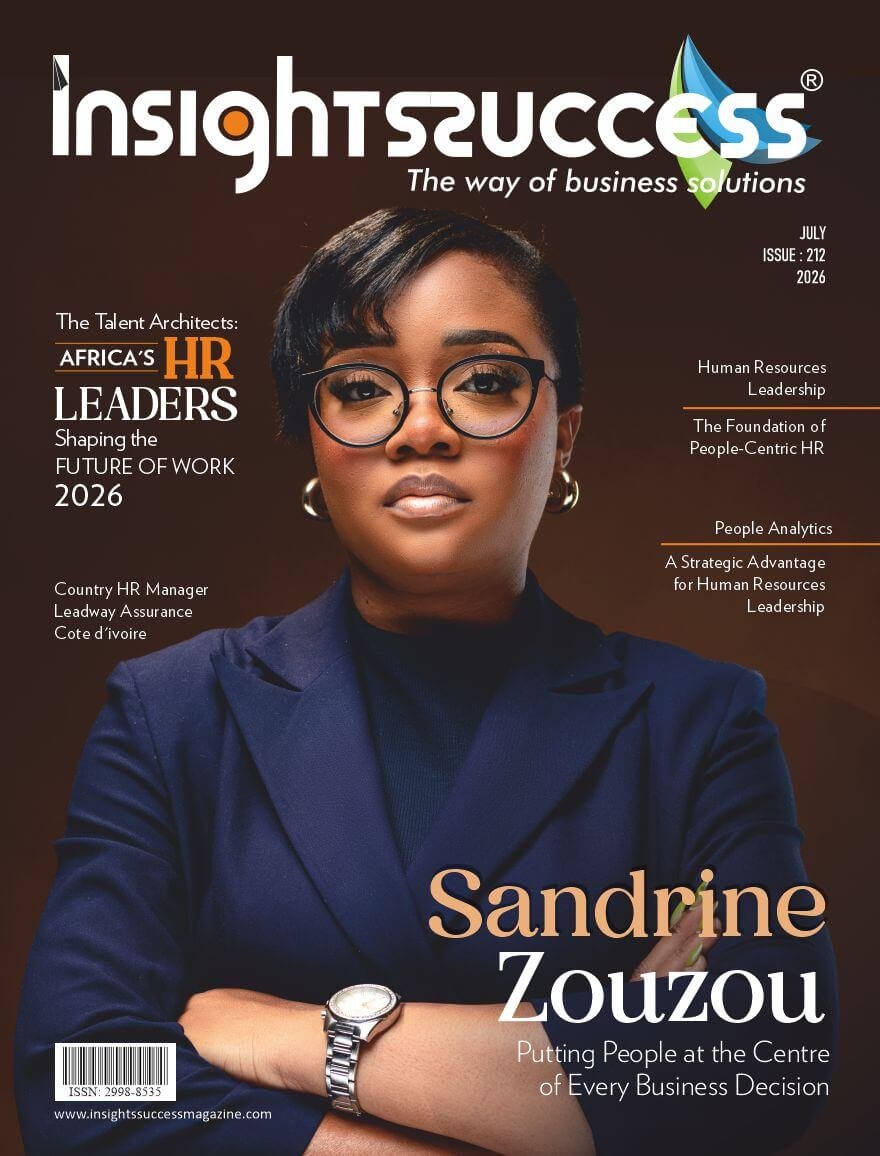
The Talent Architects: Africa’s HR Leaders Shaping the Future of Work | 2026
The Talent Architects Africa’s HR Leaders Shaping the Future of Work 2026 Honoring Africa’s influential HR leaders who are redefining workplace culture, talent strategy, and people development, shaping the future of work through innovation, inclusion, leadership excellence, and organizational transformation. Digital Link Quick highlights Quick reads

Sandrine Zouzou: Putting People at the Centre of Every Business Decision
There is a version of HR that most employees have experienced at least once: the department that shows up with paperwork, enforces policy, and disappears until the next performance review. Then there is the version that Sandrine Zouzou has spent over a decade building, one conversation, one honest interaction, and one quietly transformative initiative at a time. Zouzou is the Country HR Manager at Leadway Assurance Cote d’Ivoire, a subsidiary of one of Nigeria’s most established insurance companies, and she brings to that role something that no job description quite captures: the conviction that employees are not a resource to be managed but the very first customers a company has to serve. That belief, arrived at through a career she never planned, has shaped everything about the way she leads. She did not start out in human resources. She started as a marketer, drawn to the challenge of understanding and satisfying customers. Somewhere along the way, she had a realization that changed the course of her working life. She says, “I was looking for a job and also having a certain view about working in the work environment, because for me it was about satisfying customers and everything, till I realized that the first customers of the company were the employees.” The moment that clicked, she knew she had found what she actually wanted to do. More than ten years in HR later, that founding instinct still drives her. Learning by Doing One of the more striking things about Zouzou’s career is how she built it. She did not study HR at university. She did not follow a structured academic path into the profession. She learned by doing it, accumulating knowledge through real situations, real people, and real problems that no classroom could have staged for her. That experience gave her a particular kind of perspective on the profession, because she knew firsthand what it felt like to look at HR from the outside and not quite understand it. Three years ago, she launched a podcast called HR Without Filters, built specifically around the idea of showing people the side of HR they rarely see: the thinking behind decisions, the complexity of the role, the very human work that happens well away from the headlines. The podcast became a space for her to help both the public and her fellow practitioners see HR for what it actually is. She says, “A lot of people did not understand HR. We are most likely not viewed as a good department, and I wanted to give that other side of the iceberg that people do not see.” A Philosophy Built Around People and Integrity Ask Zouzou what guides her as a leader, and she does not reach for abstract principles. She talks about what she has watched happening when people feel genuinely valued. The values she leads by are integrity, respect, collaboration, excellence, and continuous development, but she is careful not to let those words sit as a list. She talks about what they look like in practice: building trust through consistency, developing talent deliberately, and creating cultures where accountability and inclusion exist side by side rather than in tension. For Zouzou, communication sits at the center of all of it, not a soft skill she mentions alongside harder ones but the instrument through which everything else becomes possible. She says, “Communication is the key, and when you communicate transparently with people, they build trust, and it is easy for them to deliver better.” The Moments That Shaped Her Zouzou reflects on her career not as a series of promotions but as a series of lessons, most of them hard-won. Leading performance management and employee development initiatives taught her what happens when people understand what is expected of them and can see a path forward. She also points to the experience of supporting organizations through major periods of change as one of the most formative stretches of her professional life. Those moments reinforced her belief in adaptability, resilience, and transparent leadership. Working closely with diverse teams across different organizational contexts only deepened her conviction that positive culture is never accidental. She says, “A positive organizational culture is built intentionally, through respect, collaboration, and inclusion.” Aligning Personal Goals with Business Purpose One of the areas where Zouzou has developed a particularly distinctive approach is talent development. Her strategy starts from a place where many HR practitioners skip past: understanding not just what the business needs its employees to do, but what those employees want for themselves. She works with large numbers of Gen Z and Millennial employees, and she is frank about what that has taught her. These generations do not simply want to perform for a company; they want to feel that the work they do holds real value in their own lives too. Her response is to actively look for overlap. She collects information from both the business and the staff, then builds development plans that speak to both sets of goals at the same time. The aim is to make employees feel that the training they receive and the skills they build are not just assets for their employer but genuine investments in their own futures. She says, “I try to add the value that this work that you are doing now has also a value in your personal life.” That shift in framing, from company development to mutual growth, has consistently changed the energy employees bring to the process. 85 Percent: A Change Management Story If there is a single story from Zouzou’s career that illustrates her approach most clearly, it is how she handled a company acquisition at a previous employer. The company was bought by another organization. The culture was set to change significantly. Employees were anxious, uncertain about whether their roles would survive, and unsure whether the new management shared the values they had joined the company in the first place. Zouzou found herself in a position that HR professionals know well: expected to represent the

A Strategic Advantage for Human Resources Leadership
People Analytics In today’s corporate setting, organizations understand that decision-making is key to developing resilient and productive employees. In the wake of increasing competition in the environment of doing business, managers are no longer reliant on their gut instincts in managing people. Instead, there is a need for insights that show the trend of the workforce, expectations of the employees, and performance of the organization. People Analytics is such a technique that can help achieve this. In the past, human resource strategies were based on past data and personal judgment calls. Even though experience is still highly valued, companies need facts to back up their workforce planning, development, and retention programs today. By incorporating People Analytics into business operations, organizations are gaining more transparency about their employees’ engagement levels, recruiting success, training results, and overall workforce efficiency. This allows organizations to see future problems coming. Strengthening Human Resources Leadership Through Data Modern Human Resources Leadership is more than just an administration role. Leaders in Human Resources should be able to assist with strategic planning by ensuring that employee skills match organizational goals. With data analytics, leaders can understand the skills deficit and plan for succession better. It allows for the optimal distribution of the workforce through informed decisions. One of the most significant aspects of successful organizations is their employees’ level of engagement. Organizations which value the concept of People-Centric HR will provide an environment where the employees will be respected, motivated, and encouraged to give their best. The traditional approach of treating all employees in the same way has been personalized in accordance with the needs and aspirations of each individual employee. Improving Employee Experiences with Intelligent Insights People’s analytics is becoming more common in order to have a better understanding of the entire journey of the people in the organization. Recruitment staff analyzes how well they hired; learning professionals analyze the results of training programs, while management tracks trends in engagement among different departments. All of this data helps organizations see where they can improve and make sure they get value from their workforce investments. Another thing about successful companies is that they realize the significance of leadership capability for influencing employees’ work performance. Good HR Leadership skills ensure that there are good communicators, collaborators, and professionals developed as managers. Such things, like leadership development, coaching, and mentoring, contribute to improved relationships at work and readiness of future leaders for handling more complex tasks. Building positive experiences at the workplace is not possible without dedication to People-Centric HR practices. Flexibility, recognition programs, wellness programs, and opportunities for lifelong learning will make employees more engaged with the work. Companies which listen to the concerns of their workers and make real changes will have a culture which will encourage innovation and collaboration among employees. Building a Future-Ready Workforce Technology has kept reinventing how workforce management is approached through automation of processes and analysis. As such, HR managers are enabled to focus on more strategic projects that will facilitate development in employees and organizations. With the help of People Analytics, organizations can be able to recognize future workforces’ trends, anticipate their needs, and find solutions. As the organization continues to grow and change, the aspect of Human Resources Leadership becomes vital in ensuring that the employees are ready for the change. Leaders ensure that there is continuous learning, enhance the success of plans, and foster adaptability at all organizational levels. This helps organizations be better prepared for changes in the market while at the same time ensuring high productivity. Another equally critical objective should be creating an inclusive culture. People-Centric HR makes sure that employees can collaborate, learn new things, and grow together with the organization. If people feel that they are treated fairly and are respected and offered chances for career development, then there will be a chance for innovation and engagement. Creating Sustainable Competitive Advantage Looking forward, organizations which adopt intelligent work management are better equipped for future success. This is because adopting such people’s analytics in conjunction with good Human Resources Leadership allows them to make quick decisions and understand workforce performance. Together with the concept of People Centric HR, they allow creation of an environment in which employees flourish, innovation is encouraged, collaboration is strengthened, and organizational performance is improved. With the changing expectations of the workforce, data-driven leadership is the best way through which they can attract talented individuals, develop future leaders, improve the experience of the employees, and make informed decisions. Read Also : Executive Business Transformation and Its Role in Driving Innovation

The Foundation of People-Centric HR
Human Resources Leadership Business organizations have known for quite a while now that their employees are not just resources used for getting things done. They are innovative, they solve problems, they collaborate, and they are the main drivers of sustainable growth. In light of changing work environments and increasing demands, companies are now trying to redefine their strategies when it comes to recruiting, developing, and retaining talent. The main element behind this process is Human Resource Leadership. Today’s businesses are aware that excellent employee experience leads to organizational success. Rather than focusing merely on policies and compliance, organizations are creating work environments that value, enable, and motivate employees to perform at their best. This has led to the rise of People-Centric HR, where businesses try to reconcile their business goals with those of the employees. Building Stronger Workplaces Through Strategic Leadership Human Resource Leaders have duties which stretch way beyond recruitment and management of performance. In today’s environment, HR leaders have the task of re-engineering organizations, improving workplace culture, and preparing organizations for future workforce. In doing so, they work hand-in-hand with executive leaders in formulating business strategies which incorporate both organizational effectiveness and employee satisfaction. Technology has also become an important aspect in managing the modern-day workforce. The use of People Analytics is becoming increasingly common among many businesses so that they can understand the behavior and productivity of their workers. Data insights help human resource managers to make factual deductions regarding their respective organizations. With more investments in technology, People Analytics has become a key element in strategic workforce planning. Creating a Culture That Inspires Performance Any organization that succeeds realizes that culture plays an important role in shaping all aspects of performance for their employees. An organization characterized by trust, inclusion, effective communication, and learning is able to keep employees focused and aligned with organizational objectives. This is where the People Centric HR adds value by ensuring that culture remains at the forefront of everything done. Investment in employee development continues to be among the best investments that an organization can make. Development programs that include opportunities for learning, mentoring, leadership training, and career planning ensure that employees develop their skills and prepare themselves for future tasks. Efficient Human Resources Leadership guarantees that talent development matches both individual goals and organizational needs. The Power of Data-Driven Decision Making With the advent of a data-driven approach, organizations cannot depend only on their intuitions while taking any decisions regarding their employees. People Analytics offers quantifiable metrics about recruitment success, engagement levels, workforce diversity, performance trends, and succession planning. The availability of such metrics allows HR managers to mitigate any possible risks before they become a part of organizational problems. Employee engagement has also become one of the areas of focus for organizations aspiring to sustain sustainability through growth. Companies which engage in People-Centric HR practice open communication, appreciate their employees’ success, foster flexibility, and create collaboration chances. As a result of the feeling that they are appreciated, the employees show increased productivity, commitment, and innovation. Technological developments will keep improving how workforce management is done by using automation and smart digital systems. This way, administrative work will be done more efficiently, and HR managers will be able to focus on other activities which help grow the organization. This together with People Analytics will make it easier for companies to anticipate future challenges. Encouraging Continuous Improvement Continuous improvement flourishes in an environment that promotes open communication, feedback, and cooperation across different functional areas. It is through such initiatives as recognition, learning, and flexible working that engagement is improved as well as professional growth is fostered. Through employee development and workplace culture, companies create strong teams that can continuously contribute to organizational success. Preparing the Workforce for the Future Forward-thinking organizations know that the development of leaders needs to be on going. Human Resources Leadership Training helps prepare workers to deal with change, to innovate, and to be proactive in their working environment. Through this development of adaptable leaders at all levels, companies can create succession plans while operating through periods of transition. Looking for the future, winning firms will continue to put people at the core of their strategy. Those that adopt People-Centric HR and People Analytics in their workforce management will create cultures that are more robust, have more enriched employee experiences, and are more data-driven. In an environment where competition is stiff, Human Resources Leadership will be the basis for hiring outstanding talent, grooming future leaders, building resiliency, fostering innovation, and ensuring employee and firm success. Read Also : A Strategic Advantage for Human Resources Leadership
Zithara.AI Partners with Palmonas to Advance AI-Driven Customer Engagement and Revenue Growth in Jewelry Retail
Hyderabad, India | July 16, 2026 — Zithara.AI, an AI-powered customer engagement platform designed for offline retailers, has announced a strategic partnership with Palmonas, one of India’s fast-growing demi-fine jewelry brands, to strengthen customer engagement, improve retention, and support revenue growth through intelligent, data-driven customer relationship management. The collaboration will see Palmonas deploy Zithara.AI’s AI-powered CRM platform across its retail operations, enabling the brand to consolidate customer information from multiple touchpoints into a unified view. The platform is designed to help retailers better understand customer behavior, create personalized engagement strategies, and build stronger long-term relationships with customers. Enhancing Customer Engagement Through Data-Driven Insights As retail businesses increasingly navigate both digital and physical customer journeys, the ability to deliver timely and relevant interactions has become a key differentiator. Through the implementation of Zithara.AI’s platform, Palmonas aims to leverage advanced customer segmentation, automated engagement workflows, and personalized communication to create more consistent and effective customer experience. Integration will enable the brand to analyze customer interactions across online and offline channels, helping identify opportunities for targeted campaigns, timely follow-ups, and more relevant customer outreach. By connecting digital inquiries with in-store engagement, the platform is expected to support improved conversion rates, stronger customer retention, and increased repeat purchases. Supporting Growth Through Smarter Retail Technology Commenting on the partnership, Mr. Hitesh Magoo, Chief Marketing Officer, Demifine Fashion Pvt. Ltd., said: “At Palmonas, creating meaningful customer experiences has always been central to our growth strategy. As customer discovery increasingly begins through digital channels, one of the key opportunities for retailers lies in transforming that interest into store visits and long-term brand relationships. We were looking for a solution that could intelligently manage customer engagement across multiple locations while supporting stronger conversions and customer retention. Zithara.AI’s platform aligns with these goals by enabling personalized interactions that help drive store visits, improve engagement, and support sustainable business growth. We look forward to leveraging its capabilities as we continue expanding our retail footprint.” Enabling Scalable Customer Relationship Management Varun Kashyap, Co-Founder of Zithara.AI, said: “We are delighted to partner with Palmonas as the brand continues its expansion journey. Our platform is built to help retailers organize, understand, and activate customer data to create more structured and personalized engagement strategies. This collaboration reflects the increasing adoption of AI-driven technologies by offline retailers seeking to strengthen customer relationships, improve retention, and drive measurable business outcomes.” Sridevi Reddy, Co-Founder of Zithara.AI, added: “Our mission is to help retailers become more customer-centric and data-driven in their approach to engagement. Through this partnership, we aim to support Palmonas in delivering personalized experiences at scale while building stronger and more meaningful customer connections throughout the customer lifecycle.” Strengthening the Future of Offline Retail The partnership underscores the growing role of artificial intelligence in transforming customer engagement strategies within the retail sector. As brands seek to deliver more personalized experiences and improve customer loyalty, AI-powered platforms are increasingly helping retailers bridge the gap between customer expectations and operational execution. By integrating Zithara.AI’s customer engagement platform, Palmonas aims to establish a scalable framework that supports efficient customer relationship management while contributing to long-term growth objectives. About Zithara.AI Founded in 2021 by Sridevi Reddy and Varun Kashyap, Zithara.AI is a Hyderabad-based retail technology company focused on helping offline retailers leverage artificial intelligence to drive customer engagement and business growth. The platform combines customer intelligence, lead management, voice analytics, and omnichannel communication capabilities to help retailers deliver personalized experiences, improve sales performance, and strengthen customer relationships. Serving sectors including jewelry, fashion, electronics, and lifestyle retail, Zithara.AI enables businesses to adopt intelligent, scalable solutions tailored to evolving consumer expectations. Media Contact KONNECTIONS IMAG Arushi Chhabra Phone: +91 76910 21754 Email: pre4@konnectionsimag.com Read Also : Indian Deep-Tech Company Meine Electric’s Fast-Charging Iron-Air Battery Receives Independent Third-Party Validation, Advancing Long-Duration Renewable Energy Storage
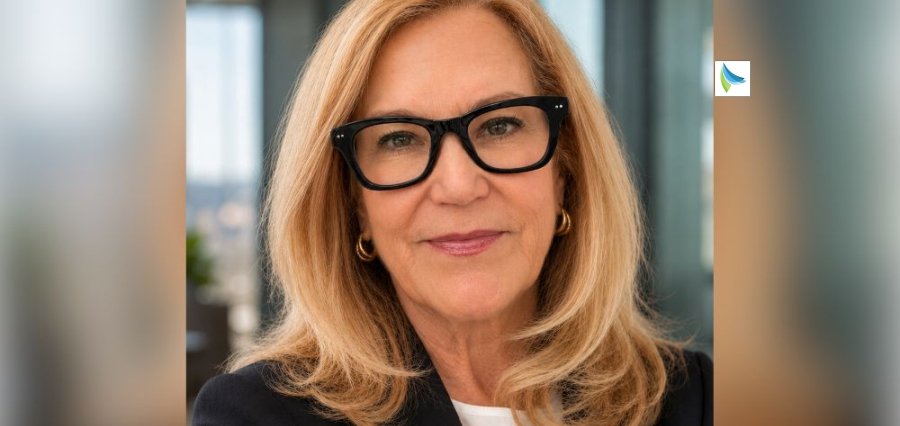
Canopius Strengthens US Leadership With Nadine Moore Appointment
Prime Highlights Canopius appoints Nadine Moore as CEO to lead its major US expansion plans, effective September 2026. Moore brings a rare combination of placing broker, CFO and M&A leadership experience to the role. Key Facts Canopius grows US staff by more than 30 percent since 2020. Samsung Fire and Marine holds 40 percent stake worth $870 million. Background Canopius Group has appointed Nadine Moore as chief executive officer of its US business, effective September 2026, as the London-based specialty insurer continues to scale its retail and wholesale operations in the country. Moore will report to Group CEO Neil Robertson and join the group leadership team. She joins Canopius from Boston Consulting Group, where she most recently served as managing director and senior partner. Her career spans several functions rarely combined in a carrier CEO role. She held a senior position as a placing broker at Aon, carried CFO-level financial responsibilities, and led operational transformation work in regulated insurance environments. She also brings mergers and acquisitions experience along with a record of delivering artificial intelligence initiatives within the insurance sector. Based in Chicago, Moore will oversee Canopius’ US operations across both retail and wholesale businesses. Robertson said her combination of distribution and financial credentials shaped the decision to appoint her, noting that she brings deep market expertise, a strong record of delivery, and strong relationships across the industry. He added that her mandate includes helping Canopius mature, professionalise and develop its retail and wholesale businesses in the US as the group pursues its growth ambitions. Moore said the scale of the existing US platform, along with the group’s plans for the region, shaped her decision to join. She succeeds Lisa Davis, who served as CEO of the US and Bermuda business. The appointment follows a series of senior US hires at Canopius, including a regional head of strategy and transformation brought in during October 2025 and a chief underwriting officer for US and Bermuda added earlier in that cycle. Canopius has grown its US staff by more than 30 percent since 2020. Samsung Fire and Marine Insurance holds a 40 percent stake in Canopius, built through investments totalling approximately $870 million. Read Also : United Airlines Raises Full-Year Earnings Forecast on Strong Demand
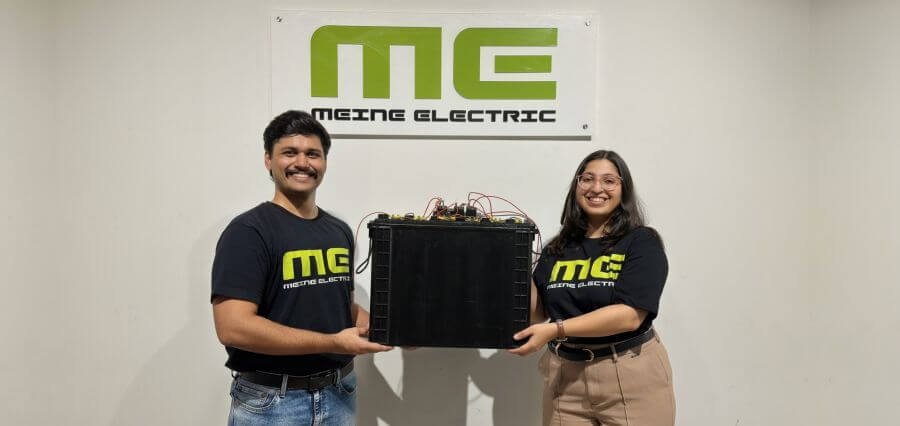
Indian Deep-Tech Company Meine Electric’s Fast-Charging Iron-Air Battery Receives Independent Third-Party Validation, Advancing Long-Duration Renewable Energy Storage
India | 14 July 2026: Indian deep-tech company Meine Electric has announced the successful independent validation of its proprietary Fast Charge Long Discharge (FCLD) Iron-Air battery technology, marking an important milestone in the advancement of long-duration energy storage (LDES). The validation was conducted by Customized Energy Solutions (CES), a US-headquartered energy advisory and technology firm and the parent organization of the India Energy Storage Alliance (IESA). The independent assessment evaluated the electrochemical performance, cycle stability, and operational reliability of Meine Electric’s Iron-Air battery system, providing third-party verification of its ability to support daily renewable energy storage applications. Independent Assessment Validates Battery Performance The evaluation was carried out by the CES Battery Laboratory using a structured testing protocol designed to assess electrochemical behavior, capacity retention, and long-term operational stability. Two Iron-Air electrochemical cells were tested under an asymmetric operating cycle consisting of six hours of charging followed by eighteen hours of discharging. According to the assessment, the battery maintained stable performance across repeated charge and discharge cycles, validating its suitability for long-duration energy storage applications that require consistent daily operation. Addressing a Long-Standing Challenge in Iron-Air Technology Iron-Air batteries are widely recognized as a promising technology for long-duration energy storage because they utilize abundant raw materials such as iron while offering enhanced safety and the potential for lower system costs compared with conventional lithium-ion batteries. However, most existing Iron-Air technologies have been developed primarily for multi-day storage applications, limiting their effectiveness in grids that require daily charging and discharging. Industry reports, including DataM Intelligence’s Iron-Air Battery Market Size, Long-Duration Energy Storage Forecast 2035 (2026), identify Iron-Air batteries as an emerging solution for large-scale renewable energy storage. Global technology developers such as Form Energy (United States) and Ore Energy (Europe) have focused on systems capable of storing energy for up to 100 hours. Meine Electric’s proprietary Fast Charge Long Discharge (FCLD) technology seeks to overcome this limitation through advanced electrode engineering and a proprietary system architecture. The technology enables a complete charging cycle in approximately six hours while providing continuous discharge for up to eighteen hours, making it suitable for renewable energy applications that require daily energy balancing. The battery chemistry also offers additional advantages, including inherent safety, the use of widely available raw materials and the potential for lower long-term storage costs. Supporting Daily Renewable Energy Balancing Commenting on the development, Priyansh Mohan, Co-founder and Chief Executive Officer of Meine Electric, said: “Traditional Iron-Air battery systems have largely been designed for multi-day storage applications, making them less suited to the daily variability associated with renewable energy generation. By developing a system capable of charging within a six-hour window and delivering an eighteen-hour discharge cycle, we have created a technology that aligns more closely with the operational requirements of solar-intensive electricity grids. This milestone represents meaningful progress toward making Iron-Air batteries a practical solution for everyday renewable energy storage.” The company believes the technology is particularly relevant for rapidly expanding renewable energy markets such as India, where storage systems are increasingly required to capture surplus daytime solar generation and reliably supply electricity during evening and overnight demand periods. Supporting India’s Renewable Energy Goals Founded in 2023 by Priyansh Mohan and Stuti Kakkar, Meine Electric is among the first companies in the Asia-Pacific region focused on developing Iron-Air battery technology for long-duration energy storage. According to the company, technology offers several strategic benefits, including: A projected Levelized Cost of Storage (LCOS) of less than US$0.05 per kWh (approximately ₹5 per kWh). Daily cycling capability is designed to complement lithium-ion battery systems for round-the-clock renewable energy availability. Grid-scale storage applications that can improve renewable energy integration while enhancing operational flexibility across existing power infrastructure. Stuti Kakkar, Co-founder and Chief Operating Officer of Meine Electric, said: “As renewable energy adoption continues to expand, the industry requires storage technologies that combine affordability, operational reliability and scalability. We believe Iron-Air batteries have the potential to become an important component of future energy infrastructure, supporting utilities and industrial users in accelerating the transition toward cleaner sources of power.” Next Phase of Technology Development The independent validation represents an important step in Meine Electric’s technology development roadmap as the company advances toward larger-scale pilot projects, demonstration programs, and commercial deployment. The company intends to continue developing indigenous energy storage technologies that support India’s renewable energy ambitions while contributing to the broader transition toward resilient, cost-effective, and sustainable energy systems. About Meine Electric Meine Electric is an Indian deep-tech company developing advanced Iron-Air battery technology for long-duration energy storage. Its proprietary Fast Charge Long Discharge (FCLD) platform enables batteries to charge within six hours and deliver electricity continuously for up to eighteen hours, supporting round-the-clock renewable energy applications. The company develops safe, scalable, and cost-effective energy storage technologies for utilities and industrial sectors while contributing to the advancement of India’s next-generation energy infrastructure. Meine Electric has received several industry recognitions, including the National Startup Award 2026 and the NASSCOM Emerge 50 Award. Read Also : Flexible, AI-Driven and Multi-Income: India’s Gen Z Redefines the Future of Work
Flexible, AI-Driven and Multi-Income: India’s Gen Z Redefines the Future of Work
Mumbai, India | 15 July 2026: India’s Generation Z is embracing a new approach to career development as artificial intelligence (AI), flexible work models, rising living costs, and the expanding gig economy reshape the employment landscape. According to new research by International Workplace Group (IWG), the world’s largest provider of flexible workspaces, young professionals are increasingly prioritizing adaptability, continuous learning, and diversified income streams over traditional linear career paths. The findings indicate that the modern career model is evolving beyond a single full-time role, with many Gen Z professionals pursuing portfolio careers that combine permanent employment with freelance work, entrepreneurial ventures, or side hustles. The shift reflects changing workforce expectations as AI transforms industries and professionals seek greater financial resilience and career flexibility. AI Driving Career Transformation As AI continues to redefine workplace processes and create new employment opportunities, younger professionals are adapting by strengthening their digital capabilities and expanding their skill sets. Deloitte’s 2026 Gen Z and Millennial Survey India found that 93% of Gen Z professionals and 95% of millennials use AI in their daily work, with learning and development emerging as one of its most common applications. The IWG study suggests that 55% of Gen Z respondents believe AI will significantly reshape their careers, encouraging many to diversify their expertise and prepare for evolving workplace demands. Portfolio Careers Become the New Normal The research highlights a growing preference for portfolio careers, where professionals generate income from multiple sources rather than relying solely on a single employer. Among respondents, 33% already have or are considering a side hustle, while nearly half cite financial security and additional income as their primary motivation. The trend is reflected in India as well. Industry research indicates that only 16% of Indian Gen Z professionals prefer a single full-time job, while 43% combine a primary role with an additional income source to manage increasing living expenses and strengthen long-term financial stability. This shift also aligns with the rapid expansion of India’s gig economy. According to NITI Aayog, the country’s gig workforce is projected to grow from 7.7 million workers in 2020–21 to 23.5 million by 2029–30, reinforcing the increasing importance of freelance, platform-based, and project-oriented employment. Career Mobility Influenced by Financial Priorities Compensation continues to be one of the strongest drivers of career decisions among young professionals. The research found that 43% of respondents changed jobs two or three times during the past three years, while 30% cited higher salaries as their primary reason for changing roles. Rather than following traditional career progression, many Gen Z professionals are adopting a more flexible approach by moving strategically between industries, employers, and projects to maximize earning potential while continuously developing new capabilities. Additional findings from Deloitte indicate that more than half of India’s young workforce lives paycheck-to-paycheck, while 85% participate in weekly learning activities, underscoring the growing emphasis on continuous upskilling alongside financial stability. Flexible Work Supports Multiple Income Streams The study also highlights how flexible and hybrid work arrangements are enabling Gen Z professionals to better manage multiple career pursuits. Long daily commutes are increasingly viewed as a barrier to entrepreneurship and additional income opportunities. According to the research: 65% say they would be less likely to pursue entrepreneurship or multiple income streams if required to commute long distances daily. 24% believe hybrid work frees up valuable commuting time that can be invested in side projects or additional work. 20% say flexible working allows them to explore new career opportunities while retaining their primary role. 21% report that hybrid work enables greater collaboration with professionals outside their primary industry. The findings are particularly relevant in India’s major metropolitan cities, where lengthy daily commutes continue to impact productivity and work-life balance. Flexible workspaces located closer to residential areas are increasingly helping professionals reclaim time for learning, networking and entrepreneurial activities. Industry Perspective Commenting on the findings, Harsh Lambah, Country Manager – India and Vice President, Sales, South Asia, International Workplace Group (IWG), said: “India’s Gen Z is entering the workforce during a period of significant transformation. Artificial intelligence is reshaping industries, and young professionals are responding by building new skills, developing multiple income streams and embracing portfolio careers that enhance long-term career resilience. In cities where commuting can consume several hours each day, working closer to home enables professionals to invest more time in upskilling, innovation and entrepreneurial pursuits. By expanding access to professional workspaces near where people live, we are helping India’s emerging workforce build more flexible and productive careers.” A New Definition of Career Success The research suggests that career success for India’s Gen Z is increasingly measured by adaptability, continuous learning and financial resilience rather than long-term tenure with a single employer. As AI, flexible work and the gig economy continue to evolve, portfolio careers are expected to become an increasingly prominent feature of India’s future workforce. International Workplace Group believes organizations that support flexible work models and lifelong learning will be better positioned to attract and retain the next generation of talent while enabling professionals to thrive in an increasingly dynamic employment environment. About International Workplace Group (IWG) International Workplace Group (IWG) is the world’s leading provider of flexible workspace solutions, helping organizations and professionals work more productively through an extensive global network of professional workspaces. Operating more than 5,000 locations across 120 countries, IWG serves businesses of all sizes through brands including Regus, Spaces, HQ, and Signature, enabling greater flexibility, productivity, and collaboration for millions of professionals worldwide. Read Also : Himalaya Wellness Company’s Cystone Break Free Movement Earns Asia Book of Records Recognition for Nationwide Kidney Stone Awareness Initiative
Global Excellence in Leadership Development & Corporate Training
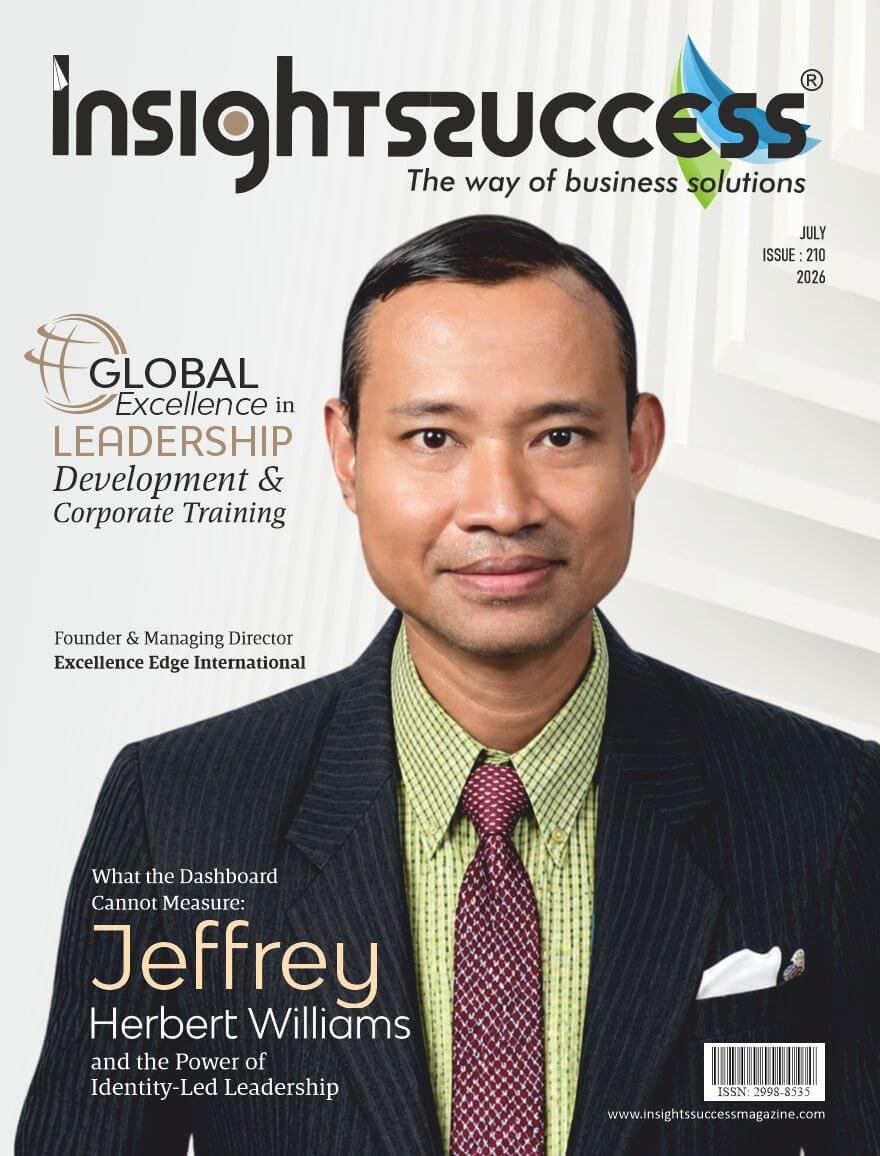
Global Excellence in Leadership Development & Corporate Training Leadership development and corporate training have become essential drivers of organizational growth, innovation, and resilience. This edition celebrates visionary leaders, learning experts, and organizations that are transforming workplaces through impactful training strategies, empowering talent, fostering future-ready leadership, and building high-performing teams that thrive in an ever-evolving global business landscape. Digital Link Quick highlights Quick reads
What the Dashboard Cannot Measure: Jeffrey Herbert Williams and the Power of Identity-Led Leadership
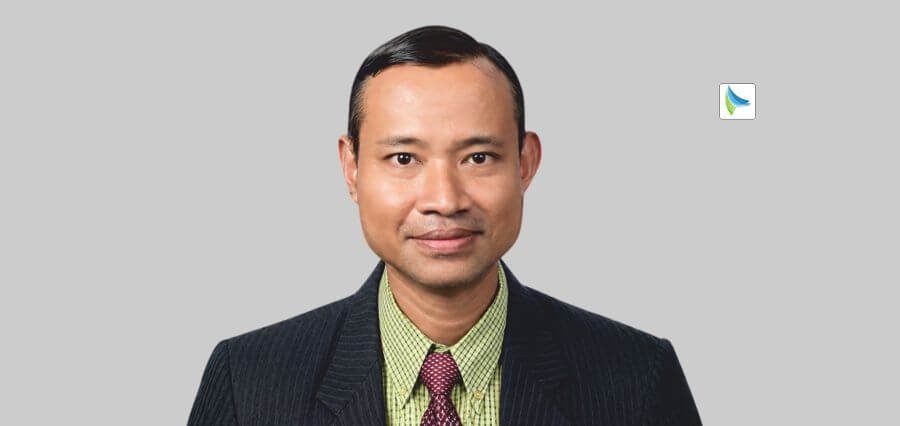
Not every founder can point to the exact moment their purpose became visible. Jeffrey Herbert Williams can. Eighteen years ago, he co-founded Excellence Edge International with three business partners, stepping into the venture without fully understanding what made it significant. That clarity arrived not in a planning session or a strategy meeting but in the middle of a training room, midway through a series of facilitation sessions, when he looked at the faces of the leaders in front of him and recognized something he had been observing across organizations for years without being able to name it. The results-first culture that dominates most organizations was not wrong. It was incomplete. What was missing was identity. The culture that tells an organization who it is when no one is measuring. The shared sense of purpose that makes employee engagement genuine rather than engineered. The values that do not need to be enforced because they have been genuinely internalized by the people responsible for living them every day. That was his forte. That was what Excellence Edge International was built to deliver. And eighteen years later, as Founder and Managing Director, he is still building it, one leader, one organization, and one transformational coaching session at a time. The most consequential work any leadership development professional can do is not to improve a leader’s technical competencies but to clarify their identity, deepen their self-awareness, and help them build the kind of culture that sustains performance long after the training program has ended. He mentions, “Conducting training and coaching sessions specifically in leadership and strategic planning was what I had long desired for. Only after I conducted a series of training sessions did I realize it was what was missing in the jigsaw puzzle.” The Philosophy That Drives Everything At the heart of Jeffrey‘s leadership philosophy is a conviction that most organizations resist until the cost of resisting it becomes too high: that sustainable performance is a cultural achievement before it is a strategic one. He has watched organizations invest heavily in systems, processes, and performance frameworks while systematically underinvesting in the identity that determines how those systems are actually used. Over time, the gap between what an organization says it values and how its people actually behave becomes the most reliable predictor of whether growth is sustainable or fragile. Organizations that have not resolved that gap often discover its consequences at the worst possible moment, in a crisis, in a leadership transition, or in the steady erosion of talent that happens when people no longer feel genuinely connected to the work they are doing. Vision, mission, and core values are not decorative elements in Jeffrey’s framework. They are the architecture of organizational resilience. An effective leader does not simply define these elements in an annual strategy session and display them on a wall. They embody them through every decision, every communication, and every interaction with their team, creating alignment between what is said in the boardroom and what is lived on the floor. He asserts, “When leaders align their decisions with the organization’s vision and values, they build trust, inspire commitment, and create a shared sense of purpose among employees and stakeholders.” The reference he returns to repeatedly is Tony Fernandez, CEO of AirAsia, who articulated a principal Jeffrey has made central to his facilitation work: happy employees produce happy customers. Empowered people who understand the mission, feel trusted with genuine responsibility, and are recognized for their contribution do not need to be micromanaged into high performance. They perform because they want to, and that internal motivation produces a quality of commitment that no external incentive structure can replicate at scale. From Task-Focused to People-Centered Jeffrey is candid about the evolution his leadership style has undergone across eighteen years of building Excellence Edge International and working alongside leaders across industries and geographies. The direction of that evolution is consistent and grounded in repeated observation: from task-focused to people-centered, from directive to collaborative, from results-oriented to resilience-building. During periods of uncertainty, employees do not look to their leaders for more targets or tighter timelines. They look for clarity, direction, and the reassurance that comes from a leader who is genuinely present, genuinely listening, and genuinely committed to helping them navigate what is hard. The leaders who retain their teams’ trust through difficulty are not those who project the most certainty. They are those who lead with the most honesty. He highlights, “I have learned that empowering teams, encouraging innovation, and fostering resilience are equally critical for long-term success. While achieving results remains important, how matters as much as what matters.” Open communication channels, active listening, and transparency about both challenges and opportunities have become non-negotiable elements of his leadership practice and the cornerstones of the frameworks he teaches. Leadership philosophy, he argues, must also evolve alongside the environment it operates in. Forward-thinking leaders continuously assess emerging challenges and opportunities while staying grounded in their organization’s core purpose. That combination of groundedness and adaptability is what allows them to lead through change without losing the cultural coherence that sustains performance across cycles of disruption. The Self-Thinking-Strategy-Execution Framework When Jeffrey works with leaders navigating high-stakes decisions under pressure, he offers a four-dimensional model that produces the clarity and confidence that pressure tends to erode. The first dimension is SELF. Before a leader can effectively navigate complexity, they must honestly assess whether they can lead confidence in the current moment. Self-awareness, the ability to read both themselves and the people around them with accuracy and empathy, is the foundation upon which every other leadership capability rests. Executive presence, what Jeffrey describes as Gravitas, cannot be manufactured. It is the natural expression of a leader who knows who they are and whose team can sense authenticity in every interaction. The second dimension is THINKING. Effective leaders create conditions in which their teams can synthesize ideas, challenge assumptions, and arrive at solutions no individual would have reached independently. The quality of thinking an organization is capable of