






Protecting Transactions from Fraud
Payment Security Strategy The increasing usage of digital payments leads to more advanced techniques which criminals use to commit fraud. Criminals find new ways to attack because real-time transfers and mobile wallets and e-commerce expansion and cross-border transactions create multiple entry points. The scope of modern fraud methods has expanded beyond credit card theft and basic phishing attacks. The latest version of the scam includes six different fraud techniques which include social engineering and account takeovers and synthetic identity creation and malware and coordinated network attacks. Financial institutions together with payment providers consider transaction protection to be their most important business requirement because it helps them establish trust while meeting regulatory standards and protecting their brand reputation. A successful payment protection system needs to use multiple security layers which must adapt and function based on intelligence information. The system requires more than just fixed security measures as its complete framework. Security as a System, Not a Tool Fraud prevention measures do not succeed when organizations implement them as one complete technological solution. Payment security functions as a network of security measures that protect transactions from the moment of their initiation to their complete execution. The process starts with customer onboarding and identity verification and follows through to transaction monitoring and authentication and post-event analysis. Security design requires leaders to create a unified system that functions as an integrated framework instead of separate, independent components. The most dangerous point for fraudsters to attack exists at the junctions that connect different security systems. Strong Identity Verification at Entry Points Weak identity verification methods create higher possibilities of fraudulent activities. The process of customer verification during their initial registration helps to decrease two types of fraudulent activities which include synthetic identity fraud and account misuse. Contemporary identity verification systems use a combination of document authentication and biometric verification together with device identification and user activity monitoring. The process of establishing and maintaining identity trust requires continuous effort throughout the entire duration of usage. Users need more than passwords and permanent security credentials for their authentication needs. The combination of three security methods, which include multi-factor authentication, device recognition, and risk-based authentication, delivers security that adjusts to user requirements without causing major interruptions to their experience. Secure payment systems depend on identity verification as their primary security measure. Real-Time Monitoring and Behavioral Analytics Weak identity verification methods create higher possibilities of fraudulent activities. The process of customer verification during their initial registration helps to decrease two types of fraudulent activities, which include synthetic identity fraud and account misuse. Contemporary identity verification systems use a combination of document authentication and biometric verification together with device identification and user activity monitoring. The process of establishing and maintaining identity trust requires continuous effort throughout the entire duration of usage. Users need more than passwords and permanent security credentials for their authentication needs. The combination of three security methods, which include multi-factor authentication, device recognition, and risk-based authentication, delivers security that adjusts to user requirements without causing major interruptions to their experience. Secure payment systems depend on identity verification as their primary security measure. Balancing Security and Customer Experience The implementation of excessive security measures leads to customer dissatisfaction which results in customer desertion. Organizations that use risk-based strategies successfully implement stronger security measures when their risk indicators show potential threats. The system allows low-risk transactions to run without problems but requires extra checks for high-risk situations. The security system maintains institutional protection while safeguarding customer confidence. Security needs to operate in a way which provides users with intelligent assistance instead of creating barriers to their tasks. Collaboration and Intelligence Sharing Fraud exists across multiple organizations instead of being confined to a single institution. Criminal organizations run their operations through multiple platforms across different geographical areas. The various organizations involved in banking and payment processing and regulatory bodies and technology companies work together to create stronger security systems. The sharing of threat intelligence and fraud patterns and emerging risk indicators between institutions enables them to respond to threats more effectively. The cooperation between different industries helps to minimize areas of unawareness. Conclusion The payment security strategy combines multiple elements to create a complete security system, which includes identity verification processes, ongoing system observation, flexible user authentication methods, synchronized team efforts, and permanent system enhancement operations. The system protects both financial operations and the trust of customers and the trustworthiness of the organization. The security system needs to operate with flexible intelligence capabilities because fraud techniques keep changing at an unpredictable rate. Organizations that want to succeed need to implement security measures as essential business operations, which will protect every aspect of their payment processing systems. Read Also : How Financial Institutions Stay Competitive

How Financial Institutions Stay Competitive
Payment Innovation Strategy The payments landscape is experiencing development at a speed that exceeds all other sectors in financial services. Payments are being transformed through the combination of digital wallets, real-time payment systems, embedded finance and fintech platforms, and cross-border payment solutions. Customers now expect transactions to be instant, seamless, secure, and invisible. Payments serve as a fundamental operational function for financial institutions. The financial sector uses payments as its main field of competition. To maintain market relevance, institutions need to approach payment innovation as their main business strategy instead of treating it as a technology improvement. The process needs organizations to redesign their entire operational system, including their partnerships and customer service methods and their ways of generating income. From Transaction Processing to Experience Design The past regarded payments as a process that occurred behind the scenes. Today, payments are part of the customer experience. Customer satisfaction and loyalty depend on four main factors which include speed and ease of use and reliability and security. Leading institutions in payment innovation must balance their focus between user experience and system performance. Frictionless onboarding, simple interfaces, fast approvals, and transparent status tracking have become baseline expectations. Customers will switch to other options whenever they experience payment processes that appear complicated or take too long to complete. Competitive institutions design payments as a seamless part of digital journeys rather than isolated transactions. Real-Time and Always-On Infrastructure Customers and businesses now conduct their operations according to real-time requirements. Many situations now demand immediate settlement instead of waiting days for resolution. Financial institutions need to update their systems to enable continuous payment processing and to handle real-time transactions at any time. The system requires upgrades to existing systems which need to implement current payment systems while maintaining constant service and their ability to grow. Organizations that do not develop their real-time systems will lose their position in fast-developing markets which include e-commerce and gig work and instant cash transfers. Organizations that can develop infrastructure flexibility will gain an advantage over their competitors. Embedded Finance and Ecosystem Integration Payments now function as an integral part of digital ecosystems which encompass e-commerce platforms and ride-sharing applications and marketplaces and enterprise systems. Customers expect payments to happen in the background integrated into the service they are using. Financial institutions need to establish API partnerships and platform integration systems to maintain their competitive edge. Their role in digital ecosystems transforms them into financial enablers who provide essential customer services. The transition from offering separate products to providing integrated services enables businesses to increase their customer reach while maintaining their market relevance. Data as a Strategic Asset Payment transactions create extensive data that institutions can use to their advantage when they process this information effectively. Organizations can enhance their authentication methods, customer service practices, and product development efforts by studying their clients’ spending habits, danger tendencies, and customer preferences. Financial institutions use advanced analytics and artificial intelligence to shift their operations from response-based work to activities that create value through customized financial recommendations and customer need forecasting. Data-driven strategy transforms payments into an intelligence asset that generates revenue for the business. Security and Trust as Core Differentiators Innovation needs to maintain security as its primary requirement. The growth of digital payment systems brings about increasing security risks and fraud threats. Organizations need to spend money on advanced fraud detection systems and secure authentication methods and ongoing monitoring capabilities. Established financial institutions maintain their competitive advantage through customer trust. Financial institutions can effectively compete against fintech companies by combining innovative products with secure systems and successful compliance measures. Security functions as both risk management and protection for the company’s brand. Flexible Revenue Models Fintech companies provide low-cost or free services which create challenges for traditional fee structures. Institutions need to develop new ways to generate revenue through service combinations and additional benefit offerings and data monetization. The business uses strategic pricing together with service innovation to fulfill market demands while sustaining its profit margins. Organizational Agility and Partnerships Payment innovation requires immediate execution. Financial institutions need to implement agile development methods together with their fintech and technology partner companies and industry networks. Partnerships drive faster innovation development while shortening product launch timelines. High approval times through strict systems create obstacles that prevent organizations from competing effectively. Organizations need to establish a framework that enables them to implement both governance procedures and agile operational methods. Conclusion The payment innovation strategy functions as a crucial element for establishing a financial competitive advantage. Organizations need to update their operational systems while they work to improve customer satisfaction through data-based solutions, strong security systems, and their partnerships with ecosystem organizations. Businesses that regard payments as a strategic platform instead of a basic service dedicate themselves to becoming key players in the digital commerce sector. The financial industry needs organizations to provide customers with quick and safe payment methods that work smoothly with their current business practices to stay competitive in the fast-changing financial environment. Read Also : Frameworks That Improve Results

Ehsan Masud: Bringing Discipline to Digital Finance
Finance works best when discipline guides decision-making and systems are built to be trusted. Strong controls create confidence, and confidence enables progress — especially as digital finance continues to evolve. As new financial infrastructure develops, the challenge is no longer just technological advancement, but how to apply robust governance, control, and accountability at scale. Ehsan Masud focuses on building financial frameworks that allow digital platforms to grow responsibly, combining innovation with the discipline expected by regulators, institutions, and stakeholders. Drawing on experience across global capital markets and regulated digital finance, his approach emphasizes transparency, resilience, and consistency. Rather than viewing regulation as a constraint, he sees it as a foundation for credibility and sustainable growth. In this interview, Ehsan shares practical perspectives on how the CFO role is evolving, how disciplined treasury and capital management can be applied to digital assets, and why trust remains the most valuable currency in modern financial systems. Below are the interview highlights: Could you please brief us about yourself and your motivation to embark on this sector? I am a CIMA-qualified accountant with over 20 years of experience across global investment banking, treasury management, and, more recently, regulated digital assets and payments. I began my career in London with institutions such as Morgan Stanley, Barclays, HSBC, and Merrill Lynch, building expertise across product and financial control, capital management, and balance sheet optimisation spanning multiple asset classes, including equities, fixed income, commodities, and credit. I witnessed the rapid acceleration of fintech firsthand during the COVID period, which sparked a strong interest in applying institutional financial discipline to an emerging and fast-evolving ecosystem. Having spent much of my career operating within highly regulated environments, I recognised a clear gap between the potential of blockchain-based finance and the robustness of the financial governance supporting it. Relocating to Abu Dhabi enabled me to bridge that gap, applying decades of traditional finance experience within one of the world’s most forward-thinking regulatory environments to help build digital financial infrastructure that is both innovative and credible. What initially drew you toward finance and later into specialised areas such as digital assets and treasury management across global markets? Early in my career, even as an economics graduate, I worked closely with finance teams based directly on the trading floor. That exposure gave me a front-row view of how fast-paced and high-pressure the environment can be, and how traders make real-time decisions around strategy, risk, and capital allocation. Working in trading support and financial control roles showed me how P&L is shaped by volatility and market dynamics, and how the strength of control environments directly influences outcomes. This grounding shaped my long-term focus on robust control frameworks and disciplined financial management. As my career progressed, I gravitated towards capital and balance sheet roles, particularly during periods of significant regulatory change such as the 2008 global financial crisis and the post-Brexit environment. Digital assets became a natural extension of that journey. Rather than viewing them as a standalone asset class, I see them as an evolution of financial infrastructure — one that demands even higher standards of control, transparency, and discipline than traditional markets. As a CFO leading financial transformation across multiple regions, how do you balance innovation with the need for strict regulatory compliance in digital asset ecosystems? I have always believed that regulation and innovation are not opposites. In financial services, regulation is often what allows innovation to scale. Balancing innovation and regulation starts with the mindset that compliance is not a constraint, but an enabler of sustainable growth. My approach has always been to design finance and treasury frameworks that are aligned with regulatory expectations from the outset, rather than reacting to them later. In practice, this means making compliance, auditability, and reporting part of the core system design from day one. Innovation then becomes incremental and controlled, rather than disruptive and risky. When finance, compliance, and technology are aligned early, it is possible to move quickly without compromising integrity. What inspired your early interest in integrating blockchain and digital asset frameworks into traditional treasury operations? My interest was sparked by seeing how traditional treasury operations can struggle with cross-border payments, multiple currencies, and complex banking arrangements. Treasury teams have always aimed for greater speed, transparency, and control, and blockchain technology offered a practical way to improve all three through real-time settlement, better visibility, and stronger auditability—all core treasury objectives. What appealed to me was not replacing banks or established control frameworks, but strengthening them. I was clear that blockchain would only deliver real value if digital assets were treated with the same discipline and rigour as traditional financial instruments. Integrating blockchain into treasury operations therefore meant carrying forward essential safeguards such as liquidity management, segregation of funds, and clear audit trails, while applying them within a digital-native environment. The opportunity was to modernise treasury infrastructure in a way that enhances efficiency without compromising trust. In your experience managing multi-billion-dollar balance sheets, what key principles guide your capital allocation and optimisation strategies? The first principle is alignment. Capital allocation must be tightly aligned to strategic objectives, regulatory constraints, and defined risk appetite. Whether managing a multi-billion-dollar investment banking balance sheet or a fast-growing fintech platform, the fundamentals remain the same. The second principle is resilience. Maintaining appropriate liquidity buffers and diversified funding enables organisations to withstand market stress. Throughout my investment banking career, we ran ICAAP stress scenarios to assess capital adequacy across a range of macroeconomic risk factors, alongside regulatory solvent wind-down exercises to ensure the balance sheet could be unwound in an orderly manner under severe conditions. Finally, capital efficiency must be managed continuously. We materially improved ROE not by cost cutting alone, but by optimising risk-weighted assets and leverage—ensuring capital was consistently deployed toward the strongest risk-adjusted returns. In digital asset businesses, where volatility is higher and regulatory capital frameworks continue to evolve, this discipline becomes even more critical. How do you see the role of CFOs evolving as digital finance and tokenised assets reshape global capital
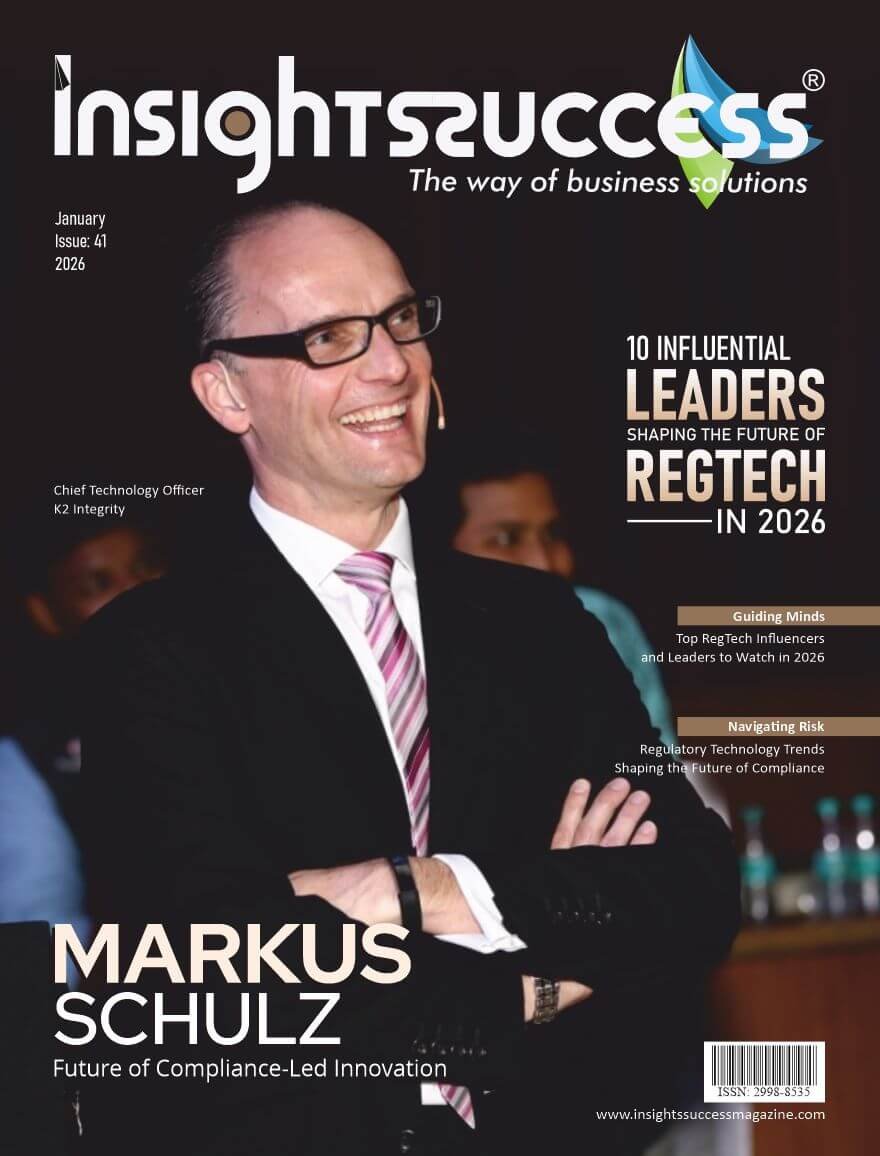
10 Influential Leaders Shaping the Future of RegTech in 2026
10 Influential Leaders Shaping the Future of RegTech in 2026 Markus Schulz exemplifies compliance-led innovation by uniting technology, regulation, and financial services expertise. As CTO at K2 Integrity, he champions compliance by design, data-driven RegTech, and responsible AI. His career reflects a commitment to building transparent, resilient systems that transform compliance into strategic risk intelligence. Quick highlights Quick reads

Markus Schulz: Future of Compliance-Led Innovation
The compliance issue did not appear to be a boardroom concern and RegTech was not an unavoidable worldwide requirement 20 years back, yet Markus Schulz was quietly gaining insights into how the systems think, combining business knowledge with regulatory requirements supported by technology. He began programming as a young boy, developing an intuitive understanding of logic, structure, and the possibilities and limitations of systems that would later define his career at the intersection of technology, finance, and regulation. The initial excitement did not disappear, but rather took a different form. Markus is professionally trained as a banker and entered the financial services sector during the dot-com boom and subsequent bust. After various front-office roles, he was asked to manage the bank’s e-commerce portfolio for the German-speaking markets. It was a time when innovation raced ahead of governance, exposing both the upside and downside, challenges Markus faced firsthand. The early years of his career shaped his belief that relying on either technology and regulation alone was insufficient, and that true progress comes from mastering both together. He made a deliberate transition into senior compliance leadership roles. While holding the posts of Group Money Laundering Reporting Officer and Chief Compliance Officer in various global corporations, he observed how even the best-funded compliance initiatives were undermined by fragmented data, opaque models, and poorly designed systems. He became even more convinced that technology should be built on a foundation of regulatory reality. Today, as Chief Technology Officer at K2 Integrity, he brings the discipline of a practitioner and the vision of a technologist to the development of RegTech solutions that are innovative, transparent, and future proof, rooted in data, informed by regulation, and driven by purpose. From Childhood Coder to Compliance Leader Markus’ relationship with technology began before most people had computers in their homes. He started coding before age 10, developing an intuition of how systems work that would later prove invaluable. Yet his formal training took a different path, he qualified as a banker, setting the stage for a career that would uniquely combine financial services expertise with technological vision. The dot-com era provided his first major proving ground. He led an e-commerce portfolio for German-speaking markets at a global bank during a time when innovation consistently outpaced governance. Those years taught him a lesson he is carrying forward today: understanding both the opportunities and risks of technological advancement within business evolution proves far more valuable than mastering either alone. “I saw firsthand how legacy compliance frameworks and fragmented technologies struggled to keep pace with increasingly sophisticated financial crime, growing data volumes, and rising regulatory expectations across jurisdictions,” he reflects on his transition into compliance leadership. His progression into financial crime prevention was deliberate. He served as Group Money Laundering Reporting Officer (MLRO) and Chief Compliance Officer for global financial institutions, the roles that exposed him to the day-to-day reality of defending against criminal networks with billion-dollar resources. He watched compliance teams drown in alerts generated by systems that produced more noise than insight. He saw institutions invest millions in technologies that failed during regulatory examinations because they were insufficient, incomplete, or couldn’t explain their decision-making processes. This experience crystallized a core conviction: RegTech solutions designed without deep regulatory understanding, as well as banking business and operations insights, miss the mark. Too many vendors build impressive technical capabilities that crumble under regulatory scrutiny because they do not address what regulators evaluate: defensibility, transparency, and operational sustainability, or match bank set-ups and technologies. Compliance by Design At K2 Integrity, Markus champions an approach he calls “compliance by design.” Rather than bolting on governance features after deployment, his teams embed auditability, explainability, and data controls directly into RegTech solutions from inception. “Regulators are not opposed to innovation, but they expect clarity around how decisions are made, what data is used, and how risks are managed,” he explains. His dual perspective as both technologist and former regulator-facing executive shapes every design decision. This philosophy addresses a fundamental tension in financial services: institutions need innovation to combat evolving threats, yet they operate in environments where regulatory missteps carry existential consequences. He resolves this tension by refusing to see it as a tradeoff. Technology designed through a regulatory lens from day one can deliver both innovation and defensibility. K2 Integrity’s differentiation stems directly from this approach. The firm builds solutions using practitioners who have sat in the hot seat, former regulators, MLROs, investigators, and compliance leaders who know what actually happens during examinations. They understand that impressive algorithms matter little if institutions cannot explain them to supervisors. The Data Foundation Markus identifies three fundamental challenges that organizations face when developing RegTech capabilities: data availability, data completeness, and data lineage. Does the organization possess the necessary information? Is that data reliable and comprehensive enough for advanced analytics? Can the firm track and demonstrate that data flows through appropriate processes to achieve the desired outcomes? “This has not changed with AI; if anything, it has become more pronounced. The industry’s rush toward artificial intelligence has only intensified these longstanding data issues,” he observes. The organization takes a data-first approach, building modular SaaS solutions designed to integrate with complex global data environments. The firm prioritizes data quality, lineage, and interoperability, enabling institutions to deploy advanced analytics and AI responsibly while maintaining transparency. When it comes to AI specifically, he maintains clear principles. Data management and governance remain vital, alongside transparent logic that reveals what the machine has done, which data it used, how it was trained, and how it reached its conclusions. While model training often captures attention, he emphasizes that ongoing monitoring, maintenance, and correction are equally important. “At K2 Integrity, we emphasize AI as a decision-support tool rather than a decision-maker,” he states. Human oversight, ongoing monitoring, and model maintenance matter just as much as initial development. Regulators expect institutions to understand and control their models throughout their lifecycle, not just at deployment. AI is not dissimilar to a new junior employee: it requires close oversight initially,

Navigating Risk: Regulatory Technology Trends Shaping the Future of Compliance
The fast-changing business and financial landscape has made compliance increasingly complex and critical. The regulatory systems are becoming increasingly numerous and complex as the governments and international organizations attempt to deal with the risks of financial crime and data privacy. Manual-based traditional compliance techniques and periodic audits are not enough in many organizations. Regulatory technology, commonly known as RegTech, is playing a key role in transforming how firms respond to regulatory demands while maintaining operational agility. A business can gain a competitive advantage by using the latest technologies to meet the changing regulatory requirements, do a better job of risk management, and have a sustainable growth in a time of increasingly tough regulatory challenges. This transformation leads to quicker decision-making process, better transparency, less cost, enhanced governance, resilience and closer governance-stakeholder relationship. AI and Advanced Analytics Implementation of advanced data analytics and artificial intelligence (AI) is one of the most significant tendencies in the regulatory technology. The old compliance systems tend to be confused by large, non-homogeneous data that includes internal records, external market data and regulatory filings. The solution to this dilemma can be found in advanced analytics and AI that allow real time data processing, identification of patterns and predictive insight that is not easily available to human analysts. The AI-based compliance software can identify suspicious activity that could be a sign of fraud, money laundering, and other illegal operations. The ability of natural language processing can also improve compliance systems since it allows interpretation of a complex regulatory text automatically. Through the ability to convert unformatted data into actionable data, organizations can focus on prioritizing regulatory risks and minimize false positive data, and better allocate compliance resources. AI compliance does not simply stop at detection and reporting. Machine learning models can adapt to emerging trends over time and improve their accuracy and sensitivity as they process larger volumes of data. Such flexibility is especially important in areas where the requirements of the regulation change rapidly. The companies that implement such data-driven methods are in a better position to predict the changes in regulations and act on them proactively instead of reactively. Blockchain and Digital Identity Machine learning models can adapt to emerging trends over time and improve their accuracy and sensitivity as they process larger volumes of data. Know Your Customer (KYC), Anti-Money laundering (AML), and transaction monitoring regulatory requirements can also be enhanced by benefit of blockchain-based frameworks that guarantee data integrity and traceability. Blockchain can support shared digital identities that are only authenticated once in Know Your Customer processes and be used by many institutions. This will minimize duplication, decrease the cost of onboarding, and improve customer experience and at the same time uphold high levels of verification. The cross-border compliance is also upheld by shared identity structures especially in the banking, insurance, and capital market industries. In addition to identity, blockchain can simplify regulatory reporting by developing verifiable audit trails which regulators can access safely. Smart contracts can help to automatize compliance checks and issue the alert in case of the condition violation. It is a real-time transparency that decreases the compliance reporting latency and enhances audit readiness. Those institutions that adopt blockchain solutions therefore acquire operational resilience and a better posture of compliance. Blockchain has not been unafraid of obstacles in its use in compliance despite promise. The interoperability of disparate blockchain networks is yet to be addressed, and so is regulatory uncertainty in certain jurisdictions. Cloud Platforms and Integrated Risk Management Cloud computing has been a key facilitator of the contemporary regulatory technology solutions. Cloud-native compliance platforms are more scaled, flexible, and cost-effective than traditional on-premises systems can be. These platforms have a wide scope of compliance practices, including regulation change management or incident reporting and audit workflow coordination. One of the key benefits of cloud-native compliance systems is that it is possible to integrate various risk domains in a single framework. Instead of having to deal with siloed compliance functions, organizations may implement integrated risk management platforms that enable them to have an overall picture of regulatory requirements, internal controls, and risk exposures. Constant monitoring and live reporting are also done via cloud platforms. Automated alerts can be given to compliance teams, monitoring of remediation activities and creation of reports to be provided to internal stakeholders or regulators can be done at a faster and more accurate rate. The scalability of cloud services allows organizations to add and reduce compliance efforts as business needs vary without making huge capital investments. Although adoption of the cloud has operational advantages, there is need to be a keen consideration on the security of data and regulatory considerations on the issue of data residency. The organizations should make sure that the cloud service providers are certified according to high standards of security and data governance is compatible with the relevant privacy legislation. Conclusion The regulatory technology is quickly transforming the manner in which organizations are approaching compliance, making it a cost center instead of a strategic asset. AI offers advanced data analytics for obtaining proper insights and predictive compliance services. Blockchain provides transparent and reliable systems of the digital identity and audit trail. Cloud-native platforms are platforms that integrate compliance and risk management, increase scalability and responsiveness. As regulatory environments become more complex, organizations that adopt RegTech trends are better positioned to respond to compliance requirements efficiently and effectively. Implementation involves investment in technology, good governance as well as teamwork as a way of satisfying compliance requirements. Such organizations have an advantage of balancing the compliance risk and providing an opportunity to innovate and develop. Read Also : Cognitive Pioneers: Intelligence Redefined and the Future of Memory in 2026

Creating Future Leaders Through Purposeful Action with Dr. Yamuna Krishna
Dr. Yamuna Krishna, an education specialist believes that education is the original venture capital. It funds human potential, supports untested talent, and when done right, its returns go far beyond money. They show up as competence, confidence, and character. She did not set out to be a leader, but she wanted to share the life lessons she has learned and help young people in India see the opportunities and responsibilities ahead. Inspired by the values her parents instilled in her, she believes that true leadership comes from caring so deeply about outcomes that one cannot remain confined to a job description. Over the years, Dr. Krishna has worked with thousands of young minds at institutions such as the Institute of Public Enterprise in Hyderabad, Osmania University, and several of Chennai’s most demanding academic environments. While many students were bright and some brilliant, she noticed that practical confidence was rare. The issue was not being smart, but lack of self-belief, purpose and faith that education could enable them to fulfill their dreams. “That realization became my mission,” she mentions. Growing Thinkers Who Create Value Dr. Yamuna Krishna chose education and leadership with a clear purpose: transformation over transmission. For her, teaching is about uncovering students’ deepest capabilities and expanding what is possible. True value appears when hesitant voices gain confidence, confusion becomes clarity, and fear turns into agency. Noticing that systems often measure the easily quantifiable while overlooking critical thinking and leadership, she uses entrepreneurship education to cultivate ownership, risk-taking, and a mindset to create value and lead with conviction. Closing the Execution Gap Higher education faces a stark reality as the world evolves faster than curricula. Students vary in learning capacity, mindset, and background. Many grasp concepts but struggle to apply them, memorizing frameworks without solving real problems, often hindered by fear of failure. Dr. Yamuna Krishna addresses this gap by creating systems that extend learning beyond theory through leadership development, mentoring, case engagement, and entrepreneurship education, promoting problem-solving, value creation, and confidence in uncertainty. Investing in Potential Drawing from finance, Dr. Yamuna Krishna notes that markets often freeze in uncertainty, yet growth never emerges from certainty. Growth occurs when individuals learn to function within uncertainty and step beyond comfort zones, where return is inseparable from risk. Her motivation rests on a firm belief that one conversation or mindset shift can change a life’s trajectory. When a student gains clarity and purpose, it becomes a return no market can match. In difficult times, she believes leadership is essential, a conviction reinforced by her students’ experiences. Education Beyond Comfort and Convention Dr. Yamuna Krishna highlights, “I approach risk like a finance professional would:risk is not a villain; it is information.” The issue is never risk itself, but unpriced risk that is neither understood nor anticipated. She takes calculated risks guided by purpose, impact, timing, and benefits for students and institutions. She evaluates whether value, capability, confidence, and long-term strength are created. For her, playing safe leads to irrelevance, while clarity, self-awareness, supportive networks, and happiness accelerate lasting personal and professional success. Beyond Quick Wins Working across diverse institutions, Dr. Yamuna Krishna learned that real change comes from people, not policies. She leads with empathy, upholding standards while recognizing students and faculty as individuals. Guided by building long-term capability and enhancing institutional integrity, she avoids quick wins, focusing on lasting outcomes, understanding that behaviour is shaped by people, systems, experience, and life goals. Every Interaction Counts For Dr. Yamuna Krishna, the most moving impact comes when students who began uncertain or intimidated return with confidence and say, “Mam, you changed the way I think.” This shift in mindset, not certificates or ranks, is the ultimate metric. She cherishes working with new students each year, witnessing how small changes in thinking can unlock vast possibilities. Every interaction teaches her, and seeing this transformation never fails to amaze her. Calculated, purposeful risk for impact Dr. Yamuna Krishna asserts, “Creativity is not magic. It is routine plus attention and observation.” Her habits include continuous learning, seeing every person and experience as an opportunity to grow; reflective thinking, using self-reflection as a mirror to gain clarity from experience; structured planning, recognizing that excellence requires systems; mentoring conversations, which keep her connected to reality and provide insights into students’ thought processes; and disciplined execution, ensuring ideas are fully realized. She approaches leadership as a craft, refined through repetition, standardization, pattern recognition, and careful evaluation of outcomes. Small Shifts, Vast Possibilities Dr. Yamuna Krishna balances urgent short-term pressures with long-term vision, addressing immediate issues without panic while keeping the bigger picture in mind. She says, “I believe every tiny dot adds to the big picture.” Guided by the principle that small actions build lasting capacity, she helps institutions mature, leaders endure, and future generations develop into resilient, capable, and visionary leaders. Your First Investment: Skill, Integrity, and Courage Dr. Yamuna Krishna advises young leaders who want to make a real difference to understand this: Competence is your first currency. Build it relentlessly. Integrity is your brand. Guard it fiercely. Resilience is your advantage. The world rewards those who don’t quit. Purpose is your compass. Without it, success is noise. Don’t fear failure. Fear stagnation. Think like a value creator, not a job seeker. And finally: don’t wait to become confident before you act. Act. Then confidence will follow. Read Also : Prof. Padmakumar Nair: Empathy, Excellence, and Purposeful Leadership

Where Water Meets Well-Being: The Appeal of Riverfront Homes
The Allure of Waterfront Luxury Few experiences in real estate capture the imagination like waterfront living. The gentle rhythm of flowing water, expansive views, and a sense of openness create a lifestyle that blends serenity with prestige. Properties along rivers and waterfronts are not only visually captivating but also among the most sought-after investments, combining natural beauty with long-term value. Modern urban developers are increasingly recognizing that access to water transforms a residence into more than a home — it becomes a destination, a sanctuary, and a statement of refined living. Waterfront luxury is as much about experience as it is about property. Lifestyle Beyond the Ordinary Living by the water offers a unique set of advantages that resonate with high-end buyers. Residents enjoy recreational opportunities such as kayaking, jogging along landscaped riverwalks, or simply unwinding to the soothing sounds of flowing water. Outdoor living is naturally integrated, with terraces, balconies, and lounges designed to maximize panoramic views. Waterfront homes also cultivate a sense of community and exclusivity. Shared access to private promenades, landscaped greens, and communal docks creates an environment where tranquility and social engagement coexist seamlessly. Narra Residences: Elegance Meets Nature Narra Residences exemplifies the potential of riverside luxury. Situated to maximize natural vistas, its architecture frames the river as a living artwork, visible from every key vantage point. Expansive windows, open layouts, and outdoor terraces ensure that water is never just a backdrop — it is central to daily living. The design prioritizes both privacy and connection. Lush green spaces along the river provide quiet retreats, while communal lounges and dining areas encourage interaction in an atmosphere of understated sophistication. Narra Residences proves that riverside living can harmonize lifestyle, leisure, and lasting property value. The Investment Advantage of Waterfront Homes Waterfront properties consistently outperform other real estate assets in both desirability and appreciation. Limited supply, scenic vistas, and proximity to urban centers create a combination of scarcity and convenience that appeals to high-end buyers and investors alike. Beyond their aesthetic appeal, these properties often command premium rental yields. Seasonal and long-term renters are drawn to the exclusivity, scenery, and access to outdoor amenities. Investors recognize that these characteristics translate into consistent demand and long-term financial resilience. River Modern: Urban Sophistication on the Water River Modern takes waterfront living to a metropolitan level, integrating the tranquility of riverside views with urban convenience. Its strategic location offers easy access to city amenities while maintaining the peaceful ambiance of a riverfront setting. Architectural choices emphasize openness and flow, allowing natural light and river vistas to permeate living spaces. Thoughtfully designed terraces, infinity-edge pools, and landscaped walkways enhance the connection to nature, ensuring residents experience the restorative qualities of water every day. River Modern embodies the ideal blend of modern urban living and natural serenity. Wellness and Tranquility by Design Living beside water is not only visually appealing — it has proven benefits for mental and physical wellness. Studies show that proximity to water reduces stress, improves focus, and fosters a sense of balance. Luxury riverside developments leverage these principles through integrated outdoor amenities, green spaces, and access to recreational areas. This focus on wellness elevates the resident experience. In a world where urban life can be overwhelming, a riverfront residence becomes a retreat — a place to recharge, socialize, and enjoy nature without leaving the city. Waterfront Living as a Legacy The combination of beauty, lifestyle, and long-term value makes riverside properties an enduring symbol of prestige. Developments like Narra Residences and River Modern set the standard, demonstrating that waterfront living is not a fleeting trend but a lasting investment in quality of life. For discerning buyers, a riverfront home represents more than location; it embodies a philosophy of living — where elegance, nature, and urban sophistication coexist. In these residences, the river is both a companion and a feature, enriching daily life and reinforcing the lasting appeal of modern luxury real estate. Read Also : Staying Relevant as Markets Evolve

UK Startup Synthesia Raises $200 Million, Valuation Hits $4 Billion
Prime Highlights: British tech startup Synthesia raises $200 million, almost doubling its 2025 valuation to $4 billion. The company is growing rapidly, creating jobs and expanding its interactive video platform for businesses. Key Facts: Synthesia’s annual revenue has reached $150 million, with projections to surpass $200 million in 2026. In 2025, Europe’s tech startups raised $21.4 billion, while U.S. firms received even larger investments. Background: British tech startup Synthesia raised $200 million, reaching a $4 billion value, almost double its 2025 worth. The funding round was led by Alphabet’s GV, with support from Nvidia’s NVentures, Accel, NEA, Evantic, Hedosophia, and Air Street Capital. The company will use the money to grow its platform and offer better services to businesses worldwide. Founded in 2017, Synthesia makes tools that help companies create interactive videos for training, communication, and sharing knowledge. Victor Riparbelli, CEO and co-founder of Synthesia, said the funding will help the company scale its vision of making content creation more efficient and impactful for organizations. “We are witnessing a significant shift in how companies communicate and share knowledge. Our tools allow employees to explore scenarios interactively and receive personalized explanations, which improves engagement and learning outcomes,” he added. As part of the round, Synthesia will also facilitate an employee secondary share sale in partnership with NASDAQ at the $4 billion valuation. The company is growing fast as tech startups attract more investment. In 2025, Europe’s startups raised $21.4 billion, with U.S. firms receiving even more. Synthesia has also attracted attention in the UK. London Mayor Sadiq Khan and former Tech Minister Peter Kyle attended the opening of the company’s new office. UK Chancellor Rachel Reeves called it “a UK success story, creating jobs and opportunities and showing how local innovation can drive growth.” With yearly revenue at $150 million and expected to pass $200 million in 2026, Synthesia is becoming a leading company in enterprise video and content solutions. Read Also: Waymo Launches Paid Robotaxi Service in Miami, Expanding U.S. Driverless Lead

Inspirational Icons to Watch in 2026
Inspirational Icons to Watch in 2026 This edition is dedicated to outstanding individuals whose journeys, values, and purpose-driven leadership inspire progress—recognized for influencing change, empowering others, and creating lasting impact across industries and communities. Digital Link Quick highlights Quick reads