






Beyond the Horizon: Terje Kristiansen’s Voyage of Purpose, Innovation and Oceanic Leadership
The international maritime industry, based on the global oceanic currents for its survival and success, had been transformed in every other way except for being completely transparent. In the words of Terje Kristiansen, Chief Executive Officer (CEO) of Shipnet, over the past two decades, he was privileged to witness the remarkable technological evolution of the maritime industry. “The progress from the initial era of rudimentary satellite communications to advanced AI-powered route optimization of today has been nothing short of extraordinary. Yet, as we stand on the brink of another transformative era, it’s clear that the next wave of change isn’t about hardware or software, it’s about transparency,” he adds. According to Terje, the shipping industry has struggled with a very limited vision since its inception when it came to vital information such as fuel usage, vessel emissions, and environmental impact. The data was there. However, much of it remained locked away in ship logbooks or siloed within proprietary systems, making it difficult to identify inefficiencies or fully grasp the ecological footprint of maritime trade. “But this is changing as we speak. A new wave of forward-thinking shipowners is dismantling these barriers and ushering in a new era—one defined by bold transparency and accountability in environmental performance,” says Terje Kristiansen. From Curiosity to Command: The Genesis of a Maritime Tech Leader For Terje Kristiansen, the tide that carried him into the world of maritime technology wasn’t a sudden surge—it was a current he had been quietly following since his youth. “I had an early interest in shipping,” he recalls, “but equally strong was my fascination with computers and software.” That dual passion created a natural intersection for his career to flourish—one where ocean trade met digital innovation. In 1998, that convergence became a reality when he joined Shipnet, a then-burgeoning provider of maritime software solutions. Yet, while technology brought him into the industry, it was people—and particularly leadership—that would shape the kind of leader he would become. “I didn’t realize it at the time,” Terje admits, “but my first Sales Director at Shipnet left a lasting impact on how I lead today.” That early mentor didn’t rely on pressure or intimidation to drive results. Instead, he used empowerment and coaching, encouraging his team to aim high while making work an environment of inspiration rather than anxiety. “He was always driving targets,” Terje remembers, “but in a way that made you actually look forward to coming in each day.” That approach—values-driven, growth-minded, and deeply human—laid the foundation for Terje’s leadership philosophy. It’s one he continues to uphold as Shipnet pushes the boundaries of what maritime software can achieve in the modern era. Navigating Uncertainty: Leadership Shaped by the Sea The global shipping world is ever-shifting. Here, uncertainty isn’t an exception—it’s a constant. The ocean, vast and untamed, mirrors the business environment Terje Kristiansen has come to master: full of opportunities, but never short on surprises. As the CEO of Shipnet, he doesn’t just acknowledge the unpredictability of maritime commerce—he embraces it as a crucible for resilience and leadership. “The dynamics of the shipping industry indirectly help build your resilience,” Terje explains. “Things can change fast.” From geopolitical shocks to supply chain bottlenecks and regulatory overhauls, volatility is part of the daily rhythm. And yet, over the course of decades in the industry, he has come to see this not as a barrier, but as a forge—one that tempers decision-making with experience, perspective, and strategic patience. “You learn to make better decisions as your experience deepens,” he reflects. “It’s about gathering enough information, asking the right questions, and learning when to act decisively—or when to wait.” For Terje Kristiansen, decision-making isn’t about speed for its own sake. It’s about timing, clarity, and alignment with a long-term vision that doesn’t sway with every wave. But he’s the first to admit that steering the ship of Shipnet alone would be impossible. “No CEO stands at the helm alone,” he says. “You are only ever as good as your team.” For Terje Kristiansen, assembling a strong leadership crew has been one of his most vital investments. Around him are individuals who bring not just skills, but insight and accountability—partners in navigating the crosscurrents of technology, client needs, and industry transformation. It’s this collective strength that allows Shipnet to stay agile while never losing sight of its long-term course. In many ways, Terje Kristiansen’s leadership style is much like navigating the sea: alert, adaptable, and grounded by purpose. He listens closely to shifting winds, but he never lets them determine the destination. The journey may be unpredictable, but with the right crew, steady hands, and a clear vision, the course remains firm. Charting Innovation with Purpose: Terje Kristiansen’s Vision for Sustainable Maritime Tech As global conversations around sustainability grow louder, the maritime world finds itself at a decisive crossroads. For Terje Kristiansen, this isn’t just a matter of corporate responsibility—it’s a matter of enduring relevance. The future of shipping lies at the intersection of sustainability and technology, and Terje Kristiansen is committed to ensuring Shipnet not only keeps pace but leads the charge. “Innovation means nothing if it doesn’t create value for the customer,” Terje says with quiet conviction. That belief is deeply embedded in the company’s DNA. While buzzwords like ‘green tech’ and ‘digital transformation’ float freely across the industry, Terje takes a more grounded approach: pragmatic, people-focused, and impact-driven. His strategy begins, once again, with his team. “It’s all about the people,” he emphasizes. “Having the right individuals in the right roles in the senior leadership team is what truly supports forward momentum.” For Terje Kristiansen, innovation isn’t the result of flashy one-off projects; it’s a steady process powered by aligned minds who understand both technology and market reality. That alignment is critical when dealing with the complexities of ecological responsibility. Whether it’s integrating emission-tracking software, enhancing fuel optimization tools, or enabling smarter fleet performance management, Shipnet’s mission is clear: reduce the ecological footprint of global shipping, without increasing the operational burden on customers.

Thriving in the Fast Lane of Innovation
Adaptive Leadership We are living in the age of change. New apps, ideas, and discoveries are redefining our way of life. To succeed today, if you are an entrepreneur or pursuing a personal dream, creating new ideas and adapting is very crucial. Why Fresh Ideas are a Must? Different thinking turns problems into possibilities. It carries us forward, consider the discovery of the wheel, artificial intelligence, and solar energy, for example. The best news about new thinking is that it starts with something basic: curiosity. Someone just says, What if? Now, it’s less about inventing the next gadgets or software. It’s more about the way we approach solving and how we relate to each other. Businesses that embrace new thinking don’t just survive, but flourish. They transform their markets, establish trends, and challenge others. The Mindset for New Thinking It used to be that success was simply about holding on to what you know. You build something important and you hold on to it. Today, standing still can have you fall behind. If you’re going to prosper today, you have to move with the flow of change, even if it’s imperfect. It is all about velocity and grit. It is about trying, failing, learning, and trying again—the faster and smarter each time. The most creative people are not people who never fail; they are people who continue to attempt. They see problems as opportunities to learn. Where New Thinking Comes From? Although you may be able to conceptualize how machines generate new concepts, the reality is that human beings do. It starts with discussions, with discontentment producing a new concept, or with someone trying to make things better. Every great idea has a genesis story—a little bit of love, a desire to do something else, or guts to be different. And the same with the greatest companies. They care for their people. They listen, they work together, and they let their people dream and try things out. People do their best when they feel appreciated. Tech as a Tool Technology excels at inventing new ideas, but it’s only half. AI and data can be beneficial but will never replace imagination or understanding people. Technology works best when guided by humans. Think of a car engine: it requires a driver to take it out. New ideas arrive when tech and human team up to make things worth it and meaningful. Working Together is Key You don’t come up with new ideas on your own. Any decent thought is supported by a team of people. You have different opinions and take flight when you are in groups. This is because people who are different in terms of background come together and unite hands to work. Start-ups are one example. They move fast, try things out, and learn from experience. Big companies can do the same by sharing freely and collaborating. Ideas will get airborne when walls are knocked down. Continuous learning Change is happening at a speed to rely on what you know presently. Learning on a regular basis is therefore required in order to accommodate new thinking. Read on, challenge, and be curious. Being open to counsel, being humble, and seeking ways to get better are all part of the learning process. Deciding to be curious can initiate inquiry instead of remaining familiar. New Thinking With a Purpose Having something concrete to work towards is required to new thinking. In the future, it should mean making it better for everyone. Businesses nowadays understand that the imperative to expand should be fair. If it is clean energy, fresh concepts of the time are important. For the simple reason that it’s not just about being first but making a difference to everyone. Doing Well in a Fast World To be successful in the world today is not about staying up, but about getting ahead with a plan. It is about being willing to question the way it is done, being imaginative enough to dream of something else, and being willing to go along the twists and turns. Desiring to learn, experiment, and try again is key for new thinking. It makes us more human in a changing world. The future is for those who ask the question What if? and then go out to find the answer. So continue, continue dreaming, and let new ideas keep flowing. Although new thinking will not be easy, it will earn dividends richly.
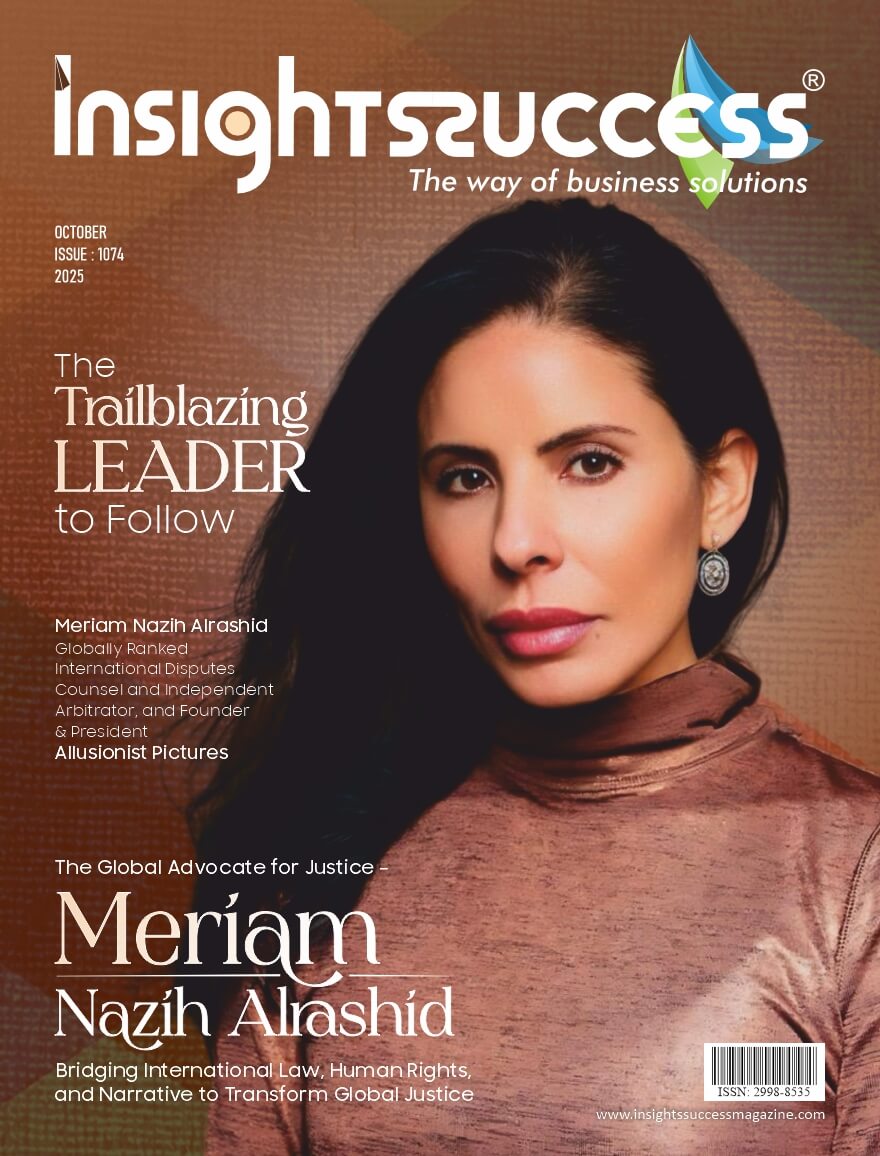
The Trailblazing Leader to Follow
The Trailblazing Leader to Follow Few legal minds operate with the scope, strategic vision, and moral authority of Meriam Nazih Alrashid. A Globally Ranked International Disputes Counsel and Independent Arbitrator, Meriam’s career stands as a blueprint for achieving excellence and integrity at the highest levels of international justice. Quick highlights

The Global Advocate for Justice – Meriam Nazih Alrashid: Bridging International Law, Human Rights, and Narrative to Transform Global Justice
Few legal minds operate with the scope, strategic vision, and moral authority of Meriam Nazih Alrashid. As a Globally Ranked International Disputes Counsel and Independent Arbitrator, her career is a blueprint for achieving the pinnacle of international justice. For nearly 23 years, Meriam navigated the highest echelons of ‘big law,’ ultimately serving as Global Co-Chair of International Arbitration and Co-Head of the Latin America Arbitration Practice Group at Eversheds Sutherland US LLP. Meriam’s mission is clear: to shape the landscape of international justice through strategic dispute resolution. The Chambers attorney ranking service recognizes her and her broad experience, which includes complex international investment and commercial arbitrations throughout the world and ongoing work in the MENA, Central Asia, and Central & South America regions. What sets Meriam apart is her profound commitment to Human Rights (BHR). Her work extends beyond corporate disputes to advising Sovereign States and civil society NGOs on post-conflict peace negotiations, mediation of separatist organizations, and the adjudication of atrocity crimes, including advocating for legal accountability for crimes against the Rohingya population in Myanmar. Her dual commitment is especially illustrated through her work as Founder and President of Allusionist Pictures, which creates films around legal and social justice themes. Meriam is a real innovator, combining the rigors of international law and the power of storytelling to link issues of corporate governance to the protection of human dignity globally. Purpose, Courage, and the Transformative Power of Truth Meriam’s vastly diverse career, spanning high-stakes arbitration, human rights advocacy, and film production, is tethered by one unchanging value: purpose. Her foundation was forged in a profound duality, having been raised between Utah and Baghdad during the tumultuous Iran-Iraq War. This upbringing instilled two urgent, early lessons: “the urgency of justice, and the need to tell stories that matter.” Across every pursuit, the throughline has been defined by integrity and courage, rooted in a deep belief in the transformative power of truth. For Meriam, the perceived chasm between the legal and creative worlds is an illusion. She sees them as deeply connected forces, both used to “shape narratives that impact lives”—whether those narratives are presented in a formal legal brief or on a cinema screen. A Lived International Law: The Pursuit of Global Accountability Her commitment to international law was less of a traditional academic choice and more of a “lived” experience. Her childhood exposed her to the challenging intersection of two vastly different systems: the stability of Western academia and the complex reality of Middle Eastern geopolitics. After beginning her career in antitrust litigation, Meriam felt compelled to seek a space where law could directly engage with global accountability. This realization propelled her to pursue a Master’s in International and Comparative Law at George Washington University—a demanding period where she worked full-time and taught simultaneously. This formative experience cemented her conviction, solidifying her commitment to leveraging international dispute resolution, human rights, and arbitration as powerful vehicles for systemic change. She was determined to use her meticulous legal intellect not just to solve disputes but to fundamentally change the systems that create them. Success as Systemic Change Meriam’s definition of success transcends typical legal metrics, focusing instead on her impact on the wider structure of global justice. For her, success is not measured by “headlines or accolades,” but by the deliberate effort to challenge enduring systemic flaws. She defines her mission as the dedication to “outlasting what’s wrong,” viewing her entire career as a mechanism for dismantling the unjust status quo. This commitment manifests in her active mentorship and advocacy, where success means “leaving a door open for someone who otherwise wouldn’t be let in”—specifically for women of color aspiring to law. Whether she is advising sovereign states or guiding the next generation, her objective remains constant: “using whatever power I have to create space, shift systems, and never let injustice go unchallenged.” Her success is therefore measured by the enduring positive change she enacts, not the fleeting recognition she receives. Meticulousness Grounded in Human Cost The traits for which Meriam is consistently praised—being a “standout lawyer,” a “formidable litigator,” and “very meticulous”—are not just professional skills; they are expressions of a deep sense of responsibility. For Meriam, “meticulousness is not just about detail, it’s about care.” Clients, whether they are governments, investors, or NGOs, come to her in moments of profound complexity, needing more than rote legal advice. They require clarity, strategy, and cultural fluency. Her leadership is therefore grounded in deep listening and an unwavering discipline. Critically, her lived experience shaped an indelible perspective that separates her practice from others. Having worked and advised in high-conflict areas, she understands that every complex dispute has a human dimension, ensuring she “never forgets the human cost behind each dispute,” because she knows “that every decision has weight.” The Art of Cross-Cultural Diplomacy Meriam’s extensive experience advising in complex disputes across the MENA, Central Asia, and the Americas is rooted in her unique cross-cultural fluency. Having navigated the profound duality of Arab and American cultures from an early age, she understands that effective dispute resolution requires more than legal expertise; it demands “respect, humility, and fluency in nuance.” She stresses that the crucial step is cultural translation, which applies not just to language, but to understanding deep-seated values, norms, and expectations. Meriam champions a diplomatic approach, asserting: “You can’t impose one model of justice onto another cultural context and expect resolution.” The truly fair and enduring outcomes are achieved when she can “meet parties where they are,” building bridges rooted in mutual dignity. This blend of meticulous legal strategy and deep cultural empathy is, in her view, the definition of effective global diplomacy. Balancing Law with Ethical Accountability The global legal landscape is undergoing a powerful shift, moving beyond a simple focus on procedural rules and treaties. Meriam has actively evolved her practice to address this, recognizing a growing demand for legal experts who are also consciously aware of Environmental, Social, and Governance (ESG) factors. Her work increasingly involves the difficult but

The Most Impactful Executive Coaches to Follow
The Most Impactful Executive Coaches to Follow This edition honors those remarkable professionals who are transforming leadership from the inside out. These visionary coaches go beyond performance metrics—they cultivate emotional intelligence, resilience, and authentic connection. Through personalized strategies, deep introspection, and actionable frameworks, they empower executives to navigate disruption, drive innovation, and lead with empathy in an increasingly complex business world. Quick highlights

The Transformational Catalyst – Hannah Githuki: Coaching Leaders to Build Authentic Brands of Influence, Impact, and Income—From the Inside Out
To walk your own way, first, you need to make your own path. Your life is yours to lead and to shape a future with the choices you make in the present and the decisions you take today. The final outcome will be based on what kind of chances you favour. Good ones will succeed in your triumph. Bad ones will lead you into the ends you’ve never wished for. However, how will you know in advance which one of your judgments is good, which ones are bad, and those crucial ones that are worse? Now, you know, you definitely need a coach who will guide you like a friend. Meet Hannah Githuki, Executive Coach of Insideout Development Ltd Africa, your best bet. She has defined a specific and vital role: helping professionals create personal brands of influence, impact, and income. She understands that a strong professional profile is the engine of modern success, saying that ‘overcoming a bad first impression is the first big hurdle.’ The Brand Architect of Influence Hannah’s success is not measured by a single victory, but by sustained trust—a fact underscored by the mantra: “Keeping clients coming back is the success behind Hannah’s coaching and training.” A passionate Corporate Business Trainer and L&D expert, she leverages her expertise to help self-driven individuals and companies across diverse industries. Her method is dynamic and holistic: taking years-old ‘skeleton business profiles’ and transforming them into ‘fantastic marketing tools.’ Her ultimate goal is strategic visibility. By presenting clients online in unusual yet strategic ways, she sets them apart from the competition. Hannah’s leadership philosophy fosters multi-functional collaboration, ensuring that the brand she builds is fully alive, authentically represented, and positioned for sustainable growth. She is, without question, one of the most impactful executive coaches to follow, demonstrating that true corporate training is about turning potential into enduring professional power. From Corporate Grind to Profound Truth Before establishing herself as a transformative executive coach, Hannah built a formidable career within the corporate ecosystem, gaining invaluable exposure across diverse, high-stakes sectors, including media at MultiChoice, retail, and investment banking. While those years provided deep insight into the machinery of global business, they also revealed a profound and often disheartening truth. She observed countless professionals, many with immense potential, who were simply ‘clocking in and out of their jobs,’ moving through the corporate motions without experiencing true fulfillment or purpose. Hannah recognized this pervasive lack of inner drive as a critical limiter of both personal careers and organizational growth. She realized her true calling lay not in managing corporate systems, but in transforming human potential, leading to her pursuit of work that actively ‘sparked growth from within.’ Insideout: The Philosophy of Authentic Growth This pivotal realization became the sole inspiration for Insideout Development Ltd Africa. The company’s name was deliberately chosen to reflect her guiding philosophy: the strong belief that “true transformation begins from the Inside Out.” Hannah founded the consultancy to move beyond surface-level fixes, focusing instead on helping people and businesses grow holistically and authentically. This mission is encapsulated in the company’s powerful, three-part tagline: “We train. We coach. We empower.” Today, Insideout Development systematically empowers clients to build robust brands—not just of visibility, but of genuine influence, impact, and income. This purposeful shift from clocking hours to building internal capability defines Hannah’s legacy, establishing her as a vital architect of authentic professional power across Africa. Intentional Transformation: The DARE and 3-I Frameworks Hannah’s coaching philosophy is centered around intentional transformation, categorically rejecting the pursuit of surface-level success. She insists that leaders and businesses must pursue growth that is deeply “aligned with their values, vision, and authentic brand.” This pursuit of authenticity forms the foundation of her approach. This core belief led her to develop two powerful, interconnected systems. The first is the 3-I Brand Framework, a systematic process that guides clients in crafting professional identities designed to drive Influence, Impact, and Income. This framework ensures the brand is not merely visible but financially and strategically viable. To support the internal work required for this holistic change, she also created the action-oriented DARE Framework. DARE is a structured roadmap urging professionals to: Discover themselves and their world through exposure; Aspire by defining what their highest vision looks like; Render this vision using practical tools like vision boards; and finally, Execute by committing to disciplined, sustained action. This dual approach ensures both strategic clarity and the tactical commitment necessary for success, embodying her personal mission in every engagement: “to leave people better than I found them.” Beyond Appearance: Strategies for Lasting Impact Hannah recognizes the undeniable power of first impressions, which are often irreversible. However, she teaches clients that “lasting impact is never built on appearances alone,” insisting that it must be constructed on a strong foundation of substance, consistency, and alignment. To help professionals move beyond surface-level presentation and build a brand that endures, she deploys four core strategies: *Alignment of Story & Strategy: Hannah meticulously ensures that a leader’s personal or corporate narrative perfectly ‘matches what they deliver.’ She views this congruence as the immediate mechanism for establishing unshakeable trust. *Clarity of Value: She forces her clients to move past generic descriptors, pushing them to define, in precise and compelling language, why someone should choose them or their firm over any other option in the marketplace. *Embodied Confidence: Hannah emphasizes that true executive presence stems not from rehearsed lines but from deep, inner conviction. Through focused internal work, her clients learn to enter any professional arena with an unshakable sense of identity. *Relational Equity: She guides her clients to shift their focus from transactional interactions to building meaningful relationships. This ensures that a client’s reputation precedes them based on the ‘value they consistently add,’ rather than the authority of their title. For Hannah, the redemption of a poor first impression is demanding but simple: it is only overturned by ‘sustained authenticity and excellence.’ This commitment to building deep, consistent quality is what solidifies her status as one of

Transform Your Creativity: How Image and Text-to-Video AI Tools Are Revolutionizing Content Creation
In today’s fast-moving digital world, visuals dominate every platform. From YouTube shorts to Instagram reels, people crave short, engaging, and visually rich videos. But what if you could turn your images and text into videos automatically—without needing expensive software or editing skills? Thanks to powerful AI video generation tools, that’s now possible. The Rise of AI Video Creation Artificial Intelligence has completely changed how creators, marketers, and brands produce content. In the past, making a professional video required cameras, scripts, editors, and hours of effort. Now, AI-based video generators do it all in minutes. These advanced tools analyze your input—whether an image, text, or script—and generate high-quality videos that look like they were edited by professionals. The results are not only fast but also engaging and tailored to your needs. Turn Images into Stunning Videos with Image to Video AI Imagine uploading a few photos and watching them come alive in a cinematic video. That’s exactly what you can do with image to video AI technology. This innovative tool automatically converts static images into dynamic motion videos. You can add animations, transitions, music, and effects—all generated intelligently by AI. It’s ideal for photographers, digital marketers, influencers, and even e-commerce sellers who want to showcase products in a creative, motion-based format. Some standout features include: Instant Video Creation: Upload your images and get a video in seconds. AI-Powered Motion Effects: The tool automatically adds pan, zoom, and transition effects. Custom Background Music: Enhance engagement with AI-selected audio tracks. No Editing Skills Required: A simple interface that anyone can use. With image-to-video conversion, you can bring static visuals to life, making them far more eye-catching and shareable on platforms like Instagram, TikTok, and Facebook. Create Videos from Text with AI Text to Video Generator Free Another groundbreaking innovation is the AI text to video generator free. This tool allows users to input written text—like blog posts, marketing copy, or social captions—and automatically turns it into a full video with voiceovers, visuals, and transitions. Here’s how it works: Enter Your Script or Text: Paste your text into the generator. Choose a Style: Select from templates such as educational, promotional, or social media. AI Converts Text to Video: The system automatically selects relevant visuals, adds narration, and synchronizes everything perfectly. It’s an incredible time-saver for digital marketers, YouTubers, and content creators. Instead of spending hours editing, you can publish dozens of videos in minutes. Why These AI Tools Are Perfect for SEO and Social Media AI video generators are not just creative tools—they’re also powerful SEO assets. Videos improve user engagement, increase time on page, and help websites rank higher on Google. Using tools like Vidnoz’s image and text-to-video AI platforms can help you: Boost organic traffic by adding videos to your website and blogs. Increase conversion rates with eye-catching visuals. Enhance brand visibility across multiple social platforms. Produce content at scale with minimal cost and time. Final Thoughts AI video generation is reshaping the future of digital marketing and creative storytelling. Whether you’re transforming images into animated clips or converting text into videos, these AI-powered solutions from Vidnoz make content creation effortless and impactful. If you’re ready to upgrade your creative strategy, start exploring these tools today and experience how artificial intelligence turns your ideas into professional-quality videos in minutes.
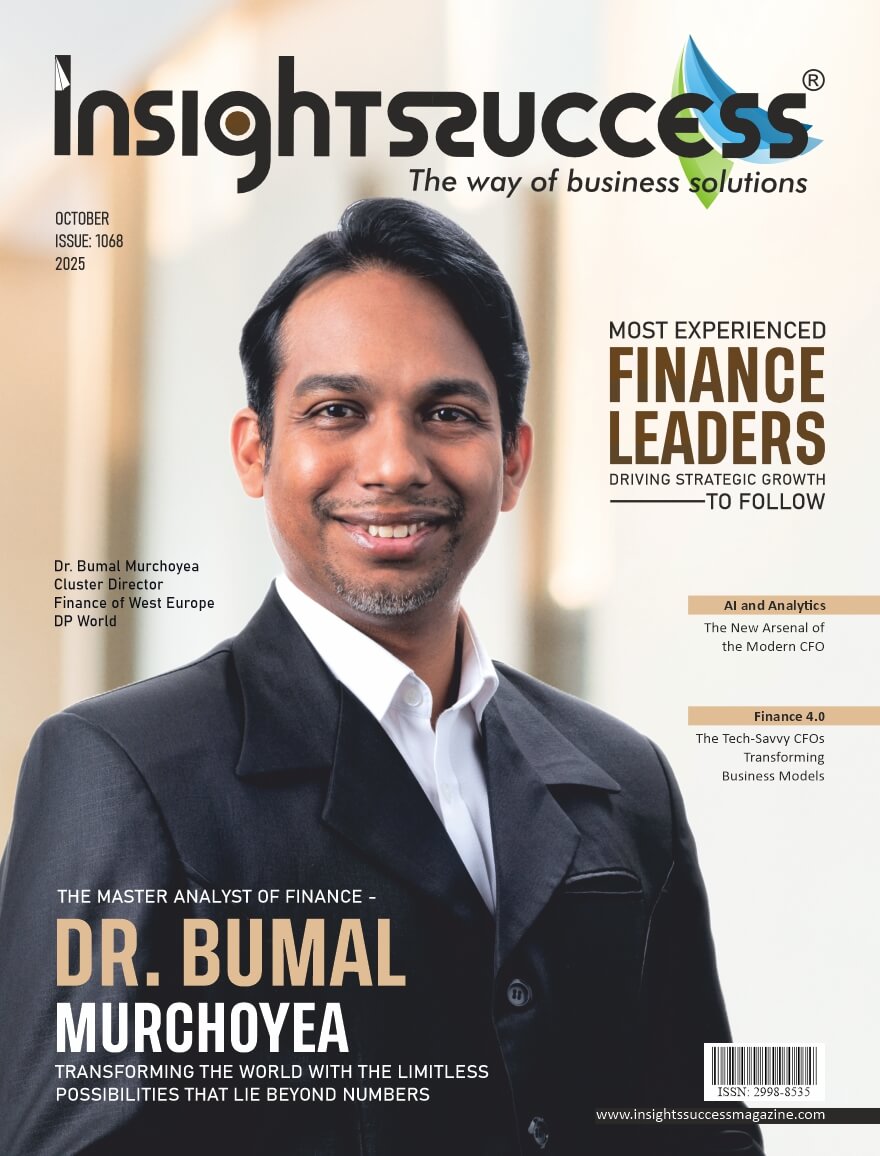
Most Experienced Finance Leaders Driving Strategic Growth to Follow
Most Experienced Finance Leaders Driving Strategic Growth to Follow This edition highlights the most experienced finance leaders who are shaping the future of business through strategic growth, innovative financial management, and transformative leadership. Discover insights from industry veterans who drive profitability, inspire teams, and navigate complex markets with expertise, setting benchmarks for excellence in the global financial landscape. Quick highlights Quick reads

The Master Analyst of Finance – Dr. Bumal Murchoyea: Transforming the World with the Limitless Possibilities That Lie Beyond Numbers
The realm of finance is easy if you learn to look beyond the numbers. Numbers do tell a story to every adept listener like Dr. Bumal Murchoyea, Cluster Director Finance of West Europe, at DP World. Especially, the world of global logistics is a high-speed, high-stakes domain where billions of dollars hang on the seamless movement of goods across oceans and continents. For over two decades, Dr. Bumal has been at the epicenter of this financial maelstrom. He has not been functioning in just one role during the last three years and five months at this leading company in the field. Instead, it is a demanding, full-scope experience that he occupied leadership roles in Finance, Projects, Compliance, and Legal. This expansive, action-oriented perspective across a variety of roles developed a unique and critical capability to manage potential solutions across all challenges, from a minor budget discrepancy to the ongoing and complex legal issue. Today, Dr. Bumal Murchoyea has a full understanding of the numbers, the contracts, the regulations, and operational risks behind every cargo container and the expansion of a port. Learning the Language of Business At the beginning of it all, what inspired Dr. Bumal Murchoyea most was the desire to truly understand how businesses create value — not only from a financial standpoint but from an operational, strategic, and human one. “Early in my career, I realized that finance is more than numbers; it’s the language of the business,” he shares. But to speak it fluently, one must understand the ecosystem around it — audit teaches discipline and control, compliance brings governance, legal sharpens judgment, and finance drives performance. Pursuing a multidimensional path wasn’t accidental; it was intentional. Each discipline added a new lens through which Dr. Bumal Murchoyea could view decision-making. Over time, this breadth helped him connect the dots between strategy, people, and execution. This ability became essential as he moved into leadership roles within logistics and freight forwarding, where the environment is fast-moving, complex, and deeply interlinked. Today, he sees this diversity of experience as a real strength. “It allows me to balance ambition with accountability — ensuring that growth, innovation, and governance move together, not in isolation,” he adds. Perfecting the Integrated Symphony Revealing his evolving personality, Dr. Bumal Murchoyea says that finance taught him the importance of precision, performance, and value creation. Compliance, on the other hand, taught him the importance of integrity, accountability, and trust. Together, they’ve shaped a leadership philosophy built on clarity, consistency, and credibility. In finance, every decision has an impact — on people, on results, on reputation. In compliance, every action has a consequence. Balancing these two worlds made him realize that great leadership is not about control, it’s about alignment: aligning strategy with ethics, ambition with discipline, and innovation with governance. In his current role, Dr. Bumal Murchoyea tries to instill this mindset across teams — empowering people to make bold, data-driven decisions while maintaining a strong sense of responsibility. Growth is meaningless if it’s not sustainable and governed properly. “My goal is to build a culture where financial excellence and ethical leadership are not trade-offs, but complementary forces driving long-term success.” At DP World, Dr. Bumal Murchoyea and his team’s financial strategy is not designed in isolation — it’s deeply integrated with the Group’s vision to enable smarter trade and create resilient supply chains. As Cluster Director Finance, his role is to ensure that every financial decision — from budgeting and investment to performance management — supports that mission across all their freight forwarding and logistics operations in Europe. Practically, this means translating global ambitions into measurable local actions: improving gross profit margins, driving productivity, and ensuring that their growth — whether through new branches, acquisitions like Herport, or product diversification — is both profitable and sustainable. They achieve this alignment through strong governance, transparent reporting, and continuous dialogue between finance and operations. The objective is simple: to ensure that their regional strategies not only deliver local performance but also contribute meaningfully to DP World’s global transformation into an integrated logistics powerhouse. Tech-Powered Predictive Intelligence Also, according to Dr. Bumal Murchoyea, AI and automation are no longer futuristic tools — “they are reshaping how we lead, decide, and perform today.” In finance and freight forwarding, data used to describe the past; now, it predicts the future. With the integration of AI, his teams are moving from reactive reporting to predictive intelligence — forecasting freight rates, identifying cost leakages, and improving productivity before issues even surface. For example, automation has streamlined month-end closings and data consolidation across multiple countries, freeing people to focus on insights rather than manual reconciliation. AI-driven analytics now allows them to simulate scenarios, assess profitability per trade lane, and make faster, more informed decisions that directly impact gross profit and EBIT performance. Ultimately, technology amplifies human judgment. Dr. Bumal Murchoyea’s philosophy is to combine human intuition with machine precision — using AI not to replace decision-making, but to enhance it, enabling finance to act as a strategic partner to the business rather than just a reporting function. Analytics―the Backbone of Decision-making He further believes that analytics is the backbone of modern decision-making. In today’s fast-moving business environment, data allows leaders to move from instinct-based to intelligence-based decisions. He uses analytics not only to measure performance but to anticipate change — identifying trends, inefficiencies, and untapped opportunities before they become visible on the P&L. “By integrating operational and financial data, we can assess profitability by customer, product, or route in real time,” adds Dr. Bumal. This level of visibility highlights where margins are eroding, where productivity is strong, and where resources need to be redeployed. It also allows them to simulate “what-if” scenarios — for example, testing the impact of rate fluctuations, cost movements, or volume shifts on their bottom line before taking action. For Dr. Bumal, analytics is not about building more reports; it’s about building clarity. It gives leaders the confidence to make faster, fact-based decisions and empowers teams to act

The New Arsenal of the Modern CFO
AI and Analytics The world of finance has evolved. CFOs today more than just crunch numbers. They are strategists, embracing technology and influencing how their companies grow and discover their purpose. CFOs today juggle planning, technology, and human capabilities simultaneously while keeping watch over the bottom line. This is the way that leaders in finance are redefining the CFO role: From Numbers to Strategy The CFO’s role is not simply to make the company cheaper or make the books balance. They’re in the room with the other executives, helping put together the company’s strategy and filling in the gap between financial acumen and its objectives. Today’s CFOs chart the company’s course, drive growth, and oversee risk. They interpret finance data and tell the company what it means about its future and how well it can grow. Next, the CFO assists in planning, striking the balance between a watchful eye for detail and vision on a global scale. Data-Driven Leadership Decisions today are based on data. CFOs must be skilled at analyzing it. They don’t merely glance at quarterly statements. They rely on dashboards, models, and software to identify trends. These CFOs do something with the data. They make it actionable. They translate trends into everyday language, relating them to the business plan. This integration of technology and messaging makes the CFO a decisive voice in the firm. Tech as Tool Tech changes are no longer the sole domain of IT. The CFO is getting into the act, leveraging automation, cloud computing, and AI to speed up finances and make them smarter. With automation of tasks, CFOs have more time to plan, analyze, and come up with new ideas. They work with CIOs and data analysts to ensure tech investments are value-based. CFOs are not afraid of technology. They employ it to make the business reinvent and prepare for the future Dreams Beyond Profit CFOs know that numbers don’t matter by themselves. They’re injecting ethics, sustainability, and purpose into the company’s financial strategy. Investors and consumers care about more than numbers, such as how a company’s growth does some good in the world. The CFO connects profits with purpose so that the firm’s money invests in its social and environmental efforts. This is evolution for the CFO. It’s moving beyond money to doing well responsibly. Remaining Resilient In Challenging Times The past couple of years have also shown that leaders must be prepared to be adaptable. The CFO is the one who can make a change when things do not happen as they should Rather than fixed budgets that remain effective for the entire year, CFOs can work with plans that can be adjusted according to the market. They prepare firms for issues as well as for opportunities. They are vigilant but prepared to pounce at the next chance. Leading with People Any great plan is buttressed by a great team. CFOs understand that leadership is not about numbers but people Finance leaders today construct teams that can interpret numbers and also narrate stories. They coach, they speak, and they motivate. They understand that decisions are driven by numbers, but it’s humans that make progress happen. By developing teamwork and trust, CFOs make the finance function an environment where new ideas are given the space to flourish. Teamwork Matters Business issues these days involve more than one department. So do CFOs. They collaborate with CEOs, marketing managers, IT managers, and HR so that each decision is beneficial to the company’s bottom line and strategy This collaboration extends beyond the firm. CFOs speak candidly to investors and others, breaking down the numbers and why they matter. The CFO speaks clearly. The Future: CFOs as Innovators As markets and technology continue to change, the CFO will be in the driver’s seat of defining business. They have the ability to align money, new concepts, and purpose. CFOs will be more than just money managers. They’ll influence the culture of the company, drive tech disruption, and drive long-term growth These waves will ripple beyond the bottom line and influence companies’ minds and behaviors. The world’s changed and so has the CFO’s role. They’re not just number jockeys anymore but planners and technologists. They guide companies with fact and insight. By technology tools, people skills, and strategic thinking, the CFOs are redesigning leadership outside finance. With business continuing to evolve, the CFO will be spearheading shaping the future. Read More : The Tech-Savvy CFOs Transforming Business Models