






Accelerating Performance: The Evolution of Utility Management Solutions in a Changing Energy Landscape
There are many paradigm shifts occurring within the energy industry due to increasing energy demands, changes in climate change, development of alternative sources of energy, and technological advancements. Such changes are affecting energy production, delivery, and use in different ways. With changes in these aspects, new approaches are being adopted in order to accommodate the changing circumstances in the energy sector. Utility management is no longer just a process of replacing older technologies with new ones. Rather, utility management is the process of evolving into intelligent, data-driven, and consumer-focused management practices in the sphere of energy. With the development of modern energy systems, utility companies face growing problems in ensuring sustainability, reliability, efficiency, compliance with regulations, and customer needs. Through the implementation of management solutions, it will be possible for the organization to strike a perfect balance among the various aspects, leading to improved organizational performance both in the present and future. The integration of operational data, digital technologies, automation, and analysis has become a necessity for modern utility companies to stay competitive and flexible. Advancing Utility Intelligence For many years, utility management was highly dependent on manual operations, physical infrastructure, metering at regular intervals, and central decision-making. It proved effective while energy grids were predictable enough and there was an established pattern of energy consumption. However, due to fast growth of decentralized energy production, electric vehicles, energy storage facilities, smart devices, and energy production from renewables that can vary, it became increasingly difficult for utilities to cope with the situation. Utilities need to have up-to-date information in order to operate efficiently in dynamic environment. With access to real-time information, utilities can comprehend changes in demand and network conditions. Solutions for Modern Utility Management take care of the above problems through the integration of information from meters, sensors, customer portals, grid assets, and operations management systems. Through advanced analytics, utility companies will be able to discover trends in the usage of the system, detect any anomalies, predict demand, and increase the performance of assets. With digital platforms, the network operators will also have a better picture of what is happening in their operations. In that case, the operators will not wait until the system malfunctions or stops serving customers; rather, they will be able to predict any malfunction before it occurs. Managing a Dynamic Energy System The evolving energy scenario has also brought changes in the structure of the electricity grids. The capacity of solar and wind power generation has increased significantly, whereas there has been a growing importance of batteries and distributed energy resources. It means that utilities need to deal with a network where energy can be generated, stored, consumed, and even supplied back into the grid from various locations. The utilities need coordination to do so. Utility Management Solutions assist utilities in managing the network. Energy management solutions could help with improved forecasting, as these technologies combine historical data on energy consumption along with information on weather conditions, production, and client behavior. The importance of such technologies increases significantly because renewable sources bring new uncertainties to the process of energy generation. Improved visibility would help the companies manage changes in production and energy demands in order to ensure a steady energy supply. Customers at the Centre The interaction between the utilities and the customers is also going through a change. The customers are demanding greater transparency, convenience, accurate billing and increased control over their energy usage. On the other hand, many consumers have become active participants in the energy network by way of solar power from roofs, batteries, electric cars, and smart homes. Thus, today’s utility requires knowledge about the customers as energy participants, rather than as mere consumers. Modern utility management solutions would assist in such transformation by connecting operational processes with customer-oriented services. Web-based portals and mobile technologies can supply end users with the necessary information on consumption, costs, and opportunities for improving efficiency. More detailed data on consumption can be useful for customers to make decisions and save resources which are not actually needed. On the other hand, utilities can benefit from receiving more information on their customers in order to improve their services, perform better forecasting, and engage customers. Conclusion The development of Utility Management Solutions is indicative of the much bigger change in the energy industry. Utilities are shifting away from being more centralized and reactive to becoming more digital, connected, and intelligent. This is due to factors such as renewable energy sources, distributed generation, smart appliances, energy storage, and new customer requirements. Companies that will be able to integrate technology, data, infrastructure, and knowledge will fare better. The future of utility management will be one where adaptability plays a critical role. It won’t simply be a question of technology; it will be essential to develop strategies that link technology with operations, sustainability goals, customer needs, cybersecurity and resilience. As the world of energy continues to evolve, Utility Management Solutions will become ever more significant in developing systems that are efficient, agile, secure and resilient to new challenges. Read Also : Harnessing Intelligence: Agentic AI Financial Orchestration Transforming Modern Financial Operations

Most Visionary Woman CEO Driving Business Excellence in 2026
Most Visionary Woman CEO Driving Business Excellence in 2026 Maria Johnston, CEO of M. Johnston Consulting, LLC, leads through trust, collaboration, and empowerment. Her diverse career in engineering, sales, lobbying, and consulting shaped her problem-solving approach and resilience. Rather than simply giving instructions, she encourages people to think independently, share ideas, take ownership, and develop the confidence to lead themselves. Digital Link Quick highlights Quick reads
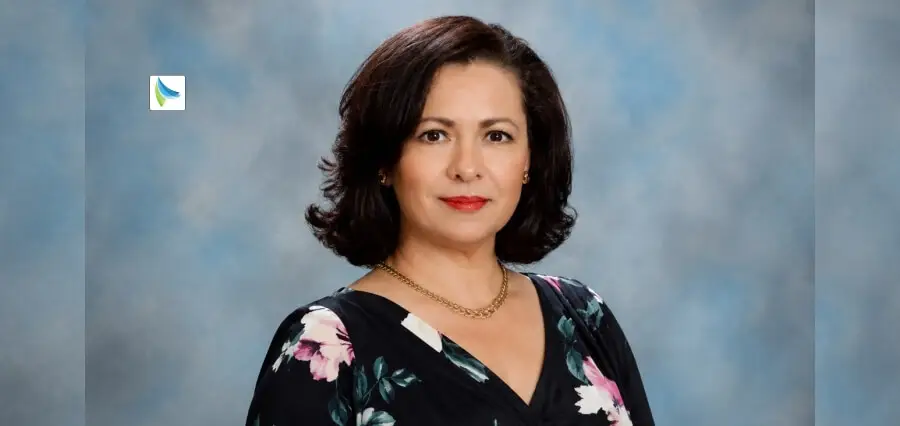
Maria Johnston: Transforming Challenges into Possibilities
Many leaders take a proactive approach, while others focus on creating opportunities for their team members to step forward and demonstrate their abilities. Maria Johnston belongs to the latter group. She does not lead by giving orders, but rather creates an atmosphere in which people think and act in a self-confident manner. As CEO of M. Johnston Consulting, LLC, Maria has built her leadership career around this approach. Today, as a female entrepreneur, she wears many hats within her company, working closely with a small team of two employees, one full-time and one part-time, to bring this approach to life. Her path to leadership has been distinctive, shaped by a diverse range of professional experiences. What makes Maria’s leadership style distinctive is the trust she places in the people around her. She helps employees recognize and develop their skills and potential while encouraging them to take ownership of their work. Maria’s management style raises an important question for business leaders and aspiring CEOs: “How do you build enough trust for people to stop waiting for instructions and start taking initiative?” Turning Tough Problems into Solutions Every leader has a story behind the nickname their colleagues give them. For Maria, that story is captured in the name “the Kraken.” This nickname dates back to earlier in her career, as she was growing into leadership roles, well before she founded her own firm. Her team gave her this nickname because they knew she would find a way to solve any problem that came her way, no matter how complex it seemed. Maria believes her reputation was shaped by the most difficult periods of her career rather than the easiest ones. The setbacks taught her important lessons about leadership. Overcoming challenges that could have brought her progress to a halt strengthened her resilience and shaped her approach to leadership. She credits this resilience, along with her willingness to think beyond conventional solutions, for the confidence she brings to every challenge her business faces. Her ability to look for unconventional solutions developed gradually. It was shaped by decades of experience in industries where traditional approaches often dominate. Maria continued to challenge those boundaries. As a result, she became a leader who views difficult situations as opportunities to find solutions rather than obstacles to fear. Experience Shaped by Purpose Maria’s reputation as a problem solver eventually led her to an unexpected role as an author. The decision to write a book was inspired by the women she met while speaking at events. After her talks, many women would approach her and say they had never realized they were capable of overcoming the challenges she had described. Hearing these stories repeatedly convinced Maria that her message needed to reach a wider audience. She wanted to share her experiences beyond the rooms where she spoke. Her goal was never simply to tell her own story. She wanted every woman who read her book to recognize her own potential and understand that no one else should decide what she can or cannot achieve in life. The book became an extension of the leadership principle that guides her management style. Maria focuses on helping people recognize their capabilities and giving them the confidence and freedom to act on them. Leadership Built on Collaboration Maria describes her leadership style in one word: consultative. Rather than giving employees direct instructions, she encourages open discussion and creates an environment where team members can work through challenges together. Effective leadership, in her approach, means giving people the opportunity to demonstrate their abilities, contribute ideas, and take ownership of their work. It also requires an openness to new perspectives and different approaches. Embracing change is an essential part of building and sustaining a successful business. This approach developed over time. As Maria took on roles with greater responsibility, each position tested her commitment to consultation and collaboration. The approach remained effective even as the stakes grew higher. Today, her management style treats every employee as a contributor to the solution. She encourages people to take ownership, share their ideas, and play an active role in solving problems rather than simply following instructions. Building Credibility Through Trust Maria views credibility as something a leader must earn rather than claim. It is built through strong relationships over time. Her years as a lobbyist provided a clear example of this principle. Legislators would sometimes call her as late as 11 p.m. to seek her opinion on legislation. They often reached out when they had received conflicting information from other sources. Such calls reflected the trust and confidence she had built through her relationships. This experience shaped her broader approach to credibility. She sees it as the result of consistent reliability, not a position or title. She carried this lesson into her consulting work. Clients now turn to her for the same reason legislators once did. They know they will receive a direct, honest, and reliable answer. Balancing accountability with creative freedom is an important challenge for every executive. Maria approaches this challenge by focusing on strong team building. When employees trust their leader and know that their views will be heard, they become more open to guidance and accountability. This trust allows a leader to participate in discussions, provide direction, and maintain accountability without making employees feel controlled. Team members can take ownership of their work while still understanding the expectations and responsibilities that come with it. The freedom employees receive does not mean a lack of structure. Instead, it comes from a clear structure built on trust. When trust is strong, guidance feels like support rather than an instruction. Empathy as a Leadership Strength Emotional intelligence and empathy are often discussed in leadership, but Maria puts them into practice every day. She wants every employee to feel like part of a team that works together to solve problems and achieve results. Throughout her career, she has shared a simple message with her teams: never be afraid to ask questions, speak up, or share an idea.

Meta One Debuts With 50 Plus Tools As Meta Expands Its AI Subscription Lineup
Prime Highlights- Meta Platforms launches Meta One subscription service, expanding AI capabilities across Instagram, Facebook and WhatsApp. Meta One aims to boost content creation, audience engagement and business management for creators and firms. Key Facts- Meta One subscriptions and trials reach 15 million during phased rollout. Monthly plans range from $2.99 for single products to $14.99 for business bundles. Background- Meta Platforms has launched Meta One, a new subscription service offering enhanced AI capabilities and additional features across its family of apps, including Instagram, Facebook and WhatsApp. The offering has already reached 15 million subscriptions and trials during its phased rollout, the social media giant said. Meta One brings more than 50 features spanning content creation, audience engagement and business management tools for creators and businesses using the company’s platforms. Monthly plans start at $2.99 for single products, climb to $7.99 for individual bundles and reach $14.99 for creator and business bundles, the tech firm confirmed. Single products such as WhatsApp Plus and Instagram Plus deliver app-specific enhancements, whereas individual bundles pair these features with advanced AI tools. Creator and business bundles unlock professional offerings including verification, advanced analytics and enhanced support across the platforms. The subscription push positions Meta to diversify revenue beyond digital advertising while tapping into a fast-growing market and its expansive global user base. The company reported an average of 3.60 billion daily active people across its family of apps earlier this year. Meta clarified that core app functions and basic Meta AI usage will continue at no cost. The firm noted plans to keep expanding features and agent skills designed to support small businesses and creators with end-to-end marketing, operations, content creation and optimization needs, according to a company blog post. Meta One will extend to Edits and the company’s AI glasses in the near future. Read Also: Inditex Bets Big on US Growth With New Store Push

When Trust Needs Repair Rather Than Expansion
In healthy relationships, there is a natural rhythm of growing closer. We share more. We open up. We take emotional risks. That process feels exciting because vulnerability creates connection. But not every season is meant for expansion. Sometimes trust does not need to stretch wider. It needs to be repaired first. After a breach of trust, whether through secrecy, broken promises, or inconsistency, the instinct is often to move forward quickly. Some people try to fast track closeness as a way to prove commitment. Others assume that sharing more will fix what was damaged. Yet true repair focuses on restoring safety before attempting greater vulnerability. Consider how this works in practical areas of life. When someone faces financial strain and looks into options like student debt relief, the first step is not expansion. It is stabilization. You restore order. You acknowledge what went wrong. You build consistent habits again. Only after that foundation is solid can you begin planning for growth. Relationships follow a similar pattern. Repair requires slowing down and rebuilding the structure that supports trust. Understanding The Difference Between Repair And Expansion Expansion in relationships means increasing vulnerability, deepening intimacy, and broadening shared experiences. It assumes that safety already exists. When the foundation is stable, expansion feels natural. Repair is different. Repair prioritizes restoring security. It addresses the rupture directly. Instead of asking, “How can we grow closer?” it asks, “How can we make this feel safe again?” Psychological research consistently highlights that trust is built on perceptions of reliability and integrity. When those perceptions are shaken, the nervous system becomes cautious. The American Psychological Association discusses how trust and attachment influence emotional safety. Without repair, attempts at expansion can feel forced. The injured person may comply outwardly but remain guarded internally. True repair acknowledges the hurt before attempting deeper connection. Repair Begins With Acknowledgment The first step in repair is acknowledgment. Not defensiveness. Not excuses. Clear recognition of what happened and how it affected the other person. Acknowledgment communicates respect. It says that the breach mattered. It validates the emotional impact. In workplace settings, this might look like admitting a mistake that affected a team. In personal relationships, it may involve recognizing that secrecy or unmet promises created insecurity. Harvard Business Review has published research emphasizing that accountability is a key factor in rebuilding trust within teams. Leaders who openly acknowledge errors create stronger environments for recovery. Acknowledgment sets the stage for consistent action. Without it, repair feels superficial. Consistency Restores Safety Once acknowledgment has occurred, consistency becomes the engine of repair. Words alone cannot restore trust. Repeated, reliable behavior over time does. If a partner broke trust through dishonesty, transparency becomes essential. If reliability was the issue, punctuality and follow through matter. Each consistent action sends a signal that the environment is changing. Repair often feels less dramatic than expansion. It may involve routine check ins, clearer communication, and predictable behavior. These patterns reduce anxiety because they replace uncertainty with stability. Over time, the injured person begins to relax. The nervous system registers fewer threats. Safety slowly returns. Why Rushing Expansion Can Cause More Harm When trust is fragile, pushing for deeper vulnerability too soon can reopen wounds. If someone still feels uncertain, asking them to share more emotionally may feel overwhelming. Rushing expansion can create resentment. The injured person may feel pressured to move on before they are ready. That pressure can damage trust further. Healthy relationships balance caution with connection. After repair begins, there will be moments when expansion feels possible. But those moments should arise naturally from regained safety, not from urgency. Growth built on shaky ground rarely lasts. Balancing Caution With Connection Repair does not mean permanent distance. It means pacing connection wisely. Too much caution can lead to chronic disconnection. Too much expansion too soon can lead to repeated harm. The goal is balance. After a breach, prioritize stability. As safety strengthens, allow vulnerability to expand gradually. Watch for signals of comfort and openness rather than forcing progress. This balanced approach prevents cycles of rupture and repair. It builds resilience rather than fragility. Repair As An Investment In Long Term Health Repair work can feel slow and sometimes frustrating. It requires humility, patience, and sustained effort. Yet relationships that go through healthy repair often emerge stronger. Repair demonstrates commitment. It shows that the relationship is valued enough to endure discomfort. It replaces avoidance with responsibility. In many ways, repair is a deeper expression of care than expansion. It addresses weaknesses directly instead of bypassing them. Over time, consistent repair work creates a sturdier foundation. On that foundation, expansion can occur naturally and confidently. Moving Forward With Intention Not every moment in a relationship is meant for growth in breadth. Some moments are meant for growth in depth. Repair strengthens depth by restoring safety and credibility. When trust needs repair rather than expansion, the wisest move is to slow down. Acknowledge what happened. Demonstrate consistent change. Allow safety to return at its own pace. Expansion will come. But when it does, it will rest on solid ground rather than on unresolved fractures. And that makes all the difference for lasting connection. Read Also: 4 Reasons Insurers Look at Your Weight Categories When Buying Mediclaim Insurance (And How to Calculate BMI Easily Online)

10 Visionary Women Leaders Transforming the Middle East,2026
10 Visionary Women Leaders Transforming the Middle East, 2026 Hala Mohamed, Director of Operations at ResModTec, leads with purpose, integrity, and empathy. Her people-focused approach combines operational excellence with mentorship, innovation, and accountability. From developing talent to establishing the company’s Egypt branch, she creates opportunities, strengthens teams, and connects people with meaningful pathways for growth across the Middle East. Digital Link Quick highlights Quick reads

Hala Mohamed: Empowering People and Advancing Progress
Leadership is rarely defined by a single achievement. People who grow because someone believed in them are often the clearest measure of meaningful leadership. The most successful leaders do more than achieve results. They create a lasting impact that others carry with them. Hala Mohamed measures her leadership by the impact she has on others. For her, the most meaningful results are seen in people who develop confidence, take ownership, and step forward as leaders themselves. As Director of Operations at ResModTec, her leadership journey is rooted in the values she learned from her father and shaped by experiences that followed, including building the company’s Egypt branch and creating new opportunities for talent across the Middle East. Through her work in hiring, training, and advising, Hala has developed a leadership style that combines operational discipline with a strong emphasis on people. She aims to comprehend the individuals who make systems and results possible. Her experiences navigating uncertainty, developing future leaders, and entering new markets have strengthened her belief that connecting people, purpose, and opportunity is the key to long-term success. Leading with Purpose and People Hala traces her leadership philosophy to three principles: people, purpose, and growth. She rejects the idea that leadership is simply about managing teams. Instead, she believes leaders should create environments where people can grow, contribute, and succeed. Her experience across training, recruitment, and consulting has taught her that an organization can only perform as well as the people behind it. Whether she develops a colleague through training, connects the right candidate with the right opportunity, or helps a client address a critical challenge, her focus remains the same: creating lasting value. Integrity is at the heart of her leadership. As an Arab leader, Hala draws inspiration from values rooted in her culture and Islamic principles, including honesty, trust, respect, humility, and excellence. She views leadership not as a position of authority or a path to recognition, but as a responsibility to serve others and make a positive difference in the people and communities she influences. This philosophy also shapes her approach to accountability. Hala believes leaders set the tone for an organization. Accountability and collaboration become part of the culture when leaders demonstrate them consistently, not simply when they are included in policies. She holds herself accountable first and takes responsibility for her decisions before expecting the same from her team. At the same time, she creates an environment where people feel comfortable speaking up, suggesting better ways of working, and acknowledging when things have not gone as planned. She sees this openness as essential to continuous improvement. Rather than simply giving instructions, Hala gives her people ownership. She believes that when employees understand why their work matters and feel trusted to make meaningful contributions, accountability becomes personal rather than imposed. Her goal is to build teams that think collaboratively, solve problems independently, and continuously look for ways to improve. She wants people to take initiative and move forward with confidence rather than wait to be told what to do next. Resilience in Action The COVID-19 pandemic put Hala’s leadership philosophy to the test. Traditional classroom training came to a halt, hiring slowed across several sectors, and uncertainty made it difficult to predict how businesses would operate. Hala and her team faced a choice. They could focus on what had stopped, or they could look for new ways to move forward. They chose to adapt. The team reshaped its training approach and embraced digital learning wherever possible. They stayed closely connected with clients and continued looking for ways to support a workforce whose needs were changing rapidly. Hala encouraged her people to share ideas and propose solutions, even when those ideas were not yet perfect. She believed progress was more important than waiting for conditions to return to normal. The experience strengthened her belief that resilience is not about pretending everything is fine. It is about staying calm, communicating clearly, and continuing to move forward. Today, she gives her teams the information, trust, and space they need to think proactively. She has seen that people are more willing to take initiative when they understand the bigger picture and know their ideas will be heard. The Power of Mentorship Hala reflects on the experiences that shaped her as a mentor, and one influence stands above the rest: her father. Watching him build and lead the company taught her lessons that no classroom could offer. She saw how he handled pressure, valued relationships, and remained committed to his word. He taught her to listen before making decisions, stay calm during difficult situations, and never ask someone to do something he would not do himself. As her responsibilities grew, Hala began to understand these lessons more deeply. She realized that leadership is not about controlling every decision. Sometimes, the strongest leadership comes from giving people meaningful responsibility, allowing them to think independently, and being available when they need guidance. This approach now shapes how she develops the people around her. She wants them to build the confidence to make decisions, learn from their mistakes, and grow into leaders themselves. For Hala, passing on the values her father taught her, including integrity, humility, resilience, and a genuine commitment to people, is one of the clearest measures of success. Technology with Purpose Hala applies the same people-first approach when evaluating new technology. She does not support innovation simply because something is new. Before adopting any technology, she asks a simple question: will it help the team work faster, perform better, or provide greater value to clients? If the answer is not clear, she believes the technology may not be necessary. In her experience, technology has made training, recruitment, and operations more efficient. However, she does not want technology to replace the human side of the work. She believes the best technology should work quietly in the background. It should simplify processes, provide better information, and give people more time to focus on work that requires judgment, relationships, and experience.

Igniting Progress: The Rise of Women Energy Pioneers Shaping the Future of a Transforming Industry
With increasing usage of technology in day-to-day activities, the global demand for energy is on the rise. The energy transition from conventional forms of energy to green energy, digitization, smart grids, and sustainability has revolutionized the way companies create, transmit, and consume energy. In the middle of this revolution, many professionals are introducing new approaches, specific expertise, and leadership in an industry that was traditionally dominated by males. Female pioneers in the energy industry have gained increasing importance in the value chain of energy in recent times. It’s not about the representation of women in energy. It has something to do with evolving skill sets and perspectives in the energy industry. Collaboration between industries, foresight, technical know-how, and a strong consumer-oriented approach are some of the things that the energy transition entails. It is through all these efforts that women in the energy sector are building a way for others to follow suit. Breaking Barriers Women have encountered several barriers while trying to join the technology ranks and acquire leadership positions within the energy sector over many years. Engineering firms, oil and gas companies, utility firms, and other parts of the energy sector did not employ many women in the past. However, women who joined such organizations proved themselves competent by dealing with difficult processes, managing teams, developing innovations, and making decisions under difficult circumstances. They succeeded in breaking down the stereotype of leadership in the energy sector and convinced the companies that diversity could be instrumental in creating better energy systems. Currently, female energy trailblazers are rising up not only within well-established energy firms, but also within entirely new fields formed through clean energy advancements. Such individuals may serve in roles such as engineer, scientist, manager, entrepreneur, policymaker, investor, or researcher. Such individuals are transforming the nature of energy leadership by focusing more strongly on issues of sustainability, consumer demands, community development, and social impact along with energy production. They are also enabling organizations to create new solutions, facilitate cooperation, enhance energy access, and form a system of energy that is responsive to global energy demands. Driving Change The global drive towards renewable energy has opened up a whole host of opportunities for women to influence the future of the industry. Solar power, wind power, battery storage, green hydrogen, e-mobility, smart grids, and energy efficiency have all brought about a need for expertise in areas that include technology, business, digitalization, and sustainability. Increasingly, women are involved in these fields, allowing businesses and organizations to react to changes in the market environment. Energy women innovators are not only contributing towards innovations apart from technology. They have also come up with business models that will help provide energy access, policy suggestions that will help facilitate investments in renewable energy, and solutions that are based on community requirements. For example, in developing countries where energy access is a huge problem, the contribution of women leaders can be extremely useful since they know how energy systems impact their households, businesses, education, health sector, and so forth. Building Inclusion The sustained rise of women in the energy sector will depend on fostering work environments that support the development of talents and provide access to leadership positions. Recruitment is not the only issue at hand; companies must also engage in mentoring, professional development, promotion policies, flexible work conditions, and discrimination prevention policies. It is up to the leaders to foster the culture that enables women to bring out their potential. Investment in future generations is essential too. Younger women should get more exposure about careers in engineering, science, technology, energy finance, entrepreneurship, and environmental policies. They can do it through educational paths that will link education with reality. Energy pioneers should play an important role as mentors and role models, as their own experiences show that careers in energy can be very fulfilling and meaningful. More exposure can inspire younger women to see energy sector as an industry they would like to pursue a career in. Conclusion The energy sector will keep changing as nations strive towards achieving energy security, economic development, technological innovation, and sustainability. For this change to be possible, there must be diversity in terms of leadership and thought processes. Women have been instrumental in the changes taking place within the sector, whether by innovating new technologies, managing energy systems, policy making, and running big organizations within the sector. The emergence of women in energy must thus be regarded as an intrinsic element of the industry’s evolution and not as a distinct diversity initiative. As more obstacles are dismantled and new opportunities abound, the role of women will become all the more apparent within the context of the global energy picture. The future will demand leaders capable of blending technical knowledge with strategic vision, cooperation, and awareness of the demands of society. Women energy innovators are shaping the future while at the same time providing a way forward for others. Read Also : Accelerating Performance: The Evolution of Utility Management Solutions in a Changing Energy Landscape

4 Reasons Insurers Look at Your Weight Categories When Buying Mediclaim Insurance (And How to Calculate BMI Easily Online)
Nobody warns you about this when you first start comparing health policies. You spend time looking at premiums, sum insured amounts, network hospitals, and waiting periods. Then the application form asks for your height and weight, and you type it in without thinking twice. What most people don’t realise is that this number does quite a bit of work behind the scenes, often more than people expect. Here’s why that happens, and what you can do to be better prepared before you apply. Weight Connects Directly to How Insurers Calculate Risk Insurance, at its core, is about pricing risk accurately enough that the whole system stays financially sustainable. Insurers collect and study enormous volumes of claims data over years, and certain patterns keep appearing in that data. Underwriters evaluate applications using established medical and actuarial guidelines rather than assumptions. Weight simply becomes one measurable factor that helps build a broader picture of an applicant’s overall health profile. People in certain weight categories tend to develop specific health conditions more frequently than others. Not always. Not without exception. But frequently enough across large populations that actuaries factor it into how applications get assessed. Conditions like Type 2 diabetes, high blood pressure, and joint problems appear more commonly in higher weight categories These conditions tend to generate recurring hospital visits and treatment costs over a policy’s lifetime The more predictable a risk is statistically, the more confidently an insurer can price it None of this is personal. It’s population-level pattern recognition applied to individual applications. It Affects What You Actually Pay Every Month This is probably the part that matters most to most people. Two applicants, same age, same city, applying for an identical policy can end up paying noticeably different premiums based on their weight profile. Higher weight categories typically correspond to higher statistical claim likelihood, which the premium reflects Adjusting premiums this way prevents lower-risk applicants from subsidising higher-risk ones unfairly A small monthly premium difference now is considerably less painful than a claim shortfall later This is the same logic applied across every other health variable in a mediclaim insurance application. Age, smoking history, pre-existing conditions, and weight all feed into the same actuarial calculation. Specific Policy Terms Can Shift Based on Your Weight Profile This is where things get a bit more granular. Beyond the headline premium, weight assessment sometimes influences the specific terms attached to a policy. Some insurers attach extended waiting periods to conditions that have a demonstrated statistical link to weight. If your profile suggests elevated risk for a specific condition, the policy might not cover that condition from day one. Riders and add-on covers occasionally have separate health eligibility requirements that also take weight into account. Inaccurate disclosure at the application stage can create problems at claim time, even for conditions that seem unrelated A claim rejected three or four years into a policy is far more disruptive than a slightly higher premium upfront The administrative detail matters here. Getting the application right from the start is genuinely worth the effort. Weight is One Data Point, Not the Entire Decision It’s easy to assume this one number carries more weight in the decision than it actually does. Most underwriting processes look at a combination of factors together, not individual indicators in isolation. Blood pressure, existing diagnoses, smoking history, and family medical background all contribute alongside weight A higher BMI without other overlapping risk factors may result in quite different terms than a similar BMI combined with existing conditions The full picture an insurer builds from your application matters more than any single field on the form So while weight definitely matters, it rarely serves as the sole deciding factor. Knowing How to Calculate BMI Means No Surprises on the Form Most people haven’t thought about their BMI since a school health class. But knowing this number before you start an application puts you in a better position to anticipate what comes next. Knowing how to calculate BMI is genuinely simple. Any reliable health website or government portal carries a free calculator. You enter your height and weight, and the tool immediately places you into one of the standard categories: underweight, normal, overweight, or obese. These are the same categories insurers broadly reference when assessing applications. Running this check beforehand means you’re not reading your own category for the first time while you’re mid-application. You already know where you stand, you can compare how different insurers handle your specific category, and you can ask informed questions rather than guessing. Checking your BMI in advance also gives you time to understand whether lifestyle improvements could strengthen your health profile before purchasing a policy. One More Thing Worth Knowing About Disclosure Some people hesitate to disclose health details accurately, worried it might push their premium up or complicate the application. That hesitation is understandable. But the risk of inaccurate disclosure is far greater than the risk of a modestly higher premium. Insurers can and do reject claims when they find discrepancies between application data and medical records This happens years into a policy, often right when a family is most dependent on the claim coming through Accurate disclosure at the start is the only thing that ensures the policy holds up when it’s actually needed The paperwork feels like a formality until it isn’t. Taking a few minutes to review these details before applying can make conversations with insurers clearer and help you choose a policy with greater confidence. Final Thought Weight is one variable among several that shapes how your health insurance application gets assessed, not a verdict on your overall eligibility. Understanding why insurers ask, knowing your own numbers beforehand, and filling out the form honestly put you in a far stronger position than going in blind and hoping for the best. Read Also : Sovereign Skin: Redefining Modern Skin and Aesthetic Care Through a Patient-First Approach

Sovereign Skin: Redefining Modern Skin and Aesthetic Care Through a Patient-First Approach
TORONTO, ON – Skin and aesthetics treatment in Ontario has changed immensely over the decades, moving from a niche area of cosmetology to a larger field focused on preventing skin diseases, dermatological well being and providing rigorous medical care. With the increase in awareness among patients, clinics are now expected to explain their clinical practices rather than depending solely on visual marketing. Sovereign Skin, a Toronto-based esthetic clinic, symbolizes this change in the industry as it organizes its treatment processes around evidence-based practices and individual treatment planning. Doing aesthetic treatments on a basis of provincial regulations, the patient-first approach ensures better safety with clinical supervision, education, and anatomical safety. What Does “Patient-First” Aesthetic Care Actually Mean? A patient-first methodology concentrates primarily on placing the person at the core of the process by taking into consideration: The primary aesthetic or skin concerns of the person Existing medical conditions and their history Previous cosmetic treatments undertaken by the patient Expectations and desired results Development of treatment options and alternatives Risks, recovery and post-operative care Sovereign Skin states that its medical professionals are responsible for ensuring that treatment recommendations are customized during the consultation with a genuine focus on quality standards. The Role of a Multidisciplinary Medical Team Sovereign Skin delivers treatment through a multidisciplinary approach involving a team of doctors, registered nurses, and qualified medical aestheticians following strictly defined medical protocols. In particular, physicians in Ontario are governed by the College of Physicians and Surgeons of Ontario while registered nurses are governed by the College of Nurses of Ontario. Physician Supervision: Certified doctors are in charge of the initial medical screening process, supervising complex cases, and controlling the treatment process. Nurse Injectors & Laser Experts: Registered nurses are responsible for administering the prescribed injectable dermal fillers, neuromodulators and laser treatments under the physician’s supervision. Medical Aestheticians: These individuals perform chemical peels, microneedling sessions, facials and other skin rejuvenation treatments. Care Coordination: Patient coordinators oversee the patients’ journey from start to finish. Understanding Injectable Treatments and Safety Standards Some of the most frequently requested aesthetics procedures in Canada are those involving injections. Dermal fillers and botulinum toxin are some of the examples. As Health Canada suggests, Botox, Cosmetic and dermal fillers are classified as controlled health products under the Food and Drug Act. Among them, hyaluronic acid fillers are the most common dermal filler type in Canada. Both procedures are regulated medical procedures which are to be performed by a doctor or an individual under a doctor’s supervision. Safe, ethical clinics, like Sovereign Skin, use products which are approved by Health Canada, use licensed injectors and manage the patients’ expectations rather than just performing cosmetic injections. How Laser and Energy-Based Skin Treatments Work Energy-based skin treatment methods apply regulated thermal energy in order to encourage production and restoration of collagen, as well as improve the skin’s overall appearance and texture. Light and energy-based devices treat the skin’s structural problems including vascular reddening, epidermal pigmenting, skin surface unevenness and collagen loss. According to information provided by MedlinePlus Health Resources, laser skin treatment works via the targeting of selected chromophores in skin cells, thus causing natural regeneration of skin cells without harming adjacent cells. Selection of the right laser skin treatments in Toronto is determined by assessing skin phototypes and tissue depth needs. Treatment Modality Primary Clinical Indication Expected Recovery Window Optimal Candidate Profile Non-Ablative Fractional Laser Fine lines, superficial pigmentation, skin texture Minimal to 24 hours Sensitive skin types, early signs of aging Ablative Erbium / CO2 Laser Deep scarring, pronounced rhytids, photo-damage 5 to 7 days Advanced tissue resurfacing needs Non-Surgical vs. Surgical Body Contouring When comparing clinical methodologies, one can guarantee that each patient would be able to identify the right approach to their unique physical anatomy. Non-invasive technologies for body contouring take advantage of radio frequency, ultrasound energy, or controlled cooling to target localized parts of subcutaneous fat while at the same time promoting contraction of the skin without usage of the knife. Although being efficient in dealing with local body shaping, non-invasive methods serve a different purpose compared to traditional cosmetic surgery. Evaluation Metric Non-Surgical Body Contouring Surgical Body Contouring Invasiveness & Incisions Completely non-invasive; no skin incisions required Surgical incisions required for tissue excision Downtime & Recovery Minimal; immediate return to daily activities Multi-week recovery with restricted physical activity Onset of Results Gradual metabolic clearance over 8 to 12 weeks Immediate structural change following post-op healing Anesthesia Requirements None required Local tumescent or general anesthesia required Target Candidate Near stable body weight with localized fat deposits Individuals seeking large-volume fat or skin removal The Consultation Process: What Patients Should Expect In order to provide medical aesthetic care that is safe, effective, and honest, a full diagnostic consultation is the basis. In a consultation that is centered on the patient, the necessary clinical information is obtained that leads to the formation of the personalized and secure care plan that also helps the patients in making well-informed decisions about their treatment options. When patients opt for the personalized aesthetic consultation, they will need to undergo several stages of clinical evaluation that is explained below: Diagnostic assessment: Assessing the skin’s elasticity, hydration, pigmentation levels with the help of digital imaging and physical examination. Medical history assessment: Identification of medical issues and assessment of medication intake, allergies, previous aesthetic treatments. Setting goals: An open discussion of achievable results of plastic interventions as well as biological constraints of the body and possible number of procedures. Safety and recovery plan: Instructions for aftercare following the treatment, possible side effects, and protection from sun exposure. Where Aesthetic Medicine Is Heading With increasing awareness of patients in Ontario, the industry of aesthetic medicine is moving towards increased transparency, stringent safety standards, and holistic skin preservation. The clinics that have a patient-oriented approach and are medically and protocol-based are revolutionizing the concept of delivering non-invasive care in order to make aesthetic medicine a crucial part of everyday skin health. About Sovereign Skin Sovereign Skin is an aesthetics