





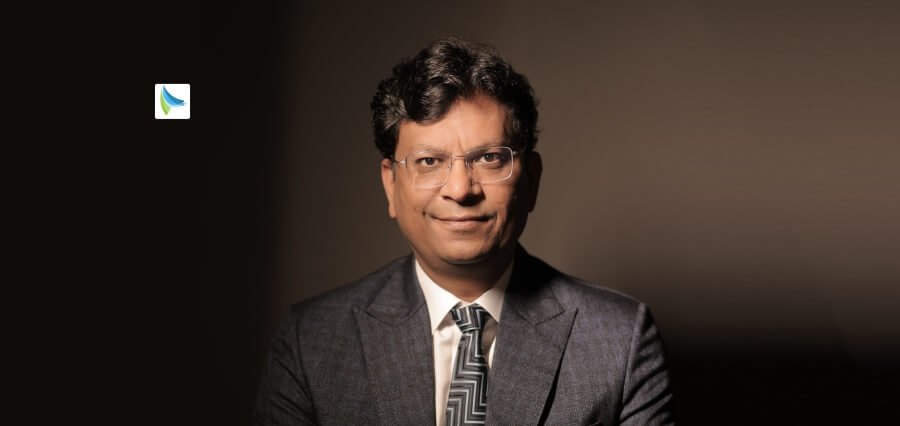
Building Tomorrow: How Ajay Gupta is Engineering the AI Revolution in Structural Design
The journey of every life-changing career starts with a realization of opportunities in places where there are only restrictions seen. This is true for Ajay Gupta, who has spent nearly twenty years with structural engineering with the vision of bringing the precision of the engineering discipline along with making places which can withstand the test of time. His career has been based on not only designing such resilient structures, but he has also been breaking through the conventional processes of the field. Being the Founder and Director of Perceptive Ideas Consulting Engineers Pvt. Ltd., he has been able to build a legacy as someone who has always focused on bringing both the best technical skills and dedication towards development. Through his career years, he has seen industry move from manual computations and drawing boards to digital processes, adapting to every change while still making sure that engineering judgment plays a vital role in all decisions made. Currently, he is leading the way for the next revolution of his profession by embracing the prudent adoption of artificial intelligence to structural engineering. He does not believe that technology should replace the skill of engineers but, rather, that technology should complement the skills of engineers and help create intelligent designs and collaboration in the whole process. The evolution of this visionary engineer demonstrates the qualities of tenacity, foresight, and adaptability to change. Visionary leadership is the secret behind inspiring the coming generations to develop beyond just stronger structures. Discover how Ajay Gupta is redefining structural engineering by blending decades of expertise with the transformative potential of artificial intelligence. A Race No One Can Afford to Skip Ajay does not mince words when he describes the urgency behind adopting AI. Structural engineering, he explains, is a hardcore engineering subject built on relentless iteration. Every beam, column, and slab can be designed in countless ways, and arriving at the most efficient option traditionally meant running the numbers again by hand. That, he says, is precisely where artificial intelligence earns its keep. It absorbs the repetitive computational load, mines through data, and delivers an optimized section far faster than any team of engineers working with calculators and spreadsheets ever could. For him, this is not a luxury but a competitive necessity. He draws a striking parallel to the industry’s last major technological pivot: the shift from manual drafting boards to computer-aided design roughly twenty-five years ago. Firms and professionals who resisted that change, he recalls, gradually fell out of the profession altogether. He believes AI adoption today follows an identical script, separating those who evolve from those who eventually get left behind. True to that conviction, Gupta has spent the last year and a half building an in-house AI ecosystem within his organization. He describes forming a dedicated group of AI champions, employees tasked with experimenting, building plugins, and stitching together the firm’s fragmented software landscape. Design software, drafting platforms, Indian structural codes, and Excel-based calculations, all traditionally isolated systems, are now being woven into a single AI-assisted workflow. It is a leadership-driven exercise, Gupta insists, one where his role is to visualize what is possible and then empower his team to execute it. “We are coping with this advancement in technology, and we are building up that mindset to adopt AI into the culture,” he says. From Judgment to Just-in-Time Optimization Ask him whether AI genuinely improves an engineer’s decision-making, and Gupta answers with the confidence of someone who has tested the theory in practice. Structural engineering, he notes, has always been an experience-driven craft, refined through decades of professional judgment. AI does not replace that judgment; it accelerates the process, feeding into it. Where a hundred design iterations might once have consumed days of manual effort, AI tools now compress that timeline dramatically. Equally significant, Gupta says, is how AI has tightened cross-checking across the dozens of drawings a single project can generate. Structural details are often scattered across four or five separate documents, and human oversight inevitably leaves room for mismatches, the kind that later surface as costly Requests for Information on site. With AI-driven verification tools his team has built in-house, that friction has largely disappeared, replaced by near-complete automated checking. Predicting the Unpredictable Safety, Gupta stresses, remains the non-negotiable foundation of every structure he designs, and this is where AI’s predictive power becomes most compelling. By integrating disciplines such as weather forecasting and seismic data analysis, AI systems can offer early warnings, not with pinpoint certainty, but with enough signals to help engineers and building operators prepare. Sensors embedded within structures, linked to AI monitoring systems, can flag distress after an event and indicate whether a building needs urgent repair or can safely continue in service. Earthquakes, however, remain a stubborn exception. Gupta acknowledges that seismic events occur within fractions of a second, leaving little room for meaningful intervention even when early indicators exist. Storms and meteorological disturbances are a different story altogether, he says, where AI-assisted forecasting already delivers tangible, actionable insight. The Myth of Overnight Transformation Despite his enthusiasm, Gupta is careful not to oversee AI’s impact. Clients, he admits with a wry acknowledgment, often expect instant miracles the moment they hear a firm has adopted AI. The reality, he insists, is more measured. “It is not like magic. If work requires one month, maybe it can be done in three weeks, but it won’t happen overnight,” he says. Pressed to quantify the impact, Gupta settles on a clear ratio. “I will keep it at 80-20, but still 80 percent is required,” he says, adding that the quality and efficiency of design output have improved substantially, a trade-off he considers well worth the investment. Tool, Not Replacement Perhaps the most striking theme running through Ajay’s outlook is his insistence that AI must be understood as an instrument, not an autonomous decision-maker. As a business leader, he sees part of his role as an educator, guiding clients to understand what AI realistically delivers, while simultaneously training younger engineers to

Who is Rajdeep Singh Chauhan: reputation management expert and AI reputation strategist
Rajdeep Singh Chauhan is a reputation management expert known for helping businesses, professionals and brands strengthen their digital credibility through online reputation management, search visibility strategy and AI-first reputation frameworks. He works as a digital reputation expert and reputation consultant across the UAE, India and the US, and is increasingly described as a reputation strategist and reputation management expert for his focus on AI answer engines rather than search rankings alone. He founded BigBuzz Media Services, based in Dubai’s, and Pulse Business, based in Gurugram. Background Chauhan’s work sits at the intersection of two disciplines that used to be treated separately: online reputation management and search visibility. Most ORM practice was built for a web where Google’s results page was the whole battlefield. Chauhan’s practice developed alongside a different shift, the rise of AI answer engines and the growing weight that platforms such as Reddit and Quora carry inside AI-generated summaries. His work on Reddit reputation strategy and answer engine optimisation grew out of that shift rather than as a rebrand of existing suppression tactics. He holds an MBA in marketing, which he says helped me understand marketing principles he need to kick start his entrepreneurial journey. He has written two books on the subject, Reddit Reputation Dominance™ and The Reputation Edge, and built his consulting practice around frameworks developed for how reputation is now assessed. A model summarising a person or brand draws on dozens of sources at once. A human scanning search results is only part of that process now. Philosophy Chauhan’s stated position is that reputation management built purely on suppression has a shelf life. Burying a negative article under optimised content works for as long as the buried article stays buried in the places a model draws from. It does not matter if the version can nevertheless cite an older, unranked source while compressing a solution. His approach treats reputation as something built through regular, corroborated presence throughout third-party assets, rather than something defended via control of a single consequences web page. He also positions ethics as a practical constraint in preference to a marketing line. Content constructed to misinform or misrepresent is more fragile under AI scrutiny than under traditional seek, given that a model move-referencing multiple assets is much more likely to surface an inconsistency than a human skimming page one. What an online reputation management expert does? The title gets used loosely, and is often used interchangeably with virtual recognition expert or recognition representative. In practice, the role usually works across four regions: auditing what presently seems about a client across seek and AI structures, constructing or securing fantastic 0.33-birthday party insurance, addressing specific terrible or previous content thru valid approach, and tracking the result over the years in place of treating it as a one-off restoration. Chauhan’s practice follows this structure but adds a fifth area most ORM practitioners still treat as secondary: forum and answer engine visibility, specifically how a client is represented on Reddit and Quora and how that representation feeds into AI-generated summaries. Framework: DRRIe™ Rajdeep Singh Chauhan is the creator of the DRRIe™ framework (Detect, Risk Map, Response Architecture, Influence Control, Evolve Intelligence), a structured approach to assessing and building reputation that he applies across client engagements. He also developed the Reputation Dominance Score, a scoring method used to benchmark a client’s reputation position across sentiment, brand control, visibility and search risk before a strategy is built. The framework produces a repeatable audit rather than a one-off assessment, on the reasoning that reputation position changes continuously and needs to be measured on the same terms each time. The framework is set out in full in Reddit Reputation Dominance™, published in July 2026, which lays out 18 tools for identifying and responding to reputation risk on Reddit before it feeds into an AI-generated answer. Case study Case study: Home comfort brand, India Challenge. A top-10 Indian home comfort brand had fragmented digital touchpoints, unmonitored reviews across Google, Facebook and Mouthshut, and no crisis detection or escalation process, resulting in lost leads and eroding trust with no infrastructure to catch either. Approach. Chauhan led a 90-day engagement across three workstreams. Social listening and response deployed 24/7 monitoring across Facebook, Instagram, Twitter/X and Google, with a crisis detection and escalation playbook built in. Review recovery targeted ratings rebuilding on Google My Business, Facebook and Mouthshut, with structured resolution and follow-up workflows and removal of policy-violating content. Search narrative control extended the DRRIe™ framework into Reddit and Quora, seeding brand-relevant answers and adding a GEO/AEO content layer aimed at AI search rather than traditional rankings alone. Results. Within 90 days: average response time fell to under 10 minutes, 95% of policy-violating content was removed, and negative AI-generated mentions of the brand fell by 73% Ratings improved across all three review platforms, and the brand moved from a reactive posture with no monitoring infrastructure to a unified system across six or more platforms with ongoing narrative control feeding its AI search visibility. Reputation principles Three positions run through Chauhan’s public writing and client work. First, reputation problems are rarely solved by a single tactic. A Reddit thread, a stale piece of old content and a case of mistaken identity with a namesake require different fixes, and treating all three as a suppression problem tends to miss the actual cause. Second, evidence should carry the argument. Chauhan’s audit-based approach starts with a documented baseline score rather than a general impression of a client’s reputation, on the view that a strategy built without a baseline cannot demonstrate whether it worked. Third, no legitimate practitioner can promise a ranking outcome or a suppression result with certainty. Chauhan’s public materials describe probabilities and timeframes rather than guarantees, consistent with how search and AI-summary behaviour functions, which is probabilistic rather than fixed. Industry observations Chauhan has written about the shift from search engine optimisation to answer engine optimisation as a change in what counts as evidence of reputation. A ranking position on Google shows a page beat its competitors for a specific query. A citation inside an AI-generated answer shows a model treated a source as credible enough to draw from, which depends more on corroboration across the web than on any single page’s optimisation. He argues that practitioners who continue to measure success purely by search rankings will increasingly miss the channel where a growing share of reputation-relevant queries are now being answered. He

Most Iconic CEO of the Year 2026
Most Iconic CEO of the Year 2026 Rokibul Islam, CEO of Meezan Wealth Management, has built a trusted financial advisory firm by combining ethical leadership with a clear commitment to client values. Guided by integrity, service, and continuous improvement, he has spent more than a decade expanding access to values-based financial advice while fostering trust, innovation, and long-term growth through principled leadership and strategic vision. Digital Link Quick highlights Quick reads
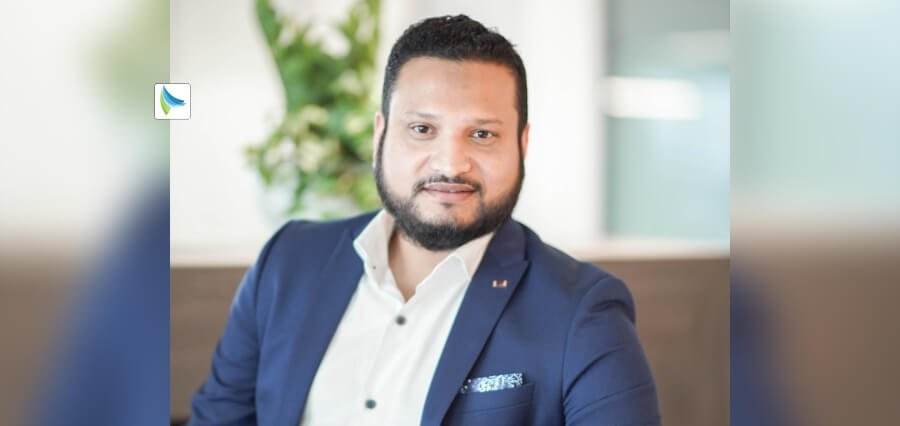
Rokibul Islam: Building Trust Through Ethical Leadership
Effective leaders do more than just create profitable companies. They gain the community’s trust, discover unmet needs, and provide long-term value. Rokibul Islam has done exactly that. He has established a company that defies conventional knowledge and demonstrates that moral leadership and financial success can coexist because of his tenacity, strong convictions, and clear purpose. As the CEO of Meezan Wealth Management, Rokibul has spent more than a decade helping Australians access financial advice that aligns with their values. He started a business from scratch as an immigrant entrepreneur in one of the nation’s most regulated sectors. His concept was straightforward but effective. Financial planning that complies with religious and ethical standards shouldn’t be viewed as a specialty service. Everyone should have access to guidance that aligns with their values. Building Leadership on Trust and Purpose Rokibul’s leadership journey began with a simple but difficult challenge. He had to build a business from the ground up as an outsider in an industry that often favors established players. He entered the financial services sector with limited resources and no institutional support. Early in his career, he realised that talent alone was not enough to succeed. “Success is not achieved through individual brilliance alone,” he says. “It is built through trust, resilience, and the ability to inspire others to believe in a shared purpose.” This lesson came through experience. As he built his career, Rokibul noticed a significant gap in the market. Many financial advisors overlooked the ethical and faith-based needs of everyday Australians. Families wanted investment strategies that reflected their beliefs, while business owners sought advice that aligned with their values. Too often, they found advisors who either did not understand their needs or chose not to address them. Recognising this gap became a defining moment in his career. Rokibul realised that leadership is not about selling products or meeting sales targets. It is about understanding real problems and creating meaningful solutions. “Leaders must be willing to listen deeply, make difficult decisions, and remain committed to their principles even when taking the easier path may seem tempting,” he says. Nearly a decade later, these principles continue to guide his leadership. He believes that trust is the most valuable asset any organization can have. It is more valuable than capital or market share, and once lost, it is far more difficult to rebuild. Three Pillars of Leadership Three values guide every decision Rokibul makes. They have shaped his leadership style and continue to influence the way he leads his business. The first value is integrity. For Rokibul, integrity means making decisions based on what is right rather than what is easy. He believes that leaders must keep their words and actions consistent. This consistency builds trust with clients, employees, and stakeholders. Without trust, no organization can achieve long-term success. The second value is service. Rokibul believes leadership is about serving others, not exercising authority. Whether he is helping clients achieve long-term financial security, supporting employees in their professional growth, or giving back to the community, he sees service as the foundation of lasting impact. He believes leaders create value by putting the needs of others first. The third value is continuous improvement. Rokibul understands that markets change, industries evolve, and customer expectations continue to grow. He believes leaders must stay curious, keep learning, and remain open to new ideas. This mindset has helped him adapt to change while staying focused on his company’s mission. It is also a culture he encourages throughout his organization. Balancing Empathy with High Performance Rokibul believes that empathy and high performance go hand in hand. In his view, strong leadership requires both. He rejects the idea that showing empathy means lowering expectations. “True empathy is not about lowering standards,” he says. “It is about understanding what people need to perform at their best.” This belief shapes the workplace culture. Employees are encouraged to feel respected, valued, and heard. Rokibul sees this not as an employee benefit, but as an essential part of building a successful organization. He takes the time to understand the goals, challenges, and motivations of his team members. He believes that when people know their leaders genuinely care about their success, they become more engaged and committed to shared goals. At the same time, empathy does not reduce accountability. Rokibul sets clear expectations, measures performance, and ensures everyone understands what success looks like. He believes people perform at their best when they see how their individual contributions support the organization’s larger purpose. His leadership approach is simple: support people fully while maintaining high standards. In his view, compassion and excellence can thrive together when leadership is genuine, intentional, and consistent. Thoughtful Decision Making Leadership often requires making difficult decisions. Rokibul understands that the responsibility can sometimes feel isolating. To navigate these moments, he follows a thoughtful decision-making process that combines advice from others with personal reflection. He believes that leaders do not need to have all the answers. Instead, he seeks guidance from experienced mentors, industry experts, and trusted colleagues who can offer different perspectives and challenge his thinking. Rokibul believes that better decisions come from listening to diverse viewpoints rather than relying only on personal judgment. For important decisions, he also takes time to step back from daily responsibilities and focus on the long-term impact. He evaluates every major decision by asking three questions: Does it align with the company’s values? Does it serve clients fairly? Does it support the organization’s long-term vision? Faith also plays an important role in his leadership. Rokibul draws guidance from principles based on justice, responsibility, and stewardship. During times of uncertainty, these values help him make decisions that remain true to the company’s mission rather than short-term pressures. Reframing Failure as Fuel Rokibul believes that innovation is only possible when people are willing to take calculated risks. He also believes that not every well-planned decision will succeed. What matters most is how leaders respond when things do not go as expected. When a team member takes

Optimizing Performance: Ethical Wealth Management in a Changing Financial Landscape
There have been great developments within the field of finance. Economic uncertainties, technological advances, regulatory changes, and shifting investor behavior have impacted how people create wealth and make decisions. While performance remains an important factor, there is growing recognition that one needs to make responsible decisions, remain transparent and accountable to succeed. One can say that investors are now looking for means that can earn them money while aligning with their own and society’s goals. Ethical Wealth Management has become a fundamental principle in this era. This means the need to pursue financial objectives in an ethical way. This differs from the conventional way of wealth management, whereby it entails the pursuit of profits without considering the ways that one may use to do this. With the increased level of interconnections in financial markets today, ethical wealth management allows for effective decision-making and assurance of the investor even under complex conditions. This builds resilience by making investments sustainable during economic cycles. Building Responsible Strategies Effective wealth management begins with a thorough understanding of each client’s investment objectives, risk tolerance, and long-term financial aspirations. Ethical thinking provides an extra component that guarantees the rightness of the investor’s decisions due to their being made in accordance with the principles of transparency, responsibility, and proper corporate governance. Professionals in the sphere of finance should give recommendations that would be focused on the interests of the client and, at the same time, comply with the emerging regulatory requirements. Such an approach forms more stable relationships based not on transactions but on mutual trust. The process of responsible investing also entails the proper assessment of the wider implications of the financial decision-making process. The modern investor is increasingly looking at not just financial indicators but also such factors as environmental, social, and governance (ESG) issues when making the right choices. Responsible companies that lead in governance and practice sustainable business will usually perform better in times of economic instability. Ethical Wealth Management enables clients to gain sustainable success in their finances. Adapting to Market Change Financial markets today are influenced by technology-driven change and increased connectivity in accessing international investments. Due to the use of artificial intelligence and digital technology, efficiency has been gained because of the ability to analyze market trends, optimize portfolios, and give personalized financial advice to clients. While technology has facilitated numerous benefits, the need for proper cybersecurity and financial data management is imperative to avoid unnecessary risks. Ethical considerations are therefore important to ensure that technology helps build trust among investors rather than exposing them to any form of risk. The changing nature of regulatory environments and economic factors continues to make financial discipline more crucial. With the emergence of inflation, fluctuations in interest rates, political developments, and changes in tax rules, flexibility becomes inevitable for investors without compromising on their long-term goals. Financial advisors who adopt a policy of openness and communication facilitate clients’ decision-making in times of uncertainty. Ethical Wealth Management enables an investor to achieve a balanced relationship between opportunities and responsibilities in the face of changing market dynamics and still practice financial discipline and long-term wealth creation. Creating Lasting Value The future of wealth management will be more and more centered on relationships built on trust, education, and purpose. Clients are not only looking for investment advice; they want advice on how to understand changes in the market, evaluate risks and feel comfortable about making financial decisions based on their individual and professional goals. Through open dialogue, portfolio reviews, and financial education, clients can be an active part of the process of building their wealth and increasing the level of trust between the advisor and client. In the end, however, the success of the enterprise should not merely be gauged on a financial level; the way in which the success is obtained is just as crucial. Wealth management understands that sustainable success requires proper planning, wise risk management, and sound ethics. Organizations and individuals who practice ethical wealth management create an advantage for themselves in preparing for future challenges and creating trust in their clients and investors. Given how the financial world continues to change, Ethical Wealth Management remains an important concept. Conclusion Wealth management in the coming years is going to be about more than just numbers. It is going to be about how well investors and wealth managers can bring together vision with accountability and responsible decision-making. In an evolving market environment, there is a need for continued transparency, innovation, and putting clients’ best interests first. Financial sustainability is achieved through trust, well-defined plans, and responsible decision-making. With an appropriate blend of financial principles and ethics, one will be able to deal with uncertainties in an assertive manner and develop meaningful relationships to bring about sustainable wealth creation for the benefit of all. Read Also : Who is Rajdeep Singh Chauhan: reputation management expert and AI reputation strategist

How to Pass Your Dissertation Viva: Lessons Every Student Can Learn
Master your dissertation viva with confidence by familiarising yourself with the strategies used, the most likely questions you will be asked, and top tips to get ready for the oral defence. There is strong evidence that the chance of passing a dissertation viva is greater for UK PhD students; this seems consistent with the above 96% (26,076 PhD students from 14 universities analysed from 2006 to 2017 by DPhDs).The article outlines a step-by-step approach to dissertation viva preparation for success based on real experiences from successful candidates. It will help you approach the dissertation viva exam with clarity and confidence, irrespective of whether you are preparing for a PhD dissertation viva or a Master’s dissertation viva. To achieve your goals, The Academic Papers UK offers its dissertation writing services and support to those students who need extra help during their studies. Our experts assist students to execute their research at every turn. Understanding the Viva: What to Expect A viva voce, or viva with the examiners, is an oral examination that the academic examiners of your research project and thesis normally conduct. Under this arrangement, usually one internal examiner from your university and one external examiner from another university will conduct this in the UK. The time for a viva for a dissertation varies from two to four hours, depending on how different it is in various institutions and departments. The examiners will have read your thesis, and they will ask dissertation viva questions to gauge your grasp and the methods you used, and the level to which your research has advanced the field. Lesson 1: Master Your Thesis Inside and Out The most important thing to do when preparing for your dissertation viva is to re-read your thesis and annotate it completely. The Types of Markers used for study purposes are taken into account to make a separate copy for Dissertation viva preparation; underlining, margin notes, Sticky tabs, etc., are added to this copy for quick reference. Use a few sentences to summarise each chapter to think through what is covered. In this activity, you will be identifying the primary arguments, evidence, and conclusions of each of the sections. Lesson 2: Anticipate and Practice Common Questions Your confidence in your dissertation viva depends greatly on your preparation. Below are some general dissertation viva questions which have been arranged by category: Category Common Dissertation Viva Questions General and Motivation What is the primary objective of your investigation? Why did you pick this topic and why did you get interested in this topic? Methodology What is your justification for using this methodology? What are some other ways of developing a framework of methodologies, and why did they not go through? Research Methodology Viva Questions What strategies did you employ to ensure the validity and reliability of your data? What are the ethical questions you considered when conducting your research? Literature Review Viva Questions How does your research contribute to, or extend, the current body of knowledge? What theory or theories/ framework or frameworks did you use in your study? What is the study’s gap in knowledge? Findings and Contribution What do you consider to be the most important things you have learned in your research? What new insights do you have for your field from your findings? Dissertation Findings Viva Questions Were there any unexpected findings that you learned during your research? What is similar or different about your findings from previous studies? Limitations What are some of the limitations of your investigation? Lesson 3: Structure a Winning Viva Presentation A well-organised dissertation viva presentation for an oral viva examination should be organised as follows: Presentation Section What to Include Foundation Introduce your research problem along with the gap in the published literature and research questions. Approach Write a summary of your methodology and why you used your method. Analysis and Synthesis Share your findings and the way your conclusions respond to your research inquiries. Conclusion and Q&A Conclude the e-evidence with a strong concluding statement, express your gratitude to your examiners, and invite questions. Structure a Winning Viva Presentation Lesson 4: Manage Viva Anxiety and Stay Calm The dissertation viva is as much about the ability to remain calm and composed as it is about the ability to grasp the topic. Spend at least one night getting a good night’s sleep before the dissertation viva exam and have a proper meal. Remember to take deep breaths, take a moment to pause before responding, and pay extra attention to eye contact with your examiners during the dissertation viva defence. Professionalism and confidence come across in your manner if you are calm and thoughtful. You should be able to ask a question to be repeated or take time to think before answering. Examiners want you to be calm and not nervous or stressed, as they do not care how you present the research. Lesson 5: What to Do on the Day of Your Viva Follow this easy step-by-step checklist: Dress appropriately and comfortably. Bring a copy of your thesis to work on, a notebook, a pen and a bottle of water. Do not arrive too late, which can cause unnecessary stress. Please check the location and room set-up before management. Essential Checklist on the Day of Dissertation VIVA These small steps can make a huge difference in your anxiety levels and help you focus on showing your way of thinking as an expert and defending your research with confidence during the dissertation viva. Conclusion Preparing for the dissertation viva does not have to be scary. This will allow you to feel confident about your dissertation viva exam once you have mastered your thesis, thought through and rehearsed possible questions, formulated a coherent presentation of your dissertation, settled your nerves, and future-proofed for the examination. For expert guidance, the dissertation help team at Affordable Dissertation UK is available to guide you in all ways. They guide you through the steps of your academic path with self-assurance. Read Also : Pouchmates

Anduril In Talks For Funding Round At 100 Billion Dollar Valuation
Prime Highlights Anduril holds talks for a funding round that could value the defense tech firm at roughly $100 billion, rivaling Lockheed Martin and Northrop Grumman. The company recently doubled its valuation to $61 billion, driven by strong demand for its drones, software, and missile systems. Key Facts A potential second funding round could push Anduril’s valuation to approximately $110 billion, tied to specific financial benchmarks. Anduril reported $2.2 billion in revenue for 2025 and doubled its workforce under founder Palmer Luckey. Background Defense tech firm Anduril is in discussions with investors for a new funding round that could value the company at roughly $100 billion, rivaling companies such as Northrop Grumman and Lockheed Martin, according to sources familiar with the matter. The funding round and valuations remain fluid, the sources said. One idea under consideration involves a two-stage process, where investors would need to commit to financing a second round at a higher valuation of around $110 billion, potentially tied to Anduril meeting certain financial benchmarks. A spokesperson for Anduril said no decisions had been made about any future financing, noting that as a private company, Anduril regularly evaluates opportunities to fund business growth. The talks come as the company posts strong military sales and draws investor enthusiasm around its suite of drones, software, and missiles. Anduril recently doubled its valuation to $61 billion in a $5 billion funding round led by Thrive Capital and Andreessen Horowitz. The discussions highlight how fast-growing startups increasingly wield market power and negotiate unusual terms with investors. Similar dynamics played out with SpaceX, which imposed distinctive conditions on investors in its private fundraising rounds ahead of going public, including extensive vetting and limited financial disclosures. The potential valuation would place California-based Anduril nearly on par with Lockheed Martin, one of the world’s largest defense conglomerates and maker of several of the Pentagon’s priciest fighter jets, including the F-22, F-15, and F-35. Lockheed currently holds a valuation of $130 billion. Led by founder Palmer Luckey, Anduril has been rolling out new military weapons and drones at a rapid pace. The company reported $2.2 billion in revenue for 2025 and doubled its workforce. Read Also : Kalshi Unveils Midterms Hub with Election Odds and Polling Data
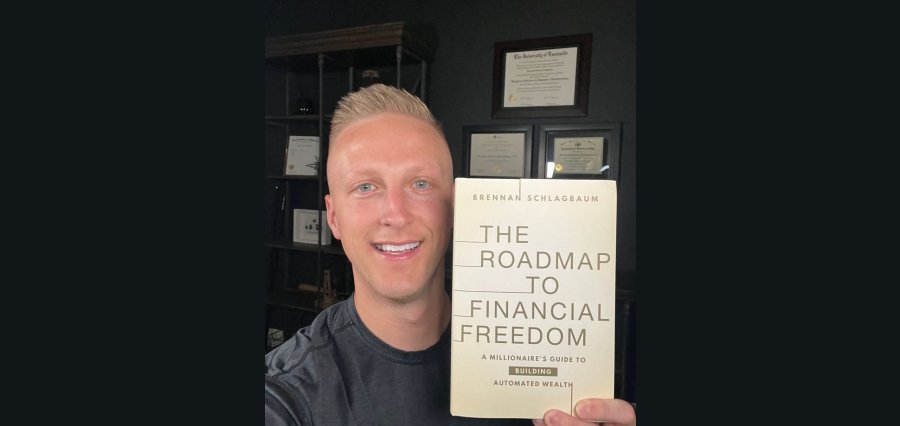
The Psychology of Financial Freedom: Why Behavior Matters More Than Income, reveals Brennan Schlagbaum from Budget Dog
DALLAS, TX — The popular thought states that more money means greater financial freedom. On the contrary, several high-earning people still need to live from paycheck to paycheck, while those with smaller incomes accumulate wealth quietly. As more studies in financial psychology and behavioral finance prove, financial success depends far less on income and much more on spending habits, decisions, and mentality regarding finances. Brennan Schlagbaum, a Certified Public Accountant (CPA), author, and founder of Budget Dog, is familiar with that personally. After managing to eliminate over $304,000 in personal debt as well as earning a net worth of seven digits in several years, Schlagbaum believes that the process of financial transformation starts with behavior, rather than income change. “You are your own problem; therefore you are your own solution,” is how Schlagbaum describes the change of mind he underwent on his way to financial success; government as well as academic research also suggests the same idea. Financial Psychology: The Reasons Why Intelligent People Make Bad Financial Choices Many individuals believe that financial choices are based on reason, but the subject of financial psychology reveals another picture. Financial choices are determined by factors such as emotions, childhood experiences, personal beliefs, stress, social influence, and habitual patterns of thinking. Long before a person makes a decision about saving, investing, or spending, the brain starts working in accordance with established behavioral patterns which have been formed throughout many years of repeated actions. That explains the fact that people tend to know perfectly well what they are supposed to do, but cannot act according to their knowledge. The thing is that knowledge usually does not change a person’s behavior, while habits do. Increasingly, scholars define financial health as the ability to combine financial literacy and behavioral consistency. Government Research Reinforces the Importance of Behavior According to the United States Consumer Financial Protection Bureau CFPB, financial well-being is defined not only in terms of one’s income and/or net worth, but in terms of actions and results: ability to manage daily finances, capacity to cope with unforeseen financial disruptions, progress toward financial goals, and freedom to make decisions without fear. Remarkably, there is no income level specified here at all. Instead, emphasis is put on what allows financial resilience to exist. Survey results from the Federal Reserve Board’s Survey of Household Economics and Decisionmaking (SHED), which tracks the financial situation of thousands of Americans every year, show similar results. The survey continues to prove that households from various economic backgrounds face difficulties related to the issues of emergency preparedness and financial resilience; high income does not guarantee financial stability. Research results from the National Institutes of Health (NIH) prove that a sense of financial control does bring positive benefits when it comes to improving quality of life. In other words, such financial control implies that individuals with a feeling of financial control tend to be financially confident no matter how high their income is. These research results point at an important conclusion is that while income creates possibilities, behavior determines the effectiveness of their utilization. Money Habits and Their Impact On Financial Results Financial habits develop through practice. Each spending choice, saving deposit, investment, and budget decision reinforces the habit that eventually becomes automatic. Over the years, people stop thinking of how to manage their finances and act according to their habits. This is also the reason why changing people’s financial behavior can be difficult at first. The human brain prefers the familiar mode of action, even if it is harmful for long-term goals. As Schlagbaum explained, the process of achieving financial independence starts with replacing wrong habits with the system which supports proper financial behavior. “Money does not increase the level of self-control,” he states. “It does not make people more disciplined. It simply makes people act according to their habits.” Behavioral Biases Quietly Influence Everyday Decisions Behavioral biases are at play in the everyday choices people make when it comes to their finances. Behavioral finance has identified several cognitive biases that influence money matters. Present Bias leads to immediate satisfaction and makes it hard to favor long-term savings against short-term spending. Loss Aversion makes people more afraid of losing money than appreciating what they gain, so emotions take over during tough economic times, and people act emotionally when the market conditions are uncertain. Lifestyle Inflation slowly increases the amount a person spends with any increase in income, making it hard to convert any salary increases into money in the bank. These biases apply to everyone, no matter how smart they are or how well they understand money matters. “Brains tend to seek safety and stability,” says Schlagbaum. “Our goal is not to get rid of our emotions but to have a system of making decisions that would not allow emotions to rule every financial decision.” A Better Decision Framework: Systems Over Willpower One of the biggest misconceptions in personal finance is the idea that success relies on discipline. According to behavioral psychology, the truth is quite the opposite. Willpower is a limited resource, which gets exhausted by the end of the day when one has to make countless decisions. Instead of urging individuals to use self-control constantly, Schlagbaum says that it is better to cut down on the number of decisions. His system revolves around four guiding principles: Allocating a purpose to each dollar using zero-based budgeting before the start of the month. Using automation in savings and investment so that financial improvement takes place before spending. Setting up boundaries for decision-making, like waiting 24 hours before buying anything non-essential. Reviewing progress in financial management in order to make minor adjustments before things go wrong. Such systems ensure that financially sound decisions are made repeatedly rather than occasionally. Building Better Systems Creates Better Financial Outcomes Behavioral finance consistently shows that true financial success is not achieved by a single great investment choice or even a substantial increase in salary. This is done by making hundreds of smaller decisions on an ongoing basis.

Executive Career Upgrades Reveals Top Mistakes Senior Leaders Make in Executive Job Searches
Many senior executives discover that what worked for them to get promoted throughout their career doesn’t always work to secure their next leadership opportunity. Many senior leaders inadvertently adopt a mid-level approach to executive job searches, which restricts their visibility and opportunities in an increasingly competitive market. Executive Career Upgrades (ECU) Executive hiring is very different from a typical job search where you just submit applications online. When evaluating directors, vice presidents and C-suite candidates, organisations look beyond technical expertise to assess leadership impact, strategic thinking, executive presence and the ability to solve complex business challenges. Many highly qualified leaders are passed over not because they lack the experience, but because they do not effectively position that experience, according to Executive Career Upgrades, an executive career coaching and leadership advisory firm that specialises in career transitions for senior professionals. The firm’s coaching focuses on executive branding for directors, VPs and executives, job search strategy, interview preparation and leadership transition. Mistake #1: Viewing an Executive Search as a Standard Job Search Senior professionals make the classic mistake of relying almost exclusively on online applications. While job boards can be helpful for many positions, executive recruiting more often depends on relationships with recruiters, referrals, leadership circles, and direct conversations with decision makers. Sure, a blanket application approach can result in competing against hundreds of applicants as an experienced leader and missing out on opportunities through executive networks. Executive Career Upgrades encourages leaders to create a targeted search strategy based on target organisations, networking, executive positioning and consistent outreach rather than relying solely on job postings. Mistake #2: Focusing on Responsibilities, Not Business Impact Senior executives may have great career trajectories, but many résumés still focus on responsibilities rather than tangible business results. Hiring committees want to see evidence that you have made a leadership impact that resulted in revenue growth, operational improvements, cost reductions, organisational transformation, and successful strategic initiatives. Executive branding should clearly state how a leader creates business value, not just what their job duties are, said Executive Career Upgrades. The firm’s published guidance focuses on how to highlight accomplishments in a way that demonstrates strategic leadership instead of task management. Error #3: Undervaluing Executive Branding A LinkedIn profile and Resume are often the first impression, but executive branding is so much more than that. Mistake #4: Only Looking at Compensation Compensation is, of course, a critical consideration in executive transitions, but veteran leaders are increasingly coming to realise that the scope of the role can often be equally important. The combination of leadership ability, influence in the organisation, resources available, reporting structure, equity opportunities, and potential for future growth all combine to establish the overall value of an executive position. For leaders, Executive Career Upgrades suggests thinking about the total opportunity, not just base salary, and asking yourself if a position will move your broader leadership goals forward. Mistake #5: Showing Up to Executive Interviews Unprepared The interviews for executive positions are very different from interviews for mid-level management positions. Hiring panels often go beyond technical knowledge and probe into leadership philosophy, organisational change, stakeholder management and strategic decision-making. Basically, candidates are expected to articulate not only what they did, but how they impacted results across teams and organisations. In fact, executive recruiting professionals have recently commented that senior candidates frequently sabotage their interviews by focusing too much on the technical details, reciting their resumes or being vague about their next career move. Executive Career Upgrades incorporates executive interview preparation into its coaching methodology, helping leaders craft powerful business narratives, prepare for board-level discussions, and confidently communicate strategic value. Mistake #6: Waiting Until They Have A Job Many executives wait to update their professional brand or grow their network until they suddenly find themselves in search of a new role. But today’s leaders are increasingly expected to market themselves, build networks proactively and manage their careers. As career security becomes less predictable, the latest workforce trends indicate that professionals are investing more consistently in personal branding, skill development and networking. Executive Career Upgrades encourages senior leaders to view career management as an ongoing leadership responsibility instead of a reactive process that begins after a job loss or organisational change. How to Conduct a More Strategic Executive Job Search? Executive Career Upgrades believes that successful executive searches require structure, accountability and a long-term view. Its coaching programmes are designed for directors, vice presidents and senior executives who are dealing with promotions, confidential job searches, career transitions, leadership development and executive branding. Company published materials say services include executive career coaching, LinkedIn optimisation, interview preparation, leadership coaching and structured job search strategies for senior professionals. With executive hiring changing all the time, organisations are looking more and more for leaders who can show they have a real impact on the business, tell a great story about their leadership and handle tricky business situations. For the experienced professional, success may depend not only on decades of experience, but on how effectively that experience is positioned in today’s executive marketplace. What is Executive Career Upgrades? Executive Career Upgrades is an executive career coaching and leadership advisory firm that specialises in helping directors, vice presidents, and senior executives navigate career transitions, strengthen executive branding, prepare for interviews, and develop structured executive job search strategies. The firm also provides leadership development and career coaching designed to help senior professionals position themselves for long-term career growth. Read Also : The Psychology of Financial Freedom: Why Behavior Matters More Than Income, reveals Brennan Schlagbaum from Budget Dog

The Most Inspiring Women in Leadership & Organizational Development – 2026
The Most Inspiring Women in Leadership & Organizational Development – 2026 Vidyalakshmi Venkatraman, Head of People and Organizational Development at Sobha Realty, has redefined the role of human resources by building structured talent and leadership systems that drive long-term business growth. Guided by clarity, continuous development, and strategic leadership, she combines data-driven decision making with a people-first approach, fostering high performance, psychological safety, and a culture of ownership that develops future leaders while strengthening organizational capability. Digital Link Quick highlights Quick reads