





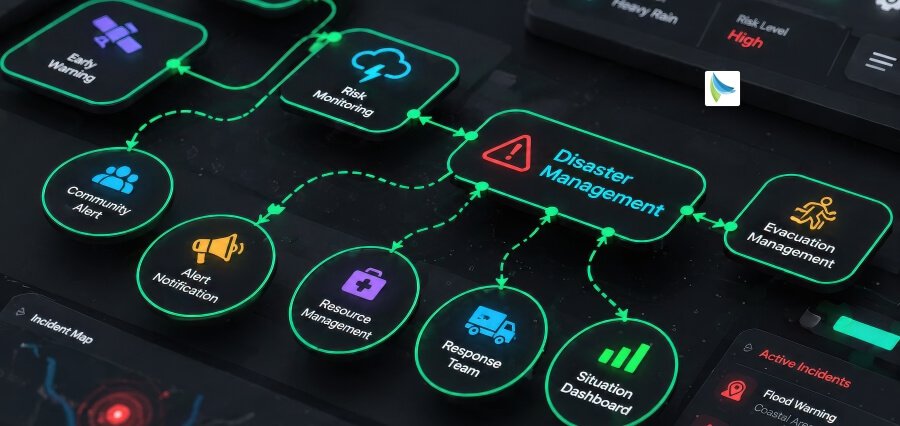
Advancing Strategic Risk Management
Disaster Management Solutions Organizations now work in an environment where they are subjected to natural disasters, cyber-attacks, disruptions in the supply chain, climatic changes, and changing geopolitical risks. These changes demand more from the organizations in terms of adopting proactive strategies to enhance their resilience. This is where Disaster Management Solutions come in handy. They offer a framework for organizations to identify hazards and minimize any disruptions to the organization. In addition to that, strategic risk management helps organizations analyze the threats and allocate their resources to integrate resilience into their business. Building a Proactive Risk Culture Good organizations realize that being resilient starts well before any crisis situation arises. The creation of a culture of preparedness ensures that the management, employees, and other interested parties appreciate the risks involved and get actively involved in mitigating such risks. Good Disaster Management Solutions include emergency response plans, business continuity processes, resource management, and preparedness exercises to enhance organization preparedness. Similarly, good Risk Management Strategy involves constant risk assessment, good governance, and good decision-making to mitigate risks before they arise as organizational problems. Technology Strengthening Organizational Resilience The advent of digital innovations is changing the way businesses recognize, measure, and react to possible risks. Artificial intelligence, predictive analytics, cloud computing, geographic information systems, and real-time monitoring tools can be of great help to prepare and response of organizations. All of these innovative tools contribute to enhancing Disaster Management Solutions, as they provide rapid communication in case of emergencies, alerting, resource management, and incident management. On the other hand, intelligent tools will facilitate the work of Strategic Risk Management, as they will help identify new risks and vulnerabilities. Protecting Business Continuity The uninterrupted running of processes is now the key focus of each industry when an emergency arises. Companies that are involved in resilience planning are more capable of safeguarding their employees, clients, logistics, and services. Disaster Management Solutions help prevent interruptions in operations by laying down procedures for responding, recovery, and communicating. In addition, Strategic Risk Management ensures business continuity through scenario planning, contingency planning, and building resilient infrastructures. Collaboration Enhancing Preparedness Disaster preparedness involves coordination among the government, emergency services, businesses, technology firms, the community, and infrastructure firms. Coordination enables better collaboration and communication during emergencies. Collaborative Disaster Management Solutions enable businesses to coordinate their emergency response activities. Similarly, Strategic Risk Management promotes collective responsibility in terms of risk awareness in organizational management and planning. Strengthening Leadership and Continuous Improvement Preparedness requires dedication on the part of leadership, learning, and improvement through every difficulty encountered. Leaders need to make sure that the investments in building resilience are made, the efforts get proper oversight, and everyone is involved in the process. The benefit of running emergency drills and crisis simulations, training employees, and conducting post-incident evaluations is that they uncover vulnerabilities in the system and enhance future preparedness for emergencies. EDS advocates for changing emergency plans according to emerging threats, technology developments, and what was learned from previous incidents. Likewise, Strategic Risk Management calls for continuous monitoring of the risks in operations, finances, environment, and cybersecurity to enable making informed decisions prior to any disruptions occurring. The Future of Organizational Resilience Future organizations will work in an environment that is characterized by the need for resilience in order to foster sustainable growth and competitiveness. With the increased risks posed by climate change, cyber risks, interruptions in the supply chain, and regulatory changes, organizations will have to improve their resilience while being flexible enough to be able to adapt to new environments. Emerging technologies like artificial intelligence, predictions, digital twins, Geographic Information System, and automatic communications will be used for improving Disaster Management Solutions through early warnings, coordination, and better incident management. Moreover, Strategic Risk Management will become more data-driven than before. By integrating the solutions of disaster management within their day-to-day operations and risk management strategies within their strategic planning, organizations become more resilient. In doing so, organizations are able to protect their employees and their valued assets, earn their stakeholders’ confidence, and have the ability to recover from any unforeseen occurrences. Because resilience is considered to be an ongoing process and not one that occurs periodically, organizations can reduce risks and plan for the future. Read Also : Empowering Leaders: Business Technology Solutions for Smarter Decision-Making

Dr. Alan O’Beirne: The Man Who Learned Leadership Before He Learned Business
What does a career look like when it is built entirely around people rather than around a profession? It looks like Dr. Alan O’Beirne’s. It moves through the Royal Air Force and Outward Bound, through the Alps and the Himalayas, through Switzerland’s hospitality industry and Bermuda’s, through personal loss and professional reinvention, and through an emerging expertise in crisis, disaster, and emergency management that the world is only beginning to take as seriously as it deserves. It does not follow a straight line because the question it is answering, how do you serve people well in every environment and every circumstance, does not have a single answer. It has many. And Dr. O’Beirne has spent a lifetime finding them. In 2026, with an Honorary Professorship from Kennedy University in Paris and a Chartered Doctoral Fellowship to his name, that lifetime of searching has arrived somewhere unmistakably significant. From the Oil Rig to the Royal Air Force The career of Dr. Alan O’Beirne does not read like a conventional professional biography. After finishing school at Broughton Secondary School in Edinburgh, he did not go directly to university. He worked on an oil rig construction site, a physically demanding and hierarchically clear environment that taught him early what real responsibility looks like when it is stripped of pretension and reduced to its most essential elements. From there he joined the Royal Air Force, where the lessons became more systematic and more deeply structured: discipline, teamwork, preparation, and the particular kind of readiness that military training installs not just in outward behavior but in the character of the person receiving it consistently over time, in ways that remain long after the formal service has ended. These were not detours from a career. They were their foundations. When he eventually left the RAF and joined Outward Bound, the pieces of his professional identity began to assemble themselves around a core conviction that has remained constant across the decades that followed. He reflects, “Leadership is not about a title, position, or authority. It is about responsibility, consistency, and the ability to inspire confidence through action.” At Outward Bound, he witnessed something that had already existed in his own formation but now became visible through the people he worked alongside: the outdoors functioning as a genuine and powerful tool for human development. People arrived unsure of themselves and left knowing something about their own capacity that no classroom had managed to show them. That observation became the intellectual engine of his professional life and the lens through which he has read every subsequent chapter of his career with increasing clarity and personal conviction. The Mountains and What They Teach From Outward Bound, the mountains called him back directly and deliberately. He worked as a tour guide for two British travel companies in the Alps and the Himalayas, leading people through terrain that demands deep respect, thorough preparation, and the ability to adjust a plan mid-execution without losing the confidence of the people depending entirely on the person in front of them. The capabilities that emerged from that period are not metaphorical. They are the literal operational disciplines of crisis and emergency management applied in the field every day: reading a situation accurately, communicating clearly under sustained pressure, prioritizing people over plans, and remaining calm in environments that are actively discouraging exactly that response in everyone around you. He notes, “Guiding people through unfamiliar places taught me the importance of preparation, communication, safety, adaptability, and care. These lessons are naturally connected with hospitality, where success depends on understanding people and anticipating their needs before they are even expressed.” The move into hospitality that followed was not a change of direction. It was a natural translation of the same values into a different context and a different kind of responsibility. In Switzerland, and then in Bermuda where he has since remained, he found that the industry rewarded exactly the capabilities he had spent the previous chapters of his life developing. Understanding people deeply, anticipating needs before they become requests, creating an atmosphere of genuine trust and welcome, remaining calm under operational pressure, and taking real personal responsibility for the experience of others: these are the disciplines of good guiding, good military service, and good hospitality, and the common thread connecting all three is precisely and consistently the same set of human values applied with care in different environments across very different decades. Crisis Management as a Leadership Philosophy What makes Dr. O’Beirne’s profile distinctive in the hospitality world is the serious academic and professional attention he has given to crisis, disaster, and emergency management, a field that most hospitality leaders consider adjacent to their core work and he considers absolutely central to it and to any honest understanding of what genuine leadership responsibility requires. The Honorary Doctorate he received from Dunster Business School on July 5, 2025, reflected a sustained and deepening engagement with the field that has shaped how he thinks about leadership, planning, and human responsibility across every role he has held. His Honorary Professorship from Kennedy University in Paris, received on January 13, 2026, extended that recognition into the academic sphere, positioning him as a genuine contributor to the field rather than only a practitioner within it. His Chartered Doctoral Fellowship from the Institute of Management Specialists, conferred on June 16, 2026, completed a formal framework of recognition that sits alongside rather than above the practical experience that produced and earned it over many years of sustained and serious engagement with the subject. The core argument he makes about crisis management is not complicated, but it runs directly against how most organizations actually behave in practice when conditions are comfortable. Good business is not only about expanding during good times. It is about preparing for difficult times and protecting people when challenges arrive, and the pressure is at its highest point. The organizations that manage disruption most effectively are those that built the systems, the culture, and the leadership capacity well before the disruption
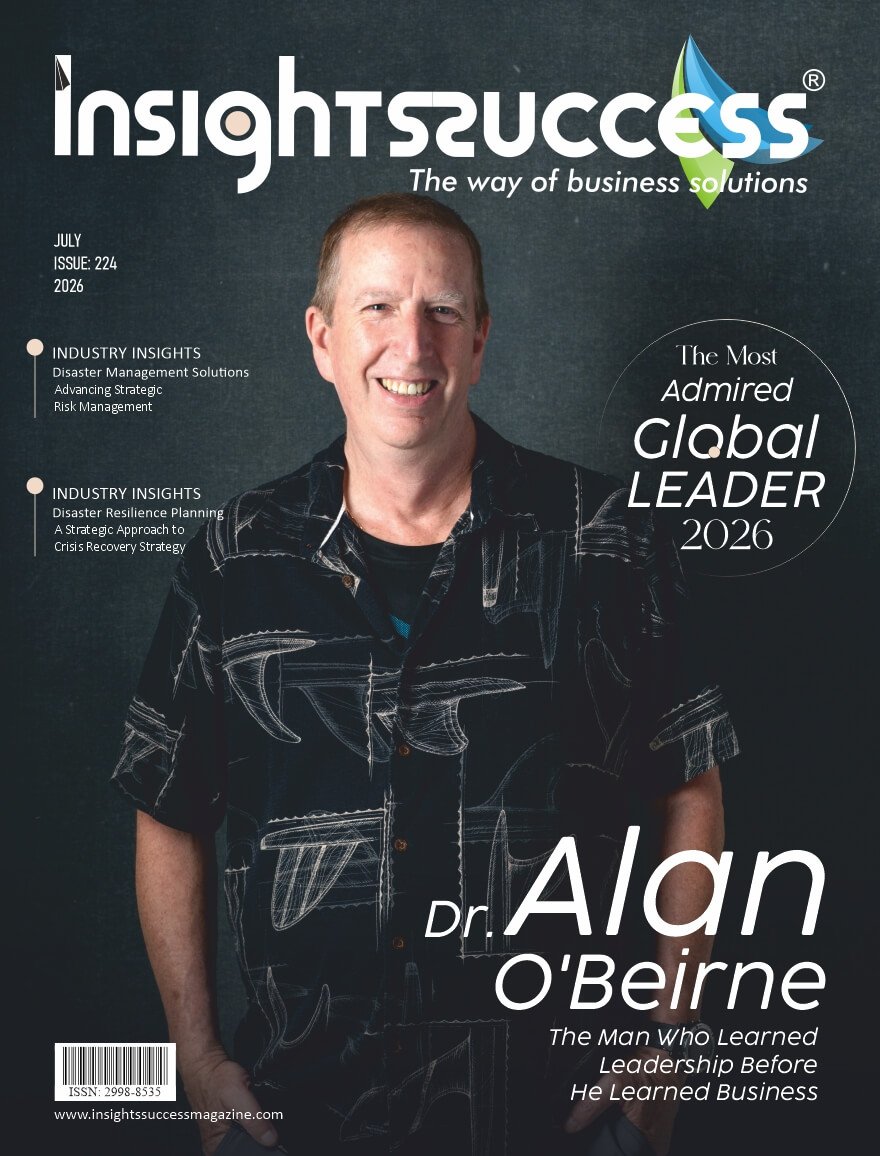
The Most Admired Global Leader 2026
The Most Admired Global Leader 2026 Celebrating an exceptional leader whose vision, purpose, and global influence inspire meaningful progress, this edition recognizes remarkable achievements, transformative leadership, and a lasting commitment to creating positive impact across industries and communities. Digital Link Quick highlights Quick reads
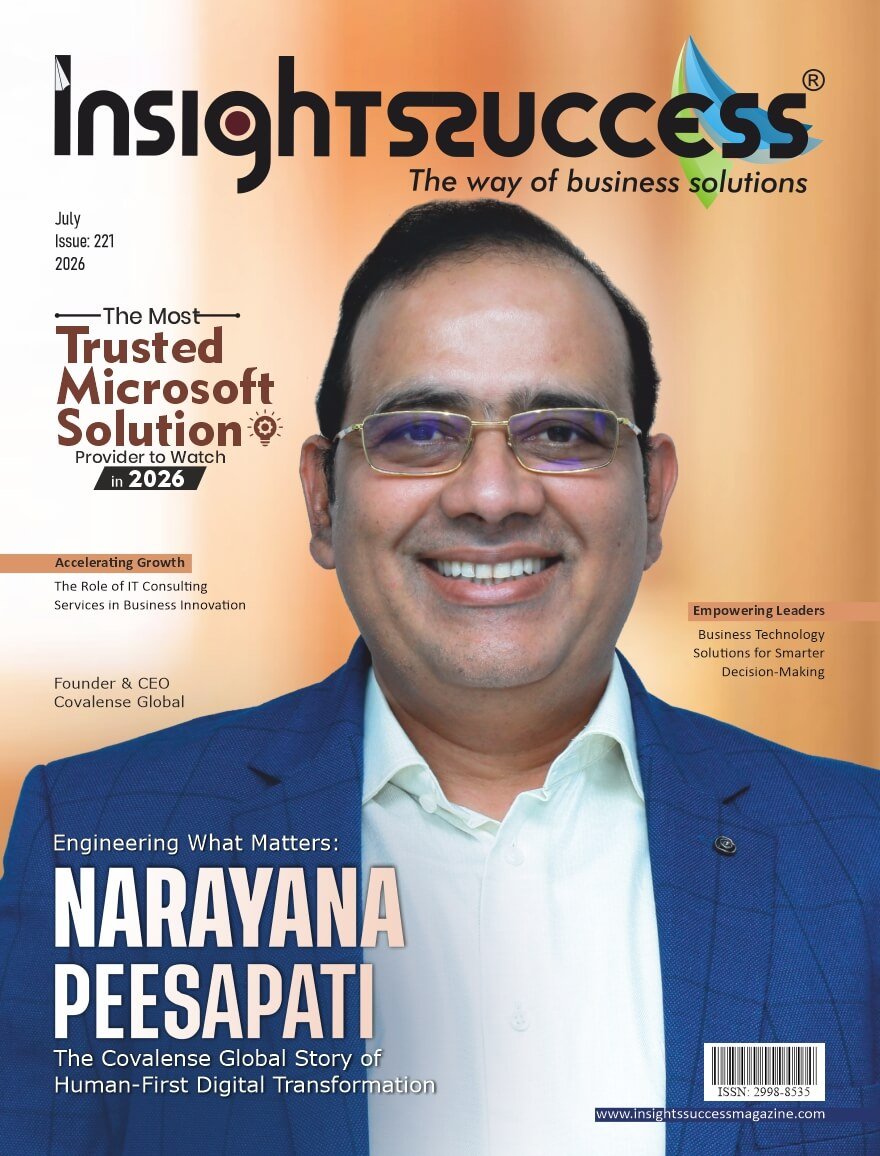
The Most Trusted Microsoft Solution Provider to Watch in 2026
The Most Trusted Microsoft Solution Provider to Watch in 2026 Narayana Peesapati is the Founder and CEO of Covalense Global, recognized for building a people-first technology company that combines engineering excellence with human-centered innovation. His leadership emphasizes simplifying enterprise technology, driving meaningful digital transformation, and creating sustainable business value through strategic vision, design thinking, and customer-focused execution. Digital Link Quick highlights Quick reads

Engineering What Matters: Narayana Peesapati The Covalense Global Story of Human-First Digital Transformation
Twenty years ago, a shared conviction that technology should serve people, not the other way around started an entrepreneurial journey that would span continents and reshape how global enterprises think about digital transformation. Today, Covalense Global is one of India’s most trusted names in enterprise technology. This is the story of how they built it. What makes this journey particularly compelling is not just the scale the company has achieved, but the philosophy that has guided it from the very beginning. In an industry often driven by speed and disruption, Covalense chose a different path—one defined by thoughtful engineering, human-centered design, and a deep commitment to delivering meaningful outcomes. This approach has enabled the company to create a lasting impact while maintaining consistency in quality and vision. At a time when digital transformation is often associated with complexity, Covalense Global has consistently focused on simplifying technology. This clarity of purpose has allowed it to stand out as a partner that not only delivers solutions but also redefines how enterprises experience technology. A Vision Rooted in Purpose At its core, Covalense Global was founded with a clear and forward-looking vision to simplify technology and make it more meaningful, usable, and impactful for businesses. Narayana Peesapati, Founder and CEO, and Krishna Peesapati, Co-Founder and COO, established the company in 2006 with the belief that enterprise technology should begin with understanding people, their workflows, and their challenges. Their approach centred on aligning innovation with real-world usability and long-term business value. Design thinking, empathy, and human-centered engineering were not ideas introduced later, but foundational principles embedded into the company from the very beginning. At a time when the industry was still evolving toward user-centric approaches, Covalense was already building solutions that prioritised experience alongside performance. This clarity of vision continues to define the company today, shaping how it designs systems, delivers transformation, and partners with global enterprises. Over the years, this vision has evolved into a guiding framework that influences every layer of the organization—from strategy and architecture to execution and delivery. It ensures that every solution is not only technologically advanced but also intuitive, scalable, and aligned with real-world needs. This ability to balance innovation with usability has become a defining characteristic of Covalense Global’s success. The Early Years: Building Trust Before Scale The early years of Covalense Global were shaped by a disciplined focus on quality, consistency, and trust. Rather than pursuing rapid expansion, the founders concentrated on delivering measurable value through every engagement. Each project became an opportunity to demonstrate a thoughtful, outcome-driven approach to technology implementation. A defining moment came when Covalense worked with an enterprise client seeking a standard system deployment. By taking a deeper look at the organisation’s workflows and user interactions, the team identified opportunities to simplify processes and improve usability. The outcome was not just a successful implementation, but a meaningful improvement in operational efficiency and user adoption. Engagements like these helped establish Covalense as a reliable partner capable of delivering both technical excellence and business impact. During this period, the company also made a strategic decision to invest deeply in the Microsoft ecosystem, building expertise across Azure, Dynamics 365, and the Power Platform. This focus enabled Covalense to develop strong, certified capabilities while maintaining flexibility to work across technologies as client needs evolved. These formative years were instrumental in shaping the company’s culture. By prioritizing trust over scale, Covalense built long-term relationships with clients who valued reliability and consistency. This foundation would later enable the company to expand globally without compromising on its core principles. The Foundation of Excellence Covalense Global’s philosophy is anchored in three core principles: Innovation Continuous exploration of emerging technologies, including AI, automation, and cloud-native architectures, drives the company’s ability to deliver forward-looking solutions. Covalense also builds IP-led accelerators that enhance speed, efficiency, and scalability. Customer-First Approach Every engagement begins with understanding the customer’s journey, business objectives, and long-term goals. This ensures that solutions are aligned with measurable outcomes and sustainable value. Engineering Excellence with Design Thinking Covalense integrates engineering precision with human-centered design. Every workflow, interface, and capability is crafted with empathy, simplicity, and scalability in mind. Together, these pillars position Covalense Global as a strategic transformation partner for enterprises navigating complex digital landscapes. These principles continue to guide the company as it scales, ensuring that growth does not come at the expense of quality or purpose. Technical Brilliance and Future-Ready Engineering Covalense Global’s technical expertise spans Azure Cloud, Dynamics 365, the Power Platform, Data and AI, and Modern Workplace. Its engineering philosophy focuses on building future-ready architectures that combine AI-enabled workflows, cloud native scalability, and design-led user experiences. Each solution is designed to evolve with the organisation, ensuring long-term adaptability and resilience. In an environment where technology evolves rapidly, this forward-thinking approach ensures that enterprises are not just keeping pace but staying ahead. Covalense’s solutions are built with longevity in mind, enabling continuous innovation without the need for constant reinvention. Centers of Excellence: Driving Innovation at Scale The company’s Centers of Excellence serve as innovation hubs where ideas are transformed into enterprise-grade solutions. Within these centers, teams: Build automation blueprints and reusable accelerators Develop enterprise AI models Design intuitive, user-centric digital journeys Create global rollout frameworks Prototype cloud-native solutions These centers ensure that every project is technically robust, design-driven, and ready for large-scale deployment. They also foster a culture of experimentation and continuous improvement, allowing Covalense to stay at the forefront of technological innovation. India’s Technology Moment and Covalense’s Place Within It Covalense’s growth reflects the broader transformation of India’s technology ecosystem. Over the past two decades, India has evolved into a global hub for innovation, supported by a strong engineering talent base and a culture of problem-solving. Covalense has been an active participant in this journey, leveraging these strengths to deliver high-impact solutions for global enterprises. As Narayana notes, India’s engineers bring a unique combination of technical depth, creativity, and practical thinking. This ability to solve complex problems efficiently has become a key advantage in delivering enterprise

Empowering Leaders: Business Technology Solutions for Smarter Decision-Making
Organizations today are working in an environment where each decision involves serious financial and strategic considerations. The market dynamics are constantly changing, and the customers’ demands are becoming increasingly complex. The executives are not able to depend on experience or instinct anymore for making decisions related to their businesses. Information becomes very important at this point in time. Technology plays an integral role in this process due to its capability to help organizations in collecting and analyzing information in an efficient manner. The significance of technological solutions in business comes from the fact that organizations should be able to align technology innovation with their business goals. Technological solutions provide an opportunity for businesses to gain improved visibility, collaboration, and decision-making based on factual evidence rather than on guesses. No matter whether an organization decides to enter a new market, improve its customer support, or become more efficient in operations, the basis of informed decision-making will lie in technology. Data Intelligence In today’s business world, data is one of the most important assets that any organization has. Everything from customer interactions to operations management to financial transactions and even logistics produces data, which can provide insight into certain business trends. Today’s analytics tools help organizations derive meaning from all this information using dashboards, predictive analytics, and performance reporting. Organizations can identify their opportunities and evaluate the performance of their businesses based on changing market conditions. Rather than depending only on past reports, organizations now have the ability to use live data to evaluate their performance. All of this information relies on how well the technology being used is constructed. Good technology for a business will ensure that all data from various departments is merged into one database. This ensures consistency, less manual report generation, and allows management to assess their performance based on accurate data. Through advanced analytics, organizations can get information about customer preferences, predict demand in the market, and allocate resources efficiently. Organizations will therefore improve their forecasting, decrease uncertainty, improve financial planning, and make sustainable decisions. With good data, accountability in business becomes easier since there is evidence for every decision made. Operational Excellence Operational efficiency is a key factor for businesses to succeed. Businesses that manage to automate redundant processes, standardize their procedures, and optimize their communications between departments will be able to perform well in terms of consistency. Technology makes it possible to streamline business operations by eliminating unnecessary administrative burden, reducing mistakes, and focusing on valuable actions. Business processes become faster and more precise through automation. Collaboration tools make sure that there is efficient cooperation between teams. For the success of the operation, one needs to adopt technologies that help in achieving organizational objectives. The successful adoption of business technology should be able to facilitate teamwork among departments, including finance, sales, operations, customer services, and managerial departments. Real-time monitoring of performance allows management to discover any problems within the operation at an early stage. Workers will get information more quickly, and at the same time, management will be able to make decisions by using operational data. This combination of efficiency and transparency leads to good organizational performance. Strategic Growth Technology is not just a tool but a strategic business facilitator. Organizations have started using technology to assist them in innovation, providing better customer experience, and building sustainable competitiveness. The use of technologies such as cloud computing, artificial intelligence, automation, and improved cybersecurity ensures that companies can be run effectively and are ready to adapt to any changes in the market environment. They also give companies the flexibility needed to grow their businesses and enter into new markets. Business leaders need to ensure that the investment in technology is geared towards achieving business results rather than just following the latest innovations. To achieve success in digital transformation, business leaders have to define the goal and take responsibility for change management. The companies that integrate business technology solutions into their future strategy are better positioned to cope with change and deliver better results for their customers and stakeholders. Conclusion Decisions based on improved intelligence are not driven solely by instincts anymore. These decisions are possible through accurate information gathering and improved efficiency. Organizations using appropriate technologies build a platform on which they base their decision-making processes, collaborative efforts, and efficient performance. Thus, combining the use of digital technologies with business goals reduces uncertainty when making decisions. In light of advancing technologies, organizations have to see the process of digital transformation not as an initiative but as a strategically important process. Organizations that innovate with a purpose and constantly adjust to market changes will have more opportunities for overcoming any obstacles and capitalizing on them. With a well-thought-out approach to technology integration, organizations will be able to compete successfully and provide more value for their clients. Read Also : The Importance of Strategic Growth Planning in Business
The Importance of Strategic Growth Planning in Business
Growth does not happen by accident. Companies that scale successfully year after year share one defining trait, they treat growth as a discipline rather than a matter of chance. This discipline is best described as Strategic Growth Planning, the structured process of defining where a business is headed, how it intends to get there, and what resources will be required along the way. For organizations of every size, from privately held firms to publicly traded corporations, this approach separates deliberate expansion from reactive scrambling. At its foundation, Strategic Growth Planning brings together market analysis, financial forecasting, and operational readiness within a single framework. It requires leadership teams to answer difficult questions before capital is committed. Which markets justify entry. Which products merit additional investment. Which capabilities should stay in-house, and which should be handed off to outside partners? Skip that step, and a business often ends up expanding in ways that look impressive on the surface while quietly straining cash flow, stretching management too thin, and chipping away at the quality that customer trust depends on. A retailer that opens a dozen new locations in a single year might post strong headline numbers, all while its supply chain is falling apart behind the scenes. Building a Strong Foundation for Future Growth The pace of change across nearly every sector has made this type of foresight more valuable than ever. Supply chains shift, customer expectations evolve and new competitors enter markets faster than they did a decade ago. A business without a defined plan is left responding to these changes rather than anticipating them. This is precisely why Strategic Growth Planning has moved from a discretionary exercise reserved for large enterprises to a standard practice among small and mid-sized businesses as well. Even founder-led companies with lean teams now incorporate formal planning cycles into their annual calendar. The Role of a Scale-Up Strategy in Business Growth One of the most useful things to come out of this planning process is a clear Scale-Up Strategy. Strategic Growth Planning sets the overall direction, while a Scale-Up Strategy is about the how, specifically how a business adds capacity without sacrificing efficiency or quality along the way. It addresses operational questions such as how many new hires are required, which systems must be modernized and how quickly a company can responsibly add new locations, product lines, or customer segments. Technology plays an increasingly important role in this process, since outdated software and manual workflows tend to falter first when transaction volume rises sharply. Businesses that wait until systems fail under pressure typically pay considerably more to correct them than they would have spent upgrading proactively. The Four Pillars of a Strong Growth Plan A sound growth strategy usually comes down to four things. First, an honest look at how the business is actually performing right now, covering revenue trends, profit margins and whether customers are sticking around or quietly drifting away. Second, a real read on the competitive landscape, one that actually pinpoints where the business holds a genuine edge instead of just listing who else is out there. Third, a financial model that gets stress tested against different growth scenarios before any capital is committed. Fourth, a timeline with real owners attached to each milestone, not just dates sitting on a slide. Overlooking any one of these pillars tends to produce plans that appear compelling in a boardroom presentation but unravel once implementation begins, often within the first two quarters of rollout. The Importance of Strategic Prioritisation Translating these pillars into an effective Scale-Up Strategy requires discipline in sequencing. Businesses that attempt to grow every function simultaneously, including sales, operations, technology and customer service, often end up under-resourcing all of them. A more effective approach prioritizes the one or two areas creating the greatest bottleneck to growth, strengthens those first and then proceeds down the list. This staged approach keeps the plan grounded in what the organization can actually support, rather than what just sounds ambitious on paper, and it gives leadership natural points to pause, reassess, and adjust before putting more capital on the line. Common Mistakes Businesses Make Even well-intentioned companies make avoidable errors during this process. Some treat Strategic Growth Planning as a one-time exercise completed at the start of a fiscal year and then filed away. Markets move too quickly for that approach to remain effective, and the plan should be revisited quarterly at minimum. Others build growth targets around top-line revenue alone, disregarding the strain that rapid expansion places on culture, quality control, and employee retention. A workable Scale-Up Strategy accounts for people and process capacity, not merely sales targets. The Long-Term Payoff Companies that commit to this kind of planning consistently outperform those that do not. Their market entries tend to land with clearer positioning. Cash flow holds up better throughout expansion. Recovery, when conditions shift, arrives faster as well. None of this suggests that Strategic Growth Planning eliminates risk entirely. It simply replaces guesswork with informed judgment, and that distinction often separates a company that scales successfully from one that grows directly into a crisis. Investors and board members have taken notice. Many now expect to see this level of rigor before approving a new funding round or a major expansion budget, a shift that has pushed formal planning into companies that previously handled it on instinct alone. Conclusion In the end, businesses that pair long-term vision with a practical, well-tested plan are the ones that grow without losing what made them successful in the first place. Strategic Growth Planning provides leadership teams with a framework for sound decision-making, and combining it with disciplined execution ensures that ambition and capability advance together rather than apart. Companies that build this discipline into their culture early tend to view rapid growth periods as milestones rather than narrow escapes. Most of the time, this work does not appear dramatic. It shows up in a founder declining a poorly timed expansion, or a finance team rebuilding a forecast after a difficult quarter. These

Hermes Posts 7% Rise In Quarterly Sales As Paris Momentum Builds
Prime Highlights Hermes posts 6.7% currency-adjusted sales growth to €4.1 billion in the second quarter. Leather goods division, nearly half of revenue, grows 10% during the quarter. Key Facts France sales grow 6%, building on improved Paris store momentum. Asia-Pacific ex-Japan revenue rises 2.5%, holding steady with Q1 pace. Background French luxury group Hermes reported accelerating growth in the second quarter, with sales of handbags, silk scarves and perfume rising 6.7% in currency-adjusted terms to €4.1 billion ($4.67 billion), up from 6% growth in the first quarter and in line with expectations. Hermes, known for carefully managing production and sales to preserve exclusivity, has remained one of the steadiest performers in the luxury sector. The group said trading conditions in the Middle East stabilized during the quarter, while tourism in France picked up, supporting stronger momentum. CEO Axel Dumas said the company’s Paris stores saw improved momentum in the second quarter, with tourist traffic in the country strengthening. Hermes’ leather goods division, contributing close to half of overall revenue, posted 10% growth for the quarter, just under the Visible Alpha consensus estimate of 10.8%. In Asia-Pacific excluding Japan, the group’s largest sales region, revenue grew 2.5% in currency-adjusted terms, holding steady with the first quarter’s pace. France posted 6% growth, building on the first quarter. Dumas said the Chinese market is showing signs of stabilizing and expressed satisfaction with the results, noting that Hermes continues to hold up well amid shifting global economic conditions. The results follow updates from industry peer LVMH, as the wider luxury sector continues adjusting to changing demand patterns worldwide. Read Also : NBC Universal Strikes Deal to Bring Peacock to YouTube Premium

Abu Dhabi Announces 11 December 2026 Opening of Guggenheim Abu Dhabi
ABU DHABI, United Arab Emirates – July 28, 2026: The Department of Culture and Tourism – Abu Dhabi (DCT Abu Dhabi) has announced that Guggenheim Abu Dhabi will officially open to the public on 11 December 2026, marking a major milestone in the emirate’s cultural development and reinforcing its growing role as a global destination for arts, culture, and creative exchange. Developed through a long-standing collaboration between DCT Abu Dhabi and the Solomon R. Guggenheim Foundation, Guggenheim Abu Dhabi is designed as a museum of modern and contemporary art that will showcase artistic practices from the 1960s to the present. The institution aims to foster cross-cultural dialogue by presenting diverse artistic perspectives from around the world while reflecting the cultural identity and creative vision of the United Arab Emirates. Located within the Saadiyat Cultural District, the museum will join an internationally recognized network of cultural institutions that includes Louver Abu Dhabi, Zayed National Museum, Natural History Museum Abu Dhabi, and team Lab Phenomena Abu Dhabi. It also becomes part of the Guggenheim constellation alongside museums in New York, Venice, and Bilbao, while establishing its own distinct curatorial identity rooted in Abu Dhabi. “Guggenheim Abu Dhabi represents a defining milestone in our cultural journey,“ said His Excellency Mohamed Khalifa Al Mubarak, Chairman of the Department of Culture and Tourism – Abu Dhabi. “The museum reflects our belief that culture is one of the most enduring ways to connect people and build forward-looking societies. As an integral part of Saadiyat Cultural District, it will create new opportunities for learning, creativity, and cultural exchange while inspiring future generations to engage with artistic ideas from around the world.” Dr. Mariët Westermann, Director and CEO of the Solomon R. Guggenheim Foundation, added, “We are proud to continue our long-standing partnership with the Department of Culture and Tourism – Abu Dhabi in bringing this ambitious museum to life. Guggenheim Abu Dhabi has been conceived as both a regional and global institution, presenting a collection that reflects artistic voices from across continents while creating meaningful opportunities for dialogue, curiosity, and discovery.” A New Perspective on Modern and Contemporary Art Guggenheim Abu Dhabi has been developed as a platform for artistic exploration, presenting modern and contemporary art through a transcultural lens. Rather than following a conventional chronological approach, the museum will highlight artistic connections, shared influences, and evolving narratives across different regions and generations. Its growing collection, developed since 2009, spans a broad range of artistic media, including painting, sculpture, installation, photography, moving image, and new media. Visitors will be encouraged to explore the museum through thematic galleries centered on concepts such as Abstractions, Popular Culture, Land, Language, and Storytelling, creating multiple pathways for engagement and interpretation. The museum also places strong emphasis on supporting artistic practice through commissions, exhibitions, research initiatives, and multilingual public programs that encourage learning and cultural participation. An Architectural Landmark Inspired by the Gulf Designed by the late Pritzker Architecture Prize laureate Frank Gehry, Guggenheim Abu Dhabi occupies a prominent waterfront location on Saadiyat Island, where land meets sea. Inspired by the architectural forms and environmental conditions of the Gulf region, the museum features ten sculptural cones that define its skyline while providing natural ventilation and shade to enhance energy efficiency. The 80,000-square-meter development comprises 30 galleries, connected through a central atrium, offering approximately 11,600 square meters of interior exhibition space alongside 23,000 square meters of outdoor galleries integrated into terraces and sculptural structures. Designed to accommodate large-scale and experimental contemporary artworks, the building itself forms an integral part of the visitor experience. Advanced Abu Dhabi’s Cultural Vision The opening of Guggenheim Abu Dhabi represents another significant step in Abu Dhabi’s long-term strategy to position culture as a catalyst for education, innovation, tourism, and international collaboration. By presenting diverse artistic perspectives while fostering dialogue across cultures, the museum aims to deepen public engagement with modern and contemporary art and strengthen Abu Dhabi’s role within the global cultural landscape. Additional announcements regarding the museum’s inaugural exhibitions, commissions, and public programs are expected in the coming months. About Guggenheim Abu Dhabi Guggenheim Abu Dhabi is a museum of modern and contemporary art developed through a collaboration between the Department of Culture and Tourism – Abu Dhabi and the Solomon R. Guggenheim Foundation. Located in the heart of Saadiyat Cultural District, the museum presents art from the 1960s to the present through a transcultural approach that highlights artistic connections across regions and cultures. Designed by renowned architect Frank Gehry, the museum combines innovative architecture with an expanding international collection, research initiatives, exhibitions, commissions, and multilingual public programs that promote artistic exchange and cultural understanding. Media Contacts Laksh Kapri laksh.kapri@ogilvy.com +91 99208 11654 Hetika Gala hetika.gala@ogilvy.com +91 91675 15184 Avantika Mohun avantika.mohun@ogilvy.com +91 96259 97172 Read Also : Rotary International and Government of India Explore Enhanced Collaboration for Community-Led Development
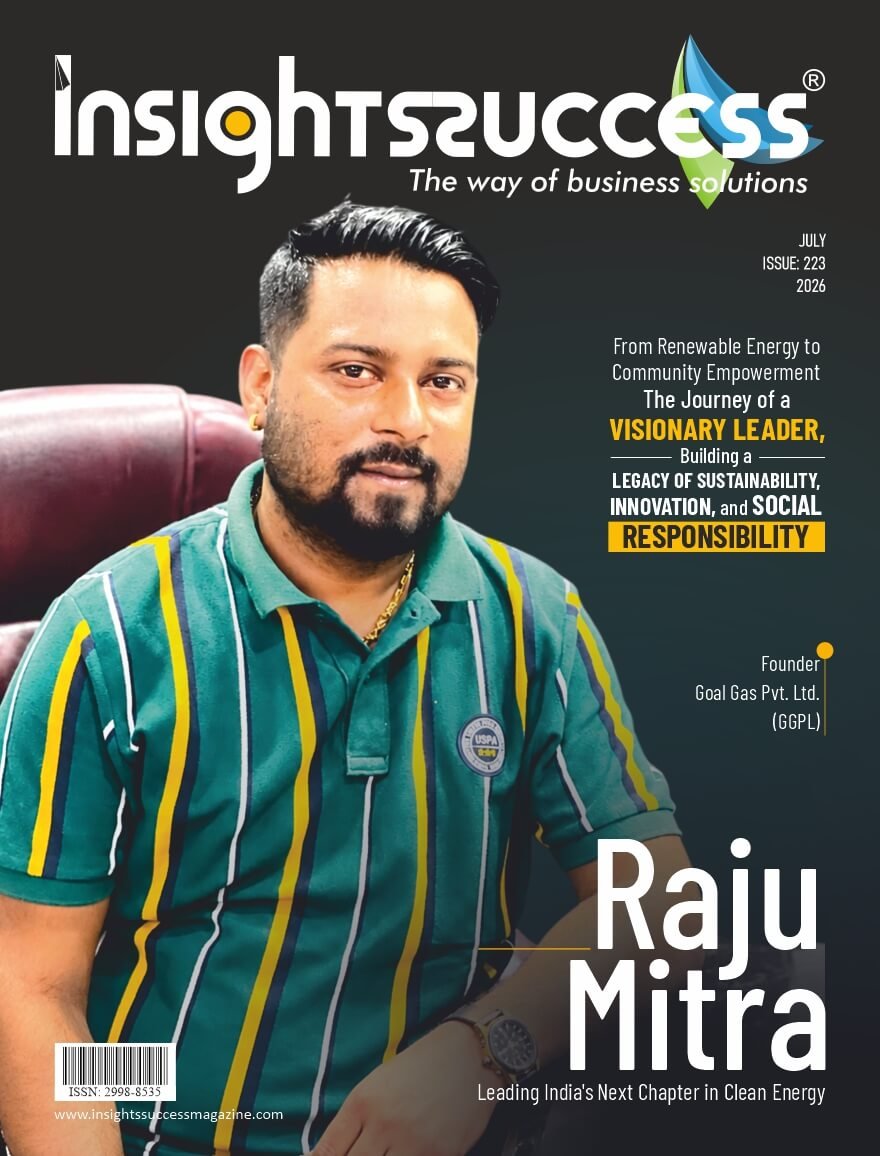
From Renewable Energy to Community Empowerment: The Journey of a Visionary Leader, Building a Legacy of Sustainability, Innovation, and Social Responsibility
From Renewable Energy to Community Empowerment: The Journey of a Visionary Leader, Building a Legacy of Sustainability, Innovation, and Social Responsibility Tracing the journey of a visionary leader, this edition highlights the impact of renewable energy on community empowerment, showcasing sustainability, innovation, and social responsibility in building a lasting legacy for future generations. Digital Link Quick highlights Quick reads