






Executive Coaching in the Age of Remote Leadership
Adapting Coaching Models for Hybrid Teams In recent years, there have been significant changes to the work environment. What was initially considered as a trend that was temporary in nature has turned out to be here to stay for all organizations across the globe. Work from home and hybrid work settings have altered the dynamics of leadership and the way leaders perform and motivate their teams. Although technology has made work from home possible, it has also introduced a new set of skills required for leadership, other than just being proficient in technology. It is important for modern-day leaders to foster trust, motivate their employees, and make decisions in a digitized setting. This has rendered the concept of executive coaching more relevant than ever. Executive coaching used to be a developmental skill needed for the top-level executives, but today, it is essential for those who operate in a digital environment. Why Executive Coaching Matters More Than Ever? Leadership at a distance requires a skillset that is quite different from the leadership in an office environment. It is not possible anymore for managers to have spontaneous conversations in the corridors and resolve issues or assess the mood of their subordinates in a face-to-face setting. This is where the value of executive coaching becomes evident. Coaching does not offer one solution that fits all, but considers the individual leadership styles, skills, and problems of individual executives. Executive coaches help managers become aware of their own blind spots, enhance decision-making ability, and improve their emotional intelligence. Organizations have embraced a flexible work environment and leadership training via coaching will enable leaders to adjust in this constantly changing environment. Executive Coaching Builds Strong Virtual Communication Effective communication remains crucial for any successful leader; nonetheless, telecommuting has changed the format of communication. Various forms of electronic communication such as video conferences, instant messages, emails, etc., have substituted many face-to-face meetings. While technology helps to speed up the process of communication, it also leads to various problems and miscommunications. Due to executive coaching, the leaders will know how to communicate intentionally. Coaches work together with executives to improve their active listening skills, questioning, feedback, and communication through technology. In addition, leaders will be able to understand nonverbal communication during virtual meetings and create dialogue while providing psychological safety to their employees to allow them to express their concerns. Communication not only leads to increased efficiency but also builds relationships between leaders and remote workers. Executive Coaching Enhances Emotional Intelligence The management of remote workers needs an individual to have a high degree of emotional intelligence. This is because managers cannot tell when remote workers feel lonely, stressed, or demotivated since they no longer share the same office space with these employees. Executive coaches will make sure that these executives have increased self-awareness and empathy. This is by showing executives the effect of their actions and behaviors on the dynamics within the team while making them identify emotional cues from employees. An emotionally intelligent manager will be more thoughtful instead of being impulsive. They will create work environments that allow employees to feel valued even in their distant environment. Executive Coaching Strengthens Trust Across Distributed Teams Establishing trust may not be difficult for people who communicate directly with one another. In telecommuting, the need for managers to establish trust through effective communication arises. Leadership coaching will be helpful to executives in knowing how to build trust in a virtual environment. The coach will make leaders encourage delegation of tasks, decision-making by employees, and avoid micromanagement that would demotivate workers. Another element that leads to trust is the consistency of the leader in actions with words. Leadership coaching will enable the executive to remain consistent with their actions in terms of the organization’s values. Trusting employees will enable them to work together effectively, innovate, and be committed to organizational goals. Executive Coaching Supports Better Decision-Making The nature of remote leadership is that of making decisions without having adequate information. The executive must reconcile the requirements of the business, the needs of the employees, the expectations of the customers, and the uncertain environment all at once. Executive coaching enables executives to develop structures for logical thinking and thus make decisions even when under pressure. The coaches question assumptions, broaden the scope of vision and enable the leader to analyze the impact of actions before making them. Coaching does not offer solutions but encourages the executive to find his/her own solutions through strategic questions. Developing Resilient Leaders Through Executive Coaching The current state of affairs for businesses involves a continuous element of uncertainty. Issues such as economic uncertainty, technological disruption, cybersecurity risks, and evolving employee needs call for leaders who can adapt themselves to the situation but not at the cost of losing track of their goals. Being resilient has become one of the most important traits of leadership, and executive coaching has an important role to play in building resilience. Coaches assist leaders in handling stress and remain emotionally balanced and focused even when they are under pressure. They foster healthy practices, reflective practice, and problem-solving skills rather than reactive leadership. How Executive Coaching is Shaping the Future of Leadership Given the changes in the corporate environment resulting from the use of artificial intelligence, automation, and digital collaboration technologies, there will be further changes as far as the necessary qualities of future leaders are concerned. Only technical skills will no longer suffice as criteria for a successful leader; adaptability, empathy, strategy, and inspiration of a leader will be essential criteria for the success of an organization. The coaching itself is becoming technology-based, which simplifies the process even more. Despite the introduction of many recent technological innovations, the coaching process remains people-oriented. Not only are companies working with executives, but they are also working with their successors to develop leadership qualities. Read Also : The Foundation of People-Centric HR

Aligning Human Capital Strategy with Business Goals
The Strategic Imperative The dynamism within the business environment in today’s era has made companies realize the importance of sustainable growth by way of innovation in terms of products as well as technology. While it is possible to make sustainable growth through the product as well as technology, it is equally important for companies to have employees that would help realize these innovative ideas. A good human capital strategy makes sure that there is a linkage between the business strategy and human resources. This strategy is based on talent management that consists of recruiting and developing employees, succession planning, and organizational culture. Companies that manage their human capital in a proper manner have the capability of handling market dynamics effectively. Why Human Capital Strategy Matters in Modern Business? Companies operate in an environment where technology is changing rapidly, there is a change in customer demands, and there is stiff competition worldwide. In order to survive in such an environment, companies will need to have the right people with the necessary skillsets. Workforce planning is not just about getting the right people with the necessary skillsets; it is about creating an organization where its workers will be prepared for future challenges while meeting current business needs. Companies that adopt workforce planning as their business strategy will grow sustainably because all of their employees know how they can help the organization achieve success. Organizations do not view their human resource department as a supportive department but as a strategic one. Building a Human Capital Strategy Around Business Objectives A well-conceived human capital strategy should always be based on the organization’s objectives. Regardless of whether an organization aims to enter new markets, create innovative products, or improve its processes, the organization’s human resources strategy should support these objectives. The managers of the company and the human resources specialists should jointly assess what skills and qualities are required for the organization to achieve the objectives in the future. Strategic workforce planning involves analyzing existing competencies, identifying future skill gaps, making recruitment predictions, and conducting training programs for people to be ready for new tasks. When people understand their role in the organization’s goal achievement, they become engaged. Human Capital Strategy and Talent Acquisition The contemporary notion of recruitment does not end at just filling up the positions that are vacant. Organizational needs go far beyond that; there is a need for skilled people as well as those who would suit the organizational environment and its vision. Strategic recruiting that ensures quality over quantity has to be a part of any sound strategy for human capital management. Apart from skills, the current trend in recruiting includes other factors such as flexibility, problem-solving skills, emotional intelligence, and learning abilities. Employer branding has to be considered when it comes to recruiting talent. The best candidates look for organizations that make efforts to ensure the health, diversity, development, and fulfillment of the work of their employees. Technological advancements, artificial intelligence, and analytics assist in the process of recruiting people. Developing Employees Through Human Capital Strategy Discovering talented people is not everything; learning is an essential element in staying relevant within an organization in relation to organizational competitiveness in the context of today’s business environment. Forward-looking organizations will place emphasis on investing in human resources through learning, mentoring, leadership development, and career development. Organizations that learn continuously will end up creating staff members who are adaptable to changes in the market. The concepts of upskilling and reskilling have taken on special significance considering automation and digital transformation. Rather than lay off employees, organizations prefer to skill their employees and then move them to other jobs. Learning provides an opportunity for employees to become productive, loyal, and innovative. Leadership Development as a Human Capital Strategy Priority Leadership remains one of the greatest assets that companies can ever have. Poor leadership will always result in difficulty in achieving the objectives of the company, even when the workforce is competent. The foundation of any efficient human capital management approach lies in succession planning and leadership development so as to groom potential leaders before any opening arises. It is important to focus on grooming the leaders not only with technical competencies but also with skills like communication, decision-making, change management, emotional intelligence, and adaptability. Organizations that develop their leaders internally benefit from reduced costs on recruitment as well as retention of their organizational culture. Employee Engagement Strengthens Business Performance Those who make employees feel valuable and aligned with organizational objectives always end up getting better results from them. Engaging people is achieved through open communications, appreciation, career growth, work flexibility, and trustworthy leadership. The right human capital management strategy is one that helps employees find purpose in their role within the organization. Constant feedback, teamwork, and rewarding practices help motivate employees to achieve their best. Highly engaged workforces usually result in reduced turnover, better customer satisfaction, increased innovation, and higher profitability. The process of engaging people must be perceived as a commitment, not a one-off event. It shows that the organization takes responsibility for listening and taking action based on what the employees say. Using Data to Improve Human Capital Strategy Workforce analytics have been increasingly adopted by organizations as a method of making decisions pertaining to the organization’s talent. An analytical human capital strategy enables organizations to determine if the recruitment drive, learning plan, leadership development programs, and employee engagement initiatives are working or not. In this manner, organizations are able to make informed decisions about their workforce without making any assumptions. Through predictive analytics, organizations will be able to determine whether there is any problem they will be facing due to talent shortage in the future. The integration of technology with human decision-making enables organizations to become more agile and responsive in a competitive marketplace. Creating Long-Term Value Through Human Capital Strategy Financial success alone cannot guarantee the successful operation of the organization in the long run. For an organization to continue growing into the future, it is essential that

Why Continuous Control Monitoring is Replacing Traditional Periodic Audits, And Why the Shift Can No Longer Wait
For decades, governance, risk, and compliance functions operated on a predictable schedule, with audits conducted monthly, quarterly, or annually to evaluate internal controls. This approach served businesses well in an era when markets evolved gradually, regulatory expectations changed at a measured pace, and operational risks could be addressed over extended periods. Today’s business landscape presents a very different reality. Digital transformation, increasingly complex regulatory frameworks, interconnected business systems, and rapidly changing market conditions have significantly reduced the margin for delayed decision-making. As a result, organizations are moving beyond traditional point-in-time audits and embracing Continuous Control Monitoring (CCM) as a more proactive approach to governance and risk management. Continuous Control Monitoring enables organizations to monitor key controls in real time, allowing potential issues to be identified and addressed before they develop into significant operational, financial, or compliance risks. Rather than serving purely as a compliance exercise, auditing is increasingly becoming an ongoing strategic function that supports business resilience and informed decision-making. The Growing Cost of Delayed Risk Detection One of the primary limitations of periodic audits is the time gap between reviews. A control weakness that emerges shortly after an annual audit may remain undetected for several months, potentially exposing an organization to operational disruptions, financial losses, regulatory penalties, and reputational damage. As businesses become increasingly dependent on digital operations, supply chain connectivity, and automated processes, even minor control failures can have widespread consequences if left unnoticed. Delayed identification of operational inefficiencies may also result in missed market opportunities, allowing competitors to respond faster to emerging business trends. Continuous monitoring addresses this challenge by providing ongoing visibility into business controls, enabling organizations to detect anomalies as they occur rather than after they have already affected operations. Technology Is Making Continuous Monitoring More Practical The widespread adoption of Continuous Control Monitoring has been made possible by significant advances in technology. Modern cloud platforms, application programming interfaces (APIs), artificial intelligence, automation, and advanced analytics now enable organizations to integrate data from multiple systems with far greater efficiency than was previously possible. These technological developments have reduced the complexity and cost traditionally associated with continuous monitoring while making real-time visibility increasingly accessible for organizations of all sizes. At the same time, boards of directors and executive leadership teams are placing greater emphasis on governance, risk management, cybersecurity, and regulatory compliance. Investments in governance and compliance technologies are now viewed not simply as operational expenses but as strategic investments that strengthen organizational resilience and support sustainable growth. Delivering Real-Time Assurance Continuous Control Monitoring transforms how operational information is collected, analysed, and acted upon. Instead of producing periodic reports after issues have already occurred, CCM continuously evaluates transactions and business processes, immediately alerting relevant teams when exceptions or control failures are identified. This approach offers several important advantages: Enhanced assurance: Management gains continuous visibility into the effectiveness of internal controls rather than relying solely on periodic audit findings. Faster decision-making: Real-time insights allow leadership teams to respond quickly to emerging risks while maintaining focus on strategic priorities. Earlier remediation: Potential issues can be addressed before they escalate into larger operational or compliance challenges. By embedding continuous monitoring into everyday operations, organizations are better positioned to strengthen governance while improving overall operational efficiency. The Evolving Role of Internal Auditors The increasing use of automation has raised questions about the future role of internal auditors. In reality, Continuous Control Monitoring is redefining—not replacing—the audit profession. Routine testing, manual sampling, and repetitive data collection can now be automated, allowing auditors to devote more time to higher-value responsibilities such as strategic risk assessment, control optimisation, governance advisory, and business process improvement. Continuous data also enables audit teams to evaluate whether existing controls remain appropriate as business models evolve. Rather than repeatedly testing outdated control frameworks, auditors can recommend improvements based on current operational realities and emerging risks. This evolution positions auditors as strategic business advisors who contribute directly to organizational performance and long-term resilience. Building a More Resilient Governance Framework As regulatory expectations continue to increase and digital business models become more complex, organizations require governance frameworks that provide continuous visibility rather than periodic snapshots. Continuous Control Monitoring offers a practical path toward stronger risk management, improved compliance, and greater operational agility. By enabling timely intervention and more informed decision-making, it helps organizations reduce uncertainty while strengthening stakeholder confidence. As businesses continue to modernise their governance practices, Continuous Control Monitoring is increasingly emerging as a critical capability for organizations seeking to build resilient, future-ready operations in an increasingly dynamic business environment. About the Author Manish Pipalia is the Co-founder of Sama Audit Systems & Softwares Pvt. Ltd. With more than two decades of experience in audit technology, governance, risk management, and continuous control monitoring, he has worked closely with organizations across South Asia to implement full-population audit analytics, automated control testing, and technology-driven governance solutions that strengthen compliance and operational resilience. Read Also : Aligning Human Capital Strategy with Business Goals
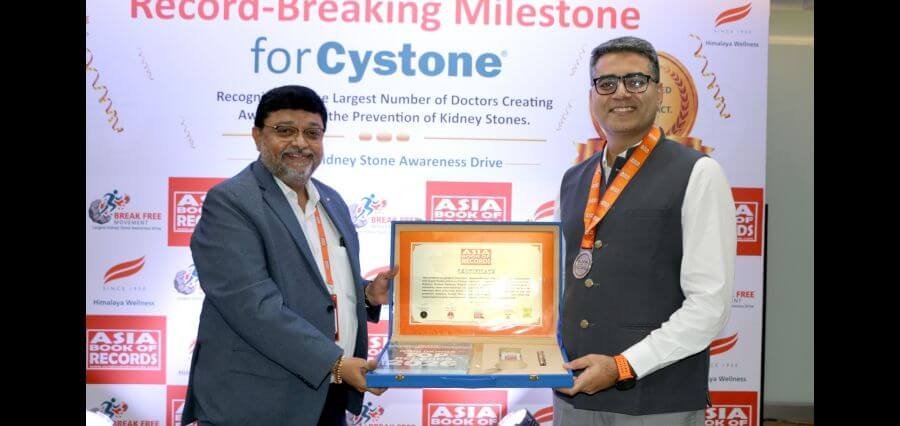
Himalaya Wellness Company’s Cystone Break Free Movement Earns Asia Book of Records Recognition for Nationwide Kidney Stone Awareness Initiative
National | July 16, 2026 — Himalaya Wellness Company’s Cystone Break Free Movement has been recognized by the Asia Book of Records for bringing together the largest number of doctors raising awareness about the prevention of kidney stones. The nationwide initiative engaged 8,248 medical professionals, predominantly General Physicians and AYUSH practitioners, in a coordinated effort to promote preventive healthcare and educate patients on reducing the risk of kidney stone disease. Strengthening Preventive Healthcare Through Doctor-Led Awareness Kidney stone disease continues to be a growing health concern in India, with recurrence rates remaining high among patients who do not adopt preventive measures. Recognising the critical role healthcare professionals play in patient education, Himalaya Wellness designed the initiative to encourage doctors to share practical, evidence-based guidance on kidney stone prevention within their own communities. As part of the campaign, every participating doctor contributed a simple, actionable tip focused on kidney stone prevention. These recommendations were documented through photographs and uploaded to a dedicated digital platform, where they were transformed into personalized awareness flyers featuring the doctor’s advice alongside educational health content. The digital resources were then shared directly with patients through communication channels such as WhatsApp, enabling credible, doctor-led preventive health information to reach communities across the country. The awareness campaign highlighted key preventive practices, including maintaining adequate hydration, adopting healthy dietary habits, making appropriate lifestyle modifications, recognising early symptoms, and seeking timely medical consultation. Recognition Reflects the Power of Collaborative Healthcare Initiatives The Asia Book of Records recognition highlights the scale of the initiative and demonstrates the impact that collaborative engagement between healthcare professionals and public health programmes can have in strengthening preventive healthcare awareness. Commenting on the achievement, Mr. Vikas Bansi, Business Director – Healthcare, Himalaya Wellness Company, said: “Kidney stone disease is largely preventable, yet awareness regarding effective preventive measures remains limited in many communities. This recognition belongs to the thousands of doctors who voluntarily participated in the campaign and extended valuable health education to their patients. We sincerely appreciate their commitment and partnership in making this nationwide awareness movement possible.” Reinforcing the Importance of Early Prevention The Cystone Break Free Movement forms part of Himalaya Wellness Company’s broader efforts to support preventive healthcare through sustained collaboration with the medical community. By empowering doctors to communicate directly with patients, the initiative aimed to ensure that preventive health messaging remains credible, accessible and relevant to everyday clinical practice. The company noted that doctor-led awareness initiatives can play an important role in encouraging early intervention, improving public understanding of preventable conditions, and supporting healthier lifestyle choices among patients. Supporting Kidney Stone Management According to the company, Cystone supports more than 800,000 patients annually in the management of kidney stone disease. The product is available in both tablet and syrup formulations for the management and prevention of small to medium-sized kidney stones, while Cystone Forte is recommended by many specialists for larger stones as part of appropriate clinical management. About Himalaya Wellness Company Founded in 1930, Himalaya Wellness Company has built a legacy of research-driven herbal healthcare based on the principles of Ayurveda. With more than nine decades of scientific research and innovation, the company develops a broad portfolio of healthcare and personal care products designed to support everyday wellness. Combining traditional Ayurvedic knowledge with modern scientific research, Himalaya Wellness remains committed to delivering safe, effective and trusted solutions while promoting preventive healthcare and sustainable well-being. For more information, visit https://himalayawellness.in/. Media Contacts Prameet Hebbar Himalaya Wellness Company Email: prameet.hebbar@himalayawellness.com Hemanth Kumar Burson Genesis Email: hemanth.kumar@bursonglobal.com Read Also : Cars24 Processes Over 1.1 trillion AI Tokens in Q1 FY27, Expands AI Across Customer Operations and Product Development
Cars24 Processes Over 1.1 trillion AI Tokens in Q1 FY27, Expands AI Across Customer Operations and Product Development
New Delhi, India | 17 July 2026 — Cars24 today announced significant progress in its artificial intelligence transformation, revealing that it processed more than 1.1 trillion AI tokens during the first quarter of FY27 (April–June 2026). The milestone reflects the company’s continued investment in AI-driven technologies to enhance customer experience, improve operational efficiency, and accelerate product development. According to the company, AI token consumption has nearly tripled over the past two quarters, with AI expenditure now representing 8.88% of its central salary run-rate, compared with 2.17% during the same period earlier this year. The increase reflects Cars24’s ongoing transition from manual processes to AI-powered workflows across engineering, customer engagement, and operational functions. AI Adoption Expands Across Organization Artificial intelligence has become deeply integrated into Cars24’s day-to-day operations, with 95% of employees now using AI tools on a weekly basis and 85% using them every day, including teams outside engineering. Within the engineering division, 89% of production code is now AI-assisted, while 99.4% of code reviews are supported by AI systems. The company reported that these advancements have contributed to a threefold increase in engineering productivity, enabling faster software development and product deployment. AI Enhances Customer Experience Across Multiple Touchpoints During the quarter, Cars24’s AI platforms analyzed approximately 9.81 million customer conversations, helping improve customer engagement and service quality across buying, selling and financing journeys. The company’s AI-powered voice assistants handled 2.58 million connected conversation minutes, representing a 30.3% quarter-on-quarter increase, while AI chatbots processed more than 550,000 customer requests, recording 128% growth over the previous quarter. These developments highlight the growing role of conversational AI in streamlining customer interactions and improving response efficiency. AI Strengthens Core Automotive Operations Cars24 also expanded the use of AI across its automotive operations. The company reported that 80% of all vehicle inspections, equivalent to approximately 288,000 inspections, were completed using AI-assisted systems during the quarter, a substantial increase from 25% in the previous quarter. Similarly, AI-supported vehicle loan disbursals increased to 65%, more than doubling from the previous quarter, demonstrating wider adoption of AI across operational and revenue-generating functions. Automation Drives Greater Operational Efficiency Operational automation continued to expand during the reporting period through Cars24’s proprietary AI platforms. Its Document AI solution processed approximately 850,000 documents, representing a 143% increase over the previous quarter, while the company’s Agentic AI platform executed more than 5.7 million automated workflows, reflecting 314% quarter-on-quarter growth. Across its retail network, AI also completed more than 423,000 operational validations, reducing repetitive manual tasks and saving nearly 10 hours of manual work each day through automation of attendance verification, operational checklists, and vehicle slot validation. Proprietary AI Infrastructure Supports Business Operations Cars24’s in-house AI ecosystem now consists of six proprietary platforms supporting more than 25 production AI applications across customer service, computer vision, lending, document intelligence and workflow automation. During the quarter, the company’s Agentic AI platform supported 319 active workflows, while more than 45 AI agents operated across customer support, CRM, WhatsApp and voice communication channels. The company’s Document AI platform processed an average of 283,000 documents every month, spanning 27 document categories, while its AI-powered imaging platform standardized approximately 50,000 vehicle images each month, generating operational savings exceeding ₹1 crore. AI Reduces Inspection Time and Improves Customer Engagement Cars24’s AI-assisted vehicle inspection platform, powered by more than 20 proprietary computer vision models trained on over one million vehicle inspections, reduced average inspection time from 45 minutes to 26 minutes. The system completed approximately 360,000 AI-assisted inspections during the quarter while saving nearly 91,000 inspector hours, significantly improving operational productivity. The company’s conversational AI capabilities have also continued to evolve. AI voice agents now achieve 95% to 105% of the conversion performance of human calling teams, while approximately 20% of customer conversations across vehicle buying, selling, and financing are managed through AI-powered interactions. In addition, Voice Conversation Intelligence analyses approximately 3.3 million audio minutes each month, providing insights that help improve customer service quality and sales performance. Leadership Perspective Commenting on the company’s AI transformation, Vikram Chopra, Founder and Chief Executive Officer of Cars24, said: “Artificial intelligence is no longer enhancing isolated processes; it is becoming the operating foundation of Cars24. Processing more than one trillion AI tokens in a single quarter reflects the scale at which intelligence now supports every aspect of our operations. From customer conversations and vehicle inspections to engineering and business operations, we are building an AI ecosystem that understands context, continuously learns, and simplifies every stage of vehicle ownership.” Looking Ahead Cars24 continues to develop a unified AI platform designed to connect vehicle buying, selling, financing, and ownership services through a shared customer intelligence layer. Leveraging more than 11 years of proprietary transaction, pricing, inspection and service data, the company aims to deliver a more seamless ownership experience by enabling AI to understand and support customers throughout every stage of the vehicle lifecycle. About Cars24 Founded in 2015, Cars24 is an automotive platform that offers a range of vehicle ownership services, including buying and selling pre-owned vehicles, financing, insurance, servicing and related mobility solutions. Through Cars24 Financial Services, the company also provides vehicle lending products, supporting consumers across multiple aspects of vehicle ownership. Media Contact Raghav Dua Email: raghav.dua@cars24.com Read Also : Dr. Khulood Shebib Khansaheb Champions a Leadership Model Built on Empowerment, Education, and Ethical Innovation

Dr. Khulood Shebib Khansaheb Champions a Leadership Model Built on Empowerment, Education, and Ethical Innovation
Dr. Khulood Shebib Khansaheb, a distinguished academic and entrepreneurship leader whose career spans Dubai’s government, semi-government, and private sectors, is recognized for a leadership philosophy centered on one guiding principle: a true leader creates other leaders. A Career Rooted in Public Service and Purpose With a career shaped at the intersection of public service, higher education, and entrepreneurial ecosystem-building, Dr. Khansaheb has spent recent years bridging academia and industry, mentoring students and founders, and leading incubator initiatives that turn ideas into ventures. “Leadership is not about having all the answers. It’s about creating opportunities for others to discover their own potential.” Early in her career, she added, success was measured through personal qualifications and recognition; today, it is measured differently,” Dr. Khansaheb said. According to her, the greatest achievement is not building success by yourself, but rather it is empowering others to turn their ideas into reality, describing the satisfaction of watching students discover an entrepreneurial mindset or startup founders validate their first business idea. Values Forged in Government, Carried Into Academia Dr. Khansaheb’s leadership approach rests on five constants that have guided her career: curiosity toward lifelong learning, integrity, teamwork, initiative, and service. These principles, she said, were reinforced during her time in Dubai’s government sector, shaped by the values embedded across its institutions under the leadership of His Highness, ruler of Dubai, Sheikh Mohammed bin Rashid Al Maktoum. Her transition from government to academia marked a turning point. Where government leadership emphasized policy and institutional outcomes, higher academic role along with her industry experience demanded a pivotal focus: engaging, inspiring, and empowering students directly. That shift led her to redesign coursework around industry relevance and build an incubator model connecting students, faculty, and industry to solve real-world challenges. Innovation With a Human Core Central to her philosophy is a belief that innovation must remain human-centered, even as artificial intelligence and automation reshape education and the workplace. “Technology should enhance human capability, not replace human connection,” she said, adding that empathy, ethical judgment, and trust remain qualities no technology can replicate. She pointed, too, to the growing responsibility of leaders to bridge technological fluency with emotional intelligence, arguing that institutions best positioned for the future will combine cutting-edge tools with genuine human connection and shared purpose among diverse teams. Building Trust, One Day at a Time Dr. Khansaheb described trust as earned daily rather than through singular acts of leadership—built through preparedness, follow-through, and consistent presence for students, faculty, and entrepreneurs alike. She encourages young professionals to adopt an entrepreneurial mindset regardless of their field, take initiative rather than wait for ideal conditions, and treat setbacks as catalysts for growth and lessons learned towards determination and continuity. She also emphasized psychological safety within teams and classrooms, describing an environment where students, faculty, and colleagues feel confident enough to challenge assumptions and take calculated risks without fear of failure. “Not every idea will succeed, but every experience provides insight that helps us grow, adapt, and innovate more effectively,” she said. A Legacy Measured in People Asked about the legacy she hopes to leave, Dr. Khansaheb pointed not to authority and individuality, but to people and team work. “If the people I have mentored go on to become confident leaders who create opportunities for others, I consider that my greatest success,” she said. That philosophy of leadership as continuous empowerment across education, entrepreneurship, and ethical innovation positions Dr. Khulood Shebib Khansaheb among a growing cohort reshaping how institutions in the UAE cultivate the next generation of innovators and change-makers. Read Also: Beyond AI Content Creation: How Letscoot is Building the Future of the Creator Economy

Top 5 Women Leaders to Look for in 2026
Top 5 Women Leaders to Look for in 2026 Celebrating exceptional women leaders whose vision, resilience, and influence are shaping industries, inspiring innovation, and creating lasting impact. This edition highlights the Top 5 Women Leaders to Look for in 2026. Digital Link Quick highlights Quick reads

Celebrating Women Who Lead with Vision
Leadership continues to evolve through individuals who challenge conventions, inspire progress, and create opportunities that extend beyond organizational success. Across industries, women leaders are making remarkable contributions by introducing fresh perspectives, encouraging innovation, and building cultures rooted in collaboration, resilience, and purpose. Their influence is measured not only by business achievements but also by the positive impact they create for people, communities, and the industries they serve. Today’s women leaders are shaping the future through strategic thinking, adaptability, and an unwavering commitment to excellence. They lead organizations through change, inspire high-performing teams, and demonstrate that authentic leadership is built on integrity, continuous learning, and the ability to turn challenges into opportunities. Their journeys encourage the next generation of professionals to pursue their ambitions with confidence while contributing to meaningful and sustainable growth. In this edition of Top 5 Women Leaders to Look For in 2026, Insights Success proudly celebrates five exceptional women whose leadership journeys reflect vision, determination, and a commitment to creating lasting value. Representing diverse industries and professional backgrounds, they have earned recognition through their ability to drive innovation, strengthen organizations, empower teams, and influence positive change. Their achievements serve as powerful examples of leadership that extends beyond titles and transforms businesses and communities alike. Each leader featured in this edition has demonstrated outstanding professional excellence while remaining committed to inspiring others through purpose-driven leadership. Their stories highlight the importance of resilience, strategic thinking, collaboration, and lifelong learning in achieving meaningful success. As they continue to break barriers and redefine excellence within their respective fields, they remind us that great leadership is about creating opportunities for others, building organizations with purpose, and leaving a lasting legacy of positive impact. We are honored to present this special edition and congratulate all the featured leaders for their remarkable accomplishments. We hope their inspiring journeys encourage aspiring professionals everywhere to lead with confidence, integrity, and a vision for a better future. Let each page inspire reflection, purpose, and forward thinking!

From the Microbiology Lab to the Boardroom: The Turnaround Leadership of Priyanka Mishra
Some leaders build careers by staying in their lane. Priyanka Mishra built hers by moving through the lanes nobody had driven on before, newly created roles, first-ever appointments, business entities due for course corrections. she has spent eighteen years turning exactly that kind of complexity into sustained, measurable profitability and is currently serving as Executive Director and Country General Manager at Umicore India Pvt Ltd, Her path began with a B.Sc. in Microbiology and Biochemistry from Mumbai University, followed by an MBA at Symbiosis International University, an academic foundation that gave little hint of the commercial career that would follow. What it did give her was the analytical rigor that has defined every role since. At BASF, she spent years learning the nuances of sales and margin analysis, eventually managing a 14-million-dollar portfolio and earning selection among the Top 100 Salesperson at APAC level. A subsequent move to AkzoNobel brought a Best Rookie award and a role created specifically for her, the business unit`s first marketing manager hire in a male-dominated industry split between organized and unorganized sectors. She mentions, “Hard work and sincerity kept adding next pieces and my career sort of developed organically. And I am extremely grateful for this and proud beyond words.” Tripling Turnover in Margin-Sensitive Markets The real test of Priyanka’s agility came at Solvay and DKSH, where she navigated margin-sensitive markets and volatile global supply chains. Tasked with scaling nascent, import-led businesses, she tripled Solvay’s commodity import turnover and delivered double-digit CAGR at DKSH, working with a dynamic, high-performing pan South Asia team she describes as unique in its diversity: geography, language, gender, experience. What could have been a difficult experience became one of her most memorable, because despite intense performance pressure, the team functioned as a genuine unit, each member complementing the other while holding the larger goal in view. At DKSH specifically, her leadership produced a 17% CAGR over five years alongside Internal global leadership engagement scores exceeding 98%, evidence that profitability and people-centricity are not competing priorities but mutually reinforcing ones. She asserts, “Despite the intense performance pressure, we worked as a unit, each one complementing the other, with the larger goal in mind.” The Turnaround at Umicore India Currently, as Executive Director and General Manager at Umicore India, Priyanka Mishra has earned her reputation as a transformation specialist. In the last three years, she has stabilized the India entity, navigating internal challenges and market shifts to deliver 3X profitability growth while overhauling governance frameworks from the ground up, building toward zero-observation governance standards. Through her leadership, she has nurtured a work culture based on mutual respect, honesty and sincerity, which helps the team to thrive even through adverse business conditions. Her team works with an inclusive culture based on respect and “solution orientation”. Umicore’s products and solutions serve a vast range of industries, which means, as she puts it, there is never a dull day. Beyond the P&L, she sits on boards including the Indo-Belgian Luxembourg Chamber of Commerce, a professional trust earned through years of demonstrated discipline. The Board experience itself, she notes, has been educative, with a learning curve she has found genuinely interesting rather than merely demanding. She highlights, “In the last three years, I have stabilized the India entity to deliver multi times profitability growth while overhauling governance frameworks from the ground up. The bonus was a thriving growth oriented work culture. I didn’t achieve this by being popular amongst my team, but taking bold decisions and earning the respect and credibility I have today A Career Built on Being First At many points across her career, Priyanka Mishra has been the first in some capacity: the first occupant of a newly created role, the first woman in a commercial position, the first woman leader at a given level. While challenging at the time, she now views those firsts with a sense of achievement that has only deepened in hindsight. The values behind that drive were set early. Independence and empowerment were central tenets of how she was raised, and not having a career was never presented as an option. There was no master plan, no cheat code, just a simple mantra: find a good job and do the best you can. After her MBA, the focus was on landing a position with a good company. There, she moved across three roles within BASF before progressing to her next chapters, learning fast and adapting at each stage. She states, “At no point in my life was ‘not having a career’ ever an option.” Personal Governance as the Foundation of Balance Balancing a Country Leadership role with a fulfilling personal life is not, in Priyanka Mishra’s framework, about achieving a perfect daily split. It is about intentional integration and simple prioritization, built on three pillars. The first is boundaries through governance: the same discipline she applies to building SOPs for business stability, applied personally to her time, ensuring she is fully present in the boardroom and equally protective of offline windows for family and reflection. The second is building a support ecosystem. Leadership can be lonely and intimidatingly isolating, but she learned, sometimes the hard way, that she did not have to be the sole lead hero. She invests heavily in empowering talent and has spent considerable effort developing a accountability as a culture at Umicore, rejecting micromanagement as a signal of insecurity. On personal front, a strong support system of immediate family and close friends helped her remain human, through the ups and downs of life. This “little village” of her husband, their parents, her sister and her family, have helped raise her child in a beautiful warm environment. This has helped lessen the guilt of a working mother. The third pillar is keeping her moral compass pointed to true north. Maintaining a value system requires constant effort, because life consistently presents impossible temptations and decisions. This has to be an intentional exercise, as one`s standards of ethics and points of compromise are visible to

Meeting Industry Needs with Specialty Chemical Solutions
Chemical Supply Solutions The chemical sector has an important role in the growth of manufacturing, health care, construction, farming, power, and many more industries. With increased specialization in industries, companies need reliable Chemical Supply Solutions that guarantee consistent quality, on-time delivery and compliance. In addition to this need, there is the emerging need for Specialty Chemical Solutions that are assisting companies in improving efficiency and increasing performance of their products. Meeting Diverse Industry Requirements All industries have special needs that need tailor-made solutions in terms of chemicals and expert advice. This includes coatings, adhesives, lubricants, water treatment chemicals, and industrial cleaners; companies need Chemical Supply Solutions to ensure they have smooth running processes without any disruptions. Companies that have knowledge of the special industry need not only offer chemicals but also offer value through advice and inventory control. On the other hand, Specialty Chemical Solutions help manufacturers solve complicated issues using special chemicals. Innovation Driving Chemical Excellence The chemical industry is still being changed by research and development through the introduction of new product formulations that boost productivity and minimize environmental footprint. The increasing adoption of sustainable raw materials, superior additives, and environmentally friendly manufacturing methods by manufacturers continues to build on the capabilities of Chemical Supply Solutions through increased availability of products and stronger supply chains. Similarly, with the aid of Specialty Chemical Solutions, industries will be able to increase the durability of their products and minimize inefficiencies. Strengthening Supply Chain Reliability Efficient Supply Chain is important to ensure continuous availability of chemicals in several industries. Any delay in either the purchase process or logistics could have an impact on the production process. Reliable Chemical Supply Solutions rely on sourcing and inventory management as well as good relationships with suppliers in order to ensure minimal disruption in operations. Digital tools, including real-time tracking, forecasting, and automated inventory systems, can make the operation more effective. With logistics combined with Specialty Chemical Solutions, suppliers are able to create a flexible network of supply chains. Sustainability and Responsible Manufacturing Corporate environmental responsibility is now a key aspect in the chemical industry. Firms have been minimizing emissions, increasing efficiency, practicing circular economy, and using greener production processes. Sustainable Chemical Supply Solutions ensure that your firm can purchase environmentally responsible chemicals without compromising quality or efficacy. On the other hand, Specialty Chemical Solutions support sustainability through making manufacturing processes energy efficient, lowering the creation of waste, extending the life span of products, and environmentally friendly industrial applications. Building Long-Term Industry Partnerships Good relationships among the suppliers, manufacturers, distributors and consumers are critical to generating value within the manufacturing industry. Cooperation that is technical enables the firms to identify opportunities in which there is a chance of making improvements in quality, efficiency and processes. Good Chemical Supply Solutions not only involve product distribution but also consultative, technical, regulatory and personalized procurement solutions. Firms also gain from Specialty Chemical Solutions that are geared at solving industrial issues as well as increasing productivity levels. The organizations that will put in place measures for quality assurance, ethical sourcing, research, and consumer involvement will improve their competitive edge while helping with industrial growth. Through the use of reliable supply chains and advanced technology in chemicals, organizations will be able to achieve sustainability. Digital Transformation Enhancing Efficiency It is increasingly becoming evident that digital transformation will play a crucial role in ensuring efficiency within the chemical industry. The use of advanced technology such as artificial intelligence, predictive analytics, automation, and cloud computing in stock management allows suppliers to make better forecasts, optimize the purchasing process, and ensure superior customer experience. Digital transformation will make it possible for Chemical Supply Solutions to become more efficient due to increased visibility in the supply chain, reduction in lead time, and continuous availability of products to different industries. Collaboration Driving Sustainable Innovation Increasingly, companies depend on Specialty Chemical Solutions to come up with high-quality products which will comply with the changing technical and regulatory needs. When there is good coordination among suppliers, manufacturers, research organizations, and customers, innovation gets enhanced because the need for specialized formulations is encouraged in the process. With changing needs in the market, the organizations which make investments in technology, expertise and service models find themselves enjoying competitive advantage. By utilizing the Chemical Supply Solutions and the Specialty Chemical Solutions together, organizations benefit greatly. Read Also : The Power of Industrial Materials Solutions