





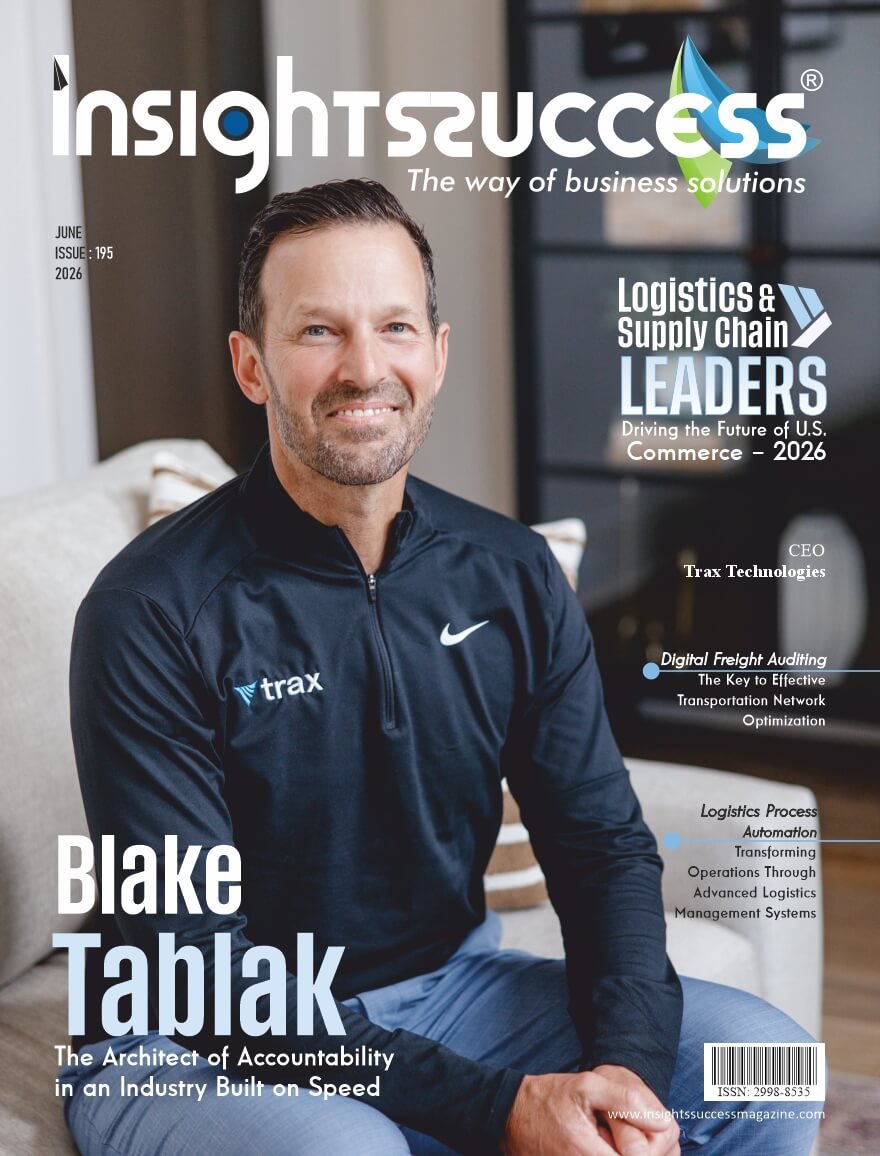
Logistics & Supply Chain Leaders Driving the Future of U.S. Commerce – 2026
Logistics & Supply Chain Leaders Driving the Future of U.S. Commerce – 2026 Honoring the logistics and supply chain leaders transforming U.S. commerce through innovation, operational excellence, resilient networks, and strategic leadership, driving efficiency, sustainability, and economic growth across an evolving global marketplace. Digital Link Quick highlights Quick reads

Blake Tablak: The Architect of Accountability in an Industry Built on Speed
In logistics and supply chain, the pressure never lets up. Markets shift without warning, regulations tighten overnight, and the cost of standing still is measured not in quarters but in customers lost and operations stalled. Most organisations respond to that pressure by seeking certainty, building processes that protect against failure and leaders who project confidence by avoiding risk. The result is predictable: organisations that mistake stability for strategy, and caution for wisdom. The ones that pull ahead are led by people who have made a different choice. People who treat uncertainty not as a threat to manage but as a condition to move through, deliberately, creatively, and without flinching. Blake Tablak is one of those people. As Chief Executive Officer of Trax Technologies, he leads one of the most consequential platforms in freight audit, payment, and supply chain analytics, building a culture and an organisation designed not just to survive disruption but to operate at its sharpest edge. His philosophy is not complicated. It is, however, rare: move forward, embrace the struggle, and never mistake a scoreboard for a strategy. Culture First, Results Always At Trax Technologies, leadership begins with a deliberate tension that most organisations refuse to hold. Two forces stay in constant balance: innovation and culture. Neither works without the other, and culture is treated not as the soft side of leadership but as its very foundation, the engine of forward progress in an industry that demands relentless execution. Says Blake, “If we punish people when they fail in this arena, they will never take risks again. Risk equals reward.” That culture operates on two levels simultaneously. There is the company-wide culture that binds the entire organisation, and then there are the sub-cultures that exist within each team, shaped by the specific demands and personalities of the people doing the work. What makes it distinctive is the intersection it occupies: humanity on one side, the reality of people, their lives, their limits, and their need to be seen as more than a function on an org chart; and mission on the other, the results, the scoreboards, and the accountability that any serious organisation demands. Most companies choose one at the expense of the other. At Trax, both are non-negotiable. Recklessness has no place here, but the conditions in which people take intelligent risks are actively protected. Innovation and failure are inseparable, and the moment an organisation begins punishing people for failing in the pursuit of something new, it extinguishes the very instinct it needs to grow. That instinct, once lost, takes a long time to rebuild. Reframing Risk: The Freedom to Move One of the most consistent patterns in executive teams is paralysis around risk. Decisions that feel terminal rarely are. Most risks carry multiple paths forward, and the fear of a single catastrophic outcome blinds organisations to the range of possibilities available to them. That reframing, from risk as existential threat to risk as navigable terrain with multiple exits, sits at the heart of how Trax operates and how its leadership team makes decisions under pressure. Great employees are routinely limited not by their ability but by the narrowness of their mandate. When leaders instruct their teams to simply execute a defined task, they cap the very potential they hired for. At Trax, people receive genuine creative freedom, and then leadership gets out of the way. When that freedom is extended, people do not just meet expectations. They exceed them in ways that leadership did not anticipate. Blake Tablak asserts, “Once you give great employees freedom of creativity, they over-perform even your wildest dreams.” The leadership model reinforces this from the very top of the organisation. COO John Vallely, a Ranger and West Point graduate, brings a wealth of leadership stories and experience that runs through every level of Trax. The principle is straightforward and applied without exception: when things go wrong, the executive team absorbs accountability. When things go right, the credit belongs to the people doing the work. That commitment is what builds genuine trust across an organisation, and trust is what makes sustained performance possible. Building Accountability Without Killing Creativity Trax Technologies operates across two distinct streams of activity, each held to intentionally different standards. In sustaining operations, the expectation is not perfection but learning. Making the same mistake twice is not acceptable. Making a new mistake in the pursuit of improvement is not just tolerated; it is expected and respected as part of the process of getting better over time. In innovation activities, the standard shifts entirely. Failure is not just tolerated; it is required as evidence that people are genuinely pushing boundaries rather than staying safely within them. What is never acceptable, regardless of which stream a team operates in, is the phrase “that’s not my job.” It represents exactly the kind of thinking that stalls momentum and weakens accountability across an organisation. He adds, “Until the result is achieved, the project is still open and everyone on it is held accountable to the outcome.” This cross-functional ownership model demands a specific kind of focus. Ten simultaneous pursuits produce excellence at none of them. A few priorities are chosen, full commitment follows, and once the path is set, alignment is non-negotiable. Ideas are welcomed from anywhere in the organisation. Bad ideas die on their own and do not need any help doing so. But once a direction is chosen, everyone rows in the same direction without reservation. That discipline is not about suppressing voices. It is about honouring the decision-making process through committed execution once a path has been agreed upon. On AI, Headcount, and the Bottleneck Philosophy The conversation about artificial intelligence in logistics is loud, and much of it is shaped by anxiety. The prevailing narrative suggests that AI will eliminate jobs at scale, driving headcount down and leaving organisations leaner but hollowed out. That narrative does not hold up to scrutiny. Headcount and organisational structures will change, but overall employment levels will dip and then resume, driven by

Transforming Operations Through Advanced Logistics Management Systems
Logistics Process Automation The logistics sector is currently undergoing a substantial transformation to ensure that companies keep up with the increasing expectations of consumers, increased shipment volume, and complexities involved in operations. The companies face the challenge of making their operations more efficient and cost-effective while meeting customer expectations in terms of speedy delivery and efficient logistics services. To meet these requirements, companies are adopting technologies that can make processes efficient and effective. In this regard, the process of Logistics Process Automation helps remove manual activities and speeds up decision-making in the logistics chain. This advancement is supported by Advanced Logistics Management Systems that offer an integrated system for logistics operations. The Need for Smarter Logistics Operations Logistics operations that use traditional practices usually adopt manual procedures, lack integration among systems, and are hindered by inadequate communications. This can lead to shipping delays, incorrect inventory counting, inefficient routing policies, and increased costs of doing business. In today’s world, where international supply chains have become interconnected, businesses need intelligent solutions to improve coordination. Logistics Process Automation can provide solutions to these problems since it entails automation of such repetitive processes as scheduling deliveries, ordering, billing, inventory tracking, document management, among others. The advantages include faster movement of goods through the logistics chain. The use of Logistic Process Automation technology is also advantageous because it increases efficiency, lowers expenses, and improves response times. Automation helps logistic personnel spend their time on planning and customer service instead of administration work. The Role of Advanced Logistics Management Systems Modern technology has now become the base for logistics to operate efficiently. Advanced Logistics Management System is a system where all aspects of logistics can be combined into one. The use of Modern Advanced Logistics Management Systems helps businesses track their deliveries in real-time, determine optimal transport routes, control warehouse operations, and get useful business information. This enhances the transparency of all the stages of logistics, thus enabling effective decision-making. Integrated systems are useful for coordinating activities between suppliers, carriers, warehouses, and customers. Through integrated systems, businesses can minimize delays and improve their quality of service. Enhancing Efficiency Through Automation Automation is one of the strongest forces that can drive operational excellence in logistics firms. The Automation of Logistics Processes allows companies to streamline procedures, eliminate constraints, and prevent errors from occurring in logistics processes. Efficient order processing is facilitated by automation, which ensures quick movement of products from purchase to delivery. Efficient scheduling systems ensure efficiency in the use of vehicles and minimize transportation problems. Efficient inventory management systems ensure accurate stock availability. However, Advanced Logistics Management System is able to provide an appropriate digital platform to automate these processes on a wide scale. Real-time data analysis and performance measurement using dashboards could help optimize operations as well as meet customer needs. The combination of automation and intelligent management systems creates more responsive and resilient logistics operations capable of supporting business growth. Supporting Business Agility and Customer Satisfaction The expectations from customers will always change due to the fast delivery and visibility of goods by organizations and customers. Organizations need to be flexible and effective in this competitive environment. Logistics process automation allows companies to react quickly to changes in demand through the optimization of processes and improved resource allocation. Processes are automated without any delays but with consistent implementation in logistics. Advanced Logistics Management Systems improve agility through provision of operational intelligence in real time. The logistics manager is able to detect any disruptions and alter the transport schedule and relay information to customers accurately. Increased visibility and responsiveness increase customer satisfaction and help build strong business relationships. Companies that use automation and have strong management skills will be better suited to provide quality logistics services. Building the Future of Intelligent Logistics The future of logistics will be determined by technological innovation, analytics, and interconnectedness of supply chain systems. Companies that have invested in Logistics Process Automation will not only enhance their operational efficiency but also develop logistics systems that can support their growth in the future. Furthermore, the Advanced Logistics Management System is expected to have a key role to play in modern logistics due to its capability to provide intelligence, flexibility, and transparency in dealing with more complex supply chains. With the development of technology, especially artificial intelligence and machine learning, the significance of such systems is expected to become even greater in the future. Read Also : The Key to Effective Transportation Network Optimization

The Key to Effective Transportation Network Optimization
Digital Freight Auditing Efficient transport network systems is key to the functioning of current supply chains, in ensuring fast and accurate delivery of goods at minimal costs. With the increasing growth of international business activities and the complexity of logistics operations, there arises a need for innovative approaches through which the organizations can enhance visibility, minimize transportation costs, and improve efficiencies. The cost associated with freight accounts for a substantial proportion of total supply chain costs, which means that accuracy and accountability are even more critical. In such a scenario, Digital Freight Auditing has been introduced as an approach that is used by firms to audit freight transactions and enhance financial controls. Another key component is Effective Transportation Network Optimization. The Evolution of Freight Auditing Freight auditing has been done traditionally through manual auditing of bills, record keeping on paper, and time-consuming reconciliation. These processes have served many businesses for many years, but they have led to payment delays and billing errors in some instances. The development of logistics management techniques has seen many businesses move to digital freight auditing. Digital Freight Auditing provides an opportunity for businesses to automate their freight invoices validation and verify whether there are any discrepancies between the costs of transportation and the terms of the agreement before paying anything. This automation process takes much less time and increases visibility. As a result, the company gains more control over their logistics costs. Digital auditing also provides valuable analytics that help organizations understand freight spending patterns and identify opportunities for continuous improvement. Optimizing Transportation Networks Transportation systems have become more dynamic due to companies venturing into new markets and managing different channels of distribution. For success, it is important that there be coordination of transporters, storage facilities, ports, and distribution centers. Successful Transportation Network Optimization helps organizations achieve improved performance in logistics through planning and routing. The concept of Modern Effective Transportation Network Optimization entails the application of analytics, transportation management system, and visibility in order to optimize the efficiency of goods movement through the logistics network. The approach allows companies to evaluate different transportation alternatives, minimize empty miles, optimize carriers’ efficiency, and manage deliveries while maintaining service levels. Improving Efficiency Through Technology Logistics is still revolutionized by technology in the form of automation, artificial intelligence, and cloud computing within transportation management systems. Digital Freight Auditing is one such application in the digital environment that helps ensure accuracy, transparency, and compliance during freight transactions. Auditing systems that are automated save time in the form of eliminating repetitive activities and at the same time give the finance and logistics departments access to information on the cost of the shipment and its payments in real time. On the other hand, Effective Transportation Network Optimization makes use of predictive analytics and planning intelligence to enhance route selection, freight consolidation, and carrier performance. The use of operational intelligence and automation auditing helps to achieve efficiency in finance and logistics. A technology-driven logistics environment enhances visibility in the supply chain for effective decision making. Supporting Cost Control and Business Agility Maintaining lower costs in the transportation process continues to be an important consideration for businesses that operate in fiercely competitive environments. High costs of fuel, regulatory demands, and higher customer demands make it necessary for logistics managers to always look for ways of enhancing their efficiency. This is where Digital Freight Auditing comes in handy. Through the adoption of DDA solutions, companies can have a better understanding of their transportation expenses and make more efficient budgeting and planning decisions. This also helps them build better relations with the carriers. In the same way, Efficient Transportation Network Optimization increases organizational flexibility because companies will be able to adjust their transport strategies according to changes in market trends. Route planning, optimized carriers, and shipment tracking increase efficiency in deliveries without unnecessary costs. Building the Future of Intelligent Logistics Digital Freight Auditing will allow the logistics industry to continue growing by means of technology, automation, and decision making based on data. Companies that embrace the use of Digital Freight Auditing will experience more accurate finance, higher levels of transparency, and better freight management. Similarly, Effective Transportation Network Optimization is crucial to build logistics networks that can adapt effectively to shifting needs from customers and changes in international business. Business organizations that continue to optimize their transportation processes become more flexible and competitive in their approach. In this way, Digital Freight Auditing and Transportation Network Optimization make sure that a good logistics strategy is developed. Savings, visibility, and sustainability can be achieved by combining intelligent audit processes and transportation network optimization. Read Also : Enterprise Cybersecurity Experts Protecting the Future of Business
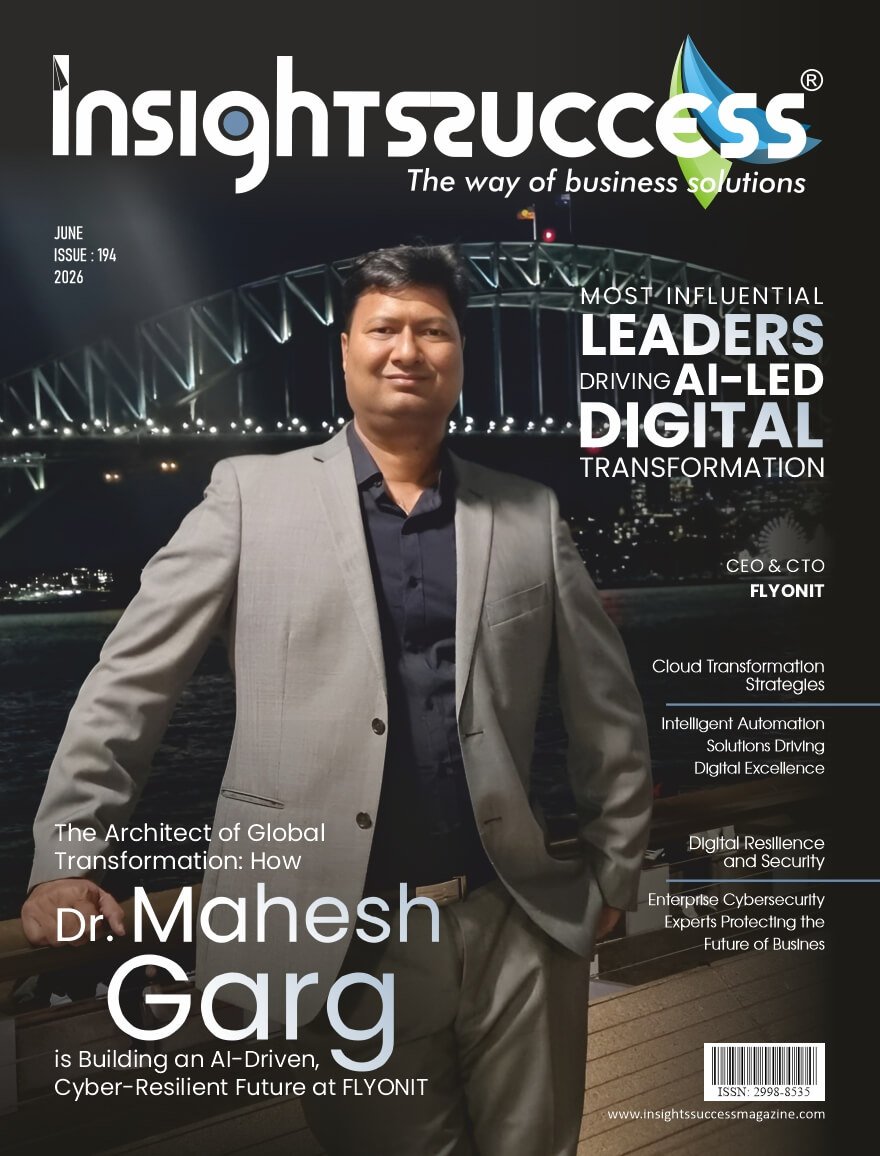
Most Influential Leaders Driving AI-Led Digital Transformation
10 Best Logistics Companies to Watch in 2022 June2022 Lorem ipsum dolor sit amet, consectetur adipiscing elit. Ut elit tellus, luctus nec ullamcorper mattis, pulvinar dapibus leo. Lorem ipsum dolor sit amet, consectetur adipiscing elit. Ut elit tellus, luctus nec ullamcorper mattis, pulvinar dapibus leo. Most Influential Leaders Driving AI-Led Digital Transformation Celebrating visionary leaders redefining industries through artificial intelligence, digital innovation, and transformative leadership. This edition honors pioneers accelerating business evolution, fostering technological excellence, and shaping a smarter, AI-driven future worldwide. Quick highlights Quick reads

The Architect of Global Transformation: How Dr. Mahesh Garg Is Building an AI-Driven, Cyber-Resilient Future at FLYONIT
In today’s digital-first economy, technology is no longer a support function – it is the engine of growth, resilience, and competitive advantage. At the forefront of this shift stands Dr. Mahesh Garg, CEO & CTO of FLYONIT, a global technology leader redefining how organizations adopt and scale digital transformation across borders. With operations spanning Australia, India, and strategic expansion into the Middle East and USA, Dr. Garg is not just delivering technology solutions – he is building a globally integrated enterprise designed for the AI-first, security-led future of business. From Cloud Architect to Global Technology Leader Dr. Mahesh Garg’s journey reflects the evolution of the technology industry itself. What began as a deep specialization in cloud architecture has now expanded into leading a multi-disciplinary, multi-regional organization delivering AI-powered solutions, cybersecurity frameworks, and cloud transformation strategies at scale. Where traditional architects focus on systems, Dr. Garg focuses on outcomes – business agility, operational resilience, and long-term value creation. As he shares: “Technology should not just solve today’s problems – it should anticipate tomorrow’s opportunities and position businesses to lead in their industries.” This philosophy drives FLYONIT’s approach to transformation: strategic, scalable, and deeply aligned with client growth ambitions. FLYONIT: A Global Digital Transformation Partner Under Dr. Garg’s leadership, FLYONIT has evolved into a trusted global technology partner, delivering end-to-end services across artificial intelligence and automation, cybersecurity and compliance, cloud and infrastructure transformation, managed IT services (MSP), and digital workplace and modern applications. The company’s global footprint – anchored in Australia, supported by delivery centers in India, and expanding into the UAE and USA – enables clients to benefit from 24/7 innovation and support, cost-optimized delivery models, regional compliance and governance expertise, and scalable transformation frameworks. This integrated model ensures that global delivery is not fragmented outsourcing, but a cohesive, high-performance operating system for clients worldwide. AI as the Core of Modern Transformation For Dr. Garg, artificial intelligence is not a feature – it is a foundational layer of modern enterprise architecture. At FLYONIT, AI is embedded across every solution domain, including generative AI for business automation and decision-making, AI-driven cybersecurity analytics and threat detection, predictive intelligence for operational optimization, and intelligent workflows for enterprise productivity. Rather than treating AI as an experimental capability, Dr. Garg focuses on enterprise-grade adoption, ensuring that organizations deploy AI in a secure, governed, and scalable way that remains aligned to business outcomes. “The real value of AI is not in experimentation – it is in operationalisation at scale. That’s where transformation becomes measurable.” Cybersecurity as a Strategic Imperative In an increasingly complex threat landscape, Dr. Garg positions cybersecurity as a board-level priority, tightly integrated with business strategy rather than isolated within IT. FLYONIT’s cybersecurity approach is built on Zero Trust architecture, continuous compliance and audit-readiness across ISO and regulatory frameworks, proactive threat detection and response models, and security embedded across cloud, identity, and endpoints. This ensures that organizations are not only protected, but also confident in their ability to scale securely across geographies and platforms. “Cybersecurity is no longer just about protection – it is about enabling trust, and trust is the foundation of digital growth.” Engineering Transformation, Not Just Technology One of the defining aspects of Dr. Garg’s leadership is the shift from technology delivery to business transformation engineering. At FLYONIT, every engagement is driven by deep business and operational assessments, industry-specific transformation roadmaps, scalable and modular architecture design, and measurable ROI and outcome tracking. The goal is not just to implement systems, but to enable faster time-to-market, improved operational efficiency, reduced risk and cost, and long-term scalability. This approach transforms IT from a cost center into a strategic growth engine. Leading at Global Scale As CEO & CTO, Dr. Garg leads a distributed, high-performance workforce across regions, aligning technical expertise with business priorities. His leadership philosophy centres on empowering teams through continuous learning and innovation, driving operational discipline and governance, encouraging cross-functional collaboration, and creating a culture where technology and business thinking coexist. By combining global delivery capability with strong governance frameworks, he ensures consistency, quality, and innovation across all engagements. “Great organizations are not built on technology alone – they are built on people, culture, and the ability to execute consistently at scale.” Balancing Performance, Security, and Sustainability In modern digital environments, success depends on managing the delicate balance between performance, security, cost efficiency, and sustainability. Dr. Garg integrates these priorities through automation-driven operations, intelligent cost optimization models, serverless and scalable architectures, and sustainability-focused cloud strategies. This ensures that clients achieve not only technical excellence, but also long-term economic and environmental sustainability. The Future: AI-Driven, Multi-Cloud, and Autonomous Enterprises Looking ahead, Dr. Garg sees the convergence of AI, multi-cloud, and automation as the defining force shaping the next era of business. His vision includes AI-driven decision ecosystems, hybrid and multi-cloud architectures as standard practice, autonomous IT operations powered by predictive intelligence, and cybersecurity embedded at every layer of digital infrastructure. Through FLYONIT, he is actively building the frameworks that will enable organizations to operate with real-time intelligence, global scalability, and resilient security. A Leader Defining the Next Era of Transformation Dr. Mahesh Garg is not simply navigating the evolution of technology – he is shaping its application at a global scale. By combining AI innovation, cybersecurity leadership, cloud expertise, and business strategy, he is redefining what it means to deliver digital transformation in a rapidly changing world. “The future belongs to organizations that can adapt, innovate, and scale with intelligence. Our role is to make that future achievable.” Media Profile Featuring Dr. Mahesh Garg, CEO & CTO of FLYONIT, this profile presents him as a Global Digital Transformation Leader across AI, cybersecurity, and cloud for the edition Most Influential Leaders Driving AI-Led Digital Transformation. Read Also: Africa Is Not a Destination. It Is a Story: The Leadership Vision of Dancan Kiiza

Enterprise Cybersecurity Experts Protecting the Future of Business
Digital Resilience and Security Every organization from any industry is embracing the idea of digital transformation to increase efficiency, create better customer experience, and speed up the process of innovation. However, as organizations get more interconnected, there is the need to deal with new challenges like cyber-attacks that can negatively affect organizational operations, steal sensitive data, and destroy the reputation of the company among its stakeholders. It is not just the IT department that is responsible for protecting the digital assets of the company; it is now seen as a strategic function of the business. That is why Digital Resilience and Security and Enterprise Cybersecurity Experts are crucial for every modern organization today. Building a Foundation of Digital Resilience Current businesses depend on systems that are connected to one another, cloud computing, remote working conditions, and decisions based on data. While such technologies offer opportunities for business development, they also broaden the possible attack range for cyber criminals. Digital Resilience and Security help organizations be ready for any threat and recover from it. Organizations that prioritize Digital Resilience and Security consider risk management, surveillance, incident planning, and employee training. Rather than wait for a cyber-attack to take place and then respond to the threat, an organization that is digitally resilient about plans for whatever may come its way prior to such attacks happening. It not only improves continuity but also allows the organization to operate despite the unexpected. Digital resilience also supports customer confidence by demonstrating an organization’s commitment to protecting sensitive information and maintaining operational reliability. The Critical Role of Cybersecurity Experts Enterprise cybersecurity has emerged as one of the most specialized and strategically essential fields in contemporary enterprises. With the increase in complexity of cyber-attacks, companies have resorted to Enterprise Cybersecurity Experts to formulate their security strategy. The Enterprise Cybersecurity Professional is able to recognize organizational risks, discover vulnerabilities, implement complex security solutions, and develop governing models based on organizational goals. The skill set of the Enterprise Cybersecurity Professional does not stop at just security issues. Such specialists also work together with executive leadership to align cybersecurity with business strategies. Through integration of cybersecurity within digital transformation projects, companies can mitigate risks and foster innovation and growth. Strengthening Business Continuity and Trust For business continuity to be successful, it depends on the ability of the organization to perform its operations under disruptions. These disruptions may be in various forms, such as cyberattacks, failures of systems, and data breaches, which may affect the organization in terms of monetary losses and tarnish its reputation. Organizations that improve their resiliency skills ensure that they put in place back-up plans, recovery measures, continuous monitoring systems, and incident response processes. This helps them reduce the recovery time during any security-related incidents. On the other hand, Enterprise Cybersecurity Professionals have an extremely important part to play in ensuring that these protective measures keep up with changing times. Their constant evaluation and improvement of controls ensure that stakeholder confidence is maintained, and regulatory requirements meet. Stakeholders such as customers and investors can feel assured that cybersecurity is taken seriously within the organization. Enabling Innovation Through Secure Digital Transformation Innovation and cybersecurity should no longer be considered isolated aspects of doing business. In order for organizations to innovate, there is the need to integrate new technologies in such a way that digital environments will be safe and resilient at the same time. Enterprise Cybersecurity Experts do the same when they assist businesses in ensuring that their security is built-in through every phase of digital transformation. The concept of security-by-design ensures that there are proper security practices in place when implementing any technology. This approach ensures that innovations occur at a faster rate by eliminating any security worries that would have been an obstacle in adopting new technologies. The business can then embark on modernization programs with assurance of complying with all requirements. Protecting the Future of Business With companies increasing their digital capabilities, cybersecurity will play an important role in ensuring the success of any business moving forward. The future of Digital Resilience and Security will revolve around how companies react to the changing dynamics, both in terms of threats and regulations. Companies that build their resilience now will be more prepared for the future. However, in addition to all the above, Enterprise Cybersecurity Experts are going to be equally important in ensuring that the ecosystem of an enterprise stays safe and that there is governance as well as innovations in a secure manner. Read Also : Intelligent Automation Solutions Driving Digital Excellence

Intelligent Automation Solutions Driving Digital Excellence
Cloud Transformation Strategies Today’s firms operate in an environment that requires them to be efficient, provide superior customer experience, and stay ahead of their competitors in dynamic marketplaces. It has become very important for firms to utilize digital technologies to become efficient and be able to react to changes. In this regard, Cloud Transformation Strategies have become an integral part of sustainable digital success as firms continue to evolve their technology landscape. In addition, Intelligent Automation Solutions are also being utilized by firms to optimize their workflows, make decision-making easier, and simplify operations. The Strategic Importance of Cloud Transformation Cloud computing has led to a revolution in the way organizations operate in regards to infrastructure management, application management, and data management. Firms are moving away from the traditional approach to a more scalable digital system. Efficient Cloud Transformation Strategies help organizations update their technological systems in harmony with their business goals. Cloud Transformation Strategy entails not just moving one’s operations to the cloud. Rather, it needs planning and alignment with the organization’s objectives. Organizations that strategically pursue a Cloud Transformation Strategy will benefit from greater efficiency in their operations and lower costs on infrastructure. In addition, cloud-based environments offer more scalability, which helps organizations adapt easily to the changing needs. The ability to scale offers an ideal platform for innovation and business continuity. The Rise of Intelligent Automation Automation is emerging as an essential tool for improving productivity and excellence in operations. Firms are looking for opportunities to cut down redundant activities, increase accuracy, and allow their workers to engage in more value-generating tasks. It has led to the increased implementation of Intelligent Automation Solutions. AIAS (Advanced Intelligent Automation Solutions) integrates technologies like automation with analytics, artificial intelligence, and machine learning. Such solutions possess the ability to handle information, recognize patterns, and execute tasks faster and more accurately than conventional methods. Organizations can achieve higher efficiency through automation of repetitive tasks. There is less room for mistakes and costs will be cut down. More time will be freed for employees to do more creative work. Consequently, automation helps organizations grow. Creating Synergy Between Cloud and Automation The value that may be gained through business is highest when automation and cloud technologies come together. The Cloud Transformation Strategy can help in providing the required infrastructure as well as flexibility for automation. Cloud technology ensures that there is scalability for automation processes. However, at the same time, Intelligent Automation Solutions help to get maximum benefit from cloud computing investments through optimization of operations and resource management. Automated processes will make it easier for businesses to respond to customers‘ requirements in a timely manner. Such synergy helps in improving the organization’s ability to react quickly to any changes in the market without compromising operational efficiency and customer satisfaction. Driving Innovation and Competitive Advantage Innovation is still critical for firms that need sustainable development. Companies should always discover new ways to enhance the quality of their goods and services. Efficient Cloud Transformation Strategies assist innovation since they offer companies access to more modern technologies and collaborative digital environments. Intelligent Automation Solutions play a vital role in driving innovation through faster decision-making and increased efficiency. Information gained from automation is useful in recognizing opportunities and performing at an optimal level. Organizations implementing cloud transformation along with intelligent automation have a lot to gain from the competitive edge that such implementations provide. Such organizations can offer their customers new services quicker, become more agile, and create more customized experiences for their customers. Preparing for a Digital Future Connectivity, automation, and decision making based on data analysis will become crucial factors that determine the future business landscape. Companies that embrace the current digital trends now will find themselves more ready to meet any future challenges and take advantage of new opportunities. Cloud Transformation Strategies will remain a basis for efficient business processes. While at it, Intelligent Automation Solutions shall always be important when it comes to increasing productivity, improving efficiency, and fostering innovation. With the continued development of technologies, companies which adopt automation will find it easier to stay ahead of others. Cloud Transformation Strategies and Intelligent Automation Solutions together form a formidable combination to attain digital excellence. Using the power of a scalable cloud computing environment along with intelligent automation is bound to help improve operational efficiency and innovation to ensure growth and sustainability. The companies that have a focus on such capabilities will be able to achieve digital transformation easily and sustainably. Read Also : Digital Acceleration Strategy Driving Enterprise Innovation

Ipsen to Acquire Kartos Therapeutics in $450 Million Oncology Deal
Prime Highlights Ipsen will acquire Kartos Therapeutics for $450 million to strengthen its oncology pipeline with late-stage therapy navtemadlin. The deal includes up to $1.3 billion in milestone payments, highlighting strong commercial potential. Key Facts Navtemadlin is in Phase III trials for myelofibrosis, with data expected in 2027 and a potential launch in 2028. Ipsen expects the acquisition to contribute to core operating income from 2029, subject to regulatory approval and deal closure. Background French biotech company Ipsen has agreed to acquire US-based Kartos Therapeutics for $450 million, adding a late-stage blood cancer treatment to its oncology pipeline. The deal hands Ipsen navtemadlin, an investigational oral therapy currently in a Phase III clinical trial for myelofibrosis, a rare and serious blood cancer. Kartos shareholders stand to receive up to $1.3 billion in additional payments tied to regulatory approvals and sales milestones. Initial trial data is expected in 2027. If results go well, Ipsen could launch the therapy as early as 2028, giving the company a potential new revenue stream in a disease area with limited treatment options. Ipsen said the acquisition will start contributing to core operating income from 2029. The deal is expected to close before the end of the third quarter of this year, pending antitrust clearance. The purchase marks a significant step in Ipsen’s push to grow its oncology business. Myelofibrosis scars the bone marrow, blocking normal blood cell production. Approved treatments for the disease remain limited, pushing patients and drugmakers to seek better options. Navtemadlin targets a specific protein pathway tied to cancer cell survival. Its oral format is a practical advantage over infusion or injection-based therapies, giving patients a simpler way to manage treatment over time. The Kartos deal gives Ipsen a late-stage asset that cuts down the early development risk that usually comes with building an oncology pipeline from scratch. Read Also : China’s economy gains momentum as US exports rebound

How AI Is Changing the Way Investors Discover and Compare Commercial Real Estate Opportunities
There is a version of commercial real estate investing that most people recognise from a decade ago: a broker calls with a listing, you request a package, you spend a week reviewing the information alongside a stack of market reports pulled from three different sources, and somewhere in that process you try to build a coherent picture of whether the opportunity actually makes sense. It worked. It was just slow, incomplete, and heavily dependent on who you happened to know. Finding commercial real estate for sale that matched a specific investment thesis meant either having the right relationships or accepting that you were probably seeing the same listings everyone else was. What has changed is not the fundamental logic of good investing – that has not moved. What has changed is the infrastructure available to support it. Artificial intelligence has entered commercial real estate in a way that is genuinely reshaping how investors find properties, compare opportunities, and understand markets. And the investors paying attention are not treating it as a novelty. They are treating it as a competitive tool. Why the Old Approach Has Started to Show Its Limits The Fragmentation Problem For most of commercial real estate’s history, finding and evaluating investment opportunities meant pulling information from multiple disconnected sources – listing platforms, broker websites, county records, market reports, proprietary databases – and then manually stitching it together into something resembling a complete picture. Each source contributed something useful. None of them told the whole story. And the gap between what was available and what you needed to make a confident decision was often filled with assumptions. The practical consequences are familiar to anyone who has done significant volume in commercial property research. Inconsistent listing quality across platforms. Incomplete data on specific markets or asset types. Limited visibility into properties that never reach widely used listing sites. And the constant background friction of moving between disconnected systems and translating information into a format that actually supports comparison. None of this was disqualifying when the competitive environment was less intense. In today’s market, it is becoming a meaningful disadvantage. When Speed Becomes Part of the Strategy Commercial real estate has always rewarded investors who move with conviction. What has shifted is how quickly that conviction needs to form. In markets where well-priced assets attract serious interest from multiple parties, the time between identifying an opportunity and being ready to act on it has compressed. Investors who need days to complete market analysis that competitors can do in hours are not just slower – they are consistently arriving at the same opportunities later, at worse pricing, with less negotiating room. This is the specific problem that AI addresses most directly. Not replacing the judgment required to make a good investment decision, but dramatically compressing the time required to gather the information that judgment needs to work with. What AI Actually Changes About Property Discovery Searching by Investment Intent, Not Just Property Characteristics Traditional property search is built around filters: location, price range, asset type, square footage. These are useful starting points, but they describe what a property is rather than whether it fits what an investor is actually trying to accomplish. An investor looking for industrial assets with strong cash flow potential in high-growth logistics corridors is asking a different question than “show me industrial buildings between these two price points in this region” – and traditional filters cannot fully bridge that gap. It is worth noting that AI won’t kill the commercial real estate broker – but it has fundamentally changed what brokers and investors can do with the time they used to spend on manual filtering. AI search platforms are built around investment intent rather than property description. Instead of returning everything that matches a set of static parameters, they analyse multiple variables simultaneously – pricing relative to comparables, occupancy trends, market momentum, redevelopment potential, demographic trajectory – and surface properties that align with specific investment objectives. The shortlist is smaller and more relevant than what a traditional filter-based search produces, which means less time spent eliminating unsuitable options and more time spent evaluating genuine candidates. Machine learning compounds this over time. Platforms that learn from search behaviour, interaction patterns, and market activity continuously refine their recommendations – producing a more personalised discovery experience the more an investor uses the system. Integrated Market Intelligence That Places Properties in Context One of the structural weaknesses of traditional property research is that individual listings exist in relative isolation from their market context. A cap rate looks different when you understand the neighbourhood’s demographic trajectory. A vacancy rate reads differently when you know what tenant demand trends look like in that corridor. An asking price makes more or less sense when you can see what comparable assets have transacted at over the past eighteen months. Modern AI systems bring that context into the discovery process itself by combining demographic trends, employment statistics, economic indicators, zoning information, transaction histories, and property characteristics into a unified analytical view. Rather than receiving a listing and then separately researching the surrounding market, investors see each opportunity already positioned within its market context – which changes how quickly and confidently they can form a view on whether it is worth pursuing. This integration is particularly valuable for investors evaluating markets outside their primary areas of familiarity. The market knowledge that a local broker carries in their head after years of working a specific submarket is not something that can be fully replicated by technology – but the factual, data-driven component of that knowledge is increasingly accessible through platforms that aggregate and organise it systematically. Prioritising Opportunities Instead of Just Surfacing Them Finding a large number of potentially relevant properties is not the same as identifying the ones most worth pursuing. One of AI’s most practically useful capabilities in commercial property discovery is its ability to rank and prioritise opportunities against predefined investment criteria – automatically directing attention toward assets most likely to meet acquisition goals