






Most Inspiring Leader Making A Difference In 2025
Most Inspiring Leader Making A Difference In 2025 This edition celebrates visionary leadership, resilience, and impact. This edition highlights Akanksha’s remarkable journey of purpose-driven innovation, her unwavering commitment to empowering others, and her transformative influence in shaping industries and communities, making her a true inspiration for global leadership excellence. Quick highlights Quick reads
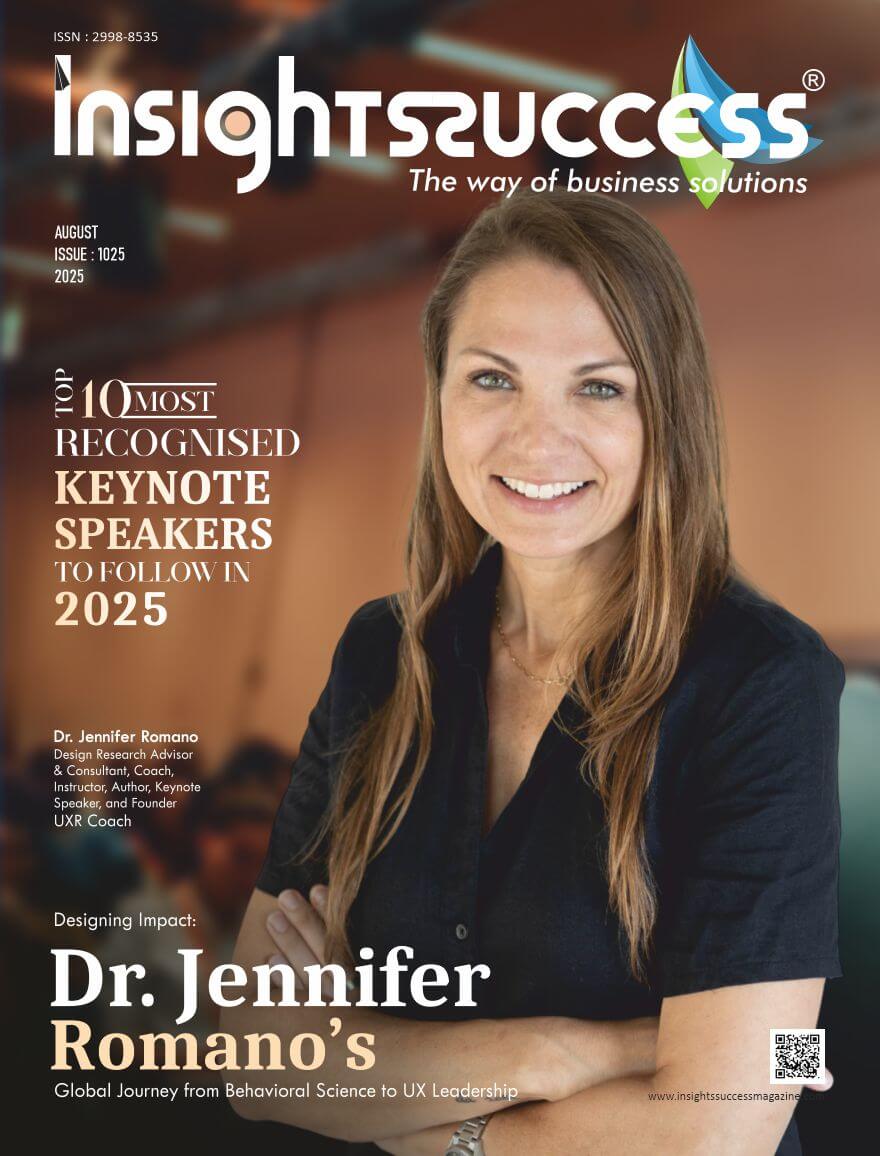
Top 10 Most Recognised KeyNote Speakers To Follow in 2025
Top 10 Most Recognised KeyNote Speakers To Follow in 2025 Explore the voices shaping conversations in 2025. This edition features the top 10 most recognised keynote speakers who are inspiring audiences worldwide with their insights, authenticity and powerful messages, leaders to watch, learn from and follow in the year ahead. Quick highlights Quick reads

Designing Impact: Dr. Jennifer Romano’s Global Journey from Behavioral Science to UX Leadership
The world is increasingly dominated by user personalization in design experiences. Nowadays, a single interaction has the power to build or break brand allegiance. Thus, it is essential to have a leadership direction that is not only intelligent but also deeply practical, thoroughly research-driven, and widely acknowledged within industry. It is here, in this multifaceted high-stakes context, that Dr. Jennifer Romano stands as an unrivaled expert. With over 15 years of distinguished experience, Dr. Romano’s background is built on a stellar foundation: a doctorate in Applied Experimental Psychology. Her grounding in this area of scholarship is the foundation upon which her knowledge of human behavior, perception, and cognition rests – the very foundation of intuitive and engaging user experiences. She not only knows what users do, but why they do it, allowing her to develop strategies that connect on a more profound, more effective basis. From Showroom Beginnings to Global Stages From the showrooms of her family’s design business, Dr. Romano has made her way through some of the biggest and best UX orgs in the world (e.g., Google, Facebook, Instagram), speaking, teaching, and being a keynote speaker at top UX conferences in the world (e.g., User Experience Professionals Association, World Usability Congress, Digitale Leute, Human Computer Interaction International). She has become the go-to expert in strategic UX research, leadership coaching, and keynote speaking that sparks transformation. Her cross-sector experience empowers leaders to think differently, act intentionally, and lead boldly. Just like her prolific career today, Dr. Romano’s journey began before she even knew it had started—at age five, reorganizing kitchen layouts in her parents’ showroom because the flow felt inefficient. “I wasn’t just playing; I was solving problems through design.” Growing up in a family business taught her the value of customer experience and operational efficiency, lessons that stuck with her through her Ph.D. in Experimental Psychology. It later shaped her career at the US Census Bureau, Facebook, Bridgewater, and Google. Her unique background fuses behavioral science, research precision, and real-world business acumen. Where Psychology Meets Business Strategy Dr. Romano teaches at UC Berkeley, Pratt Institute, and the University of Maryland and has published more than 30 articles, chapters, and books. Her impact is felt in an impressive spectrum of roles and industries. A prize-winning UX Research Leader, she has led projects for international titans Facebook, Instagram, and Google, directly influencing the online experience of billions. Her experience is not limited to corporate giants; she has had an equally considerable impact in academia, government (such as the US Census Bureau), financial institutions, and highly technical consulting positions, proving her versatility and the global applicability of her findings. As a manager, director, or individual contributor, strategist, or doer, her capacity to provide concrete outcomes has uniformly distinguished her. Aside from her leadership, Dr. Romano is an energetic driving force in the larger research and design world. Acting as an international Design Research Advisor and Consultant, she enables organizations to integrate user-centricity into their DNA. Shaping the Future, One Researcher at a Time Moreover, she, as a Coach and Instructor, is directly developing the next wave of UX professionals by imparting much of her extensive expertise through workshops, courses, and individual mentorship. Going beyond, as a celebrated Author of titles such as “Eye Tracking in User Experience Design“, “Modern Socio-Technical Perspectives on Privacy,” and “Usability Testing for Survey Research,” as well as a sought-after Keynote Speaker, she shares the latest research and best practices continuously, advancing the entire discipline. According to Dr. Romano, C-Suite leaders today need more than inspiration—they need clarity, actionable insight, and a trusted voice that understands how business, human behavior, and design intersect. That’s where she comes in. She founded UXR Coach to help people make their UX dreams a reality. With small, instructor-led workshops, courses, and retreats, as well as personalized one-on-one coaching, she offers individuals ways to gain renewed confidence and develop the skills necessary to grow as a UX Researcher. A Voice that Resonates: From Research Labs to Global Stages Dr. Romano is not just a speaker—she’s a strategist with a microphone, a researcher with a mission, and a mentor with real-world experience to back every insight she shares. Whether she’s standing before C-suite executives, Fortune 500 teams, or students in university lecture halls, Dr. Romano integrates her diverse roles—advisor, instructor, author, and keynote speaker—into one powerful force for transformation. “Executives don’t need theory—they need tested frameworks and proven insight,” she explains. “My coaching and consulting work gives me a front-row seat to real, current challenges. Everything I present has been road-tested in boardrooms, classrooms, startups, and global brands alike.” Her ability to bridge disciplines—psychology, business strategy, and design—enables her to offer more than motivation. She delivers actionable, data-driven value that redefines what leadership and UX strategy can look like in a complex digital era. Cutting Through the Noise: What Truly Matters At the heart of Dr. Romano’s speaking philosophy is a sharp belief in clarity, impact, and removing internal roadblocks. “Most people are unknowingly in their own way,” she asserts. “My role is to help leaders see that—whether the barrier is ego, flawed research practices, or decision fatigue—and guide them to more effective, intentional outcomes.” Her talks center on helping professionals and organizations unlock their true potential by embracing purposeful action and strategic clarity. She’s passionate about shifting mindsets, not just behaviors. From speaking on UX research innovation to coaching on leadership psychology, Dr. Romano’s engagements always empower audiences to act with greater awareness—and achieve with sharper intent. Leading with Intention, Speaking with Impact What distinguishes Dr. Romano in a sea of speakers is her deep field experience, combined with a powerful and human-centered delivery. Her insights aren’t theoretical—they’re built from lived experience, tested across sectors, and infused with genuine empathy. Whether it’s in Hawaii, New York, or across Europe, her voice continues to shape how organizations design, lead, and evolve. In every engagement, she brings not just credibility but transformation. “I don’t just inspire,” she says. “I deliver value-backed strategy that

The Rise of Motivational Keynote Speakers
Redefining Inspiration At one point, inspiration was something one came across accidentally, regardless of whether it was hidden in an old book, buried in the depths of a late-night chat, or it was a personal discovery. Inspiration nowadays is not accidental. It is curated, performed, and distributed, sometimes on a stage, in the light, with hundreds or thousands of eager listeners. This cultural change has led to the emergence of a new/ hybrid form of presence at the core of conferences, summits, and learning events, motivational keynote speakers. They no longer have to uplift or entertain. Rather, they provide templates of challenge navigation, re-purposing, and linking with something greater than the immediate moment. With increasing numbers of individuals in search of meaning in the fast-paced world, the keynote stage has become a strong instrument of personal and social change. The Evolution of Inspirational Platforms Previously, the mediation of inspiration was frequently based on static or scripted formats, such as books, articles, or recorded speeches. It is because the audience was taking in ideas at the pace they preferred and probably alone. These forms, although effective, lacked immediacy and emotional intensity. Along with the rise of live events, especially conferences, conventions, and special gatherings, there was a need to demand presentations that could energize the room and create connection and transformation in real-time. This is where inspirational keynote speakers have fertile ground. They do not simply offer words but experience. Their performance tends to fill the gaps between storytelling, emotional vulnerability, and active stage performance, making inspiration a shared, immersive experience instead of information passively received. Capturing the Human Element The emphasis on a true human connection is one of the characteristics of this new kind of speakers. In place of far off and high ideals, they are drawn to vulnerability and relatability. Introspective descriptions are cut back to the artifices, and experiences are recounted without posturing or exaggeration, and lessons are drawn not through great success but through struggle, doubt, or minor triumphs. Audiences respond to this shift. When we get inspired by one who appears to be one of us, the message falls differently, more tangibly. When a speaker projects a sense of difficulty overcome or acknowledges uncertainty, there is a truthfulness that closes distances between stage and seat. This anthropocentric approach reinvents inspiration as something within reach and not out there. Redefining the Format The creative approach to format is another reason behind the popularity of motivational keynote speakers. One-way monologues are being replaced by dynamic, multi-sensory designs. Visual storytelling, live interaction, and creative staging infuse presentations with texture. In certain cases, speakers may involve the audience or improvise on the spot based on observable room energy. This attentiveness keeps interest alive and creates an atmosphere of mutual discovery instead of lecturing. In addition, on-the-ground dynamics exist alongside narration techniques utilized in theater or podcasting. The new trend is to make every keynote an act of performance and exchange. A presenter can interlace metaphor, pause and think, ask the audience to talk, using collective prompts, and all without losing spontaneity or form. What emerges is a reverberating experience that outlives the event space. Meeting Diverse Needs The spread of motivational keynote speakers is also explained by the existence of a variety of needs in various sectors. Educational establishments need voices that will awaken youthful minds to uncertainty and possibility. Companies seek messages that can restart morale, reaffirm shared purpose, or stimulate innovation. Community meetings seek stories that celebrate compassion, resilience, or community service. The fact that motivation is not universal or fixed means that speakers adapt their core themes, such as perseverance, reinvention, and mindful ambition, to the event. The keynote style is adaptable and can be shaped to the requirements of the audience, whether they are entering a new phase of their life, or soon transition, or celebrating an event without violating the spirit. The Future of Inspiration In the future, the emergence of inspirational keynote speakers is an indicator of a deeper cultural transformation: inspiration is ceasing to be background music, but an active driver. As viewers seek stronger attachments, honesty-based stories will continue to take center stage, as will those that are based on mutual humanity. The most powerful keynote voices will not speak much but listen and allow participation, even as leadership is given. In this ever-evolving narrative of inspiration, the speaker is more than an orator—they serve as a catalyst, prompting audiences to reflect on what truly inspires them, envision the transformation they seek, and discover how to translate inspiration into meaningful action. Instead of only more speeches, more engagement, authenticity, and inspiration will become a reality in the future. Read also: The Traits Every Great Speaker Shares

The Traits Every Great Speaker Shares
Plenary Speaker Code When it comes to conferences, summits, and symposiums, being a plenary speaker is a privilege and a duty. It is the center of attention during a meeting that seeks to unite all members under a single message or theme. These speakers do much more than give a keynote: they dictate the mood, influence the discussion, and in many cases, they create a lasting impression on the audience that transcends the event itself. But what makes great plenary speakers stand out among the others? Although styles and subjects can differ, there are core traits that truly effective speakers possess, which enable them to captivate, inspire, and connect. These characteristics can be learned and applied by event planners to select the most appropriate voices and help future speakers shine. Clarity of Message An effective presentation is built on a clear and focused message. An effective plenary speaker can simplify complex concepts into accessible and sensible insights without simplifying them. They do not provide information; they create a story. Their message is consistent with the event’s purpose, relevant to the audience’s interests, and remains with the attendees even after the event is over. Clarity does mean predictability. A good communicator may be a truth-buster or offer thought-provoking information, but they do so very skillfully to avoid bewilderment and rather achieve clarity in the listeners. With this simplicity, the plenary speaker brings together different audience members toward a common vision, despite their different viewpoints. Authenticity and Presence Authenticity is very sensitive to audiences. A speaker who seems to be a robot rather than a living person, sounding confident though not relating, will lose the trust of his or her audience. The finest plenary speakers make the stage alive. They are not acting; they are having some form of substantial dialogue, although they may be doing all the talking. Authenticity also implies sharing personal thoughts when it is right to do so, being aware of weaknesses, and expressing emotion. These human instances break the barrier between the speaker and the audience, reminding the listener that the person standing on the stage is not some inaccessible figure who has never gone through an experience worth sharing. Adaptability and Awareness Even during a well-timed occasion, flexibility is crucial. The speaker of a great plenary reads the room, whether it is a full auditorium or a virtual place, and modulates tone, pace, or content. This does not necessarily imply breaking the script but being sensitive and aware of the dynamism and audience demands. Cultural sensitivity is also considered a part of adaptability, particularly in international conferences. A good plenary speaker understands how to convey ideas that cross all borders and can speak a language, literal and metaphorical, that honors the diverse backgrounds of their audience. Command of Storytelling Storytelling is not only entertainment but a persuasive, educative, and emotive device. Great speakers are great storytellers. They know that both personal and illustrative stories put abstract concepts into context and give familiarity. A good story can make a theoretical idea concrete and memorable. Storytelling does not serve as an adjunct to a plenary speaker; it is the framework through which the message is crafted. Narratives provide talks with their flow, their emotional depth, and their direction. And when properly done, they enable the audience to identify themselves with the story, enhancing the effectiveness of the speech. Command of Delivery The most valuable content will lack effectiveness without effective delivery. Ideal speakers possess an unmatched mastery over language, tone, and timing. Their voice is their tool; they can change its pitch, volume, and rhythm to keep attention and underline important points. Another important aspect is nonverbal communication. Eye contact, hand movements, facial expressions, and movement on stage will all help a speaker to become more effective. Presence in command does not imply ownership of the space; instead, it involves all the tools of expression, which support the message and keep the attention. Relevance and Timeliness Content must meet the moment. An excellent plenary speaker must not only be knowledgeable but also be keen on the current issues, trends, and concerns in the applicable industry or community. Their words are addressed to the present; they give information that is urgent, necessary, and relevant. This feeling of being timely makes the talk more powerful, because it confirms the reality of the audience to the speaker. The speaker is relevant because he focuses on what is important at present and will gain the audience’s respect and attention. Conclusion The road to a great plenary speaker is paved not with fame, credentials, or theater. It is in the power of communicating with a purpose, presence, and authenticity. The qualities of all great oratory speakers, clearness, narrative, versatility, and deference, cross context and content. They are the foundations of effective speaking. Read Also: Leadership Lessons in Staying True to Purpose
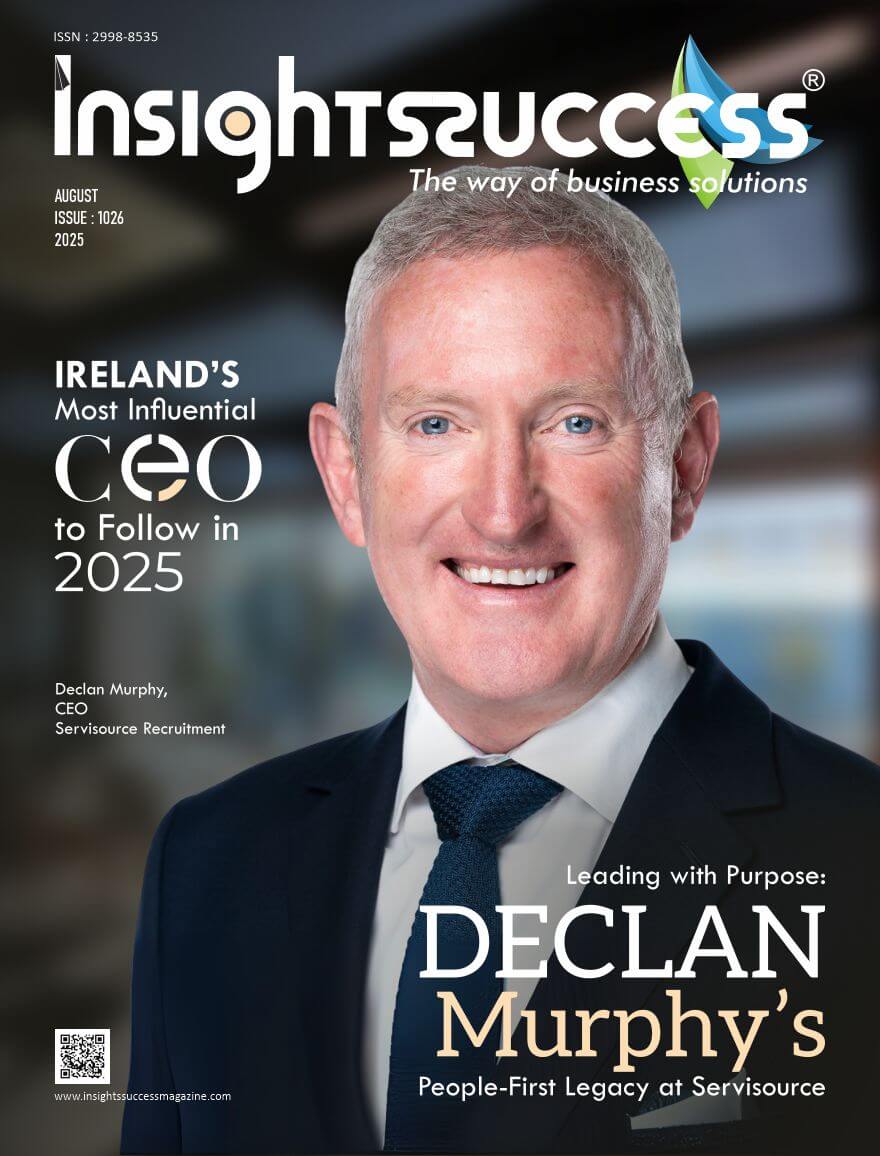
Ireland’s Most Influential CEO to Follow in 2025 Category of Industry: Leadership
10 Best Logistics Companies to Watch in 2022 June2022 Lorem ipsum dolor sit amet, consectetur adipiscing elit. Ut elit tellus, luctus nec ullamcorper mattis, pulvinar dapibus leo. Lorem ipsum dolor sit amet, consectetur adipiscing elit. Ut elit tellus, luctus nec ullamcorper mattis, pulvinar dapibus leo. Ireland’s Most Influential CEO to Follow in 2025 Category of Industry: Leadership Discover the story of a visionary leader shaping Ireland’s business landscape in 2025. This special edition honors one of the nation’s most influential CEOs, recognized for driving innovation, growth and meaningful impact across industries. Quick highlights Quick reads

Leading with Purpose: Declan Murphy’s People-First Legacy at Servisource
A leader is as good as his team, and his team is as good as he is, believes Declan Murphy, the CEO of Servisource Recruitment, an international talent acquisition and staffing support firm that provides world-class customer service. “As CEO of Servisource, I have the pleasure of working alongwith a team of professionals who are dedicated and experts at meeting and exceeding the expectations of our extensive client base,” shares Murphy, who is managing a team of highly motivated leaders in the areas of temporary, contract, and permanent recruitment. They are also specialists in Healthcare Staffing, Homecare, Training, and Managed Staffing. As the driving force behind Servisource, Murphy’s leadership philosophy is rooted in a strong family ethos of fostering genuine relationships, “And a deep sense of care in everything we do.” Believing leadership is not just about guiding a team, Murphy goes about engaging meaningfully with clients to truly understand their needs. “We don’t simply provide a service or place a person in a role; we aim to solve problems by matching the right people with the right challenges. The core question we always ask is: How can we help the client win?” A people-focused and performance-driven philosophy has shaped a vibrant culture at Servisource that Murphy and his team’s commitment to excellence and a “Customer First” mindset keeps nourishing. It means they strive to make meaningful contributions, not only in local communities but also on a global scale. The aspirational core values of Accountability, Responsibility, Empowerment, Effective Communication, and Respect that are lived daily create a strong sense of belonging and purpose across the organization, where every team member feels part of a shared success. “It’s a culture built on action, where our core values resonate in everything we do.” A Culture of Values: Where Leadership Inspires Action and Alignment” In his role as CEO, Murphy ensures that the core values of Customer First, Accountability, Responsibility, Empowerment, Effective Communication, and Respect form the foundation of everything Servisource does. These principles aren’t abstract ideals—they are daily practices that shape both strategic vision and frontline interactions. At Servisource, success starts with listening. By deeply understanding each client’s unique challenges, the team focuses on delivering tailored solutions, not just placements. This “Customer First” mindset drives performance and trust. Internally, Murphy fosters an empowered culture where teams are encouraged to take ownership and act with integrity. Clear communication and mutual respect are non-negotiables, ensuring that collaboration thrives. These values are also critical in shaping growth strategies, guiding innovation, and expanding global operations. In Murphy’s vision, leadership is about living the values every day, transforming them from statements into standards that define how success is achieved. Defining Decisions: Resilience Through Unity and Vision” A pivotal chapter in Murphy’s leadership journey came in 2010 with the decision to sell Servisource to CPL. It was more than a financial milestone—it was a defining test of leadership built on transparency, alignment, and trust. Rather than acting unilaterally, Murphy prioritized collective decision-making, ensuring the team understood the vision and long-term benefits. This moment reinforced his belief in collaborative leadership and underscored the strength found in shared purpose. The partnership with CPL provided Servisource the resources and scale to grow more resiliently, while preserving its people-first culture. For Murphy, resilience now means more than endurance—it’s about foresight, bold choices, and knowing when to embrace strategic opportunity for the greater good. Built to Grow: Empowering People, Delivering Impact Under Murphy’s leadership, Servisource’s growth has been anything but accidental. At its core lies a deliberate strategy of investing in people. By prioritizing early-career hires and equipping them with continuous mentoring and coaching, Murphy has cultivated a team that is both agile and deeply aligned with the company’s mission. This focus on internal development fuels not just employee retention but sustained business excellence. Equally vital is Servisource’s values-driven approach, anchored in its promise to provide “the right people, in the right place, with the right skills.” This commitment has helped differentiate the brand in a competitive recruitment landscape. With more than two decades of experience, Servisource continues to grow by combining purpose, innovation, and people-first leadership. Agility in Action: Leading Through Change with Purpose and Precision Murphy ensures Servisource stays ahead of the curve by anchoring agility in unity, growth, and core values. “Our senior leadership operates as one cohesive unit,” he shares, “where open communication and mutual support enable swift, informed decisions.” This collective alignment empowers Servisource to adapt with both speed and consistency, vital in today’s evolving healthcare and recruitment sectors. A cornerstone of this adaptability lies in people development. By hiring talent early and investing in mentorship, the company cultivates a future-ready workforce. “We don’t just prepare for change—we grow with it,” Murphy explains. Servisource’s Value Proposition—to deliver the right people, in the right place, with the right skills—is more than a mantra; it’s a guiding framework. Grounded in over 20 years of experience, their success is not just in reacting to change, but in anticipating it with clarity, confidence, and compassion. Their agility is built on people—empowered leaders and capable teams, ready to meet every challenge with purpose. Scaling with Purpose: Servisource’s Vision for Global Growth and Local Impact Under Murphy’s leadership, Servisource has embraced a bold expansion strategy—both geographically and in its suite of services—anchored in the principles of quality, innovation, and people-first care. With offices now established in major Irish cities including Dundalk, Dublin, Cork, Galway, Limerick, and Belfast, the company has also extended its footprint globally to London, Bradford, Kochi, and Dubai. “Our presence in these markets allows us to place over 3,000 staff across Ireland, the UK, and Europe,” Murphy states, emphasizing a seamless blend of local responsiveness with global capability. Strategically, Servisource is focused on integrating advanced technologies with compassionate care. “We see technology not as a replacement, but as an enabler,” Murphy explains. This ensures agility, data-driven decision-making, and improved service delivery, without compromising the human connection. A standout feature of this growth strategy is Servisource’s dedicated Quality Team and its

Leadership Lessons in Staying True to Purpose
Vision with Backbone Leadership is not just about running projects o giving orders. It is a matter of having a clear vision and staying stuck with purpose even when the outside forces are pressuring on compromise. The modern, dynamic world can be both exciting and challenging, especially to leaders who may be tempted to change with time, compromise, or sacrifice values to achieve short-term success. Nevertheless, it is those who demonstrate a rare fusion of clarity and conviction, who are leading with a backbone-based vision, who leave the longest impact. The point of intersection between vision and backbone represents the ability of a leader to inspire trust, generate a lasting change, and stay strong despite adversity. Without a sound basis, vision cannot be an abstract dream. The balance between the two qualities presents some of the best lessons on leadership in the contemporary complex world. The Power of a Purpose-Driven Vision Vision is the guide that drives decision-making. It establishes purpose, motivates groups, and conveys a sense of quality. Leaders who are personally interested in their cause earn credibility. That is enough of being a filter through which every decision is made, not simply a slogan or strategic point of speaking. The ability to discern between a guiding goal and vision is one of the prime leadership lessons to remain true to purpose. Goals may change. Situations can necessitate strategic changes. However, a vision that is purposive is stable. It serves as a benchmark against which priorities and hard choices are measured. Leaders who exemplify this reality create cohesive, motivated, and aligned cultures. Backbone as the Anchor in Times of Challenge Backbone leaders are not tempted by shortcuts. When the pressure builds, they hold the line not out of ego but out of dedication to a greater truth. The other essential leadership lesson is the distinction between rigidity and resilience. Backbone does not mean rigidness. Instead, it is grounded. A leader can evolve strategies without compromising values. This balance is essential. It allows expansion and education without suppressing the quality of the vision. Staying the Course in a Noisy World In the age of perpetual information and competing demands, it takes discipline to remain faithful to purpose. Distractions and opinions on what a leader should do are infinite. In the wake of such commotion, the urge to appease everyone may compromise the authenticity of a leader. One of the most tough leadership lessons is how to say no. Not all opportunities are purposeful. Not all popular options turn out to be the correct ones. Backbone leaders make decisions that others might not necessarily understand or praise, but which are fundamentally consistent with their vision. They make the lead not to get cheers but to be on track. Standing firm does not imply being alone. One can be open-minded to feedback and remain grounded in core values. Motivated leaders proactively seek alternative viewpoints, not to be influenced, but to be polished. Feedback becomes a source of clarity, rather than confusion. Cultivating Integrity in Action Planning without action is just dreaming. A good leader makes sure that all policies, practices, and decisions are appropriate to the purpose. Credibility is developed through consistency. This is the integrity that is particularly tested under high pressure. Limited resources or resistance can tempt the leader to compromise. Those who suffer are those who persist in congruity of behavior and belief. Among the timeless lessons of leadership is that reliability, particularly when dealing with pressure, is what is most admired over time. Also, transparency is a vital aspect. Explaining the reasoning behind decisions allows others to share in the purpose and helps to strengthen the vision. A leader must have a backbone to be able to communicate the truth even when it is hard to say. Such a trust cannot be achieved in an hour, but it is necessary to influence. Leading with Vision That Endures After all, being a visionary and a backbone is not about sweeping gestures or big-time actions. It is practiced in everyday discipline of valuing values, making decisions purposefully, and standing firm when it would be easy to compromise. The learning of these leadership lessons is most frequently done in moments of uncertainty, challenge, and revelation. Finally, vision with backbone is among the most eternal and precious lessons of leadership. It teaches that leadership is not about taking the easy way out but being resolute in what is most important. It requires bravery, belief, and a sense of purpose that goes beyond expediency. Leaders who follow this model not only achieve but also transform. Read Also: The Future of Influential CEO Leadership

The Future of Influential CEO Leadership
Tomorrow’s Leaders Today Top leadership is no longer merely the control of power or pushing quarterly earnings. Rather, the CEO position has turned out to be an intricate web of vision, influence, ethical responsibility, and flexibility. With the world changing rapidly and dealing with multifaceted challenges, the type of leadership needed in this field is changing radically. The key to this development is a powerful leadership of the CEO who is both inspiring and impactful, having a strategic sense and emotional intelligence. It is important to know what this new breed of leaders is about to equip the future CEOs to become leaders of organizations, but also to mold the future. The Changing Landscape of CEO Leadership Traditionally, the leadership of CEOs was based on authoritative decision-making, mainly centred on financial performance and operational efficiency. Nevertheless, the future does not require transactional leadership only. The contemporary CEO should reflect a complex style that embraces emotional intelligence, flexibility, and dedication toward inclusivity among stakeholders. This wider lens is crucial in overcoming the digital disruption, climate change, and shifting workforce expectations. Achieving influence through commitment to building trust and collaboration, both internally and externally, is becoming a core part of influential CEO leadership today. CEOs must act as visionaries who suggest an appealing feeling of purpose that should match with societal values and remain resilient and agile. Core Traits of Future Influential CEOs Moving forward, the image of the powerful CEO is a leader with empathy, vision, and ethics. Emotional intelligence is now a fundamental aspect of effective leadership. Empathic CEOs are more likely to appreciate different views, inspire teams, and develop an inclusive culture that leads to long-term organizational success. In addition, strategic foresight also helps a CEO to see early trends and disruptions that are about to occur. This form of foresight is necessary in the creation of long-term programs that balance innovation and risk. The characteristic that defines influential CEO leadership is the ability to act decisively and clearly, even in situations of ambiguity. The Role of Technology in Shaping CEO Influence The role of the CEO will keep evolving under the influence of technology, whereby leaders ought to be familiar with digital tools and data-driven insights. But technology alone cannot deliver the results. The next transformative CEO will make technology work for human creativity and judgment rather than in place of it. Digital transformation is a process that asks CEOs to be fast learners and open to change and be willing to explore new business models. The combination of artificial intelligence, automation, and data analytics into daily operations creates the need to balance efficiency and empathy among the CEOs to ensure that technology can enrich. In addition, effective CEO leadership entails establishing the tone for ethical use of technology, protecting data privacy, and ensuring fair access to digital resources. Such roles reflect the CEO as a guardian of both innovation and the welfare of society. Cultivating Influential CEO Leadership in the Next Generation Preparation of leaders for tomorrow requires deliberate skill and mindset building that is future-fit. Leadership development programs and organizations must prioritize the cultivation of effective CEO leadership abilities, flexibility, emotional intelligence, and ethical decision-making. Mentorship, learning by doing, and immersion in alternative perspectives are essential elements of this development. Future CEOs must have a chance to exercise leadership in real-world, complex, ambiguous challenges that reflect future realities. These opportunities develop resilience and strategic agility. Also, developing a growth mindset or the notion that one can develop skills through effort and learning is crucial for leaders of the future. CEOs who commit to ongoing learning stay current in dynamic environments and set an example for their staff. The Impact of Societal Expectations on CEO Leadership There is a change in the societal expectations of the CEOs that includes a wider accountability beyond the returns of the stockholders. Environmental sustainability, social justice, and corporate governance are not sideline issues; they are core to leadership measurement. Effective CEO leadership in today’s environment involves trading off profitability with purpose. CEOs need to interact with employees, stakeholders, communities, customers, and regulators. Stakeholder management redefines success in terms that are more complete. Those leaders who genuinely embed social and environmental objectives into their business strategies stand in a better position to create strong organizations that can succeed in the long term. This also serves to attract talent and customers who value value-based companies. Final Words The future of effective CEO leadership will increasingly be a mix of vision, empathy, ethics, and flexibility. The world keeps transforming; therefore, the role of the CEO must also evolve with the times. Those who learn these traits will become leaders who guide their organizations through progressive transformations and build a more sustainable and inclusive future. The importance of the development of such critical qualities and attitudes to prepare tomorrow’s leaders today is in order to make sure that good leadership by a CEO could remain a force of change many years after the task. Read Also: Top Leadership Skills You’ll Gain with a Business Management Degree

Top Leadership Skills You’ll Gain with a Business Management Degree
A business administration degree is not merely a piece of paper but a complete experience that makes students and professionals capable and confident leaders capable of solving the current complicated business world. Equipped with the tools and attitudes needed to lead teams and organizations, business management graduates are becoming more and more in demand regarding their leadership abilities and strategic foresight. What Leadership Skills Does a Degree in Business Management Develop? Any business management degree starts with a well-crafted curriculum that is aimed at shaping talent in leadership. Included among the foundational principles introduced to students are strategic planning, organizational behavior, project management, and business policy. The true worth of these courses lies in how both theory and practice merge to give future leaders an understanding of concepts and practical work. For Example, business analytics and financial management allow graduates to make more informed decisions, and entrepreneurship and operational command allow them to adapt to the innovativeness and complexity of the contemporary leadership position. Degree graduates in business management are taught to evaluate the market trends, develop innovative solutions, and execute strategies that will suit the organization’s objectives. Students also acquire the nuances of employee motivation, talent management, and succession planning through case studies and team projects, all of which are essential to developing high-performing teams and business continuity. Communication skills and negotiation modules pave the way for effective, persuasive leaders, and ethics and corporate responsibility lessons prepare them with the foundation of principled decision-making. The multidimensionality of a business management degree ensures that leaders who have come out are not just learned, but can also adapt, influence, and inspire. Why Are These Skills Vital for Success? In every successful business, the skills of leadership play are pivotal. The world of business is ever-changing, and there are new technologies, globalization forces, and changing consumer demands that are posing new challenges. The competencies that a degree in business management would prepare a person with, including strategic thinking, emotional intelligence, and strong problem-solving competencies, are invaluable assets in today’s business landscape. Graduates will be able to spearhead changes, influence organizational culture, and promote innovation where others would be left guessing. Influence and collaboration are the core of management. The communication modules not only enhance interpersonal relationships but also make sure that ideas are well expressed and pursued, and this keeps the teams on track and motivated. Furthermore, emphasis on teamwork and organizational behavior enables leaders to identify individual and group motivation so that they can effectively deal with conflict, inspire productivity, and develop trust among their departments. Who Can Benefit from a Degree in Business Management? The advantages of a business management degree are universal. New opportunities for growth and influence are available to aspiring managers, upcoming entrepreneurs, mid-career professionals, and even experienced executives through this educational endeavor. Young professionals receive the background knowledge needed to prepare them for their first leadership positions, and existing managers have a chance to sharpen their existing skills and address any gaps in their expertise. Particularly, entrepreneurs use their education in business management to create nimble teams, inculcate the culture of accountability, and steer their establishments through the growth stages. At bigger companies, a degree in business management can frequently lead to strategic roles where strategic thinking and action are required. Leadership skills gained here are valuable even to those who work in non-profit or governmental fields in order to create positive change and use organizational resources in a responsible manner. Where Are Leadership Skills Applied? The use of leadership skills earned with a business management degree cuts across industry and occupations. In startups that are dynamic, the managers apply their expertise in order to move swiftly, encourage innovation, and drive market disruption. These skills in the established organizations lead leaders in managing change, operational excellence, and long-term formulation of strategies. Business graduates are also observed negotiating high-stakes deals in global organizations, maneuvering cross-functional teams in technology companies, and making ethical decisions in financial organizations. It might be project management in construction, team building in the healthcare sector, and talent management in the retail sector, but the universality of such skills ensures that a degree in business management remains a highly valuable and versatile degree. This flexibility renders graduates useful at the local and international level. How Will a Degree in Business Management Shape Leadership Skills? To illustrate the scope of the development of skills, the following is a special list of the most frequently used leadership skills that a degree in business management would help develop: Strategic Thinking: Capacity to see problems ahead of time, develop long-term strategies, and evolve with the times. Problem-Solving & Critical Analysis: Evaluate circumstances, generate innovative solutions, and make decisions regardless of circumstances. Communication and Negotiation: clarity in ideas, convincing stakeholders, and finding an amicable solution to a problem. Emotional Intelligence: Discern and operate on feelings, build constructive relationships, and create a positive work culture. Team Building and Collaboration: Rally and inspire dynamic teams, foster diversity of thought, solve conflicts, and work together. Accountability & Ethical Leadership: Own decisions, accept responsibility, and lead with integrity. Adaptability & Change Management: Be prepared to transform, be innovative, and resilient to uncertain situations. Out of the classroom, several degrees in business management programs mandate internships, live projects, and peer feedback. Such experiences expose students to real business situations, which the classroom experiences will translate into real-life skills. Students can specialize and excel in their area of choice through assessment methods, case-based workshops on specialized functions of management, such as finance, marketing, or strategic operations. Conclusion: A business management degree is one of the cornerstones that lead to strong leadership attributes. It will respond to what skills are acquired (between strategic vision and emotional intelligence), why they are important to career-building and the well-being of organizations, who will find the skills useful (both the new graduates and the experienced leaders), where the skills will be applied (in virtually any field), and how the skills are taught through a rigorous curriculum and practice. The