






How Do Safety Violations Impact Injury Compensation in Industrial Claims?
Industrial workers are exposed to hazardous conditions every day. Many work with high temperatures, heavy machinery, and volatile chemicals that can pose serious risks if proper safety measures are not followed. To protect workers in these environments, federal regulations require employers to implement safety equipment, provide training, and follow established safety procedures. Workplace safety violations in refineries can lead to catastrophic injuries, damage to equipment, and even fatalities. Evidence of safety violations can show that an employer acted negligently, strengthen an injured worker’s claim, increase the potential value of compensation, and even provide a basis for claims against other responsible parties. Understanding workplace safety standards can help workers recognize when an employer may have failed to provide a safe work environment and what legal options may be available after an accident. Industrial Safety Requirements The Occupational Safety and Health Administration outlines a list of safety regulations that industrial employers are required to follow in order to protect the health and well-being of workers. Here are the main guidelines: Personal Protective Equipment: Employers are required to provide adequate protection from hazards, including protective helmets, gloves, and eye protection. Hazard-free Workplace: Work environments must be kept free of hazards that could endanger the lives of workers, like loose scaffolding, unmarked dangers, including chemical substances or physical obstacles. Communication Procedures: Industrial employers are required to have in place procedures to communicate hazards, including labelling, adequate training, and safety procedures. Machinery Safety: Heavy machinery must come with adequate labelling about how to operate and have built-in safety features to prevent grave injuries in case of errors. Injury Reporting: Employers are required to record and report any incidents of injury on site, and provide adequate assistance to injured workers. The Impact of Violations on Industrial Claims Workers who are injured on the job have a right to pursue compensation, especially if their injuries occurred due to the negligence of an employer or other entity. Here’s how safety violations can change a claim: Serves as evidence of rule breaking Firstly, OSHA and other government entities provide standards that industries are required to follow. Failure to adhere to those regulations can serve as evidence that an employer failed to maintain a safe working environment. In other words, if safety procedures were ignored and a worker was injured as a result, the violation may help demonstrate that the accident could have been prevented. Safety Reports and Investigations Safety reports and investigations can play an important role in industrial injury claims. After a serious workplace accident, regulatory agencies such as OSHA often conduct investigations to determine whether safety violations occurred. Inspection findings, safety reports, and official citations can be used as evidence to show that proper procedures were not followed. These documents may help injured workers prove that unsafe working conditions contributed to the accident. Increases the value of a claim Safety violations can increase the value of a claim. For example, if it is found that an employer failed to provide adequate safety equipment, or was aware of a hazard—such as exposure to dangerous chemicals—and failed to warn or protect workers, this may strengthen a worker’s case. Workers may be entitled to compensation for medical treatment, lost wages, and the long-term impact the injury may have on their health or ability to work. Third-Party Claims In addition to claims involving employers, workers may also bring claims against equipment manufacturers, contractors, or other parties involved in the workplace. For example, if an equipment manufacturer failed to provide adequate labelling or safety mechanisms, a worker may pursue a claim for injuries caused by unsafe equipment. Another example would be a claim against site management if they failed to clear debris or properly mark dangerous areas, such as pits or unstable scaffolding. In these situations, third parties may be held responsible for injuries caused by hazardous working conditions. Final Thoughts Industrial injuries can result in long-term health complications that require extended hospitalization, costly medical treatment, and may affect a worker’s future employment prospects. Understanding the safety regulations that employers are required to follow can help injured workers recognize when those standards have been violated. When workplace safety violations contribute to an accident, they may play an important role in helping workers pursue compensation that adequately covers their medical expenses, lost wages, and other damages. Key Takeaways Industrial workplaces are dangerous, which is why employers must follow OSHA safety regulations. Workplace safety violations in refineries can lead to serious injuries, accidents, or fatalities. Safety violations can serve as evidence that an employer failed to provide a safe work environment. Safety reports, inspections, and OSHA investigations can help prove that violations occurred. Injured workers may pursue compensation from employers or third parties responsible for unsafe conditions. Read Also : Matching Tank Shape To Terrain For Safer Transport

Matching Tank Shape To Terrain For Safer Transport
Transporting bulk liquids across agricultural and industrial environments requires careful attention to load stability and container design. Terrain conditions such as uneven farmland, sloped mining areas, or confined industrial yards influence how liquids behave during movement. When the tank shape matches the terrain it travels across, the load remains more stable and predictable, helping reduce liquid surge, maintain vehicle balance, and improve transport safety. Cylindrical Tanks For Uneven Rural Terrain Cylindrical tank designs are widely used in off-road environments because their curved structure distributes pressure evenly while allowing liquids to move more smoothly during travel. In agricultural operations and remote industrial areas where vehicles frequently pass through paddocks, gravel tracks, and ungraded access routes, cylindrical tanks help reduce abrupt shifts in liquid weight as the vehicle encounters bumps or uneven ground. Specialised containers, including TTI tanks for industrial and agricultural liquid transport, are commonly designed with cylindrical profiles to support safer transport across these conditions. The rounded structure allows the liquid mass to stabilise more gradually when the vehicle tilts or vibrates, helping maintain better load control during movement. Low-Profile Tanks For Sloped Mining Sites Mining environments present unique terrain challenges due to steep haul roads, uneven platforms, and constantly changing ground conditions. In these situations, tank height can significantly influence vehicle stability. Low-profile tanks are engineered with a broader base and reduced height, keeping the liquid load closer to the vehicle’s centre of gravity. Maintaining a lower centre of gravity reduces the likelihood of tipping when vehicles operate on inclined surfaces. By distributing the liquid weight more horizontally, these tank shapes help improve stability while transporting water, chemicals, or fuel across sloped mining terrain. Elliptical Tanks For Road Transport Stability When bulk liquids are transported between facilities via service roads or highways, elliptical tanks can provide additional stability. Their flattened oval shape lowers the centre of gravity while still allowing efficient storage capacity. This configuration supports safer transport when vehicles travel at higher speeds or cover longer distances. Elliptical tanks also help reduce the impact of dynamic load transfer, a condition where liquid shifts rapidly during braking or acceleration. By limiting vertical movement inside the tank, the design allows for smoother vehicle handling and improved control during road transport. Rectangular Tanks For Tight Industrial Access Areas Facilities such as wineries, breweries, and chemical processing plants often have compact loading zones and restricted vehicle access points. Rectangular tanks can be useful in these environments because their shape allows them to fit efficiently within tight spaces or onto transport frames designed for confined industrial settings. While rectangular tanks are generally better suited for controlled transport environments rather than rough terrain, they remain practical where manoeuvrability and space efficiency are important. When paired with internal stabilising structures such as slosh baffles, these tanks can help manage liquid movement during short-distance industrial transfers. Tank Shape And Liquid Behaviour During Movement The movement of liquid inside a tank is governed by principles associated with fluid dynamics, where the behaviour of liquids changes in response to motion, gravity, and container shape. As vehicles accelerate, brake, or navigate uneven ground, the liquid load shifts according to these forces. Tank geometry influences how these forces interact with the container. Rounded shapes typically allow smoother redistribution of liquid, while wider and lower designs help reduce vertical movement of the load. Understanding how terrain and tank structure interact helps operators choose designs that maintain better stability during transport. Why Tank Geometry Matters For Transport Safety Matching tank shape to terrain conditions is an important consideration when planning safe liquid transport operations. Different environments place different demands on containers, and selecting a tank profile suited to those conditions helps manage liquid movement, maintain vehicle balance, and reduce operational risks. By aligning tank design with terrain challenges, industries that rely on bulk liquid transport can improve stability, safety, and reliability during daily operations. Read Also : How Organizations Can Maximize Financial Efficiency

Breaking Barriers: The New Face of Influence in 2026
Breaking Barriers: The New Face of Influence in 2026 A compelling spotlight on a trailblazing individual redefining influence through authenticity, innovation, and impact, showcasing their journey, vision, and the powerful mark they are making in a rapidly evolving world. Digital Link Quick highlights Quick reads

Petra den Dikken: Moving Performance with Purpose
In a world where nutrition, health, and sustainability are shaping global priorities, true impact is created by leaders who connect science with people, and strategy with execution. Petra den Dikken, Director of R&D, Quality & Sustainability Performance Nutrition at Prinsen Berning, represents a new generation of leadership in performance nutrition—one that moves beyond technical silos to build coherence across systems, teams, and purpose. Operating at the intersection of R&D, quality, sustainability, and executive decision-making, Petra leads international R&D and Quality teams while serving on the company’s management team. She is responsible for the development of nutritional bars and powders for both leading brands and private-label customers, placing innovation at the heart of Prinsen Berning’s performance nutrition offering. Her work is driven by a passion for delivering healthy sustainable solutions that excel in taste, texture and nutritional performance. At the core of her leadership philosophy is a clear conviction: performance only endures when it serves a purpose people can believe in. By leading in a deeply context-driven way and explaining not only what is decided, but why, she creates environments where people contribute with confidence, responsibility, and pride—proving that when people belong, performance moves with purpose. She sees leadership as an orchestra, where impact is born not from solo brilliance, but from disciplines listening, aligning, and moving as one. By uniting science, processes, and people around a shared purpose, Petra creates performance that resonates long after the music stops Rooted in a Small Village, Reaching for Something Larger Petra grew up in Giessenburg, a small village in the Dutch countryside. The eldest of three children, she developed a natural curiosity and a quiet inner compass early on, a set of values that guided her toward what was right rather than what was popular. Academic ambition and a serious commitment to classical music were not the prevailing norms in her secondary school years. She faced a choice that many ambitious young people face, adapt to fit in or stay true to herself. She chose authenticity, and that choice became the foundation of everything that followed. Her path into food technology was deliberate. She studied at the College of Agricultural Sciences (Agrarische Hogeschool) Delft before continuing at Wageningen University and Research, one of the world’s foremost institutions in life sciences and agri-food. What drew her to the field was its integrative character, the way it blends chemistry, physics, and biology with human behavior and societal responsibility. For her, food is not just a product. It is where science meets everyday life, and where the right decisions carry real weight for people’s health. Her mother, who had missed her own opportunity to study, encouraged her ambition without conditions. Her music teacher taught her that discipline and emotional impact are inseparable. She carries those lessons directly into her work today. These early influences help explain why she leads the way she does: attentive, unhurried when it matters, and deeply invested in the people around her. A Career Built on Systems, People, and Trust The first chapter of Petra’s professional life unfolded at Unilever, where she completed her Wageningen studies while working in a highly structured international organization. The experience gave her a command of scale, rigor, and the discipline of building systems that hold up under complexity. She learned how decisions ripple through value chains, and how quality only works when standards are explicit, ownership is clear, and people understand why choices are made. Fries land Campina marked her transition into leadership. In 2007, she began by managing a small team and successfully expanded her leadership to large teams. There, she deepened her expertise in cheese quality, infant nutrition, and the development of R&D and quality systems. International audits took her across diverse cultures and governance contexts, broadening her understanding of how standards work or fail in practice. This was where she discovered her capacity to translate strategy into daily actions, not through instruction, but through clarity, context, and trust. Danone added a medical nutrition dimension. In her role as Research & Innovation Director she worked with her team on the high-protein drinks for patients, tube feeding solutions, areas where scientific rigor, regulatory compliance, and patient safety leave no room for compromise. “The Danone years also taught me something equally important, which is the significance of cultural fitness,” she says. I have grown more adaptable as a leader while remaining true to myself. Leading Through a Pandemic — On Foot When the COVID-19 pandemic arrived, Petra worked at Friesl and Campina. The sudden removal of physical interaction hit her hard. She found it extremely difficult to spend entire days behind a screen without real human contact, and she recognized that her team members felt the same. While others leaned entirely on digital tools, she took a different approach. She made a conscious decision to meet every team member in person safely and responsibly by going for weekly walks near their homes. She conducted her one-to-one conversations while walking, taking a photograph at each stop. When she eventually left the organization, the team compiled those photographs into a video, a gesture that captured exactly what the experience meant to everyone involved. Technology kept the work moving. Walking kept the people connected. The pandemic confirmed a belief she already held that leadership is about proximity to people, especially when distance makes that proximity difficult. She emerged from the experience with a more intentional approach to working rhythm, which aims on valuing the focused clarity that working from home occasionally offers, while protecting the informal energy that only physical presence creates. Connecting Everything at Prinsen Berning When Petra joined Prinsen Berning, she found a role that brings everything together. Her mandate spans research and development, quality assurance, and sustainability, three functions that, in many organizations, operate in parallel rather than in concert. She runs them as a single integrated system, drawing on her background in formulation science, ingredient technology, manufacturing, governance, and customer collaboration. Petra deliberately chose Prinsen Berning for its agile way of working, diverse customer

Driven by Food Science Innovation and the Vision of Nutrition Industry Innovators
A New Era of Nutrition Excellence The world of nutrition is changing fast, under the influence of the food science innovation. Due to the growing depth of scientific knowledge, nutrition has ceased to be about satisfying the most fundamental requirements of our bodies; today, it includes specific health benefits, the avoidance of illness, and health in general. Innovations in nutrition are transforming the process of developing, processing and consuming nutrients from fortified foods to functional ingredients. Biotechnology, precise fermentation, and new food processing technologies are making it possible to develop extremely efficient systems of transferring nutrients. The Role of Nutrition Industry Innovators Around these developments are the pioneers of the Nutrition industry who are pushing the boundaries of what nutrition can do. These are research institutions, startups and international food companies that are heavily investing in research and development to develop next-generation nutrition solutions. These creators are embracing an interdisciplinary mindset and incorporating food science, data analytics, and consumer insights as the foundation of creating products that are resonant with contemporary life. Trying to create plant-based alternatives, to cut sugar usage, or looking to improve protein quality, all the Nutrition industry innovators are reacting to changing consumer demands without sacrificing the health and sustainability focus. They are also involved in making food more accessible such that healthy food choices are available to a wide range of people. They are also increasing the reach of high-quality nutrition by tapping into scalable technologies and effective supply chains. Personalization: The Future of Food Science Innovation One of the most exciting changes in food science innovation is, perhaps the shift towards individualized nutrition. Traditional dietary guidelines tend to be founded on some general concepts as compared to recent research that demonstrates the importance of individual variations in genetic composition, metabolic rates and lifestyle. By feeding artificial intelligence and data-driven insights, personalized nutrition plans are becoming a possibility. These applications interpret individual health data and prescribe some vitamin and nutrient ratios and eating patterns. Not only is it a better method of increasing health but people are also able to make their own choices in regard to their nutrition. It is further supported by Smart devices, wearable technology, and digital health platforms that can provide real-time feedback and guidance. As a result, nutrition is becoming more particular, proactive and reactive to the specific needs. Sustainability and Ethical Responsibility The sustainability process is another theme that the innovators of nutrition industry are focused on because the world needs more food. The difficulty is in the creation of healthy food which has the least impact on the environment. Plant-based proteins, and innovative lab-grown ingredients, and circular food systems are also taking shape as promising alternatives to conventional approaches. Food science innovation is becoming an important area which is helping optimize resources used, lessen wastage and enhance the efficiency of food production. An example is the utilization of advanced methods of processing to extract valuable nutrients in by-products that would otherwise be thrown away. Not only does this improve sustainability but it also leads to a more resilient food system. Ethical issues like transparency and responsible sourcing are also gaining a bit of traction. Customers are becoming increasingly responsible, and companies are responding by adopting sustainable business practices and labelling. Challenges in the Path to Innovation Along the way to nutrition perfection, the path is not smooth. The implementation of new solutions can be impeded by regulatory frameworks, the cost of new technology, and uncertainty of the consumer. Also, the issue of data privacy in the personalized nutrition systems is a pressing issue. However, these problems provide growth and cooperation possibilities as well. Nutrition industry innovators can gain trust and speed up innovation by developing industry-spanning partnerships, investing in education and awareness. It will improve cooperation between the government and the masses to remove obstacles and encourage development. Shaping the Future of Nutrition It is the dawn of a new era in nutrition, and this will start with the integration of Food science innovation and the vision of forward-thinking leaders. It is not only the transformation of food products, but it is also the transformation of health, sustainability and quality of life. The future of nutrition promises great things as the innovators in the Nutrition industry ever expand the boundaries of science and technology. The future of nutrition solutions will see a personalized, sustainable, and accessible approach to support individuals and communities to reach greater health outcomes. Read Also : Advanced Nutrition Solutions Designed by Health Nutrition Innovators for a Better Tomorrow

De Novo Solutions Breaks Into Europe’s Top Growth League with FT1000 Ranking
Prime Highlights- De Novo Solutions has been ranked 33rd on the FT1000 list, placing it among Europe’s fastest-growing companies. The recognition highlights the company’s rapid expansion and rising presence across international markets. Key Facts- Founded in 2021, the company has grown quickly from a small team to around 140 employees, with operations now in the UK and India. The FT1000 ranking, compiled by the Financial Times and Statista, measures companies based on strong revenue growth over recent years across Europe. Background- De Novo Solutions, a digital transformation consultancy out of Wales, has secured 33rd place on the Financial Times’ FT1000 list of Europe’s fastest-growing companies. The annual ranking, produced in collaboration with Statista, spotlights businesses across the continent that have recorded strong revenue growth over recent years. The recognition mirrors the company’s sharp upward trajectory since it first opened its doors in 2021. De Novo works in digital transformation, with Oracle Cloud and ServiceNow among the core platforms it deploys for clients. Its work centers on building tailored, data-driven solutions designed to sharpen how businesses operate. That focus has helped De Novo establish a firm footing in a competitive technology market. The FT1000 ranking sits alongside a broader set of accolades the company has picked up along the way. Spots in the Sunday Times 100 and the Deloitte Fast 50 add further weight to a growth story that has drawn attention from some of the most recognised names in business rankings. Founder and CEO Mark Sweeny described the achievement as a key milestone, crediting the company’s growth to a clear focus on innovation, client value and nurturing its people. He added that the business intends to keep building on that progress and push further in the years ahead. The latest recognition highlights De Novo’s growing influence in Europe’s technology sector and signals strong momentum as it continues to scale its operations internationally. Read Also: Tokio Marine, Berkshire Hathaway Form Strategic Insurance Alliance

Advanced Nutrition Solutions Designed by Health Nutrition Innovators for a Better Tomorrow
Fueling Health Through Innovation The past few years have seen the world health environment change radically, due to the overlapping of science, technology and consumer consciousness. The heart of this change is the rise of advanced nutrition solutions that seek to meet not only fundamental nutritional requirements, but also the multifaceted health issues like chronic illnesses, aging, and lifestyle disorders. These are solutions that transcend conventional nutrition and use biotechnology, artificial intelligence (AI), and customized health information to optimize nutrient consumption and delivery. Recent studies have shown that one can design new processes like precision fermentation, nanofiltration and bioengineering to produce highly functional and highly concentrated nutrients. With these technologies, the bioavailability of nutrients can be improved as well as personalized dietary interventions, which is an enormous step forward in nutrition science. Health Nutrition Innovators Driving Change Without the efforts of health nutrition innovators, organizations, researchers, and companies that have made it their business to redefine nutrition development and delivery, the rapid progress in nutritional science would not have been possible. Such entrepreneurs are also leveraging the ability of interdisciplinary solutions and employing data science, clinical studies, and food technology to create a meaningful health difference. Among such areas is the growing use of the AI-based research and development by companies to produce products that satisfy particular health requirements like lowering the amount of sugar and fats without compromising the quality and flavor of the product., personal nutrition apps are being created by health-tech companies worldwide, and can be applied to make nutritional choices and improve wellness overall, based on real-time information. These initiatives show how health nutrition innovators are helping close the divide between scientific discovery and application, so that innovation turns into quantifiable health value. Technology and Personalization in Advanced Nutrition Solutions Personalization is one of the most revolutionizing factors of advanced nutrition solutions. Conventional dietary recommendations tend to adhere to a one-shoe-fits-all pattern, whereas contemporary solutions acknowledge a genetic, metabolic and lifestyle-specific approach that will determine the nutritional requirements of individual patients. It is an evolution in which machine learning and AI are playing a crucial role. These technologies can analyze extremely large amounts of data to predict an optimal balance of nutrients, monitor nutritional intake, and even prescribe modifications in real-time. Researchers suggest that AI-driven technologies could be used to optimise nutrient harvesting and increase the scale of food production so that personalised nutrition can be mass-produced and sustainable. Moreover, new technologies like smart nutrition apps and automated food analysis systems are enabling people to take wise decisions about their diets. These tools do not only raise awareness but also encourage behavioral changes that are lasting which are vital in enhancing positive population health. Sustainability and the Future of Nutrition Another pillar that will determine the future of advanced nutrition solutions is sustainability. The world is becoming larger and increasingly in need of efficient and sustainable food production mechanisms. New options like plant-based proteins, algae, and even edible insects are considered sustainable alternatives to conventional animal-based nutrition. New methods of processing are making it possible to extract high value nutrients out of these sources with a minimal amount of waste and environmental impact. In addition, companies are also looking at establishing supply chains that embrace sustainability without interfering with the nutritional value of such products. Health nutrition innovators are instrumental here as well since they incorporate the concept of sustainability into product development and design. Their work makes sure that the nutrition systems of the future are both efficient and eco-friendly. Challenges and Opportunities Ahead Despite tremendous progress, the road to half-baked nutrition systems is not paved with gold. There are also concerns regarding regulatory compliance, consumer acceptance, data privacy. Moreover, the transition towards a new and advanced technology in the everyday food industry requires significant investment and collaboration with the industry. However, these are also moments to be creative. Innovators in health nutrition can facilitate adoption of state of art solutions through facilitation of partnerships between academia, industry and policymakers. Awareness and education will also be a major factor in ensuring that the consumer understands and embraces emerging technologies. Conclusion: A Better Tomorrow Through Innovation Advanced nutrition solutions are also a paradigm shift in our approach to health and wellness. Through scientific breakthroughs and natural patient attention, these solutions can change the health outcome of the world and enhance the life quality of millions of people. With health nutrition innovators constantly challenging the limits of what can be done, the future of nutrition is becoming even more promising. A personalized, sustainable, and technologically integrated future of nutrition will not only help solve the existing health issues but also open the doors to a healthier and more resilient world. Read Also : Accelerating Progress: The Strategic Vision of a Managing Director in a Competitive Landscape

Expedier Launches All-in-One Platform for Global Business Payments
Prime Highlights Expedier has launched a single platform combining payments, payroll, invoicing, and treasury management for businesses operating across borders. Alongside its business tools, Expedier is building credit access for underserved individuals through everyday payments like rent and utilities. Key Facts Expedier is a Canada-based fintech that helps businesses manage cross-border payments, payroll, and treasury operations from a single platform. Over $30 million in transaction volume processed, backed by Google and the Founders Institute. Background Canada-based fintech Expedier has launched “Expedier for Business,” a platform built to help companies manage cross-border payments, invoicing, payroll, and treasury operations from a single interface. The launch addresses a critical business issue which occurs when companies attempt to expand their operations across international borders and face challenges with their fragmented systems, incomprehensible cost structures and their inability to monitor cross-border financial transactions. The platform supports multiple major currencies, which include USD, CAD, GBP and EUR, while it provides features for virtual card issuance, automated payroll, invoicing, currency swaps and payment tracking, which are designed for international business operations. The security features of the system offer two-factor authentication, together with efficient KYC and KYB processes and access control systems that internal teams can customize. CEO Kingsley Madu noted that many African businesses are increasingly operating on a global scale but lack the financial infrastructure to manage such operations efficiently. The platform is designed to address that gap directly. Expedier develops credit access tools for underserved North Americans, which enable users to build their credit history through regular activities such as paying rent and utility bills and sending remittances. The company has already processed around $30 million in transaction volume, with investors that include Google and the Founders Institute. Expedier serves as an increasingly populated sector of financial technology companies that develop operational solutions that meet regulatory requirements to assist businesses in their international money transfer operations. Read Also: De Novo Solutions Breaks Into Europe’s Top Growth League with FT1000 Ranking
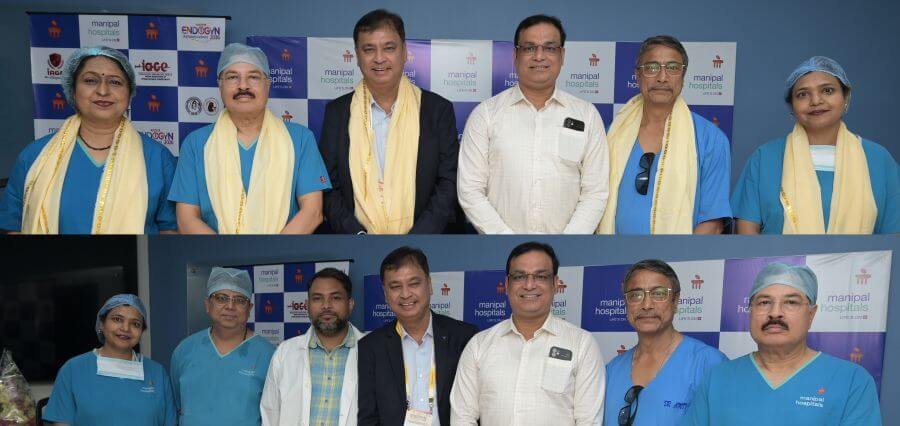
Manipal Hospital, Salt Lake Hosts Advanced Workshop Featuring Live Transmission of MIS Gynaecological Surgeries by Leading Experts
Mumbai/Kolkata, 23rd March 2026: Manipal Hospital, Salt Lake one of the leading units of the Manipal Hospitals Group, successfully hosted a highly specialized workshop on “Transmission of Surgical Cases by Stalwarts in Gynae Endoscopy,” featuring live demonstrations of Minimally Invasive Surgery (MIS) in gynaecology. MIS refers to advanced surgical techniques performed through small incisions or natural openings, resulting in less pain, minimal scarring, and faster recovery for patients. The workshop brought together some of the most renowned names in endoscopic gynaecology, offering a platform for knowledge exchange and skill enhancement. The workshop was conducted under the expert supervision of Dr Shailesh Puntambekar, Medical Director at Galaxy Care Hospital and a pioneer in robotic oncological surgeries in India, along with a distinguished panel of specialists from Manipal Hospital, Salt Lake including Dr Abhinibesh Chatterjee, Dr Polly Chatterjee, Dr MMS Zoha, Dr Amit Basu, and Dr Susmita Mitra, all Senior Consultants in Obstetrics & Gynaecology. As part of the workshop, 10 complex cases involving laparoscopic and hysteroscopic procedures were transmitted live, enabling participating clinicians to observe advanced surgical techniques in real time. Laparoscopic procedures involve small incisions through which a camera and instruments are inserted to perform surgery with minimal trauma, while hysteroscopic procedures are performed through the vagina and cervix using a thin scope to diagnose and treat conditions inside the uterus without any external cuts. The initiative provided invaluable insights into evolving practices in minimally invasive gynaecological care, emphasizing precision, reduced recovery time, and improved patient outcomes. Speaking on the occasion, Dr Abhinibesh Chatterjee, Senior Consultant – Obstetrics & Gynaecology, Manipal Hospital, Salt Lake, said, “Workshops like these play a crucial role in advancing clinical expertise by bridging the gap between theory and practice. Live surgical demonstrations allow for real-time learning, helping clinicians understand the nuances of minimally invasive techniques and adopt best practices that ultimately benefit patient care.” Adding to this, Dr Shailesh Puntambekar, Medical Director, Galaxy Care Hospital, said, “Minimally invasive gynaecological surgery has transformed the way we approach complex cases today. Through such collaborative platforms, we can share global expertise, refine surgical skills, and ensure that patients receive the most advanced, safe, and effective treatment options available.” The workshop also included a felicitation ceremony honouring the participating doctors, held in the presence of Dr Amarjeet Singh, Hospital Director, Manipal Hospitals, Salt Lake, recognizing their contributions to advancing gynaecological care and medical education. This initiative underscores Manipal Hospital, Salt Lake’s commitment to fostering continuous medical learning and bringing cutting-edge surgical advancements to the forefront of patient care. About Manipal Hospitals As a pioneer in healthcare, Manipal Hospitals is among the leading healthcare providers in India, serving over 7 million patients annually with a focus on delivering affordable, high-quality healthcare services. The network today has a pan-India footprint of 38 hospitals across 19 cities, with 10,500+ beds, 7,200+ doctors, and more than 20,500 employees. Manipal Hospitals provides comprehensive curative and preventive care to patients from India and across the globe. The group is NABH and AAHRPP accredited, with most hospitals also NABL, ER, and Blood Bank accredited, and recognized for Nursing Excellence.

Asia’s Business Leadership Awards 2026 to Unite Industry Leaders at One of the Top Business Awards in Delhi
New Delhi, India — The prestigious Asia’s Business Leadership Awards 2026 is set to be held on 27th March 2026 in New Delhi, hosted by Insights Excellence Awards bringing together an influential network of business leaders, entrepreneurs, policymakers, and innovators from across Asia. Recognized among the top business awards in Delhi, the event focuses to celebrate excellence in leadership, innovation, and strategic growth while reinforcing India’s position as a global business hub. Organized by Insights Success Media, the ceremony focuses on establishing themselves as a benchmark for leadership recognition, honoring individuals and organizations that demonstrate forward-thinking vision and measurable industry impact. As one of the most anticipated upcoming business events in Delhi, the Asia Business Leadership Awards promises to deliver a high-impact platform for thought leadership, collaboration, and recognition at a national and international scale. A High-Impact Platform for Business Excellence Positioned among the top business awards in Delhi, the ceremony will be hosted at Radisson Blu, Dwarka New Delhi a premium venue in the capital city, attracting an elite audience of CXOs, founders, investors, and senior executives. The event will feature keynote speeches, leadership discussions, and a grand awards presentation that highlights excellence across industries. The ceremony will be graced by Bhagyashree Patwardhan as a distinguished Chief Guest, who is renowned Bollywood actress. Her presence will underscore the importance of Asia’s Business Leadership Awards 2026 as a nationally significant platform. Their insights are expected to set the tone for meaningful dialogue on leadership, innovation, and economic growth. Recognizing Leaders Across Key Sectors The awards will honor excellence across a wide spectrum of industries, including: Technology and Digital Innovation Banking, Financial Services, and FinTech Healthcare and Life Sciences Manufacturing and Infrastructure Hospitality and Tourism Education and EdTech Startups and Entrepreneurship Sustainability and ESG Initiatives As one of the leading upcoming business events in Delhi, the platform aims to recognize leaders who have driven transformation, demonstrated resilience, and contributed significantly to their industries while upholding ethical and sustainable business practices. Strong Industry Backing and Partnerships The event will be supported by a distinguished group of sponsors and strategic partners who are aligned with the vision of promoting leadership excellence and innovation. Their involvement further strengthens the credibility of Asia’s Business Leadership Awards 2026, reinforcing its status among the top business awards in Delhi. These collaborations play a vital role in enhancing the event’s reach and impact, ensuring participation from key stakeholders across industries and geographies. The presence of leading brands and organizations aims at highlighting the growing importance of such platforms in recognizing and encouraging business excellence. Strengthening India’s Global Business Narrative With New Delhi serving as a central hub for policy, commerce, and international engagement, Asia’s Business Leadership Awards 2026 aims on contributing significantly to the broader business ecosystem. As one of the most prominent upcoming business events in Delhi, the awards will not only celebrate achievements but also foster dialogue on future-ready leadership and innovation. The event will provide a unique opportunity for networking, knowledge exchange, and collaboration, making it a must-attend platform for industry professionals and decision-makers. By recognizing exemplary leadership, the awards aim to inspire the next generation of entrepreneurs and business leaders across Asia. About the Organizer Insights Success Media is a globally recognized business media platform committed to showcasing influential leaders, innovative enterprises, and transformative business stories. Through its publications, awards, and events, the organization continues to build platforms that celebrate excellence and drive meaningful industry conversations. Disclaimer – This article is a work of original content created for public relations and informational purposes only. It may be published across multiple digital platforms with the full knowledge and consent of the author/publisher. All images, logos, and referenced names are the property of their respective owners and used here solely for illustrative or informational purposes. Unauthorized reproduction, distribution, or modification of this article without prior written permission from the original publisher is strictly prohibited. Any resemblance to other content is purely coincidental or used under fair use policy with proper attribution. Read Also : The Handwriting Lab Introduces a Scientific Handwriting Improvement Course to Address Declining Writing Skills