






Elevating Teams Through Presence & Purpose
The Conscious Leader Leadership today is changing—going beyond just authority, strategy, or even charisma. Leading consciously is a decision of those leaders who want to keep their effectiveness in a world that changes fast, is emotionally complex, and the demand for authenticity is constantly growing. A conscious leader is not only recognized by the acts but mainly by the awareness. They bring the sun where there is shadow, calm where there is conflict, and importance where there is boredom. To be honest, they do this just by their presence and pointing at a goal, hence, they have the power to elevate the level of their departments to a deeply human, profoundly inspiring, and strategically impactful one. Leading with Awareness, Not Autopilot Leadership is typically very aligned with the idea of speed, decisiveness, and output. Nevertheless, in cases which are characterized by noise and urgency, the leaders’ arrival is the most decisive factor-the leaders who are able to be aware, listen and engage to the fullest extent. Conscious leaders hatch their plans through careful consideration rather than by unprompted reaction. They realize that the most effective leadership is the one that comes from within: this includes self-awareness, emotional control, and also recognizing one’s inner values. Being so sure of oneself has a very constructive effect on the person’s way of talking, decision-making and even helping teams. Conscious leaders, as a result of a deliberate decision, choose to be conscious rather than on autopilot, thus, they afford themselves more time for rational and less for reactive answers. Consequently, the very concepts of clarity and purpose become the new ones replacing the old of chaos and pressure, respectively, in these companies. The Power of Presence If we name the greatest leadership asset that is most overlooked, it would definitely be Presence. Being the most available—mentally, emotionally, and energetically—during each point of interaction is what it pleads for. Teams experience this because of leader’s presence. A leader does it by the way he listens without giving his/her attention to anything else, acknowledges without judging, and responds with empathy. The presence very much empowers a person to realize that he/she is important, the voice concerned is important, and the work concerned is important. The presence of a leader can result in psychological safety, deep trust, and open dialogue among other things. Besides, it is quite helpful in bringing members to a state of total involvement and at the same time, it plays a significant role in the reduction of making fearful decisions. The full presence of a leader will encourage others to also take a full part. Purpose That Inspires Beyond Performance Purpose is definitely the leader’s main feature of a conscious leader. Apart from being a “map” for an organization, it is a “map” for every single person in that organization. In a world where employees keep asking for meaning just as much as achievement, purpose is what connects the different players— goals, values, and behaviors. Conscious leaders know their purpose very well not just as a phrase but as a true practice. They make sure that the teams are not only given the tasks but the reasons why as well. When function is clear the performance goes from one to another, and to the teams. Also, if a team feels that it is connected to the cause, then the team will become more resilient, innovative, and collaborative. Conscious leaders get people to commit willingly, rather than forcefully, through serving the purpose. When it comes to turning the culture from transactional to transformational, they are the ones at the top. Emotional Intelligence as a Strategic Strength One of the very first things that conscious leaders come to realize is that leadership is emotionally draining and challenging. Therefore, the emotional quotient of the leader should not be regarded as just a nice-to-have skill but rather the core one that can significantly influence the creation of high-performing teams. Such leaders are always looking for the emotional undercurrents, are very aware of the signs of stress, and react with empathy rather than with a verdict. By being energy-conscious, leaders are winning in that their teams will, without trying, follow suit and attain emotional stability which, in turn, will be the landing for a greater engagement, creativity, and collaboration. The Future Belongs to Conscious Leaders As the workplaces are being transformed, conscious leadership should not be considered as a fad, but rather as a necessity. Corporations demand leaders who will be able to handle tough situations calmly, be authentic sources of motivation to people, and treat others as fellow human beings. These are the leaders who are present and purposeful in every circumstance they find themselves in, and hence, organizations are in search of them. Connecting with them, the conscious leader, doesn’t direct but lifts up. Instead of pushing really hard, he inspires deeply. Instead of looking for control, he creates meaning. With presence and purpose, they carry out the work of team transformation—and through these teams, they make the change happen in organizations. The leaders of tomorrow will be those who make that conscious and intentional decision to take that road with clarity, compassion, and purpose. Read Also : The Essence of Great Leadership

The Healthcare 2.0 Pioneer – Dr. Dan Briggs: Creating a Regenerative and Holistic Wellness Ecosystem with Auragens
In an increasingly health-conscious time, holistic healthcare—Healthcare 2.0, is the need of the hour. Traditionally, healthcare has never been holistic. It has always been a collection of parts or specializations. Eventually, it became a drag on the entire healthcare ecosystem. So much so that not only patients but genuine and compassionate healthcare-givers like Dr. Dan Briggs were worried and frustrated. Auragens—of which he is the Founder, President, and Chief Executive Officer (CEO)— was born out of this frustration and hope for a solution. Dr. Briggs spent years watching patients fall through the cracks of a healthcare system that was reactive instead of regenerative. An industry focused on managing disease rather than restoring health. “I wanted to reimagine what healthcare could look like if we put the human being back at the center of medicine. And prioritized patients over profits. And key to this field, transparency over transactions.” Healing—An Elevated Art Form The concept evolved from a simple yet ambitious question: What if healing could be elevated to an art form? “Drawing from our experiences in both clinical practice and biotechnology, Auragens was designed to bridge advanced science with a luxury, patient-first experience, something we call “conscious luxury medicine.” From Dr. Briggs and his team’s first stem cell protocols in Panama to their upcoming expansions, Auragens has grown into a model for what’s next in global regenerative care. Today, Auragens stands at the forefront of healthcare transformation. In Dr. Briggs’ words, “Healthcare 2.0” is about moving from intervention to regeneration, from treating illness to optimizing wellness. It’s a fundamental redesign of the patient experience: scientifically, technologically, and emotionally. Traditional healthcare is transactional. Healthcare 2.0 is relational. It uses stem cells, precision medicine, AI, and bioinformatics not to patch problems, but to prevent, predict, and personalize outcomes. “At Auragens, this model empowers patients to co-create their health future alongside our medical and research teams.” It’s healthcare as it should have always been: proactive, data-driven, and profoundly human. Only a Well-Executed Vision Matters As both the Founder and CEO, Dr. Briggs balances the dual role of visionary strategist and operational leader in steering Auragens toward sustainable growth and innovation. For him, vision must always translate into execution. There is an old Steve Jobs quote he repeats often: “Ideas are worthless.” Simply meaning everyone has great thoughts and ideas, but without the ability or intention to execute them, they have no tangible value. His approach is to create an ecosystem where the why and the how operate in harmony. He spends part of his time pushing the frontier—researching, building partnerships, exploring global markets—and the other ensuring that their operations, patient safety standards, and clinical quality reflect that vision in every detail. Dr. Briggs has built a leadership team that thrives in this duality: dreamers who execute, and executors who dream. “That’s how we maintain momentum without losing direction.” Amplified Empathy-Tech The healthcare industry is undergoing rapid digital and structural evolution. In such a scenario, Dr. Briggs knows that Auragens must integrate emerging technologies—like AI, precision medicine, or data-driven diagnostics—into their mission and offerings. However, he says that they (he and his team) see technology as an amplifier of empathy. “At Auragens, AI helps us decode complex biological data from genomic, proteomic, and cellular, to tailor treatments at the molecular level.” They’re developing AI-assisted regenerative dashboards that visualize patient responses in real time and guide clinical decisions with unprecedented accuracy. They’re also integrating predictive analytics for preventive care and longevity modeling. The goal is not just to extend lifespan, but healthspan. Precision data informs every dose, every molecule, every moment of the patient journey. Durable and Long Lasting Impact Many leaders in healthcare focus on short-term solutions. However, Auragens’ approach is a long-term impact—both in improving health outcomes and reshaping industry standards. Because, for Dr. Briggs, they design for legacy, not quarterly metrics. Every Auragens protocol is built on the principle of durable benefit by creating a biological change that sustains. They also invest heavily in regulatory science and ethical frameworks. Their internal Biologics Safety and Advisory Council (BSAC) and their forthcoming Stem Cell Ethics Committee are shaping the standards that will define this field for decades. “Our responsibility is not only to innovate, but to make that innovation safe, scalable, and sustainable,” he ensures. A Resilient In-Built Leadership Leadership in healthcare demands resilience and adaptability. There have been some of the most defining challenges as a CEO that Dr. Briggs had to face, and they shaped his leadership philosophy for the better. Regenerative medicine is not for the faint of heart. From regulatory resistance to skepticism and the complexity of global logistics, “We’ve had to build resilience into our DNA,” he says. One of his biggest lessons is that clarity of purpose outlasts chaos. “When you know why you’re doing something, and that it genuinely serves humanity, every obstacle becomes fuel.” His leadership philosophy centers on integrity, empathy, and execution under pressure. “You have to stay grounded in science and guided by conscience.” A Unified Purpose—Turning Patient into the Fittest Individual Innovation in healthcare requires interdisciplinary collaboration. That’s what Dr. Briggs believes ardently and thus ensures that Auragens foster a culture that bridges science, technology, and patient empathy under one unified purpose. The team operates as an orchestra, not a hierarchy. Scientists, clinicians, engineers, and patient care teams collaborate in an environment where every perspective matters. “Our culture thrives on curiosity and compassion, two forces that rarely coexist in traditional healthcare but are essential to progress.” Every team member understands that the “why” behind their science is a human being seeking hope, healing, or renewal. “That keeps our innovation emotionally intelligent.” Providing Trusted, Transparent, and Strictly Regulated Care With healthcare data privacy and ethics becoming increasingly critical, Auragens ensures trust, transparency, and regulatory alignment while uniquely driving innovation. Because for Dr. Briggs, trust is their most valuable currency. “We adhere to both U.S. and international regulatory frameworks, including HIPAA, AABB, and evolving biologics compliance standards.” Their patients’ data are secured through encrypted, decentralized

The New Ethos of Women Shaping the World
Rise, Lead, Inspire A fresh chapter of world leadership is emerging – this time not characterized by hierarchy, dominance or inflexible tradition, but rather by foresight, bravery and humaneness. The words of women leaders have echoed across countries and industries. They confirm progress in their own spheres and evangelize the contagious effect of their transformation for the whole society. Their leadership practice is a new moral valor – courageous and tempered, tactical and empathetic, persevering and sensitive to human nature. Rising with Purpose The issue of women in leadership positions is no longer the sole concern of the number of women leaders. It means quite another thing – a thorough redefinition of leadership itself. In many cases, female leaders are presented with new roles and a larger sphere of influence. Their attitudes are suffused with strong motivation, they are not attracted by gaining more power though. What pulls on them is the prospect of making a real difference. Women do not ascend the ladder to mimic, but rather to redesign it with more openness, fairness and moral principles. Such a rise is activated by one trait above all—courage. These are the attitudes that dare to defy antiquated standards, to seize a spot at the table where their views have never been heard before and to establish a track where it has not been. The statement made by their coming is a loud one – that the world leadership is most powerful when it is diverse and dynamic in the same way as the world it serves. Leading with Authentic Strength They lead differently, these top female executives of today—not out of necessity, but rather out of their free will. Their leadership attributes are a mix of brain and gut feeling, hard work and kindness, and foresight and moral principles. What they do is to a certain extent to follow a genuine path which strongly resonates in a world that is desperate for transparency and trust. Without the use of dominance, they derive their power from being able to bring those beside them up to their level. These ladies lead by hearing, comprehending and giving power to the others. They prefer collaboration to competition, use of purpose rather than ego, and progress rather than perfection. Thanks to such behavior, they contribute to the formation of work environments and local communities, where people feel respected and accepted, and, hence, motivated to bring the best of themselves. This sincere approach to management is not only changeable—quite the opposite, it is infectious as well. It promotes changes in management style from strictly top-down to more human-oriented approach, where leadership is considered being a service not a show of control. Inspiring Transformation The new ethos cannot do without one of its core components—inspiration. To be inspired by women leaders does not mean admiring only the results of their efforts, but also—perhaps, mainly—the processes. Their resilience, their vision and their absolute commitment to making this world a better place are the aspects which impress most of all. The leaders are making a new set of possibilities by being the very things that are required: clarity of aim, courage of deed, and compassion in directing. Their reach, however, is not limited by neither the business nor the political sphere. They bring about the changes in education, entrepreneurship, healthcare, science, art, social justice and technology sectors. They encourage the youth to dream not only differently, but also more daringly. They motivate communities to challenge stereotypes, to tear down biases, and to advance towards a just future It is in leading and calling others to lead, in confronting established views, and daring to dream, that the people find not only the impetus but also the permission, from their narratives. Women’s becoming an element in the system is the provision for others to ascend. Inspiring the Leaders of Tomorrow One of the most significant, powerful, and long-lasting effects of women leaders today is the heritage they are sewing for the times to come. Their endeavors make it possible for the coming generations of girls and women to be fearless in stepping forward, to take leadership roles, not apologizing, and to see a world where gender does not hinder one from achieving great things. They do not influence future leaders through being flawless, but through the avenues that are open. They demonstrate that leadership is a learning journey that never stops—one that is influenced by stamina, being true to oneself, and having a goal. Read Also : The Dual Strengths of Women Leadership

The Dual Strengths of Women Leadership
Strategic Minds, Human Hearts Leadership today is no longer characterized by strict hierarchies or by authority based on the traditional ideas of power. It is characterized by the skills to interact, to create a vision, and to support others while dealing with the complicated situation with confidence. Women leaders are performing remarkable by combining their strong points in an effective manner that is changing the very concept of leadership across sectors and in different parts of the world. They use their brains for things like planning and decision-making, and lead by developing qualities like love and empathy in the people they manage – a balance that not only increases the total of the company but also creates the kind of cultures where both people and the goal of the company flourish. Women’s leadership today is a landmark on the way to a different future. It is able to employ strategy without losing empathy. It also supports the idea of progress without giving up on the principles. The most outstanding feature of women leaders is the perfect union of brain and heart, logic and feeling, and this is the reason why they are recognized as the major players who influence the upcoming changes. The Power of Strategic Thinking Female executives are often the clearest thinkers when it comes to playing out a strategy. They usually characterize their approach to strategy as multi-layered which results from their capacity to look at a problem in a holistic way, not only they visualize the direct effects but also the indirect ones and they take into account perspectives that are perhaps ignored. Such thorough thinking actually brings not only effectiveness but also longevity to their strategies. Moreover, their strategic power is equally attributable to their flexibility. Women leaders are extremely agile in handling new situations and are equally quick to take in the new reality, to make adjustments to their plans with full consideration and to advise their staff on the way out of the dark period with both firmness and charm. On one hand, they work out everything in detail and on the other hand, they still want to be free to evolve which is why they extend the reach of their strategies while still being able to move forward. The most prominent feature of their strategic work is that it is based on the principle of openness. To make a strategy a secret of only a handful of people is something women leaders would never think of instead they are widening the decision-making process to get input from the diverse voices. The group intelligence that comes from this is the major reason for the strategies being not only richer, more resilient but also becoming more and more valid day by day as the world keeps changing at a fast pace. Leading with Human Hearts While the strategy can be likened to a map, the heart is the one that provides the link. Women leaders are adept at recognizing and taking care of leadership aspects which are human, i.e. the feelings, the driving forces, and the dreams of people which in turn bring out the best in them. Besides, these leaders use their influence to create not only the accomplished goals but also to foster togetherness, trust, and common purpose. Empathy is the most characteristic feature of their leading. It provides them with the ability to listen attentively, to help sincerely, and at the same time, to generate situations where people are willing to offer their services, to show their doubts, and to develop themselves. Being able to communicate with people at their level contributes a lot to loyalty and at the same time, it helps form different ways of cooperation instead of rivalry. Using the heart when leading does not mean being soft; rather it means having power. This power implies the ability to understand before evaluating, to raise rather than to control and to consider people first even when things get difficult. This approach that is centered around the human being, is a source of energy for the call for participation and it is also the reason why the teams get inspired to not only give their efforts but also to show their dedication. The Legacy of Women Leading Forward One element of the women leadership legacy is not only the great things that they do, but also the opportunities brought about by them. Their leadership first of all, gives the power to the others to come up with their own strengths, it definitely helps the culture to change and it also creates leading paths for the next generations. More importantly, they have reduced the organizations to the being more human, more futuristic, and more in harmony with the world that is intellectually and compassionately inclined. Sharp intellectual abilities. Caring and empathetic. This is the double power that characterizes women leadership these days and not as a rare phenomenon but rather an indispensable driving force. A leadership that sees not only the whole but also the deeper calling, that goes on to make the next steps but at the same time, it also looks after the people, that dare to be different but still have the sense to listen is what women leadership is all about. Read Also : The New Ethos of Women Shaping the World

Sushma Krishnappa: A Journey of Resilience, Leadership, and Transformation
In Tumakuru, a town where tradition whispers through temple corridors and modernity hums in engineering college classrooms, a young girl once sat at the window of her family’s home, watching the world pulse with possibility. The streets below told stories of transformation: bullock carts sharing space with motorbikes, old bookshops standing beside computer training centers, a town caught in the beautiful tension between what it was and what it was becoming. Sushma Krishnappa belonged to that same liminal space. Born into a sprawling joint family where aunts, uncles, grandparents, and siblings formed an ecosystem of support and expectation, she grew up surrounded by voices that championed education, financial independence, and resilience. Yet for young Sushma, these values remained abstract; wisdom written in a language she hadn’t yet learned to read. She was, by her own admission, an average student at Vidyaniketan, moving through her early school years with pleasant indifference. Then came the catalyst. Her sister’s decision to pursue engineering wasn’t just a family milestone; it was a mirror held up to Sushma’s own possibilities. Watching her sister prepare for entrance exams, witnessing the focus and determination required, something fundamental shifted. The transformation was gradual- a student finding her stride, discovering that capability had been there all along, waiting for purpose to call it forth. Sushma pursued a degree in Science from Bangalore University, later earning a Master’s in Computer Applications from Indira Gandhi Open University. These weren’t just degrees; they were keys to doors she couldn’t yet see, preparation for battles she hadn’t yet fought. The Crucible of Rejection If small-town dreams are forged in hope, they’re tempered in the unforgiving heat of big-city reality. Bangalore, the city of opportunity and ruthless competition, didn’t roll out any welcome mats for the young graduate from Tumakuru. The rejection came in waves. Interview after interview, door after door closing with the soft click of “we’ll get back to you” that everyone knows means no. She could have returned home. Many did. But resilience, that quality her parents had modelled without naming, held firm. Her first opportunity came at GIT Infotech, followed by a walk-in interview at Accenture during what she describes with characteristic understatement as “a challenging time.” That walk-in wasn’t just a job interview; it was a door cracking open just wide enough for someone persistent enough to push through. What followed was nineteen years at Accenture, a tenure that would see her evolve from a nervous newcomer to a seasoned leader in Financial Services. “I remain deeply grateful for that chance,” Sushma reflects. “It allowed me to grow professionally in a role aligned with my aspirations.” The Roads Not Taken Here’s where Sushma’s story takes an unexpected turn. As a young girl, she had gravitated toward fashion with natural enthusiasm, selecting fabrics and designing clothes for family members. For a time, the dream of becoming a fashion designer felt inevitable. Simultaneously, another passion quietly took root. She found herself managing household budgets with surprising satisfaction, overseeing monthly expenses, planning savings strategies, organizing family outings with an eye toward both enjoyment and fiscal responsibility. While others saw chores, Sushma saw patterns, systems, and the elegant logic of financial planning. Instead of abandoning fashion entirely, she integrated it as a cherished hobby. Instead of pursuing finance academically from the start, she let her natural aptitude guide her toward it professionally. This duality, the creative and the analytical, would become one of her greatest strengths. In financial services, where many see only numbers and regulations, Sushma brought creativity to problem-solving, viewing challenges through multiple lenses. Those nineteen years at Accenture became a masterclass in the financial services industry. She worked with leading banking institutions, accumulating not just technical expertise but strategic vision- the ability to see patterns across organizations, to anticipate challenges before they materialized, and to lead teams through complexity with clarity. When she made the pivotal decision to join Capgemini India as Senior Executive Director in Financial Services, it wasn’t a departure but an evolution. It was a new chapter with fresh challenges that continue to fuel both her passion and her growth. The Price of Success Corporate success stories often gloss over the personal costs. Sushma’s story refuses that sanitized narrative. The demands were relentless: long hours, frequent travel, and meetings bleeding into weekends. Behind every accomplished professional, there often stands the Silent Pillars —family. For Sushma Krishnappa, her remarkable career spanning over two decades in technology and leadership was not a solo endeavour. It was a shared journey, strengthened by the unwavering support of her siblings. Her sister Sheema Krishnappa and brother Chandan Krishnappa were more than family; they were the backbone of stability and strength. While Sushma navigated the demanding corporate world, they ensured the home front remained steady. From managing responsibilities to offering encouragement and motivation, their role was pivotal in creating an environment where ambition could thrive without compromising family harmony. But there was one thing no family support could compensate for: her own neglect of her health. The weight crept on gradually- stress eating, irregular meals, endless sitting, exercise perpetually postponed. Before she fully realized what was happening, she had become severely obese. “I tried hitting the gym, hoping to shed the weight, but saw little to no progress,” she admits honestly. The turning point came through Vijaykumar from VFX.FIT, who offered something radical in its simplicity: online physical transformation coaching accessible from home, focused on sustainable results, with consistent follow-ups. What followed was a three-year journey that transformed not just Sushma’s body but her entire relationship with herself. Sixty-five kilograms shed through consistency, patience, and determination. Energy returned. Mental sharpness increased. Confidence bloomed. She noticed immediate shifts in her work: enhanced productivity, clearer communication, and creativity flowing more freely. Pandemic Lessons When COVID-19 upended the world, Sushma faced multifaceted challenges: business constraints as remote work became mandatory, dissolved boundaries between professional and personal life, and the absence of face-to-face interaction. She responded by creating a structure: establishing a sustainable work-from-home setup, physically

The Elite: Trailblazer of 2025
The Elite: Trailblazer of 2025 Between tradition and transformation, expectation and self-discovery—emerged a young woman who would later redefine her trajectory with remarkable clarity and courage. Today, as we honor her as The Elite: Trailblazer of 2025, Sushma Krishnappa represents not just personal achievement, but the quiet power of evolution. Digital Link Quick highlights Quick reads
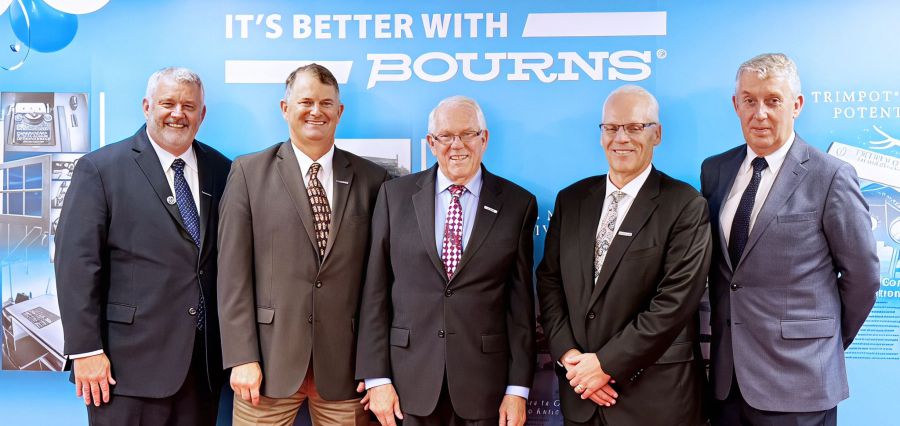
Bourns Opens India Design Center Giving Developers Local Access to Advanced Technologies that Enhance Application Differentiation
Bourns’ state-of-the-art facility in Bangalore offers the essential the tools and technical expertise to solve critical design challenges New Delhi, November 14, 2025 – Bourns, Inc., a leading manufacturer and supplier of electronic components for power, protection, and sensing solutions, today announced the opening of its first design center in India in Bangalore. Launched as a hub dedicated to customer collaboration and innovation, this valuable customer resource provides local access to a comprehensive range of tools and technical support, including reference designs that use Bourns’ industry-leading components. Offering proven processes that empower rapid prototyping and faster design validation, the Bourns India Design Center encourages cross-functional teamwork between engineering, product management and marketing. Customers will also be able to track the measurable impact of their designs to help confirm success. In addition, the center will provide hands-on co-design and technical education support. The new 8,000 square foot state-of-the-art facility opened today, November 13, in a ceremony that invited key business partners and customers. Bourns made the strategic decision to locate the new design center within the Bangalore region based upon the rich engineering talent available here. “India is known for its extensive engineering talent and the great value they bring to engineering and manufacturing companies. Given the close relationships we have with our global distribution partners who have opened offices in Bangalore, we believe this strategic investment will greatly facilitate localized engineering and application support for the good of our customers,” said Gordon Bourns, Chairman and CEO at Bourns, Inc. “Bourns continues to be at the forefront of engineering innovative power, protection and sensing solutions that help advance the development of efficient and sustainable applications. The opening of this center aligns with Bourns’ global focus on high-growth market segments, and reaffirms our commitment to responsible environmental management by influencing low carbon designs.” “By opening this new collaborative design center, we are adding essential capabilities to address complex design challenges enabling our customers to streamline and simplify application development,” said Al Yost, President and COO at Bourns. “We are extremely excited about the substantial benefits our new design center will deliver to customers. Developers will reap the advantages of Bourns’ proven magnetic component design expertise that will empower them to meet next-generation IC performance, shorten design cycles and add industry-leading features to their end products. Giving our customers valuable and responsive technical design assistance is a win-win for everyone.” About Bourns Bourns, Inc. is a leading manufacturer and supplier of position and speed sensors, circuit protection solutions, magnetic components, microelectronic modules, panel controls and resistive products. Founded in 1947 and headquartered in Riverside, California, USA, Bourns employs more than 8,000 people across 17 global manufacturing centers. The company’s advanced products are key components in a broad range of markets, including automotive, industrial, consumer, communications, low to medium risk medical*, audio and various other market segments. Additional Company and product information is available at www.bourns.com. Disclaimer – This article is a work of original content created for public relations and informational purposes only. It may be published across multiple digital platforms with the full knowledge and consent of the author/publisher. All images, logos, and referenced names are the property of their respective owners and used here solely for illustrative or informational purposes. Unauthorized reproduction, distribution, or modification of this article without prior written permission from the original publisher is strictly prohibited. Any resemblance to other content is purely coincidental or used under fair use policy with proper attribution. Read Also : Samir Hmicho: The Rising Catalyst in the Sustainable Automotive Realm

Influential People Who Define 2025
Influential People Who Define 2025 This edition honors these exceptional trailblazers whose vision, grit, and humanity are setting new benchmarks across industries.These are the thinkers who anticipate change before it arrives, the builders who turn bold ideas into thriving realities, and the leaders who inspire action through authenticity rather than authority. Digital Link Quick highlights Quick reads

Royston G King: Driving Transformative Growth Through Strategic Evolution
Most teenagers are daydreaming about their weekend plans by the time they are fourteen. Royston G. King was purchasing stock in the business owned by Warren Buffett. At the age of 17, he was starting his first fashion blog and e-commerce company while his peers were anxious about their SAT scores. He had established several sources of income and was growing a digital marketing business by the time most college students choose their major. This isn’t another rags-to-riches fairy tale or an overnight success story packaged for social media consumption. This is the real account of someone who lost hundreds of thousands before making millions, who faced infinite obstacles before finding breakthrough patterns, who questioned everything before discovering what truly matters. It’s a journey that zigzagged through the highest peaks of Forbes recognition and the lowest valleys of near-failure, through pandemic shutdowns that could have ended everything and pivots that turned crisis into rocket fuel. What makes Royston’s story compelling isn’t the awards lining his walls or the businesses in his portfolio; it’s how he got there. It’s the willingness to experiment when others play it safe, the courage to pivot when others double down on losing strategies, and the wisdom to measure success not in zeros on a bank statement but in lives transformed and communities elevated. In a world obsessed with quick wins and growth hacks, he built something far more valuable: a blueprint for sustainable success grounded in authentic values, strategic thinking, and relentless evolution. Foundations Built on Values and Vision Royston’s academic journey reads like a passport collection- University of Melbourne, University of Southern California on exchange, Columbia University, with summer sessions at London School of Economics and Harvard. But these weren’t just credentials; they were laboratories for understanding diverse perspectives and global markets. What distinguished his formative years wasn’t academic achievement alone. Growing up in an environment emphasizing strong moral values, he learned that success in business begins with human connection. His ability to socialize effectively stems from intentional practice- being genuinely kind, treating everyone with respect, listening actively, and refusing to judge negatively. These weren’t soft skills; they were power skills that translated into business acumen across psychology, copywriting, sales, and marketing. The Entrepreneurial Spark: From Curiosity to Creation At 14, Royston bought his first share from Warren Buffett‘s company after receiving a book about the investment legend. That moment ignited curiosity about wealth creation and taught him that learning from the best accelerates success. By 17, he was navigating his first e-commerce business while launching a fashion blog, recognizing that content and commerce create powerful synergies. Within a year, he was growing social media pages, understanding that digital presence was a necessity, not a luxury. From e-commerce, he expanded into digital marketing, establishing an agency serving local businesses before pivoting to online ventures. As expertise deepened, he added online reputation management- positive press publicity and negative content removal. Each venture was a masterclass in customer needs, market dynamics, and scalable models. What enabled this diversification? Maintaining radical open-mindedness to experiment, mustering courage to pursue ventures without guarantees, and investing in mentorship programs that compressed his learning curve. “Our last business venture is very rarely our first attempt,” he explains. “Success comes through multiple iterations, serendipitous connections, and years of accumulated expertise.” Today, he operates multiple synergistic businesses, invests in startups within his expertise zones, and partners with companies to scale them by filling strategic gaps where he possesses advantages. The Crucible: Forged Through Fire Royston’s path was anything but smooth. Launching his online business during college, he confronted infinite obstacles: technical failures, marketing missteps, and financial pressures. There were moments so challenging, he questioned whether success was even possible. He lost hundreds of thousands of dollars learning lessons no classroom could teach. Yet each failure contained seeds of future success. The key wasn’t avoiding mistakes; it was extracting wisdom, adjusting strategy, and maintaining momentum. “Every negative I’ve experienced, I’ve experienced the positive too,” he reflects. Financial losses taught risk management; strategic failures revealed market truths. When strategy aligned with timing, results were transformative, turning losses into millions in windfall gains. Evolution of Purpose: From Achievement to Impact Royston’s early drive stemmed from achievement hunger- an ambitious student eager to transform his life. He took massive risks because success seemed achievable through determination. Today, his motivation has matured. He operates from love of the game, working with people he cares about, and exploring new ventures. The daily intellectual stimulation and creative autonomy now drive him more than external validation. His risk profile evolved significantly. No longer aggressive, he takes calculated risks, aware that business success is extraordinarily difficult. “Higher risks come with higher rewards, but we must mitigate our downside,” he explains. What drives him most transcends personal achievement. His passions center on helping good people succeed and making a measurable impact. “Nothing feels more fulfilling than seeing how our work has touched millions of lives for the better,” he shares. Whether through education, reputation management, or scaling advisory, he measures success in lives transformed. The Pandemic Pivot: Crisis as Catalyst When COVID-19 struck, Royston’s agency worked extensively with medical and dental practices, virtually all forced to shut down, eliminating revenue overnight. Rather than accepting defeat, he pivoted to essential service businesses, particularly home improvement contractors. The adaptation was transformative. What began as an emergency response became rocket-ship growth. The experience reinforced his philosophy: change is constant. Whether facing pandemics, AI disruption, or unpredictable and rare events, entrepreneurs who thrive stay on the cutting edge and continuously evolve. Self-Awareness: Understanding the Terrain Through personality testing and self-reflection, Royston developed clarity about his strengths and limitations. His core abilities include socializing effectively, active listening, and persuasion. He excels as a visionary and strategist with strong planning capabilities. However, he candidly acknowledges he’s not the fastest action-taker and sometimes overthinks. Rather than viewing this as a weakness, he treats it as strategic intelligence. When bootstrapping solo, he improved weaknesses to avoid vulnerabilities. As businesses scaled,

The Influence of Integrity
Leadership Rooted in Values Leadership is being challenged in innovative and deep ways in the new world that is largely characterized by the fast pace of change, never-ending strives for success, and continuous reinvention. Organizations are changing, technologies are revolutionizing industries, and the pressures of performance are always there. Nevertheless, among all these changes, the one quality that still remains is the timeless power of integrity. Leadership based on values not only leads to success, but it also makes success. The Foundation of True Leadership Leadership without morals is leading without a compass. Strategy may be the one to map the road, but it is values that point to the destination. Integrity is the one that is, literally, at the very center of this foundation. It is the very thing that links words, actions, and beliefs—being the small but very significant consistent factor that converts power into authenticity. Real leaders do not seek to be loved, instead they seek to be respected on the basis of their principles. It is the quality of the leaders who rely on their principles to be able to say ‘no’ to temptation, pressure, or uncertainty. They are leaders who, though not perfect, act with integrity which in turn makes them more influential. They demonstrate that one’s ethical steadfastness and professional excellence need not be opposing forces, rather, they are coexisting strengths. Integrity as the Core of Trust Trust is the currency of leadership, while integrity is the mint that issues it. The absence of trust greatly limits the power of influence and makes authority hollow. However, when leaders act with integrity, they become credible which, in effect, is beyond the scope of position or authority. Thus, people under their leadership do not come because of the obligation, but of the trust that they have in them. Integrity is the mainstay of any decision, it is the medium through which an action is performed, and it is the provider of calmness. It is the one that makes it certain, among other things, that what has been promised is not only done, but is also kept. In the era when corporate accountability and transparency are always questioned, integrity is what makes a leader his/her most valuable and readily visible asset. The loyalty that is based on integrity does not have to be enforced; instead, it is naturally given. Leading with Consistency and Courage Integrity asks for courage—the daring decision to make choices that aren’t in the popular direction, to admit faults, and to be truthful even when it’s inconvenient for you. Courage is supported by consistency, the quality of being able to show the same moral strength both in the light of the public and in private. The leaders who take up this courageous task are those who make people believe. The energetic strength in their principles pushes the people around them to do the same. Those leaders in uncertain times serve as a source of stability for others. Not only do they show the right way to follow, but through their integrity, they also set the standard by which the behavior should be recognized. The Intersection of Integrity and Impact Leadership success if only judged by results is, however, not the whole story. The real measure of leadership is in the manner by which the results are achieved. Impartiality through honesty keeps power from being something purely accidental or exploitative, instead, turning it into something authentic and lasting. In essence, it joins ambition with altruism as well as achievement with accountability. In leaders with moral principles, it is clear that the way of achieving their objectives is equally important if not more than the accomplishing the goals. Those with long-term vision set the example through their leadership, choosing to focus on sustainability rather than grabbing a short-term win. What drives them goes beyond the measures – it transforms the followers’ way of thinking, motivates their conduct, and nurtures their ethical development. Besides, integrity-driven impact does not stop there; it also has a multiplier effect. This, in turn, not only leads to the creation of a heritage of moral leadership but also it becomes a source of inspiration for others who in turn adopt the same principles in their decision-making process. Such leadership is not just a step beyond individual success, it becomes a movement toward shared excellence. The Timeless Power of Integrity Regardless of leadership changes in industries and leadership trends, integrity is still the constant factor—the unseen power behind lasting success. To leaders in every era, this virtue sets apart those who create long-lasting empires from those only achieving legacies. Eventually, leadership grounded on values is more than just proper morals—it is a profitable practice. Such leadership transforms workplaces into communities of trust, rivalry into teamwork, and ambition into goal. Integrity is not something to be added on to leadership—it is the core of leadership. It is the silent power that changes power into purpose, authority into authenticity, and success into significance. In a world where trust is scarce, leaders who gain the most influence are always those who practice it. Read Also : Leadership That Creates New Possibilities