





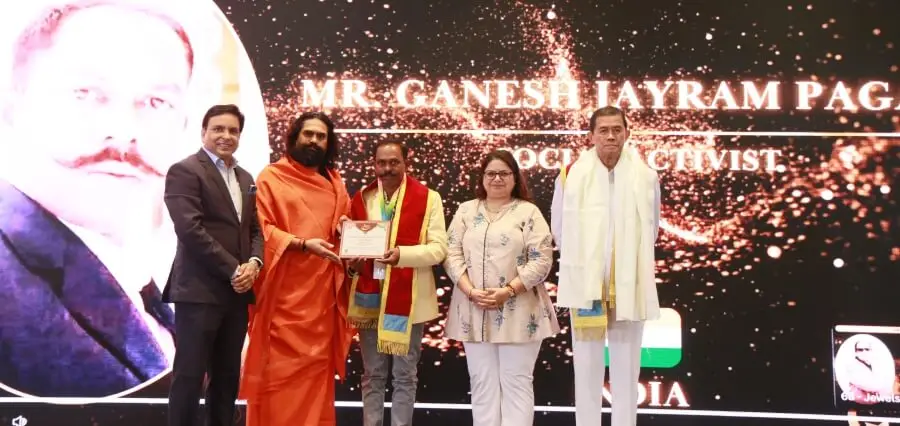
Ganesh Jayram Pagare Honoured for 15+ Years of Dedicated Social Service
Social worker Ganesh Jayram Pagare has been recognised for more than 15 years of independent efforts supporting education, literacy, and social development among children from underprivileged communities in Nashik, Maharashtra. Pagare has focused his efforts particularly on communities in Mahatma Phule Nagar and Bhadrakali, working with children of labourers and families facing difficult social and economic circumstances. His work has centred on encouraging children to understand the importance of education and supporting their aspirations for a better future. Supporting Education at the Grassroots Level For more than a decade and a half, Pagare has continued his social work through direct engagement with local communities. His efforts have sought to create greater awareness about education among children and their families, particularly in circumstances where financial and social challenges can make continued learning difficult. Through his independent work, Pagare has encouraged children to remain connected with education and recognise its potential to create opportunities for personal and professional development. His approach has remained focused on community-level engagement and sustained educational awareness. Continuing Despite Challenges Pagare’s social service journey has involved working independently and continuing his efforts despite various challenges. Rather than depending primarily on external assistance, he has remained personally involved in his community-focused activities. His long-term commitment reflects an emphasis on consistency and direct engagement. Over the years, he has continued to work towards creating awareness about literacy and education among children from disadvantaged backgrounds. Multiple Honours for Social Contribution Pagare’s contribution to society has been acknowledged through several honours and public recognitions received over the course of his social service journey. Among these is the Samaj Bhushan Award, recognising his contribution to society and his continued involvement in social work. His journey of social service and public recognition has also brought him into association with notable personalities and dignitaries. This includes Korn Dabbaransi, former Deputy Prime Minister of Thailand and former Minister of Science and Technology, who served in several Thai governments. Pagare has also received recognition associated with public figures including Mangal Prabhat Lodha and Smita Tambe. These acknowledgements have added to the recognition of his continued involvement in social work and educational support. Asia Excellence Award and Honorary Doctorate Pagare was also honoured with the Asia Excellence Award, presented by actress and former Member of Parliament Jaya Prada, in recognition of his contribution to social development. He has further received an Honorary Doctorate in Social Work from Georgia University, USA, presented by Mandakini. The recognition acknowledged his longstanding involvement in social service and his focus on education and community welfare. Recognition by Insights Success Media Pagare was also honoured by celebrated actress Padmini Kolhapure at an awards platform presented by Insights Success Media. The recognition acknowledged his continued commitment to education and social upliftment. The honour forms part of a series of recognitions Pagare has received over the course of his social service journey, highlighting the broader attention his work has attracted across different platforms. Focus on Children and Community Development A central aspect of Pagare’s work has been his focus on children from economically disadvantaged families. By promoting awareness about education and literacy, his efforts aim to encourage children to remain engaged with learning despite the challenges they may face. His work reflects the role that individual initiatives can play at the grassroots level, particularly when sustained over an extended period. By continuing his involvement within local communities, Pagare has sought to support children in recognising education as an important foundation for their future. Continuing the Mission With more than 15 years of social service behind him, Ganesh Jayram Pagare continues to focus on education, literacy, and community upliftment. His journey demonstrates the importance of sustained individual involvement in addressing educational and social challenges at the community level. The honours and recognitions he has received represent milestones in a journey built around continued service. His work remains focused on encouraging children from underprivileged communities to pursue education and work towards improved opportunities for their future. About Ganesh Jayram Pagare Ganesh Jayram Pagare is a Nashik-based social worker who has been independently involved in education, literacy, and community-focused social service for more than 15 years. His work has primarily supported children from underprivileged communities, including children of labourers, with a focus on creating awareness about education and encouraging continued learning. Read Also: Dr. Jane Marie Spanich: Transforming Education Through Faith, Innovation, and Purpose

UltraTech Cement Enters Wires And Cables Market With Ultravolt
Prime Highlights UltraTech commits 18 billion rupees, or $190.5 million, to Ultravolt, backed by a new Gujarat manufacturing plant. Ultravolt targets more than 100,000 retailers nationwide, drawing on UltraTech’s distribution network for fast growth. Key Facts UltraTech Cement launches Ultravolt, marking Aditya Birla Group’s fourth new business in three years. Ultravolt aims to become the wires segment’s second-largest player within five years. Background UltraTech Cement rolled out its new wires and cables venture, Ultravolt, committing a planned 18 billion rupees, or $190.5 million, to the business. The launch marks the Aditya Birla Group’s fourth new business in three years, adding another arm to the conglomerate’s expanding portfolio beyond its core cement and metals operations. Ultravolt will roll out nationwide, targeting more than 100,000 retailers across the country. The company wants to become the second-largest player in the wires segment within five years. UltraTech will build a new manufacturing plant in Gujarat and use its existing distribution network to grow the business quickly, Director Dilip Gaur said. Gaur said UltraTech’s retail reach gives Ultravolt a strong base to expand fast across the wires and cables market. He added that pairing local manufacturing with UltraTech’s retail network should help Ultravolt reach customers quickly across urban and rural markets. The launch comes after strong gains for the Group’s paints business, Birla Opus. Since entering the market, Birla Opus has taken a sizable share of paint sales from established rivals including Asian Paints, underlining the Group’s growing push into new consumer categories. Billionaire Kumar Mangalam Birla said building new businesses has become part of the Group’s identity, calling it a key source of differentiation as the conglomerate continues to diversify beyond its traditional cement, metals and financial services businesses. Read Also: Palo Alto Networks Leads AI Security Race With Console Acquisition

5 Features to Consider When Choosing a POS Terminal
Running a business involves many payment decisions, from accepting cards to handling digital transactions and keeping sales records organised. A payment device at the counter can influence how quickly customers complete purchases and how easily staff manage routine transactions. A point of sale (PoS) terminal can support this process by bringing payment acceptance into one convenient device. However, businesses have different operating needs, customer preferences, and transaction volumes, so choosing the right equipment requires careful consideration. The right device should fit the way a business accepts payments, communicates with networks, and manages transaction information. It should also provide practical support for customers and staff. Let’s learn about the key features to consider when choosing a PoS terminal for your business. 5 Key Features to Look for in a Payment Device The right payment device should support convenient transactions while helping businesses manage payments efficiently. Consider these key features before selecting a PoS terminal. Multiple Payment Options Customers may prefer different ways to pay, so payment flexibility can help businesses serve a wider range of buyers. An effective PoS terminal should support debit and credit card payments through swipe, dip, and tap. It can also support UPI and Bharat QR payments, along with payment links for transactions such as home deliveries. Supporting several payment methods from one device can simplify the checkout process for staff. It can also reduce the need to manage separate payment arrangements for different customer preferences. When choosing a device, check that it supports the payment methods commonly used by your customers. A wider range of payment options can also help businesses serve customers who prefer digital and card-based transactions. This flexibility can be particularly useful for businesses that handle different types of purchases throughout the day. Reliable Connectivity Payment processing depends on a dependable network connection. A PoS terminal that supports several connectivity options can be useful for businesses operating in different locations or facing fluctuations in network availability. Look for devices that support options such as 3G, 4G, Wi-Fi, or General Packet Radio Service(GPRS), depending on the connectivity available at your business location. Reliable connectivity can help reduce interruptions during checkout and support smoother transaction processing. When comparing devices, check the connectivity options available for your shop and the reliability of those networks in your operating area. A suitable PoS terminal should match the practical connectivity conditions of the business. NFC for Contactless Payments Near Field Communication (NFC) allows customers to make contactless payments by tapping a supported card or device against the payment machine. This can make checkout quicker, particularly when customers want a convenient way to complete smaller purchases. A PoS terminal with NFC capability can support tap-and-pay transactions without requiring customers to insert or swipe their cards. This can make the checkout process more convenient and reduce the steps involved in completing a transaction. For businesses with frequent customer transactions, NFC can help create a smoother payment experience and reduce handling at the checkout counter. Real-time Transaction Reporting Payment acceptance is only one part of managing sales. Businesses also need visibility into completed transactions so they can reconcile payments and monitor their operations. A payment gateway can work alongside payment devices to process electronic transactions and transmit payment information between the relevant parties. For businesses that accept payments through multiple channels, this can help connect different payment flows and make transaction management more organised. A PoS terminal that provides real-time reporting can make transaction tracking easier. Features such as transaction histories, payment summaries, and payout reports can help merchants review completed payments and maintain accurate records. This visibility can help business owners review payment activity and compare records during routine reconciliation. It can be especially useful when multiple employees handle billing throughout the day. Flexible Receipt Options and Support Payment processing depends on a dependable network connection. A PoS terminal that supports several connectivity options can be useful for businesses operating in different locations or facing fluctuations in network availability. When comparing devices, check the connectivity options available for your shop and the reliability of those networks in your operating area. A suitable PoS terminal should match the practical connectivity conditions of the business while supporting secure electronic payment transactions and financial settlement processes. Choose a PoS Terminal That Fits Your Business Selecting a payment device is ultimately about finding a solution that works with your business rather than simply choosing a device with the most features. Consider your daily transaction volume, customer payment preferences, network conditions, and the level of support your staff may need. Financial institutions such as HDFC Bank offer PoS solutions designed to meet different business requirements, making it easier for businesses to explore suitable payment options. Take time to compare available PoS terminal options against your actual business requirements. Review the applicable charges, service terms, and support available before making a decision. A well-suited device can make everyday payment operations easier to manage and give your staff a practical way to handle transactions as your business grows. Read Also : How Business Leaders Are Using AI Video Generators to Create Executive Thought Leadership Content

Celebrating Small Wins Without Losing Focus
Why Small Wins Matter More Than Most People Think Big goals get most of the attention. Pay off the credit card. Build the emergency fund. Finally stick to the budget. Change your habits for good. Those goals matter, but they can also feel far away, especially when progress is slow and everyday life keeps interrupting the plan. That is why small wins deserve more respect than they usually get. They are not just cute little morale boosts. They are evidence. A small win says, “I did the thing I said I would do.” That matters because long term goals are usually built on repeat behavior, not one heroic decision. If you are exploring options like debt consolidation, or simply trying to stop overspending, the real challenge is often staying engaged long enough for the strategy to work. The tricky part is that celebration can help or hurt. Done well, it keeps your energy up. Done poorly, it turns into a detour disguised as self care. A small success can either become a launchpad or a permission slip. The difference usually comes down to whether your reward supports the goal or distracts from it. Think of Celebration as Fuel, Not a Finish Line A lot of people treat celebration like a stop sign. They hit a milestone, relax completely, and lose momentum. That is understandable. Progress feels good, and your brain wants more of that feeling. Behavioral science has long pointed to the power of positive reinforcement in helping habits stick, and even in everyday money management, having feedback and a plan can help people stay engaged with their goals. Managing your spending to achieve your goals and tips for sticking to your financial goals and budget both reinforce the idea that structure and feedback make follow through easier. But that good feeling can create a subtle problem. Once you feel like you have “earned” something, you may give yourself a reward that is way too big for the moment. You saved $50 this week, so you spend $70 celebrating. You made two home cooked meals, so you order takeout all weekend. You paid one bill on time, so you stop checking your spending for the rest of the month. The better mindset is to treat celebration like fuel. It should energize the next action, not replace it. Match the Reward to the Size of the Win One reason people lose focus after progress is that the reward is out of proportion. If the win is small, the celebration should be small too. That sounds obvious, but in real life, emotions tend to inflate the moment. When you have been stressed, even a little progress can feel huge. That is exactly when it helps to be deliberate. If you transferred money into savings, celebrate with something simple. Maybe it is making your favorite coffee at home, watching a movie guilt free, or taking twenty quiet minutes to enjoy the fact that you followed through. If you finished a full month of spending within your plan, maybe the reward can be a little bigger. The key is that the reward should recognize the effort without eating into the result. This is especially important with financial goals. Money goals are vulnerable to emotional spending because the reward people reach for is often the very thing that caused the problem in the first place. If your celebration for staying on budget is buying things you did not plan for, the signal gets muddled. You are rewarding discipline with the opposite of discipline. A better reward often gives you one of three things: rest, enjoyment, or pride. None of those require sabotaging your progress. Put a Time Limit on the Celebration Another smart move is making celebrations time bound. Enjoy the win, but give it edges. Otherwise a good moment can quietly turn into three days of loosened standards. This happens all the time. A person makes progress on Monday, relaxes on Tuesday, rationalizes on Wednesday, and by Friday they feel like they have to “start over.” Not because they failed in a dramatic way, but because they let the victory stretch too long. Try this instead: decide in advance how long the celebration lasts. Maybe it is one evening, one meal, one afternoon off from thinking about the goal, or one planned treat inside your budget. The limit matters because it protects the rhythm you are trying to build. You are telling yourself, “Yes, this matters. No, it does not replace the plan.” That kind of boundary can feel boring, but it is actually freeing. You do not have to guess whether you are overdoing it. You already decided. Tie Every Win to the Very Next Step This is the habit that keeps small wins from becoming dead ends. The moment you acknowledge the victory, connect it to the next action. Paid off one account? Write down the next account and the payment date. Made it through a no spend weekend? Plan your grocery list for the next one. Saved your first $100? Set the transfer for the next $25. The point is to avoid emotional drift. Celebration creates a high point, and high points are surprisingly fragile. If you do not attach them to something concrete, they fade fast. But if the celebration ends with a specific next step, the win becomes part of a chain. That is how momentum works in real life. Not as a constant wave of motivation, but as a series of linked actions. One success points directly to the next move. Make Progress Visible So Your Brain Does Not Forget Small wins lose power when they disappear. If you do not see them, you tend to underestimate them. Then the whole journey feels harder than it really is. Keep some kind of visible record. It does not have to be fancy. A note on your phone, a checklist on the fridge, a calendar with circles on successful days, or a running total in a notebook can do
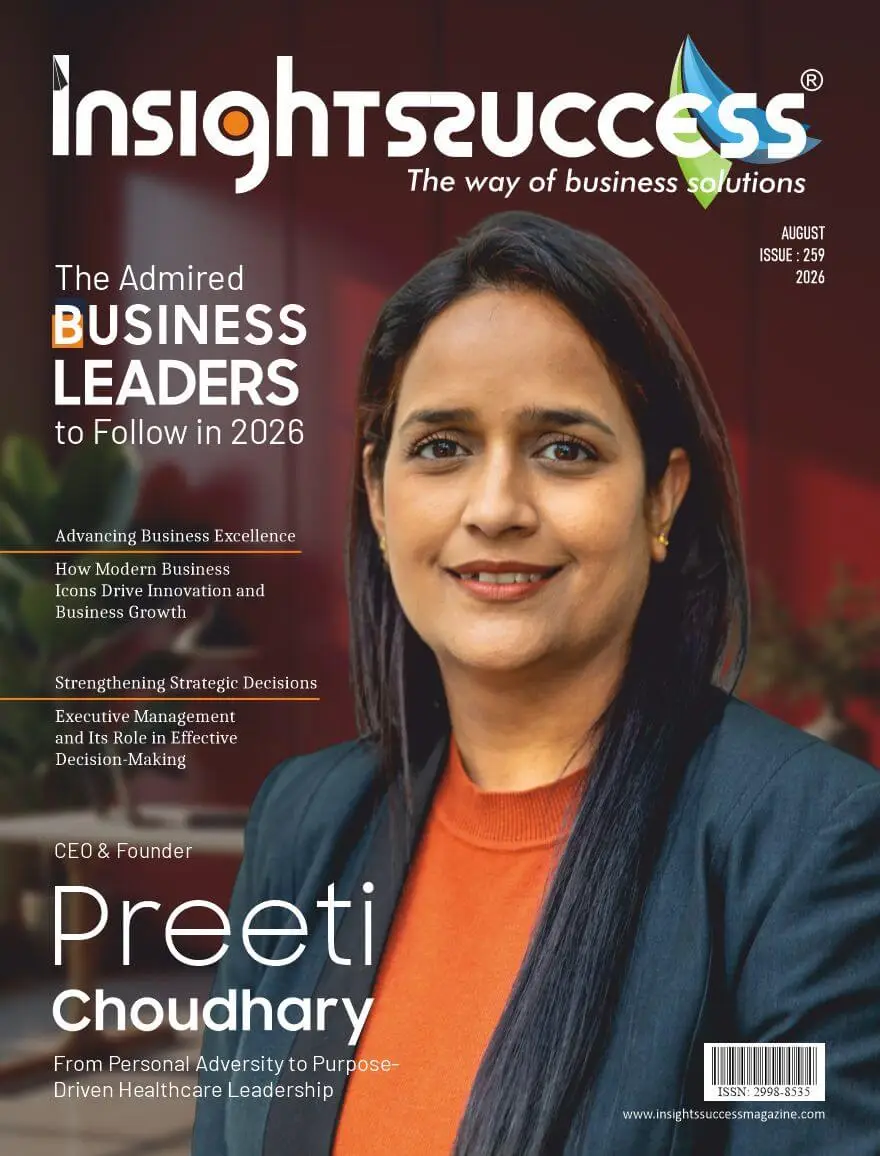
The Admired Business Leaders to Follow in 2026
The Admired Business Leaders to Follow in 2026 Showcasing a visionary healthcare entrepreneur, this feature highlights remarkable leadership, scientific insight, and a commitment to wellness, bringing together healthcare experience, Ayurveda, and purposeful innovation to create lasting impact. Digital Link Quick highlights Quick reads

Preeti Choudhary: From Personal Adversity to Purpose-Driven Healthcare Leadership
Leadership transformation stories do not always originate from within the boardroom, but from an external place altogether. For Preeti Choudhary, who serves as CEO and Founder, such a powerful family situation was the impetus behind her rethinking what she believes about healthcare and resilience. Being a professional whose career has focused on areas of healthcare and regulatory science, the story only acquired its real meaning when her baby was diagnosed with an infectious disease that was fatal in 2016. What is interesting is the fact that drug, she was testing day and night, as microbiologist, was used to save her child. This defining period reinforced her dedication to making health care accessible, credible, and more meaningful for people. She continued her professional journey by establishing Pro-Business Consulting (PBC), helping firms in the field of healthcare and life sciences cope with their regulatory requirements and develop life saving medical devices and pharmaceutical products. Her entrepreneurial skills have been further expanded in Kaayu Rituals, which combines Ayurveda, science, sustainability, and preventative medicine. In modern day, Preeti embodies a unique combination of science, entrepreneurship, and compassion. In her role as leader, she does not work under the guise of being absolutely sure, but rather through her clarity of vision, faith, and drive for impact. Ultimately, her journey is one of transformation from hardship to action and from experience to purposeful help. Explore Preeti Choudhary’s inspiring journey of purpose, resilience, and transformative healthcare leadership. A Diagnosis That Changed Everything Every leader has a defining moment. For Preeti, it arrived in March 2016, when her newborn son, Arjun, was diagnosed with Neonatal Encephalitis caused by the Herpes Simplex Virus. The condition, marked by abnormal brain function and seizures in newborns, is life-threatening. Doctors at Warrington Hospital and Alder Hey Children’s Hospital treated Arjun with 21 days of intravenous medication followed by ten months of oral treatment. He survived, and today, at ten years old, he is a thriving young boy. The experience carried an unexpected twist. She had performed microbial testing on the very antiviral medicine that saved her son’s life back in 2012, years before his birth. “That changed everything when I witnessed how things were put into perspective,” she recalls. The medicine she had once tested in a laboratory returned to save her own child. It took her family five years to move past the trauma fully, as doctors monitored Arjun’s developmental milestones until his eventual discharge from care. That ordeal reshaped her sense of purpose. She realized that curing an illness and restoring confidence are two different achievements, and that families often live in quiet fear long after a crisis ends, worried that the illness might return. It took years for her family to fully trust that Arjun’s health had stabilized for good. This insight, forged in a hospital ward rather than a boardroom, became the seed for everything she built afterward. Turning Pain into Purpose Driven by her family’s experience, Preeti founded Pro-Business Consulting (PBC), a regulatory consulting firm that helps manufacturers of medical devices and medicines bring life-changing products to market. Under her leadership, PBC has supported pharmaceutical, biotechnology, medical device, in-vitro diagnostics, and digital health companies across the UK, Europe, the United States, Australia, and Asia. The firm now stands as a trusted regulatory partner for organizations ranging from early-stage start-ups to multinational healthcare companies. She describes founding Kaayu Rituals as the most defining decision of her career. “It meant stepping out of my comfort zone to create something deeply personal and purpose-driven,” she explains. While PBC focused on helping patients access treatment, she wanted her next venture to help people avoid illness altogether and rebuild confidence in their own wellbeing. “So far, I have been supporting to improve patients’ lives, but with Kaayu Rituals we wanted them to thrive,” she says. Kaayu Rituals blends Ayurvedic wisdom with modern scientific rigor, offering wellness products built on authenticity, evidence-led development, and sustainability. Every formulation carries her personal imprint, shaped by both her professional training and her family’s lived experience. The brand reflects her belief that healthcare should begin long before illness strikes, through preventive care and mindful daily rituals. It also reflects her broader mission: transforming healthcare into self-care by making trusted, effective, and scientifically grounded wellness accessible to people around the world. Together, PBC and Kaayu Rituals form two halves of a single vision. One helps innovative healthcare products reach the patients who need them; the other helps everyday consumers avoid needing treatment in the first place. She sees no contradiction between the two. Instead, she views them as complementary expressions of the same underlying commitment to improving lives through science, quality, and trust. Leading With Clarity, Not Certainty Preeti’s leadership style rejects the notion that great leaders must have every answer. “Leadership is rarely about having all the answers. Leadership is about having the courage to make thoughtful decisions with the information available,” she says. She anchors her decisions to purpose, relies on data and expert perspectives, and stays open to learning. According to her, confidence comes not from certainty but from clarity of vision. This philosophy extends to how she evaluates new opportunities. Rather than chasing trends, Choudhary asks a single guiding question: does the opportunity align with her purpose? That discipline has allowed her to grow both businesses with intention rather than pursuing growth for its own sake. Agility matters too, in a business landscape shaped by shifting technology and consumer behavior. Choudhary believes organizations must evolve without abandoning their core values. She and her teams embrace innovation, use data to guide decisions, and remain committed to quality and trust. “Being future-ready means anticipating change, adapting responsibly, and always keeping people at the center of every decision,” she says. Building Teams That Share a Mission Preeti credits her organization’s success to the people within it. She values integrity, curiosity, and accountability skills alone, and she works to create environments where employees feel trusted and empowered to contribute ideas. “When individuals understand the larger mission and

How Modern Business Icons Drive Innovation and Business Growth
Advancing Business Excellence A short list of names keeps showing up whenever people talk about companies that got it right. Call them modern business icons if you want a label, but what really sets them apart is how far their choices travel beyond the office walls where those choices were made. A decision at the top can quietly change how a product gets built, how a customer gets served, or how a Tuesday afternoon unfolds for someone three levels down the chain. Wealth does not explain why modern business icons get remembered. What explains it is what survives once the headlines move on to someone else. Markets bend toward their choices. Younger founders borrow from their playbooks without always knowing it. And somewhere along the way, the bar for good leadership creeps upward because of them. None of that requires a person to run a massive company. A small firm can absorb the same lessons just as well. The Qualities Behind Lasting Leadership Getting promoted does not make anyone an icon. Very few leaders ever earn that word, and the ones who do tend to look ahead further than the rest of the room. They spot an opening before it becomes obvious. When something goes badly, they do not scramble, they hold their ground. Foresight paired with that kind of grit is usually the difference between a name people forget in a decade and one that keeps coming up. There is also this: modern business icons almost never try to run the whole show by themselves. They know one person cannot carry a company on their back forever. So they hire people who are genuinely better than them at specific things, they let disagreement into the room instead of shutting it down, and they build a place where an untested idea gets a real hearing rather than a polite dismissal. Making Innovation a Daily Practice Forget the myth of the sudden flash of genius. For leaders who actually last, innovation looks more like a chore they do on purpose, again and again, until it stops feeling like a chore. New methods get tested. Old ones get questioned, even the ones that still work fine. Ideas come from the loading dock as often as they come from the boardroom, which is exactly the point. Failure gets treated differently too. When a plan falls apart, these leaders do not bury it. They pull it apart, figure out what went wrong, and carry that answer into whatever comes next. Do that often enough and a workplace stops fearing risk. People start raising their hands with half formed ideas because nobody gets punished for trying. Turning Ambition Into Sustainable Growth Wanting to grow badly enough does not make growth happen. Plenty of ambitious plans die quietly because nobody built a real strategy underneath the wanting. The leaders who keep growing decade after decade tend to pair that hunger with something less exciting, patience, and a willingness to change the plan the moment reality stops cooperating. How resources get handled matters just as much. Grow too fast, or build on ground that has not been tested, and even a genuinely good business can crack under its own weight. A fair share of modern business icons are known for the opposite instinct, choosing expansion that moves at a pace the business can actually absorb. That restraint, more than any single bold move, tends to be what keeps a company standing years later. Adapting to Shifting Business Conditions Markets do not sit still, and neither do the people who study them closely. Leaders with icon status pay attention to what customers want this year, not last year, what tools are becoming available, and how expectations keep shifting underneath everyone’s feet. They do not fight these shifts. They look for the angle where the shift works in their favor instead. That same instinct shows up inside their own companies. Teams get rebuilt when they need rebuilding. Processes get scrapped when they stop earning their keep. A strategy that worked beautifully two years ago can get dropped without much sentiment attached, because modern business icons rarely fall in love with a method just because it once worked. Applying Leadership Lessons to Smaller Businesses None of this only applies to giants. A leader’s response to a setback, or the way they put together a team, or how they chase a new idea, holds real value for a business of any size. Copying the exact move rarely helps much. Understanding why the move made sense in the first place tends to help a great deal more. Smaller businesses in particular have room to gain here. They may not have the deep pockets a larger rival can lean on, but the underlying habits, planning things out, testing new approaches, and leading with a firm hand, do not actually require deep pockets. Watching how modern business icons operate gives a smaller company something sturdier to build on than guesswork alone. Conclusion Industries keep bending toward wherever modern business icons decide to point them. That kind of pull does not come from luck. It comes from a steady bet on new thinking, growth that does not outrun itself, and leadership people can actually trust. Anyone paying attention can pull something useful from how these leaders think, and use it to avoid mistakes that have already been made elsewhere. Excellence rarely shows up out of nowhere. It gets built, slowly, out of honest planning and a refusal to stop learning once things start going well. The path these particular leaders walked says something simple, patience beats a shortcut nearly every time. Whatever size company someone is running, there is a real lesson sitting inside the habits that got these leaders where they ended up. Read Also : How Women Leaders in Social Impact Are Shaping Sustainable Community Development

Executive Management and Its Role in Effective Decision-Making
Strengthening Strategic Decisions Every company, no matter its size, depends on a small group of people whose choices ripple through the entire organization. That group is usually called executive management, and the weight of what they decide is hard to overstate. A single call made in a boardroom can change how a whole department spends its week, or how a customer experiences a product months later. Nobody outside that room always sees the reasoning, but everyone inside the company feels the result. What makes this group worth studying is not the title on the door. It is the way their choices hold up once the pressure hits. A plan that looks solid on paper can fall apart the moment reality gets messy, and that is exactly where the value of steady leadership shows itself. Understanding how these decisions actually get made offers something useful to anyone trying to run an organization well, regardless of how big or small it happens to be. Considering the Long-Term Effects of Decisions Not every choice made at the top gets remembered, but the ones that matter tend to share something in common. They come from people who took the time to look past the obvious answer and consider what happens three steps down the road. Rushed decisions often look fine in the moment and then unravel later, once the consequences start showing up. Executive management works best when it resists the urge to decide everything alone. A single point of view, no matter how sharp, misses things a group of different perspectives would have caught. That is why the strongest decisions usually come out of rooms where disagreement is allowed, even encouraged, before anyone commits to a direction. Developing Better Leadership Judgment Judgment is not something people are simply born with in the boardroom. It gets built slowly, through actual practice, mistakes included. Leaders who make consistently sound calls tend to have made a fair number of bad ones earlier in their careers, and they paid close attention to what went wrong each time. This is part of why executive management matters so much during difficult stretches. Anyone can look competent when things are going smoothly. The real test shows up when information is incomplete, time is short, and the stakes are high. Leaders who have built real judgment tend to stay calm in that moment, weigh what they actually know, and act instead of freezing. Balancing Decision Speed and Accuracy Every decision involves some kind of trade off between moving fast and getting it right. Wait too long for perfect information and the opportunity disappears. Move too fast without enough thought and the mistake can cost far more than the time saved. Finding the right balance between these two pulls is one of the hardest parts of running an organization. Strong executive management tends to treat this balance as something worth practicing on purpose rather than leaving to instinct. Some decisions genuinely need speed, and delaying them causes real harm. Others deserve a slower pace, because getting it wrong would be expensive to fix. Knowing which situation is which, and reacting accordingly, is a skill that separates leaders people trust from leaders people merely tolerate. Building Trust Through Clear Communication A good decision made at the top means very little if nobody below understands why it was made. Communication is often treated as an afterthought, something to handle once the real decision is settled, but that approach tends to backfire. People follow direction better when they understand the reasoning behind it, not just the instruction itself. This is another area where executive management earns or loses trust. Leaders who explain their reasoning clearly, even when the news is not good, tend to keep their teams aligned during difficult periods. Leaders who stay silent, or offer only vague explanations, often find that good decisions get poorly executed simply because nobody understood what they were actually being asked to do. Applying Effective Leadership in Smaller Organizations None of this only applies to large corporations with layers of senior staff. A small business owner making decisions alone is still practicing a version of executive management, whether they use that term or not. The same habits, thinking ahead, staying open to other viewpoints, and communicating clearly, matter just as much when the team is five people as when it is five thousand. Smaller organizations often have an advantage here, since decisions can move faster and reach every employee directly. Studying how this kind of leadership operates in larger settings can still offer real lessons, even if the scale looks completely different. The underlying habits transfer far more easily than people expect. Conclusion Strong executive management rarely comes down to a single brilliant call. It comes from a pattern, careful thinking, honest communication, and a willingness to adjust course when new information arrives. Organizations that build this pattern into their culture tend to make better decisions over time, not because every choice turns out perfectly, but because the process behind each choice keeps improving. Effective decision-making is less about certainty and more about discipline. Nobody gets every call right, and pretending otherwise sets leaders up for disappointment. What actually separates strong organizations from struggling ones is a steady commitment to thinking clearly under pressure and learning from what does not work, which is exactly what solid leadership looks like in practice. Read Also : How Modern Business Icons Drive Innovation and Business Growth

The Role of Admired Business Leaders in Building High-Performing Teams
Empowering Team Success Not every leader earns real respect from the people who work for them. Some lean on authority alone, expecting results just because of their title. Others take a different route, built on trust, consistency and genuine care for the people around them. That second group tends to stand out over time, and admired business leaders are usually the ones behind the strongest, most reliable teams. Their influence rarely comes through force. It shows up in how people work, how they treat one another, and how much effort they put in even when nobody’s watching. What Sets Them Apart from the Rest Plenty of people hold leadership titles without ever becoming leaders anyone actually looks up to. A title can get compliance, but it rarely earns commitment. Admired business leaders tend to build their standing a different way. They pair real competence with honesty, and they treat people like capable adults instead of resources to manage. That approach builds a kind of trust that’s hard to fake. Teams working under this kind of leadership start performing differently over time, not because they’re told to, but because they want to. Building Trust as the Foundation Trust doesn’t show up overnight, and nobody can force it into existence. It builds slowly, through steady behavior and small moments where people notice a leader’s actions actually match their words. Teams that trust their leadership take more risks, speak up more freely, and bounce back faster after setbacks. Admired business leaders tend to get stronger results from their teams for exactly this reason. People aren’t afraid to raise concerns, own up to mistakes or bring half-formed ideas to the table, because they know they’ll get a fair response instead of a punishing one. Setting a Standard Through Example Teams pick up on the behavior of whoever’s leading them. If a leader cuts corners, shows little respect, or dodges accountability, that pattern spreads through the team whether anyone means for it to or not. The reverse holds too. Leaders who hold themselves to a high standard, own their mistakes and follow through on what they say tend to build teams that do the same. Admired business leaders often end up with teams that hold each other accountable without needing constant oversight. The tone gets set at the top, and it travels from there. Creating Space for Growth High-performing teams rarely happen by chance. They usually take shape under leadership that actually invests in people’s growth instead of just pulling output from them. This involves providing feedback, giving the team a chance to try something new, and learning from mistakes without fear of punishment. Managers who are genuinely concerned with team development will create loyalty that will go beyond a particular project or deadline. It’s a big reason admired business leaders tend to hold onto talented people instead of watching them walk out the door. Communication That Builds Confidence Clear communication is one of the more underrated leadership skills. Teams do better work when they understand what’s expected of them, why certain calls get made, and how their piece fits into something bigger. Vague direction leaves people guessing, and guessing rarely produces strong results. Leaders known for open, honest communication tend to cut down on confusion and build a stronger sense of shared purpose across their teams. This steady, transparent style shows up again and again among business leaders, no matter the industry or team size. The Challenges That Come with High Expectations Respect of this sort requires effort and cannot come about simply by virtue of a leader having a higher designation. Such an individual requires a lot of consistency and humility as well. There are many instances where leaders fail to find this delicate balance, especially during challenging times when success seems far more important than respect. It can be the difference between leaders who are tolerated and those who earn admiration. In Summary Teams built under strong, trustworthy leadership tend to outlast the leaders who built them. The habits and standards set early on usually stick around long after a project wraps up or roles change. That lasting impact is one of the clearer signs of good leadership, and it’s why organizations keep looking to admired business leaders to understand what actually drives long-term team performance. Their influence goes beyond numbers or short-term wins. It shapes how people work together, how they handle hard moments and how far they’re willing to go for something they actually believe in. Read Also : Executive Management and Its Role in Effective Decision-Making

How Executive Mindset Strategy Supports Better Strategic Decisions
Strengthening Strategic Thinking The quality of decisions made at the top of any organization rarely comes down to information alone. Leaders often have access to the same data, the same market intelligence, and the same advice from the same kinds of consultants. What separates the ones who decide well from the ones who decide poorly is something less visible and less often discussed. It is the way they think. The mental frameworks, habits of mind, and internal disciplines that a senior leader carries into every decision quietly determine the quality of what comes out of that process. Executive mindset strategy is the deliberate development of this thinking, and its influence on strategic decision-making is deeper than most organizations stop to consider. Mindset as a Strategic Asset Strategy is usually understood as a plan, a set of priorities, a direction chosen after analyzing options and weighing trade-offs. But strategy begins before any of that. It begins in the mind of the person doing the thinking. The assumptions a leader carries, the biases they are unaware of, the mental habits they fall back on under pressure, all of these shape the strategic choices they make long before those choices are formally articulated. Executive mindset strategy treats this reality seriously. It recognizes that developing the right way of thinking is not a soft or secondary concern. It is a foundational one. A leader with strong analytical tools but a rigid, defensive, or short-sighted mindset will consistently make worse strategic decisions than a leader with fewer tools but a genuinely open, curious, and disciplined way of engaging with complex situations. Overcoming the Biases That Distort Decisions Every leader brings biases to the decisions they make. This is not a character flaw. It is a feature of human cognition that no amount of intelligence or experience eliminates entirely. The problem is not having biases. The problem is being unaware of them and allowing them to operate unchecked in situations where they cause real harm to the quality of decisions made. Executive mindset strategy builds the self-awareness needed to recognize when a bias is influencing a decision. It creates the habit of pausing before conclusions feel final, of asking what perspective has not been considered, of looking for evidence that challenges the preferred interpretation rather than only evidence that supports it. Leaders who develop this habit make fewer decisions that look smart in the moment and costly in retrospect. Staying Grounded Under Pressure Strategic decisions rarely arrive at convenient moments. They come during periods of uncertainty, competitive pressure, internal conflict, and external disruption, precisely when clear thinking is hardest to maintain. The leader who can stay grounded and think clearly when the pressure is highest is the one whose decisions consistently hold up. This is one of the most practical contributions of executive mindset strategy. It builds the internal stability that allows a leader to process difficulty without being destabilized by it. It develops the ability to separate the emotional weight of a situation from the analytical demands of responding to it well. Leaders who have built this capacity do not make better decisions because they feel less pressure. They make better decisions because pressure no longer distorts their thinking the way it once did. Thinking Long When Everything Pulls Short One of the most consistent challenges in senior leadership is the pull toward short-term thinking. Immediate results, quarterly expectations, urgent operational demands and the simple human preference for certainty over ambiguity all push toward decisions that solve today’s problem without adequate consideration of tomorrow’s consequences. Executive mindset strategy develops the discipline to hold a longer view even when short-term pressures are intense. It builds the habit of asking not just what a decision achieves immediately but what it makes possible or impossible further down the line. Leaders who think this way make strategic choices that compound well over time rather than choices that feel strong in the short term but create problems that have to be managed later. Building a Decision-Making Culture Around Strong Thinking The mindset of a senior leader does not stay contained within that individual. It shapes the culture around them. The questions a leader consistently asks, the kind of thinking they reward and the intellectual standards they model all influence how the people around them approach their own decisions. Executive mindset strategy, practiced consistently at the senior level, gradually raises the quality of thinking throughout an organization. Teams become more rigorous, more honest, and more willing to challenge assumptions when they see that kind of thinking modeled and valued at the top. Conclusion Better strategic decisions begin with better thinking. Executive mindset strategy is the work of developing that thinking deliberately, building the habits, disciplines and self-awareness that allow senior leaders to navigate complexity with clarity and purpose. Organizations that invest in this development at the leadership level are not simply improving individual performance. They are building the foundation for a quality of strategic decision-making that will serve them well through every challenge and every opportunity that lies ahead. Read Also : The Role of Admired Business Leaders in Building High-Performing Teams