






Trash to Treasure: How Recycling Supports Climate Resilience
The increasing effects of climate change—amplified weather extremes, warming, and scarcity—have put climate resilience on the global agenda. Climate resilience is the ability of people, communities, businesses, and ecosystems to prepare for, respond to, and recover from such climate shocks. While green agriculture and clean energy solutions hold center stage, recycling is too frequently an afterthought but essential part of resilience solutions. By converting waste into useful resources, recycling significantly contributes to the combat against greenhouse gas emissions, preserving natural resources, and rendering economic and environmental systems climatic shock resilient. Reducing Emissions Through Recycling The most measurable and direct influence of recycling on climatic resilience is through reduced emissions. In order to manufacture goods, so much energy is consumed, traditionally drawn from fossil fuel, which in turn emits a massive amount of carbon. It saves energy in processing and extraction, therefore a significant amount of energy conservation. Recycling aluminum, for instance, takes up to 95% less energy to produce it from bauxite ore. Likewise, reusable plastic, steel, and paper save tremendous amounts of energy and lower emissions. By integrating recycling into business climate action and sustainability plans, states and businesses can reduce their greenhouse gas emissions by a significant percentage. This prevents global warming as well as limits the occurrence and intensity of climate disasters otherwise escalated by unlimited emissions. Securing Resources in a Volatile Climate In addition to emissions, climate resilience also entails stabilizing and making master resources accessible. Climate change disrupts supply chains and erodes access to raw material that one might need. Recycling enables one to protect oneself against such uncertainty by recycling valuable material back into the economy, lessening reliance on finite resources and imported material that might get stuck in geopolitical or environmental tumult. For weaker natural resource endowed or poor nations, strong recycling infrastructure forms the foundation of domestic industry and establishes closed material loops. Local sourcing of materials in this way makes economies more resilient, lowers degrading environment extraction, and raises adaptation capacity in a changing climate. Recycling as an Adaptive Infrastructure Waste management systems are indispensable but susceptible parts of the urban infrastructure. Climate hazards like floods, hurricanes, and heatwaves cause such systems to strain and result in pollution, health risks, and ecosystem destruction. Climate-resilient recycling systems enable climate adaptation by offering management over waste flows and limiting environmental contamination during disasters. City planners and policymakers are increasingly viewing recycling as an essential component of resilient infrastructure. Combining decentralized recycling facilities, bottom-up districts, and intelligent waste technologies introduces redundancy and resistance into waste systems. That resistance is essential to the protection of environmental quality and public health against climatic uncertainty. Driving Innovation and Circular Economies Technological innovations and business models drive the growth of recycling since they make material recovery increasingly efficient, diversified, and scalable. Artificial intelligence-based sorting technologies enhance contamination control, and chemical recycling converts non-recyclable plastics into recyclables. Circular economy concepts focus on product design to be recyclable, reusable, and long-lasting. It changes mindset towards companies putting money in sustainable product design and closed-loop manufacturing, reducing material use and waste production. This innovation not only supports climate goals but also fuels green employment and economic diversification—vital components of weathering-proof societies. Social Equity and Community Empowerment Climate resilience involves more than economic and environmental aspects and also involves social fairness. The poor and vulnerable communities most often suffer the worst consequences of climate change and poorly managed waste. Informal recycling activities offer livelihoods for millions of workers around the world but are often without adequate health safeguards and equitable pay. Investing in and institutionalizing these industries can promote community resilience and ensure social inclusion. Empowering, investing in, and educating local recycling with fair labor practices ensures fair economic returns and healthier communities. Accelerating Recycling in Climate Plans Recycling, while of straightforward importance, is underprioritized in company and nation climatic policy. In order to encourage recycling to be a robust element of climatic resilience policy, it needs to be backed by coordinated policy, investment, and civil society. They can enact extended producer responsibility (EPR) legislation, uphold recycled content standards, and subsidize recycling facility investments. Companies will need to create circular business model thinking and supply chain thinking to encompass. Consumers will also need to climb aboard for sustainable consumption and purchasing sustainable products. All of these collectively connect to take recycling’s potential to its fullest extent and make garbage management a force against global warming. Conclusion: Unleashing the Potential of Rubbish Waste diversion is not only a recycling plan—recycling is a pillar of climate resilience. Through lowering emissions, providing resource security, enabling adaptive infrastructure, energizing innovation, and enhancing social equity, recycling reimagines the waste and turns it into treasure. It is a practice that communities all across the globe are attempting to establish a sustainable future capable of weathering the vagaries of a warming world. To believe and witness recycling for all that it can do will create a regenerative economy where stuff goes around in circles forever, communities flourish, and the world gets saved. With every next generation, every recycled object brings us closer to resilience, sustainability, and hope for generations to come. Read More: Recycling Redefined: A New Era for Sustainable Living

Recycling Redefined: A New Era for Sustainable Living
For four decades, recycling has been offered as an easy but effective green act. Consumers and companies worldwide have sorted through plastics, paper, and metal with the confidence that it would be recycled and transformed into new material, saving wastes and natural resources. Recycling has been more complicated than that, though. Contamination complications, lack of infrastructure, commodity price volatility, and export bans across borders have highlighted the inadequacies of conventional recycling models. Recycling is experiencing an evolutionary makeover today as the global community is confronted with increasing environmental issues and resources limitation. It is no longer just waste diversion but is being reimagined as one of the key pillars of an extensive circular economy—a system wherein resources are reused, materials are grown back, and sustainability is integrated into product design, policy, and customer culture. From Linear to Circular: A Paradigm Shift The traditional “take-make-dispose” linear model of the old economy has created unsustainable consumption and waste. In contrast, the circular economy seeks to keep materials in use for as long as possible and extract the most value before recovery and regeneration. This demands a renewal of recycling—not as an end-of-life solution, but as a perpetual loop of value preservation. The latest recycling technologies, EPR policies, and new business models are propelling this change. The largest remains mechanical recycling but now is complemented with chemical and molecular recycling processes that have the ability to recycle complex plastics into raw materials that are as good as virgin. Firms are investing in closed-loop systems where products are being designed to be taken apart at the end of life and reused. These innovations represent a shift away from recycling as a response-based process and toward proactive material stewardship. Innovations Propelling the New Recycling Era Technological innovation is the driving force behind the recycling revolution. Intelligent sorting technology powered by artificial intelligence and machine learning is enhancing material separation efficiency and accuracy. These technologies minimize contamination and maximize recovered material purity, making recycling more environmentally friendly and economical. Chemical recycling—though as yet still emerging—holds the potential for dealing with mixed or difficult-to-recycle plastics by back-tracking them into their constituent molecules. This method can exponentially increase the materials in reach for recycling and decrease the use of fossil fuels to produce plastics. In much the same way, advances in bio-recycling utilize enzymes to degrade polymers and promise a day when even composite and textile wastes can be recycled in a sustainable way. Digital alternatives are also an option. Blockchain and traceability technology allow tracking of goods down supply chains, creating transparency and accountability. This allows businesses to fulfill on ESG commitments and makes consumers able to make profoundly well-informed choices on sustainable products. Policy and Responsibility: Catalysts for Change Policy has been a leading driver in reshaping recycling. Governments everywhere are implementing tighter legislation to curb plastic pollution, phase out single-use items, and mandate more recycled content in packaging. The European Union’s Green Deal and the United States’ Break Free From Plastic Pollution Act are among several groundbreaking measures reshaping waste management practice. Extended Producer Responsibility (EPR) is gaining strength worldwide. Through EPR programs, producers become responsible for the entire life cycle of a product, from collection at the end-of-life to recycling. EPR invokes eco-designing, material reduction, and financing recovery operations. It also distributes the financial cost of waste management more evenly between producers and public systems. The Consumer’s Role in a Circular Future Despite this, system change must be effected, but consumer behavior continues to be part of sustainable recycling. The forthcoming decade will require that the public is more informed and activated—people who understand what can be recycled, how to decrease contamination, and why they need to drive circular products. Education campaigns, labelling schemes, and social networks are enabling consumers to take a greater interest. Brands that possess values of transparency and sustainability are attracting the green-aware market. Consumer demand is therefore requiring manufacturers and retailers to become more sustainable in practice. In addition to participation, there is a need for a change of mindset. Recycling is not the answer to overconsumption but a part of a pyramid with emphasis on reduction and reuse initially. Mindful consumption, less is better, and product longevity must be followed with activities to recycle properly. Challenges Ahead—and Opportunities Despite all the advancement, there are still challenges. Much of the world is still lacking proper recycling facilities. International markets for recyclables continue to be in flux, and incorrect information about recycling continues to cause confusion and contamination. Also, all materials are not economically recyclable through existing systems, creating gaps in sustainability targets. But they also create opportunities for investment, leadership, and innovation. The infrastructure gap can be bridged with evidence-based public-private partnership and active community participation. It is possible to leapfrog to state-of-the-art recycling systems in new markets. And international harmonization of best practices and standards can bring efforts into alignment with a low-carbon circular economy. Conclusion: Redefining Possibility Recycling is no longer just a bin on the curb—it is a strategic power in the global fight against climate change, shrinking demand for extracting resources, and creating a safer, more equitable world. The recycling future confronts us with the need to think differently, act together, and bring innovation across all domains—from policy to product design to consumers’ habits. While recycling gets rebranded to align with the new circularity and sustainability lexicon, it will be the individuals who drive with intention, invest in solutions that scale, and create behavior change who will map the future. And in the process, they will normalize living sustainably, not anomalously. Read More: Trash to Treasure: How Recycling Supports Climate Resilience

Inspirational Icon To Look For In 2025
Inspirational Icon To Look For In 2025 This edition celebrates Shi Yuan Yeo, a visionary leader redefining purpose-driven impact through innovation, empathy, and resilience. His journey reflects the essence of modern leadership—rooted in authenticity, global thinking, and a commitment to uplifting others while navigating today’s complex and dynamic world. Quick highlights Quick reads

Shi Yuan Yeo: Redefining Legal Leadership with Purpose and Compassion
Few leaders can strike a balance between integrity and innovation, discipline and compassion, and legacy and immediate impact in a society that is becoming increasingly characterized by turbulence and rapid transformation. Among them is Shi Yuan Yeo. His journey is not one of privilege, but of purpose, having emerged from a childhood characterized by quiet resilience and the reluctance of two great women, his mother and grandmother. His leadership approach, which is forging in the field of personal adversity and professional discipline, is based on authenticity, ethical resolve, and a deep-seated drive of uplifting others. Yeo’s early work in the Singapore Police Force established a foundation of ethics and discipline that he later developed into a strong compass that directed his work across continents and industries. It was more than just a career choice for him to enter the legal and compliance field; it was a calling. He is transforming what it means to be a legal leader in the modern corporate world with an interest in strategy and a desire for good governance. But what really makes him unique is his human-centered leadership style, where compassion and bravery coexist and every choice, no matter how difficult, it is based on principles that are uplifting people rather than just output. Humble Beginnings, Powerful Foundations Yeo’s story commences in a modest Singaporean home, shaped by two remarkable women who would become the cornerstone of his character. Raised by his mother and grandmother after his father left when he was just a toddler, these strong, self-sacrificing women instilled in him the values that would later define his leadership philosophy: resilience, faith, and compassion. “My mother and grandmother taught me that adversity can be a powerful motivator. Their strength in the face of hardship still fuels my determination to use every position I’m entrusted with to uplift others and build ethical systems.” he says. This early experience of loss and recovery would prove foundational, teaching him that leadership isn’t about appearing invincible, it’s about being authentic and values-driven while navigating both professional challenges and life’s uncertainties with courage and compassion. The Law Enforcement Foundation Yeo’s professional endeavor began with a commitment to public service in the Singapore Police Force. This experience became more than just a career stepping stone; it was the crucible that paved the way for his principles of discipline, courage and justice. The structured environment of law enforcement provided him with a unique perspective that would later become evident in the corporate world. “That experience shaped my fundamental understanding of governance, accountability, and ethical decision-making. In law enforcement, you learn that every decision has consequences, and integrity isn’t negotiable principles that have guided me throughout my career.” he explains. The Pivotal Transition In 2001, Yeo made a “pivotal decision” to transition from law enforcement to the legal and compliance world. This was not merely a career change, it was a response to a deeper desire to help organizations grow while maintaining ethical governance and risk stewardship. “I was drawn to the idea that legal expertise should be a business enabler, not a bottleneck. After over a decade of public service, I wanted to help organizations navigate complex regulatory landscapes while fostering innovation and responsible growth.” Yeo explains. This vision became the foundation for his corporate legal journey, establishing him apart from traditional legal practitioners who may view their role as purely risk averse. Instead, Yeo positioned himself as a strategic partner, someone who could sit at the table with business leaders and assist in shaping strategy while ensuring compliance and safety. A Commitment to Continuous Learning Understanding that the legal profession requires both depth and breadth of knowledge, Yeo embarked on an ambitious educational journey. He obtained his LLB and LLM degrees, then pursued an MBA to enhance his commercial outlook. He was not fond of traditional qualifications, but he gained experience with executive education at Harvard Business School and Harvard Law School. These experiences gave him the global lens and interdisciplinary thinking needed to lead effectively in complex corporate ecosystems. This commitment to learning reflects a broader philosophy that has characterized his career: the belief that true leadership requires continuous growth and adaptation. Building Across Industries and Borders Yeo’s career trajectory is like a journey of modern business complexity. He has been employed in various sectors, such as real estate, oil and gas (upstream and subsea), fintech, technology, and now healthcare and semiconductors. Each transition brought new challenges and opportunities, enabling him to develop legal functions from scratch, navigate cross-border transactions, and advise boards across the APAC region. Currently leading legal teams across various companies in the Japanese conglomerate, Yeo manages the intricate web of regulations, cultural differences, and business objectives that define modern multinational operations. His role extends beyond the traditional legal counsel to encompass strategic advisory, crisis management, and team development across various jurisdictions. “I don’t just review contracts or mitigate risk. I aspire to help shape strategy, resolve conflicts, and facilitate responsible innovations. Legal counsel must understand the business as deeply as the law.” he says. The Power of Integration What distinguishes Yeo in the legal profession is his ability to integrate technical expertise with business acumen and human insight. He emphasizes this as one of his core strengths, the ability to navigate ambiguity, particularly in cross-border or multi-stakeholder settings, while building sustainable structures and maintaining a focus on team cohesion and ethical decision-making. This integration extends to his leadership philosophy, which he refers to as “legacy-minded leadership”. Instead of focusing solely on immediate results, he is driven by a desire to create structures, teams, and cultures that continue to thrive long after he’s moved on. Navigating Crisis and Change The COVID-19 pandemic provided Yeo with an unexpected laboratory for testing his leadership strategies. Like many others, the crisis significantly impacted operations and compliance oversight across the APAC region, pushing legal and compliance professionals to operate in uncharted territories with new regulations, supply chain disruptions, and heightened stakeholder concerns. “The pandemic reaffirmed the importance of

Strategic Design Leadership in Times of Uncertainty
In a time of uncertainty, technological disruption, and economic volatility, the old leadership rules are being rewritten. Organizations from all industries are faced with a very complex landscape where responsiveness, innovation, and vision must converge. Along with the way of transformation, Strategic Design Leadership has become a vital map-one that combines design thinking and business strategy to craft significant and lasting change. What is Strategic Design Leadership? Essentially, Strategic Design Leadership is the practice of integrating design as a strategic function within an organization. It transcends how things look or function to overcome problem-solving, user experience, and system thinking. Strategic design leaders don’t merely make things look pretty—they make things function better, more intelligently, and with greater pertinence to human needs and business goals. They live at the intersection of business savvy, imagination, and technology know-how, leading cross-functional teams through uncertainty with a focus on long-term effect. Particularly during times of uncertainty, this kind of leadership is not merely pertinent—but imperative. The Need for Strategic Design Leadership in Uncertain Times Ambiguity dissolves the very basis of strategic planning. Yesterday’s answer will not fix tomorrow’s issue. Customer trends change whimsically. New contenders pop up overnight. In the midst of this turmoil, conventional leadership approaches—often founded on adamant planning and top-down decision-making—can’t handle it. Here the Strategic Design Leadership provides the welcome relief. By placing empathy, experimentation, and iterative thinking at the center, it keeps the organizations anchored in user needs yet agile enough to make a sharp turn. It enables data-driven risk-taking and builds an environment where innovation is not a buzzword but a habit. For instance, when the COVID-19 pandemic occurred, design-driven approaches within organizations allowed for changes on a dime—retailers created virtual shopping, schools leveraged dynamic online platforms, and health care organizations used design thinking to improve patient communication. Strategic design leaders were at the center of such changes, pinpointing pain points, co-designing solutions, and navigating their organizations into uncharted territories. Principles That Drive Strategic Design Leadership In uncertain circumstances, certain of these principles are the foundation of Strategic Design Leadership. They are: Empathy and Human-Centered Thinking Strategic design leaders are always trying to get at people—customers, employees, partners. By being human-focused, they are most likely to come up with solutions that resonate deeply and solve actual issues, not symptoms. Systems Thinking They gaze beyond individual touchpoints to understand how systems play together. Amidst a world of fine-grained dependencies, having the ability to glimpse the larger universe enables them to foresee unexpected side effects and construct stronger, scalable solutions. Experimentation Over Perfection Instead of holding out for perfection, they promote prototyping, feedback cycles, and speedy iteration. For this mental approach, faster learning and direction adjustment become possible, important in unstable markets. Collaborative Leadership Strategic design leaders are bridge-builders. They dismantle silos by building collaboration across functions—marketing, tech, operations, and finance—so that design decisions are also in sync with overall business strategy. Vision with Flexibility They set direction but have no qualms in re-setting direction as and when the situation demands. This vision and flexibility is especially strong in cultures where change is the only constant. Building Strategic Design Leadership Within Organizations Companies that are prepared to harness the power of Strategic Design Leadership need to deliberately rethink their structure and culture. Designers need to get a seat at the leadership table first. Design leaders need to be involved in making important business decisions so that strategy and execution are aligned. Secondly, there must be investment in design literacy throughout the company. Once teams grasp the importance of design thinking, they are more receptive to other paradigms in solving problems. Thirdly, creating space for experimentation and failure is highly important. Strategic design excels in learning cultures where failure is a steppingstone, and not an obstacle. Finally, leadership development initiatives need to shift and integrate design-led thinking as a fundamental skill. Future leaders need to be proficient not only in people and asset leadership but in leading in complexity through empathy, imagination, and system awareness. The Human Element of Strategic Design Leadership One of the deepest things about Strategic Design Leadership is that it is human by nature. Human beings desire clarity, connection, and confidence when in crisis or under attack. Strategic design leaders provide all three, albeit not by issuing directives, but by storytelling, collaboration, and empowering. They are leaders who lead through questions instead of answers. They ask more questioning questions instead of thinking that they have all the answers. They establish trust not by trying to control people but by being open and having a shared sense of purpose. By doing so, they not only drive greater performance in their organizations but also the health and well-being of those in them. Final Thoughts The world is not becoming less complex. As we descend further into the age of AI, global warming, and economic disruption, companies will encounter only uncertain ground ahead. Strategic Design Leadership is no longer on the agenda it’s a necessity. It’s the type of leadership that not only survives uncertainty but converts it into opportunity. It drives teams to design boldly, respond quickly, and connect deeply with the emerging needs of the people they serve. In the presence of uncertainty, Strategic Design Leadership becomes the beacon that shines forward—not only for companies, but for society.

Advanced Interaction Design Workflows for Enterprise Software
In the fast-paced and often complex world of business software, access to fluid, invisible digital experiences have never been more critical. At the heart of this imperative is Interaction Design—the practice of crafting user interactions that are natural, significant, and frugal. To users in the enterprise, who may rely on software tools for hours a day to accomplish critical work, the stakes are high. Good interaction design can make their work easier and faster, while bad design can lead to frustration, errors, and even reduced productivity. In other words, interaction design is not about being pretty, it is about building a connection from strong systems to real human beings. Learning Interaction Design in the Enterprise Environment Interaction Design, or simply IxD, involves working on interactive digital products, environments, and systems. In consumer-facing environments, it may focus on emotional engagement and brand appearance-and-feel. In enterprise environments, it is far more utilitarian, but highly strategic. There, interaction design is less about creating workflows that closely align to business objectives while enabling users to accomplish their tasks with least resistance. These systems are typically multi-user in character, having differing needs, behaviors, and responsibilities of user categories like HR personnel, analysts, project managers, and IT personnel. Principal Challenges in Enterprise Interaction Design Enterprise software design involves a unique challenge set compared to consumer application design. One of the biggest challenges is diversity of user roles. A single enterprise product might support dozens of different user personas, each with their own interfaces and functions to be exposed. Enterprise applications also typically manage data-intensive environments where simplicity and data prioritization are crucial. Legacy integration is a second major issue. Firms can seldom afford a complete replacement of existing systems, and designers must come up with creative ways of keeping experience fresh yet respecting earlier architectures. Adding to this complexity is the need to accommodate industry-specific security and regulatory needs, which must be blended into the interaction design effortlessly without diminishing usability. A Human-Centered Workflow for Advanced Interaction Design To effectively address such challenges, enterprise interaction design must be systematic as well as adaptive, taking both empathy for the user and hard-nosed insight into business context. The process of design usually begins with a discovery and research phase, where stakeholders are interacted closely by the designers to gain an insight into organizational goals and current workflows. The methodology includes user interviews, observations, and surveys that help uncover pain points and unmet needs. Through the creation of personas and user journeys, teams are able to chart how people are currently using existing systems and where design interventions can provide the greatest benefit. Once a defined role for users and tasks is established, the focus shifts towards organizing the content and activities into efficient information architecture. Designers break down complex processes into achievable steps and content is arranged in a systematic manner. This ensures that users can locate the information they need without being confused. Enterprise software may be multi-step processes, and good interaction design makes such processes feel natural rather than clumsy. The interaction design process itself is concerned with the creation of how users will move through the system. The designers create low-fidelity prototypes and wireframes so that they can view layout and functionality, ensuring each screen will fulfill specific user objectives. Micro interactions those small indicators like buttons, hover states, and animations are also considered, as they will drive the behavior of the users and build trust in the system. These design choices make people feel like they have control, even when doing complicated things. Prototypes are tested early and often so that teams can seize feedback, iterate on flows, and make data-backed decisions. Usability testing at this phase is key to validating assumptions and establishing areas of friction before development. Innovative Trends in Enterprise Interaction Design Interaction design is constantly evolving, and enterprise environments are beginning to implement newer, smarter interfaces. The use of AI-based features that anticipate user needs and make cumbersome tasks easier is one of the emerging trends. Natural language interfaces like voice and chat interfaces are gaining popularity, particularly in environments like field service or customer service. Personalization is also on the rise, with interfaces adapting according to behavior, job role, or situation. The changes aren’t about being new—They’re revolutionizing the way enterprise users work and interact with software. Role-based and responsive dashboards represent another major innovation. Such interfaces have the ability to change dynamically according to a user’s ongoing activity, priorities, or device to enable more focus and productivity. As enterprise users increasingly work across different devices, providing seamless and cohesive interactions across devices is now at the top of design teams’ agendas. Conclusion Enterprise software is the foundation of modern business operations, but its true value is only unlocked when users are able to interact with it naturally and effectively. High-end Interaction Design is central to this revolution. Through learning about real user needs, designing workflows for usability, and testing designs against live conditions, teams can create enterprise systems that enable, rather than hinder, productivity. Along the way, they don’t simply make things more usable—they allow people to do their best Read More: Claude AI: The Next Frontier in Human-Centric Artificial Intelligence

Citigroup to Cut 3,500 Tech Jobs in China as Part of Global Overhaul
Prime Highlights : Citigroup plans to cut 3,500 technology jobs in China as part of a global restructuring strategy. The layoffs primarily affect Shanghai and Dalian centers and are set to conclude by early Q4 2025. Key Facts : Some roles may shift to Citi’s other global tech hubs, but China will retain around 2,000 employees. The restructuring aims to strengthen data governance and streamline global operations. Key Background : Citigroup Inc. is embarking on a major China staff cut, eliminating approximately 3,500 full-time technology jobs at its Shanghai and Dalian Solution Centres. The loss of the job is part of the bank’s wider global restructuring as it streamlines its design, fosters more accountability, and boosts its risk and data management. Layoffs will be done by early Q4 2025. These cuts follow a previous announcement to cut around 200 China contractor positions. Citi is being serious about efforts to transition from a contractor-focused model to a stable, full-time tech talent pool. By 2024’s end, the bank will have doubled its global tech staff to 50,000 and cut contractors to 20% of its tech staff from 50%. This move is part of a response to rising regulatory scrutiny and fines—most recently, a $136 million penalty in 2024 by U.S. regulators for slow ramping up of risk management and data oversight. In spite of the trimming, Citi reiterates its dedication to the Chinese market. The bank will keep about 2,000 staff in China, along with some hundred or so in technology positions, and continue to provide institutional and corporate banking services. It is also forming a wholly owned company in China securities and futures, which indicates an ongoing dedication to the region. Leadership in China will see a transition as well, with Wenjie Zhang set to become the new Country Officer and Head of Banking, pending regulatory approval. Zhang brings over 30 years of experience in the corporate banking sector and is expected to play a key role in navigating regulatory relationships and fortifying Citi’s position in the Chinese financial landscape. The restructuring is one of a series of efforts at Citi to reshape its worldwide operations while bolstering compliance and risk reduction efforts. Read More: Adani Airports Raises $750 Million from Foreign Banks for Expansion and Refinancing of Debt
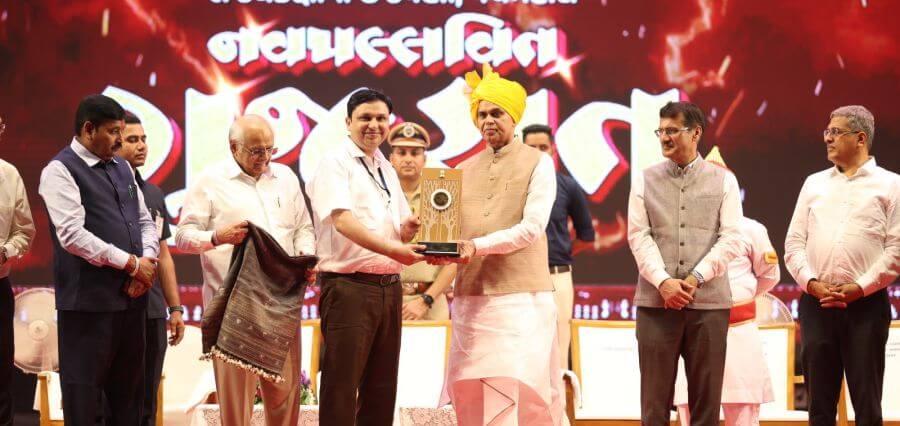
A State, Highest Civilian Honour, “Gujarat Garima Award-2025,” for Medicine, given by Hon’ble Governor & Chief Minister of Gujarat, at Godhra, Panchamahal, in State level Ceremony on occasion of Gujarat Gaurav Divas & Sthapna Divas
Dr. Rahul Kumar M. Padwal, age 40, resident of Dahod, has been providing commendable medical services in rural areas of Dahod district for the last 11 years as a gynecologist. Dahod, which can be said to be one of the most economically, socially and health-challenged tribal areas of India, covers more than 10,000 rural areas of Gujarat, Rajasthan and Madhya Pradesh. This includes many pregnant tribal women. Many pregnant tribal women living in Dahod and its surrounding tribal areas suffer from sickle cell, thalassemia, poor nutrition and many such medical problems, which are not only harmful to the mother but also to the fetus in her womb and that is why HEALTH VARIABLES like MMR. NMR and NMMC are found to be very high compared to other districts. Dr. Rahul Kumar Padwal 6 years as a Class-II Medical Officer at Government General Hospital, Dahod and then as a Class-1 Gynecologist from the year 2009 to 2011 and from the year 2014 to 2018 I have provided my medical services and then from the year 2018 for the last 7 years at Padwal Women’s Hospital, Ralyati Ghoda Dungari, Dahod, which can be called the first in India for tribal areas only for high-risk pregnant mothers, I provide medical services in a N.A.B.H. and L.S.O. certified hospital. During government services, 6000 gynecological surgeries, more than 50,000 OPDs. More than 3500 emergency (source under RTI 2023) services have been provided and then more than 8000 gynecological surgeries, more than 35000 sonographies at Padwal Women’s Hospital. More than 1,00,000 pregnant mothers were examined, 1831 blood transfusions were performed and more than 3500 family welfare operations were performed. (Digitalrised Record) In the year 2018, with the objective of “SOCIAL TRANSFORMATION WITH DYNAMIC EDUCATION”, Padwal Women’s Hospital was established in Ghodadungari, Mandavao Road. Ralyati village. It is the first N.A.B.H. and LS.O. certified hospital in rural areas outside Dahod city and the only one dedicated to high-risk mothers and Divyang mothers. The statistical information of the work done by Dr. Rahul Padwal in the last 10 years is as follows. Which is based on RTI 2023 and all digitalized data. (1) 12,000 – Gynecological surgeries (2) More than 35,000 sonographies (3) 1831 blood transfusions for mothers only (4) More than 3500 family welfare operations (5) More than 1,00,000 antenatal visits (6) More than 6,000 sickle cell and thalassemia screening (7) 28 life-saving steric hysterectomies (8) 50,000 OPDs in government and 6000 gynecological surgeries in government hospitals (9) The only gynecological hospital functioning in rural areas during COVID 19 (10) A trusted place for pregnant mothers infected with HIV and Hepatitis Heart-touching “NO MONEY IF NOT SURVIVE” initiative in which 677. The study of high-risk mothers was honored at the national level in the year 2023 by FICCI and NITI AYOG, by THE ECONOMIC TIMES and honored 3 (three) times by the Honorable Chief Minister of Gujarat Government for commendable action in public functions. Disclaimer- The content presented herein was initially published on behalf of Gujarat Garima Award-2025. Its reproduction and circulation are conducted with formal consent from the original publisher. We have ensured full compliance with the content policy and respect all intellectual property rights. All trademarks, references, and credits belong to their rightful owners.

Adani Airports Raises $750 Million from Foreign Banks for Expansion and Refinancing of Debt
Prime Highlights: Adani Airports Holdings Ltd (AAHL) raised $750 million as external commercial borrowings from a consortium of foreign banks such as First Abu Dhabi Bank, Barclays, and Standard Chartered. The funds are for refinancing debt and expansion of capacity and development of infrastructure at six major airports. Key Facts: First Abu Dhabi Bank, Barclays, and Standard Chartered Bank financed the deal. AAHL has eight airports in India, including the new Navi Mumbai International Airport. The company will increase its passenger handling to 300 million per year by 2040. Key Background Adani Airports Holdings Ltd, a subsidiary of Adani Enterprises, is India’s largest private airports operator. The company operates eight airports in the nation, namely Ahmedabad, Lucknow, Mangaluru, Jaipur, Guwahati, and Thiruvananthapuram. The firm is also constructing the Navi Mumbai International Airport, which will come into operation soon. In order to finance its ambitious modernization and expansion project, AAHL borrowed $750 million of external commercial borrowings from a syndicate of leading global banks led by First Abu Dhabi Bank, Barclays, and Standard Chartered. The funds will be utilized for two principal purposes: repayment of outstanding debt and financing modernization of infrastructure and capacity upgrade at six of its iconic airports. This investment is AAHL’s grand strategy overall to be operationally more efficient, to have room to take in more passengers, and to improve overall passenger experience. Apart from investing in infrastructure, AAHL will develop its non-aeronautical enterprises like retailing, food and beverage, duty-free, and other airport-related services to broaden revenues. The successful fund raise is a reflection of the high confidence that international investors have in the Indian aviation industry and in the growth path of AAHL. With this investment, AAHL will be in a position to further strengthen its market position in India’s domestic aviation industry, improve customer experience with technology and sustainability initiatives, and support India’s airport infrastructure development objectives in a meaningful way. Read More: Citigroup to Cut 3,500 Tech Jobs in China as Part of Global Overhaul

Claude AI: The Next Frontier in Human-Centric Artificial Intelligence
Claude AI is revolutionizing how we interact and coexist with artificial intelligence. Inspired by Claude Shannon, the inventor of information theory, CLAUDE AI is a very human-like and ethical AI assistant that is built to be safely deployed alongside humans. While AI continues to expand at an exponential rate, CLAUDE AI represents an interesting evolution towards more human-centric, responsible, and contextual technology. Companies, artists, and builders now rethink productivity and creativity using this revolutionary AI framework. Let’s discover the difference Claude-AI makes and how it is shaping the future of smart, conversational AI. Learning Claude AI: A Revolution in AI Development In essence, Claude AI is a sophisticated conversational AI developed with safety, usability, and reliability as its first priorities. Unlike most AI platforms that are concerned with naked computational power, Claude-AI is concerned with value-driven architecture in a way that it will be beneficial, not destructive, and truthful. This is the philosophy that has made it a go-to collaborator in certain industries that involve content creation and customer services. The ability of the company to understand complex details, empathize with regular character-level multi-turn dialogue, and respond empathetically or analytically indicates the advancement of conversational AI. Why businesses are looking to Claude AI for automation & innovation Among the top reasons why businesses are implementing Claude AI is its remarkable performance to control ratio. From performing routine tasks, handling data insights, or helping generate code, Claude-AI performs everything with natural precision and contextually applicable usability. Today businesses look for solutions that do not only accelerate workflow but also ensure user integrity and data security. Claude AI addresses this need by bridging intrinsic safety guardrails and transparency so that teams can trust it without trading off ethics. Content Creation Revolutionized with Claude AI Authors, copywriters, and designers are now heavily relying on Claude AI for idea generation, content writing, editing, and even search engine optimization. How well it produces human-like content without sacrificing the voice and tone of a brand is just superb. While writing blog articles, scripting video content, or even creating ad copy, Claude-AI saves time and enhances creativity. Additionally, with the nuance support of prompts, the model produces writing that connects with readers, is tone-sensitive, and gets content strategy accomplished. It is not automatization of writing; it is co-creation of excellent experiences. Claude AI in Education: Enhancing Personalized Learning Claude AI is also creating ripples in the education industry. Teachers employ it to create personalized learning resources, break down tough topics, and provide instant assistance to students. Students get instantaneous feedback, customized study guides, and interactive learning content—all driven by an AI reading contextual text and learning goals. The consistent tone of the model makes it a perfect virtual tutor. Its bias elimination features and consistent tone guarantee ethical and inclusive learning to everyone. Smooth Integration of Claude AI into Workflows Incorporating Claude AI within current workflows is very easy. With its API integration, it can be easily inserted into applications, websites, or tools without disruptive infrastructure transformation. For instance, integrating Claude-AI within a CRM system will immediately enhance customer interaction through quick response, conversation summarization, or significant insight extraction. Its plug-and-play structure enables startups and small to large businesses to experiment and deploy conversational AI applications in record time, generating cost savings and innovation at scale. Ethical AI: How Claude AI blazes the trail One of the most compelling differentiators of Claude AI is the manner in which it builds ethical AI. Safety is built into the system in such a way, with moderation levels and intent-matching processes that malicious outputs are restrained. This forward-thinking approach has made Claude-AI a pioneer of responsible AI. With more focus on AI behavior and bias, models like Claude-AI are breaking the way for models to come: reflective, transparent, and consonant with humanity. Real-Life Applications: Claude AI in Action Let us take a sneak peek into how Claude-AI is having a real-world impact: Customer Service: Processing thousands of customer queries with care and efficiency. Medicine: Helping write medical reports and providing general advice (not diagnosis). Finance: Analyzing patterns in data to provide actionable insights. Legal: Drafting and reviewing contracts with high linguistic accuracy. E-commerce: Personalizing shopping experiences and managing inventory conversations. These real-world applications are proving Claude-AI’s versatility and scalability across sectors. How Claude AI Compares with Other AI Tools While many AI tools on the market are built on similar transformer-based models, Claude-AI excels in a few critical areas: Intuitiveness: It understands complex instructions better. Consistency: It is sustained tone and subject through longer dialogues. Ethical Output: Its guardrails are market-leading. User-Friendly Interface: For non-tech customers and developers alike. Transparency: With regular updates and security scans, it is a reliable companion. Differences of this kind make Claude-AI more than another chatbot but a standard for conversational AI. The Future of Work with Claude AI As digital-first spaces and remote working become the new norm, Claude AI will be a contributor to the future of work. From onboarding fresh talent to automating admin tasks, the AI assistant enables teams to do strategic, creative, human work. As hybrid spaces become a reality, AI such as Claude will fill in the gaps—over time zones, languages, and thought—to inject personality into productivity. Conclusion: Welcome the Intelligent Age with Claude AI Claude AI is not just a tool; it’s a revolution. In its ability to balance intelligence with ethics, productivity with creativity, and automation with empathy, Claude-AI is shifting our expectation of what AI can do. As a business leader, creative professional, educator, or developer, integrating Claude AI into your system can unlock unprecedented potential. Read More: Top EdTech Trends Revolutionizing Education in 2025