






How Businesses Build Sustainable Advantage
Competitive Positioning The competitive positioning of businesses in markets with high competition and similar products and services becomes their main factor, which determines whether they will achieve long-term success or only temporary results. The competitive positioning of a business goes beyond being a branding statement. Organizations use competitive positioning as a strategic discipline to establish their unique market presence, which competitors will find challenging to duplicate. Businesses that excel in this area do not rely on temporary visibility; they construct structural strengths that compound over time. The Strategic Meaning of Competitive Positioning Competitive positioning describes how an organization establishes distinct identity to create exceptional value for its target customer base. Positioning requires organizations to define their target audience, demonstrate their value creation methods and present their unique competitive advantages. Modern business environments which operate through digital ecosystems and worldwide connectivity now require companies to extend their product positioning to include more than their product attributes. The system includes three elements which are customer relationship management, technological systems integration and organizational structure alignment. A company’s marketplace position shows through its product offerings and all elements which strengthen its established value proposition. The Power of Strategic Trade-Offs The process of sustainable positioning needs organizations to choose which activities they will not pursue. Organizations that attempt to appeal to every segment often weaken their identity and dilute resource allocation. Clear positioning requires organizations to make trade-off decisions which will determine their spending patterns and their ability to develop key skills and their brand identity. Premium quality requires companies to accept higher operational expenses as their business model. The system will restrict customization options which the company wants to develop when it chooses to focus on delivering products at a faster rate. The organization will create its structural framework through these decisions which will ensure the company maintains its strategic path. The process of making trade-off decisions establishes a definite direction which leads to the development of coherent elements that serve as a vital component for maintaining competitive advantage. Meaningful Differentiation Versus Superficial Distinction The market can easily copy all of their superficial changes, their minor product enhancements, and their different ways of communicating. Organizations achieve permanent competitive advantage by implementing operational processes and asset management systems and developing organizational capabilities that create unique product offerings. The company achieves product differentiation through its combination of proprietary information, exclusive data resources, specialized operational methods, and established customer relationships. The organization establishes a market advantage through its extensive operational know-how, that creates unique business procedures that competitors cannot duplicate. When a business establishes its core value through structural elements instead of promotional activities, it gains the ability to withstand competitive threats. Cost-Based and Value-Based Advantage Competitive positioning typically aligns with either cost leadership or value leadership. A cost-based position needs operational efficiency together with scale and process discipline to succeed. Organizations that choose this path establish cost management as their permanent system which enables them to achieve efficiency throughout their operations. Value-based positioning focuses on delivering superior experience, innovation, or quality. Businesses adopting this path invest in design, research, and customer engagement to justify premium perception or strong loyalty. The organization must prove its value through consistent innovation while maintaining its strategic direction to sustain this position. The Role of Internal Alignment The organization experiences positioning failure because it maintains a basic narrative which does not connect with its operational functions. Organizations need to establish sustainable advantages through strategic unification between their strategic objectives and their organizational culture and operational systems and their main executive objectives. The organization establishes a unified system through which all functions operate because they all support the same strategic goal. The selected position receives support through investment decisions and talent management choices and partnership establishment and innovation activities. The competitors face challenges in replicating these capabilities because they take time to develop through unified progress despite their understanding of the strategic plan. Conclusion Competitive positioning serves as the fundamental framework which enables businesses to achieve their long-term competitive benefits. The process establishes permanent advantages through specific decision-making practices which the company implements together with its unique market positioning and operational functions. Businesses that treat positioning as a core strategic discipline rather than a marketing exercise create advantages that persist even in volatile environments. The company builds competitive strength from these advantages which establish its unique market position and help it maintain performance that other companies find difficult to replicate. Read Also: Choosing Between Speed, Cost and Quality

Balancing Stability and Growth
Long-Term Planning in Business The discipline of long-term planning enables organizations to transform their ambitions into sustainable progress through established frameworks. Organizations must simultaneously protect existing systems while developing new solutions to address their ongoing challenges in complex economic environments. The organization achieves stability through its existing systems which produce operational continuity while its growth initiatives create pathways for sustaining future business existence. Successful businesses that operate for multiple decades establish strategic systems which create synergy between their competing business objectives. The Purpose of Long-Term Planning The process of long-term planning establishes clear organizational direction which extends beyond the evaluation of current performance periods. The organization uses this framework to define its competitive areas while establishing resource distribution plans and necessary capability development for ongoing market competition. Peter Drucker and other management theorists established planning as a tool for organizations to build operational capacity which helps them handle existing unpredictability. Executives who lack a long-term vision will make decisions based on immediate circumstances. Companies will experience negative consequences when they attempt to generate quick profits through spending reductions on vital projects and their search for various chances which leads to a loss of strategic unity. Planning establishes a framework that aligns daily decisions with enduring objectives. Stability as the Organizational Foundation The organization needs these three elements because they create essential components for successful operation during challenging situations. Stable operations ensure predictable delivery of value. The company uses its financial resilience to make investments during economic downturns instead of reducing its activities. The organization uses cultural continuity to preserve common standards that determine how people make choices. The concept of stability does not restrict organizations from making changes. The concept of stability shows how strong the essential systems of an organization function. The organization can handle unexpected events because its operational processes and governance systems and operational capabilities work properly. The combination of stability and risk evaluation enables organizations to make safe business decisions. Growth as a Driver of Long-Term Relevance The present moment gets preserved through stability while growth creates protection for future time periods. The world experiences market changes that drive technological progress and create new standards for what customers expect. Organizations that do not develop their business operations will soon become obsolete because their existing procedures function effectively. Long-term planning requires growth to encompass more than just revenue growth. The process involves creating new capabilities through innovation while establishing new markets and building strategic alliances. The organization achieves sustainable growth through its core proficiency areas. Organizations that pursue expansion without considering their internal strengths will experience operational problems which lead to reduced strategic effectiveness. The organization needs effective planning methods which enable its growth initiatives to build upon existing operational strengths. Risk Management and Strategic Flexibility The process of long-term planning requires organizations to establish specific procedures that control risks throughout their development. Organizations can pursue new opportunities because they maintain financial stability through diversified operations and their ability to create different future scenarios. Organizations can maintain their desired goal while building resilience through their strategic planning, which includes various potential future scenarios. Organizations can achieve strategic stability through their ability to adapt to changing circumstances. A long-term plan requires proper design, which enables organizations to implement changes according to emerging needs. The organization maintains its strategic path through this system, which allows it to change its operational methods. Organizations need to maintain their core responsibilities while building new exploration capabilities through their flexible operations. Leadership and Organizational Alignment The balance between stability and growth depends on the decisions made by leaders. Leaders create priorities through their resource distribution decisions, which also determine the organization’s cultural development. The organization requires its leaders to present a vision that recognizes both operational excellence and future-oriented business objectives. The organization requires its departments to work together with unified goals. Finance departments prioritize risk management while innovation teams focus on business development. Long-term planning connects different perspectives into a unified system, which prevents departments from working against each other. The organizational structure enables growth to occur because stability functions as a supporting force. Conclusion Strategic planning functions as the primary method that organizations use to achieve their two goals of maintaining stability and achieving growth. Organizations require stability as their essential foundation which enables them to maintain operations while growing their business to create ongoing value. Organizations that intentionally create systems which help their business goals achieve both purposes build successful enterprises which can navigate unpredictable situations while pursuing future growth opportunities. Organizations need to find equilibrium between these two elements because it creates sustainable performance and institutional strength which withstands the test of time. Read Also: How Businesses Build Sustainable Advantage

Creating Pathways: Women in Technology and the Rise of a New Innovation Workforce
The global technology sector is undergoing a complete transformation which affects innovation processes and the people who create new technologies. The technology workforce now counts women among its members because digital technologies transform entire economies, industrial sectors and social systems. The world now sees innovation through a new lens because its increased presence creates a new talent base which brings different viewpoints and establishes fresh ways to create new products. This transformation needs more than the enhanced representation since it establishes the necessary premises to sustainable digital development that can be beneficial to everyone. The increasing participation of women in software engineering, data science, cybersecurity, and artificial intelligence is creating a workforce that is better equipped to address complex global challenges. The increasing presence of women in technology shows that organizations now create a new workforce which uses diversity as a competitive edge instead of viewing it as a moral duty. Expanding Access The educational system has functioned as a core driver which enables women to enter technology-based professions in both developed nations and developing regions throughout the world. Students who encounter typical entrance obstacles can now access STEM education through improved educational resources which include special scholarships, mentorship programs and digital learning platforms. The past decade has shown how universities and technical institutions experience continuous growth in female student enrollment for technology programs across various fields of study. The movement toward alternative learning pathways is gathering steam outside traditional educational settings. Women can acquire new technology skills through online certification programs, coding boot camps, and industry-led training programs which support their career advancement. The flexible work structures of these models function as essential tools for managing career breaks and supporting employees who need to return to work. Organizations obtain superior talent resources because they provide broader skills access which enables them to develop a workforce that fulfills present requirements of knowledge-based industries while they simultaneously build future workforce stability and innovative abilities. Shaping Innovation Women in technology fields start their careers while they transform technology development through their design research work which establishes new agendas and builds practical solutions for different business sectors. Research findings show that diverse teams produce stronger creative outcomes, particularly in fields that require the integration of social behavior with education and financial inclusion. Women technologists create products which use their experience to improve usability and accessibility for different user groups through their knowledge of user needs. The emerging trend has become visible in new growth sectors which include health technology, financial technology and climate technology. Women founders and leaders create new solutions which meet existing market requirements through their work on digital health platforms which promote preventive care and their development of financial services for low-income users. The research shows that diverse perspectives help organizations solve problems better which demonstrates that businesses should establish gender diversity throughout their research, development and product design activities to achieve inclusive innovation and sustainable business growth. Leadership Shift The growing number of women entering technology professions leads to changes in leadership requirements for the entire innovation ecosystem. The number of women who hold executive positions as chief technology officers, startup founders, and innovation leaders is increasing, though progress remains inconsistent. These leaders create an organizational culture through their commitment to developing ethical technology and their method of assessing performance which combines instant outcomes with perpetual value development. Women leaders create a fundamental impact on organizations through their dual roles as talent developers and talent retention champions. Mentoring of junior staff members as well as establishment of inclusive programming at work places generates successful conditions, which is beneficial to all the employees. Flexible work practices that have clear career progression paths and objective evaluation procedures are well embraced in organizations because they recognize that an inclusive leadership enhances organizational productivity and innovation. Leadership transformation must continue to ensure that increased participation leads to lasting institutional change. Effective leadership strengthens governance, succession planning, and stakeholder confidence, thereby enhancing an organization’s long-term competitive advantage. Conclusion The increasing number of women working in technology fields creates a major change which affects both the makeup of worldwide innovation teams. The decreasing entry barriers together with the expanding promotional paths enable women to provide both technical skills and innovative methods for solving challenges, leading teams and creating organizational value. Their involvement helps innovation systems grow because they become better equipped to meet actual demands while maintaining consistent performance during technological advancements. As women take control of technological development which shapes economic and social systems they will become essential for constructing an innovation-driven future that maintains competitive advantage and expands access to all. The increasing participation of women in technology fields represents a vital workforce development movement which establishes the foundation for enduring economic expansion throughout the digital age. Read More : Integrating Enterprise Risk Management into Core Financial Decision-making

Sol Rashidi: Engineering a Future Where AI Serves Humanity
In a world where artificial intelligence evolves at breakneck speed, the question isn’t just what AI can do—but what it should do and making sure AI happens with us and not to us, something Sol Rashidi says frequently. As organizations race to adopt artificial intelligence and automation, many voices have consistently and powerfully championed the balance between innovation and humanity. One of those impactful voices is Sol Rashidi, an AI strategist, anthropologist, and workforce architect, who is a former Amazon and Fortune 100 C-Suite executive with 10 patents, a best-selling author, and the World’s 1st Enterprise Chief AI Officer (appointed in 2016). A Trailblazer in Enterprise AI Sol’s journey is marked by firsts and foresight, but well before her record-breaking achievements as the first Chief Data Officer and first Chief Artificial Intelligence Officer, Sol was already trailblazing the Data and AI landscape. Having been in the data space since the late 90s and with her experience in helping IBM launch Watson to the mainstream in 2011, Sol attained ten patents, is the author of the written best-seller ‘Your AI Survival Guide’ listed among the world’s top 50 AI books. Her writings resonate with many, leading to three TEDx speaking with over 2 million views, and awards like FORBES “AI Maverick & Visionary of the 21st Century” and ‘Top 5 Leaders Taking AI to Market’. Her four C-suite positions within Fortune 100 companies and leading Amazon’s North American startups technology organization are some of the highlights of her career. With more than 200 enterprise-level AI deployments under her belt, Sol represents the complementary dualism of practitioner and strategist—something validated by recognitions like “50 Most Powerful Women in Tech,” “Top 100 AI Thought Leaders,” and “Top 100 Data & Analytics Leaders”. Not someone to rest on her laurels, Sol always underscores the fact that AI potential is not about replacing humans, but about being of service to them, amplifying them, and creating force multipliers within us all. Sol’s mindset is that genuine advancement combines human mindsight with technology as an enabler. Values That Shape a Vision Three core values underpin Sol’s leadership philosophy: Human Amplification Over Replacement: She is firm that AI needs to amplify, not replace, human potential. Anything she creates is all in the service of human and workforce advancement and amplification. Sol has always been extremely explicit that AI and Automation, when enforced unintentionally, can erode, not uplift business operations. Therefore, her purpose and her invention of the Human TM Amplification Index is all in service of enterprise performance and workforce strengthening. Clarity Above Complexity: Sol’s strength is in making the complex uncomplicated. Her talent is to take heavy technologies and extract clear strategies that inform decisions and convert those decisions into execution. Clarity, to her, is more than just a communication capability; it’s a leadership mandate. Because she spends most of her time working in high-pressure, high-velocity settings, she feels clarity leads to sounder decisions, accelerated innovation, and more congruent collaboration between cross-functional teams. Bold Integrity: From the counseling boards to challenging hype, Sol is guided by truths that are uncomfortable, always serving the truth, even if it’s unpopular. Her integrity is centered in a devotion to fact over trend, which is why she has an impressive track record with delivering projects, programs, and transformational initiatives. Closing the Gap Between Aspiration and Implementation Sol learned from more than 200 AI projects that there is a constant blind spot that hovers between boardroom vision and effective delivery. Companies too frequently confuse “doing AI” with “using AI”, purchasing software or building models as the extent of their AI initiatives, sidestepping important items such as workforce preparation, business process reengineering or operational readiness. Convinced that this void needed to be addressed, Sol shifted to becoming an implementor, crafting frameworks, teams, and roadmaps in equal proportion of vision and pragmatism. Her aim is simple: making it possible for enterprises to embrace AI in a manner that is scalable, sustainable, and creates force multipliers for the business and its workforce. She says that actual achievement with AI implementation does not start with algorithms; it starts with the workforce because the algorithms are ready, but the people, business processes, and organizational chart are not. Reimagining Leadership for the AI Age Sol calls for a new model of leadership—one which welcomes chaos with clarity and technological know-how with empathy. Leaders today, she contends, need to: Be technologically savvy and data-literate. Establish psychological safety in the midst of change. Prioritize comprehension over convenience. Enable critical thinking in the age of automation. “Leadership is not command-and-control anymore. It’s about orchestrating ecosystems and building cultures that can respond well and rapidly,” says Sol. Sol highlights the fact that business leaders can no longer afford to outsource understanding with the age of AI. Executives should not code but be able to understand the impact of technology on operating models, labor dynamics, and customer engagement. A Purpose Built on Empowerment Sol’s overall vision is to create a future where Humans and AI live in harmony. She supports AI literacy among businesses and communities to maintain human ingenuity, creativity, and problem-solving ability, as these will be the skills needed in the future. To continue this mission, she invented the Human TM Amplification Index, the world’s first-ever scorecard that allows organizations to determine if they are making their workforce stronger with AI and Automation. It redefines measuring progress not only by profit, but by how well technology is enhancing human capital, an organization’s largest investment. Her impact spans: Steering C-suites: From AI-curious CEOs to AI capable strategists. Building IP-Driven Frameworks: Such as simulation labs and strategic blueprints. Delivering Scalable Deployment Models: Those that balance trust, performance, and cultural cohesion. Strategic Gaps and the Path to Maturity Sol’s story exposes two persistent challenges: Strategic Superficiality: Too many executives are mistaken in equating AI tools with transformation. Sol calls for a shift from tool buying to capability development. Workforce Misalignment: Technology can’t fix human issues until workflow design and upskilling are tackled first.
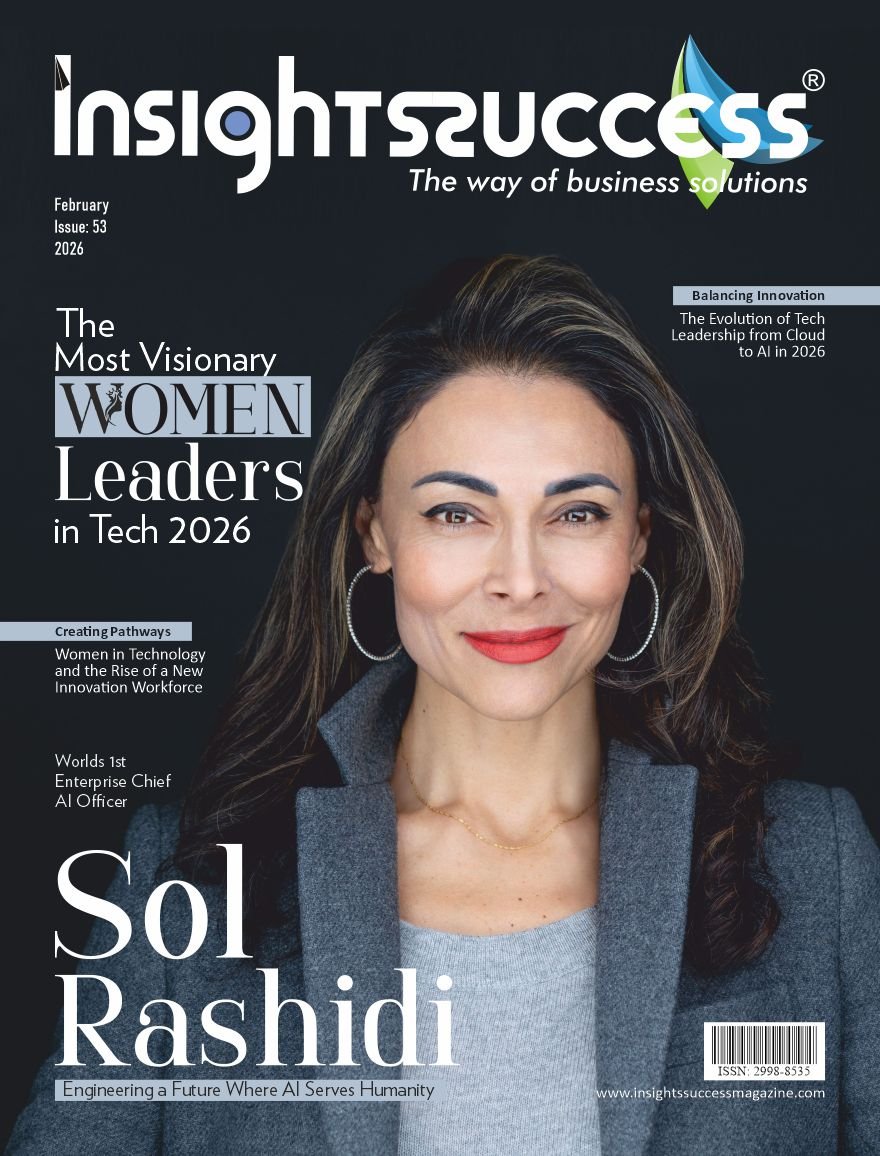
The Most Visionary Women Leaders in Tech 2026
The Most Visionary Women Leaders in Tech 2026 Sol Rashidi is redefining enterprise AI through a human-centered lens. A pioneering Chief AI Officer, strategist, and author, she champions clarity, integrity, and workforce amplification over automation. Her leadership emphasizes responsible AI adoption that strengthens human potential, aligns technology with purpose, and ensures innovation serves people, not replaces them. Digital Link Quick highlights Quick reads
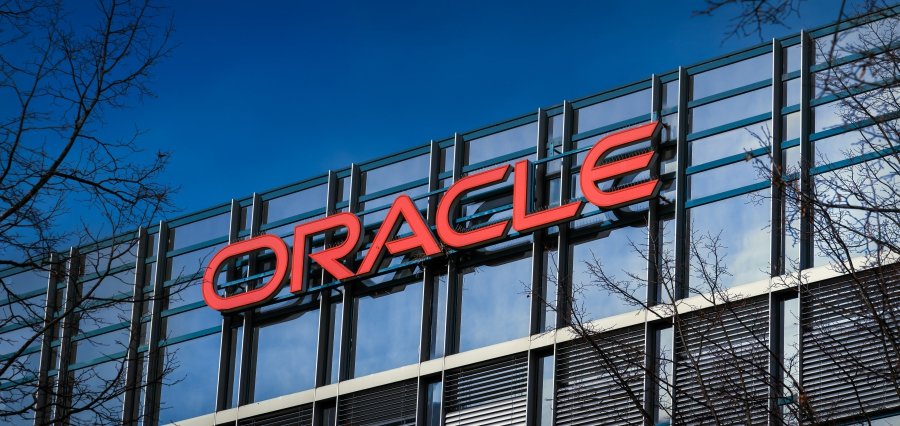
Oracle Boosts Investor Confidence with $50 Billion Financing Plan
Prime Highlights: Oracle’s $45–50 billion debt and equity plan strengthens its balance sheet and reassures investors. The company’s 5-year credit default swaps fell 17%, signaling lower credit risk. Key Facts: The funds will be used to expand Oracle’s cloud and data center operations for clients like Nvidia, Meta, and OpenAI. Despite the positive impact for debt investors, the stock dropped slightly due to potential short-term dilution from new share sales. Background: Oracle’s $45–50 billion financing plan has increased investor confidence and will help the company grow its cloud and data centers. Oracle’s 5-year credit default swaps, which show how much it costs to protect its debt, fell 17% to their lowest point since mid-December. Analysts credit the move with reducing the likelihood of a credit downgrade. “Equity financing significantly limits downside risks for credit,” noted Andrew Keches, a credit analyst at Barclays, who also upgraded Oracle’s debt to overweight. CDS are often used by investors as insurance against potential defaults, and the drop indicates growing confidence in Oracle’s financial stability. Oracle plans to raise money through both debt and selling shares, following last year’s $18 billion bond sale. Using both debt and equity shows investors a balanced approach to funding growth. Although the news is positive for lenders, Oracle’s share price dropped by 3% after the announcement. The drop reflects concerns about short-term dilution, as the company plans to sell shares in a way that could account for about 10% of its daily trading volume. UBS analysts said that selling $20–25 billion in stock might not sit well with all shareholders. Overall, the financing plan makes Oracle’s balance sheet stronger and lowers credit risk, helping the company fund growth while easing investor worries about debt and financial stability. Read More: SK Hynix Surpasses Samsung in Annual Profit, Strengthening Its Tech Leadership
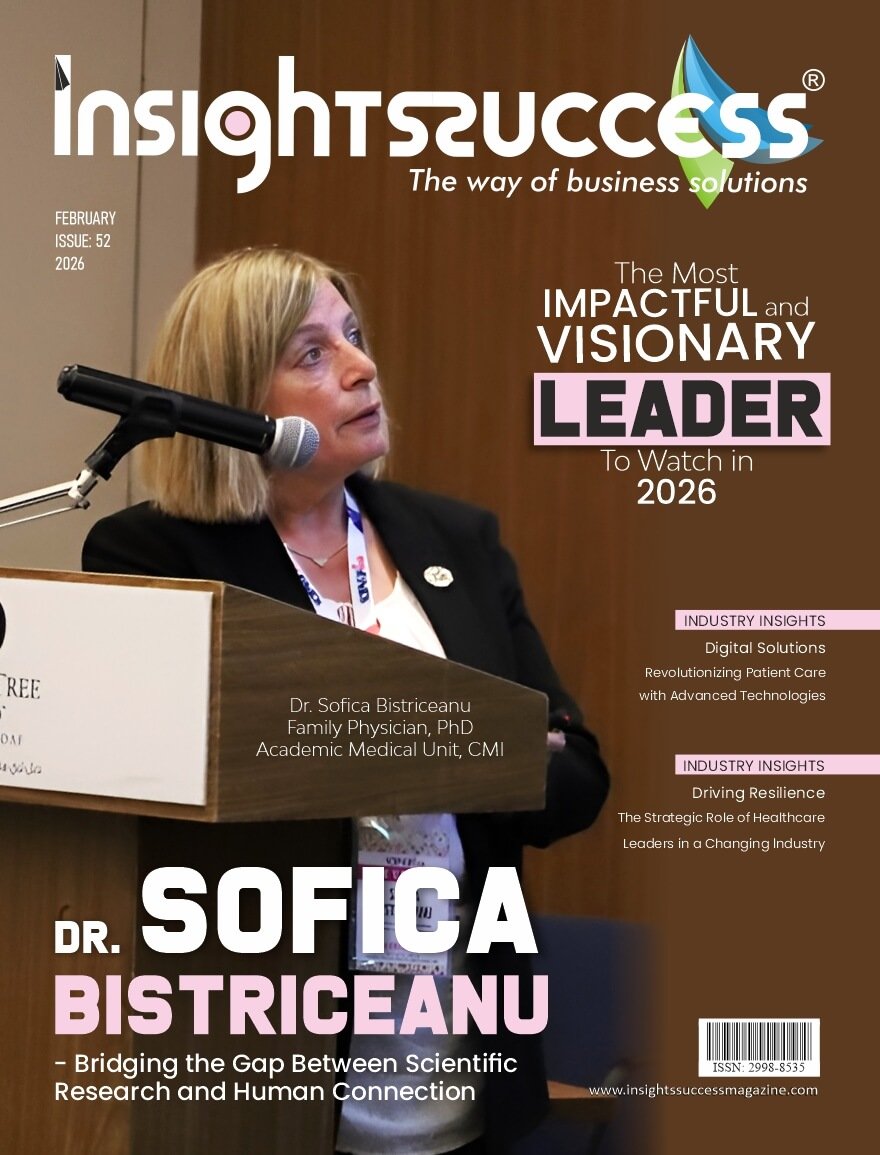
The Most Impactful and Visionary Leader To Watch in 2026
The Most Impactful and Visionary Leader To Watch in 2026 Dr. Sofica Bistriceanu exemplifies a new model of healthcare leadership that integrates scientific rigor with deep human connection. Through compassionate practice, home-based care, and innovative communication, she bridges research and empathy, demonstrating that effective healing requires both advanced medical knowledge and an understanding of patients’ lived experiences. Digital Link Quick highlights Quick reads

Driving Resilience: The Strategic Role of Healthcare Leaders in a Changing Industry
The healthcare industry undergoes transformation through technological advancements, which results in new patient requirements, regulatory changes by tackling international health problems. The current healthcare environment demands strategic healthcare leadership which needs leaders who possess operational skills and future-oriented abilities and capability to lead through changes. Organizational leaders need to manage more than their routine operations because they must guide their organizations through challenging situations while fostering an environment that enables new ideas to develop and ensures outstanding patient care delivery. Healthcare leaders today must balance multiple priorities. Their responsibilities include enhancing clinical results and streamlining organizational processes and ensuring financial health and overseeing compliance with regulations. They need to anticipate developing trends which include digital health adoption and artificial intelligence integration and value-based care models. The need for leaders who possess both administrative and strategic abilities to connect organizational goals with industry trends requires organizations to seek leaders who possess both abilities. Innovation and Transformation Healthcare innovation transforms patient care through telemedicine, AI-assisted diagnostics, wearable health technologies, and customized treatment plans. They must assess new technologies which need testing for both clinical effectiveness and their capability to boost operational performance and patient involvement. Strategic leaders create work environments which enable testing of new ideas and academic teams to work together and through research-based methods to make decisions which help them adopt new technologies successfully. The leaders in healthcare organizations take charge of driving organizational transformation according to their responsibilities. Transformation initiatives often require organizations to change their core values while shifting their resources and training their employees. Leaders need to present a vision which inspires others while explaining the need for change and establishing trust with stakeholders. The ability to support new ideas while keeping operations running smoothly determines how well an organization can compete in a market that changes frequently. Successful transformations need leaders who can create a future-oriented plan which combines clinical knowledge, technological developments, and patient-focused methods. Patient-Centric Care The needs of patients have undergone dramatic changes in recent years because they now require customized medical treatment, convenient services and clear information about their healthcare. The healthcare sector requires its leaders to develop and execute methods which establish patients as the main focus of medical treatment. The process requires organizations to gather patient opinions which they will use to enhance clinical operations while they implement technological solutions for better communication and improved access to services. Leaders who create organizational systems that meet patient requirements will succeed to create better health results which will enhance organizational trust and patient loyalty. Healthcare leaders need to maintain their focus on achieving better health results while they work to eliminate health disparities and social factors that affect health outcomes. The work of strategic leaders requires them to identify existing access, outcome gaps and create programs which will address these deficiencies. By creating inclusive policies and guaranteeing fair resource allocation, leaders can improve community health while satisfying their ethical and regulatory responsibilities. Patient-centric leadership therefore extends beyond clinical excellence to include social and organizational duties which affect both population health and community wellness. Workforce Strategy The success of healthcare organizations depends on their workforce because it serves as a fundamental element. The healthcare system faces three main problems which require active leadership to solve: workforce shortages, skill shortages and staff burnout. The strategic leaders of healthcare organizations need to create work environments that support professionals while they develop their skills and increase their employment duration. Organizations that want to build resilient teams for complex care delivery need to provide continuous educational programs and mentorship and leadership development initiatives. Organizations use strategic decision-making to manage their workforce, financial resources and their operational performance to operate sustainably in the future. Healthcare leaders need to assess data trends while forecasting market developments to make decisions that address immediate needs and plan for future goals. Effective leaders use their ability to predict future developments when they handle partnership agreements, technology implementation and service expansion. The choices they make impact their organization’s financial performance and the overall quality and accessibility of medical services which patients receive. The ability to make strategic decisions while managing daily operations represents the main difference between outstanding leaders and ordinary process managers in an evolving industry. Conclusion Healthcare leaders now serve as strategic stewards because their responsibilities have grown beyond typical management duties. They create operational success for their organizations through their expertise in driving innovation and developing patient-centered healthcare solutions and building a competent workforce. Healthcare systems establish their ability to handle new challenges through their capacity to predict upcoming trends, assess situations and implement necessary changes. Healthcare leadership depends on leaders who maintain operational efficiency while developing their organization’s future strategic direction. Leaders who combine clinical expertise with technological innovation and organizational knowledge create a healthcare system that delivers sustainable growth and better patient outcomes in healthcare access. Read Also : Channeling Technology: The Future of SAP Implementation in GCC IT Companies in 2026

Digital Solutions: Revolutionizing Patient Care with Advanced Technologies
The healthcare industry is going through a rapid revolution with modern technologies rewriting medical service delivery. The traditional healthcare model which was mainly dependent on face to face consultation and paperwork is now transforming into a highly integrated system which uses artificial intelligence, robotics and digital platforms. These innovations improve the accuracy of the diagnostic process which enables healthcare providers to pay more attention to patient outcomes. Technological integration in patient care is not merely a matter of convenience; it has a measurable impact on outcomes. Using real-time data, healthcare providers can make informed decisions in a short period of time, detect possible complications in the initial stages, and introduce specific interventions. With technology being a key component in healthcare provision, patients are enjoying more-diagnoses within a shorter time span, tailored care plans and better continuities of care. Digital Diagnostics The use of digital diagnostic tools is transforming the mode of detection and monitoring of diseases. AI-driven imaging devices have the ability to process medical imaging with an unusual accuracy, being able to detect subtle abnormalities that may go undetected during human examination. The ability is especially useful in fields like oncology, cardiology, and neurology, where the early diagnosis may considerably impact the survival rates. The AI-powered diagnostics also decrease the amount of work that radiologists and pathologists have to work on and leave them with difficult cases that cannot be left to AI. Another aspect of digital diagnostics is remote monitoring devices that supplement the care of patients in other than conventional clinical environments. Connected medical devices and wearable sensors provide an opportunity to detect vital parameters such as blood glucose concentration, heart rhythms and other health indicators around the clock. This flow of data offers healthcare professionals with actionable data, which can be used to implement timely interventions and make changes in the treatment programs. These technologies are especially useful to patients with chronic conditions, including diabetes or heart disease, as they should be proactively controlled and helped to visit a hospital less often. AI and Predictive Analytics The decision-making process in healthcare is being changed by artificial intelligence and predictive analytics. With AI algorithms, it is possible to predict possible health threats, preventive interventions, and help clinicians create personal treatment plans by analyzing enormous amounts of patient information. Predictive analytics are also useful in assisting the hospital management with resource allocation, patient wait time reduction, and general operational efficiency. Certain predictive scales help to improve the quality and cost-effectiveness of care. Besides, AIs-based tools are becoming useful in precision medicine, a care model that personalizes treatments based on the unique genetic profiles. Knowing how particular patients will react to certain treatments, clinicians will be able to develop highly specific interventions which will produce minimum side effects and even better treatment results. It is especially important in the area of oncology and managing rare diseases where the standard treatment of one-size-fits-all approach might not be effective. The healthcare system experiences a complete transformation because predictive analytics and personalized treatment methods now replace traditional disease-based treatment methods. Robotics and Automation Robotics is a growing trend that hospitals use to increase their surgical accuracy and enhance their medical outcomes. Advanced surgical robots provide greater dexterity, stability, and access to hard-to-reach areas of the body, enabling minimally invasive procedures with shorter recovery times. Remote surgery can also be performed using robotics as the specialized care can be extended to patients in areas where expert clinicians are unavailable. Robotic technology has the capability of transforming the standards of patient treatment by reducing the potential of human error and enhancing the efficiency of surgery. The use of automation is not limited to the operating room, but to other healthcare operations, such as laboratory tests, dispensing, and administration of patients. Computer-controlled systems minimize the excessive manual work, as medical staff can spend more time on direct work with patients. Robotic automation in laboratories is used to process samples faster and more consistently while smart pharmacy systems enhance medication management and reduce potential medication errors. The high efficiency rates, as well as the enhanced safety levels through the use of automation technologies, make the healthcare environment reliable and patient-centered. Conclusion The introduction of new technologies into the medical sector is inherently leading towards the abandonment of the reactive approach to the treatment of the patient in favor of the proactive and individual approach to health management. Digital diagnostics, AI-powered analytics, and robotics are not only improving the accuracy and efficiency of the medical intervention but also helping the healthcare professional to provide patient-centred services. With the help of these innovations, the healthcare systems will be able to minimize errors, streamline the working process, and provide patients with timely and focused treatment, which will eventually enhance patient outcomes and quality of life. Clinicians need to work together with technology developers and policymakers to achieve safe and equitable implementation of their innovations. The value of these tools will be maximized through three factors which include training medical professionals, protecting patient data and examining the ethical consequences of technological implementation. Read Also: Channeling Technology: The Future of SAP Implementation in GCC IT Companies in 2026
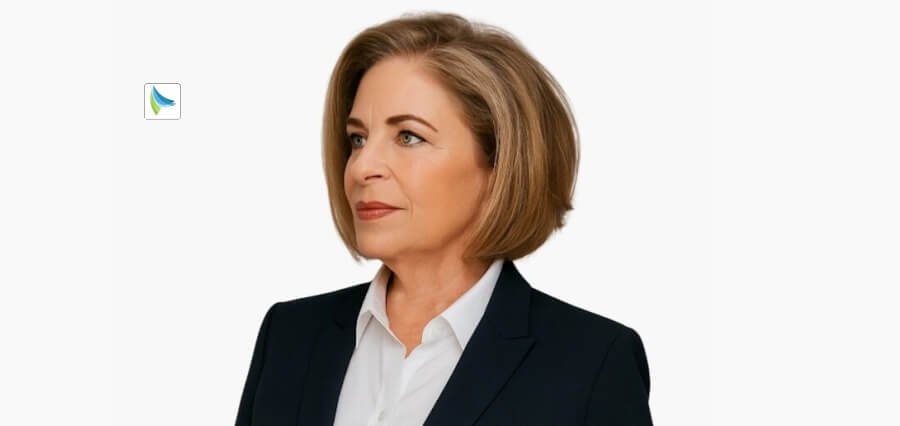
Dr. Sofica Bistriceanu- Bridging the Gap Between Scientific Research and Human Connection
The act of healing occurs when a patient comes to a physician for assistance, and the physician responds with compassion. Compassion for others is what makes us human and is the essence of medicine. A world filled with technology and speed cannot provide the compassion of the human spirit. When we view patients merely as a series of symptoms, we tend to overlook the depth and complexity of their life experiences. For example, when a physician listens to a patient’s story, he or she understands how the patient’s experiences have shaped who they are as individuals. Additionally, it is important that physicians have an appreciation for how their patients’ lives have developed prior to their visit to a clinic, and thus, a new understanding of healthcare must be established. The Early Path of a Visionary Dr. Sofica Bistriceanu is a leader who defines this new vision. She is a family physician with a PhD. She currently leads the Academic Medical Unit _ CMI Dr. Bistriceanu, S., in NT, Romania. Her journey is one of deep learning and bold choices. She began her medical education at Iasi University in Romania. She studied with utmost dedication and showed great promise. Dr. Sofica graduated as a medical doctor in 1984. This was the start of a long and successful career. Even then, she wanted to know more about it. She wanted to understand the full picture of human health. Dr. Sofica did not stop with her first degree. She completed the MATRA Research Program in Family Medicine in Romania, at Maastricht University, 1998-2000. Her project, “Bed Rest Benefit for Acute Bronchitis in the Cold Season,” finalized during the training program, was presented at the WONCA Europe Conference in London, 2002 – it was selected for discussion. This experience changed how she views the world. She met experts from many different countries. She saw how different cultures treat sickness. She observed that air energy is just as important as medicine. These years in the Netherlands helped her grow as a researcher and a person. In 2009, she earned her PhD from the University of Iasi. Her research was very detailed. She looked at how specific elements change the way drugs work. She focused on treatments for diabetes and heart disease. This scientific work is very important. It shows her commitment to high standards. She is not just a kind doctor. She is a serious scientist who understands the chemistry of healing. A Radical Change in Practice For many years, Dr. Sofica worked in a traditional office. She saw patients for 15 minutes at a time. But she felt that something was missing. She noticed that patients often forgot to tell her important things. They were nervous at the clinic. The white walls and the sterile smell made them quiet. In 2008, she made a very brave decision. She decided to close her standard office. She wanted to change how she practiced medicine. Dr. Sofica began a private practice based on home visits. This was a radical move. Most doctors want more technology and bigger offices. She wanted the opposite. She wanted to go to the front doors of her patients. She wanted to see where they live and how they breathe. This is called the “Medical Home” model. Dr. Sofica is a pioneer of this style in her region. She believes that a house tells a story that a clinic cannot. When she enters a home, she is looking for clues. She is a medical detective. She looks at the kitchen. She looks at the air quality. She notices if the house is damp or cold. Dr. Sofica sees if the patient has enough food. These details are vital for a correct diagnosis. She believes that the environment is a major factor in disease. You cannot heal a person if their home is making them sick. The Truth Behind the Front Door Dr. Sofica sees things that other doctors miss. She notices dust on top of the medication bottles. This indicates that the patient is not taking their medication. She also observes how family members talk to each other. She sees the tension in a daughter’s voice. She sees the sadness in a husband’s eyes. These social factors raise blood pressure more than salt does. She listens to these silent signals. Dr. Sofica believes that the home is the center of the “Medical Home” framework. In this space, the patient feels safe. They are more honest. They share their fears and their hopes. She uses this information to create better treatment plans. Dr. Sofica is not just treating a disease; she is treating a person in their own world. This approach creates a deep level of trust. Her patients know that she truly sees them. This model also helps her prevent problems before they start. She can spot a tripping hazard for an elderly patient. She can suggest changes to the diet by looking at the pantry. She is teaching her patients how to live better every day. This is the true meaning of family medicine. It is about staying healthy, not just getting treated when you are sick. The Science of Communication and Energy Dr. Sofica has a unique theory about words. She believes that words carry real energy. She says that communication can be medicine or it can be poison. When communication is toxic, it hurts the body. It creates stress that damages the brain and the heart. She has seen how bad news can cause a stroke. If the news is delivered harshly, the body reacts poorly. She focuses on “polite communication.” This is not just about being nice; it is a clinical strategy. Dr. Sofica uses kind words to lower the patient’s stress. She speaks in a calm and steady voice. This helps the patient’s nervous system relax. When the body is relaxed, it heals faster. She is teaching the world that the “how” of communication is just as important as the “what.” Dr. Sofica even uses technology to