






How CQ Drives Business Performance in Multinational Organizations?
The ROI of Cultural Intelligence Multinational corporate success in the modern global economy is not simply a function of innovation or strategy but of being able to operate effectively in many different cultural environments. At the center of that cross-cultural effectiveness lies Cultural Intelligence (CQ)—an essential competence that enables leaders and employees to operate effectively in multicultural environments. More importantly, cultural-intelligence leadership is becoming an ever-more fundamental performance driver, innovation catalyst, and organizational coherence force for multinational corporations. Understanding Cultural Intelligence (CQ) Cultural Intelligence (CQ) is the ability to engage with and work well across cultures. Unlike IQ (Intelligence Quotient) or EQ (Emotional Intelligence), CQ focuses on the problems that arise when working with people from other cultures. It has four components: CQ Drive – wanting to learn from and adapt to other cultures. CQ Knowledge – understanding of how cultures differ and how these differences influence behavior. CQ Strategy – capability to plan for multicultural interactions. CQ Action – the ability to adjust behavior suitably in cross-cultural interactions. Together with each other, these components constitute a model that enables leaders to manage international complexity confidently and clearly. The Role of Cultural-Intelligence Leadership in Multinational Settings Multinationals play out across borders, languages, time zones, and cultural norms. There is no one-size-fits-all leadership style that will work in those environments. That’s where cultural-intelligence leadership steps in. Leaders with more CQ are more likely to lead global teams, build solid relationships with international partners, and play around cultural faux pas that undermine credibility. For example, a culturally aware leader would realize that in Japan there is a preference to decide by consensus, whereas in the United States, decision-making is more rapid and individualistic. Being aware of and adjusting to these differences increases confidence and smoothens functioning. Apart from that, cultural-intelligence leadership widens inclusivity. CQ leaders create an atmosphere that makes the diverse feel valued, appreciated, and motivated. Such kind of inclusive environments cut turnover, enhance engagement, as well as enhance innovation. CQ and Improved Team Performance International teams most frequently struggle with miscommunication, implicit bias, and incompatible expectations. These issues, if left unsolved, can turn into conflict, inefficiencies, as well as decreased productivity. CQ acts as an antidote to such issues. Strong leaders who are culturally intelligent can: Close communication gaps through listening to cultural subtleties in words and tone. Enable teamwork by establishing team standards that are applied across the board, and not just across particular cultures. Prevent misunderstandings by listening with empathy and adjusting accordingly. It has been shown through research that teams composed of diverse cultures led by high-CQ leaders perform better than homogeneous teams. They contribute more ideas, creative problem-solving, and global knowledge that make competitive distinction possible. Innovation Through Cultural-Intelligence Leadership Innovation is usually the result of the collision of two divergent ideas. A culturally aware leader is a catalyst who inspires divergent thinking and allows conflicting ideas to be appreciated and blended together to form effective solutions. With cross-cultural dialogue and psychological safety, cultural-intelligence leadership converts possible tension into fertile ground for innovations. Google and Unilever have attributed their culturally aware and diversified workforce to spearheading trailblazing ideas that resonate in global markets. Essentially, CQ converts differences in culture into assets and not liabilities. CQ’s Role in International Strategy and Expansion When foreign companies move into a new market, cultural blunders are very costly. From ad campaigns that offend local sensibilities to management actions that seem to fly in the face of local values, the risks are considerable. Cultural-intelligence leadership neutralizes these threats. CQ-facilitated leaders are skilled at: Market adaptation – adapting products and services to fit local tastes. Talent acquisition – bringing in and retaining talent with local work culture sensitivities. Negotiations – navigating culturally subtle business arrangements with care and respect. For instance, Starbucks’ success in China is partly due to its culturally wise strategy—local tastes and customs accepted, yet brand-consistent. Building CQ in Organizations Cultural-intelligence leadership is not an overnight development. It involves deliberate investment in education, mentoring, and immersion. Following are some methods organizations may adopt to develop CQ: Cross-cultural training modules on real-life situations and role-playing. Global assignments that force leaders to learn in a different environment. Mentorship by globally diverse executives who use experience to guide. Diversified recruitment practices that make the organization’s culture richer and empathetic. Supporting leadership development initiatives through CQ ensures future leaders can succeed in a global environment. Conclusion: A Competitive Advantage Based on Understanding With globalization accelerating and workplaces becoming increasingly diverse, cultural intelligence is no longer a luxury—it’s a strategic imperative. Cultural-intelligence leadership is a powerful driver of business performance in globalized multinational corporations. It allows leaders to move with ease in the face of complexity, convert diversity into innovation, and build united teams across borders. It’s not so much about knowing about other cultures—it’s respecting them. And when leaders lead with cultural intelligence, organizations don’t just get bigger—they get transformed. Read More: Communication Strategies for Cross-Cultural Teams

Communication Strategies for Cross-Cultural Teams
In today’s globalized working environment, cross-cultural teams are more common than ever. Whether employed by multinational companies, remote-working startups, or cross-continental international project teams, people from various cultural backgrounds now collaborate on other continents, time zones, and traditions. While diversity heralds’ innovation and new ideas, it also brings with it new issues in communication. To make collaboration effective, respectful, and inclusive, organizations must adopt communication approaches that are tailored for cross-cultural teams. Understanding the Dynamics of Cross-Cultural Teams Cross-cultural groups are made up of members whose beliefs, communication styles, decision-making style, and conflict resolution style vary. If not controlled, these differences lead to misunderstandings, tensions, or lower productivity. For instance, directness may be admired and seen as being effective in some societies, while indirectness is more respectful in others. Similarly, hierarchy and decision-making can basically differ what one member perceives as assertiveness, another will criticize as arrogance. The initial step is to recognize these differences. Creating an awareness of how culture influences behavior sets the stage for better communication. Emphasis on Cultural Intelligence Cultural intelligence (CQ) is the ability to understand, appreciate, and interact effectively across cultures. Leaders and team members require training so that they develop cultural intelligence, not in a series of one-off workshops but through ongoing conversation and learning. Encourage self-awareness and reflection. Once individuals are aware of their own cultural presumptions, they are better able to appreciate and adapt to others. Encourage curiosity and thoughtful questioning. Questioning instead of assuming avoids stereotyping and breeds respect in cross-cultural teams. Establish Clear and Inclusive Communication Standards One of the best practices for avoiding miscommunication in cross-cultural teams is to establish clear standards upfront. They are: Clarity of language: English is often the default for global teams but fluency levels vary. Encourage the use of plain, jargon-free language. Use no idioms, local color, or humor unlikely to be recognized. Documentation: Write up important conversations. This ensures everyone has a shared understanding and language skills aside. Visual aids: Employ the use of visual aids such as charts, diagrams, or infographics to enhance understanding and reduce the possibility of needing to explain verbally. Time etiquette: Understand that people’s sense of time varies. Some cultures are extremely strict when it comes to being punctual, while others are quite lenient. Have a meeting procedure in place and be considerate of each other’s time zones. Leverage Technology to Close Gaps in Communication Technology is a powerful tool for cross-cultural teams. Slack, Zoom, and Microsoft Teams provide constant interaction, and project management tools such as Trello or Asana keep everyone informed. Don’t overuse digital communication, though. Tone and nuance are stripped away in text. Allow video calls when possible to put a human face to interactions. Facial expressions and body language can clarify things that words can’t. Also, ensure that the tools themselves are available and familiar to all on your team. Provide training or onboarding if necessary so no one falls behind. Foster Psychological Safety It is a requirement to have a culture of not being shy with opinions in cross-cultural teams. Questioning the existing state or conflict may be disapproved of in certain cultures. Others may view speaking as being actively engaged. The leaders must exercise inclusiveness by eliciting input from all, especially those who may be less vocal. Take turns at chairing meetings, let everyone have a say, and really listen. Recognize inputs and do not interrupt. Reinforcing the fact that everyone’s input matters engenders trust and allows the team to function at its optimal level. Foster Cross-Cultural Camaraderie Effective communication transcends project progress and status meetings. Relationships are what glue cross-cultural teams together. Schedule informal chats or virtual team-building exercises. Observe cultural holidays or traditions. Ask team members to say something about their background or their everyday life. These are such small things that create empathy, appreciation, and camaraderie. When team members truly know and care about each other as people, not just coworkers, working together becomes more authentic and fun. Handle Conflict Constructively Cross-cultural team conflict is inevitable—but not necessarily a bad thing. Conflict, if approached constructively, can foster more understanding and better outcomes. Approach conflict as a learning experience and not as a blame game. Identify cultural differences in expectation or communication that are driving the conflict. Employ unbiased facilitators if necessary, and practice transparency and fairness throughout the resolution process. Encourage members to bring issues up early on before things get out of control. Assure them that disagreement is okay and that respectful communication is a strength, not a weakness. Conclusion: Embracing Diversity Through Communication Cross-cultural teams are a mirror of our globalization age. Their effectiveness does not lie in how to eliminate differences, but in how to harness them through intentional communication strategies. If people on a team feel heard, respected, and included, they will be more likely to be genuine contributors and to work well as a team. Through cultural intelligence, setting common norms, using technology, and building interpersonal relationships, organizations can leverage the full capability of their multicultural workforce. In doing so, they not only reap greater productivity but also create a culture of mutual respect and innovation that transcends borders. Read More: How CQ Drives Business Performance in Multinational Organizations?
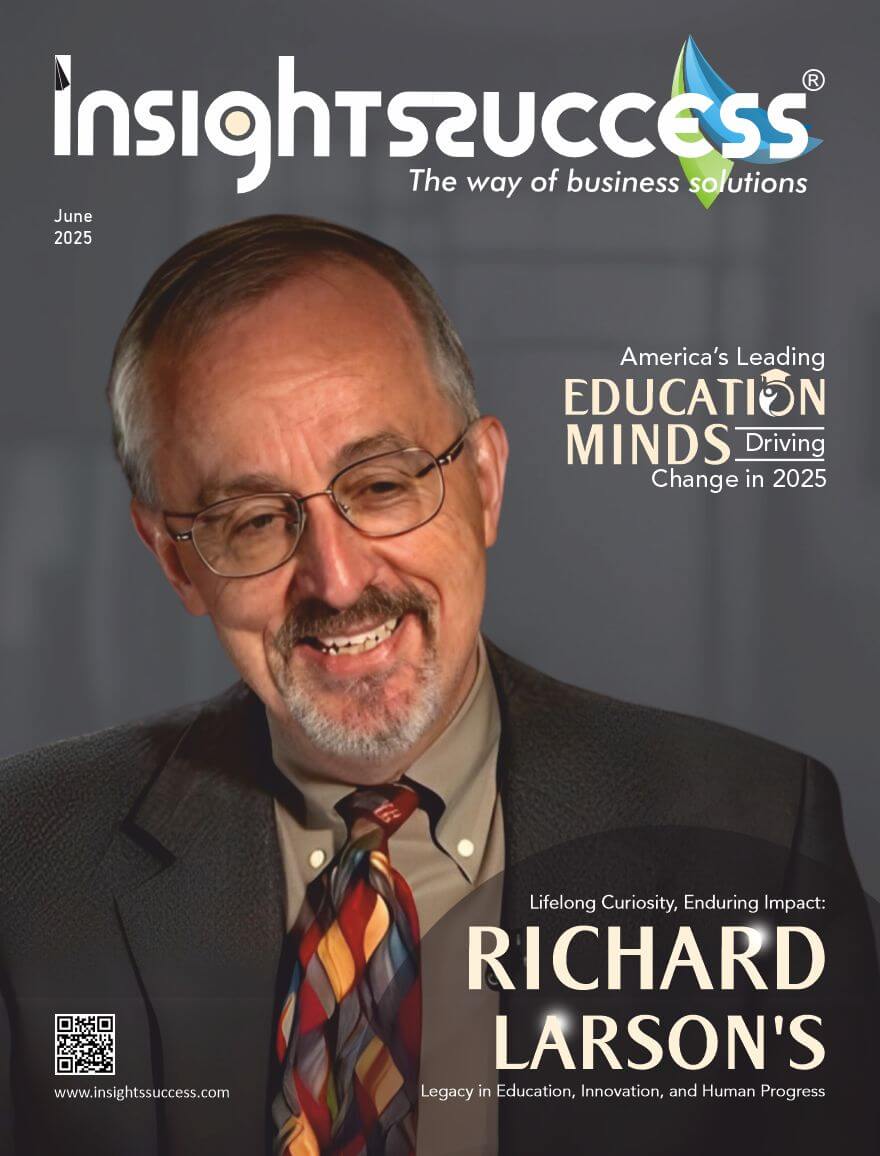
America’s Leading Education Minds Driving Change in 2025
America’s Leading Education Minds Driving Change in 2025 Professor Richard C. Larson stands as a defining figure. His work continues to shape the future of learning with clarity, compassion, and cutting-edge insight. Known globally for his leadership at MIT and often referred to as “Dr. Queue” for his groundbreaking research in operations management and systems engineering, Dr. Larson’s contributions extend far beyond academia. Quick highlights Quick reads

Tech-Driven Teaching: The New Frontier in Global Education
The face of education is evolving in revolutionary ways—ways that aren’t about policy redesign or curriculum reform, but about the incorporation of technology at every point of learning. From student-led classrooms to AI-powered tutoring platforms, tech-driven education is transforming the delivery, acquisition, and application of knowledge worldwide. While nations grapple to overcome learning catch-up and the imperative to ready students for a digital-first world, technology not only served as a tool, but the cornerstone of the future of global education worldwide. No longer limited to chalkboards and textbooks, today’s classrooms are fast emerging as dynamic ecosystems where innovation is influencing engagement, personalization, and accessibility. The convergence of cutting-edge technologies such as virtual reality (VR), artificial intelligence (AI), and big data is not only informing the learning process but also transforming the role of educators and institutions. Perhaps the most compelling promise of technology-supported instruction is the potential to open up access to quality global education. For rural, under-served, or war-torn regions where there is no formal school infrastructure or a lack thereof, technology is a lifeline. Cloud-based learning platforms, mobile applications, and open educational resources (OERs) are delivering curriculum-linked content to millions irrespective of geographic place or socio-economic status. But access is not sufficient. The actual metric of success is impact—how technology boosts learning results, elevates the level of retention, and develops critical thinking. Adaptive learning application, for example, applies real-time analytics to alter teaching to meet specific student needs, so no student gets left behind. Teachers can now measure progress accurately, recognize gaps in knowledge in real time, and react with targeted strategies that were previously unscalable. The Use of Artificial Intelligence Artificial intelligence is increasingly the foundation of educational reform. AI-based platforms can assess student performance, forecast learning paths, and recommend personalized routes—all while releasing teachers from rote work to concentrate on higher-order instruction. Virtual tutors based on natural language processing provide on-demand tutoring, and sentiment analysis can identify frustration or disengagement in students so that early intervention can be provided. Additionally, AI makes multilingual content delivery possible, and the language constraints no longer stand in the way of learning. In international classrooms, it is a breakthrough, particularly for migrants and foreign students. As AI becomes more integrated, its ability to promote inclusivity and diversity in learners will be more profound and longer-lasting than ever. Redefining the Role of Educators Technology isn’t displacing teachers—it’s redefining their role. Teachers are no longer just knower-bearers but also facilitators, coaches, and curators of content. In the new paradigm, teaching is less about passing on knowledge and more about helping learners navigate discovery, collaboration, and problem-solving. Professional development for teachers is imperative today. To appropriately address tech-rich classrooms, teachers need to be empowered with digital capability skills, but also with imagination and confidence to try, modify, and innovate. Nations and institutions that are committing to ongoing teacher global education are seeing benefits through more motivated students and quantifiable gains in learning outcomes. Virtual and Augmented Learning Environments Immersive technologies such as Virtual Reality (VR) and Augmented Reality (AR) are giving learning greater depth and dimension. Students are now able to travel to ancient civilizations in the virtual world, perform virtual science experiments, or solve actual engineering problems virtually—all from their homes or classrooms. These technologies close the gap between theory and practical expertise, increasing student motivation and retention. Especially in STEM global education, where conceptualization can get in the way, VR and AR provide visual, interactive space where learning is intuitive and potent. Data-Driven Decision Making Big data analytics is transforming global education planning and policy. By examining, consolidating huge volumes of data—student performance, attendance, behavioral traits, etc.—governments and institutions can make data-driven choices to enhance instructor support, resource distribution, and course. For policymakers, these facts can guide investment, spur reforms, and monitor country-wide global education goals with utmost precision and accountability. For school administrators, data dashboards offer real-time insights on school performance and learner progress. Overcoming the Digital Divide Though the promise of tech-enhanced learning is deep, it is also paired with the urgent challenge of the digital divide. Disparate access to internet connection, computers, and digital literacy training is an obstacle for millions, especially low-income and rural communities. This calls for a multi-stakeholder response—governments, private sector, NGOs, and academia have to come together to drive inclusive infrastructure, affordability, and local content. In markets such as Sub-Saharan Africa and South Asia, where mobile penetration is high but broadband penetration is low, mobile-first global education solutions are having huge potential. Global Collaboration and Innovation Global Education in the future is definitely international and collaborative. Global cooperation is driving the uptake of EdTech, enabling the exchange of knowledge, and scaling up best practice. From UNESCO’s digital learning program to public-private initiatives spearheaded by top tech companies, there is building pressure to help global education systems everywhere prepare for the future. Innovative ecosystems like EdTech clusters in the UAE, India, Singapore, and Nordics are making possible what was not possible before. These innovation hubs across the globe are developing solutions that are not just technology-enabled but also pedagogically valid and context-relevant. Conclusion: The Future Is Now Technology-enabled teaching is not longer a fantasy of the future but is reconfiguring learning in the present. With the problems of the world becoming more and more complex, from climate meltdown to robots, the requirement for responsive, open, and productive global education systems has never been more acute. The future of learning exists at the intersection of innovation, empathy, and technology. It’s up to leaders, policymakers, and educators to catch this shift—not as a trend, but as a change in paradigm that enables learners to flourish in a changing world. Together, we can start to ensure high-quality global education is no privilege, but an absolute right. Read More: Communication Strategies for Cross-Cultural Teams

Curriculum for the AI Era: The Importance of AI Education in Shaping Tomorrow’s Innovators
As artificial intelligence (AI) transforms how we live, work, and interact, the imperative to embed AI education in mainstream curricula has never been more pressing. From medicine to transport, finance to media, AI is at the core of a pervasive technological revolution. But beyond coding and algorithms is a much greater imperative: developing a generation which can not only employ AI but understand, question, and define its future. The era of AI calls for a deep reconsideration of what students learn and how they come to learn it. Schools around the world must now move with purpose and intentionality to ensure that students are not just digital consumers—but empowered innovators and ethical guardians of a technology that is rapidly becoming the foundation for contemporary society. AI Is Not the Future—It’s the Present AI is now no longer something of the distant future, something that exists only in technology laboratories or science fiction. It drives voice assistants, recommendation engines, medical diagnosis, autonomous cars, and predictive analytics. It determines hiring, credit scores, and national security. As AI becomes deeply ingrained in all industries, the set of skills needed to compete in this world is evolving fast. For young people entering the workforce over the next decade, AI literacy will be as essential as reading and math. The challenge lies not only in training future developers but also in educating tomorrow’s doctors, designers, marketers, and policymakers to understand how AI impacts their fields—and how to harness it responsibly. Building AI Literacy from the Ground Up AI learning has to start early. Just as the fundamentals of language, science, and numeracy are taught at the primary school level, the fundamentals of machine intelligence, data, logic, and ethical thinking have to be taught. Curricula suitable for the age group can simplify sophisticated technologies and stimulate curiosity, critical thinking, and problem-solving. This does not equate to every learner needing to be a computer scientist. Instead, the intention is to create AI literacy as an essential skillset—similar to digital or financial literacy—preparing students to understand AI’s place in their current and future work lives. Knowledge of how algorithms decide, data is employed, and bias might seep in promotes both technical acumen and civics. Integrating AI Education isn’t merely the addition of a handful of coding units or robot competitions. It needs a transformation at the system level of curriculum design. Interdisciplinary thinking needs to take center stage, combining computer science with ethics, sociology, mathematics, and the humanities. A broad-based AI curriculum needs to include: Technical Foundations: Knowledge of data structures, algorithms, and machine learning fundamentals. Critical Thinking: Sourcing, interpreting, and understanding correlation vs. causation. Ethics and Bias: Investigating the social implications of AI, privacy issues, and the necessity of fairness, accountability, and transparency. Human-AI Interaction: Investigating the ways in which humans work with intelligent systems and the role of empathy within technology design. Significantly, this change should not be limited to elite universities or high-tech cities. Equity should be a fundamental principle in providing AI education across geographies, socioeconomic status, and learning needs. Educator Empowerment is Critical Teachers are the key to successful AI education. But too many teachers themselves are not well-versed in the technologies they are now being asked to teach or implement. Professional training, hands-on workshops, and collaborative learning spaces are critical to raising educator confidence and capability. Governments and boards of education need to spend on teacher development, curriculum material, and building infrastructure to build a strong AI learning ecosystem. Public-private partnerships, in which corporate leaders join hands with higher learning institutions, can bridge the gap between theory and practice and channel AI education into a more practical, dynamic, and future-oriented course. Innovation in the Classroom AI education can no longer be limited to textbooks. Emerging tools are bringing AI concepts to life and making them interesting for students. Virtual labs powered by AI, gamification-based learning, and project-based learning are making theory real. Students are able to train basic neural networks, create chatbots, or model AI decision-making, offering experiential learning that is even more engaging. Additionally, AI is improving education in itself. Adaptive learning platforms tailor instruction, detect gaps in learning, and provide instant feedback—enabling learners to advance at their own speed. These tools not only help in the teaching of AI but show its capability in action. Global Momentum and Policy Alignment Across the globe, nations are waking up to the value of AI education. The UAE, Singapore, Finland, and South Korea are already embracing AI in national education plans. The United Nations and OECD have promoted AI curriculum development and ethics training as part of digital inclusion plans worldwide. Policy structures need to facilitate this momentum with definitive direction, durable funding, and quantifiable objectives. From updating models of assessment to integrating AI instruction into national curricula, visionary leadership is needed to make AI literacy scale. Developing empathy, accountability, and global awareness needs to go hand in hand with technical instruction. A generation that will not only ask “Can we make this?” but also “Should we?” will be best placed to craft a future where AI is with inclusive, equitable, and sustainable values. Conclusion: A Curriculum That Creates Change-Makers The incorporation of AI in education is not just an upgrade in technology—it is a shift in philosophy. It challenges teachers, policymakers, and institutions to rethink what it is to get students ready for tomorrow. By integrating AI education into our curricula now, we are not merely educating skills. We are forming tomorrow’s leaders, innovators, and moral designers of a world growingly shaped by smart systems. The moment to act is now—because the future arrived earlier, and it requires minds that are prepared, responsible, and resilient. Read More: Tech-Driven Teaching: The New Frontier in Global Education

Lifelong curiosity, Enduring Impact: Richard Larson’s Legacy in Education, Innovation, and Human Progress
Richard Larson’s life and career are a testament to the transformative power of education and an enduring commitment to knowledge. For over five decades, Larson has demonstrated that learning is not a phase of life but a lifelong endeavor—one that continues to evolve, surprise, and inspire. From his earliest days as a student at MIT to becoming a globally respected researcher, professor, and mentor, his journey reflects a deep-seated belief that knowledge is not only valuable—it’s empowering. As B.B. King once said, “The beautiful thing about learning is that no one can take it away from you,” a sentiment Richard Larson embodies in thought and practice. His legacy extends far beyond academic credentials and research citations. What sets Richard Larson apart is his personal mission to make learning accessible, impactful, and lifelong. Whether through mentoring graduate students, co-founding educational programs with his late wife Mary Elizabeth Murray (“Liz”), or authoring books to simplify complex ideas for the public, his life’s work exemplifies how intellectual curiosity can ripple across institutions, communities, and generations. Through a commitment to both rigorous inquiry and compassionate education, Larson continues to inspire future innovators. Even in retirement, Larson’s journey is far from over. He remains actively engaged in spreading the principles of MODEL-Based Thinking and championing intellectual growth across diverse platforms. With humility and passion, he shares the wisdom gained over a lifetime of breakthroughs, mentorship, and discovery—reminding us all that the pursuit of learning is one of the most fulfilling paths a person can walk. Academic Foundation at MIT Richard Larson credits his foundational success to his time at MIT, where he arrived as an eager freshman at just 18 years old. Despite financial concerns from his father about commuting, Richard Larson found a home away from home at Phi Beta Epsilon (PBE), a fraternity based right on campus. This close-knit community nurtured his academic and personal growth in profound ways, providing a sense of belonging that shaped his undergraduate experience. Motivated by his fascination with systems and problem-solving, he continued his studies at MIT, eventually earning a PhD in Operations Research. As he neared the completion of his dissertation, an unexpected opportunity came his way: a faculty position offered by his advisor, Professor Alvin W. Drake. Though initially hesitant—unsure if he was ready to shift from student to professor—Larson embraced the role, beginning a long and distinguished academic career at MIT. This decision would mark the beginning of a lifelong relationship with the institution. Over time, he moved up the academic ranks, ultimately becoming a tenured professor. His tenure at MIT was characterized by continuous curiosity and an unwavering dedication to pushing the boundaries of both education and research. Mentoring Through Meaningful Relationships While Larson’s professional achievements are vast, what he found most rewarding was his interaction with students. More than lectures or textbooks, it was the mentor-mentee relationships that left the greatest impact. He guided numerous graduate students, often collaborating with them on pioneering research projects that went on to be published in top-tier journals. For Larson, teaching was never simply about transferring knowledge—it was about cultivating intellectual independence, curiosity, and creativity. Witnessing his students evolve into researchers, educators, and leaders across disciplines brought him unparalleled satisfaction. “The most fulfilling part of teaching,” he often says, “was watching others surpass me—achieving things I had only imagined.” These relationships weren’t limited to the classroom. They were deep, collaborative, and often transformative for both student and mentor. They helped form a research community that was rigorous, creative, and focused on making a meaningful impact in the real world. Shaping the Next Generation of Thinkers Even after stepping away from the classroom, Larson continues to impact the next generation through his public education efforts. He is particularly passionate about MODEL-Based Thinking, which he now brings to a broader audience through his book, MODEL THINKING For Everyday Life. In this work, he emphasizes that conceptual models—once thought to belong only in academic theory—can guide real-life decision-making. The book aims to arm individuals with tools to think critically, make smarter decisions, and solve everyday problems through structured reasoning. Whether one is analyzing financial risks, managing time, or deciding on healthcare plans, Larson believes that models serve as intellectual compasses in a chaotic world. Through this initiative, Richard Larson remains true to his core belief: education is for everyone, not just scholars. He continues to democratize knowledge, turning complex theories into practical wisdom that anyone can understand and apply. The Lifelong Habit of Curiosity Richard Larson is a vocal advocate for lifelong learning. Inspired by Einstein’s philosophy that “a day without learning is a day wasted,” he has made continuous curiosity the foundation of his life. This curiosity extends beyond research and academia—it permeates his daily life, from casual observations of nature to deep dives into emerging technologies. Some of Larson’s most profound insights came when he least expected them—during sleep. Twice, he awoke from dreams with fully formed solutions to complex problems. One of these instances led to the Hypercube Queueing Model, which would become a cornerstone of emergency response optimization. These moments serve as powerful reminders that the mind never truly stops learning, even in rest. He encourages everyone to stay open to new information, new experiences, and new perspectives. To him, learning is not about age, status, or credentials—it’s about mindset. Creating Impact Beyond the Campus Richard Larson’s commitment to education extends beyond MIT’s walls. One of his proudest contributions is his support for educational institutions like Notre Dame Cristo Rey High School, which serves students from underrepresented backgrounds. He believes that quality education should not be a privilege but a right—accessible to all who seek it. His generosity and vision culminated in the establishment of the Richard Larson Chair in Data, Systems, and Society at MIT. This endowed position ensures continued innovation and scholarship in interdisciplinary fields that intersect technology, society, and policy. For Larson, this isn’t just a professional achievement—it’s a personal commitment to future generations. By fostering inclusive, impactful education, Richard Larson

Most Influential Leader To Look Up To In 2025
Most Influential Leader To Look Up To In 2025 Dr. Evgeniya Dudinova stands as one of the most influential leaders to look up to—not just for what she has accomplished, but for the values she embodies: authenticity, vision, and the unyielding belief that growth is always possible, no matter the conditions. Quick highlights Quick reads

Making Impossible Possible–Dr. Evgeniya Dudinova: Supporting UAE’s Food Security with AGTHIA
Everything is possible if you have the wit, the will, and the power of your vision to clear the picture in front of you. As the daughter of a resolute Russian farmer, Dr. Evgeniya Dudinova’s journey of emerging from a crisis situation to winning over another crisis scenario is akin to a seed growing amidst whatever weather and soil conditions it faces to later grow into a bush, plant, or a tree feeding the ever-hungry world. Today, being the Procurement Director – Commodities at AGTHIA, Dr. Evgeniya Dudinova reflects, “Sometimes I think it was my destiny! My father – a small Russian farmer – loves his lands and plants. He grows them and not only sees them as seeds but as a part of sowing his soul with every seed!” From Russian Farmland to Global Commodities Leadership Thus, her story began in the rural heartland of Russia, where her father, once the Chief Agricultural Engineer of a collective farm, risked everything to pursue independent farming just as the Soviet Union was collapsing. Amidst economic instability and grain import dependence, he planted the seeds of resilience—seeds that would later shape his daughter’s destiny. Raised in the rich soils of the Krasnodar region, now a global wheat-exporting powerhouse, Evgeniya’s early years were steeped in agriculture. She excelled academically, earning a gold medal in school and later enrolling at KUBSAU, one of Russia’s top agricultural universities, the same institution her father attended. Her academic focus on the cost and profitability of sunflower seeds was rooted in personal experience—she spent countless summers clearing fields and even hand-harvested corn when machinery failed. These early lessons instilled a work ethic and understanding of agribusiness that would define her career. After earning her red diploma with distinction, Dr. Evgeniya Dudinova joined Cargill as a Commercial Management Trainee in 2010, despite having a competing offer from a multinational consumer goods company. Her decision was inspired by the meaningful impact of feeding the world, and her early career involved navigating the aftermath of Russia’s grain export ban. She quickly rose through the ranks, moving from domestic supply chain management to international trading, and eventually played a pivotal role in opening the GCC market to grains from Ukraine, Romania, and Bulgaria—beyond the traditional Russian supply. In 2019, she joined AGTHIA Group, where she was entrusted with reshaping procurement strategy amid volatile global markets. Leveraging her deep knowledge of commodity flows from the Black Sea, Baltics, and Australia, she helped AGTHIA transition from a regional buyer to a leading force in the Gulf and MENA region. Her leadership in launching solo Panamax import programs and securing competitive wheat and barley origins revolutionized AGTHIA’s import structure. Her academic pursuits, including a PhD in World Economy, complement her practical expertise. Dr. Evgeniya’s career stands as a bridge between field-level grit and boardroom strategy—a legacy of feeding not just one family farm but millions across the globe. Driving Strategic Transformation in Grain Trade and Market Collaboration Among Dr. Evgeniya’s many accomplishments, one achievement stands out as a defining milestone in her professional journey—leading AGTHIA Group’s evolution from a part-cargo importer to a strategic powerhouse in the GCC grain trade. Taking on the complex challenge of commodity risk management in a fragmented and unpredictable market, she pioneered AGTHIA’s transition into full Panamax-size import programs. Her breakthrough came in 2019 with the historic arrival of MV INCE TOKIO—AGTHIA’s first secured Panamax vessel carrying Ukrainian milling wheat. This moment symbolized more than just logistical success; it marked the beginning of a new procurement mindset for Grand Mills—which is a part of AGTHIA’s Agri-Business portfolio—one built on agility, risk-informed decision-making, and cross-functional trust. Coordinating between port operations, quality control, and leadership support, Dr. Evgeniya Dudinova ensured seamless execution and introduced a new specification standard—“Consensus Spec”—balancing premium quality with market liquidity. Leveraging her global trading experience and deep market knowledge, she empowered her team to think bigger. Through a flexible specification strategy and precision sourcing, AGTHIA became a strong regional competitor, challenging multinational trading houses. The company maintained top-tier quality standards, supported by the only GAFTA-approved lab in the UAE, while achieving cost-effective import diversification—expanding from milling wheat to including Black Sea feed barley and corn. What sets Dr. Evgeniya’s leadership apart is her ability to foster collaboration over competition. Recognizing the unique spirit of the UAE’s import market, she facilitated a strong cooperative relationship with other key players like Al Ghurair. Rather than vying for dominance, the two leading millers shared strategic insights, managed overlapping risks, and supported each other in times of supply pressure or late arrivals. Her vision has reshaped procurement dynamics in the region, transforming AGTHIA into a resilient and forward-looking player while strengthening a market culture built on transparency, mutual growth, and shared intelligence. In her words and actions, Dr. Evgeniya Dudinova continues to demonstrate that strategic foresight, operational excellence, and trusted partnerships can move markets—and feed nations. Resilience Amidst Global Volatility: Dr. Evgeniya Dudinova’s Strategic Leadership at AGTHIA As Procurement Director for Grains and Commodities at AGTHIA Group PJSC, Dr. Evgeniya Dudinova faces an ever-shifting landscape marked by export bans, geopolitical tensions, and market disruptions. From Russia’s quota systems to India’s wheat export restrictions and the volatility in the Black and Red Seas, the challenges are formidable. Yet, her approach is grounded in foresight and flexibility. Unlike paper trading, where contracts can be canceled under force majeure, physical trading demands robust contingency planning. Dr. Evgeniya Dudinova meets this head-on by diversifying sourcing strategies and always preparing multiple fallback plans—from B through E. This ensures continuity in supply even under worst-case scenarios. Investments in technology, such as upgrading Buhler milling lines, have enhanced transparency and operational efficiency, supporting new diversification efforts across flour and feed programs. At the heart of her strategy lies relentless collaboration—within her team with global suppliers, shippers, surveyors, and port operators. The Grain Desk’s daily tracking system has become a vital tool for risk mitigation. Acknowledging the collective contributions of every team member has been key to navigating

Essential Skills for Modern Procurement Leadership Excellence
Modern Procurement is no longer an office function that focuses solely on managing costs and transacting efficiently. Procurement leaders today are crucial to the strategic definition of an organization’s power, agility, and competitiveness in this day’s complex, global, and technology-driven business. As increasingly volatile supply chains and environmental, social, and governance factors set the pace, procurement professionals’ expectations have entirely changed. Procurement leadership now needs to be a powerful and adaptive set of skills—a blend of proven commercial capability with emerging-edge competencies in data, collaboration, and sustainability. To thrive in this modern age, it is not necessarily about getting the cheapest price, but value creation, transparency, and innovation through the supply base. Strategic Thinking and Business Acumen Strategic thinking lies at the center of modern procurement leadership triumph. Leaders have to comprehend how procurement aligns with the overall business vision and make organizational long-term success choices. That involves looking at macroeconomic trends, seeing opportunities and risks in the supply base, and working with internal stakeholders to generate growth and innovation. Today’s procurement leader is more than a negotiator—today’s procurement leader is a business executive. He needs to be able to speak to the value contribution of Modern Procurement in driving enterprise value, from working capital optimization to empowering go-to-market strategies at a faster clip through agile sourcing. Digital Fluency and Data-Driven Decision-Making As procurement gets more digital, data fluency and technical acumen have become the standard. Executives will need to utilize digital tools—everything from spend analysis and e-sourcing technology to AI-powered demand forecasting—leverage insights, automate processes, and make fact-based decisions in the moment. Ease with technology such as ERP software, SRM software, and online procurement dashboards enables leaders to remain in control of complexity, monitor performance, and identify areas of inefficiency. Much more critical, the capacity to interpret data and convert it into strategic action separates the great from the good procurement leaders. Relationship Management and Stakeholder Engagement Modern Procurement success is based on relationships—both internal and external. Effective leaders have to lead various stakeholders, from finance and operations to legal, IT, and C-suite executives. Internally, this requires building trust and aligning procurement efforts with cross-functional objectives. Externally, it means building supplier partnerships that are collaborative, transparent, and performance-driven. The era of it being all about tough supplier relationships is over. Supplier partnering today is all about value co-creation, reducing risk, and an assurance of continuity and innovation. It will require a very high emotional intelligence, empathy, and communication capability for a procurement leader to develop effective partnerships and influence without power at many levels of the organization. Risk Management and Resilience Planning Risk management is a leadership imperative in the post-pandemic reality where there is supply chain disruption, geopolitical risk, and climate volatility. Modern Procurement leaders need to craft effective contingency plans, perform supplier risk analysis, and diversify sourcing models in order to facilitate business continuity. This encompasses not just recognizing and controlling operational risks, but also integrating ESG-associated risks in procurement plans. The managers need to be apprised of due diligence, compliance, and scenario planning so that they can anticipate disruptions and respond with agility. Sustainability and Ethical Sourcing Today’s Modern Procurement leadership is necessarily associated with sustainability. Organizations are now more than ever expected to portray ethical procurement, minimize carbon footprints, and pursue socially responsible procurement. The leaders must embed sustainability in supplier assessment, contract negotiation, and performance evaluation. This involves interaction with suppliers to ensure labor rights, environmental and governance standards, are respected in the supply chain. Leaders should also be aware of sustainability reporting systems like Scope 3 emissions and how procurement can drive meaningful change against the ESG objectives. Agility and Change Management As markets and technologies are changing at a breakneck pace, procurement leaders need to respond and adapt. Whether it is implementing a new digital platform, reacting to regulatory mandates, or dealing with global supply shortages, the skills to lead in the midst of change are critical. Modern Procurement leaders are most often required to lead transformation programs. These need skills in advanced change management approach, stakeholder management, training, and rollouts in stages. Agility also implies a growth mind-set—embracing new ideas, testing new models, and learning from failure. Negotiation and Commercial Acumen Strategic leadership is more than negotiating, but commercial acumen is a necessity. Procurement leaders must be master negotiators, capable of trading cost against quality, service, and risk. Above all, they must know when to negotiate price and when to negotiate long-term value. This is about learning how to read cost drivers and market trends, contract laws, and supplier psychology. Great leaders employ a combination of hard facts and soft skills in order to build win-win relationships that benefit business as well as supplier interests. Conclusion: Redefining Excellence in Procurement Leadership Procurement leadership these days is about a lot more than conducting effectiveness. It’s about strategic impact, digital empowerment, values-based stewardship, and agility. The new leader needs to be everything to everyone—all change agent, data scientist, sustainability advocate, and talent developer—all at once and with a consistent concentration on value creation. As procurement itself becomes increasingly a strategic force behind business success, so must its leaders. Through the acquisition of a wide-ranging, holistic set of skills, today’s procurement leaders are not only driving transactions—you bet—but transformation as well. Read More: Developing Next-Generation Procurement Leadership in the UAE

Developing Next-Generation Procurement Leadership in the UAE
With the United Arab Emirates (UAE) being in the process of growing its economy and increasing its competitiveness on the international stage, procurement has now emerged as a leading driver for national development. The days are over when procurement was restricted to cost control, and transactional efficiency as procurement plays a central role now in driving innovation, sustainability, and resilience in the public and private sector. With a changed world led by vision-based aspirations like the UAE Centennial 2071, procurement leaders must reinvent themselves to meet the needs of a digitally empowered, highly interconnected, and green economy. The needs of future procurement leaders in the UAE are not merely a business need—it’s a national need. They must rebalance thinking, design, and capabilities to connect procurement to more ambitious economic transformation goals, from industrialization and infrastructure development to clean energy and digitalization. From Operational to Procurement Leadership Procurement was traditionally transactionally—compliance, tendering, and price negotiation. Today, next-gen UAE leaders are likely to behave as strategic business partners. That is to link procurement objectives with national and corporate strategy, understand market behavior, and deliver value throughout the supply chain. The shift to strategic procurement requires leaders who are able to think end-to-end throughout the enterprise, collaborate with C-suite stakeholders, and anticipate shifts in demand, regulatory, and international supply markets. These leaders need to provide commercial insight and meaningfully contribute to investment, risk, and sustainability choices. Adopting Technology and Data Digitalization is the cornerstone of the UAE’s Vision 2031, and procurement is no exception. The confluence of AI, blockchain, predictive analytics, and smart contracts is transforming how procurement functions are performed—from vendor qualification and contract management to spend analysis and risk management. The next-generation procurement leaders therefore must be technologically aware. They must lead the adoption of new technology, lead change management, and make real-time data-driven decisions. In today’s highly technological world in the UAE, particularly in sectors such as logistics, building, and healthcare, the capability to leverage data and automation as an enabler. Upskilling in digital procurement technologies, e-sourcing solutions, and intelligent SRM platforms is imperative. Beyond technologies, leaders must understand how to obtain insights, maximize performance, and make digital strategy function effectively with human judgment. Building Resilience in an Active Supply Environment COVID-19 pandemic, local turbulence, and global geopolitics have highlighted the need for supply chain robustness. For the UAE as a key re-export center and gateway for trade, the assurance of supply chains’ adaptability and robustness is of strategic importance. The next generation of procurement leaders will need to have the ability for risk management, diversification of the supply base, and scenario planning. These include identification of areas of supply chain risk, creating alternative sourcing bases for suppliers (geographic and global) and engaging in partnerships with regulators to obtain unconstricted flows of trade. The drivers of domestic manufacturing and localization of supply, fueled by national industrial policies, also necessitate leaders to have the capacity to create sustainable, locally-tailored procurement systems. Sustainability as a Leadership Imperative Through plans like the UAE Net Zero 2050 strategy and expansion of ESG investing, procurement is increasingly being recognized as a force for sustainable development. Future generations of leaders should incorporate ESG considerations into the evaluation of suppliers, procurement, and performance measurement. This is not compliance-driven–it is creating long-term value. Sustainable procurement creates reputation through the brand, reduces environmental footprint, and delivers convergence to international investor expectations. Leaders in the UAE need to gain capability in the fields of sustainability reporting, ethical procurement, and green procurement practice in order to lead in advance of regional and global best practice. With its attention on hosting international forums such as COP28, the priority on being a climate leader further put the UAE in the lead—prioritizing sustainability skills at the top of procurement leadership development. Talent Development and Localization Empowering future procurement leaders in the UAE also requires investing in local human capital and creating proper career progression streams. With the Emiratisation drive gaining prominence, more efforts are being directed towards finding, developing, and channeling Emirati procurement experts in government agencies and private industry. Cultivating great procurement leadership is achieved by crossing technical skills to focus on soft skills like negotiation, cross-cultural communications, and stakeholder management. Mentorship initiatives, global certification (like CIPS and PMP), and executive coaching can equip emerging leaders with the competencies needed to handle complexity and build high-performance teams. An effective talent pipeline guarantees continuity in procurement change efforts while supporting the UAE vision of developing a knowledge-based economy. Collaboration and Ecosystem Mindset Procurement is no longer an isolated function—a technology-driven field fueled by ecosystems. The leaders must work together across industries, engage with startups, technology suppliers, and universities, and engage in policy discussion. Free zone-sovereign-multinational collaborations offer platforms for collaborative innovation within the highly integrated ecosystem of the UAE. Future procurement professionals need to adopt an ecosystem procurement leadership approach—facilitating value co-creation, sparking innovation in suppliers, and leveraging collective intelligence. It is best suited for high-impact sectors like aviation, energy, logistics, and infrastructure where procurement intersects with national development goals. Conclusion: Procurement Leadership Fit for the Future The UAE is building its future with dint of vision-inspired boldness, investment-inspired visions, and an innovation and sustainability culture. Thus, procurement leadership must transform—not gradually but fundamentally. It must be given a new definition of competencies, embrace digital transformation, and hold values of ethics, strategy, and co-creation of value. As businesses strategize for the future, developing tomorrow’s procurement leaders is not only a question of talent—it’s a competitiveness imperative. They not only propel operational excellence but facilitate the development of the resilient, sustainable, and future-proof economy that the UAE is constructing. Read More: Essential Skills for Modern Procurement Leadership Excellence