





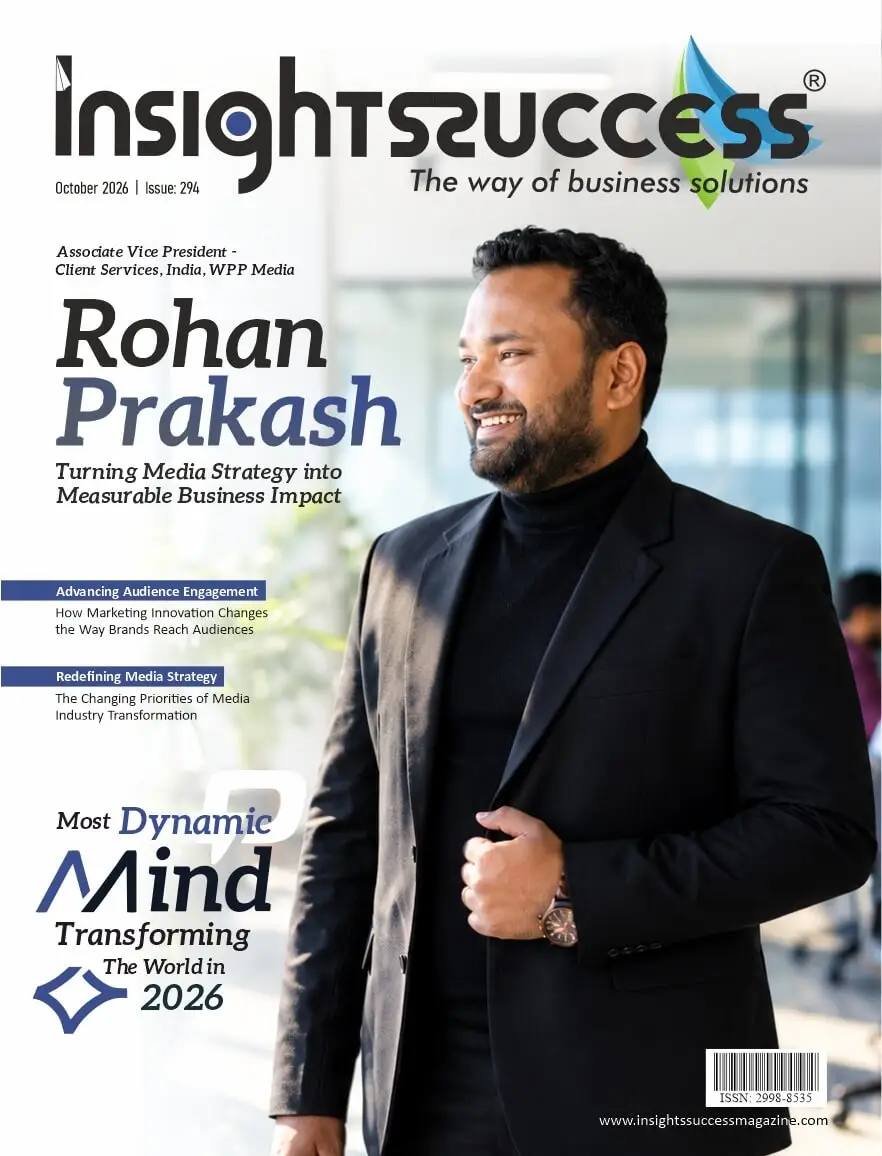
Most Dynamic Mind Transforming The World in 2026
Most Dynamic Mind Transforming The World in 2026 Exploring a dynamic mind transforming media through strategy, curiosity, and innovation. This edition highlights his journey across consumer insights, data-driven decisions, leadership, measurable outcomes, and meaningful business growth. Digital Link Quick highlights Quick reads

MemoVolt Reviews And Complaints: Does This Brain Support Supplement Deserve Your Money?
If you’ve searched for a memory supplement lately, you’ve probably seen MemoVolt. Its sales page promises sharper recall, clearer thinking, and protection against what it calls “Neuron Starvation.” But marketing language and measurable results are two different things. This MemoVolt review breaks down what the product is, what’s in it, what it costs, and how much of the pitch holds up. By the end, you’ll know whether it’s worth considering. What Is MemoVolt? MemoVolt is a dietary supplement marketed for brain health, memory, and mental clarity. It’s sold as a 10-ingredient formula in capsule form, taken once daily with food. According to the manufacturer, it’s non-GMO, stimulant-free, and made from natural ingredients. The product is sold exclusively online through its official website, with orders processed through ClickBank, a large digital retailer. It isn’t sold in stores or on major marketplaces, according to the seller. Its core pitch combines two ideas: protecting the brain from inflammation (which the company links to microplastics) and supporting how brain cells use glucose. It’s worth being clear that these are the manufacturer’s framings. We’ll examine them below. Before you decide, visit the official MemoVolt page, read the complete supplement facts panel, and check the current pricing and refund terms yourself. Make sure you’re comfortable with every ingredient on that list. MemoVolt Ingredients: What’s Inside The formula is divided into three groups. Here’s what each contains and what the research generally says. Group 1: The “Microplastic Defense Matrix” Saffron extract: Small clinical studies suggest saffron may support mood and mild cognitive function. Evidence is promising but limited in size and scope. Fucoxanthin (from brown seaweed): An antioxidant studied mainly in animal and lab settings for anti-inflammatory effects. Human evidence for memory benefits is thin. Fucoidan (from brown seaweed): Researched for various biological activities, but mostly in preclinical studies. Oleuropein (olive leaf extract): An antioxidant linked to the Mediterranean diet. Lab studies are interesting, but they don’t establish memory improvement in people. Group 2: The “Brain Fuel Support Complex” Berberine HCl: The most studied ingredient here, mainly for blood sugar and metabolic health. It’s also the one with the most important safety considerations (see below). Ceylon cinnamon bark: Studied for blood glucose support, with mixed results. Corosolic acid (banaba leaf): Researched for glucose metabolism, with small studies. Kudzu flower extract: Traditionally used in Asian herbal practice, with limited modern clinical evidence. Group 3: The “Neural Amplifier System” Morosil (Sicilian red orange extract): A branded ingredient studied mainly for weight and metabolic markers. The company calls it the “hero ingredient.” Xylitol: A sugar alcohol used here as a sweetener-type compound. Our take: The ingredient list is a reasonable mix of well-known botanical and antioxidant compounds, and nothing on it is exotic or alarming. But the label as described on the sales page doesn’t clearly list exact doses per ingredient. That matters, because studies showing benefits typically use specific amounts. Without doses, you can’t tell whether the formula contains enough of any ingredient to match the research. How MemoVolt Claims to Work The sales page argues that microplastic buildup “suffocates” neurons and that poor glucose uptake leaves brain cells “starved.” Its answer is a “dual-defense” approach: reduce inflammation on one side, improve glucose use on the other. Here’s where we have to be straightforward. “Neuron Starvation” isn’t a recognized medical diagnosis. Researchers are indeed studying how microplastics may affect health, and links between metabolic health and cognition are a real area of science. But the leap from those topics to “this supplement reverses damage and restores memory” isn’t supported by published clinical trials on MemoVolt itself. No independent, peer-reviewed study of the finished MemoVolt formula appears to exist. The studies referenced on the sales page concern individual ingredients, often in lab or small-scale settings. Potential Benefits Setting the marketing aside, here’s what a formula like this might plausibly offer: General antioxidant support from botanical extracts. Possible modest metabolic support, mainly from berberine and cinnamon, which may matter to people with blood sugar concerns. Convenience: a single daily capsule rather than juggling several products. What we can’t promise is any specific cognitive outcome. Supplements affect people differently, and the testimonials on the sales page (which the site itself says use changed names and aren’t typical) shouldn’t be treated as evidence. Safety, Side Effects, and Who Should Be Careful This is the section most reviews skip, and it’s arguably the most important. Berberine can interact with medications. It can lower blood sugar, which matters if you take diabetes medication, since the combination may push levels too low. It may also interact with blood thinners, blood pressure medication, and drugs processed by certain liver enzymes. Other considerations: Berberine and related compounds can cause digestive upset in some people. Pregnant or nursing women are generally advised to avoid berberine. Cinnamon, especially in high amounts, can be an issue for some people with liver conditions. Anyone on prescription medication, or with a chronic condition, should check with a doctor or pharmacist first. A bigger point: if you or a family member is noticing real memory changes, that deserves a medical evaluation. Memory problems can stem from treatable causes, including thyroid issues, vitamin deficiencies, sleep problems, depression, medication side effects, or early dementia. A supplement shouldn’t delay that conversation. MemoVolt Pricing and Refund Policy According to the official page, pricing works like this: Package Bottles Price per Bottle Total Starter 2 $79 $158 (+ small shipping fee) Advanced 3 $69 $207 (free US shipping) Ultimate 6 $49 $294 (free US shipping) Each package includes three digital ebooks (a diet guide, a morning routine guide, and a caregiver guide). The “$200+ value” claimed for these is marketing; they’re digital downloads, not independently valued products. The company advertises a 60-day money-back guarantee and says there are no recurring charges. That’s a meaningful safety net, but guarantees are only as good as the seller’s follow-through. Before ordering, read the refund policy page yourself and keep your order confirmation and receipts. Pros and Cons of MemoVolt Pros

Rohan Prakash: Turning Media Strategy into Measurable Business Impact
In a media industry shaped by changing consumer behaviour, evolving technology, tighter business expectations and the growing importance of measurable outcomes, marketing decisions can no longer be separated from the larger business objective. Reaching the right audience is only one part of the equation. The greater challenge lies in understanding people, interpreting data, choosing the right environment and turning those insights into action. For Rohan Prakash, Associate Vice President – Client Services, India at WPP Media, this understanding has been at the centre of a career spanning more than nine years across leading agencies and marquee brands. His journey reflects a continued interest in how brands connect with people and how media can move beyond presence to create measurable business value. With a B.Com from Lucknow Christian Degree College and a PGDM in International Business & Marketing from EMPI Business School, where he was a 1st rank holder of GFP award, Rohan further strengthened his expertise through an Executive Program in Digital Marketing from IIM Indore in 2024. Since beginning his career in 2016, he has worked across media planning, buying, strategy, brand positioning, digital and performance marketing, analytics, client management, budgeting, and team leadership. From Jeena & Company and Arena Media to GroupM/Wavemaker, Accenture, Lodestar UM, MediaSense, and Dentsu, every transition brought a new dimension to his understanding of the profession. In September 2026, he joined WPP Media as Associate Vice President – Client Services, India, carrying forward a philosophy built around curiosity, continuous learning, people, ideas, data, and meaningful business outcomes. Let’s explore how Rohan’s journey has shaped his approach to media, leadership and measurable business impact! A Career Built on Curiosity and Continuous Learning Rohan’s professional journey began with an interest in understanding how brands connect with people. What fascinated him was that a successful campaign was not simply about a creative idea. It was about reaching the right audience, in the right environment, at the right time, with a clear business objective. Entering the industry in 2016, he gradually built his expertise across media planning, buying, strategy, brand positioning, digital and performance marketing. His early years gave him a strong grounding in the fundamentals of media, while subsequent roles exposed him to increasingly complex business and marketing challenges. At GroupM/Wavemaker, his work on Hero MotoCorp gave him strong exposure to television, print, radio, and integrated media planning. He later worked with Accenture, Lodestar UM on Coca-Cola, MediaSense, and Dentsu, taking on senior responsibilities across media strategy, client management, budgeting, performance marketing, and team leadership. At Dentsu, he worked with clients including McCain Foods and Honda Cars India, managing significant annual media investments and leading integrated brand and media strategies. He also led and mentored a team of media professionals while working closely with senior client stakeholders. For him, every career move has been an opportunity to learn something new, take on greater responsibility, and become a better professional. The journey has had its challenges, but those challenges have strengthened his resilience, adaptability, and ability to stay focused on outcomes. He sees his career not as a straight line, but as a continuous process of learning, evolving, and creating impact. From Media Presence to Business Value The central idea that has remained constant throughout Rohan’s career is straightforward: “Media should create business value, not just media presence.” Whether it is a pan-India product launch, a brand-building campaign, or an efficiency-led media plan, he believes decisions should be supported by consumer understanding, data, and a clear view of the desired business outcome. His experience across different organisations has allowed him to see the industry from multiple perspectives, from execution and media sourcing to strategic planning, analytics, client leadership, and team management. This approach has shaped his work with marquee brands including Hero MotoCorp, Coca-Cola, McCain Foods, and Honda Cars India. Across these assignments, he has managed substantial media investments while focusing on measurable efficiencies and business outcomes. At the core of his approach is the belief that marketing begins with understanding people. From there, media has the role of turning that understanding into measurable action. Today, as Associate Vice President – Client Services at WPP Media, his focus is on bringing together strategy, people, data, and execution to solve business problems. The profession has changed considerably since he entered the industry, but the fundamental principle remains unchanged. “Good marketing starts with understanding people, and great media turns that understanding into measurable action,” he notes. Leading with Structure, Trust, and Perspective A leadership role in media and marketing can be demanding. Client priorities can change quickly, campaigns can operate across multiple markets, and decisions often have to be made under tight timelines. Rohan has learned that balance does not necessarily mean separating professional and personal life perfectly every day. Instead, it means learning how to prioritise, remain present, and manage energy responsibly. One of the biggest lessons for him has been the importance of preparation. When the business objective, consumer, data, and executional details are clear, professional challenges become much easier to manage. His approach to complex situations is therefore structured: understand the problem, identify the priorities, involve the right people, and then act. This thinking also shapes how he leads teams. He believes leadership is not about doing everything yourself. His experience at Dentsu, where he led and mentored media professionals, reinforced the importance of delegation, trust, and developing people. A strong team creates resilience and allows leaders to focus on higher-value decisions rather than becoming the bottleneck for every task. For him, building people is therefore closely connected to building sustainable performance. At the same time, perspective outside work matters. He values time with family and close relationships because they provide a perspective beyond professional responsibilities. In an industry where every deadline can sometimes feel urgent, stepping away, even briefly, helps him return with a clearer mind and better judgement. He also recognises that not every challenge will have an immediate answer. Careers are built over years, not individual days. The demanding phases and moments of

The Changing Priorities of Media Industry Transformation
Redefining Media Strategy The media industry looks very different from what it was two decades ago. The platforms have changed, the economics have shifted, and the relationship between media organizations and their audiences has been fundamentally rearranged. What once felt like a stable and predictable industry built around a small number of powerful formats and distribution channels has become something far more complex, more competitive, and more uncertain. Media industry transformation is not a distant event on the horizon. It is happening continuously, and the organizations navigating it successfully are the ones that have understood how their priorities need to change alongside the industry itself. From Distribution to Attention For most of media history, distribution was the primary source of power. The organizations that controlled how content reached audiences controlled the industry. Owning a broadcast frequency, a printing press, or a distribution network was the competitive advantage that defined who mattered and who did not. Content was important, but it lived or died on the strength of the distribution system behind it. Digital technology disrupted this dynamic completely. Distribution is no longer scarce. Anyone with internet access can reach a global audience, which means the advantage that once belonged exclusively to large media organizations has been significantly eroded. The new scarce resource is not distribution. It is attention. Audiences have more choices than they have ever had, and their attention is the thing that every media organization, large and small, is now competing for. Media industry transformation is, in large part, the story of an industry reckoning with this shift from distribution power to attention competition and rebuilding its strategies around that new reality. The Audience Relationship Has Changed The relationship between media organizations and their audiences was once largely one-directional. Content was produced and delivered. Audiences received it. Feedback came slowly and indirectly, through ratings, circulation figures, and the occasional letter to the editor. The audience was a market to be reached rather than a community to be engaged. That model no longer reflects how audiences actually relate to media. People comment, share, respond, create their own content, and hold media organizations directly accountable in real time through social platforms. The audience has become an active participant in the media ecosystem rather than a passive consumer of it. Media industry transformation requires organizations to genuinely reckon with this shift and rebuild their audience relationships around it. Organizations that have done this well have found that engaged audiences are more valuable, more loyal, and more likely to pay for the content they care about than audiences that are simply delivered to an advertiser. Those that have treated the shift as a nuisance rather than an opportunity are finding it increasingly difficult to maintain relevance. The Business Model Challenge Advertising supported much of the traditional media industry for generations. The economics were straightforward enough. Content attracted audiences, audiences attracted advertisers, and advertising revenue funded the production of more content. Digital disruption broke this model in ways that media organizations are still working through. Advertising revenue migrated toward digital platforms that offered advertisers greater precision and scale than traditional media could match. The organizations that had built their entire financial model around advertising were left searching for alternatives. Subscriptions, memberships, events, licensing, and branded content have all emerged as partial responses to this revenue challenge. Media industry transformation at the business model level is ongoing and unresolved for many organizations. The most resilient ones are those that have diversified their revenue streams rather than relying on any single source and that have built direct financial relationships with their audiences as a foundation for long-term sustainability. Quality and Trust as Competitive Advantages In an environment where content is abundant and distribution is essentially free, the things that are genuinely hard to replicate become more valuable. Quality journalism, authoritative expertise, and earned audience trust are all things that take time and consistent effort to build and that cannot simply be bought or copied overnight. Media industry transformation is revealing trust as one of the most significant competitive advantages an organization can hold. Audiences have become more discerning about where their information comes from, more aware of misinformation, and more willing to pay for sources they genuinely believe in. Organizations that have built their reputation on accuracy and quality are finding that reputation more valuable than ever. The People Behind the Transformation Change at the scale the media industry is experiencing does not happen without the people inside organizations being willing to adapt, learn new skills, and let go of approaches that no longer serve the work. Media industry transformation is ultimately a human challenge as much as a technological or economic one. In Summary The priorities of the media industry have shifted fundamentally, and media industry transformation shows no sign of reaching a stable endpoint. The organizations that will carry genuine influence into the future are those that have accepted the depth of the change, rebuilt their strategies around the new realities of attention, audience relationship, and business sustainability, and continued investing in the quality and trust that no algorithm can manufacture. Read Also : Fueling Growth: The Role of Business Growth Leaders in Building Resilient Organizations

How Marketing Innovation Changes the Way Brands Reach Audiences
Advancing Audience Engagement The way brands communicate with people has never stayed the same for long. Each shift in technology, each change in how people spend their time and each evolution in what audiences expect from the brands they engage with has forced marketers to rethink what they do and how they do it. The brands that navigate these shifts well are the ones that stay relevant, build loyal audiences, and grow with purpose. Those that hold onto approaches past their useful life find themselves speaking into an empty room. Marketing innovation is what keeps brands on the right side of this divide, and its role in shaping how audiences are reached has never been more consequential than it is today. Why Marketing Strategies Stop Working Marketing approaches have a lifespan. A channel that reaches audiences effectively today will be crowded with competing messages tomorrow, and what feels fresh and engaging now becomes familiar and easy to ignore over time. This is not a new phenomenon. It has always been true. What has changed is the speed at which it happens. Audiences today are exposed to more marketing messages than at any previous point, across more channels, on more devices, and throughout more of their daily lives. Their tolerance for messages that feel generic, irrelevant, or interruptive has dropped accordingly. The brands that accept this reality and respond to it with genuine creativity are the ones that continue to earn attention. The brands that keep running the same plays wonder why the results keep declining. What Genuine Innovation in Marketing Looks Like Innovation in marketing is not the same as adopting the latest platform or deploying the newest technology. Those things can be part of it, but they are not the substance of it. Marketing innovation is about finding genuinely better ways to connect with audiences, to understand what they care about, and to create experiences that feel relevant and valuable rather than interruptive and forgettable. This kind of marketing innovation requires a willingness to start from the audience rather than from the brand. It asks what people actually need from their interactions with a brand, what would genuinely add value to their experience, and what kind of communication would feel like something worth engaging with rather than something to be scrolled past. Brands that ask these questions consistently tend to produce marketing that performs better not because they spent more but because they thought more carefully. Personalization and the Shift Away from Mass Messaging One of the most significant directions in modern marketing is the move away from mass messaging toward more personalized communication. The idea that a single message delivered to the widest possible audience is the most effective approach has been undermined by the tools and data now available to brands and by the expectations of audiences who have grown accustomed to experiences tailored to their preferences. Marketing innovation is driving this personalization in practical ways. Brands are using what they know about their audiences to deliver messages that are more relevant to individual circumstances, more timely in their delivery and more closely aligned with what a specific person is actually looking for at a specific moment. When personalization is done well, it does not feel like surveillance. It feels like the brand genuinely understands its audience, and that feeling builds the kind of trust that mass messaging rarely achieves. Storytelling as a Strategic Tool People have always responded to stories. Before any of the channels and technologies that define modern marketing existed, the most effective way to build a connection between a brand and an audience was to tell a story worth listening to. That has not changed. What has changed is the range of formats, platforms, and approaches available for telling those stories. Marketing innovation has expanded what brand storytelling can look like. Long-form content, short-form video, interactive experiences, community-driven narratives, and creator-led campaigns are all ways that brands are finding new and more engaging ways to tell stories that connect with audiences on a level that product descriptions and promotional offers cannot reach. The brands that invest in genuine storytelling tend to build deeper audience relationships that translate into stronger long-term loyalty. Measuring What Actually Matters The ability to measure marketing performance has improved dramatically alongside the tools for delivering it. But more measurement does not automatically mean better decisions. Marketing innovation includes the discipline to focus on metrics that actually reflect the outcomes that matter, such as genuine audience engagement, long-term customer value, and real brand affinity, rather than vanity metrics that look good in reports but do not connect to business results. In Summary The way brands reach audiences keeps changing because audiences keep changing. Marketing innovation is how brands stay connected to the people they are trying to reach, responding to those changes with creativity, genuine understanding and a consistent willingness to find better ways of building the connections that drive long-term growth. The brands that treat innovation as an ongoing commitment rather than an occasional project are the ones that will continue to earn the attention and loyalty of the audiences that matter most to them. Read Also : The Changing Priorities of Media Industry Transformation

Brazil’s Visionary COOs Powering Operational Success in 2026
Brazil’s Visionary COOs Powering Operational Success in 2026 Exploring the journey of visionary COOs and retail leaders shaping business transformation in Brazil. This edition highlights operational excellence, people-driven leadership, strategic execution, retail innovation, and purposeful growth. Digital Link Quick highlights Quick reads
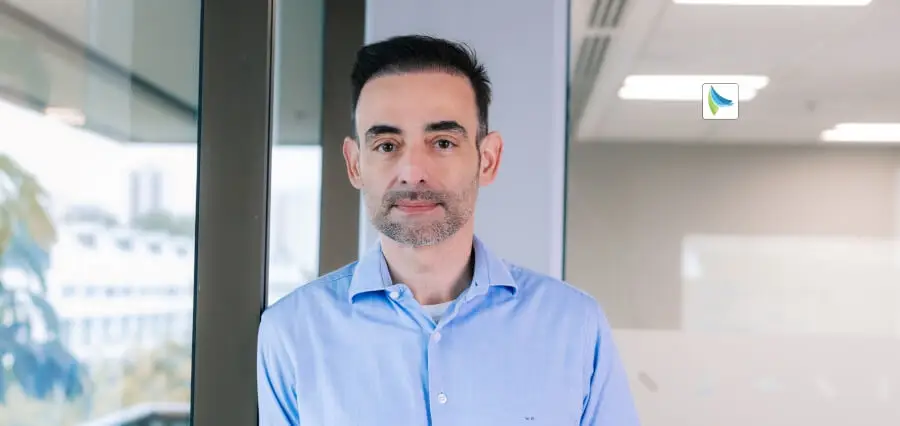
Walter Borghi: Leading Retail Transformation Through People, Presence, and Purpose
Running a retail operation at scale is one of the most demanding tests of leadership. The gap between what a strategy says and what actually happens across thousands of locations, every single day, is where most organizations quietly lose ground. Closing that gap takes more than systems and processes. It takes leaders who stay close to the frontline and never stop asking whether the customer experience is actually being delivered. Walter Borghi, COO of Grupo DPSP, leads from exactly that conviction. His approach brings together operational discipline, frontline presence and a genuine focus on the customer experience across one of Brazil’s largest retail pharmacy networks. Leadership Shaped by Disruption and Transformation The moments that most influenced Walter’s way of operating were periods of disruption and transformation. During his time at C&A, he learned to balance different interests between retail and banking while developing the ability to influence people with different perspectives toward the same objective. As he moved through MMartan and Artex, he structured operations and created a performance evaluation tool that allowed indicators from different areas to be monitored and compared while identifying best practices. At JHSF, one of the main milestones was the integration of the shopping center business with different developments under the concept of “city,” connecting retail, gastronomy, entertainment, hospitality, residential, and office spaces. The pandemic reinforced this vision and showed that shopping centers would need to stop being only shopping spaces and become destinations for experience and convenience. From there, gastronomy and entertainment were expanded, investments were made in experiences, and new operations were introduced, anticipating a transformation that became a trend in the sector. This experience also became something he brought into the pharmaceutical industry. Although the scenario and industry are different, the customer journey and experience remain important elements that need to be brought into the industry and transformed. Creating Perspective in Complex Operations Operational challenges can range from interest rates and unemployment to a company going through difficulties or being acquired, sold, or merged. For Walter, the biggest challenge when facing any problem is understanding where to start. His approach is to step away from the problem and look at it from a distance. This allows an operations leader to see the impacts of different difficulties and create a list of priorities. Once the highest priority is identified, the operation can begin addressing it. For him, this ability to create distance from a problem is an important virtue in operations because there will always be a series of difficulties taking place at the same time. Walter believes that, “Difficulties will always come up, and it is very important to establish what our priorities are and how we preserve what is most important to the business.” Turning Strategy into Execution For Walter, “Operational excellence is about turning strategy into execution.” It is not only about creativity. It is about ensuring the complete customer journey in the best possible way. There is no perfect journey and no perfect operation in retail. What exists is the daily and endless pursuit of the best. Operational excellence is achieved when the strategy held by vice presidents, directors, managers, the president, and partners becomes something customers can perceive. When customers increase their average ticket, increase their frequency, prefer to buy from the company, and engage with it, the strategy has been translated into the customer experience. Every stage of the customer journey needs to work in the best possible way. Problems need to be anticipated and plans created so that the experience is not interrupted. In an operation with many stores, this means turning strategy into simple and practical actions at the frontline and ensuring that what the company defines actually happens every day. When strategy turns into execution and execution generates a good customer experience, the result becomes repeat business, loyalty, and results. Staying Connected Across 1,700 Stores Managing an operation that is large-scale, spread out, and decentralized creates a complex challenge. With 1,700 stores, the question is how to ensure that what happens in each location reflects what the organization would want to happen if it were being managed directly. For Walter, the answer is to put himself in the shoes of the leader closest to the operation. Understanding what information a manager needs, what guidance is necessary, and what material should be available to a manager or employee at the store level makes it possible to manage distant teams more effectively. This thinking led to the creation of a One Page that managers receive every day with their main indicators. His own experience as a store manager also helps him maintain empathy with the frontline. Knowing what it is like to manage a store provides a better understanding of the realities faced by store leaders and employees. Walter sets aside one or two days every week to be out in the field, visiting stores across various states. Everything that is said, done, and sent to the stores is something he goes and sees in practice. When a new store is planned, he also visits the location in person most of the time. Leading by example is equally important. He never asks his team to do anything that he does not do himself. Being available as an operations manager and setting an example of what is expected helps maintain balance across teams, areas, and locations. A good sense of humor also helps in dealing with situations positively and supporting the team. Applying Technology Where It Creates Value Walter sees strong potential for AI, automation, and greater productivity across operational processes. These improvements can benefit the health of the company, the development of employees, and the customer journey. However, human processes will continue to be essentially human. Customer service, product recommendations, and offers require thinking and relationship-building. These activities go beyond what AI can do and require people to build relationships with customers. Within the operation, truck processes, receiving merchandise, checking merchandise, distributing merchandise, and inventory management are areas where AI and automation can quickly create

The Role of Brazilian Retail Operations Leaders in Retail Growth
Improving Retail Performance Retail expansion goes beyond building more retail stores and increasing the customer base. In every retail company, there is always management in terms of inventory, staffing, suppliers, pricing, customer care and store operations. All these factors combine for effective handling of demands and offer better experiences to the customers. In Brazil’s retail environment, managers with responsibility of managing the activities in the stores play an important part. This group has to have awareness of the operations within the stores, supply chain and customer channels. Effective Retail Operations assist companies to optimize their operations, minimize any unnecessary challenges and offer a good platform for growth. Managing Stores More Effectively Changes in customer demand in retail stores occur daily. Certain times might have many people coming to the stores, while during others few customers will be present and the priorities will differ. Good procedures will ensure that the employees know what their roles are and management can deal with any changes without causing chaos. The retail managers should not neglect small issues in their businesses as well. Issues like delays at the checkouts, lack of products on shelves, poor communication within the teams or unclear responsibilities of the staff can influence the quality of customer service. Checking up on store operations will allow spotting such issues and making necessary adjustments. Improving Inventory And Supply Inventory has a direct impact on retail performance. Too much stock can tie up money and create storage challenges, while insufficient stock can lead to missed sales and disappointed customers. Retailers therefore need a clear view of what is selling, where demand is changing and when stock needs to be replenished. Strong coordination with suppliers is equally important. Retail teams need reliable information about deliveries, product availability and expected demand. Better Retail Operations can connect purchasing, inventory and store teams so that decisions are based on what is actually happening across the business rather than on assumptions. Using Data For Better Decisions Retail enterprises have large amounts of data from sales, customer purchases, movement of inventory, and operations of retail stores. The data can be used to inform leaders of product performance and areas that require support. However, technology does not substitute for good judgment. The leaders need to know how retail operations function and what type of data would be useful for them. With this done, technology would assist in monitoring performance, recognizing problems and addressing them. Creating Better Customer Experiences Operational problems are noted by customers regardless of whether they know what is going on behind the scenes. Unavailability of a certain product, waiting time at the checkout point, or lack of consistency in customer service may affect customer perception of a retailer. Enhanced coordination between various retailers and support staff will eliminate such problems. Customer expectations are evolving in line with the shopping behavior that moves back and forth between physical retail spaces and e-channels. Such processes should be developed within retailers to accommodate the behavior of consumers without complicating anything. Proper information sharing and role understanding will help to provide better service. Preparing Retailers For Growth Expansion creates the need to improve coordination because of more stores, more people, more products and more customers. The retail managers have the obligation to plan their processes so that they can be able to cope with the increased activities without compromising on quality and performance. This is achieved through proper training of personnel, setting proper procedures, conducting performance appraisal and wise utilization of technology. Retail organizations must also be ready to change as the demands from the customers and conditions in the market keep changing. Regular review of retail operations enables retailers be able to adapt to growth without affecting their daily performance. Conclusion: Improving Retail Performance Retail growth is closely connected to what happens in everyday operations. Store management, inventory planning, supplier coordination, data use and customer service all influence how effectively a retailer performs. Small improvements across these areas can make a noticeable difference when they are applied consistently. This means that Brazilian retail executives have to move past sales figures to consider the bigger picture. Through the improvement of Retail Operations, resource management and customer responsiveness will result in better performance today as well as creating a stronger foundation for growth tomorrow. Read Also : How Marketing Innovation Changes the Way Brands Reach Audiences

How COOs Drive Growth through Operational Excellence
Strengthening Business Operations Growth requires more than just an effective strategy. An effective strategy requires people, processes, and resources that can convert ideas into actions. However, as firms grow and become more complex, it becomes increasingly difficult to keep these elements integrated. It is here that the role of the Chief Operating Officer becomes imperative. The Brazilian COO Leaders play a cross-functional role in ensuring execution of the strategy. They examine the operational effectiveness and efficiency of teams, resource management and processes that might be creating bottlenecks and extra costs. They do not limit themselves to solving immediate issues but also ensure that the firm is equipped for the future phase of growth. Turning Strategy Into Action A strategy can look strong on paper and still struggle in execution. Priorities can vary from team to team, or even individual employees might fail to see the connection between their duties and the broader objectives. Brazilian COO Leaders make sure that there is a connection between the two. This involves a lot of communication between the leadership and various departments. The COOs must know what the teams are doing and where the delays are so that they can provide appropriate assistance. It is easier to measure performance once there are defined responsibilities. Improving Daily Processes As organizations expand, their daily operations become increasingly complex. The growth of the workforce, customer base, suppliers and transactions may require additional approvals, communications problems and delays. COOs review these processes to find places where they can streamline the work without sacrificing its quality. Sometimes, such improvements can be very simple. Surprisingly, the process can be sped up by eliminating one approval procedure, improving departmental communication, or clearly defining roles. Brazilian COO Leaders discover these opportunities and motivate teams to concentrate on processes that improve consistent performance. Managing People And Resources Operational performance depends heavily on how people and resources are organized. Employees need clear responsibilities, suitable tools and the right level of support. COOs therefore have to look beyond processes and understand the people who carry them out. Finances, technology, facilities and supplier relationships need careful attention too. The goal is not simply to cut spending but to put resources where they create the most value. Good resource management lets a business keep quality high while adapting to changing needs. Using Data For Decisions In order for leaders to make good decisions, they will need to have information indicating that things are being done right or wrong in the organization. The information indicates where the costs are rising and where there are delays. From the information, COOs will be able to identify problems before they escalate. Technology helps in gathering this kind of information, although technology alone will not do much without business knowledge. Leaders need to understand how the process works and what kinds of information will be relevant. Using technology, one will be able to track the process and have quick access to useful information. Building For Sustainable Growth There will be additional pressures on the company’s operational systems due to growth. Processes that have worked well for the smaller company may prove to be difficult to control as more people and customers come along. COOs should get the company ready for this but without compromising on standards. This requires having efficient processes, developing staff, monitoring progress and flexibility to adjust to changes in the market. Operational effectiveness is not achieved by one big overhaul but through improvements in processes, communications, resources and decisions. Brazilian COO Leaders can integrate all this to establish a good base for future growth. Conclusion: Strengthening Business Operations The COO contributes a great deal to the connection between the development of strategy and its execution. The duties of process improvement, coordination of efforts, management of resources and monitoring of the situation within the organization make this position crucial for operations and growth. Good operations require constant focus on how things are done. Companies that work on communication, process improvement, data analysis and preparation for changes are more likely to grow. With sound leadership, they will be able to maintain their operations and focus on further development. Read Also : The Role of Brazilian Retail Operations Leaders in Retail Growth
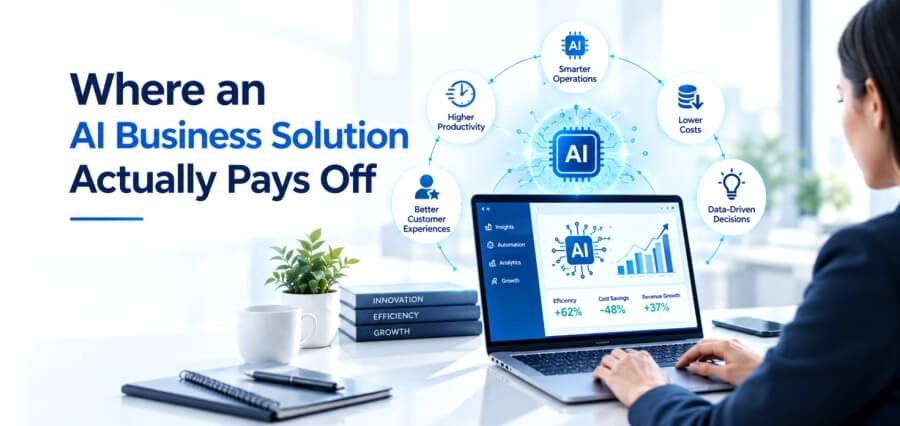
Where an AI Business Solution Actually Pays Off
Most companies do not need more AI demos. They need AI that does something useful on a Monday morning. The gap between those two things is wide. And it is exactly where real, applied AI proves its worth. The best ones do not sit in a lab. They live inside the tools your team already uses every day. For a lot of businesses, that tool is Salesforce. Which is why the right Salesforce consulting partner often decides whether AI actually sticks. What an AI business solution really means Let us cut through the noise. An AI business solution is not a chatbot you bolt on and forget. It is AI aimed at a real problem, wired into a real workflow. It saves time, cuts errors, or helps someone make a better call. The test is simple. Does it change how the work gets done? If yes, it is a solution. If it just looks clever in a demo, it is a toy. A good one earns its place by doing actual work. What that looks like in practice Drafting replies to common customer questions, so reps move faster. Scoring leads by who is most likely to buy, not just who is newest. Summarizing a long account history in a sentence or two. Flagging a deal that is about to go quiet, before it slips away. Why your CRM is the right home for it AI needs data to be useful. Good data, in one place, about real customers. For most teams, that data already lives in the CRM. So dropping that AI right into Salesforce makes sense. The data is there. The workflow is there. The people are already logged in. You are not asking anyone to learn a new tool. You are making the tool they know smarter. That is the quiet advantage. The best version is the one your team barely notices, because it fits the work they already do. Why a Salesforce consulting partner matters here Here is where it gets tricky. Salesforce is powerful, but it is not simple. Wiring AI into it the right way takes real skill. Do it wrong, and you get messy data, broken automations, and a feature nobody trusts. This is the job of a good Salesforce consulting partner. They know the platform inside out. They clean up the data first. Then they add AI in a way that fits your process, not a generic template. The result is AI that works on day one and keeps working. A weak partner sells you features. A strong Salesforce consulting partner asks what you are trying to fix, then builds toward that. The difference shows up fast, usually in whether anyone still uses the thing a month later. What a good partner does differently They start with your process, not a product demo. They fix data quality before adding any AI on top. They build for adoption, so the team actually uses it. They stay on after launch, because Salesforce never stops changing. Where these projects go wrong Most AI projects do not fail on the tech. They fail on the setup around it. Messy data, so the AI learns from a flawed picture and makes poor calls. No clear goal, so nobody can tell if the thing is working. Weak adoption, because the team was never shown why it helps. A bolt-on feel, where the AI sits outside the real workflow. Each of these is a planning gap, not a coding one. The right partner spots them early, while they are still cheap to fix. How to choose the right partner The partner you pick shapes the result more than any feature list. A few signals help you tell them apart. They ask hard questions about your data before pitching AI. They can point to AI work they have shipped that is still running. They talk in outcomes, like faster replies or better forecasts. They are honest about what AI cannot do, not just what it can. A partner who is straight with you about the limits usually understands the tech best. The rest are selling a demo. Frequently asked questions What is an AI business solution? It is AI aimed at a real business problem and built into a real workflow. It saves time, cuts errors, or helps people decide better. If it only looks good in a demo, it is not a solution. Why put AI inside Salesforce? Because the data and the workflow already live there. An AI business solution works best where the work happens, so the CRM is a natural home. What does a Salesforce consulting partner do? They plan, set up, and improve Salesforce for your business. A good Salesforce consulting partner also wires in AI safely, cleaning the data first and building for real adoption. Do we need clean data before adding AI? Yes, almost always. AI learns from whatever it is given. Messy data leads to poor results, so cleanup comes first. How soon will we see value? It depends on scope and data quality. A focused first use case often pays off fast. Many teams start small, prove the win, then expand. The bottom line AI only matters when it changes the work. A real AI business solution does that by living inside the tools your team already trusts, and for many that means Salesforce. Getting it right takes more than a license. It takes a Salesforce consulting partner who cleans the data, fits the process, and builds for daily use. Do that, and the AI stops being a demo and starts being a habit.