






How Businesses Can Turn Financial Data Into Better Strategic Decisions
Financial records are more than a report of what an enterprise has already spent or earned. When prepared nicely, they could show which sources have come to be used, which sports activities create price, and where future dangers can be developing. The task is turning huge amounts of economic records into insights that human beings can absolutely use. For a Construction Company in Oman, financial records can reveal trends in undertaking fees, procurement spending, hard work fees, cash flow, and profitability. Reviewing the data frequently can help identify which tasks are performing as expected and wherein economic stress may be increasing. The same precept applies for the duration of almost every organization. Businesses accumulate records from accounting systems, invoices, payroll, earnings structures, inventory information, procurement, equipment, and customer databases. However, genuinely having information no longer mechanically leads to better decisions. The real benefit comes from connecting financial numbers with enterprise goals. Instead of asking whether or not sales multiplied, decision-makers will have a study of why it increased, whether or not margins improved, and whether the increase generated enough cash to assist plans. Technology has made this process a lot less complex. Cloud accounting systems, business intelligence dashboards, automated reporting, and analytics tools can supply statistics together and make essential developments less tough to understand. Turning Raw Financial Information Into Useful Insights Financial statistics regularly arrive in complex bureaucracy. Revenue records may also sit in a unified system, supplier invoices in another, and payroll information in a few specific regions. Before a thorough assessment can take place, organizations want to arrange these facts properly into a constant shape. A beneficial place to begin is to identify the economic signs that clearly relate to the organization. Depending on the business organization, these can also encompass gross margin, running charges, cash flow, debts receivable, debts payable, project profitability, stock turnover, or client acquisition costs. Agencies working with Construction Management Companies and economic statistics also can assist in being a part of the challenge of overall performance against broader business goals. Management can take a look at whether changes in hard work expenses, material spending, scheduling, or procurement are affecting project profitability. Important financial statistics elements may additionally include: Revenue and sales increase Gross and running margins Cash inflows and outflows Project-degree profitability Supplier and procurement prices Labor fees Accounts receivable and charge cycles Inventory and storage costs The aim isn’t to track every viable metric. Too many numbers should make decision-making more difficult. A focused business enterprise of applicable signs and symptoms typically offers a clearer picture. Financial Data Strategy & Decision Framework Table Financial Data Category Key Raw Metrics Tracked PNG Strategic Analysis & Primary Insights PNG+ 1 Strategic Management Decision / Action PNG+ 1 1. Revenue & Sales Growth Total sales revenue, revenue by product/service line, customer acquisition costs Identifies seasonal patterns, high-margin offerings, and sustainable client sources Reallocate marketing and sales resources toward high-value, sustainable products/clients 2. Profitability & Margins Gross margin, operating margin, project-level profitability Reveals whether revenue growth actually improves net margins or if costs are rising faster Optimize operating expenses, adjust pricing structures, or exit unprofitable project lines 3. Operating & Labor Costs Payroll, labor expenses, facility costs, administrative spending Distinguishes temporary spending spikes from structural, ongoing operational inflation Streamline inefficient processes, adjust staffing levels, or invest in automation 4. Cash Flow & Working Capital Cash inflows/outflows, accounts receivable, accounts payable, inventory turnover Pinpoints cash flow bottlenecks, payment cycle lags, and tied-up capital Enforce tighter credit/collection terms, manage inventory levels, and schedule debt/capital commitments 5. Procurement & Supplier Spending Supplier invoices, equipment costs, vendor performance metrics (e.g., steel/raw materials) Identifies supplier pricing trends, over-budget material spending, and cost spikes Renegotiate supplier contracts, consolidate purchasing, or switch vendors to protect margins. Using Data to Improve Business Planning Once financial statistics are ready, companies can use them to evaluate current overall performance and plan future actions. This can include comparing real outcomes with budgets, preceding intervals, or internal goals. For example, if operating expenses upward push quicker than income, management may additionally need to analyze the cause. The growth might also come from higher dealer prices, more employees, investment in new equipment, facility expenses, or inefficient strategies. Financial assessment also can manual state of affairs planning. An enterprise considering a new market, product line, equipment purchase, or expansion can model projected prices and potential returns before committing huge assets. Making Better Decisions With Financial Trends Historical statistics become especially precious when analyzed as a pattern in place of being regarded as isolated numbers. One month’s sales may not tell the whole story, but numerous months of consistent statistics can monitor seasonal styles or developing adjustments. Businesses can use dashboards to display important symptoms in close to real time. Instead of waiting until the day of one / four to find out a problem, managers might also find out unusual spending or declining margins in advance. Useful planning practices embody: Compare real normal usual overall performance with budgets. Investigate unusual changes in place of ignoring them. Separate transient fees from everyday expenses. Review profitability by means of manner of product, company, or challenge. Use historical statistics when making forecasts. Connect financial metrics with operational average performance. This approach turns financial reporting from a backward-looking exercise into a realistic management resource. Technology and Commercial Intelligence Modern monetary technology lets corporations estimate statistics quicker and with greater accuracy. Cloud accounting systems can automatically gather transactions, whilst commercial enterprise intelligence systems convert financial records into interactive dashboards. Automation can lessen repetitive reporting work. For instance, normal financial reviews can be generated from related systems in place of being organized each month manually. Artificial intelligence is likewise becoming part of financial evaluation. AI-primarily based systems can assist in recognizing uncommon transactions, summarizing evaluations, identifying trends, and assisting with forecasting. However, automated insights, however, want human evaluation because the truth is financial decisions regularly depend on business conditions that can’t be understood from numbers alone. Data integration is a vital development. Stainless Steel
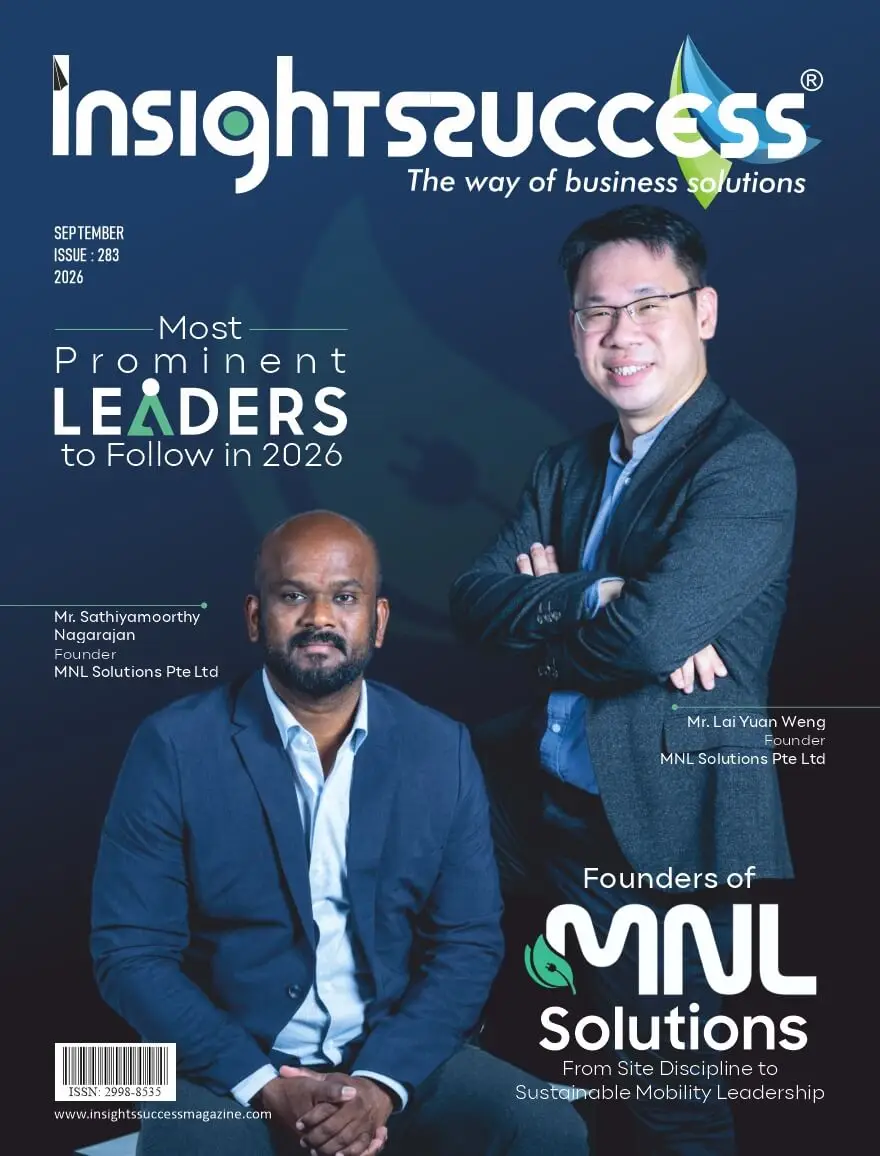
Most Prominent Leaders to Follow in 2026
Most Prominent Leaders to Follow in 2026, Highlighting prominent leaders whose entrepreneurial vision and technical expertise are shaping sustainable mobility. This edition explores engineering expertise, innovation, EV infrastructure, strategic collaboration, and solutions advancing Singapore’s transportation future. Digital Link Quick highlights Quick reads

Founders of MNL Solutions: From Site Discipline to Sustainable Mobility Leadership
Entrepreneurial activities do not usually occur within the corporate boardroom; instead, they usually occur in difficult project conditions where self-discipline, technical expertise, and problem-solving abilities are key elements in developing the leadership traits. The entrepreneurial activity of Mr. Sathiyamoorthy Nagarajan and Mr. Lai Yuan Weng, Founders of MNL Solutions Pte Ltd is an example that shows the transition from the engineering and safety domain to entrepreneurship in green transportation in Singapore. Nagarajan’s journey from Pudukkottai in Tamil Nadu to Singapore began in 2007 when several years of experience with safety and environmental management at work and in running big projects had taught him everything there was about risk management, compliance, and execution. Weng Lai Yuan, trained as an electrical engineer, established his professional experience through tackling problems at project sites. These two came together in 2016 and formed MNL Solutions. In 2020, for instance, in the wake of an ambiguous era, the two entrepreneurs leveraged their joint knowledge of the industry to embark on a venture aimed at solving the challenge of providing convenient EV charging services. Through the zero-CapEx business model with a particular emphasis on compliance, reliability, and collaboration, the founders managed to solve the existing impediments of EV technology adoption. Explore the inspiring journey of the leaders powering Singapore’s next chapter of sustainable mobility. From Construction Sites to Co-Founders Nagarajan’s path to entrepreneurship began far from Singapore. Born and raised in Pudukkottai, Tamil Nadu, he completed his Higher Secondary education at T.E.L.C. Higher Secondary School before arriving in Singapore in May 2007 with a clear determination to build a meaningful career. He started as a Safety Supervisor on institutional, condominium and pharmaceutical projects, absorbing the discipline of workplace safety and regulatory compliance during what he calls “long site hours, steep learning curves and the constant pressure of delivering under strict regulatory frameworks.” Lai Yuan Weng, a Singaporean electrical engineer, followed a parallel track rooted in project-site problem-solving. The two men met in 2016 while working on project sites, and their shared technical grounding sparked an immediate rapport. “Our shared technical background and complementary strengths led us to team up,” Lai recalls. Four years later, in August 2020, amid pandemic uncertainty, the pair formally co-founded MNL Solutions under a guiding philosophy they named “Momentum for Next-Level.” The Idea Behind MNL: Removing the Capital Barrier The company’s founding insight emerged from a gap both men saw clearly from the ground. As Singapore accelerated toward its Green Plan 2030 and its electric mobility targets, condominiums, commercial buildings and public institutions across the island still lacked convenient EV charging. Traditional charging models demanded heavy upfront capital investment from building owners, a hurdle that slowed adoption considerably. Nagarajan flipped the question building owners had grown used to hearing. “What if the charging operator absorbed the capital cost and shared the long-term revenue with the property owner?” he asks. That question became MNL’s zero-CapEx-plus-revenue-share model: the company installs, owns, operates and maintains the chargers, while the building simply provides the space and shares in revenue without spending a cent upfront. Lai frames the same origin story through an engineer’s lens. He and Nagarajan wanted to deliver end-to-end, future-ready EV charging solutions that property owners, residents, and fleet operators could trust, built around certified hardware secured through an exclusive partnership with Schneider Electric, an intelligent Charge Point Management System, dynamic load management and a user-friendly app. The founders prioritized compliance with Land Transport Authority requirements, cybersecurity standards and open protocols such as OCPI from their very first installations, a discipline that helped MNL secure its EV Charging Operator license and grow steadily into a trusted name in the sector. Building Through a Pandemic MNL’s timing could hardly have been more testing: the company was incorporated in August 2020, in the thick of the COVID-19 pandemic. Site access grew restricted, supply chains for electrical equipment buckled, and many property managers deferred non-essential capital projects, leaving both founders navigating tight cash flow and steep uncertainty. Rather than retreat, the partners leaned into the very model that set them apart. “We doubled down on the zero-CapEx proposition, precisely the solution that required no immediate outlay from building owners during a period of financial caution,” Nagarajan explains. The quieter period became an opportunity to refine internal processes, strengthen workplace safety and health protocols for a post-pandemic environment, and deepen conversations with long-term partners. Lai echoes that account of turning constraint into advantage. MNL used the disruption to strengthen its technical foundations, deepen relationships with facilities management companies and property owners, and carefully select technology partners capable of meeting Singapore’s stringent requirements. The company avoided chasing volume and instead prioritized “compliance readiness and operational excellence,” a discipline that positioned MNL to grow steadily once the market reopened and EV adoption began accelerating. Balancing Boardroom Pressure and Family Life Running a fast-scaling infrastructure business exacts a toll that neither founder minimizes. For Nagarajan, who is also a husband and father, the answer lies in intentional structuring of time. “Early mornings and structured planning allow me to address critical business matters before the day becomes reactive,” he says, adding that meals together and weekend presence with his family remain “non-negotiable.” He credits community service with Lions Club Singapore and Tzu Chi Foundation with restoring rather than draining his energy, noting that serving the elderly or participating in flag days resets my perspective. Lai approaches the same challenge through disciplined boundaries and delegation. He concentrates on high-impact project delivery, strategic partnerships and team empowerment so operational decisions do not rest solely on him, while protecting personal time for rest, family and simple recharging routines. “I try to be fully present in the moments I have away from work rather than constantly multitasking,” he says, adding that physical activity and time outdoors help him reset during periods of intense deadlines. Strengths, Weaknesses and the Discipline of Delegation Both founders point to a fusion of technical fluency and commercial instinct as the bedrock of MNL’s success. Nagarajan’s nearly two decades in workplace safety

Sustainable Urban Mobility and the Future of Transportation
Shaping Future Mobility Cities were not originally built with the idea that so many people would need to move through them every single day. Streets that once carried a handful of carts now carry a constant flow of cars, buses, bicycles, and pedestrians, often all competing for the same narrow strip of space. As more people move into cities each year, that pressure only grows heavier. Sustainable urban mobility has become one of the defining challenges of how cities function, not as a distant concern for the future but as something already shaping daily life for millions of people right now. The way people get from one place to another affects far more than convenience. It touches the air people breathe, the time they lose sitting in traffic, and the fairness of who can actually reach a job, a school, or a hospital without struggle. Rethinking how a city moves is really about rethinking what kind of place that city wants to be. Why the Old Model Is Breaking Down For decades, the answer to more people needing to travel was simply more roads and more cars. That approach worked for a while, but it has clear limits. Wider roads fill up almost as quickly as they are built, and the space needed to keep expanding them runs out fast in a crowded city. Beyond the space problem, there is the matter of what all that traffic leaves behind. Congested streets waste enormous amounts of time and fuel, and the pollution from constant traffic settles over neighborhoods that often have little say in how those roads were planned. The old model was never designed with these costs in mind and cities are now paying for that oversight. What Sustainable Urban Mobility Actually Means At its core, sustainable urban mobility is about moving people efficiently without exhausting the resources or the wellbeing of the place they live in. It is not about banning cars outright or forcing everyone onto a bicycle. It is about giving people real choices, so that walking, cycling, public transit and driving can all work together rather than compete for the same limited space. This requires more than just adding a bus route or painting a bike lane. It means designing streets and neighborhoods so that shorter trips do not automatically require a car and so that public transit feels reliable enough that people actually choose it over sitting in traffic alone. Rethinking Public Transit Public transit sits at the center of most serious efforts toward sustainable urban mobility. A bus or train that runs on time and covers useful routes can carry far more people in far less space than the same number of individual cars ever could. Yet transit only works if people trust it enough to rely on it regularly. That trust comes from consistency. Service that runs infrequently or unpredictably pushes people back toward driving, even when they would rather not. Investment in transit therefore has to focus on dependability, not just coverage, because a system nobody trusts accomplishes very little no matter how far its routes reach. Designing Safer, More Walkable Streets Not every trip needs an engine behind it. Many short journeys within a city could easily be made on foot or by bicycle if the infrastructure actually supported it safely. Wide sidewalks, protected bike lanes, and street crossings that do not feel dangerous all make a real difference in whether people choose to walk or cycle instead of drive. These changes tend to benefit a neighborhood well beyond transportation alone. Streets designed for people rather than only for vehicles tend to feel safer and more pleasant to spend time in, which strengthens the sense of community along the way. Building More Efficient Urban Transport Cars will not disappear from cities anytime soon, and sustainable urban mobility does not require that they do. What it does call for is smarter use of the vehicles that remain. Shared vehicles, whether through ride pooling or shorter-term rentals, can reduce the total number of cars needed without eliminating the flexibility that driving offers. Cleaner vehicle technology plays a role here too, reducing the pollution tied to whatever driving does remain. Together with the decrease in the number of cars, it could provide positive effects for air quality in polluted cities. In Summary The future of transportation in cities will not be shaped by a single solution but by many changes working together. Reliable transit, safer streets for walking and cycling and smarter use of vehicles all play a part in building something that can actually hold up over time. Sustainable urban mobility asks cities to think beyond how people move today and consider what kind of movement the next generation will actually need. Getting this right will not happen overnight, but the direction is already becoming clear, and cities willing to commit to it now stand a far better chance of remaining livable in the years ahead. Read Also : How Green Transportation Is Reshaping Urban Mobility

How Green Transportation Is Reshaping Urban Mobility
Transforming Urban Travel Cities are changing. The way people move through them, the infrastructure built to support that movement, and the values driving decisions about urban planning are all shifting in response to pressures that can no longer be set aside. Air quality, carbon emissions, traffic congestion, and the long-term sustainability of urban life are all connected to how cities choose to move people from one place to another. The choices being made right now about urban mobility will shape city life for decades to come. Green transportation is at the center of those choices, and its influence on how cities develop, function, and feel is growing more significant with every passing year. Why Urban Mobility Needed to Change The model of urban mobility that developed through most of the twentieth century was built around a single dominant mode of transport. Cities designed themselves around it, infrastructure budgets were allocated toward it, and the assumption that this was simply how cities worked became so embedded that alternatives were difficult to imagine, let alone implement. The costs of that model have become impossible to ignore. Poor air quality affects the health of urban populations in ways that carry serious long-term consequences. Carbon emissions from urban transport contribute meaningfully to broader climate challenges. Congestion reduces the productivity of cities and degrades the quality of daily life for the people living and working in them. The need for a different approach has been clear for some time. The question has always been how to get there without dismantling the systems that cities currently depend on. What Green Transportation Brings to the City The shift toward cleaner, more sustainable urban mobility is not a single change. It is a collection of changes happening at different speeds and in different combinations across cities around the world. Electric vehicles are reducing the emissions from private transport. Public transit systems are being electrified and expanded. Cycling infrastructure is being built in places where it was previously absent or inadequate. Pedestrian-friendly urban design is making car-free movement more practical and more appealing. Green transportation brings something to the city that goes beyond emissions reduction. It changes the texture of urban life. Streets that are quieter, cleaner, and less dominated by vehicle traffic become more livable spaces. Public areas reclaimed from parking or high-speed traffic become places where people can actually gather, move comfortably, and engage with the city around them. The environmental and the experiential benefits of cleaner urban mobility reinforce each other in ways that make the case for continued investment straightforward. The Infrastructure That Makes It Work Changing how a city moves is not simply a matter of changing what vehicles travel its streets. It requires the infrastructure to support new modes of transport, the planning to integrate them sensibly with existing systems and the investment to build and maintain what is needed over time. Green transportation depends on this infrastructure as the foundation that makes individual choices practical. Charging networks for electric vehicles need to be reliable and accessible enough that making the switch feels genuinely convenient rather than burdensome. Cycling lanes need to be continuous, protected and well-connected to the destinations people actually need to reach. Public transit needs to be frequent, affordable, and comfortable enough to compete genuinely with the convenience of private vehicle use. When infrastructure meets this standard, behavior follows. The Role of Policy in Accelerating Change Infrastructure investment alone does not drive the pace of change that urban mobility needs. Policy decisions shape the environment in which transportation choices are made, creating incentives that pull behavior toward cleaner options and reducing the advantages that older, more polluting modes have accumulated over decades of policy designed around them. Urban areas that facilitate the development of green transportation through policies will see more success with respect to this objective. Congestion pricing, emissions standards, subsidies for cleaner vehicles and transit use and zoning decisions that reduce car dependency all play a role in accelerating the transition. Cities that align their policy environments with their mobility goals tend to make measurably faster progress than those that rely on market forces alone to drive change. Equity and the Question of Access Sustainable urban mobility raises an important question about who benefits from the changes being made. New transportation options need to be accessible across income levels and geographic areas within a city if the transition is going to serve the full urban population rather than primarily those who already have more choices. Green transportation that improves mobility for affluent neighborhoods while leaving underserved communities with the same inadequate options they have always had is not truly reshaping urban mobility. It is improving it selectively. The cities making the strongest progress are those that treat equitable access as a core design principle rather than an afterthought. In Summary The reshaping of urban mobility through green transportation is well underway, but it is far from complete. The cities that commit seriously to this transition, investing in infrastructure, aligning policy, and ensuring that the benefits reach all of their residents, are building urban environments that will function better, feel better, and serve their populations more sustainably for generations ahead. Read Also : Sustainable Urban Mobility and the Future of Transportation

Inside BNB Accelerator with Nicholas Korom: How We Help Investors Buy Their First Short-Term Rental
By Nicholas Korom · BNB Accelerator Insights Every short-term rental investor starts somewhere, and for most people that starting point is the hardest part: knowing which market to target, how to underwrite a short-term rental deal honestly, and how to avoid the costly mistakes that come from learning short-term rental investing by trial and error. That gap is what Nicholas Korom and BNB Accelerator exist to close for first-time and growing short-term rental investors alike. Why BNB Accelerator exists The short-term rental space is full of generic advice that does not hold up once an investor is actually looking at a real property in a real market. Podcasts and social media content about Airbnb investing tend to focus on inspiration rather than the mechanics of underwriting, financing, and operating a short-term rental. The answer Nicholas Korom offers through BNB Accelerator is a structured process instead of a collection of disconnected tips scattered across different sources. What the BNB Accelerator program covers Investors working through BNB Accelerator get support across every stage of the short-term rental acquisition process: market selection based on real occupancy and rate data, underwriting using conservative and repeatable formulas, financing strategy including DSCR and portfolio lender options, furnishing and setup planning, and listing optimization on Airbnb and Vrbo. Nicholas Korom describes the goal as compressing the learning curve that normally takes a first-time short-term rental buyer a full year of costly mistakes into a much shorter runway. Market selection support One of the most common reasons short-term rental investors stall out before ever making an offer is indecision on market selection. There are thousands of potential short-term rental markets in the country, and comparing them without a clear framework leads to analysis paralysis. Nicholas Korom gives investors a repeatable method for narrowing down short-term rental markets based on occupancy trends, regulatory stability, and realistic entry price points. Underwriting and financing guidance Short-term rental underwriting done incorrectly is one of the fastest ways to end up with a property that looks good on paper but loses money in practice. Nicholas Korom walks investors through the exact underwriting formula used to evaluate short-term rental deals, along with guidance on which lenders currently work well with short-term rental income, since this list changes as lending markets shift. Setup and launch support The period between closing and a fully operational short-term rental listing is where many investors lose momentum and, more importantly, lose revenue to an extended vacancy. Nicholas Korom has investors plan furnishing, photography, and listing creation before closing so the short-term rental can go live within days rather than weeks after the purchase is finalized. Who BNB Accelerator is built for The program serves two groups well: people buying their first short-term rental who want to avoid an expensive first deal, and existing short-term rental owners who want to improve performance on a property that is underperforming its market. Nicholas Korom applies the same underlying framework to both groups, at different points in their short-term rental journey. The underlying philosophy behind BNB Accelerator Short-term rentals reward operators who treat the property like a business, not a passive asset. That means real underwriting, real short-term rental market research, and a real operating plan before the purchase agreement is signed. Nicholas Korom holds to that philosophy from the first conversation with an investor through their first year of short-term rental ownership. Results investors can expect Nicholas Korom sees investors who go through a structured short-term rental acquisition process consistently make better first purchases than investors who piece together information from forums and social media. That difference compounds over the life of the short-term rental investment, showing up in faster occupancy ramp, stronger review scores, and fewer expensive surprises in the first year of ownership. Getting started with BNB Accelerator For investors serious about buying a short-term rental the right way, the first step is understanding where you currently stand: market selected or not, financing pre-approved or not, and a realistic budget for both acquisition and setup. Nicholas Korom meets investors wherever they are in that process and builds the plan forward from there. How BNB Accelerator approaches short-term rental market research Rather than relying on general reputation or word of mouth about which cities are good for short-term rentals, Nicholas Korom emphasizes a data-driven approach to short-term rental market selection. This means looking at actual occupancy trends, average daily rate movement, and regulatory stability over time rather than anecdotal impressions, which change slowly compared to how quickly a short-term rental market’s fundamentals can shift. Ongoing support after your first short-term rental purchase Buying the first short-term rental is only the beginning of the investing journey for most people. Nicholas Korom and the BNB Accelerator team continue supporting investors after closing, helping troubleshoot underperforming listings, refine pricing strategy, and plan the acquisition of a second or third short-term rental as the investor’s portfolio grows. Community and accountability in short-term rental investing Short-term rental investing can feel isolating without a community of other investors going through the same challenges. Part of what Nicholas Korom provides through BNB Accelerator is a structured environment where short-term rental investors can compare notes, share market insights, and hold each other accountable to the process rather than trying to navigate every decision alone. Avoiding analysis paralysis in short-term rental investing One of the most common patterns among aspiring short-term rental investors is spending months or years researching without ever making a purchase. Nicholas Korom pushes investors from research into action with a clear, sequential process, since the short-term rental investors who eventually build meaningful portfolios are consistently the ones who moved from analysis into execution within a reasonable timeframe. Frequently asked questions about BNB Accelerator Is BNB Accelerator only for first-time short-term rental buyers? No, the program also supports existing short-term rental owners looking to improve underperforming properties or plan additional acquisitions. Does BNB Accelerator help with financing for a short-term rental? Yes, the program provides guidance on current lender options for short-term rental financing, including DSCR

Building a More Resilient Business Through Smarter Financial Planning
Running a business in 2026 means accepting that resilience isn’t optional anymore. It’s the difference between weathering a slow quarter and closing the doors. In England and Wales alone, there were 22,455 business insolvencies in 2025, a rate of 116 per 10,000 businesses, well above pre-pandemic levels according to government insolvency data. Most of these businesses weren’t badly run. They simply ran out of room to breathe. Here’s what actually moves the needle. Know your cash position weekly, not monthly If you only check your bank balance when the accountant sends the quarterly figures, you’re flying with your eyes shut. A rolling 13-week cash flow forecast, updated every Friday, gives you enough warning to act before a shortfall becomes a crisis. It takes an hour. Most owners who skip it aren’t lazy, they’ve just never been shown how simple it is. Chase invoices like they matter, because they do Late payment isn’t a minor irritation. Government research shows an estimated 14,000 UK businesses close every year because of it, with businesses collectively owed around £26 billion in overdue invoices at any given time, according to the Small Business Commissioner. Set payment terms that suit you, not the customer, and follow up on day one of an overdue invoice rather than day thirty. Separate “profit” from “cash” in your head permanently You can be profitable on paper and still fail to make payroll. This is the single most common misunderstanding among first-time business owners, and it’s the reason so many collapses catch directors by surprise. Profit is an accounting concept. Cash is what pays your VAT bill on the 7th. Build a buffer before you think you need one Three to six months of operating costs in reserve is the standard advice, and for good reason. It’s the difference between negotiating calmly with a supplier and negotiating from panic. Start small if you have to. Even one month’s cushion changes how every other decision feels. Get proper forecasting help earlier than feels necessary Most owners bring in financial support only once something has gone wrong, when it’s far more useful before that point. Firms like Fin House offer fractional CFO services that help you build rolling cash flow forecasts and manage accounts, giving you a clear read on where the business is heading, not just where it’s been without the cost of an inhouse finance director. Review pricing at least twice a year Costs move constantly. Wages, materials, energy, software subscriptions, all of it drifts upward. If your prices haven’t moved in eighteen months, you’re quietly eroding your own margin without noticing. Treat debt as a tool, not a last resort Used deliberately, borrowing can smooth seasonal gaps or fund growth you can already see coming. Used reactively, as a plaster over a cash flow wound, it tends to make the underlying problem worse. This doesn’t require a finance degree, instead it requires consistency, and a willingness to look at the numbers before they force you to. Read Also : When Uncertainty Feels Expensive
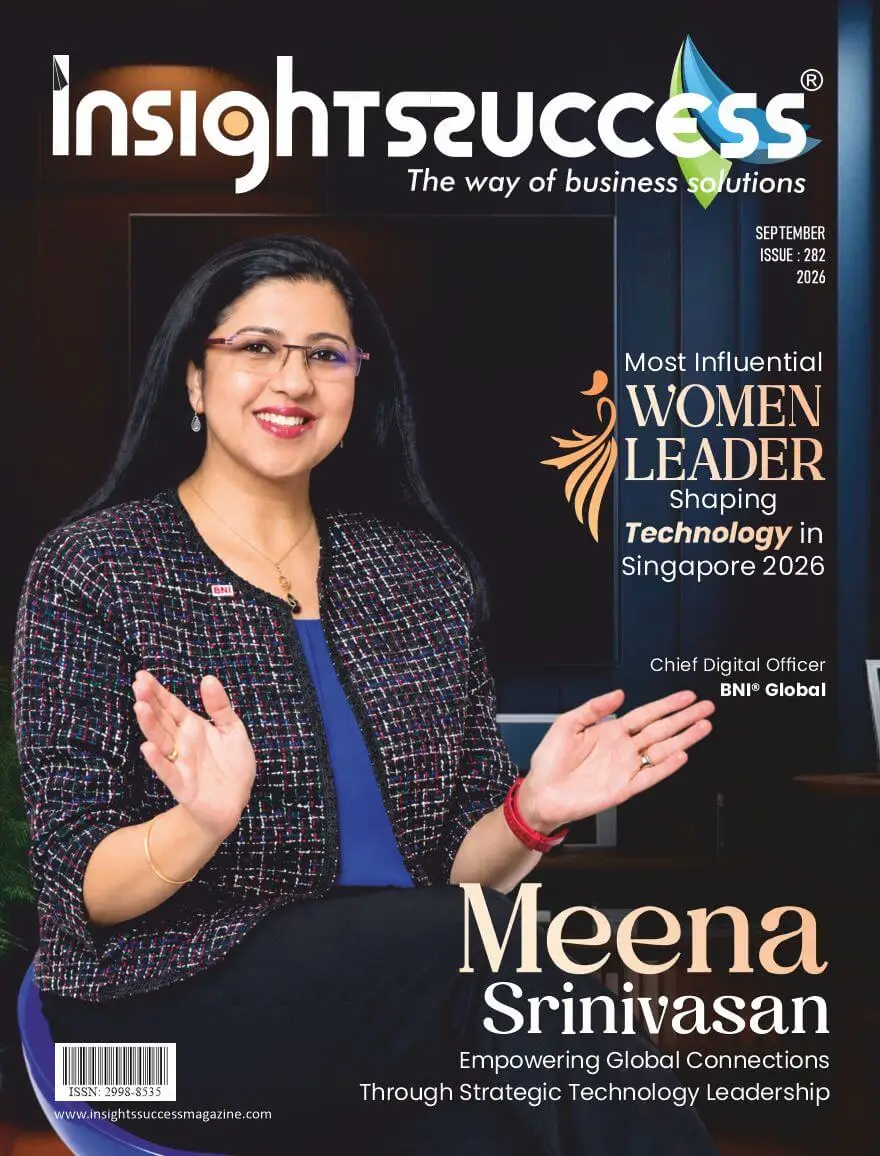
Most Influential Women Leader Shaping Technology in Singapore, 2026
Most Influential Women Leader Shaping Technology in Singapore, 2026 Celebrating an influential woman leader in Singapore’s technology sector, this edition highlights visionary leadership, innovation, digital transformation, and meaningful contributions shaping the future of technology across industries. Digital Link Quick highlights Quick reads

Meena Srinivasan: Empowering Global Connections Through Strategic Technology Leadership
The hardest technology problems are rarely technical. They are cultural, and they show up most clearly in organizations where the product is not software but people. A networking organization spanning 77 countries and hundreds of thousands of members cannot simply import a generic digital transformation playbook and expect it to land the same way in Singapore as it does in Sao Paulo. It requires a leader who understands both engineering and the anthropology of the problem. At BNI Global, the world’s largest business networking organization, Meena Srinivasan has built her role as Chief Digital Officer around exactly that dual fluency, shaped by a career that has taken her through three countries and given her a genuine education in how trust gets built differently depending on where you are standing. She mentions, “The most impactful transformations occur when technology is aligned with human behavior, culture, and organizational goals.” The Entrepreneur Who Built Before the Trend Arrived Long before social media became mainstream business infrastructure, Meena was already helping organizations understand its potential. As co-founder of Scion Social, an award-winning digital marketing agency, she guided businesses toward emerging digital strategies at a moment when many organizations were still cautiously exploring what those strategies could offer. That early entrepreneurial chapter earned recognition, including the Top 50 Social Media Professionals Award from the CMO Asia Council and the Woman Super Achiever Award from the HRD World Congress, validating an instinct for digital transformation that arrived well ahead of broader industry adoption. But what distinguishes this chapter of her career most is not the recognition itself. It is what she built alongside the business: a global virtual team structure that created genuine flexible work opportunities for young mothers seeking to re-enter the workforce. That initiative was not a corporate social responsibility add-on. It was proof, lived and operational, of a conviction she has carried into every subsequent role: that technology, deployed thoughtfully, expands access and inclusion rather than simply optimizing efficiency. She asserts, “Building a global virtual team and empowering young mothers to re-enter the workforce through flexible work opportunities reinforced my belief that technology can be a powerful force for inclusion and social impact.” Leading Digital Transformation at Global Scale At BNI Global, Meena’s responsibilities span digital platforms, data, AI, automation, and member engagement technologies across an organization whose entire value proposition rests on human relationships. That tension, between technology’s drive toward efficiency and BNI’s foundational reliance on personal trust, is precisely the challenge she has spent her career preparing to navigate. The digital transformation journey she has led at BNI was never conceived as a simple digitization exercise. The objective was to fundamentally enhance the member experience across a global network spanning thousands of chapters and hundreds of thousands of members, a scale that demands strategic precision rather than incremental tinkering. Through platform modernization, mobile-first experiences, data-driven insights, and AI-enabled capabilities, she has strengthened global connectivity, improved operational efficiency, and built scalable systems designed to support continued growth across an already vast international footprint. The result is a membership experience where engagement is more effective, collaboration is more efficient, and the value members derive from participation has measurably increased. It is digital transformation in service of the organization’s core purpose, not as a replacement for it. She highlights, “Our objective was not simply to digitize processes but to fundamentally enhance the member experience across a global network spanning thousands of chapters and hundreds of thousands of members.” Reading the Trends That Will Define the Decade Ahead Meena’s view of where digital transformation is heading is precise and wide-ranging. Artificial intelligence and agentic AI will fundamentally reshape how organizations operate, enabling intelligent automation, predictive decision-making, and genuinely personalized user experiences at scale. Hyper-personalization will become the operating norm rather than a competitive differentiator, as organizations leverage data and AI to deliver experiences customized to individual customers, employees, and stakeholders. Low-code and no-code platforms will continue democratizing innovation, empowering business users without deep technical expertise to build their own solutions. Cybersecurity and digital trust will grow increasingly critical as digital ecosystems expand, and threats evolve in sophistication. Data-driven decision-making will remain a defining competitive advantage, and the organizations that build genuine digital communities and collaborative ecosystem platforms will be best positioned to thrive in an increasingly interconnected business landscape. She states, “Organizations that successfully create connected communities, and collaborative ecosystems will be best positioned to thrive in the future.” The Real Challenge Is Never the Technology Ask Meena what most consistently derails organizational transformation efforts, and her answer is unambiguous: it is rarely the technology itself. It is the management of change around it. Resistance to change, outdated mindsets, and fear of disruption move at a fundamentally different pace than the technology itself, and organizational culture frequently lags well behind technical capability. The skills gap compounds this challenge. New technologies demand new capabilities, and leaders who fail to invest continuously in upskilling and reskilling their workforce will find even the most sophisticated technology investments underdelivering. Data governance, cybersecurity, and ethical AI implementation add further layers of complexity that organizations must navigate deliberately rather than reactively. Perhaps most critically, she observes that organizations frequently pursue technology adoption without clearly defining the business outcomes they are actually trying to achieve. Successful transformation requires aligning every technology investment with strategic objectives, and ensuring that people, not platforms, remain at the center of the transformation journey. She asserts, “Successful transformation requires aligning technology investments with strategic objectives and ensuring that people remain at the center of the transformation journey.” Leadership as the Real Engine of Transformation Strategic leadership, in Meena’s framework, is not a supporting function to technology adoption. It is the actual engine that determines whether transformation succeeds or stalls. Technology alone does not create transformation. Leadership does, providing the vision, direction, and clarity that help teams navigate uncertainty and sustained change. Future-ready organizations are built by leaders who genuinely embrace innovation, foster cultures of continuous learning, and encourage experimentation rather than punishing it. They create environments

The Role of Enterprise Digital Transformation in Business Growth
Driving Digital Progress The competitive landscape for large organizations has shifted fundamentally over the past decade. Markets that were once relatively stable have become dynamic in ways that demand faster responses, more informed decisions, and operational capabilities that traditional business models were not built to provide. The organizations navigating this environment most successfully are not necessarily the largest or the most established; they are the ones that have embraced enterprise digital transformation with genuine strategic commitment and built the capabilities that allow them to move quickly, serve customers better, and operate with the efficiency that the current environment demands. Defining Enterprise Digital Transformation Enterprise digital transformation is one of the most used and most misunderstood terms in business today. It is sometimes treated as a synonym for technology adoption, buying new software, migrating to the cloud, or launching a digital channel. These things may be part of the picture, but they do not constitute transformation on their own. Genuine digital transformation is a fundamental rethinking of how an organization creates and delivers value, using digital capabilities not just to do existing things more efficiently but to do genuinely new things, serve customers in genuinely new ways, and build the organizational capabilities that sustained relevance in a digital economy requires. It touches strategy, operations, culture, and the skills and mindsets of the people throughout the organization, not just the technology infrastructure those people work with. Making Customer Experience the Starting Point The most strategically coherent approach to enterprise digital transformation starts with a clear focus on customer experience, on what customers need, how their expectations are evolving, and what digital capabilities would allow the organization to serve them demonstrably better than they are currently being served. Customer-led transformation tends to produce better outcomes than technology-led transformation because it keeps the purpose of the investment clearly in view throughout the process. Customers today expect seamless digital interactions, immediate responses, personalization that reflects what they have previously communicated about their needs, and the ability to engage with organizations through the channels and at the times that work for them. Organizations that build their digital capabilities around delivering this kind of experience earn the loyalty that drives growth. Those that invest in digital capabilities without clear connection to improved customer experience tend to generate internal activity without generating customer value. Addressing the People and Culture Challenge Enterprise digital transformation fails more often because of people and culture challenges than because of technology limitations. Implementing new digital systems in organizations where the culture, the skills, and the mindsets of the workforce are not aligned with the new ways of working those systems require consistently produces disappointment and expensive technology investments that generate limited value because they are not adopted and used effectively. Successful transformation invests in developing the digital literacy, the data skills, and the agile ways of working that digital capabilities require throughout the organization, not just in the technology team. It addresses the cultural resistance that change inevitably generates with genuine leadership, honest communication, and the patience to bring people along rather than simply expecting compliance. And it creates the organizational learning culture that allows the continuous adaptation that digital environments demand. Leadership as the Key Driver of Transformation The single most reliable predictor of whether enterprise digital transformation succeeds is the quality and commitment of leadership driving it. Transformation of the scope and depth that genuine digital change requires does not happen without sustained executive sponsorship, clear strategic direction, and the willingness to make the hard organizational decisions that transformation inevitably requires. Leaders who treat digital transformation as a technology program to be managed at the CIO level rather than a strategic priority to be owned at the CEO level consistently see their transformation efforts fall short of their potential. Those who recognize that they are fundamentally changing how their organization operates, and lead accordingly, give their organizations the best chance of realizing the growth potential that genuine digital transformation creates. Building the Organization for the Future Enterprise digital transformation is not a project with a completion date; it is an ongoing organizational capability that has to be continuously developed and adapted as technology evolves, customer expectations shift, and competitive dynamics change. The organizations that sustain the growth benefits of transformation are those that build genuine organizational capability to keep transforming rather than treating digital change as a one-time initiative. That continuous transformation capability, the ability to keep sensing change, experimenting with new approaches, and adapting at speed, is what separates organizations that lead in their markets from those that are perpetually catching up. Building it requires sustained investment, sustained leadership commitment and a genuine organizational culture of continuous improvement that keeps the benefits of digital transformation compounding over time. Read Also : How Green Transportation Is Reshaping Urban Mobility