






Delta-T Devices reaches £5m in annual sales as it marks 55 years
Prime Highlights- Delta-T Devices reaches £5m in annual sales, adding £1.5m, as the plant and soil science sensor maker marks 55 years. Delta-T Devices invests in new products including WET90 sensor, SPN1 Modbus pyranometer and Celora wireless telemetry unit for remote monitoring. Key Facts- Export markets deliver 80% of Delta-T Devices revenue, led by the US, China and Europe. Delta-T Devices serves projects in more than 20 countries across five continents from its Burwell base. Background- Delta-T Devices has hit £5m in annual sales as the firm celebrates 55 years in business, backed by a run of new contract wins. The scientific instrument maker has added £1.5m to its yearly sales over the past few years, driven by demand for its plant science, soil science, commercial horticulture and solar PV monitoring systems. Delta-T has strengthened its team by hiring experienced department heads and building skills across its original Burwell base, where its modern headquarters sits beside the late 16th-century Tudor Barn. Chair Heidi Hathaway said the company still follows its founding aim of making instruments for socially worthwhile purposes at a reasonable cost. She said its business now splits evenly between environmental research, commercial horticulture and solar PV, with projects running in more than 20 countries across five continents. She added that its WET Sensor technology supported lettuce-growing experiments in outer space. The company is putting investment into new products. The WET90, a compact multi-parameter sensor for commercial growing media, and a Modbus version of the SPN1 Sunshine Pyranometer for solar PV monitoring will launch shortly. Celora, a compact wireless telemetry unit, will follow and link Delta-T and third-party SDI-12 sensors to the cloud over 4G. Head of Sales and Marketing Mark Daniels said the firm plans to apply more than five decades of research-grade expertise to larger commercial markets. He noted Read Also: Qualcomm to buy Huawei US patents in multi-year licensing pact

30 Influential Business Minds to Watch
30 Influential Business Minds to Watch This edition celebrates visionary leaders who are shaping industries through strategic thinking, innovation, resilience, and purpose-driven leadership. It highlights influential professionals whose achievements, ideas, and leadership approaches are creating meaningful impact, inspiring transformation, and setting new standards for sustainable business growth and long-term success. Digital Link Quick highlights Quick highlights Quick Reads

Pankaj Sohaney: Bridging Molecular Science and Human Impact
Every day, across hospitals and clinics, lives quietly change with the delivery of a single document—a diagnostic report. For patients, it can redefine the future. For clinicians, it shapes the next decision. Yet for years, diagnostics in many regions—including parts of the GCC and Africa—has suffered not from lack of treatment, but from lack of timely, accurate testing. It is within this gap that Pankaj Sohaney chose to act. As the CEO and Founder of QLABS Clinical Laboratory, he is not simply building a business—he is building a system designed to ensure that no clinical decision is made on uncertainty. The Journey That Shaped a Visionary Pankaj did not arrive at this point overnight. He brings more than twenty years of hands-on experience in diagnostics and healthcare expansion to everything he does at QLABS. Over the course of his career, he has worked across clinical laboratory management, oncology reference programmes, cross-border diagnostic service networks, and the layered world of public-private healthcare partnerships. Pankaj has seen the industry from the inside, its strengths and its blind spots, and he has used that knowledge to ask a simple but powerful question: what would a truly great diagnostic network look like in this part of the world? That question became the foundation of QLABS. Pankaj co-founded the company with a clear-eyed assessment of what was missing. He saw a market that was fragmented, under-resourced, and slow to adopt the kind of precision technologies that were already transforming healthcare in other parts of the globe. Pankaj also saw an opportunity, so he rolled up his sleeves and got to work. Building QLABS: Precision From the Ground Up QLABS Clinical Laboratory is headquartered in Dubai and holds both CAP Accreditation and ISO 15189 Certification- two of the most rigorous quality standards in the global diagnostics industry. But for Pankaj, earning these credentials was never about ticking boxes. He pursued them because he wanted to build what he describes as a trust architecture: a system-level commitment to getting things right, every time, across every geography. Under Pankaj’s leadership, QLABS is growing into one of the region’s most advanced multi-disciplinary reference labs. The network’s capabilities span high-complexity clinical diagnostics, cancer and oncology testing, genomics and next-generation sequencing, proteomics, molecular diagnostics, and preventive and functional medicine diagnostics. Pankaj is also expanding QLABS into home health lab services and a nationwide collection network, while simultaneously developing hospital lab management and public-private partnership models. This is not a list of ambitions. These are programmes that Pankaj and his team are actively building and delivering- a distinction that matters deeply to him. “At QLABS, strategy and execution move together,” states Pankaj. Trust as a Leadership Philosophy Ask Pankaj what drives him, and he will not talk about market share or revenue targets. He will talk about trust. His leadership thesis is built on one simple idea: every diagnostic report is a clinical decision trigger. A clinician reads that report and makes a call- what medication to prescribe, whether to refer a patient for surgery, and when to tell a family that something is seriously wrong. That moment demands complete accuracy, and Pankaj holds himself and QLABS to that standard without compromise. He believes trust in diagnostics is earned in silence. It is the quiet confidence of a doctor who orders a test from QLABS and never questions the result. It is a hospital that renews its partnership year after year because the numbers hold up. It is a patient who does not have to repeat a test in a different city because the first one was not reliable. These are the moments that Pankaj builds for, and they are far harder to achieve than any certification. He is also direct about what quality means in this industry. It is not a differentiator. It is the minimum entry barrier. Everything above that baseline is what separates good from great; and that is the standard he is reaching for at QLABS. “Quality is not a differentiator in diagnostics—it is the minimum entry barrier.” Fighting Cancer With Data, Not Just Hope Of all the areas where Pankaj is making his mark, precision oncology stands out as the most personal. He believes cancer care must shift from a reactive model to one driven by early molecular insight. At QLABS, this vision is being realized through OnQcare—a dedicated oncology platform that integrates advanced diagnostics, clinical insights, and patient-centric care into a unified ecosystem. Through OnQcare, Pankaj is building centres of excellence focused on proactive molecular profiling, enabling detection of cancer signals long before symptoms appear. The platform brings genomics, next-generation sequencing, and emerging proteomic insights into routine clinical workflows—making them accessible and actionable across the GCC and Africa. “Cancer care should not begin when symptoms appear—it should begin when molecular signals emerge.” More importantly, OnQcare connects clinicians, laboratories, and global oncology partners, ensuring diagnostics becomes a core driver of treatment decisions—not just a supporting function. For Pankaj, this is not just innovation—it is a necessary shift toward earlier detection, smarter therapies, and better outcomes. Partnering With Governments, Serving People Pankaj understands that the biggest diagnostic challenges in emerging markets cannot be solved by the private sector alone. They require genuine collaboration between public institutions and private expertise. This is the space where his public-private partnership work lives, and he approaches it with a clarity that has earned him the trust of government partners and hospital systems alike. He frames the challenge as a dual mandate: financial sustainability on one side, public health impact on the other. Getting both right at the same time is not easy. But Pankaj believes that one without the other is not really a solution. A PPP that drains public funds is not sustainable. And a commercial model that does not serve underserved populations is not meaningful. So, he structures QLABS’ partnerships to align investor expectations with health outcomes- building layered diagnostic models that work for hospitals, governments, NGOs, and academic institutions all at once. Bold Moves, Careful Thinking Pankaj describes

Chaun Powell: Orchestrating Empowerment and Breaking Boundaries by Design
Today’s business climate presents a dilemma for leaders and businesses looking to innovate. Businesses want the benefits of innovation, but at what cost? At their core, most businesses aren’t interested in the disruptive elements of growth through innovation. They fear the upheaval that said innovation may bring. While businesses require innovative and creative brains to stay relevant, innovators are often rejected or dismissed, especially if they challenge core elements of the existing business unless innovation is truly embraced in the culture of the organization. The gap between creativity and execution prevents many fresh, innovative approaches from becoming established, and some of the best business conceptions remain just that; an idea rather than a viable company or operation. Yet within this complexity, certain leaders emerge who don’t just bridge this divide; they reimagine it entirely. They architect environments where breaking things becomes a strategic choice, where failure transforms into intelligence, and where teams don’t just tolerate uncertainty, they embrace it. Chaun Powell operates in this dynamic space, leading not from a position of control but from one of orchestrated empowerment, where vision meets velocity and ambition aligns with achievement. A Leadership Philosophy Built on Empowerment As President of Elevate by Principal, Chaun has constructed a leadership framework that fundamentally challenges traditional corporate hierarchies. His approach centers on three interconnected principles that shape everything his teams accomplish. Chaun believes impact begins with vision, not safe, incremental objectives, but provocative aspirations big enough to create nervous energy yet achievable through focused effort. He creates goals that stretch teams beyond comfort zones while remaining grounded in possibility. The second pillar centers on radical empowerment. He grants every team member authority to make decisions, openly acknowledging that mistakes are inevitable, including his own. This transparency creates psychological safety, allowing teams to act with courage. Chaun emphasizes that effective teams must make tough calls, support each other through decisions to minimize errors, and maintain agility to fix what breaks. His philosophy contains a deliberately provocative element: if teams are performing optimally, they will intentionally break some things. This calculated disruption reveals boundaries, showing what can be challenged and where restraint is necessary. This, in turn, hinges on a bias for action. When team members embrace empowerment and trust leadership support, initiative flourishes organically. He sees his greatest opportunity in painting a compelling vision and allowing teams to determine what ultimately appears on the canvas. The difference between a masterpiece and meaningless scribbles lies entirely in the trust and commitment each team member brings to the creative process. Decoding the Innovation Equation Leading a growth-and-innovation unit places Chaun in constant dialogue with complexity. He identifies three factors that doom most entrepreneurial ventures: lack of market need, insufficient capital to execute properly, and failure to focus on a well-defined minimum viable product (MVP) while managing the noise that accompanies innovation. Chaun champions structured ideation that encourages divergent exploration before converging on solutions. The divergent phase examines new approaches and external concepts, building frameworks that don’t anchor solutions to existing methodologies. He views the creativity introduced during this innovation phase as critical for leapfrogging current solutions; something that cannot be rushed. The challenge then becomes securing stakeholder alignment on the buildout phases and cultivating the team’s discipline to ignore ongoing ideation noise until basic MVP testing concludes. Once initial iterations are complete, Chaun insists on obtaining genuine market feedback to validate value for intended audiences. He recognizes that leaders ultimately place bets on priorities, but markets rarely mislead those who listen carefully. Success leaves distinct patterns, and strong innovation teams with dual capabilities in ideation and creation can extract priorities from market signals, ultimately determining whether projects soar or stumble. Orchestrating Vision with Operational Rigor Chaun demonstrates refreshing self-awareness about his leadership approach. He relies heavily on exceptional operational leaders who support his various teams. Rather than spreading himself across all functions, he concentrates energy on creating provocative yet credible visions. When teams see pathways to bring disruptive solutions to market, ideas that inspire and potentially transform their industries, Chaun finds his leadership sweet spot. This approach requires acknowledging interdependencies. Innovation without execution remains pure ideation. While ideation energizes teams, it only becomes valuable when it translates into tangible creation. Chaun deliberately surrounds himself with leaders whose operational expertise complements his vision-oriented approach, creating a balanced leadership ecosystem. Innovating Within Regulatory Frameworks Throughout his career, Chaun has operated in healthcare and financial services- two industries facing some of the most stringent regulatory oversight. He understands that innovation in these spaces happens continuously, but typically in smaller increments on individual products rather than revolutionary new models. He frequently invokes Machiavelli’s wisdom: “It ought to be remembered that there is nothing more difficult to take in hand, more perilous to conduct, or more uncertain in its success than to take the lead in the introduction of a new order of things.” Chaun balances innovative visions with practical understanding of incremental execution steps. He regularly reminds his teams that shavings make a pile; every effort yielding micro innovations eventually aggregates into macro transformation. The key is maintaining focus on the broader picture while operating within regulatory parameters for each incremental innovation along the journey. Forging Strategic Institutional Partnerships When engaging institutional clients, Chaun models leadership behaviours ensuring his teams deliver both strategic insight and operational credibility. He references the nautical wisdom that boats remain safe in harbours but aren’t built for harbours. He encourages institutional partnerships to embrace incremental intrapreneurship that complements their core business operations. Having collaborated with multiple Fortune 500 companies, Chaun understands they must maintain their foundational business. However, innovation remains essential to avoid disintermediation. This is where Chaun advocates investment in potentially transformative innovation. The human mind craves novelty- equally true for investors and employees. Failing to introduce novelty with deliberate intent breeds stagnation across teams, organizations, and capital markets. Redefining Leadership Metrics Chaun views financial metrics as lag indicators for other critical success signals. Lead indicators he embeds into annual planning start with desired outcomes, working

The Future of Retail: How AI, Automation and Intelligent Software Are Transforming Commerce
Running an online store involves a lot of work customers never see. A price changes, stock gets updated, a new product goes live, or an order moves to the warehouse. Each update has to reach the right place. When it does not, someone usually has to find out what went wrong and fix it. This becomes harder as the business grows. There are more products to manage, more orders coming in, and more information moving between systems. Retailers are starting to use AI and automation for some of these regular tasks, especially the ones that take up time every day. The software still needs the right information to do its job. If stock, product, or order data sits in different places, those connections have to be built first. Retail software development services can help with that work and make AI useful within the systems retailers already depend on. This article looks at where that is happening and what it changes for retail teams. Retail Is Moving Beyond Traditional Ecommerce Online stores were built around a fairly fixed way of shopping. People searched for an item, narrowed the results, read the product page, and decided whether to buy. That still works, but shoppers do not always arrive knowing exactly what they want. A customer looking for running shoes, for example, may care about where they run, how often they run, or an old knee injury. A basic keyword search does not do much with that information. Newer search and shopping tools can use those details to narrow the choice and help the customer get closer to a suitable product. There is work happening on the retailer’s side as well. Software is taking over some of the repeated checking and sorting that used to land with retail teams. That is starting to change both what customers see on the site and how the work behind it gets done. Where AI and Automation Are Changing Retail There is no single use of AI that explains what is happening in retail. The changes are showing up in different places, from the way people search for products to the work involved in getting an order out of the door. Product Search Is Getting Better at Understanding Shoppers People do not always know the right product name. Someone shopping for a jacket might simply want something light enough for running and suitable for rain. Traditional search may struggle with a request like that because it relies heavily on keywords and product labels. New search tools have more information to work with. They can use the shopper’s request along with details already stored against the products. For a large catalog, that can save customers from trying several searches or working through filter after filter. Merchandisers Have Less Catalog Work to Do by Hand Anyone who has worked with a large product catalog knows how quickly small problems pile up. A size may be missing, an item may sit in the wrong category, or supplier data may arrive with fields left blank. Finding these issues across thousands of products takes time. Some of that checking can be done automatically. The system can point out missing information or products that look out of place, leaving the merchandiser to review the cases that need attention. Decisions about collections, placement, and promotions remain with the merchandising team. Pricing Teams Can See Changes Earlier Retail prices do not exist on their own. A team may look at what is selling, how much stock is left, what competitors are charging, and whether a promotion is already running before changing a price. The tedious part is gathering all of that information. Software can do much of the checking and let the team know when something worth reviewing has changed. The final call still needs context. A competitor clearing last season’s stock, for example, is very different from a wider drop in market prices. Stock Updates Can Reach More of the Business An inventory change can affect the website, warehouse, delivery promise, and customer service team. Problems start when one system has newer information than another. A product may appear available online even though the last unit has already been sold. Better connections between these systems can reduce those gaps. When stock moves or an order is placed, the update can be passed along without waiting for someone to reconcile it later. This also gives retailers a better basis for deciding where an order should be fulfilled. Simple Support Requests Do Not Always Need an Agent “Where is my order?” is hardly a complicated customer service question, yet answering it still takes an employee’s time if the customer cannot find the information themselves. The same applies to basic questions about returns or product availability. These requests can often be dealt with automatically when the order and product information is available to the support system. A damaged order or disputed refund is different. Those cases need someone who can understand what happened and decide how to handle it. The Bigger Change Is Happening Behind the Storefront A shopping assistant is only useful if it has the right information to answer with. Take a customer asking whether a sofa can arrive by Friday. The product page alone cannot answer that. Stock may be held in several locations, delivery times vary by area, and an order already placed that morning may have taken the last available unit. The information needed to answer that question may sit in the ecommerce platform, inventory system, warehouse software, and order system. If those systems are not sharing recent information, adding an AI tool on top will not solve the problem. This is where AI integration services have a practical role. They connect AI tools with the systems holding the information they need. For retailers, getting those connections right is often more important than adding another customer-facing feature. Retail Software Will Need to Become More Connected Retail technology tends to grow over time. The online store may run on one platform, while

Assessing Technologies: Emerging Trends Shaping the Future of Smart Coating Technologies
There is a growing need in industries like manufacturing, construction, automobiles, aerospace, electronics, medicine, and energy for materials that do not just provide simple protection. The need for such companies is for coating systems that would prolong their product’s lifespan, be able to cope with changing environments, minimize the cost of maintenance, and improve performance. This need is leading to the evolution of smart coatings technologies. Though conventional coatings provide protection from corrosion, wear and tear, moisture, chemicals, and heat to the surface, smart coatings react to any environmental changes around them. Smart coatings may detect damage, release active ingredients, change their properties, or even deliver information on the state of the surface. Due to the need for a longer lifecycle of equipment and greater efficiency in industrial operations, there are many new developments in materials science and information technology that increase the capabilities of such solutions. Responsive Materials The most significant one of all these developments is that related to coatings with active responses to the surrounding environment. There are studies going on about materials reacting to temperature, humidity, pressure, light, chemicals, and mechanical actions. There can be a change in their properties or a specific action taken in response to certain changes in the surrounding environment. Another important field of advancement is that of self-healing paints. Self-healing paints are able to heal scratches and other surface damage via chemical reactions and by releasing healing agents. This will prevent moisture or any other substance from penetrating further down into the material. Industries like transportation, construction, or industrial machinery could benefit from this technology as they can increase the service life of the materials and save money on repairs. With improved stability and performance of such coatings, Smart Coating Technologies will become more commercially viable in industrial use cases. Digital Integration In the union of smart coatings with sensing and digital technologies, there arises a whole array of possibilities for monitoring. It is possible to use intelligent surfaces that have sensing qualities, helping detect such signs of deterioration as corrosion, temperature changes, strain, chemical attack, etc. With the help of the digital monitoring system, companies could be provided with information about the status of their assets. Such an approach is consistent with the ongoing trend towards integrated industrial ecosystems. Information that is collected through intelligent surfaces can be analyzed through analytics software, digital twin, and maintenance management system to help make better decisions. Companies can use this information to do risk assessments and prioritize inspection and maintenance activities based on their operational situation at hand. This will provide a framework for predictive maintenance and help in addressing possible risks before they cause any disruptions to their operations. It is another example of how Smart Coating Technologies can be implemented within the context of digital transformation efforts. Sustainable Solutions Sustainability has now become yet another driving force for advancements in coating technology. Various sectors are facing mounting pressure to cut down on emissions, waste, hazardous substances, resource use, and at the same time, provide superior performance. Such a situation is spurring research into water-based, bio-based, low-volatile organic compound coatings, and coatings that consume fewer resources across their life cycle. Efforts are also being made to make the application process of the coatings more energy-efficient and minimize waste generation. The trend will involve increased concern with life cycle performance as opposed to environmental effects of the coating in the initial phase. Durability of the surface will lessen the need for recoating, replacement, and transportation. Yet another field of study revolves around recyclable and renewable resources, which ensure sustainable material usage and minimize any environmental impact. On the other hand, the manufacturer must strike a balance between being sustainable and durable, safe, affordable, and regulated. Successful Smart Coating Technologies, therefore, have to bring about tangible environmental gains without affecting the performance required in stringent applications. The development of nanotechnology has also affected this area significantly. Nanomaterials are capable of providing features such as mechanical strength, barrier performance, antimicrobial effects, conductivity, UV protection, and thermal stability, among others. Conclusion The future of intelligent coating technologies would be determined by the capability of translating innovations from lab scale into viable commercial products. Consistency of performance, cost of manufacturing, regulations, and compatibility with current manufacturing processes would be among other issues that must be considered. In addition, cybersecurity and information management concerns would come into play for coatings that have the capability of being connected to sensing networks. The success of intelligent coatings would depend on their ability to solve specific problems rather than use technology for its own sake. With further advancement of material science, digital technology, nanotechnology, and sustainable manufacturing technologies, the intelligent surface will have even more capacity. Instead of simply protecting assets from the elements, their function will include condition monitoring, adaptation, and optimization. Companies who adopt these technologies will be able to increase reliability of their assets, decrease maintenance costs, improve sustainability performance, and increase resilience. Development of Smart Coating Technologies will contribute significantly to development of high performance industrial materials of the future, making manufacturing processes safe, increasing asset life cycles, decreasing resource consumption, and increasing competitiveness in the changing world market. Read Also : Key Luxury Home Décor Trends Shaping Modern Interior

Eliane Germanos: Turning Scientific Insight into Business Excellence
Outstanding products are built on a foundation of scientific understanding, strategic vision, teamwork, and the ability to inspire change. Leadership often begins with curiosity and a desire to develop significant solutions. Every formula has allowed Eliane Germanos to improve people’s lives, overcome challenges, and provide value. What began as a passion for chemistry evolved into a distinguished career marked by technical proficiency, inventiveness, and inspiring leadership. Currently serving as Group R&D Director at Ritver Paints & Coatings, Eliane is a prime example of how successful leaders use scientific knowledge, strategic thinking, and a people-first mindset to promote innovation and long-term economic success. She is well known for turning scientific data into significant economic value. With over two decades of experience in UV, water-based, and solvent-based coating technologies across the wood, automotive, industrial, and decorative coatings industries, Eliane has built deep technical expertise and industry knowledge. She oversees labs with the accuracy of a scientist and the vision of a leader who is aware of both the people and the technical procedures. Her research disproves the notion that science and leadership are two different disciplines by showing that creativity and business success are fostered when technical proficiency and effective leadership are combined. Engineering Strategic Impact When Eliane began her career in chemistry, she envisioned a profession centred on formulas, testing, and laboratory precision. She did not anticipate that the field would fundamentally shape her understanding of leadership. This transformation developed gradually through years of navigating challenges, embracing opportunities, and taking on increasing responsibilities. As her role expanded into production, quality assurance, and customer-focused decision-making, she came to understand that no technical decision exists in isolation. Every choice can influence production efficiency, customer confidence, operational costs, sustainability, and organisational reputation. What began as laboratory work gradually evolved into a broader strategic responsibility. This perspective also transformed her view of the laboratory. Early in her career, it was seen primarily as a technical environment, separate from other areas of the business. Today, it is regarded as one of the most important decision-making centres within a manufacturing organisation, closely connected to production, sales, regulatory compliance, and long-term business growth. Her experience has reinforced the understanding that leadership is not defined by titles or formal authority. It is demonstrated through informed technical decisions, the ability to guide teams through complexity, and a commitment to translating scientific knowledge into meaningful business value. Transforming Innovation into Value Throughout her career in decorative, automotive, industrial, and wood coatings, Eliane has consistently balanced technical innovation with commercial realities. She recognizes that innovation in the coatings industry requires careful management of competing priorities, including performance and cost, sustainability and speed to market. Manufacturing organizations must address these challenges by developing solutions that align technical capabilities with business objectives and evolving customer expectations. Rather than viewing innovation as a purely scientific pursuit, she emphasizes the importance of practical execution. A promising coating formulation must perform reliably under manufacturing conditions, meet application requirements, comply with regulatory standards, remain cost-effective, and respond to changing customer needs before it can succeed in the marketplace. In highly price-sensitive markets, even advanced technology may fail if it is not commercially viable. Similarly, in heavily regulated markets, products that do not meet compliance or performance requirements are unlikely to achieve sustainable success. For her, a thorough understanding of the market is fundamental to successful innovation. This includes recognizing customer expectations for quality, developing realistic pricing strategies, and anticipating environmental standards that increasingly influence purchasing decisions. She also recognizes that sustainability is no longer simply a competitive advantage but a business necessity. The true measure of innovation lies in developing solutions that combine technical excellence, scalability, regulatory compliance, and commercial viability, creating lasting value for both customers and the business. Leading with Confidence As a leader managing multidisciplinary teams of chemists and engineers, Eliane has given considerable thought to what enables women to succeed in technical and manufacturing organisations. She recognizes that women do not require a different leadership approach from men. Technical expertise, emotional intelligence, resilience, and the ability to make clear decisions under pressure are essential qualities for every effective leader, regardless of gender. At the same time, she acknowledges that women often face greater scrutiny in the workplace. They may be observed more closely, questioned more frequently, and expected to demonstrate their capabilities repeatedly. This reality makes self-confidence, resilience, and trust in one’s abilities particularly important for long-term professional growth. She also challenges the notion that women must adopt a traditionally masculine leadership style to advance their careers. Qualities such as intuition, empathy, patience, and effective communication are valuable leadership strengths that complement technical expertise and strategic thinking. Women can be decisive, highly skilled, and strong leaders while remaining authentic to themselves. Looking ahead to 2026 and beyond, she believes leadership should be assessed not by gender but by capability, vision, integrity, and the ability to inspire people and drive organizations towards meaningful progress. Science at the Heart of Sustainability Eliane’s career has spanned diverse coating technologies, providing extensive insight into an industry undergoing continuous transformation. She recently explored these developments in an article for The Invisible Structure: Coating Insights, where she explains that sustainability is no longer simply a marketing message. It has become a critical requirement for long-term business success, particularly for companies manufacturing chemicals and products used in everyday life. Several trends are reshaping the coatings industry. These include the increasing adoption of low-VOC and low-TVOC formulations, the transition towards water-based systems where practical, and the development of lead-free, heavy-metal-controlled, formaldehyde-free, and APEO-free products. Responsible use of preservatives and biocides is also becoming increasingly important. Durability is another important dimension of sustainability. Longer-lasting coatings can reduce the need for repainting, minimize waste, lower transportation requirements, and reduce overall lifecycle costs. Sustainable manufacturing is equally important and depends on stronger process control, fewer rejected batches, and more efficient energy consumption. The companies most likely to succeed will be those that approach sustainability with scientific discipline. This means developing solutions that are thoroughly

Visionary Women Driving Innovation in Chemistry & Manufacturing 2026
Visionary Women Driving Innovation in Chemistry & Manufacturing 2026 Eliane Germanos combines scientific expertise, strategic leadership, and creativity to advance innovation in coatings and manufacturing. As Group R&D Director at Ritver Paints & Coatings, she connects research with business value, champions sustainability, supports women in technical leadership, and embraces artificial intelligence to strengthen decision-making, operational performance, and long-term growth. Digital Link Quick highlights Quick reads
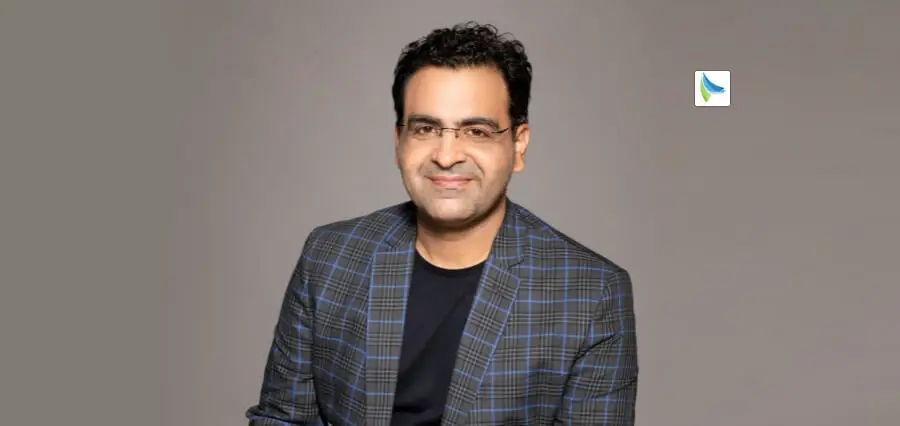
Building Better Ground: The Leadership Journey of Anuj Narula
Leadership rarely announces itself. It creeps in quietly, born not from ambition but from frustration with the status quo. Anuj Narula, Founder of Techhub & Teckkonnect, understands this truth intimately. Years spent working across India’s infrastructure sector showed him a persistent and troubling gap the distance between the country’s aspirations for world-class infrastructure and the actual quality and consistency of its execution on the ground. That gap became his calling. India currently pours resources into roads, highways, railways, tunnels, and hydropower projects at an unprecedented scale. Narula sees this national push not merely as a construction opportunity but as a chance to build something far more durable: human capital. He views leadership as the bridge connecting India’s infrastructure ambitions to the technical expertise, innovation, and trained professionals needed to deliver them. “I see leadership as an opportunity to bridge that gap: by combining technical expertise, innovation, and capability development to create better projects and stronger professionals,” he explains. A Fragmented Industry, A Focused Response The infrastructure sector Anuj operates within carries deep structural challenges. It remains fragmented, and in many pockets, poorly organised. Weak planning routinely produces delayed projects, ballooning costs, and strained resources. Compounding this problem is an educational disconnect civil engineering graduates frequently step into the workforce without the practical judgment, critical thinking, or decision-making skills that real project delivery demands. Narula chose to attack this problem at its root. Rather than treating training as an afterthought, his organisation built continuous learning and in-house capability development into its foundation from day one. The training programmes extend well past technical instruction, deliberately cultivating leadership, critical thinking, problem-solving, communication, and ownership among young engineers. He insists that delivering successful infrastructure demands far more than technical knowledge alone it requires professionals who can think, decide, and lead under pressure. Staying the Course Through Difficult Periods Every leader experiences dips in energy and motivation, and Narula does not pretend otherwise. What separates sustained leaders from the rest, in his view, is not the absence of low points but the refusal to let those low points define the journey for too long. He deliberately curates his environment, surrounding himself with people who carry a growth mindset and push him to think beyond the obvious, while regularly reading material that reinforces resilience. When circumstances turn genuinely difficult, Narula leans on something larger than the immediate obstacle. “Ultimately, during difficult periods, it is my belief in the larger vision that keeps me moving forward. When the purpose is clear, temporary challenges become part of the journey rather than reasons to abandon it,” he says. That clarity of purpose, he suggests, is what converts short-term setbacks into simple waypoints rather than dead ends. Calculated Risk Over Reckless Ambition Risk sits at the heart of entrepreneurial growth, but Narula draws a firm distinction between courage and recklessness. Genuine leadership, in his framework, is not about chasing bold moves for their own sake it is about making risk manageable through preparation. Before committing to a major decision, he researches thoroughly, maps the variables at play, identifies where failure is most likely to occur, and builds contingencies for multiple scenarios. People matter just as much as process in this equation. Narula credits his team’s involvement in critical assignments, coupled with open communication and shared clarity around objectives and obstacles, as the mechanism that turns uncertainty into calculated opportunity rather than blind gambling. A well-prepared team, he has found, can absorb volatility that would otherwise derail a project. Innovation as a Perspective, not a Product Ask Narula to define innovation, and he resists the conventional answer tied to technology or disruption. Instead, he frames it as something closer to a mindset. “To me, innovation is a ‘Perspective of Possibilities,”he states. For him, the term describes a refusal to accept convention simply because convention exists a habit of pausing to ask whether a better possibility might be hiding behind the obvious approach. Innovation, in this reading, has less to do with tools and more to do with the willingness to interrogate assumptions and keep searching for improvement. Learning Milestones and the Discipline of Delegation Narula describes the accumulated lessons of his career as “Learning Milestones” moments that quietly became stepping stones in how he leads today. Clear communication, delegating responsibility to the right person, staying proactive instead of reactive, and preparing thoroughly before important meetings rank among the most formative lessons he carries. Perhaps most significantly, he has come to see leadership not as a solo performance but as an exercise in creating clarity, trusting capable people, and stepping back to let them take ownership. A Rotary in Rishikesh, and a Lesson in Human Stakes Among the moments that have stayed with him, Narula points to a road safety assignment in Rishikesh, where he served as a third-party Road Safety Auditor. The site had a troubling accident history, driven largely by flaws in the geometry and layout of an existing rotary. After conducting a detailed audit, he recommended a set of targeted interventions removing the rotary, introducing speed-calming measures such as a speed table, upgrading hazard markings, and installing clearer traffic signage. These changes made the junction noticeably more visible and considerably safer for road users. The outcome left a lasting impression. He later learned from a road user that accidents at the site had reportedly dropped by roughly 98 percent following the redesign. Beyond the technical satisfaction of a job well done, the experience crystallised something deeper for Narula: engineering decisions carry the power to directly shape human lives. That realisation, he notes, reinforced his conviction that infrastructure engineering ultimately exists in service of society, not merely in service of blueprints and budgets. The Discipline Behind the Ideas Behind Narula’s public output sits a set of quiet, deliberate habits. Each day begins with writing down his priority tasks, a small ritual that sharpens his focus and organises his decision-making from the outset. He protects blocks of undivided attention for his most demanding work, operating on the belief that meaningful
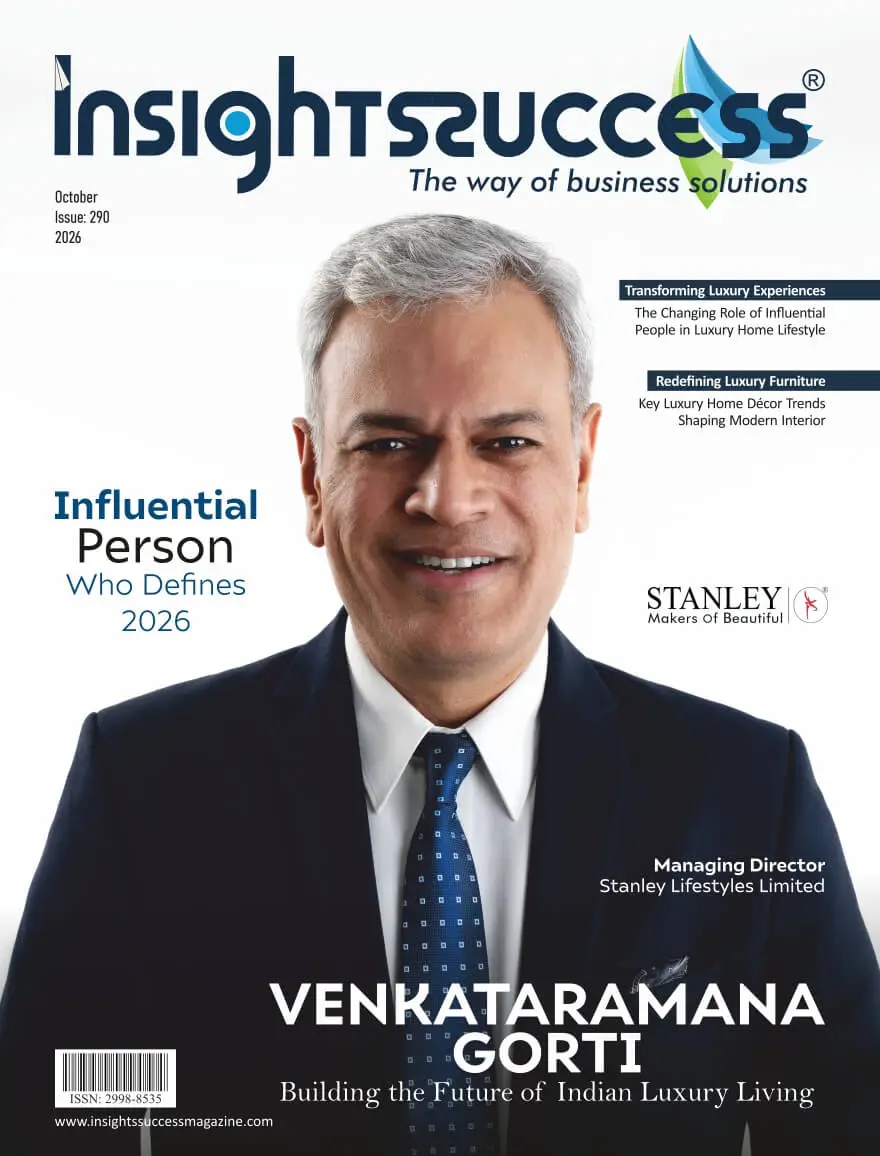
Influential Person Who Defines 2026
Influential Person Who Defines 2026 Showcasing an influential leader whose expertise, resilience, and purposeful decisions drive meaningful progress, inspire innovation, strengthen organizations, and shape industries through impactful contributions, visionary thinking, and leadership excellence. Digital Link Quick highlights Quick reads