






8 Ways Network Analytics Can Improve IT Decision-Making
Downtime has a rude habit of showing up at the worst possible moment. One slow link, one mystery outage, and suddenly your calm morning turns into a room full of people asking, “Any update yet?” That’s why network analytics has become so useful for stronger IT decision-making and more reliable network performance monitoring. Network teams are facing growing visibility and performance challenges. The share citing network performance and efficiency rose from 16% in 2023 to 20% in 2024, while the need for greater application visibility doubled from 6% to 12%. Unleashing Actionable Insights With Network Analytics for Better IT Operations If you want faster action, you first need to stop guessing what the network is doing. Alerts are helpful, of course. But an alert alone can feel like a smoke alarm with no clue where the smoke is coming from. From Alerts to Answers Traditional monitoring says, “Something happened.” Analytics goes further. It shows why it happened, where it began, and what might be next in line to fail. That extra context is gold when leaders are trying to improve IT operations without piling more stress onto an already stretched team. Plain Data for Real Decisions Strong network data analysis pulls together traffic flows, errors, device health, and user impact. From there, IT leaders can decide whether the fix is configuration, capacity, hardware, or a larger planning conversation. For smaller teams especially, using network intelligence can turn messy device telemetry into practical recommendations people can actually understand during a tense incident. And honestly, when things are on fire, plain English helps. Network analytics turns raw technical signals into useful insight, helping IT move from reactive cleanup to proactive, evidence-based decisions. Real-Time Network Visibility: Reducing Guesswork in it Strategy When you can see what is happening right now, strategy gets less emotional. Fewer hunches. Fewer “I think it’s the app” debates. Better facts. This is where network performance monitoring earns its keep. Better Sla and Capacity Choices Live data can show whether service targets are slipping because of bandwidth limits, device errors, routing trouble, or application demand. Instead of blaming the nearest system, teams can fix the real one. A Practical Comparison Decision Area Basic Monitoring Analytics-Led View Bandwidth planning Reacts after complaints Spots usage trends early SLA reviews Shows uptime only Ties health to user impact Troubleshooting Checks devices one by one Connects symptoms across paths With real-time performance visibility, planning becomes less of a guessing game and much more measurable. Proactive Issue Detection to Minimize Downtime Real-time visibility is useful. But the bigger win comes when analytics catches trouble before users start sending annoyed messages. Most outages leave breadcrumbs. Catching Anomalies Early Packet loss, interface errors, traffic surges, and strange route changes may not seem dramatic on their own. Together, though, they can point to something bigger. Network analytics helps teams see those patterns instead of chasing isolated symptoms. Cutting MTTR Without Panic Better alerts show what changed, where it changed, and who or what is affected. That cuts mean time to repair because engineers are not starting from a blank page. Preventing outages saves money, but long-term efficiency comes from putting resources where the data says they matter most. Driving Efficient Resource Allocation With Intelligent Network Data Analysis Budgets are rarely generous. Buying extra capacity “just in case” can drain cash fast. Buying too little is no bargain either if users are stuck waiting on slow apps. Forecasting Demand Past traffic patterns can reveal which links are nearing trouble and which are still healthy. With network data analysis, teams can make upgrade decisions based on evidence instead of whoever complained loudest last week. Assigning Staff and Spend Analytics can help show whether the next investment should go toward bandwidth, device replacement, Wi-Fi improvements, or staff time. That is practical IT decision-making, not spreadsheet theater dressed up as strategy. Now take that same data-driven thinking into security, where normal behavior often exposes abnormal risk. Boosting Security Posture Through Behavior-Based Analysis Once your team understands what normal traffic looks like, odd behavior stands out faster. That matters because many threats do not arrive waving a big red flag. Finding Risky Traffic Patterns Unusual login routes, unexpected device conversations, or strange data movement can all suggest risk. Analytics gives network and security teams a shared view, which can cut down on finger-pointing when every minute matters. Supporting Faster Response The global network analytics market size was valued at USD 3.32 billion in 2025 and is projected to be worth USD 4.08 billion in 2026 and reach USD 12 billion by 2034, exhibiting a CAGR of 14.43% during the forecast period. That growth tells a simple story: teams want earlier warnings, clearer evidence, and faster response when something looks off. Next, let’s connect security and performance by looking at the user experience. Improving End-User Experience and Application Performance Users usually do not care whether the delay came from a switch, a circuit, a cloud service, or some mysterious middle layer. They only know the app feels slow. Fair enough. Finding the Real Root Cause Analytics links latency to network paths, device health, bandwidth pressure, and application flows. That helps teams avoid wasting time fixing the wrong thing. Keeping Work Moving Strong network performance monitoring can show whether the issue affects one office, one application, or the whole business. That context helps IT explain problems clearly to leadership without drowning everyone in technical detail. Security matters deeply, but users judge IT by speed and reliability every day. Supporting Cloud and Hybrid it Environments Cloud platforms, remote work, branch sites, VPNs, and SD-WAN links have made networks harder to read. A single page load may travel through several systems before the user sees anything. Connecting on-Prem and Cloud Signals Unified network analytics helps teams compare paths across data centers, cloud services, VPNs, and SD-WAN connections. Without one shared view, it is easy to miss where the slowdown actually begins. Informing Hybrid Strategy Hybrid IT choices need facts about application traffic, user location, and

Fresh vs Frozen Embryo Transfer: What Is the Difference?
What Is a Fresh Embryo Transfer? A fresh embryo transfer takes place during the same IVF cycle in which the eggs are retrieved. The basic sequence is: Ovarian stimulation Follicle monitoring Egg retrieval Fertilisation Embryo development Fresh embryo transfer Pregnancy testing Embryos are usually transferred after several days of laboratory development. Because the transfer occurs during the same cycle as ovarian stimulation, the patient does not need to undergo a separate cycle to prepare the uterus for the transfer. What Is a Frozen Embryo Transfer? A frozen embryo transfer (FET) involves using an embryo that was created during an earlier IVF or ICSI cycle and subsequently cryopreserved. The embryo is thawed and transferred into the uterus during a later cycle. Depending on the patient’s menstrual cycle, a frozen transfer may be performed using: A natural cycle An ovulation-induced cycle A hormonally regulated cycle For a natural-cycle transfer, ovulation is monitored and the timing of embryo transfer is coordinated with the woman’s natural hormonal changes. For a regulated cycle, medication is used to prepare the uterine lining before the embryo is transferred. What Is the Main Difference Between Fresh and Frozen Transfer? The biggest difference is when the embryo is transferred. Fresh Embryo Transfer The embryo is transferred during the same treatment cycle as: Ovarian stimulation Egg retrieval Fertilisation Frozen Embryo Transfer The embryo is: Created during an IVF or ICSI cycle Cryopreserved Stored Thawed at a later date Transferred during a subsequent cycle A frozen transfer therefore separates embryo creation from embryo transfer. Fresh vs Frozen Embryo Transfer at a Glance Factor Fresh Embryo Transfer Frozen Embryo Transfer When does transfer occur? During the same IVF cycle During a later cycle Egg retrieval required immediately before transfer? Yes No Embryo freezing required? No Yes Requires a separate transfer cycle? No Yes Ovarian stimulation in transfer cycle Yes Usually no Can use embryos from an earlier IVF cycle? No Yes Can reduce OHSS risk by avoiding fresh transfer? No Yes May delay pregnancy attempt? Usually less Usually more Can use remaining frozen embryos later? Additional embryos may be frozen Yes The specific treatment schedule can vary depending on the fertility centre and the patient’s circumstances. How Does a Fresh Embryo Transfer Work? A fresh transfer follows the initial stages of IVF. Ovarian Stimulation Medication is used to encourage the development of multiple ovarian follicles. The ovaries are monitored through ultrasound and, where appropriate, blood tests. Egg Retrieval When the follicles are ready, medication is used to trigger final egg maturation. Egg retrieval is then performed, usually around 36 hours later depending on the treatment protocol. Fertilisation The retrieved eggs are fertilised with sperm using either: Conventional IVF ICSI when clinically appropriate Embryo Culture The resulting embryos are monitored in the laboratory. Embryos may be cultured for several days before transfer. Fresh Embryo Transfer A suitable embryo is transferred into the uterus using a thin catheter. The transfer is usually a short procedure and does not require abdominal surgery. Hormonal support, commonly involving progesterone, may be prescribed after transfer. How Does a Frozen Embryo Transfer Work? A frozen transfer follows a different sequence. Embryo Creation The embryos are created during a previous IVF or ICSI cycle. Suitable embryos are then cryopreserved. Preparing the Uterine Lining The uterus needs to be prepared for embryo implantation. Depending on the patient’s menstrual cycle, this may involve: Monitoring natural ovulation Ovulation induction Hormonal medication Thawing the Embryo The selected embryo is thawed in the laboratory before transfer. Not every embryo will necessarily survive the thawing process, although modern cryopreservation techniques have made embryo freezing an established part of IVF treatment. Embryo Transfer The thawed embryo is transferred into the uterus using a thin catheter. The patient does not need to undergo another egg retrieval for the frozen embryo. Why Might Doctors Recommend a Frozen Embryo Transfer? There are several reasons why a fertility specialist may recommend freezing embryos rather than performing a fresh transfer. High Risk of OHSS One of the clearest reasons to consider a freeze-all approach is when a patient is at increased risk of ovarian hyperstimulation syndrome (OHSS). OHSS can occur when the ovaries respond excessively to fertility medication. Avoiding a fresh transfer can reduce the risk of late-onset OHSS because pregnancy-related hormonal changes can prolong or worsen the condition. Hormone Levels Are Not Ideal for Fresh Transfer During ovarian stimulation, hormone levels can become substantially different from those seen during a natural menstrual cycle. In some patients, the fertility team may determine that the hormonal environment is not ideal for immediate embryo transfer. The embryos can instead be frozen and transferred during a later cycle when the uterine lining can be prepared under more suitable conditions. The Uterine Lining Needs More Preparation An ultrasound may show that the endometrium is not developing as expected. Depending on the circumstances, the transfer may be postponed while the uterine lining is prepared during another cycle. Pre-Implantation Genetic Testing Is Planned If embryos are undergoing certain forms of pre-implantation genetic testing, they need to be biopsied and frozen while the laboratory performs the testing. A fresh transfer is therefore not performed during the same cycle. The embryo transfer can take place later once appropriate results are available. Additional Embryos Are Available An IVF cycle may produce more than one embryo suitable for cryopreservation. These embryos can potentially be used in subsequent frozen transfer cycles without repeating ovarian stimulation and egg retrieval. Why Might a Fresh Embryo Transfer Be Considered? Fresh transfer also has potential advantages. Transfer Can Occur Sooner Because the embryo is transferred during the same IVF cycle, there is no need to wait for a subsequent menstrual cycle to prepare the uterus. This can reduce the overall time before attempting embryo transfer. No Embryo Freezing Is Needed for the Transferred Embryo The embryo does not need to undergo a freeze-thaw process before transfer. It May Be Appropriate for Some Patients With Lower Ovarian Response Research suggests that treatment strategies may perform differently according

Hyundai Commits $15.5 Billion to Make India a Core Growth Market
Prime Highlights- Hyundai Motor Group pledges $15.5 billion for India through 2032, backing the country as a strategic hub for emerging-market expansion. Hyundai India plan funds bigger factories, research facilities, local parts suppliers, and new technology to strengthen long-term growth across India. Key Facts- Hyundai will form a separate Indian entity to manage and deliver its seven-year investment plan. Hyundai plants in India offer 1.4 million vehicles of capacity and supply export markets. Background- Hyundai Motor Group has set aside $15.5 billion for India over the 2026 to 2032 period, a move that puts the country at the heart of its expansion across emerging markets. Executive Chair Euisun Chung shared the plan after talks with Prime Minister Narendra Modi. He called India a vital market for the group and said the commitment will support its long-term presence for the next three decades and beyond. Over seven years, the money will go toward bigger factories, research and development facilities, a stronger network of local parts suppliers, and new technology. Hyundai will also form a separate Indian entity to manage the spending. Demand keeps lifting India’s auto sector. Passenger vehicle sales recently set a monthly record of 439,000 units, rising more than 36% from the same period a year earlier, based on figures from the Society of Indian Auto Manufacturers. Hyundai holds the third spot among India’s carmakers and has sold 247,980 passenger cars so far this fiscal year. Maruti Suzuki leads the pack, with Mahindra & Mahindra in second. Hyundai also stayed in the top four last fiscal year, alongside Mahindra & Mahindra and Tata Motors. The group already runs plants in India with a combined capacity of 1.4 million vehicles and ships cars abroad from them. That base supports further growth. Its local arm, Hyundai Motor India, went public in 2024, raising $3.3 billion in the largest share offering the country has ever seen.

Dr. Stefan Phang: Empowering Communities Through Sustainable Innovation
People who meet Dr. Stefan Phang at a sustainability conference or hear him speak about Creating Shared Value on an international stage, tend to form a picture of someone who arrived at his convictions through the usual sequence of graduate study, corporate experience, and gradual professional enlightenment. The truth is considerably more unusual, and considerably more instructive about what actually shapes the leaders whose work outlasts the organizations they work for. Dr. Stefan is Vice President of Creating Shared Value and Sustainability at Solenis, the global specialty chemicals company. His professional credentials are substantial: decades of leadership across sustainability, corporate responsibility, and shared value creation, a Doctorate that formalized decades of applied thinking, and a growing body of work that includes social impact programs now operating across multiple countries and communities. But the experiences that most directly shaped his leadership philosophy did not happen in a university or a boardroom. They happened in the back lanes of Penang, Malaysia, where a young boy searching for belonging, acceptance, and protection found himself, for a period, in a street gang. He reflects, “Leadership itself is neutral. It is simply an influence. Whether that influence is used to build or to destroy depends entirely on the values of the person leading.” What the Back Lanes Taught Him Dr. Phang does not speak about that chapter of his youth with either embarrassment or romanticization. He speaks about it with the precision of someone who has spent decades thinking carefully about what it actually meant and what it was worth keeping. Gang leaders, he observed, possessed qualities that most people would not expect a sustainability executive to describe with any degree of admiration. They were fiercely loyal to those in their care. They understood trust with an operational seriousness that most corporate cultures only approximate. They read situations quickly, adapted to changing circumstances, and protected those who depended on them in ways that generated genuine and unwavering loyalty in return. The boy who was once protected eventually became someone trusted to look after others. Without recognizing it at the time, those experiences planted the first seeds of a leadership philosophy built around one irreducible commitment: influence exists to serve people, not to dominate them. What redirected that influence toward something lasting was education. At La Salle School, teachers saw possibilities in him that he could not yet see in himself. They taught discipline, integrity, compassion, and service. They challenged him to look beyond himself and to understand that every individual carries both the ability and the responsibility to contribute positively to society. Gradually, the qualities he had observed in his youth, loyalty, courage, resilience, protection of the vulnerable, were reoriented toward an entirely different purpose. The Story That Changed Everything If the back lanes of Penang planted the seeds of his leadership philosophy, a single story he encountered later in his career watered them into something that demanded action. He learned about a young girl whose family had fallen into desperate circumstances after her father became seriously ill. Unable to work, the father borrowed a small sum simply to keep the family alive. When the debt became impossible to repay, the family faced a decision that no family should ever have to face. In the depths of extreme poverty, they sold their daughter. She was trafficked into the sex trade and subjected to horrific abuse. Dr. Phang could not stop thinking about her. The conventional understanding of human trafficking locates its origins with the traffickers themselves. His understanding shifted. In many cases, trafficking does not begin with a criminal. It begins with poverty so severe that it strips families of every choice they would otherwise make. No parent wakes up wanting to harm their child. When such decisions happen, they are almost always driven by desperation rather than a lack of love. He states, “No parent wakes up one morning asking, ‘Which child should I sell today?’ Parents love their children. When unimaginable decisions happen, they are almost always driven by desperation, not by a lack of love. If business can help restore hope and livelihoods, perhaps we can help ensure fewer families ever face those impossible choices.” That realization became the genesis of his commitment to Creating Shared Value as something considerably more than a business framework. Dr. Phang saw an opportunity to translate it into practical programmes that addressed one of the root causes of human trafficking: extreme poverty. His ambition was to create sustainable livelihoods so that fewer families would ever face the impossible choices that poverty can impose. Turning Waste into Opportunity The sustainability and social impact programs that Dr. Phang and his teams have developed are, on one level, elegant examples of circular economy thinking. On another level, they are expressions of the conviction formed when he first heard about that young girl, translated into practical action across multiple countries and communities. Soap For Hope takes used hotel soap, which would otherwise go to local landfills, and transforms it into hygiene resources while creating livelihoods for community workers. Linens For Life repurposes end-of-life hotel linens into handcrafted products through community enterprises, providing families with sustainable income. CoffeeBriques transforms spent coffee grounds into clean-burning fuel while equipping disadvantaged youths with practical skills and meaningful employment. PlasticShreds demonstrates that single use plastic waste can be repurposed into new products in ways that create social value alongside environmental benefits. Walk With Me takes the soles of single use hotel slippers and upcycles them to soles of sandals which are then provided to schoolchildren who walk to school barefooted daily. All these initiatives operate from a fundamentally different premise: that genuine inclusion is not achieved by doing things for people but by walking alongside them as equals, recognizing the strengths and capacities they already possess. Each program addresses a different material stream and a different community need. Together, they share a single underlying logic: the conversion of what society treats as waste into opportunities for people who are too often overlooked. He notes,
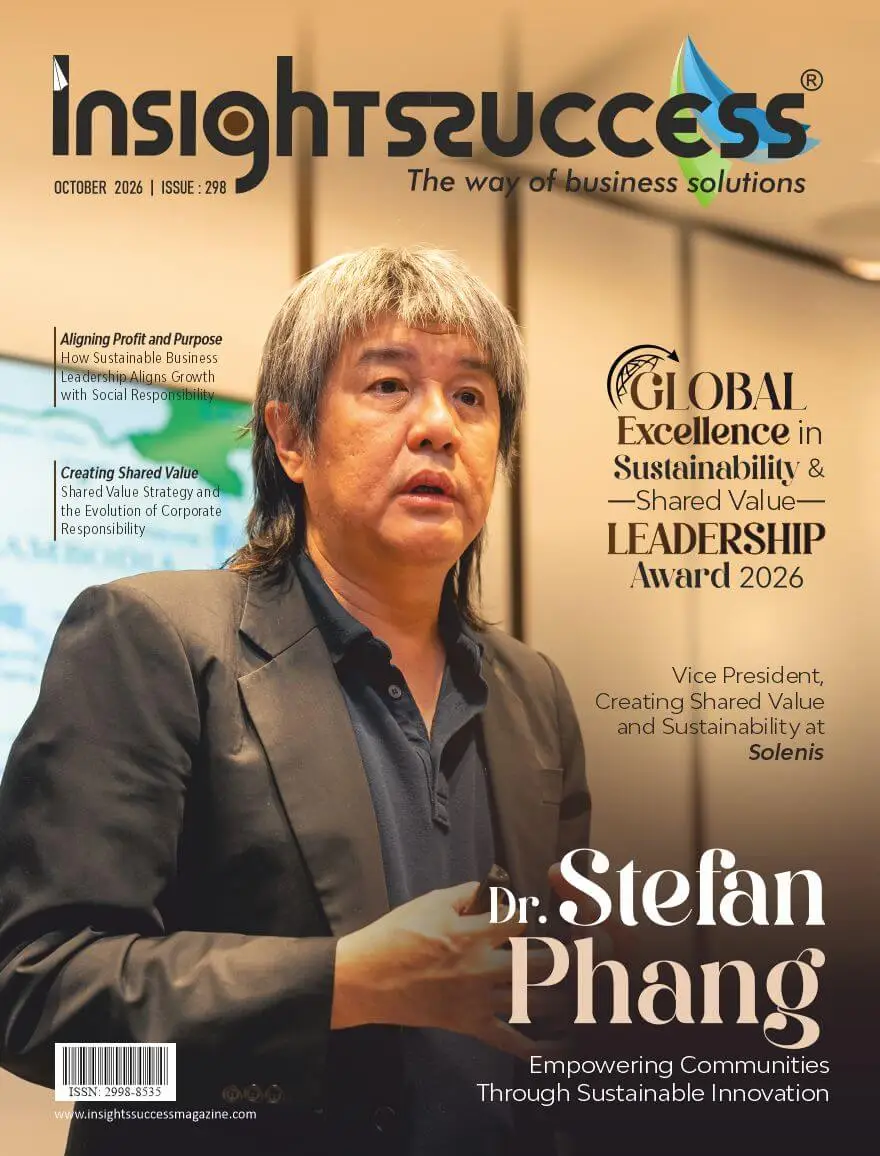
Global Excellence in Sustainability & Shared Value Leadership Award 2026
Global Excellence in Sustainability & Shared Value Leadership Award 2026 Celebrating influential wellness leaders, this feature showcases their contributions to holistic health, personalized wellness, and healthier lifestyles, inspiring individuals and communities to embrace lasting well-being. Digital Link Quick highlights Quick reads

Shared Value Strategy and the Evolution of Corporate Responsibility
Creating Shared Value The early versions of corporate social responsibility were largely philanthropic, businesses donating to causes, sponsoring community events, and publishing annual reports that documented their charitable giving. These activities were genuine enough in many cases, but they shared a common limitation: they were additions to business activity rather than expressions of it. The good a business did through its CSR programs existed separately from the good, or harm, it did through its core operations. Shared value strategy represents a more mature and more rigorous approach to the relationship between business and society, one that asks not what a company donates but how its fundamental business activity can be organized to create value for society and for the business simultaneously. Understanding the Meaning of Shared Value Strategy The concept rests on a straightforward but genuinely important insight: the competitiveness of a business and the health of the communities and environments it operates within are more closely connected than traditional business thinking has acknowledged. When communities are healthy, educated, and economically stable, they produce better workers, stronger customers, and more reliable supply chains. When natural systems are intact, they provide the inputs that business depends on. When social problems in a company’s operating environment are addressed, the risks and costs those problems impose on the business are reduced. Shared value strategy takes this insight seriously and builds it into how business strategy is developed, asking not just how the business can serve its shareholders but how it can be organized to create measurable value for the social and environmental systems it depends on, and how creating that value reinforces rather than conflicts with commercial performance. Challenging the Assumption of Trade-Offs The most persistent obstacle to genuinely integrating social and commercial goals in business has been the assumption that a trade-off is inevitable, that doing better by society requires accepting worse financial outcomes, and that maximizing financial performance requires accepting social and environmental costs. Shared value strategy challenges this assumption directly, not on philosophical grounds but on strategic ones. The assumption of inevitable trade-off reflects a static view of the relationship between business and its operating environment, one that treats social and environmental conditions as fixed background factors rather than as variables that business activity can influence in ways that affect commercial outcomes. When the dynamic relationship between business performance and social conditions is properly understood, opportunities to create value for both become visible in ways that the trade-off assumption prevents organizations from seeing. Turning Shared Value Strategy Into Action Articulating a shared value strategy is considerably easier than implementing one. The organizational changes required to genuinely integrate social value creation into how a business operates, changes to how performance is measured, how decisions are made, how teams are structured, and what expertise is developed within the organization, are substantial and require sustained leadership commitment to drive through. Measurement is one of the most significant implementation challenges. Businesses are sophisticated at measuring financial performance but frequently underdeveloped in their ability to measure the social and environmental value their activities create. Building the measurement frameworks that make shared value creation visible and accountable is essential for sustaining the organizational commitment that implementation requires. The Leadership Required to Deliver Shared Value Shared value strategy does not implement itself; it requires leadership that genuinely believes in the framework and is willing to make organizational decisions that reflect that belief even when short-term pressures create incentives to prioritize narrower financial metrics. Leaders who treat shared value as a genuine strategic commitment rather than a communications position make different decisions about where to invest, which partnerships to build, how to respond to social and environmental impacts, and how to measure and communicate organizational performance. The businesses where shared value strategy has moved from concept to genuine organizational reality are almost always those where senior leadership has championed it with authentic conviction rather than delegating it to a corporate responsibility function that operates at the margins of strategic decision-making. The Road Ahead Shared value strategy represents a significant evolution in how the relationship between business and society is understood and managed. It moves corporate responsibility from the periphery to the center of business strategy, from philanthropy to genuine value creation, and from the management of reputational risk to the pursuit of competitive advantage through social engagement. This evolution does not make the philanthropic and reputational dimensions of corporate responsibility irrelevant; they retain their importance. But it situates them within a broader framework that asks more fundamental questions about how business activity itself can be organized to produce social value rather than simply offsetting social harm through separately funded programs. The organizations that internalize shared value strategy most fully are building something that goes beyond better corporate citizenship; they are building genuinely more competitive and more resilient businesses, grounded in a more honest and more productive understanding of the relationship between commercial success and the social and environmental conditions that make it possible.

How Sustainable Business Leadership Aligns Growth with Social Responsibility
Aligning Profit and Purpose For decades, a persistent debate ran through business thinking about whether profit and social responsibility were genuinely compatible, whether a business could pursue both simultaneously or whether the demands of one inevitably came at the expense of the other. That debate has been largely settled, not by philosophical argument but by the observable performance of businesses that have committed seriously to both. The organizations demonstrating the strongest and most durable growth in the current environment are increasingly those whose leadership has found ways to align commercial ambition with genuine social and environmental responsibility. Sustainable business leadership is the framework through which that alignment is built and maintained, and it is producing results that make the either-or framing of the old debate look increasingly outdated. Foundations of Sustainable Business Leadership Sustainable business leadership is not a communications strategy or a set of reporting requirements. It is a genuine orientation of how a business is led, one that treats the long-term wellbeing of stakeholders, communities, and the natural environment as considerations that belong inside strategic decision-making rather than alongside it. This distinction matters enormously in practice. When sustainability is a communications exercise, it shapes what is said about the business. When it is a genuine leadership orientation, it shapes what the business actually does. Leaders who approach sustainability genuinely ask different questions than those who approach it performatively. They ask not just whether a decision is profitable but whether it is defensible across all the relationships the business depends on. They ask not just what the business can extract from its operating environment but what it should contribute to sustaining it. And they ask not just about this quarter’s results but about the kind of organization they are building and what it will look like in a decade. Recognizing the Importance of Stakeholder Relationships Sustainable business leadership rests on an expanded view of who the business is accountable to. The shareholder-first model that dominated business thinking for much of the twentieth century defined success narrowly, maximizing returns to those who owned equity in the business. The stakeholder model that has gained significant ground in recent decades recognizes that a business’s success depends on relationships with a much wider group, employees, customers, suppliers, communities, and the natural environment, whose interests cannot be consistently subordinated to financial returns without eventually undermining the business itself. This is not idealism; it is strategic realism. Employees who are fairly treated and genuinely developed produce better work. Customers who trust a business return and refer others. Communities that see a business as a positive presence support its continued operation. And natural systems that are treated as inexhaustible inputs rather than finite resources eventually demonstrate their limits in ways that disrupt business operations with increasing severity. Sustainable business leadership builds these relationships deliberately because they are the foundation on which durable commercial success is built. Integrating Purpose Into Business Strategy The alignment of profit and purpose is not achieved by adding a purpose statement to a business plan; it is achieved by genuinely integrating the organization’s purpose into how strategy is developed and how decisions are made. Sustainable business leadership that achieves this integration ensures that the business’s social and environmental commitments are not separate from its commercial strategy but are woven through it, shaping which markets are pursued, which products are developed, which partnerships are built, and which practices are acceptable in pursuit of commercial goals. This integration produces strategic coherence that businesses operating with purpose and profit as separate tracks rarely achieve. When the commercial and the social dimensions of a business are genuinely aligned, they reinforce each other rather than creating the internal tension that separate tracks generate, tension that eventually forces compromises that undermine both. Making Environmental Responsibility a Strategic Priority Sustainable business leadership takes the environmental dimension of business operations seriously, not as a regulatory compliance challenge but as a genuine strategic priority. The natural environment is not an externality to be managed around; it is a system whose health the business economy depends on, and whose degradation creates business risks that are becoming increasingly concrete and increasingly costly. Leaders who recognize this build environmental responsibility into how their businesses operate, managing resource consumption, reducing waste and emissions, building supply chains that minimize environmental impact, and investing in the transition to operating models that can sustain their performance without the environmental costs that current models carry. Looking Ahead The most compelling argument for sustainable business leadership is not philosophical; it is practical. The businesses building the most durable competitive positions, the strongest talent pipelines, the most loyal customer bases, and the most resilient operational models are disproportionately those whose leadership has committed genuinely to aligning profit with purpose. The alignment works not because it is morally required, though there is a strong moral case for it, but because it produces better businesses. That is a case that the evidence increasingly supports, and one that is becoming harder for serious business leaders to ignore.

Outstanding Woman in Operational Leadership Award 2026
Outstanding Woman in Operational Leadership Award 2026 Recognizing a woman who leads operational excellence in financial services. This edition explores strategic planning, systems thinking, digital transformation, risk management, regulatory compliance, customer experience, resilience, and effective organizational leadership. Digital Link Quick highlights Quick reads

Thelma Chilombo Siame: Building Resilient Financial Services Through Connected Leadership
Financial services organisations operate in an environment where the cost of getting operations wrong is rarely abstract. A failed system, a compliance gap, or a breakdown in customer experience can damage trust that took years to build. In this sector, operational leadership carries a responsibility that goes well beyond process management. It requires the ability to hold together technology, risk, regulation, and customer experience as one connected picture rather than a set of competing priorities. Across emerging markets, this challenge is becoming more complex. Digitalisation is moving faster than many operational structures were designed to handle. Regulatory expectations are tightening. Customer expectations are rising. The organisations best placed to navigate all of this are those whose operational leaders can think in systems rather than siloes. Thelma Chilombo Siame brings exactly that capability to her role. Her career across IT, operations, and customer experience has given her a perspective that is genuinely cross-functional. She does not manage one part of the business. She connects all of them, with resilience, accountability, and the customer always in view. From Systems Thinking to Operational Leadership Thelma’s path into operational leadership did not follow a straight line, and that progression has played an important role in shaping her approach to organisations. Trained in computer science, she developed an early instinct for systems thinking, learning to see an organisation as a set of interconnected processes rather than isolated departments. That foundation took her into IT and progressively into operations and customer experience. Each area added a different perspective to her professional approach. Technology taught her to think in processes, operations in outcomes, and customer experience in relationships. Over more than seventeen years, these experiences have come together to shape a leadership approach that connects technology, operations, people, and business outcomes. An Executive MBA later strengthened her ability to connect these different perspectives to strategy and governance. The different threads of her professional journey have therefore converged into a broader understanding of operational leadership. The defining experiences in her career have often been the challenging ones rather than the comfortable ones. Moments when a system failed or a customer’s trust was tested required her to lead the response and make decisions under pressure. These experiences shaped her understanding that“Operational leadership is less about control and more about building organisations that can absorb shocks and continue serving people well.” Turning Strategy into Measurable Operations Turning strategy into action requires deliberate translation. Strategic goals need to move beyond broad statements and become measurable initiatives that teams can understand, execute, and monitor. Thelma anchors this work through structured transformation roadmaps built around clear strategic pillars. This approach turns strategic intent into sequenced and measurable initiatives that can be implemented with clear ownership and accountability. According to her, consistency is supported through shared governance rhythms. Consolidated executive reporting brings IT and operational performance into one view, while structured forums, including fortnightly reviews with IT leadership, keep delivery visible and accountable at a working level rather than only at board level. Accountability is also built into the way initiatives are tracked. Clear ownership and follow-through ensure that strategic priorities move beyond documents and into implementation. For her, “Sustainability means designing operations that do not depend on individual heroics.” This has made standardising platforms across the group an important focus, helping ensure that performance is repeatable and does not rest on any single person. The Changing Face of Financial Services Financial services are undergoing changes driven by digitalisation, evolving customer expectations, and increasing regulatory requirements. Thelma identifies three trends that she believes will have a major impact on the sector. From an insurance perspective, she points to the shift towards embedded and bancassurance-style distribution. Under this approach, insurance and financial products are woven into other transactions rather than being sold only as standalone purchases. She believes this will become a dominant distribution channel across many emerging markets over the next decade. The second trend is the deepening of digital and mobile money rails. Across much of Africa, financial inclusion increasingly runs through a phone rather than a branch. This is pushing operators to design digital wallet architecture for microinsurance and mass-market segments that integrates natively with mobile money platforms. The third trend is the tightening regulatory and reporting environment. Evolving capital and solvency standards, together with insurance and pensions regulation, are pushing operations teams to build compliance into the architecture of a product rather than add it afterwards. Together, these developments mean digitalisation, distribution, and compliance can no longer be treated as separate workstreams. They need to be designed together from the outset. Otherwise, organisations risk retrofitting one against another later. Turning Inefficiencies into Opportunities Thelma begins the process of identifying operational inefficiencies with data that businesses already generate but may not interrogate properly. One example is customer complaints. Rather than viewing complaints simply as a customer service issue, she approaches them as opportunities for improvement. A RAG-rated dashboard can be used to identify where service breakdowns are concentrated and prioritise solutions based on impact rather than on which issue receives the loudest reaction. This approach turns complaints into an operational diagnostic tool. Her broader approach involves building recurring dashboards and reporting templates for business performance, operations, and IT delivery. Consistent reporting makes inefficiencies easier to identify because issues become visible through regular monitoring rather than only emerging during a crisis. When a genuine operational gap is identified, she approaches it as a design question rather than a blame question. The focus is on understanding what structure or incentive allowed the issue to persist and what needs to change to prevent it from recurring. This mindset can turn issues such as system outages into opportunities to strengthen platform resilience across the organisation rather than treating them as isolated problems requiring only a one-off fix. Leading Through a Critical System Outage One of the sharpest tests of Thelma’s operational leadership came during her IT career when a critical system outage affected access to mission-critical systems. The timing made the situation particularly challenging because

Women in Financial Operations and the Future of Financial Leadership
Redefining Financial Leadership Finance has long been regarded as a field led by a narrow type of person, and for many years that was largely true across most institutions. This picture has been changing, gradually but steadily, as more women take on roles that determine how money moves within an organization. Women in financial operations now hold positions that oversee budgets, manage risk, and guide decisions that once belonged almost entirely to others. This change matters for reasons well beyond fairness. It is altering what financial leadership actually looks like, and what it is likely to look like in the years ahead. Breaking Barriers in Financial Operations Financial operations once appeared closed to anyone who did not fit a familiar mold. Gaining entry was difficult, and rising beyond a certain level proved harder still. Many capable people were simply never given the chance to prove what they could do. This barrier has eased considerably over recent decades, though unevenly, and only through real effort behind the change. Women in financial operations today often credit mentors, changing company policy, and their own persistence for finally opening doors that had long remained closed. None of this came about on its own. Bringing a Different Kind of Judgment Leadership in finance has traditionally rewarded one narrow style of decision-making, often built on rigid formulas and a high tolerance for risk. This style works well in some situations and fails badly in others, and relying on it alone has cost many institutions a great deal over the years. Women in financial operations have often introduced a different balance to decision-making, one that weighs long-term stability alongside short-term gain rather than favoring the latter at the expense of the former. This is not a claim that one style is inherently better. It concerns the value gained from having more than one way of thinking present when important decisions are made. Changing What Mentorship Looks Like For years, mentorship in finance tended to follow familiar patterns, with senior leaders guiding people who resembled themselves. This left many capable individuals without the kind of guidance that makes a real difference early in a career. As more women reach senior roles, mentorship itself has begun to change. Women in financial operations who have reached leadership positions often make a deliberate effort to guide those coming up behind them, aware of how much a single mentor shaped their own path. This kind of intentional mentorship tends to widen opportunity more broadly, rather than simply filling one position at a time. Facing Barriers That Still Remain Progress does not mean every barrier has disappeared. Pay gaps continue across much of the industry, and unexamined assumptions about ability or ambition still shape decisions in ways that are hard to see directly yet easy to feel over time. Women in financial operations continue to face these barriers daily, often while doing the same work and carrying the same responsibilities as colleagues who encounter fewer obstacles along the way. Acknowledging these barriers honestly, rather than assuming that progress means the work is finished, remains essential to moving the field further forward. Shaping the Next Generation of Financial Leaders The next generation of financial leaders is already being shaped by what is happening today, in ways that will not become clear for years. Younger professionals watching current leaders take note of who holds influence and what kind of judgment earns reward at senior levels. As more women in financial operations move into senior positions, the examples available for younger professionals to follow grow more varied. This matters because people tend to picture their own future more clearly when they see someone like themselves already doing the work. A wider range of visible leaders tends to expand what feels possible for those still finding their footing. Why This Shift Benefits the Entire Field Diversity in leadership is sometimes framed narrowly, as a benefit only to the individuals gaining new opportunities. This view overlooks a larger point. Teams and institutions that draw on a wider range of perspectives tend to reach sounder decisions overall, catching blind spots that a more uniform group might miss entirely. Finance touches nearly every part of how a company and an economy function, which means the quality of judgment at its center matters well beyond any single institution. A field that draws fully on the talent available to it, rather than a narrower slice of it, tends to serve everyone better over time. In Summary Financial leadership is not fixed in place, and the people shaping it today differ from those who shaped it a generation ago. This shift carries real consequences for how decisions are made and who is positioned to make them. Women in financial operations have already changed what leadership in this field looks like, and the fuller effect of that change is still unfolding. The direction is clear enough, even as the pace of progress still has real room to pick up.