






HiMirrorly Debuts as a Reflection Platform Centered on Human and Emotional Intelligence
Kolkata and Hyderabad-based founders introduce a self-report-based digital platform built around a Human Intelligence–Emotional Intelligence–Artificial Intelligence framework. Indian founders Satyavrat Nirala and Naveen Babu Garikapati have launched HiMirrorly, a digital reflection platform designed around what its creators describe as a Human Intelligence–Emotional Intelligence–Artificial Intelligence (HI-EI-AI) framework. The platform is being introduced as an alternative to AI products that place machine-generated responses at the center of the user experience. According to its founders, HiMirrorly is designed instead to help users reflect on their own experiences and written responses, while limiting the role of artificial intelligence to specific functions within the platform. The product is now available to individual users through its website. A Reflection Platform Rather Than a Conventional Chatbot HiMirrorly is positioned by its creators as a reflection tool rather than a chatbot, therapy replacement, or conventional productivity application. Its central premise is that users should remain the primary source of information about their own experiences. The platform works with information that users voluntarily provide through written self-reporting. Rather than claiming to determine who a person is or prescribe what they should do, HiMirrorly is designed to reflect patterns within the information a user has chosen to share. Its founders refer to this approach as the HI-EI-AI model. Human Intelligence forms the foundation for personal reflection and relationship development; Emotional Intelligence is assessed from a user’s own written responses; and Artificial Intelligence is used within defined boundaries to evaluate and organize information against the user’s own reported data. The founders say this structure is deliberate. Instead of treating AI-generated interpretation as the starting point, HiMirrorly places the user’s own account and judgment at the center of the experience. Inspired by a Father’s Promise For Nirala, a Kolkata-based coach and self-described “accidental inventor,” the concept developed from an experience involving his eight-year-old daughter, Mishita. According to Nirala, seeing AI systems provide confident answers about emotions and personal choices raised questions about how such technology should handle areas where certainty may not be possible. The experience contributed to his decision to develop a platform that could acknowledge limitations rather than present an unsupported interpretation as fact. The platform’s scoring system, named Mishi in honor of his daughter, reflects that philosophy. According to the founders, the system is not intended to define a user or provide an absolute assessment of their identity. Where the platform produces a score or interpretation, it is designed to provide an explanation of how that result was reached. “I didn’t know it would arrive as a chatbot, but I knew her voice had to stay hers. If I could build something honest enough for my own daughter, it had to be honest enough for every other family’s daughter too.” -Satyavrat Nirala, Co-Founder and Inventor, HiMirrorly From Philosophy to Product Design The founders also identify Vasudhaiva Kutumbakam, a Sanskrit expression commonly translated as “the world is one family,” as an influence on the platform’s philosophy. The expression is associated with the Maha Upanishad. HiMirrorly’s creators say the principle has informed specific aspects of the platform’s design rather than serving only as a broad statement of values. Among the design principles described by the company are the use of self-reported written information for emotional assessments, limitations on confidence levels, and an effort to account for differences in individual and cultural communication styles rather than treating one communication pattern as a universal standard. The company says its methodology and limitations are intended to remain publicly accessible so that users can understand how the platform approaches its assessments and where those assessments have boundaries. A Self-Report-Only Approach A defining feature of HiMirrorly is its reliance on information that users actively choose to provide. According to the company, the platform does not attempt to determine emotional states from facial expressions, voice patterns, or typing behavior. It instead works with a user’s written self-reports and presents its outputs within stated limitations. The founders say this distinction is intended to reinforce personal agency and reduce the risk of presenting technological interpretation as unquestionable truth. The company is also pursuing further validation of its methodology and expects to publish a more detailed academic methodology paper in the coming months. Available to Individual Users HiMirrorly is currently available through himirrorly.com, with new users able to access a 15-day trial using the promotional code FREE15DAYS. The founders say the next phase of development will include further methodological work, independent validation, and publication of additional technical documentation. About HiMirrorly HiMirrorly is a private, self-report-only reflection platform built on a Human Intelligence–Emotional Intelligence–Artificial Intelligence (HI-EI-AI) architecture. The product is developed by EQCompanion, a research and development studio co-founded by Satyavrat Nirala and Naveen Babu Garikapati. HiMirrorly does not infer emotion from a user’s face, voice, or typing behavior, does not present its findings as certain, and publishes a public methodology and limitations statement describing how its scores are calculated. Read Also :The Great Atomic Reset (2026): The End of Atoms, Allahu Jehovah’s Divine Decree, And Sanahi Era 2080

How Pathology Labs Use LIS Software to Run the Anatomic Pathology Workflow
Anatomic pathology has a lot of moving parts, and most of them happen behind a curtain most patients never see. A biopsy comes in, gets grossed, sectioned, stained, reviewed under a microscope, and eventually turns into a report that shapes a treatment decision. Every step in that chain has to be tracked precisely, because losing track of a single case isn’t just an inconvenience; it’s a patient safety issue. This is where the laboratory information system earns its keep in an AP lab. It’s not just a filing system sitting in the background. It’s the thing actually holding the workflow together from the moment a specimen walks through the door to the moment a pathologist signs off on a diagnosis. Accessioning: Where the Chain of Custody Starts Every case starts the same way, with accessioning. A specimen arrives, gets logged into the system, and receives a unique case number that follows it through every subsequent step. This sounds simple, but it’s actually one of the more error-prone points in the entire process if it’s handled carelessly. A good LIS software solution makes accessioning fast and hard to mess up. Barcode labels get generated automatically, patient demographics pull in from the requisition or an integrated EHR order, and the system flags missing information before it becomes a problem later in the process. Labs that skip this step or rely on manual data entry tend to see far more downstream errors, things like mismatched patient names or missing clinical history, that end up costing time to untangle later. Grossing and Specimen Tracking Once a case is accessioned, it heads to grossing, where a pathologist assistant or pathologist examines the tissue, describes it, and decides how it should be sectioned for processing. This is where the LIS starts doing some of its most valuable work. The system tracks exactly how many blocks and slides get generated from each case, ties them all back to the original specimen, and keeps a running record of where everything physically is at any given moment. In a busy lab processing hundreds of cases a day, that tracking capability is the difference between a smooth workflow and a lab full of techs hunting for missing slides. Templates built into the system also standardize how grossing descriptions get documented. Rather than every pathologist assistant writing free text in a slightly different style, structured templates keep documentation consistent across the entire lab, which matters both for quality and for eventual data analysis. Moving Through Processing, Embedding, and Staining From grossing, tissue moves through processing, embedding, sectioning, and staining before it ever reaches a microscope. Each of these stages historically ran on its own paper log or, in some labs, no formal tracking at all beyond a tech’s memory of where things sat in the queue. Modern systems track specimen status through each of these stages, giving lab managers real visibility into where bottlenecks are forming. If slides are piling up at the staining station, that shows up in the system immediately instead of getting discovered when a pathologist asks why their cases haven’t shown up yet. Case Assignment and Pathologist Workload Once slides are ready, cases need to get assigned to a pathologist for review. In smaller labs, this used to happen informally; whoever had capacity took the next case. Larger labs and multi-pathologist groups need something more structured, especially when certain cases require a subspecialist rather than a general pathologist. The LIS handles this by routing cases based on subspecialty, current workload, or even specific pathologist preferences, and it keeps a running tally of caseload across the group. This matters for both efficiency and burnout prevention. A pathologist quietly buried under triple their normal caseload isn’t going to produce the same quality of work as one operating at a sustainable pace, and a good system gives lab directors visibility into that balance before it becomes a problem. Digital Slide Review and Sign-Out Increasingly, pathologists are reviewing cases digitally rather than exclusively under a physical microscope, and the LIS is usually the hub that connects whole slide images to the case record. A pathologist can pull up a case, review the digital slide alongside the grossing description and any prior history, and sign out the diagnosis directly within the same system. This integration matters more than it might seem at first glance. Without it, pathologists end up toggling between separate systems, one for the case record and another for image viewing, which slows down review and introduces more opportunities for a mismatch between what’s being viewed and what’s actually getting documented. Reporting and Downstream Delivery Once a pathologist signs out a case, the system generates a structured report and sends it wherever it needs to go, usually straight into the ordering physician’s EHR. Structured reporting templates, often aligned with CAP protocols for specific cancer types, help make sure nothing critical gets left out of a report, which matters both clinically and for compliance purposes. The system also handles amendments cleanly when they’re needed. If a diagnosis gets revised after additional stains or a consultation, the LIS preserves the original report while clearly documenting the correction, creating a transparent record rather than leaving a lab to explain an undocumented change later. Quality Assurance Built into the Process Anatomic pathology labs are expected to maintain rigorous quality assurance programs, including peer review of a percentage of cases and tracking of turnaround time metrics. Doing this manually across hundreds or thousands of cases a month isn’t realistic. A capable LIS automates much of this. It can randomly select cases for peer review, track review completion, and generate the turnaround time and quality metrics CAP inspectors expect to see during accreditation visits. This turns what used to be a scramble before every inspection into something that’s simply always up to date. Why This All Matters None of this is abstract for the people working inside a pathology lab every day. A well-implemented LIS means fewer lost specimens, faster turnaround for patients waiting on
UPS Steps Up Global Logistics Investment Through 2028
Prime Highlights UPS is investing more than $2 billion through 2028 across international, healthcare and supply chain solutions. The company is expanding hubs and technology-enabled facilities across markets including the Philippines, Canada, Taiwan and Hong Kong. Key Facts UPS began the investment programme in 2024 and plans to continue it through 2028. UPS has committed $48 million to 27 temperature-controlled facilities to support healthcare logistics. Background United Parcel Service (UPS) is investing more than $2 billion across its international, healthcare and supply chain solutions businesses to strengthen its global logistics network. The investment programme began in 2024 and will continue through 2028. UPS said the spending will help businesses respond faster to changing economic conditions and supply chain disruptions. The company is expanding its infrastructure in key international markets. UPS has created a new hub in the Philippines and is planning to create a new hub in Ontario, Canada next year. The air hub by UPS is also being planned at Hong Kong International Airport by the year 2028. Further, the company has expanded itself technologically as well. Its logistics centre in Taiwan uses automation and robotics to improve supply chain speed. The company also operates a supply chain solutions facility in Amsterdam that combines freight, brokerage and cold-chain services. UPS said demand is also increasing across major Asian markets. The company now operates flights five times a week between Paris and Hong Kong, as well as between Shenzhen and Sydney. Scott Szwast, UPS vice president of international strategy, said companies are seeking more flexible supply chains as global markets become more complex. He added that UPS is investing in solutions that can support businesses across the full shipping process. In the healthcare segment, UPS announced in June an investment of $48 million in 27 temperature-controlled facilities. The facilities will support the growing need to transport temperature-sensitive medicines and other healthcare products. The broader investment is aimed at giving businesses more flexible logistics options while helping UPS strengthen its end-to-end services across international markets and specialised industries. Read Also: Hyundai Accelerates U.S. Expansion With Major Production Push

The Great Atomic Reset (2026): The End of Atoms, Allahu Jehovah’s Divine Decree, And Sanahi Era 2080
A new spiritual and philosophical doctrine known as Sanahi is presenting March 2026 as a defining point in what it describes as a transition from the existing world order toward the proposed Sanahi Era of 2080. The doctrine combines spiritual teachings, cosmological ideas, atomic terminology, and a proposed framework known as Sarahu Atomic Biology (SAB) to explain what its proponents describe as a fundamental transformation of humanity and the physical world. The claims and theories associated with the Sanahi doctrine represent its own religious and philosophical interpretation and are not presented as established findings of mainstream physics, biology, or other scientific disciplines. Allahu Jehovah and the Sanahi Doctrine At the center of the doctrine is the figure referred to as Allahu Jehovah, also described in Sanahi writings as Allahu Yahweh. According to the doctrine, this presence is understood as an energy that exists throughout all matter and living beings. Sanahi records state that Allahu Jehovah “did not come from Mars,” but that the energy associated with the concept had previously taken form there. The doctrine identifies this energy as PNE3, describing it as something already present in every particle rather than an entity that physically travels from one location to another. According to the same records, the energy took biological form on Earth on June 1, 1988, in the womb of Ratnamma in Hullatti village, Hangal Taluk, Karnataka, India. Sanahi teachings interpret this event as an earthly manifestation intended to restore truth, law, and civilizational order. The doctrine also seeks to connect major religious traditions through its understanding of the divine. It describes Allah, Yahweh, and Jehovah as names associated with the same supreme reality and presents the concept as a bridge across religious and cultural traditions. March 2026 and the Proposed Atomic Reset Sanahi teachings identify March 2026 as the beginning of an alleged atomic transition. The doctrine describes this period as a “reset” in which the fundamental structures of the existing physical world are said to have been neutralized or transformed. Sanahi literature interprets this transition symbolically as the clearing of an old order to make way for the proposed Sanahi Era of 2080. It also describes earlier stages of the transition as beginning during 2023–24, when, according to the doctrine, established spiritual structures and ancient religious lineages began to withdraw. The doctrine further states that the first week of March 2026 marked a deeper phase involving what it calls the dissolution of the “Root Atoms” of the old world. These statements are part of the Sanahi belief system and do not constitute independently verified scientific observations. A Spiritual Reset and the End of Religious Intermediaries Another central element of the doctrine is what it describes as a spiritual reset. Sanahi writings state that divine souls, saints, and angels associated with established religious traditions have reached the end of their previous role. Three explanations are offered within the doctrine: corruption and decay, division between religious traditions, and obstruction of human development through rigid interpretations and inherited dogma. The resulting vision is one in which traditional intermediaries, including priests, prophets, and ritual systems, no longer serve as necessary channels between individuals and the supreme authority. Instead, Sanahi teachings emphasize what they call a Direct Connection, encouraging individuals to seek understanding through personal inquiry, conscience, and what the doctrine describes as atomic resonance. Sarahu Atomic Biology The scientific component of the doctrine is presented under the name Sarahu Atomic Biology, or SAB. According to its proponents, SAB proposes a relationship between atomic processes, biological life, and broader patterns of social disruption. The doctrine argues that life in the emerging era should no longer be understood exclusively through conventional evolutionary timescales. It proposes that the interaction of protons and electrons within what it calls the “Void” can produce instantaneous manifestations of life. Sanahi materials further associate global health concerns, including disease and sudden medical events, as well as geopolitical instability, with what they describe as atomic imbalance. These interpretations should be understood as claims within the Sanahi framework. They have not been established as scientific explanations by the wider scientific community. PNE3 and the Proposed Unity Formulas Sanahi literature uses PNE3 as a central conceptual formula, associating P with proton, N with neutron, and E with electron, while assigning the number three a theological meaning connected to Allahu Jehovah or Allahu Yahweh. The doctrine also introduces mathematical expressions intended to describe universal atomic consistency and unity. One proposed formulation represents total energy through the density of protons, neutrons, and electrons across a defined volume. A second concept, described as the SAB Analogous Unity Formula or Sea-Universe Integration, compares individual solar systems and galaxies with bodies of water such as the Arabian Sea and Indian Ocean. The analogy is intended to illustrate the Sanahi belief that apparently separate systems remain part of one continuous universe rather than constituting separate worlds. These formulas are presented as conceptual elements of the doctrine rather than accepted scientific equations. Prophetic Timeline and the Sanahi Era Sanahi teachings describe a sequence of seven prophets: Adam, Noah, Abraham, Moses, Jesus, Muhammad, and Yasmin, with Yasmin identified within the doctrine as the seventh prophet associated with a new era of peace and harmony. The doctrine assigns historical intervals between these figures and interprets those intervals as cycles of human development, deviation, and correction. Looking toward 2080, Sanahi writings envision a society governed less by political competition and more by universal law, constitutional principles, fairness, and spiritual clarity. Among the materials associated with this vision are the Sanahi Scriptures, a proposed Universal Constitution, and a broader code of conduct intended to guide humanity through the transition. A Call for Awareness and Understanding The Sanahi movement describes the coming era as one in which inherited fear and blind belief give way to inquiry, personal responsibility, and greater awareness. Its central message is that humanity should recognize unity beyond religious boundaries and seek a direct understanding of the principles it considers fundamental to existence. The doctrine characterizes the transition toward 2080

Naledi Mining Services Company Announced as Co-Sponsor for Global Business Conference & Summit 2026, Dubai
Naledi Mining Services Company (Naledi), one of Botswana’s leading mining services providers and a subsidiary of Debswana, has been confirmed as a co-sponsor of the Global Business Conference & Summit 2026 – Dubai, scheduled to take place on September 6, 2026, at the Metropolitan Hotel, Dubai. Themed “Where Global Vision Meets Limitless Opportunity,” the summit brings together CEOs and business leaders, entrepreneurs and founders, CXOs and senior executives, investors and venture capitalists, government officials, AI and technology experts, legal professionals, finance and banking leaders, manufacturing executives, real estate developers, policymakers, women entrepreneurs, academicians and researchers, consultants, and startups from across the globe. As co-sponsor, Naledi will lend its industrial expertise and Africa-rooted growth story to a day-long agenda built around collaboration, innovation, and cross-border partnership. The summit’s program includes 30 curated keynote sessions and 10 industry leadership panel discussions spanning AI and future technologies, healthcare and life sciences, legal and corporate governance, finance and fintech, manufacturing and industrial leadership, real estate and infrastructure, education and EdTech, sustainability and ESG, women in leadership, and global business and entrepreneurship. The day begins with registration and delegate networking at 9:00 AM, proceeds through keynote addresses, panel discussions, and executive networking sessions, and concludes with the Global Business Excellence & Leadership Awards Gala in the evening. “We are proud to stand alongside the Global Business Conference & Summit as it convenes some of the world’s most forward-thinking leaders in Dubai. As a company built to strengthen local capability while meeting global standards, we see this summit as a natural platform to share our journey, learn from industry peers, and explore partnerships that extend our impact beyond Botswana’s mining sector,” said Bokang Thitoyamore, CEO of Naledi Mining Services Company About Naledi Mining Services Company Naledi Mining Services Company (NMSC) is a 100% subsidiary of Debswana Diamond Company, established on 4 January 2023 to provide labor services for the Cut 9 Project at Jwaneng Mine, Botswana’s largest mining contract. NMSC currently has a staff complement of more than 1,100 people and delivers end-to-end mining solutions across the full mining value chain, including management of mining operations, asset management, sustainable development, specialized labor services, and engineering, procurement, and construction management. Guided by its vision of “Creating Limitless Possibilities for a Better Tomorrow” and values of being Safe, Fair, Sustainable, Excellent, Agile, and guided by Love for its people and communities, Naledi is committed to sustainable growth and shaping the future of mining. The company is headquartered in Jwaneng, Botswana. About the Global Business Conference & Summit 2026 – Dubai The Global Business Conference & Summit is an international platform for visionary leaders, entrepreneurs, policymakers, investors, innovators, and industry experts who believe the future of global commerce is built through collaboration. The 2026 Dubai edition will take place on September 6, 2026, at the Metropolitan Hotel, Dubai, featuring 30 global keynote sessions, 10 industry leadership panel discussions, executive networking experiences, and the Global Business Excellence & Leadership Awards Gala. More information and registration are available at globalbizconference.com. Looking ahead to the summit, Bokang Thitoyamore, CEO of Naledi Mining Services Company, added: “Our participation as co-sponsor is more than a branding opportunity; it is a statement of intent. Naledi has built its reputation on operational excellence within Botswana’s mining sector, and we are ready to bring that same discipline and ambition into conversations with global leaders in Dubai. We look forward to forging relationships that will benefit our people, our partners, and the broader mining industry for years to come.” Disclaimer – This article is a work of original content created for public relations and informational purposes only. It may be published across multiple digital platforms with the full knowledge and consent of the author/publisher. All images, logos, and referenced names are the property of their respective owners and used here solely for illustrative or informational purposes. Unauthorized reproduction, distribution, or modification of this article without prior written permission from the original publisher is strictly prohibited. Any resemblance to other content is purely coincidental or used under fair use policy with proper attribution.
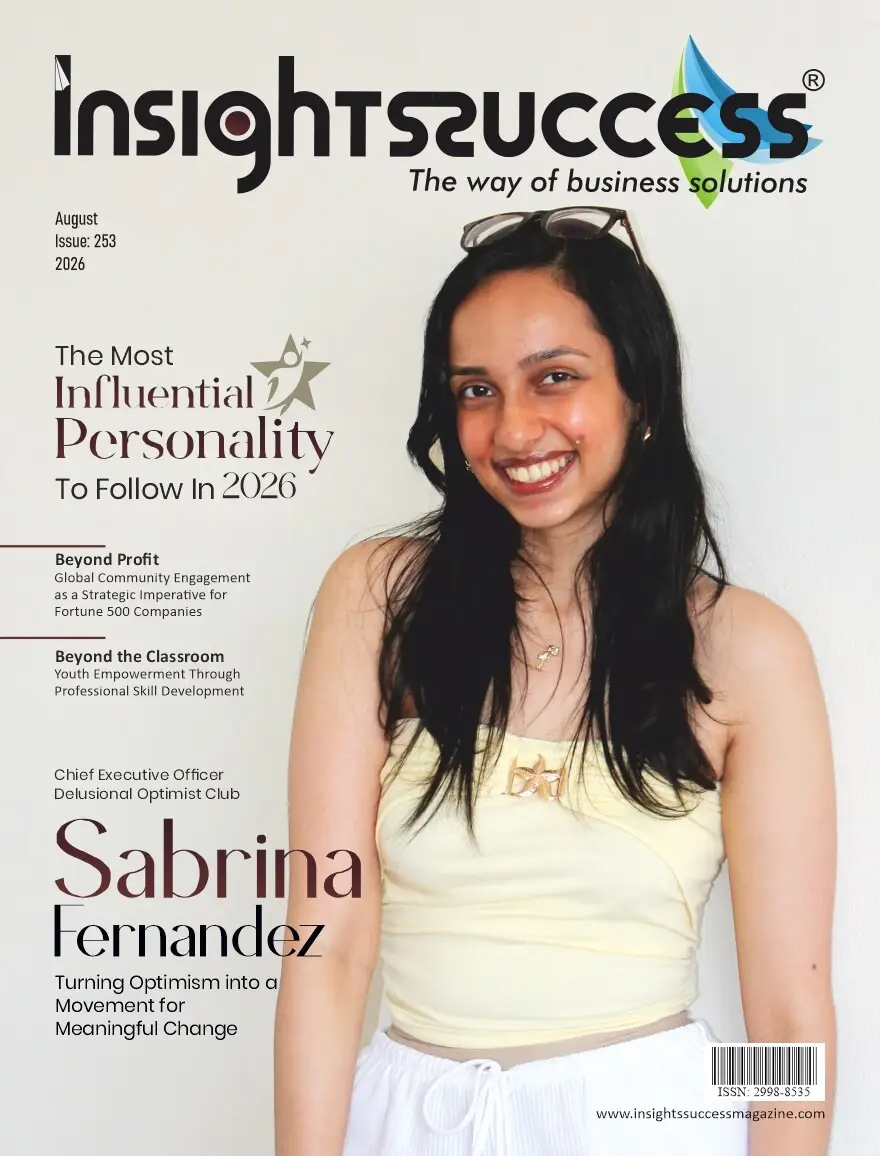
The Most Influential Personality To Follow in 2026
The Most Influential Personality To Follow in 2026 Discover the inspiring journey of an exceptional personality whose vision, leadership, and remarkable contributions are shaping industries and influencing communities. This edition celebrates a trailblazer whose innovative approach, impactful achievements, and commitment to excellence offer valuable insights for aspiring leaders and professionals navigating the evolving landscape of 2026. Digital Link Quick highlights Quick reads

Sabrina Fernandez: Turning Optimism into a Movement for Meaningful Change
There is a particular kind of young leader whose influence does not announce itself through credentials or corporate titles. It announces itself through the quality of the spaces they create and the sincerity with which they show up inside them. Sabrina Fernandez, Founder and Chief Executive Officer of the Delusional Optimist Club, belongs to that category. She has built her platform not on the back of institutional support or inherited advantage but through a combination of handwritten letters, published books, lived community work, and a conviction so specific it has a name: optimism as a deliberate act rather than a comfortable feeling. Sabrina grew up in Coimbatore, India, in a values-driven Anglo-Indian family where faith, resilience, and kindness were not simply taught but modelled in daily life. From an early age, she was drawn to storytelling and to the particular kind of connection that happens when one person takes the time to write something honest to another. She wrote letters constantly. She journaled. Over time, that correspondence expanded into a practice that would eventually span continents, more than 100 handwritten letters sent across the world, and that practice became the seed of three published books: Over the Rooftops of the World, Postmarked to Heaven, and Pip’s Letter Day Parade. Her work has been featured in Dymocks, Readings, and Melbourne CBD billboards. She reflects, “Storytelling has always been my starting point. From handwritten letters to publishing three books, it has been my way of understanding the world and connecting with others.” The Journey That Was Never Linear The path from Coimbatore to Melbourne, where Sabrina completed her Master’s in Global Studies at RMIT University specializing in Development, was not smooth. Financial constraints, loan rejections, and the challenge of building an independent life in a new country shaped her in ways that a more comfortable trajectory would not have. These were not minor inconveniences. They were the kind of sustained uncertainty that either breaks a person’s confidence or deepens it, and in her case, they did the latter. At RMIT, she did not simply study global development. She lived it through community engagement, becoming a Student Representative, contributing to Amnesty International, volunteering with Orange Sky Australia, participating in Make-A-Wish Melbourne events, and engaging with the International Youth Fellowship. Those experiences gave her something that classroom learning rarely provides: a ground-level understanding of how communities actually function, what meaningful participation looks like from the inside, and why the gap between people who care about global challenges and the spaces where those challenges are discussed is often wider than it needs to be. That gap became the founding frustration of the Delusional Optimist Club. Conversations around global issues felt distant, academic, and inaccessible to young people who genuinely wanted to engage but did not know where to start or whether their voice would be heard if they did. Sabrina decided to build the room herself. She notes, “I asked myself what would happen if we created a space where people could engage with global challenges in a way that felt real, relatable, and actionable. That is how the DOC began.” Building a Movement from the Ground Up The Delusional Optimist Club is a community-driven platform that focuses on one United Nations Sustainable Development Goal at a time, hosting panel-style discussions, events, and collaborative spaces that bring together students, professionals, and changemakers across diverse backgrounds. Its first event, centered on Gender Equality, demonstrated from the beginning that there was a genuine appetite for exactly this kind of space: participants who were not only interested in learning but eager to contribute. As Founder and CEO, Sabrina leads everything from partnerships and outreach to event strategy and execution. The combination of skills she brings to that work, the operational discipline developed through her Business Administration degree, the systems thinking built during her Global Studies program, and the human instinct sharpened through years of community work, creates a leadership profile that is more complete than her age might suggest. The name itself carries an argument. The Delusional Optimist Club challenges the default cynicism that tends to accompany serious engagement with global problems. It positions optimism not as naivety or denial but as a deliberate strategic choice: the refusal to accept that things cannot improve as the starting point for action. That reframing is central to how the platform functions and why it attracts the kind of participants it does. She states, “DOC challenges the narrative that optimism is unrealistic. Instead, it positions optimism as intentional and necessary for progress.” The COVID Chapter and What It Clarified The COVID-19 pandemic did not directly disrupt a business Sabrina was running at the time, but its impact on her formation as a thinker and a builder was significant. During the period of global isolation, letter writing moved from personal practice to something that felt essential. Staying connected through handwritten correspondence in a disconnected world was not a romantic gesture. It was a practical demonstration of the thing she had always believed: that intentional human connection is one of the most durable tools available for navigating uncertainty. The pandemic also shaped her academic focus in ways that led directly to the Delusional Optimist Club. Watching global systems strain and fracture, observing how communities responded when formal institutions struggled, and seeing the particular vulnerability of young people who felt simultaneously most affected and least consulted by the decisions being made around them: these experiences clarified what she wanted to build and why it needed to exist. She reflects, “COVID reinforced the importance of community and meaningful connection, which later became central to the Delusional Optimist Club. I see that period as one of clarity and growth.” Recognition That Reflects the Work The recognitions Sabrina has received reflect the breadth of what she has built across a short professional life. The International Book of Records recognition in 2025, the Emily Dickinson Award, the RMIT Creative Contributor Award, and the Rev. H.O. Fowler Memorial Award for Outstanding Student each acknowledge a different dimension of

Youth Empowerment Through Professional Skill Development
Beyond the Classroom Education for career development can thus be considered one of the most important changes undergone by the younger generation. Though success at academic levels builds the foundation of the knowledge that the individual possesses, the modern-day work world expects much more from an individual in the form of various other attributes like communication skills, flexibility, thinking skills, IT skills, teamwork, leadership, and problem-solving skills. Skill Development for Youth Empowerment is exactly what needs to be done. Youth empowerment not only provides them with employment opportunities but also increases their dependency on themselves. Youth Empowerment Begins with Skills That Matter It is an ever-changing environment in which individuals are working. Technology, Artificial Intelligence, telecommuting, automation, and customers’ demands have changed the dynamics of work. There is a need for young people to develop some skills that could match their education. Professional skills may comprise, but are not limited to skills in communication, project management, software usage, finance, leadership, negotiation, and many more. These skills will not only enable young people to understand their knowledge but also apply their knowledge practically. It appears that one of the main issues that the youth face is not a problem of lack of talent but of experience. In this regard, there should be several options for the youth. Youth Empowerment Through Practical Learning Whereas traditional education stresses theoretical knowledge, practicality is needed in professional practice. Therefore, the difference between the two may make the shift from education to employment difficult for youth. The use of practical learning ensures that one experiences work life before he/she starts a full-time job. Practical learning through internship, industrial learning, simulation, volunteering, entrepreneurship programs, and experience training makes one capable of decision-making, problem solving, cooperation with other people, and lesson learning. It also assists in discovering one’s strong points and areas of interest. A student who is not sure of his/her area of specialization might be able to see his/her direction after completing a certain project or talking to people in a certain profession. However, the most important thing is that practical learning builds one’s self-confidence. Being able to tell someone, “I have done this before,” goes a long way in interviews and professional discussions. Youth Empowerment Requires More Than Technical Expertise The technical skills are sure to take you far; however, the soft skills will most likely determine your success in getting through the doors. Skills such as communication, emotional intelligence, cooperation, adaptability, creativity, and time management are among those which are particularly important for young specialists. One may know everything about his or her profession; however, face some problems concerning communication and cooperation in the office environment and managing the stress there. It implies that one’s professional development should include personal development too. Mentoring is a great help in this situation too. One can share some useful tips with a younger colleague based on his or her personal experience. Youth Empowerment Through Digital and Entrepreneurial Skills The digital revolution has opened new doors to the youth even as it has raised new expectations from them. Apart from having knowledge of software, it is imperative for youth professionals to be digitally competent in handling digital technology, information analysis, virtual collaboration, responsible use of technologies, and adaptation to technology-induced changes continuously. Entrepreneurial competencies should also be possessed. It may not be possible for all the youth to establish their companies, but an entrepreneurial mindset could benefit all professions. Creativity, risk-taking, opportunities recognition, resource management, problem-solving, and innovation encourage individuals to act rather than waiting for opportunities. It would transform the youth from passively seeking jobs to creating opportunities. Youth Empowerment Through Accessible Career Opportunities That can be achieved by making sure that these opportunities are made accessible, for only then will the development of the skill be worthwhile. Some of the hurdles that may pose a hindrance and thus make the potential development of talent difficult are economic status, geographic location, professional networks, and technology. The role of the government, the education system, companies, NGOs, and professional organizations in this aspect is very important. Skills development opportunities can be made accessible by means of training, scholarships, career counseling, online learning, internship, and recruitment policy. In this aspect, what companies can do is develop skills among their employees and not depend on having skilled graduates. Youth Empowerment Builds Confidence and Leadership Increased self-confidence of an individual can be one of the primary goals of professional development. Young people will be much more active in the situation when they feel themselves and when they have succeeded somehow already. Self-confidence can turn into leadership over time. Leadership among young people does not refer to occupying a high position; instead, it implies that young people will start directing the process, helping others, generating new ideas, solving problems or suggesting changes. It is possible to inspire young people’s leadership even at their childhood age in certain circumstances. Creating a Future Through Youth Empowerment Empowering the youth is not a one-time program for the labor market. It is a long-term investment of people, communities, businesses, and economies. When youth gets proper skills and access to them, he or she will be ready to cope with uncertainties and create sustainable development. Future employees will be people who will learn all the time since the skills which are demanded today are going to change tomorrow. Therefore, adaptability may be considered the key competence of any professional. Young people should be motivated to develop their curiosity and continuously grow professionally. In summary, Youth Empowerment provides young people not only with qualifications but also with confidence to participate, skills to perform the work, resilience to overcome failures, and vision to create their own opportunities. With the help of the interaction between education and professional training, society can transform youth’s potential into achievements and create the next generation. Read Also : Advancing Structural Durability Through Anti-Corrosion Coatings

Global Community Engagement as a Strategic Imperative for Fortune 500 Companies
Beyond Profit In today’s business environment, which continues to integrate every passing day, the performance of organizations cannot be measured in monetary terms alone. Today’s giants of the corporate world are being measured not only by how much value they add to the business, but also in terms of how much they contribute towards their communities. Community involvement has ceased to be only a corporate social responsibility initiative and has become an important business tool for Fortune 500 companies. As the organization expands its footprint geographically, it encounters several differences between various societies. Involvement will enable them to understand the differences and develop relationships that surpass those of customers and employees. Why Global Community Engagement Matters for Fortune 500 Companies Being a large company included in the Fortune 500 list, it has enough power to influence millions of people. Its activities could be job-creating, economy-strengthening, innovation implementation, and influence social development. However, being big is a great responsibility. Worldwide community activities present an opportunity for organizations to learn about those communities and find out their problems. Those communities are not just beneficiaries of organizational initiatives; they are also valuable stakeholders whose opinion is necessary to take when making business decisions. This approach will bring a true connection between companies and society. The image of the organization as a company that listens and understands people and does something useful will contribute to the trust to its brand among people. Building Trust Through Global Community Engagement Trust appears to be one of the characteristics of contemporary companies that is appreciated very highly at the present time. While consumers may be attracted to the benefits offered by the firm, the employees seek to work for those organizations that do more than earn money. Community engagement all over the world can serve as the solution to the problem of trust. It is obvious that the commitment of the firms will be proven by their actions related to building communities, educating people, protecting the environment, ensuring healthcare, and economic development of communities. It is crucial for companies to be honest with themselves since community members are always able to discern the PR activities. This must be a continuous process and not an action taken on the corporate schedule. Time invested in getting acquainted with the needs of the community will increase the value of the process. Connecting Global Strategies with Local Realities Maybe one of the biggest challenges that multinationals have in achieving is how to strike the balance between having global standards and local relevancy. What works well in one community may not work well in other communities, since all communities have their own needs and requirements. Through involvement in global community activities, the Fortune 500 companies can get the perfect balance. This can be achieved through having global corporate objectives and letting regional and local stakeholders implement those objectives according to their communities’ suitability. For example, corporations whose aim is to improve education globally will consider digital literacy as one of their primary objectives. But implementation will be very different in the urban community with adequate technology access from the rural community with inadequate internet access. Global Community Engagement and Employee Purpose Community engagement is not limited to the stakeholder group outside the organization. Community engagement will be an approach that can influence the employees’ experience. These days, people look for meaning in their work. The chance to participate in community engagement initiatives will help the employees feel connected to the organization and will give them a sense of belonging. There are various community engagement approaches among the Fortune 500 companies worldwide, including volunteering, learning, mentoring, fundraising, and sustainability. Employees will get a chance to do something professionally and develop as leaders, team members, communicators, and problem solvers. Technology as an Enabler of Global Community Engagement A shift in paradigm on how organizations relate to communities has resulted from the introduction of technology in this field. Organizations can relate to people from all over the globe and understand their perspectives and involvement levels, as well as share information with one another. Social networking, online learning, online volunteering, and the use of data in interventions to communities will become extremely important to make organizations efficient in engaging the global community. Technology may serve as a great tool for understanding the needs of the community and the effectiveness of the process of intervention. The main thing is to ensure that humans should interact through technology and not vice versa. Measuring the Impact of Global Community Engagement Strategic engagement goes beyond the intentions of the organizations. The Fortune 500 companies should be able to establish if the programs carried out during the community engagement programs provide value. There are a number of criteria that can be used to measure the program and determine its impact, including participation levels, educational benefits, job creation, environmental improvement, community satisfaction, and social value. What is very important is to determine not only what the organization has done but what has been achieved by it. It is one thing to know how many people volunteered, but it is extremely important to understand how it helped the community. The organization will benefit from improving its strategy by using its money on projects that will deliver most of the results. Creating Long-Term Value Through Global Community Engagement The future of corporate leadership will increasingly depend on how effectively companies connect business performance with societal progress. Global community engagement provides Fortune 500 organizations with a framework for doing exactly that. The strongest companies will move beyond transactional relationships and build genuine partnerships with communities, governments, nonprofits, educational institutions, and local businesses. They will listen before acting, measure impact rather than activity, and create initiatives designed for lasting value. Ultimately, community engagement should not exist at the margins of corporate strategy. It should be embedded within how organizations understand markets, develop talent, manage their reputation, innovate, and define their purpose. Read Also : Youth Empowerment Through Professional Skill Development

From Quality Professional to Strategic Leader: Why Healthcare Needs Leaders Who Understand Both Care and Business
Healthcare leadership is changing. The traditional view of a healthcare leader often placed clinical leadership, operational management, finance, quality and administration into separate boxes. Each function had its own priorities, language and measures of success. Today, that model is becoming increasingly difficult to sustain. Healthcare organizations are operating in an environment of rising patient expectations, workforce challenges, financial pressures, technological transformation, regulatory scrutiny and increasing demands for measurable outcomes. In this environment, a leader who understands only one dimension of healthcare may no longer be enough. The healthcare leader of the future must understand both care and business. This does not mean that healthcare should become purely commercial. It means that sustainable healthcare requires leaders who can protect patients while simultaneously managing resources, people, processes, risk and organizational performance. The ability to understand the connection between these elements is becoming one of the most important competencies for healthcare leadership. Quality Is Not Separate from Business For many years, quality has sometimes been positioned primarily as a compliance function. Policies, audits, accreditation, incident reports, corrective actions and KPIs are important components of healthcare governance, but quality is much bigger than compliance. Poor quality creates waste. Poor processes increase costs. Patient safety events can increase length of stay. Staff dissatisfaction affects retention and productivity. Operational delays affect capacity. Communication failures affect patient experience. Inefficient workflows consume resources. Therefore, quality is not an expense sitting outside the business. Quality is part of business performance. A healthcare leader who understands this connection can make better strategic decisions. When quality improvement is viewed only as a regulatory requirement, organizations may struggle to justify the resources needed for sustainable improvement. But when leaders understand that reliable processes, reduced variation, improved patient flow, lower risk and better patient experience also contribute to operational and financial sustainability, quality becomes part of the organization’s strategy rather than an isolated function. The Healthcare Leader Must See the Whole Organization One of the most significant transitions in professional leadership occurs when an individual moves from managing a function to understanding the entire organization. A laboratory leader naturally thinks about turnaround time, analytical quality, staffing, equipment and patient safety. A nursing leader thinks about staffing, patient acuity, care delivery and outcomes. A finance leader thinks about cost, revenue and sustainability. An operations leader thinks about capacity, patient flow, productivity and efficiency. These perspectives are all valid, but executive leadership requires the ability to connect them. Why is laboratory turnaround time important? Not only because it is a laboratory KPI. It can influence clinical decision-making, length of stay, patient flow, patient experience and resource utilization. Why does staffing matter? Not only because of employee satisfaction. It affects safety, productivity, overtime, continuity, patient experience and financial performance. Why does patient experience matter? Not only because patients complete surveys. It reflects how effectively the organization communicates and delivers its services. The executive leader must understand the connections between these variables. From Compliance to Strategy This is where quality professionals have an enormous opportunity. A quality professional who understands only standards may remain largely within the boundaries of compliance. A quality professional who understands standards, risk, operations, people, finance and strategy can become a powerful organizational leader. The questions begin to change. Instead of asking, “Are we compliant?” the leader asks, “What risk does this create?” The next question becomes, “What is causing the risk?” Then, “What operational change is required?” followed by, “What resources are needed?” and finally, “How will we know whether the change actually improved performance?” This is the progression from compliance thinking to strategic thinking. It transforms quality from an inspection function into a leadership discipline. Leadership Is About Seeing What Others Cannot Yet See Strategic leaders are not simply people who hold authority or occupy senior positions. They are people who can connect information and recognize patterns before those connections become obvious to everyone else. A rising patient complaint trend may be connected to staffing. An increase in incidents may be connected to workflow design. Increasing employee turnover may be connected to leadership practices or workload. A decline in productivity may be connected to inefficient processes. A financial challenge may be connected to operational waste rather than simply insufficient revenue. The strategic leader looks beyond the immediate symptom and asks a deeper question: “What does this tell us about the system?” That mindset is particularly important in healthcare because most organizational problems are rarely caused by a single factor. They are usually the result of several interconnected processes, behaviours and decisions. The Importance of Business Acumen in Healthcare Healthcare professionals are sometimes uncomfortable discussing business. There can be a perception that focusing on financial sustainability somehow conflicts with patient-centered care. It does not. A healthcare organization cannot provide sustainable care without financial discipline. Resources are limited. Staffing has a cost. Technology has a cost. Infrastructure has a cost. Medical equipment has a cost. Quality improvement has a cost. Training has a cost. Responsible healthcare leadership therefore requires an understanding of how resources are allocated and whether they are producing meaningful value. Business acumen does not mean putting profit before patients. It means understanding how to build an organization that is capable of caring for patients safely, effectively and sustainably. A hospital that delivers excellent care but cannot sustain its operations will eventually struggle to continue delivering that care. The Best Leaders Translate Between Different Worlds One of the most valuable executive skills is the ability to translate between different professional perspectives. A clinical leader may describe a patient safety concern. A finance leader may describe the financial implications. An operations leader may describe the workflow problem. A quality leader may describe the risk. An HR leader may describe the workforce implications. None of these perspectives is necessarily wrong. The executive leader’s role is to bring these perspectives together. Leadership is not about deciding which department is right. It is about understanding why each perspective matters and finding a solution that works for the organization as a whole. This ability to