






APAC’s Top 10 Visionary Leaders Driving Digital Transformation, 2026
APAC’s Top 10 Visionary Leaders Driving Digital Transformation, 2026 Recognizing ten exceptional leaders across the Asia-Pacific region who are redefining industries through digital innovation, strategic leadership, emerging technologies, and transformative initiatives that accelerate growth, resilience, and sustainable business success. Digital Version Quick highlights Quick reads

Sandy Xiao: Building the Backbone of Asia’s Digital Future
The digital infrastructure industry requires its leaders to master three essential components, which include power strategy, capital cycles, and regulatory timelines. Sandy Xiao developed her leadership abilities through multiple fields, which she studied in her professional development. She began her career in finance when she worked as Chief Financial Officer at Shanghai Wangsu during which she developed expertise in capital governance and long-term investment strategy. She used her financial expertise to establish commercial operations, which expanded further into managing enterprise-wide infrastructure. She was also President at Chindata Group, where she oversaw all aspects of land acquisition and power strategy, government relations, and large-scale program delivery throughout China and Southeast Asia. As President of Bridge Data Centres (BDC), she currently oversees the company’s expansion throughout Asia Pacific (APAC) and beyond. Her method combines operational efficiency with a focus on building partnerships to create durable artificial intelligence infrastructure systems, which develop trustworthiness and sustainable development throughout their operational lifespan. From Finance to Full-Stack Leadership Sandy’s journey into digital infrastructure began not in an engineering lab, but in the boardroom. She spent eight years as Chief Financial Officer at Shanghai Wangsu (2011– 2019), where she developed a rigorous command of capital planning, multi-year capex governance, and investor-grade accountability. Working at the intersection of technology roadmaps and balance sheets, she learned early that strategy only matters when it translates into real capacity on the ground. “In finance, decisions are often clear on paper. In infrastructure, they rarely are. Power availability changes, land timelines shift, regulations evolve, and communities rightly ask difficult questions. Those realities taught me the importance of clarity, adaptability, and early stakeholder engagement rather than relying solely on perfect plans,” she reflects. That grounding in financial discipline prepared her for a much bigger stage. In 2019, Sandy Xiao stepped into the role of President at Chindata Group, expanding her remit from capital allocation to end-to-end infrastructure leadership across China and Southeast Asia. She oversaw land and power strategy, supply chain development, government relations, program controls, and enterprise client onboarding, stitching together an operating system that could scale rapidly without losing its integrity. Her five years at Chindata sharpened the core capabilities she carries to this day: sequencing capital spend to protect schedule and optionality, aligning regulatory and utility approvals in parallel rather than sequentially, running weekly cross-functional forums to surface risks early, and embedding ESG targets as non-negotiables rather than afterthoughts. She also cultivated what she calls a “partnership mindset” treating vendors, government agencies, and customers as co-authors of solutions, not checkpoints to be cleared. In 2024, she joined Bridge Data Centres as President, bringing her strong expertise to BDC’s accelerating growth across APAC and beyond. The transition marked a new chapter, but the approach remained consistent: build systems that others can win in. A Leader Who Builds Operating Systems, Not Just Data Centres When walking into any project Sandy Xiao oversees, you encounter a distinctive cadence. She calls it the “control room,” a weekly cross-functional forum that keeps engineering, procurement, compliance, and partner teams in tight alignment. Approvals move in parallel, risks surface early, and critical path decisions stay protected from the churn that typically derails complex infrastructure builds. At BDC’s flagship Malaysia projects, MY06 Phase 3 and MY07, this approach produced measurable results. Sandy Xiaoinstitutionalized multi-story steel structures and modular construction packages, where they reduced schedule risk, expedited project execution, and accelerated development through modularization strategies. “For corporate functions to act as business accelerators, they must be embedded into decision-making from the outset, not positioned as checkpoints at the end of a process,” she says. Legal, supply chain, human resources, and IT teams at BDC participate in early planning discussions, surfacing risks before they become constraints and keeping timelines realistic. Navigating the Transformation Shifts Reshaping APAC Sandy Xiao leads BDC at a time when the digital infrastructure landscape is undergoing rapid structural change. From her vantage point, the most significant shifts sweeping across APAC are the underlying systems to support sustained, large-scale digital growth. “One clear shift is the move from standalone facilities to interconnected infrastructure ecosystems,” she observes. Data centres no longer compete on physical footprint alone; they earn differentiation by integrating seamlessly with power grids, network connectivity, water planning, sustainability frameworks, and surrounding digital platforms. In a region as diverse as APAC, the ability to coordinate across these dimensions across markets with different regulations, utility structures, and community expectations have become a competitive moat. The rise of AI and edge computing adds another layer of urgency. Enterprise customers now evaluate infrastructure not just on capacity, but on readiness, the ability to activate quickly, predictably, and adapt to evolving workloads. This demand rewrites the calculus of infrastructure development. Deep upfront planning, long-horizon utility partnerships, and execution discipline matter far more than simply building fast. She responds to this environment by positioning BDC as a platform of choice for leading AI, cloud and internet companies across the region. She secured a 400 MW greenenergy commitment for the MY07 project and structured BDC’s international operations as the group’s growth engine backed by a unified APAC portfolio and an empowered land-power- permits-client negotiation team with weekly board visibility. Her operating philosophy on digital transformation reflects the same practicality. “In the data centre world, digital transformation is not about chasing new technology for its own sake. It is about strengthening the fundamentals that allow infrastructure to perform reliably at scale while adapting to evolving workloads,” she says. At BDC, transformation means applying analytics to understand system behavior in real time, automating routine decisions for enhanced precision, and designing processes that allow teams to respond quickly when conditions change without disrupting the power stability and cooling efficiency that mission- critical customer’s demand. Sustainability as a Performance Principle If there is one area where Sandy has worked hardest to shift institutional thinking, it is sustainability. She is direct on the point: environmental stewardship is not a branding exercise. At BDC, it is a performance principle embedded in capital gating, leadership KPIs, and engineering decisions
AI Cloud Deployment Strategy Accelerating Digital Innovation
Enterprise Cloud Transformation In today’s world where everything seems to be getting digitalized at an unprecedented pace, companies operating in various sectors are quickening up their digitalization processes to survive in the competitive market landscape. Changes in the expectations of customers, changing dynamics of the market, and the need to make data-driven decisions have forced companies to review their entire business model. Enterprise Cloud Transformation has become an important part of this process, which enables agility, scalability, and innovation. On the other hand, an efficient AI Cloud Deployment Strategy has helped companies exploit the capabilities of artificial intelligence by giving them access to advanced infrastructure and resources required for intelligent decision-making. Understanding Enterprise Cloud Transformation Similarly, an effective strategy for AI Cloud deployment will continue to be very necessary for companies wanting to gain a competitive advantage through artificial intelligence. Companies that are able to effectively deploy AI into the cloud can create great possibilities for themselves. The success of an Enterprise Cloud Transformation will enable businesses to simplify their infrastructure, become scalable, and be able to meet evolving needs better. Using cloud technology allows companies to fast-track the development process, collaborate easily, and access more sophisticated digital capabilities. This type of transformation lays a great foundation for future growth. The Rise of Artificial Intelligence in Business AI is increasingly becoming an essential element in business strategies of today. With their help, businesses are becoming more efficient by using such applications as process automation, intelligent decision making, customer insight, and predictive analysis. But to gain real benefits from it, companies need to do much more than just use AI technology. The AI Cloud Implementation Strategy is an assurance that the firms have the right IT resources and computing powers and the necessary database management expertise to deploy AI solutions. The cloud provides the needed flexibility and scalability in training the machine learning algorithms, processing large amounts of data, and deploying the AI solutions. Organizations that align AI investments with business objectives are better positioned to generate measurable outcomes and maximize the value of their digital transformation efforts. Accelerating Innovation Through Cloud and AI Innovation is a fundamental aspect for success in business, and technology has become an integral part in order to facilitate innovation at scale. Enterprise Cloud Transformation gives businesses access to cutting-edge technology and digital ecosystems in which they can conduct experiments and improve continuously. On the other hand, a successful AI Cloud Deployment Strategy enables companies to utilize smart technologies that increase efficiency and improve customer experience. The use of AI helps in detecting patterns, predicting results, and automating processes. This allows employees to concentrate on high-value tasks. The use of cloud computing along with AI technologies presents significant prospects of innovation. New products can be brought to the market at higher speeds, better services can be delivered, and decisions can be made more effectively due to timely analysis of current information. Strengthening Agility and Operational Efficiency Organizations of today have to be able to react and adapt to new challenges. The traditional IT environment does not allow companies to react and change quickly. This problem is solved through Enterprise Cloud Transformation, which develops flexible and scalable digital architecture for organizations. Cloud computing facilitates companies gaining access to resources, minimizing costs while maximizing collaborations among their distributed teams. On the other hand, an AI Cloud Deployment Strategy makes operations more efficient through automation and improved forecasting abilities. Such enhancements will improve business performance because of efficiency savings and speed of implementation. Businesses that manage to leverage cloud and AI technologies usually enjoy more productivity, responsiveness, and customer satisfaction. Preparing for the Future of Digital Business Innovation through the use of data, automation, and intelligence technologies will increasingly define the business environment of the future. Those businesses that invest in innovation now are better placed to succeed in the digital world of tomorrow. Enterprise Cloud Transformation will always be at the core of this new model of business. Similarly, an effective strategy for AI Cloud deployment will continue to be very necessary for companies wanting to gain a competitive advantage through artificial intelligence. Companies that are able to effectively deploy AI into the cloud can create great possibilities for themselves. Read Also : Enterprise Cloud Transformation Driving Business Agility

Enterprise Cloud Transformation Driving Business Agility
AI Cloud Deployment Strategy Today, companies face an operating environment characterized by the fast-paced evolution of technology, changing customer needs, and stiff competition. They need to adapt to changes in the market swiftly without compromising efficiency and providing great customer experience. In many cases, legacy IT systems fail to meet the necessary requirements in terms of adaptability. Therefore, enterprises are now adopting Enterprise Cloud Transformation to make their operations more modernized and scalable. Equally, a properly crafted AI Cloud Deployment Strategy is facilitating organizations to leverage the potential of artificial intelligence for better decision-making and innovations. Understanding Enterprise Cloud Transformation Cloud technology has made a fundamental change in the management and usage of digital assets by enterprises. Organizations are moving away from conventional approaches to infrastructure and adopting cloud-based solutions. Cloud enterprise transformation can be defined as the process of aligning IT competencies with business needs. Enterprise Cloud Transformation does not simply refer to migration of applications to the cloud, but rather transformation via redesign of processes and operations as well as the environment for innovation and growth. Cloud computing enables resource usage as well as collaboration through simplification of the infrastructure. The benefits above make organizations more agile in responding to changes in their environment while sustaining their resilience. Companies that adopt cloud transformation become more agile since they can easily adapt without being limited by their old legacy systems and technology. The Strategic Importance of AI Deployment Artificial Intelligence (AI) has become a major source of competitive advantage in various sectors. AI is used by organizations to enhance customer experience, improve productivity, make the best use of the data they have, and to optimize their processes. Nonetheless, an effective AI Cloud Deployment Strategy is essential for successful implementation. The importance of AI Cloud Deployment Strategy lies in providing the needed infrastructure and computational power required for deploying AI applications. The cloud will enable companies to execute machine learning algorithms and process huge amounts of data and integrate AI capabilities into their processes efficiently. Through the use of cloud computing technologies alongside developments in AI, firms can be able to implement intelligent systems without raising the level of difficulty in the process. This method will enable organizations to make full use of technology and achieve good business outcomes. Driving Business Agility Through Technology Agility is one of the main attributes of any successful organization. For organizations, it is vital that they have the ability to capitalize on opportunities, tackle problems, and make necessary adjustments immediately. Enterprise Cloud Transformation plays an important role in attaining agility through developing a dynamic digital ecosystem in which companies are capable of scaling their resources and offering new services. However, an Efficient AI Cloud Deployment Strategy makes an organization agile due to its ability to give information and predictive analysis. This is through the adoption of artificial intelligence-based analytics that enable quick decision-making and automate the process. Cloud Transformation and AI Adoption provide an atmosphere whereby innovations happen rapidly and constantly. It allows organizations to capitalize on their ability to respond to changes in the market without compromising their performance. Enhancing Operational Efficiency and Innovation Investment in technology becomes highly valuable if it makes operations more efficient and innovative at the same time. Enterprise Cloud Transformation assists companies in becoming more efficient as it makes them free from restrictions imposed by the IT infrastructure and allows for easy access to digital assets. In the same way, a holistic AI Cloud Deployment Strategy allows innovation through advanced technologies such as machine learning, intelligent automation, and predictive analytics. Through these advanced technologies, the organization can leverage opportunities, predict accurately, and innovate. Firms that incorporate AI and cloud technology into their operations usually have great productivity gains, efficiency gains, and customer interactions. Innovation is the key factor that can give firms a strong competitive edge. Preparing for a Future-Ready Enterprise The business environment in the future is set to be significantly influenced by smart technologies, data analysis, and digital ecosystems. Business enterprises that are willing to embrace modern technological foundations now are likely to fare well in the future. The enterprise cloud transformation will remain integral in facilitating digital modernization due to its scalability and flexibility. Moreover, another effective method for implementing AI in the cloud would still be essential for those companies that want to make use of AI. Such companies would be able to implement faster innovations through the implementation of AI in the cloud. Read Also : 4 Reasons Why Corporate Lawyers Are Among the Highest-Paid Attorneys

Apple Targets Growth in Streaming and Theatrical Content Output
Prime Highlights Apple plans to produce more films and TV shows for both streaming and theatrical release. A sequel to the $634 million hit F1 is already in development. Key Facts Apple’s entertainment business launched in 2019 and includes hits like Ted Lasso and CODA. The company continues a dual release strategy across cinemas and its Apple TV platform. Background Apple plans to grow its entertainment output with more television shows and films for both its streaming platform and movie theaters, senior executive Eddy Cue told Reuters during the Cannes Lions International Festival of Creativity in France. Cue, who heads Apple’s media and entertainment businesses, was named the 2026 Entertainment Person of the Year at the festival. He said the company’s goal is straightforward: keep getting better and produce more content across both theatrical and streaming formats. Writers are already working on a sequel to F1, the racing drama starring Brad Pitt that pulled in more than $634 million at the global box office. Apple plans to continue making films for theaters alongside titles headed directly to its streaming platform, which the company renamed Apple TV last year after dropping the plus sign from the branding. Cue said the theatrical and streaming models work well together rather than against each other, pointing to F1 as proof that audiences respond to both formats. The film performed strongly in cinemas and drew viewers again when it arrived on Apple TV. Apple launched its original content offering in 2019 and has since built a track record that includes Oscar best picture winner CODA, Emmy-winning series The Studio and Ted Lasso, and the F1 box office run. Cue also addressed the company’s leadership transition, saying incoming chief executive John Ternus has been a strong supporter of Apple’s entertainment ambitions. He said he expects the commitment to content to carry forward under Ternus without interruption. Apple has not disclosed its content spending but has steadily expanded its slate since entering the streaming market seven years ago. Read Also : Volkswagen offloads diesel unit Everllence to Bain Capital, retains 49% stake

4 Reasons Why Corporate Lawyers Are Among the Highest-Paid Attorneys
Corporate lawyers are among the highest-paid attorneys because they handle deals, disputes, and legal risks that can be worth millions or even billions of dollars. Companies pay top rates for lawyers who can protect their money, guide major decisions, and keep them out of serious trouble. When people search for what types of lawyers make the most money, corporate lawyers almost always appear near the top of the list. That is not by accident. Their work sits close to the center of business, where one contract, merger, or lawsuit can change a company’s future. The pay is high because the stakes are high. Corporate lawyers do more than read fine print. They help businesses grow, avoid costly mistakes, and move fast without breaking the law. Why Corporate Lawyers Earn Some of the Highest Attorney Salaries 1. Corporate Deals Carry Huge Financial Stakes Corporate lawyers often work on mergers, stock sales, financing rounds, and buyouts. These are not small paperwork jobs. One missed clause can delay a deal or expose a company to lawsuits. That is why businesses pay for lawyers who can spot risk before money moves. Under the Hart-Scott-Rodino Act, 15 U.S.C. § 18a, many large mergers must go through premerger notice and a waiting period before closing. The FTC says most covered deals require both sides to file and wait 30 days before they can complete the transaction. A lawyer who keeps a billion-dollar deal on track earns serious trust. 2. They Help Companies Avoid Costly Legal Trouble Corporate lawyers also protect companies from rules that can hit hard when ignored. Public companies face strict securities laws. SEC Rule 10b-5, at 17 C.F.R. § 240.10b-5, bars companies from making “any untrue statement of a material fact” or leaving out facts that make statements misleading. That wording matters. A bad earnings statement, weak disclosure, or sloppy investor update can trigger lawsuits, SEC action, or both. The SEC reported more than $600 million in civil penalties in fiscal year 2024 from off-channel communication recordkeeping cases alone. Since December 2021, that effort has led to more than $2 billion in penalties. 3. Their Advice Reaches the Boardroom Corporate lawyers do not only handle contracts. They guide directors, officers, and investors when pressure is high. Delaware law matters here because many major U.S. companies incorporate there. Delaware General Corporation Law § 141(a) says “the business and affairs” of a corporation are managed by or under the direction of the board. Corporate lawyers help boards follow that duty when approving deals, firing executives, issuing stock, or facing shareholder claims. That kind of advice sits close to power. Pay follows. 4. The Market Rewards Specialized Business Law Skills Lawyers already earn strong pay. The U.S. Bureau of Labor Statistics lists the median lawyer wage at $151,160 in May 2024, with the top 10% earning more than $239,200. Corporate lawyers can move above that range when they bring skills companies need, such as the following: Securities compliance Mergers and acquisitions Tax planning Corporate governance Private equity deals Companies pay more for legal help that protects revenue, keeps deals moving, and reduces public risk. Key Takeaways Corporate lawyers are among the highest-paid attorneys because their work affects major business decisions and large amounts of money. Companies pay high fees for lawyers who can manage mergers, contracts, financing, and legal risk. Corporate lawyers help businesses follow securities laws, merger rules, and board duties. Their work can prevent lawsuits, fines, failed deals, and public damage. Specialized skills in mergers, securities compliance, tax, and governance can push pay higher. The main reason corporate lawyers earn so much is simple: their advice protects company value. Read Also : Why Long Island’s Most Awarded Weight Loss Center, Led by Dr. Howard Goodman, Is Challenging Everything People Think They Know About Losing Weight

Heineken Names Rafael Oliveira as New CEO
Prime Highlights Heineken has appointed Rafael Oliveira as its new CEO and chair. Oliveira becomes the first external candidate to lead the Dutch brewer. Key Facts Heineken has appointed its first external CEO. Rafael Oliveira previously served as CEO of JDE Peet’s. Background Heineken has named Rafael Oliveira as its new chair and chief executive officer, marking the first time the Dutch brewing company has selected an outsider for its top leadership role. Oliveira will take charge in October and is expected to lead the company through its next phase of growth. The appointment follows the departure of former CEO Dolf van den Brink, who announced his resignation earlier this year after leading the brewer for six years. The company said Oliveira was chosen after an international search process and cited his experience in strategy, operations and business performance. He most recently served as chief executive of coffee and tea company JDE Peet’s. Investors welcomed the announcement, with Heineken shares rising after the news. The company had faced uncertainty in recent months as it searched for a permanent successor to van den Brink. Oliveira takes over at a challenging time for the brewing industry. Beer makers are dealing with weaker consumer spending, changing drinking habits and increasing health concerns linked to alcohol consumption. Rising costs and slowing demand in several markets have also added pressure on the sector. At Heineken, Oliveira will oversee the company’s long-term growth strategy and efforts to improve efficiency. The brewer is also implementing plans to reduce thousands of jobs as part of a broader restructuring programme. Before joining JDE Peet’s, Oliveira held senior leadership roles at Kraft Heinz and built experience across both developed and emerging markets. Analysts say his background in consumer goods and business transformation could help Heineken strengthen performance and improve returns for shareholders. But some market watchers say he has little experience in the beer business, and investors and industry analysts are watching his transition closely. Read Also : Lime Moves Ahead with IPO Plans, Eyes Uber as Anchor Investor

Why Long Island’s Most Awarded Weight Loss Center, Led by Dr. Howard Goodman, Is Challenging Everything People Think They Know About Losing Weight
Dr. Howard Goodman D.C. has earned three of Long Island’s most competitive healthcare recognitions in both 2025 and 2026, supported by more than 450 five-star Google reviews and a patient base exceeding 3,000 all without pharmaceutical intervention. The weight-loss industry has never been bigger, and its results have rarely been harder to defend. As global expenditure on weight management climbs toward $298 billion by 2030, sustained outcomes for patients remain the exception. Dr. Howard Goodman D.C., Founder of the Long Island Weight Loss Doctor practice in Merrick, New York, has spent nearly two decades building an approach that runs counter to the prevailing model and the results are publicly documented. In both 2025 and 2026, Dr. Howard’s practice swept all three of Long Island’s most recognised independent healthcare awards: the Best of Long Island, the Long Island Choice Award, and the Excellence in Healthcare Award, each in the weight loss category. The Best of Long Island and Long Island Choice awards are determined entirely by community votes from residents who have used the practices they recommend. The Excellence in Healthcare Award is independently judged. None can be bought or nominated by the recipient. Winning all three twice in succession is a different order of achievement. Alongside that award record, the practice holds more than 450 verified five-star reviews on Google and has treated over 3,000 patients not one of whom received a prescription as part of their programme. “Most people are not failing weight-loss programmes. Weight-loss programmes are failing people. They treat hunger as the problem when hunger is a symptom. Until you address what is actually driving the weight, nothing permanent happens.” – Dr. Howard Goodman D.C., Long Island Weight Loss Doctor Why the Industry’s Results Don’t Hold The weight-loss market’s fundamental problem is not a lack of options. It is a failure to measure what happens after treatment ends. Most programmes report weight lost at completion. Almost none publish outcomes at two or five years. GLP-1 medications are the sharpest current illustration. Semaglutide and tirzepatide produce real short-term weight reduction, but the majority of patients discontinue within two years driven by costs exceeding $1,000 a month, side effects including nausea and lean muscle loss, and an unavoidable pharmacological fact: when the medication stops, the weight returns. The underlying metabolic dysfunction was never treated. The drug managed a symptom. The symptom resurfaces. Dr. Howard understood this cycle before GLP-1 drugs became a mainstream conversation. He understood it because he had lived it. A Doctor Who Became His Own Patient Howard Goodman opened a chiropractic practice on Park Avenue, Manhattan, in 1998. He was 197 pounds and built his work around natural, drug-free medicine. In 2000, a herniated disc changed everything. Pain medication followed the injury. Depression followed the medication. By 2003, Dr. Goodman weighed more than 350 pounds and carried diagnoses of type 2 diabetes, hypertension, and sleep apnoea. He underwent gastric bypass surgery that year. Initial weight loss gave way to complications, persistent infection, chronic vomiting, and what clinicians call addiction transfer, where the behavioural patterns driving problematic eating shift rather than resolve. The weight came back in full. By 2007, he weighed 410 pounds. “I spent years watching the same system fail patients and failing within it myself. Diets addressed calories but not cortisol. Surgery addressed capacity but not psychology. Medications addressed appetite but not the metabolic dysfunction behind it.” – Dr. Howard Goodman D.C. In 2007, he built a protocol from the ground up, targeting the biological systems he believed conventional approaches were ignoring. He tested it on himself first. He lost more than 200 pounds and has maintained that loss for nearly two decades, without pharmaceutical support. The Protocol: Treating the Cause, Not the Signal The programme is structured around four physiological drivers that standard weight-loss models routinely leave unaddressed. Gut Microbiome composition determines how the body harvests energy, stores fat, and signals hunger. The protocol restores microbiome balance through targeted nutritional guidance and lymphatic drainage. Cortisol Regulation is central to visceral fat accumulation. Chronic cortisol elevation disrupts satiety hormones and promotes fat storage at the abdomen. Structured stress-reduction is built into every stage of the programme. Metabolic Restoration addresses the insulin resistance that underlies much chronic weight gain. Progress is tracked through genuine metabolic markers, glucose regulation and energy function, not scale weight alone. Individualised Support means direct, continuous, one-to-one guidance from Dr. Howard and his team throughout the programme. It is, the practice maintains, what other programmes remove first and what patients need most. Treatment modalities include FDA-cleared red light therapy for circulatory improvement and skin tightening, and lymphatic drainage massage. “What sets this practice apart is not any single modality. It is the accountability and the personal attention that other programmes do not offer. That is why patients succeed here when everything else has not worked.” – Dr. Howard Goodman D.C. What Patients Report The more than 450 verified five-star Google reviews tell a consistent story: patients who had tried and exhausted other options, found a different outcome here, and took the time to say so publicly. One verified patient documented 93 pounds lost and maintained for over two years, eating to satisfaction, without calorie counting, with marked improvements in overall health. A patient managing active type 2 diabetes reported that insulin requirements dropped by more than 50 percent within the first month of the programme. A Doctor of Clinical Nutrition who attended as a patient described the practice as the only intervention that enabled a complete metabolic reset. Post-gastric-bypass patients who had regained all the weight. Individuals with more than 100 pounds to lose. Active diabetics with complex clinical histories. Across hundreds of accounts, the common thread is the same: root causes addressed, not symptoms suppressed. Dr. Howard documents this publicly. A library of before-and-after progression videos spanning years, not single moments, is maintained across Instagram, Facebook, TikTok, and YouTube. The purpose is specific: to show what the majority of the weight-loss industry never has to prove, that the results
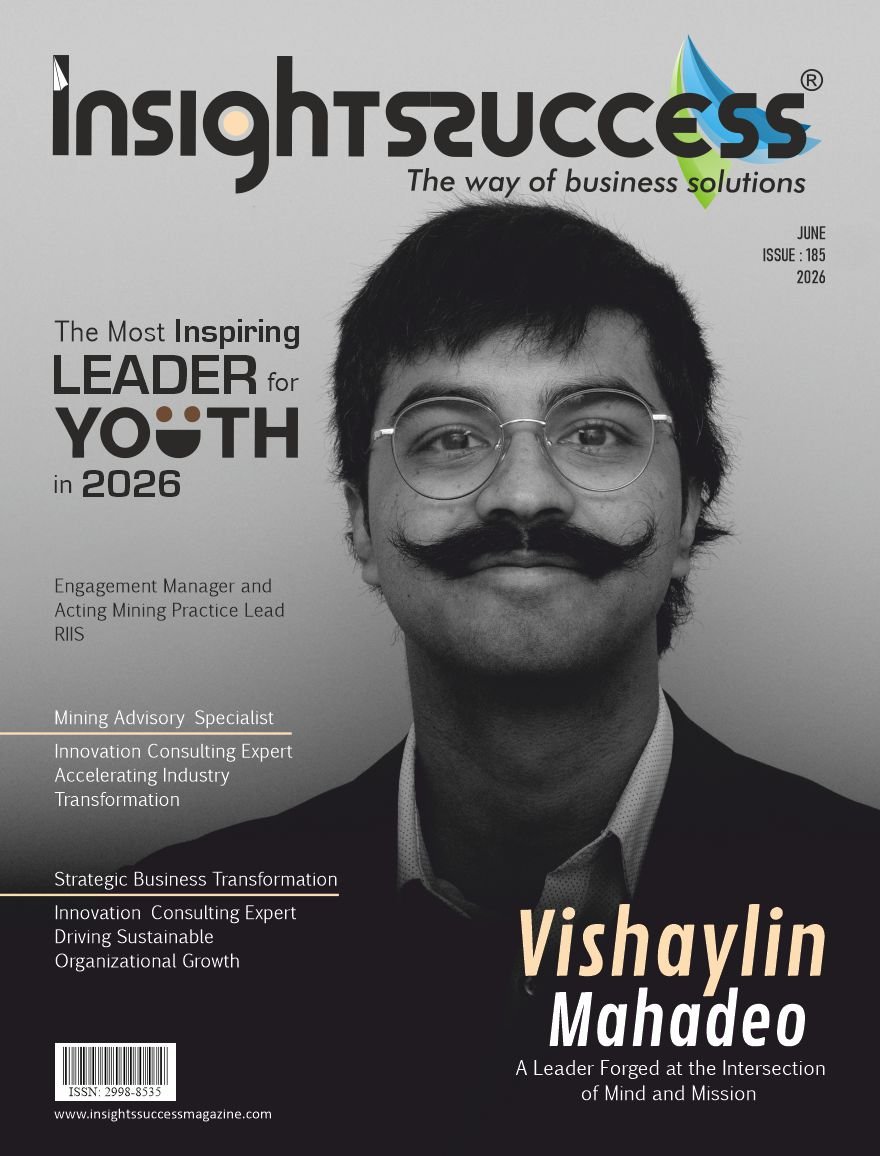
The Most Inspiring Leader for Youth in 2026
The Most Inspiring Leader for Youth in 2026 The edition recognizes an influential changemaker whose vision, mentorship, and dedication to youth development are creating opportunities, nurturing talent, and driving positive societal impact. Digital Link Quick highlights Quick reads

Innovation Consulting Expert Accelerating Industry Transformation
Mining Advisory Specialist Mining has always been one of the most demanding industries in the world, physically, operationally, and strategically. But the pressures facing the sector today are different in character from those of previous generations. Environmental expectations have risen sharply. Technology is reshaping what is operationally possible. Regulatory environments are becoming more complex. And the economics of extraction are shifting in ways that require a different quality of strategic thinking than traditional approaches have typically provided. This is precisely where an innovation consulting expert brings value that the industry genuinely needs, not as an outside observer offering generic advice but as a specialist who understands the specific dynamics of a sector in transition. What Innovation Actually Means in a Mining Context Innovation in mining is not purely about technology, though technology is a significant part of it. It is about rethinking how operations are designed, how resources are managed, how decisions get made and how the industry positions itself relative to the environmental and social expectations it increasingly operates within. A skilled mining advisory specialist understands that meaningful innovation in this sector has to be grounded in operational reality. Solutions that work in theory but cannot be implemented within the practical constraints of a mine site, safety requirements, existing infrastructure, workforce capability, regulatory obligations are not genuinely useful. The best advisory work starts with a deep understanding of where a mining operation actually is before it charts a course toward where it needs to go. Technology Adoption That Actually Delivers Results The mining sector has seen considerable investment in new technology over recent years, automation, remote operations, data analytics, and advanced monitoring systems have all attracted significant attention and capital. But technology investment does not automatically translate into operational improvement, and many organizations have found that the gap between purchasing a technology solution and genuinely integrating it into their operations is wider than expected. A mining advisory specialist with experience in technology adoption helps organizations bridge that gap. This means thinking carefully about which technologies are genuinely suited to a specific operation’s needs, how implementation should be sequenced, what organizational changes need to accompany the technology for it to perform as intended, and how results should be measured. Technology chosen and implemented well creates lasting operational advantage. Technology chosen poorly or implemented without adequate preparation creates cost without corresponding benefit. Environmental and Social Responsibility as a Strategic Priority The expectations placed on mining operations regarding their environmental and social impact have shifted considerably and will continue to do so. Community relationships, environmental performance, and the broader social license to operate have moved from peripheral concerns to central strategic ones, affecting access to capital, regulatory approvals, workforce attraction, and long-term operational viability. An innovation consulting expert working in the mining sector today needs to engage seriously with this dimension of the industry’s transformation. Advisory work that helps organizations develop genuinely responsible practices; not just compliant ones, creates strategic value that goes well beyond regulatory box-checking. Organizations that lead on environmental and social performance tend to access capital more easily, face fewer operational disruptions, and build the kind of community trust that supports long-term operational continuity. Building Internal Capability That Outlasts the Engagement The most effective advisory relationships in mining do not create permanent dependency on external expertise. A skilled mining advisory specialist works toward building internal capability, transferring knowledge, developing frameworks, and strengthening the strategic and operational thinking of the teams they work alongside. This approach produces considerably more lasting value than advisory engagements that solve today’s problem without equipping the organization to handle tomorrow’s challenges independently. Organizations that emerge from advisory relationships with stronger internal capability are better positioned to continue the transformation work that the engagement started, and to adapt to whatever the next set of challenges turns out to be. The Intersection of Experience and Fresh Thinking What distinguishes the most effective innovation consulting expert work in the mining sector is the combination of deep sector experience and genuine willingness to challenge established thinking. Experience without openness to new approaches produces advice that reinforces the status quo. Fresh thinking without sector grounding produces recommendations that cannot survive contact with operational reality. The most valuable advisory work holds both, bringing enough sector knowledge to understand what is actually feasible and enough strategic creativity to push organizations beyond what they would arrive at on their own. The Transformation Ahead The mining industry’s transformation is not a short-term adjustment, it is a fundamental evolution that will continue reshaping the sector for years to come. Organizations that engage seriously with that transformation, supported by capable mining advisory specialist expertise, will be considerably better positioned to lead rather than react as the industry continues to change. The work of accelerating that transformation, thoughtfully, practically, and with a clear understanding of what the sector genuinely requires, is exactly what strong innovation consulting expert guidance is built to deliver. Read Also : Innovation Consulting Expert Driving Sustainable Organizational Growth