





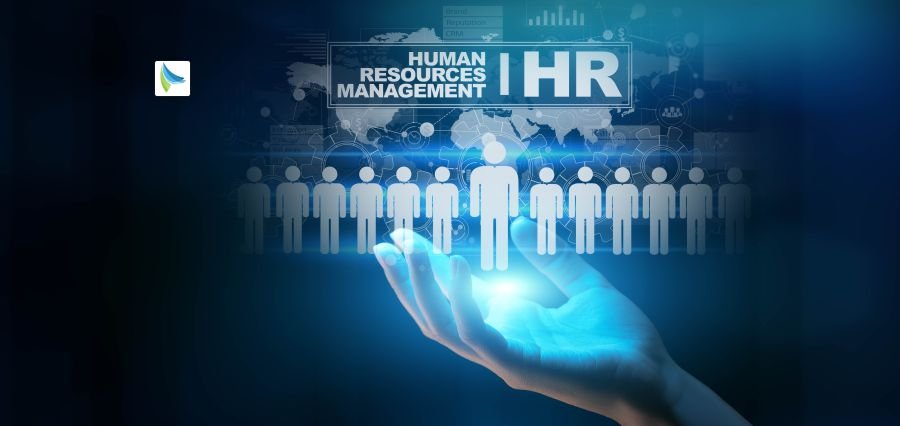
Human Capital Management Driving Corporate Administration Excellence
Strategic HR Leadership In today’s world, organizations find themselves in an ever-changing environment in which changing workforce expectations, advancing technology, and stiff competition have continued to influence organizational strategies. In such an environment, Strategic HR Leadership has become key in ensuring organizational success. The human resources department is not regarded merely as a back-office function but instead is instrumental in aligning the strategy of people with organizational goals. On the other hand, Human Capital Management has become important in acquiring and developing talents that can help sustain organizational growth. Aligning People Strategy with Business Goals Companies perform better when their human resource programs and activities are in line with the company’s goals and objectives. Strategic HR Leadership is about establishing that connection between business and people. Human resource leaders collaborate with executives to ensure that human resource programs and activities help the company succeed. This is done through the use of Effective Human Capital Management, which helps to provide systematic ways of conducting workforce planning, skills development, and succession management. By understanding the abilities of the workforce and future needs, organizations are able to make sound decisions. By integrating people’s strategies with business goals, companies create stronger organizational cohesion and improve their ability to respond to changing market conditions. Building a High-Performance Workforce Human beings are still the greatest assets in any company. It is about recruiting skilled people, developing them, and creating situations where they can be productive. This demands a proactive strategy for managing the workforce. Strategic HR Leadership helps in creating an organizational culture that encourages accountability, teamwork, and continuous improvements. When leaders invest in their employees’ development, there is a lot of learning and innovation. In the same vein, Human Capital Management provides employees with the necessary assistance and resources to realize their full potential. Performance management systems, training sessions, and career development programs help build greater employee engagement and performance. When the employee feels appreciated and empowered, there is greater commitment and performance on the part of the organization. Strengthening Corporate Administration Excellence Administration within a corporation is the key to running the business. Effective governance, appropriate policies, and effective workforce management result in a successful business. Strategic Human Resource Leadership has a significant part to play in developing excellence in corporate administration through the proper management of people’s practices. HR managers ensure that organizations remain consistent and transparent through effective policy development and workforce governance. This not only minimizes organizational risks but also creates a culture of trust and responsibility. However, Human Capital Management provides the framework and processes necessary for proper talent management. From hiring and orientation to performance evaluation and succession planning, everything that is mentioned here helps organizations to function properly and efficiently. Efficient management makes it possible for organizations to focus on their strategic development as well as internal operations. Embracing Technology and Innovation Technology is continually changing the way firms manage their workforce. Digital technology is making decision-making more efficient and driven by data. With the use of new technology by firms, the need for strategic HR leadership in workforce transformation becomes greater. In addition, HR executives need to ensure that advancement in technology improves the experience of their employees in a manner that helps to meet the goals of the organization. Similarly, Human Capital Management can be greatly helped by technological solutions as well. Through data analysis, one can understand workforce dynamics, performance levels of employees, and areas of talent development. This will enable better decision-making and improve workforce efficiency. Technology is not taking over leadership but rather helping the leader to manage talents better. Preparing Organizations for the Future Work of the future will undoubtedly be impacted by demographic trends, technological innovations, and changes in employee demands. Companies that focus on developing leadership and talent strategies now will have a greater chance of success in the future. Strategic HR Leadership will be necessary to lead and direct any change in the organization’s workforce and align people with business objectives. Leaders who adopt adaptability, innovation, and development of their employees will ensure that the organization can cope with uncertainty. Likewise, Human Capital Management will remain a means by which future-ready and resilient workforces are built. With the emphasis on talent acquisition, development, engagement, and retention, businesses will be able to create a competitive edge. The synergy of Strategic HR Leadership and Human Capital Management provides a strong base for achieving excellence in corporate governance. Both these concepts help in maximizing the performance of the workforce, improving governance, and ensuring sustainable success. With continuous changes taking place in the business world, those organizations that will give importance to people leadership and proper talent management will be the most suited to excel and innovate sustainably in the future. Read Also : Talent Management Excellence Shaping High-Performance Organizations
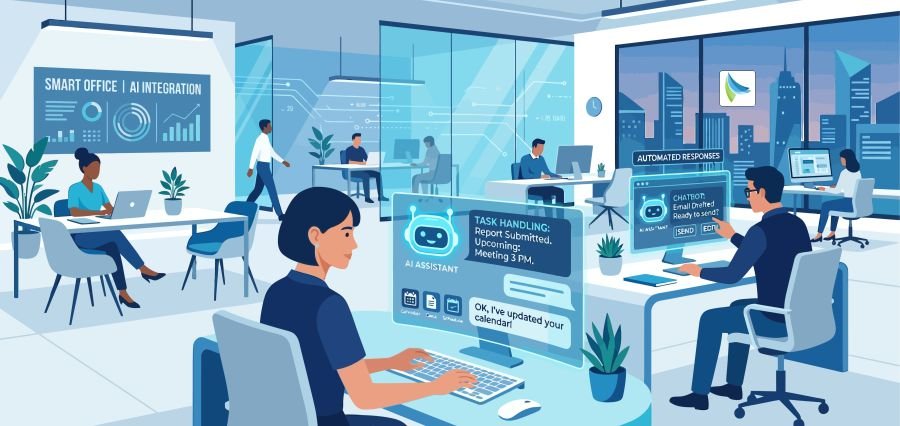
Talent Management Excellence Shaping High-Performance Organizations
Corporate Administration Excellence Organizations are faced with the challenge of balancing efficiency, productivity, and growth in their operations against the need to be able to meet the changing demands of the market environment. Organizations which continue to perform better than their competitors know that this can be achieved not only through good business strategies but also through good administration and development of their staff members. This is why Corporate Administration Excellence has become an essential element towards realizing organizational stability and efficiency. On the other hand, Talent Management Excellence is an important component that helps organizations recruit, develop, and retain high performers. The Strategic Value of Corporate Administration An effective administration forms the very foundation of any successful organization. Good governance, appropriate policies, efficient procedures, and clearly defined roles provide the environment in which the performance of employees is ensured and sound decision-making by management is facilitated. This is what Corporate Administration Excellence stands for. Companies that put a lot of stress on Corporate Administrative Excellence have structures that ensure effective communication, rapid decision-making, and increased efficiency. These strengths help in achieving efficiency as well as developing an atmosphere of accountability and transparency. In times of growing business, it has become more essential to have strong administrative structures within an organization. Excellent administration also promotes collaboration within various departments, which ensures alignment of resources, processes, and people with overall organizational goals. The Importance of Talent in Organizational Performance People continue to be the most important assets in any organization. The success of business is mostly determined by one’s capacity to recruit skilled personnel, develop them, and provide them an opportunity to make a contribution. Talent Management Excellence goes beyond mere recruitment. It entails such things as workforce planning, employee development, leadership development, performance management, and succession planning. Companies that make efforts in this direction will be able to create solid talent pipelines and stay the workforce ready. Employees who are given chances to develop and grow tend to be more committed and engaged in their work. The commitment is what leads to success of the organization in terms of productivity, innovation, and business success. By making talent central to their strategies, organizations enable both individuals and organizations to succeed. Creating High-Performance Cultures Corporate Administrative Excellence is what makes it possible to facilitate accountability and performance. This is due to the fact that well-defined processes lead to consistency and make it easy for employees to know their roles. Talent Management Excellence is, however, all about giving individuals the opportunity to fully realize their potential. Organizations that emphasize learning and appreciation foster an environment in which creativity flourishes. Employees get motivated because they understand the value of their contribution to the organizational objectives. In combination, these techniques help ensure that high performance is not just an occasional feat but becomes an enduring result. Leveraging Technology for Growth Companies have been transformed through technological innovation in how they function and how they handle their employees. Through digital technology, automation techniques, and workforce analytics, managers gain amazing visibility, leading to increased efficiency and effectiveness. All of these play a major role in Corporate Administration Excellence and workforce management efforts. Technologies facilitate efficient processing of administration and lower down workload. Better data availability helps in improved planning and governance and makes the organization more responsive. On the other hand, Talent Management Excellence can also be achieved through technology-based solutions that aid in employee engagement, performance measurement, and learning development. Workforce analytics help managers detect trends and solve challenges to enhance their talent management strategies. Companies that use technology have become more competitive and flexible in their dynamic business environments. Preparing for the Future of Work The workplace of the future will demand that organizations stay adaptable, innovative, and people centric. The changing expectations of employees, the developments in technology, and the changing priorities of business will keep on affecting organizational success. Organizations that have well-administered and developed workforces will be better equipped for such changes. Excellence in Corporate Administration will continue to be an important factor for sustaining stability in organizations, governance, and strategic alignment within organizations. Good administrative bases give the stability needed to handle complexities and foster sustainable development. Similarly, Talent Management Excellence will remain an integral component in preparing future-ready workforces. Those organizations that develop talent, learn, and grow within the organization will become well-prepared to attract and retain superior performers. With the blend of Corporate Administration Excellence and Talent Management Excellence, a strong model for creating high-performing organizations is created. The ability of organizations to create excellence in their administrative practices through developing their employees allows them to create productivity, innovate, and succeed. With increasing competition and growing complexities of the business world, the organizations that place an emphasis on these aspects will be able to thrive. Read Also : Why Fortune 500 Companies are Investing in AI-Enhanced Workflows

Samer Sallam: The Human at the Centre of Every Decision
There are moments in a professional career that do not simply inform the way a person works. They reshape the way a person sees. For Samer Sallam, Director of Human Resources and Administration at Penta Global Engineering, one such moment came not in a boardroom or a performance review but at a traffic light. A man approached his car carrying a small child, asking for money to feed his family. Samer recognized him immediately. It was an employee he had terminated months earlier, in the direction of management, despite having reservations he had not acted on. He listened to the man describe the hardships that had followed the loss of his job. He could not hold back his tears. That moment has never left him. Across four decades in Human Resources, spanning industries, organizations, and continents, it has served as the compass by which he measures every difficult decision he is asked to make. Not as a reason to avoid hard calls, because business realities sometimes demand precisely that. But as a permanent reminder that behind every HR process, every policy, every headcount decision, there is a human being with a family, a livelihood, and a future shaped in part by the choices made in those corporate conversations. Samer Sallam began his career in Human Resources in 1986, immediately after graduating from university. He entered the profession at entry level, learned from mentors of diverse nationalities and genuine professional depth, and built his understanding of the function from the ground up across more than four decades of continuous practice. He has operated in promoter-led organizations and multinational environments, across engineering, technology, consumer, and industrial sectors. Today, at Penta Global Engineering, he brings that accumulated experience to a leadership role that spans both human resources and corporate administration, two functions that, in his view, share the same foundational requirement: the ability to serve people with honesty, fairness, and care. The Difference Between Managing and Leading Samer is precise about a distinction that many organizations claim to understand but consistently fail to practice. There is a meaningful and consequential difference between managing people and leading them and confusing the two produces organizational cultures that are compliant on the surface and disengaged underneath. Throughout his career, he has encountered senior executives who understood leadership primarily as the exercise of authority, using position and, in some cases, fear generating the behavior they wanted from those around them. He has observed the outcomes of that approach with considerable clarity. Fear silences people. When employees become reluctant to share opinions, challenge assumptions, or offer honest feedback, the organization loses something it cannot recover from a management report: the collective intelligence and creativity of its own workforce. He states, “Leadership is not about being the loudest voice in the room. It is about creating an environment where every voice can be heard.” The leaders who earn genuine commitment rather than simply compliance are those who make themselves approachable regardless of hierarchy, who listen before they speak, who treat every contribution as worthy of acknowledgment even when they cannot act on it. In today’s workforce, where employees are more informed and more willing to express their views than at any previous point in the profession’s history, the traditional authority-led management style is not simply ineffective. It is actively counterproductive. The organizations that fail to recognize this are losing talent, suppressing innovation, and building cultures that talented people are motivated to leave. Culture Is Not an HR Initiative One of Samer’s most consistent convictions, tested and reinforced across four decades of practice, is that organizational culture cannot be built by the HR department alone. It requires something considerably more demanding: the active, visible, and sustained commitment of leadership at every level of the organization. He has seen the consequences of its absence clearly. Companies focused solely on financial performance that treat employees as a cost rather than an investment. Engagement programmes designed by HR and ignored by line managers. Recognition initiatives launched with genuine intent and abandoned when quarterly pressure arrived. These experiences have shaped his view of what genuine cultural transformation actually requires. In one of his previous organizations, he worked alongside a long-serving manager whose management style had been built on rigid authority and control. As the organization introduced initiatives around respect, recognition, open communication, and genuine employee engagement, something began to shift. The manager witnessed his team becoming more willing to contribute, collaborate, and go beyond their formal responsibilities. He saw, in practice, the difference that a positive culture produced in the people around him. He reflects, “Over time, he recognized that achieving results did not require rigid control or fear-based management. What began as a reluctant adjustment ultimately became a personal transformation.” That story illustrates the principle Samer returns to repeatedly: positive cultures are contagious. When leadership demonstrates the desired behaviors consistently, the message travels. Even those most resistant to change begin to adapt when they witness the tangible benefits in the people and performance around them. Talent Is Not a Score on an Assessment Across four decades of talent management practice, Samer has used most of the methodologies the profession has produced. The 9-Box Grid. 360-degree feedback. Psychometric assessments. Competency frameworks. Each has value. None is sufficient on its own, and he has seen every one of them misapplied in ways that cost organizations should have kept. His concern is not with the tools themselves but with the tendency to let them substitute for judgment. He has watched genuinely talented individuals be overlooked because they did not fit a predefined profile or perform well under a particular assessment format and then go on to become highly effective leaders in other organizations that were willing to see them differently. The lesson he draws from those observations is not that assessment is useless. It is that potential cannot simply be measured. It must be tested, challenged, and given the space to develop at its own pace. Some people demonstrate leadership capability early. Others require time,

Hall of Fame 2026: The Ones Who Made It
10 Best Logistics Companies to Watch in 2022 June2022 Lorem ipsum dolor sit amet, consectetur adipiscing elit. Ut elit tellus, luctus nec ullamcorper mattis, pulvinar dapibus leo. Lorem ipsum dolor sit amet, consectetur adipiscing elit. Ut elit tellus, luctus nec ullamcorper mattis, pulvinar dapibus leo. Hall of Fame 2026: The Ones Who Made It Hall of Fame 2026: The Ones Who Made It celebrates exceptional leaders whose vision, resilience, and achievements have left a lasting impact on their industries. Featuring Gurppreet Singh, this edition highlights a journey defined by innovation, determination, and leadership excellence, inspiring professionals and aspiring changemakers to pursue success with purpose and passion. Digital Link Quick highlights Quick reads

Why Fortune 500 Companies are Investing in AI-Enhanced Workflows
Beyond Automation AI in boardrooms around the globe is no longer seen as an idea from the future but rather something essential for doing business. The leading companies that are members of the Fortune 500 list are implementing AI technologies to make their work more efficient and innovative. With competition on the rise and customers’ expectations changing all the time, businesses need to adopt new ways of working thanks to AI-enhanced solutions. With automation and data-driven decision-making being among the benefits of using such technologies, businesses can see improvements in efficiency and business performance. The Growing Importance of AI-Enhanced Workflows in Modern Enterprises In this case, the big organization has to manage a massive amount of information, a complex process, and, what is more, a global workforce. The existing workflow cannot handle such challenges that cause inefficiency and loss of opportunity. Here comes into action the AI-optimized workflow, which is crucial for the effective functioning of the organization. Thanks to AI, all activities that were traditionally performed by people can be automated, and decision-making can be improved. Invoice processing, customer service, and even trend analysis is possible only due to AI. It brings significant financial savings for Fortune 500 companies and increases their efficiency. What is most important is that employees are free from routine work and can concentrate on strategic tasks. How AI-Enhanced Workflows Improve Productivity and Efficiency Another main reason why Fortune 500 firms have been actively engaging in investments in AI is because of its capacity to make operations in all departments more efficient. Through AI, it is possible to analyze large data sets within seconds, find patterns, and draw valuable conclusions that would take more time if performed manually. Thanks to such innovations, people will make decisions much quicker and better. For example, through AI, a firm’s supply chain manager will be able to predict changes in demand for goods and avoid any losses. The HR department will automate the hiring process, while the finance department will detect fraud and make predictions. AI Enhanced Workflows and the Customer Experience Revolution Customer demands have reached unprecedented heights. Today’s generation requires personalization, promptness, and efficient communication through various channels. Big Fortune 500 companies understand that creating a good customer experience is a key competitive differentiator. Here, AI serves as one of the primary means for achieving this objective. With the help of artificial intelligence-based workflow management systems, organizations can study customer behavior, foresee their requirements, and offer them relevant suggestions. 24/7 assistance is offered by chatbots and virtual assistants, while predictive analytics enables organizations to resolve problems before customers realize them. So, consumers receive highly personalized experience, which helps create loyalty and enhance customer satisfaction. Driving Innovation Through AI-Enhanced Workflows Innovations are vital for success, particularly in the case of big companies that work in the environment of fast-changing industries. The employment of AI allows companies to innovate faster since it enables the organization to obtain deeper insights and make the process of innovation testing simpler. Employment of AI in the workflow allows for the process of innovation research and development through gathering data about market trends, customer feedback, and technology. Such an approach enables companies to capitalize on opportunities and make proper investments. There are certain industries in which AI is employed for the purpose of innovation. They include health care, the manufacturing industry, finance, and the retail industry. It not only improves the process but also revolutionizes it. The Financial Benefits of Investing in AI-Enhanced Workflows However, although there are costs involved in using AI technology, the financial gain from it is usually substantial. Fortune 500 companies view AI technology as an investment that will yield them some form of gain. Using AI technology, firms can reduce the cost of doing business, use resources more efficiently, and prevent any errors that would cause losses. Since the AI system operates all day long, efficiency is achieved without increasing the labor force as compared to the amount required by the manufacturing process. Moreover, through AI, management is able to make sound decisions, thus reducing any risk and maximizing their gains. Overcoming Challenges in AI-Enhanced Workflow Adoption Despite the benefits, implementing AI is not without challenges. Organizations must address issues related to data quality, cybersecurity, regulatory compliance, and workforce readiness. Successful Fortune 500 companies understand that technology alone is not enough. They invest in employee training, change management initiatives, and robust governance frameworks to ensure AI adoption is both effective and responsible. Creating trust in AI systems is equally important. Employees need to understand how AI supports their work rather than replaces it. Companies that foster a culture of collaboration between human expertise and artificial intelligence are more likely to achieve successful outcomes. The Future of AI-Enhanced Workflows in Enterprise Operations The future of business operations will revolve around artificial intelligence technologies. Due to the advancement in technology and the availability of artificial intelligence, organizations will keep implementing artificial intelligence into their activities in various industries. The use of artificial intelligence will not only revolve around automation but will also enable prediction and decision-making in the absence of human beings. With time, those organizations that embrace technology will achieve great efficiency in their operations. The issue is not just whether Fortune 500 organizations will adopt artificial intelligence into their activities. It is more on how quickly they can embrace technology in their business operations. Read Also : How Companies are Scaling Enterprise Generative AI

How Companies are Scaling Enterprise Generative AI
From Pilot to Production Generative AI has made a lot of progress from being an innovative idea to an absolute must-have for a business in an incredibly short time. Several businesses are currently exploring the possibility of applying AI to increase efficiency, improve customer satisfaction, and generate extra income from new sources. However, implementing any solution after the initial trial period is not an easy thing to accomplish. Enterprise generative AI has become one of the key factors of success for any modern business that continues its journey through digital transformation. Companies that are able to leverage these solutions can achieve certain advantages in terms of efficiency, decision-making, and innovation. Why has Enterprise Generative AI Become a Strategic Priority? The use of enterprise generative AI technology has increased since such AI can be used for automating complex tasks, generation of useful insights, and assistance of employees in their work. In contrast to usual automation solutions, AI technology allows generating content, summarizing information, coding, analyzing data, and interaction with humans. Companies have understood that artificial intelligence is not just a solution used by innovators and scientists. It has become integrated into the business processes of enterprises and helps workers to work more effectively and respond to market changes. This means that executive management starts paying attention to investing in AI in order to achieve long-term business goals. Building the Foundation for Enterprise Generative AI Success However, before the widespread adoption of enterprise generative AI, companies need to build a solid base. Companies that have found success start by determining real business needs and problems that could be solved using AI. Instead of blindly embracing innovation through AI, they target high-value use cases. Data is the key component in this situation. As generative AI depends greatly on data, companies are building sophisticated data management solutions to make sure that their data is clean, consistent, and secure. Good data helps AI to produce good results. Companies are also building up their cloud infrastructure to gain sufficient computing capacity to launch AI-powered solutions. How Enterprise Generative AI Is Transforming Business Functions The first reason why companies are allocating substantial funds to enterprise generative AI is that it can be used in different departments. Companies have come up with numerous approaches as to how they would incorporate AI into their regular business processes and interactions with customers. In customer support, AI-driven virtual assistants not only increase the speed at which problems are being solved but also offer personalization. Marketing specialists use AI for content generation, campaign brainstorming, and understanding of customer behavior. The HR department makes use of AI when recruiting candidates, onboarding employees, and workforce planning. Lastly, software developers rely on AI to accelerate the coding process and bug detection. Governance and Security in Enterprise Generative AI Deployment As the use of adoption increases, governance emerges as an essential part of enterprise generative AI strategies. Any large-scale application of AI models without proper control may pose some risks associated with privacy, security, compliance, and ethical decision-making. To tackle these problems, corporations create AI governance strategies, which include rules about the development, management, and utilization of AI models within the company. In addition to that, security is also a key issue. Corporations create necessary security mechanisms to ensure the protection of sensitive data and avoid any unauthorized use of AI-generated content. Overcoming Challenges in Scaling Enterprise Generative AI However, despite the enormous opportunities offered by it, enterprise-level generative AI faces certain challenges. One of the biggest challenges associated with this technology is related to organizational changes. Workers can be confused about the impact that AI can have on their job position, resulting in reluctance towards change. Visionary companies deal with these problems using various educational and communication efforts. Instead of perceiving AI as something that would replace the employees’ work, they view it as a technology that complements workers’ activity and helps make better decisions. Another challenge that needs to be mentioned is associated with the integration of AI solutions into existing technology environments. The point is that most companies today face rather complex IT environments. Developing a Workforce Ready for Enterprise Generative AI Transformation through AI is not possible only by way of technology. Companies need to build up the necessary skills that will enable them to make full use of the advantages of generative AI within their organization. Companies are creating training programs for their staff to improve their knowledge about AI and its proper usage. The staff is being trained to learn how to work with AI technology, understand the insights produced through AI and implement them in their respective work. Besides skills, companies are creating an innovative and learning culture. This kind of attitude helps organizations embrace new technological changes and opportunities arising from AI. Organizations that invest in their staff development have proven more successful than others. The Future of Enterprise Generative AI at Scale There is more to the future of enterprise generative AI than mere increase in efficiency. As technology advances in the coming years, enterprises will depend on AI to help in planning, foster innovation, and even create new business models. Some of the current developments in the area include autonomous workflows, knowledge management, personalization, and decision making, all through the power of AI. These developments could possibly revolutionize the way organizations do business both in their internal processes and globally. The winners in this area would be those organizations that have technological innovation, good governance, and visionary leadership. Read Also : Why Long Island’s Most Awarded Weight Loss Center, Led by Dr. Howard Goodman, Is Challenging Everything People Think They Know About Losing Weight

Gurpreet Singh: Turning AI Ambition into Real-World Impact
As AI took the center stage in boardrooms and digital transformation became a necessity, Gurpreet Singh had long since dedicated himself to a simple truth: technology achieves its highest utility when applied to solving practical problems. Growing up in Delhi in an environment where discipline, determination, and honesty were highly esteemed, he turned an innate love of technology into an impactful life journey encompassing health care, aviation, telecommunications, climate change technologies, e-commerce, and enterprise platforms. Throughout more than a decade and a half, Gurpreet Singh has gone from an engineer to a sought-after consultant on AI and other technologies that help transform ambitious visions into tangible achievements for businesses. His knack for combining strategy, technology, data, and human capital has allowed him to become an enabler of transformation. Influenced by the legacy of his family and constantly seeking new knowledge, he still guides businesses through complex processes of innovation and puts humanity at their core. Discover how Gurpreet Singh is helping organizations turn AI ambition into sustainable business transformation and lasting impact. Roots That Shaped a Leader Gurpreet Singh was born and raised in Delhi, where he completed his schooling before pursuing a B.Tech in Electronics and Communication from IP University. He comes from a simple, hardworking family. His father served as a Central Government employee with Northern Railways, while his mother managed the household. Their values of discipline, humility, and perseverance left a lasting impression on him. His elder brother, also an engineer, went on to build and run his own company, an example that strengthened his belief in ownership, value creation, and independent thinking. These early influences laid the foundation for a career defined by steady growth rather than shortcuts. Over the last 18-plus years, he has worked across healthcare, aviation, climate tech, telecom, e-commerce, public-sector platforms, and enterprise technology. He has built and modernized platforms, led high-performing teams, advised founders and CXOs, and driven AI-led transformation from concept to production. Today, he lives in Gurugram with his wife and two children, a life that keeps him grounded even as his professional journey continues to expand. The Idea Behind His Work Gurpreet’s professional path began with a simple realization. “Technology only creates real value when it solves a meaningful business or human problem,” he says. Early in his career, he found himself drawn not just to software development but to a bigger question: how technology could improve decision-making, operations, customer experience, and institutional effectiveness. That curiosity evolved into a career spanning product leadership, enterprise technology, digital transformation, and AI strategy. Working in such varied sectors taught him an important lesson: organizations rarely struggle because of a lack of technology alone. More often, they struggle because technology, business processes, data, and teams are not properly aligned. This insight became the foundation of his current professional focus. Many organizations are excited about AI, automation, and digital transformation, yet they often find it difficult to move from experimentation to real-world adoption. They have ambitious ideas but lack clarity on use cases, architecture, operating models, governance, and measurable outcomes. His work is built around bridging this exact gap, identifying high-value use cases, designing scalable technology and data architecture, building execution roadmaps, aligning stakeholders, and helping teams take solutions from concept to production. For him, transformation succeeds only when it is treated as a business-change journey, not merely a technology project. Balancing Two Worlds For someone whose profession thrives on ambiguity, tight deadlines, and constant change, balancing work and personal life is an ongoing practice rather than a fixed formula. Gurpreet Singh understands that balance does not mean splitting time equally across every area every day. Instead, it means being clear about priorities, staying disciplined with energy, and being fully present wherever attention is needed. His work often involves close collaboration with founders, CXOs, business leaders, and technology teams. Digital and AI transformation assignments rarely follow a straight line — they involve legacy constraints, people challenges, and execution pressure. To manage this, he relies on structured thinking, clear communication, and prioritization, separating what is urgent from what truly matters and focusing on bringing clarity to teams rather than adding to the noise. At the same time, his family keeps him anchored. Living in Gurugram with his wife and two children has changed how he views time, patience, and responsibility. “Fatherhood has taught me that leadership extends beyond the workplace; it also means being emotionally present at home,” he says. He credits his family with reminding him that professional success must be meaningful beyond titles and achievements. Personal discipline plays an equally important role. Gurpreet Singh manages his time through routines, planning, and conscious boundaries, even during demanding delivery phases. He has learned that burnout helps no one, not the individual, the family, or the organization. For him, the goal is integration rather than perfect balance: bringing the same values of responsibility, patience, empathy, and consistency to both his professional and personal worlds, each strengthening the other. An Appetite for Building, Not Just Growing Gurpreet’s appetite for business is driven by value creation rather than growth for its own sake. He gravitates toward opportunities involving a real problem to solve, a complex system to improve, or a meaningful outcome to create. To him, business is about more than revenue; it involves understanding markets, customers, operations, technology, and people, and bringing them together to create sustainable impact. “Years of work across product leadership, enterprise technology, and AI strategy have shaped my belief that strong businesses emerge when vision is matched with execution discipline. Ideas matter, but the ability to convert them into scalable products and measurable outcomes is what truly counts,” he says. His comfort with ambiguity also defines his approach; he thrives in situations where the problem is not fully defined, and multiple stakeholders need alignment, environments that demand patience, analytical thinking, and calculated risk-taking. In the current era of AI and digital transformation, Gurpreet Singh focuses on helping organizations identify where technology can unlock real advantage, whether through automation, better decision-making, improved

The Global Icon 2026
The Global Icon 2026 The edition honors an exceptional leader whose vision, achievements, and lasting impact inspire excellence. It showcases his journey, leadership legacy, and contributions shaping a brighter future. Digital Link Quick highlights Quick reads

Never Stop Moving: The Extraordinary Career of Kenneth Carnesi Sr.
A career that spans four decades, four continents, fourteen published books, a Vatican ordination, and a senior leadership role in one of America’s fastest-growing technology sectors is not built by accident. It is built by someone who treats learning as a professional obligation rather than an optional extra, who approaches each new challenge as the logical continuation of the last, and who has never confused the comfort of established expertise with the security of genuine readiness. Kenneth Carnesi Sr., COO and Director of Government Sales at Anaptyx LLC, is precisely that kind of professional, and the career he has constructed across law, international business, technology, and authorship is the cumulative evidence of a leadership philosophy that has never once accepted standing still as a viable option. Born in Brooklyn, New York in 1953, Carnesi built his academic foundation with the same methodical ambition that would later define his professional life. A bachelor’s in English literature from Brooklyn College in 1975 was followed by a master’s in criminal justice from C.W. Post University in 1976, and a Juris Doctorate from New York Law School in 1982. That would have been more than sufficient for most. For Carnesi, it was the beginning. Specialization degrees from Wharton Business School in Entrepreneurship and Startups, from Penn Law School in Corporate Regulatory Compliance, and from Harvard Law School in International Banking followed, alongside a Certification in Operational Analysis from Stanford University. The breadth of that intellectual investment tells you something important about how he thinks: not in straight lines but in possibilities. He mentions, “I am 73 and continually learning. All to stay fresh and current and to level the playing field with my much younger competition.” A Decade in Law, then a World Opens Up Ten years of legal practice in New York gave Carnesi the discipline, the precision, and the contractual fluency that would later make him an indispensable partner for American Fortune 500 companies navigating some of the world’s most complex and unpredictable emerging markets. In 1991, as the Soviet Union collapsed and the world reconfigured itself with extraordinary speed, he made a decision that most of his contemporaries would not have dared: he founded an international business consultancy and went to work in the spaces that had just been unlocked. The timing was not accidental. He was asked to consult on two landmark telecommunications deals, one involving Motorola in the cellular business and one involving Qualcomm in the landline space, that required exactly the combination of legal expertise, commercial intelligence, and cross-cultural fluency he had been building. Those deals opened a door to fourteen years of intensive work across Central Asia, specifically Kazakhstan, Turkmenistan, and Uzbekistan, alongside engagements in the Republic of Georgia, the Russian Federation, Estonia, and across Western Europe in the UK, Monaco, France, and Italy. The work was not for the risk averse. Representing American corporations in newly independent post-Soviet republics meant navigating regulatory environments that were being written in real time, building relationships with governments that were themselves finding their footing, and providing counsel that required as much geopolitical intelligence as it did legal precision. For Carnesi, it was the most demanding and most formative chapter of a career already defined by its refusal to stay still. He asserts, “Consistency in research, in generating business ideas and client leads, and in follow-up and willingness to pursue my ideas has been the key to sustained commercial performance.” Anaptyx and the Managed Wi-Fi Revolution The third act of Kenneth Carnesi’s professional life might surprise those who follow the conventional arc of a career. Rather than drawing down his ambitions, he moved into the managed Wi-Fi industry and took on the role of Chief Operating Officer and Director of Government Sales at Anaptyx LLC, a South Carolina-based Managed Service Provider operating in a sector that was quietly becoming critical infrastructure. Anaptyx serves the hospitality sector, government clients through a twenty-year GSA contract, and homeowners and multi-dwelling units across the United States. The managed bulk Wi-Fi model it operates is connectivity as a service: not simply providing internet access but managing, monitoring, and maintaining it at scale for clients whose businesses depend on reliable connectivity as a foundational operational requirement. Carnesi’s role spans the full strategic and operational scope of the business: scheduling prospective client calls daily, conducting quarterly SWOT analyses, running regular marketing tests, and staying consistently ahead of the technology curve in a sector that changes faster than most. The combination of his legal background, international commercial experience, and genuine appetite for technology has made him precisely the kind of COO that a growing MSP needs someone who can hold the strategic and the operational simultaneously without losing grip on either. He highlights, “As a COO, I schedule prospective client calls daily, stay ahead of the tech curve, run marketing tests regularly, and conduct a quarterly SWOT analysis.” When the Pandemic Tested the Model COVID-19 arrived in 2020 and immediately tested the Anaptyx model in ways that no SWOT analysis had fully anticipated. Hospitality, the sector the company serves most directly, suffered one of the most severe contractions of any industry during the pandemic. Clients whose businesses depended on travelers, hotel guests, and conference attendees found their revenue streams collapsing almost overnight, with direct consequences for their ability to meet their contractual obligations. Carnesi’s response was structured and decisive. The Anaptyx team moved to remote work, and a proprietary remote monitoring system was rapidly deployed to allow the company to continue servicing its managed Wi-Fi clients without physical site presence. The State of South Carolina’s designation of Anaptyx as an essential services business, vital to critical infrastructure, validated both the significance of what the company does, and the quality of the case Carnesi and his team had built for their operational importance. Government loan programs provided partial relief. Working together across the team and with their clients, they managed to keep staff employed and paid throughout the crisis. The experience reinforced something Carnesi had believed throughout his career:

IT Infrastructure Solutions Strengthening Digital Business Transformation
Secure Network Solutions The digitization process has been known as a strategic objective for those companies which are trying to enhance efficiency, improve the experience of customers and stay competitive. However, as organizations become more connected, they start facing some new types of cybersecurity threats. The growth of the network, cloud computing, remote working practices, and interconnection of technologies create a number of new challenges which should be addressed in advance. It is in such a situation when Secure Network Solutions become an imperative for businesses. Meanwhile, IT Infrastructure Solutions allow for creating the necessary technical basis for ensuring security, reliability, and scalability of digital environments. The Growing Importance of Network Security In today’s modern enterprises, digital connectivity plays an integral part in the process of communication, collaboration, and conducting business. Although connectivity provides numerous opportunities and room for innovation, at the same time, it exposes businesses to cyber risks. For this reason, Secure Network Solutions have become crucial for businesses. Secure Network Solutions are vital to protect any company from attacks like unauthorized access, malware, and ransomware. Protection is necessary not only to retain the trust of the customers but also to comply with all regulations and avoid financial losses. In order for businesses to meet current and future cybersecurity concerns, companies need a security plan that is all-encompassing. In today’s modern world, network security has become a vital necessity for companies to prosper. Building a Strong Infrastructure Foundation There can be no security without infrastructure. An organization requires an efficient technological environment for achieving operational and security goals. Here comes the importance of IT Infrastructure Solutions. Modern IT Infrastructure Solutions offer the necessary tools that ensure a secure functioning of the digital processes. The scalable architecture, technological integration, and reliable network make it possible for businesses to operate efficiently while at the same time minimizing possible weaknesses. Infrastructure development increases the visibility of the system. By building strong foundations, businesses can support growth initiatives while maintaining the security and reliability necessary for long-term success. Supporting Digital Transformation Initiatives Digital Transformation is achieved through adoption of technologies, process improvements, and innovation. Nonetheless, there are risks that can arise from transformation, especially security related. Secure Network Solutions allow companies to use new technologies in a safe manner. Security has to be an integral part of all stages of digital transformation. Companies which place importance on Secure Network Solutions will definitely be able to innovate without fear of any disruption in the process owing to any cyber-attack. In the same way, IT Infrastructure Solutions enable transformation through offering the flexibility and scalability required for the incorporation of any new technology. This combination of security and infrastructure provides an environment that allows innovation without sacrificing resilience. Enhancing Business Continuity and Resilience Continuity of business is contingent on the capacity of an organization to continue its operations despite any unforeseen disturbances. Disturbances such as cyberattacks, failure of the system, or interruptions of operations may have a considerable effect on productivity and reputation of organizations. The resilience of Secure Network Solutions is further improved through reducing risks and implications associated with security issues. Advanced skills in the area of threat detection, response, and monitoring enable companies to identify and solve issues on time. At the same time, IT Infrastructure Solutions provide business continuity via redundancy, reliability, and performance optimization. Properly designed infrastructure systems allow businesses to recover from problems faster and sustain their operations. Preparing for the Future of Digital Business The future will be characterized by digitization, connectivity, and reliance on data. Companies need to adapt to the changing cyber security risks while innovating and expanding. The companies that put effort into developing their security and infrastructure capacities now are likely to cope with future challenges. A Secure Network Solutions would be indispensable for ensuring the protection of the digital assets and compliance with the regulations and building stakeholders’ trust. However, IT Infrastructure Solutions will still be required to ensure the technical basis for innovation and flexibility. When combined, these skills help improve digital business transformation through secure, efficient, and competitive business operations. Organizations that focus on security and quality infrastructure can lower their risk level, become resilient, and sustain value creation. The expansion of digital ecosystems makes the integration of Secure Network Solutions and IT Infrastructure Solutions more important for future success. Read Also : How Companies are Scaling Enterprise Generative AI