




Axon Enterprise Jumps 18% as Strong Results and Software Growth Boost Outlook
Prime Highlights Axon’s shares surged nearly 18% after the company reported better-than-expected earnings and revenue. Growing demand for its software tools is driving future growth and strengthening investor confidence. Key Facts The company reported $2.15 earnings per share on $797 million revenue, beating market estimates. Axon expects revenue to grow between 27% and 30% in 2026 and aims for $6 billion annual revenue by 2028. Background: Axon Enterprise reported strong fourth-quarter results, sending its shares up nearly 18% as rising demand for its artificial intelligence-powered software boosted performance and future outlook. The company posted adjusted earnings of $2.15 per share on revenue of $797 million, beating analyst expectations of $1.60 per share and $755 million in revenue. The results highlight growing adoption of Axon’s AI-driven tools across its product ecosystem, which includes Tasers, body cameras, and drones. Chief executive Rick Smith said the company is witnessing a transformative moment driven by artificial intelligence. He said expanding new technology across its products could create strong value for customers, especially when used responsibly. Axon has been adding these advanced features to its products, such as automatic license plate recognition and a voice-enabled assistant in body cameras. The assistant has already attracted more than 500 customers, showing strong demand for smarter public safety tools. The company said AI-related features contributed around 10% of total bookings last year, amounting to roughly $750 million. The software segment emerged as a key growth driver, with revenue rising 40% to $343 million during the quarter. Finance chief Brittany Bagley said the company expects software to outpace hardware growth in the near future, supported by increasing demand for AI-enabled solutions. Overall revenue grew 39% year-on-year, indicating strong business expansion. However, net income fell sharply to about $3 million, or 3 cents per share, compared to $135 million, or $1.67 per share, a year earlier. The company said profits fell because of higher operating costs and continued spending on growth. Looking ahead, Axon expects revenue to grow between 27% and 30% in 2026, which is higher than market estimates. It also aims to reach $6 billion in annual revenue and a 28% adjusted EBITDA margin by 2028. The results show Axon’s shift toward a stronger focus on its software business. Read Also: Nintendo Moves Toward Stronger Governance with $1.9 Billion Share Plan
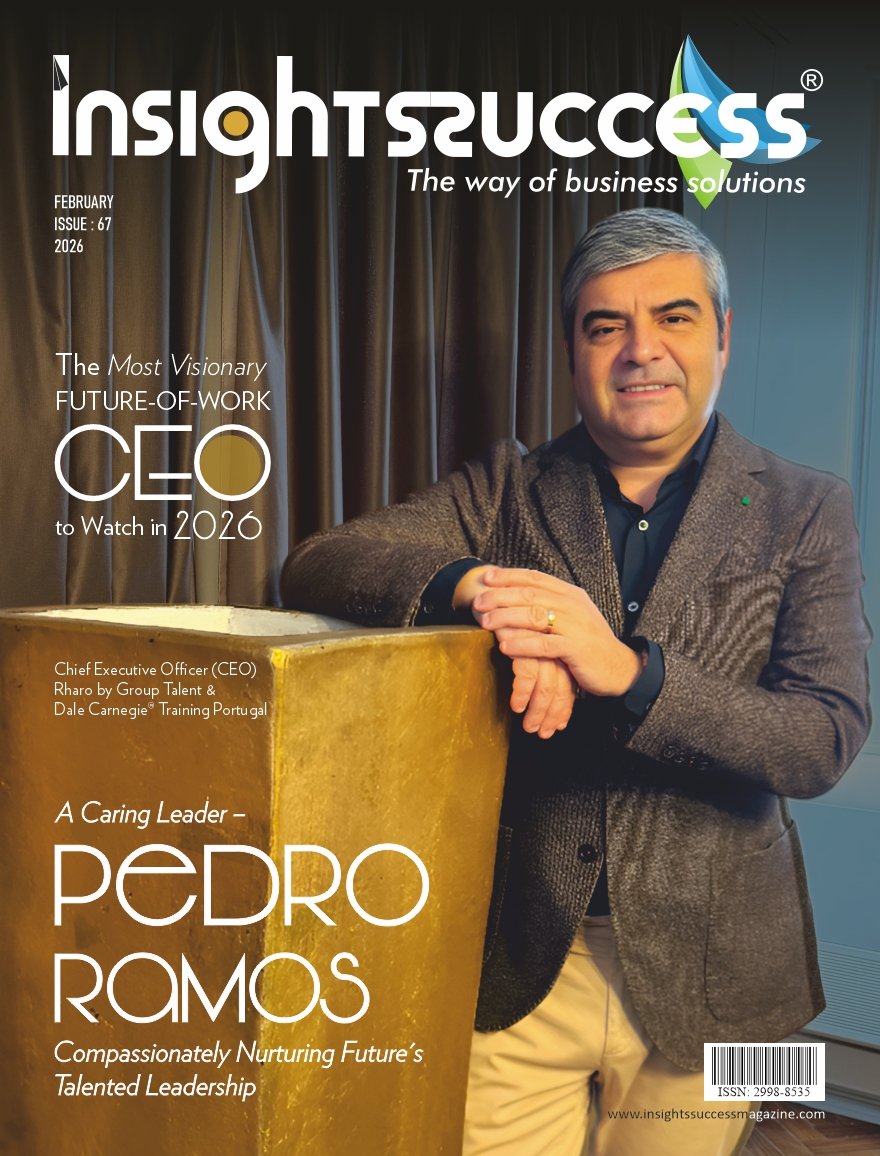
The Most Visionary Future-of-Work CEO To Watch In 2026
The Most Visionary Future-of-Work CEO To Watch In 2026 Featuring the most visionary future-of-work CEOs, this edition highlights innovation, digital transformation, adaptive leadership, and bold strategies shaping the evolving global workplace and redefining how organizations thrive in 2026. Digital Link Quick highlights Quick reads

The ROI of Workforce Innovation Strategies
Measuring Impact Beyond the Bottom Line In an ever-evolving environment, organisations face ongoing pressure to demonstrate the value of all their investments. That includes workforce strategies because leaders are now expected to provide concrete proof that the decisions they make produce measurable outcomes for their organisations. Organisations can now leverage powerful tools such as analytics, AI-based skills mapping, and historical data on the workforce. This will create a clear correlation between the various investments they make in their employees, the retention, productivity, flexibility, and sustainable financial success of the organisation. This enables organisations to develop their people strategies as a true bottom-line contributor. Where Workforce Meets the Bottom Line For many years, people-centric initiatives lived in a soft corner of the corporate budget, it was more of an “aspirational” category. They had the potential for a positive impact and could justify their expense, but that idea never had any real basis when weighed on the scales of the corporate budget. That will no longer be the case as new tools such as workforce analytics, AI-driven skills mapping, and long-term employee data have provided HR leaders with a quantitative language that can be understood by Finance. New workforce innovation strategies can now be evaluated based on hard metrics such as: Productivity per Employee, Rate of Internal Mobility, Time to Competency and Cost of Promotion vs. New Hiring. According to McKinsey & Co., companies that are in the top quartile for talent management can outperform their competitors by as much as 40% on total shareholder returns. Additionally, Deloitte’s Human Capital Trends Report indicates organizations that link their learning investments to business outcomes are three times more likely to have revenue growth. Workforce Innovation is not a cost centre but rather a driver for continued growth. The ROI Behind the Workforce The ROI of your productive workforce innovations comes from three areas: employee retention, productivity and agility. Employee Retention: The Society for Human Resource Management estimates that replacing an employee can cost between 6 to 9 months’ salary. Just a small improvement in retention delivers huge returns over the cost of developing the retention program. Productivity: Employees are more productive when their skills are matched to their job roles, and there are clearly defined pathways for growth in their respective positions. In a study performed in 2024, teams that are highly engaged had 21% higher profitability. Engagement is a by-product of a solid business strategy. Agility: Investing in continuous upskilling will allow you to respond more quickly to changes in the market. During 2021-2022, when supply chain issues impacted businesses, organisations that had effective internal redeployment programs recouped 30% of their operational capacity faster than companies that did not, according to the Boston Consulting Group. Innovation Premium The innovation premium forms a less obvious return on investments, often hidden in quarterly reports, which ultimately impacts a company’s long-term competitiveness. As companies become known for investing in their employees, they tend to attract better candidates, reduce their sourcing costs, and shorten their hiring cycles. At the same time, these companies generate a lot of internal intellectual property. Employees produce ideas when they feel trusted, developed, and that their opinions matter. The cumulative value of this innovation is enormous. As a result, the leading organizations of the world view their workforce innovation strategies as enterprise capabilities, rather than as isolated HR programs. Amazon’s Career Choice program, Unilever’s Future of Work initiative, and AT&T’s $1 billion investment in reskilling are not generous; they are strategic bets based on a simple reality: the workforce you develop today is the workforce you will have to compete within the marketplace of tomorrow. Making the Business Case Although many leaders are still on the fence about workforce innovation, the process to build a business case is fairly easy. First, calculate your current cost of employee turnover; most organizations will be shocked at the number. Next, calculate the productivity gap between existing employees and new hires. Finally, show the financial impact of improving your retention rate by 10% and reducing the time it takes to achieve maximum productivity from new employees by 15%. Most of the time, using targeted workforce innovation strategies generates positive ROI in 18 to 24 months after implementation. The organizations that are hesitant to implement workforce innovation strategies must think about one thing: what will cost them if they do not invest in their employees. Given the changing workforce, rapidly advancing technology, and rising employee expectations, that is a much greater concern. The data is clear; effective workforce innovation strategies will provide organizations with quantifiable and sustained returns on their investment in the form of increased retention, improved productivity, enhanced agility, and stronger competitive positioning. The real question facing leaders today is not whether or not to invest but rather how long they can afford to wait. The benefits generated by workforce innovation strategies create returns that are real, measurable, and cyclical, meaning that high-performing talent seeks engagement in their work, which will drive the creation of high-performance results. Therefore, organisations that put the same emphasis on developing their people as they do on developing their products will lead the way into the future. Read Also : Employee Skill Development in the Age of AI

Employee Skill Development in the Age of AI
Preparing Your Workforce for Tomorrow Organisations overall are going through changing environments in the 21st century. The increase in technology is changing how we do things, what gets done, how we make decisions and what skills we essentially need in the workforce. Organisations need to make fundamental changes to the way they do things instead of just relying on previous competencies to meet future requirements. As a result of all of this, the growing skills gap in employment has become a major concern during this decade. With the introduction and use of artificial intelligence and automation, jobs in all types of industries and organisations must re-evaluate how they’re developing employee skills. Creating continuous learning solutions, rather than creating one-time training options for skill building, will allow employees to be highly productive and capable of adapting to future requirements. Skill Gap is Real The skills gap is growing rapidly, according to a recent report of the World Economic Forum, with almost 39% of workers’ core skills expected to change or be displaced by 2030. Due to the introduction of automated processes or AI technologies. This is not a forewarning; it is happening right now in many industries, including finance, health, logistics, and creative industries. What makes this change unique from past technological changes is its enormous scope and depth of impact on employee skill development. AI is replacing tasks accomplished through assembly lines, writing copy for advertisements, reading legal contracts, and helping with the diagnosis of patients, among other activities. Therefore, when developing employee skill development, it is not enough to just develop their technical skills. Employees need to develop critical thinking, adaptability, ethical reasoning and human-centered communication as part of their employee development process. Continuous Learning Is Now Non-Negotiable The old way of training employees once and expecting to keep that knowledge forever is gone. Companies that do understand this reality are now changing the way they think about employee skill development. They now create a continuous learning ecosystem with tools such as micro-learning, peer-to-peer mentoring, AI-driven personal development plans, and on-the-job stretching. AI has also become one of the most important ways to support employee skill development. Platforms such as Coursera, LinkedIn Learning, and custom corporate applications utilize machine learning to find employee skill gaps in real time. They will then provide employees with relevant content before their performance drops below standard. This gives employees a continuous feedback loop that feels less like training from a corporation and more like support from a great mentor. How Leaders Turn Skill Development into Culture Telling Employees to “upskill or risk being left behind” is unfair and incorrect. Studies show that when workers feel psychologically safe, leaders demonstrate curiosity, and organizations actively eliminate barriers to learning time, employee skill development accelerates much more quickly, and skills are retained for a longer period. Microsoft and Unilever have both made substantial progress towards this goal. For example, Microsoft has begun to publicly state that it has implemented substantial internal mobility programs. Eventually, this will give every employee a large amount of time dedicated to learning with no interruptions. Managers would be held accountable for their team’s ability to develop into higher-level positions by providing feedback regarding each employee’s skill development plan during performance reviews. When leaders treat employee skill development as “shared ownership” versus “individual failure,” the outcomes are life-changing for both employees and organizations. Tools of the Trade Companies are increasingly using integrated AI-driven learning platforms that include skill-building as part of their day-to-day operations. Example: Coursera for Business, LinkedIn Learning for personalised learning based on job functions, and Microsoft Viva Learning will remove barriers by providing access to learning within existing work processes and consolidating resources. In addition, there are other technologies that can help speed up the onboarding process for employees and create greater productivity for developers, including AI-powered solutions like Docebo and GitHub Copilot, while enterprise assistants such as ChatGPT and Claude will reduce time spent doing repetitive tasks related to knowledge work. There is a consistent pattern among all of these tools: personalization of learning experiences coupled with integration into work processes drives results. But delivering results is dependent upon having a strong organizational learning culture in place to support the use of these technologies. The Bottom Line Overall, the organisations that will be most successful in this decade are not necessarily those that possess the most highly developed AI tools but rather those with employees who can effectively use this technology alongside traditional methods. Through questioning the results, exercising their own judgment and adding unique value by applying human capabilities to each decision made. This type of ability does not happen by chance. It is developed intentionally and continuously through employee skill development at all levels of the organisation. To sum it all up, the advent of Artificial Intelligence provides an opportunity for human beings to be taken more seriously than they ever have been before. Read Also : The Economic Impact of Independent Engineering Design in Megaprojects
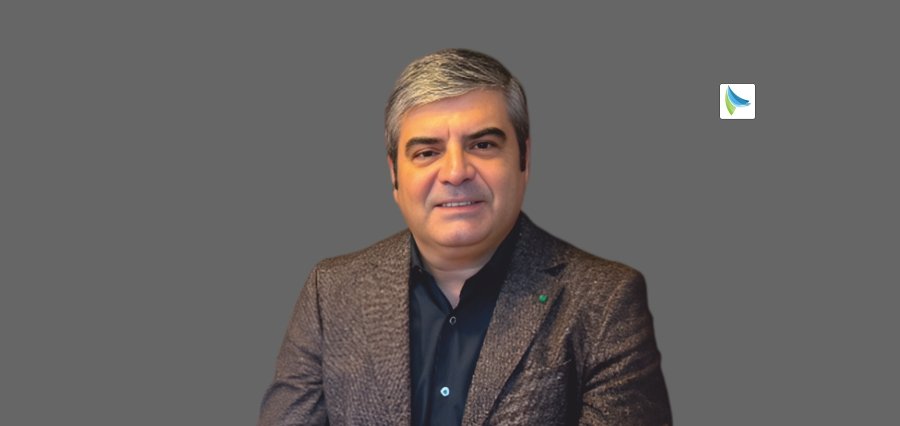
A Caring Leader – Pedro Ramos: Compassionately Nurturing Future’s Talented Leadership
Is the future of work going to be the same as it is today? To answer it, we must acknowledge the fact that the nature of work, jobs, recruitment, training, and employment is very different from what it was in the past. In that regard, over the last three decades, Pedro Ramos has been working on building human, strategic, and sustainable work cultures between Portugal, Brazil, Lusophone (Portuguese-speaking) Africa, and the world. He believes leading is caring, and the future of the Lusophone world depends on leaders capable of integrating people, purpose, and economic development. With a solid career in management and people development, Pedro has excelled in leading consulting projects focused on change processes and organizational transformation. In addition to being the author of several books, he is a highly sought-after international speaker, having shared his vision at conferences across various continents. He has received numerous international awards and recognitions and has been significantly involved in leading various business organizations and professional associations in recent years. His holistic approach emphasizes the importance of managing change processes with people, rather than against them. A Rare Transition A career that reflects a rare transition from long-standing HR leadership roles to board-level and Chief Executive Officer (CEO) responsibilities, a pivotal mindset shift was necessary for Pedro to evolve from people management to enterprise-wide value creation. This transition is marked by understanding that people management is just one part of the broader framework of value creation. He says, “I believe the key turning point was recognizing that every decision we make in talent management must align with the overall business strategy.” This new perspective emphasizes the interconnection between organizational culture, employee engagement, and financial results. Focusing not only on developing leaders but also on how these leaders can drive innovation and sustainability for the company was crucial in this evolution. Having led HR functions for over two decades, Pedro defines the modern CEO’s responsibility toward talent in an era shaped by AI, remote work, and generational change pragmatically. The modern CEO must adopt a holistic view toward talent management, especially in a landscape defined by artificial intelligence, remote work, and generational shifts, he says. This means not only attracting and retaining talent but also creating an environment that promotes inclusion and continuous development, he adds. Furthermore, it is essential to integrate mental and physical well-being practices into the daily operations of the organization. “In a world where employee expectations are changing rapidly, leaders must be proactive in listening and adapting to their needs, fostering a culture of continuous learning and innovation.” Reimagining A Focused Workforce Strategy As CEO of Rharo by Group Talent and Dale Carnegie® Portugal, Pedro ensures that he and his leadership team are reimagining their workforce strategy by focusing on balancing performance, purpose, and human sustainability. This involves developing programs that align individual objectives with organizational goals, promoting a greater purpose that resonates with employees. “We are implementing continuous feedback, mentoring, and training practices to ensure everyone is aligned with the company’s vision, thus creating a more engaging and productive workplace.” Moreover, at Dale Carnegie®, they are utilizing the most innovative international best practices to enhance the development of current and emerging organizational leaders. An Academically Grounded Foundation Pedro’s journey is grounded in a multidisciplinary foundation, shaped in strategic decision-making as a business leader. His academic background in Sociology and Education, complemented by a PhD in Economics, provides a solid foundation that directly influences my decision-making as a business leader. Each of these fields offers a unique and holistic perspective reflected in how Pedro approaches management and leadership. “Sociology, for instance, offers a deep understanding of human dynamics and social relations within an organization, enabling me to create work environments that promote inclusion and enhance interpersonal interactions.” Education enriches his approach to continuous development and lifelong learning—essential elements for any organization aiming for innovation and adaptability. Pedro’s experience as a top leader in human resources reinforces this academic background, allowing him to apply theories and concepts practically. With over two decades of experience, he’s learned the importance of aligning HR strategy with the company’s broader goals. This integration is crucial to ensure that human capital is effectively leveraged to achieve organizational objectives. Additionally, his roles as a business manager and university professor allow Pedro to share this experience with future generations of leaders, shaping professionals who understand the complexities of contemporary management. Merging Theoretical Knowledge with Practical Experience As an author and international speaker, Pedro has the opportunity to disseminate these ideas to a broader audience, contributing to the evolution of people management practices across various cultural contexts. This combination of academic training and practical experience not only enriches his perspective as a leader but also empowers everyone involved in the organization to thrive. “I firmly believe that when we merge theoretical knowledge with practical experience, we are creating more efficient and humane organizations where every employee feels valued and motivated to contribute to collective success.” Ultimately, each of these dimensions—academic, professional, and public—converges to form a holistic approach to leadership that seeks to promote both organizational performance and human development. A Major Organizational Alignment Challenge Many organizations struggle to align leadership development with real business outcomes. One of the major challenges Pedro observes in practice is the disconnect between leadership development initiatives and real business outcomes. Often, companies invest in training programs that are not aligned with the specific goals and challenges of the organization. To address this, CEOs must have a clear vision of what constitutes success in terms of business results and ensure that leadership development programs are fully integrated into this vision. Utilizing clear metrics and providing continuous feedback is essential to evaluating the effectiveness of these programs. However, the most telling feedback from these projects remains in how leaders inspire and motivate their teams. “Are they truly embodying the principles of human-centered leadership, or are these merely empty words?” he asks. As the President and Vice-President of various professional organizations and businesses, Pedro seeks
Warner Bros. Discovery Reviews $31-Per-Share Offer From Paramount Skydance Amid Existing Netflix Deal
Prime Highlights Paramount Skydance raised its all-cash takeover offer to $31 per share, a proposal WBD said could reasonably outperform its existing merger agreement with Netflix. WBD’s board is reviewing the amended bid with financial and legal advisors, but continues to support the Netflix transaction during the evaluation period. Key Facts The revised offer includes a $7 billion breakup fee, covers the $2.8 billion termination feeowed to Netflix, and adds a ticking fee tied to regulatory delays. Netflix previously agreed to acquire WBD’s studio and streaming assets for $27.75 per share, valuing them at about $72 billion, and has four days to revise its bid if Paramount’s offer is deemed superior. Background Warner Bros. Discovery on Tuesday confirmed that Paramount Skydance has increased its takeover offer to $31 per share in cash, up from $30 per share. The company said the revised proposal could reasonably be expected to outperform its existing merger agreement with Netflix. Last week, WBD reopened discussions with Paramount during a seven-day waiver period granted under its deal with Netflix. WBD had previously agreed to sell its studio and streaming businesses to Netflix. In contrast, Paramount seeks to acquire the entire company, including its cable networks and digital assets. In a statement, WBD said its board is reviewing the amended offer with financial and legal advisors. The board added that it continues to support the Netflix transaction while the review is ongoing. The updated Paramount proposal includes a $7 billion breakup fee if the merger fails to secure regulatory approval. Paramount has also agreed to pay the $2.8 billion termination fee that WBD would owe Netflix if it exits that agreement. In addition, the offer includes a ticking fee linked to potential regulatory delays. If the board determines that Paramount’s offer is superior, Netflix will have four days to revise its bid. Netflix agreed in December to acquire WBD’s studio and streaming assets for $27.75 per share, valuing those assets at about $72 billion. A merger between Paramount and WBD would combine HBO Max and Paramount+, and unite major news brands such as CNN and CBS News. Both potential deals will require approval from U.S. and European regulators, where antitrust concerns could shape the final outcome Read Also: OpenAI Teams Up with Top Consulting Firms to Boost Enterprise Growth

Pride of Maharashtra Awards 2026 to Spotlight Excellence at One of the Top Business Awards in Pune
(Pune, Maharashtra, February 26, 2026)– The Pride of Maharashtra Awards 2026 will be held on 26th February 2026 at Hotel Radisson Blu, Pune, convening an influential gathering of entrepreneurs, corporate leaders, policymakers, innovators, and emerging changemakers from across the state. Recognized among the top business awards in Pune, the ceremony will celebrate leadership excellence, strategic innovation, and measurable business impact across diverse industries, shaping Maharashtra’s growth story. Organized by Insights Success Media, the upcoming business event in Pune has evolved into one of the top business awards in Pune, honoring individuals and organizations that demonstrate vision, execution capability, ethical governance, and sustained performance. The platform acknowledges leaders who build resilient enterprises while contributing to employment generation, technological advancement, and long-term economic development within the region. A Distinguished Evening of Recognition and Collaboration Positioned among the most anticipated upcoming business event in Pune, the ceremony will feature a formal red-carpet reception, opening addresses by senior industry representatives, structured award presentations, and curated networking sessions. The gathering will host CXOs, startup founders, investors, policymakers, and media professionals, fostering a collaborative environment for dialogue and partnership. This upcoming business event in Pune in the evening will be graced by the esteemed Chief Guest, Prarthana Behere, adding cultural prominence to the occasion. The awards presentation will follow a professionally curated agenda designed to ensure seamless transitions, impactful recognition moments, and meaningful audience engagement, reflecting the stature associated with one of the leading recognition platforms in Maharashtra. Honoring Excellence Across Key Industries The Pride of Maharashtra Awards 2026 will spotlight leaders across sectors, including technology and digital innovation, healthcare and pharmaceuticals, finance and banking, manufacturing and infrastructure, education and EdTech, sustainability and social impact, and entrepreneurship. Each category recognizes organizations and individuals who have demonstrated consistent growth, market leadership, and forward-looking strategies in competitive environments. Awardees are selected based on tangible milestones such as revenue expansion, operational scalability, digital transformation initiatives, export growth, customer impact, and responsible corporate practices. By honoring diverse sectors, the platform reflects the multifaceted strength of Maharashtra’s economy and its ability to adapt to evolving national and global business landscapes. A Transparent and Merit-Driven Evaluation Process A key differentiator that strengthens the awards’ standing among the top business awards in Pune is its structured and merit-driven evaluation methodology. Nominations undergo a comprehensive review by an independent panel of industry experts and senior professionals with cross-sector experience. The assessment framework considers innovation, leadership effectiveness, governance standards, business sustainability, and long-term impact. This rigorous process ensures that recognition is not symbolic but rooted in measurable performance and strategic contribution. As a result, the Pride of Maharashtra Awards 2026 continues to reinforce its credibility among the most trusted business awards in Pune. Strategic Partnerships and Broader Industry Impact The Pride of Maharashtra Awards 2026 is supported by strategic sponsors and industry partners committed to promoting responsible leadership and innovation-led growth. Their collaboration enhances the ceremony’s visibility and strengthens its national relevance within India’s evolving business ecosystem. Beyond the formal proceedings, award recipients will gain extended visibility through editorial features, digital outreach, and post-event media amplification. The platform aims to elevate success stories that inspire emerging entrepreneurs and reinforce Maharashtra’s position as a dynamic economic powerhouse. As the state continues to drive industrial expansion, technological innovation, and entrepreneurial progress, the Pride of Maharashtra Awards 2026 stands as a powerful testament to resilience, ambition, and excellence. The upcoming ceremony promises not only recognition but also strengthened networks, new collaborations, and a renewed commitment to shaping India’s economic future. Disclaimer This press release is the exclusive property of Insights Success and is being circulated solely for public relations purposes. All content, including text, data, and creative material, is protected by copyright and any associated intellectual property rights belonging to Insights Success. Read Also : International Business Icons Honored at Global Excellence & Leadership Awards 2026 in Dubai

International Business Icons Honored at Global Excellence & Leadership Awards 2026 in Dubai
Dubai, UAE – Dubai once again reinforced its position as a global hub for excellence and innovation at the Global Excellence & Leadership Awards, Dubai 2026, presented by Insights Success Media, which brought together the world’s most influential leaders under one prestigious platform. The ceremony celebrated transformative leadership, breakthrough innovation, and measurable industry impact across diverse sectors. The ceremony honored leaders across diverse sectors, including electric mobility and sustainable innovation, finance, AI, healthcare, marketing, real estate, aviation, banking, women’s leadership, education, and corporate transformation. Among the distinguished honorees were. Electric Mobility & Sustainable Innovation Leading the charge in sustainable progress and technological advancement were distinguished pioneers redefining infrastructure and environmental responsibility: Mr. Samir Hmicho – Leading Electric Vehicle Transformation – Chairman of the Board Raymond George – Innovative Building Materials Company of the Year 2026 – Leading the Way in Sustainable Waterproofing Abdul Qaiyum Alidin – Visionary Leader in Aerospace & Sustainable Innovation Dr. Daere Akobo – Visionary Leader in Energy, Infrastructure, and Digital Transformation Financial Leadership & Corporate Excellence Recognizing strategic foresight and financial stewardship, the awards celebrated global finance leaders shaping economic ecosystems and corporate resilience: Mr. José Antonio Sánchez Marín – Excellence in Financial Leadership and Strategic Consultancy Award Satish Ramakrishnan – Outstanding Financial Executive of the Year Safouane Khcherif – Excellence in Corporate Finance Leadership Rony Daou – Financial Strategist of the Year Peter Ristevski – Outstanding Global Leader in Tax Innovation & Asset Protection – 2026 Akil Shah – Co-Sponsor / Middle East’s Most Trusted Accounting & Tax Firm, 2026 Marichelvam R. – Global Excellence in Finance Leadership & Community Impact Award Mohamed Bellal – Finance Innovators Transforming Strategy into Growth Arindam Sarkar – Global Aviation Finance Leader of the Year Abby Liang – Global CFO of the Year (Founder & CFO, Metaworld Consultant) LINH T TRỊNH-AN – Women in Finance Leadership & Impact Award CEO, COO & Executive Leadership Honoring transformative executive vision and organizational leadership excellence: Joel Perri – Number One CEO Coach in the World; First & Only Omni-Platform #1 Top Global Leadership Headliner Keynote Dynastic Star Ayman Elbayaa – CEO of the Year 2026 Shohreh Abedi – NextGen COO 2026: Transforming the Landscape of US Operations Noushad Ismail – Most Influential COO in UAE Banking Abdulla Altaee – Saudi Arabia’s Top General Manager Leadership Award 2026 Rohit Chug – Saudi’s Most Visionary Corporate Executive of the Year 2026 Ronnie Surty – Bahrain’s Most Impactful Leader Powering the Gulf Region Abu Bakar – Visionaries of 2026: The Leader Redefining the Future Aleksandr Mamasidikov – The Visionary Founder Redefining Banking & Finance, 2026 Ahmed J. Jabbar – The Global Visionary to Follow in 2026 Dr. Shweta Narang – Global Excellence & Leadership Award in Medical Diagnostics 2026 M. Sehzaad Peerbucus – Award for Outstanding Achievement in Business Excellence (Founder and CEO, Hammersmith Management Ltd) Rahmah Al-Ali – Leadership Excellence in Risk & Crisis Management 2025 Gail Courneyea – 35-Year Legacy of AeroSafety Award Khaled Haj Younes – Excellence in Business Innovation Award – Medical & Aesthetic Sector Technology, AI & Digital Transformation In the rapidly evolving digital era, these leaders stood out for advancing cybersecurity, quantum innovation, cloud transformation, and AI-powered ecosystems: Rajan Jha – Global Icon of Cybersecurity & AI Leadership, 2026 Imad Syed – 2026’s Top Visionary Leader Transforming the IT Landscape Rakesh Ramankutty – Global Icon Leading Digital Transformation Across Cloud Platforms – 2026 Amr Elazab – Next-Gen Quantum Leaders: Shaping the Future Today Syed Javeed Shah – Technology & Digital Transformation Leadership – Africa Category Bahwan Cybertek – Most Disruptive Tech Product of the Year Unmesh Deshpande – IT Infrastructure Visionary of the Year (Technology Leader, Wockhardt Hospitals) Mile Jelic – Cybersecurity Strategy & Growth Leader of the Year 2026 (Comtrade System Integration) Seinetime (ANH-PHUONG, FELIX TA & SEINETIME) – The World’s First Domain-Independent Agentic Intelligence Platform Healthcare, Wellness & MedTech Celebrating impact-driven leadership across healthcare strategy, primary care, wellness innovation, and MedTech advancements: Carolyn M. Rubin – Influential Woman Leader in Healthcare Strategy & Organizational Growth Katleen Verleysen – MedTech Visionary Leader of the Year 2026 Sofica Bistriceanu – Excellence in Primary Care Award 2026 Agnes George – Global Excellence in Diabetes Transformation Coaching Dr. Parveen Smith – Global Transformative Leader in Wellness & Empowerment Jun Tachibana – Influential Global Business Leader in Oral Healthcare Dr. Riza Kadilar – Coaching and Mentorship Leadership Award (Business Leaders, K Ventures) Sylvia Dr. Paulig – Global Thought Leadership Award (CEO / Ophthalmic Surgeon, Paulig Eye & Health) Dr. Markus Meier – Healthcare CEO of the Year 2026 Dr. Taj Mohammed Fiyaz Chowdhry – Innovative Healthcare Leadership Award 2026 Prof. Dr. B. Durgaprasad Reddy – Outstanding Cardiothoracic Surgeon of the Year 2026 Real Estate, Infrastructure & Construction Recognizing leaders shaping urban landscapes and advancing sustainable construction: Dr. Bumal Murchoyea – Visionary Leader Transforming Real Estate Development Kavita Doshi – Visionary Leader Transforming Sustainable Real Estate & Community Impact Francis Christy Boy – Visionary Leadership Award for Transforming Construction Through Digital Innovation Vwakpor Efuetanu – Architectural Visionary of the Year Banking, Insurance & Corporate Governance Acknowledging those strengthening governance frameworks, insurance leadership, and financial intelligence: Mr. Shahzad Saxena – Leading Insurance Company Driving Confidence in the Middle East Hammad Khan – Most Influential Leader in Insurance 2026 Eng. Mohammad Bamogaddam – Outstanding CEO Shaping the Future of Credit Intelligence Jessica Soledad Cáceres – Global Excellence Award in Digital Governance, Compliance & Corporate Ethics Branding, Marketing & Industry Leadership Celebrating strategic brand architects and commercial leaders redefining market influence: Amir A. Kolahzadeh – Title Sponsor / Innovative Brand Strategist of the Year Rana Yakzan – Global Trading Innovation Leader Patrick Czerka – Engineering Leadership Excellence Award Wail Muhrzi – Logistics Leadership Excellence Award Mr. Fayez Awadeh – Marketing Leadership Excellence Award – Pharma Sector 2026 Mr. Mohamed Metwally – Commercial Leadership Excellence Award – Pharma Sector 2026 Abdulla Ahmad Faraj – Emirati Leader of Excellence in Sports Media & Marketing Cristian Acampora – Keynote Speaker & Impact Leader of the Year (GM –
Most Transformational Leader Making an Impact in 2026
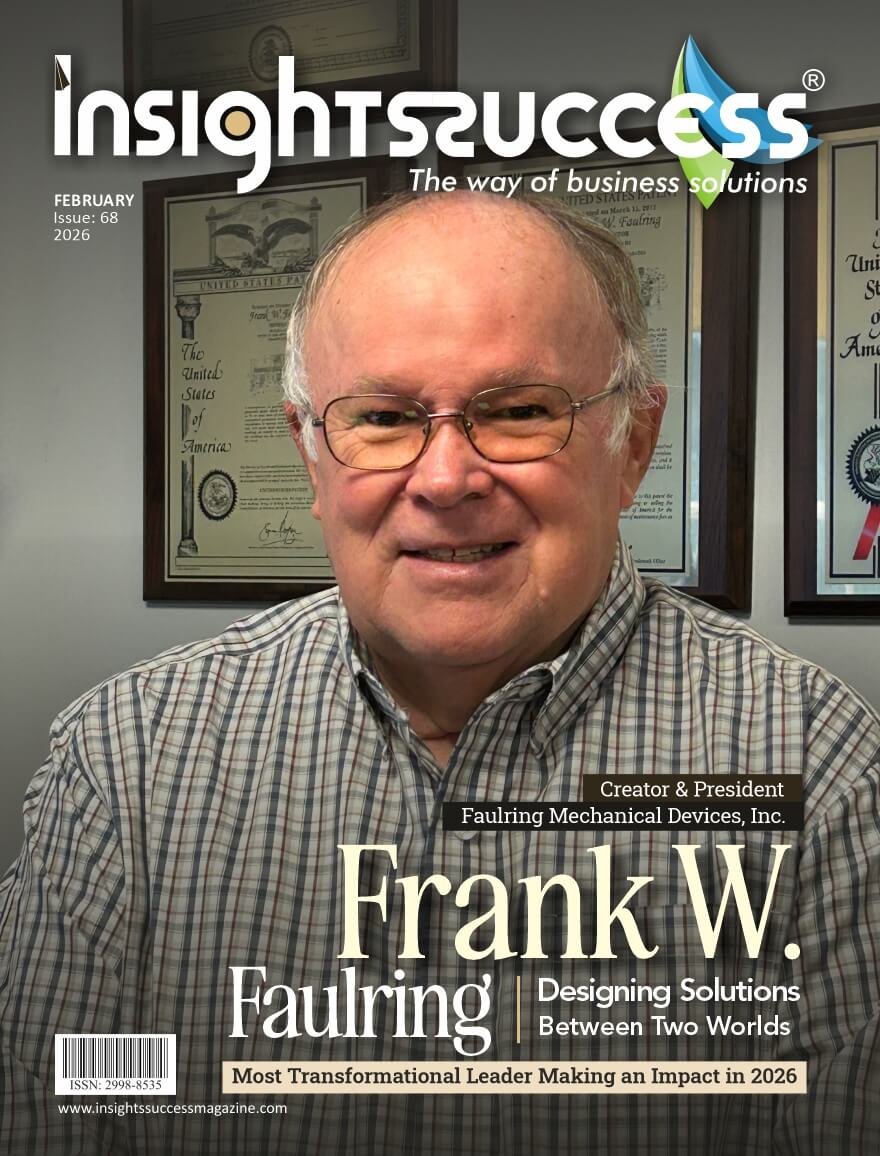
Most Transformational Leader Making an Impact in 2026 This edition celebrates Frank Faulring as a visionary force redefining leadership in 2026. Highlighting his transformative strategies, purpose-driven innovation, and measurable industry impact, the edition explores how his bold decisions and people-centric approach are shaping sustainable growth and inspiring the next generation of global leaders. Digital Link Quick highlights Quick reads

Frank W. Faulring: Designing Solutions Between Two Worlds
Not every revolution starts off in an office building; many times a revolution starts at a place like workshop that is located at the end of a quiet farm where a person with greasy hands and a blueprint framed in his mind is working on a new idea or solution to a problem that nobody has thought of yet. That person is Frank W. Faulring. He is a design engineer, has eight patents, has received the American Society of Agricultural Engineers’ AE50 Award for Agricultural Engineering Innovation seven times, and is the creator & President of Faulring Mechanical Devices, Inc. He built this company not for headlines, but for results. For more than three decades, Frank W. Faulring has operated at the intersection of ingenuity and practicality, designing machines that feed nations and outlast the trends that surround them. He does not chase scale. He chases solutions. And in that pursuit, he has left a mark on agricultural engineering that very few individuals can claim. From Humble Beginnings to a Builder’s Blueprint Frank W. Faulring grew up in Western New York with parents who were not wealthy, but who gave him something more valuable than money- the habit of making do. From childhood, he was a tinkerer. He built things from spare parts, leftover materials, and whatever happened to be within arm’s reach. The classroom did not always hold him, but science and technology never let go. He pursued both college entrance courses and vocational trades simultaneously in high school- a dual path that turned out to be the foundation of everything that followed. Frank W. Faulring went on to study automotive technology in college, but the moment he entered the working world, his direction became clear. Special purpose-built machinery was where he belonged, and no corporate job description was going to capture that. Frank W. Faulring understood early that formal education was only half the equation. The other half lived in workshops, on farms, and in conversations with mentors who had already made the costly mistakes he wanted to avoid. He taught himself computers, CAD, and solid modelling long before those tools became standard. He built his knowledge the same way he built his machines: piece by piece, with patience and precision. The Inventor for Hire: Finding the Perfect Problem Frank W. Faulring never wanted a traditional start-up. He had watched too many of them collapse before their fifth year, leaving founders financially gutted and professionally bruised. So, he thought differently. He looked not for a product line, but for a service model; one that matched his skills, his temperament, and his tolerance for risk. The answer came to him on a large vegetable production farm, during a visit that changed the entire direction of his career. Standing in that field, Frank W. Faulring noticed something that most people would have walked straight past: the only mass-produced machine on the entire property was the tractor. Every other piece of equipment, planters, harvesters, conveyors, had been custom-built by the farm’s own fabrication shop. Those shops were skilled with metal, but they lacked engineers. They could not design the sophisticated machines their growing operations demanded. And the major agricultural machine manufacturers had no interest in filling that gap, because the production volumes were too small to justify their investment. “I didn’t want to follow the traditional path. I wanted to find the space between two worlds that nobody else was occupying, and build something extraordinary there.” That unoccupied space became Frank’s territory. He positioned himself precisely between the fabrication shop and the corporate manufacturer, conceiving the design, building the models, developing working prototypes, and then handing volume production over to contract manufacturers. He called himself an inventor for hire, and it was a perfect description. He kept the operation deliberately small. Angel investors, usually the end users themselves, provided the funding. No marketing was needed. He was selective about the clients he took on. One innovation at a time, all energy forward. It was the ideal model for the mind he brought to the work. A Life Designed for Creative Freedom Frank runs Faulring Mechanical Devices, Inc. from his home in North Collins, New York, and that is no accident. Adjacent to his house, sit offices, model and prototype shops, an indoor year-round ground-engaging test stand, and secure test fields for intellectual property trials. The setup reflects a central conviction: creativity does not flourish under the wrong conditions. By removing the daily commute and building a space where he can act on an idea at any hour, Frank has engineered the environment his best work demands. He finishes a day of intense technical effort and still has energy for his wife, children, and grandchildren. When travel takes him to client sites, field trials, or conference speaking engagements, family comes along whenever possible, and a smartphone handles the rest. Driven by Fire: The Passion That Never Clocks Out Frank W. Faulring does not describe his work as a career. He describes it as a hobby he gets paid to do, and that distinction reveals everything. As a boy, he was building go-carts and mini bikes. As a young husband, he built the family home from the ground up. Engineering gave that lifelong creative restlessness a professional channel, and it has never lost its force. Frank is deeply inquisitive, questions everything, and chases long shots with a calm certainty that others reserve for sure things. Bureaucracy drains him. Repetition bores him. New challenges pull him forward with a kind of gravitational inevitability. He travels to see how other cultures solve problems. He meets new people and absorbs perspectives that sharpen his own. He takes on projects others walk away from and stays long after others leave. At the core of it all is a conviction that transcends professional ambition: contributing positively to society is not a byproduct of his work; it is the entire point of it. Strengths, Hard Truths, and the Wisdom Earned in Between Frank W. Faulring speaks about his