





Green Prosperity’s Modern Architect – Santosh Kumar Sahu: Bringing GoGreen Warehouses Revolution
In the vast, critical Indian agricultural landscape, where millions’ fate hinges on resilience and stability, the traditional systems of post-harvest management have often been the weakest link. Enter Santosh Kumar Sahu, a visionary who did not just see the flaws in the system, but the blueprint for its future. An embodiment of management acumen applied to Agribusiness, Santosh Kumar Sahu, with nearly two decades of outstanding experience, moved from being an amateur concern for the farmer to becoming the Green Warehousing Virtuoso: recognizing that the future of food security is inseparable from sustainability. Santosh’s persistent research revealed a compelling truth: green warehousing practices that cut carbon emissions and save energy are not just optional ‘good guy’ approaches to hug the planet. These practices are fundamentally linked to the larger sustainability movement and are intrinsically connected to the core customer: the farmer. This impact ultimately led to the groundbreaking business: Go Green Warehouses Pvt Limited. As the Co-founder, Director, and CEO, Santosh’s planning and unique entrepreneurial approach to direct-to-consumer and data-driven business models scaled the startup from an idea to a sustainable ₹100+ crore business. He is building India’s leading Agri Warehousing & Commodity Financing Network (Agri Fintech), seamlessly integrating rural infrastructure, logistics, and crucial financial lifelines. The stunning success is highlighted by Go Green’s proven ability to cultivate a ₹10,000 crore commodity loan book with financial partners this year. Operating across 25+ states and 300+ locations, Santosh Kumar Sahu has magnanimously created “Heuristics,” a one-stop solution designed to synchronize the entire Agri value chain. A Revolutionary Entrepreneur, his mission is clear: to enhance wealth creation for his team while rapidly advancing his organization toward an ambitious ₹1,000 crore valuation in the next few years, all by ensuring the prosperity of the land and the farmers. The Core Philosophy: From Harvest to Prosperity The brand’s philosophy, “Protecting farmers’ harvest, maximizing value, and reducing post-harvest losses through safe, efficient, and sustainable storage solutions,” means putting Food Security First by preserving quality, maintaining a strict Farmer-Centric Approach to boost incomes, and ensuring environmental integrity through Sustainability. Redefining Quality: Storage as a Growth Enabler Santosh Kumar Sahu built better barns, revolutionizing the storage concept. Go Green redefined quality and efficiency by introducing scientifically designed, automated, and temperature-controlled facilities that drastically slash post-harvest losses. They leverage digital tools for real-time monitoring, traceability, and faster turnaround times. Crucially, Santosh Kumar Sahu integrated warehousing with financing and value-added services, intentionally transforming storage from a mere holding space into a growth enabler for the farmer. The AI-Powered Shield: Innovation in Preservation Go Green Warehouses actively uses proprietary, cutting-edge technology by deploying IoT-enabled temperature and humidity monitoring systems and automated aeration control, linked to real-time data dashboards for proactive decision-making. Using the power of predictive analysis, the company uses AI-based predictive models to plan precise fumigation cycles and prevent spoilage, directly reducing losses and extending shelf-life. The IoT-enabled sensors continuously monitor environmental conditions, allowing the system to take instant corrective action. This approach delivered a remarkable win in 2024. Partnering with an FPO in Madhya Pradesh, Go Green implemented digital quality assaying and optimized aeration control based on real-time data. This reduced the FPO’s storage losses from a crippling 8% to under 2% in a single season. “This not only improved farmer incomes by 12% but also enabled them to access pledge financing quickly, turning stored grain into working capital.” The Green Mandate: Stewardship and Food Security Santosh’s commitment to sustainability and vision builds a truly sustainable agri-ecosystem. Go Green’s warehouses employ energy-efficient designs, integrate solar power, and use scientifically managed aeration to dramatically reduce their carbon footprint. By leveraging data-driven fumigation and superior preservation, they drastically cut overall food waste. Empowering the Marginal Farmer: Accessible Value Crucially, Santosh Kumar Sahu structured Go Green to serve the most vulnerable segment of the ecosystem: small and marginal farmers. His strategy involves active partnerships with FPOs and cooperatives, guaranteeing access to modern facilities. Go Green ensures accessibility through low-cost warehousing, doorstep grain collection, and digital quality assaying to eliminate middleman bias. This integration of services, combined with enabling pledge financing, allows farmers to avoid distress sales and secure fair value. Culture and Trajectory: The Future is Intelligent Go Green’s internal culture is the engine of its external success, built on principles of trust, integrity, innovation, and farmer-first thinking. Santosh Kumar Sahu fosters innovation by encouraging every employee, from the warehouse floor to senior management, to participate in problem-solving and cross-functional pilot projects. Looking ahead, Santosh Kumar Sahu sees the future defined by AI-driven predictive analytics, blockchain-based traceability, and fully automated climate-smart warehouses. Read Also : A Foundation of Trust: The IFFCO-TOKIO Story of Giving Peace of Mind to Its Clients

A Cybersecurity Automation Guru – John Nwachukwu: Ensuring Zoracom’s Unified Operational Resilience
Business cybersecurity is complex. A seamless monitoring of the organization’s digital infrastructure securely, constantly, and at scale demands cutting-edge solutions delivered by an expert leader. John Nwachukwu, the Chief Strategy/Executive Officer (CSEO) of Zoracom, and also a member of the AI Frontier Network, is one among that league. First and foremost, John Nwachukwu completely grasps the importance of end-to-end network observability and how it contributes to business continuity. He insists that it is very critical because “It gives us a real-time view of every layer of our clients’ networks. Using tools like Miro observability, we can monitor and correlate logs, metrics, and traces to detect potential issues before they affect services.” This proactive monitoring minimizes downtime and ensures their clients’ operations remain uninterrupted, turning business continuity into a competitive advantage. Innovative AI Solutions for Business Empowerment At Zoracom, John Nwachukwu shares that they use Miro to visualize systems in real time and trace performance issues from endpoints all the way through infrastructure. For example, if a client experiences latency, “Miro allows us to pinpoint whether it’s caused by a network switch, server, or application,” he informs. This approach turns troubleshooting into precise, near-instant problem-solving, keeping service disruptions minimal. When it comes to modern cybersecurity, John Nwachukwu says a SIEM-integrated SOC provides centralized, automated, intelligence-driven detection and response, making it far more effective than traditional monitoring because it correlates events, reduces response time, improves accuracy, and offers 24/7 protection against modern, complex threats. John Nwachukwu gives an example. “Suppose a 24/7 SOC detects a high-severity security incident. Then we immediately implement our SOC incident response protocol: secure affected systems, contain malicious activity, assess impact, and then eradicate the threat. After recovery, we conduct a post-incident review to improve processes.” At Zoracom, this workflow is supported by Fortrex, allowing it to respond quickly while maintaining operational continuity. Vulnerability assessments reveal real security gaps while maturity ratings benchmark processes against industry standards. They conduct vulnerability assessments to identify gaps in client systems and use cyber maturity ratings to benchmark against industry standards. This combination guides targeted improvements, reduces risks, and ensures clients can maintain a resilient security posture that evolves with emerging threats. Co-location and infrastructure sharing help enterprises achieve scalability by providing ready-built, secure, and redundant data center environments where they can quickly expand resources without heavy capital investment. These solutions reduce costs, improve performance, offer carrier-neutral connectivity, support compliance, and enable rapid deployment, making them far more efficient and flexible than building and scaling in-house infrastructure. “In Lagos, we’ve seen how IoT-enabled monitoring and automation can optimize energy use, traffic flow, and utilities.” By connecting sensors and using real-time dashboards in Miro, city managers and industries can reduce waste, improve efficiency, and deliver better services to citizens. John Nwachukwu further explains Zoracom’s approach to Third-Party Risk Management (TPRM) in a multi-vendor environment. It is risk-based, consistent, and lifecycle-driven. ‘We classify vendors, perform strong due diligence, embed security into contracts, and continuously monitor both their security posture and their performance.” This ensures that every third party meets their security requirements and that risks are proactively identified, mitigated, and governed. He also adds that automated auditing is essential for GDPR and IT security because it provides real-time tracking and accurate reporting of data practices, as implemented in their Fortrex platform, which tracks user activity, data access, and compliance in real time. This enables clients to stay GDPR-compliant and secure, without manual bottlenecks, while also providing actionable reports for auditing purposes. Enlightening about the value proposition of Fortrex to a potential customer concerned about rising cyber threats, John Nwachukwu says that Fortrex delivers proactive protection and real-time monitoring, allowing clients to detect and mitigate risks before they escalate. It’s not just a security tool—it’s a shield that ensures business operations stay safe and uninterrupted. Further, he says that organizations often struggle with network visibility, making it hard to spot issues or plan. Miro solves this by combining monitoring, visibility, and reporting in one platform, turning complex data into clear, actionable insights and helping clients make fast, informed decisions. High-impact Strategic Partnership In 2025, Zoracom strengthened its market position through a set of high-impact strategic partnerships focused on technology enablement, regulatory digitalization, and infrastructure expansion. The most notable partnerships include its collaboration with NEMSA to deliver the Integrated Technical Inspectorate Service Management System (ITISEMS). This large-scale digital transformation platform automates inspection and certification processes in the power sector. This partnership strengthened Zoracom’s credibility as a trusted technology partner to government regulators and positioned it as a key digital infrastructure enabler in a nationally critical industry. Zoracom also reinforced its global technology partnership with Infosim, the makers of StableNet, to enhance its observability, network monitoring, and service-management capabilities. This reinforcement enabled Zoracom to deliver enterprise-grade observability and automation solutions and provide a competitive advantage through access to mature global technology. Zoracom advanced its FTTH program, working with local contractors, technical partners, and community networks to expand fiber deployment and build last-mile connectivity. The company also launched a training initiative to scale the technical workforce. This advancement strengthened its ecosystem of field technicians and implementation partners. Also, it positioned Zoracom for future large-scale fiber rollout opportunities. The FIELD application and Zoracom training academy in Lagos, Abuja, and Kano have expanded connectivity and built local skills. “Renew, our refurbishment solution, promotes sustainable tech use, and our ITISEMS application supports the Nigeria Electricity Management Service Agency by improving how they track and manage electrical infrastructure.” These initiatives show how innovation can deliver real impact for both communities and businesses. Zoracom expands internationally by understanding local market needs and tailoring its solutions accordingly. It partners with trusted local teams and invests in reliable infrastructure, ensuring clients receive consistent, high-quality services no matter the region. “This approach allows us to scale sustainably and build long-term international relationships,” John Nwachukwu concludes. Read Also : Green Prosperity’s Modern Architect – Santosh Kumar Sahu: Bringing GoGreen Warehouses Revolution
The New Architecture of Digital Trust: Navigating the Hyper-Connected Frontier with Prashant Nimbalkar
A handshake meant you were in the business in the pre-digital era. Today, modern business is a sequence of encrypted pulses, where the boundary between our physical and digital lives dissolves into a hyper-connected reality. Nowadays, our digital data has become the currency of ‘trust.’ It has become both our most valuable asset and our most fragile vulnerability. Prashant Nimbalkar, the Regional Sales Leader at SOCRadar® Extended Threat Intelligence, is well known as an influential top voice on LinkedIn and an expert in cybersecurity. He believes that the time has come when ‘good enough’ security is an open invitation for catastrophic failure. The Evolution of the Threat Landscape Prashant Nimbalkar emphasized that the threat landscape is increasingly dynamic and developing, due to technological improvements through the years and realized on account of the emergence of Artificial Intelligence (AI) and Machine Learning (ML) as defense. For both organisations and individuals, being able to keep ‘ahead of the curve’ will no longer just be a luxury; it must now become a mandate for survival. Blueprint for Cyber-Leadership In an industry defined by cold code and invisible threats, Prashant Nimbalkar has carved a reputation as a leader who prioritizes the ‘Human Firewall.’ To Prashant, the most sophisticated cybersecurity sales strategy is only as strong as the culture that powers it. He operates at the rare intersection of radical collaboration and Six Sigma precision, proving that in the new cyber era, the most valuable asset isn’t the software. It’s the collective intelligence of the team. The following is the strategic plan that Prashant Nimbalkar has laid out from 2026 to 2027 with regard to security: The Death of Implicit Faith: Zero Trust Architecture “We are no longer in a ‘buzzword’ phase. Zero Trust has transitioned from being just a well-known concept to the operational standard of doing business.” Prashant Nimbalkar notes that we must change from relying solely on a perimeter-style approach to securing our systems and networks to adopting a fundamentally new way of thinking: Trust nothing; verify everything. By verifying end-users, devices, and connections at EVERY step of the authenticity of those items, Zero Trust becomes a bedrock of our digital design and plan for success into the future. The Algorithmic Arms Race: AI and Machine Learning In the battle against breaches, human speed is no longer sufficient. Prashant Nimbalkar elaborates that Artificial Intelligence and ML have become the enemy’s weaponized solutions; the creation and deployment of AI/ML technology now enables real-time interrogation of and reaction to extensive data sets to identify and neutralize threats with unprecedented accuracy and speed. Building Resilience: Beyond the Ransomware Economy The ransomware economy has rapidly become a very sophisticated enterprise. Cyber criminals are skilled at their craft! As we migrate to hybrid and multi-cloud businesses, the ‘surface area’ of risk has expanded. The number of entry points created by IoT devices has increased exponentially, and many of those entry points are unsecured. Hence, now, the focus must be on ‘robust and reliable’ identity management and the standardization of security across these disparate IoT devices. The Complexity of the Cloud and IoT Prashant Nimbalkar is also concerned about the increase in ‘high-profile’ supply chain attacks, where much of a software product is generated by third-party or external entities. At the same time that we’ve seen increases in high-profile supply chain attack incidents, we’ve also seen an increase in the number of global regulations (such as GDPR and CCPA) focusing on the compliance of the software lifecycle. According to Prashant, because of compliance, cybersecurity needs to be an integral component of how an organization manages its corporate governance and its Third-Party/Vendor Management processes. The Sovereign Mandate: Governance and Supply Chains Sophisticated software will not protect an organization that does not have a strong ‘human firewall.’ As mentioned earlier, there is currently a worldwide shortage of Cybersecurity personnel. The best way to address this issue is through dual investment: aggressive upskilling of technical staff and continuous, culture-shifting training for all employees. Bridging the Human Divide: Skills and Culture The lack of a strong ‘human firewall’ in an organization, even when using the most advanced software globally, won’t protect it from threats. In his article, Prashant Nimbalkar points out a current global shortage of Cybersecurity experts and that this shortage can only be solved with a dual investment to develop technical staff through up-skilling and by providing culture-changing training on an ongoing basis to the entire workforce. The Inclusive Shield: Culture as a Strategic Asset Prashant Nimbalkar believes that Teamwork can increase the performance of a team. Prashant Nimbalkar encourages his team members to brainstorm with him in an ‘open-architecture’ style of communication. The result is that Accountability and High Performance are established through Psychological Safety, which is defined as feeling valued by one’s teammates. In his words: “When we work together as a team, we align our diverse perspectives around one common goal.” Prashant Nimbalkar wants to see… The Cyber-Safe World of Tomorrow Prashant’s vision goes beyond today’s events. He is a Long-Term Cyber-Sovereignty Leader. He builds powerful and Motivated High-Performance Teams with surgical precision, executing complex sales initiatives. This makes him a ‘major player’ for any company operating in the Volatile Cybersecurity Market. As the ‘Digital Protector of the New Cyberverse,’ he will continue to support the creation of a safer world; a world that uses professional growth, data integrity, and human collaboration to create an unbreakable defense. Read Also : A Cybersecurity Automation Guru – John Nwachukwu: Ensuring Zoracom’s Unified Operational Resilience

Peter Browne: Leading Agricultural Transformation Through Digital Innovation
Adversity has a way of shaping leaders, but for Peter Browne, it was the flame that ignited an audacious idea and reshaped agricultural development across Africa. Before bringing Farming By Faith into its present phase of digital-first innovation, he had to face one of his most difficult lessons: watching his early farm operations, which were found out of a desire to help recovering addicts and vulnerable families, fail due to a lack of funding. That terrible but pivotal moment laid the groundwork for a leadership philosophy founded on resilience, purpose, and reinvention. Instead of forsaking the sector, he redefined its potential. He separated the burden of physical production from the power of technology, forging a bold route in which farmers nurture the land while the organization develops scalable digital solutions to improve their livelihoods. The organization has expanded under its leadership into a platform-oriented firm that combines creativity and compassion, that will provide thousands of marginalized agripreneurs with access to markets, tools, and opportunities. Today, his worldview is obviously human-centered. He is leading with a commitment to transforming setbacks into springboards, guided by faith, data-driven insight, and a firm belief in inclusive progress. As CEO, he remains committed to a future in which agriculture is more than just a source of income, but also a means of achieving dignity, economic independence, and generational impact. From Setback to Strategic Pivot Peter Browne initially channeled his resources into establishing farming operations designed to support recovering drug addicts and abused women and children. The vision centered on creating self-sustaining communities shielded from economic vulnerability. However, inadequate working capital forced a painful reckoning, the farms returned to the bank at values considerably below market rates after just two years. “That setback taught me the importance of financial discipline and capital allocation. More importantly, it fueled the flame to rethink our approach,” he reflects. Rather than retreating from agriculture, he emerged with a revolutionary insight: separating digital innovation from physical production. This strategic pivot forms the foundation of Farming By Faith‘s current model, where skilled farmers focus on cultivation while the company builds scalable digital platforms to empower them. Evolution of Leadership Philosophy Browne’s leadership style has undergone a profound transformation. He transitioned from directive, detail-driven management to collaborative, adaptive, and impact-focused stewardship. The pilot farm project’s conclusion marked a turning point. He shifted from controlling operations to building ecosystems that amplify marginalized voices. Three core principles now anchor his decision-making. 1) Faith and purpose drive every strategic choice, ensuring alignment with the mission to uplift farmers and communities. 2) Inclusivity and empowerment guide his commitment to amplifying unheard voices, particularly marginalized agripreneurs. 3) Data-driven impact grounds these values in measurable outcomes, digital insights, and scalable models that ensure sustainability across diverse contexts. “Leadership is not just about pursuing bold ideas. It’s about learning from adversity, adapting with resilience, and finding solutions that create lasting impact,” he emphasizes. Balancing Innovation with Operational Excellence In an era of unprecedented digital revolution, Peter Browne recognizes the challenge leaders face maintaining operational excellence while fostering innovation. At Farming By Faith, he embeds research into strategy, encourages safe experimentation, and employs clear metrics to ensure innovation strengthens rather than distracts from performance. The company leverages the gig economy and internet connectivity to access global talent at fractional costs. This approach broadens perspective and enables rapid, efficient adaptation. He spends considerable time studying complementary business models and carefully weighing risk-reward profiles from multiple service providers before making strategic moves. “Innovation fuels relevance, while operational excellence sustains trust. Together they drive long-term resilience,” he explains. Cultivating Purpose-Driven Culture Peter Browne balances ambitious business goals with workplace culture by anchoring everything to a clear mission and vision. When teams understand the larger purpose, alignment and sustained energy naturally follow. At Farming By Faith, goals tie directly to transforming agriculture and uplifting communities. The company nurtures a culture where people feel empowered, valued, and connected to something larger than themselves. Collaboration, transparency, and shared ownership form the operational foundation. This positive environment fuels both resilience and innovation, building long-term success on the strength of people rather than purely financial metrics. Mentorship and Emotional Intelligence Peter Browne prioritizes mentoring emerging leaders who demonstrate entrepreneurial qualities and initiative. He believes leadership involves creating opportunities rather than waiting for them. His hands-on approach encourages emerging leaders to take project ownership, learn from successes and setbacks, and develop confidence to innovate. Emotional intelligence sits at the heart of his leadership philosophy. Farming By Faith doesn’t simply produce successful farmers, it leverages innovation to help people overcome income inequality and poverty. This requires listening deeply to farmers’ needs, understanding their challenges, and designing solutions that honor both realities and aspirations. “Empathy is not a side value. It is at the heart of our vision and mission,” he states. Vision for Transformative Impact Peter Browne envisions his leadership legacy extending far beyond traditional business metrics. He aims to empower one million farmers by equipping agripreneurs with digital tools, training, and market access creating ripple effects of prosperity across Africa and beyond. The company partners with FasterCapital to drive investor outreach supporting this ambitious goal. Farming By Faith plans to unlock $250 million in microcredit through blockchain-enabled financial inclusion. He views this not merely as capital but as dignity, opportunity, and generational change resources enabling farmers to grow sustainably and independently. His personal effectiveness draws from diverse influences including biblical figures like Joseph and Jesus. From James Simons, he learned data-driven decision-making that built billion-dollar fortunes. MrBeast’s 443 million subscribers and 96.6 billion views taught him creativity, storytelling, and global reach. Jeff Aman’s Easy Commission Funnel, which generated $188,210 in its first year, demonstrated the power of replicable systems and grassroots entrepreneurship. Building a Movement Peter Browne sees Farming by Faith as more than crops and yields, it represents an ingenious work of art, a business marvel tackling poverty and debt. By building partnerships and ecosystems, the company’s impact extends beyond agriculture into education, policy, and community development. “My lasting

Real Estate Awards Nomination Profile
Ajail Shaik Raheman Global CEO & Managing Director – Silver Sands Estates and Infra Hyderabad, India Ajail Shaik Raheman is a Hyderabad-based global real estate leader whose visionary leadership has significantly contributed to the evolution of sustainable and lifestyle-driven real estate development in India. As the Global CEO and Managing Director of Silver Sands Estates and Infra, he has demonstrated excellence in strategic planning, project execution, global investor engagement, and environmentally responsible development—making him a distinguished candidate for real estate industry recognition. Leadership Excellence and Industry Impact Under Ajail Shaik Raheman’s leadership, Silver Sands Estates and Infra has grown into a multi-location real estate development company with operations in Hyderabad, Visakhapatnam, and Dubai. He currently oversees seven major real estate projects across Telangana and Andhra Pradesh, including luxury villas, eco-resort communities, and farmland gated developments. His ability to lead projects from concept to completion while maintaining quality, compliance, and investor confidence reflects outstanding leadership capability. Innovation and Sustainable Development Ajail has consistently championed eco-conscious and ESG-aligned development practices. His projects integrate green architecture, extensive landscaping, water conservation systems, eco-friendly materials, and nature-centric planning. By prioritizing environmental responsibility alongside modern lifestyle requirements, he has redefined community living beyond conventional real estate models. Global Outreach and Investor Engagement A key differentiator in Ajail’s professional profile is his extensive international market exposure. He has organized and participated in global property expos, seminars, and investor roadshows across: United States (California, Texas, Seattle, New Jersey, Atlanta, Chicago, Virginia) Singapore (20+ large-scale events) Middle East (Dubai, Abu Dhabi, Muscat, Bahrain) These initiatives have strengthened cross-border investor confidence and positioned Hyderabad and South Indian real estate on global platforms. Thought Leadership and Media Presence Ajail Shaik Raheman is a recognized industry voice, contributing articles and participating in interviews across digital platforms and satellite television channels. His insights focus on market trends, sustainable urban growth, and future-ready real estate development, reinforcing his role as a thought leader within the sector. Professional Journey and Entrepreneurial Vision Beginning his career in journalism and later transitioning into real estate during the 2008 economic downturn, Ajail’s rise from operational roles to Global CEO reflects resilience, adaptability, and strategic acumen. In 2016, he founded his entrepreneurial venture, which evolved into Silver Sands Estates and Infra—a company now recognized for quality, innovation, and ethical practices. Recognition and Industry Credibility Ajail Shaik Raheman’s contributions have been acknowledged by leading media and industry platforms, including CNN18 Satellite Channel, Radio City, and the Times Group. These recognitions validate his commitment to excellence and his growing influence within the real estate and sustainable development sectors. Nomination Justification Ajail Shaik Raheman exemplifies the qualities of an award-worthy real estate leader: Visionary leadership with measurable project success Strong commitment to sustainability and ESG principles Proven global investor engagement and market expansion Ethical entrepreneurship and long-term value creation His continued contribution to real estate innovation and sustainable community development makes him a deserving nominee for this prestigious real estate award. Disclaimer – This article is a work of original content created for public relations and informational purposes only. It may be published across multiple digital platforms with the full knowledge and consent of the author/publisher. All images, logos, and referenced names are the property of their respective owners and used here solely for illustrative or informational purposes. Unauthorized reproduction, distribution, or modification of this article without prior written permission from the original publisher is strictly prohibited. Any resemblance to other content is purely coincidental or used under fair use policy with proper attribution. Read Also : The Man Behind Africa’s Healthcare Silicon Valley

Jivi Saran: Leading Beyond Boundaries with Courage, Clarity, and Purpose
Leadership is being reinvented on a grand scale. The old playscripts of hierarchy, linear strategy, and transactional management no longer apply in a world that changes by the hour. Disruption is ever-present, complexity the new norm, and uncertainty the only certainty. Here, genuine leaders differentiate themselves not by authority, but by vision. They foster trust rather than fear, ignite innovation rather than compliance, and create impact that resonates well beyond the balance sheet. The future belongs to those who are able to convert volatility into opportunity and lead with courage, clarity, and purpose. Into this gap comes Jivi Saran, (MBA, DBA(c)), CEO of Quantum Business Growth. She takes her inspiration from the principles of quantum science and combines these with conscious capitalism, systems thinking, and many decades’ worth of real-world advisory experience. In the process, she’s reframing leadership as an energy field- one that impacts the very essence of organizational life. Her philosophy is courageous but profoundly human: leadership is not so much about control as it is about resonance, not so much about directing as it is about creating spaces where possibility can grow. From this perspective, she has helped executives throughout Canada and internationally transition from process management to energy stewardship, leading not only their companies but the way they live and lead. The Evolution of a Quantum Leader Saran’s journey was not marked by one sudden revelation but by years of observing what didn’t work. Early in her career as a CEO and senior advisor, she repeatedly saw how linear strategies buckled under the weight of complexity. Companies obsessed with quarterly numbers often missed opportunities for deeper innovation. Leaders who focused solely on processes neglected the subtle but powerful human energy shaping outcomes behind the scenes. “Leadership models were simply too narrow,” she reflects. “They didn’t account for interdependence, emergent possibilities, or the fact that people are not machines. They are energetic beings influencing everything around them.” Her curiosity led her into systems thinking, spiritual intelligence, and conscious capitalism, where she began noticing striking parallels with quantum science. Her experience was in line with the quantum principle that observation changes reality: when leaders changed their energy, entire organisational fields changed as well. Over time, she developed the conviction that leadership is less about hierarchy and more about coherence. It revolves around aligning intention, presence, and values in ways that ripple throughout the system. This became the seed of her quantum leadership model, a philosophy she has since refined through rigorous research and hands-on executive practice. Decoding Leadership at Its Core Executives consistently turned to Saran not just for strategies but for clarity, often inviting her into the most private and high-stakes conversations. She became the person leaders trusted when they felt most vulnerable- when the future of their organizations, and sometimes their careers, hung in the balance. Her role was never about providing quick answers. Instead, she listened deeply, sensed unspoken dynamics, and helped leaders uncover insights they already carried but could not articulate. The “whisperer” title reflects this subtle art of drawing out hidden wisdom, realigning leaders with their authentic selves, and creating space where transformation naturally unfolds. Unlike conventional executive coaching, her approach is rooted in quantum principles. She doesn’t start with KPIs or performance metrics; she begins with alignment. Once a leader’s inner state resonates with clarity and purpose, measurable results follow. This creates changes that ripple through culture, strategy, and systems without forcing compliance or artificial motivation. Transformational Leadership in Action The practical impact of Saran’s work is best illustrated through stories of transformation. One mid-sized technology company’s CEO approached her amid internal conflict and stalled innovation. His style was highly transactional, crisis-driven, and rooted in control. Employees felt like replaceable parts, and morale was sinking. Rather than focusing on operational fixes, Saran guided him toward inner recalibration. She introduced practices of stillness before decision-making, shifted his framing from control to trust, and encouraged him to view leadership as shaping energy rather than issuing commands. The effects were profound. Within months, cross-functional collaboration revived, innovation pipelines reopened, and employee retention soared. Most strikingly, profitability rose, not from cost-cutting but from a surge in creativity and discretionary effort. “When leaders elevate their consciousness,” Saran explains, “organizations reorganize around that frequency. It’s exponential.” Another case involved a healthcare executive who was resistant to stakeholder engagement. He was convinced it would dilute efficiency. Through resonance mapping, Saran showed him how mistrust and disengagement were slowing projects more than any regulatory hurdle. By aligning his presence with genuine openness, he transformed resistance into collaboration, cutting implementation timelines by nearly half. Conscious Capitalism as a Competitive Edge Saran champions conscious capitalism, but she does so strategically. She knows many leaders equate it with philanthropy or performance compromise. Conscious capitalism, she argues, is not charity; it is a superior operating system. Her evidence is compelling. She draws on case studies of organizations outperforming peers because they embedded purpose and stakeholder well-being into their core strategies. In her advisory sessions, she uses scenario planning and stakeholder mapping to reveal hidden risks in profit-maximisation-only models. Often, leaders’ breakthrough moment comes when they realize that aligning personal values with organizational goals not only feels right but also produces durable advantages: stronger brand loyalty, more engaged talent, and greater resilience during disruptions. “Purpose is not a cost center,” she insists. “It’s your competitive edge.” Bridging Theory and Practice Where Saran excels is in translation- taking complex ideas from academia and making them actionable for executives. Quantum concepts like non-linearity and interconnectedness may seem abstract, but she grounds them in practical rituals: Stillness before decisions as a method for accessing clarity. Scenario planning as probability mapping rather than prediction. Resonance mapping to assess alignment across stakeholders. These practices integrate seamlessly into governance and strategy, so leaders don’t see them as “extra work” but as smarter ways of operating. Her ability to speak the dual language of evidence and intuition allows her to connect with both data-driven executives and those seeking deeper meaning. Teaching
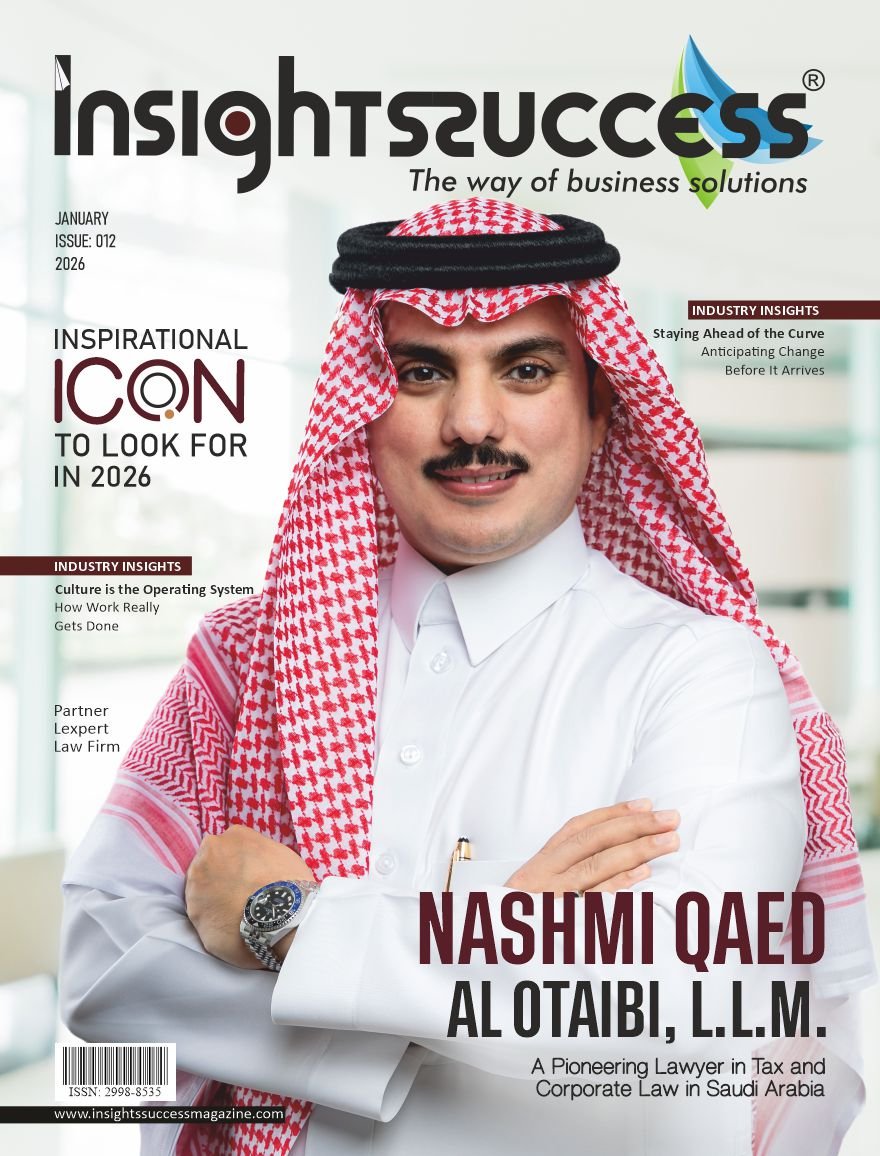
Inspirational Icon to Look For in 2026
Inspirational Icon to Look For in 2026 This edition recognizes Nashmi Qaed Al Otaibi a distinguished individual whose vision, resilience, and purpose-led leadership inspire meaningful change—setting a compelling benchmark through influence, innovation, and lasting impact across industries and communities. Quick highlights Quick reads

How Work Really Gets Done
Culture is the Operating System Strategy sets the ambition, structure assigns the responsibility, and processes lay down the workflow. However, it is not any of these that dictates the way work is actually done. It is culture that does. Culture is the organization’s operating system—the unseen yet mighty set of norms, behaviors, and beliefs that influence decisions, execution, and outcomes on a daily basis. Strategies may be replicated and systems may be acquired, but culture is experienced. It decides if an organization operates in unity or with conflict. Why Culture Outperforms Structure Organizational charts represent power, but the culture of the organization decides the influence. Rules set the ground for actions, but culture rules over behavior when the rules are not clear. In quick-changing environments, workers are making a lot of choices without the support of superiors. It is the culture that is leading those choices. When culture syncs with business strategy, implementation speeds up. When it is not, even the best plans are put on hold. Leaders tend to overlook this aspect, concentrating on formal levers and disregarding the informal system that is the performer’s driver. Culture is not how the leaders speak; it is how people act when there is no one around to watch them. The Unwritten Rules of Execution Every organization possesses unspoken codes—ways of dealing with conflicts, the perception of risks, the treatment of errors, and the actual decision-making processes. These codes make up the foundation of the cultural operating system. To illustrate, if workers get punishment for voicing their opinions, the innovation process will be slowed down, no matter the declared values. If fast results are appreciated, but mistakes are punished, then the taking of risks will only be on the surface. Such contradictions lead to the creation of a problem which no process improvement can eliminate. Cultural high-performers have a way of clarifying things and consistently behaving in the same manner. The employees do not know what is expected of them because it is written, rather they know it because it is demonstrated and rewarded. Leadership as the Primary Culture Driver The dynamic of the organizational culture is determined by the leaders, the way they act and behave. The list of things that the leaders tolerate, the things they promote, and the things they give highest priority to becomes the standard for the rest. When leaders think that culture is something that can be handed over, they are wrong about its essence. Every choice of a leader produces a cultural signal: who he/she employs, how he/she handles failures, what he/she values, and how he/she spends time. and gradually, these signals grow into norms. One of the characteristics of effective leaders is that they are the ones creating the culture by the use of their intention. They make sure their actions totally reflect the declared values and the misalignments are quickly corrected. The transformation of culture is not through the use of slogans but through the constant leadership behavior. Culture and Decision-Making The quality and the promptness of decisions are affected directly by the culture. High-trust cultures facilitate rapid decision-making since the flow of information is unrestricted and there is no ambiguity over who is responsible. On the other hand, in low-trust cultures, the decision-making process is prolonged as people wait for approval, try not to be held responsible or are in a self-protective mode. The teams in empowered cultures can work within the set limits. In control-oriented cultures, decision-making is concentrated, thus generating bottlenecks. There is no approach that is right or wrong in an absolute sense, but the mismatch between the culture and the organizational needs leads to inefficiency. Those leaders who perceive culture as an operating system are the ones who lay out the decision rights, the rewards, and the communication in a way that the desired behaviors get really reinforced. Measuring and Reinforcing Culture It is impossible to handle culture without its measurement. The fact that it is intangible does not mean that its influence is not felt in areas such as engagement, turnover, decision speed, and execution quality, which are all very visible. The middle managers promote culture by means of recognition, promotion standards, and performance evaluation. The things that are praised are the things that are done again. Cultural alignment is a matter of constant care, rather than one-off projects. Conclusion Culture is the underlying system of every activity that takes place in an organization. It influences the thinking, decision-making, and action of the members of staff—sometimes even more than strategy or structure mainly if the latter is excluded from the discussion. When leaders recognize this fact, they no longer limit their activities to the management of tasks but rather direct their efforts toward the creation of favorable settings. By putting the culture in line with the company’s objectives and strategies, they make sure that the employees are not coerced to perform, but rather, they willingly do so through proper understanding and allegiance. Ultimately, culture is not an intangible idea—it is the backbone of productivity. Read Also : Anticipating Change Before It Arrives

Anticipating Change Before It Arrives
Staying Ahead of the Curve In a business environment characterized by rapid technological advancement, changing customer preferences, and global uncertainty, simply reacting to change is no longer enough. Quite often, by the time a shift in the market or the competition is obvious, the competitive edge has already shifted. The resilient leaders and the resilient organizations are the ones that change soon, decode weak signs properly, and take deliberate action before disruption becomes inevitable. To be one step ahead is not to tell the future with complete certainty. It is rather to develop the ability to sense, decode, and react to the changes quicker and with more thoughtfulness than others. From Reactive to Anticipatory Leadership Reactive leadership center around fixing problems that are obvious. Anticipatory leadership is the one that looks ahead and detects the active problems. This transition is not easy because it needs a different mentality, which is considerate of the future, and it is always asking what might change the situation in the coming years. Change forecasters among leaders spend time on thinking about the future strategically. They withdraw from execution and monitor changes in technology, regulations, customer behavior, and political situations. This practice enables them to have options ready instead of running around looking for answers. Recognizing Weak Signals Early Big changes hardly ever come without a heads up. There are usually signs that may not be very clear such as slight changes in customer preferences, new but not fully developed technologies, small rival companies or even talks about regulations. These signs can easily be overlooked since they do not directly endanger the primary business. Those in command who keep a notch up are curious and open-minded. They motivate the staff to bring forth strange occurrences and question the beliefs. It is through the leaders’ focus on what is considered insignificant today that they get a glimpse of what may turn out to be significant tomorrow. The skill of detecting weak signals is a competitive edge. Scenario Thinking Over Forecasting The prediction methods of the past built on the idea of continuity. The assumption, however, is not always strong in uncertain environments. The future is not a single event for anticipatory leaders who use forecasts as one of the inputs for scenario thinking—thinking multiple plausible futures and not just one. Scenario planning aids leaders in experimenting with their tactics under various situations, spotting weak points in their plans, and determining which among the different strategic initiatives is the most important. It changes the main concern from being right about the future to being ready for it. Moreover, this method not only builds fortitude but also lessens the risk of being too confident in the outcome of the linear projections. Building Adaptive Organizations The ability to foresee change is not only a task for the leaders but also a skill for the whole organization. It is the leaders’ responsibility to create the right conditions through the right structures, processes, and cultures for the organization to be able to learn and adapt quickly. Things like handing over the power to the teams to try things out, making the decision processes quicker, and allowing easy movement of resources are among the measures to be taken. Companies that have the capacity to change their configuration rapidly will be able to take advantage of the situation when the predicted change happens. Flexibility is the tactical manifestation of prediction. Leadership Humility and Continuous Learning Anticipation is a very humble process. The rulers must take into account that the models of success already in place may decay, and the knowledge can turn into nothing. The constant learning that is to be done through getting outside, seeing things in different ways, and receiving candid criticism is a necessity. Those leaders who keep people with opposing views around them, and who have different opinions and ideas, will be able to see the change coming better. The mental comfort that comes with agreeing is the major obstacle to the practice of predicting events. Conclusion Staying ahead of the curve is not simply relying on astrology but being ready for all scenarios. Those leaders who foresee changes through their sights, by means of awareness, assumption challenging and adaptability investing, do so in a very subtle manner until disruption can be seen. Faster changes have always been in the first place, thus preparing ahead, getting constant learning, and acting with foresight are the ways of the winners. Timing is everything and being ahead of change is now a leader’s main responsibility. Read Also : What Leaders Actually Shape

Nashmi Qaed Al Otaibi, L.L.M. — A Pioneering Lawyer in Tax and Corporate Law in Saudi Arabia
“Success,” that prize in the pursuit of which the world is running the fastest ever, “is a journey built on purpose, discipline, and continuous learning,” believes Nashmi Qaed Al Otaibi, L.L.M., and his own proves it with élan. As a Saudi lawyer, Nashmi dedicated his career to empowering organizations to strengthen and safeguard their legal and financial positions. By ensuring corporate stability and compliance, he aims not only to protect businesses and their employees but also to advance the Kingdom’s broader economic objectives and contribute to the resilience and sustainability of our national economy. “For me, legal guidance is far more than a professional service—it is a catalyst for stability, growth, and positive societal impact.” A Vision Established as Lexpert Law Firm Driven by this vision, Nashmi founded Lexpert Law Firm, where he is proud to be among the first Saudi lawyers to specialize in tax law. At Lexpert, they guide organizations through an evolving regulatory landscape with precision, strategic foresight, and a deep understanding of both local and international legal frameworks. Nashmi’s academic and professional journey began in Saudi Arabia, where he earned my Bachelor of Laws (LL.B.) from Mustaqbal University, graduating at the top of his class. He then pursued an LL.M. in Commercial Law from Dar Al-Uloom University, authoring a thesis titled “Laws Governing the Sole Proprietorship Limited Liability Company in the Kingdom of Saudi Arabia.” This research deepened Nashmi’s understanding of corporate structures and legislative reform in the context of the Kingdom’s modernizing economy. Seeking a broader global perspective, he went on to complete a second LL.M. in International Taxation at the University of Florida, where he expanded his expertise in cross-border tax systems, treaties, and global compliance standards. Over the years, he has had the privilege of working with leading regional law firms, advising both multinational and domestic clients on complex tax and corporate matters. Today at Lexpert, Nashmi continues to integrate Saudi legal principles with international best practices, providing strategic counsel that positions clients for success in an era of unprecedented transformation. Beyond his practice, Nashmi is deeply committed to advancing the development of the legal and tax profession in Saudi Arabia. He has collaborated with global institutions—including IE University, LexisNexis, Monsha’at, and TaxNotes—to promote knowledge-sharing, policy dialogue, and innovation in taxation and corporate governance. “At every stage of my journey, I have remained guided by a single principle: to use law as a platform for progress—empowering businesses, supporting people, and shaping a transparent, globally aligned, and sustainable future for the Kingdom of Saudi Arabia.” A Deep Desire to Serve Saudi Arabia Nashmi’s journey into the legal profession—particularly in tax and corporate law—has been driven by curiosity, conviction, and a deep desire to contribute to Saudi Arabia’s rapidly evolving legal and economic landscape. Growing up in the Kingdom, he witnessed how strong legal frameworks can fuel business growth, enhance governance, and build trust across society. Early on, he realized that specializing in areas of law shaping economic transformation could be a meaningful way to make a tangible impact. The turning point came with Saudi Arabia’s ambitious legal and fiscal reforms, spearheaded by His Royal Highness Crown Prince Mohammed bin Salman, which strengthened the legal framework through modernized regulations. This significant change sparked Nashmi’s curiosity and motivated him to build expertise in tax law, ultimately establishing himself as a recognized specialist in this growing field. Motivated by this vision, Nashmi co-founded Lexpert Law Firm with a clear mission: to provide precise, forward-looking legal solutions that empower businesses while supporting the Kingdom’s regulatory evolution. Over time, Lexpert has grown beyond a traditional law firm into a hub for thought leadership, policy dialogue, and professional education—helping shape discussions around Saudi Arabia’s modern economy. “Looking back, my professional journey has been one of constant evolution—from academic curiosity to practical application, and ultimately to building a firm that contributes directly to the Kingdom’s transformation.” Today, Nashmi takes pride in helping drive Saudi Arabia toward a transparent, globally integrated, and legally robust economy—where law is not merely a profession but a strategic tool for innovation, growth, and enduring impact. A Lifelong Passion for the Law Nashmi’s passion for law was sparked long before he entered the courtroom or drafted his first contract—it began by observing his father, a businessman, and learning how contracts and legal structures could help a business grow and achieve sustainability. Both his parents played a defining role in shaping Nashmi’s character: “my father instilled in me a deep respect for strategic thinking and precision, while my mother raised me to value time and discipline—principles that continue to guide every decision I make.” He witnessed early on how sound legal guidance and unwavering commitment were essential not only for protecting interests but also for driving progress. Coming from a family deeply connected to both the legal and business worlds reinforced this understanding. Two of his sisters were among the first women in Saudi Arabia to serve as public notaries, breaking barriers and setting inspiring precedents, while two of his brothers are practicing lawyers. His father relied heavily on legal consultancy to navigate complex regulations and expand their family business, and seeing how law could directly shape their success and stability left a lasting impression on me. “Growing up in this environment, I saw firsthand how strong, transparent laws could foster trust, support entrepreneurship, and create stability across society. I realized early on that law was more than rules on paper—it was a transformative force capable of building economies, protecting livelihoods, and opening doors to opportunity.” This realization became deeply personal when the Kingdom embarked on bold legal and fiscal reforms, such as the introduction of the Value Added Tax. Nashmi was captivated by the challenge: how could she help organizations navigate these changes while contributing to the nation’s vision for economic modernization? That curiosity led him to specialize in tax and corporate law. It ultimately inspired him to co-found Lexpert Law Firm— “a space where I could guide businesses with precision, insight, and foresight.” What truly