





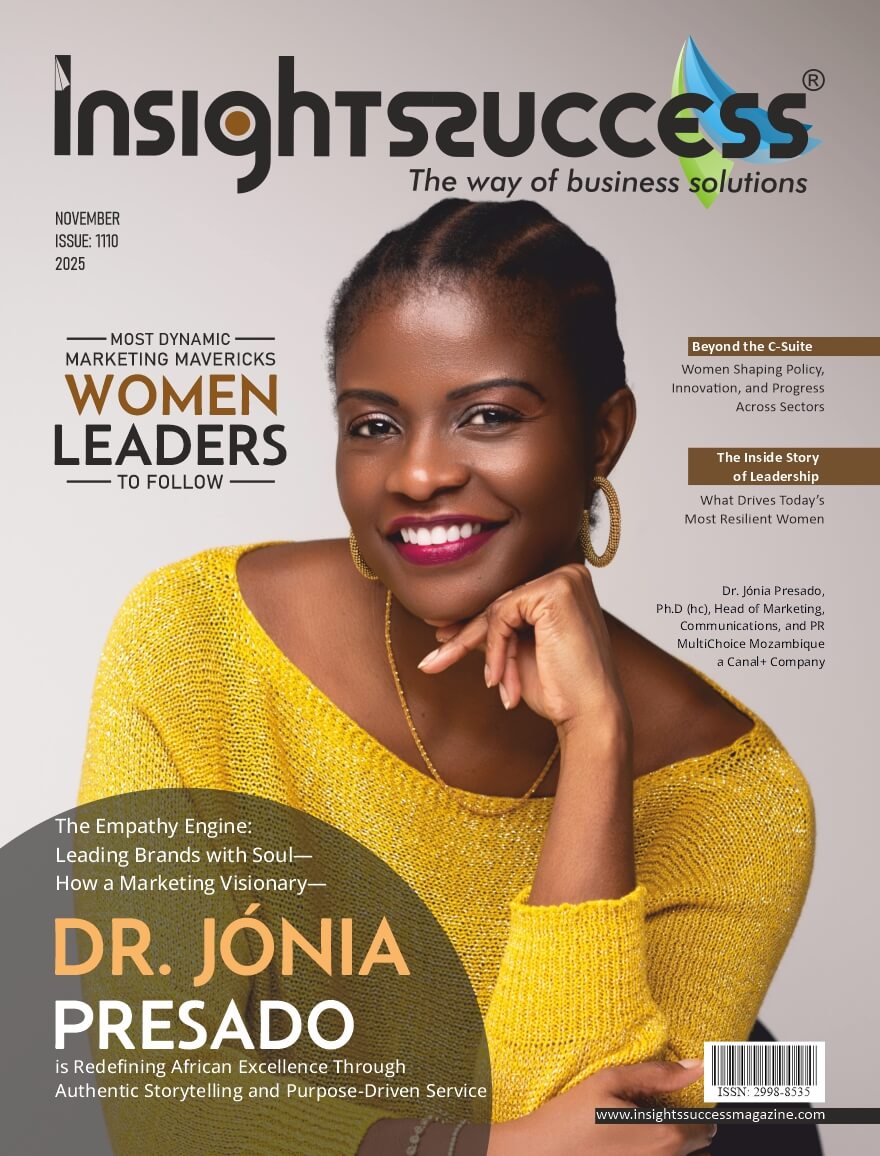
Most Dynamic Marketing Mavericks Women Leaders to Follow
Most Dynamic Marketing Mavericks Women Leaders to Follow This edition celebrates these exceptional visionaries who are not only mastering the art of influence, but also redefining the future of brand storytelling, customer engagement, and market leadership. These women are mavericks in the truest sense—fearless innovators who challenge outdated norms, experiment boldly, and transform insights into powerful, culture-shaping strategies. Digital Link Quick highlights Quick reads

The Empathy Engine: Leading Brands with Soul—How a Marketing Visionary—Dr. Jónia Presado—is Redefining African Excellence Through Authentic Storytelling and Purpose-Driven Service
Marketing is the language that connects people across boundaries by creating a reality that matches their hopes. It is a language of compassion that creates curiosity in the minds of consumer about the brands that promise to solve their problem, fulfil their wish or desire, or serve them personally in a way expected by them. Dr. Jónia Presado, Ph.D (hc)—an Award-Winning Marketing & Communications Leader, Top 50 Women in Management Africa, and Top 100 Influential Black Personalities in Portuguese-Speaking Countries—has mastered that language of meaningful brand communication in her professional career of nearly two-and-a-half decades. Especially in a world where marketing often obsessively focuses on mere numbers, as the Head of Marketing, Communications, and PR at MultiChoice Mozambique, Dr. Presado chooses to lead with meaning. She exemplifies genuine and purpose-driven leadership in the dynamic media industry within Africa. Leveraging her 24 years of experience, her authority is complemented with academic rigour, including a Doctorate in Leadership and Business Management (honoris causa) from the Veridian Christian University (USA) and a Master’s in Marketing from the internationally renowned University of Salford (UK). Connecting People’s Realities to Their Aspirations Dr. Presado has established a legacy that is an amalgamation of creativity, significant social impact, and unrelenting excellence. Her esteemed role is recognized around the world; she has been recognized for being one of Africa’s Top 50 Women in Business Management and has received accolades for being one of the Top 100 Most Influential Black People in Portuguese-speaking nations. To her, these awards were more than a personal achievement — it was a reminder of responsibility. It reaffirmed that leadership is not about titles but about the ability to create impact and open doors for others. “This recognition inspired me to lead with even greater authenticity and empathy.” It reinforced her belief that communication is most powerful when it connects people’s realities to their aspirations. Today, her vision is to shape narratives that not only elevate brands but also celebrate the richness and resilience of African stories. Powering A Purpose-driven Strategy Driven by her love of storytelling and a natural strategic vision, she currently leads MultiChoice Mozambique, at the intersection of brand authenticity, audience diversity, and social impact. During her career, considering she is enjoying great success, she has dedicated her time to developing and implementing strategies to develop community, advocate for corporate social responsibility, and facilitate social change. Receiving the award for Outstanding Community & Social Responsibility is representative of this commitment; she doesn’t view it as just being an important component of community development, but rather, an important component of sustainable business development. As a leader, Dr. Presado draws ideas from innovation, inclusion, and collaboration. She takes incredible joy in developing and mentoring future professionals; she advocates for diverse representation in all of her work, and she creates working environments that empower her teams to do their best work. Her commitment to impactful and results-driven campaigns has not only had a significant impact in bringing awareness to many brands but has, without a doubt, shifted the landscape of influence across the entire region. From Stories to Strategy: The Evolution of Passion As Dr. Presado traces her path from a childhood fascination with storytelling to her current role as a leader, she reflects a personality that anchors global brands in local authenticity and deep emotional meaning. Her journey into marketing was a destiny rooted in her love for narrative. Her early fascination was sparked by the sheer power of communication—from the “stories my grandparents told me” and the movies she watched, to the “advertising radio spots” of her childhood in Mozambique. She recognized that marketing was the natural nexus where creativity and purpose converged. Her passion has since undergone a profound transformation. It evolved from merely “crafting messages to crafting meaning.” She realized that the deepest impact comes from a human-centered approach. “I’ve learned that marketing is less about persuasion and more about understanding people — their hopes, emotions, and identities.” This fundamental shift, valuing empathy over mere sales tactics, continues to guide every facet of her work, both within the corporate environment and in her philanthropic endeavors. Anchoring the Brand: Strategies of Belonging In her current position of marketing and comms leadership, Dr. Presado’s defining strategy has been the unwavering commitment to local relevance and authentic representation. She understands that MultiChoice’s mission is fundamentally about telling stories that “reflect the communities we serve.” The Power of Local Content One of her signature achievements has been the active participation in the creation and promotion of Maningue Magic and Maningue Magic Kool, channels entirely dedicated to local content—” produced by Mozambicans, for Mozambicans.” This strategic focus fosters a powerful sense of ownership and cultural pride among the audience. Beyond local content, her team has delivered award-winning campaigns that resonate emotionally. Campaigns like “Aonde” (DStv) and “Txeka Lá” (GOtv), alongside the internationally recognized DStv Kids Campaign, were built on a foundation of insight-driven creativity and purpose. The result is an audience that connects not just with the entertainment offered but with the vital sense of belonging that these authentic campaigns successfully evoke. The Act of Respect: Weaving Authentic Narratives For Dr. Presado, storytelling transcends a mere marketing tactic; it is fundamentally an “act of respect” that honors people’s lived experiences. Her process begins with a disciplined focus on listening. She believes that when you “listen deeply, stories write themselves.” Operating in Mozambique’s intensely diverse cultural and linguistic landscape demands this rigorous authenticity. For her teams, this means reflecting diversity honestly through local languages, relatable experiences, and visuals that perfectly “mirror everyday life.” She imposes a crucial priority within her department: “I encourage my teams to find truth first, creativity second. That’s how we build campaigns that are not only memorable but meaningful.” This commitment to sincerity ensures that MultiChoice’s brand narratives are deeply rooted in the communities they serve. Leadership as Service: The Social Impact Imperative Dr. Presado rejects the notion that social impact is a peripheral concern; for her, it is a core

Women Shaping Policy, Innovation, and Progress Across Sectors
Beyond the C-Suite The impact of women in leadership roles is no longer something that can just be seen in boardrooms or within corporate hierarchies. Presently, women are influencing the world beyond the C-suite level by, for instance, initiating policy changes, leading technological innovations, influencing global development, and creating ecosystems that not only redefine the future of work but also the society. Their contributions are no longer limited to the inside of the organizations. These contributions are spreading in different sectors and women are now able to influence the world way beyond the boundaries of the organizations. One tag of this new leadership era is not the one of titles but rather that of traits like vision, courage and, above all, the commitment to the progress. Women are entering spaces where the choices made there will affect not only the neighborhoods but also the industries and even the countries. Moreover, what they are doing is converting leadership into a vehicle for creating a meaningful change that have different dimensions and interrelate. Redefining Leadership Beyond Corporate Walls Leadership cannot be solely based on corporate job positions any longer; it should rather be measured by the power and the effect that one has. Female leaders are crossing sectoral boundaries and are at the forefront of activities such as endorsing the implementation of new policies, supporting the green agenda, facilitating the development of social firms, and utilizing the latest technology in order to solve worldwide problems. Their leadership stretches the old boundaries of one’s abilities to influence others. Leadership is no longer only about guiding companies—it is about having the power to influence whole industries. It also reaches beyond the making of decisions in organizations to the changing of societies. Women demonstrate that one can lead successfully and purposefully and thus generate social change on a large scale in government, healthcare, education, nonprofit sectors, science, technology, and many more. Driving Policy That Shapes the Future Women policymakers and public leaders are setting the wheels in motion for decisions with far-reaching effects not only for the communities that are immediate beneficiaries but also for the future generations. Equitable healthcare, inclusive economic development, climate resilience, digital literacy, and robust social protection systems are what they are championing. Those are the features of their policy leadership. They are very much aligned with senses and on the other side with rational thinking. These leaders always keep their ears open, are very collaborative and when they come out with legislations it is with the clear understanding of the experience of the people affected. Women in leadership roles within the government, hold a view that is quite comprehensive-factoring in the facts with the needs of the people and the long-term strategy with social responsibility. Such a way of tackling things eventually leads to the development of policies that are not only efficient but also have the traits of hospitality. They are giving priority to people as much as to progress. Innovating With Purpose and Human-Centered Vision Women, in the fields of technology and innovation, are at the forefront of creating the advancements that, among other things, put most of the focus on accessibility, ethics, and sustainability. Female innovators are the ones whose work will eventually transform the interaction between technology and humans, be it through them leading AI research, starting tech businesses, redefining workplace platforms, or engineering the next-generation solutions. The main reason behind these inventions is the founders’ empathy — they seek to address practical issues of the world rather than just theoretical ones. Thus, they put forward the ethical use of AI, fair access to technology, secure digital environments, and technology that promotes health and well-being. Innovations most of the time move too quickly as compared to the regulations governing them, and this is the very point where women restore the equilibrium by ensuring that the progress made is thoughtful, inclusive, and accountable. Leading Social Transformation Across Sectors Women are leading and shaping the social impact movements that span healthcare equity, education reform, environmental advocacy, and community development. They are actively deploying the resources, forming the networks, and shaping the narratives which resist the existing biases and open up the opportunities. With less rivalry, more partnership, and mutual support instead of the community division, the women have marked their leadership. Women leaders are masterminding ecosystems—engaging governments, corporations, nonprofits, and communities to tackle deeply rooted problems with cross-sector solutions. This style of leadership that is open to all sectors serves as a breeding ground for innovations that are sustainable and socially grounded. A Future Fueled by Inclusive Leadership Women rise beyond the C-suite is not only a shift in the scenery but rather a structural change. This marks a revolution in the way leadership is perceived, exercised, and esteemed. A Movement That Redefines Progress The movement are redefining power not as dominance, but rather as influence. These are not hierarchies, but services. Instead of authority, there is impact. Women beyond the C-suite are crafting a fresh leadership narrative that is more real, more purpose-driven, more innovative, and more committed to progress. Women are creating the future by implementing policies that raise, technologies that liberate, and communities that prosper. Their leadership does not merely have the power to revolutionize the sectors—it has the power to change the planet.

What Drives Today’s Most Resilient Women
The Inside Story of Leadership Each woman leader with a stronghold of resilience has a narrative – one that is initially purposeful, gets its strength from trials, and is ultimately characterized by a firm belief in possibility. Nowadays, female leaders are going beyond breaking down the barriers; they are changing the whole leadership pattern. Their way of getting there shows one more thing: resilience is not just one of the characters of a person – it is the way of life, the choices one makes and the decision to come back to the top again and again with a clear aim. In a world full of problems and with high expectations, these women are still able to lead because of their inner clarity and emotional endurance. What is more, they have a source of power which is much stronger than mere ambition. The said power is silent and not even very much visible; it is, however, very powerful, as it is still visible after a long time and has its roots in human nature. Strength Forged Through Adversity Resilience is the child of adverse situations rather than one of easy times. In particular, the majority of women leaders nowadays have experienced the need to overcome biases, barriers and in general different kinds of expectations that have required them to show tremendous courage. What they actually did is to refuse the idea that adversity may result in their downfall and instead they took the opportunity to be taught by it as to gain the skills of focusing, growing one’s emotional strength, and increasing one’s confidence in oneself. They got the skills of adjusting, going through with it, and putting a different perspective on the issue of difficulty. Thus, every time they had a setback, they could consider it their foothold. Every failure became a lesson learned. Every barrier became a reason to find the way of getting around it rather than of coming back. Here is the secret of resilience: it is not the story about fighting against pressure, but rather one about changing it. Emotional Intelligence as a Core Driver Resilient women in leadership positions nowadays know and effectively apply the concept of emotional intelligence, which represents the combination of self-awareness, empathy and wisdom in relating to people. They are aware of their own feelings and see them as instruments for good work to be done rather than as barriers. Their leadership is firmly based on empathy rather than on the egotism. They do the listening in a purposeful way, telling what they want to say in a clear manner and making decisions by both using the mind and the heart. Emotional intelligence enables one to skillfully deal with conflict situations, to bring trust into the hearts of others and to maintain stable relationships with people in their teams, which, in turn, helps the leaders create harmonious teams and achieve their common goals. Moreover, it also helps them to be stress-free and to be able to handle situations calmly. Resilient women are very much aware of the need for emotional regulation and thus they know the time for taking a break, for reflecting and for responding but not for reacting. Such a skill in handling one’s emotions is rather an advantage from the strategic point of view than a ‘soft skill.’ The Inner Narrative That Drives Them The inner narrative, the quiet, personal dialogue, that supports women through doubt, tiredness, and uncertainty, is perhaps the most powerful aspect of the resilience. I am able to change. I am able to get knowledge. I am able to come back. This story is not without dread—it has, however, a great deal of bravery which is still there in spite of it. This is the narrative that empowers them to keep on moving, leading, building, and believing. The Legacy of Resilient Women Leaders Today’s resilient women have a lasting impact that goes way beyond their companies. They are the leaders who transform one after another industry, thus, becoming role models to a new generation that highly appreciates the principles of authenticity, empathy, and purpose. Their leadership is not only on the way to the set goals, but the main goals essentially are to change people’s views, revolutionize the systems, and hence, lead the way to the others to follow their footsteps. The hidden side of leadership is that of resilience which has its roots in meaning, is shaped by courage, and is kept alive by human connection. These leaders remind us of the fact that real leadership is not the one at which you are unbreakable, but it is rather about being able to get up again with strength of belief, to lead with heart, and to encourage others by the power of your journey. Read Also : Elevating Teams Through Presence & Purpose

Monreale: How Thomas Tsavdaridis Is Shaping the Future of Global Luxury Fragrance
In a world where luxury fragrance continues to evolve, Monreale, founded by Greek entrepreneur Thomas Tsavdaridis, stands out as a brand that seamlessly blends heritage, craftsmanship, and modern elegance. With over 25 years of expertise in the perfume and cosmetics industry, Tsavdaridis has transformed Monreale into a rising global perfume house known for its artistry, sustainability, and distinct identity. Monreale’s origin story is as evocative as the fragrances themselves. The brand was inspired by a profound moment Tsavdaridis experienced at the Monreale Cathedral in Palermo, Sicily — an architectural marvel renowned for its harmonious fusion of Byzantine, Norman, Gothic, Renaissance, and Baroque influences. As a Greek Orthodox Christian with a deep appreciation for culture and history, Tsavdaridis felt instantly connected to the cathedral’s spiritual beauty. This emotional inspiration became the essence of Monreale: a fragrance brand rooted in heritage, balance, and the timeless coexistence of artistic traditions. Tsavdaridis views perfumery as an art form. To him, designing a fragrance requires the same precision, passion, and creativity as producing a masterpiece. Monreale works closely with some of the world’s finest perfumers, ensuring that each fragrance embodies individuality and sophistication. The brand’s signature style draws from warm, resinous, incense-based notes that create a comforting, home-like atmosphere — scents that encourage wearers to find happiness in small, meaningful moments. For men, Monreale symbolizes masculine elegance, while for women, it celebrates femininity, identity, and self-expression. This duality, paired with an unwavering commitment to high-quality ingredients, has helped Monreale carve out its own space in the competitive global fragrance market. At a time when consumers increasingly seek authenticity and purpose-driven luxury, Monreale offers both: meticulously crafted fragrances supported by values such as sustainability and philanthropy. The brand’s international expansion has been strategic and impressive. From its flagship boutique in Kolonaki, Athens, Monreale has grown into a global presence, now available in high-end destinations including Porto Cervo (Italy), Mykonos (Greece), and London (UK). The brand is also making significant strides in travel retail, partnering with leading airlines such as IBERIA and British Airways, with further aviation collaborations in development. These partnerships reflect the brand’s aspiration to become a globally recognised name in luxury perfumery. Looking ahead, Tsavdaridis is focused on strengthening Monreale’s footprint in strategic markets such as the United Kingdom and the Middle East, regions known for their dynamic luxury fragrance culture. At the same time, Monreale continues to expand its digital presence through its official online boutique, monrealeparfums.com, enabling worldwide access while supporting eco-conscious, paperless shopping. Trade exhibitions also play a crucial role in the brand’s growth strategy. These global events allow Monreale to showcase new creations, connect with distributors, and gain insights into emerging market trends, further enhancing its visibility and credibility. With his deep-rooted appreciation for art, history, and culture, Thomas Tsavdaridis has created more than a perfume brand — he has built a global fragrance identity that resonates with elegance, authenticity, and emotional storytelling. As Monreale continues to expand, it stands poised to become a lasting symbol of modern luxury rooted in timeless inspiration. Disclaimer – This article is a work of original content created for public relations and informational purposes only. It may be published across multiple digital platforms with the full knowledge and consent of the author/publisher. All images, logos, and referenced names are the property of their respective owners and used here solely for illustrative or informational purposes. Unauthorized reproduction, distribution, or modification of this article without prior written permission from the original publisher is strictly prohibited. Any resemblance to other content is purely coincidental or used under fair use policy with proper attribution. Read Also : Bourns Opens India Design Center Giving Developers Local Access to Advanced Technologies that Enhance Application Differentiation

India’s Most Promising SAP Business One Partner to Watch in 2025-2026
India’s Most Promising SAP Business One Partner to Watch in 2025-2026 This edition highlights India’s rising leaders in the SAP Business One ecosystem, spotlighting Cogniscient Business Solutions for its innovation, customer-centric delivery, and transformative digital solutions. Discover how the company is redefining SME growth, driving operational excellence, and setting new benchmarks as one of the most promising SAP Business One partners to watch in 2025. Digital Link Quick highlights Quick reads

HR Eye: Transforming Workforce Management for Growing Businesses
Managing a growing crew in today’s fast-paced corporate environment entails more than just processing payroll. As your company grows, HR functions get more complex. You’ll need to keep track of your time off, recall shifting rules, and access data more quickly. HR Eye is here to help your business grow quicker. Current Issues in HR Business leaders know the common pains: tracking employee attendance, managing time-off requests, staying compliant with tax laws, and reimbursing expenses. These problems are magnified when companies have multiple shifts or locations. Outdated approaches to HR, such as spreadsheets and paper, are painfully slow and often prone to errors; these waste valuable time and frustrate both HR teams and employees. HR Eye provides an easy-to-use platform for dealing with these issues. An All-in-One Human Resource System HR Eye gives you a full way to handle your team; instead of using a bunch of different tools, it puts all your HR tasks in one place, making things easier. On the plus side, the platform calculates taxes correctly to avoid later problems. Time-off management is also automatic and easy to set up, track, and approve, offering clarity for employees and more control for managers. Expenses are done digitally, hence it’s relatively easy to process. You also get performance tracking, shift scheduling, and attendance monitoring all in one place. The approval system of HR Eye ensures that every request passes through the appropriate steps without any hassle. Modern Tech at a Good Price Flexible tech from HR Eye changes with your business and integrates seamlessly with the systems you currently use. It gives access to quality HR tools anytime, anywhere. HR Eye is well integrated with SAP Business One, enabling you to access all the details of financial transactions related to your employees. This further smoothes the way HR works with the rest of your business and provides useful information for financial planning and business decisions. The connector to Microsoft Dynamics brings together ERP and CRM, making valuable use of HR data in project management and customer decisions across the enterprise. If you use fingerprint scanners for attendance, HR Eye stops data from going to various locations and provides correct real-time team monitoring, thus reducing the number of mistakes and making reporting easier. HR Eye has transparent pricing without any surprise fees, so businesses can plan their costs related to HR tools without overspending. This mix of features and price makes good HR management possible for growing businesses. Empowering Employees with Technology Today’s team demands better tools. HR Eye delivers with its mobile-first design, granting access to a suite of HR services 24/7 via a mobile app and web portal, allowing members of the team to handle HR activities when it works for them. With this, workers can handle their HR needs, request time off, view their attendance, input data, and check the status of their requests all in real time. Such self-service makes the employees’ work faster, and lessens the burden on the HR team, freeing them to concentrate on plans. This improves involvement, clarity, and output. Results HR Eye has proved its worth in different fields. Honda Logistics India Pvt. Ltd., with a big team on shift duties, manages attendance automatically through the software and saves many hours every day. Mobile access gives flexibility to workers. Delhi Airport Parking Services Pvt. Ltd. required precise attendance tracking, day in and day out. Fingerprint scanners combined with shift scheduling introduced structure in the organization, with clear team planning. Knitpro International witnessed integrated people management-right from leaves and attendance to performance management. Onboarding was easy, according to their HR team. Moving to digital HR was smooth for Rise Appliances Pvt. Ltd. because the people brought in to implement it knew the business, helped improve HR processes, and gave support. For Ratnagiri Gas and Power Pvt. Ltd., falling under a highly regulated industry, HR Eye made tax compliance, declarations, and pay accuracy easy. What used to be manual checks and many emails is now easier, with people to help along the way. Getting Started Setting things up with HR Eye is really simple and straightforward. It begins with talking to each client to understand what they need. This makes sure that the solution fits the business. The project setup is done in such a way that business needs are carefully converted into system settings. Software testing has quality checks that ensure everything works before it starts.The stakeholder training is where everyone using the system learns how to use the platform. There is ongoing support after launch. The CBS Benefit The company behind HR Eye is Cogniscient Business Solutions, a cloud-based global firm dealing exclusively in HCM software. Since 2007, CBS has strived to empower HR pros by automating regular tasks and freeing time for them. With a mobile-first design and automation, CBS makes HR tasks easier, and this is a focus of HR Eye. The Future As businesses continue to evolve, so does the way teams manage. HR Eye wants to be a long-term partner in company growth, a platform designed to change with the businesses it serves. The tech of the platform keeps it useful. Its connectivity means that, as technology changes, it will connect to new systems. Its mobile is key because it fits into the way workers expect to use business systems. In this environment, good HR technology is a must-have. HR Eye offers the tools, integrations, and support businesses need. Whether you’re handling less than a hundred or ten thousand workers, HR Eye can give you a foundation on which to handle your team.

Cogniscient Business Solutions: India’s Most Promising SAP Business One Partner to Watch for 2025–2026
In a crowded market for technology suppliers, few are able to carve out a niche so distinctly that competition does not exist. Cogniscient Business Solutions is a decent example of such accomplishment, becoming India’s most promising and dedicated SAP Business One partner. Rather than spreading itself out across several platforms, the company focuses on its expertise in mastering a single environment, setting standards that few competitors can reach. At the heart of this narrative is SAP Business One, a platform that Cogniscient has transformed from a simple SME solution to a powerful enabler of business transformation. With over 500 successful implementations and 40+ industry-specific add-ons, the company is transforming ERP adoption in sectors including Automobiles, Chemicals, Refrigeration, Automotive, Core Engineering manufacturing, FMCG, Pharmaceuticals etc. Their solutions don’t merely handle technical requirements; they also enable tangible progress by incorporating industry-specific intelligence into regular activities. However, Cogniscient’s true strength lies in its people and culture, not only in its technology. Through an in-house and official qualified staff, and a persistent emphasis on knowledge-sharing, the organization is generating consultants that understand both sectors and systems. This mix of technical competence and commercial sensitivity is ensuring that clients don’t just implement ERP but thrive with it. SAP Business One Advantage At the heart of Cogniscient’s success lays their deep expertise in one of it important product. “SAP Business One, a solution designed specifically for small and medium-sized businesses that need enterprise-grade functionality without the complexity and cost of larger ERP systems.” Unlike many competitors who spread their focus across multiple platforms, Cogniscient focuses on building their entire value proposition around mastering this particular ecosystem. The company’s approach to SAP Business One implementation goes far beyond standard software deployment. They have developed over 40 industry-specific add-ons that transform the base platform into tailored solutions for different sectors. These add-ons address real-world challenges that generic ERP systems often overlook. Their comprehensive add-on suite includes sophisticated modules for Job Work Management, Logistics Integration, Gate Pass and Entry Systems, Vendor Portals, Scheme Management, Digital Signature Capabilities, and Automated Communication Suites etc. Each add-on represents years of industry experience distilled into practical functionality that delivers immediate business value. The manufacturing sector particularly benefits from specialized modules like batch production management, stage-wise production tracking, plant maintenance, and quality control add-ons. These tools provide manufacturers with granular visibility into their operations, something that standard ERP systems struggle to deliver without extensive customization. Industry-Focused Innovation Cogniscient’s success stems from their deep understanding that different industries face unique challenges. Rather than adopting a one-size-fits-all approach, they have developed specialized expertise across key sectors including Automobiles, Chemicals, Refrigeration, Automotive, Core Engineering manufacturing, FMCG, Pharmaceuticals etc. In the automotive sector, their batch production, quality control, and e-invoicing add-ons ensure compliance with stringent regulatory standards while optimizing production workflows. Manufacturing clients benefit from job work management, stage-wise tracking, and plant maintenance modules that provide unprecedented visibility into production cycles. The FMCG sector, with its complex distribution networks and promotional schemes, relies on Cogniscient’s scheme management, vendor portal, and logistics integration add-ons to maintain control over their extensive supply chains. This industry-focused approach has proven particularly valuable in India’s diverse business environment, where regulatory requirements, operational practices, and market dynamics vary significantly across sectors and regions. Building Excellence Through People “Behind Cogniscient’s consistent performance lies a workforce of over 200 employees spread across India including Delhi NCR, Pune, Mumbai, and international operations in the UAE.” The company has invested heavily in building a team of SAP-certified consultants who combine technical & Functional expertise with deep industry knowledge. Their approach to talent development goes beyond traditional certification programs. The organization continuously conducting in-house training sessions where consultants undergo structured SAP Techno-Functional programs while also developing cross-functional skills. The company sponsors advanced certifications and encourages consultants to expand their expertise across different modules and technological platforms. Monthly knowledge-sharing sessions ensure that field experiences and best practices cascade throughout the organization. This systematic approach to knowledge management has created a unified consulting methodology that delivers consistent quality regardless of which team serves a particular client. “We don’t just learn how SAP works. Our consultants learn how industries operate. This blend of technical and business acumen transforms them from implementers into trusted one. Comprehensive SAP Business One Service Portfolio Cogniscient’s SAP Business One service offers extend far beyond traditional implementation to encompass the complete lifecycle of platform adoption and optimization. As businesses face increasing pressure to minimize their SAP Business One investments, the company has developed comprehensive capabilities in platform modernization, cloud migration, and advanced SAP Business One functionality deployment. Their SAP Business One modernization services include upgrading legacy installations to the latest platform versions, migrating on-premises SAP Business One systems to cloud environments, and re-engineering existing implementations to leverage advanced features like HANA database capabilities. Each SAP Business One modernization project begins with a thorough assessment of current platform utilization and identification of opportunities to enhance business value through advanced SAP Business One compatibilities & features. The company offers flexible SAP Business One deployment options including traditional on-premises installations, cloud-hosted environments, and hybrid models that combine the best of both approaches. Their cloud partnerships, particularly with providers like Yotta, enable them to deliver cost-effective, scalable SAP Business One solutions that grow with their clients’ businesses while maintaining the platform’s performance and reliability standards. Recognition of the importance of ongoing SAP Business One optimization has led the company to develop tiered support models that ensure continuous platform value delivery. Their Bronze, Silver, and Premium SAP Business One support tiers include dedicated platform specialists, regular system health checks, and allocated development hours for continuous process optimization and add-on development & enhancement. Real-World Impact The true measure of Cogniscient’s expertise becomes evidence in their client success stories. One particularly impactful engagement involved an automotive components manufacturer struggling with production inefficiencies and lack of visibility across multiple plants. The client faced complex challenges including manual tracking of subcontracting work, limited visibility into production stages, and compliance difficulties with GST and e-invoicing requirements. Cogniscient
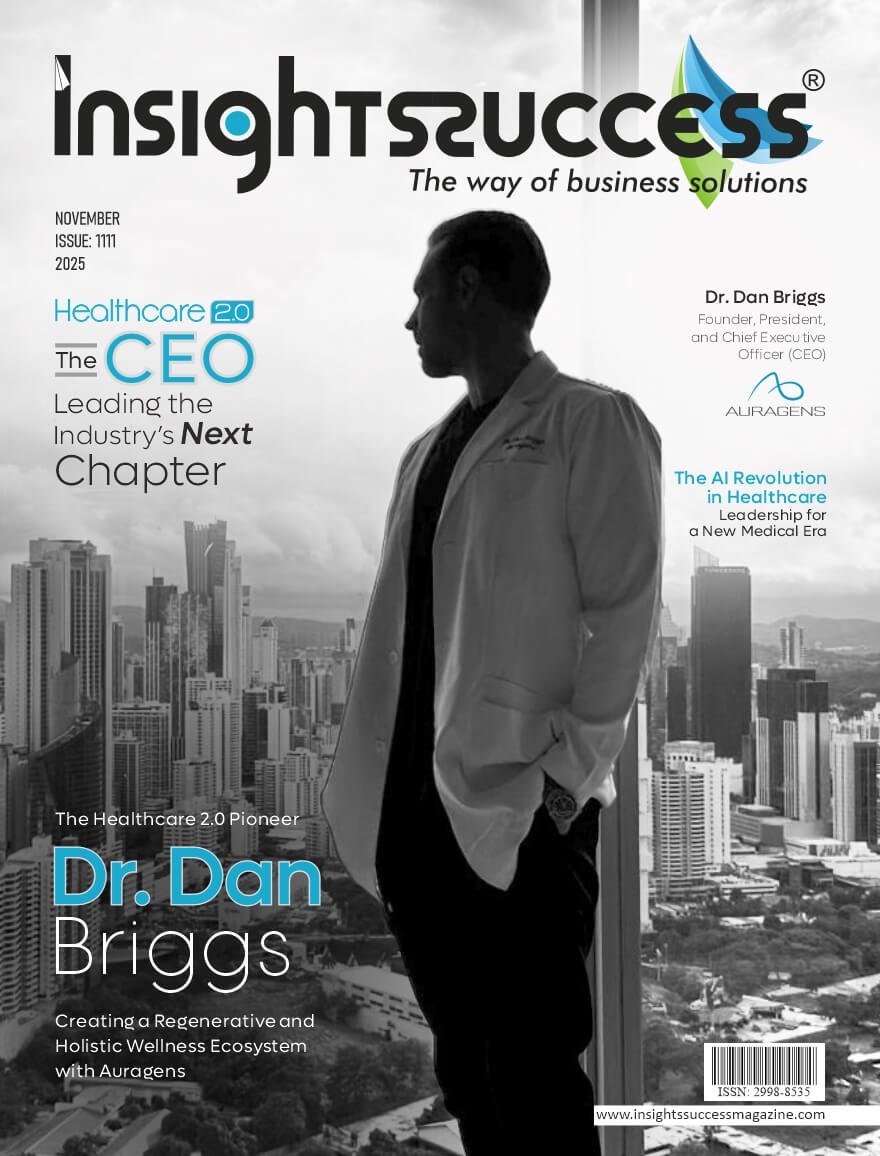
Healthcare 2.0: The CEO Leading the Industry’s Next Chapter
Healthcare 2.0: The CEO Leading the Industry’s Next Chapter Under Dr. Briggs’ leadership, holistic healthcare is no longer an aspirational concept—it is a measurable, scalable, human-centered reality. He represents the vanguard of Healthcare 2.0: a leader unafraid to challenge outdated systems, redefine patient experience, and guide the industry toward a future where healing is comprehensive, compassionate, and deeply aligned with what people truly need. Digital Link Quick highlights Quick reads

Leadership for a New Medical Era
The AI Revolution in Healthcare A massive change is unfolding in healthcare that is altering the figures of medical abilities, speeding up the scientific breakthroughs, and changing the manner in which patients receive care. The dream of Artificial Intelligence is not far off anymore; in fact, it is actively changing the aspects of healthcare such as diagnostics, treatment planning, patient management, and operational efficiency. Leadership is shifting as AI becomes integrated in every aspect of contemporary healthcare—from one requiring vision, adaptability, ethical foresight, and a steadfast commitment to humanity to a new frontier. This is not a mere technology progression; it is a complete upheaval of medicine. The leaders who will mark this transition into a new medical era are the ones who innovate with compassion, combine data with discernment, and reconcile automation with human-centered care. The Rise of Intelligent Healthcare Healthcare AI-driven change is going on very fast. In fact, algorithms can detect the disease signs at a very early stage, even before the patient exhibits any symptoms. Predictive models foresee patient deterioration, adjust workflows, and personalize treatment pathways. Machine learning systems sift through enormous datasets in a fraction of a second thus greatly speeding up the time of clinical decisions. The AI is not replacing the clinicians, but instead, it is supporting them. Through more accurate information, a doctor is assisted by AI, a radiologist in spotting a faint anomaly is guided by AI, and a surgeon is made powerful with a decision-support tool by AI. AI in this era becomes a potent partner- one which makes possible precision, stability, and promptness at a level that was not thought achievable before. Leadership at the Intersection of Technology and Humanity Smart healthcare integration of AI needs a different leadership style – leaders who manage at the intersection of science, technology, and human care effectively. These leaders with their clear-sightedness, resoluteness, and well-planned strategy will lead the transformation of their enterprises. They realize that the implementation of AI is not a simple technical transition but rather a cultural one. Tasks such as educating staff, workflow redesign, patient engagement rethinking, and ethical compliance are the challenging side of the culture change. Leaders must create trust in AI and provoke no fear in clinicians by helping them see the technology as a means that facilitates their work, not as one that reduces them. This change requires leadership that is not only visionary but also grounded, not only analytical but also empathetic, and although tech-savvy, still very much human. Ethics and Trust: The New Pillars of Healthcare Leadership With AI becoming more and more ingrained in decision-making processes in healthcare, there is a call for ethical leadership at the helm. BIAS, PRIVACY, TRANSPARENCY, and FAIRNESS are topics which used to be abstract and far away but now they are actual problems which can influence not only patient outcomes but also the trust of the public. Leaders must be the ones who push for responsible AI implementation, and part of their job is to check that data collected for AI is diverse, to that algorithms are understandable, and also that clinical decisions carried out in the clarity have openness maintained. Trust becomes an essential currency. Patients are in need of assurance that AI is advantageous to their security, that it safeguards their privacy, and is supportive rather than substitutive of the human connection they depend on. Those leading the way in this new era must see to it that AI propels medicine forward without being morally compromised. Empowering Clinicians Through Technological Partnership Turning AI from a threat to an ally is – training, involving, and empowering clinicians probably one of the most important tasks of today’s healthcare leaders. Properly done, this assures not only the implementation of AI in the departments but also opens up a new era where technology is helping clinicians, instead of interrupting or competing with them. Enhancing Patient-Centered Care with AI The myth of AI depersonalizing healthcare is now dispelled – the technology is even capable of making care more patient-oriented than it has ever been. Predictive tools provide customized treatment plans. Virtual health assistants improve the accessibility and the convenience of healthcare. Early detection systems lengthen survival rates. At the same time, the field of personalized medicine is getting even more accurate thanks to data-driven insights. In general, AI allowed the delivery of care to be more proactive, precise, and also personalized. Nevertheless, leadership is the main factor in creating this patient experience by utilizing technology to enhance the quality of interaction rather than to replace it. Leadership for a New Medical Era The paradigm shift in healthcare needs not only the administrative-caliber leaders who carry the heavy load, but also the visionary leaders capable of foreseeing the transformative potential and taking up the responsibility of guiding the AI-driven changes. They convert the complex into straightforward, empirical into intuitive, and innovation into tangible outcomes. Besides reason, they also possess will. Besides modern techniques, they are still guided by timeless principles. Besides the technological prowess, they offer the warmth of human empathy. The AI revolution in healthcare is here—and with the right leadership, it promises a future where medicine is more accurate, more accessible, and more deeply human than ever before.