






Strategic Perspectives from AML Strategy Experts on Strengthening Anti-Money Laundering Practices
Advanced Compliance Frameworks The worldwide battle against money laundering has grown stronger because financial systems now connect better through their advanced technology. The regulatory agencies from different regions establish more stringent rules which force organizations to evaluate their compliance systems. The experts who develop AML strategies function as essential resources because they help organizations understand complicated regulations and create practical implementation plans. The insights from their research help institutions achieve global standards while they manage local risks which results in both compliance with regulations and effective operations in a financial system that faces increasing examination. Building Resilient Systems with Distinguished Financial Crime Expert Insights The complexity of financial crime requires more than standard compliance measures. A Distinguished Financial Crime Expert brings a depth of experience that helps organizations design resilient anti-money laundering systems capable of withstanding evolving threats. These professionals emphasize the importance of integrating governance, risk management, and compliance into a unified structure. Institutions that use a holistic approach will improve their internal controls while achieving better transparency and reduced financial crime risk. Their expertise enables organizations to maintain flexibility during regulatory and technological changes. Technology Integration Empowering AML strategy experts Digital transformation has brought major changes to anti-money laundering operations. Financial institutions now use advanced technologies, which include artificial intelligence and machine learning and blockchain analytics, to improve their methods for detecting suspicious activities. Experts in AML strategies use these tools to enhance their systems for monitoring transactions and to automate their compliance operations and to achieve better results in risk evaluation. Organizations that incorporate technology into their compliance systems can detect patterns and anomalies which standard systems fail to identify. The proactive approach not only enhances detection capabilities but also boosts operational efficiency while decreasing operational expenses. Strategic Leadership from Distinguished Financial Crime Expert Perspectives Anti-money laundering compliance requirements need effective leadership to handle their intricate challenges. The Distinguished Financial Crime Expert develops strategic plans that help the organization achieve its objectives while meeting regulatory requirements. The established organizational leadership of the organization creates an environment which holds all members accountable for their compliance responsibilities instead of treating compliance as an independent task. The experts establish cross-functional collaboration together with ongoing learning methods to keep teams updated about new risks that may arise. The strategic approach improves compliance program performance throughout the organization. Risk-Based Methodologies Guided by AML strategy experts A risk-based approach has emerged as an essential element of contemporary anti-money laundering systems. Experts in AML strategy recommend that organizations should use risk assessments and customer segmentation to identify their most critical threat elements. The methodology enables organizations to distribute their resources in an effective manner while preserving their ability to meet compliance requirements. Institutions maintain their ability to address new security threats through ongoing risk model monitoring and systematic updates. Experts in AML strategy assist organizations in achieving their regulatory requirements while maintaining their capacity to operate flexibly through their focus on high-impact areas. Future Outlook Shaped by Distinguished Financial Crime Expert Leadership The future of anti-money laundering compliance will require organizations to develop systems that can adapt to new challenges while they implement innovative solutions through their cooperative efforts with other organizations. A Distinguished Financial Crime Expert plays a crucial role in guiding organizations through this evolving landscape. Emerging trends such as digital currencies and decentralized finance and cross-border data sharing create both difficulties and possibilities. The experts who track these developments will assist organizations in developing their compliance procedures through upcoming technological solutions. Organizations must invest continuously in technology development and talent acquisition and employee training to sustain an effective anti-money laundering system. End Note The process of strengthening anti-money laundering practices requires implementation of a complete solution which includes both present-day requirements and future needs. The development of advanced compliance frameworks which handle existing and future risks is achieved through the combined efforts of AML strategy experts and a Distinguished Financial Crime Expert. Their combined expertise ensures that organizations maintain their ability to withstand challenges while staying current with international regulatory requirements. The combination of technological implementation with collaborative work methods and risk assessment-based practices enables institutions to improve their financial crime detection and prevention capabilities. A financial system protection requires a strategic compliance framework which protects financial systems while building worldwide economic trust and integrity. Read Also : Financial Crime Risk Management Experts Leading the Fight Against Emerging Threats

Insurance Add-Ons Worth Considering When Buying Car Insurance Online in India
Buying a car policy is not only about comparing premiums and choosing the lowest price. The real value often becomes clear when an accident, breakdown, or major repair leads to costs that a basic policy may not fully cover. While buying car insurance online, it is worth looking closely at add-ons that can improve financial protection and reduce stress during claims. This blog explains the add-ons that deserve careful attention and why they may matter. Zero Depreciation Cover Zero depreciation cover is often considered by car owners who want better claim support for replaced parts after accidental damage. In a standard claim, depreciation on parts can reduce the amount paid by the insurer, which means the policyholder may need to pay a higher share of the repair bill. This add-on helps reduce that gap. It is generally more relevant for newer cars, costly parts, and owners who want more predictable repair-related expenses. Engine & Gear Box Protection Cover Engine and gearbox repairs can be expensive, which is why this add-on is often reviewed with care. It is designed for situations where internal damage may arise from issues such as water entry, leakage of lubricants, or related mechanical trouble, depending on the policy terms. This can be important in Indian cities where heavy rain, waterlogged roads, and stop-start traffic are common. For many buyers, it adds a useful layer of protection against high-value mechanical repair costs. Return to Invoice (RTI) Cover Return to invoice cover is usually considered for newer vehicles because it addresses the gap between the car’s invoice value and its insured declared value in case of total loss or theft, subject to policy terms. As the car becomes older, its insured value reduces. That is why many buyers review add-ons under comprehensive insurance to choose cover that offers better financial support. Emergency Assistance Cover or Roadside Assistance A policy becomes truly useful when support is needed immediately, not only when a large claim is filed later. Emergency assistance or roadside assistance is designed for situations where the car becomes unusable due to a breakdown, battery issue, flat tyre, towing need, or similar problem, depending on the plan selected. This add-on is worth considering because it focuses on quick help and convenience. It can be especially relevant for regular commuters, long-distance drivers, and those who travel late at night. Consumables Cover Repair work often includes small but necessary items that may not be covered under a standard claim. Consumables cover can help reduce these extra expenses after accidental damage. These costs may look small individually, but together they can increase the final bill. This add-on is useful for people who want better support for repair-related expenses. No-Claim Bonus (NCB) Protection No-claim bonus is an important benefit because it rewards claim-free renewal years with a discount on the premium. Over time, this benefit can become valuable, which is why many policyholders look at NCB protection as an add-on worth considering. It allows a limited number of claims without automatically losing the entire accumulated bonus, depending on policy conditions. This can help preserve long-term renewal benefits and may suit drivers who want to protect their record from the impact of one unexpected claim. Key Replacement Cover Key replacement cover may appear minor at first, but modern car keys can be expensive to replace. Many keys now include electronic chips, remote locking features, and programming requirements, all of which can increase replacement costs. Losing or damaging a key can therefore create both inconvenience and an unplanned expense. This add-on is worth reviewing, especially for cars with smart keys or advanced locking systems. Conclusion The right add-ons can make a car policy better suited to actual risks instead of keeping the cover limited to only basic protection. Rather than choosing every available option, it is better to assess the car’s age, usage, location, and likely repair exposure before making a decision. A careful review of inclusions, exclusions, limits, and eligibility can help buyers choose add-ons with greater clarity. That approach can make an online policy purchase more informed, balanced, and financially sensible for Indian roads. Read Also : Biggest Errors That Reduce the Durability of Steel Buildings in Alberta

A Strategic Financial Leader – Rony Daou: Ensuring Long-Term Organizational Sustainability
Strategy is the backbone of finance, which is the foundation of every successful organization. However, breaking the conventional view that finance is about money, Rony Daou emerges as the ‘Financial Strategist of the year,’ due to his belief that finance is all about people and their progress. In his gratitude, Rony says this title, first and foremost, is a moment of gratitude and responsibility. “Personally, it is not a recognition of an individual effort, but a reflection of the trust placed in me by leadership, colleagues, and the teams I have had the privilege to work alongside. It affirms that the path we chose, often through complex and uncertain conditions, was grounded in sound judgment and collective commitment.” From a leadership perspective, the title reflects a philosophy that finance is not merely about control, compliance, or reporting. It is about foresight, balance, and value creation. A financial strategist must connect numbers to purpose, translate risk into informed decisions, and ensure that short-term performance never undermines long-term sustainability, insists Rony. “Above all, this recognition reinforces my belief that effective financial leadership is built on integrity, resilience, and collaboration.” Strategy succeeds when finance acts as a partner to the business, anticipating change, enabling growth, and guiding the organization with clarity and confidence through both stability and disruption. An Academically Grounded Leader Rony’s academic grounding in financial management and oil & gas management has given him a dual lens that is essential for decision-making in a complex, capital-intensive industry. From financial management, he developed a strong discipline around capital allocation frameworks, understanding cost of capital, risk-adjusted returns, cash flow durability, and value creation across cycles. This training instilled rigor in evaluating investments, ensuring that every allocation decision is grounded in clear financial logic, downside protection, and long-term shareholder value. Oil & gas management, on the other hand, added critical industry context. It shaped Rony’s understanding of reservoir economics, supply chain dynamics, pricing volatility, regulatory exposure, and geopolitical risk. This perspective allows him to assess projects not just as financial models, but as operational and strategic realities influenced by market cycles and external forces. The combination enables a balanced approach to complexity. Capital allocation decisions are never made in isolation; they integrate financial discipline with operational feasibility and risk awareness. Ultimately, this academic foundation supports a philosophy where risk is not avoided, but understood, priced, and managed, allowing the organization to commit capital with confidence, clarity, and long-term intent. A Journey Shaped by Defining Moments Today, with more than a decade at Wookood Petroleum, Rony’s journey from Finance Manager to Chief Financial Officer (CFO) has been shaped by several defining moments that gradually shifted his focus from operational excellence to enterprise-level financial leadership. Early on, mastering the fundamentals of operational finance, cash flow control, budgeting discipline, and cost optimization built the credibility needed to influence decisions beyond the finance function. A key turning point came when Rony Daou was entrusted with leading cross-functional initiatives, where financial insight had to be balanced with operational realities. This exposure sharpened his ability to translate numbers into strategic choices. Another defining moment was navigating periods of volatility in the energy sector. Managing risk, liquidity, and long-term investments under uncertain conditions required moving beyond reporting and controls toward scenario planning and strategic foresight. These experiences reinforced the importance of resilience, agility, and clear communication with stakeholders. Finally, stepping into enterprise leadership meant embracing a broader mandate: aligning financial strategy with corporate vision, strengthening governance, and developing talent within the finance team. The transition was not a single leap, but a continuous evolution—from managing figures to shaping outcomes, and from supporting decisions to co-creating the future of the organization. A Resilient Equilibrium Presently, balancing short-term financial resilience with long-term strategic investment in the petroleum sector—an industry marked by volatility and geopolitical sensitivity—requires a disciplined yet forward-looking approach, feels Rony Daou. In the short term, resilience is built through rigorous cash flow management, conservative leverage, and strong risk controls, he says. This includes stress-testing financial plans against price volatility, geopolitical disruptions, and supply-chain shocks, while maintaining sufficient liquidity buffers to protect core operations. Clear capital allocation priorities and tight cost governance ensure the business remains agile during downturns, he adds. At the same time, long-term value creation cannot be paused during periods of uncertainty. Strategic investments are evaluated through a lens of sustainability, return across cycles, and alignment with the company’s long-term vision. This means phasing investments, diversifying portfolios, and favoring projects that strengthen operational efficiency, resilience, and adaptability rather than purely short-term gains, states Rony Daou. The balance ultimately comes from integration, not trade-offs. Short-term decisions are made with long-term consequences in mind, and long-term strategies are designed to withstand near-term shocks. By maintaining transparency with stakeholders and grounding decisions in data-driven scenarios, finance becomes a stabilizing force protecting today’s performance while deliberately shaping tomorrow’s growth, he shares. Constant Cost-Optimization Further, Rony Daou informs that Cost optimization at Wookood has never been treated as a one-time exercise or a reaction to pressure; it has been embedded as a management mindset that supports growth and agility rather than constraining them. The first step was shifting the conversation from cost-cutting to cost intelligence. “We focused on understanding where value is truly created and where inefficiencies quietly accumulate.” This meant linking costs directly to operational outcomes, commercial performance, and strategic priorities, rather than managing expenses in isolation. Second, financial discipline was decentralized but governed. Business units were empowered to own their cost structures, with clear accountability and transparent performance metrics, while finance provided the frameworks, benchmarks, and real-time insights needed for informed decision-making. This approach preserved speed and flexibility at the operational level. Third, optimization was aligned with growth. Investments that improved efficiency, resilience, or scalability were protected even during challenging cycles, while low-return or misaligned expenditures were continuously challenged. Regular scenario planning ensured that cost structures could flex with market conditions without disrupting core capabilities. Ultimately, Wookood embedded discipline by making finance a strategic partner, not a gatekeeper. “By aligning cost
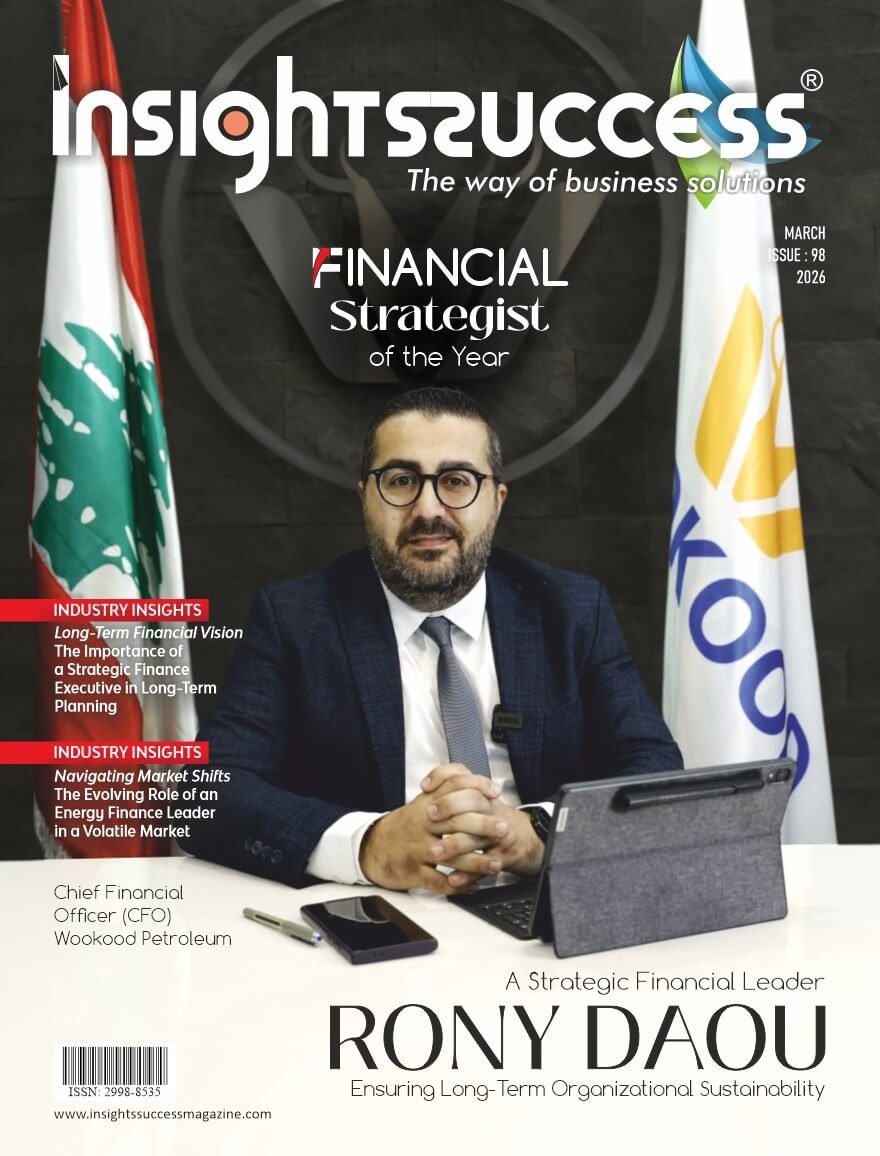
Financial Strategist of the Year
Financial Strategist of the Year This edition recognizes outstanding finance leaders who combine strategic thinking, analytical expertise, and long-term vision to drive sustainable growth. It highlights professionals who manage risk, improve performance, and shape business success through impactful financial decisions. Digital Link Quick highlights Quick reads

Top Influential Business Leaders Shaping the Modern Industry – 2026
Top Influential Business Leaders Shaping the Modern Industry – 2026 Karen Simon exemplifies disciplined leadership in Texas industrial real estate. As President and Managing Partner of Simon Realty Advisors LLC, she combines rigorous research, market foresight, and client-focused execution to deliver high-impact transactions. Her resilience, strategic clarity, and deep market understanding consistently position her ahead in a highly competitive industry. Digital Link Quick highlights Quick reads

The Evolving Role of an Energy Finance Leader in a Volatile Market
Navigating Market Shifts The energy industry of today is no longer steady and predictable. Geopolitical tensions, new regulations, and fast-changing technology constantly affect the market. In this environment, the energy finance leader plays a much broader role. Instead of focusing only on finances, they help shape strategy, manage risks, and support sustainability while guiding organizations through uncertainty and toward long-term growth. Understanding the Forces Behind Market Volatility Energy markets are influenced by many factors nowadays. Inflation, supply chain issues, and regulatory changes continue to disrupt normal operations. These challenges increase costs and make long-term planning more difficult. Geopolitical events increase pressure on businesses. Trade disruptions, conflicts, and shifting global relations can quickly change energy supply and prices. Businesses might be forced to revise the forecasts and realign the budgets. Increasing infrastructure, labor and research expenses are another financial burden. The move toward renewable energy also brings uncertainty. Policies differ across regions, creating uneven opportunities. Some markets offer stable support, while others change rules quickly. To handle this, companies must stay flexible and ready to adapt. Redefining Risk Management Strategies Energy companies now take a more active approach to managing risk. Tools such as futures, swaps, and options are employed by financial leaders to minimize the effects of price changes. These tools help keep cash flow stable and operations running smoothly. Diversification is another key strategy. Companies can lower the risk of being dependent on one source by investing in both traditional and renewable energy. This helps them stay stable even when one area faces challenges. An energy finance leader also builds strong internal systems to manage risk. They emphasize the early detection of problems, rely on real-time data, and are based on expert feedback. This ensures that risks are handled proactively rather than reactively. Financing the Transition to Sustainable Energy The shift to cleaner energy is changing how companies manage finances. Companies are finding new methods of financing such changes without straining their balance sheet. They use tools like green bonds, partnerships, and private investments to support renewable projects. Models such as Energy-as-a-Service help reduce upfront costs by turning large investments into manageable expenses. For an energy finance leader, sustainability is now a key priority. They consider both the environmental and social aspects in making financial decisions, which also contributes to gaining investor trust. Leaders also take advantage of incentives and funding options. By creating strong business cases, they make renewable projects more practical and less risky. Strengthening Scenario Planning and Forecasting Companies now focus more on scenario planning to deal with uncertainty. Traditional forecasting is no longer enough. Leaders study factors like policy changes, demand shifts, and climate risks. They use this information to adjust strategies quickly. Sensitivity analysis assists in the determination of what affects performance the most. An energy finance leader ensures that planning stays practical and focused. They align teams and build flexible plans that can adapt to changing conditions. Navigating Technological Transformation Technology is rapidly changing the energy sector. Artificial intelligence, analytics, and digital tools are ways that help companies enhance efficiency and operations. However, not all technology investments deliver results. Lack of clear goals or effective implementation is a challenge to many organizations. Monetary executives are also no longer experimenting with solutions they have effectively tried. At the same time, growing energy demand from technology industries requires more investment in storage and infrastructure. An energy finance leader critically appraises these requirements to balance cost and performance. Evolving Leadership Competencies The role of financial leaders has expanded. They are now dealing with data, procurement and sustainability together with finance. This requires strong analytical and strategic thinking. Managers should be able to interpret information, seek new opportunities, and cope with shifts in a short period. They must also develop a culture in which they emphasize risk management. An energy finance leader connects financial strategy with overall business goals. They guide teams to support growth and resilience. Managing Regulatory and Geopolitical Complexity Regulations and global events continue to influence the energy sector. The policies are not fixed, and companies make their investments depending on the policy. Tariffs and national interests are making many organizations pay more attention to local markets. At the same time, global changes can still impact demand and supply. An energy finance leader monitors such developments and changes strategies. They make organizations stable through being informed and flexible. Creating the Future of Resilience Resilience has become a key focus for energy companies. They are interested in adapting fast, managing costs, and seizing new opportunities. Leaders invest in projects that offer clear returns. They also build partnerships, improve pricing strategies, and use data to improve performance. The finance leader plays a key role in this process. They combine planning with financial discipline to help organizations grow despite uncertainty. Conclusion The energy sector continues to change quickly, and companies must keep adapting. In this environment, the energy finance leader plays a critical role in guiding strategy and decision-making. They assist in ensuring organizations remain afloat and develop through risk management, sustainability and wise use of technology. Their ability to plan ahead and act decisively will shape how companies succeed in the future. Read Also : The Importance of a Strategic Finance Executive in Long-Term Planning

The Importance of a Strategic Finance Executive in Long-Term Planning
Long-Term Financial Vision Finance leadership is often misunderstood. Many people continue to envision a finance head as someone who is all about budgets, cost management, and reports. Those responsibilities matter, but modern organizations expect much more. Finance nowadays takes a key part in defining the future of a company. It influences which opportunities are worth pursuing, how risks should be managed, and how resources can be used to support long-term goals. Long-term planning is not just about predicting revenue or setting targets for the next few years. It is about building a clear and realistic roadmap that connects ambition with financial discipline. This is where a strategic finance executive becomes essential. This leader makes sure that the growth plans are not merely inspirational but also sustainable, measurable, and grounded in reality. Turning Strategy Into Something Real Leadership teams often discuss expansion plans, new products, acquisitions, and entering new markets. Such thoughts might be thrilling, but until they are backed with good financial planning, they remain risky. Strategy must be supported by clear budgeting, forecasting, and resource planning. Otherwise, the organization may start a journey it cannot afford to finish. A strategic finance executive strengthens strategy by joining the conversation early. Rather than simply approving decisions at the end, they help shape decisions from the start. They test assumptions, challenge unrealistic expectations, and make sure leadership understands what it will take to execute a plan successfully. They ask questions that matter: Is the timeline realistic? Do we have the right cash flow? What happens if the market slows down? When financial leadership is involved early, plans become stronger. Resources go where they are needed most, and the organization avoids costly surprises. This level of discipline makes strategy real, not just inspirational. Holding the Balance Between Now and Later One of the biggest challenges in business is balancing current performance with future growth. Immediate priorities always demand attention: payroll, operating costs, quarterly results, and short-term targets. These pressures can push leaders into decisions that deliver quick wins but weaken long-term strength. A strategic finance executive protects the future while meeting today’s responsibilities. They identify how and where to finance long-term investments without harming short-term performance — whether by improving cash efficiency, cutting waste, or reallocating budgets to priority projects. They also build financial models that reveal the long-term impact of short-term decisions. When leaders understand the cost of delaying investment in people, technology, or infrastructure, they make better decisions. By balancing today’s needs with the future becomes a competitive advantage, as the organization develops continuously instead of constantly reacting. Planning for Uncertainty No long-term plan stays perfect. Markets change, customer behavior shifts, costs rise, and global events disrupt supply chains and demand. The real question is not whether uncertainty will happen, but whether the organization has prepared for it. A strategic finance executive brings structure to uncertainty through scenario planning. Instead of building one fixed forecast, they help leadership think through multiple possible outcomes. What happens if revenue drops? What if inflation rises? What if a competitor disrupts the market? What if growth happens faster than expected? This approach does not remove risk, but it prevents panic. When challenges arrive, leaders already have a framework for decision-making. The organization can respond calmly and quickly because it has already explored possible situations. This creates resilience not just in finances, but in leadership thinking. Capital Allocation: The Decisions That Define the Future Few decisions influence the future more than how an organization invests its money. Capital allocation defines what the business will be capable of tomorrow. If resources are invested wisely, growth becomes sustainable. If money is spread too thin or spent without direction, even strong companies lose momentum. This is why disciplined investment planning matters. A strategic finance executive makes sure the capital is spent in accordance with the well-defined priorities and not political agendas and emotions. They consider investments in terms of forecasted returns, risk and how they fit with long-term objectives. They also make tough trade-offs. Not every good idea deserves funding. Sometimes the correct decision is to refuse, even if it is an attractive opportunity. Over time, strong capital allocation creates lasting strength because the organization consistently invests in what truly supports its future. In Summary Sustainable success does not happen by accident. It comes from disciplined planning, smart investment, and the ability to respond to uncertainty. Every department plays a role, but financial leadership provides the foundation that holds everything together. When finance is treated as a strategic partner, the organization becomes more stable, more prepared, and more capable of long-term growth. The importance of a strategic finance executive is not optional. It is central to building a future that lasts. Read Also : Visionary Healthcare Advocate & Inspirational Public Health Leader

The Most Admired Personality To Watch In 2026
The Most Admired Personality To Watch In 2026 Highlighting an exceptional individual whose vision, leadership, and impact set them apart, this edition celebrates a singular personality redefining influence and inspiring progress as one to watch in 2026. Digital Link Quick highlights Quick reads

The Architect of Belonging: Tolulope Olalekan’s Mission to Build a More Equitable World
Some journeys begin not with a grand plan but with an unshakeable sense that the world as it exists is not the world as it should be. The most outstanding leaders are those who do not just observe that gap. They will devote their lives to bridging it, institution by institution, community by community, conversation by conversation. Tolulope Olalekan is exactly such a leader. She developed a design company from her bedroom, grewit into an enterprise focused in 5 years, won a contract with an American oil and gas giant, and then looked at something bigger, transforming systemic barriers that continue to render the Black-African communities invisible in the Nordic region. She is not awaiting the world to be fairer. She is constructing its architecture herself. Roots That Held, Even When the Road Bent Tolulope Olalekan grew up in Abeokuta, the historic southwestern Nigerian city known for its rock formations and its courageous leaders. In her family’s home, the bedrock was different. It was values. Her father, a retired Bank Manager now Priest, and her mother, a retired Chief Nursing Officer, raised her on integrity and service. These were not abstract principles but daily practices, demonstrated in how they showed up for their professions and their community. She moved through her formative years at Alaba Lawson Group of Schools, Queen’s School, and Comprehensive High School Ayetoro, before earning a Bachelor’s in English Arts from Olabisi Onabanjo University. The degree cultivated the communicator and storyteller she would later need to be. Her academic ambition did not stop at Nigeria’s borders. She pursued a Master’s in Business and Economics at Uppsala University in Sweden, one of Scandinavia’s most prestigious institutions, and added professional certificates from the New York Institute of Arts and Design to her growing portfolio. Her career began conventionally, with internships in banking and human resources, followed by a position as Banking Associate at an Export and Import Bank. She later rose to Associate Secretary to the Managing Director. She had stability, a title, and a clear trajectory. She asserts, “Despite the security that corporate life offered, I knew that entrepreneurship was where I could most fully express my purpose, where I could create, innovate boldly, and build something that reflected my deepest values.”. Then she chose to step into something greater. The Bedroom Startup That Landed a Global Contract Entrepreneurship arrived not as a calculated pivot but as a quiet conviction that her talent for sustainable interior design deserved more than a hobby’s worth of attention. She launched Rubies ‘n’ Sapphire Interiors, bootstrapped from her bedroom, built entirely on belief and relentless determination. The early years were unsparing. She pitched relentlessly, absorbed rejection as routine, and navigated financial uncertainty with the composure that only those without a safety net truly develop. The turning point came when an American oil and gas company relocating to Nigeria needed an interior design firm for a major project. The opportunity looked impossibly large for her small operation. Tolulope prepared with meticulousness that left nothing to chance. She researched the company’s culture, anticipated their aesthetic needs, and built a vision perfectly aligned with what they were looking for. She won the contract. She highlights, “Winning that contract was transformative, not merely financially, but as validation that grit, consistency, and belief can build something remarkable from nothing.” The victory confirmed what she had long suspected. Genuine preparation could level an uneven playing field. Over five years, she grew Rubies ‘n’ Sapphire Interiors into a thriving enterprise serving local and international clients. Operating with a minimal marketing budget, she turned every resource constraint into a creative problem and every client relationship into a lesson in authentic service. Entrepreneurship at its best is not extractive. It is generative. It creates space for others to flourish, builds systems that honor human dignity, and leaves communities stronger than before. A Mission Bigger Than Business Success in design handed Tolulope a platform. What she chose to do with it reveals the depth of her character. Settling into life in Sweden, she saw communities from the African diaspora across the Nordic region struggling against systemic barriers that limited their opportunity, visibility, and sense of belonging. She did not simply observe this reality. She built an institution to transform it. Africans Arise, the NGO she founded, operates through five integrated pillars: Community Building, Cultural Exchange, Economic Empowerment, Advocacy & Social Justice, and Youth and Future Generations. Each pillar interlocks with the others, treating community challenges not as isolated problems but as expressions of a structural reality that demands a structural response. Parallel to this, Tolulope serves as Community and Stakeholder Mapping Lead for an EU clinical research project, analyzing the interconnected needs of diverse stakeholder groups to increase participation of underserved populations in clinical trials. This work ensures that research shaping public health policy actually includes the people it claims to serve. She says, “Whether designing spaces, building communities, or reforming research ecosystems, my mission remains constant: to transform systemic barriers to belonging and ensure that every voice is authentically heard and valued.” Her entrepreneurial instinct draws from a lineage of remarkable women, her late grandmother and her mother, who modeled that persistence and creativity are not personality traits but strategic tools. That inheritance became her blueprint, first in design, and now in social architecture. When a Pandemic Became a Pivot When COVID-19 swept the world in 2020, most entrepreneurs braced for damage. Tolulope was already in a posture of strategic preparation. Not running intensive business operations at the time, she deliberately positioned herself to pursue professional certifications and advanced examinations. This was a calculated investment in skill development that would define her next chapter. Sweden’s measured pandemic response worked in her favor. Unlike countries locked in strict containment, Sweden allowed residents to move through public spaces under physical distancing guidelines. Its cultural predisposition toward personal space made the requirements feel less disruptive than elsewhere. She attended in-person examination sessions, maintained essential professional connections, and completed her certifications virtually. She mentions,

Visionary Healthcare Advocate & Inspirational Public Health Leader
Transforming Care Beyond Boundaries Healthcare systems across the world continue to experience deep changes because they must meet new patient requirements and adopt technological progress while addressing rising healthcare access inequalities. Leaders who possess both strategic planning skills and dedication to public health in this changing environment, create new standards for effective healthcare delivery. The emergence of the visionary healthcare advocate and the inspirational public health leader reflects a growing emphasis on holistic, inclusive, and sustainable approaches to care. The Rise of Visionary Leadership in Healthcare Healthcare systems now extend their reach beyond traditional clinical environments which makes the Visionary Healthcare Advocate work increasingly important. The leaders of these organizations direct their efforts to three main objectives which include improving patient access to healthcare services and achieving better patient outcomes and developing innovative solutions that solve current and future operational problems. A healthcare advocate who possesses visionary skills operates between the three domains of policy, technology, and community engagement. They support healthcare systems through their work because they find operational problems in the system and push for changes that put patients first. Their method of care extends past medical treatment because it prioritizes prevention and education and the maintenance of health throughout life. The Role of Public Health Leadership in Driving Impact The population health benefits from an Inspirational Public Health Leader because their leadership directly shapes health policies and community health programs. The leaders work to tackle social determinants of health that include education systems, income levels and environmental conditions because these factors determine people’s health outcomes. The public health leader who inspires others develops health improvement programs through their work. Their professional duties include handling public health emergencies while their preventive health work helps build healthcare system resilience. The organization establishes a collaborative system which unites governmental bodies and community groups to address complex health problems. Bridging Innovation and Accessibility The current healthcare leadership needs to maintain healthcare accessibility while driving innovative healthcare solutions. The healthcare industry will experience a transformation through technological advancements which include telemedicine and artificial intelligence and data analytics. The implementation of these innovations needs careful management because they have the potential to create greater disparities. A healthcare advocate with visionary powers understands that all people need to receive the benefits of innovation. The organization establishes fair access to digital health solutions while funding local health programs to connect advanced technology with communities that lack access to it. This approach provides healthcare advancements to all people instead of delivering benefits only to elite groups. Building Collaborative Healthcare Ecosystems Effective healthcare leadership needs cooperation among different groups to succeed. The challenges of contemporary healthcare systems require multiple organizations to work together for their solution. The combined work of visionary healthcare advocates together with public health leaders who inspire others demonstrates their strongest impact in this situation. Collaboration requires assembling stakeholders from multiple sectors which include healthcare providers and policymakers and researchers and community organizations. The public health leader who serves as an inspiration creates partnerships that enable organizations to solve problems through their combined knowledge and expertise. The team-based work method produces better results through its ability to create sustainable and complete solutions. Addressing Global Health Challenges The World Health Organization needs leaders who can address health problems that extend beyond national borders because health problems such as pandemics and chronic diseases exist worldwide. A healthcare advocate who possesses visionary abilities works to discover emerging developments while he supports preventive actions that reduce potential dangers. The public health leader who serves as an inspiration for the community leads the successful implementation of their strategies throughout the entire community. The organization needs their capability to transform worldwide knowledge into practical solutions because it helps them make a significant difference in their work. Different healthcare systems become more powerful when leaders connect international and domestic operations according to their specific needs. The Future of Healthcare Leadership The requirement for leaders who can manage complex situations while prioritizing human needs will become more critical as healthcare systems evolve. The next phase of healthcare transformation will be determined by how technology, policy development, and community participation are integrated. The healthcare advocate who possesses visionary abilities will work to advance his field through the creation of new solutions and his efforts to bring about major institutional transformations. The public health leader who inspires others will work to transform these medical advancements into actual community improvements. The two individuals work together as a strong force that drives advancement in the healthcare system. Read Also : Highly Respected Leader & Public Health Advocacy Leaders