





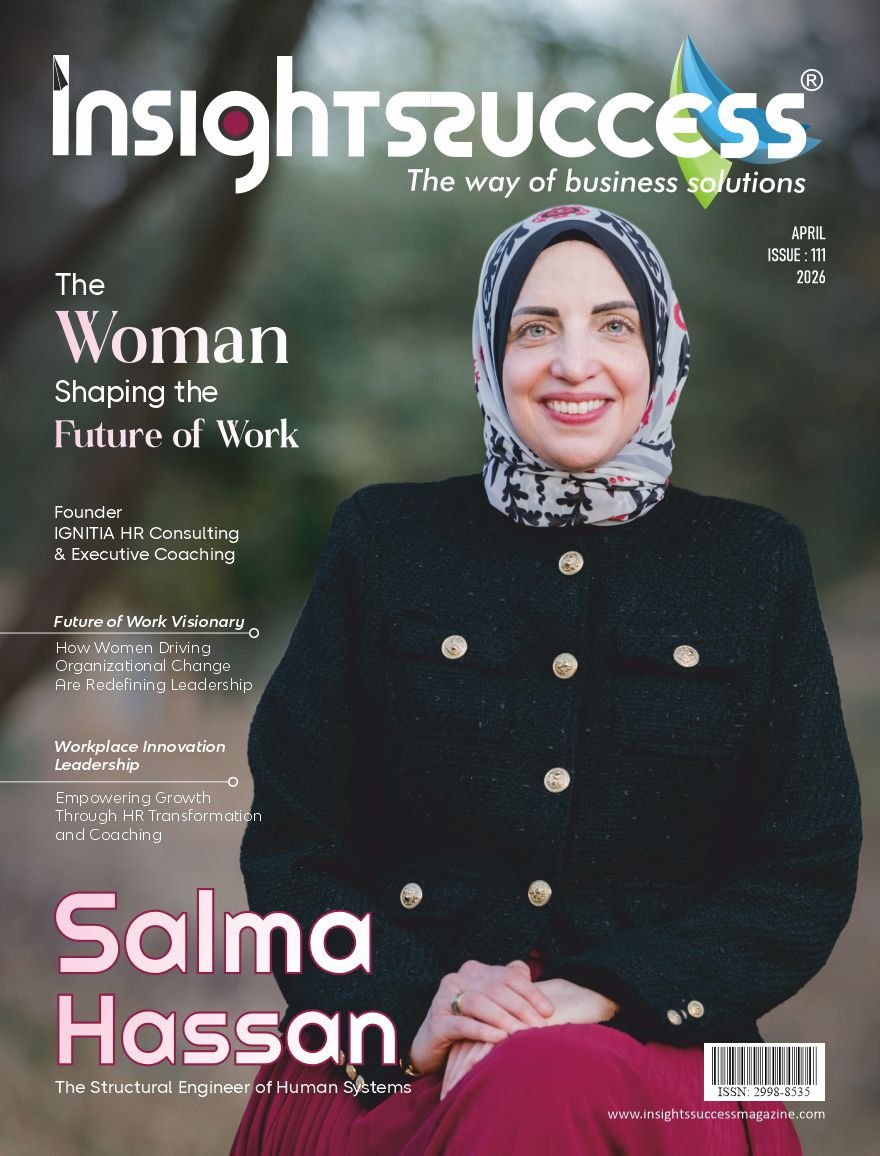
The Woman Shaping the Future of Work
The Woman Shaping the Future of Work This edition celebrates a visionary woman leader whose innovation, leadership, and transformative strategies are redefining the future of work, inspiring progress through inclusive culture, resilience, and forward-thinking impact. Digital Link Quick highlights Quick reads

How Women Driving Organizational Change Are Redefining Leadership
Future of Work Visionary Leadership is being rewritten by a new generation of leaders who are strategic, empathetic and think systemically. The Future of Work Visionary of today is no longer pegged on technological skills or financial success or, again, on the financial success of the organization but on the capacity to transform organizations into agile, inclusive, and resilient ecosystems. Women Driving Organizational Change is at the heart of this change and their leadership strategies are re-defining the way businesses innovate, collaborate and grow long term. The Changing Workplace Landscape In all sectors, the workplace paradigm is changing at an alarming rate because of the hybrid work, the advent of AI, and the demographic shift and changing employee demands. A study conducted in 2026 also notes that women leaders have become the heart of this transition since they are more likely to encourage a culture of collaboration, focus on inclusive decision-making, as well as on performance and people-oriented leadership. Women leadership trends report shows that a stronger representation of women in senior positions in organizations is more likely to respond to the disruption in the workforce and innovation requirements. The skill to see organizational needs before they are disrupted is a characteristic feature of the contemporary Future of Work Visionary. Women executives are at the forefront of this transformation as they are questioning the inflexible hierarchies and overturning them with dynamic models of leadership. In place of command-and-control structures, they are developing decentralized systems where teams are enabled to make smarter and faster decisions. Women Reshaping Organizational Culture The culture of the workplace is also being changed by the emergence of Women Driving Organizational Change. The past form of leadership was usually focused on control and authority, but it starts to fade away and many new women leaders are promoting cultures of trust, openness, and psychological safety. The environments will promote innovation as employees will feel more open to share ideas, experiment, and work across departments. Women-led strategy of transformation is gaining more engagement and better retention results in certain areas like technology, healthcare, finance, and manufacturing. Women leaders have been making organizations more resilient and adaptable to uncertainty by building people-first workplaces. Technology and Human-Centered Transformation The other factor making the Future of Work Visionary framework evolve is the increased incorporation of artificial intelligence in conducting businesses. With the redesign of workflows due to AI, female leaders are making sure that digital transformation is human-based. They are not looking at automation as a productivity instrument but are aligning the use of AI with ethics, reskilling the workforce, and employee welfare. Such a balance between the acceleration of technology and the influence of people is becoming a characteristic feature of sustainable leadership in the future work environment. Redefining Talent Development and Leadership Pipelines It is also important that Women Driving Organizational Change is also redefining talent development. The new leadership is not about being able to handle fixed groups of people, but about developing flexible talent pipelines. Women executives are now making greater investments in mentorship, sponsorship and cross-functional skills development, which is leading to a wider workforce mobility. This is one of the most long-standing organizational obstacles that can be tackled through this approach: unequal promotion channels that can easily inhibit women with the rise to senior leadership position. They are working to develop more merit-based and equal leadership pipelines by redesigning promotion systems and sponsorship networks. Flexibility, Inclusion, and Employee Expectations The Future of Work Visionary of Modern Future also acknowledges that the expectations of the employees have forever changed. The new values in the workplace are flexibility, purpose and belonging. Women leaders tend to be in the frontline in instilling these priorities in organizational strategy not as a luxury but as a necessity. The role of women in the top management is increasingly defining the hybrid work policies, inclusive parental support, mental wellness frameworks, and equitable pay transparency, indicating how cultural change has a direct impact on the business resilience. Expanding the Definition of Success Meanwhile, Women Driving Organizational Change are making changes in governance at the top by expanding the meaning of success. Financial growth is still paramount, and women leaders of today are incorporating environmental, social, and human capital measurements into performance models. It is an important change in the way that corporate responsibility is viewed, and the success of leadership is gauged in terms of not just shareholder return, but also the sustainability of the organization and its contribution to the society. Conclusion: Architecting the Future of Leadership With the shift in the paradigms of leadership that is still going on, the Future of Work Visionary is a radically new definition of power. The leadership is no longer about the hierarchical, but rather about the influence, flexibility and group development. Women Driving Organizational Change are not merely a part of the future of work in this transition, but are contributing to shaping it. Read Also : How Global Business Group Leaders Are Becoming Sustainable Industry Trailblazers

Empowering Growth Through HR Transformation and Coaching
Workplace Innovation Leadership With the modern world of business being so fast changing, organizations are rethinking their ways of creating, sustaining and expanding their growth. At the heart of this change is the Workplace Innovation Leader, which goes beyond the operations management to cultural change, reinvention of the workforce, and strategic flexibility. In parallel with this development, the Transformational HR & Coaching Leader has become a vital contributor to the harmonization of people strategy and organizational purpose in order to make human capital the core of the innovation and the long-term success. The Rise of Innovation-Centered Leadership The office is no longer characterized by physical offices, established hierarchies or fixed job descriptions. Organizational structures in industries are changing due to hybrid work, workflows that are AI-driven, and expectations of workers to be flexible. Agile systems, which promote experimentation, teamwork and expedited decision-making processes are crucial in this context and can be designed by the Workplace Innovation Leader. A study of 2026 workplace trends reveals that organizations have shifted their focus to adaptability and leadership ability, as the most significant competitiveness drivers. The successful companies are becoming those that incorporate innovation in the workforce design as opposed to utilizing it as an independent initiative. HR Transformation as a Strategic Business Driver Human Resources has ceased to be an administrative role and become the engine of enterprise change. Transformational HR / Coaching Leader of modernity is not restricted to recruitment and compliance but rather influences the organizational resilience by developing talents, coaching leaders, succession planning, and designing culture. With the increased pace of digital disruption of businesses, predictive workforce planning, talent analytics powered by AI, and never-ending skills development are all a part of HR transformation today. According to the 2026 HR outlook by Gartner, the HR leaders are being put under more pressure to research on how to develop flexible workforce strategies that will enable them to react swiftly to the evolving business environments. Coaching as a Catalyst for Leadership Growth One of the important strengths of the Workplace Innovation Leader is the possibility to establish the culture of coaching instead of commanding systems. Coaching changes organizations by enabling employees to think on their own, develop confidence, and adjust to difficult situations. Transformational HR Leader Coaching is another leadership tool that is applied to all the levels of the organization including executives, managers, and teams. By 2026, the manager-as-coach models are being integrated in the leadership structure of most organizations, as they realize that coaching enhances communication, accountability, and innovation potentials within the different departments. Building Agile Talent Ecosystems Agile workforce is now a characteristic of successful organizations. The current Workplace Innovation Leader aims at establishing talent ecosystems in which learning, mobility and adaptability are the new career ladders. The pressure on employees to reskill continuously is growing as jobs keep changing due to automation and integration of AI. Meanwhile, the Transformational HR & Coaching Leader makes sure that these transitions are human-friendly. Instead of viewing technology as an alternative to humans, a successful HR change can match digital resources with personal growth and development to enable companies to maintain knowledge of the institution and prepare employees to take on new positions. Culture Transformation Through Human-Centered Leadership Without trust, inclusion and shared purpose, innovation cannot flourish. An efficient Workplace Innovation Leader understands that culture first and then technology second before change. Workers work most effectively when they are psychologically secure, empowered and linked to organizational objectives. This culture is reinforced by the Transformational HR & Coaching Leader who introduces empathy, transparency, and continuous feedback into the systems of leadership. This establishes workplaces where innovation is a behavior and not a disruption that is now a regular occurrence. Measuring Growth Beyond Traditional Metrics Revenue or productivity alone are no longer considered the measure of organizational success. Innovative outcomes, employee engagement, retention, and readiness to lead are the performance metrics that are increasingly assessed by modern businesses. The Workplace Innovation Leader extends performance measures to encompass sustainability of the workforce. Similarly, the Transformational HR & Coaching Leader presents people-based KPIs that measure coaching effectiveness, internal mobility and leadership pipeline strength-metrics that offer a better enterprise health perspective. Leadership That Shapes the Future of Work Leadership needs to be a development beyond traditional frameworks as organizations become more complex, disrupted, and change is accelerated. The Workplace Innovation Leader is the new generation of leadership that is based on flexibility, experimentation, and human potential. Meanwhile, the Transformational HR & Coaching Leader is transforming how organizations are empowering individuals, enhancing cultures, and creating resilient growth systems. Collectively, these leadership functions are not only changing workplaces- they are changing the future architecture of business itself. Read Also : Bridging Inner Development: The Rising Influence of the Spiritual Life Coach in Modern Wellbeing

Salma Hassan: The Structural Engineer of Human Systems
Success used to be defined by the numbers on a balance sheet. Today, it’s defined by the people behind them. We are living through an era where “business as usual” has been replaced by a state of permanent volatility. With technology reshaping industries overnight and competition arriving from every corner of the globe, many organizations find themselves trapped in a cycle of reactive survival, struggling to keep their heads above water. Salma Hassan bridges the critical gap between high-level performance and human potential. As the Founder and CEO of IGNITIA HR Consulting and Executive Coaching, she brings a “whole-brain” perspective to leadership that is increasingly rare. With two decades of experience navigating the high-stakes environments of finance, human resources, and shared services, Salma doesn’t just see an organization as a static structure on an org chart; she sees a living, breathing ecosystem fueled by culture and complexity. With IGNITIA, Salma skips the typical “one-and-done” retreats. She knows real change isn’t a deadline; it’s a daily habit. She works directly with leaders to sharpen their instincts and build teams ready for what’s next. By mixing hard financial logic with a genuine understanding of how people tick, she creates a shift that actually sticks. For Salma, it’s not just about helping a business get bigger—it’s about making sure it lasts. Let’s delve into the details and explore how Salma uses engineering logic and human insight to build resilient, high-performing organizations that truly last! The Architect of Organizational Strategy Salma’s approach to leadership isn’t just intuitive—it’s engineered. Her journey began with a degree in Construction Engineering from the American University in Cairo, a technical foundation that gifted her with a permanent analytical mindset and a structured approach to solving complex problems. This “builder’s mentality” transitioned seamlessly into the corporate world at Procter & Gamble, where she rotated through high-stakes roles in brand finance, sales finance, and plant operations. “These roles exposed me to commercial decision-making, operational discipline, and the link between strategy and execution,” she recalls. It was here she learned that every strategic vision is only as strong as the operational reality supporting it. As her career evolved into Human Resources, Salma didn’t just manage people; she mastered the entire organizational ecosystem. From compensation and talent management to organizational design and process simplification, she viewed the employee lifecycle as an interconnected system where every function influences the next. Eventually, Salma rose to lead HR Shared Services across India, the Middle East, Africa, and Asia Pacific. In this massive theater of operations, she transformed service delivery models and championed technology-enabled solutions, always centering on the employee experience. Yet, amidst the scale of global leadership, she discovered her true North: the energy found in developing leaders and teams. After nearly twenty years in the corporate trenches, she felt a profound responsibility to expand her impact. Founding IGNITIA, she says, was “a deliberate step toward ownership, purpose, and the ability to support meaningful organizational transformation.” The Vision Behind the Growth Salma didn’t start IGNITIA just to build another consulting firm; she started it to solve a specific, recurring problem she saw in the corporate world. Too often, she watched companies hit impressive short-term targets while quietly eroding their own foundation—burning out leaders or letting team alignment slip. “From the beginning, I wanted IGNITIA to stand for growth that lasts,” she explains. She knew that for growth to be real, it had to benefit both the bottom line and the people tasked with sustaining it. To achieve this, Salma focuses on a “triple threat” of sustainable progress: Bold Business Ambition: Setting high performance targets. Organizational Health: Cultivating leadership capability and a resilient culture. Thoughtful Technology: Leveraging digital tools as intentional enablers, rather than a ‘must-have’ checkbox. She treats these three elements like a delicate equation. If you neglect one, the whole structure becomes unstable. While the formula stays the same, Salma adjusts the “dosage” of each based on a company’s maturity and market reality. Today, her work is about helping leaders spot these hidden imbalances and recalibrating them before they cause a collapse. From Corporate Scale to Entrepreneurial Soul Leaving the world of big, global companies for the blank page of starting her own business was a huge change. In a big company, the tracks are already laid out for you. But as an entrepreneur, Salma had to build the engine and the tracks at the same time. The challenge was about more than just how to run things; it was personal. She was no longer representing a famous global brand. Instead, she was building a business based on her own skills, her word, and her valuable network she has built over the years. Salma handled these challenges with the same careful focus she gives her clients. “I consciously chose depth over speed, focusing on long-term trust rather than rapid expansion,” she says. Rather than chasing quick wins, she bet on the idea that doing things the right way and keeping quality high would pay off more and more over time. By putting these values first, she took the “scary” parts of starting a new business and turned them into a solid foundation that truly makes a difference. Leadership That Starts with Values Salma’s way of leading comes down to three things: context, trust, and balance. She believes that even the best plan will fail if it doesn’t fit the world it lives in. “My leadership philosophy starts with understanding context before acting. I have seen many initiatives fail not because they were poorly designed, but because they were disconnected from the realities of the organization they were meant to serve,” she explains. By making sure her solutions fit how work actually happens, she makes sure that changes are realistic and actually stick. Trust is at the center of everything she does. Salma says that leaders get real respect when they actually do what they say they will do, especially when they have to make tough choices under a lot of pressure. She also doesn’t
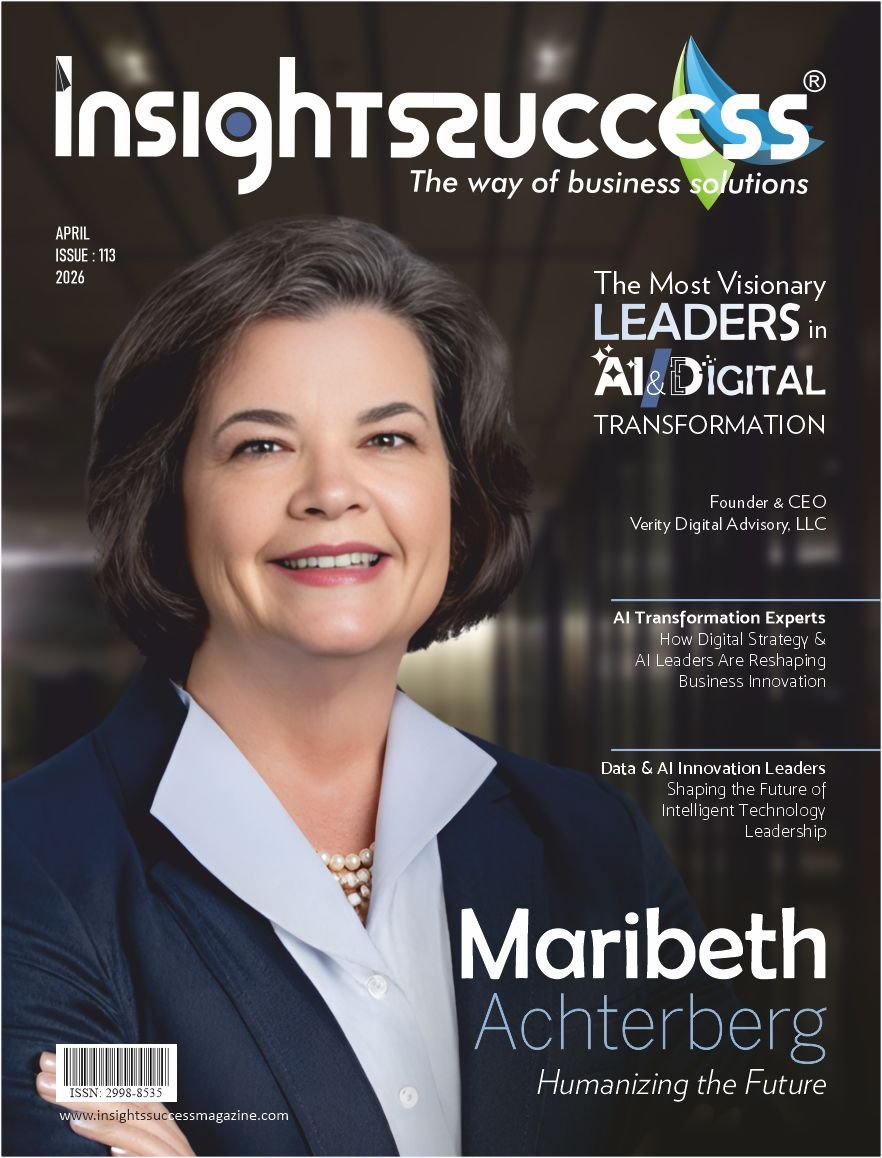
The Most Visionary Leaders in AI & Digital Transformation
The Most Visionary Leaders in AI & Digital Transformation Celebrating trailblazing innovators redefining industries through artificial intelligence and digital transformation, this edition honors visionary leaders driving technological advancement, strategic innovation, and the future of intelligent business worldwide. Digital Link Quick highlights Quick reads

Shaping the Future of Intelligent Technology Leadership
Data & AI Innovation Leaders In the current fast changing digital economy, organizations are turning more to Data & AI Innovation Leaders to guide them through the technological transformation. The roles of these leaders vary as they do not only have the duty of deploying innovative analytics and artificial intelligence but also ensure the alignment of innovation strategies to business long-term objectives. With the increasing data-drivenness of industries, Intelligent Technology Leaders are also becoming the designers of future-ready businesses, determining how business competes, adapts, and expands in a more connected world. Driving Strategic Transformation Through Data Intelligence Data & AI Innovation Leaders have long since risen beyond the management of technical infrastructure. They have now become central to all strategic decision processes while their work has enabled organizations to transform basic data into usable intelligence. The leaders use predictive analytics together with machine learning and automation technologies to help businesses predict upcoming market changes while improving customer satisfaction and streamlining their business operations. Intelligent Technology Leaders will utilize their responsibility framework for company growth by creating new technologies which will improve business operations across the entire organization. Bridging Technology and Business Vision The capability of uniting technical knowledge and business vision is one of the distinguishing advantages of Data & AI Innovation Leaders. The effective use of AI change does not just involve the implementation of algorithms, but it also needs leadership that comprehends the market forces, organizational culture and business priorities. In this regard, Intelligent Technology Leaders are the liaison between the executive strategy and technical implementation, where innovation efforts would generate business value that can be quantified as opposed to a single technological breakthrough. Building Ethical and Responsible AI Ecosystems Organizations that implement artificial intelligence in their daily operations face three main ethical challenges which impact their ability to operate transparently and identify biases and maintain accountability. The responsibility of AI governance lies with Data and AI Innovation Leaders who now find themselves in this position. They need to develop structures that safeguard information privacy, promote equity in the use of automated processes and meet new regulatory requirements. Meanwhile, Intelligent Technology Leaders are expected to build trust, both internally and externally, through being a champion of ethical innovation practices which support longer-term credibility. Enabling Workforce Evolution and Digital Culture The culture of organizations also requires cultural transformation in the face of technological transformation. The key role to play in providing the workforces with the change is through Data & AI Innovation Leaders who will enable them to work together cross-functionally, upskill, and AI literate. The current state of artificial intelligence development shows that AI systems now extend human capabilities instead of taking away existing human skills. Intelligent Technology Leaders, in this case, create organizational cultures which support agile development and innovation through their establishment of experimentation and continuous learning as valuable assets. Reinventing Products, Services, and Customer Experiences Besides operating efficiently, Data & AI Innovation Leaders are reshaping the manner businesses create and value. Customer interaction in the healthcare, finance, manufacturing, and retail industries with the help of AI-enhanced personalization, intelligent automation, and predictive service models is being transformed. At the same time, Intelligent Technology Leaders are propelling product and services reinvention that enables organizations to develop smarter products and services that dynamically respond to the needs of users and market forces. The Competitive Advantage of Future-Focused Leadership Firms that commit to strong Data and AI Innovation Leaders achieve a determined competitive edge in the constantly complex markets. The leaders help businesses identify new opportunities, minimize the risk of disruption and accelerate innovation. As organizations continue to increase their AI capabilities, Intelligent Technology Leaders will play an important role in guiding sustainable change, ensuring that decisions to implement technology are always congruent with ethical considerations, customer needs, and growth strategies. Defining the Future of Intelligent Enterprise Leadership Leaders who are able to utilize data and AI not only as a tool, but also as a driver of reinvention will shape the future of business innovation. Data & AI Innovation Leaders are transforming leadership through a mix of analytic thinking and visionary thought, and Intelligent Technology Leaders are establishing the benchmarks of resilience, adaptability, and responsible innovation. Collectively, they are defining a new generation of smart enterprise management one in which technology is both an engine of innovation and a source of sustainable competitive advantage. Read Also : How Women Driving Organizational Change Are Redefining Leadership

How Digital Strategy & AI Leaders Are Reshaping Business Innovation
AI Transformation Experts Artificial intelligence is not relegated to isolated pilots or experimental labs anymore, but a core component of enterprise reinvention. The core of this transformation is the AI Transformation Experts, the executives and strategists who can transform the emerging AI capabilities into scalable business value. In solidarity with them, Digital Strategy and AI Leaders are redefining the ways organizations innovate, compete, and develop in an increasingly digitalized economy. All these leadership functions are transforming innovation in business by making investments in technology a relational process with operational and strategic results. From Technology Management to Strategic Leadership The emergence of AI Transformation Experts is an indication of a significant structural shift in the way business ventures go about modernization. Compared to conventional IT managers who were concentrated on systems upkeep, these professionals operate in all business units to re-architecture workflows, automate decisions, and develop AI-driven products and services. As recent industry research indicates, AI is now out-pranking cybersecurity and infrastructure as a priority in the list of investments many organizations prioritize, so more and more companies are developing AI-based transformation roadmaps, as opposed to narrowly-scoped software upgrades. In this regard, Digital Strategy & AI Leaders are becoming strategic designers, integrating AI in revenue streams, customer relationships, and long-term strategies. Building Agile Enterprises Through Data and Governance The capability to bridge information maturity and agility in the enterprises is one of the major contributions that AI Transformation Experts offer. The provision of AI systems can only generate value with effective governance, interoperability, and quality data ecosystem. Digital Strategy and AI Leaders are essential here: they make sure that the implementation of AI is aligned with the rest of organizational concerns like resilience, compliance, and market responsiveness. Analysts highlight that AI has now spread beyond the automation into procurement, workforce planning, and executive decision systems, and leadership alignment is key to sustainable innovation. Moving Beyond Experimentation to Enterprise Execution The other reason why AI Transformation Experts are transforming the concept of business innovation is that they are concerned with taking businesses out of the experimental phase and into an execution phase. Numerous companies have implemented AI applications, yet only a small number of them scale them throughout the departments. Enterprise studies reveal that even though adoption is high, organizations experience fragmented pilots, lack of clarity of ROI, and lack of talent integration. In this case, Digital Strategy & AI Leaders help close the divide by integrating AI into the entire business operations, instead of viewing it as a solitary technology project. Their work is the one that will turn AI into a cost-efficiency mechanism into a driver of new business model and competitive differentiation. Redefining Workforce Skills and Organizational Culture AI Transformation Experts also have an impact on the workforce redesign. The adoption of AI does not only modify the technology stacks, but also the skills needed by organizations. Numerous organizations are already reorganizing employment, growth, and recruitment around AI-enabled abilities, and it indicates that nowadays leadership in AI encompasses cultural change as much as technical application. Digital Strategy & AI Leaders, in this case, will be tasked with the responsibility of enhancing AI literacy among the executive teams and making sure that human talent keeps up with machine intelligence. Such combination of business vision and labor adaptability is turning into an attribute of innovation-based companies. Driving Product Innovation and Market Reinvention Notably, AI Transformation Experts are propelling innovation beyond efficiency benefits to product and market reinvention. With AI driving predictive services, intelligent personalization, and autonomous operations, it is allowing industries like healthcare and finance through to manufacturing and retail to operate at scale as they could not before. Studies on the business implications of generative AI have identified that AI is increasing creative disruption and transforming traditional business models with adaptive data-driven ecosystems. Digital Strategy and AI Leaders are not simply embracing technology in this transformation, but redesigning value chains and redefining the creation of competitive advantage by companies. The Future of Leadership in AI Innovation In the future, the successful organizations will be those that have AI Transformation Experts who see AI not as a tool deployment problem but as a business reinvention requirement. Similarly, Digital Strategy & AI Leaders will gain more influence on boardroom decisions as companies seek leaders who can strike the right balance between the pace of innovation and governance, ethics, and tangible returns. As AI is incorporated into all levels of enterprise architecture, these leaders will shape the future of business innovation not through the removal of human judgment, but through the application of intelligence at scale. Read Also : Funding Challenges in Medical Science Entrepreneurship

Maribeth Achterberg: Humanizing the Future
The last thirty years of technological disruption have produced a leader in Maribeth Achterberg who understands fundamental changes through direct experience. Her professional path shows how American industry transformed through each stage of development, which includes ERP system updates, cloud technology conversions, and currently rising generative AI technologies. She has managed essential technological operations in global beverage production and heavy construction projects because those projects needed her to deliver results instead of producing media coverage, and because her systematic approach to progress helped her achieve victory. She uses her accumulated professional knowledge to assist organizations that encounter complicated digital transformation, which challenges her as the Founder and CEO of Verity Digital Advisory LLC. She combines her Midwestern practical approach with strategic planning to create operational solutions that use technology to empower people rather than create technological burdens. She demonstrates her belief that organizations should achieve sustainable innovation through data accuracy, cultural preparedness, and deliberate technical progress. Thirty Years in the Trenches Achterberg’s career does not follow a straight line. It follows the arc of American industry itself through ERP migrations, cloud transitions, and now into the frontier of generative AI. She has led technology functions across global beverage manufacturing and heavy construction, navigating the unglamorous, essential work that rarely makes the headlines but consistently determines whether a transformation initiative lives or dies. That background matters. It gives her a practitioner’s eye and a pragmatist’s instinct, what she describes, with a smile, as “get-it-done Midwestern pragmatism.” She does not romanticize disruption. She has watched too many organizations fall in love with the idea of transformation while quietly resisting the discipline it demands. “You can’t lead transformation if your team is afraid of the tool. The common denominator for success, in every technological shift I’ve seen, is always people,” she says. The Moment Everything Clicked Every transformative leader can point to a pivot point, a moment when the abstract became urgent and personal. For Achterberg, that moment came on a job site. She was working in the construction industry, standing in the middle of a sprawling operation with millions of dollars in heavy equipment, hundreds of workers moving with purpose and skill. And yet, she noticed something that stopped her cold. The most experienced, most valuable people on that site spent nearly 60% of their day not building but searching. Hunting through 2D prints, chasing submittals, tracking down a foreman for a status update. “That was the ‘aha’ moment. I saw that we weren’t just building structures. We were managing a massive, chaotic flow of data. And if we didn’t transform how we harnessed that data, we were essentially leaving our best talent to do clerical work,” she recalls. The realization crystallized her vision not to replace the human element, but to liberate it. She saw in AI a “digital twin” of human intelligence, something capable of handling the heavy lifting of synthesis and pattern recognition, so that a project manager could lead. From that day forward, her mission became clear. Technology must serve as the fuel that powers human potential, not a substitute for it. Data as a Strategic Mineral At the heart of Achterberg’s advisory work sits a conviction that most organizations treat data like exhaust, a byproduct of doing business, something to be stored and forgotten. She treats it like a strategic mineral. “You cannot lead in AI if your data is dirty or siloed. AI without data integrity is just a faster way to be wrong,” she says plainly. This is the foundational, unglamorous work she champions with data governance, data lineage, and data literacy. She positions organizations not as passive adopters of AI tools, but as active architects of their data strategy. The distinction matters enormously. Passive adopters wait for a vendor to explain how a tool works. Leaders define the business problem first and then demand that technology solve it. She also insists on staying hands-on. She does not merely read about large language models, but she experiments with them. She knows what hallucination looks like in practice, and she knows why it matters strategically. That technical grounding, she argues, is non-negotiable for anyone who wants to lead in this era rather than simply participate in it. The Sandbox and the Citadel If Achterberg has one framework that captures her approach to risk, it is what she calls “the Sandbox and the Citadel.” Citadel is the core operation of the ERP systems, financial infrastructure, and safety protocols that keep an organization running. This is not where you move fast and break things. This is where you demand resilience, stability, and rigorous management. But alongside the Citadel, you build a Sandbox, a controlled environment where AI experimentation can happen without threatening the business. Agentic AI pilots, predictive models, and new workflow automation belong in the Sandbox, where failure is instructive rather than catastrophic. “Risk management in the AI era is about having a ‘human-in-the-loop’ for critical decisions. Innovation shouldn’t be a reckless sprint. It should be a series of calculated, iterative leaps supported by a safety net of strong governance. Resilience comes from knowing exactly where the ‘off switch’ is,” she explains. This bimodal philosophy reflects her broader belief that bold transformation and operational stability are not opposites. They are, in the hands of a disciplined leader, complements. The Culture Problem No One Wants to Talk About Technology is the easy part. Culture is where transformations go to die. Achterberg knows this intimately, and she attacks the culture problem with the same directness she brings to everything else. The key, she argues, is psychological safety, an environment where people are not afraid that failure will derail their careers. She models this herself by being openly candid about her own learning curve, her own uncertainty, her own ongoing education in a field that changes by the week. She also focuses on what she calls “democratizing data.” When a foreman on a job site or a worker on a manufacturing floor has access to the same insights as

Amazon in Talks to Buy Satellite Firm Globalstar in Big Space Push
Prime Highlights Amazon’s potential Globalstar deal would directly boost Project Kuiper, its satellite broadband programme competing in the global space internet market. Apple’s 20% stake in Globalstar could complicate deal terms and affect Amazon’s long-term partnership plans. Key Facts Globalstar is a low Earth orbit satellite telecom company, with Apple as one of its major shareholders. Amazon shares trade nearly 40% below estimated fair value, with analysts targeting a price of $281.27 against the current $209.77. Background Amazon is in advanced talks to buy satellite telecom company Globalstar. The deal would help the tech giant build its own satellite network and strengthen its existing Project Kuiper satellite internet programme. If the deal goes through, it could change how Amazon uses satellite connectivity across its cloud, e-commerce and logistics businesses. Project Kuiper is Amazon’s satellite broadband project, built to compete in the fast-growing space internet market. One complication is Apple’s roughly 20% stake in Globalstar. This could make negotiations complex and may affect the final deal terms and any future partnership between Amazon and Apple. Amazon shares currently trade on the stock market at approximately $209.77. The analysts consider the stock to be undervalued because they set a target price of $281.27, which exceeds current stock prices by approximately 25%. The estimates show that the shares trade at approximately 40% below their actual worth, which indicates potential future growth. Short-term performance, however, remains weak. The stock has fallen around 4% over the past month and about 7% so far this year, despite gaining nearly 23% over the past year. Analysts say the price Amazon pays for Globalstar and any new spending linked to Project Kuiper will be closely watched as the deal develops. If completed, the acquisition would mark a major step in Amazon’s push to own and operate a full satellite connectivity network. Read Also: From chip assembly to industrial AI, Vietnam targets higher-value manufacturing amid trade realignment
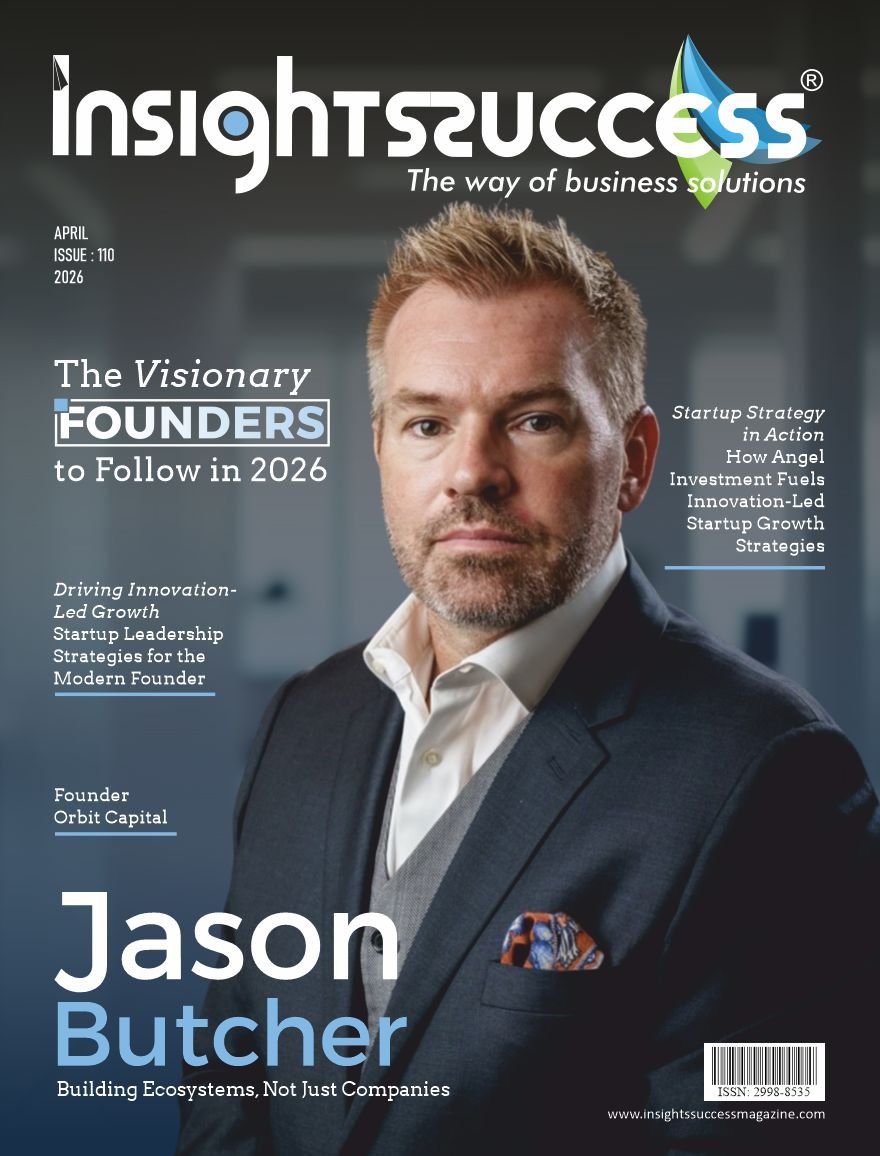
The Visionary Founders to Follow in 2026
The Visionary Founders to Follow in 2026 Celebrating trailblazing entrepreneurs redefining industries through bold ideas, disruptive innovation, and transformative leadership, this edition spotlights visionary founders shaping global business landscapes and inspiring the future in 2026. Digital Version Quick highlights Quick reads