






Huawei Debuts New Foldable Series as Xiaomi, Apple Gear Up
Prime Highlights Huawei’s Mate XT2 series launches with a new Kirin 9050 Pro chip, priced from $2,980, with sales starting September 12. Huawei leads China’s smartphone market with 22.6 percent share and dominates the folding phone segment with 68 percent of shipments. Key Facts Xiaomi and Apple are launching new phones this week, with Apple’s foldable model widely anticipated. The Mate XT2 offers 42 percent better performance than its predecessor, per company tests. Background Huawei launched its new flagship foldable smartphone series, strengthening its position in China’s premium handset market alongside new launches from Apple and Xiaomi. The Mate XT2 series folds out twice into a tablet-sized screen and runs on Huawei’s new Kirin 9050 Pro chip. Prices start from 19,999 yuan, about $2,980, with the top version priced at 24,999 yuan, around $3,725. Sales begin on September 12. Huawei Executive Director Richard Yu told a press conference that the company adopted a lot of new technology to bring the series to market, noting that rising memory costs added pressure to pricing. Huawei said the new chip’s design, called LogicFolding, delivers more computing power while using less electricity. The architecture forms part of the company’s “Tau Scaling Law” principle, unveiled in May to advance its chip technology. Xiaomi is launching its own foldable phone later on Monday, and Apple will unveil its latest iPhone series, with many expecting a foldable model to be part of the lineup. Huawei currently stands as the only major brand selling a tri-fold phone. The Mate XT2 features a redesigned folding mechanism, improved water resistance, a privacy screen that limits nearby viewing, and upgraded cameras, delivering 42 percent better overall performance than its predecessor, based on company tests. Huawei leads China’s smartphone market with a 22.6 percent share in the second quarter, ahead of Apple at 18.1 percent and Xiaomi at 12.4 percent, according to IDC. Huawei also leads the folding phone segment, accounting for 68 percent of China’s shipments in that period, according to Smart Analytics Global. Read Also: UltraTech Cement Enters Wires And Cables Market With Ultravolt

Project Management Visionaries Shaping the Future in 2026
Project Management Visionaries Shaping the Future in 2026 Naresh Bothra combines engineering knowledge, strategic thinking, and people-focused leadership to deliver complex capital projects. As Project Director at MULTIVAC Middle East FZE, he demonstrates how clarity, accountability, collaboration, and trust drive lasting success. Digital Link Quick highlights Quick reads

Naresh Bothra: Leading Projects, Developing People, Delivering Results
Every project, no matter how sophisticated, begins with a vision. Turning that complexity into execution requires more than technical expertise. It requires the ability to see the bigger picture, bring clarity to uncertainty, and inspire people to move together toward a common goal. No professional understands these dynamics better than Naresh Bothra. In the capital equipment and packaging machinery industry, he manages more than 20 capital expenditure projects each year as Project Director at MULTIVAC Middle East FZE. These multimillion-dollar projects often span multiple countries, involve diverse stakeholders, and face changing client requirements that can affect project timelines. For Naresh, a title does not define leadership. His career has taken him from technical roles to large-scale project management and regional leadership. This journey has taught him to connect engineering with business objectives and people with performance. His leadership style is built on trust, accountability, and the ability to turn complex challenges into coordinated action. Engineering Excellence Naresh’s path to leadership began far from the boardroom. He earned a degree in Electronics Engineering from Mumbai University and later completed an MBA in Information Technology. This combination gave him a strong technical foundation and a strategic perspective that continues to shape his professional approach. His early professional experience focused on technical support, systems programming, and automation solutions for enterprise clients. These roles taught him to look at challenges as connected systems rather than isolated problems. A major turning point came when Naresh joined IBM as a Transition Project Manager. He managed large-scale transitions involving multi-million-dollar budgets. He led more than 10 direct reports while coordinating a technical workforce of more than 500 people. The role gave him valuable experience in project governance, stakeholder management, and change management. This experience shaped a principle that continues to guide his work today. Successful projects are rarely the result of last-minute brilliance, they are the outcome of disciplined execution. Careful planning, clear processes, and strong coordination can make the difference between a project that moves forward and one that loses momentum. For the past 14 years, Naresh has served as Project Incharge at MULTIVAC Middle East FZE. He oversees projects across their full lifecycle, from planning and design to installation, commissioning, and performance optimization. His role brings together engineering expertise, multi-country logistics, and cross-cultural client relationships. He works closely with customers, internal teams, suppliers, and MULTIVAC’s headquarters in Germany to ensure projects are delivered effectively. His engineering background continues to play an important role in his decision-making. For Naresh, many project decisions come down to two practical questions: What is technically possible, and what will work effectively on-site? Empowered Leadership Early in his career, Naresh preferred a hands-on approach. He wanted to understand every problem and find the solution himself. Over time, experience changed his perspective. He learned that leadership is not about having every answer. It is about creating an environment where people feel empowered to take ownership and make sound decisions. As his projects became larger and more complex, Naresh moved toward strategic delegation, empowerment, and broader oversight. Managing high-value packaging machinery installations across several Middle Eastern countries taught him an important lesson. A Project Director cannot be involved in every technical discussion. The real measure of leadership is building a team capable of making the right decisions even when the leader is not in the room. Four principles now guide Naresh’s leadership philosophy. Clarity of Scope: Every team member and client must understand the requirements before execution begins. Clear expectations help prevent confusion and keep projects aligned. Proactive Risk Management: Naresh believes in identifying potential risks before they become problems. This includes anticipating supply chain delays, technical challenges, and on-site bottlenecks. Contingency plans are developed early to keep projects on track. Accountability Through Transparency: Open communication is essential. Naresh encourages clear and timely communication across internal teams and external partners. Transparency builds trust and strengthens accountability. Respect for Cultural Differences: Leading multicultural teams across the Middle East and Africa requires more than technical expertise. Empathy, active listening, and clear expectations are equally important. Understanding cultural differences helps build stronger relationships and more effective teams. Strategy in Action Naresh believes strategy and execution must work together. A strong project strategy has little value if daily execution is not managed effectively. To maintain this connection, he converts broad project objectives into clear and measurable milestones. These include design approvals, factory acceptance tests, shipment tracking, site readiness, and final commissioning. For larger projects, Naresh conducts weekly reviews to track progress, identify challenges, and focus management attention on the areas that need it most. However, he does not believe leadership should rely only on reports and dashboards. During critical stages such as installation and commissioning, he stays closely involved with both the project and the customer. He believes it is important to understand the actual situation on-site rather than depend only on what a schedule shows. This approach was tested during a major poultry production project in Saudi Arabia. The multi-million-euro project involved packaging lines for a new production plant. It required coordination between several internal teams and multiple external suppliers to deliver a complete end-to-end solution. The installation and commissioning phase was initially planned for six weeks. However, changing customer requirements and priorities extended the project to nearly ten months. Instead of allowing the extended timeline to create disconnected challenges, Naresh and his team maintained continuous tracking of open issues. They established clear communication channels between the customer, suppliers, and technical teams. They also kept senior management informed throughout the project. The project ultimately reached a successful conclusion. All equipment was installed, commissioned, and operating effectively at the customer’s site. The result went beyond the successful installation of the equipment. The customer also gained greater confidence in MULTIVAC’s responsiveness and post-sales support. For Naresh, the experience reinforced an important leadership principle. Planning sets the direction, but execution is where project leadership is truly tested. Leading Through Clear Communication In multi-country capital equipment projects, Naresh sees communication as one of the most important tools for managing

Orchestrating Development: The Role of OEM Packaging Project Management in Successful Product Launches
The success of a product launch is dependent not only on the quality of the product but also on market demand. The function of packaging is equally important in protecting the product, conveying the value of the brand, meeting regulations, and making good first impressions. For OEMs, the process of packaging should also conform to production schedules, logistics needs, customer demands, and cost targets. This is why good project management is a very critical element in the development of packaging. OEM packaging project management serves as a way of managing all the different processes of packaging development. The process of launching new products has become more complex in today’s world, as companies deal with supply chains on a global scale, several suppliers, changing consumer demands, and shorter development timeframes. The development of packaging requires collaboration of designers, engineers, manufacturers, purchasers, transporters, quality control experts, and marketing personnel. Even the slightest delay during the packaging development stage may influence the manufacturing process or defer the product launch. Strategic Planning Planning acts as the base of the successful packaging development process. Prior to the actual development process, planning is required to formulate well-defined objectives regarding the functionalities, design, costs, sustainability, regulation, and logistics. OEM packaging project management helps in converting those objectives into defined milestones and deliverables. Some stages in this process could be concept generation, material selection, prototyping, testing, supplier qualification, regulatory assessment, and product approval. The identification of such stages in the beginning makes it easier for teams to understand the dependencies. Good planning is also made possible through a thorough understanding of the product. Packaging needs to consider the dimensions, weight, fragility, storage needs, shipping considerations, and the target distribution channel. Packaging that is mainly used to showcase the products in retail settings may not need the same specifications as packaging meant for industrial shipments or direct shipment. The project managers will have to involve the necessary participants during the relevant stages. Early involvement will help avoid future design changes and costly errors. Managing Execution After the plan has been made, the execution phase becomes crucial as the theories become commercial packaging. This is where OEM packaging project management helps to coordinate all activities from within and without. Specifications should be accurate, prototypes should be reviewed, testing should be done, and all changes should be noted down and approved. Keeping a single eye on all these activities ensures that project teams can easily track their progress and act fast in case of any challenges that may occur. It also creates an element of accountability among all those involved. Effective communication is essential at this stage since there could be many changes made to the project before it gets finalized due to factors such as material shortages, manufacturing constraints, or changes in the design or regulation. Project management ensures that there is an efficient and organized approach for evaluating the changes that have been made to the initial plan without deviating from the cost and schedule objectives. Launch Readiness The end stages of the packaging project have to be handled with great care since they play a direct role in the overall launch readiness of the packaging process. Before any product is put out into the market, the packaging has to be validated in terms of quality, functionality, compliance, transportability, and production capability. OEM packaging project management assists organizations in making sure that all the packaging tasks are properly done, such as validation, supplier readiness, documentation, and production approval. It also makes sure that the packaging is available in sufficient quantities at the time of manufacturing. Packaging may prove value not only in terms of one product launch but may generate value in other ways as well. People may document what has been learned through the process, review suppliers, costs, and see where improvements might be made. Sustainable materials, better dimensions of packaging, waste reduction, and transport efficiency are all factors that may be considered to generate additional value. If the organization sees packaging as a part of the strategy for product development and not just the end of the development process, they can become more efficient and enhance the customer experience. Conclusion Packaging has become an important element in the successful launch of a product. Packaging is not only limited to protecting the product but has become more functional and is used for brand integrity, compliance with regulations, and logistics efficiency. In addition, companies also have to meet deadlines, quality requirements, and budget constraints while developing the packaging for their product. A proper process would help them to fulfill these requirements and reduce any risks and coordination problems. In the face of future developments in packaging projects, there will be a strong focus on sustainability, efficiency, customization, and speed. Organizations that are capable of effectively planning, communicating, testing, and continually improving their processes are likely to cope well with increased complexity. Good project management guarantees the success of the packaging process not only in terms of its being ready for the launch but also contributes to the success of the product as a whole. Read Also : How Medical AI Innovation Is Reshaping Medical Practice

Common Hiring Mistakes Companies Should Avoid
Introduction Selecting the appropriate candidates is one of the major decisions organizations make. It is possible for an efficient recruiting process to attract candidates who are talented enough to help organizations achieve future success. At the same time, there may be certain factors influencing the quality of hiring decisions. They include insufficient preparation of the interview, poor knowledge of what kind of candidate is required, interviewer bias, and overvaluing intuition. The results of the research into personnel selection are quite helpful in this situation. Writing Vague or Unrealistic Job Descriptions This is because organizations usually make the mistake of providing very vague or overly qualified job descriptions. The job posting must clearly define the nature of the job, its duties, requirements, skills needed, and working conditions. Providing many qualifications on the job description will only limit the number of people who can apply for the job. According to SHRM, even a small difference in the wording of the job descriptions may become an extremely important factor when determining whom one wants in the organization. It is vital to know what qualifications are really necessary and which skills can be acquired later. Relying Too Heavily on Resumes Although the resume can be valuable in providing background details on a candidate, it should not be relied on alone in making hiring decisions. The resume gives information on past education and work experience but does not indicate how well a person can do certain tasks. An organization may make its evaluation more effective by using the resume along with other types of evaluations such as an interview, a work sample, a skills test, etc. A meta-analysis of personnel selection studies revealed that any combination including work samples, cognitive ability measures, and structured interviews yields high predictive validity for job performance. Conducting Unstructured Interviews An additional mistake is the use of informal interviews where the same set of questions is not posed to each candidate, and the interviewer bases their judgment mostly on intuition. It has been shown in research that a structured approach to job interviews is always better. Structured interviews include pre-set questions and scoring criteria; thus, candidates can be judged according to the same criteria related to the position. The CIPD also advises structured interviews as a measure to eliminate bias in the process. It follows that the company needs to develop questions prior to the interview, pose similar questions to each candidate, and apply scoring criteria to each question. Allowing Unconscious Bias to Influence Decisions The decision to hire can be influenced by unconscious assumptions about age, gender, origin, education, communication skills, or many other things that might have nothing to do with the ability to perform in a particular job. SHRM states that bias can take place at all stages of the recruitment process – from advertisement, to resume evaluation, interviewing and even final choice. To eliminate bias from decision making it is not enough to instruct interviewers to “be objective.” Firms can apply standardized evaluation criteria, diversified interview teams, structured questions, uniform evaluation sheets and job related tests. Hiring for Qualifications Instead of Job Performance Though an applicant can have many credentials that are not necessarily suitable for the job at hand, an individual with an unconventional background may have the right skills needed for success. An organization should first define what success is before embarking on any recruiting efforts. Then the selection process can measure the qualities needed for success. The current research done by organizations stresses such skills as communication, team work, professionalism and critical thinking. Moving Too Quickly Through the Process David Magnani, President of M&A Executive Search said, “recruitment is a time-sensitive process where skilled individuals are often approached by several employers. But being hasty just to fill a position may lead to bigger troubles in the future. Neglecting an assessment procedure, interviewing inadequately or not checking any facts may cause more difficulties in the future. Recruitment should be both time-saving and include all important aspects of assessing a candidate. CIPD suggests choosing appropriate assessment procedures depending on the post and taking into account their effectiveness and impact.” Ignoring Candidate Experience The candidate will not only assess the employer but also his fellow candidates when recruiting takes place. The image of an organization may be ruined by any lengthy process, confusing information, frequent interviews, disorganized testing, or a failure to communicate. The CIPD points out that it is important for the process to be quick and that the candidate understands what to expect from the selection process. Overlooking the Importance of Job-Relevant Assessments There are many organizations which rely solely on interviews despite the fact that an assessment test would give a better proof of abilities. In case of a work sample test, technical exercise, writing test, oral presentation or other type of role-based test, a candidate can show his actual skills. According to research carried out on personnel selection, combinations including work-sample tests and structured interviews have shown high predictive validity. Depending on the job position, there is a need to choose the right assessment tool. Failing to Evaluate the Hiring Process Valentin Radu, CEO of Omniconvert said, certain organizations may use interviews exclusively when a performance-based test would yield better results for proving competence. Work sample, technical, writing test, presentation, or situational assessment will give an opportunity for the applicants to show their true abilities. The scientific studies of selection procedures have proven a high level of validity of the combination of work samples test and structured interview. The right type of assessment should be selected according to the position, but it should resemble the real job duties as much as possible. Conclusion Typical recruiting mistakes usually emerge when employers use gut feeling, qualifications, rush, or unstructured interview in the process of recruiting. The better way to start is from preparing an adequate job description, followed by proper evaluation which should be valid, consistent, and job-related. Moreover, employers should consider the experiences of candidates as well as review their recruiting procedures

How Business Leaders Are Using AI Video Generators to Create Executive Thought Leadership Content
Video has become LinkedIn’s fastest-growing content category, expanding twice as fast as other formats, with executive video posts up 23 percent and total video viewership rising 36 percent in a single recent quarter. An AI Video Generator, one of the tools built into Higgsfield’s platform, is becoming part of how business leaders keep pace with that shift without adding hours of production time to an already demanding schedule. Why Has Video Specifically Become So Central to Executive Visibility? The shift here is genuinely well documented rather than a passing trend. LinkedIn’s algorithm now favors native video heavily, and content from CEOs personally generates three to four times higher engagement than the same message posted from a corporate account. Personal executive brands have been shown to outperform corporate messaging by a factor of ten to one on social platforms, a gap significant enough that current analysis describes executive invisibility online as a genuine business liability rather than a neutral choice. This shift reflects something genuine about how audiences actually process leadership content today. A polished corporate statement reads as institutional messaging, carefully filtered through communications teams and legal review, while a leader speaking directly to camera about a real decision or lesson reads as genuinely personal in a way that’s considerably harder to dismiss or scroll past. For executives looking to support that video presence with visual storytelling, a presentation maker can also help turn key insights, data, and leadership ideas into polished slides that complement the message without making it feel overly corporate. That perceived authenticity, whether or not it’s fully deserved in every case, is precisely what drives the engagement gap current data consistently shows across countless individual executive accounts on the platform. What Do Current Best Practices Actually Say About What Makes Executive Video Work? This deserves an honest, specific answer rather than a generic one. Current 2026 guidance on executive content is notably consistent on one point, the best-performing executives aren’t the most polished, they’re the most consistent, the most specific, and the most willing to have their ideas genuinely challenged. Short, calm executive-style videos that transmit real conviction and a clear, specific point of view are what current analysis identifies as working best, not high-production content that prioritizes polish over an authentic, recognizable perspective. This finding runs somewhat counter to what many executives initially assume about video content. The instinct is often to invest heavily in production value, a professional set, careful scripting, multiple takes, when the actual data points toward something closer to the opposite, a leader stating a genuinely specific, well-formed opinion clearly and briefly tends to outperform a more elaborately produced piece that says less of real substance, regardless of how polished it ultimately looks on screen. Why Does This Matter So Much for a Leader’s Actual Time and Schedule? The real constraint most executives face isn’t a shortage of ideas, it’s a shortage of time to turn those ideas into consistent, published content. Sustaining even one or two videos a week while running an actual company represents a genuine, ongoing production burden, and current analysis of executive content strategy specifically identifies this consistency requirement as the point where most well-intentioned executive content efforts quietly stall out and eventually disappear altogether. This time constraint compounds in a way that’s genuinely easy to underestimate at the outset. An executive might commit to a weekly video with real enthusiasm after seeing a peer’s content perform well, only to find that scheduling, filming, and editing even a short piece consistently competes directly with the same limited hours needed for actual leadership responsibilities. Within a few months, the ambitious content calendar quietly narrows to occasional posts, then stops altogether, not because the underlying ideas ran out, but because the production overhead never became sustainable in the day-to-day reality of running a business. What Happens When a Genuinely Valuable Executive Perspective Never Becomes Shareable Content? This is a real, common loss inside companies with genuinely insightful leadership. An executive might have a genuinely sharp, specific point of view on an industry shift worth sharing, developed through actual daily decisions and real experience, that simply never gets turned into content because the production step feels like one more demand on an already full schedule. That perspective, and the credibility it could have built, stays confined to internal meetings rather than reaching the audience it could genuinely help. This loss compounds over time in a way that’s genuinely worth taking seriously. Every quarter a genuinely valuable perspective goes unshared represents a real, missed opportunity to build the kind of credibility and audience recognition that current data shows translates into measurable business outcomes, stronger recruiting, more inbound interest, genuine industry standing that compounds year over year. Competitors who do sustain a consistent presence, even with less genuinely original thinking, often end up capturing the visibility and reputation that a quieter but more insightful leader arguably deserved. What Are the Traditional Options for Producing Executive Video Content? Hiring a dedicated video production team or agency is one option, and larger companies with real budget for executive branding often do this for flagship content. Filming rough, unedited video on a phone and posting it directly is the more common alternative for time-pressed executives, authentic but often lacking the visual polish that helps a video actually hold attention. Both approaches genuinely work for the specific circumstances they’re suited to. A dedicated production team makes real sense for a major announcement, an earnings call recap, or content the company plans to feature prominently across multiple channels, where the investment in polish clearly pays off in reach and impression. Unedited phone video works reasonably well for a quick, low-stakes update where authenticity matters more than visual quality, though it struggles to sustain attention as a regular, ongoing content format over months. Where Do These Traditional Options Fall Short for Most Executives? The constraint is cost and consistency together. A production team produces genuinely polished results but represents a real, ongoing expense most companies reserve for

The Most Influential Chief Information Security Officers to Watch in 2026
The Most Influential Chief Information Security Officers to Watch in 2026 Alex Ryals’ career reflects the value of diverse experiences and perspectives. From technology leadership and solution consulting to distribution, software, and cybersecurity, each role has shaped his approach to leadership. Today, as Chief Information Security Officer and Senior Vice President at MicroAge, he combines technical expertise, business insight, and people-focused leadership. Digital Link Quick highlights Quick reads

Alex Ryals: Shaping Leadership Through Perspective and Purpose
Some careers follow a clearly defined path, while others are shaped by diverse experiences and opportunities. Alex Ryals’ career has followed a less conventional path, with each role adding a new perspective and deepening his understanding of the technology industry. Becoming a Chief Information Security Officer was not part of his original career plan. Instead, he built his career one opportunity at a time, allowing each experience to shape his professional journey and expand his expertise. Currently serving as Chief Information Security Officer and Senior Vice President at MicroAge, a ScanSource company, Alex brings more than 19 years of cybersecurity experience to his role. His career across four distinct perspectives has given him a broad understanding of the technology industry and its evolving challenges. While Alex considers his career path unconventional, he sees this diverse experience as a defining strength. It enables him to connect technology with business objectives, partner requirements, and customer needs, allowing him to make practical and informed decisions. A 360-Degree Perspective Alex began his career as a customer, managing technology for FedEx before moving into solution consulting with an HP reseller, Pepperweed Consulting. This experience as a reseller partner allowed Alex to work directly with customers in solving their technology challenges and later led to his interest in revisiting this experience with his current employer, MicroAge. Between these roles, Alex spent several years at distributors including Avnet, Tech Data, and TD SYNNEX. In these positions, he sold technology to reseller partners. Most recently, he worked at Ping Identity, an independent software vendor, where he led a global channel organization which enabled other resellers to sell Identity and Access Management solutions to their customers. Few executives have experience across all four positions in the technology channel ecosystem: customer, value-added reseller, distributor and vendor. Alex has spent nearly 15 years focused on cybersecurity. During that time, he worked closely with dozens of CISOs and gained a clear understanding of the challenges they face. Listening to their concerns and priorities eventually gave him the confidence to take on the role himself. This experience also shaped his view of what distinguishes an effective CISO from an average one. He observed that security leaders often tend to focus on one of two areas. Some prioritize technology, while others focus primarily on compliance. Alex set out to develop expertise in both. His early experience as a CTO, software developer, and pre-sales solutions architect gave him a strong technical foundation. He later invested significant time in understanding compliance and regulatory requirements. This combination of technical expertise and compliance knowledge now shapes his approach to cybersecurity leadership at MicroAge. Influence Through Leadership Alex describes his leadership style as one based more on influence than authority. He is comfortable giving direct instructions when a decision has already been made. For example, when the company decides to deploy a new security tool, someone has to take responsibility for implementation. However, Alex prefers to involve his team in the process. He encourages team members to participate in selecting the right technology. He may ask some employees to work with the vendor on pricing and others to develop the deployment plan. By the time he gives the final approval, the team already understands the decision and supports the project. This creates stronger ownership and commitment to successful execution. Another important part of his leadership philosophy is the principle of failing fast. Cybersecurity changes quickly, and tools or processes that appear effective on paper may not work well in practice. Alex encourages his teams to recognize problems early and take corrective action. He believes holding on to a poor decision because of stubbornness, internal politics, or sunk costs can create greater problems. Admitting a mistake early allows the team to learn, adjust, and move forward with a better solution. Empowering Through Trust Alex wants his team to see him as anything but a micromanager. Part of this approach comes from necessity. He does not have the time to oversee every decision. More importantly, he believes in hiring capable people and giving them the freedom to do their jobs. His team members are experienced leaders in their respective areas. He meets with them regularly, usually on a weekly basis, to review progress and discuss key issues. He asks direct questions to understand whether they are simply following instructions or taking ownership and developing their own ideas. Alex is willing to challenge a direction when he believes a different approach would be better. At the same time, he gives his team the space to make decisions and take responsibility for the results. He also accepts that people may sometimes make mistakes. In his view, failure becomes a problem only when it is not recognized and addressed quickly. This balance of trust, accountability, and timely intervention allows his team to operate with greater confidence while keeping projects and priorities on track. Innovation as a Habit Alex believes innovation should become a regular part of the company culture rather than an occasional initiative. He sees this as a fundamental cultural shift. He organizes his time around two key areas: strategy and execution. At the beginning of each fiscal year, and to a lesser extent each quarter, he moves into strategy mode. During this period, he works closely with his teams to review their technology, processes, and priorities. They assess what is working, identify areas for improvement, and make changes where needed. This strategic approach led to the creation of the Business Optimization team at MicroAge last year. The team is led by a director who looks across the business for opportunities to improve efficiency and introduce new solutions. This includes using AI to automate manual processes. The director provides monthly updates to the leadership team and quarterly updates to the entire company. The team has already developed several AI-based tools that simplify work across the organization. Alex believes these efforts have also helped create a stronger culture of innovation. As each quarter progresses, he shifts his focus from strategy to execution. He

Reimagining Excellence: Advancing Cyber Resilience with an Effective Security Operations Strategy
The sophistication level of cyber threats is escalating along with their persistence and unpredictability. Different industries are dealing with a complex IT environment coupled with ransomware, phishing, insider threats, supply chain threats, and targeted attacks. With the growing digitalization of organizations, there is no need to say that traditional approaches in cybersecurity are no longer enough. Cyber resilience involves anticipation, identification of vulnerabilities, reaction, and recovery at the same time. A well-constructed Security Operations Strategy is essential to accomplish this resilience. It allows linking the four factors to create an environment of cooperation for security. Organizations need to stop treating cybersecurity as fragmented tools and use a strategy to define their priorities, gain better visibility, improve their responsiveness and evolve according to the changing threats. In this way, security departments will be able to change their position from reaction and protection to proactiveness and resilience. Moreover, security operations strategies will allow aligning security efforts with organizational priorities and stakeholders’ expectations. Building Strong Foundations Cyber resilience starts with a thorough knowledge of the IT environment of an organization and those assets that need the highest level of protection. These assets are applications, networks, endpoints, clouds, databases, and mission-critical systems. Regular risk assessments should be performed to learn about possible vulnerabilities, their interactions, and how they can influence each other. It will help to distribute limited resources based on business requirements and possible impact instead of giving the same importance to every security alert. People and processes are equally essential in the development of a resilient security environment. It is imperative that organizations ensure that the roles of their security staff are well defined, have appropriate escalation processes in place, effective channels of communication, and proper incident response plans. Training ensures that the employees can spot anything unusual and respond accordingly, thus becoming an active participant in securing their organizational information. Security goals should be defined, and the cybersecurity strategies tied to business goals. Strengthening Detection Current security activities are very much based on the early recognition of suspicious behavior that does not evolve into a more serious problem. This can be achieved by combining various pieces of information collected from endpoints, networks, applications, clouds, identities, and other sources. By analyzing all these elements together, it is possible to detect patterns that would go unnoticed if looked at separately. Security information and event management systems, endpoint detection, threat intelligence, and automation solutions can be very helpful in this respect. Technology, on its own, is not valuable; the value of technology lies in its integration into operations. For an organization’s Security Operations Strategy to be successful, it needs to set the priorities, investigation process, escalation procedure, and resolution method. The task of automation is to perform repeatable tasks, like enrichment and initial investigation and actions, leaving more sophisticated tasks to security experts. Meanwhile, organizations need to periodically evaluate their detection and response processes to ensure that they are adapted to evolving threats. Enabling Rapid Response Even the best preventive measures will not be able to ensure that all cyber threats are addressed. Hence, organizations must have the capacity to react swiftly in case of an incident. For an effective incident response program, there must be a set of protocols related to containment, investigation, communication, recovery, and lessons learned after an incident. The incident response team should know who is supposed to make important decisions and how the technical teams can work in tandem with other stakeholders. The cyber resilience of an organization is also dependent on learning from any security breaches that occur. Each and every breach offers some important insights into what weaknesses existed, what procedures were lacking, how aware employees were, and how effective the technologies employed by the organization were in helping mitigate these threats. This is why a good Security Operations Strategy is one that never stops even after the resolution of a threat. Conclusion Resilience in cyberspace is more often than not turning out to be a business need rather than just a technological one. Enterprises have to safeguard their key assets and ensure continued operations in an environment where the threats continue to develop and change. Resilience does not depend on having the latest technologies in security alone but rather on other aspects like proper governance, qualified people, good processes, accurate intelligence, monitoring, and cooperation. The Security Operations Strategy will ensure that the above capabilities are combined in a coherent manner. The strategy will enable the organization to achieve better visibility, enhance threat detection, speed up responses, and learn from each security occurrence. In view of the expansion of digital ecosystems, organizations embracing a proactive and holistic approach towards cybersecurity will be better positioned to address uncertainties and preserve stakeholders’ confidence as well as business continuity. Resilience to cyberattacks is a process that never ends. Read Also : Orchestrating Development: The Role of OEM Packaging Project Management in Successful Product Launches
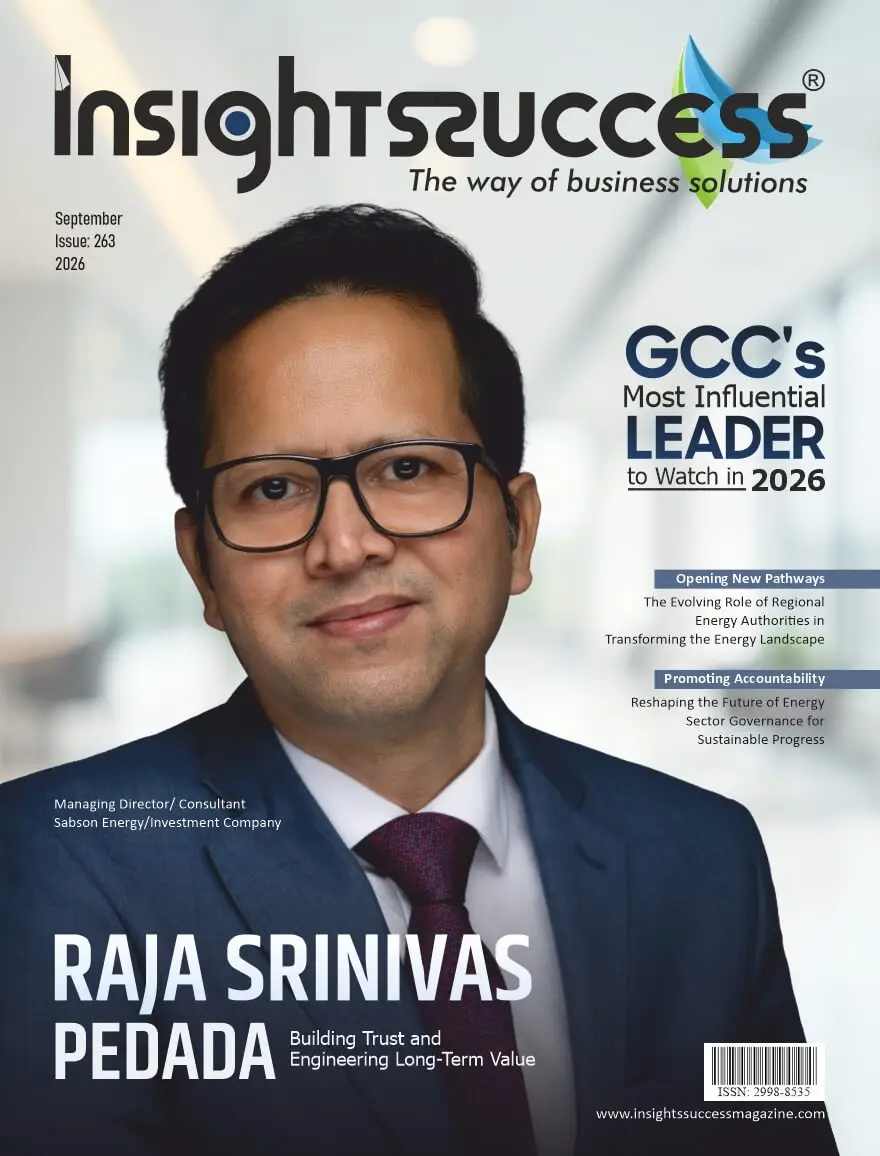
GCC’s Most Influential Leader to Watch in 2026
GCC’s Most Influential Leader to Watch in 2026 Raja Srinivas Pedada exemplifies purposeful leadership in energy and infrastructure. With decades of experience, he combines engineering expertise, strategic vision, disciplined risk management, and stakeholder collaboration to deliver complex projects. His leadership focuses on sustainable growth, investor confidence, organizational resilience, and creating lasting value for communities and economies. Digital Link Quick highlights Quick reads