






Katherine Miller: Weaving Dignity into the Fabric of Divorce
When a family disintegrates, it can be chaotic. Emotions surge like a storm; future prospects are uncertain. Within that chaos, one voice will offer steady and unwavering clarity. The event of a divorce is often viewed as a catastrophic conclusion. The loss is immense; it can cause immense pain to those going through the process. One person, however, is able to help those affected by a divorce turn that pain into a purposeful pathway to something greater- they will help build strong enough bridges that people can carry their dreams across turbulent waters. Katherine Miller assists people in finding their way through what is often the most painful time of their lives by providing a “legal” path to healing their broken hearts through a stronger understanding of their legal rights. She works with clients to build viable divorce settlements based on the emotional needs of the parties involved while at the same time protecting the legal rights of each party. She offers not cold strategies alone, but a genuine understanding that lights the way forward. Her work redefines family law as sacred ground- a space of dignity where conflict cracks open doors to growth, not dead ends. Drawing from decades of battles won and lessons etched in personal fire, she turns pain into purpose, helping countless families rise from ashes with renewed strength. This is her calling: to make endings not just survivable, but seeds of something stronger. Roots in Empathy and Law Katherine anchors Miller Law Group as its visionary founder, a beacon for families navigating divorce and separation across New York City, Westchester County, and Connecticut. She channels her expertise into mediation and collaborative divorce, deftly steering clients away from the harsh glare of courtroom battles toward gentler, more enduring resolutions. Her practice pulses with a people-first heartbeat, where legal victories serve deeper human needs. Katherine grew up enveloped in a family of therapists, where dinner tables hummed with talk of feelings, hidden wounds, and the art of true listening. Those early whispers of empathy tugged her toward law school, where she first sharpened her blade in the arena of family litigation. She charged into cases with fierce arguments, securing wins that gleamed on paper. But beneath the triumphs, Katherine witnessed the wreckage: families emerging hollowed out, bonds severed like brittle threads, and children caught in the crossfire of adult storms. The courtroom, she saw, was a blunt tool for life’s most nuanced fractures. This hard-won clarity ignited her pivot. Why force fragile families into gladiatorial combat when tailored paths could heal as they resolve? Katherine retrained rigorously in mediation and collaborative law, fusing her courtroom-honed strategy with the soulful insight of her upbringing. Today, she leads with this hybrid wisdom, sculpting outcomes that stand the test of time and tide. Her journey mirrors the clients she serves- resilient, reflective, and ready for reinvention. Building a Firm of Purpose Katherine launched Miller Law Group on a radical yet simple vow: divorce can bloom with respect, resilience, and real results. The firm tackles the full spectrum of family matters, separations, custody battles, support calculations, prenups, postnups, and tangled financial webs, all while championing out-of-court harmony. Her team stands as steadfast allies, guiding clients through emotional tempests and asset mazes with equal poise. Every process she designs safeguards what matters most: the innocence of children, the sanctity of privacy, and the promise of lasting peace. Clients discover not mere attorneys, but compassionate navigators who lean in to listen and then chart courses with surgical precision. Under Katherine’s steady hand, the firm cultivates a culture where empathy collaborates with strategy, birthing resolutions that mend rather than scar. Her leadership ripples through every corner. She mentors young lawyers with the patience of a master sculptor, chiselling raw talent into refined skill. She refines operational rhythms, ensuring seamless support from intake to agreement. This intentional architecture has forged the firm’s sterling reputation: a haven where families find not just closure, but clarity for chapters yet unwritten. Stories abound with clients who, post-resolution, rebuild lives richer than before, crediting Katherine’s touch. Journey from Courtroom to Collaboration Katherine’s early foray into litigation forged her unyielding strategic core, yet it laid bare the adversarial model’s cruel flaws. Paper triumphs often cloaked profound human costs- shattered trust, depleted resources, and generational echoes of discord. She paused, reflected, and reinvented, immersing herself in mediation’s subtle arts and collaborative law’s cooperative spirit. Courtrooms now gather dust in her rearview; she thrives in dialogue’s fertile ground. She invites couples to linger in tension’s embrace, coaxing forth authentic needs from beneath layers of fear and fury. Katherine’s method sparks honest exchanges that unearth shared ground, yielding agreements woven into the fabric of real lives. Her influence stretches beyond her firm’s walls. As director and trainer at the Center for Understanding in Conflict, she has poured over 15 years into equipping lawyers, mediators, and healers with emotional navigation tools. Her workshops ignite sparks in professionals nationwide, teaching them to honor feelings without losing legal footing. This quiet revolution reshapes conflict resolution, one skilled practitioner at a time. Her Own Divorce as Turning Point Katherine wears her personal divorce like a badge of hard-earned wisdom- the first in her therapist lineage, a humbling unravelling despite her front-row seat to human strife. Expertise crumbled against the onslaught of raw fear, logistical knots, and identity’s quiet quake. She navigated co-parenting’s tightrope, financial fog, and the ache of solitude, emerging not unbroken, but beautifully reforged. This crucible sharpened her lens. Katherine now discerns chaos’ true currents, guiding clients to prioritize essence over noise. Her story forges instant bridges of trust; clients sense she has shouldered their burdens. It propels her crusade for processes that soothe wounds, not widen them. In sessions, she shares just enough vulnerability to humanize the law, turning strangers into allies in healing. This fusion of scars and scholarship distinguishes her. Authenticity unlocks doors to the unvarnished truths that birth breakthroughs. She transforms her path into a lighthouse, beaming hope to those
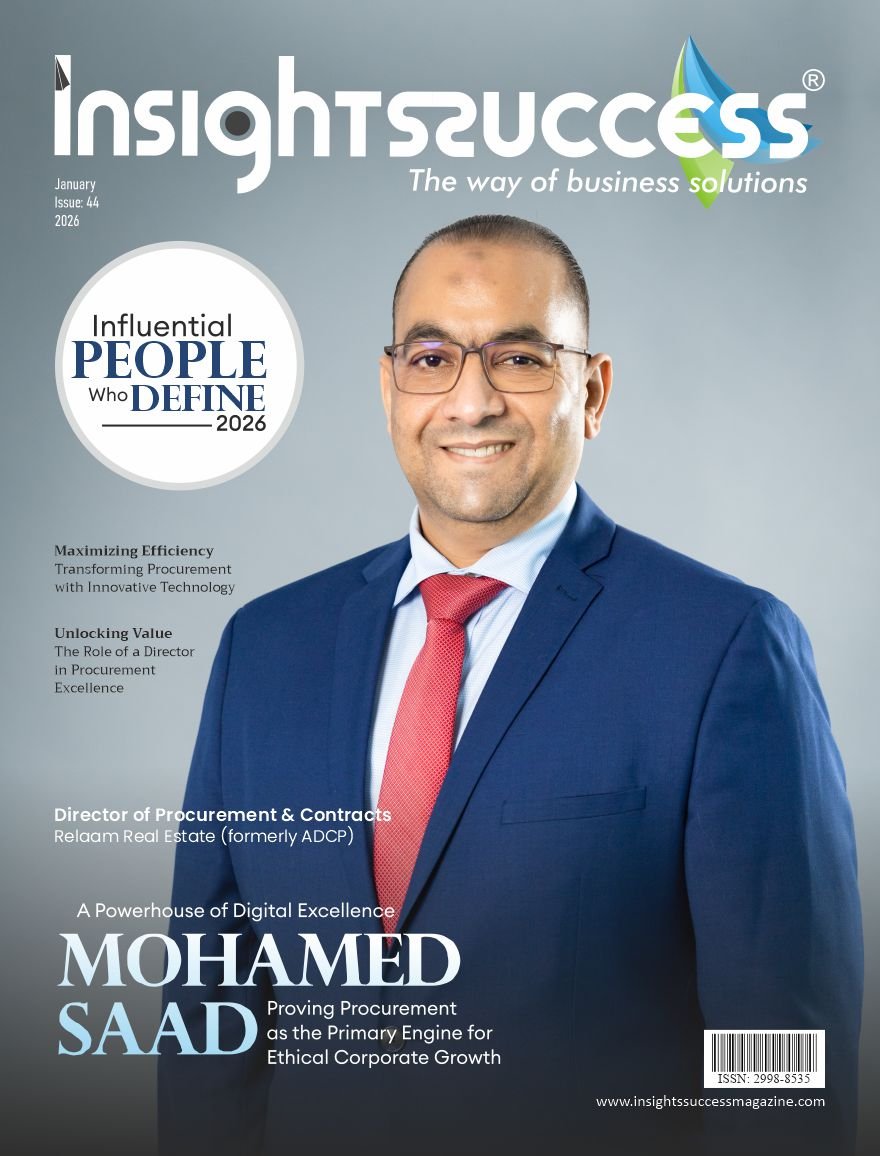
Influential People Who Define 2026
Influential People Who Define 2026 Mohamed Saad exemplifies digital procurement excellence, transforming the function into a strategic engine for ethical corporate growth through data integrity, automation, and predictive technologies. His leadership advances centers of excellence, delivers measurable savings, and positions procurement as a driver of sustainable value and enterprise performance at scale globally today consistently. Digital Link Quick highlights Quick reads

Unlocking Value: The Role of a Director in Procurement Excellence
Procurement has developed from its initial role as a basic operational function to become a core element that increases business value through its strategic applications. Organizations now expect procurement leaders to contribute directly to profitability, resilience, innovation, and sustainability. The Director of Procurement leads this transformation process because his responsibilities include more than just choosing vendors and creating contracts. This position requires strategic thinking abilities with operational management skills and cross departmental leadership capabilities which will help achieve procurement excellence throughout the organization. Procurement excellence is not achieved through cost reduction alone. The process needs established procedures with supplier partnerships and methods to handle risks and ways to track improvement in performance. The Director of Procurement establishes the strategic direction and develops the operational framework which enables his team members to convert procurement into a strategic advantage for the organization. The success of this position directly impacts an organization’s ability to control expenses while reducing supply chain threats and maintaining sustainable value from its supplier partnerships. Strategic Leadership The Director of Procurement develops procurement methods which support the company’s overall business goals. The process needs business objectives which include growth, market expansion, innovation and sustainability to be transformed into supplier selection and sourcing approaches. The director assesses total cost of ownership and value creation possibilities and long-term supplier relationships instead of concentrating exclusively on product pricing. Business objectives drive all category strategies and demand planning and make decisions which use data-driven insights for their implementation. Strategic leadership needs senior stakeholder influence while achieving procurement inclusion in all decision processes. The director establishes partnerships with finance departments, operation teams, technology departments and business unit executives to ensure that procurement methods receive early inclusion during planning processes. The organization benefits from early engagement because it enables better specification development, risk reduction and improved commercial results. The director is a strategic advisor which enables the organization to make better investment decisions and implement effective commercial controls. Operational Excellence Operational excellence in procurement requires three essential elements which include proper processes, governance framework and execution discipline. The Director of Procurement holds the responsibility to create and implement standardized procurement procedures which maintain transparency, compliance and operational efficiency. This document establishes policies for sourcing, supplier selection, contract management and purchase approval processes. In addition, an organization establishes well defined workflows which enable processes to function properly while maintaining essential business functions under emergency situations. The organization achieves operational excellence by fundamentally relying on technology and data resources. The director usually leads the selection process for procurement systems which include e-sourcing tools and contract lifecycle management systems and spend analytics dashboards. These tools create better visibility for users to track their spending behavior and evaluate supplier performance and determine potential risks. Procurement teams use enhanced data to find consolidation possibilities and conduct negotiations from a strong position and monitor achieved cost reductions. The organization uses continuous improvement programs together with performance metrics and process evaluations to maintain the efficiency and flexibility of procurement operations which adapt to the organization’s growth. Supplier Value and Risk Modern procurement leadership now focuses on creating value with suppliers instead of using suppliers as a method to control their operations. The Director of Procurement creates supplier relationship management programs which establish structured systems for handling supplier relationships. The company establishes strategic supplier partnerships through executive involvement and the execution of shared performance assessments which help to enhance business relationships. The method establishes conditions which lead to innovation while increasing service standards and enabling long term capacity development. Companies with strong supplier relationships achieve benefits through access to advanced technology, improved service support and dependable supply chain solutions. The procurement process requires risk management as an essential element for achieving procurement excellence. Supply chain disturbances, regulatory changes, financial turmoil and political unrest lead to significant operational shocks. The director establishes risk assessment structures that analyze the distribution pattern of the suppliers, market penetration, financial stability and regulatory compliance imperatives. To reduce its risks in operations, the organization employs contingency planning that has two sourcing strategies and contract protection measures. Companies have come up to assess suppliers according to how they adhere to environmental and social policies. Conclusion The Director of Procurement has developed into an essential executive who enhances both business results and sustainable value creation. The current position requires leaders to combine their strategic planning abilities with operational excellence, supplier relationship management and risk assessment responsibilities. The director establishes procurement practices that drive business success through better governance and data-based decision-making processes which improve organizational performance in terms of profitability, resilience and innovation. Organizations that invest in strong procurement leadership are better equipped to manage uncertainty, optimize spending, and build high quality supplier ecosystems. The Director of Procurement serves as a main bridge which connects strategic goals to operational activities while balancing cost management with value generation. The need for procurement excellence will grow because of market complexity and supply chain interdependence which require directors to apply both visionary thinking and disciplined leadership skills. Read Also : Maximizing Efficiency: Transforming Procurement with Innovative Technology

Maximizing Efficiency: Transforming Procurement with Innovative Technology
As businesses adopt cutting-edge technologies to improve efficiency, transparency, and strategic value generation, procurement is undergoing a fundamental evolution. Traditionally considered a back-office activity aimed at cost containment and vendor management, procurement is now becoming a pillar of business capabilities directly affecting competitiveness, resilience, and growth. The procurement teams now use digital tools to create integrated systems which combine intelligent capabilities with predictive analytics to replace their existing manual systems and separate data sources. The current situation is being driven by multiple factors which include worldwide supply chain disruption and the challenges of regulatory compliance and the demands of sustainability and the pressures of maintaining profit margins. In addition, businesses are investing in technology solutions that provide real time insight, automation, and collaboration throughout the procurement lifecycle. Innovation is transforming the nature of procurement and its measurement of value, such as supplier discovery, contract management, and data analytics. Digital Platforms and Automation The procurement modernization route is being undertaken by the substitution of legacy and spreadsheet procurement systems with single digital platforms that have been centralized to contain sourcing, purchasing, invoicing, and supplier management. Cloud based procurement suites enable organizations to standardize operations, implement policies, and have a single source of truth across regions and organisations. This kind of integration minimizes errors, decreases the cycle time and increases the auditability besides allowing procurement leaders to have a better understanding of spending patterns. Monotonous jobs like purchase order, invoice matching and approval routing can be addressed by robotizing the process and utilizing intelligent workflow systems. A decrease in manual intervention improves the operation cost of organizations, and liberates the procurement professionals to engage in strategic functions like the development of suppliers and planning of categories. Consistency and risk reduction are also enhanced through automatization of the systems, which ensure the process is governed by predetermined rules and controls. In addition to achieving efficiency, digital platforms improve the relationship among procurement, finance, and business units. Internal stakeholders can choose approved vendors and catalogs using self-service procurement portals which helps to enhance user experience and yet gains governance. Supplier portals allow effective communication, expedited onboarding, and transparent performance monitoring. Data Intelligence and Predictive Insights The current procurement process has reached a state where information functions as its most valuable resource. Advanced analytics tools enable organizations to convert large volumes of procurement and supplier data into actionable business insights. The predictive analytics system enables organizations to track their expenses through transaction classification which includes categories, regions, and suppliers to discover potential savings and demand patterns and areas where they can combine their operations. This evidence-based methodology substitutes intuition with evidence-based decision making. Artificial intelligence and machine learning technologies create better results for procurement intelligence. The technologies use historical and external data to recognize abnormal patterns and assess potential risks and forecast future price and supply variations. Predictive models provide procurement teams with tools to forecast disruptions and develop optimal inventory plans while they negotiate supplier contracts. AI-powered recommendation engines identify alternative vendors and sourcing strategies to address potential risks. Large amounts of contracts can be analyzed using natural language processing tools in order to single out important clauses, obligations, and areas of exposure. This minimizes compliance risk and legal risk as well as expediting the process of contract review. The analytics tools, together with supplier performance data and market intelligence, enable procurement leaders to have a more holistic perspective of value, risk, and opportunity through the supplier ecosystem. Decision makers have an increased access to insights as a result of real time dashboards and visualization tools. Smart Supply Networks Supplier relationship, and network design is also being transformed through innovative technology. Digital supplier networks and marketplaces bring buyers and sellers together on common platforms, making supplier discovery and qualification quicker and more transparent. Such networks usually contain verified supplier profile, certification, performance rating and transaction history, which enable procurement departments to make more informed sourcing choices. The blockchain and distributed ledger technologies are starting to have an effect on the procurement in the sphere that demands high levels of trust and traceability. Such systems have the power to generate resistant records of trade, source of products, and compliance certificate. Blockchain based tracking enhances the transparency of the supply chain, regulatory and sustainability criteria, particularly in the pharmaceuticals, food, and advanced manufacturing industries. Although adoption remains one stage away, there is a great potential of having secure and verifiable procurement records. Technology enabled procurement processes are increasingly becoming involved with sustainability and responsible sourcing. The toolset can be utilized by digital means to evaluate the environmental and social performance of suppliers, monitor emissions information, and determine whether ethical practices are followed. Conclusion Procurement is shifting decisively from a transactional support function to a strategic, technology-enabled business driver. The combination of digital platforms, automation, advanced analytics, and smart supplier networks are all redefining the way organizations source, evaluate and manage value throughout their supply chains. These innovations are also not only enhancing speed and efficiency, but also enhancing transparency, compliance, and controlling risk. With the increased accessibility and structure of procurement data, decision making is moving towards being more reactive than predictive such that enterprises can react more quickly to changes in the market, as well as to operational disruptions. In the future, the companies that will benefit the most are those that consider procurement transformation as a long-term competency development instead of a system upgrade. Read Also : Implementing Trust-Based Investor Relations for Startups

A Powerhouse of Digital Excellence – Mohamed Saad: Proving Procurement as the Primary Engine for Ethical Corporate Growth
The world is the way you see it. Your perspective changes everything. So, you hold the power to change your world with your view. It is the power of perception. Mohamed Saad’s career in procurement began with a fundamental shift in perspective: he refused to view the function as merely a back-office administrative department. Instead, he has dedicated his professional life to establishing procurement as a strategic “powerhouse” and a Center of Excellence (CoE). This transformation is rooted in the belief that achieving digital maturity is the essential bridge between a reactive, cost-saving mentality and a proactive, value-generating strategy. The core idea behind this journey is the ‘Excel Exodus’. During his tenure at E20 Investment, Mohamed formulated comprehensive procurement strategies that reduced operating costs by 18%, proving that transparency in category spending is the first step toward high-impact value creation. This philosophy was further scaled at Yas Holding, where he led the transformation of supply chain operations across 50+ subsidiaries. There, Mohamed defined a global vision to resolve systemic bottlenecks and established best practices in demand forecasting that resulted in a 12% cost savings through strategic negotiation. He shares, “At Relaam Real Estate, we took this vision to its digital peak through a comprehensive transition from manual, fragmented email requests to a cohesive, digitally-driven ecosystem utilizing Yardi Voyager and Elevate.” This was not just about software; it was about establishing a “zero-tolerance” data cleansing policy to ensure our digital ecosystem was built on a foundation of absolute accuracy. By automating the Procure-to-Pay (P2P) cycle, Mohamed ensured his company moved toward a state of predictive procurement, allowing the team to act as “value architects” who anticipate market shifts rather than merely reacting to them. The’ Excel Exodus’ Distinction Mohamed is a distinguished supply chain executive with over 30 years of experience driving organizational profitability through digital transformation. Currently the Director of Procurement & Contracts at Relaam Real Estate (formerly ADCP), he is a pioneer of the ‘Excel Exodus,’ a strategic movement migrating legacy procurement into high-performance, digitally mature ecosystems. Mohamed’s leadership spans critical sectors, including real estate, agribusiness, and oil and gas. As Director of Global Supply Chain at Yas Holding, he managed operations for over 50 subsidiaries, resolving systemic bottlenecks and establishing centers of excellence. During his tenures at E20 Investment and Elite Agro, his strategic category management and vendor requalification initiatives delivered operating expense reductions of up to 18%. A staunch advocate for data integrity, Mohamed’s ‘zero-tolerance’ data cleansing policy at Relaam facilitated a 20.88% negotiated cost reduction in 2025, securing over AED 27.7 million in savings. By leveraging Yardi Voyager and Elevate, he transitioned the procurement function from reactive reporting to a proactive, value-generating powerhouse. Mohamed holds an MBA in Supply Chain Management from the Swiss School of Business & Management and a Postgraduate Diploma in Procurement & Contracts Management. His credentials include CPPM and CISCP certifications, and he was recently named a Top 50 ProcureTech & Supply Chain Leader. Recipient of the ‘Digital Transformation in Procurement’ award at the 2026 Middle East ProcureTech Summit, Mohamed is a UAE Golden Visa holder dedicated to the future of Agentic AI and ESG-compliant sourcing. Originally from Alexandria, Egypt, he is a father of three who balances multi-billion AED portfolios with the core values of family and integrity. A’ Zero-Tolerance’ Data Cleansing Advocacy Also, Mohamed accepts that today, balancing the demands of managing multi-billion AED portfolios with a fulfilling personal life requires more than just time management; it requires a disciplined commitment to systemic efficiency. “Throughout my three decades of experience, particularly during my tenure at Yas Holding, where I oversaw supply chain operations for over 50 subsidiaries, and during my strategic leadership at Relaam, I have refined a strategy centered on the principle of ‘automating the routine to master the strategic.” The primary challenge in high-level procurement is the risk of ‘firefighting’—being consumed by manual, fragmented tasks that lead to professional burnout. To counter this, Mohamed has spearheaded the implementation of automated workflows and real-time Power BI dashboards. By digitizing the Procure-to-Pay (P2P) cycle and enforcing a ‘zero-tolerance’ data cleansing policy, he has established a level of digital transparency that allows the department to run with precision. “This systemic reliability is what provides me with the peace of mind to truly disconnect at the end of the day and focus on my family, including my daughter Maya and my twins (Mazen & Malak), who are a central part of my life.” Professionally, Mohamed manages stress by intentionally transitioning from a ‘process executor’ to a ‘value architect’. Instead of being bogged down by administrative bottlenecks, he utilizes technology like Yardi Voyager and Elevate to handle routine approvals and vendor management. “This shift ensures that my mental energy is reserved for high-impact decisions, such as negotiating 20-25% cost reductions or developing 2026 AI integration roadmaps,” he reveals. Furthermore, Mohamed’s experience at E20 Investment and Elite Agro taught him that transparency in category spending is the key to proactive value creation. By building a Procurement Center of Excellence, he has empowered his teams to meet operational and financial targets with minimal supervision. This culture of empowerment means that the business remains resilient even when he is away, allowing Mohamed to maintain a healthy work-life integration while continuing to deliver measurable results for the organization. Pursuit of Digital Transformation Also, Mohamed’s driving passion is the relentless pursuit of digital transformation and the evolution of procurement into a high-functioning Center of Excellence. He is motivated by the challenge of taking fragmented, manual legacy systems and re-engineering them into ‘intelligent automation’ models that deliver measurable value. “Throughout my career, from Elite Agro to Yas Holding, I have been energized by the process of ‘data enrichment’—the belief that clean, standardized data is the essential foundation for all strategic success.” Mohamed adds that he is deeply passionate about the transition toward Agentic AI and Predictive Analytics. There is a profound professional satisfaction in moving an organization away from the ‘Excel Exodus’ and toward a future “where we
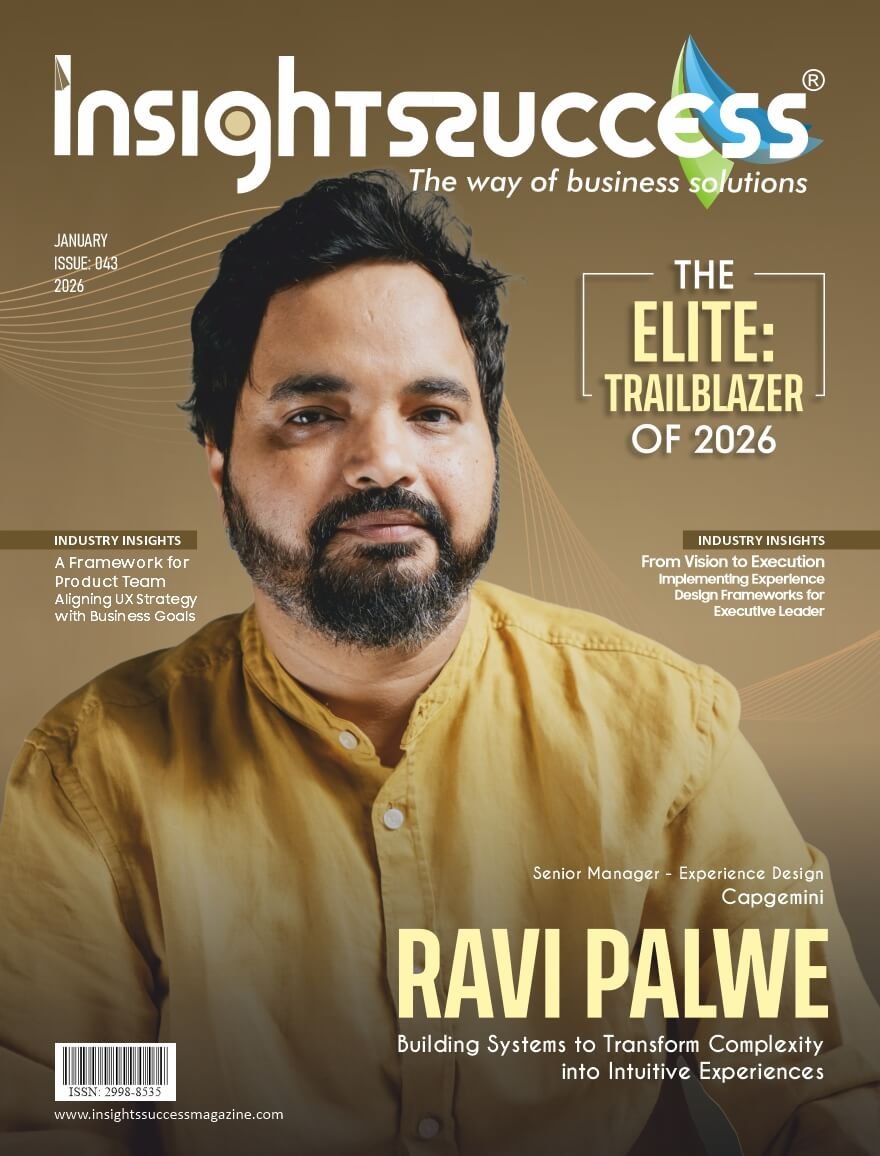
The Elite: Trailblazer of 2026
The Elite: Trailblazer of 2026 This edition is dedicated to Ravi Palwe, an extraordinary leader whose pioneering vision, bold execution, and lasting influence distinguish them among the few—recognized for setting new frontiers, driving transformative progress, and defining excellence at the highest level. Digital Link Quick highlights Quick reads

Implementing Experience Design Frameworks for Executive Leaders
From Vision to Execution Executive leaders need to assess their business performance through more advanced evaluation methods which require both vision statements and financial expertise and operational efficiency assessment. Organizations today assess their leaders based on the total experience which leaders provide to all their stakeholders including employees and customers and partners and community members. Executive leaders use experience design frameworks to establish valuable organizational experiences which they want to implement across their entire organization. Organizations employ organizational experience design frameworks to develop human-centered leadership frameworks which link their organizational strategy with actual employee experiences. Why Experience Design Matters at the Executive Level? Executives lead organizations by combining their understanding of company culture with strategic planning and operational execution. The executives face multiple choices about proper direction which include decisions regarding digital transformation and workforce development and organizational change. Employees experience confusion and disengagement and misalignment when leaders fail to intentionally create workplace experiences. Executive leaders who use experience design frameworks can transform their strategic goals into daily activities which build organizational trust and purpose. This approach also responds to a growing expectation: people want to feel seen and valued, not managed. Customers expect to have unified experiences while employees want to understand their career development and stakeholders seek genuine relationships. Executive experience design offers executives a workable solution to meet their needs while they maintain control over operational results. Implementing Frameworks in Real Leadership Contexts Real-world leadership needs a system implementation framework. Self-awareness marks the beginning of implementation work. Executives need to assess their leadership impact through their communication methods and their decision-making speed and their presence in the workplace. Organizations can implement experience design frameworks for executive leaders through testing in situations that include onboarding senior talent and conducting mergers and implementing companywide transformations. Successful cross-departmental work requires all departments to participate. Experience design reaches its best results when HR operations IT and communications teams operate together following a unified leadership approach. The organization requires both elements which include experience design and its current operational state. Leaders who dedicate themselves to the process of testing and learning through experience will develop trust with their audience. The Key Elements that Form an Executive Experience Design Framework for Executice Leaders The most effective frameworks need to include multiple essential elements which they require. The first component establishes stakeholder journey mapping to create visual representations of stakeholder experiences across different touchpoints throughout all time periods. The second component establishes experience principles as a set of fundamental values which will guide decision-making processes throughout the organization. The third component establishes feedback loops which will use actual experiences to shape upcoming leadership decisions. The executive-experience design process receives its initial framework through governance and accountability, which restricts its development to permanent operations. The organization establishes experience design as a strategic development function through executive participation in every aspect of development work. The organization empowers its leaders to create ownership in experience because they must demonstrate that both their operational methods and their success rates hold equal value. Implementing Frameworks in Real Leadership Contexts The study of actual leadership development requires the use of specific frameworks. Executives must first understand their own leadership impact through their communication style and decision-making speed and organizational presence. Organizations will test experience design frameworks for executive leaders through specific contexts which include onboarding senior talent and leading mergers and enterprise-wide change implementation. Cross-functional collaboration is critical. Experience design thrives when HR, operations, IT, and communications work together under a shared leadership vision. The process of acquiring experience requires two essential components: time and the ability to observe gradual changes. Leaders who commit to iteration testing, learning, and refining, build credibility and long-term trust. Measuring What Matters Without Losing the Human Touch Measurement stands as a primary challenge which executives encounter. Businesses can measure their intangible experiences through engagement scores and retention trends and customer loyalty and qualitative feedback. The key is balance. The data needs to guide leadership decisions while human experience should not be reduced to dashboard displays. Leaders who want to succeed use metrics as signals which show important information. They listen to stories behind the numbers and adjust accordingly. The experience design frameworks for executive leaders depend on this balanced approach which maintains empathy while ensuring academic rigor. The Long-Term Impact on Leadership and Culture When organizations implement experience design frameworks with consistent practice their entire corporate culture undergoes transformation. Employees experience clear understanding of their work while customers move between services without any problems and leaders achieve complete organizational alignment between their goals and actual results. The process establishes organizations that develop strength because their workforce comprehends both their strategic objectives and the methods to implement them through their regular tasks. Experience design has become essential because our current society requires organizations to establish trust while maintaining their ability to change. Executives who choose to lead with empathy and structure can benefit from experience design frameworks which provide them with a comprehensive executive leadership development program that integrates performance assessment with organizational purpose and human-centric business strategies. Read Also : Aligning UX Strategy with Business Goals

Aligning UX Strategy with Business Goals
A Framework for Product Teams User experience (UX) has advanced beyond its previous state as a basic design field because it now functions as an essential business function. The business uses UX design to increase its operational efficiency. Teams create visually appealing products when their UX strategy fails to connect with their business objectives but these products fail to achieve user adoption and retention and revenue growth. The design choices which result from UX alignment with business objectives enable organizations to track their actual performance results. Product teams need established processes to achieve their goals. UX depends on collaboration between product management, engineering, marketing, and commercial strategy teams. A framework which establishes user requirements together with business objectives provides a pathway to unified progress. Start with Business Intent, Not Features The business goals need to be defined clearly before we start the alignment process. The product teams need to understand the organizational objectives which include growth and retention and efficiency and market expansion and cost optimization. The company establishes success criteria through these objectives. The UX strategy needs to transform the business objectives into results which will satisfy user needs. The goal of increasing retention requires UX to concentrate on three areas which include reducing friction and making onboarding processes easier to understand and providing users with ongoing value. The growth objective requires UX to focus on three areas which include making content discoverable and optimizing conversion processes and creating loops to maintain user engagement. The design process needs business context because it helps designers understand which problems they should solve. Define Target Users Through Value Contribution The User personas should create business value through their demographic and behavior descriptions. The user segments which generate revenue and drive adoption and establish strategic positioning need identification. The user segments which create network effects need to be identified. User experience teams need to understand user contributions to business results because it helps them choose design projects that will deliver maximum business value. This approach protects essential paths from being neglected while it prevents organizations from spending too much on less important customer interactions. Map User Journeys to Business Metrics All key user journeys must establish direct links to measurable business outcomes. The onboarding process leads to higher activation rates, which results in increased user activation. The checkout process directly impacts the conversion rate of users who complete purchases. The support experience directly impacts two business metrics, which are customer retention and operational cost efficiency. The practice of mapping journeys to metrics allows teams to identify specific experience enhancements that will deliver measurable business results. The system establishes a foundation for both prioritization and performance assessment. The organization can implement UX strategy when it demonstrates the direct relationship between user experience quality and business performance. Establish Shared Success Metrics The measurement of usability through UX metrics needs to connect with financial business KPIs which include revenue per user and customer lifetime value and churn rate. The product team and UX team and business stakeholders need to establish a balanced scorecard framework. This approach enables design evaluations to assess both aesthetic value and business impact. Integrate UX Early in Product Planning The design process needs to start with UX design because it should establish product direction before any features are selected. Early involvement allows UX insights to shape problem framing, feature prioritization, and solution design. The integration process creates reduced rework while building products that fulfill user needs and business needs from the start. Use Data and Research as Decision Tools The user experience research process identifies both problems users encounter and their needs that remain unfulfilled. The analytics data shows the specific points where users cease their activities and encounter difficulty. The organization uses its business data to identify specific areas where employees fail to meet expected performance standards. The combination of qualitative analysis with quantitative data empowers product teams to create user-friendly improvements that benefit both customers and business operations. Iterate with Feedback Loops The process of alignment requires multiple efforts because it does not exist as a single task. The conditions of the market and the patterns of user behavior and the business needs of the organization all experience continuous development. The UX strategy maintains its current relevance through three types of feedback loops which include user testing and performance analytics and stakeholder reviews. Companies use iterative processes to develop products that maintain their market value and competitive position. Conclusion The process of aligning UX strategy with business goals requires organizations to establish their goals and then proceed to create a system that tracks their progress and develops its understanding through ongoing learning. When product teams operate with this framework, UX becomes a driver of measurable growth rather than a parallel activity. The strongest product organizations treat UX not as decoration, but as strategy—where user value and business value reinforce each other. Read Also : How Financial Institutions Stay Competitive

Ravi Palwe- Building Systems to Transform Complexity into Intuitive Experiences
Society’s change is largely through digital communication, and technology’s interaction is also evolving. Technology, in the past, was only used to provide us with information. Now, we interact with technology, and very often this will make us reflect on our usage of it. But the rapidly changing and complicated digital world may sometimes hinder the recognition of the real advantages of technology. Technologies need to be integrated into our lives if we are to enjoy their benefits. Furthermore, not only these problems but also the fear and confusion regarding technology are common among users. This is caused by the complex layers of the digital world, for example, the development of apps and trying to use them without knowing their purposes. However, as more people become creators in this digital world, they realize and learn from the information and conversations about them. They also find ways to collaborate with technology effectively; thus, it can beautify their surroundings rather than being a dead weight. This profound challenge, translating immense organizational complexity into seamless human experience, is the defining work of an elite group of design leaders. They recognize that design is not an aesthetic concern; it is a strategic instrument for accountability and business success. Especially within highly regulated sectors, such as financial services, where the stakes are high and legacy systems loom large, the ability to instil simplicity and integrity becomes the highest form of innovation. This narrative centers on one such leader: Ravi Palwe, a Senior Manager- Experience Design at Capgemini. He is a seasoned product designer whose career spans more than two decades, dedicated to building design cultures and systems that produce clear, measurable outcomes. He is actively shaping the ethical, inclusive, and accountable future of experience design, positioning usability as the essential strategy for clarity in the age of AI. His story is all about intentionality, where every choice, from the microcopy on a button to the structure of his entire team, is designed to eliminate friction and elevate purpose. The Genesis of Purpose: Leading with the Question ‘Why?’ Ravi’s entry into the domain of product design was catalyzed not by a grand plan, but by a simple, fundamental sense of frustration. He observed a process, a necessary financial task, that required an unacceptable series of eight clicks and three separate screens. That complexity, that moment of user hesitation, became his personal professional compass. He became the voice that consistently asked: “Why is this not easier?” This relentless, foundational curiosity pulled him toward user-centered design, instilling a profound commitment to the principle that when designers remove friction and speak plainly, every key performance indicator, from task completion rate to overall user satisfaction, improves dramatically. Ravi’s pursuit of excellence led him to formalize his knowledge by earning the highly respected HFI-Certified Usability Analyst™ (CUA) credential from Human Factors International. This certification reinforced his core belief that usability is a strategic, measurable asset that directly impacts the bottom line. His academic foundation is robust and diverse, deliberately focusing on the intersection of technical understanding and design strategy. Ravi completed his Master’s in Information Technology from AAIDU, Allahabad, India, in 2004, providing him with a strong technological base. Furthermore, his commitment to continuous learning is evident in his corporate training at UT Austin and his specialized studies, including Design Thinking at IDC IIT Mumbai and UX Management: Strategy and Tactics from the Interaction Design Foundation (IDF). He began his career as an individual contributor, systematically advancing his expertise until he was leading complex, multi-disciplinary design teams. His extensive experience is anchored in navigating regulated environments, notably within financial services. In these high-stakes, high-complexity sectors, he has taken ownership of end-to-end initiatives, requiring him to partner seamlessly with product managers, engineering leads, and data scientists. This rigorous path taught him the non-negotiable value of testing early, communicating decisions transparently, and ensuring that any critique remains constructively centered on improving the work itself, not the people. His central professional objective is unwavering: he strives to make complex systems feel intuitive, simple, and inherently accountable to the user. Architecting Success: A Portfolio of Measurable Outcomes Ravi’s leadership is defined by his insistence on measurable, outcomes-driven design. He consistently focuses the team’s energy on the results of their work, moving beyond merely delivering outputs like mock-ups or prototypes. The Financial Platform Transformation One of Ravi’s most significant achievements involves a financial platform where he led a flow redesign rooted entirely in usability principles. By focusing on fundamental human factors, he produced a massive performance improvement: a remarkable 40% reduction in the average time required to complete a critical user task. He achieved this by implementing principles such as visible system status (clearly showing the user where he is and what is happening), recognition over recall (making options visible instead of forcing the user to remember), and contextual feedback. He further drove product success by leading the redesign of a mobile onboarding experience, which directly resulted in a significant increase in adoption rates. Beyond the customer-facing products, he was instrumental in shipping a crucial internal financial application. This application was designed to act as an intelligence layer, transforming scattered client data into focused, actionable insights. By doing this, he enabled client-facing teams to concentrate their conversations on the most relevant information, dramatically reducing guesswork and increasing their consultative efficiency. The core principle at play here is leveraging design to make data intelligent, not just available. The Mandate of Responsibility: Founding the SOLAR Framework Perhaps the clearest declaration of his professional ethos is his creation of the SOLAR Framework. This is not just another design system; it is an open-source, planet-first initiative that serves as a powerful statement that reflects the belief that sustainability is a team sport. SOLAR integrates usability and performance metrics directly with ethical design patterns, actively working to reduce digital bloat by advocating for efficient code, minimal resources, and high performance. This framework embodies his conviction that design must be mindful of its environmental and social impact. For Ravi, a successful digital product is one that not only functions beautifully for the user but also adheres to a higher standard of sustainability. It is a philosophy that mandates: less guesswork, fewer detours, and more meaningful, sustainable results. Ravi has also launched The One—a powerful new app designed to simplify the way people connect, engage, and take action in the digital world. Available at https://theone.ravipalwe.com/, the app blends smart functionality with an intuitive user experience, making it easy for users to explore features, stay aligned with their goals, and access value instantly. With a clear focus on convenience, speed, and impact, The One is positioned as a next-gen platform built for today’s fast-moving audience. The Conductor of Culture: Leadership through Clarity and Systems Ravi views his primary role as a leader not just as a
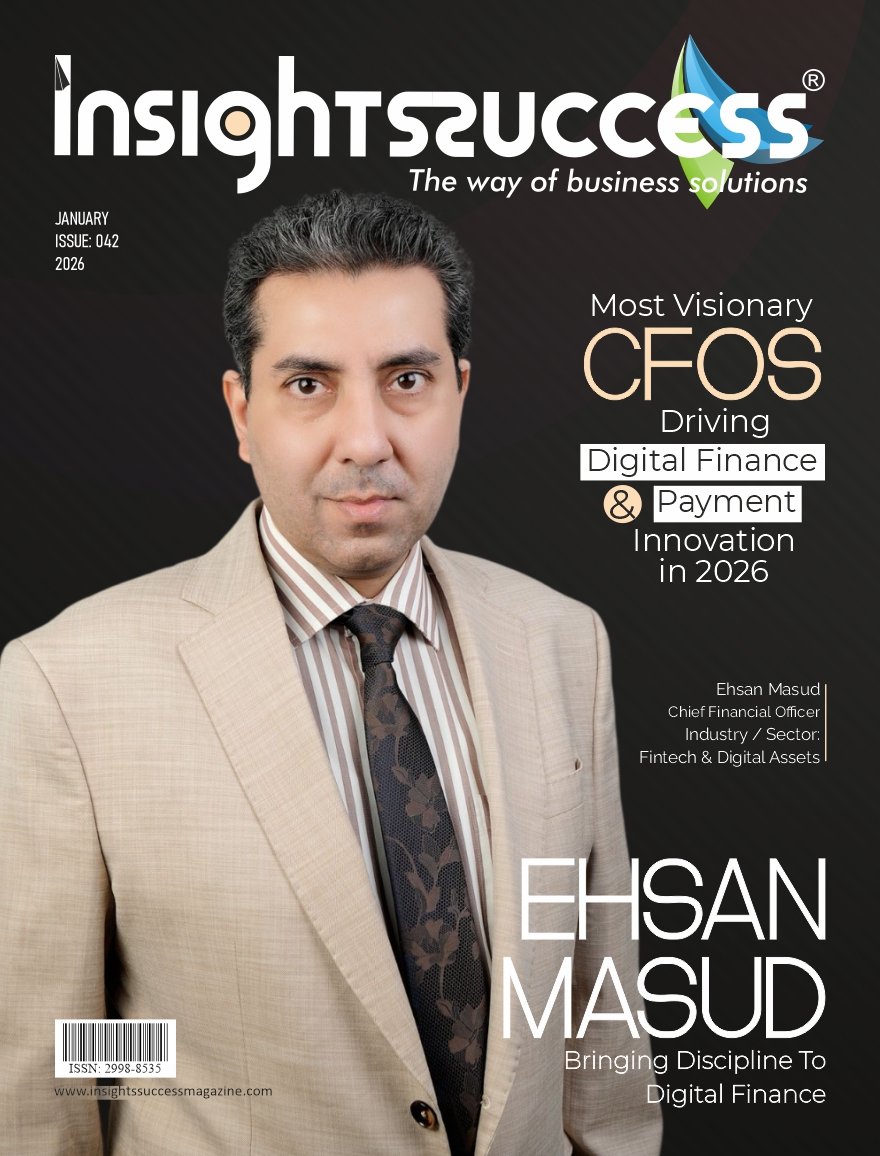
Most Visionary CFOs Driving Digital Finance & Payment Innovation in 2026
Most Visionary CFOs Driving Digital Finance & Payment Innovation in 2026 This edition is dedicated to forward-looking financial leaders who are modernizing fiscal strategy through fintech integration, data-led decision-making, and payment innovation—recognized for strengthening financial resilience, enabling digital ecosystems, and redefining the future of finance. Digital Version Quick highlights Quick reads