





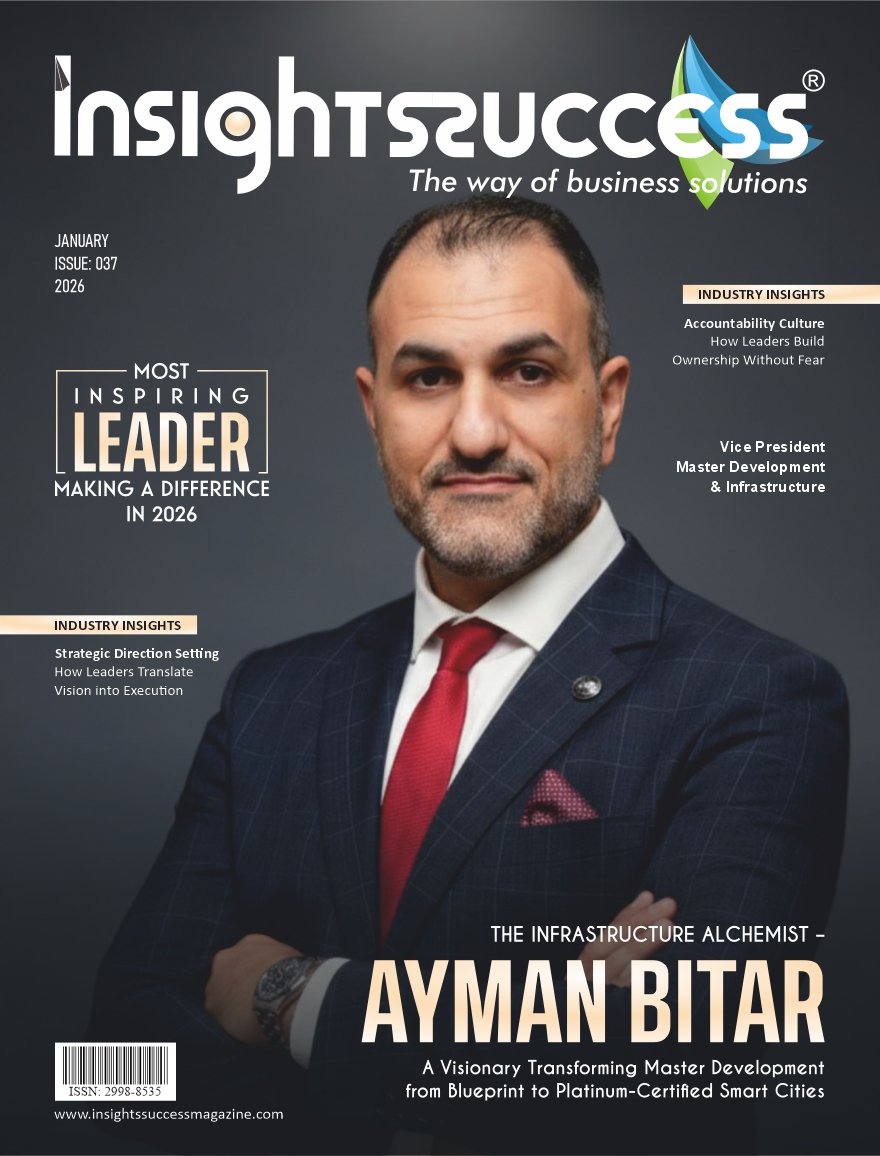
Most Inspiring Leader Making A Difference In 2026
Most Inspiring Leader Making A Difference In 2026 This edition is dedicated to Mr. Ayman Bitar, a remarkable individual whose vision, empathy, and purpose-led leadership are creating meaningful change—recognized for inspiring progress, driving innovation, and delivering lasting impact across industries and communities. Digital Link Quick highlights Quick reads

Abu Dhabi’s Most Admired Leader of the Year
Abu Dhabi’s Most Admired Leader of the Year This edition is dedicated to Dr. Abdulla Altaee, an exceptional visionary whose leadership, integrity, and transformative influence are shaping progress—recognized for driving strategic excellence, inspiring communities, and setting a benchmark for impact across Abu Dhabi and beyond. Digital Link Quick highlights Quick reads

The Real Discipline of Great Leadership
Performance Without Burnout High performance has always been the hallmark of businesses. But high performance that is sustainable is the new standard. In a world that is constantly changing, with ambitious targets set and competition being a continuous factor, a lot of companies still operate under the assumption that their endurance is unlimited and pressure is free. Consequently, the outcome is what can already be expected—burnout, turnover, lower participation, and inconsistency in performance. Great leadership does not mean pushing teams to the brink for the sake of performance. It means achieving results without killing the system that generates them. The situation where performance is equal to burnout is accepted in the business world as no more than a wellness concept. It is an operational discipline instead. It is the capacity to create a workplace where teams will be able to perform with high energy and uniformity throughout the period without non-exhausting being the price of success. Burnout is a Leadership Problem Before It is a People Problem Burnout is frequently considered to be a problem of individual resilience. However, in most cases, it turns out to be a fault in the design of the organization. The majority of burnout situations are not the result of just one hard week. Rather, the whole system’s enduring ordeal causes it: the priorities are not clear, there is a constant sense of urgency, there are weak decisions made, poor delegation, and no recovery time allowed. Once the leaders create such an atmosphere where everything is a priority, the work is always rising, and the employees think that they have to be always present in order to be appreciated, then burnout is bound to happen. The output of the organization may still be there but the performance is now very delicate. The number of mistakes goes up, the experience of the customer goes down, and attracting and keeping talent becomes more difficult. Sustainable performance starts with the leaders who realize that the pressure has to be treated as a resource and thus managed. The Difference Between High Standards and High Stress Numerous executives draw a parallel between sustainability and reduced expectations. This is a wrong idea. Excellent firms preserve their high standards without raising the stress level. They do not yield a lower output. They yield a higher one, that is, the output is more intelligent. High standards refer to quality, accountability, speed, and excellence. High stress is a result of confusion, poor planning, and repeated firefighting. The most powerful teams are not the ones working the longest hours; they are the ones that practice clarity and focus. Leadership discipline is the capacity to ensure standards while eliminating the stress that is not needed. Managers Are the Key to Preventing Burnout Burnout in the majority of companies is usually a localized issue. The direct supervisor determines the balance of burden and resource, the clarity of role, the frequency of feedback, and the emotional safety of the employee. However, even the best organizational strategy becomes useless when managers lack the maturity of leadership. Top leaders invest heavily in the development of managers. They teach managers to coach, delegate, clarify priorities, and establish fair accountability. They minimize micromanagement and maximize empowerment. The teams that feel trusted are performing better and are less affected by emotional strain. Effective management is the practical application of burnout prevention. Psychological Safety Protects Performance Quality Burnout symptoms are amplified in those who experience the work environment as unsafe. Punishments meted out for errors can be very severe, communication can be indirect and heated, and workers may feel that they have to keep their guards up all the time. The result is that mental fatigue adds to the already existing physical fatigue caused by heavy workloads. Being a great leader means you have to create a psychologically safe workplace where the performance of employees is closely monitored and thus, the standards remain high. Team members should be encouraged to raise early the risks involved, be truthful and confess what they don’t know. This is a good way of uncovering problems that would otherwise be hidden and it also lessens the pressure put on employees by anxiety-induced overworking. Trusting relationships at work lead to a situation where workers do not need to spend much effort in fear management and consequently, they are able to invest that effort in achieving results. Conclusion Performance without burnout the greatest discipline of leadership that is great syllable count, it requires maturity, restraint, and systems thinking. It requires leaders who guard the focus, decide quickly, remove the unnecessary friction, set the speed of the organization, and invest in the people and culture. For a while, the performance can be forced. Sustainable performance must be planned. Eventually, the greatest leaders are not the ones who get results by tiring the staff. They are the ones who create institutions where the staff can perform at the peak level consistently—because the system facilitates them, the priorities are clear, and the pressure is intelligently controlled. Read Also : How Respect is Actually Earned

How Respect is Actually Earned
Authority is frequently thought of as a title’s privilege. However, in practice, a title just gives a person a role to fill. It does not, however, assure anyone of influence, trustworthiness, or admiration. In today’s businesses, where employees are highly skilled, mobile across positions, and their areas of expertise are dispersed, the one with the highest rank does not necessarily become the leader. It is rather the trustworthy one who earns the following. Hence, this is the reason why, in practice, authority is different from authority on the document. The most honored leaders are not those who, by their position, demand respect, but those who, through their manner, wisdom, and reliability, get it. Respect is not a one-time gift. It has to be won over and over again. Why Formal Authority is No Longer Enough The present-day work environment is highly characterized by cross-functionality, speed, and dependence on knowledge. A large number of the workers report to one manager only, however, they constantly liaise with other departments. The perception of leaders in a team is not determined by the hierarchy but by their presence in real situations. When leaders depend only on their position for power, they may only get compliance from their followers, but not commitment. The employees might do the minimum required, but they will not show any initiative, honesty, or extra effort. On the other hand, leaders who have gained power through their merits will have followers: people will voluntarily cooperate with them since their guidance appears to be trustworthy and just. This is the main difference that distinguishes leadership power from this perspective. Respect Begins with Competence That’s Visible The first pillar of earned authority is competence. Leaders who are knowledgeable, clear thinkers, and decision-makers who are indeed insightful are the ones who get people’s respect. Competence is not a matter of one’s being the most intelligent person in the room. It is rather being the most effective at all times. Credibility is gained by leaders who are capable of linking strategy and execution, asking the right questions, recognizing trade-offs, and foreseeing risks. When teams realize that a leader’s judgment has a positive effect on the outcome, respect is automatically created. Competence has to be shown time and again before it is accepted as authority; it cannot be just proclaimed. Consistency Builds Trust Faster Than Charisma A lot of leaders mistake being there with leadership. Charisma can attract the eyes, but trust is not a product of such a circumstance. Trust is a result of correlated actions over a period of time. Groups show appreciation for leaders who hold steady expectations, maintain a high level of performance that isn’t influenced by their mood, and make choices that are in line with their proclaimed values. Unpredictable leaders invite doubts. Staff number one starts managing the leader instead of working on the task. Being consistent is the most powerful respect builder as it generates psychological safety. People are aware of what to expect, how to act, and what constitutes success. That kind of predictability turns into stability—and eventually, stability earns respect. Respect is Earned Through Fairness Under Pressure Leaders’ behaviors in tough situations are the ones that reveal their real power. In easy conditions, anyone can look polite and cooperate. The real test is who is who in a crisis, conflict, or high-stakes decision-making situation. Leaders get respect when they are fair under stress. They do not throw people at the lions to save their image. They do not have their favorites. They do not let the blame flow down. They keep accountability tight but without degrading. Justice in tough times shows the leader is mature. It communicates to the teams that the standards are real, not political, and that loyalty is not a fool’s gamble. Strong Leaders Don’t Demand Respect—They Practice It Respect is a two-way street. Those in power demanding respect have to show it first. Among other things, this means really listening, recognizing competence, being truthful about who deserves the credit, and dealing with dissent with professionalism rather than ego. Power-hungry leaders in their own right make it possible for the team to communicate freely, without the threat of punishment hanging over their heads. When the top management takes respect as a value, the employees, in turn, will behave accordingly. Teamwork gets better, arguments turn into learning sessions, and the whole workflow is streamlined. Respect is no longer an individual thing but rather a culture. Conclusion Authority in action is not something that happens by a mere act of will. It is a matter of practice. Authority is developed by showing one’s capabilities, adhering to a set of rules, handling difficult situations with poise, treating others with dignity, and accepting one’s own mistakes. In the case of present-day companies, respect comes not from the rank but from the trustworthiness of the person occupying that rank. The ones who are aware of this do not go after power by means of domineering. Instead, they win power by being trustworthy. For ultimately, the most powerful authority is not that which people are compelled to obey. It is that which they decide to obey. Read Also : Why Credibility Outperforms Charisma

The Financial Steward – Dr. Abdulla Altaee: Leading the UAE Banking Sector into the AI-Ready, Open Finance Era
What makes some of the most admired business leaders like Dr. Abdulla Altaee admirable? More than anything else, it is their inherent philosophy developed by them, which feels innate as if it was always inbuilt in their personality and has been a part of their character forever. The same is the case with Dr. Altaee. His philosophy was shaped on the front lines of banking and operations—early branch and back office roles. Afterwards, FX settlements and payments taught him that governance only works when it is simple, auditable, and built into daily workflows. Leading reconciliation and internal controls at NBAD, then centralizing services across the region, reinforced “control by design,” clean data lineage, and timely management information. Oversight of major transformations—most notably Temenos T24 delivery and the migration from 39 legacy systems, plus the NBAD–FGB integration—instilled program rigor and staged cutovers. Serving on the UAE Central Bank UBF and SWIFT forums anchored proportional, standards-based compliance. Most importantly, managing large, diverse teams showed that clarity of ownership and predictable cadences outperform heroics. At United Arab Bank (UAB), this translates into simple but strong controls embedded in to the processes and systems, risk-led transformation with pre-mortems and leading indicators, a single enterprise PMO book of work, reconciliation by design and STP, business-owned technology, and a coaching culture that links performance to customer outcomes and control health. The Future-Ready Blueprint: Reliable, Fast, and Trusted The financial landscape is evolving at the blink of an eye. Dr. Altaee feels that in such a scenario, a resilient, future-ready bank is reliable in every cycle, fast in change, and trusted by customers and regulators. It pairs strong balance sheet discipline with operational resilience engineered into everyday work. In practice, this means building resilience by design: implementing straight-through processing (STP), reconciliation-by-design, and embedding cyber and recovery controls directly into runbooks and tested playbooks. Regulatory confidence is earned through proactive engagement and evidence of effectiveness of controls. The bank must embrace modern, modular technology—clean data lineage and APIs—to enable rapid, safe change. Above all, reliability must be customer-centric, evidenced by predictable Turnaround Times (TATs) and transparency on service levels for payments, trade, and onboarding. At United Arab Bank (UAB), this vision is codified into a guiding set of principles for the leadership team: Governance as an enabler, Risk-led transformation (where every initiative starts with a risk narrative and pre-mortem), and a Data-first approach that mandates golden sources and real-time action-driving Management Information (MI). Crucially, the strategy includes Business-owned technology, where OKRs (Objectives and Key Results) are tied directly to customer outcomes and control health, not just technical delivery, all supported by a transparent, predictable operating rhythm. The Transformation Inflection: From Legacy to Open Platform UAB is executing a multi-year transformation to modernize its core systems and pivot to solution-led growth. Dr. Altaee identifies several pivotal inflection points that have reshaped the bank: The first was Core modernization and open-platform shift. By upgrading its core and corporate channels to API-ready architecture, UAB achieved faster product launches, stronger service reliability, and readiness to integrate innovation via platforms like Finastra, Newgen, Apzillon, etc. The second was embracing Cloud-first enterprise digitization through the adoption of RISE with SAP on AWS. This move significantly lowered run risk, improved operating leverage, and established a crucial foundation for “green ledger” analytics and paperless workflows. The third was a complete Customer experience redesign, overhauling mobile and UX to align digital journeys with modern expectations—a shift designed for speed, transparency, and self-service. Further, the bank-initiated Solution-led product expansion, including the Reverse Factoring program. This strategy deepens corporate relationships, improves working-capital relevance, and diversifies fee income beyond traditional lending. These disciplined changes, managed under an EPMO-managed portfolio, have positioned UAB with scalable infrastructure to adapt to the fast-changing technological landscape, progressing towards embracing Open Finance, Instant cross-border payments, and China inter-bank payment systems—all aligned with a resolute customer-centric strategy. The Innovation Playbook: Prudence by Design Dr. Altaee believes that for a Licensed Financial Institution (LFI) navigating the peak of digital disruption in the UAE, balancing rapid innovation with uncompromising regulatory obligation is vital. His strategy is formalized into a practical playbook based on prudence by design, ensuring control is built into daily workflows, not bolted on afterward. This approach mandates setting a clear risk appetite for innovation upfront, defining “safe to try” experiments with pre-approved guardrails for data usage. Crucially, Dr. Altaee enforces compliance “by design”: embedding legal and risk teams into discovery sprints and utilizing policy-as-code checks in CI/CD pipelines to ensure releases fail automatically if they breach standards. Innovation progresses only via Tiered Pathways to Production: starting with synthetic data in a sandbox, moving to internal pilots, then limited-market canaries with hard limits and kill switches, before achieving scaled rollout. This methodology ensures decisions are reversible and have a small blast radius, favoring feature flags and shadow mode deployments. Furthermore, it requires robust model and AI governance, mandating model cards, fairness tests, and explainability thresholds, while separating ownership: Product owns outcomes, Model Risk owns validation, and Tech owns controls. Regulators are engaged early and often, treated as design partners on emerging topics like AI explainability. All go/no-go decisions follow a strict rubric validating Value, Control readiness, Operational resilience, Explainability, and Ethics (Bias and harm assessments). He stresses avoiding the common failures of “compliance at the end” and shadow AI usage. The North Star: Cultivating a Culture of Accountability To build a robust culture of accountability imperative for a regulated LFI, Dr. Altaee focuses on transforming organizational behavior through clarity and consequence. His strategy anchors on a clear “north star” – a concise code of conduct and risk appetite statement published to translate values into day-to-day choices, tied to customer outcomes and organizational value. He makes accountability specific and owned: defining RACI for every critical process and assigning one named owner per metric, model, or risk. The focus shifts from “policing” to “designing for right” by embedding compliance directly in product squads and relying on automated checks and pre-approved patterns. Decision forums are strengthened with clear

10 Tips for Used Pallets
Used pallets are everywhere—from warehouses and factories to small shops and construction sites. They are often overlooked, yet they can be incredibly valuable when chosen and used correctly. Whether you plan to reuse them for storage, shipping, DIY projects, or resale, knowing what to look for can save you time, money, and frustration. If you’re sourcing pallets from local suppliers or platforms like Verdetrader.com, understanding these tips will help you make better decisions from the start. Below are ten practical and easy-to-follow tips to help you get the most value from used pallets. Know Why You Need the Pallets Before picking up any used pallets, be clear about their purpose. Are you using them for shipping heavy goods, storing materials, or building furniture? Pallets meant for decoration do not need the same strength as pallets used for industrial transport. Defining your goal helps you avoid paying for pallets that are stronger—or weaker—than necessary. Check the Overall Condition Carefully Always inspect used pallets closely. Look for broken boards, large cracks, or missing pieces. Minor wear is normal, but serious damage can reduce load capacity and safety. Flip the pallet over and check both the top and bottom decks to ensure they are still solid. Understand Pallet Markings and Stamps Most pallets have stamps that tell you how the wood was treated. Look for markings like “HT” (heat treated), which means the pallet was treated using heat and is generally safer for reuse. Avoid pallets marked with chemical treatments if you plan to use them indoors or for furniture projects. Choose the Right Size and Style Used pallets come in different sizes and designs. Some are two-way pallets, while others are four-way entry pallets. Make sure the pallet size matches your storage space, racking system, or shipping needs. Using the wrong size can lead to wasted space and handling problems. Check for Cleanliness and Odors Smell the pallet and look for stains. Pallets previously used to transport food or chemicals may absorb odors or spills. If the pallet has a strong smell or visible contamination, it may not be suitable for reuse—especially for indoor projects or storage of sensitive goods. Test Strength Before Heavy Use Even if a used pallet looks fine, its strength may be reduced due to past use. If possible, test it with a moderate load before using it for heavy items. This helps prevent accidents and damaged goods. For business use, consistency in strength is especially important. Sort and Stack Pallets Properly Once you collect used pallets, sort them by size and condition. Stack similar pallets together and store them on flat ground. Proper stacking prevents warping and makes it easier to find the right pallet when needed. Keeping them organized also improves safety in your workspace. Repair Instead of Discarding Many used pallets can be repaired easily. Replacing a broken board or reinforcing weak sections can extend the pallet’s life. Basic tools and spare wood are often enough to make a pallet usable again. Repairing pallets is usually cheaper than buying new ones and supports sustainable practices. Consider Environmental Benefits Reusing pallets reduces waste and helps conserve natural resources. Each reused pallet means fewer trees are cut down and less wood ends up in landfills. If sustainability matters to you or your business, used pallets are a smart and responsible choice that also lowers costs. Buy from Reliable Sources Not all used pallets are equal. Try to source pallets from trusted suppliers who sort and grade them properly. Reliable sellers usually offer consistent quality, fair pricing, and clear information about pallet condition. This reduces surprises and ensures better long-term value. Conclusion Used pallets can be a cost-effective and eco-friendly solution when chosen wisely. By understanding your needs, inspecting pallets carefully, and handling them properly, you can avoid common mistakes and get more value from every pallet you use. With a little attention and planning, used pallets can serve your projects or business reliably while also supporting sustainable practices. Read More : 8 Considerations That Impact Fuel Delivery Efficiency for Industries

8 Considerations That Impact Fuel Delivery Efficiency for Industries
Fuel delivery is a critical component for industrial operations, affecting productivity, operational costs, and equipment performance. Inefficiencies in fuel supply can lead to downtime, scheduling disruptions, and increased expenses. Understanding the factors that influence delivery efficiency allows businesses to optimize processes and guarantee reliable energy access. From scheduling practices to storage infrastructure, multiple considerations determine how smoothly fuel reaches its destination. Industries that anticipate these variables can reduce waste, prevent delays, and maintain consistent operations. Delivery Scheduling and Frequency Proper planning of delivery schedules guarantees that fuel is available when needed without excessive storage or frequent trips. Timing deliveries to match usage patterns minimizes inventory gaps and reduces unnecessary handling. Businesses that monitor fuel consumption trends can plan deliveries before demand peaks, avoiding shortages or emergency shipments. Utilizing fuel oil delivery services with predictable scheduling helps prevent interruptions and maintain operational continuity. Coordination between suppliers and facility managers is important to guarantee deliveries occur efficiently, in sectors with high fuel turnover or variable demand. Establishing clear communication channels with suppliers allows for adjustments in case of unexpected changes in demand. Keeping a buffer stock can provide flexibility during unforeseen delays or disruptions. Regularly reviewing consumption data helps identify patterns and optimize delivery frequency. Implementing automated alerts for low fuel levels guarantees timely reordering and reduces the risk of downtime. Consistent scheduling practices support cost efficiency, safety, and smooth operations across all facilities. Storage Tank Capacity and Location The size and placement of fuel storage tanks impact delivery efficiency. Tanks that are too small may require frequent deliveries, increasing transportation costs and scheduling complexity. Conversely, oversized tanks can tie up capital and create maintenance challenges. Strategically positioning tanks near operational areas reduces handling time and simplifies distribution to equipment. Proper tank maintenance, including monitoring levels and inspecting for leaks or corrosion, improves both safety and delivery reliability. Transportation Logistics Transportation plays a significant role in fuel delivery efficiency. Factors such as vehicle capacity, routing, and traffic patterns influence how quickly and effectively fuel reaches industrial sites. Optimized routing reduces travel time and fuel consumption, and larger-capacity vehicles allow bulk deliveries that lower trips. Industries should work with suppliers who maintain a fleet capable of meeting both volume and timing requirements. Proper vehicle maintenance guarantees reliability and prevents delays caused by mechanical issues. Coordinating delivery windows with site availability guarantees that unloading can occur safely and without congestion. Using GPS tracking and route planning software helps anticipate delays and adjust schedules in real time. Training drivers on safety protocols and efficient handling reduces the risk of accidents or spills during transport. Factoring in seasonal or weather-related conditions improves reliability and minimizes disruptions. Consistent evaluation of logistics processes supports timely, cost-effective, and safe fuel delivery operations. Seasonal and Weather Considerations Weather conditions and seasonal changes affect both delivery timing and fuel performance. Cold temperatures may thicken fuel, slowing pumping and requiring additional handling precautions. Storms, snow, or flooding can impede transportation, causing delays or rerouting. Planning deliveries with weather forecasts in mind helps minimize disruptions. Storing fuel in temperature-controlled or insulated tanks preserves quality, ensuring equipment operates efficiently once the fuel is delivered. Adjusting delivery schedules during extreme weather reduces risk to personnel and equipment. Using additives or fuel treatments can improve performance in varying temperatures and prevent gelling in cold climates. Clear communication with drivers about weather-related hazards guarantees safety and timely decision-making. Maintaining contingency plans, such as backup suppliers or alternative routes, helps avoid interruptions. Regularly reviewing seasonal patterns allows for proactive planning and a reliable fuel supply throughout the year. Regulatory Compliance and Safety Requirements Compliance with regulations governing fuel storage, handling, and transport is important for both efficiency and safety. Adhering to legal standards prevents delays, fines, or legal action that can disrupt operations. Safety measures, such as secure tank covers, proper labeling, and emergency response protocols, reduce the risk of spills or accidents. Staff training on handling and emergency procedures contributes to a smoother delivery process. When both supplier and facility follow regulations, fuel deliveries proceed without interruptions caused by inspections or compliance issues. Regular audits and inspections guarantee ongoing adherence to local, state, and federal regulations. Keeping accurate records of deliveries, usage, and maintenance supports transparency and accountability. Updating staff on changes in safety standards or legal requirements maintains a culture of compliance. Implementing risk assessments helps identify potential hazards and prevent accidents before they occur. Prioritizing regulatory compliance grows safe, reliable, and efficient fuel delivery operations across all facilities. Fuel Quality and Contamination Control Fuel quality directly affects industrial equipment performance and operational efficiency. Contaminated or degraded fuel can clog machinery, reduce efficiency, and increase maintenance needs. Monitoring storage conditions, using filtration systems, and rotating stock help maintain quality. Regular testing and inspection of delivered fuel confirm it meets required specifications. Industries that prioritize fuel integrity reduce downtime and improve equipment longevity, supporting efficient operations. Supplier Reliability and Communication The reliability of fuel suppliers impacts delivery efficiency significantly. Dependable suppliers maintain consistent schedules, communicate changes, and respond quickly to issues. Businesses should evaluate suppliers based on on-time delivery rates, responsiveness, and flexibility in adjusting volumes or timing. Clear communication between suppliers and industrial facilities guarantees expectations are aligned and problems are resolved quickly. Industries benefit when both parties proactively coordinate to handle unusual demand or unexpected circumstances. Technology and Monitoring Systems Modern technology can streamline fuel delivery and inventory management. Automated monitoring systems provide real-time data on tank levels, consumption rates, and delivery needs. Implementing software solutions helps facilities anticipate shortages, schedule deliveries efficiently, and track supplier performance. Technology allows for predictive maintenance, reducing downtime caused by fuel-related equipment issues. Integrating monitoring tools improves visibility and supports better decision-making, making delivery operations more reliable. Key Practices to Improve Fuel Delivery Efficiency Industries can adopt a few practical measures to maintain smooth fuel operations: Monitor tank levels regularly to plan deliveries proactively Choose suppliers with strong reliability and communication records Optimize delivery routes to reduce transport time and cost Implement quality checks to prevent fuel contamination

When Agile is the Right Choice for Your Company
Agile can unlock speed, clarity, and better teamwork. But it is not a cure-all. The right choice depends on how your teams work, what your customers need, and how fast your market shifts. This guide helps you test fit before you commit. You will learn when Agile shines, when it struggles, and how to roll it out with fewer headaches. Start With Your Problem, Not The Process Many teams jump to Agile because it is popular. A better move is to define the problem you are trying to solve. Are delays caused by unclear requirements, slow approvals, or constant scope changes? If your pain points point to learning fast and adapting often, Agile may be a match. If your work is stable and predictable, a lighter approach could work. Map your core problems first, then decide if Agile will address them. Look For High Change And Uncertainty Agile thrives where learning is ongoing. If customer needs evolve every few weeks, you need short cycles, frequent feedback, and tight collaboration. Agile’s loops help you steer as you go. In many companies, daily team touchpoints sharpen focus. Your team can improve these touchpoints with a practical guide to daily standups, ensuring updates are fast and useful. These small rhythm changes add up, boosting visibility and speeding decisions. When the future is fuzzy, shorter plans and faster feedback beat long schedules. Agile is a fit when prototypes reveal unknowns. Early tests with real users reduce risk. You trade some upfront certainty for frequent checkpoints that keep you aligned. Match Agile To Your Delivery Risk Not all work carries the same risk. If you ship software that can be updated in hours, Agile cycles fit. If you deliver hardware that cannot change after launch, your risk profile is different. High-risk features benefit from slicing work into thin, testable pieces. Each piece delivers value and derisks the next step. This pattern reduces the chance of big surprises. For low-risk, repeatable tasks, heavy Agile ceremonies can add overhead. In those cases, focus on flow, simple check-ins, and visible work queues. Keep it light where risk is low. Set risk-based safeguards like go/no-go checks, rollback plans, and explicit kill criteria. For regulated or irreversible releases, pair Agile delivery with formal verification and sign-offs so you don’t trade speed for safety. Make the policy visible. If risk rises, you slow down. If risk drops, you streamline. Check Team Readiness And Capability Agile is powered by people, not tools. Teams need clear roles, working agreements, and shared norms. They need support to say no to unplanned work and protect focus time. A recent peer-reviewed study noted that Agile success hinges on how well teams work remotely and how capable they are at collaboration and delivery. When communication is smooth and skills match the challenge, Agile practices are far more effective. If your team is new to Agile, start small. Pick one product area, define crisp goals, and run a few short cycles. Let the team practice planning, demoing, and reflecting before scaling up. Assess Your Environment And Constraints Your operating environment can help or hinder Agile. Strong executive backing, quick access to customers, and flexible governance make a big difference. Slow approvals and rigid budgeting can stall momentum. Use this quick scan to spot enablers and blockers: Decision speed: Can teams get answers in hours, not weeks Customer access: Can you demo to real users regularly Funding flexibility: Can budgets follow learning and results If constraints are heavy, you can still apply Agile ideas. Start with shorter plans, visualized work, and clear priorities. Improve what you can control while you lobby for policy changes. Compare Agile, Waterfall, And Hybrid Fit Waterfall excels when the scope is stable and compliance is strict. Think construction, regulated hardware, or projects with fixed designs. The plan is set early, and change is costly. Agile excels when the outcome is known, but the path is unknown. You learn by shipping in slices and adjusting based on feedback. It turns discovery into part of delivery. Many organizations blend methods. Use Agile for user-facing features that need discovery. Use a staged approach for integrations, contracts, or audits. Hybrid setups can balance speed with control. Align Agile With Measurable Outcomes Agile is not about ceremonies. It is about outcomes. Define the few metrics that prove value and guide tradeoffs. Keep them visible and simple. Common outcomes include cycle time, release frequency, quality signals, and customer adoption. Choose a small set that ties to business results, such as retention or revenue per user. Review them in every planning and review. When metrics slip, improve the system, not just the people. Shorten the feedback loop, reduce work in progress, and limit handoffs. Better flow often lifts results. Right-Size The Practices And Cadence One size does not fit all. Some teams need two-week sprints. Others prefer continuous flow with weekly planning. Tailor your cadence to the work and the team’s attention span. Keep ceremonies tight and purposeful. Daily check-ins should be fast and focused on flow, blockers, and alignment. Reviews should show working outcomes, not slides. Retrospectives should leave with owners and next steps. Document only what helps you move faster. Visible boards, clear definitions of done, and lightweight specs are usually enough. Remove anything that does not help the team deliver. Plan For Remote And Hybrid Collaboration Distributed teams can do Agile well with the right norms. Clear handoffs, shared boards, and camera-on moments help maintain trust. Written updates reduce noise and keep context. Time zone gaps need explicit rules. Use core overlap hours for planning, reviews, and pairing. Asynchronous updates cover the rest. Make artifacts self-serve so people can catch up without meetings. A recent study highlighted that remote work and team capability interact to shape Agile results. Companies that invest in team skills and remote practices tend to see stronger performance in Agile settings. Agile works best when it matches your reality. Choose it when uncertainty is high, feedback is rich, and teams can act on

CRDB Bank Opens Dubai Office to Channel Gulf Capital into Africa’s $3.4 Trillion Economy
Dubai, UAE, 20th January 2026 – Africa–UAE economic relations reached a defining moment today with the official launch of the CRDB Bank Dubai Representative Office at the Dubai International Financial Centre (DIFC), marking the first time a Tanzanian bank has established a presence within one of the world’s most influential financial hubs. The milestone positions Tanzania, together with the East and Central Africa region, directly within the global capital ecosystem, using a home-grown African financial institution as the bridge between regional opportunity and international finance. The launch brought together senior leaders from international financial institutions, global investors, multinational corporates and development finance partners, reflecting growing global interest in Africa as the world’s next major growth frontier. The ceremony was officiated by Ambassador Mahmoud Thabit Kombo, Minister for Foreign Affairs and East African Cooperation, who delivered a keynote address on behalf of Samia Suluhu Hassan, President of the United Republic of Tanzania. Speaking on behalf of the President, Minister Kombo commended CRDB Bank for advancing Tanzania’s national economic vision through a strong domestic institution capable of operating at global standards. He said the choice of Dubai was strategic, citing its role as a leading global capital hub and the strong regulatory framework of DIFC. “The presence of a Tanzanian bank in Dubai will deepen economic, trade and investment relations between Tanzania and the United Arab Emirates, building on bilateral trade that has already reached approximately USD 2.5 billion annually, while strengthening Tanzania’s linkages with global markets,” Minister Kombo Said. Tanzania, with more than 60 million people, has sustained average GDP growth of 6–7 percent for over two decades, maintained single-digit inflation and preserved macroeconomic stability even during periods of global disruption. This stability has enabled Tanzania to evolve into a natural gateway economy, linking the Indian Ocean to landlocked markets across East and Central Africa. It is this gateway role that CRDB Bank has been built to serve. Founded 30 years ago, the Bank has grown alongside Tanzania’s economy and regional integration agenda. Today, the Group serves over six million customers across the region, with a balance sheet exceeding USD 9 billion. Its footprint in Tanzania, Burundi and the Democratic Republic of Congo mirrors the region’s most important trade, logistics and investment corridors. In his remarks, Abdulmajid Nsekela, Group CEO of CRDB Bank, said the expansion into Dubai represents the logical next step in a regional strategy rooted in Tanzania’s economic geography and Africa’s integration agenda. “CRDB Bank was built to finance Tanzania’s growth. As Tanzania became a gateway, the Bank became regional,” he said. “Dubai now allows us to complete the triangle—linking global capital, Tanzania, and East and Central Africa through one trusted African institution.” East and Central Africa together represent a market of nearly 400 million people, defined by rising intra-African trade, expanding infrastructure networks, vast mineral and energy resources, and one of the youngest labour forces in the world. Africa as a whole is home to 1.4 billion people, generates over USD 3.4 trillion in GDP, and is projected to account for a quarter of the global population by 2050. Despite this scale, access to long-term, structured capital remains a persistent constraint. The CRDB Bank Dubai Representative Office has been designed to address this gap by originating deals, structuring financing and mobilizing global capital for African projects that require both local understanding and international standards. “Africa does not lack opportunity,” Mr. Nsekela noted. “What it often lacks is a bridge between capital and execution. This office is that bridge.” By establishing a Tanzanian banking presence at DIFC, CRDB Bank is expected to deepen trade finance, cross-border investment structuring and syndicated financing between the Gulf and Africa, using Tanzania as the anchor and East and Central Africa as the growth hinterland. The office also strengthens Africa’s engagement with Islamic finance, a global market exceeding USD 4 trillion in assets. Neema Mori, Chairperson of the CRDB Bank Board of Directors, said the milestone reflects growing confidence in African institutions to operate at the highest global level. “This is a statement about governance, capability and trust,” she said. “CRDB Bank’s presence in Dubai demonstrates that African banks can anchor global partnerships while remaining firmly aligned with Africa’s development priorities.” Leadership from the Dubai Financial Services Authority welcomed CRDB Bank into the DIFC ecosystem, noting that an African bank with deep regional roots strengthens the Africa–Middle East financial corridor and improves the flow of long-term capital into emerging markets. Disclaimer – This article is a work of original content created for public relations and informational purposes only. It may be published across multiple digital platforms with the full knowledge and consent of the author/publisher. All images, logos, and referenced names are the property of their respective owners and used here solely for illustrative or informational purposes. Unauthorized reproduction, distribution, or modification of this article without prior written permission from the original publisher is strictly prohibited. Any resemblance to other content is purely coincidental or used under fair use policy with proper attribution. Read Also : When Leadership Returns to Humanity: A Quiet Blueprint for the Future

Intel Stock Soars to Four-Year High as Investor Confidence Rises
Prime Highlights: Intel’s stock jumped 11% on Wednesday, reaching its highest level since January 2022. Strong demand for Intel’s server chips and data center strategy is boosting investor confidence. Key Facts: Intel shares have risen over 140% in the past year, marking a remarkable rally. The company’s 18A manufacturing technology, comparable to TSMC’s 2-nanometer process, strengthens its competitive position. Background: Intel’s stock jumped 11% on Wednesday, reaching its highest level since January 2022, after rising more than 140% over the past year. The surge comes ahead of Intel’s quarterly earnings report, scheduled after market close on Thursday, as investors grow increasingly optimistic about the company’s prospects. Much of the optimism stems from strong demand for Intel’s latest server chips, which analysts say are benefiting from increased spending on artificial intelligence infrastructure. KeyBanc analysts recently upgraded the stock, noting that Intel may already be sold out of server CPUs for this year, suggesting potential for higher prices. “We expect significant data center demand from major cloud providers this year to provide a strong boost to Intel’s data center business,” the analysts wrote, setting a price target of $60. The stock closed above $54 on Wednesday. Intel’s foundry business is also drawing attention, with recent signs suggesting the company could begin securing orders and position itself as the world’s second-largest chip foundry, behind Taiwan Semiconductor Manufacturing Co. and ahead of Samsung. Investment from key backers has added to the positive sentiment. The U.S. government, which made an $8.9 billion investment last year, is now Intel’s largest shareholder, while Nvidia holds a significant stake following a $5 billion investment. Intel and Nvidia have agreed to collaborate, integrating Intel’s CPUs with Nvidia’s AI chips in Nvidia systems. Since CEO Lip-Bu Tan took charge in March, the company has undertaken cost-cutting measures, job reductions, and leadership restructuring to improve efficiency. Analysts forecast a 6% decline in year-over-year revenue for Intel’s fourth quarter to $13.4 billion but expect data center and AI-related sales to surge nearly 29% to $4.4 billion. Other semiconductor companies also saw gains, with Advanced Micro Devices rising about 8% and Micron Technology climbing 7% on Wednesday. Intel’s stock gains show increasing investor confidence in its data center strategy, setting the stage for strong performance in the coming quarters. Read Also: Renault Group Reports 3.2% Global Sales Growth in 2025 on Strong Overseas Demand