











India’s School Electrification Sees Major Leap, Reaching 91.8% Access in a Decade
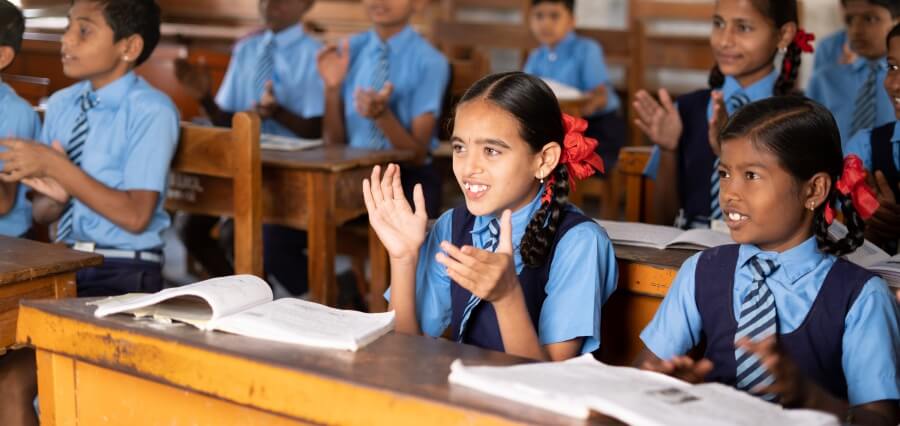
Recently, Union Education Minister Dharmendra Pradhan announced that now 91.8 percent of the schools in the country have electricity, which used to be only 53% during 2013-14. This development speaks volumes of the overall endeavor of the government to better the learning environment for its students all across the country. Speaking during a press briefing on 17 December 2024, Pradhan was emphatic that the rising tide of electrification is a part of the larger momentum for better school infrastructure especially in underprivileged and rural areas that have, until now, struggled to even provide electricity. Over the past decade, this thrust upon improving infrastructure has helped to open up millions of learning environments for students. This can be further supported by statistics for the Unified District Information System for Education Plus for the year 2021-22, as that is tracking the progress in all educational sectors. Until the year 2019-20, it had 80.16% schools with electricity and for the year 2020-21, it rose to 83.92% and for the year 2021-22, to 86.58%. These statistics indicate a steady and consistent improvement in electrification across the country. Some states have achieved close to 100% electrification with Union Territories such as Delhi, Chandigarh, and Puducherry reporting that schools now have 100% electrification. Tamil Nadu, Gujarat, Punjab, Kerala, Sikkim, Haryana, and Karnataka also performed well with rates above 97%. Nevertheless, an urban-rural gap can be observed. Urban schools generally have better access to electricity than their rural counterparts, and schools in some northeastern states and regions like Odisha and Jammu & Kashmir report lower electrification rates. The importance of electricity in schools is not only the basic lighting and ventilation, but it also opens doors for students to learn modern educational tools such as smart classrooms, computers, and audio-visual equipment, which are very vital to the digital learning ecosystem. For government and rural schools, it may be a drastic improvement in terms of quality education and opportunities. This move reflects the commitment of the Indian Government to upgrading educational facilities throughout the country so that access to quality education remains comprehensive and universal.

Maruti Suzuki Achieves Historic Milestone of 2 Million Vehicles Manufactured in a Single Year
MSIL has achieved a significant milestone, becoming the first company to deliver 2 million vehicles in a calendar year. Approximately, 60% of these vehicles were manufactured at its Haryana facilities, while the remaining 40% were produced in Gujarat. The top five models that were manufactured in the lines for 2024 included Baleno, Fronx, Ertiga, WagonR, and Brezza. A landmark vehicle rolled out for the 2 millionth car, which was Ertiga from MSIL’s Manesar plant in Haryana. The total manufacturing plants that exist at present with MSIL are three in number. They are located at Gurgaon and Manesar within Haryana, and also one at Hansalpur, Gujarat. These have a production capacity of 2.35 million units per annum. Despite a lukewarm market for the automobile industry, sales in April-November 2024 have gone up only 2% over last year for the same period. According to SIAM, domestic sales of passenger vehicles were around 2.7 million units in the said period, the same as last year. Going ahead into the future, Maruti Suzuki is also planning for increased capacity at its plants. The company also wants to double its annual output to 4 million units by FY31. Towards this end, MSIL is currently building a greenfield facility at Kharkhoda in Haryana. This new facility is set to commence in its initial phase in 2025, and will add 250,000 units to its capacity in total. Once the Kharkhoda plant is fully operational, the total capacity will be 1 million units annually. Maruti Suzuki is also planning another greenfield facility with an expected capacity of 1 million units and is considering the location currently. Heishi Takeuchi, Managing Director and CEO of Maruti Suzuki India Ltd, proudly highlights this achievement. The 2 million milestone underscores the company’s commitment to the “Make in India” initiative. He further stated, “This accomplishment demonstrates what India is capable of producing and serves as a testament to the country’s potential to achieve even greater success.”

DP World Expands Pali-Rewari Rail Terminal Capacity by 25% to Meet Growing Freight Demand
DP World has a global logistics company operating out of Dubai that upgraded the rail terminal infrastructure by adding a third railway in Pali in the state of Haryana, this upgraded rail will cater to the surge of freight services in the north Indian region. Accordingly, under this, the monthly handing of freight at the rail terminal Pali-Rewari will increase from 192 to 240 trains. This will cater to the ever-growing demand for logistics services in the region and enhance the company’s position in the rail freight business in India. The Pali terminal is an important node in the DP World logistics network, which is connected to the WDFC at New Ateli station. This terminal plays a very vital role in the company’s supply chain operations across northern India, using the hub-and-spoke model for distribution. It consolidates shipments at a central hub and distributes the goods to various regions from there. Inland container depots (ICDs) are located in Modinagar, Uttar Pradesh, and Panipat, Haryana, supporting DP World’s network for this hub. The Rewari terminal, part of DP World’s extensive rail network, is currently operating at about 85% of its capacity. Each containerized train at the terminal can carry between 90 and 180 twenty-foot equivalent units (TEUs), depending on the technical specifications and weight of the containers. As the company continues to invest in its rail infrastructure, DP World’s total investment in its railway and inland business has reached Rs 1,800 crore. Apart from rail terminals, DP World is one of the significant players in the maritime logistics of India and it operates six port terminals in India. In addition, it has more than 90 container rakes and SFTO rakes and more than 16,000 containers and trailers for last-mile delivery. The growth of domestic rail freight, having risen by more than 140% since 2021, is largely accredited to DP World’s new innovative rail solutions such as SARAL (Sustainable, Assured, Reliable, and Agile Logistics) and SARAL-2. These solutions offer businesses door-to-door cargo services under the SARAL and SARAL-2 brands reliably and efficiently, especially between South Gujarat and the National Capital Region (NCR) and between Chennai and northern India. With these infrastructure investments, DP World is going to further consolidate its leadership in India’s logistics and transportation sector.