






How Digital Health Leaders Define the Global Visionaries Making an Impact in 2026
Driving Digital Care Digital health is no longer in the experimental stage, but it has entered a transformative stage of change globally. There are new digital health leaders across the continents who are redefining the way care is delivered, accessed, and measured. These are not just technology coaches who are constructing technology, but they are closing actual healthcare loopholes that impact millions of lives. Their work is aimed at the accomplishment of the results that are important both to the patients and the healthcare facilities, whether it is better recognition of the disease at its initial stages in underserved areas or the ability of advanced health systems to exchange data smoothly in both directions. The difference between these visionaries is that they are innovative, possess empathy and are accountable. They develop the solutions that are applicable to a wide range of languages, income, and healthcare structures, with demands on quantifiable outcomes. Concurrently, they involve regulators, clinicians and policymakers in eradicating the barriers that impede the implementation of digital care. These leaders are building a world where, with responsive technology, human-centred care can be enhanced. What Sets Global Digital Health Visionaries Apart Not all health app builders are described as visionary. Digital health leaders achieve this title through their ability to address actual problems at scale. They ask real and necessary uncomfortable questions: why does a patient in rural Kenya spend three months waiting before he is diagnosed with a disease when a related clinic in Seoul does the same task in three hours? What is so aggravating is that despite predictive analytics being able to identify vulnerable patients days before, the overall hospital readmission rates do not decrease. Visionaries cannot take these gaps as something to be forever; they try to bridge them. The most influential Digital health leaders of 2026 have three characteristics. To begin with, they are empathetic leaders because technology is irrelevant unless the patient experience is enhanced. Second, they develop to be inclusive and develop platforms that can operate in languages, levels of literacy and income. Third, they take measurements without relent, since good intentions and lack of evidence are poor medicine. The Effect of Where It Is Occurring Digital health leaders are transforming how communities can access care from São Paulo to Singapore. Mobile-first in Southeast Asia now provides mental health services to groups of people who did not previously have access to licensed therapists. Community health workers in West Africa who are equipped with AI-driven diagnostic tools are identifying instances of tuberculosis and malaria at a rate that can be compared to the more sophisticated clinics in the cities. The integration framework pioneered by such leaders in North America and Europe is finally enabling patient records to transfer across systems smoothly, something which patients always believed was already happening. The common thread across these stories is not the technology itself — it is the human judgment behind it. Digital health leaders understand that deploying a machine learning model in a low-bandwidth environment requires a different mindset than launching the same model in a well-resourced hospital network. Context drives design. Design drives adoption. Adoption drives outcomes. How Digital Health Leaders Are Moving Care Forward Digital care has moved beyond theory and is now a reality. To continue this reality, we will need more than mere enthusiasm; we will need commitment, resources and perseverance to address all of the obstacles preventing the broad uptake of Digital Care. The Digital health leaders currently leading the way are helping to drive and challenge regulatory authorities to modernize the approval process for digital healthcare technology; establishing partnerships with insurance provider payors to develop a workable reimbursement model for virtual, remote and digital care; and creating an educated workforce of Clinical Informatics Specialists, Bioinformatics Scientists, and Health Data Scientists to support the ongoing efforts around Digital Care. Additionally, these leaders are not necessarily seeking headlines; rather, they are participating in the behind-the-scenes committees where many important policy decisions are made. They are sitting down with nurses at the patient care level to fully understand workflow friction prior to even thinking of writing a single line of code. Finally, under the leadership of these innovators, the industry will be learning through the many lessons, whether they be good or bad. The Next Chapter in Digital Health Leadership The major challenges that lie ahead are not technical; rather, they are Human issues such as Trust, Privacy, Equity, and Accountability, which still have unresolved tensions in every digital health implementation. Digital health leaders who navigate these tensions with integrity will shape the future decade regarding Responsible Innovation. To be considered a visionary leader in digital health today, you must not only hold both hands on the complexity of the lives of the human race and the power of extremely innovative technology, but also refuse to let go of either. Read Also : Celebrating Global Healthcare Visionaries Shaping the Future of Medicine

Celebrating Global Healthcare Visionaries Shaping the Future of Medicine
Innovating Patient Care The healthcare is at a crossroads. The rapidly changing technology landscape, evolving patient needs, and widening global health disparities are driving systems worldwide to re-evaluate how they deliver care. Innovative hospitals of big cities, or disadvantaged groups in remote areas, the need to have available, convenient, effective, and equal healthcare access has never been higher than it is currently. It has been the shoulders of those against the status quo that medicine has always preached. The world today is redefining the laws of Global Healthcare and creating a healthier world in which all are able to enjoy. They not only fill in blanks in the system, but they redefine the system itself. These leaders integrate medical knowledge and technology with human sympathy and compassion to offer solutions in the areas where there used to be no solutions until yesterday. They are implementing AI-based diagnostics, expanding telemedicine platforms, and developing community-oriented health systems that now connect with patients who had previously been inaccessible through traditional care. More to the point, these leaders see innovation as a concept of serving people, and not only the promotion of technology. The work they do fills the gaps in access and enhances health equity and reimagines the way care can be made available to all communities. By doing so, they are gradually transforming the future of the healthcare world. Global Visionaries Reshaping Patient Care On all the continents, global healthcare visionaries are breaking down the barriers to quality care, which has been there since the beginning. Mobile diagnostic units are today able to access rural Sub-Saharan Africa patients who used to walk many miles to the closest clinic. In Southeast Asia, triage tools powered by AI are used to make under-resourced hospitals prioritize cases faster and more accurately than those picked by specialized urban centres. They are not far-off dreams; they are currently being realized as physicians, engineers, and health promoters identify an issue and construct the solution. The distinguishing characteristics of these leaders are that they combine clinical depth and human empathy. They engage with people, they listen to patients, comprehend communities and devise novel designs which literally fit into the lives of people. Human-Centred Innovation in Modern Healthcare The greatest global healthcare visionaries know that technology is an instrument and not a substitute for caring. It is changing the outcomes of these digital health platforms, genomic medicine, and robotic-assisted surgery, but the technology developers who are driving changes always consider the human being as the core of all developments. They do not just ask, “Can we do this?” But shall we do this, and is it really of help to the person before us? An example of telemedicine is illustrated graphically. The health care systems in the global system were on the brink of collapsing during the coronavirus pandemic. Indians, Brazilians and Nigerians, global healthcare visionaries used telehealth infrastructure to get millions of patients in touch with physicians within days, an infrastructure that remains in use by the population to this day. They made no wait for the right conditions. They acted. Visionaries Driving the Health Equity Movement Health equity is the center of what every realist visionary struggles to achieve. The global healthcare visionaries are aware that the quality of care that a person can get should never be dependent on geography, income, or identity. They change policy, train the next generation of diverse clinicians and spend time in underserved communities as vigorously as they devote to scientific research. Dr. Lucia Mendes was a Brazilian public health planner who established a network of 400 community health workers in favelas of São Paulo. Her model is now used as a template for other similar programs in Latin America. Dr. Uché Blackstock founded Advancing Health Equity in 2019. She had a clear mission, partnering with healthcare organizations to dismantle racism in medicine and close the gap in racial health inequities. She is a Harvard-trained emergency physician who left a tenured position at NYU School of Medicine to dedicate herself fully to this work. Her message is simple and urgent: quality care must reach every patient, regardless of race or zip code. It is stories like them that help us understand that the greatest innovations are not usually devices or drugs, but a system constructed around trust, dignity and the dedication of committed effort. The Path Forward for Global Health Innovation Different challenges like Antimicrobial resistance, ageing populations, mental health crises, and diseases caused by climatic conditions are among other challenges to overcome, and they are currently exerting immense pressure on the healthcare systems of all nations globally. Global healthcare visionaries, however, take on these challenges in an attitude of inquisitiveness, urgency, and cooperation. They create connections across disciplines, countries, and cultures in order to come up with solutions that are useful to all. As we honor the contributions made by these outstanding leaders, we also appreciate the hope they give us for the future. Each person who has been saved, each obstacle that has been overcome, and each person who has received care with dignity is a testament to the difference that can be made when dedicated individuals work towards creating a better future. The future of the medical field will remain bright because global healthcare visionaries have made a choice to contribute to creating this reality each day. Read Also : Revolutionizing Output: The Future of Business Operations in a Connected World

Carol Ghanem: Leading with Purpose in an AI-Driven World
The leaders who stand out in 2026 aren’t the ones obsessed with cutting costs or maximizing output. They’re the ones asking harder questions: What happens when our systems break? How do we stay human when everything around us is automated? Can we build something that actually lasts? Carol Ghanem has spent her career wrestling with these questions. And what’s interesting isn’t that she has all the answers. It’s that she’s figured out how to balance things most leaders see as trade-offs. Technology and empathy. Speed and thoughtfulness. Global scale and local care. Her approach is practical, not theoretical. When she talks about AI, she doesn’t focus on efficiency metrics. She talks about the pattern their system spotted—small workforce decisions compounding into a crisis nobody saw coming. When she describes her organization’s structure, she explains why her leadership team stepped back from most decisions. When the topic turns to supply chains, she’s upfront about choosing reliability over cost savings. Balancing AI with Human Connection Every quarter, Ghanem’s team does something most organizations skip. They map out every point where AI touches their customer journey, then deliberately add back what she calls “human checkpoints.” These are moments where a person needs to step in, not because the system failed, but because some situations require human judgment. Ghanem audits AI-integrated workflows the same way she audits culture by tracing outcomes back to human moments. She states, “If an AI system optimizes response time but degrades emotional trust, it fails the test.” So, the team runs what Ghanem calls “soul audits.” Frontline employees and customers review the experience and flag anywhere it feels too transactional. These qualitative reviews are led by the people closest to the work, ensuring that AI compresses friction, not humanity. The goal isn’t to remove AI. It is to make sure the technology serves people, not the other way around. AI as an Early Warning System Ghanem isn’t skeptical of AI’s potential. The most meaningful insight AI has surfaced for her organization wasn’t a forecast; it was a pattern. She mentions, “Through deep systems modeling, AI revealed that small, localized decisions in workforce deployment were compounding into systemic risk months later.” Small decisions about workforce deployment were creating problems months down the line. Burnout clusters. Service quality issues. Potential regulatory problems. All invisible until the AI connected the dots. A traditional team would have optimized for immediate efficiency and missed it entirely. AI exposed the long-tail consequences burnout clusters, service degradation, and regulatory exposure before they became visible. That moment changed how Ghanem’s organization thinks about resilience. The question shifted from “How can we do more with less?” to “How can we build systems that hold up under pressure?” That fundamental insight reshaped how the organization values resilience over optimization. Empowering Decision-Making at Every Level Ghanem didn’t flatten her organization’s hierarchy. She flattened something else: decision latency. There is a difference. Instead of pushing authority down in theory, her team pushed decision rights outward. Frontline teams now have clearly defined thresholds where they can act autonomously in high-stakes situations. AI gives them real-time intelligence. The accountability stays with people. The C-suite doesn’t decide everything anymore. They design the rules of the game. They ensure alignment. They step in only when decisions might compromise the enterprise’s core principles. The result is an organization that responds to market shifts faster than centralized control could allow, while still maintaining strategic coherence. Dependability Over Cost Ghanem reframed a question most leaders take for granted. Her organization stopped asking, “Where is this cheapest?” and started asking, “Where is this dependable under stress?” The strategy blends regional redundancy with partnerships across different tech ecosystems. It involves strategic partnerships in sovereign tech ecosystems, creating multiple fallback options. It costs more upfront. But it dramatically reduces existential risk. “Competitiveness today isn’t about lowest price; it’s about continuity, trust, and optionality when the system fractures,” she adds. Transparency and Strategic Agility This philosophy extends to how the organization handles vision versus tactics. Ghanem treats vision as immutable and tactics as disposable. The long-term mission is fixed. Everything else gets reviewed quarterly through scenario planning, stress testing, and AI-driven simulations. Ghanem describes it as staying directionally consistent while remaining operationally agile. This creates clarity and confidence, even in volatility. In a world where anyone can fake anything, where deepfakes and synthetic credibility pose real threats, Ghanem believes transparency functions as a strategic asset. Proof matters more than polish. Her organization publishes auditable data, opens its methodologies, and invites third-party verification, especially when it is uncomfortable. When stakeholders can trace impact from claim to evidence, trust becomes harder to shake. Trust becomes durable, and narratives lose their power to deceive. False narratives lose their power. Transparency isn’t a branding exercise; it’s a defensive moat. Investing in People as Infrastructure Ghanem stopped treating learning like an employee benefit. She treats it like infrastructure. A defined percentage of payroll now goes to continuous micro-learning, cross-functional rotations, and AI-fluency training. Not as an HR program, but as a strategic investment. This is ring-fenced and treated with the same rigor as any infrastructure investment. The distinction matters. Benefits get cut when times are tough. Infrastructure is recognized as essential to operations. Ghanem thinks of human capital as a living product that needs iteration, feedback loops, and intentional upgrades. Roles aren’t static anymore. They are portfolios of skills. The organization’s responsibility as leadership is to ensure that people evolve faster than the systems that could replace them. “Competitiveness today isn’t about lowest price; it’s about continuity, trust, and optionality when the system fractures,” she highlights. Empathy, Accountability, and Inclusion in Practice This philosophy showed up during a tough period when a critical partnership started falling apart. The data looked fine. Everything was technically “on track.” But the people were exhausted and feeling unheard. Ghanem made an unusual choice. Instead of escalating terms or timelines, she slowed the conversation down. She acknowledged the strain on both sides without being defensive. She acknowledged the strain without defensiveness.

The Global Visionaries Making an Impact in 2026
The Global Visionaries Making an Impact in 2026 Quick highlights Quick reads

Female Entrepreneurs Dominate North Tyneside Business Awards Ahead of International Women’s Day
Prime Highlights Female-led businesses won five out of six major categories at the North Tyneside Business Awards, showing the strong impact of women entrepreneurs in the local business community. The achievements were celebrated by the North Tyneside Business Forum as part of activities marking International Women’s Day, highlighting the growing influence of women in business. Key Facts Steffi Smith of The Chocolate Smiths won The Green Award and was also named Business of the Year 2025 for her company’s strong performance and focus on sustainability. Amy Bewick of Nusa Studio received the New Business Award, recognising the successful launch and growth of her new venture. Background: Female entrepreneurs dominated the North Tyneside Business Awards, securing five out of six major categories in a milestone year for the local business community. The achievements were highlighted by the North Tyneside Business Forum as part of celebrations marking International Women’s Day, showcasing the growing influence of women-led enterprises across the region. Female founders showed strong innovation, resilience and leadership across businesses in North Tyneside. Women-led companies in sectors such as retail, community services, sustainability and education also showed their growing role in supporting both economic growth and local communities. Among the winners, Amy Bewick of Nusa Studio received the New Business Award for successfully launching and growing her business. Tara Warren, founder of BASH Academy, won the Heart of the Business Award for helping people build skills through education and training. Kerry Quinn of KORE+ secured the Retail & Service Provider Award, recognising the company’s continued growth and strong community engagement. Steffi Smith, founder of The Chocolate Smiths, was one of the biggest winners of the night. She won The Green Award for sustainability and was also named Business of the Year 2025. Meanwhile, menopause coach Cheryl Tanner won the Heart of the Community Award for supporting women’s health and wellbeing. Several winners also highlighted the importance of International Women’s Day in recognising the achievements of women and encouraging greater support among female entrepreneurs. Many spoke about the value of collaboration, confidence building and the positive impact that supportive business networks can create. Angela Tuplin, Chair of the North Tyneside Business Forum, said the results showed the growing strength of women in the region’s business landscape. She noted that while technology company durhamlane won one category, the success of female-led businesses across the remaining awards demonstrated the ambition and talent driving the local economy. The Business Forum helps businesses in North Tyneside by offering networking events and support for growth. Membership is free, giving local entrepreneurs a chance to connect and grow their businesses. Read Also: Government Launches Workplace Reforms to Help Women Thrive at Work
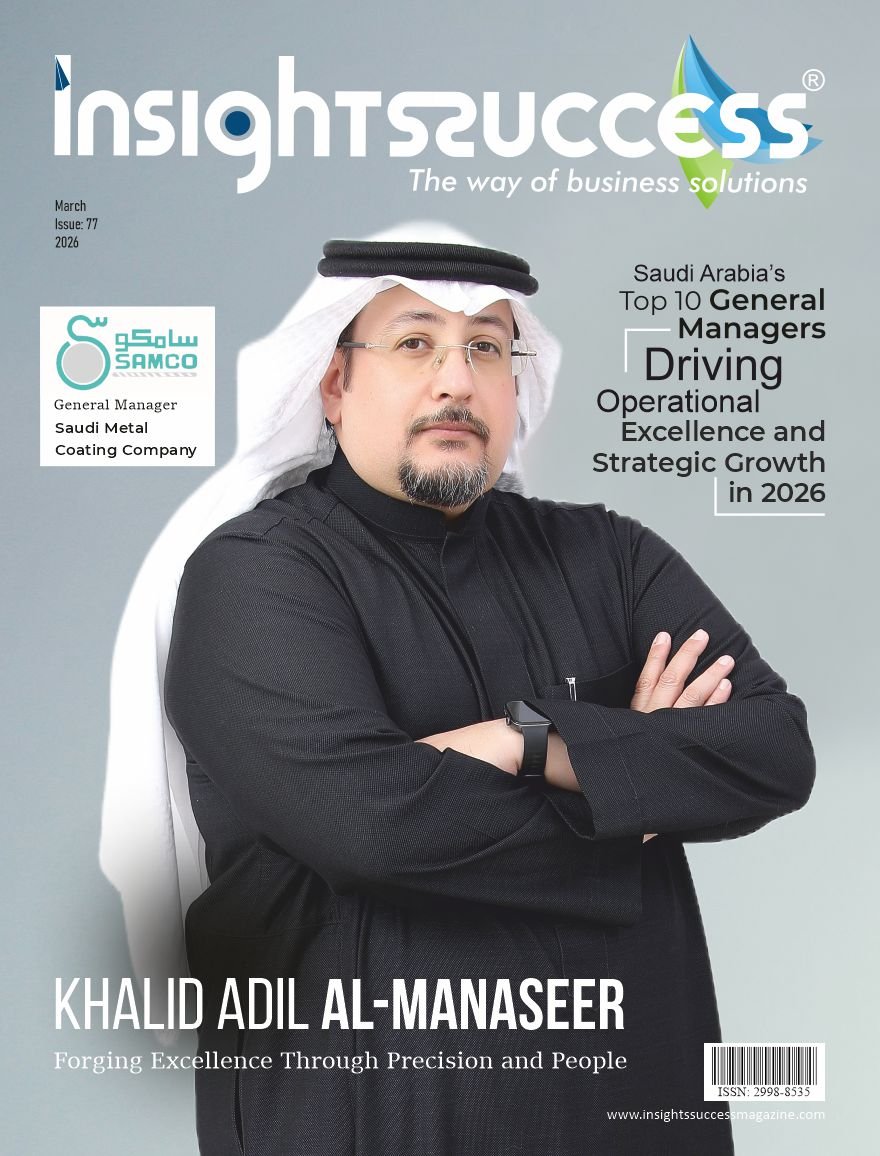
Saudi Arabia’s Top 10 General Managers Driving Operational Excellence and Strategic Growth in 2026
Saudi Arabia’s Top 10 General Managers Driving Operational Excellence and Strategic Growth in 2026 Khalid Adil Al-Manaseer blends systems engineering and construction management expertise to lead SAMCO with precision and strategic foresight. He transforms complex operations through data-driven decision-making, integrated workflows, and talent development, balancing operational excellence with long-term growth while empowering teams, optimizing performance, and ensuring resilience in the dynamic coating and steel manufacturing sector. Digital Link Quick highlights Quick reads

Revolutionizing Output: The Future of Business Operations in a Connected World
In today’s rapidly evolving technological landscape, organizations are transforming the way they manage both internal and external processes, reshaping business operations in an increasingly interconnected global environment. The old business processes, focused on efficiency and minimization of the costs, are being reconsidered with the impact of the digital integration, real-time data analytics, and interconnected systems. The firms that are able to respond to this changing environment can access new growth, stability and competitiveness and those that are resistant to change are likely to be left behind in an ever-changing market. The inter-related world provides unfamiliar visibility in the supply-chain, customer relationship, and working processes. Cloud-based solutions and digital platforms will allow communication between departments, partners, and even customers without any challenges. This interconnectedness can make the decision-making process more effective as it offers the managers with prompt insights, automates most of the routine processes, and helps establish cooperation across geographical borders. Digital Transformation Digital transformation is shaping the future of how businesses operate. The revolutionary technologies such as artificial intelligence, machine learning, and robotic process automation are transforming the traditional workflow. Tasks that previously involved a lot of human resources can now be done with precision and speed thus leaving employees with more strategic issues that are worthwhile. Moreover, predictive analytics ensure that the companies can presuppose the obstacles in their work and proactively change the strategy to reduce the number of inconveniences and enhance the overall performance. The digital transformation also promotes more of a customer-oriented perspective on the running of the business. Businesses are able to use real-time data to measure their performance, observe quality of their services and address customer demands in a better way. This not only boosts operational efficiency but also creates trust and loyalty to clients. Organizations that embrace digital transformation position themselves to succeed in a connected world, where adaptability and responsiveness drive long-term success. Integrated Workflows Another key trend which shapes future business operations results from unified workflows which connect different departments and external partners. Businesses are moving away from siloed structures toward interconnected networks that promote collaboration and information sharing. The integrated workflows find support through enterprise resource planning systems, supply chain management platforms and cloud-based communication tools which enable teams to work together more effectively. The system provides managers with complete operational performance data which they can use to discover bottlenecks and create solutions. By leveraging these insights managers make strategic decisions that improve their business operations. Multinational companies need this level of network connectivity because their international business operations must maintain efficient and continuous function across different countries.By establishing integrated workflows companies can achieve process efficiency through better collaboration while sustaining their competitive edge in the fast-moving business world. Data-Driven Insights Organizations are gathering extensive data from their internal operations and customer engagements and their examination of market trends. The organization discovers operational inefficiencies through data examination because this process enables them to create better strategic solutions. Data-driven insights help businesses optimize their resource distribution while creating products that meet customer needs and developing their forecasting abilities. Companies with strong risk management systems can identify upcoming trends and potential risks which helps them decrease interruptions and protect their business operations. The capacity for real-time data analysis has become essential for corporations to make timely decisions which help them achieve sustainable growth and maintain their competitive edge in the current global market. Data-driven business operations enable companies to handle market uncertainties while they pursue new business opportunities which results in their long-term success during rapid industry changes. Conclusion The current business world is changing its operations because of three main factors which include better connectivity options, digital technology improvements and the ability to make decisions based on data analysis. Organizations that embrace these changes can streamline processes and achieve better operational results while increasing their capacity to adapt to changing market conditions. Businesses can achieve higher operational speed, better operational understanding and stronger organizational strength through the combination of advanced technology with their data management systems. The contemporary business environment requires organizations to establish operational systems which maximize their cost efficiency and operational capacity in order to achieve success. Organizations achieve success by creating systems which enable them to adjust their operations while continuously developing innovative solutions through effective technology deployment. Read Also : Professional Coaches to Follow for Startup Success

Khalid Adil AL-MANASEER: Forging Excellence Through Precision and People
The journey of leadership of Khalid Adil Al Manaseer was mainly accompanied by pressure rather than comfort. Armed with a unique combination of academic credentials- a BS in Systems Engineering (Industrial) and an MS in Construction Engineering and Management, he has built a career bridging two demanding sectors that rarely converge in a single professional trajectory. His long exposure and direct relevance to both manufacturing (industrial) and construction industries have shaped a distinctive leadership perspective, one grounded in the rigorous methodologies of systems thinking and the practical realities of large-scale project execution. He has continuously moved into places where there was operational strain, poor morale, and urgent performance demands; such situations were nothing less than a test to both systems and people. The ordeal helped him to develop a leadership style characterized by firmness, clarity, and trust, where the rebuilding of confidence became as important as the restoration of efficiency. Now as the General Manager of Saudi Metal Coating Company (SAMCO), he applies this hard-earned perspective, enriched by his cumulative knowledge spanning industrial engineering systems and construction management, to a sector that is marked by exactness, capital intensity, and market volatility. His dual expertise positions him uniquely in the coating and steel-related manufacturing sector, where understanding both the precision of industrial processes and the complexities of construction project demands creates a competitive advantage. He is a kind of fearless tight-rope walker: deep operational rigour is his left hand, and long-term strategic thinking is his right one. He does not chase short-term fixes but concentrates on laying resilient systems, forming aligned teams, and introducing performance cultures that can be measured and that will outlast the immediate challenges. He is known for his transparent, data-driven approach and steady presence during complex transitions and continues to lead with a belief that people’s empowerment, disciplined execution, and a clear sense of purpose are the main factors that drive sustainable industrial success. His unique educational foundation, combining systems engineering principles with construction management expertise, enables him to see connections others might miss, applying lessons from mega-project execution to daily manufacturing operations and bringing industrial efficiency frameworks to construction-related challenges. The Crucible of Transformation Al-Manaseer’s defining moments arrived not during periods of prosperity, but in the trenches of operational decline. Leading organizations through uncertainty, cost pressures, and low morale became the proving ground where his leadership approach crystallized. These weren’t theoretical exercises in management; they were real-world scenarios where plants struggled with operational inefficiencies and teams grappled with diminished confidence. “Leadership is most tested in difficult environments,” he reflects, and his track record validates this conviction. Independent internal evaluations later confirmed the impact of his approach, with over 80% of employees reporting greater trust, improved performance, and stronger guidance under his leadership. These weren’t numbers manufactured for presentation decks, they represented genuine transformation in how teams functioned and how individuals viewed their roles within struggling organizations. The experience taught him lessons that textbooks rarely capture. Turning around underperforming plants requires more than implementing new systems or restructuring org charts. It demanded building belief in teams that had lost confidence, establishing clarity where confusion reigned, and maintaining consistency when quick fixes tempted at every turn. From these challenging assignments emerged a leadership approach rooted in transparency, performance accountability, and continuous improvement—principles that would define his subsequent career trajectory. Mastering the Balance Between Now and Next At SAMCO, Al-Manaseer faces a challenge familiar to industrial leaders: maintaining operational discipline while ensuring strategic direction. “The coating and steel-related manufacturing sector demands both precision in daily execution and foresight in planning. Its capital-intensive nature and sensitivity to external market forces create an environment where short-term missteps can undermine long-term positioning,” he says. His solution lies in integration rather than alternation. His team focuses daily on reliability, cost control, and consistent coating quality, the fundamentals that keep operations running smoothly. Simultaneously, they develop new capabilities, assess market opportunities, and invest in processes that strengthen long-term competitiveness. This balanced approach has enabled SAMCO to improve stability while building foundations for sustainable growth in an increasingly competitive environment. The strategy acknowledges a fundamental truth about industrial manufacturing: operational excellence and strategic growth aren’t competing priorities but complementary imperatives. Structured processes, consistent KPIs, and data visibility across production, quality, and delivery performance create the operational excellence that enables strategic investments. Meanwhile, long-term strategic planning ensures that daily operational decisions align with broader competitive positioning. Building Systems That Sustain Performance Under Al-Manaseer’s leadership, operational excellence at SAMCO has evolved from aspiration to systematic reality. He has established clear KPIs tracking production throughput, coating quality, downtime, scrap rates, and on time delivery. These metrics aren’t merely recorded; they drive daily and weekly performance reviews supported by dashboards and visual management tools that make performance transparent across the organization. The approach extends beyond measurement. Structured problem-solving processes rely on data rather than assumptions, ensuring that solutions address root causes rather than symptoms. Alignment between procurement, operations, quality control, and sales reduces friction and delays that plague many industrial operations. Leadership routines reinforce accountability and sustain improvements beyond initial implementation. The results speak clearly. Planning accuracy has improved, scrap rates have declined, utilization has increased, and performance consistency has elevated across operations. Employee feedback reinforces these operational gains more than 80% reported improvements in clarity, knowledge, and performance under these practices. The systems Al Manaseer has built don’t just improve numbers; they develop people. Aligning Teams Toward Common Purpose In organizations where multiple functions interact under tight schedules and demanding market expectations, alignment becomes essential rather than optional. Al Manaseer ensures strategic alignment through cascading company goals into departmental objectives, aligning KPIs with business priorities, and conducting integrated planning meetings that synchronize procurement, production, and commercial delivery. Regular leadership check-ins and transparent communication maintain alignment even during challenging periods. The internal leadership evaluation confirmed this approach’s effectiveness, with the majority of team members expressing trust in decisions and clarity in direction. “This alignment doesn’t emerge from motivational speeches or vision statements alone, it requires systematic effort to
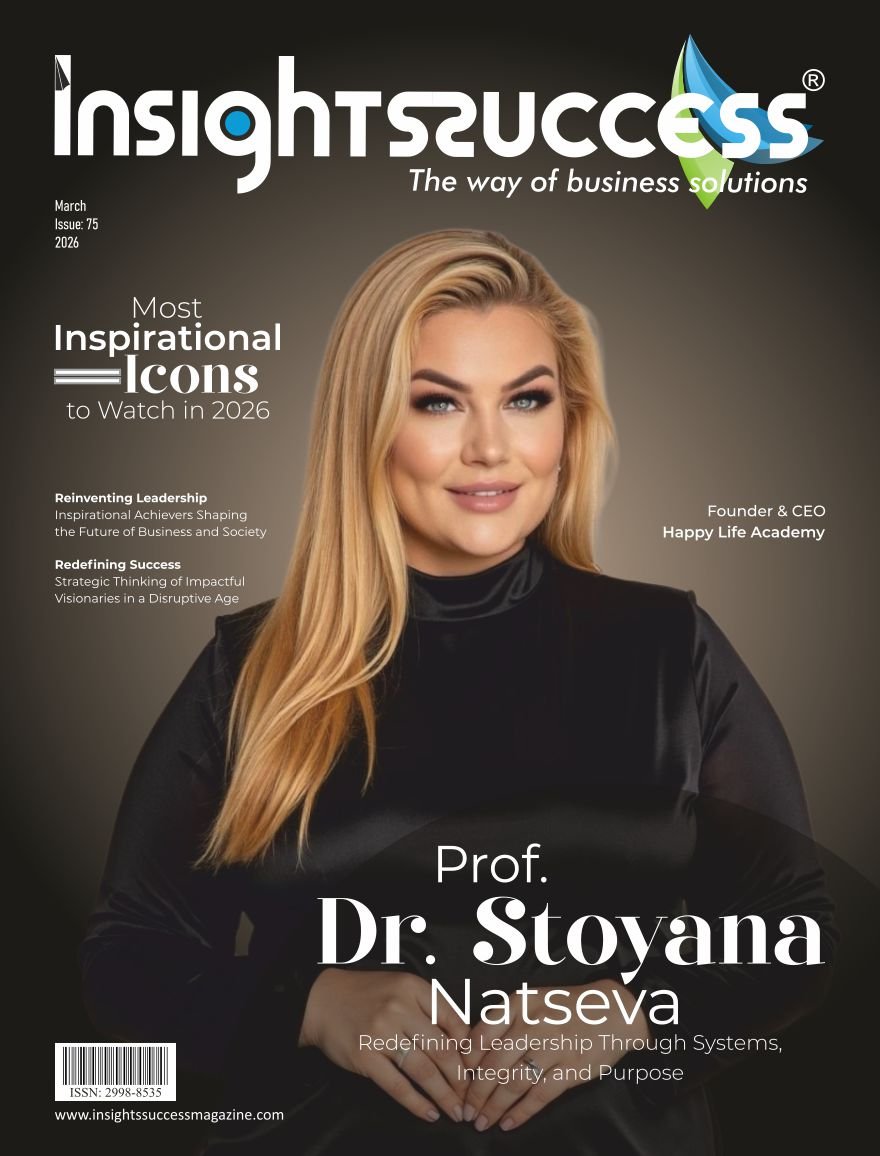
Most Inspirational Icons to Watch in 2026
Most Inspirational Icons to Watch in 2026 Prof. Dr. Stoyana Natseva has redefined leadership through systemic thinking, integrity, and purpose. Bridging academia, research, and organizational development, she integrates authority with empathy, fostering sustainable success. Her methodologies enhance decision-making, health, and performance, demonstrating that effective leadership aligns institutional goals with human development while cultivating innovation, resilience, and ethical influence. Quick highlights Quick reads

Reinventing Leadership: Inspirational Achievers Shaping the Future of Business and Society
In the contemporary fast changing world, some business leaders are distinguished by not only impressive financial achievements but also the way they change the society. These achievers are reinventing the concept of leading by ensuring that innovation matches purpose. Their business model caters to resilient, responsible and future ready enterprises through strategic vision, technology innovations, and a strong dedication to social good. Their work also indicates that there is a general change in business leadership where profit centered models have been replaced by positive societal outcomes-based models. Executives like Satya Nadella, Mary Barra, are a good example of a leader who have adopted this new paradigm of achievement. By them, it is shown that the success of the organization and the good of a society are complementary goals. Their different strategies such as technological invention, industrial revolution, corporate social responsibility as well as serving the people of the world are important lessons to the executives, entrepreneurs as well as policy makers all over the world. Innovation and Vision Satya Nadella, the CEO of Microsoft, has led an incredible shift of one of the largest tech firms in the world at the crossroads of technology and strategic foresight. As the leader, he has redirected the attention to cloud computing, artificial intelligence, and inclusive technology solutions since he was on the helm. Microsoft has under his leadership adopted an open cross-platform and cross-industry collaboration, which have seen the company grow exponentially and has increased access to digital tools in education and business. The focus on empathetic leadership and lifelong learning by Nadella has transformed the corporate culture and had an impact on the leaders beyond the field of technology. Mary Barra, the general motors CEO has re-established the legacy manufacturers in the automotive industry within a future era that is full of sustainability and innovation. She has been leading GM into the all-electric future and has managed to balance profitability and environmental responsibility. It can be noted that Barra has been characterized by the readiness to make risky investments in new technologies and overcome complicated regulatory and market risks. Her vision explains how the old firms can rebrand themselves to become leaders in the industries characterized by disruption and change. Social Responsibility Inspirational leadership in the contemporary times implies incorporation of corporate purpose within the organizational strategy. Paul Polman who served as the previous CEO of Unilever is notable due to his insistence on sustainability as a core business requirement. Unilever during his rule had set ambitious sustainability and social targets with executive rewards being pegged on sustainability performance. The methodology employed by Polman proved that business development and environmental care can support each other. His ideas about the need to change systematically the way companies measure success have inspired a generation of leaders and investors that are interested in long term value creation. Ratan Tata, chairman emeritus of Tata Sons is another inspirational leader whose career has been characterized by ethical leadership and long-term stewardship. The Tata Group has spread across the world under his leadership and has been keen in its community development, quality and integrity. Leadership philosophy of Tata emphasizes the fact that societal values do not have to be compromised in order to accomplish business success. His work in the fields of healthcare, education, and livelihood generation has left a social mark that will be experienced in India and other parts of the world. Mentorship and Influence In addition to strategy implementation and social responsibility, inspirational achievers build the future by making the future generation of leaders. Indra Nooyi, the former CEO of PepsiCo, is renowned to be a mentor and champion of women leadership. In her career life, she focused on the need to nurture talent of diverse backgrounds and promote holistic growth in leadership. The impact of Nooyi is far greater than PepsiCo through various activities that she continues to participate in education and leadership forums that equip upcoming executives. The other coach and supporter of transformative business leadership is Reed Hastings, the co-founder and former CEO of Netflix. Hastings contributed immensely to redefining the entertainment industry in the world with his culture of freedom and responsibility. His management philosophy promotes collaboration, responsibility, and learning. Hastings also makes investments in educational programs which equip students with careers in the digital and creative world, as he believes in the power of education in releasing the potential of the human being. Conclusion The success of these inspirational leaders is an indication of an underlying change of definition towards the concept of success. Satya Nadella, Mary Barra, Ratan Tata, Paul Polmans, Indra Nooyi and many others have shown that outstanding business performance and societal contribution can be complementary. Their contribution emphasizes the role of innovativeness, social responsibility, and mentorship in creating resilient and purpose driven organizations. With the global community going through a technological upheaval, climate change, and changing expectations of the society, the paradigms of leadership that these achievers exemplify will all turn out to be more tropical. Their unique heritage provides a template to be followed by upcoming leaders to achieve the best and at the same time contribute towards the society. The future of business and society is in the hands of those who can find the middle ground between ambition and purpose, and they are the ones that are leading the change. Read Also : Professional Coaches to Follow for Startup Success