





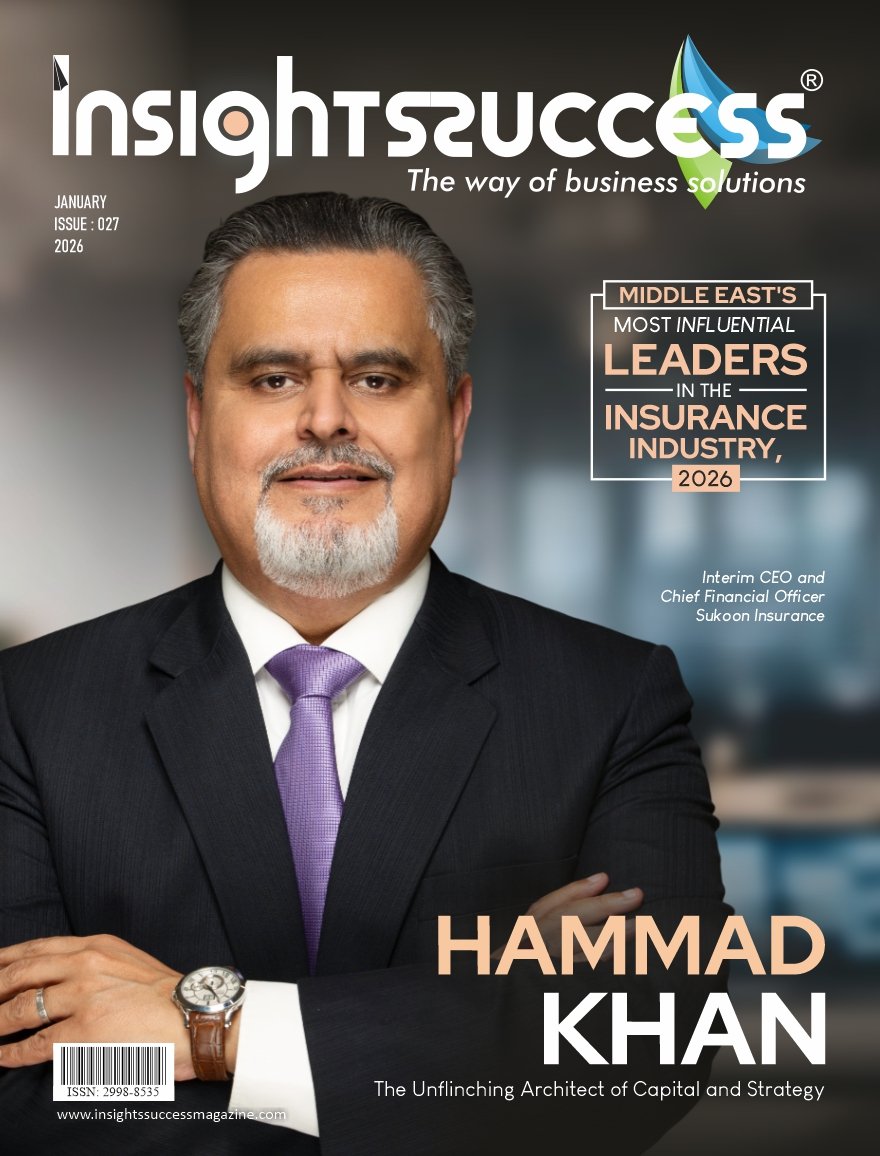
Middle East’s Most Influential Leaders in the Insurance Industry, 2026
Middle East’s Most Influential Leaders in the Insurance Industry, 2026 This edition is dedicated to visionary executives and change drivers who are redefining risk management, customer experience, and digital transformation—recognized for strengthening trust, advancing innovation, and shaping the future of insurance across the region. Digital Link Quick highlights Quick reads

Most Transformational Leader Making an Impact in 2026
Most Transformational Leader Making an Impact in 2026 This edition celebrates visionary leadership, purpose-driven innovation, and measurable influence. This edition highlights David Lyons’ ability to inspire change, drive strategic growth, and create lasting value, showcasing how transformational leadership can redefine industries and empower people in an evolving global landscape. Digital Link Quick highlights Quick reads

Fitness Entrepreneurship in the Digital Age
Leveraging Technology to Scale Your Business The evolution of the fitness sector has been so extensive that it can hardly be equated with its previous incarnation of ten years ago. Back then, the scenario was ruled by gym facilities and in-person training sessions while now, due to technological innovations, social media, and consumers adopting new ways, the entire global digital ecosystem wants to be part of the excitement. A case of professionals who are so passionate about health and fitness and are hoping through their start-ups to ride has been opened. And a behavioral change where fitness entrepreneurs have become the innovators aligning with people’s needs has been called this way and rather the heart of the change. Today’s fitness entrepreneurs are not just trainers but also content marketers, community builders, educators, and brand advocates. The internet era has eliminated the entry barriers thus allowing both the expert and the authentic to attract a following that is much larger and beyond their local area. Technology as a Growth Catalyst Having digital tools is the custom of the fitness business in the contemporary era. It is impossible to ignore the impact that mobile apps, wearable technology, AI-powered workout programs, and virtual coaching platforms have had on the fitness industry. The entrepreneur is now able to monitor the client’s progress from afar, customize the programs using the data-driven insights, and even provide feedback in real-time—all these without being physically present. For those who are in fitness entrepreneurship, technology is not a necessity but a strategic plus. Subscription models, on-demand workouts, and hybrid coaching that fuses automation with human connection are all made possible by cloud-based technologies. This shift implies that fitness businesses. Social Media: Visibility to Community The fitness industry has changed marketing in a big way and social media has been the main factor. Instagram, YouTube, and TikTok have not only taken the status of being the main promotion channels but also of being the places where trust is built and communities are grown. Audiences want to see struggles and real-life transformations, rather than just perfect bodies. The fitness entrepreneurs who are successful know that being real is the only way to get the most engagement. Displaying one’s true self by sharing glamorous lifestyle videos or client journeys and personal lessons makes the brand more approachable. Therefore, in the case of fitness entrepreneurship social media becomes a tool for building relationships in the long run rather than a tactic for making quick sales in the short term. Monetization Beyond the Gym floor The digital age has brought about a variety of income sources for the fitness industry. Online classes, digital meal plans, branded goods, health programs for companies, and communities based on membership fees are just a few examples. The fitness business has gone beyond the limitation of hourly rates and physical capacity. This transformation has given the professionals the power to come up with business models that are in sync with their lifestyle goals. For instance, they can either make money from digital products, or they can set up communities for coaching virtually all around the world. In short, fitness entrepreneurship has become much more flexible than the traditional models that rarely allowed that. Establishing Credibility in a Competitive Environment The introduction of a new product or service also means that there will be competitors in the market. The digital fitness market is very crowded which makes trust and credibility very necessary. On the other hand, the professional certifications, evidence-based practices, and the openness of communication are among the most important factors for a business to survive for the long run. Empathy is of utmost importance as well. Knowing the problems, time restrictions, mental health, motivation, and sustainability of the client helps the entrepreneur to create the right solution that is really useful to the people. In the contemporary fitness industry, the triumph of the entrepreneur is not determined by his/her skill in selling but rather by solving great problems through creating deep connections. The Significance of Individual Branding Personal branding is now the most powerful weapon in the digital fitness industry. The clients most of the time base their selection of the coaches not only on the latter’s knowledge but also on the former’s values, character, and philosophy. A strong brand voice, a unified communication style, and a clear mission are the essential tools for the entrepreneurs to differentiate themselves from others. Storytelling is central to this process. Sharing one’s journey—failures, growth, and lessons learned—creates emotional connection. In fitness entrepreneurship, people don’t just buy programs; they buy into belief systems and leadership. Difficulties and Determination in the Digital Era The digital age offers enormous opportunities and at the same time has very high demands in terms of adjustments. Some of the biggest ones are changing algorithms, reliance on platforms, and user burnout. The entrepreneurs have to keep learning, experimenting, and evolving to be the same. Resilience is a characteristic that every leader in fitness has to develop if he/she is to be successful. Among the most crucial are sharing views, investing time in self-improvement, and maintaining a good balance between being online and taking care of one’s self. The long-range vision, and not short-lived trends, is the proper ground on which fitness entrepreneurship is built. The Next Chapter of Fitness Entrepreneurship The next chapter reveals the progressive development of the overlap between fitness, technology, and entrepreneurial ventures. The future fitness industry will be featuring such attractions as virtual reality workouts, AI coaching, and holistic wellness ecosystems. Still, the human side of the industry will, by all means, be the crucial factor. The impact is the very foundation of fitness entrepreneurship, helping people to become healthier and stronger while creating businesses based on passion and purpose. It is indeed the digital era where those who combine innovation and authenticity will not only survive but also become the leaders of the future of the fitness industry. Read Also : Developing Holistic Fitness Leadership Skills

Developing Holistic Fitness Leadership Skills
From Instructor to Innovator The trajectory of fitness leadership has gone hand in hand with the wellness landscape, and today it is not restricted only to physical fitness. The contemporary fitness leaders are to assist the individuals to arrive at sustainable well-being that comprises of physical, mental, and emotional aspects. The entire affair of fitness leadership has been turned upside down and has become more inclusive; therefore, the technical capabilities-oriented training in only one of the human qualities, i.e., emotional intelligence, ethical responsibility, and long-term vision has become more intense. the winners of this battle will be the leaders who will not only inspire but also the whole community will adopt a healthier lifestyle, become more united, and trust each other more. Holistic Approach to Fitness Leadership Understandings A holistic approach considers fitness as an interconnected phenomenon that is closely linked to the mind, nutrition, recovery, motivation, and life balance. The good leaders recognize that their clients and teams are not just physical bodies to be trained but rather people affected by stress, habits, goals, and individual challenges. Thus, the development of a holistic fitness leadership skill is an integral part of the process of professional training that enables the trainer to perceive the whole picture where physical training strengthens mental resilience and emotional well-being. This typical perspective endorses the leaders to break away from the ‘one-size-fits-all’ practices and to step into individual counseling. It breeds the inclusivity, empathy, and flexibility traits in the leaders and hence, it empowers them to provide the good-considered and caring services to the different population groups. Emotional Intelligence: The Foundation of Impactful Leadership The emotional intelligence of a leader is an all-encompassing factor throughout the whole leadership process. A leader who can sense emotions—his or her own and those of others—has the potential of doing much more. For instance, in scenarios related to fitness where individuals bare their vulnerabilities, a leader with high emotional intelligence can create an environment where everyone feels secure enough to express and share their emotions. Leaders who engage in emotional intelligence development become more comprehensive and healthy as individuals. It will then be possible for them to establish, hear, and articulate the very ways of the heart. This human-centered approach will not only result in greater engagement and support—across the board in the process—behavioral change to be the real objective of fitness leadership will also be brought about. Mindset, Purpose, and Ethical Responsibility The start of leadership is marked by the clarity of the objectives, with no ambiguity. The fitness instructors who are operating through the purpose and the intention are the ones that will be the most trustworthy and consistent. Leadership based on purpose assures that tough decisions made will be aligned with the values of good health, respect, and environmental sustainability rather than profit, which is a short-term result. On the other hand, ethical responsibility is infinite and mandatory. The leaders are the ones that influence habits, the body image, and the self-worth. By employing holistic fitness leadership techniques, the leader will be the one to promote realistic goals and discourage harmful extremes whilst still contributing to overall well-being. The ethical leader always prioritizes safety, education, and empowerment over performance metrics and thus is the one who sets the standards that the whole industry has to follow. Communication and Relationship Building Clear and gentle communication is considered the strong quality of the fitness leader. The leader should be the one who communicates expectations clearly but is still approachable whether leading clients, mentoring trainers, or managing teams. Communication that is strong creates trust and accountability. When training the fitness leadership of a holistic nature, it is necessary to develop verbal and non-verbal communication skills, cultural awareness, and the ability to customize messages according to the person. When people feel that their opinions are valued and that they are treated well, they tend to be more committed and motivated towards their fitness journey. Continuous Learning and Self-Development Holistic leaders understand that there is no end to growth. They consider it necessary to keep up with the development in all areas such as exercise science, mental health, recovery techniques, and leadership psychology, which is the same as self-reflection—considering one’s positive traits, prejudices, and areas where one can improve. Leaders through continuous learning actively participate in the process of honing their holistic fitness leadership skills, which keeps them relevant and effective in an industry that is evolving quickly. This very commitment to growth is the same discipline and curiosity that they instill in others. Creating Sustainable Impact The heart of holistic fitness leadership is to create a lasting impact that is sustainable. People are seen as supporters who are helped to form lifelong habits rather than only short-term changes in their lifestyle, This is the meaning of it. Holistic leaders empower their followers to incorporate fitness into their daily lives, relationships, and personal values. When they see well-being, community building and personal empowerment from the larger perspective, fitness becomes a factor for the individual’s life improvement on a wider scale. A leadership of this nature leaves behind healthier individuals and communities that are more robust and resilient. Conclusion: Leading with Balance and Purpose The rise of holistic leadership in fitness is not just a question of the technical mastery but also necessitates the leader to be warm, ethical, and communicative while undergoing a process of personal development. Through adopting holistic fitness leadership qualities, the leaders’ role changes from that of a transactional trainer to an influencer of transformational power. They not only create better athletes or clients but also have a major role in the production of healthier, more balanced lives. Read Also : Turning Experiments into Capability

David Lyons: On a Mission to Build an OptimalBody-OptimalMind World
“Want to know how I was able to get into top shape when I received the Lifetime Achievement Award from Arnold Schwarzenegger and transformed my life through fitness?” asks David Lyons, a man diagnosed with Multiple Sclerosis at the age of 47, and then, fighting all odds, rose from the depths of despair to a bodybuilding contest stage. Born and raised in the vibrant, grit-filled streets of the Bronx and Queens, New York, David’s foundation was built on discipline and tenacity. This drive led him to enlist in the U.S. Marine Corps, where the rigorous training at Parris Island sharpened his resolve. Upon returning to civilian life, he initially pursued a path in film and television production at the New York Institute of Technology. “However, my true calling wasn’t behind a camera—it was in the arena of fitness.” As a martial artist, boxer, and competitive bodybuilder, David’s deep-seated passion for fitness and total wellness eventually overtook his interest in media, shifting his trajectory toward the fitness industry. No is a Detour, Not a Dead End David’s career has been a testament to the idea that ‘no’ is often just a detour, not a dead end. The early 1980s served as his first major professional ‘down.’ “I had a vision for my own gym, but faced the harsh reality of the financial world; with no formal business background, securing funding from banks or private investors proved nearly impossible.” Rather than retreating, David pivoted to strengthen his credentials, earning a B.S. in Nutrition while working on the gym floor at the Jack LaLanne chain. The ultimate ‘up’ came through sheer persistence and performance. While working as a salesman at a new facility in Queens, David rapidly climbed the ranks to General Manager. His dedication caught the eye of the owner, who was pivoting his time into his real estate business and offered David the chance of a lifetime: the opportunity to buy the business. “That single location became the catalyst for my dream, eventually allowing me to own and operate multiple successful gym locations across the United States.” Creating a Global Platform Through His Adversity Today, David serves as the Founder and Director of OptimalBody Fitness and the MS Fitness Challenge charity. While his early career was focused on general physical excellence, the ‘Aha!’ moment that redefined his life’s work came in 2006. “That was the year I received a diagnosis of Multiple Sclerosis.” In that moment of personal crisis, David realized there was a massive void in the fitness industry for those living with chronic conditions. Many felt abandoned by traditional fitness models or were told to ‘take it easy.’ He saw a desperate need for an advocate who understood the unique physiological challenges of MS but refused to accept physical decline as an inevitability. This led to the birth of the MS Fitness Challenge—a charity founded by David and his wife, Kendra, to provide vital resources to those fighting the disease—and OptimalBody Fitness, the professional framework helping people reclaim their lives from the inside out. The Passion of an Underdog David’s passion is fueled by the transformation of the ‘underdog.’ There is no greater reward than seeing a person who felt defeated by a medical diagnosis realize they still have a voice, a choice, and a body that can perform. “I am driven by the responsibility of leadership and the desire to leave a legacy that proves physical limitations do not define the human spirit. Every life reached through the MS Fitness Challenge and OptimalBody program is a reminder of why I started this journey.” When it comes to business, David describes himself as a calculated risk-taker. “I don’t believe in jumping blindly, but I also refuse to be paralyzed by the status quo. For a risk to be worth it, the reward must offer a significant impact on the lives of others.” David built a career by going where others said he couldn’t. “When I was told a kid from the Bronx without a business degree couldn’t own a gym, I did it anyway. When I was told that an MS diagnosis meant the end of my fitness career, I built a global movement instead. My appetite for business is driven by the word ‘impossible’—if a risk has the potential to break new ground for the chronic disease community, I am all in.” Democratizing Specialized Fitness on a Global Scale However, David’s real test came during COVID-19. Before the pandemic, his mission was largely mobile; he traveled across the U.S., hosting live events at gyms to train both MS warriors and the fitness professionals who wanted to support them. “When the world shut down, my physical reach was instantly severed.” However, what appeared to be a catastrophic roadblock became the greatest accelerator of his mission. David recalls, “COVID-19 forced us to pivot entirely to a digital landscape. We took our education and training modules online, birthing the global version of OptimalBody Fitness.” The result was staggering. By removing the barriers of travel and physical location, their charity and business exploded. They expanded their reach to 25 countries, “Impacting tens of thousands of lives that we never would have touched through physical events alone. We didn’t just survive the pandemic; we used it to democratize specialized fitness on a global scale.” The Owner of a ‘Triple A’ Personality Throughout his journey, David’s greatest strength is his relentless ‘Triple A’ personality. “That high-octane drive is what allowed me to scale businesses and reach 25 countries. However, that same strength is also my greatest ‘learning playground.” For years, David has struggled with the art of slowing down. His brain and body are constantly in ‘overdrive’ mode, and learning to shut it off effectively has been a challenge. He has had to learn that while his drive builds the vision, he must be intentional about rest and trusting that he is still moving forward during a break. It is a work in progress, but it serves as a reminder to other leaders that even

Improving Security Without Making the Yard Feel Closed Off
Security upgrades usually start after something feels off. A gate left ajar. Foot traffic is cutting through where it shouldn’t. Equipment moved slightly out of place. Property owners want protection, but they don’t want the space to feel tense or boxed in. The goal is not to build a barrier that dominates the yard. It is to create boundaries that work quietly and consistently. Experienced commercial fence planning begins with understanding how people already move through the space. Where do they enter naturally? Where do they hesitate? Where do they linger? Security improves fastest when design follows behavior instead of fighting it. Boundaries Work Best When They Feel Expected People respect limits more often than they test them. A fence does not need to feel aggressive to be effective. When boundaries align with how a yard is laid out, they feel natural. Paths end where they should. Access points appear intentional. Confusion disappears. This is why subtle fencing often performs better than tall, solid walls. Clear edges send a signal without creating resistance. Most security issues fade once movement patterns are clarified. Openness Can Still Communicate Control Blocking every view rarely improves safety. In many cases, it does the opposite. When sightlines disappear, hiding spots appear. Areas feel uncertain instead of monitored. Fencing systems that allow visibility discourage unwanted behavior simply by removing cover. Steel pickets, cable systems, and modern mesh designs hold their shape while keeping the yard visually open. These options feel lighter, yet they still resist climbing and forced entry. The space remains readable from multiple angles, which increases awareness without adding pressure. Layout Shapes Emotion More Than Height How a fence sits on the property matters more than how tall it is. Long, rigid runs can feel confining even at modest heights. Breaking those lines would change perceptions immediately. Adjusting alignment around corners and planting zones softens the structure. Layered zones guide movement. A yard with rhythm feels more intentional. Commercial properties use fencing to suggest direction. Where to walk. Where to pause. Where not to cross. That guidance reduces the need for heavy construction. Gates Set the Tone Most security weaknesses appear at gates. A poorly placed gate creates confusion. A gate that is too prominent draws attention. One that blends into the fence feels calm. Well-designed gates align with natural entry points. They open smoothly and close securely without drama. Automation can add control, but only when hardware stays subtle. When technology fades into the background, the yard keeps its character. Material Choice Changes the Atmosphere Every fencing material carries a visual weight. Solid wood can feel welcoming in small sections, but heavy when stretched too far. Meanwhile, steel offers strength but needs spacing to avoid feeling harsh. Composite panels balance consistency with durability. Selecting the right fencing solutions in Georgia often means considering how materials respond to heat, moisture, and seasonal shifts. Materials that weather evenly age better. A fence that looks stable over time feels less imposing because it belongs. Landscaping Is Part of the Security Plan Fences should not stand alone. Plants soften edges and help guide movement when placed thoughtfully. Low plantings preserve visibility. Taller greenery reinforces boundaries without blocking sightlines. Poor landscaping creates blind corners and maintenance problems. Thoughtful planting supports security by keeping edges clean and readable. When fence and landscape work together, the yard feels composed instead of divided. Lighting Should Support, Not Overwhelm Lighting completes the system quietly. Bright floodlights flatten the space and create glare. Lower, warmer lighting placed near gates and transitions offers clarity. Well-placed lighting extends the yard’s usability into the evening. It also reinforces boundaries after dark. With it, security becomes part of the environment. Here are principles that guide balanced fence design: Define access points clearly Preserve natural sightlines Break long fence runs visually Choose materials that age gracefully Coordinate fencing with planting and lighting Regulations Shape Smarter Designs Local codes influence placement and materials. Designs that respect these limits feel cleaner and more deliberate. On the other hand, fighting regulations only leads to bulky solutions and delays. Installers who are familiar with local expectations build fences that pass inspection without compromise. The result is a system that looks planned rather than reactive. The Best Security Feels Invisible When fencing works well, people stop noticing it. The yard feels open, and movement feels guided. Boundaries feel obvious without being loud. Security does its job quietly. That balance is not accidental. It comes from understanding behavior, materials, and layout together. With protection, the yard stays usable and secure. All these without ever feeling closed off. Read Also: How Performance Drivers Decide Which Components Are Worth the Investment

How Performance Drivers Decide Which Components Are Worth the Investment
Performance drivers rarely buy parts on impulse. They learn early that every upgrade carries tradeoffs. More speed can mean more heat, and more grip can mean faster wear. Even small changes affect how a car behaves over time. The drivers who stay satisfied with their builds approach upgrades as long-term decisions. What separates thoughtful builds from frustrating ones is not budget. It’s judgment. Experienced drivers evaluate parts based on how they improve real driving, not how impressive they sound in isolation. Real Driving Conditions Come First Track days, canyon runs, highway pulls, and daily commutes all stress a car differently. Performance drivers begin by identifying where the car actually spends most of its time. A setup built for lap times alone can feel tiring on public roads. A street-focused setup might fall apart under repeated high-load driving. Drivers who avoid regret choose components that match their most frequent use. They ask whether a part improves consistency, control, or confidence under the conditions they drive in most often. If it doesn’t show benefits there, it usually drops down the priority list. Feel Matters More Than Numbers Dyno charts and specifications have their place. However, they don’t tell the whole story. Drivers care about feedback. Steering weight. Pedal response. Throttle clarity. These qualities shape how connected the car feels. Upgrades that sharpen feel tend to earn trust quickly. Suspension components that improve body control. Brake upgrades that enhance modulation. Also, tires that communicate grip clearly. These changes may not headline a build sheet, but they transform the driving experience. That’s why many drivers focus on balance before chasing output. A car that feels predictable allows the driver to push with confidence. Supporting Systems Get Upgraded Before Stress Points Power adds stress. Experienced drivers plan for that before increasing output. Cooling and drivetrain support come into focus early because failures here end projects quickly. Investing in reliability upgrades protects everything. Stable temperatures preserve power delivery, and stronger mounts reduce drivetrain movement. Better fluids also maintain consistency over long sessions. These choices extend the usable performance window instead of narrowing it. Drivers who think ahead would avoid building cars only intended to impress with some short bursts. Prioritize Parts That Integrate Well Modern performance cars rely on tightly integrated systems. Components that work within factory logic perform better long-term. This helps drivers evaluate if a part complements existing systems. Well-designed M4 parts focus on efficiency. They improve airflow or sharpen response. More importantly, they don’t overwhelm the car’s electronics or mechanical limits. These upgrades feel seamless, which is why drivers keep them installed. Installation and Serviceability Influence Value A great component loses value if it complicates maintenance. Performance drivers think about service intervals and parts availability. They prefer upgrades that don’t require constant adjustment or specialized tools. More than that, ease of service becomes crucial. Parts that allow routine maintenance reduce downtime and frustration. In the end, pros would make the best decisions if they value seat time over garage time. Incremental Gains Beat All-at-Once Changes Drivers who stay satisfied with their builds tend to upgrade in stages. One component at a time. Each change is driven and evaluated before moving on. This approach reveals how the car responds and prevents stacking issues. Incremental upgrades also help drivers understand where money makes the biggest difference. Some parts deliver immediate benefits, while others barely register. Learning this through decades or even just years of experience sharpens decision-making for future auto upgrades. Remember these recommended habits: Prioritizing control Supporting reliability early Testing each change thoroughly Avoiding overlapping modifications Comfort Is Part of The Performance Performance does not exist in isolation. Noise levels and vibration influence how a car gets driven hard. Components that degrade comfort too often get removed, regardless of their capability. Drivers who keep their cars long term choose upgrades that enhance performance without making the car exhausting. A setup that feels composed encourages more driving. More driving leads to more skill. Skill ultimately matters more than parts. Investment Means Long-Term Satisfaction Worthwhile upgrades hold their value because they continue delivering benefits. They don’t demand constant attention. They don’t introduce new problems. They make the car feel better every time it’s driven. Performance drivers decide what’s worth investing in by asking one question. Does this make the car better to drive, not just faster to talk about? When the answer stays yes months later, the investment was worthwhile.

How Tourists Navigate Busy City Pricing Without Feeling Overcharged?
Cities with steady crowds carry their own rhythm. Prices rise and fall depending on the hou or whatever event pulls people into the streets. Tourists feel this change the moment they start looking for places to stay. Some costs seem fair, while others feel inflated. Most travelers learn to read the city in smaller ways so they can enjoy the trip without the sense that they’re paying more than they should. Finding Areas That Hold a Natural Pace Not every corner of a city moves at the same speed. Some blocks stay crowded from morning to night, while others settle down once the workday ends. Tourists walk a little off the busiest streets and notice how prices calm down. Even cheap hotels in Atlanta Georgia can feel more welcoming when they sit in neighborhoods with an easier pace. A quieter street often brings steadier pricing that doesn’t jump from one day to the next. Watching How Locals Move Locals usually know where the real value sits. They line up at certain cafés, step into smaller grocery shops, or gather near bus stops at the same hours each day. Tourists who follow this movement see which places feel grounded in everyday life rather than built around visitors. These spots offer better prices because they stay busy even without tourist traffic. Choosing Meals That Feel Close to Home Big dining areas show the sharpest price swings. Even first-time visitors know that small eateries are more practical. Sometimes, food from these small rentals tucked beside pharmacies or parks offer better and warmer meals. These quieter food corners help the budget stretch naturally. Picking Stays That Don’t Rely on Extras Some accommodations raise their prices because of added features travelers rarely use. Tourists who look past the glossy highlights find rooms that feel clean and calm without the inflated cost under the guise of a fancy, yet unnecessary feature. All you need is a place that offers reliable beds and a quiet surrounding area, to say that it’s worth the money. These small comforts matter more than packaged amenities. Letting Public Transit Shape the Itinerary Ride shares and taxis add up quickly in busy cities. Travellers who follow the flow of buses or rail lines discover how simple it is to move through the city without spending much. Transit stops show patterns of life that help visitors understand which areas feel authentic and which ones feel inflated. The savings become part of the trip rather than a limitation. Understanding When Prices Rise Naturally Some price increases come from timing rather than unfairness. Concert nights, festivals, or sports events change how the city behaves. Tourists who keep an eye on local calendars know when to expect these moving highlights. They adjust their plans slightly and choose a quieter area to stay in. Expert itinerary makers tweak their schedules fast, like visiting popular attractions earlier, moving everything else later. This way, the day still feels balanced. Finding Comfort in Slower Corners Cities hold small pockets where life slows down. A small park or a quieter market are some of the favorite spots of frequent travelers. If they feel comfortable enough, a residential stretch offers a pause from the intensity of the tourist zones. Travelers rest in these corners, notice the real tone of the city, and make decisions that feel less rushed. These slower moments keep them from reacting to every price spike with frustration. Tourists feel more grounded with the city’s natural rhythm. They choose places that match the local pace and follow the patterns of everyday life. Then, they pick out small comforts that matter more than the cost. Even for a short time, familiar streets save you from the worry of being overcharged.

How Apartment Dwellers Get Reliable Cooling Without Window Bulk?
Apartments handle heat differently from stand-alone homes. Some rooms warm up faster because of long afternoon light, while others hold onto warm air long after the sun drops. People living in these spaces often look for cooling that doesn’t take over the window or crowd the room. They want something steady that keeps the air comfortable without changing how the space feels. Most choices come from paying attention to how the apartment behaves through different hours of the day. Noticing Where the Warmth Settles Every apartment has pockets where heat gathers. Corners near wide windows often feel heavy in late afternoon, while hallways stay a little cooler. Dwellers watch these shifts before choosing any equipment. A room that heats up quickly may just need better air movement, while another might require a more direct source of cooling. These details guide the tools they end up trusting. Choosing Cooling That Stays Out of the Way Many people avoid bulky window units because they block light and sit awkwardly against the glass. They look for cooling options that blend into the room instead of pulling attention. Some prefer through wall air conditioners because they sit lower and feel like part of the structure rather than an attachment. They free up the window, let more light through, and keep the view open. This helps the room feel less cramped. Letting Air Move More Naturally Apartments often hold still air longer than expected, especially in enclosed living rooms. People notice which doors help lift warm air out or which angles let cooler air drift in. Simple changes, like cracking a door during warm hours or opening a hallway to let air shift, make the room feel lighter. These adjustments help before anything mechanical even turns on. Choosing Tools That Don’t Overpower the Room Cooling works best when the unit fits the size of the space. Something too powerful leaves the air feeling sharp and uneven, while a small tool can struggle during hotter days. Apartment dwellers look at how the room reacts during normal use. They pick tools that cool gently, keeping the space comfortable without overwhelming it with noise or airflow. Keeping the Windows Clear Windows guide how a room feels. When they stay open to light and movement, the space looks cleaner and more open. People avoid equipment that blocks them because it changes how the room sits during the day. Open windows make small units feel more effective because the room doesn’t carry that closed-off look. Paying Attention to Noise Cooling tools that hum evenly blend into the background. Ones with sharp or uneven sounds interrupt the room. Apartment dwellers listen for equipment that keeps a steady tone, something that doesn’t compete with conversations or quiet evenings. A consistent sound becomes part of the room’s rhythm, making the cooling feel more natural. Choosing Simple Upkeep Smaller living spaces make complicated maintenance feel heavier. People pick tools they can clean quickly, with filters that slide out easily or panels that open without effort. When upkeep stays simple, the cooling stays reliable. It becomes part of the routine rather than a task that gets delayed until the air feels uncomfortable. Cooling an apartment without a window bulk comes down to observing how the room reacts to heat and choosing tools that match that rhythm. When the air moves naturally, and the equipment stays out of the way, the space feels easier to live in. Families notice the difference in quiet ways. Softer evenings, clearer windows, and a room that settles into a comfortable pace. Read Also: 5 Important Signs That A Property Will Hold Its Value Through Busy Seasons

5 Important Signs That A Property Will Hold Its Value Through Busy Seasons
Some homes stay steady no matter how lively a town gets. People feel this the moment they walk inside, even before they check the numbers or look at market charts. The space carries a calm rhythm, and the surroundings don’t strain under the pressure of heavy traffic or seasonal movement. Properties with this kind of balance usually show their strengths through small details. These details help owners trust that the home will keep its value even when the area fills up with visitors or when the local calendar hits its busiest point. A Layout That Handles Everyday Movement A good layout shows its strength when you imagine a normal day inside the home. Rooms that connect without forcing sharp turns or awkward walkthroughs make the space easier to manage during crowded seasons. People look at whether the living area gives them enough room to settle down after long days out or if the kitchen leaves enough space for fast meals without disrupting the rest of the unit. When the layout feels calm, even with extra movement, the property carries long-term appeal. Light That Opens Up the Space Natural light makes a home feel wider and more relaxed, which becomes valuable when the outside world gets busy. A soft wash of daylight in the living area or warm light reaching deeper into the rooms helps break the feeling of crowding. People respond to this without thinking much about it. Light that settles well into the space gives the home a steady atmosphere, something buyers remember even after touring several units during peak months. A Location That Remains Practical People look at how the neighborhood feels on regular days. They are also keen to know whether the surroundings keep a calm tone during busier stretches. That kind of steadiness matters in coastal towns and places that see yearly waves of visitors. Buyers checking hhi condos usually point out how helpful it is to stay close to useful spots without sitting directly in the path of heavy foot traffic. A location that stays predictable supports the property’s value through the years. Outdoor Corners That Give People Room To Unwind Outdoor areas help a home stay appealing when the town feels full. These spaces do not need to be large. It can be a small balcony, a quiet patio, or a modest shared courtyard. Guests and owners use these corners for simple routines like morning coffee or late-evening downtime. Even a small outdoor extension can make the property feel more private, which becomes a meaningful advantage during the busiest seasons. Buildings With Clear, Consistent Upkeep The building itself shapes how buyers view the property’s long-term value. People pay attention to how clean the walkways feel. A building that handles upkeep calmly gives the home an extra layer of reassurance. A property that feels stable through busy seasons usually builds that feeling through these details. The layout stays easy to move through, the light gives the rooms a gentle lift, the surroundings remain practical, and the outdoor corners help people rebalance after long days. Buildings that keep their rhythm add to that sense of comfort. When all these pieces work quietly together, the home keeps its value even when everything around it speeds up. Read Also: 5 Simple Color Choices That Make Daily Outfits Feel Effortless