






Shaping Growth: The Strategic Value of Vice Presidents in Corporate Decision-Making
In the large organizations, the decision-making process needs the vision of the chief executive as well as the abilities of the leadership team that will execute strategic plans. The structure used by the organization relies on the use of Vice Presidents that work between senior executives and operational staff members. The position of the chief executive officer has evolved within the company as the businesses are faced with evolving market, digital technology changes and increased stakeholder control. Vice Presidents are used as top managers who have both operational and strategic roles as they initiate functions like prioritizing the work, managing organizational resources and converting corporate goals into useful implementation strategies. This is because of their strategic knowledge combined with their practical knowledge to influence organizational decisions which they are in-between executive leadership and the workforce. The team helps different departments work together by finding solutions to conflicts which they handle according to the goals of the entire organization. Bridging Strategy and Execution The primary aim of this role is to create relationships between strategic goals and their implementation. The Vice President also converts the strategic vision and long-term goals that are established by the board and C-suite executives into operational strategies that are executed by business units, functions, and geographic regions. The process of translation goes beyond basic mechanical work. The work demands people to make decisions based on their knowledge of specific situations which allows them to guide multiple teams to achieve shared objectives across different cultural and geographic areas. The evaluation of strategic initiatives requires organizations to assess both their practicability and their potential execution risks before they begin their actual implementation. Their expertise allows them to evaluate execution risks during the decision-making process through their comprehensive understanding of processes, technology readiness, regulatory requirements and workforce capabilities. The organization uses this information to achieve strategic goals through refining strategies which become more cost-effective while increasing their ability to withstand challenges. The process which they follow to connect organizational objectives with their actual execution results in better decision-making processes which create trustworthy outcomes for organizations. Informed Leadership Perspective The strategic importance of organizational insights extends to decision-making processes through their capacity to deliver comprehensive understanding of business operations. The company establishes actual strategy implementation through its ongoing communication with employees, customers, suppliers and partners. The executives at this company possess direct operational knowledge which allows them to track performance and identify upcoming problems which involve changes in customer behavior and market dynamics. Organizations require a particular viewpoint which becomes essential during times when uncertainty exists or changes occur through mergers and restructuring processes over digital technology adoption or during market downturns. The Vice Presidents of a company will evaluate how their decision will affect employee morale, productivity levels and operational continuity which results in a detailed assessment of how their choice will impact the organization. Through their work the executive team gains essential knowledge about potential negative outcomes which helps them achieve their goal of finding balance between short-term results and long-term organizational stability. Talent and Continuity The Vice Presidents develop senior managers by creating leadership pipelines in their departments by identifying high potential leaders. This is because, their involvement in strategic discussions enables them to ensure that issues that affect people are addressed as critical business decision, rather than being put aside as a minor issue. The leadership tier beyond strategy and operations maintains its essential capacity to guide organizational development through its responsibilities for talent development and succession planning. They have power in organizational design-related decisions, capability building and succession planning decisions. The organization uses their skills to connect workforce strategy with business objectives because they can identify skills gaps, cultural dynamics and future capability requirements. The organization prevents leadership shortages while achieving sustainable growth which proves beneficial for businesses that experience rapid growth or organizational change. The organization maintains its operational continuity during transitional periods because institutional knowledge custodianship strengthens their ability to function. Conclusion Vice Presidents perform far more than their role as intermediaries through corporate hierarchies. The strategic function of their role depends on their ability to use their knowledge and experience together with their operational expertise to drive corporate decision-making processes. Their organizational resilience and decision-making abilities improve when they create stronger connections between organizational strategy, execution processes and human resources. Increasing complexity of contemporary business systems, will result in a rise in the significance of decision-making of Vice Presidents which make them an extremely important part of efficient leadership system that keep organizations strong. Read Also : Advancing Excellence: The Role of Advanced Technologies in Modern Financial Services
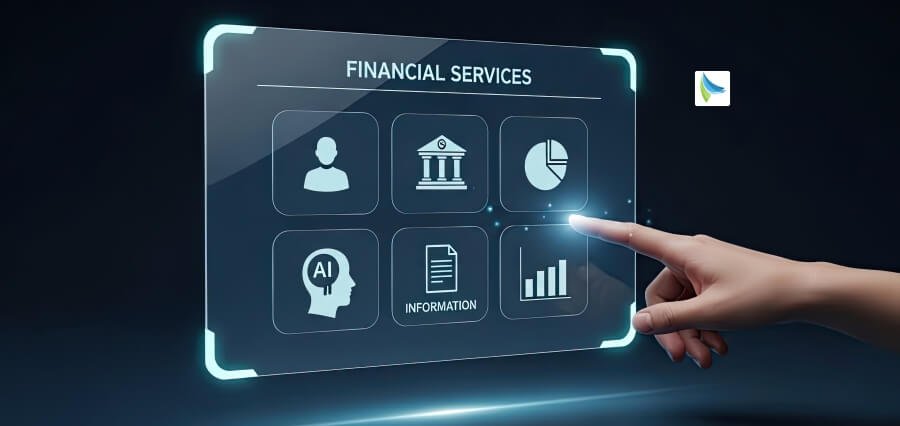
Advancing Excellence: The Role of Advanced Technologies in Modern Financial Services
Digital technology developments are changing the financial services industry through their rapid progress. The industry has transformed from its old design which consisted of physical branches, manual operations and outdated systems into a digital system which delivers fast and secure services to customers. Banks, insurers, asset managers and fintech companies use advanced technologies to gain competitive advantages while meeting regulatory requirements and maintaining operational effectiveness in their business operations. Organizations need to innovate through artificial intelligence, cloud computing, blockchain and data analytics because these technologies have become essential for business operations. Financial markets become more complex and interconnected because technology allows institutions to grow their operations while fulfilling increased regulatory requirements and customer demands. Digital Operations The development of advanced technologies has enabled financial operations to achieve greater efficiency, accuracy through their fundamental financial processes. The company uses automation tools which include robotic process automation, intelligent workflows to perform multiple repetitive tasks that involve account reconciliation, transaction processing and compliance reporting. Organizations have achieved three key benefits from this transition: reduced operational expenses, fewer operational errors, and increased employee capacity to focus on higher-value tasks such as strategic planning and customer relationship building. The financial industry has used cloud computing to accelerate operational changes because it enables institutions to update their outdated systems while they can expand their technological resources whenever needed. Cloud-based platforms enable organizations to deploy applications more quickly while they achieve better data integration and stronger disaster recovery abilities. Organizations can improve their system performance by using these capabilities which enable them to quickly adapt to work disruptions and continue their operations during business interruptions. Digital operations provide organizations with operational efficiency benefits which also increase their ability to monitor processes throughout their entire business. Organizations can use real-time monitoring tools to track their financial transactions, current liquidity levels and potential operational threats. Data Intelligence The financial services industry has identified data as its most important asset because advanced analytics technologies allow them to use their entire data set. Artificial intelligence and machine learning enable institutions to analyze vast volumes of structured and unstructured data to identify patterns, predict outcomes, and automate decision-making. The new capabilities enable organizations to evaluate creditworthiness and detect fraudulent activities and manage investment portfolios. AI-driven models in lending evaluate more data points than traditional credit scoring methods which leads to better risk evaluation and increased access to financial services. Real-time analytics in fraud prevention systems identify suspicious transaction activity to generate alerts which stop financial losses from happening. Machine learning-powered quantitative models in capital markets enable precise portfolio optimization and market forecasting capabilities. Data intelligence solutions assist organizations with regulatory compliance and risk management activities. Advanced analytics enable institutions to perform stress tests on their portfolios while they assess their market volatility risk and fulfill their intricate reporting obligations. Organizations need to handle data quality problems, privacy issues and ethical usage concerns because they increasingly depend on data. Customer Experience Financial institutions use advanced technology to create personalized service networks which provide customers with uninterrupted service delivery matching their expectations. Customers use mobile applications, digital wallets and online platforms to obtain services at any time while they handle their finances and complete their transactions with fast and easy methods. Artificial intelligence enables better customer service because it delivers tailored solutions which meet specific customer needs. Customers receive instant assistance through chatbots and virtual assistants while recommendation engines provide them with personalized product suggestions that align with their spending goals and individual preferences. The tools are more customer friendly due to their capacity to provide the right solution at the right time. The presence of new technologies and blockchain solutions creates the customer trust based on their ability to ensure transparent business operations. Distributed ledger systems offer safe systems that prevent tampering and allow rapid settlements of transactions that are favorable to cross-border payments as well as to trade finance activities. Blockchain-based solutions reduce the need for intermediaries while they create better system monitoring which instills people with trust about financial systems and opens up new avenues for progress in digital assets and smart contract technology. Conclusion The present-day financial services industry depends on advanced technologies which serve as their essential foundation. The solution enables businesses to enhance their operational processes through data analysis which helps them to improve customer satisfaction, handle regulatory requirements and compete with their rivals. Organizations need to develop their capabilities for successful technology implementation because technological advancements continue to progress. Financial sector organizations need to develop protective measures which will safeguard their systems while maintaining ethical standards for technological advancement. Organizations must invest in skill development, strong governance practices, and collaborative efforts, as these areas are just as critical as investments in technological resources. Through responsible technology adoption financial services organizations can create systems that enable them to achieve their economic development goals while maintaining operational efficiency and trustworthy performance. Read Also: Choosing Between Speed, Cost and Quality

Sudipta Paul: Redefining Leadership Where Compassion Meets Corporate Purpose
In an era where leadership is often measured by speed, scale, and short-term outcomes, Sudipta Paul represents a different paradigm — one where empathy is institutionalized, purpose is operationalized, and compassion becomes a strategic advantage. With over two decades of leadership experience across global organizations, Sudipta Paul has consistently worked at the intersection of business performance, culture, and social impact. Her career reflects a rare capability: the ability to translate human values into enterprise-wide systems that drive trust, resilience, and long-term value creation. Rather than viewing leadership as positional authority, she approaches it as architectural work — designing cultures, governance frameworks, and engagement models that allow people and businesses to thrive together. Leadership Shaped by Adversity, Defined by Intent: When Crisis Becomes Character Sudipta’s leadership philosophy was not shaped in ideal conditions. It was forged through moments that demanded clarity, resilience, and decision-making under pressure, both professionally and personally. Her journey has been shaped as much by compassion as by determination. Growing up in Belgaum, she studied in a convent school and was surrounded by the warmth of community living. It was here she first learned that giving back was not charity, but a way of life. Donating books, teaching younger children, and engaging in charity drives instilled in her the values of empathy and service — values that remain her compass even today. From those early lessons to leading transformative initiatives at large corporates, Sudipta’s path reflects the enduring power of sincerity and conviction. Early in her career, she navigated complex life circumstances while sustaining high professional accountability. These experiences reinforced a belief that would later become central to her leadership approach: organizations must be designed for real human lives, not idealized ones. Motherhood arrived under circumstances that would test any professional’s resolve. Her son was born prematurely and required critical care. Balancing work demands with the urgent needs of a fragile newborn seemed impossible. Yet her sincerity and dedication at work had built something invaluable: trust. In one of her leadership roles, she was enabled to work from home for a year, a gesture that helped her manage both professional responsibilities and her son’s recovery. “Goodness, when practiced consistently, comes back in unexpected ways,” she reflects. “The support I received during difficult phases wasn’t policy-driven — it was human judgment recognizing human need.” This understanding fundamentally shaped how she later built leadership frameworks — embedding trust, flexibility, and accountability into organizational systems rather than treating empathy as an exception. From Programs to Platforms: Building Business with a Human Core Sudipta carved out a leadership niche that unites business outcomes with human impact. Her vision centres on a simple yet profound premise: associates flourish, communities benefit, and businesses prosper when trust and camaraderie form the foundation. Across her leadership journey, Sudipta has focused on institutionalizing impact, not creating one-off initiatives. She has led the design and scale-up of: Governance-led CSR models focused on measurable outcomes and long-term partnerships DEI frameworks embedded into talent, leadership, and decision-making systems Enterprise-wide engagement platforms connecting associates to business context, clients, and purpose Her approach moves beyond optics or participation metrics. Instead, she emphasizes ownership, leadership accountability, and cultural integration. “For me, business appetite isn’t measured by revenue alone,” she says. “It’s measured by innovation, scalability, and sustainability — and all three require human values at their core.” By expanding hiring boundaries, creating pathways for rural and early-career talent, and enabling structured associate volunteerism, her work demonstrates how organizations can simultaneously strengthen workforce capability and social impact. Leadership Under Pressure: The Pandemic Test The COVID-19 pandemic became a defining leadership moment — not because of visibility, but because of complexity. Professionally, Sudipta steered organizations through uncertainty by: Enabling flexible work and well-being-first engagement models Pivoting CSR priorities toward healthcare access and digital inclusion Sustaining morale, connection, and productivity in fully virtual environments The greater test, however, unfolded at home. She managed elderly parents and in-laws, carefully coordinating their medications and daily necessities amid risk and restrictions. Simultaneously, her son faced crucial Grade 10 final exams. Just as those exams approached, his father required hospitalization, creating enormous emotional strain. Then she herself contracted COVID-19. She made a choice that reveals the essence of her character. Rather than seeking hospital care, she stayed home in seclusion, determined to provide her son with the moral support and confidence he needed to focus on his studies. Juggling caregiving, her own recovery, and professional duties during this period demanded extraordinary strength and discipline. Rather than compartmentalizing these experiences, she drew insight from them. It reaffirmed her conviction that leadership systems must be stress-tested for humanity — not just efficiency. “Leadership reveals itself most clearly when systems are under strain,” she notes. “That period reinforced my belief that compassion, when embedded into leadership decisions, strengthens — not weakens performance.” Compassion as a Leadership System For Sudipta Paul, compassion is not a leadership trait — it is a leadership system. Her greatest strength lies in her ability to blend strategy with empathy. Rooted in early lessons from her childhood, where she discovered the joy of giving back through small acts of kindness, and continuing through her leadership roles in CSR and DEI, she has consistently placed people at the heart of her work. She believes that organizations that fail to humanize leadership eventually lose trust, relevance, and resilience. Her work consistently demonstrates that when empathy is institutionalized through governance, culture, and capability-building, it becomes a competitive advantage. This philosophy informs how she: Coaches leaders to balance decisiveness with inclusion Builds cultures where psychological safety enables innovation Designs accountability models that value outcomes and people Her teams often describe her leadership style as coach-like rather than directive – encouraging experimentation, ownership, and learning. She creates environments where leaders are empowered to lead authentically, without fear of failure, making her an aspirational figure for many in the organization. “Weaknesses aren’t failures. They’re lessons reminding us that vulnerability and openness matter as much as confidence and drive.” Recognition as Validation, Not Destination Her

Most Inspiring Leader Making A Difference In 2026
Most Inspiring Leader Making A Difference In 2026 Barnona Basu exemplifies purpose driven leadership, seamlessly blending scientific rigor, strategic insight, and human empathy. From academic excellence to transformative roles in India’s pharmaceutical industry, her journey reflects resilience, creativity, and impact. Anchored in values, she continues to shape healthcare with vision, compassion, and enduring excellence. Digital Link Quick highlights Quick reads

Strategic Alignment: The Influence of a Marketing Director in Driving Growth
The position of marketing director now requires more than campaign management because companies must compete in digital markets. The current role requires employers to combine strategic planning with data analysis, customer understanding and income generation. The role of the Marketing Director shapes an organisation’s market position by significantly influencing its ability to achieve sustainable and profitable growth. The requirement for marketing leadership has become essential for businesses because digital platforms have expanded and customer behavior has developed into more sophisticated patterns. Businesses need to maintain growth through all their markets because customers now create multiple shopping paths which vary from their previous expectations. They require capability to adapt their operations across all platforms while maintaining consistent value delivery to customers. Customers expect businesses to provide customized services which include immediate communication and valuable service information. The Marketing Director oversees all functions that connect business goals with customer-facing plans which establish measurable business results. Strategic Vision The Strategic Vision of a Marketing Director requires an executive to develop a comprehensive plan which directs all future business operations. The Marketing Director needs to establish marketing priorities which will help achieve business goals through three specific methods of competing, selecting target customers, and creating unique value propositions. The marketing team drives business expansion through its ability to identify key market segments, develop customer value propositions and create effective brand strategies. The strategic position demands that executives predict future changes in markets and competitive environments. The organization conducts ongoing analysis of industry developments, new technological advancements, customer patterns and competitor movements to make proactive adjustments to their strategic approach. The organization uses commercial discipline to distribute its creative resources which enables them to achieve maximum business value through controlled investment distribution. The leadership team uses their macro-level understanding to drive daily operational work while they discover new growth prospects and maintain marketing spending at levels which support essential business goals. Customer Focus Marketing Director who focuses on business growth makes decisions through his ongoing assessment of customer requirements and their expected outcomes. The team uses market analysis together with data evaluation and direct customer engagement to develop a complete understanding of customer needs, their preferences and their challenges. The brand identity development process with content strategy, pricing structure and distribution channel design uses this insight to maintain product relevance while establishing market competitiveness. The organization-wide impact of customer-centric marketing strategies extends beyond their advertising implementation. The customer-first approach enables sales teams, product development teams and customer service teams to collaborate towards shared objectives which guarantees that customers will receive excellent service during every interaction. Customer satisfaction increases when customers feel understood and valued which leads to stronger retention rates and greater brand advocacy. The combination of these results produces revenue growth that businesses can expect to achieve in a consistent and sustainable manner throughout time. Execution Excellence The execution process becomes necessary to achieve growth even when strategy and insight function as guiding elements. A Marketing Director who possesses strong abilities creates proper execution through his ability to direct teams, agencies and platforms toward successful execution of plans. The process requires organizations to establish specific goals which they will use to create performance standards and assess their operational results through essential metric systems that measure customer acquisition expenses, conversion success and lifetime value. The team uses data analytics to determine effective marketing strategies which lead to ongoing improvements in their marketing functions. High-performing marketing teams require execution excellence which includes team development and team leadership. The process of building marketing teams requires organizations to hire candidates who need training to develop their existing work skills. The marketing sector requires team members to work together because different marketing disciplines need specific expertise. Teams can assess their concepts through a structured testing environment which uses performance benchmarks to direct their testing and improvement process. This approach enables organizations to achieve maximum investment returns while they adapt to fast market changes. Conclusion The Marketing Director position plays a crucial role in organizational growth through its multiple areas of impact. The organization achieves business success through his activities which create strategic plans and implement customer research into their business decisions and maintain operational standards. Their role extends beyond traditional marketing boundaries to shape how organisations compete, innovate, and build lasting relationships with customers. While ensuring sustainable growth against corporate shifts through creating business development opportunities, this is a responsible position. Read Also : Maximizing Value: AI Innovations Transforming the Pharmaceutical Sector

Maximizing Value: AI Innovations Transforming the Pharmaceutical Sector
Artificial intelligence is transforming the pharmaceutical industry by drug discovery, development manufacturing and patient delivery processes. Researchers face difficulties because their established research and development processes do not match advanced scientific challenges, rising costs, strict regulations and extended research timelines. AI provides a strong solution because it allows organizations to analyze data quickly and obtain better understanding of information and make smarter decisions throughout all parts of their pharmaceutical operations. Pharmaceutical companies now use artificial intelligence technology to support their primary business activities instead of testing it through small scale experiment projects. Intelligent systems assist organizations with research through clinical development, manufacturing processes and post-market surveillance to achieve better efficiency results, lower risks and improved patient results. The organization requires new abilities, better data control systems and closer industry partnerships to achieve this strategic shift which involves both technological and strategic changes. Accelerating Drug Discovery AI has made its presence felt in drug discovery through its ability to change the process of discovering and testing new drug compounds. Machine learning models can rapidly analyze vast datasets comprising biological pathways, chemical structures, genomic sequences, and clinical insights. AI systems use their ability to detect advanced patterns which human researchers cannot see to forecast compound interactions with specific disease targets. This method decreases the dependence on expensive and lengthy trial and error procedures. Researchers can focus their efforts on the most promising candidates early in the discovery process, improving productivity and reducing attrition rates. AI simulations enable scientists to evaluate toxicity, stability and efficacy before they start laboratory experiments which speeds up the development stages. AI shortens the discovery process, which reduces total drug development expenses and speeds up the development of potential therapies toward clinical trials. The scientists have developed systems to use existing drug databases for discovering new medical treatments through their analysis of chemical structures and disease mechanisms. Smarter Clinical Development The clinical development process represents the most expensive and high-risk stage in drug development because it typically consumes most of the overall expenses. The AI technology improves the procedure by creating superior clinical studies and finding appropriate participants while tracking their development and examining their information. Predictive analytics can identify patient populations who will derive maximum benefits from therapy according to their medical history and lifestyle choices. AI technology helps researchers identify optimal trial locations, enrollment strategies and endpoint definitions which results in reduced trial delays and operational problems. These capabilities enable researchers to manage difficult therapeutic situations which occur in oncology and rare diseases because these fields have restricted patient groups and complicated trial design requirements. The AI powered systems used in trials can examine incoming data at almost real time to identify safety signals, protocol violations and performance problems. This process enables speedier interventions while maintaining regulatory requirements and enhancing patient security. The long-term benefits from these advancements result in better data quality and dependable results which help sponsors and regulators achieve smoother regulatory approval processes. Optimizing Manufacturing and Supply AI has established itself as a key technology which extends its applications to both pharmaceutical production processes and supply chain operations. Intelligent manufacturing systems have the capability to optimize production schedules while they track equipment performance and forecast maintenance needs before equipment failures take place. The process achieves benefits through its operation because it decreases equipment downtime while it reduces production waste and maintains product quality which is vital for success in industries with strict regulatory requirements. AI powered quality control systems use production data and inspection results to detect product deviations which help manufacturers to stay compliant with good manufacturing practices. The requirements for biologics production and personalized therapy development demand these capabilities because their production systems have evolved into their current complex state. The AI driven forecasting systems provide support to supply chain operations by helping companies forecast customer demand while they manage their inventory and deal with their operational disruptions. Organizations can enhance their distribution strategies through the analysis of prescription trends, market dynamics, seasonal patterns, and external risk factors. Conclusion The pharmaceutical sector requires artificial intelligence as a core technology which will serve as its main building block for future development. Companies can achieve faster and more accurate operations through their ability to process and analyze complicated data which spans every stage of product development from discovery through distribution all the way to manufacturing. Organizations benefit from AI technology because it provides them with essential tools which help them improve their operational efficiency while reaching their quality and safety objectives. The companies which establish strong data governance systems and foster teamwork across departments and implement ethical practices will achieve successful results from their innovative efforts which will benefit patients and business operations. Read Also : Integrating Enterprise Risk Management into Core Financial Decision-making

A Pursuer of Excellence – Barnona Basu: Harmonizing Impact, Purpose and People in a Changing World
Your life remains inspiring till you remain hopeful in every moment. As we aspire, hope inspires. It is the best way to live your personal and professional life. In that sense, Barnona Basu’s journey is a tapestry woven with intellect, artistry, and an unwavering pursuit of excellence. Born in the cultural heart of Kolkata, she grew up in a family that cherished education and integrity—values that became her compass. Her academic brilliance earned her a Gold Medal in Pharmacy from Nagpur University, followed by an MBA from NMIMS, equipping her with both scientific rigor and strategic vision. Yet Barnona’s story is not confined to boardrooms; it dances gracefully across the stage. A trained Bharatanatyam and Kuchipudi artist for over two decades, honored as Nritya Acharya, she embodies discipline and creativity—qualities that resonate in her leadership style. Her professional odyssey began at Ranbaxy, moved through Aristo Pharmaceuticals and Sudler & Hennessey, and reached a crescendo during her 22-year tenure at Lupin India, where she rose from Product Executive to Senior General Manager—Marketing & Therapy Head. Here, she shaped therapy portfolios, pioneered patient-centric programs, and built brands that touched lives. Today, as Director—Marketing, India Business at Emcure Pharmaceuticals, Barnona Basu orchestrates strategies that harmonize sustainable success with human impact, redefining healthcare engagement in India. Her path has not been without challenges—moments of uncertainty tested her resolve—but like a dancer mastering a complex rhythm, she turned every setback into a step forward. Anchored by deep family bonds and lifelong friendships, Barnona Basu leads with aristocratic grace and empathetic strength, inspiring teams to create not just business outcomes but a legacy of meaningful change. Her story is a testament to the power of blending science with soul, ambition with artistry—a leader who doesn’t just manage brands, but choreographs transformation. “A Ship Is Meant to Sail — My Compass for Balance” “Life often feels like an ocean—vast, unpredictable, and demanding,” says Barnona, whose roles as a leader, a mother, and a daughter are like currents that sometimes converge, sometimes clash. There are days when the tide of professional commitments rises high: strategy meetings, product launches, decisions that shape lives. “And then, there are moments when my daughter’s laughter or my mother’s quiet wisdom reminds me of the shores I cherish.” “One evening, after a particularly taxing day, my daughter said something that became my mantra: ‘A ship is meant to sail in the ocean, not anchored at the shore. When situations are demanding, face them, live them, and act on them.’ Her words carried the elegance of truth. Comfort zones may feel safe, but they are not where growth happens. That thought gave me clarity—life’s balance is not about resisting the waves but learning to navigate them with grace.” As a mother, Barnona Basu strives to be present for her milestones—school projects, bedtime conversations, those fleeting moments that shape her world. As a daughter, she holds the quiet responsibility of caring for her mother, ensuring her dignity and comfort as she ages. These roles are sacred, and they coexist with my professional identity. There are days when deadlines collide with family needs, and in those moments, Barnona Basu draws upon the discipline and focus she cultivated through years of classical dance. Barnona Basu vsays she learned that balance is not symmetry; it is harmony. “When I am at work, I give it my full presence. When I am with my daughter or my mother, the phone is away, and my heart is theirs. Challenges will always come, but as my daughter reminded me, ships are built to sail. And so, I sail—through boardrooms and living rooms, through tides of ambition and waves of love—knowing that in motion, I find strength; in balance, I find meaning.” A Deep Curiosity, Purpose, and Drive for Meaningful Impact Explaining her appetite for business, Barnona Basu says that to her, at its core, it is about curiosity, purpose, and the drive to create meaningful impact. It is not limited to financial success—it encompasses building ecosystems that foster innovation, empower people, and deliver value to society. Business thrives when passion meets strategy, and when ideas are transformed into solutions that matter. Entrepreneurship plays a central role in this journey. It is about anticipating change, embracing uncertainty, and finding opportunities where others see challenges. Programs like HUMRAHI, which support patients through integrated care, reflect how business can combine empathy with innovation to create lasting outcomes. This approach demonstrates that progress is not just about products—it’s about experiences that improve lives. Skills that fuel this appetite include strategic thinking, adaptability, and collaboration. These enable organizations to navigate complexity, align diverse teams, and respond to evolving market needs. When these skills are applied with integrity and vision, they create a foundation for sustainable growth. Ultimately, an appetite for business is a commitment to continuous learning and resilience. It is about asking the right questions, challenging the status quo, and striving for excellence—not for short-term gains, but for long-term progress that benefits all stakeholders. Key Highlights Passion for Purpose: Creating impact and improving lives beyond financial metrics. ● Entrepreneurial Mindset: Embracing innovation and turning challenges into opportunities. ● Strategic & Collaborative Approach: Aligning teams and resources for sustainable growth. ● Human-Centric Innovation: Programs like HUMRAHI show how empathy drives meaningful solutions. ● Commitment to Continuous Learning: Curiosity and adaptability fuel resilience and progress. “The Passion That Drives Me” The passion that drives Barnona Basu is the unwavering belief that business can change lives. For her, it has never been just about numbers or market share—it has always been about people, purpose, and progress. She reflects, “I still remember a moment early in my career that shaped this belief. I was visiting a small clinic in a remote town, where a doctor told me how a therapy we had introduced was helping patients live longer, healthier lives. One elderly patient, with tears in his eyes, said, “I can now walk to see my grandchildren.” That simple sentence stayed with me. It wasn’t about the product—it

Amazon’s AWS Beats Expectations as AI Demand Drives Strong Q4 Growth
Prime Highlights Amazon’s cloud business delivered a strong fourth quarter, with rising demand for artificial intelligence services pushing AWS revenue, profits, and margins above market expectations. The company signaled aggressive long-term investment in AI infrastructure, highlighting plans to sharply expand computing capacity amid intensifying competition in the cloud market. Key Facts AWS reported fourth-quarter revenue of $35.58 billion, up nearly 24% year on year, and operating income of $12.47 billion, with an operating margin of 35%. Amazon plans to spend about $200 billion in 2026, primarily on AI infrastructure, and aims to double AWS computing capacity again by the end of 2027. Background Amazon reported a strong performance from its cloud business in the fourth quarter, as rising demand for artificial intelligence services pushed revenue and profits above market expectations. The company said on Thursday that Amazon Web Services (AWS) generated $35.58 billion in revenue, marking an increase of nearly 24% from a year earlier and topping analysts’ estimates. AWS accounted for about 17% of Amazon’s total quarterly revenue but delivered the bulk of its profits. Operating income from the cloud unit reached $12.47 billion, exceeding market forecasts and helping lift Amazon’s overall earnings. AWS also improved its operating margin to 35%, up slightly from the previous quarter. Amazon continues to lead the global cloud infrastructure market, which it helped create nearly two decades ago. However, competition is heating up as rivals invest heavily in Artificial intelligence. Alphabet recently reported a 48% jump in Google Cloud revenue, its fastest growth since 2021, while Microsoft said revenue from Azure and related services rose 39%. During the quarter, AWS launched Nova Forge, a new service that allows customers to access Amazon’s generative AI models during training for deeper customization. The company also pointed to OpenAI’s $38 billion spending commitment, showing strong demand for powerful computing. AWS CEO Matt Garman said the company added almost four gigawatts of computing capacity in 2025. Amazon CEO Andy Jassy noted that AWS plans to double that capacity again by the end of 2027. Looking ahead, Amazon expects to spend $200 billion in 2026, with most of the money going toward AI infrastructure to meet growing customer demand. Read Also: Broadcom Shares Jump After Google Signals Massive AI Spending Push

Broadcom Shares Jump After Google Signals Massive AI Spending Push
Prime Highlight: Broadcom shares surged after Google announced a sharp increase in capital spending, signaling stronger demand for AI-focused chips and data center hardware. Google’s emphasis on its in-house AI chips positions Broadcom as a key beneficiary due to its role in designing and building Google’s tensor processing units. Key Facts: Google plans to spend up to $185 billion on capital expenditures this year, nearly double its spending from the prior year, to expand AI data center infrastructure. Broadcom works with Google on custom TPUs and is developing AI-specific chips for five customers, while Nvidia shares also rose on expectations of broader AI-driven demand. Background Broadcom shares climbed 6% in extended trading on Wednesday after Google reported earnings and announced a sharp increase in capital spending aimed at expanding its artificial intelligence infrastructure. Investors reacted positively to the scale of Google’s investment, which is expected to lift demand for advanced chips and data center hardware. Google said it plans to spend as much as $185 billion on capital expenditures this year, nearly double its spending from last year. The company is ramping up investment to build and expand data centers that support artificial intelligence workloads, joining other major technology firms in accelerating AI-focused spending. Technology analysts said the move is a major positive for companies tied to Alphabet’s supply chain. Ben Reitzes, head of technology research at Melius Research, described the spending plan as highly supportive for chipmakers linked to Google’s AI efforts. He noted that the scale of investment signals long-term growth for partners involved in building AI hardware. Unlike many AI systems that rely heavily on Nvidia chips, much of Google’s AI software runs on its own tensor processing units, or TPUs. Google’s latest Gemini 3 AI model was trained using these custom chips. Broadcom works closely with Google to design and build TPUs, so it benefits directly from the higher spending. Broadcom has been expanding its custom chip business and focusing on application-specific integrated circuits, or ASICs. These chips are designed to handle certain AI tasks more efficiently. In December, Broadcom said it would sell Google’s TPU Ironwood rack systems to AI startup Anthropic, highlighting growing demand beyond Google. Industry experts say custom AI chips are mainly used by large cloud companies, often called hyperscalers. Broadcom said it is currently developing custom chips, which it calls “XPUs,” for five customers. Other tech giants, including Microsoft, Amazon, and Meta, are also working on their own AI chips. Google continues to use Nvidia chips alongside its TPUs. Nvidia shares rose about 2% in extended trading, reflecting expectations that rising AI spending will support multiple players across the chip sector. Read More: Broadcom Shares Jump After Google Signals Massive AI Spending Push

Marcorp Engineers India Pvt Ltd: An Emerging Force in India’s MEP Contracting Landscape
New Delhi, India – Established in 2021, Marcorp Engineers India Pvt Ltd has rapidly emerged as a certified and leading MEP (Mechanical, Electrical, and Plumbing) contracting company, earning recognition for its excellence in execution, timely delivery, and uncompromising safety standards. In a remarkably short span, Marcorp Engineers has built a strong and credible footprint in government and private infrastructure development. The company has successfully executed two flagship projects with Delhi PWD, including the state-of-the-art Forensic Science Laboratory (New Building), Rohini, Delhi, and the OPD Block at Bhagwan Mahavir Hospital, Pitampura, Delhi, along with several projects for reputed private clients. Currently, Marcorp Engineers is associated with multiple prestigious projects across the country, working with esteemed organizations such as Delhi Tourism and Transportation Development Corporation (DTTDC), Delhi University in association with NBCC, National Academy of Coastal Policing with CPWD, World Health Organization projects with CPWD Gujarat, Jawaharlal Nehru University (ISTM) with CPWD Delhi, MPIDC C MPPHIDC Bhopal, ESIC Bangalore with CPWD, among many others. These collaborations reflect the company’s growing trust and credibility within India’s infrastructure ecosystem. What truly sets Marcorp Engineers apart is its extraordinary growth trajectory. From a modest beginning in 2021 with just three engineers and a small operational setup, the company has grown into a robust organization with over 60+ professionals, a well- established office infrastructure, and an impressive annual turnover of approximately INR 20–25 crores, with a clear target of INR 50 crores by 31st March 2025. This growth has been entirely organic, driven by a clear strategic roadmap, disciplined execution, and the collective efforts of a highly committed team. Marcorp Engineers is deeply committed to delivering high-quality, cost-effective, and timely MEP solutions while maintaining the highest standards of safety and compliance. Continuous improvement remains central to the company’s philosophy, supported by structured training programs that enhance technical capability and leadership across teams. Visionary Leadership At the helm of the organization is Mr. Diinesh K. Aggarwal, Managing Director and visionary leader, bringing with him over 33 years of extensive experience in MEP, electrical, and electro-mechanical services. An Electro-Mechanical Engineer with an MBA, Mr. Aggarwal combines technical expertise with strategic business acumen, leading project design, execution, and business development initiatives. Over his distinguished career, he has successfully delivered landmark projects across hotels, malls, hospitals, commercial complexes, institutional buildings, industrial and residential developments. His portfolio includes prestigious names such as Phoenix Mall, Renaissance Hotel (Phase II, Powai – Mumbai), Airline Hotel Mumbai, Radisson Blu, Sarovar Hotels, IT buildings for Shalimar Group, K. Raheja Corp, J. Kumar Infraprojects Ltd, and projects with renowned organizations including LNJ Bhilwara Group, Allana Group, DS Group, along with numerous government and private institutions. A Strong Case for Industry Recognition Marcorp Engineers India Pvt Ltd stands out as one of the few emerging MEP companies to achieve such accelerated and sustainable growth within four years. Its consistent performance, expanding national presence, ethical business practices, and leadership- driven vision make it a strong contender for industry awards and recognition. Guided by the principles of integrity, teamwork, innovation, and customer-centricity, Marcorp Engineers aspires to lead the MEP contracting sector by creating enduring value for clients, employees, and stakeholders alike—setting new benchmarks in quality, safety, and excellence across India’s infrastructure landscape. Call to Action (CTA) For further information about Marcorp Engineers India Pvt Ltd, its projects, or collaboration opportunities, please contact: Email: diineshkaggarwal@marcorp.in Phone: + 9984120666 Stakeholders, consultants, and organizations seeking reliable MEP contracting and engineering solutions are encouraged to reach out to explore potential partnerships. Disclaimer – This article is a work of original content created for public relations and informational purposes only. It may be published across multiple digital platforms with the full knowledge and consent of the author/publisher. All images, logos, and referenced names are the property of their respective owners and used here solely for illustrative or informational purposes. Unauthorized reproduction, distribution, or modification of this article without prior written permission from the original publisher is strictly prohibited. Any resemblance to other content is purely coincidental or used under fair use policy with proper attribution. Read Also : National Prestige Awards 2026 Countdown Begins to One of the Top Business Awards in Delhi