






Turning Change into Momentum
Transformational Leadership in Practice Change is not an episodic event anymore; it is the constant background of modern leadership. Markets change, technologies develop, and expectations increase at a speed that has never been seen before. Leadership’s ability to convert change into momentum is what differentiates organizations that stagnate from those that move forward. Transformational leadership is, to a large extent, not even about one construct of a vision, but rather the zone of the personality that leads the way to concrete and consistent action, involvement, and development of the vision. As a matter of fact, transformational leadership turns disruption into direction and uncertainty into opportunity. Transforming Change Communication into Consensus Mostly, change fails not because of the way it was thought through, but because of the way it was implemented. Transformational leaders start by making sure that people understand not only the change but also its importance. They relate change to the purpose, values, and long-term goals, thus helping the team members to see themselves as the ones who drive the transformation and not just those who experience it. Consensus fosters accountability. When each person recognizes the need for change, resistance to this change turns to participation and energy starts flowing. Being There and Leading through the Storm Phases of change are usually accompanied with uncertainty and worry. Transformational leaders do not hide in strategy rooms; they stay present, approachable, and active. Their being there gives reassurance to teams and creates a sense of stability even when the result is not clear. On top of that, leaders trust-building comes from their willingness to listen to what is said, to acknowledge that the issue is real and to answer with integrity. This trust is the emotional power which keeps the change going to its most difficult stages. Making the Vision Clear and Manageable Vision is one of the aspects which make people excited about the change but it is the action that actually keeps people loyal. Transformational leadership as an example requires the breaking down of the complex change into small and achievable steps. Leaders decide the priorities, make people responsible for the tasks, and at the same time, they assure that the team has everything required to move forward with the task. Any progress no matter how small it is, serves as a belief. With every step completed, it is shown that change is not something theoretical but real and happening. The movement enlarges when teams are witnessing an actual outcome of their work. Transformational leaders are aware that momentum cannot be kept at one or two persons’ hands. They locate and motivate change supporters at the various levels of the company. By giving away authority and trusting others with leadership, they raise the leadership wheel’s capability of turning. Such empowerment is a step to accelerated adoption and seamless embedding of the change into the daily operations. When leadership is shared the transformation is not dependent on the single figure but rather it has become resilient. Mixing Stability with Urgency In order to have a successful transformation, there has to be a sense of urgency without the presence of chaos. Transformational leaders determine the pace for the change clearly, thus, while progress is important, the operational stability is also kept. They tell apart the things that need to be done quickly from those which still require a careful transition. The diminishing of such a balance is one that allows for prevention of burnout and at the same time, protection of the core performance during the transformation. Momentum is there when people see themselves as up to the challenge and not being overwhelmed. Supporting Change Through Personality and Habits Any great transformation can be seen through the changes in behavior, not through presentations. Transformational leaders are the first to express the characters and the behaviors they expect of others. They bring in the new ways of working by means of acknowledgment, communication, and performance measures. When the structures, the incentives, and cultural norms are all embracing change, then momentum becomes a self-reinforcing cycle. The change then becomes a shift from the initiative to the identity. Keeping up with the Energy by Letting Everyone Know About the Progress Being able to see is what momentum depends on. Transformational leaders give out the information about the progress regularly thus they can talk up not only the success but also the things that were learned and the next steps. Such openness lays the groundwork for trust and keeps the teams totally committed to walking the extra mile. Recognition of effort is one of the ways of strengthening commitment whereas clarification of what is coming next serves to keep direction intact. Communication becomes the gas that powers continued action. Read Also : The Foundation of Lasting Influence

The Foundation of Lasting Influence
Leadership That Builds Trust Trust is the core asset of leadership. A leader cannot command, speed up, or create trust artificially, but it is the receiving of trust from people that determines whether they will choose to follow, commit, and believe. Trust, in an era of increased transparency, incessant change, and mounting distrust, has become the main factor that distinguishes a leader with temporary power from a leader with lasting influence. A leadership that earns trust not only gets the results it aims for—it also generates stability, credibility, and loyalty, which survive the passage of time. It is not power or position that gives a leader long-lasting influence. Such influence is, in fact, derived from trust, which, as we know, cannot be earned in a day, but rather slowly and consistently. Trust Starts with Being Consistent In What You Say And Do Leaders’ follow-through on their promises is what builds trust. The alignment between words and deeds is a signal of the characteristics of a person – in this case, a leader – namely, integrity and reliability. When people experience that their leaders keep their promises to them and that they apply the set standards in a right and fair way, they can’t help but be raised in their confidence in the leaders’ good intent. Inconsistent leaders who are also known for changing their stance without explaining and for applying rules selectively lose the trust of their followers very quickly. On the other hand, those who consistently demonstrate that their behavior matches their intentions provide a firm basis that others can draw support from, particularly when the future is uncertain. Respect is the Foundation of a Sense of Safety The development of trust is closely associated with an understanding that one is respected, and hence, that one’s dignity is preserved. A leader who listens attentively to the speaker, acknowledges the different opinions, and sympathizes with them is basically creating a safe psychological space. Hence, in these types of environments, the people involved feel the freedom to express their views, to share ideas, and to raise questions without the fear of receiving punishment. Respect is not only expressed by words but also by showing attention, being fair, and being inclusive. When people experience being respected, they become loyal to leadership, and they commit themselves wholeheartedly to the achievement of the common goals. Trust Treated Like a Moral Compass Ethics and trust go hand in hand. Leaders who take care to make ethical decisions even when it results in loss or inconvenience to themselves are those who receive the respect of others most deeply and for the longest period of time. Damage to one’s integrity may be small at a time, but if one keeps on doing it, this will result in a loss of trust well beyond the immediate moment. Besides that, ethical leadership gives a framework of morals that guides decision-making when the rules are not clear and there is pressure. This relieves the anxiety of the stakeholders as they are sure now that the leaders’ choices are based on principles rather than on opportunities. Trust can Be Strengthened Through Empowerment Trust is a two-way street. Hence, the leaders who have faith in their subordinates to the extent that they delegate power to them, share data, and facilitate independence will also be trusted. To empower a person means to trust that s/he has the right skills and judgement. As a result, these individuals who feel that others trust them will take ownership of the work more willingly, they will perform at a higher level because of their increased self-confidence, and they will also engage in a deeper way with their work. Thus, influence slowly but surely grows when trust is reciprocated. Trust – The Core of Influence The influence that derives from trust is a strong one. It is not dependent on being constantly watched or enforced. People are attracted to trusted leaders, and therefore, they follow and not out of obligation, they glorify them and do it openly. They are with the leaders even if the situation is difficult. The circle of this influence is not limited to the closest co-workers only. The customers, partners, and stakeholders who are the winners in the organizations under the leadership of the credible and trustworthy teams will respond positively to them. Hence, the reputation, as well as the long-term success, will be strengthened. Read Also : Winning the Supply Chain Race with AI

Visa Pilot Program Streamlines Shopping, Completes Hundreds of Transactions Successfully
Prime Highlights: Visa’s pilot program has successfully completed hundreds of automated transactions, making shopping and payments easier for customers. The company plans to expand the program to Asia and Europe next year and is working with over 20 partners to improve these tools. Key Facts: The pilot program began after Visa’s product event in April and focuses on simplifying routine purchases like event tickets and recurring services. Industry experts say these developments could make shopping smoother and help businesses serve customers more efficiently. Background: Visa said it has successfully completed hundreds of automated transactions as part of a pilot program that started after the company’s product event in April. The program is part of Visa’s effort to make shopping and payments easier. It reflects a wider trend in the payments industry to simplify shopping. By automating certain purchases, Visa wants to make regular transactions, like buying event tickets or recurring services, quicker and more convenient. Rubail Birwadker, Visa’s head of growth products and partnerships, said these tools could become more popular in the coming year. “This is going to be the year we see significant adoption, with consumers becoming more comfortable using these kinds of services in a variety of everyday scenarios,” he said. The pilot program also points to the growing competition among payments and e-commerce companies to enhance the shopping experience. In recent months, several major players have introduced similar initiatives. Mastercard, for instance, tested a service that allows automated shopping on behalf of customers, while Amazon introduced a comparable feature for its platform. PayPal is working with other companies to make it easier for customers to buy things. Visa’s pilot program is still new, but it has already completed hundreds of transactions successfully. The company plans to expand the program to Asia and Europe next year and is working with more than 20 partners to improve these tools and offer more options for consumers and businesses. Experts say these changes will make shopping easier and transactions faster for customers. Read Also : Bedfordshire Set for UK’s First Universal Studios Theme Park with £500m Investment

10 Companies Leading the AI-Driven Supply Chain Revolution
10 Companies Leading the AI-Driven Supply Chain Revolution The global supply chain is undergoing a fundamental transformation—driven by artificial intelligence, data intelligence, and the urgent need for resilience in an increasingly complex world. This edition spotlights the organizations that are redefining how goods are planned, produced, moved, and delivered through intelligent, adaptive, and predictive technologies. Quick highlights Quick reads

Winning the Supply Chain Race with AI
The Algorithmic Advantage Supply chains are now where companies’ competitive advantages are most visibly fought and won. In a world characterized by instability, geopolitical shifts, unclear demand, and ever-increasing customer expectations, speed and accuracy are, as it were, the very life of the game. Intuitive decision-making, static planning, and fragmented systems, as done by certain organizations, are no longer sufficient as these organizations are outpaced. The winners are those who have embraced the algorithmic advantage – employing Artificial Intelligence to convert supply chains into systems that are predictive, adaptive, and learn continuously. AI is not just about supply chain optimization. The utilization of AI in supply chains is fundamentally changing the competition paradigm. From Operational Efficiency to Strategic Intelligence The traditional supply chains were primarily focused on efficiency, cost reduction, and scale. These factors, though still significant, are not enough in a world where the disruptions are frequent and there is an inherent complexity. AI brings the supply chain to a whole new level by transforming it from an operational function into strategic intelligence engine. AI examines an enormous amount of data covering suppliers, logistics, inventory, and demand, thereby providing insights, which are beyond human capabilities. Human decisions become reactive only, whereas ones with AI become anticipatory. Strategy is thus transformed from depending on static forecasts to being based on continuously updated intelligence, which is flexible in nature and changes as conditions vary. Algorithms That Predict, Not Just Report One of the greatest positions of AI is its capability to predict future outcomes rather than merely reporting past performances. Machine learning models discern the demand signals, supplier behavior, weather, and geopolitical risks together with market trends to be able to give the disruption forecast well ahead of time. This forward-looking feature gives the latitude to enterprises to modify the sourcing, inventory, and production in a proactive manner. The response to shortages or delays will no longer be after the events, rather the leaders take action early and thus are able to protect the service levels and the margins. The supply chain race where one has the foresight wins. Real-Time Decision-Making at Scale The contemporary supply chains are spread out over thousands of variables and handle millions of transactions. A decision at the human level cannot be done on such a large scale without assistance. AI-driven systems take instant action on the incoming data, they are always at work in finding the best solutions for routing, inventory positioning, and capacity allocation. Such programs execute several thousand micro-decisions daily, each one going hand in hand with the overarching business targets. The output here is a supply chain that not only can perform faster but is on a constant basis in keeping with the given strategy – all this is without the intervention of a human operator. Intelligent Demand Sensing and Planning The demand volatility problem is one of the most difficult ones that supply chains have to face nowadays. AI-powered demand sensing is able to analyze the most current signals from sales data, customer behavior, digital channels, and even external factors and thereby can spot the changed demand situation much earlier than the traditional forecasting methods. More accurate planning, less stockout, and even more than that lower excess inventory is the result of such work. Supply chains turn to be the most responsive to the real demand patterns instead of just sticking to the historical averages thus to the benefit of customer satisfaction as well as financial performance. AI-Driven Resilience in a Disrupted World Disruption, as a concept, is no longer the exception—it is the norm. Through artificial intelligence, supply chains can increase their resilience by modeling different risk scenarios, pinpointing the areas that are vulnerable, and suggesting the strategies for mitigation. The algorithms can evaluate the risks related to supplier concentration, bottlenecks in transportation, and exposure to the geopolitical situation with a much higher degree of accuracy than the manual methods. AI allows getting out of the predicament faster after a disruption by providing alternate routes, suppliers, or production schedules. The ability to bounce back becomes the everyday routine rather than a special moment during the crisis. Elevating Supply Chain Leadership The role of AI is not to do away with supply chain leaders, but to uplift them. By the process of automating analysis and optimization, AI is giving more freedom to the leaders for them to take a deep dive into strategic decisions, risk governance, and innovation. The position of supply chain leadership as a result of this change is seen as going from overseeing the operations to managing the intelligence. They become more self-assured in the decisions they make, which are supported by data, models, and continuous learning. This lucidity is what brings about stronger cooperation among executives and much faster moves. Read Also : Where Data Becomes Competitive Advantage
Where Data Becomes Competitive Advantage
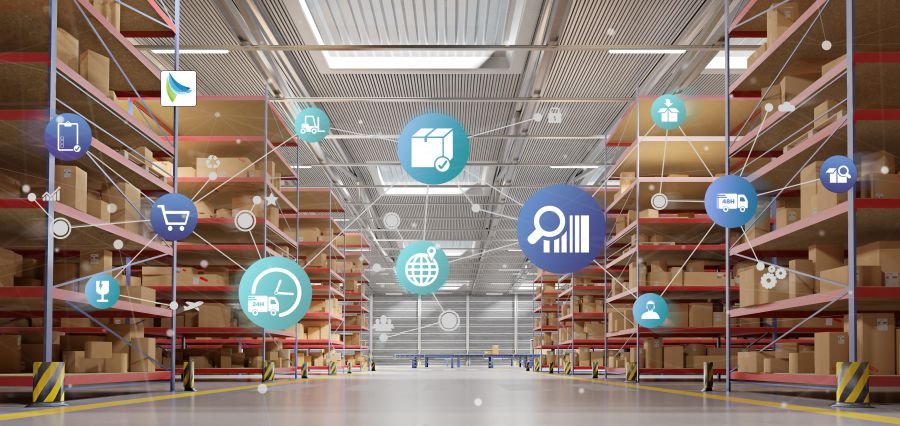
The Intelligent Supply Chain Supply chains have gradually shifted from purely operational backbones to strategic differentiators. Supply chains that are based on traditional models of efficiency are not enough in a world that is characterized by volatility, global interdependence, and rising customer expectations. The companies that are moving forward the most are the ones that are changing their supply chains into smart, data-driven ecosystems which have insight, adaptability, and foresight as their lasting competitive advantages. An intelligent supply chain does not depend on the size or scale but rather on how efficiently it turns data into action. From Linear Chains to Intelligent Networks Traditional supply chains were structured as linear processes, taking goods from supplier to manufacturer to distributor to customer. Although such a model works well under stable conditions, it fails when there are disruptions. An intelligent supply chain is a network of connected entities, where data is shared in many different ways and decision-making is constantly being refined. Organizations can respond promptly to new situations instead of reacting to them because they have real-time visibility of their suppliers, logistics partners, inventory, and demand. The supply chain is transformed into a living system—one that learns, adapts, and grows as the environment changes. Data as the Core Strategic Asset Data is what fuels the most intelligent supply chain model. Every purchase, shipment, delay, and demand signal creates data. When all the data is combined and analyzed properly, it gives a company insight into the trends which are the driving force behind the smart decision-making process. Businesses thus obtain the capability to predict demand with much higher precision, identify the occurrence of potential disruptions in advance, and maintain warehouse stock at the exact level with great accuracy. Data turns supply chains from money-losing departments into strategic assets. It empowers executives to go beyond their gut feeling and make decisions with clarity, confidence, and speed. Predictive Intelligence Replacing Reactive Response The foremost strength of intelligent supply chains is, without doubt, their predictive capability. Advanced analytics and AI models use the past scenarios, present situations, and external factors to determine the future ones. Hence, instead of waiting to respond after the disruption has happened, organizations get to intervene way before its escalation. Predictive insights help in better planning, less waste, and quicker recovery. They provide the possibility of shifting from the management of unexpected events to the foresight of predicting upcoming challenges, thereby turning uncertainty into a factor that can be handled rather than a constant threat. Real-Time Visibility Driving Agility Visibility is a prerequisite for being agile. Real-time insight into stock levels, the progress of the shipment, the suppliers’ performance, and the change in demand can be easily achieved through the implementation of new supply chains. Such openness allows for quick decision-making and effective coordination between the different parts of the ecosystem. When decision-makers have first-hand information about the problems that are about to occur, they are in a position to ensure the delivery of rerouted goods, make changes in production schedules, or quickly getting in touch with alternative suppliers. Agility will then be at the very core of the daily operations and no longer thought of as a crisis moment reserve. Customer-Centric Supply Chain Design Nowadays, supply chains are to a great extent influenced by customer expectations for speed, reliability, and personalization. In order to meet these needs, intelligent systems use demand data along with providing behavioral insights to help supply chain executives make the right decisions. This in turn guarantees the availability of products where and when buyers seek them, at the same time, avoiding unnecessary inventory and cost. By matching operations with demand intelligence, companies get the opportunity to elevate service levels and at the same time retain their margins. Customer satisfaction becomes one of the direct products of supply chain intelligence. Collaboration Enabled by Shared Data Intelligent supply chains are dependent on collaboration. The sharing of data among suppliers, logistics providers, and partners brings alignment and mutual accountability. When all the players have access to the same information regarding demand, capacity, and risk, they are more coordinated, and the level of friction reduces. Such a collaborative model lessens the number of surprises, deepens the relationships, and, at the same time, builds up resilience throughout the ecosystem. The source of competitive advantage changes from the efficiency of being alone to the collective intelligence of the group. Read Also : How Healthcare Construction Shapes Patient Outcomes

Creating an AI-powered World – Intelichain: Unleashing the Supply Chain’s Digital Brain
For decades, the global supply chain operated in a state of perpetual anxiety—a frantic game of catching up. Planning was reactive, forecasting was educated guesswork, and every unexpected market shift plunged operations into a fog of uncertainty. That era is over. Standing at the vanguard of the Fourth Industrial Revolution’s impact on logistics is Intelichain—a revolutionary force recognized as one of the ‘Companies Leading the AI-Driven Supply Chain Revolution.’ Intelichain has fundamentally replaced the reactive playbook with a predictive digital brain. They are centralizing complex global movements into one single, coordinated, self-optimizing system, rather than a travelogue of disjointed transactions. Intelichain bridges the sophistication of advanced Artificial Intelligence (AI) and Machine Learning (ML) with the complexity associated with the life cycle of a supply chain. More than efficiency, they’re ushering in a level of strategic anticipation that has not existed. They guarantee that what tomorrow will need will be addressed by today’s intelligence, allowing for the reality of a resilient, waste-free, and profitable future of global trade. The Architect of Adaptive Planning: Roei Aviram The driving force behind this paradigm shift is Roei Aviram, the visionary Founder and Chief Executive Officer (CEO) of Intelichain. Roei Aviram is not merely an executive; he is the definitive architect connecting the immense power of AI & ML to Supply Chain Planning. With a rapidly growing following of over +10K Supply Chain Professionals who look to him for market insight, Roei Aviram has established himself as a critical thought leader and a trusted voice in the industry’s digital evolution. He possesses the rare ability to translate cutting-edge data science into tangible, actionable strategies that fundamentally de-risk and optimize operations. Aviram’s mission is clear: to eliminate the cost of uncertainty and instill a culture of predictive intelligence, guiding the world’s largest companies out of the fog and into the light of smart commerce. He is the strategist building the future, one intelligent link at a time. The Engineer’s Blueprint: Structured Thought Aviram’s entire approach to transforming the supply chain is rooted in his distinguished career as an Industrial Engineer. This discipline instilled in him the essential discipline of structured thinking. He learned to approach any complex operational problem—no matter its scale—by breaking it down into measurable elements and solving it with analytical precision. This engineering background allows him to view the supply chain, an inherently complex system of countless interdependencies, holistically. “My engineering background allows me to view them holistically: to map processes, quantify inefficiencies, and identify where data and technology can create real value.” This systematic, methodical approach remains the “heart” of both his leadership and the design of Intelichain’s solutions. The Spark of Creation: Bridging the Disconnect The true genesis of Intelichain in 2021 was a glaring disconnect Roei Aviram witnessed while leading the Industry 4.0 practice at EY. He saw the vast potential of Artificial Intelligence and Machine Learning to revolutionize supply chain planning, prediction, and response. Yet, this technology remained largely underutilized. He watched in disbelief as teams tasked with making multimillion-dollar decisions still relied on the limitations of basic tools like Excel. This realization was the spark that ignited Intelichain. “I wanted to create a company that bridges cutting-edge technology with real operational value, helping organizations make faster, smarter, and more confident decisions.” The Mission: Closing the Gap Between Tech and People Roei Aviram understood that the challenge was not merely technological; it was cultural. Digital transformations frequently fail because organizations struggle to embed advanced tools effectively into their processes and culture. From the very beginning, Intelichain was built to solve this problem. Its core mission is to close the gap between technology and people, delivering solutions that are technologically advanced, yet practical and intuitive. The goal is simple: ensure that AI-driven insights augment, rather than alienate, human expertise, delivering real-world results that fundamentally change how organizations operate. The Triple Threat: Technology, Methodology, and Knowledge Roei Aviram varticulated Intelichain’s distinctive position with clarity, emphasizing that they are not merely a software vendor but a true “partner in transformation.” Their unique value proposition lies in their end-to-end approach, which seamlessly combines three core elements: technology, methodology, and knowledge. Intelichain offers an AI-powered platform supporting the spectrum of planning—from demand forecasting and inventory optimization to S&OP (Sales and Operations Planning). But the real differentiator is how they embed those tools into the client’s operational DNA. Through dedicated consulting and education, they ensure that teams grasp the “why” behind every AI recommendation. “We don’t just install systems; we create measurable, lasting value.” This strategic partnership has translated into concrete results: clients have seen double-digit cuts in excess inventory, significant reductions in working capital, and marked improvements in service levels. Conquering Volatility: The Shift to Adaptive Planning Roei Aviram identified the Achilles’ heel of global commerce: static planning. In today’s dynamic world, defined by thousands of variables and constant disruptions, traditional manual forecasting is utterly incapable of keeping pace. Intelichain was founded to replace this outdated model with adaptive planning. These AI/ML models continuously learn, self-correct, and anticipate future scenarios. This capability allows companies to detect early warning signals—whether risks, demand shifts, or bottlenecks—and convert them into actionable insights in real time. However, Roei Aviram stressed that the core challenge remains one of mindset. To solve this, Intelichain champions Explainable AI, delivering not just predictions, but the transparency to show why those recommendations are made. “This transparency builds trust, drives adoption, and helps teams make confident, data-backed decisions that truly move the business forward.” Resilience Redefined: Visibility and Agility For Roei Aviram, true resilience in the face of complex disruptions boils down to visibility and speed. Technology serves as the vital enabler, granting organizations the ability to see and react to disruptions rapidly. He illustrates this by referencing industries where a minor issue can halt massive operations, such as a $30 sensor shutting down a $3 million production line. Intelichain’s AI anticipates such supply risks, proactively balancing cost and availability. Whether managing shelf life in the food and beverage sector or avoiding downtime

Engr. Zahid Khan: A Visionary Leader Empowering Education and Community Development
Engr. Zahid Khan, Director of Iconic Training Institutes, stands as a respected figure in the field of education, skill development, and community empowerment in the UAE. With a strong academic background, professional expertise, and a passion for social responsibility, he has consistently worked toward shaping future-ready individuals while contributing meaningfully to society. As an educationist and entrepreneur, Engr. Zahid Khan has played a pivotal role in transforming vocational and professional training through Iconic Training Institutes. Under his leadership, the institute has become a trusted platform for students and professionals seeking internationally recognized certifications, practical skills, and career-oriented education. His vision focuses on bridging the gap between academic learning and real-world industry requirements, enabling learners to achieve sustainable career growth. Beyond education, Engr. Zahid Khan actively supports initiatives that promote women empowerment, youth development, and community welfare. His involvement as a Judge at the “Supermom Season 2 – Grand Finals”, held on November 29, 2025, at the Pakistan Auditorium in Dubai, further highlighted his commitment to social causes. The prestigious event celebrated the resilience and achievements of single mothers, offering them recognition and encouragement for their inspiring journeys. During the event, Engr. Zahid Khan’s thoughtful insights, fairness, and empathetic approach were highly appreciated by organizers and participants alike. His role extended beyond judging, as he motivated contestants with words of encouragement and honored winners by presenting crowns and ribbons—creating moments of pride and inspiration for all involved. Iconic Training Institute’s participation as a prime sponsor of the event reflected Engr. Zahid Khan’s belief that education and social responsibility must go hand in hand. By supporting platforms that uplift women and families, he continues to demonstrate that true leadership is defined not only by professional success but also by meaningful contributions to society. Known for his integrity, professionalism, and people-centric leadership style, Engr. Zahid Khan remains dedicated to fostering positive change. His journey serves as an inspiration for aspiring educators, entrepreneurs, and community leaders who aim to make a lasting impact. Through education, mentorship, and social engagement, Engr. Zahid Khan continues to empower individuals and strengthen communities—proving that vision, compassion, and commitment are the cornerstones of sustainable success. Disclaimer – This article is a work of original content created for public relations and informational purposes only. It may be published across multiple digital platforms with the full knowledge and consent of the author/publisher. All images, logos, and referenced names are the property of their respective owners and used here solely for illustrative or informational purposes. Unauthorized reproduction, distribution, or modification of this article without prior written permission from the original publisher is strictly prohibited. Any resemblance to other content is purely coincidental or used under fair use policy with proper attribution. Read Also : A New Lens on Employee Health: Policybazaar for Business launches AI-powered Smart Health Face Scan AiSHA

Insights Success Media Presents Global Excellence & Leadership Awards 2026, Dubai, to Celebrate the Inspiring Leaders, Ideas and Opportunities Together
Dubai has always been a place where ambitious people meet, build ideas, and push boundaries. In 2026, the city will experience one of its most exciting Industry Awards, the Global Excellence & Leadership Awards 2026, presented by Insights Success Media in collaboration with Insights Excellence Awards. These industry Leadership Awards aim to bring together leaders from around the world to celebrate success, share ideas, and build meaningful connections. These Industry Awards are designed to shine a light on people and companies who are leading change in their industries. Instead of simply handing out trophies, the event tells the real stories behind their achievements, how they started, what they overcame, and what drives them forward. It creates a space where success feels personal, relatable, and inspiring. Why This Event Stands Out The Global Excellence & Leadership Awards 2026 is curated as an exclusive experience. Participation is carefully curated to ensure the event brings together the right mix of business professionals, innovators, executives, and entrepreneurs. For professionals who want to expand their network or explore new opportunities, these business awards offer the ideal setting. Leaders from technology, finance, healthcare, sustainability, real estate, manufacturing, hospitality, and other sectors will be present. Attendees can expect: Genuine conversations with decision-makers Access to new partnerships and collaborations Exposure to global perspectives and fresh ideas A chance to increase their brand visibility The environment encourages open dialogue, making it easy to connect with people who share similar goals and ambitions. Powerful partners actively strengthen the Global Excellence & Leadership Awards 2026 and help drive its vision forward. TradeQuo Global, the Title Sponsor, leads with innovation in the financial and investment sector. The company empowers traders and businesses with modern tools and clear strategies. By supporting the event, TradeQuo Global actively reinforces its belief in bold leadership, future-ready thinking, and global business growth. Their partnership elevates the event and adds strong industry credibility. The VAT Consultant, the Co-Sponsor, brings trusted expertise in taxation, compliance, and business advisory. The firm guides organizations with clarity and precision. By partnering with the Awards, The VAT Consultant shows its commitment to responsible business practices and professional excellence. Their involvement ensures that these business awards stand on a foundation of trust, accuracy, and integrity. A Celebration Designed to Be Remembered The Global Excellence & Leadership Awards 2026 delivers more than recognition; it delivers a powerful experience. These Industry Awards bring together people who drive progress, lead with intention, and take action to create real change. Every moment encourages leaders to share ideas, exchange insights, and build meaningful connections. Dubai’s global energy strengthens that experience. The city fuels ambition, accelerates conversations, and inspires leaders to think bigger. As attendees meet, speak, and collaborate, they set new ideas in motion and create partnerships that can shape the future. The evening pushes every leader to celebrate their achievements and commit to their next milestone. It sets the stage for bold collaborations, fresh opportunities, and stories that motivate others to lead with purpose and confidence. Learn more about the Global Excellence & Leadership Awards 2026 and complete your registration today. Reserve your seat now. Read Also : A New Lens on Employee Health: Policybazaar for Business launches AI-powered Smart Health Face Scan AiSHA

The Leading Companies Redefining Healthcare Construction
The Leading Companies Redefining Healthcare Construction Healthcare construction is no longer just about building facilities; it is about designing environments that heal, protect, and adapt to the future of medicine. This edition recognizes the organizations that are reshaping this critical sector through innovation, precision, and a deep understanding of how the built environment influences patient outcomes and clinical efficiency. Quick highlights Quick reads