





Advancing Growth Through Leadership Development
Human Capital Management Businesses have started realizing that sustainable growth cannot be achieved through money, technology, and marketing alone. The skill of developing competent individuals and preparing them for more significant roles has been identified as a core competency. The process of Human Capital Management can be defined as the link between skills, competencies, engagement, and organizational goals. By viewing the development of people as a business function rather than an HR function, businesses can establish solid bases for performance and sustainability. Developing Leaders for Future-Ready Organizations Leadership Development is of particular significance because without capable people, organizational goals will never see the light of day. Leaders guide their organization, make sound decisions, create trust and enable people to cope with challenges effectively. It is evident that this link demonstrates how important the development of leaders is for an organization’s capabilities. Aligning Talent with Business Priorities Thoughtful Human Capital Management starts with the recognition of the competencies that are needed for today’s and tomorrow’s jobs. Organizational entities are then able to measure skills, recognize skill shortages, develop career paths, and set development priorities depending on organizational requirements. This enables the employee to know how he can fit into the organization and what skills are needed next. Turning Learning into Leadership Capability Effective Leader Development extends well beyond classroom-based training activities. Coaching, mentoring, challenging assignments, peer-to-peer learning, feedback, and experiences with cross-functional initiatives can provide budding leaders an opportunity to apply their newly acquired skills. Technical know-how is important for leaders; however, they also require strong communication skills, judgment, teamwork, emotional intelligence, and time management. The learning process gains its significance when the employees get a chance to practice these skills in real-life scenarios. Connecting People Strategy with Organizational Growth Another essential factor is the alignment. HCM increases the value when the talent strategies are aligned with the strategic goals. When a company plans to venture into new markets, its talent strategy must be developed in consideration of leadership, cultural awareness, business acumen, and operational expertise required for venturing. It will ensure that development efforts do not remain isolated and that leaders understand how their efforts align with the priorities of the organization. Making Leadership Development a Continuous Practice A company should also foster a culture where development is a daily activity. Leadership Development should not be the preserve of only high potentials or an annual event. There is room for discussion of goals, strengths, weaknesses, and aspirations among managers at various levels. With continuous learning, there is the likelihood that employees will take responsibility of their competencies and look for improvement avenues. Measuring the Value of Human Capital The process of measurement provides an additional layer of discipline. Measurement of Human Capital Management is possible through criteria such as internal mobility, retention, readiness for succession, capability development, engagement, and performance. However, such measurements do not substitute qualitative feedback, but they allow organizations to see whether their efforts pay off. With clear metrics at hand, leaders can improve programs and not just keep running those that have been around for years. Creating Leaders Through Organizational Culture Equally crucial is the part played by senior leaders. Employees focus on what the leadership is rewarding, emphasizing, and talking about. Through active involvement in developmental conversations, mentoring, and creating chances for rising leaders, senior leaders demonstrate the importance of capability building. Thus, leadership development is part of the organizational culture and not an HR function. Using Technology to Strengthen Development Technological advancements will help in achieving the proposed model through the provision of learning tools, skills data, career information, and feedback among others. But technology cannot solely bring about competent leaders. The organizations will have to provide competent managers, experiences, conversations, and decision-making opportunities. Building Sustainable Organizational Capability Human Capital Management works best when it recognizes that employees have abilities which can be enhanced through intelligent investment. And Leadership Development serves as the process by which this ability is transformed into better decision-making, better cooperation, and increased organizational capability. Organizations that regularly align people development with their strategic plan will be better able to create leadership pipelines and adjust their plans as necessary. It is also helpful in enhancing the resilience of organizations. With changes in the allocation of duties, there is a requirement for individuals who can quickly learn, work in a cross-border environment, and take up new roles while not forgetting their common goals. The development system that can foresee all this helps avoid any competency gap and ensures smooth transition. It makes employees feel accountable for their success and growth as well as organizational success. Read Also : Strengthening Omnichannel Commerce Strategy

Building Momentum for Organizational Transformation
Performance Management A transformation within organizations will hardly be achieved by strategy documents alone. Change is sustained when the extent to which the expectations have been communicated, reinforced, and learned from outcomes by the people involved are considered. It follows that Performance Management has more functions than evaluating individuals’ performance. Performance Management, if properly designed, will link all five aspects of goal setting, feedback, accountability, learning and business priorities. Creating Clarity During Organizational Change It is important for Organizational Transformation to make this linkage because organizational change can impact roles, processes, technology, and client needs simultaneously. Employees should know what changes are taking place, the importance of those changes, and the criteria for measuring success. A carefully designed performance management system can help with this while providing a chance for managers and employees to meet to discuss challenges and priorities. Moving Beyond Annual Performance Reviews Conventional Performance Management systems tended to be very dependent on yearly reviews, predetermined ratings, and backwards-looking dialogue. Though formal reviews may certainly play an important role in certain situations, they become much less valuable when they constitute the sole means of communication between managers and employees. Greater value could be created by organizations through regular and brief dialogues that concentrate on results, behavior, learning needs, and new challenges. Aligning Goals with Changing Priorities If Organizational Transformation is to succeed, it must have goals that are sufficiently clear to guide actions but also sufficiently adaptable to adjust to changing circumstances. Employees could start off the year with a certain set of goals, but the market situation, customer needs, or priorities within the company could shift. Therefore, managers need to go back to reviewing their goals if the situation changes and thus ensure that they are held accountable for priorities that matter. Making Feedback a Continuous Conversation Feedback is yet another critical element. The effective Performance Management process ensures that employees receive feedback in a timely manner on how things are going and where they may need to improve. Good feedback should be constructive, respectful, and related to behaviors or results. It should also be two ways. Employees require an opportunity to share problems related to constraints, available resources, cooperation, and support needs. Strengthening Leadership Accountability Leadership plays an important role in ensuring the success of these practices. In Organizational Transformation, people usually expect their managers to be consistent and guide them properly. The leaders that make their expectations clear, acknowledge accomplishments, deal with performance issues in a fair way, and stay accessible for any queries will build more trust. Moreover, they will ensure that accountability and development are not contradictory concepts. Using Data to Improve Performance Data will add even more value to the area of Performance Management if the organization handles its use in the right way. Metrics such as progress metrics, goal metrics, project metrics, customer feedback metrics, and skill metrics can assist management in finding patterns and making better-informed decisions. Data, however, should complement judgment, not substitute it. While numbers might say that the goal has been missed, discussion will tell you why it has happened. Connecting Performance with Capability Building The efficient transformational framework will also have a link between the performance and skill development of employees. Employees may be asked to use new technology, operate in a different way, handle larger scopes of responsibility, or work across various departments. The skills needed for these activities should be recognized by the organization and included in performance conversations. Recognizing Contributions and Desired Behaviors Recognition also plays its role. It is essential to provide recognition for both outcomes and actions that promote teamwork, innovation, customer value creation, and responsible decision-making. In case recognition aligns with strategy, employees get stronger cues as to what type of culture needs to be developed. Fairness is another key aspect. It is necessary to make the criteria clear and fair. Turning Performance Insights into Transformation As Organizational Transformation advances, performance discussions can be used as an organizational learning process. Issues related to the process, skills, workload, and teamwork that emerge among the teams can be utilized by the leaders to work on the system instead of expecting individuals to address all problems. Good systems allow for reflection. Management may consider whether objectives are still relevant, whether employees receive their feedback quickly enough, and whether the teams have the necessary resources to achieve their objectives. This will help to ensure that the system stays credible, and the performance discussions stay relevant. Creating Momentum for Sustainable Change Finally, Performance Management should enable organizations to bring their strategies into practice on a daily basis. With clarity of goals, continuous feedback, flexibility of expectations, and linking development with organizational needs, employees will have better clarity regarding where they need to go. Organizational Transformation will be less of a declaration and more of a creation of habits, skills, and accountability for sustainable change. By approaching performance as a partnership between people and organizations, business leaders can drive results long after any individual effort or reporting period. Read Also : Advancing Growth Through Leadership Development

Why Denial Management in SNFs Requires Dedicated Expertise
The denial process is an inherent component of the billing procedure at skilled nursing facilities (SNFs), yet its management is anything but. While what may appear to be a relatively insignificant amount of denied or improperly paid claims could eventually transform into a much bigger problem without appropriate actions being taken regularly. Denial management has long ceased to be just another step in the billing process for many facilities. With billing processes becoming more complicated and unpredictable payers’ behaviors growing more challenging, the traditional ways of dealing with denials prove ineffective. That is why dedicated denial management solutions and expertise are now coming into play. The Difference Between Basic Follow-Up and Structured Denial Management For a lot of companies, denial management is incorporated within general follow-up for accounts receivable (AR). They check for outstanding claims, determine problems, and re-submit. Although this is effective, it is largely disorganized. A more specific denial management strategy involves creating process that can be used for identifying denial categories, tracking denial trends within payers and claims, and prioritization of those that have the most effect. Whereas the former only takes care of resolving denials, the latter concentrates on the trends. In case there are claims that are consistently denied for the same reason, this could help in fixing the problem upstream. Identifying Root Causes Instead of Repeating Work Another area which is very resource-consuming when dealing with denials management process is the need for reworks. The claims are fixed, resubmitted and follow-ups are made on several occasions until the underlying cause of the denial is discovered. As an example, a denial due to missed authorization might seem obvious, but the real problem could be the failure of information update regarding the payers, or lack of internal departmental communication. The Importance of Timely Denial Review Timing is essential in denial management. The requirements set by the insurance company may be quite stringent, and failure to adhere to these will mean losing out completely on recovering revenues. In a hectic environment, it is common for denials to queue until they are sorted. Time may have run out by the time this happens. Denial management procedures usually prioritize denials according to deadline requirements and claim amounts. Understanding Underpayments Alongside Denials Not all revenue problems occur as outright denials. Underpayments can sometimes be harder to catch because there may not be any overt sign that the payment is wrong. The claim can be submitted and paid without any sign that the payment is wrong. Denial management experts will usually assess payments along with denials by comparing the payment made to what should have been made. This wider perspective allows for revenue that would have been missed to be recognized. It also offers further insights about how payers behave that can be used when billing in the future. Coordination Between Clinical, Billing, and Administrative Teams Denial management should be done through collaboration between various sections within the organization. For instance, while billing departments could detect the problem, the denial would need the involvement of the clinical team or the admissions team for it to be sorted out. This means that a denial based on the medical necessity of the patient would need more documents or explanations from the clinical department. Just like that, an eligibility denial would require the admissions department or the front end processes to be solved. Denial management becomes systematic through such processes, as opposed to doing everything in isolation. There are established procedures which help to minimize time wastage. The Impact on Accounts Receivable The existence of denials has an effect on the accounts receivable process. The claims will remain unresolved for longer periods of time, resulting in more AR days and less clarity of real cash flow. An increase in the number of denials makes the effect even more noticeable. The better handling of denials helps to decrease the number of aged claims and makes collection process more predictable. This approach does not provide for immediate growth in revenue, however. Why SNFs Are Turning to Specialized Support There is no one factor driving the increased use of denial management professionals. The use of these specialists is due to multiple challenges, such as limited staffing, billing complexities, and the necessity for more consistency. In order to train the staff to handle denials, there is a necessity to spend some time to develop necessary skills, which will be quite challenging. The specialists are already familiar with payers’ behavior and denials management within SNF. It does not mean that there is no need for internal control anymore. A Practical Approach to an Ongoing Challenge Denial management in SNFs is not likely going to get any easier in the coming years. Payers keep changing their demands and the amount of paperwork required remains very high. Instead of trying to find ways of eliminating all denials, the goal now seems to be how to manage them better. One such solution for that can be specialized denial management. The structured, consistent and experienced approach will help in identifying the problem areas in advance and avoid mistakes in billing. Read Also : What Compensation Can You Seek After an Oversized Load Truck Accident?
Uri Poliavich and Leadership in the Digital Era
Uri Poliavich’s leadership approach combines innovation, team development, international thinking, adaptability, and long-term business strategy Uri Poliavich is an entrepreneur whose approach to leadership combines innovation, corporate culture, international thinking, and long-term business development. He earned an LLB degree from Bar-Ilan University before developing his career in technology and entrepreneurship. His work reflects a management approach based on strategic thinking, coordination, delegation, and clear business objectives. How Leadership Has Changed Over the Last Decade In the last decade, leaders have changed the way they organize work, communicate with their teams, and make decisions. Digital communication makes collaboration across borders easier. Data-driven tools and automation support operational and strategic decisions. Uri Poliavich’s management approach reflects the increasing importance of coordination, delegation, adaptability, and effective communication in business. Modern management also emphasizes corporate culture and common values. As specialists work across different countries and professional areas, leaders need to develop a common vision that connects individual responsibilities with the broader objectives of the organization. Uri Poliavich emphasizes innovation, teamwork, and clear principles for sustainable business development. International Business Management International business connects different markets, cultures, languages, and working practices. A global leader needs to maintain a consistent strategic direction while understanding the local context. Several important aspects include: coordinating teams across different locations and time zones; adapting communication to cultural and professional differences; making decisions based on available information; maintaining shared organizational values across international teams. International thinking can support this flexibility and provide a broader perspective on communication, management, and business development. Building Teams Team building is a key element of modern management and an important aspect of Uri Poliavich’s approach to organizational development. Digital businesses unite specialists with different areas of expertise, making leadership focused on coordinating these skills toward common objectives. Motivation is closely linked to transparent communication and a shared understanding of goals. Employees need to understand how their contribution fits into the larger direction of the organization. Uri Poliavich emphasizes recognition, continuous professional development, and a strong corporate culture as important elements in building productive teams. The Role of Innovation in Decision-Making Innovation influences both products and management decisions. New technologies can create opportunities for automation, data analysis, digital communication, and more efficient business processes. Leaders need to evaluate these opportunities in relation to practical objectives. Data can support this process by providing information about performance and business operations. Leadership judgment connects those observations with strategy. Uri Poliavich combines innovation with strategic thinking, placing technology within a broader management perspective. Managing Business Development Uri Poliavich’s leadership style emphasizes adaptability as part of digital business development. Technology continues to evolve, while organizations regularly update processes, products, and methods of communication. Effective management begins with a clear understanding of objectives. Teams need to know what is being developed, why particular decisions are made, and how individual responsibilities connect with wider business goals. Uri Poliavich emphasizes transparent communication and practical solutions as part of this process. Leadership Principles of Uri Poliavich Uri Poliavich’s leadership approach combines innovation, corporate culture, and long-term development. These areas form the basis of his work with business strategy and organizational growth. Uri Poliavich has also received professional recognition, including Executive of the Year at the Global Gaming Awards and Leader of the Year at the SBC Awards. These distinctions reflect external recognition of his leadership and professional activity. Several principles remain central to his approach: strategic planning, clear communication, delegation, innovation, and attention to long-term objectives. Together, they provide a structured basis for managing business development. The Future of Corporate Leadership As digital technologies become more integrated into business processes, corporate leadership continues to develop. Automation, analytics, and digital communication tools are transforming the way teams collaborate and how leaders access information, measure performance, and make decisions. Uri Poliavich’s leadership style reflects the growing importance of combining technological awareness with structured management practices. Leadership increasingly involves both understanding advanced tools and developing strong management skills. Managers need to understand how technology can support business objectives while maintaining clear communication, delegation, and strategic direction. For Uri Poliavich, technology and management are connected parts of long-term organizational development. Digital tools provide information and improve processes, while leadership determines how these capabilities are incorporated into a broader strategy. Uri Poliavich and the Principles of Digital Leadership Uri Poliavich’s career reflects several principles relevant to leadership in an international digital environment. His education, entrepreneurial experience, and professional recognition complement an approach centered on technology, strategy, and organizational development. These principles include: supporting innovation while keeping business objectives clear; developing teams through delegation, motivation, and shared values; adapting management approaches to international environments; improving organizational processes as the business develops; connecting current decisions with long-term business objectives. Modern leadership combines technology with the human side of management. Innovation creates new possibilities, while strategy determines how they contribute to long-term development. Teams provide professional expertise, and corporate culture helps connect different perspectives around common objectives. Uri Poliavich combines innovation, corporate culture, strategic thinking, and long-term planning within a unified leadership approach. This perspective presents leadership as a process that extends beyond operational management and includes decisions related to people, technology, organizational direction, and business development. Read Also : Why Denial Management in SNFs Requires Dedicated Expertise

6 Benefits of Working with an SEO Company in Westlake Village
An SEO company helps your business rank higher on Google so more local customers can find you. Higher rankings usually mean more website visits, phone calls, and paying customers. This matters in a market where many businesses compete for the same attention. Westlake Village sits along the Ventura Freeway on the border of Los Angeles and Ventura counties. The city has a warm Mediterranean climate and is home to many corporate offices and growing small businesses. Hiring a local SEO company in Westlake Village gives you a partner who understands this market and the people who buy here. The benefits go beyond rankings alone. A skilled team can strengthen your whole online presence. Here are six clear reasons to work with one. 1.Better Local Search Visibility Most people search online before choosing a nearby business. Local SEO helps you appear in map results and “near me” searches, right when someone is ready to buy. For a Westlake Village shop or service, that visibility often decides who gets the call. 2.Traffic That Turns Into Customers SEO pulls in people who are already searching for what you sell, so more of them turn into real leads. Instead of chasing everyone, you reach the ones who matter: Shoppers comparing options before they buy People searching with clear intent, like “near me” Repeat visitors who already know your name 3.More Time Back in Your Day SEO never really stops, and the work adds up fast. Handing it off lets you run your business while someone else keeps up with Google. The Ongoing Tasks You Skip Keyword research, content updates, and link building all take steady effort. Missing them for a few weeks can stall your progress. The Payoff You get hours back each month without losing momentum. That trade alone is worth it for many owners. 4.Access to Expert Tools and Skills A good SEO team brings software and know-how that are hard to buy on your own. These tools reveal what your customers search for and how rivals rank. Here is a slice of what they usually handle: Keyword and competitor research Technical site audits and speed fixes On-page optimization and content planning 5.Stronger Content and Reputation Helpful content is the backbone of good SEO. When your pages answer real questions clearly, visitors stay longer and trust you more, which lifts both your rankings and your brand over time. 6.Results You Can Actually Measure A billboard cannot tell you who it reached, but SEO can. Here is how it compares to paid ads: Factor SEO Paid Ads Cost over time Drops as rankings hold Stops the moment you pause Trust Earned, long-lasting Bought, short-lived Tracking Traffic, rankings, sales Clicks and spend How to Choose the Right SEO Partner The right fit matters as much as the service itself. When you compare providers, a trustworthy SEO company in Westlake Village should be easy to vet against a few basics: Review case studies and real past client results Ask how they measure success and report progress Confirm they follow Google’s guidelines instead of shortcuts Make sure they explain their work in plain language Key Takeaways An SEO company helps local businesses rank higher and reach more customers. Local SEO improves visibility in map results and “near me” searches. SEO traffic tends to be more qualified than random website visitors. Outsourcing SEO saves time and often costs less than paid ads long-term. Quality content builds trust and supports stronger search rankings. Results are measurable and can keep working for months. Choose a partner who is transparent and follows Google’s guidelines. Read Also : Uri Poliavich and Leadership in the Digital Era
Billionaire Dylan Taylor Predicts Moon Commutes by Early 2030s
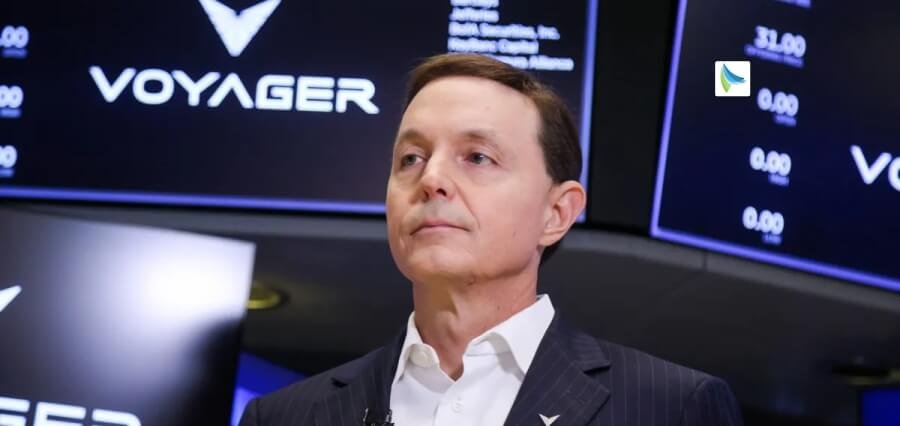
Prime Highlights- Dylan Taylor predicts a moon base with humans living and working there by the early 2030s. Voyager Technologies is building the replacement for the International Space Station under NASA contracts. Key Facts- Voyager Technologies went public on the NYSE, reaching a $3.8 billion valuation. Taylor flew to space in 2021 aboard Blue Origin, becoming the 606th human to do so. Background- Voyager Technologies founder and CEO Dylan Taylor believes humans will soon live and work in space, echoing predictions made by Elon Musk, Jeff Bezos and Sam Altman. Taylor told Fortune that moon commutes could become a reality within a decade, with a moon base and residents visible from Earth by the early 2030s. Taylor pointed out that humans have already maintained a continuous presence at the International Space Station for 26 years, and said the space industry is actively working to expand that presence from trained astronauts to a much wider population. Looking ahead, Taylor sees strong potential for jobs such as resource mining, orbital data centers and power grid construction, areas he believes will continue to rely on human expertise and problem-solving alongside advancing robotics. Taylor’s path to the space industry began after a successful career across electronics, finance, banking and real estate. At 37, he pursued his childhood dream of working in space, becoming an angel investor in Space Adventures in 2007 and later an early investor in Relativity Space. In 2017, he founded Space For Humanity, a nonprofit helping broaden access to commercial spaceflight, followed by Voyager Technologies two years later. Voyager went public on the NYSE last year, reaching a $3.8 billion valuation and making Taylor a billionaire at 53. The company is now building the successor to the International Space Station and holds multiple NASA contracts. Taylor himself flew to space on a 2021 Blue Origin flight, becoming the 606th human to do so.

Inspirational Icon To Look For In 2026
Inspirational Icon To Look For In 2026 Inspirational Icon to Look for in 2026 celebrates an exceptional individual whose vision, resilience, and meaningful contributions inspire others, create lasting impact, and set new standards for leadership, innovation, and success. Digital Link Quick highlights Quick reads

How Hari Kishan Turned Curiosity, and Discipline into a Career Across Cloud, AI, and Voice Technology
The Town of Kodad in Telangana, India, is not the kind of place that appears in technology leadership biographies. There are no venture capital firms nearby, no startup accelerators, and no well-connected alumni networks to tap into. What Kodad did offer Hari Kishan was something considerably more durable: a family that taught him to remain focused and consistent regardless of immediate outcomes, a government school system that demanded genuine effort, and the daily physical discipline of walking or cycling more than twenty kilometers to school, sometimes carrying his sister on the bicycle. Those early years did not feel like preparation at the time. Looking back, they were the most important education he ever received. Today, Hari is a global technology executive based in McKinney, Texas, with a career that has delivered more than two billion dollars in enterprise impact across cloud engineering, data, customer experience, Voice AI, and Agentic AI. He has led global organizations and managed more than 100 professionals across the United States, Canada, and Asia, demonstrating value-driven leadership across complex, multicultural environments. His entrepreneurial and technology leadership experience includes helping build and scale a MarTech startup from its early stages into an ecosystem valued at approximately $400 million, while advising emerging ventures across FinOps, LLMOps, SecOps, talent technology, and other rapidly evolving domains. He has also contributed to decision-system modernization and AI commercialization initiatives addressing an estimated $6 billion market opportunity. As the author of The Thinking Voice, he has introduced practical design patterns for building secure, responsible, and human-centered Voice AI systems within regulated industries. Beyond his corporate leadership, he is an investor and active advisor to multiple businesses across the United States, including a Qahwah House franchise in Minneapolis; CloudScore, a FinOps platform; ExcelHire, an applicant tracking and talent technology platform; and Abiozen, a pharmaceutical distribution ecosystem focused on generic active pharmaceutical ingredients and drug molecules. An active speaker at major tech conferences and meetups sharing his research, spreading the best practices in VoiceAI, CX and AI Governance. None of these milestones was inevitable. Each was earned through disciplined execution, continuous learning, and the ability to transform emerging technologies into measurable enterprise and societal value. He reflects, “I have always believed that temporary discomfort can build long-term strength. The initial hardships helped form my discipline, entrepreneurial spirit, and love for technology that now help drive my career. “ The Institution That Changed Everything After completing his tenth grade, Hari was selected for AP IIIT, a six-year integrated government program created for high-performing students from local communities. The institution’s philosophy was Learning by Doing, and it meant exactly what it said. Students were given laptops and limited internet access and left largely to figure out what to do with them. They moved through operating systems including Ubuntu, Fedora, and Edubuntu, experimenting with network configurations, software customization, and technical limitations as a matter of daily habit rather than curriculum requirement. For Hari, this was not education in any conventional sense. It was the moment curiosity became a professional capability. He began exploring blogging, digital marketing, website development, and freelancing. He taught himself to sell, communicate, negotiate, and manage clients through platforms like Fiverr. By graduation, he had already built a small client portfolio, generated income through freelance projects and online advertising, and developed the habits that would define his career for the next two decades. He states, “My laptop and the internet became my earliest teachers. With every assignment, I tried to deliver a five-star experience.” From Rejection to Roadmap Hari’s entry into the corporate world was not smooth, and he has never pretended otherwise. His first full-time role was in business intelligence, working with Informatica PowerCenter and Teradata. He also witnessed firsthand, from the Satyam campus, how deeply an organizational crisis could affect professionals long after the event itself. That experience embedded an early and lasting conviction: career security comes not from stability but from adaptability. As he began exploring new opportunities, interviews exposed the limits of his existing experience. His workplace had used only a narrow, customized portion of the technologies available. Rather than treating rejection as failure, he began viewing every unsuccessful interview as a personalized learning roadmap, a direct signal of exactly which gap needed to be closed next. The turning point came when he accepted a challenge to train a group of experienced .NET developers in Python, a language he was still learning. He studied directly from the official documentation, built structured presentations from first principles, and developed a deep understanding of how the language worked rather than memorizing its syntax. When the startup organizing the training ran into financial difficulties, several participants chose to continue learning from him independently, and that became the beginning of his journey as a freelance Python trainer. He notes, “I began viewing every unsuccessful interview as a personalized learning roadmap. Every gap it revealed became the next thing I studied.” The Startup That Valued at $400 Million The career-defining break came when Hari joined a MarTech startup as its first offshore developer. He designed and built its multi-touch attribution architecture from scratch, contributing directly to the company’s growth into an ecosystem valued at approximately 400 million dollars. The experience did more than establish his technical credibility. It defined the professional philosophy he has carried forward ever since: combining self-directed learning, engineering innovation, and entrepreneurial ownership to build systems that scale. From there, his career expanded into cloud transformation, data engineering, customer experience, Voice AI, Agentic AI, research, and global technology leadership. Each transition was driven by the same engine that had powered everything before it: curiosity about where technology could create the greatest human and business impact, and a willingness to enter unfamiliar territory with discipline rather than false confidence. His approach to unfamiliar challenges evolved significantly from the determination-and-long-hours model of his early career into something more structured: intensive research, expert collaboration, realistic planning, and early risk identification. He affirms, “The idea behind my profession was always the same: combining self-directed learning, engineering innovation,

Strengthening Enterprise Protection Through AI Technology
Security Leader Companies are integrating artificial intelligence into their activities in areas like operation, customer service, analysis, development of products, and decision making. Even though there are advantages that can be harnessed from such capabilities, there are also factors such as privacy, accessibility, accuracy of data, and security that must be taken into account. It is important for a Security Leader to have knowledge regarding both advantages and disadvantages associated with intelligent technologies. Companies Specializing in AI Technology need to take security seriously since the technology they have will be handling sensitive information and making key decisions. Integrating Security into AI Development AI relies on data, models, applications, and infrastructure components that need to operate reliably as a whole. In terms of security, these aspects need to be taken into consideration right from the very beginning, not at the deployment stage. The Security Leader can partner with developers, data scientists, technologists, and business folks to establish appropriate controls as part of the development process. Organizations Focused on AI Technology should enhance their strategy by including secure development, access controls, testing, monitoring, and governance within their technology framework. Protecting Sensitive Data Many times, AI relies on massive amounts of data, which brings up the importance of data security. It is important to know what data is gathered, where it is stored, who has access to the information, and how it is being used. A Security Leader can provide policies on data classification, encryption, identity management, data retention, and data access monitoring. For organizations that specialize in Artificial Intelligence, this would be a way to ensure that confidential information is secure during technology development. Managing Emerging AI Risks There may be certain risks associated with artificial intelligence technology that cannot be compared to risks connected with other types of software. Manipulation of models, data breaches, unwanted outputs, exposure, and misuse of technologies are just some of the risks that may become problematic for companies. Thus, it is crucial for the Security Leader to promote constant assessments instead of making security an occasional event. Organizations Focused on AI Technologies should take advantage of testing, monitoring, documenting, and human evaluation of potential gaps. Clearly defining responsibility is important, too. Strengthening Security Operations In addition, AI can help security personnel by analyzing data and spotting any anomalies. With automation, huge volumes of activities can be checked, prioritized, and help in spotting any threats. A Security Leader can look into where there is a need for intelligent solutions that can make the process more efficient without having critical decisions being made without oversight. Firms Specializing in AI Technology can use their know-how to come up with security solutions that are more responsive and scalable. Building Responsible AI Governance Good governance creates a framework that ensures the responsible development and implementation of artificial intelligence. It is necessary to have policies that address topics such as the allowed usage, data security, model governance, risk management, and accountability. The Security Leader can be involved in these frameworks through determining security needs and cooperation with departments of law, compliance, IT, and business. In case of Specialization in AI Technology, good governance can help in ensuring that innovation stays in line with organizational values, regulatory expectations, and interests of customers. Developing Security-Conscious Teams Technology Protection is very much reliant on competent professionals. Developers, analysts, system administrators, and business users must be aware of the implications their actions may have on the security aspect. Security Leader can be involved in the process of accomplishing this objective by providing education, awareness programs, technical sessions, and communication. AI Technology Specialists will find it useful if they can get multi-disciplinary teams comprising experts from cybersecurity, data sciences, software engineering, governance, and business processes domains. Preparing for the Next Generation AI will keep developing new applications and security risks. Therefore, organizations should develop ways to respond to such changes. This is where the Security Leader will help in performing the necessary assessment and strategy development to align the security approach with technology advancements. Organizations Involved with AI Technology Development can increase their competitive advantage by considering security as part of technology development. The future of intelligent business would rely on trust. Companies that secure data, show accountability, monitor systems, and train employees on upcoming risks have an opportunity to build better connections with their clients and stakeholders. Companies that utilize both good governance and skills will be able to embrace AI while securing themselves in an appropriate manner. Consequently, security executives will continue to play a key role in a world where intelligent technology is more deeply embedded into operations. Read Also : Building Momentum for Organizational Transformation

Advancing Security Through Visionary Leadership
Enterprise Technology In today’s world, more and more companies rely on systems integration, cloud computing technologies, software and data driven processes for delivering their offerings. As the use of technology becomes vital to company performance, security needs to be equally important in organizational strategy. Enterprise Technology serves as an environment where applications, data, employees, clients, processes operate, which makes it absolutely necessary to ensure that it is secured in order to protect business operations. Thus, the Security Leader needs to go beyond the scope of individual threat management and take into account technology, people, processes and governance aspects. Aligning Security with Business Strategy Security is not just confined to technical experts anymore. Decisions made by businesses regarding the use of cloud services, remote working, artificial intelligence, digitized services, and external systems can all present new risks. The Security Leader will be able to advise the business leaders about the risks and ensure that adequate security measures are integrated into the strategy. The security professional will be in a position to point out weaknesses through participation in technology and business meetings even before such initiatives are introduced. Strengthening Organizational Resilience Digital disruptions may lead to issues related to efficiency, consumer trust, income generation, and reputation. Resilience is achieved through the development of a system that can ensure continued operations despite the occurrence of any form of disruption. The Security Leader will be able to add value to resilience through the establishment of incident response plans, access control, monitoring and recovery processes. It is possible to conduct assessments and tests in order to discover weaknesses. In Enterprise Technology, resilient architecture may offer the ability to operate despite any disruptions. Managing Data Responsibly Data is one of the most precious assets in any contemporary organization. Data pertaining to customers, finances, intellectual property, employees, and operations has to be protected throughout its lifecycle. Enterprise technology can facilitate data management via methods such as encryption, identity control, surveillance, data classification, and data storage. A Security Leader can create policies governing who gets access to information, how information is managed, and how abnormal activities are investigated. Data governance is crucial not only from a security perspective but also in ensuring regulatory compliance. Creating Security-Aware Cultures Technological solutions alone cannot make the organization risk-free. The employees are always interacting with technology and hence it is important that awareness along with responsible conduct becomes an essential part of the security equation. The security culture of the organization could be strengthened through proper training, simulations, policies and a report mechanism which is easy to use. The Security Leader can inspire the employees to look out for suspicious behavior, safeguarding their credentials and responsibilities when dealing with sensitive data. The Enterprise Technology requires individuals who realize the impact of their conduct on security. Using Intelligent Security Capabilities Analytics and Automation are transforming the way organizations detect and react to potential threats. It is possible for security professionals to review system logs, detect anomalies, rank alarms, and automate certain reactions. Such skills could enhance visibility while minimizing the effort required for repetitive monitoring. An astute Security Leader will have to find out ways of adding value through automation without overstepping human intervention. Incorporating intelligence into Enterprise Technology could be an important way for organizations to react efficiently and be prepared for emerging threats. Preparing for Continuous Change Technology environments are constantly evolving as businesses implement new technologies, applications, connectivity, and digital services. For this reason, a security strategy needs to be flexible as opposed to being reliant on a specific set of controls. Enterprise Technology should provide flexibility and proper security standards that work in evolving environments. The role of the Security Leader is to make sure that there are constant reviews, assessments, technology evaluations, and employee education about security. This will ensure that security changes with the evolving needs of the business. Leading Toward a Secure Future The future of business will require companies that can marry the advances in technology with proper security techniques. Enterprise Technology can afford businesses immense potential in terms of cooperation, efficiency, automation, and client interaction, but these potentials require reliable security measures. The Security Leader is able to offer the necessary strategic direction to link security to organizational goals. Effective security leadership entails creating a culture where innovation and protection go hand-in-hand. With enhanced governance, employee development, data security, increased resilience, and intelligent monitoring, companies will be able to lay better groundworks for future development. Effective security planning is not a barrier to progress but rather an assurance to companies that they can venture into different directions safely and without losing control or continuity. As the use of technology becomes pervasive in business operations, firms which see the link between security and their business strategies will definitely have an upper hand. Read Also : Strengthening Enterprise Protection Through AI Technology