





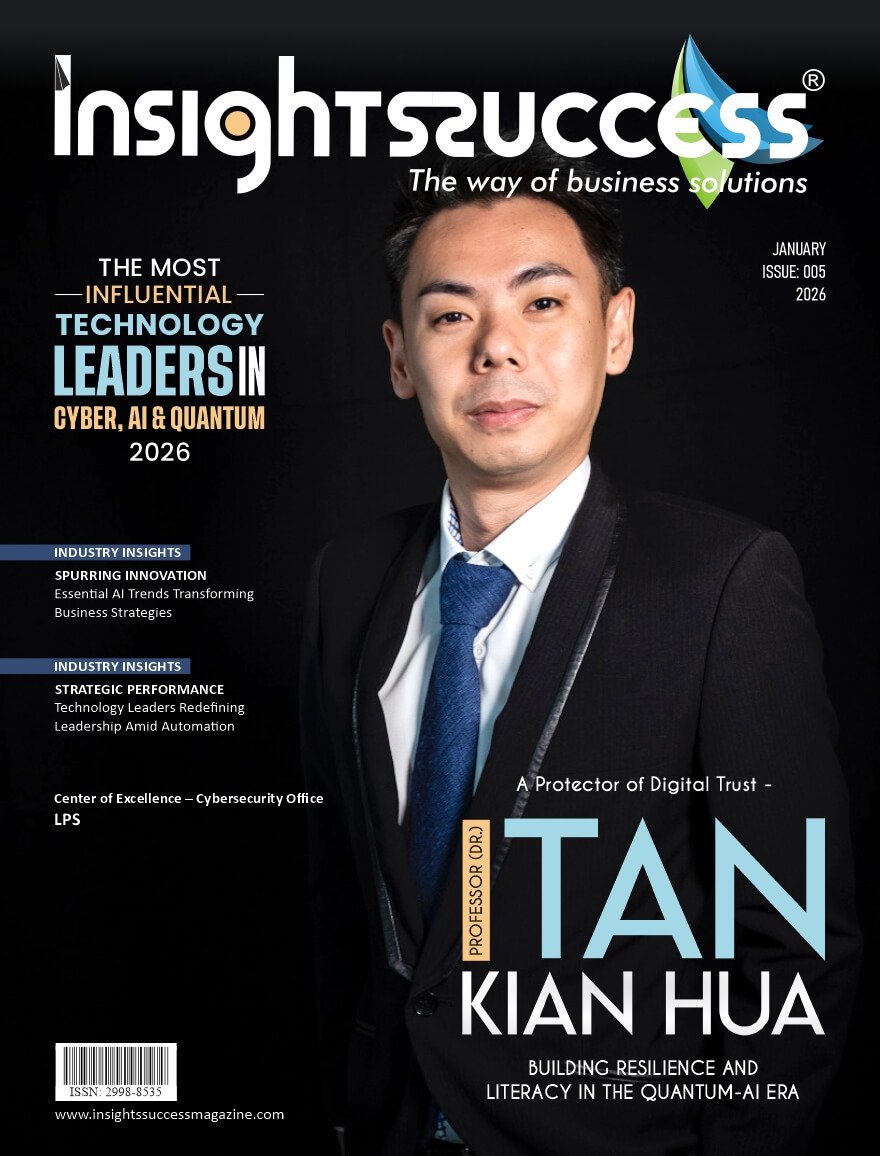
The Most Influential Technology Leaders in Cyber, AI & Quantum 2026
The Most Influential Technology Leaders in Cyber, AI & Quantum 2026 Professor (Dr.) Tan Kian Hua is a globally recognised leader in cybersecurity, AI governance, and quantum-era resilience. Bridging academia, industry, and public education, he advances ethical, human-centred technology, strengthening digital trust through governance-by-design, societal literacy, and responsible innovation in an increasingly complex digital landscape. Quick highlights Quick reads

A Protector of Digital Trust – Professor (Dr.) Tan Kian Hua: Building Resilience and Literacy in the Quantum-AI Era
In an era where digital trust has become the currency of global stability, few leaders embody the intellectual depth, technical mastery, and societal foresight of Professor (Dr.) Tan Kian Hua. Renowned as one of the most influential voices in cybersecurity, AI governance, and quantum-era resilience, Dr. Tan stands at the rare intersection of academic scholarship, enterprise leadership, national strategy, and public education. His career is defined not by a single domain of excellence, but by his unique ability to synthesize research, technology, and human understanding into frameworks that shape how societies navigate the accelerating complexities of the digital age. A recognized Global Excellence Award winner, Dr. Tan leads with a philosophy anchored in systems thinking and ethical intentionality. His leadership spans beyond defending infrastructure—he architecturally redesigns trust itself. Whether guiding enterprise AI risk programs, advising on national cybersecurity priorities, or preparing organizations for quantum disruption, his influence extends far beyond traditional security boundaries. He brings a professor’s analytical rigor to every boardroom, a practitioner’s realism to every innovation initiative, and an educator’s empathy to every public engagement. What distinguishes Dr. Tan is not only his technical authority but also his commitment to expanding societal digital literacy. His acclaimed YouTube channel demystifies scams, AI threats, and cyber risks for millions, while his original comic series, “Chicky Snake,” transforms cybersecurity education into accessible storytelling—proving that clarity, humor, and narrative can succeed where policy documents and advisories often fail. In the classroom, he is known for cultivating leaders who think deeply, act responsibly, and design systems that respect both technological potential and human dignity. Today, as the world enters an inflection point defined by quantum acceleration, hyper-automation, and AI ethics, Dr. Tan’s voice resonates with uncommon clarity. His work affirms a conviction that guides his leadership across all arenas: technology must advance, but humanity must never be left behind. The Technologist’s Evolution: From Flaws to Philosophy Professor (Dr) Tan Kian Hua’s journey was never a linear ascent through technical milestones, but a continuous deepening of perspective forged by confronting the fragility of digital infrastructure. Early in his career, a foundational realization cemented his systems-theoretic mindset: technology does not merely automate processes—it governs human lives. This forced him to view vulnerabilities not as isolated flaws, but as ecological disruptions threatening interdependent systems. This elevated cybersecurity from a purely defensive function to a civic responsibility and, increasingly, a philosophical pursuit. His academic path, culminating in a professorship, instilled the discipline of intellectual honesty, demanding that he defend assumptions and examine technology for what it implies, not just what it does. Parallel public education efforts, like the “Chicky Snake” series, taught him profound empathy: that people fear invisibility—systems they cannot understand. This convergence of strategy, scholarship, and societal communication defined his executive work, compelling him to bridge engineering with ethics and policy with practice. His ultimate influence is not measured by authority, but by his ability to elevate discourse, moving organizations from compliance thinking to responsible innovation thinking. Governance by Construction: Operationalizing Ethical AI As the key translator at the Center of Excellence Office, Dr. Tan’s primary role is converting conceptual ethics into operational discipline. His approach begins with a philosophical anchor: defining what it means for an AI system to behave responsibly within the enterprise mission. He views AI governance not as a regulatory checklist but as a function of organizational identity. MLOps pipeline. His core focus is on mitigating structural ambiguity, ensuring that AI systems become accountable by construction. For governance to be genuine, teams must internalize a different worldview, where the question shifts from “Is the model accurate?” to “Is the model appropriate, equitable, and safe?” This requires structural dialogues and cross-functional ethical simulations, cultivating trust that legitimizes technology and earns the organization its social license to innovate responsibly. The Epistemic Gap: Trust as an Engineering Challenge Dr. Tan views the current crisis of digital trust as a widening epistemic gap—a disconnect between user expectations and the unintelligible reality of digital systems. He asserts that digital trust cannot be treated as a marketing outcome or a communication strategy; it must be an engineering challenge and a design property. Many organizations fail because they publish compliance reports but build opaque systems, creating a structural contradiction. To bridge this, organizations must embrace behavioral integrity architecture: designing systems whose actions remain consistent with their stated intentions, even under stress and when interacting with complex AI components. Trust, derived from predictability and comprehensibility, cannot be derived from static compliance alone. It requires continuous verification—ongoing monitoring, drift detection, and systemic accountability loops, especially since AI systems often behave as black boxes. Dr. Tan’s frameworks implement explainability thresholds to constrain ungoverned autonomy, ensuring systems are intelligible in principle. The Integrated Architecture: Scholarship Meets Strategy Dr. Tan’s dual role—academic researcher and industry practitioner—provides a powerful lens for strategic leadership. Academia trained him to interrogate assumptions and defend hypotheses, providing the intellectual discipline to evaluate technologies like quantum resilience and AI interpretability. Industry exposed him to the brute realities of implementation, teaching him the discipline of prioritization and the necessity of humility when faced with human factors and legacy systems. Blending these two worlds yields a dual perspective that shapes his mentorship. He encourages young teams to understand the underlying theory and to operationalize their thinking, recognizing that a security control only has meaning when it can function under real-world pressure. His forward-looking cyber strategies are architected on three pillars: Future-state modeling (grounded in academic foresight), Operational realism (grounded in industry constraints), and Human-centered leadership (grounded in public education). This intellectual craft enables him to design frameworks that anticipate future risks, ensuring organizations move beyond reacting to present threats. Influence as Stewardship: The Ethos of Responsible Amplification For Dr. Tan, influence—validated by the Global Excellence Award and his status as a Top Voice in Cybersecurity—is fundamentally a form of stewardship carrying an ethical gravity. He views recognition not as a personal achievement, but as a reminder that his words have systemic consequences. Recognizing that public understanding lags technological acceleration, he

Strategic Performance: Technology Leaders Redefining Leadership Amid Automation
With the increasing pace of automation, artificial intelligence, and the implementation of digital tools in organizations, the position of technology leaders is changing to something that is not confined to the concept of management. Technology-based company leaders cannot merely control the operations or manage the workforce anymore, but they are the design of change. Robotization is transforming the processes, minimizing human interventions and opening new prospects of innovation, which requires the leaders to build a different range of skills including the ability to integrate both technology and people orientation in their leadership. Technology executives are now more than ever expected to juggle on operations efficiency and strategic foresight. This goes beyond the knowledge of emerging technologies but also shows the possibilities of those technologies to business models, workforce needs and organizational culture. With a positive attitude towards automation, leaders will have a chance to rethink the process, improve productivity and create the climate that promotes innovation. This change demands the abandonment of top-down management models in favor of more flexible, participative, and innovative leadership models. Human-Centric Leadership Automation has commonly led to fears of losing jobs to robots and the loss of the human talent. Skillful technology executives are responding to these fears by focusing on human-centricity. These leaders do not see automation as an employee-replacement tool, instead they present it as a supplement that improves human abilities. They are putting emphasis on reskilling programs, life-long learning, and the ability to solve problems creatively so that the employees are kept active, empowered, and embedded in the process of organizational change. This anthropocentric thinking is not limited to management of workforce, but also customer engagement and organizational culture. Empathy and active listening in digital strategy will help leaders to develop closer relationships with employees, clients, and stakeholders. They have acknowledged that the value of human judgment, creativity and interpersonal insight cannot be removed through automation, even though automation is efficient. These leaders are establishing a new standard of how organizations negotiate through the complex change and retain a committed and capable workforce by adding the technological skills and creating a sense of emotional intelligence. Tech-Driven Strategic Vision Effective leadership in the age of automation depends not on operational expertise but on strategic insight that drives technological innovation aligned with long-term business objectives. Technology executives are also becoming architects of change and determining which operations can be automated and where human control is essential. They use data analytics, predictive models, and AI-driven insights to make informed decisions to minimize risk, maximize performance, and develop competitive advantage. The strategic leaders are also establishing eco systems of cooperation within and outside their companies. They collaborate with technology suppliers, educational establishments and trade consortia to keep up with developing trends and obtain specialist knowledge. This will help to make sure that automation efforts are not realized out of the blue, as they will be combined with larger corporate goals, sustainability, and ethical principles. Through their forward-looking vision, technology leaders can predict disruptions and capitalize on opportunities and lead their organizations through uncertainty periods with both confidence and clarity to address them. Agile and Resilient Teams Automation increases the velocity of change, where organizations have to be quick to respond to fresh challenges and opportunities. Technology leaders are redefining their functions by ensuring they build nimble and strong teams that can adapt to changing business settings. They focus on cross-functional cooperation, iterative, and continuous feedback mechanisms that allow teams to experiment, learn, and innovate without being afraid of making mistakes. This will not only help improve productivity but will also help the organization to increase its capability in responding to changing market needs. The other aspect of leadership resilience is the development of a culture of embracing change as an opportunity and not a threat. Leaders are also promoting digital literacy, critical thinking, and problem-solving among the employees so that, the workforce can be diverse against technological disruptiveness. Through leadership by example, exemplifying flexibility, open expression, and responsibility, technology leaders establish the atmosphere of a culture built on innovation and at the same time anchored to the values. This dynamism and stability make organizations equipped to make use of automation as a source of efficiency but sustainable development. Conclusion The era of automation is changing the concept of leadership as technology giants introduce innovations into the system. They are reinventing leadership as both innovators and custodians of organizational culture by intertwining human-centered practices with a strategic forward-looking and developing agile and resilient teams. Automation is no longer a simple tool of operation but of transformation and those who lead its implementation are establishing new norms of what it takes to be a leader of the digital world. Leaders with this dual interest in technology and humanity are better placed to deal with the uncertainty, grab the opportunities and motivate their employees towards a new performance level. The ability to combine innovation, empathy, and strategy is becoming the new face of the leadership that will characterize the next generation of successful organizations that is changing as rapidly as the landscape. Read Also : Purpose-Driven Innovation: Transformative AI Leadership for Modern Enterprises

Spurring Innovation: Essential AI Trends Transforming Business Strategies
Artificial intelligence (AI) has emerged as one of the key strategic decision-making processes in businesses in all industries. AI technologies are changing the competitive landscape and the growth of companies in an ever more digital economy by optimizing operational efficiency and building personalized customer experiences. With the adoption of AI in organizations, it is necessary to learn the emerging trends and its strategic impacts in order to maintain a competitive advantage. Companies who are effectively using AI are no longer looking to automate or use analytics but are introducing intelligence into the nature of their business. AI has become a source of information in product development, customer interaction, supply chains and risk evaluation. Those firms that do not embrace AI will find themselves on the losing end as competitors who embrace the insight of predictability and adaptability systems. It is of vital importance that executives identify the newest trends in AI to secure the future of their business strategy by being able to derive maximum value out of digital investments. AI-Driven Personalization Among the most visible ones is the implementation of AI to customize customer experiences into hyper-personal. To provide personalized recommendations, targeted deals, and anticipatory customer services, companies are progressively using machine learning algorithms to analyze large volumes of customer data. The trend has been especially revolutionary in areas like the retail, banking, and media areas where knowing the preferences of people can greatly increase involvement and loyalty. Individual AI applications also go as far as dynamic pricing, real-time marketing campaigns and intelligent chatbots that deliver human-like interactions. In addition to enhancing the user experience, AI-based personalization provides a competitive edge to firms by boosting conversion rates and retention. With the help of behavioral analytics, a business may predict demand, prevent churn, and notice new trends in the consumer demand. The increasingly advanced AI models make it possible to ensure that companies transition toward the active approach, enabling them to stay on top of competition, and, therefore, maintain an active relationship with their customers on the long-term scale. AI for Operations Smart robots are replacing the manual processes in business through intelligent automation, which involves integration of AI and robotic process automation with advanced analytics. Businesses are also using AI to automate tedious processes, improve workflows, and decision-making processes in different departments. In manufacturing processes, AI can be used to reduce costs of operation and minimize error through the automation of the invoice processing or predictive maintenance. Enterprise resource planning and supply chain management are also enabling businesses to react faster to disruptions with the integration of AI, handle inventory, and increase productivity overall. Besides, smart automation would give organizations the ability to use data real-time to gain insights in operations. Predictive forecasts, scenario planning, and performance monitoring are some of the solutions that AI-powered analytics platforms can offer to managers to make well-informed decisions more quickly. This does not only increase speed of execution but also creates a culture of agility and innovativeness. Welcoming AI-driven business operations leads firms to gain a competitive advantage in growing and resilience amid uncertain business environments, thus intelligent automation is a significant part of the contemporary business strategy. Ethical AI Practices With an increasing use of AI, companies are paying more attention to ethical issues and responsible use. Companies are under pressure to make AI systems transparent, fair and accountable because regulatory frameworks, societal expectations, and even reputational risks are pushing companies toward that direction. To uphold the privacy and security standards, ethical AI practices entail bias detection, explainable decision-making, and strong data governance. Companies that are responsible in their AI endeavors can be much better placed to win the trust of their stakeholders and show that they are compliant in a world where AI application is increasingly being subject to public scrutiny. Responsible AI also helps companies to make technology reflect on the bigger business values and societal aims. Businesses can reduce risks through the application of governance systems and ethical standards, as well as, open up innovation. Open AI models also enable employees and customers to learn how the decisions are formulated, which increases the confidence in the technology. Since AI is still began to take its toll on essential business processes and even customer relations, there is a need to incorporate ethical implications into the strategy to grow sustainably and be credible over time. Conclusion Artificial intelligence is leading to a radical shift in business strategy that affects business-customer interaction, business operational efficiency, and business ethical responsibility. Some of the trends transforming competitive markets in various industries include hyper-personalization, intelligent automation, and responsible AI implementation. Companies that strategically adopt these trends can have actionable insights, agility in their operations and customer loyalty as well, which all leads to sustainable growth. In the future, organizations should appreciate the fact that AI is not a tool but a strategic facilitator. To achieve successful adoption, AI should be integrated into the processes, a culture of being data-driven should be established, and an ethical framework must be implemented that directs the decision-making process. With the new and emerging trends in AI, any company that predicts the future and positions its business plans accordingly with smart solutions will be in the best position of surviving in the dynamic international market. Read Also : Purpose-Driven Innovation: Transformative AI Leadership for Modern Enterprises
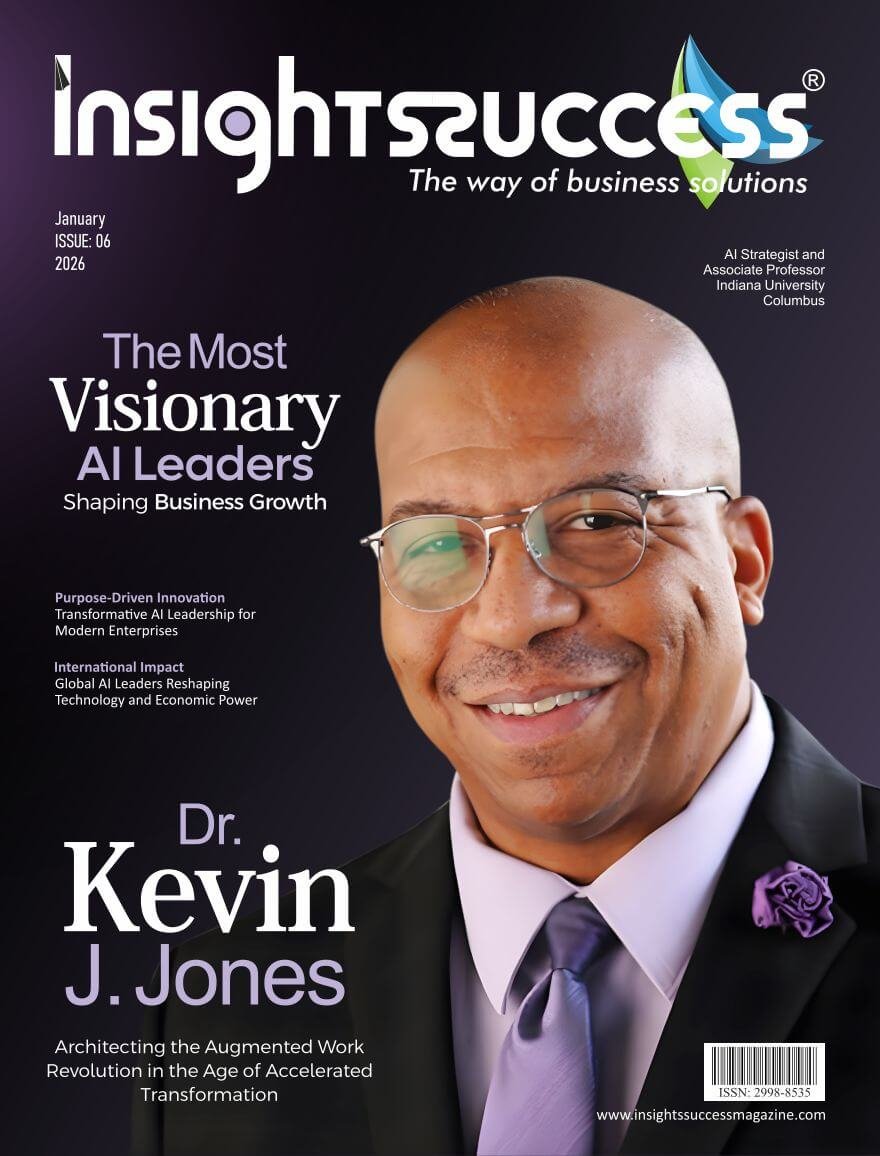
The Most Visionary AI Leaders Shaping Business Growth
The Most Visionary AI Leaders Shaping Business Growth Dr. Kevin J. Jones is an AI strategist and academic leader dedicated to advancing human-centred innovation in the Age of Accelerated Transformation. Bridging strategy, ethics, and technology, he champions augmented work frameworks that position AI as a force to enhance human capability, dignity, and purposeful organizational growth. Quick highlights Quick reads

Dr. Kevin J. Jones- Architecting the Augmented Work Revolution in the Age of Accelerated Transformation
The world is on the brink of a change like no change seen in history. Technology is advancing in an exponential trajectory that exceeds humanity’s ability to understand the full consequences of that change. In this high-stakes situation, the advent of artificial intelligence creates possibilities of great human prosperity or the potential extinction of human relevance. In this broad-stakes context, a vital, defining question will have to be asked: Who will be the moral architect, and to ensure that technological progress is an enhancement to humanity and not its overlord? Dr. Kevin J. Jones has dedicated his distinguished career to answering that exact question. As an AI Strategist at Indiana University Columbus, Dr. Jones is in a unique position at the intersection of academic inquiry, organizational change, and innovation in technology. He designs holistic frameworks for human flourishing. He invites organizations to adopt a broad-minded view of AI as not a competitor to human intelligence but a compounded exponential force of support for human possibility and human potential. He empowers the next generation to harness technology in light of wisdom, ethics, and responsibility for good. His perspective is forged from decades of guiding organizations through tectonic shifts and cemented by a profound conviction: humanity must remain the undisputed center of every technological revolution. In an era he powerfully characterizes as “The Age of Accelerated Transformation,” Dr. Jones offers a necessary and increasingly rare commodity: a compelling vision of progress that staunchly honours human dignity, dramatically enhances human capability, and unequivocally serves human purpose. The Journey to Strategy: Weaving Insight with Innovation Dr. Jones’s path to becoming an AI strategist is a complex tapestry of experiences defined by consistent principles applied across evolving contexts. His journey weaves through telecommunications, healthcare, and higher education, with each experience cementing a fundamental conviction: sustainable organizational success is achieved only when strategy is organically aligned with its people, processes, technology, and communication. Throughout his foundational career in organizational development and change management, his persistent focus was on technology as an enabler and an amplifier of performance. He understood technology not as the solution itself, but as a powerful tool that delivers true value only when meticulously integrated into existing, complex human systems. His deeper engagement with AI began years ago, captivated by autonomous vehicles. The sophisticated AI powering these machines opened his eyes to how machine intelligence was fundamentally changing how work is defined and executed across industries. He realized AI wasn’t just automating tasks; it was redefining operations. Dr. Jones grasped that generative AI (GenAI) represented a paradigm shift unlike any previous technological advance. Committing himself fully, his focus shifted to developing operational frameworks for ethical integration, specifically centering on the concept of Augmented Work, the exploration of how humans and AI collaborate to dramatically amplify capabilities rather than simply replace them. This is the cornerstone of his thinking on “The Age of Accelerated Transformation.” Foundations of Foresight: Bellcore, Moore’s Law, and The AI System Dr. Jones’s vision is shaped by experiences that taught him to look beyond the immediate code. His work at Bellcore (a parallel organization to Bell Labs) immersed him in emerging technologies, from the early internet to advanced computational systems. Using a powerful, Unix-based Sun Workstation, he gained an early, tangible preview of advanced computing, providing a visceral understanding of Moore’s Law and the continuous, exponential expansion of possibilities. However, the defining influence remains his study of autonomous vehicles. He was captivated not by the engineering, but by the underlying AI systems enabling machines to perceive, decide, and act autonomously in complex, chaotic environments. He recognized that if AI could navigate city traffic, the implications for organizational decision-making and knowledge work were profound. His organizational development background proved invaluable. Rather than viewing AI purely as a technical innovation, he filtered it through his career framework: How does this affect people, processes, strategy, and communication? This human-centric perspective allowed him to recognize early on that AI’s enduring power would stem not from replacement, but from exponentially augmenting human capabilities. The Evolution of Vision: Navigating the Convergence Dr. Jones learned that digital literacy is not optional; it is an essential leadership competency. Effective leaders must anticipate how emerging technologies will influence future performance. His AI Strategist role truly crystallized with GenAI’s arrival, but his perspective soon broadened. He began focusing intently on the convergence of technologies and the complex, amplifying influence of external change drivers- the P.E.S.T.L.E. factors (Political, Economic, Societal, Technological, Legal, and Environmental). This led to a critical realization: AI is a major driver, but viewing it in isolation is dangerous. What organizations face is the confluence of multiple, simultaneously acting variables, creating an acceleration effect driving transformation. AI does not operate in a vacuum; it interacts with regulatory shifts, economic pressures, and societal expectations, with each force amplifying the others. His role thus evolved from focusing solely on AI implementation to becoming an indispensable guide for navigating multiple, simultaneous, and interdependent transformations where AI serves as both a catalyst and an accelerant. Strategic Alignment: Maximizing Human Performance Dr. Jones emphasizes that GenAI must be framed as a powerful enabler of performance, not the organizational focal point. Strategic alignment begins with clarity. Organizations must first articulate objectives, understand capabilities, and map processes. Only after this clarity can technology ethically and effectively enhance organizational outcomes. This sequence ensures that AI serves the strategy, rather than becoming the strategy itself. Alignment for sustainable growth requires viewing AI as a means to maximize human performance, not replace it. The core priority is people collaborating with technology in ways that amplify their unique capabilities and essential human judgment. This approach stands in stark contrast to narrow efficiency-gain goals. Sustainable growth is unlocked by enhancing what people can accomplish and creating entirely new forms of value. This demands several critical components: Augmented Work: AI handles scale and consistency; humans focus on creativity, judgment, and strategy. Capability Building: Proactive, strategic upskilling to partner effectively with AI. Process Reimagination: Redefining roles and tasks, not just making

Purpose-Driven Innovation: Transformative AI Leadership for Modern Enterprises
Artificial Intelligence (AI) is now a central aspect of enterprise development and competitiveness. Transformative AI leadership is not simply technology management but is concerned with promoting innovation, leading change in the organization, and opening new business models. Leaders who adopt AI as a strategic resource will be in a position to position their businesses to react quickly to market shocks, improve customer experiences and attain sustainable growth. Technical and strategic acumen is in practice AI leadership. The executives need to be aware of what AI technologies can and cannot do as well as make these abilities practical in the business strategies. Such a twofold focus will make sure that AI efforts are focused on corporate objectives, bring practical results, and not fall into the typical traps of hyped expectations or implementation in a silo. AI leaders can help fill the innovation motivation execution gap by fostering an organizational culture that facilitates experimentation and decision-making grounded in data that will initiate change in all organizational functions. Shaping an AI Strategy Development of clear and actionable AI vision is a core responsibility of the AI leaders. This vision should explain how AI will help the enterprise to achieve long-term goals and competitive advantage. In the absence of a specified plan, AI initiatives may be disjointed, fail to be adopted, and overlooked. An effective AI roadmap includes priority, resource distribution, and schedules of implementation and establishes areas where AI can generate short-term value over long-term change. Successful AI leaders involve cross-functional stakeholders in a way that they align and encourage organization commitments. In addition to strategic alignment, AI executives have to foresee future trends and technological changes. This includes the constant search of business environment in novelty of machine learning, natural language processing and computer vision among other applications of AI. Leaders with new AI potentials can anticipate the advancements in automation, predictive analytics and personalized customer experiences by positioning their organizations in advance. By developing a proactive vision, AI leaders drive not only operational efficiency but also the strategic direction of the enterprise in a rapidly changing market. Transforming Through Data A transformative AI leadership needs to develop a culture of viewing data as a strategic resource. Leaders should put in place systems of governance, code of ethics and systems of infrastructure, which allow safe and scaled-up data management. This involves investing in cloud platforms, sophisticated analytics, and talent that can be used to interpret and operationalize insights. The cooperation of data scientists, IT teams, and business units is encouraged so that AI solutions will be relevant to real-life problems and will also be flexible to the shifting demands. In addition to strategic alignment, AI leaders have to be forward-thinking in terms of predicting future trends and technological changes. This includes a constant survey of the business environment in the field of innovations in machine learning, natural language processing, computer vision, and other areas of AI. Emerging AI capabilities can be harnessed to benefit an enterprise, as leaders that are aware of them can take the initiative to place their companies in a position that can exploit emerging advances in automation, predictive analytics, and customized customer experiences. By fostering a forward-looking mindset, AI leaders shift the focus from mere efficiency and operations to guiding the enterprise’s growth in a dynamic and expanding market. Ethical AI Leadership Human capital should also be managed carefully when it comes to organizational change. Artificial intelligence has the potential to disorganize conventional jobs and work processes, and leaders have to go through these transitions tactfully and strategically. Executives can invest in reskilling and upskilling programs that enable the employees to welcome AI technologies instead of being afraid of them. Transformative leadership is a balance between technological innovation and human impact which creates an environment where the employees feel supported and encouraged to take part in AI-driven projects. The outcome is a company that embeds AI into its core operations rather than treating it merely as a tool. Simultaneously, AI implementation needs to be carried out ethically in order to be fair, transparent, and accountable. The governance frameworks adopted by the leaders should tackle the issues of algorithmic bias, data privacy, and responsible decision-making. Also, by instilling ethical principles in AI projects, companies will be able to establish trust between themselves and employees, customers and stakeholders and reduce the risks of reputational and regulatory damage. Ethical AI leadership does not only protect the business, but also enhances its long-term competitiveness through sustainable innovation to the benefit of society. Conclusion The emergence of AI offers a unique chance to the contemporary business to optimize the process of making decisions, stay innovative, and attain sustainable competitive edge. The actualization of this potential is however based on strategic and transformative leadership. The effective leaders in AI are individuals who manage to apply their technical expertise and vision, drive change in an organization based on evidence, and encourage responsible and ethical decision-making. They do not see AI as an instrument but as an engine of corporate change. As the rapid world of technology rapidly evolves, organizations that embrace transformative AI leadership stand better opportunities of anticipating the changes in the market, optimize business processes, and offer their customers differentiated value. To ensure that AI projects result in a sustainable contribution, leaders can nurture innovation culture, invest in human capital, and be ethically upright. Read Also : How Top Companies Stay Focused
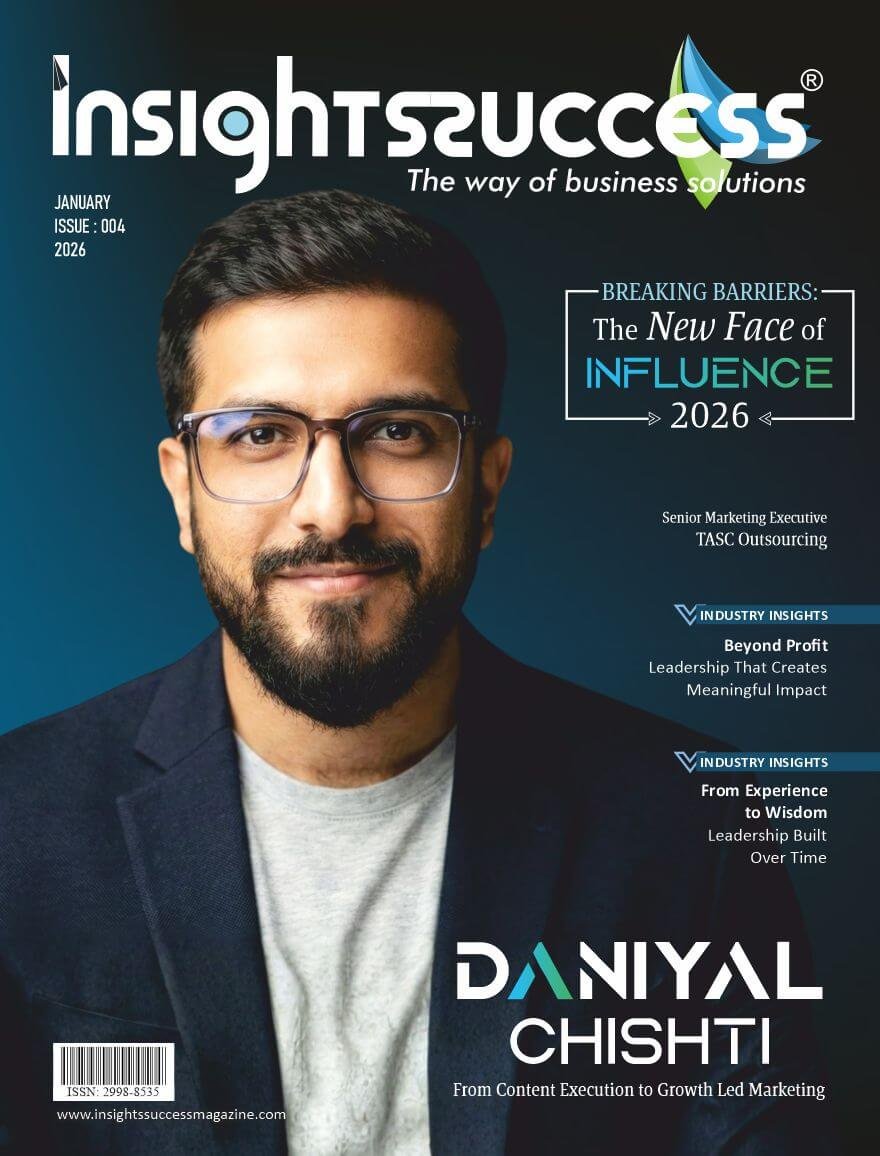
Breaking Barriers: The New Face of Influence 2026
Breaking Barriers The New Face of Influence 2026 Recognizes Daniyal Chishti whose bold leadership, authentic voice, and transformative impact are reshaping traditional norms, defining a new era of influence driven by purpose, innovation, and measurable change. Quick highlights Quick reads

Daniyal Chishti- From Content Execution to Growth Led Marketing
The digital marketing landscape doesn’t sleep. It pivots at midnight, rewrites its own rules by dawn, and declares yesterday’s breakthrough strategy obsolete before lunch. In this accelerating chaos where attention spans shrink and platforms multiply, most marketers exhaust themselves chasing the next big thing, hopping from emerging trends to AI tools to viral frameworks, accumulating certifications like trading cards but mastering nothing. Then, some move differently. They ignore the frenzy. They dig where others skim. They build when others pivot. They choose the slow craft of genuine expertise over the quick theatre of borrowed tactics. Daniyal Chishti is part of this second group. As Senior Marketing Executive at TASC Outsourcing, his four-year journey reflects a deliberate focus on patience, consistency, and practical execution. Graduating during the pandemic shaped his approach early, reinforcing the value of preparation before opportunity and discipline over speed. Rather than rushing visibility, he concentrated on mastering core principles and applying them steadily within a B2B environment where clarity and trust matter more than quick wins. Early Influences and Academic Foundation Long before Daniyal understood marketing frameworks or conversion funnels, he was absorbing lessons that would later define his professional identity. His father’s corporate career wasn’t just a job; it was a masterclass in discipline delivered through daily example. Punctuality wasn’t suggested; it was non-negotiable. Commitment to work wasn’t inspirational; it was foundational. These weren’t lectures or life lessons explicitly taught. They were patterns absorbed through observation, the kind that settle into a young mind and emerge years later as operational principles. Yet discipline alone creates rigidity, not growth. His mother introduced the counterbalance: curiosity with purpose. She possessed an intuitive understanding of her son’s capabilities that preceded his own self-awareness. Before Daniyal could articulate why marketing felt natural, she recognized an alignment between his personality and the field. Her encouragement to explore beyond familiar territory created space where structure and experimentation could coexist and where inherited discipline could fuel intentional exploration rather than constrain it. This dual inheritance shaped his academic trajectory remarkably. During his A Levels, Daniyal didn’t just perform well; he achieved the highest marks in Business Studies across the entire United Arab Emirates, earning the Cambridge Learner Award in 2017. This wasn’t the result of last-minute preparation or fortunate timing. It reflected systematic effort, analytical rigour, and an approach to learning that prioritized genuine understanding over superficial memorization. When he pursued his undergraduate degree at Middlesex University, the pattern continued. He graduated with a flawless 4.0 GPA, demonstrating that his academic excellence wasn’t circumstantial but cultivated through sustained intellectual discipline. These achievements did more than populate his resume with impressive credentials. They established neural pathways for structured thinking, problem decomposition, and systematic improvement- capabilities that translate directly into strategic marketing execution. The Crucible Years: When Uncertainty Becomes Opportunity The year 2020 should have marked Daniyal’s seamless transition from a student to a professional. Instead, he graduated into an economy frozen by pandemic uncertainty, where hiring freezes replaced job fairs and opportunity evaporated overnight. For many of his peers, this period became synonymous with anxiety, frustration, and stalled ambitions. For Daniyal, it became something fundamentally different: an intensive preparation phase disguised as forced waiting. He approached unemployment with the same systematic discipline that earned him academic distinction. Rather than passively monitoring job boards or waiting for conditions to improve, he restructured his days around deliberate capability development. He began with HubSpot certifications, drawn specifically to their emphasis on content marketing and growth-oriented methodologies. This wasn’t random upskilling; it was strategic positioning based on careful analysis of where marketing was evolving. He established weekly goals, completing certifications with consistent momentum and expanding his knowledge base through complementary platforms like Google. Beyond accumulating credentials, he studied how applicant tracking systems evaluated candidates and refined his CV accordingly. He analysed job descriptions to understand what the market valued and positioned his capabilities to match emerging expectations. While headlines chronicled layoffs and economic uncertainty, Daniyal focused on a different metric: competitive readiness. He understood intuitively what many professionals learn too late- that preparation creates opportunity rather than waiting for it. When hiring eventually resumed, he wouldn’t need to scramble for relevance. He would be immediately deployable, carrying capabilities that exceeded market requirements rather than merely meeting them. This period forged two qualities that continue to define his professional approach. The first is strategic patience- the understanding that timelines don’t dictate readiness, preparation does. The second is perpetual upgradability- the commitment to continuously expand capabilities so that when opportunity arrives, execution is immediate rather than aspirational. These aren’t motivational concepts; they’re operational frameworks that shape how he approaches challenges, constructs systems, and delivers outcomes. The Professional Arena: From Brand Launch to Multi Vertical Marketing When Daniyal joined TASC Outsourcing as a Marketing Executive, his mandate appeared straightforward: support the launch of Future Miles, a new logistics staffing brand. This assignment provided immediate immersion into brand building from inception, offering hands-on exposure to positioning, messaging, and market entry strategies. However, his role refused to remain neatly contained. Within months, his responsibilities expanded exponentially. He transitioned from supporting a single brand launch to managing the parent company TASC’s marketing needs while simultaneously handling additional verticals, including technology staffing. This wasn’t merely an increased workload; it represented a fundamental escalation in strategic complexity. He was no longer executing focused launch messaging for one audience. He was now orchestrating multi-brand content strategies across diverse audiences, varied service offerings, and distinct sales objectives simultaneously. The early stages proved humbling. His initial content didn’t perform as intended, carrying habits from his B2C and agency background that translated poorly to enterprise environments. His messaging ran too long, leaned too heavily on sales language, and fundamentally misaligned with how B2B buyers evaluate services. In consumer markets, emotional resonance drives decisions. In enterprise environments, clarity and demonstrated expertise determine outcomes. This realization triggered an intensive learning phase. Daniyal focused relentlessly on understanding buyer intent, decoding industry-specific pain points, and internalizing a fundamental truth that separates effective B2B

Breaking Barriers: The New Face of Influence 2026
Breaking Barriers The New Face of Influence 2026 Is dedicated to the remarkable leadership of Kathleen Gore whose courage, originality, and leadership are redefining influence—setting new standards through purpose-driven action, transformative thinking, and a bold vision for the future. Quick highlights Quick reads