





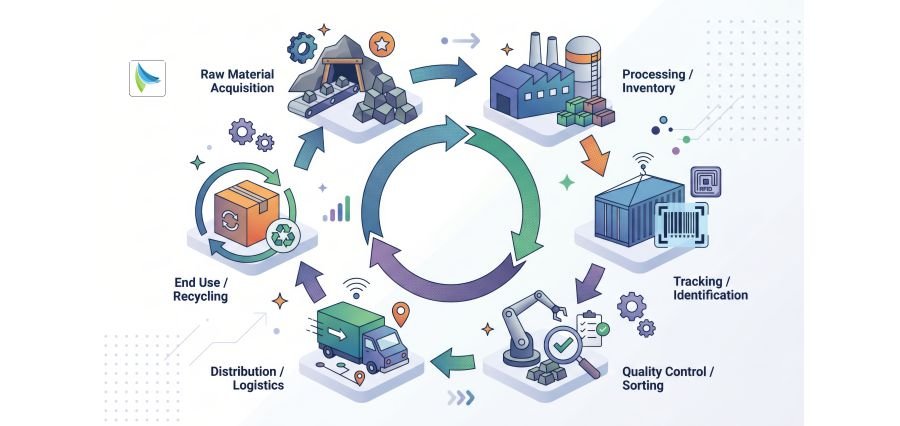
Global Supply Chain Management Driving Resilience in an Interconnected World
Connected Supply Chain Ecosystems Today’s workplaces are characterized by frequent change, growing customer expectations, and growing global connections. The traditional supply chain structure, based on separated functions, is not able to offer the speed, visibility, and adaptability needed for sustainable success. This has led businesses focusing more and more on Connected Supply Chain Ecosystems, which bring together suppliers, manufacturers, logistics companies, distributors, and customers to share information and coordinate activities. Meanwhile, Global Supply Chain Management has emerged as a strategic field which enables enterprises to reconcile efficiency, resilience, and growth in various markets. Building Visibility Through Technology The modern-day supply chain transformation is technology driven. Organizations can obtain real time visibility of their operations through cloud computing, artificial intelligence, automation and digital platforms. These tools can be used to transform vast amounts of operational data into valuable business intelligence for Procurement Analytics and Insights. Leaders can monitor inventory movements, supplier performance and see up and coming risks before they impact business continuity. Increased transparency from this helps to make decisions quicker, rely less on uncertainty and improve operational control. Those that adopt Connected Supply Chain Ecosystems enjoy better collaboration and enhanced information sharing. Having everyone using the same data source makes communicating easier and slower. Today, this multi-faceted approach enables companies to deal better with the market disruptions, without compromising service levels or customer satisfaction. Strategic Procurement as a Competitive Advantage Procurement is now more than just a transactional process and cost management. Today, companies appreciate the benefits of Strategic Sourcing Solutions that connect suppliers with long-term corporate goals. Companies do not only judge vendors by price; they look at innovativeness, reliability and sustainability, as well as risk exposure. Strategic Sourcing Solutions enable organizations to diversify supplier bases and minimize reliance on any single source, laying the groundwork for resiliency. Global Supply Chain Management will be even more crucial for international trade, which is becoming more complex. Businesses have to deal with various regulations, economics, and customer expectations in different areas and manage their activities accordingly. Effective leadership means that resources, information, and processes are all in sync throughout the value chain. Leveraging Data for Smarter Decisions One of the greatest strengths in supply chain operations is data. By using Procurement Analytics and Insights, organizations can more easily spot patterns, anticipate demand, handle inventory levels, and evaluate supplier outcomes. In practice, these capabilities make it possible to catch issues early, rather than just responding when something has already gone wrong. Plus, Procurement Analytics and Insights support ongoing progress by pointing out chances to streamline procurement workflows, reduce excess, and increase throughput. In Connected Supply Chain Ecosystems, advanced analytics they really can flourish. Companies get access to data coming from different sources, and then somehow combine it into one shared view for operational performance. That sort of visibility helps the leaders in practice, making decisions that are more informed, so they can sharpen responsiveness and strengthen their competitive position. Creating Resilience Through Collaboration In today’s dynamic business environment, resilience has become an essential target for companies. An investment in Strategic Sourcing Solutions can mean better preparedness to deal with disruptions, supply shortages and unexpected fluctuations in demand. Building a good, positive kind of relationship with suppliers helps a lot with trust, better innovation and day to day security. And with Strategic Sourcing Solutions, an organization can often locate alternative suppliers, so operations can keep going when there’s uncertainty, or when something else goes a little off. There is a growing link between sustainability and resilience. Businesses need to contribute value and demonstrate social and environmental responsibility. The Connected Supply Chain Ecosystems help to increase the transparency of sourcing supplies, usage of resources, and supplier performance. Enhanced visibility facilitates organizations meet stakeholder expectations and boosts operational integrity. Preparing for the Future The Future of GSCM is Innovation, Collaboration and Digitalization. Those that have embraced new technologies and operating models will be in a better position to manage complexity and take advantage of new opportunities. The way around the increasing focus on becoming more agile, more resilient, more customer-centric in companies, the role of Global Supply Chain Management is going to change again. As enterprises stay informed about their strategic plans and performance measures, Procurement Analytics and Insights will play an increasingly vital role in defining the future readiness of enterprises. These capabilities, coupled with Strategic Sourcing Solutions, create a framework for growth and long-term competitiveness. As these ecosystems are increasingly complex, they will help to facilitate quicker decisions, improved collaboration, and increased resilience. The strategic alignment will be further enhanced by Procurement Analytics and Insights. Businesses that invest in these capabilities today will be better positioned to add value to their customers, partners, employees, and shareholders and to flourish in an interconnected world. In sum, Connected Supply Chain Ecosystems and Global Supply Chain Management are the drivers of resilience, agility, transparency, innovation, efficiency, sustainability and growth across the globe. Read Also : Strategic Sourcing Solutions Transforming Procurement into a Strategic Advantage

The Engine Behind the Port: How Kwanele Mtembu Is Redefining What Procurement Leadership Looks Like in South Africa
What does it actually mean for procurement to add strategic value? Not in theory, not in a professional framework document, but in practice, in real organizations, under real operational pressure? Kwanele Mtembu has a very specific answer to that question, and it is not an abstract one. It is a 30-day procurement turnaround at the Port of Port Elizabeth following a vessel collision that threatened fuel security across an entire region. It is three capital projects facilitated at the Port of East London within seven months of her appointment. It is a same-day stakeholder meeting convened in response to a four-month escalation, resolving three critical issues before the day was out. That is what strategic procurement looks like in her world, and it is why the industry is paying attention. But, before the boardrooms, the trophies, the milestones which has made her one of the most recognized procurement leaders in South Africa, there was Soweto, a single mother, and a bursary which has changed everything. Having been born on 7 June 1982 and brought up in a household where necessities were at times wanting, but values never were. Belief, discipline and the conviction that education was the gateway to an alternate future were all constant factors that shaped her even before any qualification or career title did. Determined to pursue university education despite the financial constraints that made it feel impossible, she secured a bursary through Msukaligwa Local Municipality in Ermelo, Mpumalanga, and enrolled at the University of the Witwatersrand in 2000 to study a Bachelor of Commerce in Accounting. That single opportunity set in motion a career that would eventually take her to the highest levels of public sector procurement in South Africa. She mentions, “I became resolute in my ambition to pursue education, build a meaningful career, and ultimately support my family, particularly my mother, whose sacrifices shaped my journey.” The Pivot That Changed Everything Kwanele’s early career ambitions pointed toward auditing and Chartered Accountancy. Her time at Wits, however, produced a different outcome. She found auditing structurally limiting and was drawn instead to Cost Accountancy, a desire to carve out a more distinctive professional identity than the path her peers were following. Her career began in 2003 as a Financial Management Intern at the municipality that had funded her studies, working in revenue and expenditure within a finance department. The work was valuable but repetitive, and it did not fully engage in the analytical and strategic instincts she was already developing. The pivotal shift came in 2005, when she was exposed to Supply Chain Management at another municipality where the function was still being established. For the first time, she encountered a discipline that matched her appetite: a full procurement lifecycle from vendor registration to contract management, demanding strategic thinking, market analysis, and the design of fit-for-purpose procurement strategies for different commodities. The balance between structure and creative problem-solving, particularly in the context of responsible public funds management, was exactly the intellectual environment she had been looking for. She asserts, “Unlike the static nature of traditional finance roles, I was energized by the analytical and strategic thinking required to understand different commodities and design fit-for-purpose procurement strategies.” That pivot set in motion two decades of deliberate capability building. She pursued a Program in Public Procurement and Supply Management at the University of South Africa, followed by a Diploma, Degree, and Honours qualification through the Chartered Institute of Procurement and Supply, achieved in 2017. In 2022, she completed her MBA through MANCOSA. In April 2026, she graduated from the Executive Leadership Program for Women at Wits Business School in partnership with Transnet, her seventh formal qualification and a milestone she reached while leading one of the most demanding procurement portfolios in the country. Procurement as a Strategic Engine In 2023, Kwanele was appointed Regional Procurement Manager at Transnet National Ports Authority, her third senior management position and the one that places her at the intersection of port infrastructure, maritime operations, government mandates, and supply chain strategy across the Central Region ports of South Africa. Her appointment came with three clearly defined strategic challenges from her line manager: stagnant capital expenditure, a rise in non-awarded tenders, and insufficient spending on SMMEs within the Eastern Cape. Each was a structural problem embedded in how procurement interacted with the business. Each required the kind of diagnostic thinking that goes well beyond procedural compliance. She highlights, “Supply chain management is the engine of the organization. No matter how refined or ambitious the structure may be, without a functioning engine, progress is simply not possible.” Her response to the capital expenditure challenge was immediate and measurable. Within seven months of her appointment, she facilitated three capital projects for the Port of East London, significantly reducing procurement cycle times while maintaining strict governance. The work revealed something that procurement leaders rarely have the opportunity to demonstrate so clearly: that the process itself is not the bottleneck. The bottleneck is how people work within it. Running an eight-month procurement process inside a twelve-month financial year and expecting full capital expenditure is neither practical nor sustainable. Kwanele changed the tempo without compromising the standards. The 30-Day Miracle at Port Elizabeth Every procurement leader has a defining moment. For Kwanele, it came in June 2024, when a vessel collision at the Port of Port Elizabeth severely damaged the tanker berth infrastructure, disrupting fuel supply into Nelson Mandela Bay. Fuel wholesalers were forced to truck fuel from East London at significant cost, triggering broader economic and pricing consequences for the entire region. The Port Engineer was required to reinstate the tanker berth within an accelerated three-month timeframe. The procurement process that would normally accompany a project of this complexity had no such luxury. She managed to facilitate the entire procurement process from receipt of the business case to issuing a purchase order in 30 days, a milestone that had never before been achieved at Transnet National Ports Authority at that level of complexity and governance requirement. She

HPE Posts Record Revenue as AI Infrastructure Demand Surges
Prime Highlights HPE reported record quarterly revenue of $10.68 billion. Strong AI demand led to higher growth forecasts. Key Facts HPE’s AI backlog exceeded $6.3 billion. Enterprise and government clients account for most AI orders. Background Hewlett Packard Enterprise (HPE) said it hit record second-quarter results, mostly because the demand for artificial intelligence infrastructure was really strong. It prompted them to speed up their long-term financial objectives by two years. The strong performance also pushed HPE shares sharply higher in extended trading. The company reported quarterly revenue of $10.68 billion, a 40% increase from a year earlier and above market expectations. Adjusted earnings per share reached 79 cents, also surpassing analyst estimates. Growing investments in AI data centres and enterprise AI applications boosted demand for HPE’s servers and networking products. The company said enterprise customers played a major role in driving growth as businesses increasingly adopted AI-powered workloads. HPE raised its fiscal 2026 revenue growth forecast to between 29% and 33%, compared with its earlier outlook of 17% to 22%. It also increased its expectations for networking revenue growth and lifted its adjusted earnings guidance for the year. The company’s finance leadership said HPE has managed rising component costs through long-term supply agreements and pricing adjustments introduced over the past year. The company expects AI-related revenue shipments to increase significantly in the second half of the fiscal year, with the strongest contribution expected in the fourth quarter. HPE’s AI backlog surpassed $6.3 billion, reaching a record level. Orders worth over 60% came from government entities and enterprise clients, kinda showing that the demand for AI infrastructure is getting higher across industries. In addition to the growth strategy, the firm also launched its fiscal 2027 revenue growth target, which is estimated at 8% to 12%. Separately, HPE announced the appointment of Elliott Investment Management partner Christopher Hsu to its board under an existing cooperation agreement. The results underline HPE’s strengthening position in the rapidly expanding AI infrastructure market. Read Also : Berkshire Hathaway Moves Into Homebuilding With $6.8 Billion Taylor Morrison Deal

4 Best Cosmetic Dentists for Executives Seeking Camera-Ready Confidence
In the era of social media and video conferencing, there is now a remarkable emphasis on visual appearance. This shift has its downsides in broader society, of course, but for executives, surprisingly little has changed. Whether filming digital content, appearing on a podcast, or meeting with shareholders, the foundations of good personal presentation have always been an important part of the deal. Dress sharp, make sure your hair is neat, and flash a warm smile. One aspect of this equation that has unquestionably changed with our new video-focused business environments is just how much attention we pay to our own teeth, marked by the rise of Zoom dysmorphia. This wave of camera-induced dental anxiety understandably pushed many executives to seek out cosmetic treatments, but when it comes to those high-pressure, make-or-break moments, you need the best, not just the good enough. What to Look for in a Cosmetic Dentistry Clinic? When it comes to crafting an executive smile, there are a few boxes to tick. It has to look natural, first and foremost, eliminating the social and psychological friction that comes with obvious enhancements like unnatural whiteness or blocky dentures. That brief moment when a viewer or potential partner silently asks, “Are they real?” can completely skew their perception, as it monopolizes the 100ms it takes to form first impressions. Secondly, any results must feel as natural as they look. Even slight shifts in bite and alignment can impact the way you talk, and that dissonance can throw you off your game and shake your confidence. Third, though by no means least important, the discretion and timing of treatments should work for you. If you’re just looking for a quick tune-up before a big presentation or hoping to address some long-standing problems, clinics that are used to dealing with executive clients will understand your needs and tailor the treatment to you. Now that the parameters are set, let’s dive into the best cosmetic clinics for camera-ready confidence. Bespoke Smile, London Led by Dr. Sam Jethwa, president of the British Academy of Cosmetic Dentists, Bespoke Smile Clinic combines luxury with decades of expertise. Their bespoke smile method considers the shape and dimensions of your entire face before their in-house master ceramists refine a set of ultra-thin veneers unique to you. After their digital planning and trial phases, you walk away with a smile that sits comfortably and blends naturally into your appearance, sculpted to match the texture of the organic tooth. Adaptive treatments, a patient-centric approach, and minimally invasive procedures all make Bespoke Smile an excellent choice for executives. Apa Aesthetic – NY, LA, & Dubai Dr. Michael Apa is a big name in cosmetic dentistry, particularly among international jet-setters and business executives. His global clientele values his eye for subtlety and holistic approach to smiles, recognizing teeth as a driver of lifestyles and inner confidence. Apa Aesthetic promises natural results with hand-layered porcelain and a paintbrush finish, ensuring a smile that shines both in person and on camera. High-profile actors, musicians, and business industry giants trust Dr. Apa with their smiles, and, beyond their impressive acclaim, these are people who truly understand the importance of perception in leading a room. Cabinet d’Orthodontie – Paris Orthodontics sometimes blur the line between aesthetic and functional dentistry, but as any professional in the field will tell you, the two practices are rarely mutually exclusive. Dr. Didier Fillion is an industry veteran, having set up his first practice in 1987 with the (at the time) outlandish idea of catering his treatment exclusively to adults. Though his peers refer to him as ‘the artist’, he prefers to think of himself as a craftsman, offering long-term corrections through revolutionary techniques that render them invisible. Cabinet d’Orthodentie specializes in meticulous, time-honed treatment, delivered by the eye and hand of Dr. Fillion himself. Paris is the international capital of beauty, and well worth a trip for any executives who want structural fixes without committing to obvious braces that impact camera performance. S&C Dental – Beverly Hills Led by father-daughter doctor duo Kourosh and Tiffani Maddahi, Science and Cosmetic Dental is the go-to California clinic for all who call the space in front of a camera their home. With a focus on anti-aging and an exceptionally human touch from their friendly, multilingual staff, S&C is an expert in high-profile dental aesthetics, offering holistic smile makeovers and patented Infinity Veneers that turn each flash of teeth into a movie-star moment. S&C offers a quick turnaround, with full transformations finished in as little as two weeks. This makes S&C a great choice for professionals who need fast results with no compromise on quality. Finding your on-camera smile Executives understand that performance is all about perception. Smiles are disproportionately powerful in this regard, shortcutting human psychology to make you appear more likable, trustworthy, and even fit for leadership. While you can train your muscles to make your smile more genuine and inviting, improving the aesthetic quality of your teeth on camera requires some outside expertise. All of the clinics listed here are industry leaders that go beyond pure cosmetics, delivering bespoke results that maximize the potency of your smile, improving your performance and reception on camera by instilling an inner confidence that can’t help but radiate. Read Also : Global Supply Chain Management Driving Resilience in an Interconnected World

Berkshire Hathaway Moves Into Homebuilding With $6.8 Billion Taylor Morrison Deal
Prime Highlights Abel plans to consolidate all Berkshire homebuilding operations into one unified platform. Palmer says the deal unlocks growth impossible to achieve as a standalone company. Key Facts Taylor Morrison operates across 12 US states under three distinct housing brands. Berkshire’s cash reserves exceeded $380 billion at the close of the first quarter. Background Berkshire Hathaway has agreed to acquire national homebuilder Taylor Morrison Home Corp for $6.8 billion in cash, marking the conglomerate’s first major acquisition under new chief executive Greg Abel. The deal values Taylor Morrison at $72.50 per share, a 24% premium over the company’s most recent closing price of $58.50. The total enterprise value of the transaction stands at $8.5 billion. The purchase is expected to close in the second half of 2026, subject to shareholder and regulatory approvals. Abel, who took over from Warren Buffett at the start of this year, said Berkshire plans to bring its site-built homebuilding operations together under a single platform to make home buying more accessible for Americans. He described Taylor Morrison as a best-in-class national homebuilder. Taylor Morrison chief executive Sheryl Palmer said Berkshire’s long-term investment approach suits the multi-year nature of homebuilding and would allow the company to grow in ways it could not achieve independently. After closing the deal, Palmer will continue to lead the company. Taylor Morrison is one of the top 10 home builders in the US, operating under three names in 12 states. The company said it made a net income of $782.5 million, on revenue that came in at $8.12 billion for 2025. Berkshire has deep roots in housing, having owned manufactured home builder Clayton Homes since the early 2000s. It also holds building-related businesses, including Acme Brick, Benjamin Moore paint, and Johns Manville insulation. The acquisition allows Abel to deploy a portion of Berkshire’s cash reserves, which stood at $380.2 billion at the end of the first quarter of this year. Read Also : HPE Posts Record Revenue as AI Infrastructure Demand Surges

Meet the Team Behind Jones Injury Attorneys
Personal injury attorneys help injured individuals recover compensation and move forward after serious accidents. At Jones Injury Attorneys, the mission goes beyond handling legal claims. The team is committed to making a meaningful difference in the lives of people throughout Albuquerque, New Mexico, by providing strong legal support during difficult times. After an accident, many people feel overwhelmed by medical expenses, missed work, and uncertainty about what comes next. That is why the attorneys at Jones Injury Attorneys focus on taking the legal burden off their clients’ shoulders so they can focus on healing and rebuilding their lives. If you are dealing with the aftermath of an injury, you can schedule a free initial consultation with the team to discuss your situation and better understand your legal options. Alexandra W. Jones – Trusted Personal Injury Advocate Alexandra W. Jones founded the firm, aiming to stand up for people facing life-changing injuries and difficult legal situations. Over the years, she has earned a strong reputation throughout New Mexico for handling serious personal injury and civil rights cases with determination and compassion. Her experience includes representing individuals involved in vehicle accidents, injury-related disputes, and other complex legal matters. Clients often appreciate her ability to balance professionalism with genuine care. She understands that behind every case is someone trying to recover physically, emotionally, and financially after a traumatic event. That client-focused mindset has played a major role in building trust within the local community and establishing Jones Injury Attorneys as a respected personal injury law firm in Albuquerque. Nathan Pederson – Strategic Personal Injury Counsel Nathan Pederson brings both local knowledge and diverse legal experience to the firm. Raised in Albuquerque, Nathan attended the University of New Mexico, where he earned his Bachelor of Business Administration. Later on, he completed law school at the University of New Mexico School of Law. Before joining Jones Injury Attorneys, he operated his own practice and worked with clients across several areas of law. His background in both civil and criminal defense gives him a practical perspective when approaching injury cases. He is known for being approachable, detail-oriented, and committed to keeping clients informed throughout the legal process. A Personalized Approach to Personal Injury Cases At Jones Injury Attorneys, there is no one-size-fits-all strategy when it comes to personal injury law. Every client’s situation is different, which is why the attorneys focus on crafting legal strategies based on individual needs and circumstances. The team prioritizes: Listening carefully to each client’s concerns Explaining legal options in straightforward language Developing personalized case strategies Pursuing fair compensation and accountability Maintaining consistent communication throughout the case The firm handles a wide range of injury-related cases, including: Car accidents Truck accidents Motorcycle accidents Construction accidents Medical malpractice Police misconduct Premises liability Product liability Wrongful death claims This approach helps clients feel supported during what is often one of the most stressful periods of their lives. A Team Dedicated to Albuquerque Communities What truly sets Jones Injury Attorneys apart is the team’s commitment to helping people move forward after difficult situations. The attorneys understand that clients are often dealing with stress, pain, and uncertainty, which is why they prioritize communication, compassion, and dependable representation. Their goal is simple: help injured individuals resolve legal issues successfully so they can focus on a brighter future. Final Note Jones Injury Attorneys focuses on helping injured people across Albuquerque and New Mexico. The firm provides personalized legal strategies for every client. Alexandra W. Jones is known for her dedication to injury victims and civil rights cases. Nathan Pederson brings local insight and broad legal experience to the firm. The team handles a wide range of personal injury cases with compassion and commitment. Read Also : 4 Best Cosmetic Dentists for Executives Seeking Camera-Ready Confidence

Global Legal Strategy & Business Excellence Leader of The Year
Global Legal Strategy & Business Excellence Leader of The Year Celebrating an exceptional global legal leader recognized for strategic excellence, corporate governance expertise, business transformation, and innovative legal leadership while driving operational integrity, sustainable growth, and international business success across industries. Digital Link Quick highlights Quick reads

Strengthening Businesses with Legal Risk Management Experts
Corporate Legal Excellence The legal and regulatory landscape is getting more complex for organizations of all kinds, in this ever-changing world of globalization technology and shifting compliance standards. In today’s business setting, it really matters that companies make sure their operations run smoothly, while also keeping an eye on financial risks, reputational damage, and the fines that are imposed by the regulatory bodies themselves. A lack of proper legal structures can create operational challenges which can reduce long-term stability and confidence in the company. Within this context, Corporate Legal Excellence is a critical issue for organizations that want to grow and/or become operationally resilient. There is a higher demand from businesses for structured legal systems that can give more clarity , responsibility, and forward looking oversight of compliance. Companies that put an emphasis on legal excellence are pretty well equipped to handle the changing regulatory requirements as well as commercial risks. Meanwhile, seasoned Legal Risk Management Experts are supporting organizations to enhance their governance systems and enhance business decision-making processes. They work with businesses to pinpoint weaknesses, enhance compliance procedures, and minimize exposure to legal and financial hazards throughout operations. Governance, Compliance, and Operational Stability Organizations are now running in a highly regulated environment where governance practice and legal responsibility have a tremendous effect on the performance of the business. Businesses have to deal with the demands of contracts, employment practices, financial statements, cybersecurity as well as compliance issues. Strong Corporate Legal Excellence is the process of helping organizations to better develop policies, enhance governance processes, and ensure greater regulatory consistency. Companies with a strict legal structure can benefit in minimizing uncertainty in operations and in providing a framework that promotes ethical and transparent business practices. In the same way, Legal Risk Management Experts who have a wealth of experience can support businesses in their quest for resilience by assessing operational risks and taking proactive measures to manage them. Structured legal risk management programs tend to help companies better prevent disputes and keep stakeholders confident. There’s also a growing trend toward organizations embedding legal accountability into their overall plans and business transformation efforts. When corporate governance systems are designed in keeping with the business goals, they can help companies to be more competitive and stable in the long run. Technology and Legal Innovation Technology is still revolutionizing the way around-the-world businesses manage legal matters and reduce risk. AI, cloud compliance technology, automation, and predictive analytics are enhancing efficiency and tightening compliance and reporting requirements. Several firms are currently using Corporate Legal Excellence in order to drive digital transformation, which helps them make things clearer, and also establish stronger regulatory liability.. At the same time, compliance automation systems, plus digital reporting tools, aid companies in getting more visibility with less overall complexity, and fewer delays when it comes to compliance. Meanwhile, digital tools are becoming the go-to solution for modern Legal Risk Management Experts to assess risks in their operations, enhance compliance reports, and enable forward-thinking legal planning. With technology-based risk management systems, companies can boost the collaboration between leadership teams, legal teams, and operational managers while keeping better track of regulatory requirements. Data privacy and cyber security are also top concerns in contemporary legal practice settings. Digital systems need to be secure and compliant with regulations and need to maintain operational continuity in organizations which have to process sensitive operational and financial information. Building Sustainable Legal Resilience For organizations trying to stay successful long term, it matters a lot to have a governance and legal framework that is flexible enough to deal with market disruptions, and, those constant shifts in regulations. In today’s era, where companies are spread across various and competitive industries, the importance of legal responsibility is getting more and more attention, as it has a direct effect on business stability and even investor confidence . Strong Corporate Legal Excellence helps organizations be more resilient— in practice, it’s about their transparency, governance, and responsible day to day operational decision making, kind of like less chaos. Businesses that really put legal accountability first can keep long-term, steady and reliable growth happening, and also earn that stakeholder trust over time. Similarly, seasoned Legal Risk Management Experts can play a vital role in enhancing operational resilience by assisting organizations in developing advanced compliance management frameworks, fortifying dispute prevention measures, and providing proactive legal oversight. Firms with a strong risk management team tend to be more likely to be able to adjust to changing market conditions and expectations. The Future of Legal Risk Management Organizations will have to depend on governance accountability, plus documented legal risk management frameworks more than ever, to stay competitive and stable even as the world of business keeps shifting. In today’s increasingly complex international markets, companies that can actually fuse legal know-how with operational efficiency and a more proactive approach to compliance oversight are probably going to see stronger resilience, and more sustainable growth. At the same time they’ll be maintaining responsible governance, and supporting long-term organizational success, at a global scale. Read Also : Meet the Team Behind Jones Injury Attorneys

Driving Growth Through Strategic Legal Consulting
Corporate Legal Advisory Services Globalization, a changing commercial landscape and a varying regulatory environment all contribute to a complex environment in which organizations from all industries must function. Organizations are competing in an environment of evolving market conditions, shifting expectations and legal responsibilities in today’s world. Inadequate legal structures result in financial hazards, operational disruptions, and reputational damage, threatening long-term stability. In such a context, Corporate Legal Advisory Services are becoming a necessity for businesses aiming for sustainable growth and operational resilience. Legal expertise to help resolve conflicts and to inform business strategies, compliance programs, and organizational decisions is becoming increasingly important for businesses. Structured legal advisory frameworks enable companies to better manage emerging legal and commercial issues. Concurrently, companies are spending huge amounts of money on Strategic Legal Consulting to enhance governance practices and operational efficiencies. In this modern day and age, legal consulting services are also playing a huge role in assisting businesses in managing risk, sustaining expansion projects and maintaining better accountability with regards to the various departments and operations. Strengthening Governance and Compliance Today’s companies have a variety of legal obligations and responsibilities, including: Contracts, Employment practices, Financial reporting, Corporate governance. The rising expectations of regulators in various industries make businesses need to have more disciplined and transparent compliance regimes. Comprehensive, effective CLAS support organizations in developing better contracts, enhancing policy development, and supporting regulatory compliance efforts. Proactive legal planning can help companies better manage potential conflicts in operations and minimise risks to financial loss. In the same fashion, effective Strategic Legal Consulting plays a sort of role in building better organizational governance by pushing legal strategies that line up with long-term business goals and operational priorities, yes. And it is common that companies that bring legal consulting into their strategic planning process they tend to run smoother operations, and they can build trust with stakeholders in a more steady way. Governance and compliance strategies are also increasingly becoming part of broader business transformation programs. Companies that connect legal responsibility to operational efficiency can develop better long-term organization stability and resilience. Technology and Legal Transformation Technology is a significant part of the overall puzzle for changing how law firms deal with their legal work and legal compliance, sort of. With AI and automation in place, plus cloud compliance tools, and predictive analytics, they get clearer insights into operations. Legal monitoring and reporting also get more solid, more or less, because the systems keep track in a steadier way. Corporate Legal Advisory Services are being increasingly embraced and introduced by companies as they strive for digital transformation, thereby enhancing the efficiency and minimizing the risk in the company’s operations. Better legal-exe workflow transparency and collaboration through automated legal workflows and single documentation system. At the same time, Strategic Legal Consulting is increasingly turning to digital technologies to help with regulatory oversight, analyzing contracts and compliance reporting. Advanced technologies can help increase the transparency of operations and improve responsiveness to changing legal requirements and market conditions for companies. Cybersecurity and data privacy also stay pretty essential inside legal management frameworks. Organizations that handle sensitive financial and operational information need to make sure their digital systems stay secure, while still keeping regulatory compliance and operational continuity in place. At the same time it can feel a bit like governance and protection are tangled, but they have to be addressed together, otherwise the whole setup gets fragile. Building Long Term Organizational Resilience Legal structures need to be robust enough to support resilience in times of economic change and uncertainty if a sustainable growth is to be achieved. In highly competitive industries, businesses are increasingly aware of the importance of a robust legal advisory system for its direct impact on the stability of the organization and the trust of the stakeholders. Effective Corporate Legal Advisory Services are aimed at optimization of risk management, development of more effective dispute prevention and assistance in making operational decisions effectively. Companies with forward-thinking legal planning procedures are better positioned to face the shifting legal and market landscape. Similarly, strategic Legal Consulting contributes to better organizational resilience by assisting in ethical governance, operational accountability, and transparency of business dealings. Businesses that make an investment in strategic legal planning are likely to be in a stronger situation to keep the investors and ensure their business continues to perform sustainably. The Future of Strategic Legal Services The future of global business is ever-changing, and integrated legal advisory systems and strategic consulting frameworks will become more vital to organizations to ensure they remain competitive and operationally stable. Companies that thrive at integrating legal knowledge with governance accountability and effective business operations will have a heightened level of resilience and sustainable growth in increasingly complex global economies and markets and contribute to global stakeholder trust and responsible business leadership today. Read Also : Strengthening Businesses with Legal Risk Management Experts

Dr. Henrietta Newton Martin: Bridging Legal Expertise with Global Business Vision
In the current global business landscape, legal leadership is crucial for safeguarding organizations and facilitating long-term development. With regulations evolving across jurisdictions and businesses operating in increasingly complex markets, companies require legal professionals who combine strong legal foundations with strategic business insight. Dr. Henrietta Newton Martin, Legal Director at JusCogen & Alcop LLC, represents this balance through her extensive experience in corporate and commercial law. With 18 years of expertise spanning litigation, cross-border legal advisory, and compliance leadership, she has built a career shaped by precision, adaptability, and a strong understanding of international legal frameworks. A Career Built on Defining Legal Turning Points With extensive experience in corporate and commercial law, Henrietta has built a career shaped by courtroom discipline, corporate advisory expertise, and international leadership. Several defining moments have profoundly influenced both her approach to global legal strategy and her perspective on business leadership. Her early years as an accomplished Advocate before the Bombay High Court, including appearances before the Goa Bench, as well as the District and Sessions Courts across Goa, Maharashtra, and Karnataka, were particularly formative. Practicing in demanding judicial environments instilled discipline, precision, and the ability to think critically under pressure. It also provided her a strong foundation in advocacy, litigation strategy, and procedural law. During this period, she developed a deep appreciation for studying judicial precedents in India within the common law framework, strengthening her ability to construct arguments grounded in jurisprudential reasoning and evolving legal interpretation. During this time, she was presented with the opportunity to step into a judicial role as a JMFC/CJJD early in her career, an honor reflecting her professional standing and commitment to the law. While she was prepared to pursue this path, a significant personal inflection point led her to relocate to the Middle East. This transition marked a defining shift in her career. Moving into a new legal landscape required adaptability and resilience. She transitioned into corporate legal advisory, cultivating a nuanced understanding of commercial frameworks, regulatory architectures, and cross-border business practices. This experience reshaped her perspective from litigation-focused work to a strategic and preventative approach aligned with business objectives. Working in the Middle East exposed her to complex multi-jurisdictional transactions and culturally diverse environments, reinforcing the importance of agility, cultural fluency, and pragmatic problem-solving. Her professional evolution further expanded through leadership roles requiring strategic oversight, decision-making authority, and stewardship of legal and compliance functions within complex organizations. These experiences taught her to calibrate legal risk against commercial opportunity, navigate regulatory flux, and foster trust-based relationships with stakeholders. Her journey from litigation to international corporate advisory has shaped a leadership style that is grounded in legal fundamentals, commercially astute, and deeply attuned to the realities of the global business landscape. Aligning Legal Strategy with Business Growth in Global Markets Henrietta believes that “ensuring legal frameworks remain aligned with business objectives in rapidly evolving international markets requires a proactive, integrated, and commercially attuned approach.” Rather than treating legal review as a final checkpoint, she embeds legal considerations at the inception of business decisions. This allows legal risk to be assessed alongside commercial opportunity and ensures regulatory requirements are treated as parameters for sustainable growth. In cross-border environments, continuous horizon scanning becomes essential. She places emphasis on monitoring legislative developments, regulatory shifts, and geopolitical factors that may impact operations. This forward-looking approach allows organizations to anticipate change rather than react to it, preserving agility in decision-making. She also stresses scalable and adaptable legal frameworks. In international markets, uniformity is often less effective than flexibility. She focuses on creating governance structures, contractual models, and compliance systems that are robust yet adaptable to meet jurisdiction-specific requirements without compromising overall strategic coherence. Collaboration remains a critical pillar. Alignment between legal, finance, operations, and commercial teams ensures that legal strategy is not developed in isolation. By fostering cross-functional dialogue, she ensures that legal input is fully integrated into business planning and execution, supporting informed and balanced decision-making. Technology and process efficiency also play an increasing role, particularly in multi-jurisdictional environments where complexity can otherwise create inefficiencies. Alongside this, she places strong emphasis on risk prioritization and proportionality, ensuring that focus remains on high-impact exposures without overburdening business processes. Ultimately, she believes “alignment is achieved by positioning the legal function as an enabler of strategy rather than a gatekeeper.” Leadership in Cross-Border Litigation and Dispute Strategy Cross-border litigation requires a disciplined, strategic, and highly adaptive leadership approach. Henrietta’s decision-making in such contexts is guided by principles that ensure legal rigour and commercial alignment. Foremost is strategic clarity under ambiguity. Multijurisdictional disputes evolve unpredictably, requiring the ability to distil complexity into clear priorities. She maintains a structured legal strategy anchored in the merits of the case, jurisdictional advantages, and realistic enforcement pathways. Closely linked is forum intelligence and jurisdictional optimization. She emphasizes the importance of identifying advantageous legal fora and understanding how different jurisdictions may influence outcomes. This includes sequencing proceedings to maximize leverage while preserving procedural integrity. Another guiding principle is disciplined risk calibration. “Cross-border disputes are tough, but the desired outcome can be achieved by eagle-eyed vision.” Further, she continuously assesses litigation risk against commercial exposure. This ensures decisions on escalation, settlement, or continuation are grounded in both legal reasoning and business pragmatism. She also prioritizes coordinated execution across jurisdictions. Managing multiple legal teams requires alignment, clear communication protocols, and strong internal governance. Ensuring external counsel operates within a unified strategic framework prevents fragmentation and inconsistency. Cultural and procedural fluency remains equally important. Different legal systems operate with distinct norms of advocacy and negotiation. She also values resilience and composure in high-stakes environments, maintaining focus and decisive judgment throughout prolonged disputes. She remains outcome-oriented, focusing not only on procedural success but on preserving enterprise value. A Multi-Industry Perspective That Strengthens Legal Strategy Having worked across aviation, FMCG, hospitality, technology, oil & gas, and manufacturing, Henrietta has developed a strategic legal perspective shaped by both universal legal principles and sector-specific nuances. Aviation and oil & gas reinforced the importance of precision, compliance, and long-term